







Abstract
The American Association for Dental Research (AADR) is committed to providing a collegial, safe, and welcoming environment for all. As part of this effort, we assessed perceptions and experiences related to sexual, gender-based, and non–gender-based harassment among registrants at AADR annual meetings from 2015 to 2018 (n = 10,495); examined demographic factors associated with reported experiences; and identified facilitators and potential solutions concerning these types of harassment. Registrants were emailed an invitation to an anonymous online survey. Demographics were assessed categorically, and response distributions to close-ended survey items were evaluated by these variables. Bivariate analyses of participant demographics were conducted with 8 types of perceived harassment. To determine the demographic distribution of reporters, along with bivariate associations among them, restricted analyses were performed among individuals reporting any type of harassment. Qualitative data analysts conducted content analysis of the open-ended responses to questions asking participants to reflect on the topic. Peer debriefing was used to refine the coding schema. A total of 824 responses were received, of which 172 individuals reported experiencing ≥1 of the 8 types of harassment surveyed. Among those, reports of condescending remarks occurred most frequently (70%). Reported harassment of a more sexual nature was less common by comparison. Reporters of harassment were more likely to be women, members of the AADR/CADR (Canadian Association for Dental Research) divisions, and/or frequent meeting attendees. A total of 229 respondents answered at least 1 of the open-ended questions. While the majority of survey respondents reported no personal experience with harassment at AADR meetings, the fact that 1 in 5 did should be cause for concern. In 2018, AADR introduced a “Professional Conduct at Meetings Policy” delineating unacceptable behaviors, including intimidating or harassing speech and actions. Results of this survey form an important baseline from which its impact may be monitored to ensure that future AADR meetings are respectful, supportive, and safe environments for all.
Introduction
In recent years, increased attention has been paid to the importance of organizations’ responsibility to foster safe, respectful, and supportive environments for their constituents, which include employees, trainees, and students. Various types of organizations have received heightened attention in regard to how constituents, particularly women, are treated. For example, academia has acknowledged the “chilly climate” that women often experience, with initial reports dating back to the 1980s (Cortina et al. 1998). In the United States (US) military, incidents of sexual harassment and assault were reported with increasing frequency among women in the 1990s (Sciolino 1992). As organizational findings such as these have become more frequent over time, increased awareness regarding normative but unwelcomed behaviors toward all constituents, not just women, has occurred. Thus, surveys of organizational climate with respect to unwelcomed behavior generally and sexual harassment specifically have become commonplace. The US Department of Defense, for example, developed a survey measure in response to growing complaints, which aimed to estimate the frequency of unwelcomed behaviors toward members of the military, called the Sexual Experiences Questionnaire (Fitzgerald et al. 1999).
In addition to the traditional brick and mortar–type institutions and employee-based organizations, member-based organizations such as the American Association for Dental Research (AADR), which convene meetings of volunteers and other gatherings that are open to the public, have the added responsibility to ensure that attendees’ conduct at such meetings fosters a safe, respectful, and supportive environment. In 2018, the National Academies of Sciences, Engineering and Medicine (NASEM; 2018) issued a report on sexual harassment in the sciences. Sexual harassment was defined as a form of discrimination that includes gender harassment (verbal and nonverbal behaviors that convey hostility to objectification of, exclusion of, or second-class status about members of 1 gender), unwanted sexual attention (verbally or physically unwelcome sexual advances, which can include assault), and sexual coercion (when favorable professional or educational treatment is conditioned on sexual activity).
The report included a chapter on the role of professional societies in preventing sexual harassment and effecting cultural change. Prior to that report, in 2017 the American Political Science Association (APSA), a member-based organization, surveyed its membership by adapting the Sexual Experiences Questionnaire to better understand perceived instances of harassment, including those of a sexual nature, occurring at APSA annual scientific meetings over a 4-y period (2013 to 2016; Sapiro and Campbell 2018). The primary purpose of this effort was to provide data that could support new antiharassment policies implemented by the association and, specifically, to understand who among their members was most likely to experience harassment, thereby informing whether further targeting of policies was necessary.
Similarly, in 2017, the AADR Board of Directors approved a “Professional Conduct at Meetings Policy” to promote a safe, respectful, and supportive environment (“AADR Professional Conduct at Meetings Policy” 2017). Following the example of the APSA and in light of the 2017 implementation of policies by the AADR aimed at professional conduct at meetings and antiharassment, in 2018 the AADR Board of Directors similarly surveyed attendees at past AADR meetings over a 4-y period (2015 to 2018). The objective was 1) to assess perceptions and experiences related to sexual harassment (as defined in the 2018 NASEM report) at AADR/IADR (International Association for Dental Research) meetings and how participants’ background characteristics are associated with such perceptions/experiences and 2) to collect information about facilitators and potential solutions concerning these types of harassment. We report on the findings of that effort, conforming to the STROBE guidelines for cross-sectional studies.
Methods
Study Population
Registrants of the annual AADR or combined IADR/AADR meetings in 2015 (Boston, MA), 2016 (Los Angeles, CA), 2017 (San Francisco, CA), and 2018 (Ft. Lauderdale, FL) were eligible to participate. Invitation emails were sent to 10,495 meeting attendees during the retrospective observation period. The online survey was launched in June 2018 and was available for response through July 2018. Completion requests were emailed a total of 4 times over this 2-mo period. All responses were anonymous.
Survey Methods
We utilized the APSA survey (Sapiro and Campbell 2018) to capture perceived AADR meeting attendees’ experiences of sexual harassment (NASEM 2018). We modified the APSA survey’s items on respondent demographic characteristics to better fit the educational backgrounds and occupations of AADR meeting attendees. (The survey is available online in the Appendix.) We also added 3 items (questions 17 to 19) to seek opinions on whether AADR is prepared to address harassment and to capture information on experiences in non-AADR professional venues.
The instrument included open- and close-ended questions. Close-ended questions aimed to capture the occurrence of offensive or demeaning language and behaviors (offensive or condescending remarks, ogling, unwanted touching, etc.) experienced within the specified period. Three open-ended questions aimed to elicit greater detail and context regarding experiences with sexual harassment at the annual meeting and respondents’ views on how AADR could make its meetings more inclusive and welcoming (see survey in Appendix). In addition to the APSA-adapted survey instrument, we added 2 questions in agreement with other science-based associations for comparability across disciplines (“Societies Consortium on Sexual Harassment in STEMM” 2019). These questions assessed experiences with sexual harassment, specifically at a scientific workplace, graduate program, or other career-related venue. An online Qualtrics application was used for survey administration via a link in the solicitation email. The Boston University Medical Campus Institutional Review Board approved the survey research protocol.
Statistical Methods
Demographics of the survey respondents were assessed categorically by age, gender, race/ethnicity, frequency of meeting attendance, academic degree type, IADR division membership, and academic status. Response distributions to close-ended survey items were evaluated according to these demographic variables. Bivariate analyses were conducted, and statistical significance at the alpha <0.05 level was determined by the chi-square test. Bivariate analyses included the 8 assessed types of perceived harassment, reports of any type of perceived harassment, and affirmative responses to the survey item assessing perceived experiences with sexual harassment at a scientific workplace, graduate program, or other career-related venue. Restricted analyses were conducted among those individuals reporting any type of harassment to determine the demographic distribution of reporters with the statistical significance of bivariate associations among them.
To facilitate generalizing the frequency of perceived experiences to the source population of meeting attendees, we incorporated weights derived from the joint distributions of age category (≤34 y, 35 to 64 y, and ≥65 y), gender (male, female), and division membership (AADR / Canadian Association for Dental Research [CADR], IADR) collected from among the 10,495 meeting attendees (provided by IADR). Sample weights were computed as the inverse of the proportion of respondents in each subgroup out of total attendees in that group. Bivariate analyses were conducted with survey procedures in SAS (version 9.4; SAS Institute) to obtain weighted percentages and standard errors (results provided in the Appendix).
Qualitative Analysis
We used an open coding framework to conduct a content analysis of the free text responses to the open-ended questions on the survey (Patton 2015). To begin, an analyst who was not part of the original research team systematically read the open-ended responses, took notes on potential codes, and developed a preliminary codebook, which was then discussed with members of the research team. Once the codebook was exhaustive, the analyst coded all transcripts. Next, the analyst showed each code with examples of responses and discussed them with a group of 4 interdisciplinary principal investigators experienced in dental research, health disparities research, social epidemiology, behavioral sciences, and qualitative research methods. Known as peer debriefing (Lincoln and Guba 1985), this process is a strategy to increase the trustworthiness of qualitative analysis by reviewing the coding framework and analysis decisions with team members who brought diverse perspectives on sexual harassment. After a thorough discussion of renaming and/or eliminating codes and collapsing coding categories, a revised coding framework was created. This coding framework broadly categorized experiences or perceptions of harassment into 3 categories identified by the NASEM in its 2018 report: sexual harassment (also referred to as unwanted sexual attention), gender-based and other types of condescension (also referred to as gender harassment when referring to gender), and experiences of harassment that were not sexual in nature or gender related. Two analysts then reviewed the new coding structure a second time to ensure consistency with the newly established coding structure. Qualitative software (NVivo 12; QSR International) was used to assist in data management.
Results
Quantitative Results
In total, 824 individuals responded to the survey over the solicitation period (7.9% response rate, 8.2% with bounced emails). Over the 4-y period under observation, 26% attended the annual meeting every year, whereas 37% attended it only once. Table 1 presents the demographic breakdown of respondents, the majority of whom were AADR members (68%) and between 35 and 64 y of age (60%). Approximately half of respondents identified as female (52%) and White/non-Hispanic (52%) and indicated their academic status as “faculty” (45%). Comparisons of the demographic distribution of survey respondents with that of all meeting attendees (e.g., eligible individuals) and AADR membership revealed that the survey sample reflects an overrepresentation of AADR or CADR members (71% vs. 44%). Therefore, age and gender distributions reflect those of the general AADR membership more so than those of all meetings attendees, with the exception of race/ethnicity.
Comparison of Demographic Characteristics among Survey Respondents, Meeting Attendees, and the General AADR Membership.
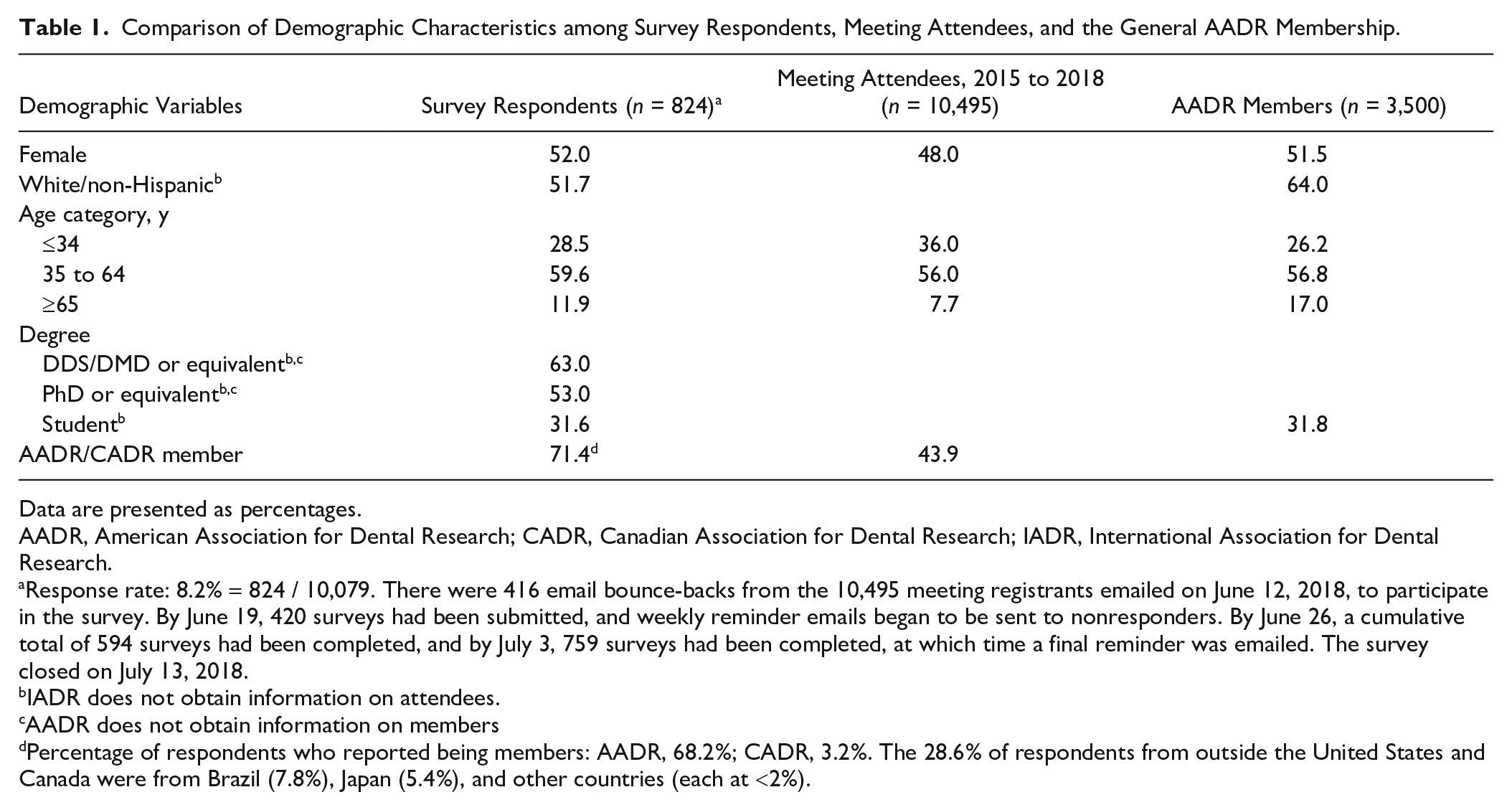
Data are presented as percentages.
AADR, American Association for Dental Research; CADR, Canadian Association for Dental Research; IADR, International Association for Dental Research.
Response rate: 8.2% = 824 / 10,079. There were 416 email bounce-backs from the 10,495 meeting registrants emailed on June 12, 2018, to participate in the survey. By June 19, 420 surveys had been submitted, and weekly reminder emails began to be sent to nonresponders. By June 26, a cumulative total of 594 surveys had been completed, and by July 3, 759 surveys had been completed, at which time a final reminder was emailed. The survey closed on July 13, 2018.
IADR does not obtain information on attendees.
AADR does not obtain information on members
Percentage of respondents who reported being members: AADR, 68.2%; CADR, 3.2%. The 28.6% of respondents from outside the United States and Canada were from Brazil (7.8%), Japan (5.4%), and other countries (each at <2%).
Table 2 displays the weighted and unweighted frequencies of perceived experiences with each type of harassment during the annual meeting, as well as the demographic characteristics of the individuals who reported them. Among those who participated in the survey, 21% responded in the affirmative to ≥1 of the 8 types of harassment depicted in the survey. The frequency of any report of harassment decreased slightly when weights for age and gender (20%) and age, gender, and division membership (18%) were incorporated. Of those who perceived an experience, put-downs or condescending remarks occurred most frequently (70%). Perceived harassment of a more sexual nature—such as sexist remarks (37.8%); staring, leering, or ogling that was uncomfortable (33.1%); touching that was uncomfortable (22.7%); and unwanted attempts at a romantic relationship (11%)—was less common by comparison. Fewer than 5% of reports were in relation to bribes, threats, or provision of suggestive materials. The majority of reporters were female (69%) and members of the AADR/CADR division. Nearly one-third (30%) were ≤34 y of age, and 56% were of White/non-Hispanic race/ethnicity. The majority or reporters had attended annual meetings ≥2 times.
Proportions of Affirmative Responses to Each Harassment Type by Demographic Characteristics.
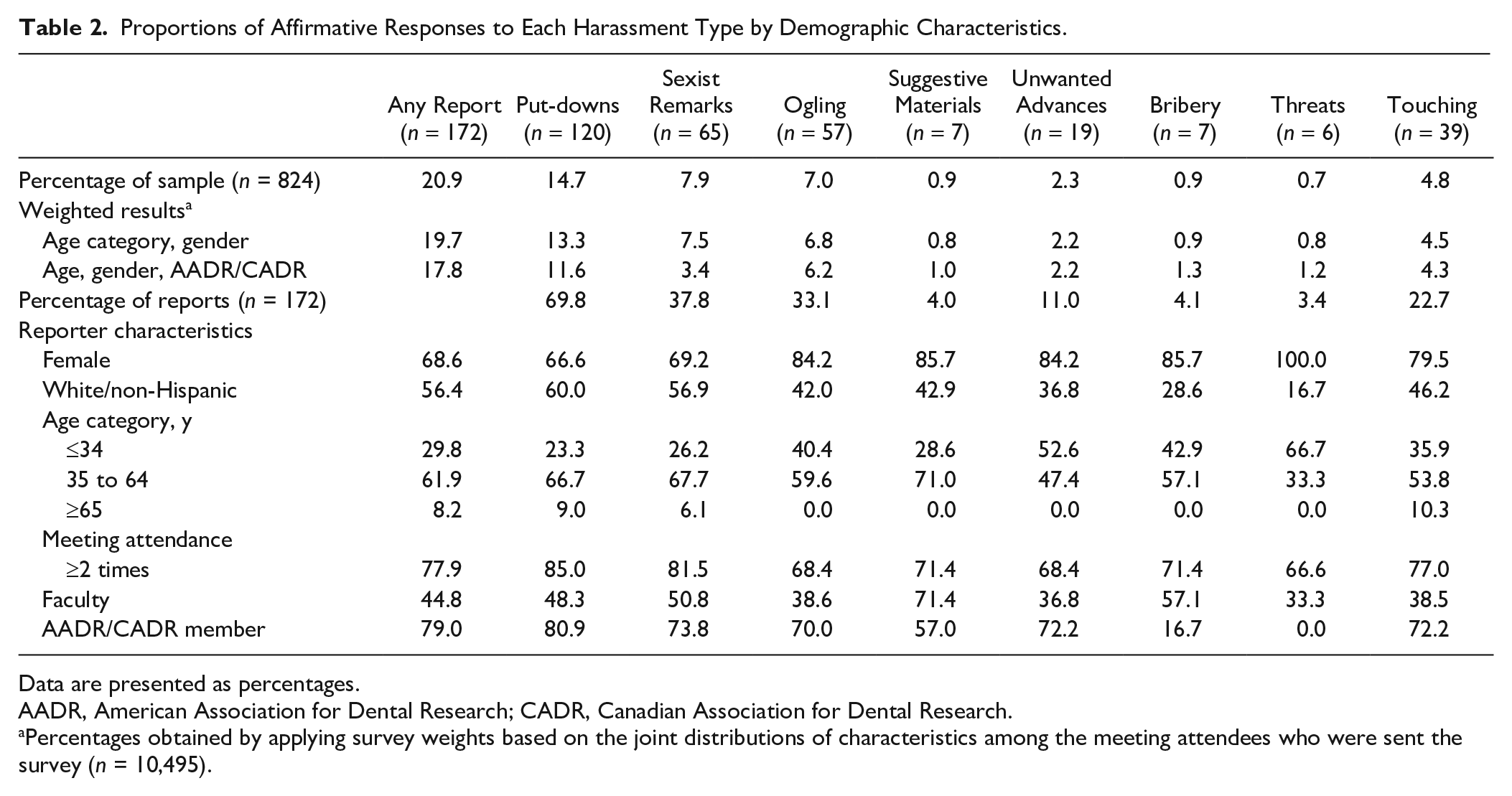
Data are presented as percentages.
AADR, American Association for Dental Research; CADR, Canadian Association for Dental Research.
Percentages obtained by applying survey weights based on the joint distributions of characteristics among the meeting attendees who were sent the survey (n = 10,495).
Table 3 displays the frequencies of reporting perceived experience with harassment according to demographic characteristics. Reports of any type of harassment at annual meetings were significantly more likely if meetings were attended ≥2 times during the 4-y period (26% vs. 13%), if attendees were women (28% vs. 12.5%), or if attendees were members of the AADR/CADR divisions (23% vs. 15%). Women were significantly more likely to report each type of harassment, aside from the provision of suggestive materials and use of bribes, whereas attendees aged <34 y were significantly more likely to report unwanted advances and the use of threats. AADR/CADR members were significantly more likely to report any type of harassment and put-downs; specifically, they were significantly less likely to report bribes or threats, as compared with other divisions.
Bivariate Analyses of Perceived Experiences with Harassment by Demographic Characteristics.
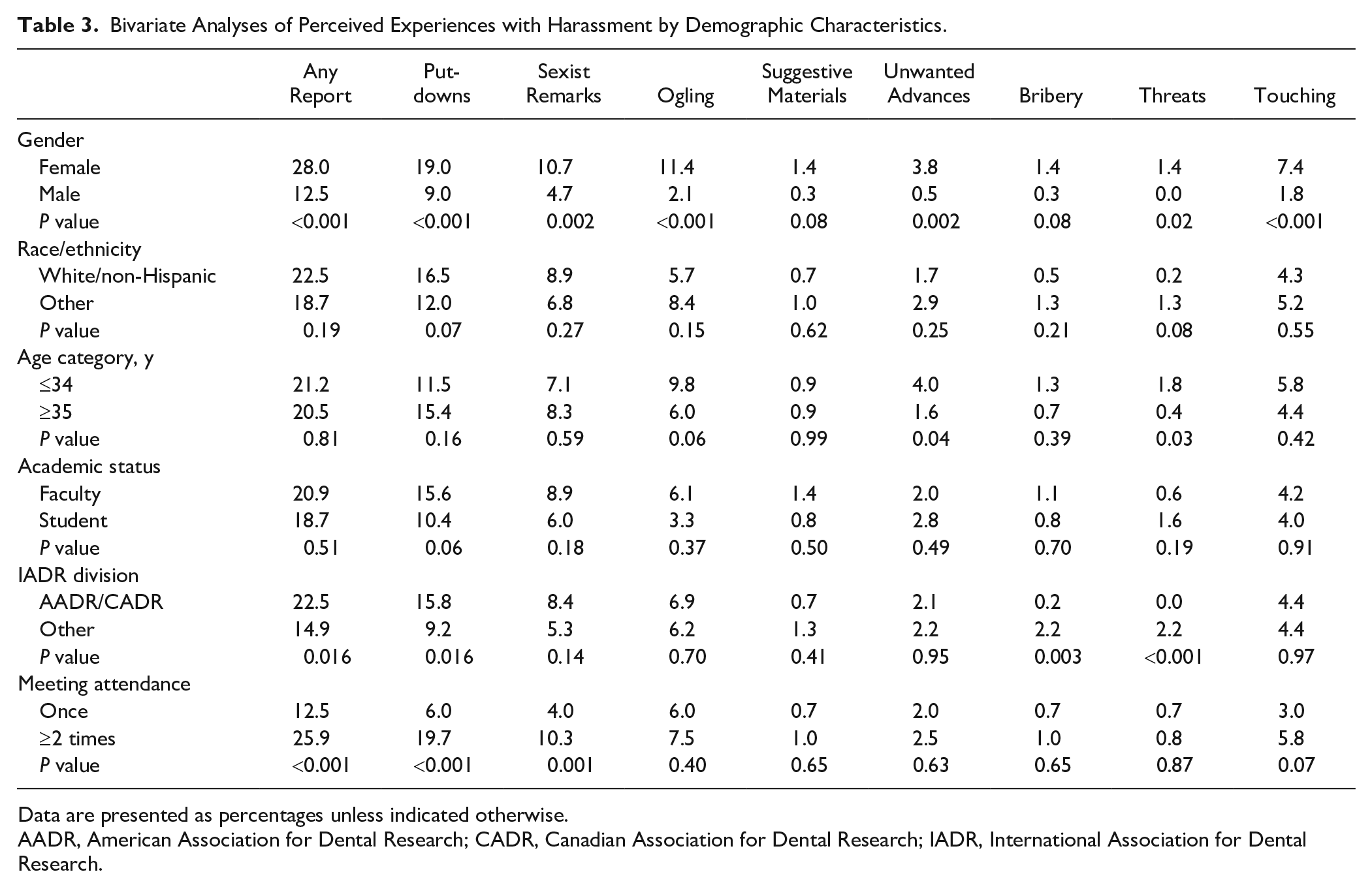
Data are presented as percentages unless indicated otherwise.
AADR, American Association for Dental Research; CADR, Canadian Association for Dental Research; IADR, International Association for Dental Research.
In response to the additional questions regarding experiences with sexual harassment in the scientific workplace, graduate program, or other career-related venue, 22.4% responded affirmatively, 86% of whom were women (data not displayed). Of those who answered affirmatively, the reported harassment most frequently took place in an office (25%), classroom (19%), scientific conference or meeting (18%), or laboratory (17%). Reports of sexual harassment were significantly more likely for women (37.2% vs. 5%) but were not significantly associated with race/ethnicity, age, academic status, or IADR division membership.
Qualitative Results
A total of 229 respondents provided input regarding the 3 open-ended survey items:
“If you would like to provide more details or context about your experiences at the Annual Meeting, feel free to do so using the space below.”
“Thinking just of the issue of sexual harassment, is there anything that the AADR could do to make the Annual Meeting more inclusive and welcoming?”
“Thinking broadly, beyond the issue of sexual harassment, is there anything that the AADR could do to make the Annual Meeting more inclusive and welcoming?”
We describe our findings according to our coding framework and include illustrative quotations from respondents, classified by gender (female or male) and age group (≤34, 35 to 64, and ≥65 y).
Experiences of Harassment
We broadly categorized experiences or perceptions of harassment into 3 categories (NASEM 2018): sexual harassment (also referred to as unwanted sexual attention), gender-based and other types of condescension (also referred to as gender harassment when referring to gender), and experiences of harassment that were not sexual in nature or gender related. These 3 categories represent part of our primary coding framework, under which secondary codes were developed to categorize responses. Table 4 reflects this categorization and presents code summaries and respondent quotes pertaining to each type of report. With respect to perceived experiences with sexual harassment specifically, respondents reported strong emotional reactions that are often associated with or felt by victims of sexual harassment generally.
Responses to Open-ended Survey Items, Categorized by Primary and Secondary Code Structures.
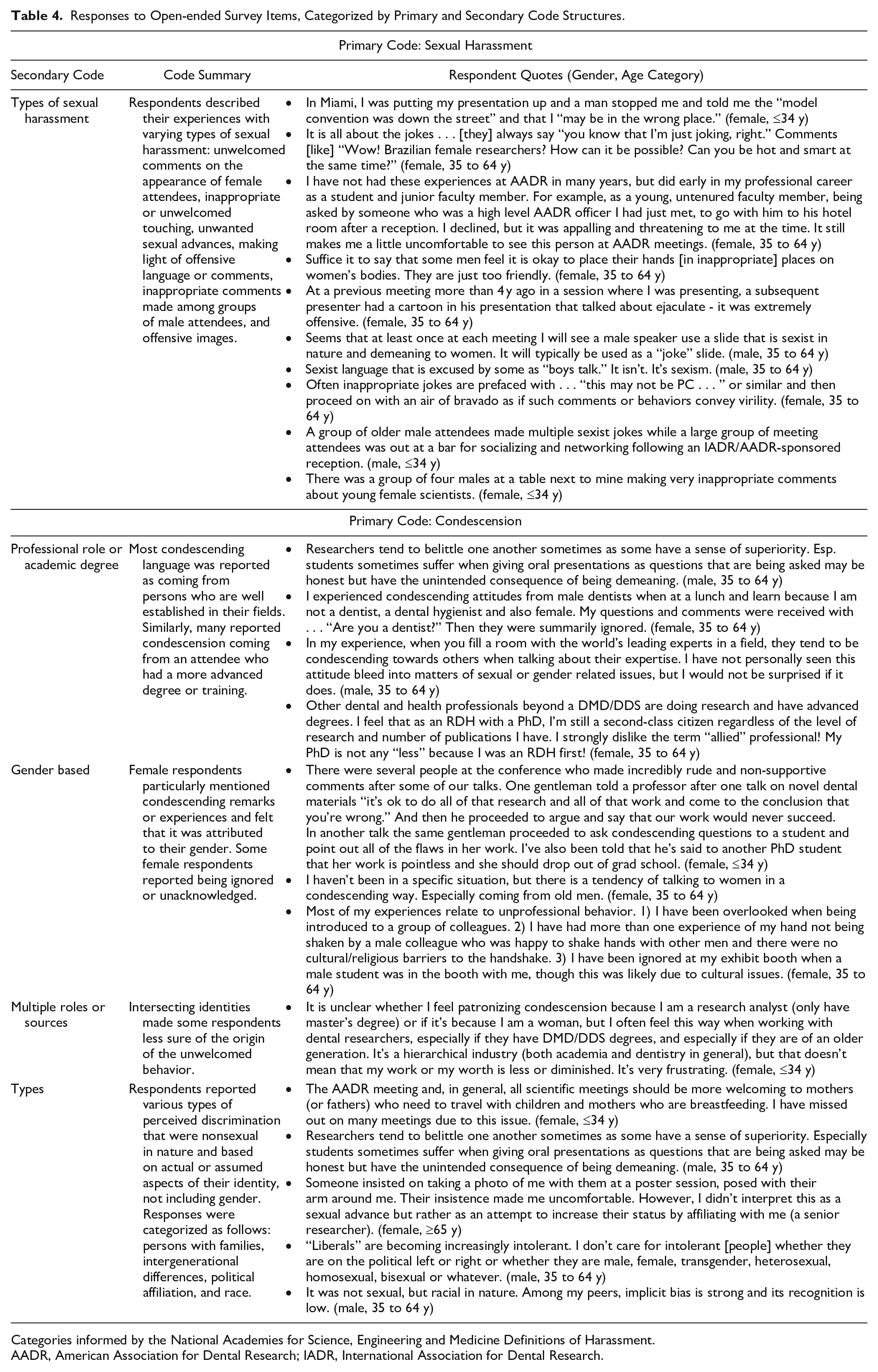
Categories informed by the National Academies for Science, Engineering and Medicine Definitions of Harassment.
AADR, American Association for Dental Research; IADR, International Association for Dental Research.
Nobody wants to feel trapped, threatened, and uncomfortable in a conference. (female, ≤34 y) [The experience of sexual harassment] was appalling and threating to me at the time. It still makes me a little uncomfortable to see this person at AADR meetings. (female, 35 to 64 y) I really don’t want to write about this. (female, 35 to 64 y)
Facilitators of Perceived Experiences with Harassment
Respondents often reflected on the situations, circumstances, or settings that they believed may promote the occurrence of unwelcomed behaviors, including the perception that an overall permissive attitude was present in the sciences in general and thus also present at AADR annual meetings. Similarly, the well-known effects of power dynamics in relationships on the occurrence of perceived harassment was also noted as an influential factor in the reported experiences (McLaughlin et al. 2012). Perceptions were also frequently present indicating that aspects of one’s identity, such as age, gender, or culture, may be facilitating the likelihood of unwelcomed behaviors. For example, some senior female attendees indicated that their age may prevent such occurrences while others felt that reported experiences may be related to a non-White cultural identity. Respondents spoke of cultural identities as potentially being related to having an accent when talking or being questioned about the origin of their accent (e.g., microaggression), while some spoke of misunderstanding or unawareness of cultural norms (e.g., as expressed by persons of different national origins) as framing their perceived experiences.
Since this type of meeting recruits academics from diverse cultural background, it may be a little complicated to be sure that some peoples’ attitudes could be named as “harassment.” I believe that some behaviors may be misunderstood for this reason. (female, 35 to 64 y)
Respondents also noted that the events and activities associated with the AADR meeting may encourage unwelcomed behavior. For example, while many respondents offered positive remarks about the multiple opportunities to network and socialize among peers at AADR-sponsored receptions or at local eateries after the formal meeting activities, others remarked that, at times, these informal settings led to a loosening of standards around appropriate behavior or comments, particularly if alcohol was available. Table 5 displays these perceived facilitators, with illustrative quotes from respondents.
Perceived Facilitators of Unwelcomed Behaviors and Proposed Solutions.
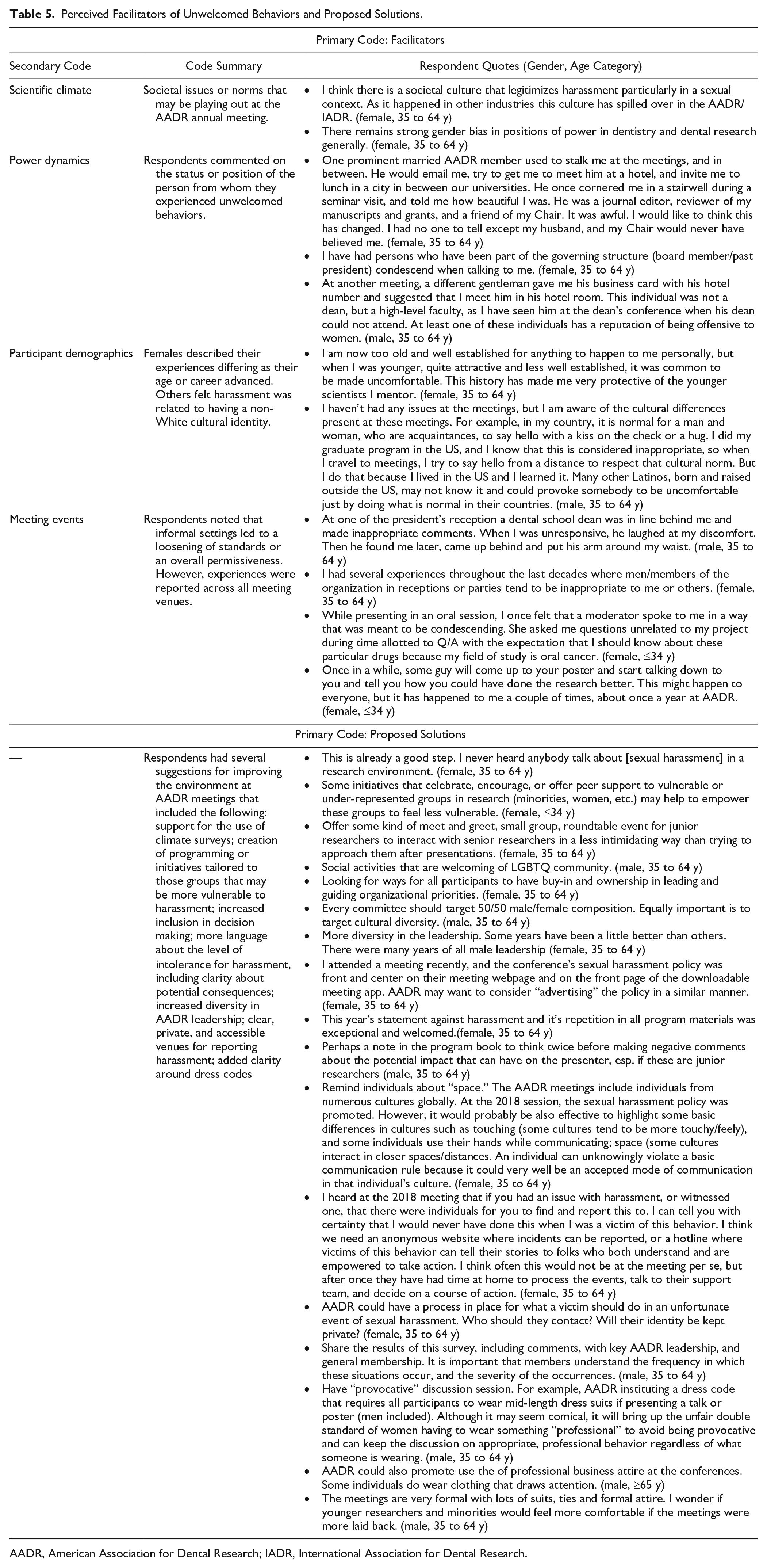
AADR, American Association for Dental Research; IADR, International Association for Dental Research.
Proposed Solutions
Respondents had several suggestions for improving the environment at AADR meetings: 1) creation of programming or initiatives tailored to those groups that may be more vulnerable to harassment; 2) more language about the level of intolerance for harassment, including clarity about potential consequences; 3) increased diversity in AADR leadership; 4) increased inclusion in decision making; 5) support for the use of climate surveys; and 6) clear, private, and accessible venues for reporting harassment (see Table 5). In addition, the dress code implemented at AADR meetings drew particular attention from male respondents specifically. Some of these suggestions appeared to be constructive: The meetings are very formal with lots of suits, ties and formal attire. I wonder if younger researchers and minorities would feel more comfortable if the meetings were more laid back. (male, 35 to 64 y)
Other suggestions appeared to be an attempt at humor or a rejection of dress codes as a possible solution: Everyone should wear featureless jumpsuits with hoods to obscure any gender-associated hair and/or clothing styles. (male, 35 to 64 y)
Pushback to Sexual Harassment as a Serious Problem
In addition to recognizing the role of the scientific climate in perceived experiences with harassment (see Table 5), respondents commented on societal norms as an issue but in a way that trivialized sexual harassment as a type of bandwagon behavior. For example, some respondents noted the #MeToo movement in their remarks, implying that the need to explore sexual harassment was due to unfounded pressure from current national conversations: There are no problems with how the AADR meetings are run with regard to sexual harassment or the feelings of inclusiveness and welcoming (unless you’re a millennial, when almost anything might offend you). (male, ≥65 y) Don’t become one of those organizations that grandstands about inclusiveness. The vast majority of people who are part of any organization are good people. Frankly, it’s obnoxious to have inclusiveness and MeToo initiatives being pushed so hard. Bad people do bad things; initiatives like this do not have any statistically measurable effect on bad behavior by bad people. (male, ≤34 y) I think that by in large the #MeToo culture is a form of Puritanism that should be unwelcome in academia. My Mother grew up during the depression, if a man made an unwanted advance, she didn’t go crying to an authority figure like a little helpless girl. She slapped them. Turns out that shut down sexual harassment pretty effectively. (male, 35 to 64 y)
Discussion
The majority of respondents did not report perceived experiences with harassment of any type (79%). Women, AADR/CADR members, and frequent attendees were most likely to report instances of perceived harassment. Harassment of a nonsexual nature (i.e., put-down) was most commonly reported, while harassment of a sexual nature was less frequent. Reports of sexual harassment at a scientific workplace, graduate program, or other career-related venue did not appear to be more frequent than perceived experiences of any type of harassment at an AADR meeting (22.4% vs. 20.9%) but may be more common in terms of harassment types of a more sexual nature. When compared with the frequency of perceived sexual harassment at APSA meetings, that at AADR meetings appears to be lower overall (Sapiro and Campbell 2018). However, frequencies of perceived experiences with inappropriate touching (4.8% of AADR survey respondents) appear to be very similar.
The conduct of this survey follows a growing trend to formally evaluate the climate of organizations, particularly those in STEMM (science, technology, engineering, math, and medicine), as it pertains to perceptions of and experiences with sexual harassment. Some may view the application of the term “sexual harassment” to our work as an overstatement or perhaps an attempt to be provocative. As previously stated, our use of the term is in line with the definition set forth by the NASEM (2018) in its consensus report. Moreover, the APSA report on sexual harassment points out that with respect to experiences with put-downs or condescending remarks, one can attribute these experiences to gender-based harassment only if there is a gender disparity in the aggregate (Sapiro and Campbell 2018). Indeed, our findings indicate that the occurrence of such experiences is very much gender based, as twice as many females (19%) as males (9%) report perceived experiences with put-downs or condescending remarks.
Inferences based on the survey sample are limited in several ways. Primarily, the response rate (8.2%) was low; thus, the overall sample size limited the feasibility of more in-depth analyses. By way of comparison, the response rate for the 2017 APSA survey was 18% and administered under more favorable conditions (during the academic year and to an audience of professionals routinely engaged in polling and survey design/administration). Relatedly, the frequencies of perceived experiences with each type of harassment assessed were low; therefore, restricted analyses were underpowered. Finally, the representativeness of the sample with respect to meeting attendees during the 2015–2018 period is questionable. The survey sample contained an overrepresentation of AADR/CADR division members, likely due to the target recipients (i.e., attendees at US meetings), as well as the timing of the survey, its availability in English only, and the current cultural movements occurring in the United States, such as #MeToo. These differences between the survey sample (n = 824) and the source population (n = 10,495) are commonly dealt with in survey research by incorporating sample weights into the analysis to address nonresponse bias, which we did (see Table 2). However, it is important to note that the use of weights can address imbalances in response rates only by the known variables and cannot address selection biases, such as the aforementioned potential for topic-related selection bias. This bias would be present if those who had perceived experiences with sexual harassment were more or less likely to respond than those who did not. Unfortunately, the presence and influence of this type of bias are not evaluable without additional data and are commonly cited limitations in survey research on this topic. Thus, one should use caution when making inferences based on the results of our sample.
In 2018, the AADR introduced a new Professional Conduct at Meetings Policy, which delineates unacceptable behaviors, including but not limited to intimidating or harassing speech and actions. The policy was announced in the opening ceremonies by AADR President Raul Garcia (“AADR Proceedings” 2018); each attendee consents to the policy upon registering for the meeting; and all attendees are reminded of the policy with “walk-in” slides shown in all the oral session rooms. Monitoring its impact will be necessary to inform future actions by the AADR to ensure that meetings are respectful, supportive, and safe environments for all.
To our knowledge, the 2018 report from the APSA was the first from any professional membership organization to report on attendees’ experiences at official meetings of their organizations. Similarly, this AADR report is the first report from a US biomedical research membership organization. To date, the best single source of work on sexual harassment in the biomedical sciences is the 2018 report from the NASEM (2018). In addition, the AADR was 1 of the 53 founding members of the Societies Consortium on Sexual Harassment in STEMM (2019), established by the American Association for the Advancement of Science, the Association of American Medical Colleges, the American Geophysical Union, and the Education Counsel. Launched at the American Association for the Advancement of Science annual meeting in February 2019, the consortium aims to advance professional and ethical conduct, climate, and culture in societies’ own operations and STEMM fields broadly.
In conclusion, while the majority of survey respondents had no personal experience with harassment at AADR meetings, the fact that 1 in 5 did is cause for concern and warrants steps for improvement. Promoting the AADR’s Professional Conduct at Meetings Policy and joining the Societies Consortium on Sexual Harassment in STEMM demonstrate the AADR’s commitment to providing a collegial, safe, and welcoming environment for all.
Author Contributions
B. Heaton, contributed to data analysis and interpretation, drafted the manuscript; D. Streszoff, contributed to data acquisition and interpretation, critically revised the manuscript; C.H. Fox, contributed to conception, design, data acquisition, and interpretation, critically revised the manuscript; E.A. Kaye, C.M. Gebel, L.M. Quintiliani, contributed to data analysis, critically revised the manuscript; R.I. Garcia, contributed to conception, design, data acquisition, analysis, and interpretation, critically revised the manuscript. All authors gave final approval and agree to be accountable for all aspects of the work.
Supplemental Material
AADR_Sexual_Harassement_Survey – Supplemental material for Survey of Dental Researchers’ Perceptions of Sexual Harassment at AADR Conferences: 2015 to 2018
Supplemental material, AADR_Sexual_Harassement_Survey for Survey of Dental Researchers’ Perceptions of Sexual Harassment at AADR Conferences: 2015 to 2018 by B. Heaton, D. Streszoff, C.H. Fox, E.A. Kaye, C.M. Gebel, L.M. Quintiliani and R.I. Garcia in Journal of Dental Research
Supplemental Material
DS_10.1177_0022034520908504 – Supplemental material for Survey of Dental Researchers’ Perceptions of Sexual Harassment at AADR Conferences: 2015 to 2018
Supplemental material, DS_10.1177_0022034520908504 for Survey of Dental Researchers’ Perceptions of Sexual Harassment at AADR Conferences: 2015 to 2018 by B. Heaton, D. Streszoff, C.H. Fox, E.A. Kaye, C.M. Gebel, L.M. Quintiliani and R.I. Garcia in Journal of Dental Research
Footnotes

References
Supplementary Material
Please find the following supplemental material available below.
For Open Access articles published under a Creative Commons License, all supplemental material carries the same license as the article it is associated with.
For non-Open Access articles published, all supplemental material carries a non-exclusive license, and permission requests for re-use of supplemental material or any part of supplemental material shall be sent directly to the copyright owner as specified in the copyright notice associated with the article.
