







Abstract
With improvements in both technology and information, cannabis is being increasingly grown indoors for domestic use rather than being imported. This study examines 50 cannabis farms detected by an English police force and examines the characteristics of the 61 suspects associated with them. The study highlights a U.K. pattern in domestic cultivation, which is moving away from large-scale commercial cultivation, at times coordinated by Southeast Asian organized crime groups, to increased cultivation within residential premises by British citizens. Offenders range from those who have no prior criminal history to those who are serious and persistent offenders. The ramifications for law enforcement agencies and policy formers are discussed.
Introduction
Cannabis is ubiquitous, used by a diverse range of societies and cultures, being cited as the drug that young people are most likely to encounter (Silverstone, 2011). Indeed, some argue that the normalization of cannabis, especially among young people, has increased demand (Fountain & Korf, 2007), with policy solutions ranging between legalization (or decriminalization) and prohibition (Hall, 2009). Nevertheless, while the substance remains illegal across most locations, and demand remains high, the supply process remains a fertile ground for criminal entrepreneurs. These individuals adapt their methods to seize opportunities and navigate around obstructions (Ekblom, 2003; Kirby, 2013), with the increasing shift from importation to domestic cultivation, the most recent development (Potter, 2008). In this rapidly changing environment, it is vital to monitor trends to enable policy makers and criminal justice agencies devise and implement the most appropriate interventions. This study provides empirical data from 50 “cannabis farms” identified by an English city police force; it examines the level of cannabis seizures, the premises and people involved, and the ramifications this has for policy makers. The first stage of this study will provide the context behind the proliferation of domestic cannabis cultivation.
Literature Review
The Proliferation of “Home Grown” Cannabis Cultivation
To understand the evolution of domestic cannabis cultivation, it is important to recognize that growers require some level of knowledge and specialist equipment. Optimum temperatures and light are needed to grow the plant and this, coupled with the risk of detection and interference by human and animal behavior, generates complications when grown outdoors in countries such as the United Kingdom (Independent Drug Monitoring Unit [IDMU], 2013). Furthermore, cannabis can be produced and supplied in different forms with different varieties or strains having different levels of psychoactive properties. Dense blocks sourced from the secretion of the plants’ flowers, commonly known as hashish, are offered alongside herbal cannabis, known as grass/marijuana/ganja, which is produced by harvesting dried flower stems, leaves, and top shoots (Jenkins, 2006). Historically, these complexities generally meant specialists would more often produce and import the drug on an organized scale. This generates higher prices as actors within the supply chain (from wholesaler, to middle market, to retailer) set their tariff to cover the costs required for transportation, security, and profit.
Routine activity theory (Felson, 2002) contends that crime is generated through the opportunities that emerge from the rhythms of everyday life. The theory argues that for a crime to be committed, a motivated offender must come together, at the same time and place as a suitable target, in the absence of a capable guardian. In essence, it argues that criminal entrepreneurs adapt their illegal behavior according to the external conditions and opportunities of the time, just as consumers may also change behavior to obtain better quality or lower priced goods. These principles can be identified during the latter part of the 20th century when a number of drivers for change emerged. First, the risks associated with cannabis were increased as many countries hardened their stance on the drug. This resulted in more vigorous eradication of outdoor crops, pursuit of offenders, and the seizure of illegal imports (Gettman, 2006). Nevertheless, these risks were balanced with new opportunities as improvements in technology emerged. Indoor growing became possible with the technological advancements in hydroponics and lighting (Potter, 2008; Potter, Bouchard, & Decorte, 2011). From the 1980s, these advancements were concentrated in the Netherlands as production of hemp seeds remained legal, and the area became known as “an ideal ‘incubation country’ for further developing both the genetics and production techniques” (Decorte, 2010, p. 272). Further assistance was provided by the increased mobility of people, services, and information, which assisted the spread of specialist knowledge to an increasingly globalized world (North America, Australasia, and Europe; Decorte, 2010). Information for the budding cannabis cultivator became readily accessible through the Internet, magazines, and specialist retailers (known as grow shops) selling indoor cultivation equipment (Decorte, 2010; Potter, 2010).
This evolution, from importation to indoor domestic cultivation, became an “adaptive and innovative strategy” (Bouchard, 2007, p. 222). The method became more operationally and financially viable as it reduced the number of people that needed to be involved, thereby reducing the risk of detection as well as lowering the handling and transportation costs (Jansen, 2002; Potter et al., 2011). The impact was soon evident. Daly (2007) reported a case study in Surrey (United Kingdom), where “In their six months of occupation the skunk [marijuana] farmers had earned an estimated £100,000 from two crops, caused a further £10,000 in damage, left a £6,000 electricity bill and wiped £20,000 from the value of the house” (p. 8). This economic reward to the grower continued to change the demographics of domestic markets, with local dealers soon highlighting imports that were falling as local cultivation thrived. This made the availability of resin (which is more likely to be imported) less accessible compared with herbal cannabis (Potter et al., 2011).
Changing policy, police practice, and increased media publicity mean that figures derived from police sources should be treated with caution. Notwithstanding this concern, the pace of change concerning domestic cannabis cultivation was considered significant. Kirby and Penna (2010), examining the records of an English county police force, discovered while only 5 cannabis factories were discovered in 2007, 42 were discovered a year later. These operations were quick and inexpensive to set up, often found in commercial rented accommodation, and predominantly operated by Southeast Asian (generally Vietnamese) nationals. This trend was found across the United Kingdom with official statistics showing a total of 3,032 commercial cannabis farms identified in 2007/2008, which rose by over 150% to 7,660 in 2010/2011. This number was estimated to rise to 7,865 in 2011/2012 (Association of Chief Police Officers [ACPO], 2012), meaning 21 farms would be discovered and dealt with in the United Kingdom each day. A survey of U.K. police seizures in 2008 showed that 81% comprised domestic herbal cannabis (ACPO, 2012), and in 2011 65% of the total U.K. cannabis market was domestically produced (IDMU, 2011). Indeed, the public are being told that half a million people are growing cannabis in the United Kingdom, which could be estimated as almost one on every street (Woodman, 2013). The most recent analysis, generated by the Serious Organised Crime Agency, argued that cannabis in the United Kingdom was a £1billion per annum industry, with 270 tonnes needed each year to meet the demand (National Crime Agency, 2014). Furthermore, as commentators observe, “cannabis cultivation is increasingly universal” (Potter et al., 2011, p. 1), with research showing an increase in other countries. Wouters (2008) stated that 6,000 cannabis cultivation sites are being dismantled each year in Belgium, whereas Akgul and Sever (2014) reported Turkish law enforcement agencies destroyed more than 20 million plants in 2012. Similarly, Bouchard, Alain, and Nguyen (2009) reporting on research in Quebec, Canada, argued that more than 50,000 people now work in cannabis cultivation, a rapid and substantial change from the small amount of importers previously involved.
The Grower
As the method of supply evolves, it is useful to examine the profile of growers. A number of typologies have differentiated different categories of domestic cannabis farmers, often highlighting those who grow for ideological means (more often for sole use) and those who grow commercially, although a crossover between the two is often reported (Potter, 2010). Hough et al. (2003) defined U.K. growers as follows: The sole-use grower: cultivating cannabis for their personal use and use with friends The medical grower: individual and others use, purely for medical reasons The social grower: cultivation to ensure good quality and good value cannabis for themselves and friends The social/commercial grower: growing for themselves and friends but with an element of profit The commercial grower: growing to make money, with anyone as a possible customer. (Edited from Hough et al., 2003, p. ix)
Unsurprisingly, the boundaries between these categories are not always well defined. For example, the social/commercial grower (Hough et al., 2003) is someone who is described as earning large profits but only selling to friends. Other commentators argue that there is growing market fragmentation, with less reliance on a “Mr Big” sole supplier (Potter, 2008). Ideological reasons, often associated with small crops (Hough et al., 2003), can include political reasons, saving money, medical needs, and guaranteeing the quality and purity of the commodity (Potter, 2008). Furthermore, the pleasure involved with growing the drug (Weisheit, 1991), coupled with the ability to avoid “real” drug dealers, organized crime, the black market, the risk of arrest, and an association with Class A drugs also appear in the explanations provided (Hough et al., 2003). Conversely, commercial growers are predominantly driven by profits, although there appear some exceptions. Weisheit (1992) described three types of commercial growers in America: “Hustlers” who enjoy the success of cultivation and its perks; “Communal growers” who choose to cultivate as a lifestyle choice, rather than primarily for financial gain; and “Pragmatists” who use cannabis cultivation as a source of income in difficult times. Wilkins, Bhatta, and Casswell (2002) also linked cannabis cultivation to “economically depressed rural areas” (p. 369). Hough et al.’s (2003) U.K. research unearthed that commercial growers grew the best crop to allow them to charge higher prices; these respondents were all observed to use hydroponic techniques and grew between 2 and 90 plants at a time (Hough et al., 2003). One respondent reported earning enough money (on average £2,500 a month) to leave his regular employment (Hough et al., 2003).
Nearly a decade after these studies, the ACPO (2012) in England and Wales has emphasized that the relationship between organized crime and commercial is growing, enhanced by the large profit margins and the low risk of sanction compared with other types of drug production and supply. In fact, others report Class A drug dealers (heroin, cocaine) are increasingly engaged in cannabis cultivation due to its high profit status (Shute, 2013). ACPO (2012) has also noted an increase in burglaries, robberies, and violence associated with cannabis farms. Furthermore, Southeast Asian organized crime groups (OCGs), who previously ran two thirds to three quarters of all cannabis farms in the United Kingdom (Daly, 2007), appear to have lost their market share to the indigenous British population (ACPO, 2010). It is suggested although a large number of Southeast Asian immigrants are still being arrested, these are now working as “gardeners” in the farms (ACPO, 2010). The U.K. police also report OCGs are creating new initiatives to reduce risk and increase profit, for example, moving from large sites to smaller farms, stealing cannabis crops from others, and requiring others to grow on their behalf (ACPO, 2012).
The Criminal Justice Response
The policing of cannabis has often been surrounded by ambiguous, controversial, and changing policy interventions (see Akgul & Sever, 2014). This is typified by the United Kingdom that first regulated cannabis in 1924 under the Poisons Act, when little domestic use was present (Mills, 2003). The Misuse of Drugs Act 1971 followed and provided more comprehensive legislation to prohibit the importation, exportation, production, supply, possession, and cultivation of cannabis (Potter, 2008). This was supplemented by the Drugs Trafficking Act 1994, which made the production of cannabis, a trafficking offense (Potter, 2008). In January 2004, the British government downgraded cannabis from Class B to Class C status (ACPO, 2010), and this coincided with an increase in domestic cultivation. The response was twofold. In January 2009, the classification was returned to Class B, with the home secretary stating she wanted the United Kingdom to be “a high risk place for them [cannabis farms] to operate” (ACPO, 2010, p. 2). Second, attempts were made to standardize the response to cannabis cultivation, with government advice stating, “Cultivation of cannabis should be regarded as ‘commercial’ if: Twenty-five or more cannabis plants, at any stage of growth (germination), are being or have been grown OR there is evidence of a ‘cannabis farm’” (ACPO, 2012, p. 6). Although some academics would argue otherwise (see Potter, 2010, 2011), official guidance further stated that those who are in possession of fewer than 10 plants are thought unlikely to be supplying others, while anything more than 10 plants suggests excess amounts (ACPO, 2012).
It is reported cannabis farms within the United Kingdom are rarely identified by the public (Collison, 1995), with the policing of cannabis seen as “largely reactive and rarely proactive” (Potter, 2008, p. 98). Discovery often occurs through fires (Daly, 2007, reported the London Fire Brigade found 50 farms), neighbors reporting “cannabis houses” being broken into (ACPO, 2010), or police officers detecting the smell during routine inquiries (Potter, 2008). Trying to prevent the continuation of cannabis cultivation in the United Kingdom has been portrayed as an impossible task with those detected soon replaced by others (Collison, 1995), and internationally there appears no evidence that domestic cannabis cultivation is decelerating (Spapens, van de Bunt, & Rastovac, 2007; Wouters, Korf, & Kroeske, 2007). Although the identification of farms is becoming increasingly innovative as helicopters and handheld devices identify heat sources, so offenders adapt, creating displays in front rooms to make them look inhabited (Daly, 2007). The Netherlands approach is said to mirror the policy observed in many other countries, being described as “a hit and run practice, busting a maximum number of sites with maximum efficiency, but not weighing the potential impact on organised crime” (Decorte, 2010, p. 3). A concerted effort in London between 2005 and 2007 resulted in 1,500 cannabis farms being raided and dismantled, a threefold increase compared with the previous 2 years (Daly, 2007). During the operation, a metropolitan police commander said it aimed to “send out a clear message that cannabis production is a serious offence and that offenders will be brought to justice” (Community Justice Portal, 2006). However, as Kennedy (2008) showed, no matter what the police say, deterrence value is limited when offenders know the real risk of detection is low. Also, crackdowns can have unintended consequences as inferior and polluted products can invade the market, taking advantage of desperate and indiscriminate consumers (Daly, 2007). A possible alternative to targeting cannabis farms could be to target the apparatus used to grow cannabis (Potter, 2010). Although undoubtedly making it far more difficult to grow cannabis, especially to the quality necessary for high profits (Potter, 2010), this would be difficult as the legal grow shops sell equipment for legitimate purposes. Currently, a more liberal view to small levels of cultivation operates in the Netherlands and is explained as “grudging toleration” (May, Warburton, Turnbull, & Hough, 2002, p. 13). Furthermore, Uruguay and specific U.S. states have recently legalized cannabis, suggesting that the public perception of harm has reduced dramatically (Travis, 2014). It is thought this trend will continue, facilitated by the tax revenue it generates.
In summary, the domestic cultivation of cannabis remains a complex problem, constantly evolving in a changing environment. Decorte (2010) argued that significant questions remain unanswered in this field, such as the prevalence and role of social–commercial cultivators, asking to what level the noncommercial cultivators currently exist. Furthermore, the criminal justice perspective is also underresearched in this area. It is to these areas that this research now turns.
Method
The study was conducted in a police district situated within a city police force in the North of England. The area covers 41 square miles and comprises a number of towns that are resident to an urban and racially diverse population of approximately 226,600 people. After being subjected to appropriate vetting procedures, the researchers were given access to relevant information from police and local government systems.
A mixed-method approach was used. Initially, a quantitative approach examined cannabis farms dealt with by the police between 2011 and 2013. Due to the level of assistance needed from the police to access records, it was agreed that only 50 of the 138 cannabis farms, detected and recorded during this period, would be analyzed. A random number generator was used to select 50 cases. Content analysis was then used to extract the data across 14 specific variables, including type of premises, personal characteristics, and previous convictions relating to the suspects. The benefit of quantitative approaches allows straightforward collation and analysis of information and trends (O’Leary, 2004). Although they may be less affected by researcher bias (O’Leary, 2004), police data do not capture all crime and can reflect the extent of police effectiveness in detecting a particular phenomenon (Jupp, 1989); albeit there is nothing to suggest the police are more adept at detecting one type of cannabis cultivation from another.
While quantitative approaches show what is happening, qualitative approaches are more effective in answering why it is happening by focusing on the individual’s subjective view of the world and providing meaning (Sarantakos, 2005). As such, the study was supplemented with questionnaire data to obtain a police perspective, using a variety of 16 open and closed questions, some of which were supplemented with a Likert-type scale. This was an opportunity sample distributed to staff from the police station where the study was conducted. Twenty-two respondents, who returned the questionnaire, comprised 17 male and 5 female officers, the majority of whom were constables (14), supplemented by 6 inspectors and 2 sergeants. These were an operationally experienced group with the majority (82%) stating they had more than 10 years police service. Appropriate ethical procedures were followed, with all respondents remaining anonymous and providing informed consent (Punch, 1986). The use of a mixed questionnaire provided flexibility and, as Maxfield (2005) suggested, can create a more interesting questionnaire for respondents to complete. Nonetheless, limitations in the use of questionnaires exist, notably variability in the veracity of respondents, lack of clarification for the respondents, and distortion through memory or bias (Mason, 2006; Maxfield, 2005). A copy of the questions can be found in the appendix.
Findings
Quantitative—What Police and Local Government Records Tell Us
Police records found that the discovered cannabis cultivations ranged in size between 5 and 562 plants, and could be categorized, and further analyzed, across three specific types of premises: social residential (managed by social housing trusts), private residential, and commercial premises.
Table 1 demonstrates that the vast majority of cannabis farms were discovered in residential premises (divided between social and private housing), with much fewer farms found in commercial premises, such as warehouses. Although the average number of plants found was 51, there was a significant difference in the average number of plants discovered in each type of premises, with more detected within private residential (69) than social housing (19). Furthermore, business premises, although fewer in number, overshadow both with an average of 137 plants recovered. Analysis showed that 82% of the growers were cultivating more than 10 plants, perceived by the U.K. government as above the level associated with personal use.
Detected Cannabis Farms, Categorized in Relation to Premise Type.
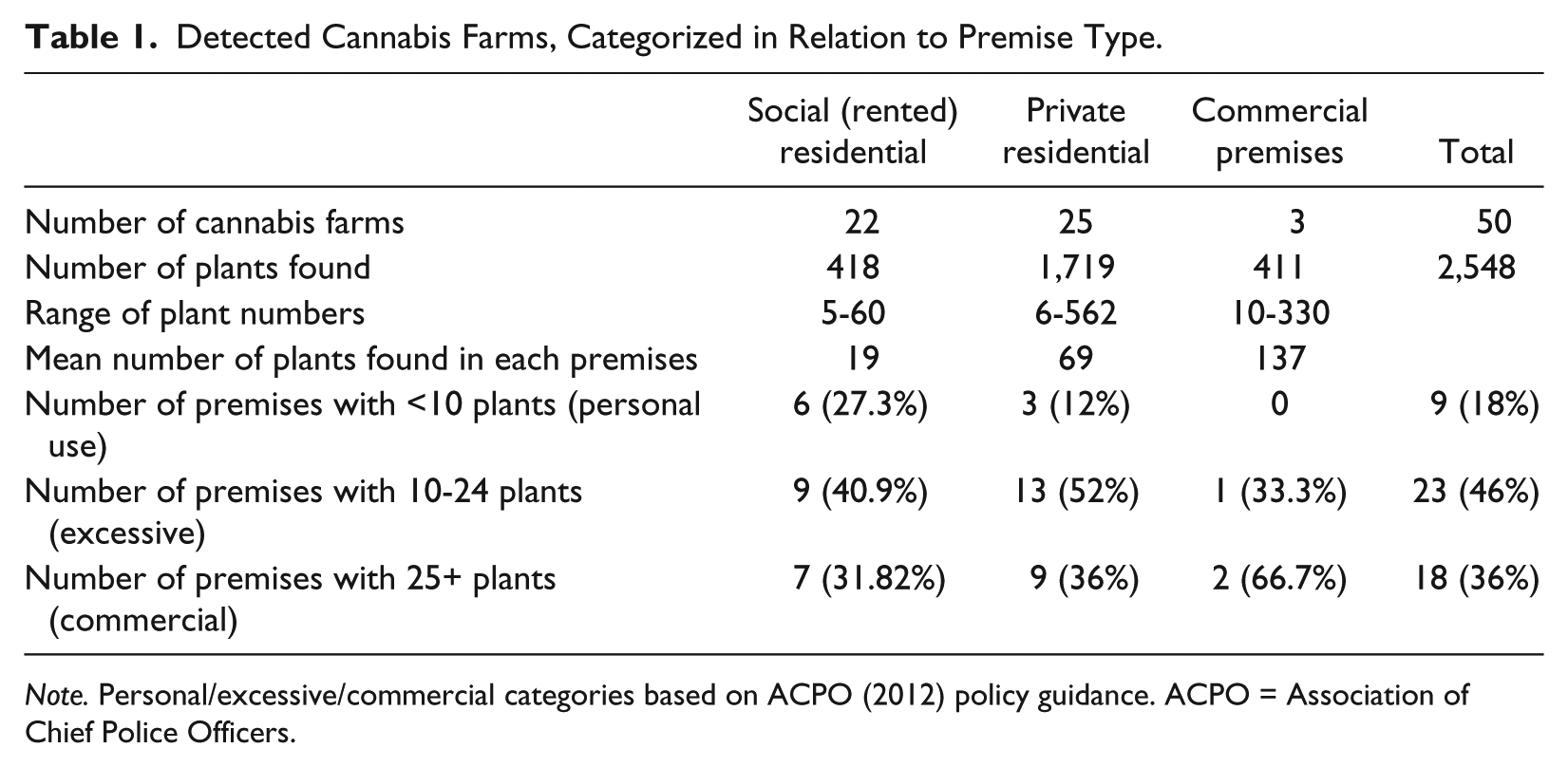
Note. Personal/excessive/commercial categories based on ACPO (2012) policy guidance. ACPO = Association of Chief Police Officers.
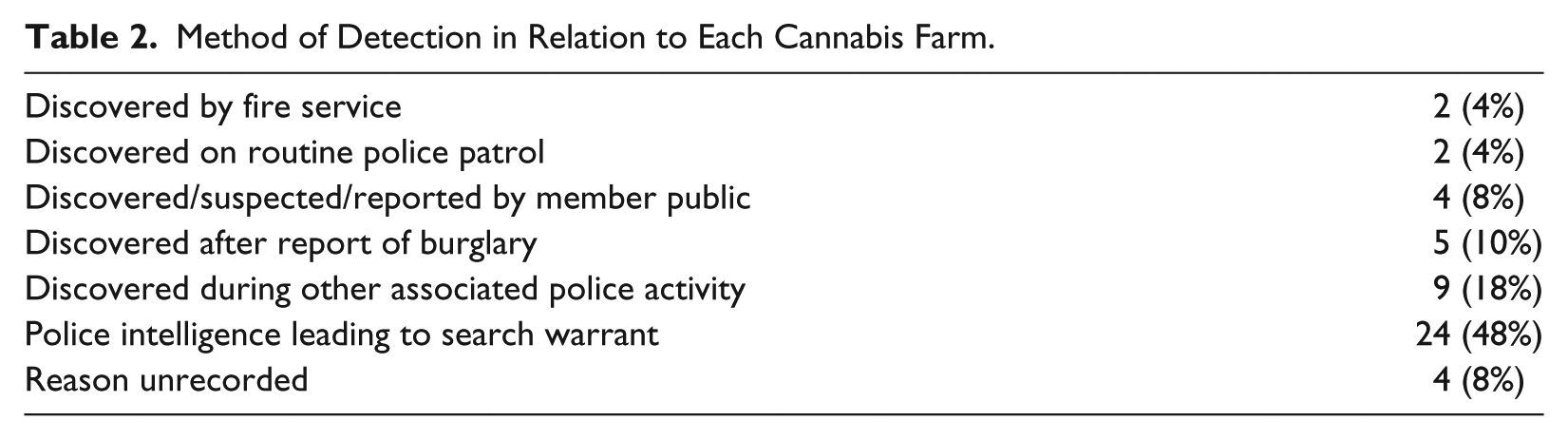
Table 2 shows the diverse methods by which the cannabis farms were identified. The majority are discovered through the execution of a search warrant by the police, which implies some previous knowledge of a farm being present. Conversely, there also appears some level of reactive or incidental discovery, with general police activities such as routine patrol, assisting bailiffs or the television licensing authorities, and executing a “dangerous dog” warrant also reported.
Method of Detection in Relation to Each Cannabis Farm.
Police Records—Suspect and Offender Characteristics
The study then analyzed the characteristics of the 61 suspects associated with the detected cannabis farms, who were either prosecuted or otherwise sanctioned (i.e., police caution). Fifty-three were male, and 8 female, with an age range between 20 and 70 years (M = 36 years). The vast majority of these were British, with 47 (77%) classified as White British, 10 non-White British (16%), and 4 (6%) foreign nationals—comprising Vietnamese (2), Portuguese (1), and Chinese (1). Although these overseas nationalities were few in number they were associated with significantly larger seizures, as from the three farms they were involved with a total of 762 cannabis plants were found (M = 254). This can be compared with the 47 cannabis farms linked to British nationals, from which 1,786 plants were seized (M = 38).
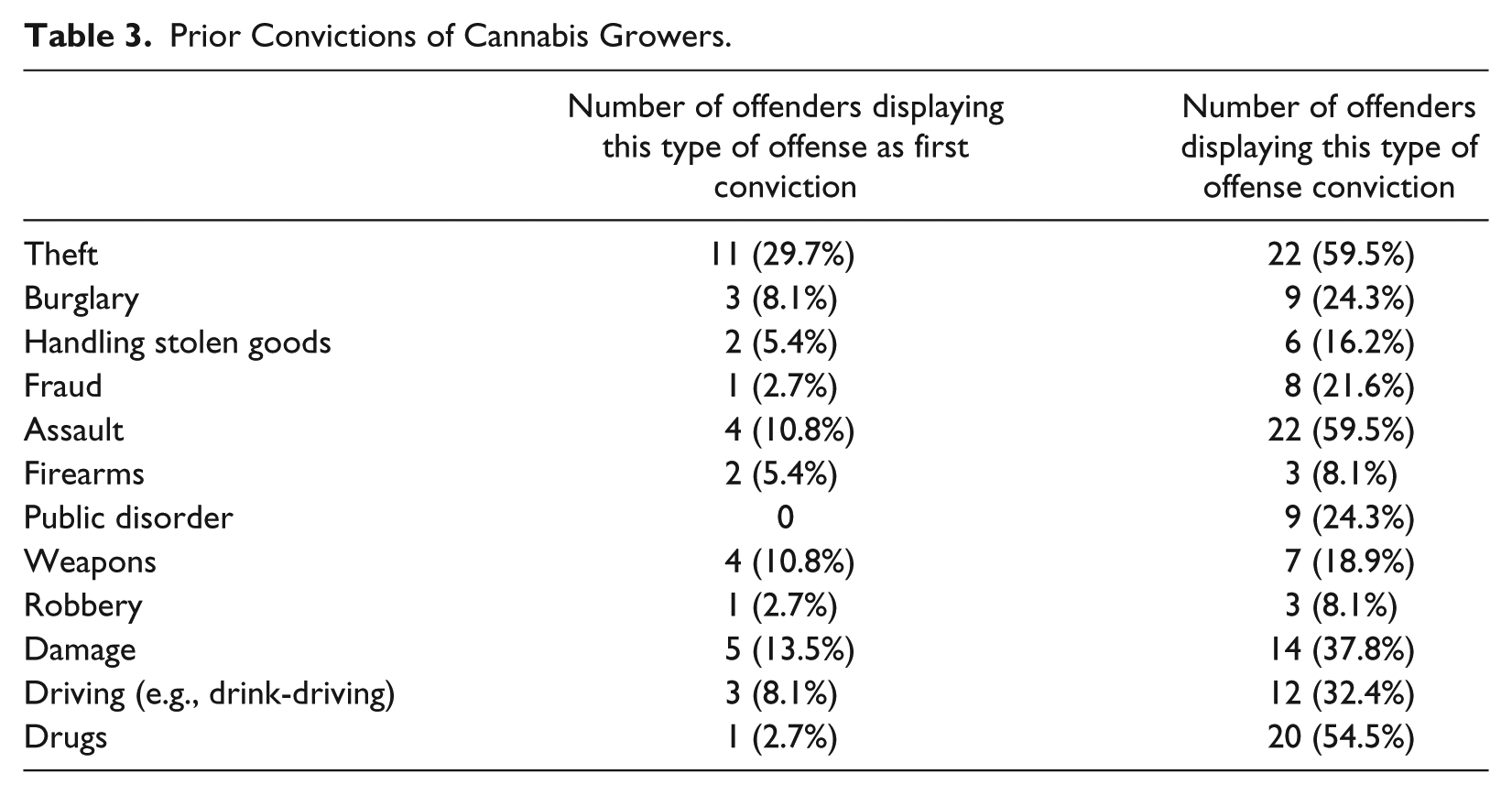
The next stage was to assess the previous criminal convictions of those involved. As antecedent information was missing for the foreign nationals, details were only available for 57 of the suspects. The sample shared 344 prior convictions (M = 6 prior convictions). Although numbers of prior convictions ranged from 0 to 38, 20 (35%) had no prior criminal history whereas 14 (24.6%) had more than 10 prior convictions. Furthermore, 9 (15.8%) had between 1 and 4 convictions and 14 (24.6%) had between 5 and 9 convictions. About 59.5% of offenders showed an offense of theft or assault in their background, with 54.5% having a previous drug conviction. The most common first conviction was theft, and this was exhibited by 29.7% of offenders (see Table 3).
Prior Convictions of Cannabis Growers.
Questionnaire—Police Officer Opinion
The second stage of the study was to examine practitioner opinion in the area the cannabis farms were discovered. Twenty-two operational officers from the area completed the questionnaires—the majority of whom stated they had previously dealt with cannabis farms (1 reported dealing with more than 50). Twenty-one (95%) reported a dramatic increase in the prevalence of cannabis farms. All recognized the operational burden this was creating, with 6 (27%) referring to this as a large burden and 12 (55%) as a reasonable burden. This finding is particularly interesting when exploring police views as to the prioritization of cannabis and cannabis farms, illustrated in Table 4.
Showing Police Officer Views as to Cannabis and Cannabis Farms as a Priority for the Police.
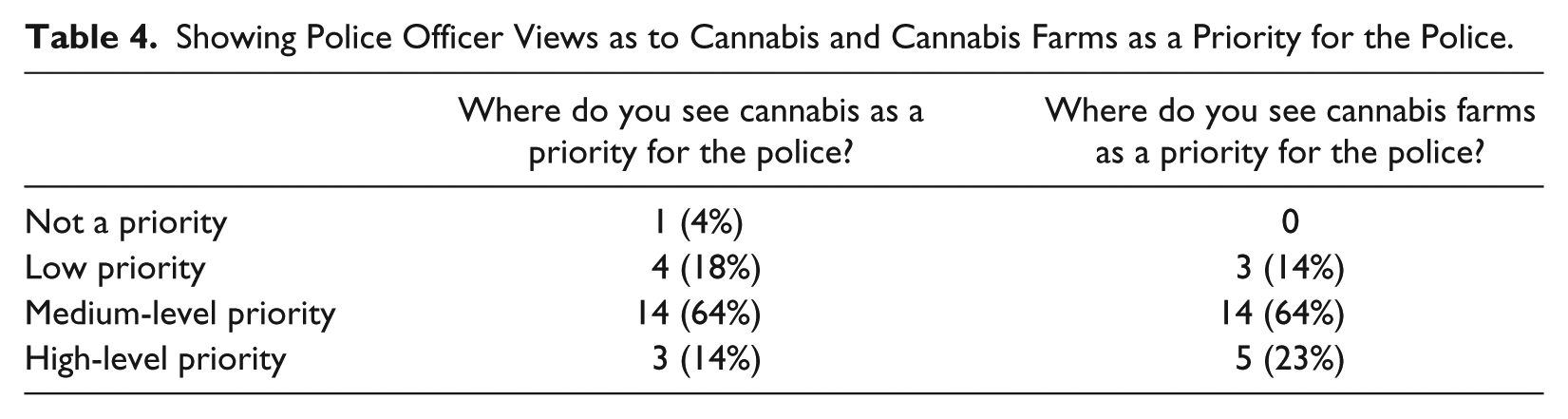
As can be seen, although officers saw the phenomenon as a significant burden on the police, there was some apathy relating to its prioritization. Only three (14%) viewed cannabis as a high-level priority. When asked further how cannabis farms (i.e., the location where the drug was cultivated) should be treated, similar opinions prevailed with only five (23%) viewing them as a high priority. It appears the majority of respondents viewed cannabis, and its production, as a medium- to low-level priority.
A more open style of question asked officers how they thought community members viewed cannabis farms. Content analysis of these free text replies saw a variety of views. The most common response was that community members worried about their safety because cannabis farmers had “little or no concern for people living nearby.” Respondents argued this viewpoint, and a fear of retaliation led some individuals to withhold information from the police. However, others had a different view to explain the lack of information passed by the public relating to cannabis farms. Some respondents argued that cannabis and its cultivation have become the norm, with many residents feeling it should be legalized. This diversity of response was explained in the following quote: The view of the local residents depends on the area. Where there is less cannabis usage then the residents are appalled and find it offensive that it occurs near them. In other areas the local residents are burgling the houses to gain the crop and save time for themselves. (Police Constable)
One respondent also suggested that only those who have been directly affected would be concerned (e.g., landlords whose rented accommodation had been damaged), with impact unlikely to spread to the wider community.
Only two respondents (9%) felt that cannabis farms could be prevented. One officer wrote, Legalise possession of cannabis and make it available cheaply enough so as to make it unprofitable for OCGs [organized crime groups] and provide punitive punishment (severe minimum sentence) for those who break the law and continue to grow and supply cannabis. (Inspector)
The majority were more pessimistic. They replicated the debate outlined in the literature review, arguing that the current environment provided a unique opportunity for the promulgation of domestic cannabis cultivation, citing the high demand for cannabis, the high yield and significant profit in a relatively short period of time, easy access to equipment and information, little deterrence due to the invisibility of indoor growing, and diminishing police resources. Police Officers highlighted that by the time one cannabis farm is closed, many others are set up.
The respondents were also presented with the typology outlined by Hough et al. (2003) and asked which category of individual they were most likely to observe in their operational duties. Although one officer felt the most common grower was motivated by sole use, respondents felt cultivation was most likely conducted by commercial growers (n = 16, 73%) or social/commercial grower (n = 4, 18%). One respondent believed there was a category missing, explaining the majority of individuals now grew cannabis on behalf of OCGs, either voluntarily or through coercion. This led to a wider issue in relation to the association of organized crime with cannabis farms, which was also explored in the questionnaire. All respondents believed that there was some level of involvement by organized crime on cannabis farms. Some respondents believed that OCGs prey on innocent people with no previous convictions, in this way intimidating individuals to shelter and maintain cannabis plants on their behalf. As one respondent said, I now believe that—to avoid the huge potential loss of revenue if we find a large cannabis farm—organised crime groups are now using multiple addresses of loose associates, vulnerable people and customers, so that potential losses are more manageable if we close down one particular farm. Many of these growers are coerced into growing for the OCGs.
This point, made by a neighborhood inspector, is reiterated by a constable who wrote, It is also apparent that there are certain gangs using bullying techniques on single parents and people in their community to ensure they have a crop of cannabis plants in their house, thereby any detection will be on the person with the crop and not the original source. They are then selling the cannabis for their own profit.
A police sergeant also argued that organized crime must play a key part, due to the sheer scale of the cannabis operation, which can demand large sums of money to initiate.
Discussion
This study has examined the pattern of domestic cannabis cultivation by providing a snapshot of cannabis farms discovered by police officers working in a U.K. urban environment over a 2-year period. Although caution should be taken when generalizing information obtained from a small sample in a specific area, the information reflects many of the previous trends and provides further detail in relation to the types and prevalence of the people and premises involved.
One of the first points to be made is that the study supports the significant body of evidence that argues the domestic cultivation of cannabis is increasing dramatically across the United Kingdom and internationally. In this study, 138 cannabis farms were detected in a relatively small area (41 square miles), over a 2-year period. It appears the discovery of cannabis farms is a constant feature of contemporary policing, with 95% of those practitioners surveyed saying this increase had been dramatic.
Second, the question of who is most likely to grow cannabis, and where they are likely to grow it, appears to be a constantly changing picture. In the United Kingdom, indoor domestic cultivation is no longer predominated by large-scale growers, such as Southeast Asian OCGs, who engage on a large scale (Kirby & Penna, 2010). Although these farms can still be found, the frequency and range of findings suggest there is an increasing normalization of cannabis cultivation in the United Kingdom as more and more British individuals are willing to grow cannabis where they (and possibly their children) live. Cultivations in dwellings far outweigh those found in commercial premises, with the number of plants grown varying significantly between personal use (5 plants) and commercial profit (562 plants).
This leads the discussion to examine the motivation behind those who cultivate the plant. Sole and social growers are widely featured in previous literature. Generally, they cultivate cannabis to improve the quality of the product, to avoid “real” drug dealers, and for the pleasure of growing it themselves (Hough et al., 2003; Weisheit, 1992). This study showed that 82% of the premises had more cannabis than was needed for personal use, providing an increasing level of confidence that a high proportion of growers do make some profit from their plants. Indeed, 91% of the police officers surveyed were of the opinion there was some commercial intent associated with the majority of crops they discovered. As such, an increasing number of growers appear to obtain some financial profit, although it is difficult, based on this information, to differentiate whether these individuals are commercial or social/commercial growers. Weisheit (1992), for example, used the typology of “Pragmatists” to describe those who cultivate cannabis to earn money in desperate times, whereas others have seen cannabis cultivation as preferable to a “regular” job (Hough et al., 2003). Further research may reveal the subtleties of this phenomenon.
Further insight is obtained when looking at the characteristics of those who grow cannabis. Very little research has previously been done in this area, and the findings demonstrate a significant diversity across the individuals involved. There were a significant number of individuals for whom cannabis cultivation was just one further incident in a career of serious and often violent offenses, which also included prior drug offending. Although persistent offenders were apparent, there was also a large proportion (35%) of suspects who had no prior conviction. Previous research indicates that (generally speaking) the peak age of offending occurs between mid- and late adolescence (Gottfredson & Hirschi, 1990). The fact that offenders found within this study had an average age of 37.5 years suggests many individuals, previously of good character, could potentially be criminalized by this activity. In essence, this creates policy difficulties for the criminal justice system (CJS), which when faced with the single problem of domestic cannabis cultivation is confronted by a diversity of offenders, ranging from serious and violent persistent offenders to late onset first time offenders.
Ominously, there also remains a clear link to organized crime. It has been suggested that OCGs are associated with the cultivation of cannabis due to its high profit and low risk status (ACPO, 2012), and this view was overwhelmingly endorsed by the respondents. They agreed with ACPO (2012) that multiple farms are used to dilute the risk of detection and that some individuals are forced to grow cannabis on behalf of others to offset debt (debt bondage). From the responses provided, police officers feel a significant number of vulnerable individuals, who reside in areas of low income and who have a weak relationship with the police, and other agencies are being coerced into growing cannabis for OCGs. Although no conclusive independent evidence supported this assertion, this opinion could explain further why such a high number of cannabis farms are being found in residential housing, and why such large seizures are made. Clearly further research is required, although it is argued a “coerced grower” category (defined as a vulnerable individual—who is pressured, forced, bullied, or intimidated into growing cannabis for the benefit of an OCG or member) should be introduced to assist this analysis.
In the United Kingdom, the study shows the domestic cultivation of cannabis creates significant problems for the CJS. Turning specifically to the police, it is also clear that this phenomenon creates particular problems to an organization that is facing a reduced budget. To operate efficiently, the police are reliant on the support of the community, although much of the evidence points to the police receiving little assistance from this avenue. Interestingly, although the study found some practitioner apathy to the prioritization of cannabis farms, 48% of discoveries were based on police intelligence. Overall, police officers were generally pessimistic about the future. Nearly all police respondents were of the opinion cannabis farms could not be prevented, for the reasons articulated in the literature review. The two respondents who thought prevention was possible supported Potter (2010) by suggesting other methods to target users, landlords, and grow shops rather than just the farms. Clearly the increased proliferation of domestic cannabis cultivation, together with the questionable impact of current policy, will maintain this phenomenon as a difficult issue to be resolved. Recent policy decisions in Uruguay and certain U.S. states (Travis, 2014) will intensify the debate to legalize or decriminalize specific use of cannabis and counteract the increasingly negative effects it has on public resources.
Conclusion
This small study indicates that the profile of domestic cannabis cultivation is changing across the United Kingdom. Situational changes, such as technology and the promulgation of knowledge, have allowed cultivation to evolve from outside to indoors. While previous commentators have reported that growers use residential housing, this study has found the volume of growers, living in residential housing, has been increasing whereas those cultivations within larger commercial premises appear to be reducing. Furthermore, the data also indicate that OCGs are also using residential housing. These smaller, yet more prolific, cannabis farms are therefore placing a greater burden on the police and have potential to increase the strain on prisons.
Analysis shows a diverse range of suspects from “late onset first time offenders” to “serious and persistent offenders.” As such, the study can serve to endorse a variety of motivations within the growers. However, as 82% grew more than was needed for personal use, this supported the police view that some degree of financial element was present, whether this was to subsidize wages or welfare benefit, or generate more significant commercial profit.
The discovery of a small number of farms in commercially rented premises, together with the involvement of four foreign nationals, generated some limited evidence as to the involvement of organized crime. However, there was a constant reference to this association by practitioners who felt the link was greater. Specifically, they felt OCGs were involved in coercing vulnerable individuals into growing cannabis. Furthermore, it was feared the community perceived cannabis farms as intimidating and served to stifle communication between the police and residents. Although these views were persuasive, there was limited evidence to support them and they require further exploration.
Finally, findings from the questionnaire suggested that cannabis farms are having a significant impact on police resources, but reducing their growth has appeared impossible. Offenders are operating in an environment that presents increasing opportunity to make money. As such, although tactical interventions make small levels of impact, they ultimately fail to reduce the phenomenon. As policy continues to move between legalization (or decriminalization) and prohibition (Hall, 2009), further research is needed to inform the feasibility of these approaches, specifically whether punitive punishments prevent future cultivation offenses, punishing first time offenders deters or provokes further offending, and whether the proliferation of specialist information and equipment can actually be eradicated. Perhaps, as cannabis increasingly gains legal status across the world, political pressure for its legalization in the United Kingdom is likely to build in Europe, particularly due to its potential for tax revenue rather than its current tax burden.
Footnotes
Appendix
Declaration of Conflicting Interests
The author(s) declared no potential conflicts of interest with respect to the research, authorship, and/or publication of this article.
Funding
The author(s) received no financial support for the research, authorship, and/or publication of this article.