







Abstract
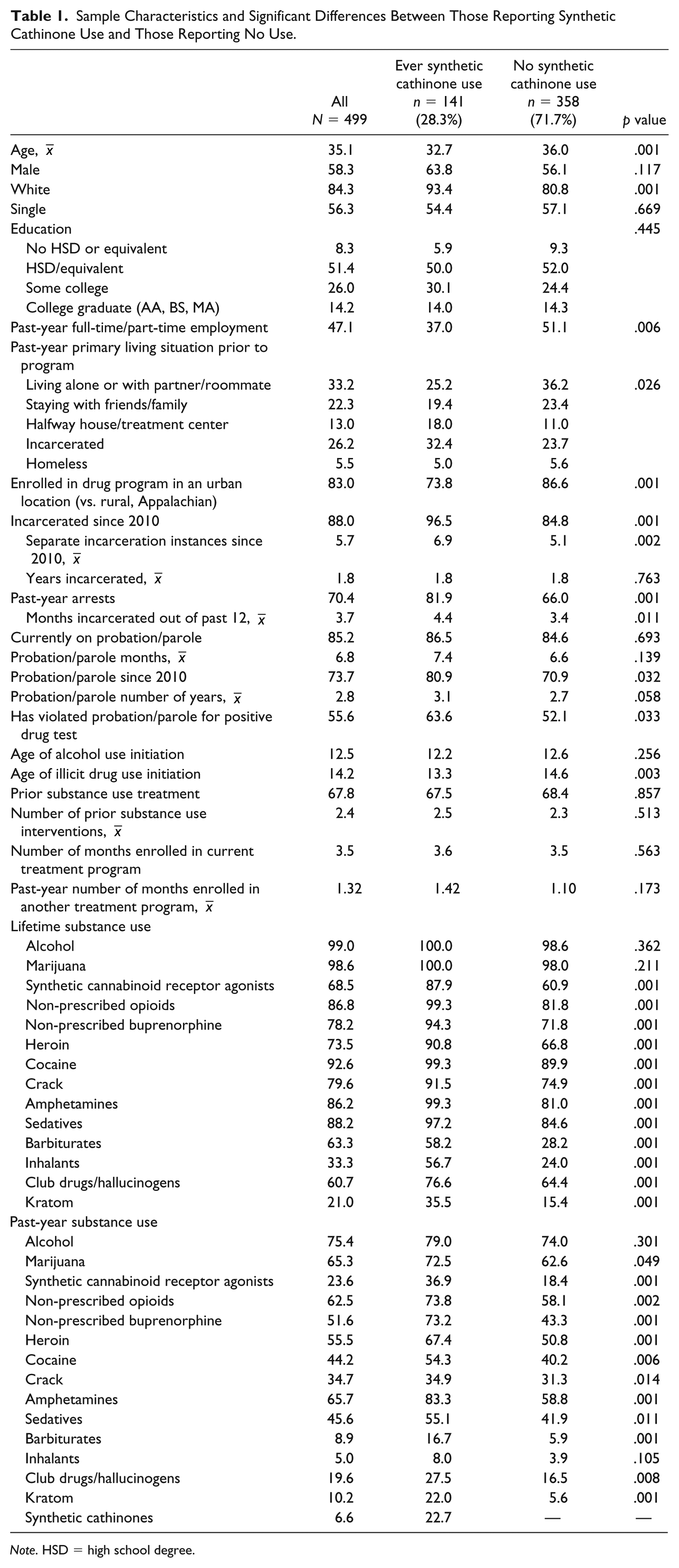
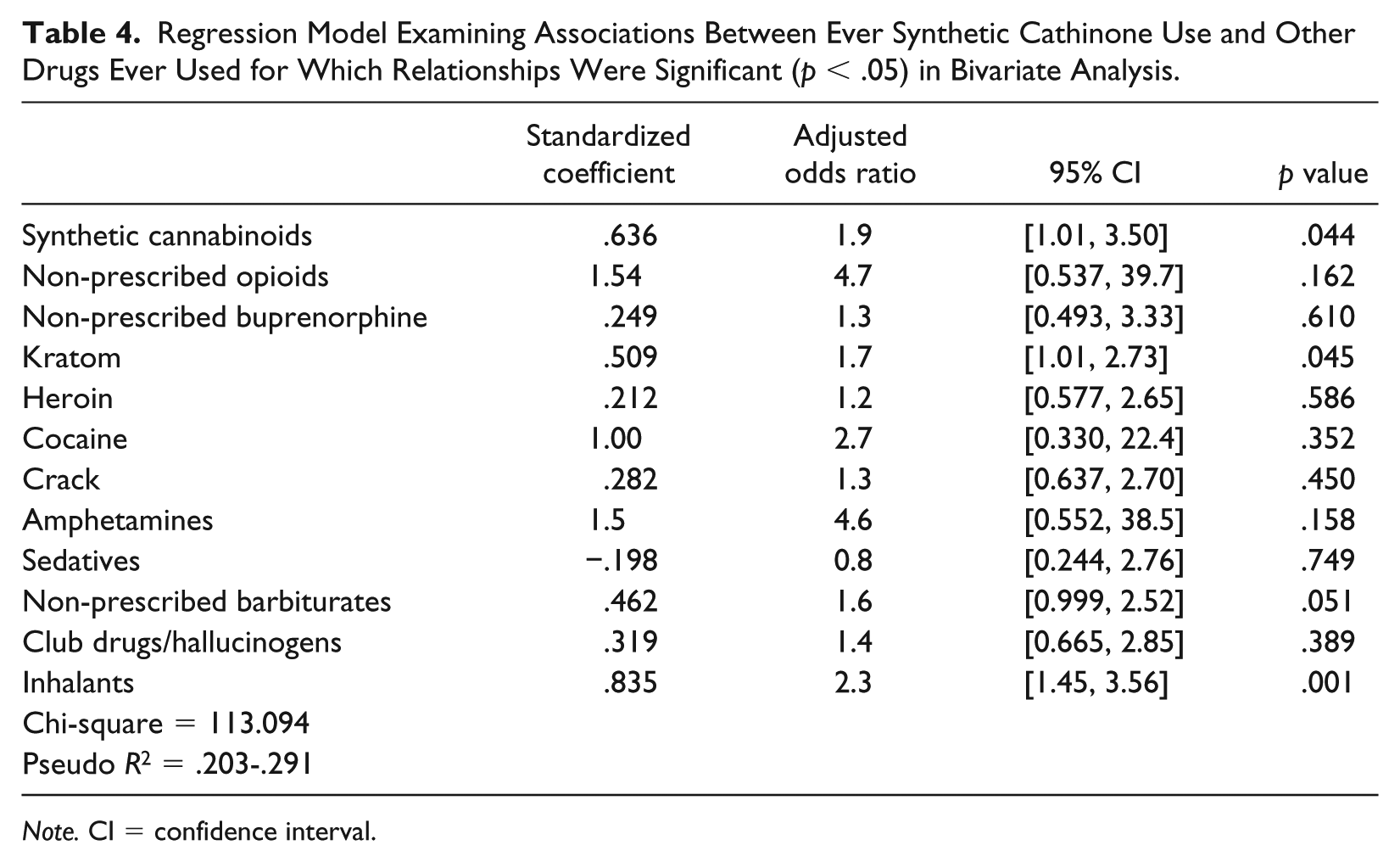
A survey pertaining to synthetic cathinone (SC) use was completed by 499 polysubstance users enrolled in a residential recovery program in the Southeastern United States. Of the final sample, 28% reported ever SC use. SC-users, compared with nonusers, were more often younger (32.7 vs. 36.0, p = .001), White (93.4% vs. 80.8%, p = .001), and on probation/parole since 2010 (80.9% vs. 70.9%, p = .032). SC-users evidenced extensive drug histories and were less likely to be enrolled in an urban-based program, compared to a rural, Appalachian-based program (73.8% vs. 86.6%, p = .001). Use of synthetic cannabinoids (adjusted odds ratio [AOR] = 1.9, p = .044), kratom (AOR = 1.7, p = .045), and inhalants (AOR = 2.3, p = .001) were significantly associated with SC use. Approximately 23% of SC-users preferred SCs to amphetamines or cocaine; however, only 3.6% ranked SC as their most preferred drug. Past-year SC use declined to 6.6%. Among polysubstance users in this sample, SC use may be a potential indicator of versatile and indiscriminate drug-taking.
Introduction
A full decade has not yet passed since the emergence of synthetic cathinones (SCs) as drugs of recreation and abuse in the United States (Sammler et al., 2010; Winstock et al., 2011). Yet, in this short time, there has transpired first an increase and then peak in SC use, publication of dozens of case reports documenting SC toxicology and SC-related fatalities, widespread media attention, and passage of broad legislation prohibiting SC and other compounds considered part of the growing novel psychoactive substances (NPS) taxonomy (Kasick, McKnight, & Klisovic, 2012; Miotto, Striebel, Cho, & Wang, 2013; Sacco & Finklea, 2016; Spiller, Ryan, Weston, & Jansen, 2011; Stevens, Fortson, Measham, & Sumnall, 2015; Stogner & Miller, 2013; Swalve & DeFoster, 2016; Wood et al., 2010).
SC are molecularly similar to cathinone, the main psychoactive constituent of the botanical Catha edulis (common name “khat”) and to some amphetamines, demonstrating potent psychostimulant effects and serious risk for neurotoxicity (Angoa-Pérez, Anneken, & Kuhn, 2016; Baumann, Partilla, & Lehner, 2013; Carroll, Lewin, Mascarella, Seltzman, & Reddy, 2012; Valente, De Pinho, de Lourdes Bastos, Carvalho, & Carvalho, 2014). Although preclinical models continue to investigate the pharmacodynamics and pharmacokinetics of first- and second-generation analogs (e.g., 4-methylmethcathinone, methylone, methylenedioxypyrovalerone, alpha-PVP) (Baumann, Baumann, Partilla, Lehner, Thorndike, et al., 2013; Bonano, Glennon, De Felice, Banks, & Negus, 2014; Cameron, Kolanos, Verkariya, De Felice, & Glennon, 2013; Naylor, Freeman, Blough, Woolverton, & Huskinson, 2015), clinical studies seeking to understand the pharmacology of SC among humans remain limited due to practical and ethical constraints (Green & Nutt, 2014; Nutt, King, & Nichols, 2013).
Although rates of SC use in the United States appear lower than other NPS, SCs were the third most commonly identified NPS type in 2017 after synthetic opioids and synthetic cannabinoid receptor agonists (SCRAs; U.S. Drug Enforcement Agency, 2017). Globally, new cathinone analogs continue to be identified, despite generic, “catch-all” legislation (Corkery, Guirguis, Papanti, Orsolini, & Schifano, 2018; Hughes & Winstock, 2012). This abundance of different SC analogs poses challenges for community-based researchers in that under this broad “SC umbrella” are dozens of molecularly similar, but nevertheless distinct compounds (Murphy, Dulaney, Beuhler, & Kacinko, 2013). Although some more knowledgeable or experienced users may be aware of the specific cathinone analog they are consuming, and demonstrate preference for particular product brands or analogs, many other may not have this knowledge or discrimination between SC brands or analogs (Guirguis et al., 2017; Herrmann, Johnson, Johnson, & Vandrey, 2016).
SC use is often reported by younger individuals and males (P. S. Johnson & Johnson, 2014; Miller & Stogner, 2014; Vardakou, Pistos, & Spiliopoulou, 2011; White, 2016), but it remains unclear how best to characterize SC-users. For instance, SC and other NPS use has been reported among people who evidence proclivity for drug experimentation and who participate in online drug-using communities where the dissemination of experiential knowledge among peers is common (e.g., “psychonauts,” “e-psychonauts”), although SC use has also been observed among other substance-using subpopulations, such as men involved in Europe’s night club scene (Ashrafioun et al., 2016; Corazza et al., 2014; Deluca et al., 2012; Measham, Wood, Dargan, & Moore, 2011; Orsolini, Papanti, Francesconi, & Schifano, 2015). In addition, SC use has been found among especially vulnerable populations, such as those who experience homelessness and criminal justice involvement, with SC-users often appearing as more versatile polysubstance users compared with polysubstance users not reporting SC use (Daveluy et al., 2017; Santa Maria et al., 2018; Smith et al., 2017; Wagner et al., 2014). This drug use versatility is evidenced by a greater number of different drug classes used at higher frequencies. Among younger populations with less drug use history, SC use positively correlates with other drug use (Loi et al., 2015; Miller & Stogner, 2014; Palamar, 2015; Sutherland et al., 2016), though not always (Palamar, Salomone, Vincenti, & Cleland, 2016).
In attempting to characterize individuals who use SC in the United States, one question that remains unanswered is if there are appreciable differences between polysubstance users who report SC use and polysubstance users who do not. Although between-group comparisons of drug users in cross-sectional studies have significant limitations for interpretability, in no small part due to some degree of sample-wide homogeneity and some degree of (potentially significant) within-group heterogeneity, this form of comparison is a useful point for exploration of SC use among polysubstance users, particularly as other data are lacking (Shaw, Shah, Jolly, & Wylie, 2008; Terracciano, Löckenhoff, Crum, Bienvenu, & Costa, 2008; Tetrault et al., 2008). Because the long-term durability of SC popularity is uncertain, but appears to be waning, it is of additional interest to determine whether polysubstance users prefer SCs compared with other drugs, including traditional psychostimulants (e.g., amphetamines, cocaine). Users’ perception of pleasure in association with drugs is a sometimes-overlooked component when attempting to understand drug use (Holt & Treloar, 2008; Moore, 2008; Ritter, 2014), despite it being among the more obvious factors that might inform choice and drug-taking, irrespective of the degree to which options and behaviors are constrained by market availability, cost, and rewarding nondrug alternatives (Bickel, Jarmolowicz, Mueller, & Gatchalian, 2011; Waldorf, Reinarman, & Murphy, 1992).
In the Southeastern United States, high rates of methamphetamine use persist, particularly among individuals in rural and Appalachian regions (Oser et al., 2011; Staton et al., 2018; Stoops et al., 2007). However, the prevalence of SC use among polysubstance users in these high methamphetamine-use regions is uncertain. This uncertainty is due, in part, to the fact that Southeastern United States contains heterogeneous drug markets that often differ by geography and urban proximity. It is also unclear whether polysubstance users in these regions prefer SC to other drugs, such as methamphetamines or cocaine.
Aims
Currently, there are limited data describing the characteristics of SC-users in the Southeastern United States, including data that might help determine whether SC-users in this region are meaningfully distinguished from other polysubstance users or previously identified subgroups of SC-users. It is also unclear whether SC-users in the southeastern United States evidence more drug use versatility, indicated by a greater number of drugs used at higher frequencies compared with nonusers. Finally, because SC use has not continued at rates equal to other NPS, such as SCRA, it is unclear whether SC is actually preferred relative to other drugs among polysubstance users in this region. Accordingly, this exploratory study sought to help further an understanding of SC use among polysubstance users in the Southeastern United States by describing the characteristics of SC-users identified among a clinical sample of polysubstance users, investigating the prevalence of and motivations for SC use, and determining whether those who reported SC use prefer SC to other drugs. Ancillary aims included documenting how SC was commonly obtained and self-administered, and whether certain adverse effects were associated with use.
Method
Sample and Setting
In April 2017, five residential drug recovery programs in Kentucky were purposefully sampled for study inclusion based upon their geographic location. These included two programs located in a metro area of ≥1-million population, two programs located in a metro area of 250,000 to 1-million population, and one Appalachian-based program located in a nonmetro area adjacent to a metro area with an urban population of 2,500 to 19,999 (U.S. Department of Agriculture, 2013). These recovery programs comprise part of a larger network of state-subsidized programs open to residents with a self-reported substance use problem. The programs are styled as abstinence-only, residential therapeutic communities. During the program, clients are subject to random drug monitoring.
Recruitment and Data Collection
To obtain a convenience sample, a researcher met with clients as a group in person to explain the study and recruit interested clients. Those expressing interest were informed that study involvement was voluntary, posed minimal risk, and that declining to participate would not impact their standing in the program. Participants were not compensated. This study was approved by the University of Louisville Institutional Review Board.
Of the 511 clients recruited, 503 chose to participate. Participants were provided with a 49-question, anonymous paper survey to self-administer. Those who declined study involvement (n = 8) worked on regularly assigned treatment materials (e.g., reading, writing assignments). The researcher remained in the room during survey completion. Participants could seek clarification about the survey if needed. Approximate survey completion time was 15 min.
Survey
Survey development was informed by SC literature as well as by professional work with this population. Prior to use in this study, the survey underwent pilot testing and focus group with a group of similarly matched polysubstance users (N = 10).
Demographics were operationalized using variables of age, sex, race, relationship status (e.g., currently single vs. married/in a partnered relationship), past-year employment (e.g., part/full-time vs. unemployed), highest level of education achieved (e.g., high school diploma, college degree), and primary past-year living situation (e.g., living alone/with roommate, homeless).
Because approximately 85% of the sample was referred by the Department of Corrections and because one potential appeal of NPS includes circumnavigating drug monitoring, criminal justice involvement was also considered. Criminal justice involvement was measured by asking clients to report whether they had been incarcerated at any point since 2010. This year was chosen because it is the approximate time period when most individuals in this sample would have been likely to have first been exposed to SC (American Association of Poison Control Centers, 2016). Clients were also asked to indicate number of separate incarceration episodes, total number of years incarcerated since 2010, past-year arrests, and number of months out of the past 12 spent in a correctional facility. In addition, clients were asked to report probation/parole involvement since 2010, number of years spent on probation/parole, number of months out of the past 12 spent on probation/parole, and current probation/parole status, as these factors indicate that participants were subject to drug monitoring. Finally, participants were asked whether they had ever violated the terms of their probation/parole due to a positive drug screen.
Substance use history was examined by asking participants to report ages of alcohol and illicit drug use initiation, number of prior substance use treatment episodes, and any licit (e.g., alcohol, inhalants, kratom) and illicit (e.g., marijuana, heroin) drugs used ever and in the year prior to program entry. Ever and past-year SC use was measured similarly. The term “bath salts” was used on the survey instead of potentially confusing jargon (e.g., cathinones). Participants could select items from a list of drugs, placing a mark next to any drug that they had used for the respective periods.
To measure motivations for use, associated side effects, method of obtainment, and route of administration, participants were asked to place a mark next to any statement that they believed reflected their experiences with SCs (e.g., “You used bath salts as a substitute for other drugs”; see Table 2 for a list of survey items). Preference for and positive attitudes about SC were measured by asking participants to indicate whether they preferred SC effects to other drugs generally and to amphetamines or cocaine specifically. Participants were also asked to indicate whether they agreed with statements such as “You would try bath salts again.” Finally, to understand common drug preferences among this sample, participants were asked to rank their top 3 preferred drugs of abuse in the order that they most preferred using them.
Analytic Plan
Chi-square and t-test statics were used to determine significant differences for variables of interest between those who reported ever SC use and those who reported no use. Descriptive statistics were used to generate rates of preferred substances for each group and response proportions for SC statements. Logistic regression was used to understand significant associations between SC use and other drug use. The decision to examine relationships between SC use and only other drug use significant (p < .05) in bivariate analyses (as opposed to all variables significantly correlated with SC in a correlation matrix) was made for two reasons. First, because the sample was comprised of polysubstance users, these relationships are of interest (i.e., does use of certain stimulants increase odds of SC use?) and second, to avoid model overfitting due to the relatively small sample size. Analyses were completed with IBM-SPSS version 25 (IBM Corp., 2017). Collinearity was not an issue as indicated by variance inflation factors, and model fit statistics indicated acceptable model fit.
Results
Sample Characteristics
A total of 503 clients completed surveys, however three surveys were discarded due to nonrandom missing data and/or illegibility of survey responses, and another was discarded to missingness for the outcome variable. The final sample (N = 499) included men (58.3%) and women (41.7%) aged 18 to 64 years (
Sample Characteristics and Significant Differences Between Those Reporting Synthetic Cathinone Use and Those Reporting No Use.
Note. HSD = high school degree.
Criminal Justice Involvement
Rates of past 7-year incarceration were higher for those who reported SC use (96.5% vs. 84.8%, p = .001). This group also reported more separate incarceration instances (
Substance Use
SC-users were significantly younger for age of first illicit drug use (
SC Use and Drug Preferences
Table 2 displays the proportions of SC-users who affirmed particular statements about SC use. Among those who had ever used SCs, the two most frequently endorsed reasons for use included trying SCs because of their friends (42.2%) and using SCs as a substitute for other drugs (36.3%). In addition, 26.7% agreed with the statement that SCs were easier to obtain than other drugs and 23.7% reported that they used SCs to avoid failing a drug test. Approximately 23% of users reported that they preferred SC effects to those of amphetamines or cocaine and 15.6% reported preferring SC effects to any other drug effects. Although nearly 18% reported that they would use SCs again, only 5.2% indicated that they believed SCs were helpful.
Response Proportions for Synthetic Cathinone Use Survey Items for Individuals Reporting Ever Use of Synthetic Cathinones (n = 141).
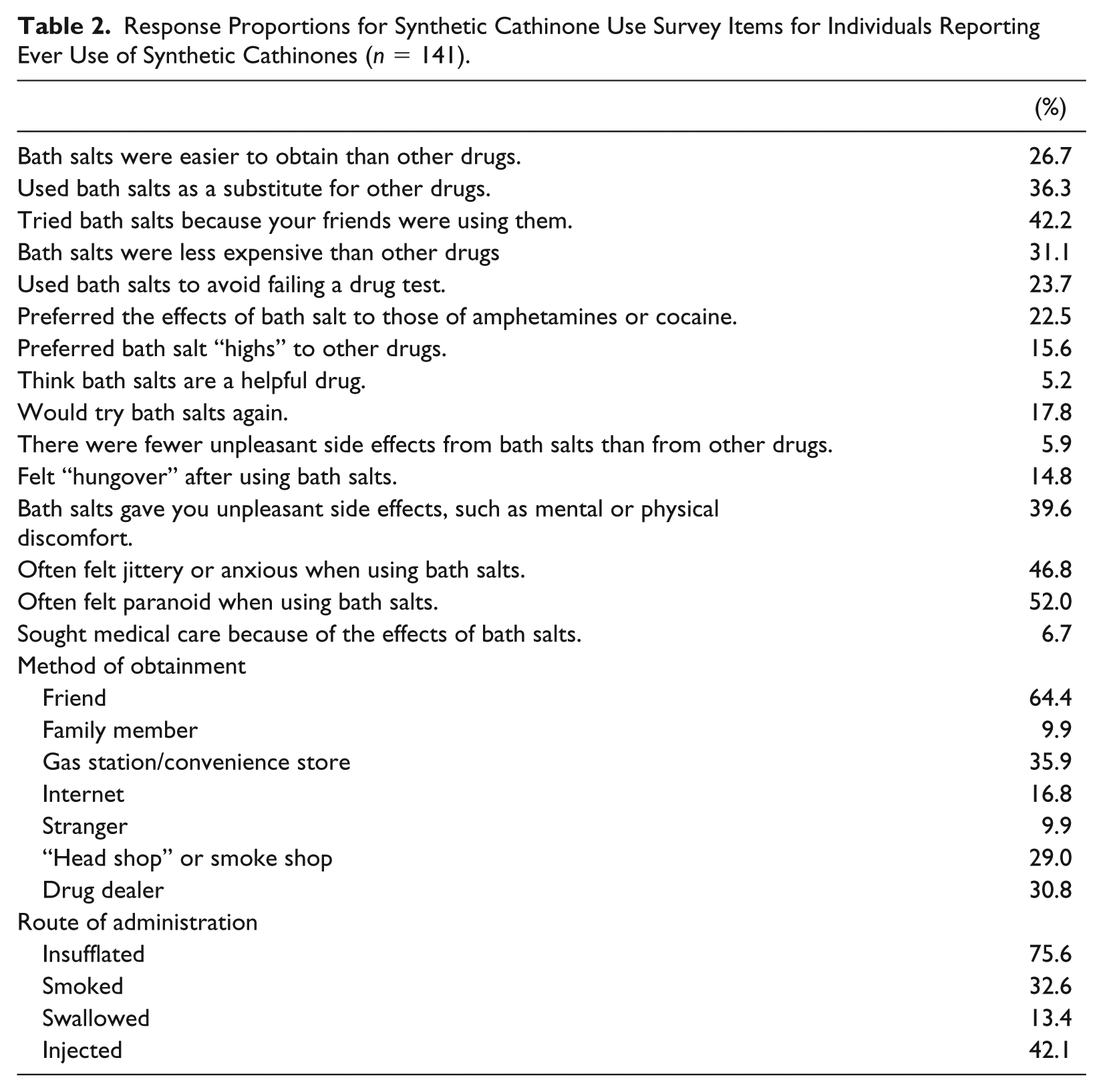
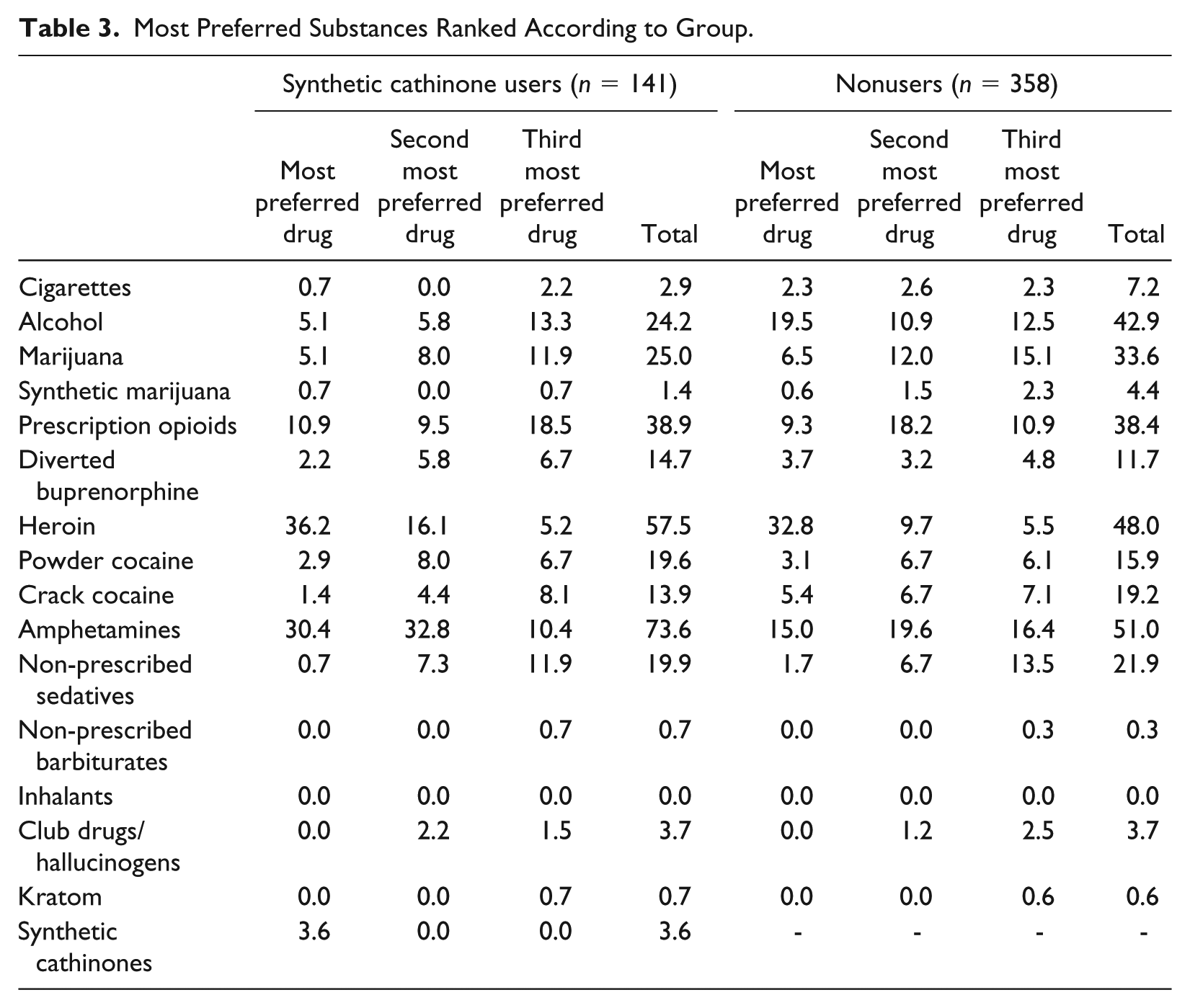
Table 3 displays frequencies for the three most preferred drugs as ranked by SC-users and nonusers. SC-users overwhelmingly preferred amphetamines (73.6%) and showed greater preference for amphetamines compared with nonusers (51.0%), even as nonusers also indicated preference for amphetamines. Powder and crack cocaine were not as preferred as amphetamines among SC-users but were still listed at higher rates compared with nonusers (19.6% vs. 6.1% and 13.9% vs. 7.1%, respectively). Heroin and non-prescribed opioids were favored among both groups (57.5% vs. 48.0% and 38.9% vs. 38.4%, respectively). Apart from amphetamines, alcohol showed the most remarkable difference between groups, with rates of preference for nonusers nearly twice that of SC-users (42.9% vs. 24.4%). SCs was preferred by only 3.6% of all SC-users.
Most Preferred Substances Ranked According to Group.
Side Effects Associated With SC Use
Approximately 6% of SC-users agreed with the statement that there were fewer side effects from SCs than from other drugs. While only 14.8% of users reported “hangover” effects from using SCs, approximately 40% attributed “general mental or physical discomfort” to SCs. Nearly half of users reported that they often felt “jittery or anxious” when using SCs, and a majority (52%) reported often feeling paranoid. Despite this, only 6.7% of SC-users reporting seeking medical care.
Methods of Obtainment and Routes of Administration
Most SC-users reported obtaining SCs from their friends (64.4%), though an additional 9.9% also reported obtaining them from family. Gas station/convenience stores, drug paraphernalia shops, and drug dealers each served as sources for approximately one third of SC-users. Finally, 16.8% reported web-based purchasing and 10% reported obtaining the drug from a stranger. Common routes of administration included insufflation (75.6%) and intravenous injection (IV; 42.1%). Approximately one third reported smoking the drug.
Discussion
Similar to other studies, SC-users here were more likely to be male, White, and younger (Ashrafioun et al., 2016; P. S. Johnson & Johnson, 2014; Palamar, Martins, Su, & Ompad, 2015; Smith et al., 2017). Findings also raised the possibility that SC use may differ regionally, as the proportion of SC-users was greater among the recovery program based in rural Appalachia. Finally, findings suggest the possibility that SC use may be associated with versatile, more indiscriminate drug use and that, compared with other drugs, SCs are not overwhelmingly preferred among polysubstance users in this sample.
Regression Model Examining Associations Between Ever Synthetic Cathinone Use and Other Drugs Ever Used for Which Relationships Were Significant (p < .05) in Bivariate Analysis.
Note. CI = confidence interval.
Regional Differences
That there was a higher proportion of SC-users enrolled in the rural, Appalachian-based recovery program was an unanticipated finding, though elsewhere NPS use among drug treatment clients has evidenced regional splits (Campbell, Neill, & Higgins, 2017). Accordingly, response patterns for SC survey items were further scrutinized by group. Comparing SC-users enrolled in the rural, Appalachian-based program with SC-users enrolled in the metro-based, non-Appalachian programs showed that groups were comparable, differing significantly only by rates of SC injection (60.0% vs. 36.8%, p = .030), web-based SC purchases (30.6% vs. 11.6%, p = .026), price estimates (e.g., SCs are less expensive; 47.2% vs. 26.0%, p = .020), and willingness to use SC again (36.1% vs. 11.5%, p = .003). The potential combined effects of lower cost, greater likelihood of IV administration, and willingness to continue using SCs among individuals in rural regions is concerning not only because of the life-threatening effects associated with SCs, but also due to the potentially greater reluctance among rural Appalachian drug users to seek medical help, geographic challenges to providing emergency service response, and fewer treatment avenues (Bush et al., 2015; Douthit, Kiv, Dwolatzky, & Biswas, 2015; Kesha et al., 2013; Murray, Murphy, & Beuhler, 2012; Starcher, Geurin, Shannon, & Whitley, 2017). Rural Appalachian areas may also be more sensitive to supply issues due to less population density, lack of public transportation, and the more insular nature of the region (Eller, 2008). This may partially explain the higher rates of web-based purchases among SC-users in the rural recovery program. Here, some SC purchases may have been made prior to prohibitions, with others purchased on the “deep web” after prohibitions (Dittus, Wright, & Graham, 2018; Orsolini et al., 2015; Vardakou et al., 2011). Although amphetamines are widely used in Appalachia, decreased availability/increased cost may temporarily force amphetamine consumption down or incline users to seek substitutions via peer drug-using networks (Cunningham & Finlay, 2016; Jonas, Young, Oser, Leukefeld, & Havens, 2012; Sutherland et al., 2017). This latter point is emphasized in that nearly 37% of SC-users reported using SC as a drug substitute and three quarters reported that they obtained SC from friends/family.
Preference, Pleasure, and Risk
Overall, SC-users preferred methamphetamines, powder cocaine, and crack cocaine at higher rates than SCs. Decreases from ever to past-year SC use were far steeper for SCs compared with SCRAs even though both were prohibited at approximately the same time in the state (Kentucky Legislature, 2011, 2012). This indicates that while NPS prohibitions may have impacted accessibility or willingness to use SCs, other factors, such as enjoyability, may be more relevant (Matthews et al., 2017). This decrease may be partially attributable to the adverse side effects reported by 40% to 50% of SC-users (Carhart-Harris, King, & Nutt, 2011). Although it is impossible to causally link SCs to effects reported here—particularly in light of polysubstance use—these data provide oblique support to previous preclinical, case report, and cross-sectional findings (Ashrafioun et al., 2016; Kim, Aftab, Shah, & Nayar, 2010; Miotto et al., 2013; Prosser & Nelson, 2012), including evidence which suggests that concomitant use of SCs with other drugs may have deleterious health consequences (Shortall, Green, Fone, & King, 2016; Winder, Stern, & Hosanagar, 2013). For criminal justice–involved users, the difficulty in detecting SCs coupled with motivations to not disclose use to medical professionals may make this group particularly vulnerable to SC-related health consequences (Blackman & Bradley, 2017).
Survey format is also relevant to consider when interpreting drug preference findings. Clients were asked to list their top 3 preferred drugs before completing SC-specific questions. Only 3.6% reported SCs as a preferred drug type. When examining findings from the SC portion of the survey, approximately 16% of SC-users reported that they preferred the effects (i.e., “highs”) of SCs to all other drugs and 23% reported preferring SCs to amphetamines/cocaine. This discrepancy indicates two possibilities. The first is that the majority of this 16% to 23% subgroup do enjoy, or receive some pleasure, from the effects of SCs, but not enough to register SCs as among their most preferred drugs unless otherwise primed. SC enjoyment by this small subgroup is supported in that 17.8% reported that they would try SCs again. Considered in full, this first possibility implies the second, which is that SC use was a highly salient and pleasurable experience, but only for a small minority. That approximately 40% to 50% of SC-users reported adverse side effects suggests that SC use may have been a salient experience for others, but not due to pleasure. That a quarter of SC-users reported that SC were easier to obtain than other drugs and one third reported that SC were less expensive suggests that convenience, price, and availability are relevant, but not necessarily uniquely deciding factors in SC selection (Ashrafioun et al., 2016; Carhart-Harris et al., 2011; Sutherland et al., 2017).
Polysubstance Use
Other surveys have found that SC-users evidence polysubstance use and SC use that meets Diagnostic and Statistical Manual of Mental Disorders (5th ed.; DSM-5; American Psychiatric Association, 2013) diagnostic criteria for substance use disorder (SUD; P. S. Johnson & Johnson, 2014). However, SUD for SCs and other drugs was not assessed in this study. Accordingly, SC-users in this sample cannot necessarily be conceptualized as disordered in their drug use, nor can the severity of use for any particular drug be considered. Yet, it may still be appropriate to understand SC-users in this sample as versatile in their drug use and, potentially, more indiscriminate in terms of what drugs they consume. This is evidenced by the high rates of ever and past-year drug use across drug classes, including the use of infrequently used, less popular drugs, such as inhalants.
However, the degree to which “polysubstance use” is separable or concurrent among this sample is uncertain (Boeri, Sterk, Bahora, & Elifson, 2008). It may be that particular drugs, including SC, were used at particular times, either in isolation or concomitantly, and for a variety of reasons ranging from preference to availability to perceived utility (e.g., circumnavigating drug screens). For instance, high rates of both being on probation/parole and violating probation/parole due to a positive drug screen among SC-users suggest that while SC-users may have been using SCs to circumnavigate drug monitoring, they were also using detectable drugs, as reflected by violations for a positive drug screen. It is perhaps of interest that all drugs significantly associated with SC are not readily detectable. With the exception of inhalants, these drugs are also relatively new in the United States, though kratom, unlike SCRA, is organic (Kruegel & Grundmann, 2018).
Ultimately, these equivocal findings leave unanswered the broader question of how best to conceptualize polysubstance users who have also ever used SCs, or other NPS. This ambiguity suggests that perhaps the question itself is predicated on a faulty premise: Namely, that individuals with established polydrug histories should be conceptualized differently once they adopt occasional or regular NPS use. Indeed, NPS have been approached as though, due to their novelty, they are somehow unique beyond inherent chemical differences (Potter & Chatwin, 2018). To some extent, this consideration ignores the heterogeneity of NPS users (Elliott, Benoit, Campos, & Dunlap, 2018), along with the potential banality of drug use for some polysubstance users (Parker, Aldridge, & Measham, 1998; Waldorf et al., 1992). Whether due to greater impulsiveness, stress, or drug use normalization, polysubstance users with extensive drug use histories often differ from the general population of recreational users and may therefore simultaneously be less discriminating while also perceiving NPS as merely additional drug options on an ever-expanding pharmacological menu (Bechara, 2005; Bickel & Marsch, 2001; Preston et al., 2017; Sinha, 2008). Accordingly, SC use may not distinguish itself as meaningfully unique from other drug use. This may be particularly true for younger users. That NPS use is more likely to be observed among younger individuals makes intuitive and empirical sense given that impulsiveness is more common among this population, regardless of other traits predictive of substance misuse (e.g., novelty- and sensation-seeking; Foulds et al., 2017; Viner et al., 2012). For particularly young users, novice users, and/or those not physiologically dependent, SC-related habits and responses to SC-related cues may be less rigidly instantiated both neurobiologically and behaviorally, leaving drug use a more flexible exercise, as pathological drug ‘wanting’ as not yet come to dominate (Berridge & Robinson, 1995; Koob et al., 2004; Mayo & De Wit, 2015). The age correlation also suggests that, holding price and accessibility constant, we might expect to see higher rates of SC and other NPS use among some older polysubstance users within a decade. Should next-generation SC formulas produce enjoyable drug experiences with fewer undesired effects, then rates would likely grow irrespective of age. Should a demand for SCs increase, it is likely that a black market would develop proportionally because or in spite of prohibitions (Perrone, Helgeson, & Fischer, 2013; Taylor, 2015).
Limitations
This cross-sectional study has several limitations including the fact that SC use was explored broadly. “Bath salts” likely captures dozens of cathinone analogs and added properties, such as caffeine (Collins et al., 2016; Schneir et al., 2014). The specific chemical compounds for “bath salt” products were likely unknown to most SC-users and, in some cases, it is possible that SC was consumed unwittingly (Ashrafioun et al., 2016; Palamar et al., 2016). Furthermore, product names were not identified, making even crude approximations of whether individuals were using first-, second-, or third-generation SCs impossible. Temporal order of drug use was not captured such that it is possible that SC use pre-dated stimulant or other drug use. In addition, SC doses and dosing frequency were not quantified. For example, ever and past-year SC use could reflect one dose or significantly more. That past-year SC dosing was unquantified makes it impossible to determine the regularity with which individuals used SC, thus limiting the ability to conceptualize this group as a true “SC users.” Biological specimens could not be collected to confirm self-report and, because the survey was anonymous, responses could not be matched to other potential data sources (e.g., clinical records) which might haved helped to establish whether SC-users qualified for any SUD. Self-report as a method for obtaining information is subject to error, such as poor recall and mendacity, though this method has been found to be reliable among substance-using samples (Darke, 1998; Harrison, 1995). Criminal justice involvement, geographic location, and program type (i.e., abstinence-only) limits generalizability. Finally, while the socioeconomic status (SES) of many participants in this sample is likely not high, as indicated by low past-year unemployment rates, criminal justice involvement, and low rates of having obtained a college degree, it was also not sufficiently established, meaning that important differences in SC-use by SES could not be scrutinized.
Conclusion
In documenting SC use among a clinical sample of polysubstance users in the Southeastern United States, this study found support for the idea that SC use may be an indicator of versatile, more indiscriminate drug use and that SC use may appear at higher rates among people in geographic regions with less diverse drug markets. Because of the variety of SCs, future studies should seek to identify differences in use across SC analogs and products, as well as determine temporal order of SC use relative to other factors, such as symptom expression (e.g., anxiety, paranoia) and other drug use (Palamar et al., 2015). In addition, SUD specific to a person’s preferred drug of abuse, and to SCs, should be assessed using standardized instruments or diagnostic tools. Structured interviews and cohort studies may be useful in helping discern SC-user knowledge and motives for use. A minority in this sample preferred SC, however, because many stated that they would try SC again suggests that SC use may persist among some subset of polysubstance users, regardless of their drug use history or ecological context. Absent consensus regarding any clear demarcation between the “novel” and the “traditional,” researchers may need to reconsider the value of bifurcating drug experiences into “old” and “new” and instead focus on understanding users’ perceptions of drug utility and drug effects according to class or pharmacokinetic characteristics (Calinski, Kisor, & Sprague, 2018; Measham & Newcombe, 2016; Potter & Chatwin, 2018). It may be that the primary reasons for using traditional drugs and the primary reasons for using novel ones differ little.
Footnotes
Declaration of Conflicting Interests
The author(s) declared no potential conflicts of interest with respect to the research, authorship, and/or publication of this article.
Funding
The author(s) received no financial support for the research, authorship, and/or publication of this article.