







Abstract
Inquiry-based learning (IBL) represents the student-centered approach that focuses on encouraging learners to scientifically construct new knowledge. The study aimed to explain science teachers’ and students’ perceptions about applying IBL in a private school in Dubai. Furthermore, to explore the degree to which the science textbook of Grade 8 promotes inquiry instruction. A mixed-method approach was applied where two questionnaires were conducted and an evaluation rubric was used to analyze the textbook to explore the extent to which it supports IBL. The findings revealed that teachers showed progress in applying inquiry instruction and students became more engaged in learning.
Keywords
Introduction
There has been a constant emphasis on the progress of the quality of education in UAE to meet the UAE vision 2021, where science, technology, and innovation are highlighted to enhance UAE’s sustainable development. Therefore, UAE National Agenda stated an important objective to become one of the top 20 countries in Programme for International Student Assessment (PISA) as an international standardized assessment for math, science, and reading as well (UAE Vision 2021, 2009). The use of inquiry instruction was found to be beneficial for enhancing the students’ intrinsic motivation, in which it accelerates the ability of the students to learn (Carvalho et al., 2011). In this essence, producing new generation of students who are scientifically literate through applying effective inquiry learning contributes to the UAE education reform (The UAE Cabinet, 2016). One of the most significant trends in education is science as inquiry. The popularity of this term has increased for discussing science pedagogy, learning, teaching, and even the curriculum foci. Although there is a noticeable lack of understanding of what it means by the term inquiry and its types, most of the science teachers and educators are familiar with the term itself (Yager & Ackay, 2010). However, an empirical study conducted in six Emirates in UAE found that science teachers need a professional support to enrich their teaching instruction (Eltanahy, 2018).
The main purpose of the current study is to explain teachers’ and students’ perceptions regarding the application of inquiry instruction for teaching and learning science in Grade 8 in a private school in Dubai, and to explore how the science textbook for Grade 8 enhanced the implementation of the inquiry technique in science classes. The research findings were discussed in light of participants’ perspectives. The study was based on a generalized concern of the science teachers, who were asked to shift their teaching paradigm from traditional teaching and to rely on IBL. At the same time, students were given a new science textbook to accompany the new course curriculum. After one term of inquiry implementation at the school, Grade 8 teachers and students were recruited to participate in the study.
This study’s significance is to emphasize the beneficial role of inquiry instruction in supporting science education in light of teachers and students’ perceptions. Teachers, students, and textbooks are the main axes that ensure the successful implementation of inquiry-based science instruction, by supporting its angles. That is why, from the start of 21st century, UAE has taken consistent steps toward the reform of science curriculum through incorporating the scientific inquiry approach in students’ science textbooks. In addition, one of the significant goals in UAE science education comes closer to the National Research Council (NRC) (NRC, 1996) goals, which encourages teachers to generally apply scientific inquiry to develop students’ learning skills and help them become problem solvers, and scientifically literate as well (Ministry of education, 2001).
The science textbook should cover the curriculum and be content-rich with theories, laws, and experiments that are considered as the raw material for using scientific inquiry. This has a logical sequence of the “5 Es”—“engage, explore, explain, extend and evaluate” to be implemented in the classroom (Duran & Duran, 2004). Although there are many studies that have explored the inquiry methods in science classes, few of them investigated the teachers’ and students’ perceptions about the scientific inquiry instruction, and none of them analyzed Grade 8 science textbook in UAE.
The science textbook used in this research is a new version of Harcourt Science books called Fusion, used in the middle school curriculum in Dubai private schools to implement and follow the American curriculum standards. This study was conducted to answer the following questions:
What are science teachers’ perceptions regarding implementing inquiry approach in teaching science in Grade 8?
What are Grade 8 students’ perceptions toward the application of inquiry-based learning instruction in learning science?
To what extent does Grade 8 science textbook promote inquiry-based learning instruction?
Conceptual Framework
Inquiry is defined as the method of teaching and doing science in the way scientists do, while science is a “unique mix of inquiry and argument” (Yore et al., 2004, p. 347).Consequently, inquiry is organized in the form of practices that seek information about the specific phenomena. Thus, scientific inquiry is required for observing and investigating the natural world. Three angles of scientific inquiry are interpreted by national science educational standards (NRC, 1996); the first angle is the process skills that require students to practice conducting scientific investigations. The second angle is the content, which illustrates the nature of this inquiry; and finally the third angle is the teaching and learning strategies, which support students’ understanding of the science concepts that rely on the content standards (Wang, 2011). Therefore, the central phenomenon in the study relies on three main forces: the first is the teacher who carries the main responsibility of applying inquiry instruction in the class. Thus, teachers’ strategies in the implementation stage are reflected on the students’ perception. Students are considered to be the second force because they are the actual implementers as well as the target audience of the inquiry process. Finally, science curriculum represented in the textbook is the third force that should contain the main area of inquiry to guide both the teacher and the students in the learning path. Figure 1 illustrates the key forces that guide the conceptual framework of the study.
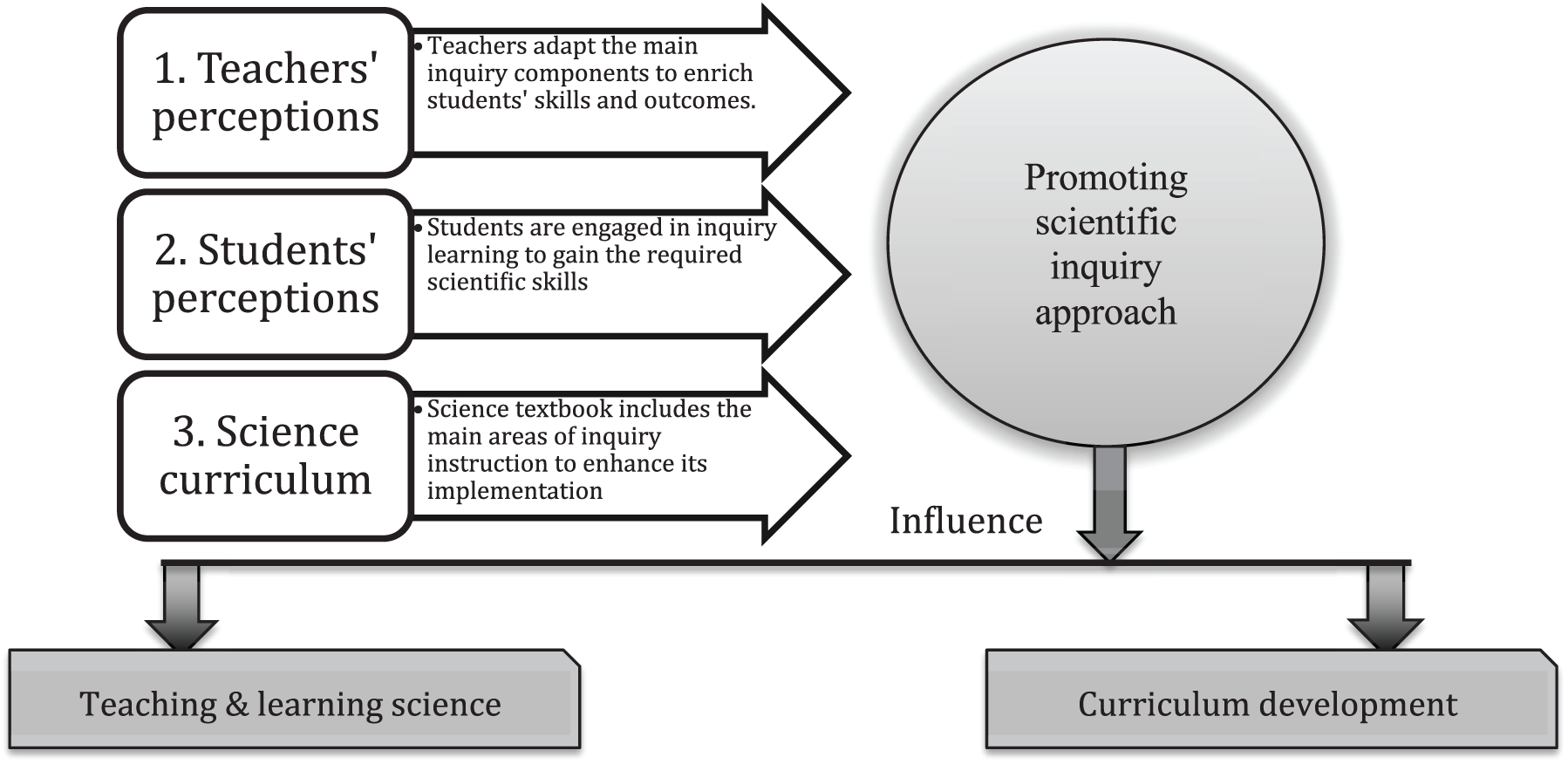
The conceptual framework of the study.
The orientation of inquiry instruction in teaching and learning as well as the science curriculum represented in the school textbook depend on three significant areas of inquiry, which are the question, the procedure, and the results of inquiry process (see Figure 2, below). These areas indicate that inquiry instruction falls into the realm of inductive approaches that begin by posing a question for investigation, then collecting data through scientific procedures to answer this question, and, finally, interpreting the data to come to a conclusion that explains the results. Figure 2 illustrates the main areas of inquiry and their segments (Llewellyn, 2011).
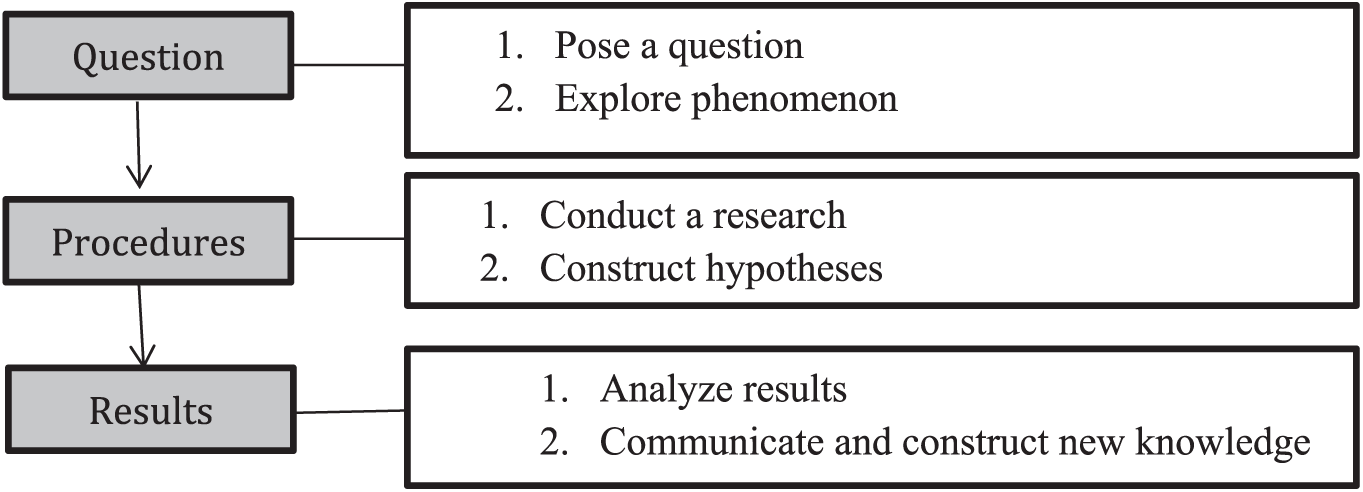
The main areas of the scientific inquiry learning.
Figure 3 illustrates the teaching instruction continuum (Llewellyn, 2011) where different levels of inquiry instruction were identified based on the method of application (Banchi & Bell, 2008). Thus, the three-level continuum—expository instruction, guided discovery, and full discovery—were classified in respect to whether the focus of learning is given to the content or the process. The expository instruction is a traditional demonstration where the focus is on the content, which is usually delivered by the teacher to the student. The guided discovery demonstration gives more emphasis to the process rather than solely working on the content knowledge (Buck, Bretz, & Towns, 2008). For example, in guided discovery, the development of students’ inquiry skills together with the information processing is highlighted, with a focus on both content and process. However, more freedom is given to students during the full discovery learning, with complete focus on the inquiry process.

The continuum of the teaching instruction.
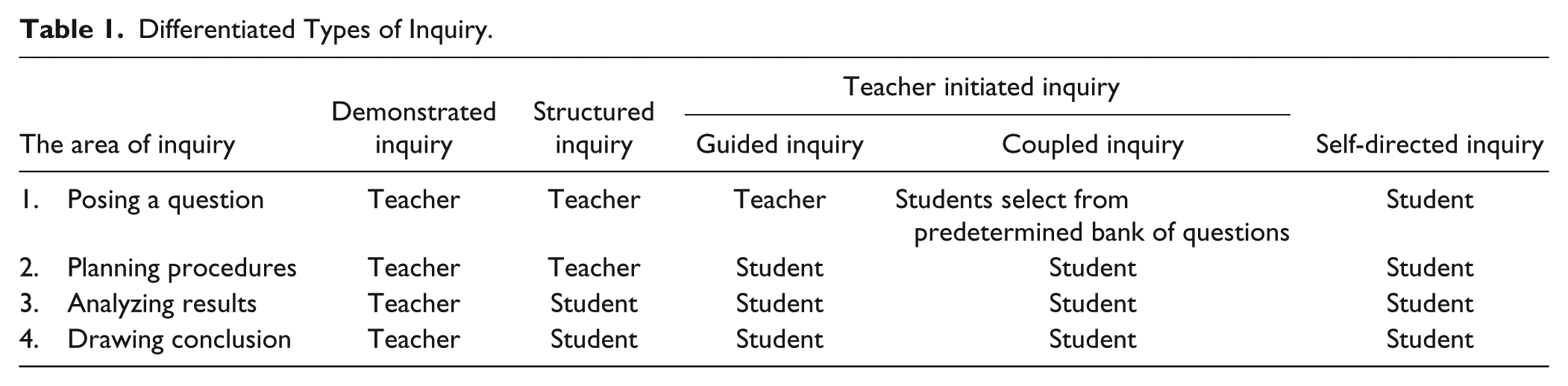
Accordingly, Llewellyn (2011) classified the types of inquiry into four major categories according to the responsibility that each area of inquiry is given, as to whether it is the teacher or the student that achieves its segments. Table 1 shows the development of inquiry process from the less advanced type, the demonstrated inquiry, and gradually develops to the most advanced type of inquiry, which is called self-directed inquiry, open inquiry, or full discovery (Bell, Smetana, & Binns, 2005). In the demonstrated inquiry, the teacher is fully responsible for all the area of inquiry, from posing the question up until making the conclusion. Some learning responsibilities are given to students in the structured inquiry as they become responsible for analyzing the data and making decisions. This is followed by the teacher-initiated inquiry, where students become more responsible for carrying out the inquiry areas than the teacher. Finally, student-initiated inquiry is where students become fully engaged in the process of inquiry learning.
Differentiated Types of Inquiry.
Theoretical Support
The IBL approach has a significant importance in many educational aspects such as teaching, learning, and curriculum development (Al-Nabqi, 2010; Bryant, 2006; Germann, Aram, & Burke, 1996; Lord & Orkwiszewski, 2006; Marx et al., 2004; NRC, 1996, 2000) because it allows the students to construct new knowledge more independently. Therefore, IBL is theoretically derived from the constructivist philosophy of teaching and learning. The constructivism theory that draws mainly on the Piaget’s cognitive philosophy and the social philosophy of Vygotsky has become a global trend in science education (Vygotsky, 1978). It refers to the build-up of knowledge that can be acquired by authentic experiences (Balım, 2009). Thus, Slavin (2012) confirmed that constructivist learning relies on the implementation of the inquiry process, especially guided inquiry.
Guided inquiry is defined as “a team approach to teaching and learning that is both top-down and bottom up” (Kuhlthau, Maniotes, & Caspari, 2015, p. 212) where scientific questions are investigated. Science reform focuses on the constructivist perspective as the dominant paradigm that strengthens students’ essential learning skills, such as critical thinking, using technology, problem solving, and creativity; however, science education research highlights striking differences between teachers’ current practice and curriculum developer’s goals (Nezvalova, 2008). That is why inquiry approach, its types, and terms should be clarified to teachers for IBL to be professionally implemented in the classroom.
Literature Review
It has been stated that preparing future scientists and educating learners to be scientifically literate are the two substantial goals of the science education (NRC, 1996). NRC confirmed that all students should have the opportunity to develop their cognitive skills by applying inquiry methods to learn, which is one of their rights. Furthermore, educators and school administrations are increasingly requesting resources to cultivate young scientists and focus on inquiry as a new trend in science education (Abd-El-Khalick et al., 2004).
Inquiry Teaching and Learning
The literature highlights the critical distinction between three inquiry terms: inquiry, science inquiry, and scientific inquiry. First, inquiry refers to seeking information to solve a question without generating activities or procedures that help solve this question. The second term, science inquiry, illustrates the scientific procedures of investigating a question through activities, exploration, and experiments that can be posed by the teacher, the student, or provided in the textbook. Finally, scientific inquiry is a broad concept that refers to the whole process of learning, including students’ outcomes such as the knowledge, attitudes, and critical thinking skills that are gained during the consistent investigation of the real world (Llewellyn, 2011).
Having said that scientific skills are fundamental for students to connect their learning to real-life practice, the authentic activities mentioned in the science textbook should support the powerful phases of inquiry to enrich the process of the scientific pedagogy in the educational setting (Kulm, Roseman, & Treistman, 1999). In addition, teachers are promoted to activate inquiry instruction-based learning to maximize students’ understanding of science concepts and to achieve the scientific literacy goals (Holbrook & Rannikmae, 2007 cited in Forawi, 2011). Consequently, implementing inquiry activities consistently could promote students’ attitudes toward learning science (Carvalho et al., 2011) and enhance their curiosity to learn, which in turn could reduce their misconceptions about learning science and eliminate their likelihood of reaching incorrect conclusion in their experiments (Balim, 2009). Consequently, the consistent implementation of a scientific method leads to the creation of an objective body of knowledge that is called science (Chabalengula & Mumba, 2012). Constructivist learning in science classes is enhanced by the inquiry approach.
Roles of the Teacher
The body of literature on the topic of inquiry recommends developing teachers’ skills by promoting their pedagogical content knowledge (PCK) through professional development programs, for them to be well qualified and successfully achieve their mission (Veal & Makinster, 1999; Wee, Shepardson, Fast, & Harbor, 2007). PCK includes “an understanding of what makes the learning of specific topics easy or difficult: the conceptions and preconceptions that students of different ages and backgrounds bring with them to the learning of those most frequently taught topics and lessons” (Shulman, 1987, p. 9). The efforts of international science education reformers emphasize that inquiry instruction is the most significant approach in both curriculum development and teaching and learning science (Bryant, 2006; DeBoer & Bybee, 1995; Germann, Aram, & Burke, 1996; Keselman, 2003; Lord & Orkwiszewski, 2006; Marx et al., 2004; NRC, 1996, 2000; Nuangchalern & Thammasena, 2009; Wolf & Fraser, 2008). As a result, teachers should practice to coach, scaffold, and facilitate students’ learning by using different strategies and types of inquiry to address all their needs (Llewellyn, 2011). Beck, Czerniak, and Lumpe (2000) referred to effective lesson plans and time management as the two significant factors that reduce the effect of obstacles to inquiry. Therefore, teachers’ plans should focus on the quality of the content more than the quantity to eliminate time consuming and provide the students with the opportunity to act like scientists and build on their own knowledge. Interestingly, Wallace and Kang (2004) argued that teachers’ incorrect understanding to the nature of science might form obstacles to inquiry implementation. Accordingly, investigating teachers’ perceptions is important to address their needs for better implementation.
Roles of the Student
Inquiry-based learning is characterized as a student-centered approach that focuses on students’ learning rather than memorizing a certain body of knowledge (Kember, 1997). Hence, the inquiry process is more questions-driven rather than content-driven. The better the level of inquiry that students implement, the more they take responsibility for their learning. Thus, students should work cooperatively to create the required knowledge because they are not exposed directly to it. In this way, students become active learners who search to construct new meaning of reality as competitiveness is reduced and collaboration is enhanced during the process of inquiry learning. NRC (1996) argued that inquiry learning is a type of self-directed learning where students work on reflective practices that help develop their inquiry skills. For example, they are encouraged to determine their learning area of interest and they should identify resources needed for collecting data and reporting results. Moreover, students practice formulating explanations from any evidence collected and then evaluating them to answer the inquiry question (Eick & Reed, 2002). In essence, the more that students engage in the inquiry learning activities, the better they will be able to develop researchable questions, gather and synthesize information, communicate the results achieved, and assess their own progress. Therefore, enhancing students’ attitude of self-reflection is at the core of inquiry implementation, and it is perceived as a valuable product of this process (Anderson, 2002). Moreover, working in cooperative groups is good in raising students’ motivation and making them engaged more actively in the learning inquiry (Ghufron & Ermawati, 2018).
Role of the Textbook
Science textbooks of the students are an important curriculum resource with a central role in determining and deriving the expected course curriculum (Smith & Jacobs, 2003). Therefore, textbooks that consider the most effective teaching strategies could enhance the learning process as well as provide useful teaching models for students (Bishop & Anderson, 1990). Accordingly, textbooks can play an effective role in introducing the inquiry curriculum to students to contribute to meaningful scientific learning experiences (Hand et al., 2003). The literature concerning inquiry found that teachers’ strategies have been positively affected to better implement inquiry-based curriculum (Cronin-Jones, 1991; Fetters, Czerniak, Fish, & Shawberry, 2002; Jones & Eick, 2007; Keys & Kennedy, 1999; Levitt, 2000; Loucks-Horsley, 1998). However, many obstacles to inquiry practices are given in the literature, such as limited lesson time, a lack of resources, and the heavy curriculum (Al-Nabqi, 2010; Anderson, 1996; Wallace & Kang, 2004).
Method
Creswell (2009) defined the mixed-method approach as “an approach to inquiry that combines or associates both qualitative and quantitative forms” (p. 4). Moreover, Johnson and Onwuegbuzie (2004) believed that this approach allows researchers to “compensate for inherent method weaknesses, [concentrate] on inherent method strengths, and offset inevitable method biases” Greene (2007, p. 13). Accordingly, a case study embedded in a mixed approach was conducted in a private school in Dubai. The data were collected concurrently to explore and explain the perceptions of both teachers and students about applying the inquiry instruction in their science classes after a term of consistent implementation. In addition, students’ science textbook was analyzed using a rubric to evaluate the extent to which the main areas of inquiry are supported in the science curriculum.
The main participants of the study were two Grade 8 science teachers who each teach one class of 25 students in the girls’ section. Thus, a total of 50 students were recruited to participate in the study. This sample is a “purposeful sampling” (Lodico, Spaulding, & Voegtle, 2010, p. 34), which was selected according to specific criteria to be suitable for the study design. For example, the study recruited teachers who have teaching experience in applying the expository approach in science classes. At the same time, they were relatively new to the implementation of inquiry instruction.
Besides these teachers, 50 Grade 8 students aged over 13 years were recruited because according to Piaget theory, they are adolescents who have the ability to think in the abstract and deal with hypothetical situations (Slavin, 2012), so that they can apply inquiry structure and give opinions about using this new strategy in their classes. Furthermore, the Fusion science textbook was used for the first time for that year group in the school under investigation.
Hence, using a variety of instruments to increase the credibility of the data collected is recommended (Johnson & Onwuegbuzie, 2004). A teachers’ questionnaire was used to investigate the extent to which students were encouraged to achieve the significant areas of inquiry, with a few open-ended questions to provide the participants with the opportunity to express their experiences more effectively (Bell, 1999). Moreover, a students’ questionnaire was conducted to explain Grade 8 students’ perceptions about applying the inquiry structure in the science class. One open-ended question was added for them to freely express their opinions or attitudes. The questionnaires of both teachers and students were adapted from surveys mentioned in the book Assessing Student Understanding in Science (Enger & Yager, 2009), which increased the reliability of these instruments. Finally, the evaluation rubric of the science textbook analysis tool was modified from Atkinson, Matusevich, and Huber (2009), and reviewed by a professional instructor in education to enhance its validity.
Ethical issues were anticipated and considered during the study to protect and develop trust with the research participants (Creswell, 2009). Permission for the study was given by the school administration and a letter signed to that effect, after they read the information on the study’s purpose and its importance to both the participants and the school development programs. Furthermore, the two participating teachers signed the “informed consent form” (Creswell, 2009, p. 89) before they engaged in the study, which guaranteed their confidentiality.
Results and Data Analysis
Two science teachers, 50 Grade 8 students, and the science textbook are the main forces that generated this case study. Results were analyzed for each force as follow:
Teachers
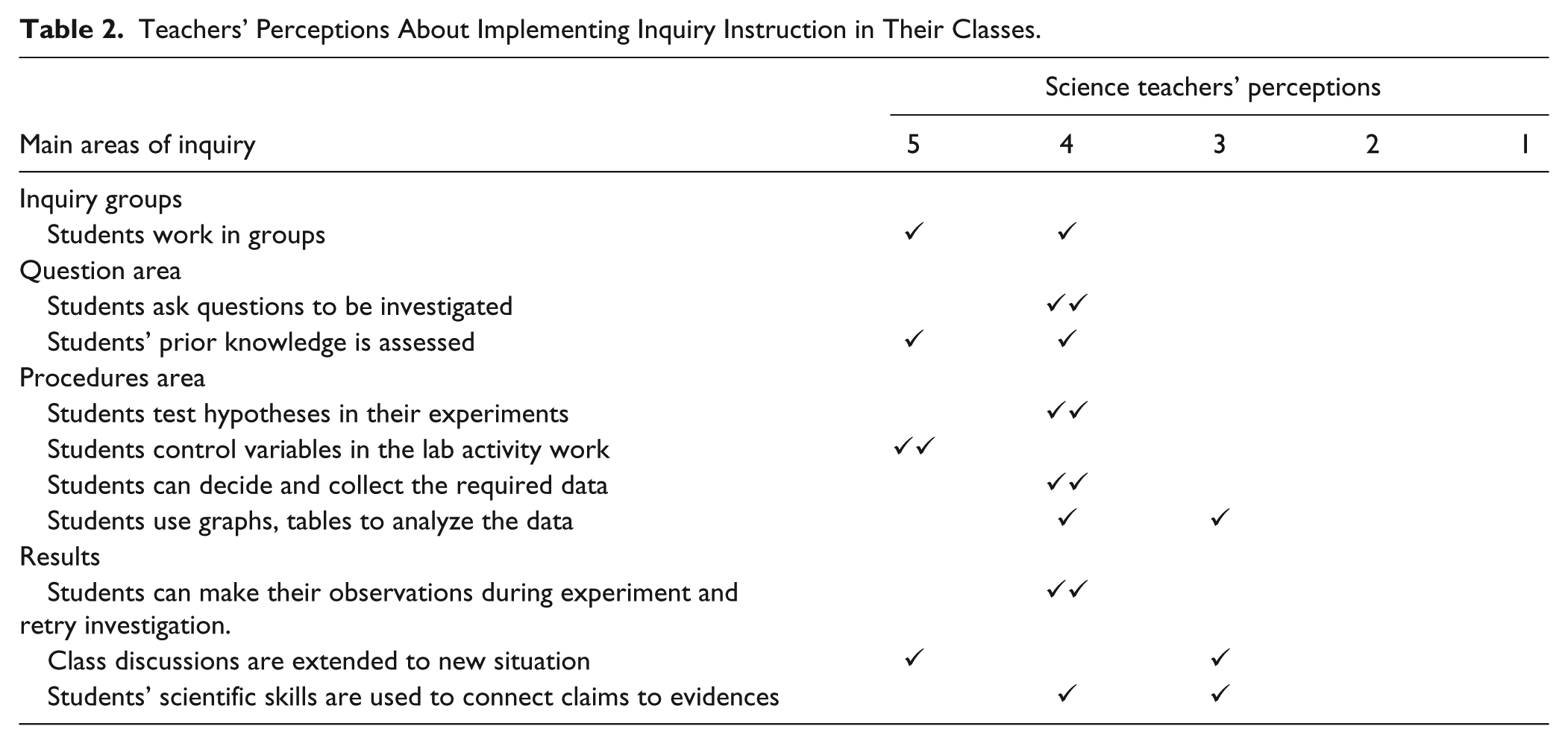
The teachers’ questionnaire relied on three main sections to explain teachers’ ways of applying each area of the inquiry instruction in the science classes, starting with the questions under investigation, passing to the procedures of the investigation, and, finally, analyzing the results. Thus, the quantitative data was analyzed descriptively. Table 2 illustrates the frequency of responses from the two participating teachers.
Teachers’ Perceptions About Implementing Inquiry Instruction in Their Classes.
Furthermore, some excerpts from the teachers’ responses to the five open-ended questions in the questionnaire are introduced in the following sections.
1. What Is Your Opinion About Implementing Inquiry Instruction in Your Classroom?
The participating teachers agreed that inquiry implementation is an effective learning approach that enhances students’ learning, because “students become very active and motivated to learn; however, it requires long preparation to be implemented successfully.” Furthermore, they admitted that “inquiry instruction is very useful because it motivates all types of students to be engaged in the learning process, but teachers need more training to master its application.” Although the teachers noted that “students are able to pose their own questions depending on their observations to certain phenomena,” they “prefer to provide students with a specific question or bank of questions to save the class time and to follow the procedures written in the textbook.”
2. Do You Have Specific Plan to Apply Inquiry Instruction in Each Class?
The teachers explained that “it was difficult to follow a specific plan for all the inquiry classes. The focus was mainly given on the question that guide the inquiry,” adding to that “students’ needs vary and some need more time to practice inquiry applications and carry more learning responsibilities.” Moreover, they added that they have attended workshops about types of inquiry but they “have difficulty in differentiating its types because practices of inquiry instruction is new” to them. However, teachers said that they were encouraged to “start with structured inquiry and then give more responsibilities to students through guided inquiry.” Accordingly, they clarified that they encourage their students to observe “by introducing some pictures related to the lesson. Moreover, visual aids like video animations, and many other resources are used to help students observe and create their own questions in a group discussion.” In addition, students’ previous knowledge is usually “tested and connected to the lesson through either peer or group activities to help them build their new knowledge.” Teachers also confirmed that “tables are usually designed for the students to record and analyze their data in the lab report or class worksheet.” Furthermore, science teachers were asked “to use the school website and Edmodo [online learning recourse] site as well, to encourage their middle school students to post their results and conclusions to be discussed online.”
3. Do You Think That Grade 8 Students Are Able to Apply Inquiry Learning Successfully in the Science Classes?
Teachers explained that the “students have practiced for one term how to apply inquiry instruction and they show progress in the procedures area.” They added, “students are really good in collecting data as they are familiar with technology applications.” However, “they still need support in analyzing and interpreting the information to make new meaning,” which indicated that “consistent inquiry practices are essential to develop their analytical skills.” In spite of their good abilities to decide the required tools and data needed to investigate a phenomenon by using scientific methods under teachers’ supervision, it is difficult for the teachers or the school to “provide the students with all the requirements to collect the data, but usually there are alternative tools to be used which may force the teacher to change the students’ plan and ask them to follow the required procedures in the textbook.” Moreover, the new textbook (Fusion) is considered as “a supportive tool of the inquiry plan because it provides teachers with new ideas of inquiry activities.”
4. What Are the Main Difficulties That You Face During the Implementation of Inquiry Instruction in Your Class?
Although there were “many successful implementations of inquiry abilities done by grade eight students when they work cooperatively,” interventions of their teachers were frequent, based on the challenges they faced. Thus, teachers explained that students were fully engaged in group discussion and activities. However, they were rarely able to complete their investigation in one session and always more time is needed to help them activate all the area of inquiry, which negatively affects the quantity of the science content and the actual annual plan.
Considerable amount of time is needed to plan and implement for inquiry instruction. Teachers complained that they “need double hours to prepare inquiry classes and facilitates students” learning. Besides this, each science class has “about 25 students or more who have different needs and learning skills” that should be addressed by a variety of teaching strategies. In addition, “lack of materials, resources or any school supplies is a critical barrier that force teachers not to rely consistently on inquiry learning.”
5. Which Instruction Do You Prefer to Use in Your Class, Inquiry Instruction or Traditional Teaching?
Despite the difficulties that have been mentioned regarding the implementation of the inquiry instruction, teachers’ responses were positive in most of the inquiry aspects. They confirmed that they prefer to apply inquiry instructions in their classes, especially if they have got the full support from the school administration. Moreover, they observed that “students become more responsible about their learning, especially when they work in small groups to support each other.” In addition, their classes become “more interesting and motivating to teenagers’ thinking skills.”
Students
Students’ questionnaire relies on the same three areas of inquiry (question, procedures, and results), with one open-ended question to give them the opportunity to explain their perceptions freely and to express their attitudes toward inquiry instruction. The quantitative result was analyzed and is described in Figure 4, followed by the qualitative responses of the students.
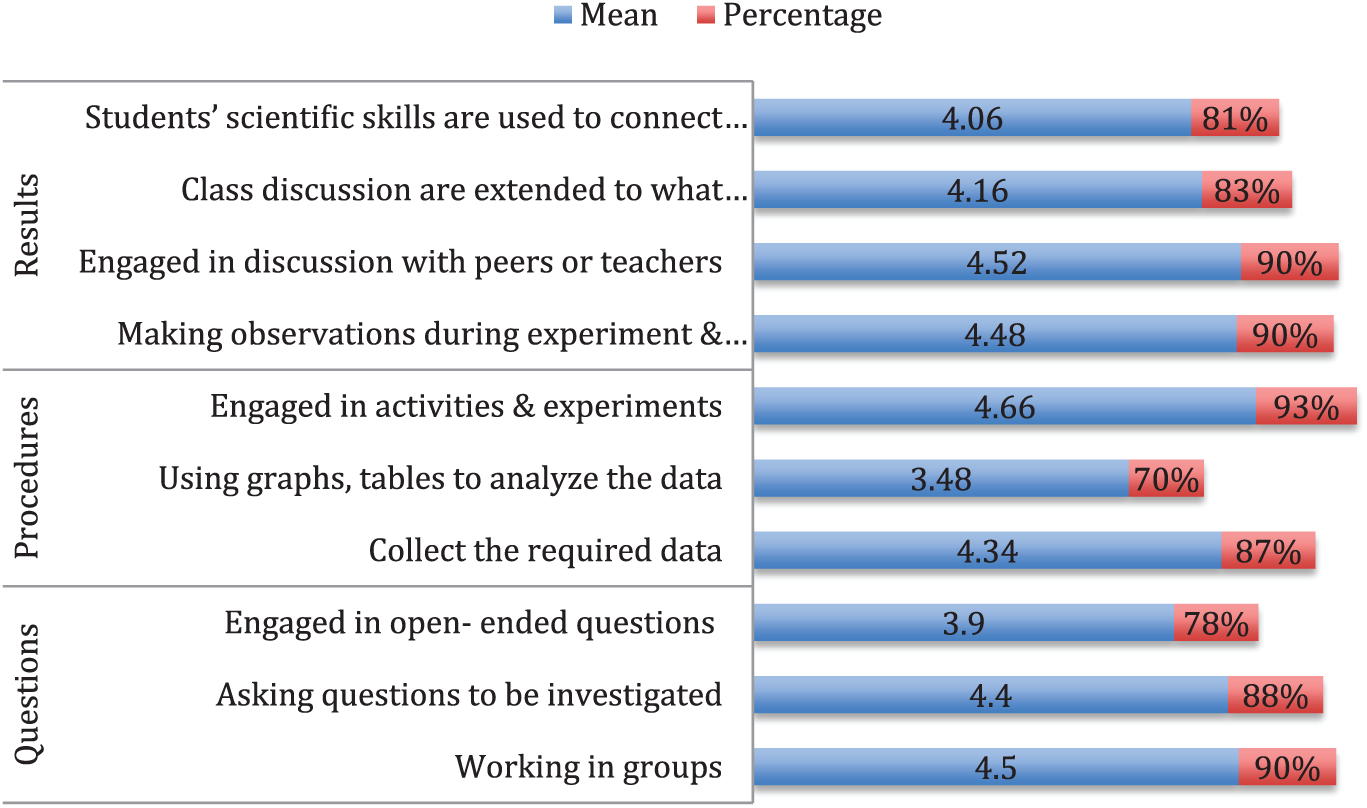
Students’ perception of the implementation of inquiry instruction in Grade 8 classes.
The majority of students’ responses (93%) reflected that they are engaged in activities and experiments where 90% of them work in groups to make observation and discuss their ideas and claims. Students confirmed that many activities are conducted during the class such as they investigate to answer a certain question (88%), collect the required data (87%), extended their discussion to work as scientists (83%), and use their scientific skills to collect logical evidences with percentages (81%). The lowest percentages came for engaging students in open-ended questions (78%) and using graphs and tables to analyze the data (70%).
More explanation was received through students’ responses to the qualitative question given in the survey.
How Do You Feel About Learning Science by Inquiry-Based Learning?
Although they confirmed that they work in small groups, and are able to pose their own questions to be investigated, they explained that they “usually do not have enough time to discuss [their] results or retry the procedures for better understanding or confirmation.” However, they expressed positive perceptions and attitudes regarding inquiry practices as a new learning strategy. Most of the participating students illustrated that inquiry process led them to “change [their] feeling about studying science, now [they] are so motivated and excited to engage in science classes.” Others expressed that they “used to find science boring and tough.” In addition, they “have always difficulty to remember what [they] study, but applying inquiry instruction is a great method that helped ‘to organize [their] thinking and to appreciate scientists’ work.” Furthermore, they have “gained more learning and scientific skills such as classifying, measuring, communicating, predicting, making conclusion and even creating [their] own question for new investigation.” Finally, majority of the students mentioned that they prefer to learn science by inquiry method because “it is much better than traditional teaching, which supports only memorizing the provided information.”
Textbook
The first three questions in the textbook evaluation section were essential to clarify whether the science content is current, accurate and is connected to real-life application, and all their answers were “Yes.” Common core standards are the rational of the book’s content. In addition, the science book includes the investigation objectives and experimental skills, which are supported by the five components of inquiry, and emphasize both structured and guided inquiry to a high degree. SQ3R strategy (survey, question, read, recite, and review) is provided to assess students’ prior knowledge of concepts in each lesson.
Inquiry-based curriculum is enhanced in the Grade 8 textbook. Each lesson in the book starts with “Engage,” where students’ existing knowledge is connected to the new information through an anticipatory guide. This is followed by “Explore” where a variety of activities, discussion, and quick lab demos are supplied to support cooperative learning. Differentiated instruction and lesson vocabulary are highlighted under the component “Explain” to demonstrate the lessons’ concepts and to address the expected misconception in each lesson with learning alert cautions. Moreover, Science concepts through synthesizing key topics by graphic organizer map, then scientific concepts are involved, to discuss new situations. Finally, “Evaluate student mastery” is at the end of each lesson, to enhance scientific skills such as identify, evaluate, predict, calculate, compare, describe, and classify, which involve critical thinking, along with questions that utilize many high-order thinking skills. Furthermore, science notebook pages are added at the end of each lesson as a place for students’ feedback where they are able to record their observations, ideas, endeavors, and discoveries.
The nature of science attributes is taken into consideration; content knowledge is connected to real life and illustrates how nature behaves. Moreover, curriculum activities are designed to support collaborative work, and to integrate many disciplines such as science, math, and technology. The history of many scientific ideas is introduced in the book, such as atomic theory, to help students to understand how science develops. None of the scientific discussion in any of the lessons provided affects any religious beliefs. Consequently, activities and experiments do not release any negative impacts toward the natural environment or its organisms.
Discussion
Teachers’ perceptions illustrated that they have good pedagogical content knowledge and are able to teach science using inquiry instruction. However they have misconceptions in some areas of inquiry and difficulty in differentiating its types, because inquiry is a new trend in teaching and learning science. Although teachers in the school are encouraged to implement structured and guided inquiry in their science classes, they suffer from different barriers that reduce their abilities to consistently apply this instruction, such as time limitation, a lack of the materials and tool required, the heavy caseload of selected topics in the annual syllabus, and students’ limited background knowledge. These results confirmed previous studies’ finding such as Wallace and Kang (2004) and Al-Nabqi (2010). Consequently, the current findings are considered as an urgent call for more teachers’ development programs to help teachers implement inquiry as a pedagogical tool more effectively (Eltanahy, 2018; Wee et al., 2007).
The current study found that students’ perceptions reflect that implementing inquiry strategies in science classes encourages them to be more engaged in the learning process, which is similar to previous results in the literature, such as Carvalho et al. (2011). Although BouJaoude (2002) highlighted that only 12% of the general American curriculum objectives address scientific inquiry (cited in Chabalengula & Mumba, 2012), the new textbook “Fusion,” which represents an American curriculum, emphasizes all the areas and segments of inquiry to support constructivist teaching and learning procedures. Moreover, math applications are integrated in an obvious way in most of the lessons in the book, for more meaningful learning. The study found that this Grade 8 textbook supports the 21st-century skills including analyzing information, communication, solving problems, and technology literacy. That is contrary to the finding of a similar study conducted in UAE by Al-Nabqi (2010), which confirmed that the previous school workbook was not supportive in using computer skills.
The results also revealed that the participating science teachers believe that students are not given enough chance to work independently to enhance the desired inquiry abilities. Moreover, the majority of investigating practices usually need to take place with a full support of the teacher to the cooperative teams. These findings are similar to those of Al-Nabqi (2010) study. In addition, the finding indicated that students were working to develop their abilities in the first term of using the IBL techniques, which is considered as a positive connotation to more progress in the future.
Conclusion
This private school under investigation in the study has developed its system in light of the science education reform to achieve the best possible results for learning goals. Teachers’ perceptions are positive regarding implementing the practice of inquiry. However, they are more comfortable applying structured inquiry than other advanced types of inquiry, for them to be able to control the cooperative groups in their classes. Furthermore, they are satisfied about students’ progress in applying inquiry practices as students have more responsibility over their own learning, although they still rely on their teachers’ support in implementing inquiry activities. There is no doubt that teachers are affected by the traditional way they were taught, and it is a big challenge for them to shift the teaching paradigm from a teacher-centered approach to a student-centered approach. That is why teachers’ educational training and workshops are required to improve science teachers’ pedagogical content knowledge and to enhance their teaching skills.
Students expressed positive attitudes toward the application of inquiry activities in their science classes, although they need consistent practice to become more responsible about all the areas of inquiry. In addition, they have developed their cognitive and scientific skills through investigating scientific questions in a better, more authentic learning environment that helps them connect their school investigations to real life contexts.
Fusion as a new science textbook has reflected a more developed and advanced curriculum because its structure gives adequate attention to the main area of inquiry to promote its process as a promise of being able to replace the traditional format of the students’ textbook. Thus, it can be considered as a crucial guide that support teachers’ work for better implementation of IBL. However, teachers should practice using it more effectively. Also, curriculum designers should revise their methodology to enhance the process-oriented goals of curriculum rather than focusing on product-oriented documents.
Limitations and Recommendations
This study has limitation in its three axes; first, all the participating students are females, and there is a limited number. Second, is that the very limited sample size of teachers participated in the study. Third, only a Grade 8 textbook was analyzed to evaluate the extent to which it supports the inquiry instruction. To rectify this limitation, further studies are needed to explore more science teachers’ and students’ perceptions about the implementation of inquiry instruction, to investigate the inquiry obstacles and problems that face science teachers in the schools, and to examine the degree to which school administrations are willing to contribute to overcome any barriers rather than only offering suggestions for teachers; and, finally, the school goals for science education should be explored.
Footnotes
Declaration of Conflicting Interests
The author(s) declared no potential conflicts of interest with respect to the research, authorship, and/or publication of this article.
Funding
The author(s) received no financial support for the research, authorship, and/or publication of this article.
