






Abstract
Student voice (SV) can drive equity in schools if all students feel comfortable sharing their perspectives. This mixed-methods study finds that while SV is a challenging proposition for many students due to embarrassment, fear of retaliation, skepticism about its efficacy, and favoritism, it is particularly discordant for those Latiné students whose cultural values of respecting their elders and not drawing attention to themselves may conflict with expectations that they will express their needs and preferences as learners. Racism and a cultural disconnect with white teachers can further deter Latiné students from speaking up, highlighting the need for culturally sustaining SV practices.
Introduction
Student voice refers to students sharing their perspectives on their experiences as learners with adults in the hope of improving the educational environment (Hipolito-Delgado, 2024). Student voice can be sought by educators through a range of mechanisms, including surveys, town halls, and informal conversations (Conner, 2023; Holquist et al., 2023). The concept of student voice rests on the premise that students have unique insights into what is and is not working in their schools and classrooms to support their learning (Cook-Sather, 2006). That is, students know when they are bored, and when they are engaged; when they are understanding deeply, and when they are not; when they feel supported in school, and when they do not; and they have some sense of what teachers and administrators do or refrain from doing to create these conditions. Furthermore, student voice assumes that students will share these insights when they are invited to do so in the spirit of helping adults improve the learning environment (e.g., PERTS, 2025; Superville, 2019).
These assumptions may not always hold, however. Research over the past two decades has uncovered many barriers to student voice that students and their teachers encounter. Scholars have long warned that some students may be hesitant to speak candidly for fear of retaliation (Lundy, 2007; Mitra, 2009), and others may struggle to articulate their perspectives without metacognitive support (Davis-Porada, 2023; Hill, 2019).
Little work has considered the cultural basis and biases of student voice that may make it discordant for students from certain cultural backgrounds. This study explores the potential cultural dissonance of student voice for Latiné students, the fastest growing demographic in K-12 schools in the U.S. (Najarro, 2023). We use the term cultural dissonance to refer to feelings of confusion or discomfort that arise when a person’s own cultural values and norms clash or come into tension with those of a different cultural environment. Given that 80% of educators in the U.S. are white compared to 46% of students (NCES, 2023), research on the cultural misalignment between teachers and students of color in U.S. schools has been well-studied (Fasching-Varner & Dodo Seriki, 2012; Hayes & Juarez, 2012). However, questions remain about whether student voice practices (SVPs) can help bridge the divide between white educators and their students of color by promoting greater understanding and responsiveness or whether SVPs constitute a set of practices based on white cultural norms that make them uncomfortable for Latiné students, and thus, unlikely to catalyze equity-oriented change.
This study explores this broader question by focusing on the following more specific research questions: (1) Are Latiné students any more or less likely than students of other racial backgrounds to report that they have ideas about how their classrooms can be improved? (2) Are Latiné students any more or less likely than students of other racial backgrounds to share these ideas with adults? (3) What unique barriers to student voice do Latiné students face that are distinct from those faced by all students? Answers to these questions can help guide educators who seek to meet the needs of their Latiné students and create more equitable, responsive, and culturally sustaining learning environments and experiences.
Latiné Students and Student Voice
A large body of research has documented the disjunction between the white middle-class norms on which American schooling operates and the cultural norms and values of the growing numbers of Latiné students whom these schools serve (Gay, 2018; Rogoff et al., 2007; Valenzuela, 1999). Gloria Anzaldúa’s (2015) term “nos/otras,” meaning, literally “we/the others” gives name to this divide and the ways in which Latiné students are “othered” in educational settings. Not only are Latiné identities underrepresented in the curriculum, but they are also often devalued in the classroom whether through outright racism and discrimination (including microaggressions, tracking practices, and disproportionate discipline) or more subtle othering practices, like pedagogical methods that clash with learners’ preferences (Rogoff et al., 2007) and messaging that encourages assimilation to whiteness (Luna & Jupp, 2023). Even in bilingual school contexts, which are often assumed to be more culturally and linguistically responsive, scholars find “dominant language ideologies … inform teachers’ and students’ perceptions of Latina/o bilingual students, contributing to often unequal interactional dynamics” (Palmer & Martínez, 2013, p. 281).
The literature on how Latiné culture manifests in schools stresses that while Latiné culture is not monolithic, it is marked by common cultural values, specifically familiso, respeto, and bien educado, which may combine to make Latiné students act and appear more deferential and less assertive than their non-Latiné counterparts in educational settings (Lopez et al., 2023; Turcios-Cotto & Milan, 2012). Familiso refers to the importance of family in Latiné culture. Lopez et al. (2023) explain that “in the classroom, familismo may be expressed as Latinx children being obedient, quiet, and showing respect to adults at all times” (p. 91). They argue that a disconnect may occur if a teacher encourages “the child to speak up and express his needs and interests [because] this trait (being assertive) may not align with the child’s familistic values” (p. 91). Respeto involves deference to adult authority figures. This value can manifest as accepting directives or disciplinary consequences “without questions or arguments” (p. 93). Obedience is also central to the value of bien educado, which means not just acquiring a strong formal education but also being well-mannered and respectful (Turcios-Cotto & Milan, 2012). According to Lopez and colleagues (2023), Latiné students may be more socially agreeable and may seem less assertive in comparison to children from other ethnic backgrounds, given that this is an element of social behavior that is linked to the value of bien educado. In the school context, Latinx children who appear to be more socially agreeable and less assertive may be encouraged by educators to be more independent and more assertive; however, these responses may not align with the children’s values, which can then create conflict between their cultural values and expected behavior in school. (p. 96)
This literature suggests that certain values associated with Latiné culture may be discordant with educators’ efforts to amplify student voice.
Furthermore, because SVPs reflect white norms of engagement (such as assertiveness and the articulate use of formal academic English, which itself is racially encoded as white [Flores & Rosa, 2015]), they tend to exclude or silence minoritized students’ voices (Irizarry & Raible, 2014; Mansfield & Welton, 2018). The few student voice opportunities that do exist in schools usually attract high-achieving, highly engaged students who conform to the “white” college-going ideal (Kirshner, 2015; Mitra, 2004). Even in student voice programs that intentionally convene diverse student participants, research has found that minoritized students can be sidelined. For example, Silva (2001) documents how students themselves chose not to have the ELL student in their group present their work to their principal because it was widely agreed that she “did not have the language skills to present” and might “go in there and sound stupid” (p. 97). Immigrant students or non-native English speakers may self-select out of student voice initiatives due to discomfort or previous experiences of linguistic marginalization.
Latiné students may also avoid student voice programs because they do not expect to effect change. Irizarry (2011) found that the youth he studied were reluctant to participate in a youth-led participatory action research (YPAR) project because they “did not feel empowered, nor did they have a frame of reference to believe in the possibility for transforming institutions, although they readily acknowledged the need for change in the ways Latino students are educated” (p. 6). Latiné students may be more apt to resist school norms silently or subversively, rather than through formal school-sanctioned channels, like YPAR programs, which could be seen as unduly risky or disruptive (Cammarota & Fine, 2008). Particularly in immigrant or working-class households where education (bien educado) is seen as a path to economic stability, Latiné students may be more inclined to focus on their own academic success than on a potentially controversial extracurricular activity (Heath et al., 2022; Kim et al., 2020).
Despite students’ perfectly valid reasons for eschewing student voice programs, case studies at both the district and school level document how some well-scaffolded student voice programs can be effective in engaging marginalized students in advocating for educational change. Growing evidence shows these programs can promote positive outcomes for the student participants (Cammarota, 2007; Hipolito-Delgado et al., 2022) and equity-oriented educational policy change (Bacca & Valladares, 2022; Mitra, 2006). Even at a micro-classroom level, student voice initiatives with marginalized students can lead to reformed and refined teaching practices (Irizarry, 2017; Superville, 2019). This research demonstrates that in programs that intentionally build students’ critical consciousness by supporting students of color to examine inequities and propose solutions, minoritized students can and do create powerful analyses and calls for change.
What remains less understood is how marginalized students, in the absence of such carefully crafted training and support for student voice, respond to overtures from teachers or administrators to speak up and offer their insights in order to improve their experiences in school. This study responds to this gap in the research base, focusing particularly on Latiné students.
Materials and Methods
This IRB-approved (FWA #IRB00008523), explanatory sequential mixed methods study is based on data collected over the course of 2 years at four schools in one district in the Western region of the United States. Guided by the mixed methods principle of complementarity (Greene et al., 1989), rich qualitative data, collected in year 2, was used to contextualize and explain findings from a survey conducted in year 1.
The participating schools included two middle schools and two high schools. The schools were selected by district administrators because at each level, one school had deep experience with SVPs, while the other school had just begun implementing SVPs.
The two middle schools served 580 and 1,025 students, with Latiné or Hispanic students making up 69% and 73% of the student body, respectively. The high schools served approximately 1300 and 1500 students, with Latiné or Hispanic students constituting 76% and 70% of the student body, respectively. Across the four schools, the percentage of students who scored at the state-defined level of “proficient” on end-of-year standardized tests ranged from 3% to 10% for math and from 14% to 23% for reading. All students in the district were considered economically disadvantaged.
Survey Data
Procedure
At each school, students were surveyed about their perceptions of their schools’ SVPs and their experiences with these practices. Prior to administering the student survey, school partners notified students’ parents/guardians about the survey and provided them the opportunity to opt their child out from participation. Due to differences in implementation strategies, response rates at the schools ranged from 11% to 69%. The survey was administered online via a secure data collection platform. On average, students took 15–20 minutes to complete the survey.
Participants
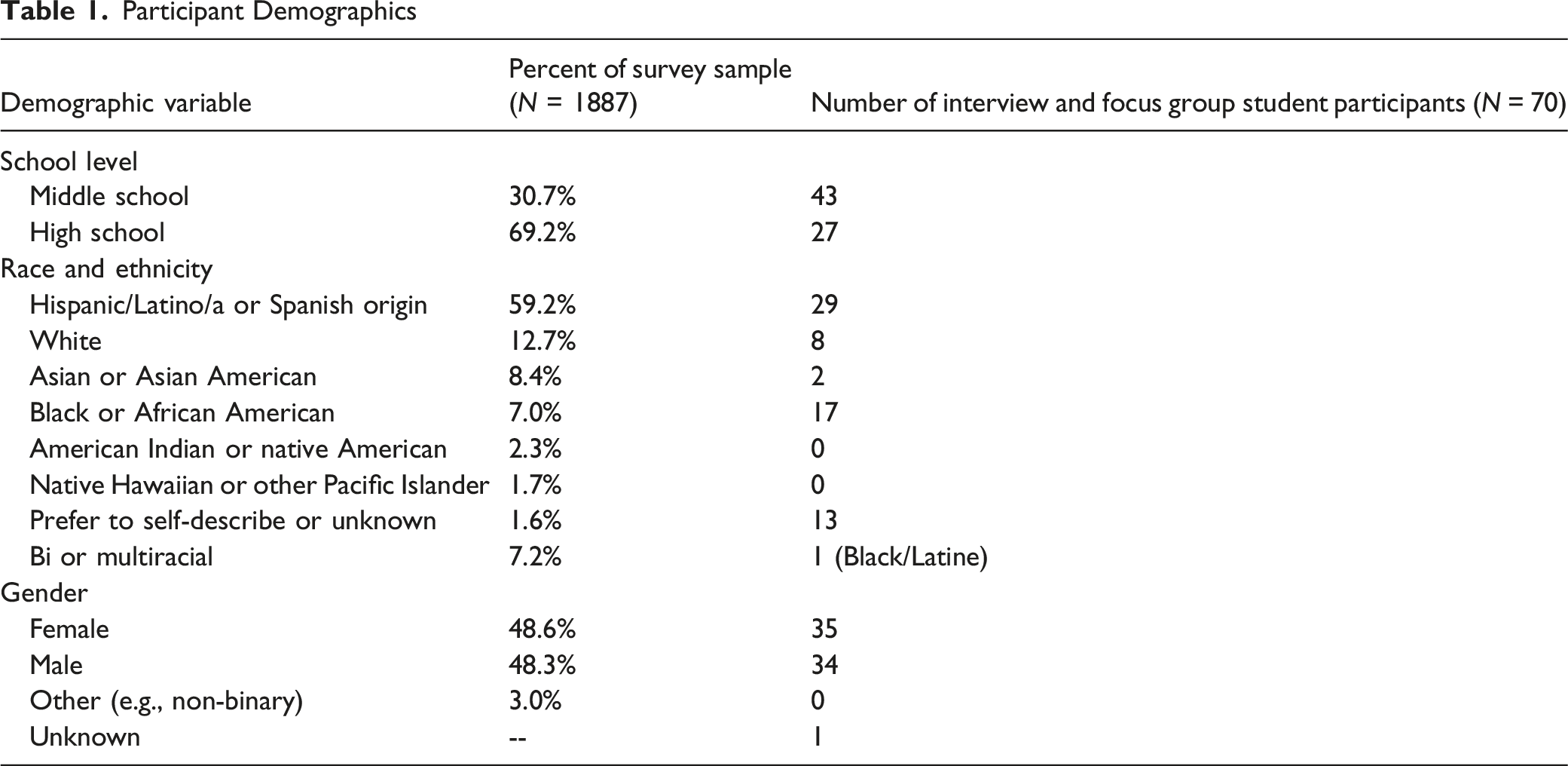
Participant Demographics
Measures
The survey included a set of questions that was designed to capture a student’s improvement mindset and initiative. Students were asked to respond to the following prompt: “We know that students sometimes wish things could be different in their classes. The next set of questions asks about whether you have ideas about specific ways things could be better in any of your classes. Do you have ideas about how one or more of your teachers could…” Four items followed, asking whether teachers could improve instructional practice, assignments and assessments, curricular content, and classroom culture. Item responses were scored as no (0) or yes (1), for a combined score up to four.
If a respondent marked “yes” for any of these initial four items, a fifth item was then asked: “Which of these best describes what you do with these ideas?” Response options included, “I keep them to myself,” “I share them only with friends or classmates,” “I share them with adults at school, but only if I am asked,” and “I share them with adults at school, even when I am NOT asked.”
Although not formally validated, the index was developed through literature review, student interviews and focus groups to identify core constructs, cognitive interviewing by youth representative of the sample population, content validity evaluation, expert review, and pilot testing, consistent with best practices in measure development (Gehlbach & Brinkworth, 2011; see Conner et al., 2025 for a full description of scale development). Each of the first four items on the index correlates strongly with the total score (with Pearson’s r’s ranging from .74 to .78, all p < .001); the index shows acceptable reliability (α = .76; Gliem & Gliem, 2003); and exploratory factor analyses indicate a single underlying construct of student improvement mindset (loadings .74 to .78; KMO = .77). Although more respondents chose “no” (0) than “yes” (1) for each item, and 37% scored 0 on all four items, this skewing effect seems to be less a problem of the scale than of the context and phenomenon. Thirty-four percent of respondents reported having at least one or two ideas for what teachers could do to improve students’ experiences in their classes, and 28% had total scores of three or four.
The single item “Which of these best describes what you do with these ideas” correlated significantly with two school-level student voice agency items: “I give ideas to school leaders about how to improve the school—even when I am not asked” (r = .184, p < .001) and “I would feel comfortable going to a school leader with an idea about how to make the school better” (r = .10, p < .05), both of which offered a 4-point answer choice scale ranging from Strongly Disagree to Strongly Agree. Overall, of the students who reported having at least one idea for how a classroom teacher could improve their experience in the class, 37% of respondents reported keeping the idea to themselves, 30% reported sharing only with a peer, 23% indicated they would share with an adult if they were asked, and 11% reported they would share it with an adult even when they are not asked.
Interview and Focus Group Data
Participants
Following the survey, we conducted in-depth individual interviews with students (N = 37), teachers (N = 36), and administrators (N = 16). We also ran 32 focus groups with students, ranging from two to five participants. Student participants in interviews and focus groups were chosen by administrators because they represented particular groups of interest to each school, such as chronically absent students, student government leaders, English language learners, and Latino males. (See Table 1 for the demographics of the student interview and focus group participants.) The teacher and administrators who participated in interviews included 20 white females, 13 white males, 10 Latinas, 6 Latinos, and three women who did not share their race or ethnicity.
Protocol
All interviews and focus groups followed a semi-structured protocol. Because the study was sequential, the qualitative data were used to illuminate the quantitative findings; however, survey responses were not linked to specific interview or focus group participants. The teacher and student responses to the following two questions were of particular relevance to this study: “One of the surprising findings in the data we collected last year was that very few students said that they had ideas about how their classrooms or learning experiences could be improved. Do you agree that few students have ideas about how their experiences as students could be improved?” “Another puzzling finding in the data we collected last year is that Latiné students report fewer opportunities for student voice, both in the classroom and in the school than non-Latiné students. Why do you think this is?”
Procedure
Students and teachers were interviewed or convened for focus groups during the school day, usually during a free period. Author 6 conducted as many of the student interviews and focus groups as possible, because he was able to leverage his identity as a Latino (Puerto Rican and Dominican) to engage students in talking about experiences related to their racial identity and cultural background. All interviews and focus groups were recorded, transcribed, and cleansed.
Analytical Approach
Quantitative Analysis
Rather than conduct school-level analyses, we pooled data across all four sites to examine trends. To ensure adequate statistical power, we created a dummy variable for Latiné respondent or not. Respondents who identified as multiracial and Latiné were included as Latiné. In addition to calculating simple descriptive statistics on the variables of interest, we ran independent t-tests and chi-square analyses to determine if there were significant differences between the Latiné and non-Latiné respondents in their experiences with and stances towards student voice.
Qualitative Analysis
With regard to the qualitative data, the formal analytic approach began with data reduction, consistent with thematic analysis (Braun & Clarke, 2022). Excerpts that pertained to race, culture, or explanations for our surprising survey findings were extracted from transcripts by Author 1. These excerpts were then subjected to finer grained inductive coding. Authors 1, 2, and 3 read through all the excerpts and identified themes and recurring ideas. These ideas were discussed and used to formulate a coding schema. While some themes were informed by extant literature, others emerged more organically from the data. The schema was then rigorously applied by Authors 1, 2, and 3. Next, coded data segments were compared, and any discrepancies were resolved through discussion. Finally, Authors 1, 2, and 3 scrutinized coded data to discern patterns of meaning, which became the basis for the findings presented in this study.
Researcher Positionalities
Throughout the analytic process, the authors spoke openly with one another about how our own racial identities and cultural backgrounds predisposed us to interpret the data in certain ways. As a white upper middle-class woman, Author 1 became more attuned to how the privilege she has enjoyed has shaped her approach to and assumptions about student voice as a student, teacher, and scholar. Author 2 reflected on her own experience in K-12 schooling as a biracial Asian American, as both a student and an educator. As an Afro-Latina, Author 3 considered the data through a lens of Latiné cultural dissonance and experiences of racism, bias, or discrimination. Authors 4 and 5, both white women, did not contribute to the analysis or writing but helped design, manage, and collect data for the study. Finally, Author 6, a Latino, who first identified the possible cultural dissonance of student voice for Latiné students during data collection in year 1, provided critical feedback on our developing propositions and helped us to imbue our claims with further nuance.
Results
Differences Between Latiné and Non-Latiné Students in Reported Ideas for Improving Classroom Experiences
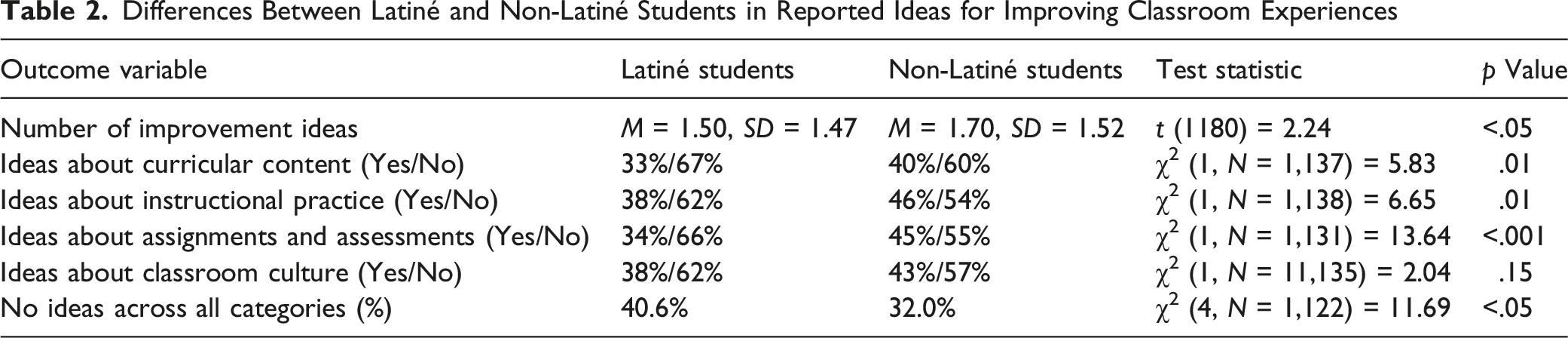
The answer to our second research question was also yes, revealing Latiné students to be less likely than their non-Latiné counterparts to share the ideas they do have for classroom improvement with adults. Of those who had ideas about at least one item on the index, fewer Latiné students indicated that they would be likely to share these ideas with adults (31.5%) than their non-Latiné counterparts (38.5%); however, this difference was not statistically significant.
To understand these trends, we turned to qualitative data to illuminate the cultural dynamics that may have been at play, discouraging student voice among Latiné students.
The Sticking Points of Student Voice for all Students
The qualitative data suggest that Latiné students share many of the same reservations about engaging in SVPs when invited to do so by their teachers as non-Latiné students. Some respondents pointed to student apathy when asked to explain our survey results, saying things like, “I definitely think that some students don’t really care. They’re just here because they have to be. They don’t care if things change or anything;” however, probing beneath the surface of perceived apathy, we found that students’ reticence to engage in student voice is rooted in four main factors: embarrassment, fear of retribution, lack of confidence in educators’ sincere willingness to change their practices in response to student voice, and perceptions of favoritism or bias. Though not unique to Latiné students, these four factors shape students’ stance towards student voice and affect their willingness to participate when given the opportunity.
Embarrassment and Shyness
Embarrassment and shyness led some students to feel apprehensive about engaging in SVPs. For instance, one Latina high school student commented that her classmates are “too afraid to talk in front of a whole class when there’s some other people judging because they have different beliefs.” Even when invited to share their voice by teachers, students were reluctant to contribute their opinion or ideas due to perceived social risk, or as an eighth grade white female student stated, “judgment from students.” Another Latina high school student observed “A lot of students are afraid to speak up in class [to say] like, ‘Hey, I would like it better if you’ll show it this way or something like that.’” When asked why she thought they were afraid to speak up, she speculated: I think just the fact that there's other students around them that maybe are understanding the topic, and they're afraid that they're [going to say] like, ‘Oh, we have to repeat this twice?’ They're gonna be like, ‘Oh, my gosh, he didn't get it?‘…Yeah. I think it's just like an embarrassment type of thing.
A Latina teacher also attributed students’ inhibition to the fear of being judged: “I think maybe they're being shy… I think this is the age where they're definitely a little more reluctant to talk about certain things. They just might not want to share what they think, because they might think it's wrong.” Worries that speaking up for themselves may make them look incompetent, needy, or even just different may dissuade some students from exercising their voice.
Fear of Retribution
In addition to fearing judgment by their peers for speaking up, students feared retribution from their teachers if they shared their honest perceptions of the classroom. For example, one Black male high school student said, “I know a lot of kids are scared to go talk to teachers [to say] like, ‘Hey, I don’t like this.’” Another white male student echoed that there are many students “that are like, ‘No, adults scare me, and I don’t like advocating for myself.’” When asked about sharing her views on the classroom with her teacher, one Latina high school student responded, “You really can’t say that because then she can take it against you. Like, let’s say… I say my opinion, like, straight up, right? And then she might take it up the [expletive].” When asked what taking it “up the [expletive]” might look like, the student continued, “Send you straight to the AP,” referring to the assistant principal who handles student discipline. Another Latina high school student alluded to the annoyance teachers might express when students try to suggest alternative pedagogical approaches or assignments: “There are teachers who are like, ‘I’m the teacher, you’re the student. If you know everything, you come teach.’ And then the students are like, ‘Nah, never mind, I just won’t say anything.’” One white female middle school educator stated that when collecting feedback, she has noticed that some students have refused to include their name because they say, “I don’t want the teacher to hold it against me.” Students worry that providing candid feedback on their school experience may risk upsetting teachers or incurring punishment.
Lack of Confidence in Educators’ Will to Change
Students were also wary of participating in SVPs because they lacked faith in educators’ ability to follow through with change. Many students said that their teachers simply “don’t care” about what students have to say. One white female middle school student shared: “I feel like, whenever we say something, they pretend to think into it, but then the next day they don’t do anything about it and they never…” As she trailed off, she raised her hands to show the hopelessness of trying to advocate for change. A Latino middle school student echoed this feeling of student voice being pointless: “Most of the kids here just go with it. And they know if they tried, very little things would happen… So I think they would just believe that nothing would happen, even if they said something.” A white female high school student explained why she doesn’t use her voice to improve her learning experience, even when asked for it by teachers: “It’s not going to change. I don’t think it will. It’s a student versus a teacher that’s been here for longer and she’s been doing it for longer too. So, I don’t think it’d change.” Teachers even seem aware of this sense of defeat: one white high school teacher who tried to engage his students in drafting a new cell phone policy for the school explained students’ skepticism that their efforts would yield change: I think there’s just not enough follow through, enough instances where they’ve seen it work and they’ve seen their ideas actually turn into something… I think it’s distrust and lack of experience with something going from start to finish where their voice was actually heard and acted upon.
The lack of confidence in educators’ will to change in response to student voice presented a large stopping block for students to engage in SVPs.
Favoritism
Perceived favoritism also fueled mistrust in students’ relationships with educators, further impeding SVPs. For example, when asked who participates in student voice opportunities, one Latina high school student shared that “admin prefers people who are in clubs and sports who are… doing things that admin wants them to do.” Another white female student in the same focus group agreed: “If you don’t have the highest GPA or something in sports or leadership, then you’re just another student.” In a separate interview, a white middle schooler echoed this perception of leadership opportunities being reserved “for the kids that have good grades… or people who like to talk.” As a result, as another Latina high school student pointed out, for “someone [who] doesn’t really talk too much, they [school leaders] might not hear that person’s opinion.”
The following focus group conversation in one of the high schools further showcases students’ understanding of how favoritism may privilege and amplify the voices of certain students. In this high school, the student voice group, which consulted with the principal, was called the “student advisory board,” and the school offered the International Baccalaureate (IB) program for students in the most advanced classes.
These two students, one a white female and the other a Latina, noted how tracking, ableism, and a preference for athletes and high-achieving students combined to disenfranchise certain students at the expense of others on the student advisory board, thereby reproducing inequities in the school. As perceptions of favoritism diminished students’ sense of self-worth and value in school, they became less likely to contribute to SVPs, even when they knew of things “that need [ed] to be changed” in their classrooms and school.
Conditions That Sharpen the Sticking Points for Latiné Students
While the four sticking points discussed above (embarrassment, fear of retribution, lack of confidence in educators’ will to change, and favoritism) may work against teachers’ efforts to engage all students in student voice work in their classroom, our data suggest that aggravating conditions may make student voice an even more challenging proposition for Latiné students. These conditions include cultural norms of respeto and independence, the disconnect between Latiné students and white educators, and racism.
Respeto
Conversations with several students about why Latiné students did not take opportunities to express their voice pointed to the cultural value of respeto. In particular, Latiné students expressed that exercising student voice could be seen as disrespecting their teacher as an authority figure, which directly contradicts the value of respeto they learned from their parents. One Latina student shared why she chooses not to speak up in school: “Parents are like, ‘Oh, you got to respect your elders. You got to—the adult’s always right.’” Another Latina in a different high school reflected, “I’m also Hispanic. So, I know when it comes to like talking back to a parent, you’re just like, whoa, like, one wrong word, and it’s gonna go bad!” A Latino high school focus group participant explained, “You were like, taught from your parents to respect your elders, and not like disrespect them, and stuff. So, you don’t want to like respond back to them. Because that’s not what your mom, like, that’s not what your parents taught you to do.” This cultural understanding deterred some Latiné students from engaging in any behavior that could be seen as critiquing or challenging a teacher.
Although one teacher, a Latina, noted that her students do sometimes “cross that line a little bit, and that’s where I have to tell them, ‘Hey, I’m your teacher. That’s not how you talk to me,’” she conceded, “It depends how you were raised.” In the traditional Latiné culture, she explained, “Growing up, you respect your elders and they’re in charge, so whatever they say kind of goes,” and this norm translates from parents to teachers. The concept of student voice—students sharing with authority figures their thoughts on classroom improvement—is at odds with the traditional Latiné cultural value of respeto—respecting elders and authority figures through humble submission.
Independence
An additional cultural value of independence and not wanting to rely on others for help surfaced in explanations of why some Latiné students might be less likely to exercise student voice. One Latina administrator shared, “We grew up with that mentality…and I think that’s one of the reasons why sometimes we don’t ask for help…You can’t rely on other people. You have to do it on your own. Nothing is going to be given to you.” Given this insight into a cultural value of not relying on others, practicing student voice could be considered culturally jarring for Latiné students.
Although this value may seem to conflict with communal values, such as familiso, it seems to be connected to a sense of pride and not wanting to appear in need or indebted to others outside family. A white adult leader of one of the high school student voice groups argued that no student was intentionally excluded from or left out of the group; rather, “kids leave themselves out of it. It’s that cool-kid thing.” He went on to explain, “There’s a certain amount of it though, that they’ve got to show the machismo to their peers… Your strength comes in a lot of times in how strong you show you are and that’s a little bit of that.” According to this adult, some Latiné students, particularly the males, may have felt that participating in SVPs at the school would undermine their machismo, that is, a sense of masculine pride, or their strength and independence.
Some Latino students, too, voiced the idea that they would prefer not to have to ask for help or change, but have teachers and administrators intuit their needs. Rather than striving to project strength, they seemed to prefer keeping their heads down, not making waves and not calling attention to themselves. For example, one teacher asked his students if they had ever tried to speak up and get something changed at the school. A Latino student responded, “Nah, when you’re at school, you just get your thing done and mind your business.” The teacher pressed, “But what if your business is to get something changed?” The student shook his head, suggesting such efforts were not something he would pursue, and many of his classmates, all of whom appeared to be Latiné, agreed, indicating that they preferred to deal with situations on their own and not complain.
Disconnect Between Latiné Students and White Educators
Several students and teachers described a disconnect between Latiné students and white educators, which made Latiné students reluctant to approach white teachers to request or suggest change. One Latina teacher shared, “So I think they don’t relate to their teachers…That they just can’t connect a certain way. I think that they can connect with me because I get a lot of the things. I get their language. I get their culture. So, I can see why sometimes they’re a bit more timid to ask questions or to advocate for themselves [with other teachers.]” A Latino teacher similarly mused that “one challenge [for student voice work in the school] might be these students connecting to staff members that look like them…There are only a few Spanish speaking certified staff on campus, and this group of students might not feel like they can relate to adults here.” Another Latina teacher reflected on the cultural mismatch between teachers and students as one factor inhibiting Latine student voice: “There are some staff, like me, who are of a similar cultural [background] as them, but I will say our entire administration is the typical white middle-aged adult. I feel they feel disconnected to them.” Latiné students may feel particularly uncomfortable sharing their ideas with adult authority figures who do not look like and cannot relate to them culturally, making the practice of student voice difficult.
Racism and Discrimination
The final exacerbating condition that makes Latiné students less likely to exercise student voice is the experience of discrimination and racism. One Latina high school student explained how stereotypes and deficit perspectives mean that Latiné students have fewer opportunities to access student voice: “I feel like some people might think that we don’t have no voice, and they might think that we’re not smart enough like some other people, non-people of color. And I just think our backgrounds… I feel like they just see us more differently, not smart enough.”
Several students commented on how inequitable practices, especially with regard to discipline, led Latiné students to self-censor and mute their voices. One Latina high school student noted how Latiné students in her school were frequently punished or chided for their cultural expressions: “It’s the whole very cultural dynamic, because there’s a lot of Latinx who express their culture, and sometimes they’ll get very shunned down or dress coded by that. And it just feels like their voice is not heard and they just feel very kind of disclosed by everyone.” Another Latino middle school student reflected on unfair disciplinary practices in the classroom that disproportionately affected Latiné students: There’s this one kid in my class that always screams, always does random noises for nothing, and the teacher, she’s like, “Just be quiet,” but nothing really ever happens because then he just does it again. But if you’re Latino or Latina, if you talk or just whisper something a couple of times, they’ll write you up.
Students described teachers being more strict with Latiné students, which in turn deterred them from exercising student voice: “I feel like a lot of kids are like, well, if they let this fly for other students, but they don’t let it for us, then they’re not going to be responsive if we say, ‘Oh, this needs to change.” Discouraged by the unequal treatment they experienced in school, Latiné students may feel disinclined to participate in efforts to change (predominantly white) teachers’ and administrators’ practices.
Latiné teachers were also mindful of how racism in their schools impacted SVPs. One Latino high school English teacher put it bluntly when asked why Latiné students may be more reluctant to share their ideas for school or classroom improvement with adults than their non-Latiné counterparts: “It’s racism. My students experience racism from their teachers.” Asked to elaborate, he said that in “English department staff meetings, I hear a lot of really coded language, like, ‘These kids can’t blank,’ or, ‘Well, their families don’t blank.'… Absolutely, I know that my students experience racism because of commentary like that.” A Latina English teacher in the other high school reflected on how “expectations have been lowered” for her Latino students. They “have been shut down, shut up, ignored, sat in the back of the class,” and not pushed or encouraged as students. Although she refused to lower her own expectations and made a point of seeking out and honoring the voices of her Latino students, she very much felt as though she were swimming against the tide. In short, experiences of discrimination and racism further dissuade Latiné students from readily taking up opportunities for student voice.
Discussion
Because it involves students sharing their needs and preferences as learners, student voice has been identified as a potential driver of equity in schools (Bacca & Valladares, 2022; Biddle, 2019; Lac & Mansfield, 2018). Teachers and school leaders who are responsive to student voice can create learning environments that are more attuned to and supportive of all their students. However, if student voice is limited to a subset of students in a school or if some students do not feel comfortable participating in student voice opportunities, these interventions will fall short of their promise to promote equity. Results will be skewed, certain voices will dominate the conversation at the expense of others (Mayes et al., 2019; Silva, 2001), and the adjustments made in response to student voice will only benefit those who participated, neglecting those who opted out or were shut out.
The current study makes two important contributions to our understanding of how and why student voice may fall short of its promise to promote equity in schools. First, it finds that not only are Latiné students less likely than non-Latiné students to believe they have ideas about how their learning experiences can be improved but also they are less inclined to share the ideas they do have with adults, even when they are asked. These twin findings challenge the common assumptions underlying SVPs that students have unique insights into how their schooling could be improved, simply by virtue of their first-hand, everyday experiences, and that all adults need to do is ask them to share their thoughts. This study’s findings suggest that if educators simply ask for student voice, whether through a feedback form, an open forum, or even a suggestion box, they may not hear from the Latiné students.
Although ample research shows that Latiné students can become powerful leaders of educational change efforts (Bacca & Valladares, 2022; Bertrand, 2018; Cammarota, 2007; Hipolito-Delgado et al., 2022; Irizzary, 2017; Salisbury, 2021), these studies are all based on programs that took time to build students’ critical consciousness, confidence, and collective capacity for student voice. In the absence of such structures and supports, our data suggest that Latiné students may be less inclined than their non-Latiné peers to engage in SVPs.
A second contribution this study makes is clarifying why this may be the case. We find that though student voice may be a difficult proposition for all students, in the context of a cultural mismatch between teachers and students, student voice becomes even more risky, inaccessible, and incongruent. The challenges that all students face when asked to participate in SVPs are exacerbated for Latiné students by three conditions: cultural norms that clash with the dominant culture of American schooling, disconnection with a predominantly white teacher workforce and administration, and racism and discrimination. The challenges that become all the more pronounced for Latiné students include embarrassment or shyness, fear of retaliation from educators, lack of confidence in educators’ will to change, and favoritism. When situated within contexts of cultural dissonance, misalignment between the ethnoracial identities of teachers and students, and racism, each of the aforementioned barriers, or “sticking points to student voice,” is sharpened.
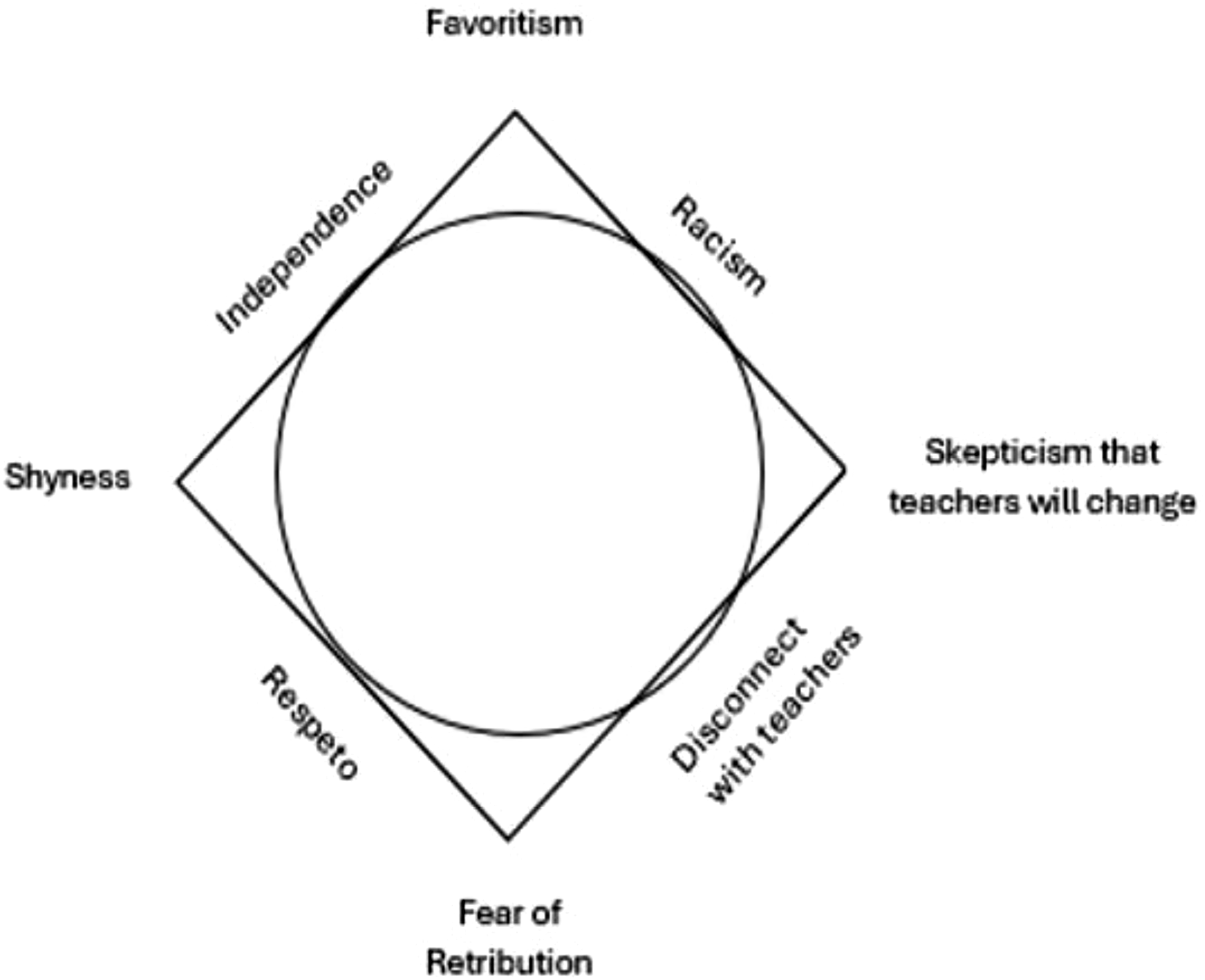
Figures 1 and 2 reflect this argument. We suggest that student voice can be thought of as a square peg whose sharp points may be buffed off to fit in a round hole for white students whose teachers share their white culture (see Figure 1), but for Latiné students, the points become even sharper and more pronounced so that the practices simply do not fit (see Figure 2). The four sticking points of the square peg of student voice The conditions that sharpen the sticking points of student voice for Latiné students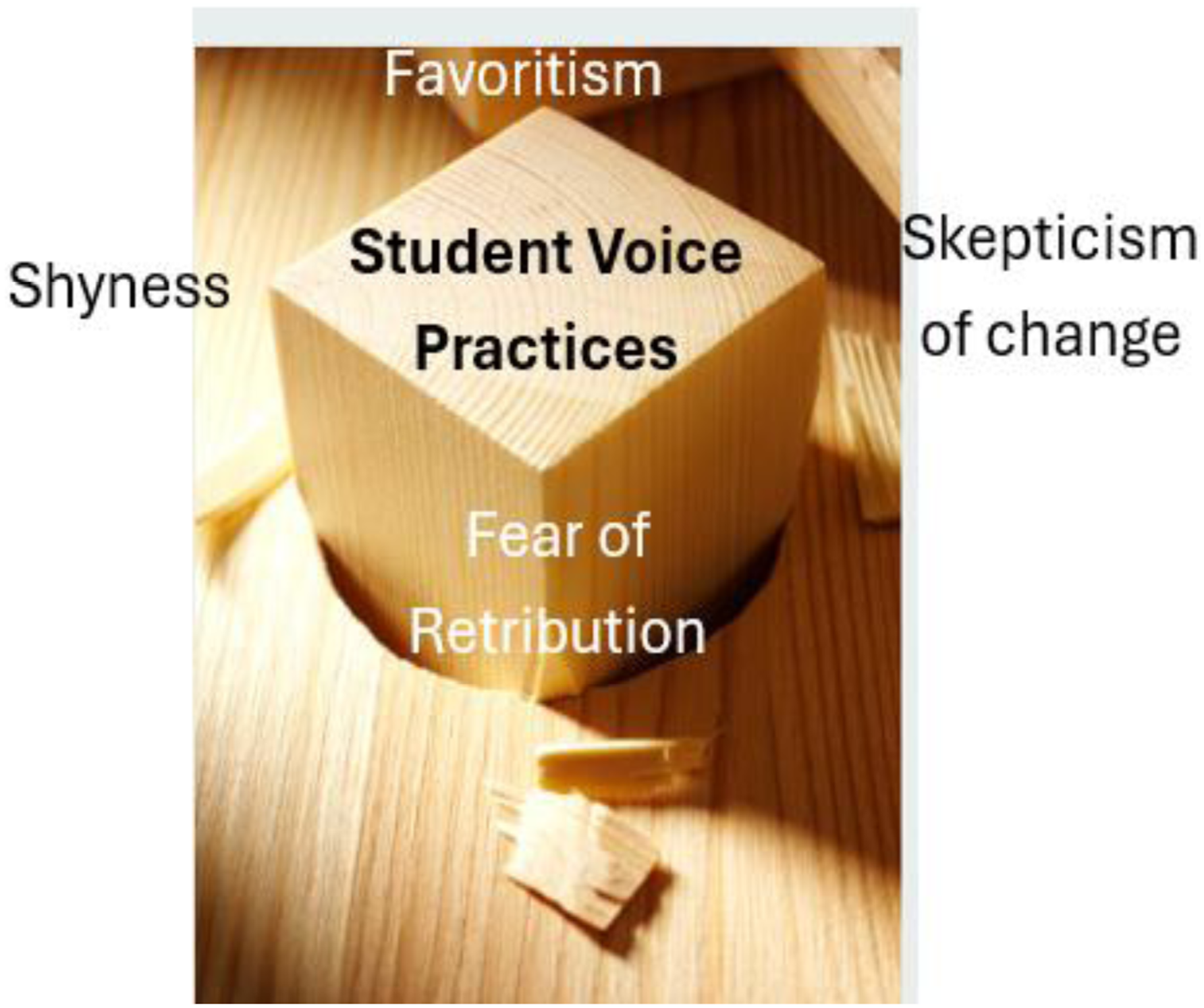
In Figure 1, the four “sticking points of student voice” (embarrassment or shyness, fear of retaliation from educators, lack of confidence in educators’ will to change, and favoritism) are represented as the four corners of the square peg of student voice that make it ill-fitting or uncomfortable for all students. These four factors reflect students’ stance towards student voice; they help illuminate why students, regardless of their ethno-racial background, may be reticent to participate in SVPs when they are invited to do so or disinclined to share the ideas for school or classroom improvement that occur to them. Student voice has repeatedly been described in the literature as counter-cultural because by inviting student insight and expertise in the teaching-learning dynamic, it challenges deeply engrained power hierarchies and norms of deference to adult authority and knowledge of best practice (Biddle, 2019; Cook-Sather, 2006; Holquist et al., 2023). Much work has explored why teachers may struggle to adapt to the different power arrangements that SVPs demand (Black & Mayes, 2020; Conner, 2022); however, little work has closely examined students’ reticence to participate. Identifying the four factors that might underlie students’ attitudes towards and beliefs about SVPs is an important contribution in its own right. This contribution becomes even more significant when set alongside Figure 2, which shows students’ reservations as not simply attitudinal but structurally and culturally produced.
Figure 2 layers onto Figure 1 the unique conditions that Latiné students experience in school that render SVPs particularly discordant. Depicted in Figure 2 as the sides of the square peg of SVPs, these conditions include a cultural mismatch between values of independence and respeto on the one hand, and the assumptions that students will speak up for themselves, on the other hand; a disconnect between Latiné students and their white teachers; and racism and discrimination. These conditions make the sticking points of student voice even sharper for Latiné students, rendering the square peg of SVPs even less amenable to the round hole of schooling for them.
How Shyness and Embarrassment Are Sharpened
All middle and high school aged students may be loath to embarrass themselves in front of their peers by indicating that something is not working for them or asking for change (Tomova et al., 2021). Developmental research indicates that adolescence is marked by heightened sensitivity to peer evaluation and perceived judgment from authority figures, making public self-disclosure or critique fraught for young people (Somerville, 2013; Steinberg, 2014; Tomova et al., 2021); however, Latiné students may be particularly wary of calling attention to themselves by speaking up due to both a cultural desire to project independence and a fear of racism. This value of independence, whether linked to cultural pride or assimilationism, may intensify Latiné students’ reticence about engaging in student voice. Additionally, Latiné students may be averse to engaging in behavior that could result in them being teased or “shunned” because of its potential to reflect on their entire people and lead to stereotyping or cultural aspersions either by peers or teachers (Gyull et al., 2010). Research shows that students from collectivist or relational cultural traditions may experience public self-assertion as socially risky or inappropriate, particularly in classrooms that privilege verbal immediacy and individual advocacy (Delpit, 2005; Gay, 2018; Lopez et al., 2023).
How Fear of Retribution Is Sharpened
Worries about retaliation from teachers for engaging in student voice, which our data and previous research (e.g., Bahou, 2012; Hill, 2019; Hipolito-Delgado, 2024; Lundy, 2007; Mitra, 2009) suggest all students may feel, become more marked for Latiné students because of the cultural norm of respeto, which demands that youth show deference to their elders and not engage in behavior that may be seen as challenging or critiquing authority (Lopez et al., 2023). Fears of retaliation may be further intensified for Latiné students because of the disconnect they feel with white teachers and administrators and the perniciousness of racism, as it shows up in lowered expectations, tracking into less advanced classes, and disproportionate disciplinary practices (Gage et al., 2021; Lewis & Diamond, 2015), including educators who are “stricter” with Latiné students or more apt to punish them for cultural expressions or perceived “talking back.” Scholars of raciolinguistic ideology have shown that Latiné students’ linguistic styles are often racialized as disrespectful or deficient, leading educators to sanction behavior that would be interpreted as assertive or engaged when enacted by white students (Flores & Rosa, 2015).
How Skepticism of Change Is Sharpened
Again, the values of respeto and independence, the mismatch between the ethnoracial identities of teachers and students, and racism work together to amplify Latiné students’ sense of the futility of engaging in SVPs. Students of all cultural backgrounds may doubt educators’ will to change and view student voice with skepticism because of the entrenched power hierarchies in schools (Finefter-Rosenbluh et al., 2021; Lundy, 2007); however, Latiné students may be particularly inclined to feel that raising their voices is pointless or more likely to result in trouble for them than it is to engender meaningful change because of the deep-seated structural racism they encounter in schools (Carranza et al., 2024; Lewis & Diamond, 2015). Scholars have established that trust is fundamental to effective SVPs (Biddle, 2017; Cook-Sather, 2002), and in schools where the majority of educators do not share the students’ cultural backgrounds and racism lurks, trust may be especially hard to come by (Mitra, Al Saghir, Boat, Conner, & Holquist, in press). Extensive research on cross-cultural communication in schools demonstrates that differences in interactional norms—such as when to speak, how to express disagreement, and what counts as respect—often lead educators to misinterpret students’ behavior as disengagement or defiance rather than culturally patterned communication (Delpit, 2005; Palmer and Martínez, 2013; Rogoff et al., 2007).
How Favoritism Is Sharpened
Finally, the perceived favoritism that may dissuade quieter, less academically successful, or less involved students from participating in student voice programs becomes intensified for Latiné students due to discordant cultural norms, like respeto, and racism. Honoring the cultural value of respeto may make Latiné students appear quieter or less assertive, and therefore, render them less likely to be nominated by teachers for student voice initiatives. Research on raciolinguistic ideologies further suggests that teachers’ perceptions of leadership, intelligence, and confidence are deeply entwined with white, middle class language norms, systematically marginalizing students whose communication practices do not align with these expectations (Flores, 2020; Rosa, 2019). The value of respeto may also simply make Latiné students feel that student voice spaces and overtures are not for them. They may opt to keep their “heads down,” rather than making waves by asserting ideas that they believe teachers may not want to hear or may misunderstand. Additionally, when racism manifests as “lowered expectations” and funneling students into lower tracks (Oakes, 2005), as it did according to teachers in the two high schools, it may also diminish students’ sense of self-worth and dampen any inclination they may have to assert themselves through student voice mechanisms. In these ways, the suppression of Latiné students’ voices is not merely a matter of preference; it is structurally produced.
Limitations and Future Research
Although this study had several strengths, it also had limitations, which temper the claims above as speculative, rather than definitive. Notably, our index variable of student improvement mindset was not psychometrically validated, and student initiative was measured with a single item. Future quantitative work could change the student improvement mindset items from dichotomous to scaled variables and develop more indicators of student initiative in order to assess the reliability of these measures. Additionally, our study was limited to a single district, where Latiné students constituted the majority in each school. Future work could explore Latiné students’ perceptions and experiences of student voice in school contexts where Latiné students are in the minority to see if the findings hold, Furthermore, the small number of students of “other races” in our sample limited the extent to which we could explore response patterns by various ethno-racial groups. Future work could therefore compare the student voice experiences of Latiné students to those of their white, Black, Asian, and multiracial peers, rather than to “non-Latiné students.” More work is also needed that takes an intersectional perspective and accounts for different dimensions of students’ identities, including their gender, socioeconomic status, and (dis)ability status, among others.
Finally, it is important to note that even though our findings spoke most directly to the barriers that deter Latiné students from participating in student voice, several Latiné students in all four schools were involved in their school’s student voice club or board and availed themselves of informal student voice opportunities. Future work could focus on these students’ experiences to understand whether and how the conditions and barriers identified in this study as impeding Latiné students’ involvement in student voice affected these students. Researchers could also examine the cultural norms and funds of knowledge that Latiné students who are engaged in SVPs draw on as they pursue this work.
Conclusion
Our findings of the conditions that exacerbate the sticking points of student voice for Latiné students raise important implications for educators, administrators, and teacher educators, highlighting the need for equitable and culturally sustaining SVPs. They remind us that SVPs are not neutral invitations to participate, but culturally and developmentally loaded interventions whose risks and rewards are unevenly distributed in schools. Latiné students’ cultural values of respecting their elders, complying with adult authority, and not drawing undue attention to themselves may conflict with white-encoded expectations that they will speak up and express their needs and preferences as learners. Furthermore, (white) teachers’ faulty assumptions about them and their families (which can fuel deficit perspectives and discriminatory practices) can render SVPs even less accessible and appealing to Latiné students. It is, therefore, not enough to simply ask students for their feedback, input, or participation in change efforts; rather, educators who are interested in garnering the voice of all their students must create conditions for student voice to flourish. As one teacher in this study said, “Really, it’s on us to create an environment where students feel comfortable to speak up.” This work entails understanding and valuing students’ cultural assets, buffering them from racism and discrimination, and scaffolding their meaningful participation through metacognitive support (Hill, 2019) and critical consciousness-raising (Salisbury, 2021), so that all students can have an authentic say in the educational decisions and processes that impact them.
Footnotes

Funding
The authors disclosed receipt of the following financial support for the research, authorship, and/or publication of this article: This research was funded by a grant from the Bill and Melinda Gates Foundation, Seattle, WA (grant number INV-031504). The sponsor played no role in the study design; collection, analysis, and interpretation of data; the writing of the report; or the decision to submit the article for publication.
Declaration of conflicting interests
The authors declared no potential conflicts of interest with respect to the research, authorship, and/or publication of this article.