






Abstract
This study examines the relationship between early-life bilingualism and midlife cognitive health. Using data from the 1980, 1982, and 2021 waves of High School and Beyond: 1980 (N ≈ 13,980), we find that bilingual adults show higher midlife cognition scores, but the association weakens after adjusting for early-life academic achievement and educational expectations. Becoming bilingual before school entry is not associated with stronger midlife cognition than monolingualism or becoming bilingual after school entry. English-first bilingual speakers do not exhibit better midlife cognition than either English monolingual speakers or non-English-first bilingual speakers. By situating the debate about the cognitive benefits of bilingualism within broader educational and stratification contexts, our results highlight early-life educational inequalities as a key mechanism driving the apparent relationship between early-life bilingualism and midlife cognition.
Introduction
Cognitive health in midlife is a strong predictor of later-life outcomes such as dementia risks, wealth, and subjective well-being (Toh, Yang, and Hartanto 2020; Westrick et al. 2024). Understanding factors that shape midlife cognitive functioning is therefore essential for identifying early opportunities to promote healthy cognitive aging and long-term well-being. In this article, we evaluate the contribution of one such factor, bilingualism, to cognitive performance at midlife.
Drawing on Cognitive Reserve Theory (Stern 2002), bilingualism may benefit cognitive health by exercising the brain’s executive control system and strengthening neural pathways used for attention, memory, and language processing (Bialystok 2021). Many studies provide evidence consistent with this expectation, showing that bilingual adults tend to exhibit stronger cognitive functioning and lower risks of cognitive decline and diseases in midlife and later life (Alladi et al. 2013; Bialystok et al. 2014; Ossher et al. 2013). This evidence has led some scholars to propose bilingualism as a global public health initiative and to recommend that governments and health organizations incorporate language instruction into dementia prevention policies (Bialystok et al. 2016; Mendis, Raymont, and Tabet 2021). However, other studies find no such positive association (Paap and Greenberg 2013; von Bastian, Souza, and Gade 2016; Yeung et al. 2014), raising concerns that the cognitive benefits of bilingualism may be overstated, in part because many studies insufficiently address selection into bilingualism. If the benefits are smaller than some scholars have assumed, investing resources in developing bilingualism to prevent cognitive diseases might be less effective than expected.
Beyond the average effect of bilingualism, some researchers argue that the timing of language acquisition leads to variation in the effects of bilingualism (Ballarini et al. 2023). Neuroscientific research, particularly Critical Period Theory, emphasizes that early life represents a sensitive window for language acquisition (Hakuta, Bialystok, and Wiley 2003; Hartshorne 2022). If bilingualism contributes to cognitive capacity, its association with midlife cognition should be strongest when languages are acquired in early life. However, because early-life bilingualism develops alongside other cognitive skills and educational experiences, many of these factors may confound the association, potentially producing a spurious observed relationship between early-life bilingualism and midlife cognition.
A second potential source of heterogeneity in long-run cognitive performance is individuals’ first language. In the United States, English is the majority language, and early proficiency can shape access to quality education, health care, and social integration and reduced exposure to discrimination (Akresh, Massey, and Frank 2014; Derose, Escarce, and Lurie 2007; Murillo and Smith 2011), all of which could benefit cognition over the life course (Glymour and Manly 2008). The potential neurocognitive benefits of bilingualism and the possible long-term consequences of early language-based advantage/disadvantage may operate together, differentiating midlife cognition across English monolingual, English-first bilingual, and non-English-first bilingual speakers.
To better detect and verify the long-term relationship between bilingualism and midlife cognition, we take three steps. First, we investigate the relationship between early-life bilingualism and midlife cognitive health and examine how controlling for early-life educational factors affects the observed association. Second, we distinguish second language learning before versus after school entry, which often reflects family-based exposure versus formal instructional contexts, and compare midlife cognition across three groups: monolingual individuals, those who became bilingual before school entry, and those who became bilingual after school entry. Third, to explore an additional possible source of heterogeneity, we assess whether midlife cognition differs across three linguistic groups: English monolingual speakers, bilingual speakers with English as a first language, and bilingual speakers with English as a second language. In supplementary analyses, we also examine whether taking a second-language course in the senior year of high school is associated with better midlife cognition for individuals who were monolingual in sophomore year, adjusting for their sophomore-year academic performance and educational expectations. We use data from High School and Beyond: 1980 (Grodsky et al. 2022), which provide rich information on early-life bilingualism, midlife cognition, early-life educational experiences, and other early-life factors that may influence selection into bilingualism, such as family socioeconomic status (SES), race and ethnicity, and immigration status.
This study contributes to the existing literature in three ways. First, we highlight how early-life educational factors may confound the observed bilingualism–cognition relationship. Second, we connect the cognitive implications of language acquisition to the life course perspective by examining not only the link between early-life bilingualism and midlife cognition but also the distinction between pre- and post-school-entry bilingualism, thereby situating Critical Period Theory within broader educational and stratification contexts. Finally, by comparing midlife cognition across three linguistic groups defined by bilingualism and first language in the U.S. context, we shed light on whether a society’s linguistic environment, including the majority language and its associated social advantages, may operate with bilingualism to produce uneven cognitive performance in adulthood.
Background
The Debate on the Bilingual Advantage
The relationship between bilingualism and adulthood cognitive health remains unclear. According to Cognitive Reserve Theory (Stern 2002), cognitively stimulating tasks can strengthen the brain’s ability to cope with damage and resist age-related cognitive decline by developing alternative neural pathways available in the event that some pathways are blocked. Learning a second language may contribute to cognitive reserve due to the frequent use of executive function and engagement in mental processes entailed in language acquisition that, in turn, enhance the brain’s efficiency and flexibility in managing cognitive tasks (Bialystok 2021). Supporting this view, many researchers find that bilingual speakers have better cognitive performance and later onset of cognitive diseases than their monolingual counterparts (Abutalebi et al. 2015; Alladi et al. 2013; Ballarini et al. 2023; Bialystok and Craik 2022; Bialystok, Craik, and Freedman 2007; Bialystok et al. 2014, 2016; Perani et al. 2017).
On the other hand, other researchers do not observe a significant positive association between bilingualism and adulthood cognitive functioning (Nichols et al. 2020; von Bastian et al. 2016; Yeung et al. 2014), and some research even finds a negative association (Anderson, Saleemi, and Bialystok 2017; Folke et al. 2016; Lehtonen et al. 2018). Evidence for the cognitive benefits of bilingualism is thus inconsistent. Unobserved confounders, such as SES, immigration status, and cultural differences, may cause a spurious bilingual advantage (Paap, Johnson, and Sawi 2015). Moreover, research finds that studies supporting the bilingual advantage are more likely to be published than those challenging it (de Bruin, Treccani, and Della Sala 2015), so the cognitive benefits of bilingualism suggested by some studies may reflect publication bias rather than true effects. Preference for positive findings and reliance on laboratory and clinical recruitment have contributed to a literature dominated by small, selective samples with limited socioeconomic heterogeneity (Paap et al. 2015), while evidence from large, nationally representative surveys remains scarce.
Prior debates on the bilingual advantage have been largely shaped by psychologists and neuroscientists, who focus on neurocognitive mechanisms and generally treat bilingualism as exogenous in its relation to cognition. Few studies have examined the potential confounding role of other early-life cognitive skills and broader educational and stratification contexts in this relationship. Our study aims to bridge this gap by situating the bilingualism–cognition link within a broader sociological discussion of education, cognitive skills, and cognitive health across the life course and by examining how early-life educational factors may confound the observed association.
Early-Life Bilingualism and Midlife Cognition
Early-life bilingualism may contribute to midlife cognition through three pathways. The first possible mechanism is neurocognitive. Drawing on Cognitive Reserve Theory, research suggests that acquiring and using different languages may enhance the brain’s efficiency and flexibility in utilizing neural resources, thereby providing protection against cognitive diseases (Bialystok 2021). Critical Period Theory further suggests that early life represents a sensitive window of heightened neural plasticity, during which language acquisition plays a pivotal role in shaping the brain’s functional connectivity (Knudsen 2004; Kwon et al. 2021). Research also indicates that such early neural differences can persist into adulthood (Cheng et al. 2023), implying that exposure to bilingualism during this developmental window could have enduring cognitive consequences. If this neurocognitive pathway is operative, then the association between bilingualism and adulthood cognitive health should be most evident when different languages are acquired early in life.
Second, early-life bilingualism may benefit midlife cognition indirectly by enhancing SES and resources. Human Capital Theory holds that knowledge and skills increase employment opportunities and earnings (Deming 2022), and bilingualism constitutes such a skill. Empirical studies show that bilingual individuals have higher educational attainment, occupational status, and earnings compared to their monolingual peers (Gándara 2015; Rumbaut 2014; Santibañez and Zárate 2014). In labor markets, bilingualism expands opportunities in both mainstream and ethnic economies, reduces unemployment risks, and opens access to jobs with wage premiums for language skills (Agirdag 2014). By improving educational attainment, labor market prospects, and socioeconomic standing, bilingualism may indirectly benefit cognitive health. While few studies examine whether SES mediates the relationship between bilingualism and adulthood cognition, prior research finds that SES mediates the relationship between bilingualism and better self-rated health (Schachter, Kimbro, and Gorman 2012), although the measurement of self-rated health might be sensitive to survey language and cultural context (Kandula, Lauderdale, and Baker 2007).
Third, bilingualism may support cognitive functioning through enhanced social connections. Individuals who speak multiple languages can interact with a wider range of people across different cultural and linguistic groups, which broadens the diversity of their social contacts. Exposure to such heterogeneous social environments provides more varied cognitive stimulation, through novel conversations, perspectives, and problem-solving interactions, which may strengthen cognitive skills (Peng and Perry 2025; Perry et al. 2022). Additionally, expanded social networks can provide greater access to support when needed, buffering stress and consequently promoting cognitive well-being (Moorman and Pai 2024). In this way, bilingualism may indirectly bolster midlife cognitive health by expanding opportunities for social engagement and support across social networks.
Despite these plausible pathways, the observed bilingualism–cognition association may also reflect the influence of other early-life cognitive skills and academic factors. As mentioned before, bilingualism develops alongside other cognitive abilities, such as academic skills of language, reading, and mathematics (Fernandez and Nielsen 1986; Nielsen and Lerner 1986), as they use shared neural networks for attention, working memory, and executive function, and they are cultivated within overlapping educational and developmental contexts. These other cognitive skills themselves are strong predictors of adulthood cognition. For example, using data from High School and Beyond: 1980, researchers demonstrate that individuals’ academic performance in high school strongly predicts midlife cognition, even net of educational attainment (Muller et al. 2025). Similarly, research using the Wisconsin Longitudinal Study (WLS) shows that early-life cognitive ability is a powerful predictor of cognitive functioning later in life (Moorman and Kong 2025; Zhang, Liu, and Choi 2020), despite the lack of national representativeness and racial and ethnic diversity in the WLS sample. These early-life cognitive skills also shape educational attainment, occupational status, earnings, and health behaviors (Farkas 2003; Hall and Farkas 2011; Pokhrel et al. 2013), each of which is, in turn, associated with adulthood cognitive health (Greenfield, Akincigil, and Moorman 2020; Herd and Walsemann 2025; Vik et al. 2004).
Contradicting claims of the benefits of bilingualism, some research finds little evidence that bilingual adults outperform their monolingual counterparts in educational achievement, labor market outcomes, or economic returns (Fry and Lowell 2003; Mouw and Xie 1999; Shin and Alba 2009). For instance, Fry and Lowell (2003) show that bilingualism itself does not significantly predict wages net of educational attainment. Taken together, these findings underscore the need to situate the bilingualism–cognition link within the broader context of early-life cognitive development and educational inequality in order to assess whether bilingualism itself is protective for cognition or whether its apparent cognitive benefits are shaped by underlying educational and social advantages.
We distinguish between becoming bilingual before and after starting formal education, a distinction rarely examined in prior research due in part to data constraints. This step is important because one major challenge in studying the relationship between early-life bilingualism and midlife cognition is the potential confounding of early-life educational experiences and school contexts, which are well-established determinants of cognitive health across the life course (Moorman, Greenfield, and Garcia 2019; Moorman and Kong 2025; Muller et al. 2025; Walsemann and Ailshire 2020). By separating language learning that occurs before versus after school entry, we can better probe potential mechanisms. If becoming bilingual before school entry shows a stronger association with midlife cognition than after school entry, it would strengthen our confidence that early-life bilingualism is associated with midlife cognition independent of educational contexts. Moreover, it can provide further support for Critical Period Theory, which suggests that earlier language learning may more strongly influence brain development due to heightened neuroplasticity in early childhood (Hartshorne 2022). However, if becoming bilingual after school entry is more strongly associated with midlife cognition, it suggests a greater need to be cautious about the potential confounding role of formal educational experiences in the relationship between early-life bilingualism and midlife cognition. Either way, findings derived from this distinction will expand our understanding of the relationship between early-life language and educational experiences and midlife cognition.
While we focus on the confounding role of early-life academic factors, other factors, including family SES, race and ethnicity, immigration status, and cultural differences, may all shape selection into bilingualism and influence midlife cognition. For example, individuals raised in racially and ethnically diverse communities are more likely to become bilingual, and members of such communities often exhibit stronger social connectedness (Pearrow, Sander, and Jones 2019), which can benefit cognition (Perry et al. 2022). Many bilingual speakers are also immigrants who maintain social ties both in their countries of origin and in the United States, which promotes continued use of different languages and facilitates access to social support that may benefit cognition. Thus, ignoring race, ethnicity, and immigration status could overstate the role of bilingualism in fostering social connectedness and consequently cognition.
Another selection mechanism worth noting is immigrant health and achievement selection. Healthier individuals are more likely to migrate, which can make immigrants appear to have better health outcomes than native-born populations (Markides and Eschbach 2005). This advantage has also been observed in cognitive performance (Garcia et al. 2020; Hill et al. 2012). In addition, immigrant students may demonstrate stronger early-life cognitive performance in school than their native-born peers as they are often positively selected from families with greater resources or stronger academic preparation in their countries of origin (Feliciano 2020). Consequently, it is essential to account for immigration status in our study since any observed bilingual advantage may partly reflect this health or achievement selection rather than the causal effect of bilingualism itself. Another related health selection is “salmon bias,” in which immigrants with declining health return to their country of origin and thus are not observed in U.S. data (Riosmena, Wong, and Palloni 2013; Turra and Elo 2008). Given our focus on midlife cognition, this bias might not be substantial as selective return migration primarily operates at older ages (Markides and Eschbach 2005). However, given the long interval between early-life bilingualism and midlife cognition, we will still address selection and attrition between exposure and outcome in our analytic sample.
First Language as a Potential Source of Heterogeneity
Beyond differentiating becoming bilingual before versus after school entry, this study also distinguishes among three linguistic groups: English monolingual, English-first bilingual, and non-English-first bilingual speakers. Bourdieu’s (1977) concept of linguistic capital suggests that the value of language skills depends on the social context and can shape individuals’ life chances and experiences. In the United States, where English is the majority language, the timing of English acquisition may be especially consequential for how linguistic resources translate into educational, social, and institutional opportunities that may have important implications for cognitive health over the life course.
Based on this perspective, English-first bilingual speakers may exhibit the most favorable midlife cognitive performance as their bilingualism typically reflects the addition of a second language to an already advantaged linguistic position, combining cognitive stimulation with fewer early-life barriers to institutional resources and social integration. By contrast, non-English-first bilingual individuals may face early-life constraints associated with limited English skills, including restricted access to quality childcare and schooling, health care, and social integration as well as exposure to discrimination (Akresh et al. 2014; Derose et al. 2007; Murillo and Smith 2011; Nores and Barnett 2014), all of which may have lasting implications for cognitive health across the life course (Glymour and Manly 2008). However, it remains unclear whether the hypothesized neurocognitive benefits of early-life bilingualism can offset such potential long-term consequences of early language-based disadvantage, making non-English-first bilingual speakers exhibit higher midlife cognition than English monolingual speakers. Comparing midlife cognition across the three linguistic groups therefore provides an opportunity to probe the joint role of neurocognitive stimulation and language-based social inequality in cognitive aging.
Hypotheses
Guided by multiple frameworks, including Cognitive Reserve Theory, Critical Period Theory, Human Capital Theory, Bourdieu’s concept of linguistic capital, and a life course approach to cognition, this study contributes to the dialogue on the relationship between bilingualism and cognitive health by examining the following hypotheses:
Data and Methods
Data and Sample
We used data from High School & Beyond: 1980 (HS&B:80) to address our research questions. HS&B:80 is nationally representative, reflects the experience of a large sample of people who were initially observed in high school in 1980, and includes abundant information on respondents’ early-life language learning, early-life educational factors, and midlife cognition. In 1980, HS&B:80 interviewed 30,030 sophomores and 28,240 seniors in 1,020 randomly selected public and private high schools (about 60 students per school) in the United States. From the initial sample of 58,270 students, random subsamples of 14,830 sophomores and 12,000 seniors were selected to participate in a longitudinal panel from 1982. Respondents were followed over time until 2021. We used data from the 1980, 1982, and 2021 waves of HS&B:80; the first two waves included information on respondents’ early-life experiences, and the last wave measured respondents’ midlife cognitive health. Our analytic sample was restricted to respondents who participated in the 2021 wave (
Measures
Midlife cognition was the dependent variable. Cognitive tasks were included in both the 2021 HS&B:80 telephone survey and the web survey. The neurocognitive assessments in the telephone survey included immediate and delayed word recall, phonemic and semantic fluency, and forward and backward digit span. The cognitive assessments in the web survey included verbal and visual pairs. We used a measure of general cognitive functioning derived from a hierarchical item response theory model (Huang et al. 2013) that combines information from and accounts for shared variance across all of the aforementioned tasks. To enhance comparability across survey modes and improve measurement precision, we incorporated a broad set of covariates from high school and midlife as an explanatory component of the higher-order latent variable. For additional information, see the online appendix of Muller et al. (2025).
The first independent variable was early-life bilingualism. Respondents were asked whether they spoke another language in addition to English in 1980. We used this information to create a dichotomous variable distinguishing respondents who spoke only one language (i.e., English) from those who spoke more than one language. About 99 percent of respondents who reported more than one language spoke two languages, so we used the term “bilingualism” in this study.
Prior research suggests that language proficiency should also be considered when determining bilingual status (Schachter et al. 2012). Respondents who reported speaking more than one language were also asked to rate their proficiency in understanding, speaking, reading, and writing both English and the other language using the following scale: very well (= 1), pretty well (= 2), not very well (= 3), and not at all (= 4). Over 94 percent of these bilingual respondents rated their English proficiency as very well or pretty well across all four dimensions, while their non-English proficiency showed greater variation. We conducted sensitivity analyses excluding respondents whose non-English proficiency was below pretty well from the bilingual group. Specifically, following prior research (Schachter et al. 2012), we summed the four measures of respondents’ abilities to understand, speak, read, and write the non-English language (α = .9), yielding a total score ranging from 4 to 16. A total score of 8 or lower corresponded to reporting “pretty well” (or better) across all four domains, whereas scores above 8 indicated at least one domain rated below “pretty well.” We reclassified individuals with scores above 8 (about 55.6 percent among bilingual respondents; the comparable proportion for English proficiency was only 3.6 percent) from bilingual to monolingual and reran regression analyses. This threshold represented a conservative definition of bilingualism and was used solely for sensitivity analysis. Results did not change our main conclusion.
The timing of becoming bilingual was the second independent variable. For people who spoke more than one language, HS&B:80 also asked whether they spoke more than one language before school. We distinguished among people who were monolingual, became bilingual before school entry, or became bilingual after beginning school.
The third independent variable was defined by bilingualism and individual first language. Respondents who were able to speak more than one language were also asked what their first language was. HS&B:80 asked respondents two questions: (1) “What was the first language you spoke when you were a child?” and (2) “What other language did you speak when you were a child before you started school?” Responses included “no other language” as well as options to select or report one or more specific language(s). Based on these two questions, we defined respondents as having a non-English first language if they did not report speaking English before starting school. We created a three-category indicator distinguishing English monolingual, English-first bilingual, and non-English-first bilingual respondents.
Covariates
We controlled for a series of sociodemographic variables and educational factors that could confound the association between early-life bilingualism and midlife cognition. In addition to sex and race and ethnicity, we controlled for three measures of early-life SES: the higher of mother’s and father’s educational attainment (high school or less, some college or vocational certificate, finished college, or graduate/professional school); parental occupational prestige in 1980 (prioritizing father’s prestige unless father’s occupation was missing or noncodable) based on the 1989 Nakao-Treas prestige scores that ranged from 0 to 100, with higher scores indicating higher occupational prestige (Nakao and Treas 1994); and family income in 1980 (if missing, we first used family income in 1982 to fill missing values before multiple imputation). We also controlled for individual religious background as a proxy for cultural differences (Protestant, Catholic, other Christian, non-Christian, or none), whether they were born in the United States, length of living in the United States by 1980, and whether respondents had any disability early in life (including learning, visual, hearing, speech, orthopedic, or other health impairments).
Additionally, we controlled for early-life cognitive and educational factors. Early-life cognitive skills were measured by standardized assessments of vocabulary, reading, and math as well as self-reported grades in the senior year of high school. Self-reported grades were originally measured on an ordinal scale ranging from “mostly A (90 to 100)” to “mostly below D (below 60)” and were recoded into a continuous variable ranging from 0 (mostly below D) to 4 (mostly A). We also controlled for expected educational attainment reported in the senior year of high school (high school or less, vocational school, or college) because respondents may take second-language courses in high school to improve their chances of college admission. If the association between early-life bilingualism and midlife cognition persists after controlling for early-life academic factors, we also wanted to know whether bilingualism had an independent association with midlife cognition beyond the well-documented cognitive benefits of educational attainment, so we also controlled for respondents’ highest level of education in 2021 (coded identically to parental educational attainment).
Analytic Strategy
We used ordinary least squares (OLS) regression because the outcome variable was continuous and approximately normally distributed. We also assessed key OLS assumptions, including linearity, homoscedasticity, the normality of residuals, and no multicollinearity, and found no evidence of major violations. Model 1 estimated the marginal association between early-life bilingualism and midlife cognition without any covariates. Model 2 controlled for respondents’ basic demographic characteristics, including sex, race and ethnicity, childhood SES, religious background, nativity, length of living in the United States by 1980, and early-life disability. Model 3 further controlled for respondents’ academic performance and educational expectations in the senior year of high school. Model 4 further controlled for respondents’ highest educational attainment.
Only parental occupational prestige had more than 20 percent of missing values (25 percent) due to nonresponse and responses to the open-ended question of specific occupations that were not codable. Among remaining variables, the share of observations with missing values ranged from .1 percent (the highest level of education) to 11.4 percent (religious background). We used multiple imputation with chained equations to address these missing values. All regression analyses were conducted across 50 imputed data sets. We represented cognitive functioning in 2021 using plausible values (Mislevy 1991) to account for measurement error and uncertainty in estimating individuals’ true cognitive ability. These plausible values are drawn from a posterior distribution based on item response theory models, incorporating both observed responses and background variables. This approach yields more valid population-level inferences while preserving the psychometric properties of the cognitive assessments. To facilitate result interpretation, we z-standardized the plausible values of cognition scores so that coefficients reflected changes in standard deviation units (see Figure 1). In multiple imputation and regression analyses, we used the cross-sectional weight provided by HS&B:80 for the 2021 wave, which adjusted for sample attrition and could produce estimates that generalized to the full population of 1980 high school sophomores and seniors for variables collected in the 2021 wave (see Appendix A in the online version of the article), adjusting for school-level clustering.
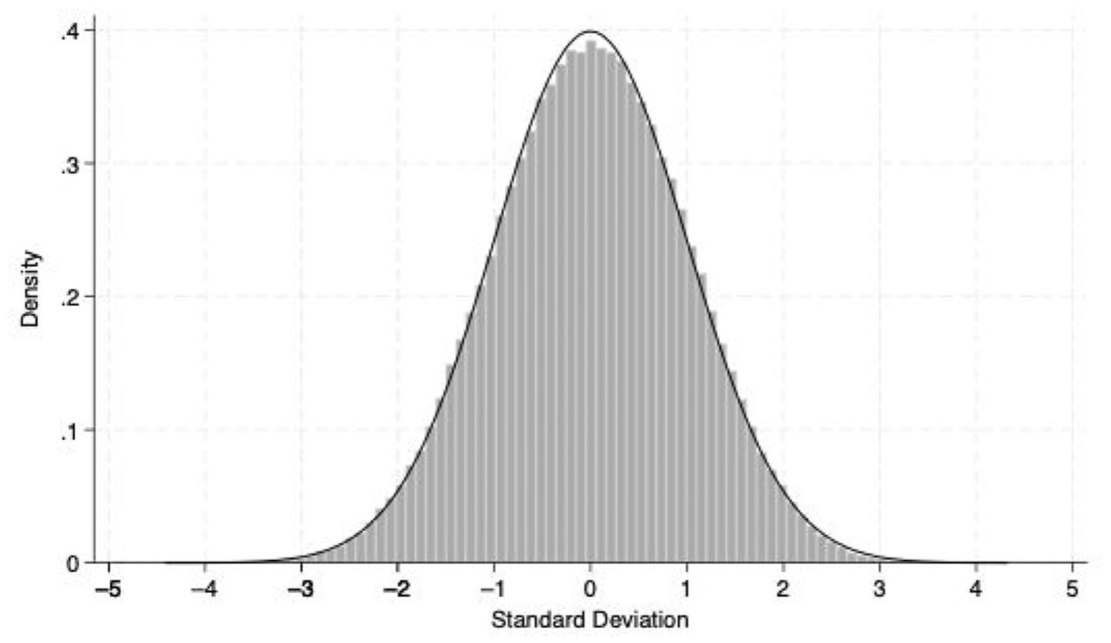
The weighted distribution of z-standardized plausible values of cognition scores in 2021 across 50 imputed data sets (N ≈ 13,980).
Results
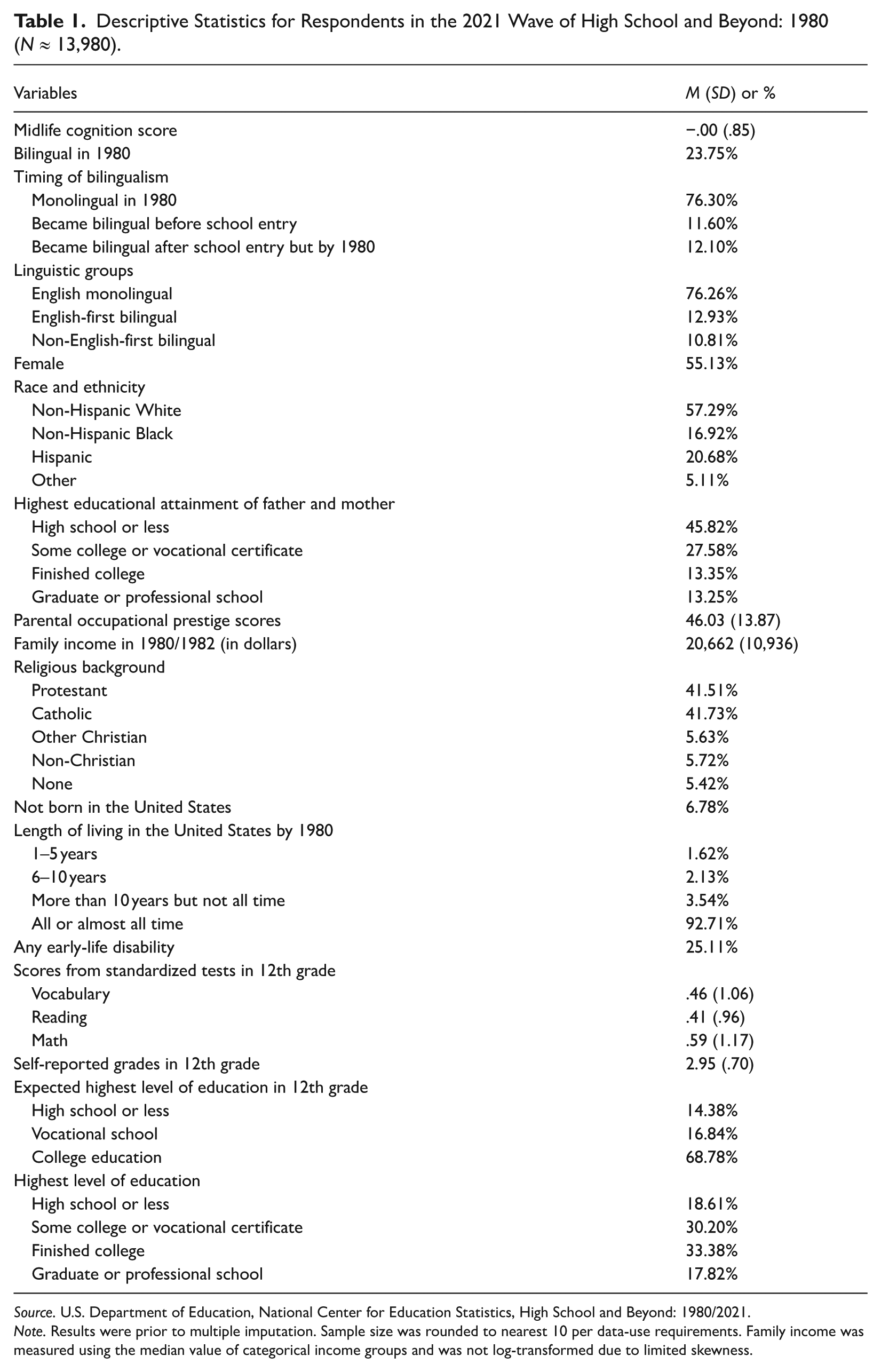
Table 1 presents unweighted descriptive statistics for all variables. Before standardization, the average of cognition scores was 0, and its standard deviation was .9. Nearly one in four respondents were bilingual in 1980 (23.8 percent). The proportion of people becoming bilingual before going to school was about 11.6 percent, and around 12.1 percent of respondents became bilingual after going to school. English monolingual respondents were the majority, accounting for 76.3 percent, followed by English-first bilingual (12.9 percent) and non-English-first bilingual (10.8 percent) respondents.
Descriptive Statistics for Respondents in the 2021 Wave of High School and Beyond: 1980 (N ≈ 13,980).
Source. U.S. Department of Education, National Center for Education Statistics, High School and Beyond: 1980/2021.
Note. Results were prior to multiple imputation. Sample size was rounded to nearest 10 per data-use requirements. Family income was measured using the median value of categorical income groups and was not log-transformed due to limited skewness.
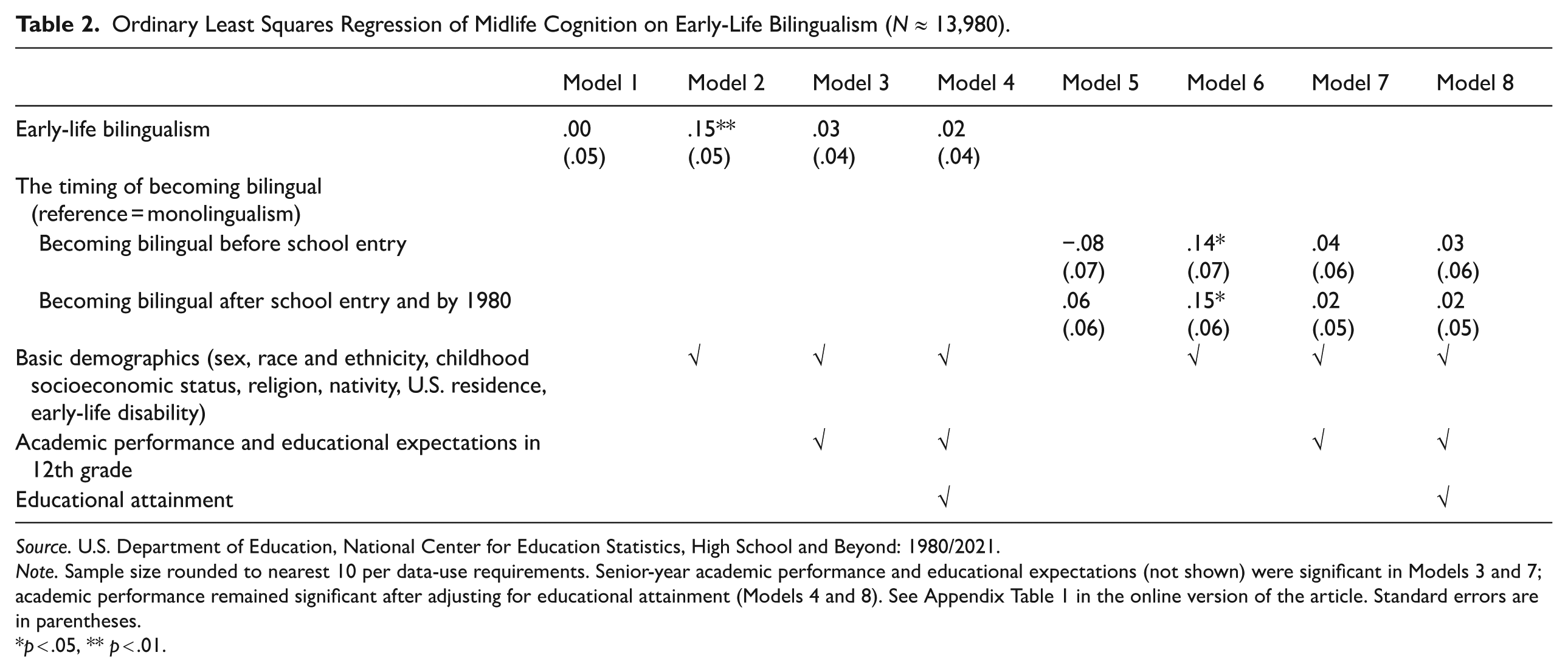
Table 2 shows weighted regression models estimating the association between early-life bilingualism and midlife cognition. We found no association between early-life bilingualism and midlife cognition (Model 1). Similarly, we found no association between the timing of second language acquisition and midlife cognition (Model 5). However, additional analyses suggest that race and ethnicity acted as suppressors (not shown here for brevity). In Model 2, after controlling for basic sociodemographic information, especially race and ethnicity, we detected an association between early-life bilingualism and midlife cognition, with bilingual respondents exhibiting an advantage over their monolingual peers in midlife cognitive skills of .15 SD (p < .01). Similarly, in Model 6, after controlling for basic sociodemographic information, becoming bilingual before going to school was associated with better midlife cognition (.14, p < .05) compared with being monolingual, and being bilingual after going to school was also significantly associated with midlife cognition (.15, p < .05) compared with monolingualism. However, the difference in midlife cognition between those who became bilingual before and after school entry was not statistically significant. The association between early-life bilingualism and midlife cognition weakened when additional covariates were incorporated (Models 3, 4, 7, and 8).
Ordinary Least Squares Regression of Midlife Cognition on Early-Life Bilingualism (N ≈ 13,980).
Source. U.S. Department of Education, National Center for Education Statistics, High School and Beyond: 1980/2021.
Note. Sample size rounded to nearest 10 per data-use requirements. Senior-year academic performance and educational expectations (not shown) were significant in Models 3 and 7; academic performance remained significant after adjusting for educational attainment (Models 4 and 8). See Appendix Table 1 in the online version of the article. Standard errors are in parentheses.
p < .05, ** p < .01.
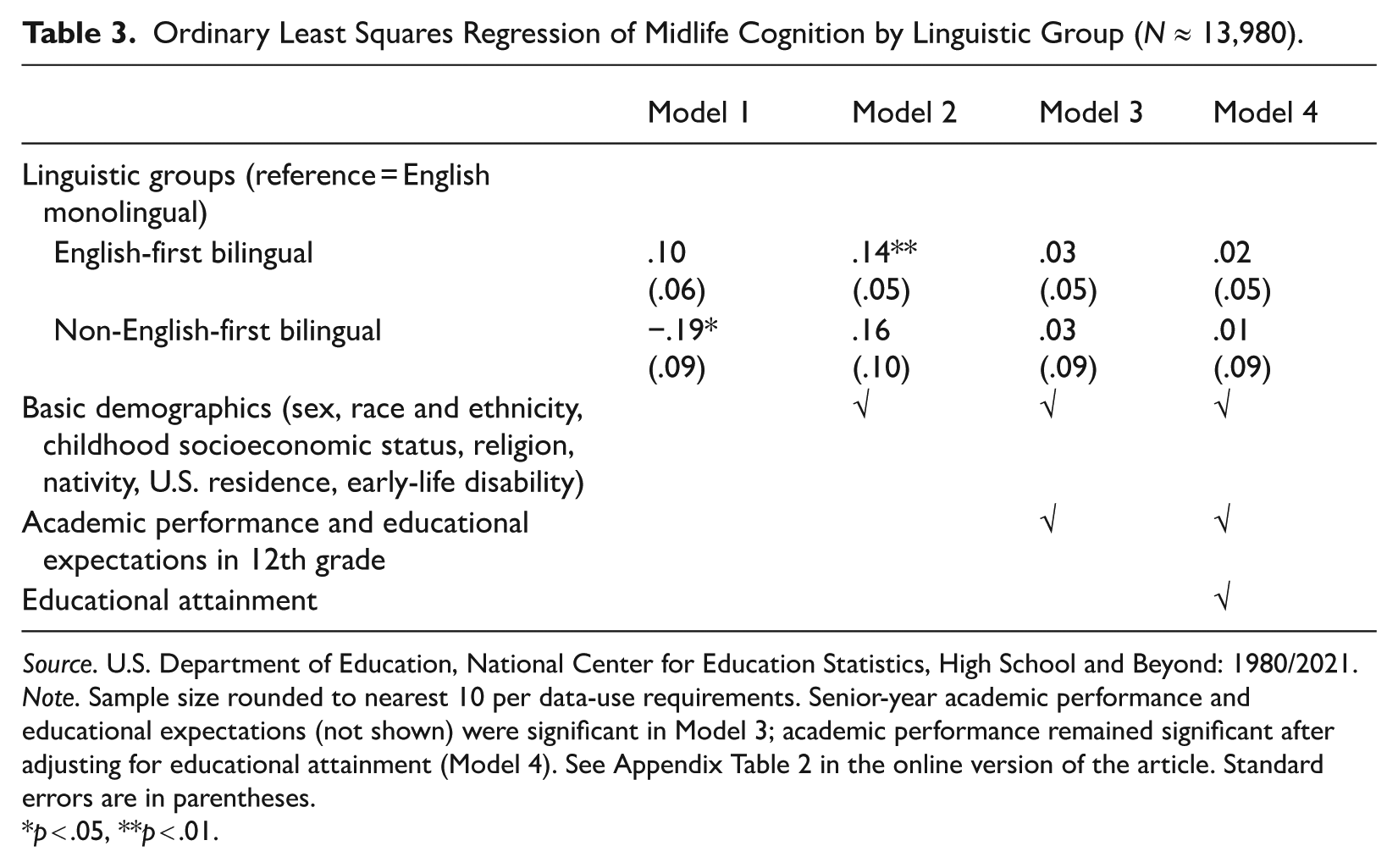
Table 3 shows results from models comparing midlife cognition across English monolingual, English-first bilingual, and non-English-first bilingual respondents. Non-English-first bilingual speakers (−.19, p < .05) had lower cognition scores than monolingual speakers in the unadjusted model (Model 1). In Model 2, after adjusting for basic sociodemographic covariates, English-first bilingual respondents had better midlife cognition than English monolingual respondents (.14, p < .01) but not compared with non-English-first bilingual respondents. The association attenuated when early-life educational factors and education attainment were included (Models 3 and 4).
Ordinary Least Squares Regression of Midlife Cognition by Linguistic Group (N ≈ 13,980).
Source. U.S. Department of Education, National Center for Education Statistics, High School and Beyond: 1980/2021.
Note. Sample size rounded to nearest 10 per data-use requirements. Senior-year academic performance and educational expectations (not shown) were significant in Model 3; academic performance remained significant after adjusting for educational attainment (Model 4). See Appendix Table 2 in the online version of the article. Standard errors are in parentheses.
p < .05, **p < .01.
Supplementary Analysis
Why is the significant association between early-life bilingualism and midlife cognition attenuated to nonsignificance after controlling for high school educational factors? This pattern may be explained in two ways. First, if these educational factors were confounders, the observed association between early-life bilingualism and midlife cognition may reflect underlying academic advantages rather than a direct effect of bilingualism itself. This possibility raises questions about the extent to which early-life bilingual exposure independently contributes to cognitive health and casts doubt on the effectiveness of early-life bilingual education as a preventive strategy for adulthood cognitive impairment. Alternatively, if these educational factors were mediators, then bilingualism may still have played an indirect role in promoting cognitive health through its influence on academic achievement.
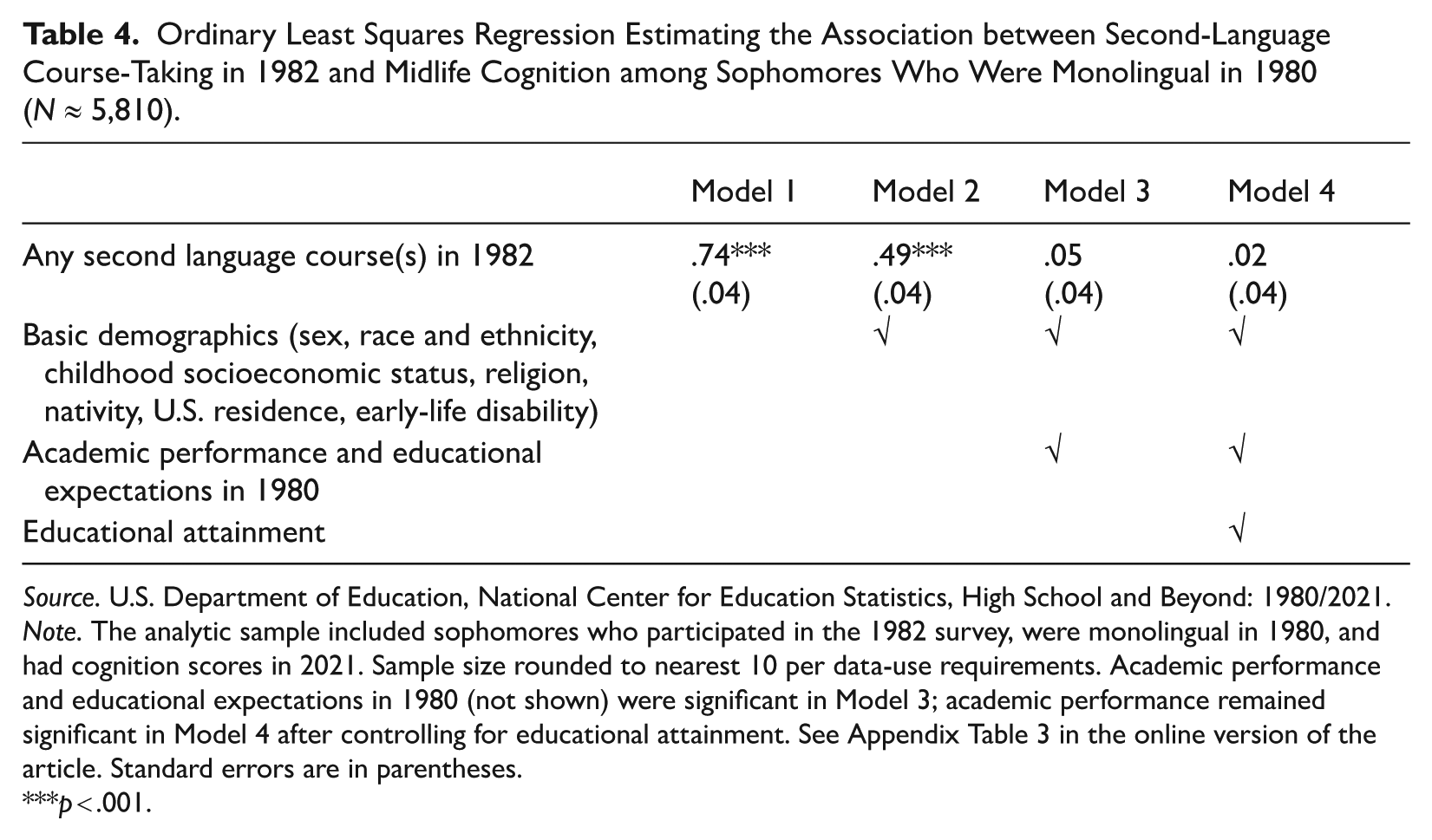
To further assess whether early-life bilingualism might enhance midlife cognition through academic performance, we conducted supplementary analyses using second-language course-taking in high school as a proxy for structured bilingual exposure. Specifically, HS&B:80 collected sophomores’ transcript data in 1982 (i.e., their senior year), which included information on individual second-language course-taking in high school. Additionally, HS&B:80 measured sophomores’ academic performance and expectations of educational attainment in 1980. Restricting our analytic sample to sophomores who were monolingual in 1980, we examined whether having a second-language course by 1982 was linked to midlife cognition, controlling for academic performance (including their achievement scores and self-reported grades) and educational expectations measured in 1980.
Table 4 shows the results. While having taken a second-language course by the senior year was initially associated with better midlife cognitive performance, this association was largely attenuated after controlling for academic performance and educational expectations in the sophomore year. This finding supports the interpretation that the association between early-life bilingualism and midlife cognition is more likely driven by confounding than mediation.
Ordinary Least Squares Regression Estimating the Association between Second-Language Course-Taking in 1982 and Midlife Cognition among Sophomores Who Were Monolingual in 1980 (N ≈ 5,810).
Source. U.S. Department of Education, National Center for Education Statistics, High School and Beyond: 1980/2021.
Note. The analytic sample included sophomores who participated in the 1982 survey, were monolingual in 1980, and had cognition scores in 2021. Sample size rounded to nearest 10 per data-use requirements. Academic performance and educational expectations in 1980 (not shown) were significant in Model 3; academic performance remained significant in Model 4 after controlling for educational attainment. See Appendix Table 3 in the online version of the article. Standard errors are in parentheses.
p < .001.
Discussion
Prior research yields mixed findings regarding the relationship between bilingualism and cognition (Antoniou 2019). Guided by multiple frameworks, including Cognitive Reserve Theory, Critical Period Theory, Human Capital Theory, Bourdieu’s concept of linguistic capital, and a life course approach to cognition, this study examines whether early-life bilingualism remains associated with midlife cognition after accounting for early-life educational factors. We also test whether becoming bilingual before school entry is more strongly associated with midlife cognition than becoming bilingual after school entry and whether midlife cognition differs across English monolingual, English-first bilingual, and non-English-first bilingual individuals.
This study yields three major findings. First, the observed association between early-life bilingualism and midlife cognition is largely confounded by early-life academic factors. In models adjusting only for basic sociodemographic characteristics, early-life bilingualism is positively associated with midlife cognition. However, once early-life educational factors are controlled for, the association between early-life bilingualism and midlife cognition is no longer present. This is consistent with existing evidence that early-life educational factors shape adulthood SES and cognitive health (Farkas 2003; Hall and Farkas 2011; Moorman and Kong 2025; Muller et al. 2025; Pokhrel et al. 2013; Sewell, Haller, and Portes 1969). Thus, the observed cognitive advantage of early bilingual speakers may partly reflect the benefits of other cognitive abilities developed early in life as well as the influence of educational expectations that may indirectly shape midlife cognitive health through educational attainment. Our supplementary analysis using transcript data further supports this interpretation, showing that controlling for academic performance and educational expectations in the sophomore year weakens the association between second-language course-taking in the senior year and midlife cognition. Recent research also shows that children use both verbal and nonverbal cognitive skills to acquire languages (Jin et al. 2023), and our additional analysis indicates that respondents with stronger academic performance are more likely to take second-language courses in high school. Together, these findings suggest that early-life academic factors confound the observed bilingualism–cognition association.
Our results contrast with prior studies reporting that bilingualism enhances cognitive functioning across the life course (Abutalebi et al. 2015; Alladi et al. 2013; Bialystok and Craik 2022; Bialystok et al. 2007; Perani et al. 2017), instead aligning with research finding no significant bilingual advantage in adulthood (Nichols et al. 2020; von Bastian et al. 2016; Yeung et al. 2014). However, not all null findings are comparable. For example, no association between early-life bilingualism and midlife cognition is found in baseline models; yet once we control for race and ethnicity, the association becomes significant. This change occurs because ethnic minorities, particularly Hispanic individuals, are more likely to be bilingual but tend to have lower midlife cognitive scores. In this case, the negative confounding effect of race and ethnicity may offset the positive confounding effect of early-life academic factors, leading to a marginally nonsignificant overall association. Therefore, the presence or absence of a significant association may reflect differences in how comprehensively studies account for key social factors that shape selection into bilingualism. While our findings on early-life bilingualism and midlife cognition do not support the hypothesis derived from Cognitive Reserve Theory, they do not contradict it as early-life educational experiences are also considered key mental stimuli that enhance cognitive reserve and support cognition across the life course (Stern 2002).
Second, we find that becoming bilingual before school entry does not have a stronger association with midlife cognition than becoming bilingual after school entry. This finding is inconsistent with Critical Period Theory, which posits that early childhood represents the most sensitive window for language acquisition and its neural impact (Hakuta et al. 2003; Hartshorne 2022; Kwon et al. 2021). Although becoming bilingual after school entry is associated with better midlife cognition compared with monolingual adults after adjusting for basic sociodemographic characteristics, this association is attenuated to nonsignificance once we control for high school cognitive skills and educational expectations. This pattern further supports our argument that the observed bilingualism–cognition relationship is largely confounded by early-life educational factors. We caution, however, that this does not imply bilingualism lacks cognitive benefits. Prior research indicates that learning multiple languages in childhood can facilitate brain development during that stage (Kovács and Mehler 2009). Rather, our results suggest that the long-term cognitive consequences of early-life bilingualism may have been overstated relative to the influence of other early-life cognitive skills.
Third, we find that English-first bilingual adults do not exhibit better midlife cognitive performance than either English monolingual or non-English-first bilingual adults. The absence of midlife cognitive differences between English-first bilingual and English monolingual speakers after accounting for early-life educational factors reinforces our earlier finding that the observed association between bilingualism and midlife cognition is likely confounded by early-life academic performance and educational expectations. In addition, the lack of midlife cognitive differences between English-first and non-English-first bilingual adults, both before and after adjustment for early-life educational factors, contradicts our expectation derived from Bourdieu’s (1977) concept of linguistic capital, which suggests that acquiring English later may entail disadvantages with long-term cognitive consequences in the U.S. context. This pattern implies that learning English early may not confer an independent cognitive advantage in midlife, particularly when compared with the strong and persistent association between early-life academic performance and midlife cognition. This finding is consistent with prior research showing that first language alone does not predict cognitive health later in life (Sanders et al. 2012).
One explanation is that early language-based disadvantages, such as limited access to health care or exposure to discrimination, may be buffered by other unobserved characteristics among non-English-first bilingual speakers. However, the data do not allow us to directly examine these mechanisms, which warrant further investigation. Moreover, individuals whose first language is not English may have greater opportunities to use both English and a heritage language within their families, potentially maintaining bilingual engagement that could support cognitive functioning. Such benefits, however, may diminish if the heritage language is lost through linguistic assimilation (Akresh 2007). Because our data lack measures of sustained bilingual language use, we are unable to test this possibility and encourage future research to address this limitation.
Additionally, prior research offers mixed evidence on whether the relationship between bilingualism and cognition varies across factors including educational attainment (Calvo and Bialystok 2014; Petrosyan et al. 2025; Sanders et al. 2012). We did not find evidence of moderation by sex, race and ethnicity, religious background, immigration status, early-life SES, early-life disability status, early-life educational factors, or educational attainment in supplementary analyses that are not shown in this article for parsimony. Supplementary analyses conducted within respondents without early-life disability confirm our major findings in this study (see Appendix Tables 4–6 in the online version of the article).
This study has important policy implications. As cognitive diseases have become more visible and identified as a public health challenge in the United States and elsewhere, researchers have sought effective strategies to prevent or delay their onset. Some have advocated incorporating second-language instruction into public health initiatives to promote cognitive resilience (Bialystok et al. 2016; Mendis et al. 2021), drawing on findings that suggest cognitive benefits of bilingualism. However, our results indicate that policymakers should pay greater attention to inequalities in other early-life cognitive skills and academic performance shaped by social stratification. These early-life educational factors show stronger associations with adulthood SES and midlife cognition and largely confound the observed bilingualism–cognition link. Our findings underscore that investments in early-life educational and cognitive development overall rather than language acquisition alone are central to promoting cognitive health across the life course. That said, our analyses focus only on the association between early-life bilingualism and midlife cognition. The relationship between bilingual learning at other life stages and its cognitive outcomes lies beyond the scope of this study. Future research and intervention programs could examine whether acquiring a second language later in life contributes to cognitive maintenance or delays cognitive decline.
This study also has some limitations. First, HS&B:80 is not suitable for detailed analysis of specific cognitive domains. While we did not observe a strong association between early-life bilingualism and overall midlife cognition, future research with more fine-grained cognitive measures could examine whether their relationship varies across different cognitive domains. Second, we are unable to account for individuals’ sustained use of the languages acquired early in life, which may still be a factor in determining long-term cognitive effects. Third, since HS&B:80 has only measured cognition in midlife, it is not feasible for us to explore the relationship between early-life bilingualism and cognitive trajectories. Future longitudinal studies can examine whether early-life bilingualism is associated with cognitive change from midlife to later life. Finally, HS&B:80 only interviewed individuals who were sophomores or seniors in high school in 1980, so our findings may not be generalizable to people who left school prior to the 10th-grade year.
Despite these limitations, our findings offer a more cautious view of the so-called “bilingual advantage.” While bilingualism has been proposed as a cognitive reserve-building strategy (Bialystok et al. 2016; Mendis et al. 2021), our results suggest that its observed benefits may be largely confounded by educational factors early in life. By situating the bilingualism–cognition debate within broader educational and stratification contexts, this study highlights early-life educational inequalities as a key mechanism shaping cognitive health in midlife. As cognitive health challenges continue to rise in aging societies, identifying factors that genuinely influence cognitive outcomes is essential for effective public health policy and resource allocation aimed at promoting cognitive resilience across the life course.
Supplemental Material
sj-docx-1-hsb-10.1177_00221465261460493 – Supplemental material for Early-Life Bilingualism and Midlife Cognitive Health: Evidence from High School and Beyond
Supplemental material, sj-docx-1-hsb-10.1177_00221465261460493 for Early-Life Bilingualism and Midlife Cognitive Health: Evidence from High School and Beyond by Yue Qin, Eric Grodsky, Chandra Muller and John Robert Warren in Journal of Health and Social Behavior
Footnotes
Acknowledgements
We thank the EdSHARe staff (Michael Culbertson, Soobin Kim, and Koit Hung) for their technical support and John Mullahy, Lauren Schmitz, Sara Moorman, the editor (Deborah Carr), and anonymous reviewers for their helpful feedback.

Author Contributions
Yue Qin designed the study, conducted the literature review, performed all analyses, and wrote the article. Eric Grodsky advised on data and methods and contributed to revising the article. Chandra Muller and John Robert Warren contributed to revising the article.
Funding
The authors disclosed receipt of the following financial support for the research, authorship, and/or publication of this article: The 2021 wave of High School & Beyond: 1980 data collection was supported by the National Institute on Aging (U01AG058719) and the Alzheimer’s Association (SG-20717567). We also appreciate center grant support provided by (1) National Institute of Child Health and Human Development to The University of Texas at Austin’s Population Research Center (P2CHD042849), the University of Wisconsin-Madison’s Center for Demography and Ecology (P2CHD047873), and the University of Minnesota’s Minnesota Population Center (P2CHD041023); and (2) National Institute on Aging to The University of Texas at Austin’s Center on Aging and Population Sciences (P30AG066614), the University of Wisconsin’s Center for Demography of Health and Aging (P30AG017266), and the University of Minnesota’s Life Course Center (P30AG066613).
Declaration of Conflicting Interests
The authors declared no potential conflicts of interest with respect to the research, authorship, and/or publication of this article.
Data Availability Statement
Supplemental Material
Supplemental material for this article is available online.
Author Biographies
References
Supplementary Material
Please find the following supplemental material available below.
For Open Access articles published under a Creative Commons License, all supplemental material carries the same license as the article it is associated with.
For non-Open Access articles published, all supplemental material carries a non-exclusive license, and permission requests for re-use of supplemental material or any part of supplemental material shall be sent directly to the copyright owner as specified in the copyright notice associated with the article.
