







Abstract
Ayahuasca is a psychotropic plant-based tea from the Amazon. Its ceremonial use for therapeutic and spiritual purposes has become increasingly common and stands to escalate based on current policy initiatives in some countries. As ceremonial ayahuasca use spreads there is a need to understand, from various perspectives, how best to improve outcomes and minimize potential harms. Clinicians and therapists encourage the use of preparation and integration practices that accompany ceremonial ayahuasca use; however, there is no research investigating the views of those conducting the ceremonies. This qualitative study explored the perspectives of 15 ayahuasca ceremony leaders regarding preparation and integration practices they consider helpful for ensuring safe and productive experiences for ceremony participants. Qualitative content analysis produced three main categories, each with relevant subcategories. The first category included factors that facilitate preparation, including participant honesty and respect; readiness and willingness; and internal and external resources. The second category encompassed several complementary modalities believed to facilitate both preparation and integration, such as psychotherapy, spiritual and contemplative practices, and other modes of creative expression. The third category included factors considered facilitative of integration, including sharing of experiences, and working with insights and lessons. Ineffective integration practices constituted a fourth subcategory. Consistent with reports from other stakeholders, the findings highlight a wide range of preparation and integration practices that may be useful for ayahuasca ceremony participants to consider when drinking ayahuasca.
Ayahuasca is a psychotropic plant mixture from South America, traditionally used in ceremonial contexts by Indigenous peoples of the Amazon (Andritzky, 1989; Naranjo, 1986). Consumption of ayahuasca is associated with a wide range of subjective effects, including visions, hallucinations, altered sensory perceptions, euphoria, and mystical experiences (Kometer & Vollenweider, 2016). It may also give rise to somatic symptoms (e.g., vomiting, diarrhea), which are thought to be therapeutic experiences of purging followed by subsequent relief (Fotiou & Gearin, 2019). Challenging emotional experiences may also be experienced during an ayahuasca ceremony and subsequent psychotherapeutic integration may reduce the risk of psychological harm and increase the likelihood of beneficial outcomes (Trichter, 2010).
In recent years, the practice of drinking ayahuasca for both therapeutic and spiritual purposes has become more common in Western society (Frecska et al., 2016; Metzner, 1998). Increasing numbers of people travel to South America to participate in ayahuasca ceremonies within a legal context (Hill, 2016). Some attend churches with legal government exemptions (Tupper, 2011), while others consume the brew illegally in a variety of settings (Sanchez & Bouso, 2015; Tupper, 2008). In parallel, a number of studies have been published supporting the therapeutic potential of ayahuasca in the treatment of mental health conditions, including depression (de Lima Osório et al., 2011; de lima Osório et al., 2015; Sanches et al., 2016), suicidality (Zeifman et al., 2019), anxiety (Jacob & Presti, 2005), addiction (Prickett & Liester, 2014), trauma (Inserra, 2018; Nielson & Megler, 2014), and eating disorders (Lafrance et al., 2017; Renelli et al., 2020). Additionally, recent psychedelic research has emphasized the need for proper preparation, followed by subsequent integration of the experience (Barbosa et al., 2005; Frecska et al., 2016; Walsh & Thiessen, 2018). According to anecdotal reports, clinicians worldwide are recommending preparation and integration practices, making their use increasingly common among ayahuasca drinkers.
For individuals intending to participate in an ayahuasca ceremony, preparation typically begins days or weeks in advance of a ceremony, and often includes psychospiritual preparation, dietary modifications, and cessation of many types of medications. While these practices vary among cultures, medicine communities, and ceremony leaders, there are common elements with regard to dietary and behavioral restrictions (e.g., limiting meats, dairy, sugar, salt, alcohol, and sexual activity). Some groups offering ayahuasca include additional preparation procedures such as education about the plant medicine and the practice of intention setting, or preparatory psychotherapy in a group or individual setting (Mabit, 2007).
The integration of ceremony experiences typically begins shortly after the ceremony concludes and may extend for days or months. The integration process may include making meaning out of ceremony experiences, filtering the content, assimilating and accommodating experiences, and applying the insights toward enduring change (Loizaga-Velder & Pazzi, 2014). Ayahuasca is thought to bring awareness to unconscious psychological content underlying physical and psychological conditions, and, via the integration process, ceremony participants may use this new information to catalyze meaningful changes in these arenas (Frecska et al., 2016; Maté, 2014). Although integration practices vary, group sharing among ceremony participants, as well as journaling, painting, and meditation are common (Bustos, 2008; Harris, 2017; Norris, 2020). Some researchers have cautioned that, without adequate support in these areas, inexperienced individuals attending ayahuasca ceremonies are at increased risk for challenging and disorienting experiences following the ceremony (Kjellgren et al., 2009; Liester, 2013; Norris, 2020; Trichter et al., 2009).
Given the growing use of, and access to, ayahuasca, there is an urgent need to explore multiple perspectives on how to guide safe and effective use. Ayahuasca preparation and integration practices appear to play a role in beneficial outcomes and are widely cited as such in the public domain, but have not yet been evaluated (Trichter et al., 2009). Little is known regarding ceremony leaders’ perspectives on this topic, a notable gap given their education and training in ayahuasca practices, and their unique experiences working with ceremony participants. To this end, this article reports on ayahuasca ceremony leaders’ perspectives regarding preparation and integration practices that they believe have the potential to improve outcomes of ayahuasca drinking in a ceremonial setting (in contrast to a church-like setting such as the União do Vegetal). Qualitative content analysis of semistructured interviews (n = 15) revealed leaders’ insights regarding improving ayahuasca experiences.
Method
Participants
Leaders of ayahuasca ceremonies were recruited via purposive, convenience, and snowball sampling using word-of-mouth, social media, online discussion group advertisements, and targeted electronic mailing lists. Variation was sought among participants to capture a variety of perspectives. However, participation in the study was limited to leaders who could communicate in English, although nine reported speaking fluent Spanish, and six spoke at least one other additional language. Participants ranged in age from 30 to 60 years (M = 43.47, SD = 8.16), with eight identifying as male, five as female, and one as two-spirit. They reported a variety of educational backgrounds, including baccalaureate degree (n = 4) or some college (n = 3); postgraduate degree in psychology (n = 3); and/or education in alternative healing methods (n = 4). The majority (n = 11) reported North America as their birthplace, with the remainder from Europe or South America. Duration of experience working with ayahuasca ceremonially ranged from 2 to 20 years (M = 9.75, SD = 6.25). Specific training in ceremonial ayahuasca use was also varied, although most (n = 13) described transitioning from participating in multiple ceremonies, to becoming an apprentice or ceremony helper, to facilitating ceremonies on their own or with another practitioner. Specific ayahuasca training lineages spontaneously disclosed by some participants included Shipibo (n = 7), Mestizo (n = 3), and Yagé (n = 1). Most (n = 12) leaders reported having trained under an experienced ayahuasca ceremony leader in South America. Potential participants were excluded if they reported a sole affiliation with a church using ayahuasca as a sacrament (e.g., Santo Daime), as this ceremonial context was not the focus of this study.
Semistructured Interview Schedule and Procedure
Each leader participated in a 90-minute, semistructured telephone interview, based on a protocol developed from a previous study exploring the therapeutic potential of ayahuasca for individuals with problematic substance use (Loizaga-Velder & Verres, 2014). The interview questions reflected a broad, discovery-oriented scope of inquiry that aimed to draw on the leaders’ personal and professional experiences, as well as their training. It included questions on their beliefs about the general therapeutic potential of ayahuasca, including practices for improving positive outcomes and mitigating risks related to ayahuasca drinking. Interviews were recorded, anonymized, transcribed, and verified. Interviewers had professional degrees in mental health and prior research experience in both mental health or psychology and ayahuasca research.
Data Analysis
Qualitative content analysis (QCA; Elo & Kyngäs, 2008; Graneheim et al., 2017; Graneheim & Lundman, 2004) was selected for its utility in describing a phenomenon in a conceptual form through a systematic process of attending to subject, context, and variation (sameness, difference) between parts of text, and analyzing descriptive or interpretive content (Elo & Kyngäs, 2008; Graneheim & Lundman, 2004). Epistemologically, QCA assumes that data are co-created by interviewer and interviewee and that interpretation occurring during analysis is co-created between researcher(s) and text (Mishler, 1986). Given the lack of extant research on ayahuasca ceremony leaders’ perceptions of the roles of preparation and integration in ceremonial ayahuasca use, an inductive, data-driven QCA approach was employed.
The manifest (i.e., close-to-the-text) content of the interviews was the main focus of the analysis, consistent with Graneheim et al.’s (2017) conceptualization of a phenomenological description with a low level of both abstraction and interpretation. Data organization were undertaken using Dedoose (2018) Version 8.0.35, a web application for managing, analyzing, and presenting qualitative and mixed-method research data. Guided by Graneheim and Lundman’s (2004) analytic procedure, all coauthors read the interview transcripts to familiarize themselves with the entirety of the data. Subsequently, two coauthors (CC and MW) extracted and independently coded meaning units (i.e., words, sentences, paragraphs perceived to be related through their content and context) pertaining to preparation and integration practices from the 15 interview transcripts, then abstracted categories and subcategories by comparing and contrasting codes. Throughout, they wrote memos, practiced reflexivity, and met regularly to discuss the analytic content and process. Categories were then discussed among all coauthors and further refined; when coding or categorization diverged, consensus was achieved through continued clarification and consultation (Vaismoradi et al., 2011). A conceptual map was created to represent the categories and their interrelationships (see Figure 1). Trustworthiness criteria were drawn from QCA literature (Elo et al., 2014), and included credibility, transferability, dependability, confirmability, and authenticity (Guba & Lincoln, 1994; Lincoln & Guba, 1985).
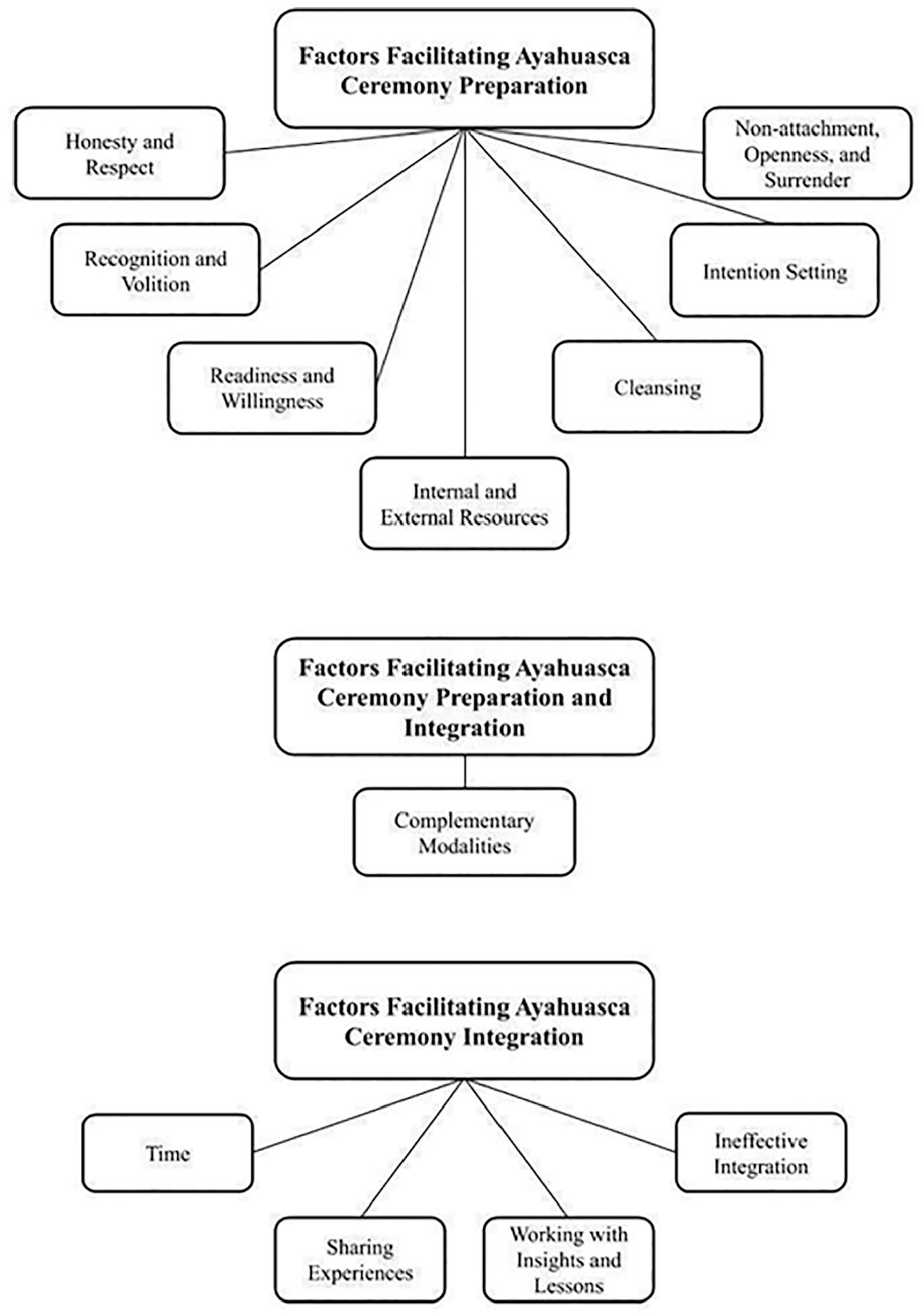
Conceptual map of ayahuasca ceremony leaders’ perceptions of factors facilitating ayahuasca ceremony preparation and integration.
Results
Reported below are results from the analysis of interview data, consisting of leaders’ perspectives on preparation and integration practices that they believe have the potential to improve outcomes for ayahuasca ceremony participants. Participant quotations have been included for illustrative purposes. Henceforth, the term participant will be used to describe an individual attending an ayahuasca ceremony, while leader will refer to the present study’s participants.
Factors Facilitating Preparation
Leaders described factors they perceived as contributing to a favorable preparation process for participants planning to attend an ayahuasca ceremony. These included (1) honesty and respect, (2) recognition and volition, (3) readiness and willingness, (4) internal and external resources, (5) cleansing, (6) intention setting, and (7) nonattachment, openness, and surrender.
Honesty and Respect
Several leaders emphasized that ceremony participants’ approach to drinking ayahuasca should ideally be grounded in honesty and in respect for the process. They suggested that participants adopt a serious and mindful approach by being honest with the ceremony leader about potential contraindications and by carefully adhering to prescribed preparatory dietary and behavioral restrictions. Referring to this approach, one leader stated, I really feel that that’s where a healing experience starts. . . . A really authentic, true place. (Leader 2)
Other leaders noted the challenges associated with participants misrepresenting themselves to gain access to a ceremony. For example, one leader remarked, I noticed that a lot of people hide things because they are afraid that, when I’m aware of them, I would deny them the access to participate in ayahuasca ceremonies. (Leader 15)
Recognition and Volition
Most leaders identified the importance of participants approaching ayahuasca ceremonies with an awareness of the personal issues or concerns to be addressed, and an authentic desire to heal. This stance was contrasted with participants who were simply seeking a novel experience. One leader remarked, We’re always looking for the delta. Like, what is the change you want to make? . . . What is the stated problem? Be it an existential dilemma, or “I want to know myself deeper,” as a minimum, . . . [or] “Is this issue reoccurring?” or “This is a pain that I have.” That, for us, is a stated problem as opposed to a psychonaut who wants to have a drug experience. (Leader 11)
Leaders also conveyed that outcomes are more beneficial when participants come to ayahuasca ceremonies of their own volition and with intention to heal, rather than due to the influence of others. Some leaders described the former as having “heard the call” and suggested that individuals should only participate in an ayahuasca ceremony if they truly felt drawn to participate. As one leader stated, Often, we will see somebody come and they will want to run out and tell the world they have just been enlightened, or healed. And, you know, try and drag their partner or their mother or their brother or their father to [a] ceremony before [those individuals] are ready, or without their own prayer to heal, to do this healing work themselves . . . Ayahuasca is not going to do the healing work for you without this intention to heal, without a whole-hearted intention to heal. (Leader 3)
Readiness and Willingness
Relatedly, most leaders explicitly identified the importance of a participant’s readiness and willingness to engage in a healing process. Leaders expressed that ceremony participants stand to benefit most when they possess an earnest desire for their own healing, which can take various forms (e.g., a desire to understand the nature of their suffering, live in alignment with their values, create a more fulfilling life for themselves and their loved ones). One leader described this mind-set, I’m really hurting and I don’t know why. And I want to understand, and I want to heal . . . It’s that burning desire that really is the fuel that drives the healing. (Leader 6)
Ceremony participants were thought to receive the most beneficial results from ayahuasca when they were highly motivated toward growth and healing. Willingness to implement and integrate the lessons received during a ceremony, and to commit fully to healing, were cited by leaders as key participant characteristics for facilitating successful outcomes. One leader noted, There’s a saying in our lineage that, when one approaches ayahuasca, particularly in a healing context, one has to do their part. . . . If you show up and expect ayahuasca to solve all your problems, you’re not going to get very far. In fact, it’s a huge hindrance. (Leader 10)
There was acknowledgment that this healing is often difficult and uncomfortable. Leaders said that participants needed to be ready and willing to face the challenges and potential discomforts associated with the healing process. As one leader commented, The person has to be committed, and they really have to want to heal. They have to be willing to do all the work. And healing’s not comfortable. (Leader 12)
Another leader remarked, The limitations [of ayahuasca], in general, have to do with the individual and their readiness. Some people are shown things and they want to unsee it. And they want to go back to the way it was, or it freaks them out, or they run away. And that’s a limitation: their willingness. Others have the same experience and it motivates them. It really fires them up to make changes. (Leader 13)
Internal and External Resources
Regarding preparation, a few leaders identified certain internal and external resources as helpful for improving outcomes. Internal resources included a baseline of bodily strength, and psychological and emotional fortitude, all of which were considered important qualities for facing the sometimes very challenging experiences arising during a ceremony, as well as for facilitating the postceremony integration of this material. For example, one leader stated, Some amount of toughness [is needed], frankly, to see ugly things and follow through on the changes that are needed on that front. (Leader 13)
Having external supports and resources were also described as helpful for promoting participants’ fulsome engagement in the healing opportunities offered by ayahuasca, from the preparation period through to integration. One leader commented, The motivational conditions are that [participants] feel internally, or around them, that they have the support they need to be able to do what wants to be done after the experience, or during or in preparation for it. (Leader 5)
Cleansing
Most leaders identified the importance of adhering to preparatory behaviors and diet for a period of time before a ceremony. These included restrictions aimed at physically and energetically cleansing the participant, bringing awareness to (and ceasing) negative behavior patterns, and helping guide the participant into the proper mental and physical state for ayahuasca to have a beneficial effect. One leader noted, There are some restrictions around food and diet, [such as] . . . avoiding intoxicants for a period of time, avoiding sex for a period of time, avoiding pork, and then making sure that there aren’t any contraindicated medications or supplements. (Leader 10)
Although leaders reported various preparatory restrictions according to their different lineages and traditions, many mentioned those related to sexual activity, cannabis and other substance use, contraindicated medications such as antidepressants, some nutritional supplements, and certain foods. A number of leaders spoke specifically about the potential of pharmaceuticals, alcohol, and other drugs to inhibit the healing potential of ayahuasca. One leader stated, People who have been on pharmaceuticals for a long time . . . a lot of times, they have a really, really hard time with the medicine. And it takes a long time for them to get benefit. (Leader 9)
Another leader remarked, If you talk about what can actually diminish the healing benefits and effects of ayahuasca, it’s drinking alcohol or, for some but not for all, smoking marijuana or taking other drugs. (Leader 15)
A few leaders also highlighted the value of participants slowing down and attending to their frame of mind prior to a ceremony, which was understood to be a behavioral form of approaching the medicine as “clean” as possible. For example, one leader stated, As much as you can create a space of going into an ayahuasca experience just with a kind of calmness in your life, [that] is really, really good. When people tend to come into ayahuasca experiences really busy, coming right off of a work week and not really having time to center themselves and ground, I think the experience is often less therapeutic and effective. (Leader 2)
Intention Setting
More than one-half of the leaders described participant intention setting as one of the more important aspects of ceremony preparation. Setting an intention was described as a deliberate process whereby the participant established their purpose for attending a ceremony, including clarifying their hopes and goals. Having an intention was perceived as helpful for psychologically grounding participants and guiding their experiences during the ceremony. As noted by one leader: Intentionality is a huge part of preparation into an ayahuasca experience, to really know why you are being called to it and what you want to get out of it. Even though ayahuasca can communicate in mysterious ways, and we don’t always get what we ask for, I think the process of going into that space in oneself is really important and a big part of the preparation. (Leader 2)
Nonattachment, Openness, and Surrender
Nearly one-half of the leaders recommended that participants not be attached to a particular ceremony outcome, but rather that they remain open to the process and surrender to the experience. As one leader explained, You have your intention, and then you let go of your intention so that you can be in whatever the experience is. (Leader 11)
Leaders noted that this stance involved participants letting go of explicit and implicit demands of the leaders and the medicine itself, as well as expectations regarding how the healing process might unfold, including its duration. One leader elaborated, There is an issue [and] it needs to be addressed. And then it’s an active, recurring pursuit [of] active-non-acting . . . where, yes, you’re there, you’re showing up, and, at the same time, one needs to let the medicine do its work without the attitude of “heal me.” . . . It’s a, “I’m here, I want to be healed,” and, at the same time, “I’m surrendering to and trusting the medicine.” (Leader 10)
Leaders reported that participants’ openness to surrender to the ayahuasca experience was a facilitative factor, as was their capacity to maintain an open mind about the ways in which lessons, messages, and healing were transmitted during a ceremony. One leader said, The first and most important thing is that the person really has to come into the space with an attitude of both surrender and also meeting the medicine halfway. Like, being willing to take the lessons that ayahuasca gives, and implement and integrate them into their lives. (Leader 6)
Another leader commented, [It is helpful to be] receptive to the medicine, to the messages, to what [participants] are seeing. Not fighting it, not resisting it. Those are qualities that are very helpful in terms of healing outcome. (Leader 13)
Last, a few leaders perceived that favorable ceremony preparation necessitated participant education about ayahuasca, including the considerations outlined above. They remarked that, if participants do not have a proper understanding of ayahuasca, this may negatively affect their experience or limit the benefits.
Factors Facilitating Both Preparation and Integration
In this second major category, ceremony leaders identified a range of complementary modalities believed to support both the preparation for, and integration of, ceremonial ayahuasca drinking.
Complementary Modalities
Many leaders described the benefits of engaging in complementary modalities to augment participants’ preparation and integration processes. Those mentioned specifically included psychotherapy, spiritual or contemplative practices, art therapy, bodywork, yoga, Chinese medicine, qi gong, tai-chi, and journaling. One leader stated, I think it helps to have some kind of a spiritual practice, psychotherapy, meditation practice, or contemplative practice that [participants] are working with when they’re not in ceremony. (Leader 12)
More than one-half of the leaders expressed that some form of daily practice could help individuals more easily navigate and benefit from ayahuasca experiences. The most frequently mentioned practices were contemplative in nature (i.e., meditation and mindfulness). Several leaders indicated that daily engagement in such practices was the most important factor in successful ceremony processes and outcomes. For example, one leader stated, Meditation is number one. That’s an opinion that . . . is held both in modern syncretic contexts, and also very much in traditional contexts: that meditation and contemplation is the best path to self-knowledge. (Leader 8)
Another leader remarked, I find that people who come in with years of meditation work already have those neurological pathways mapped in their brain. They already have these connections that are very strong, that habitually go to love, and opening your heart, and [the] energy of surrender. Whereas the persons who do not have those neurological pathways already set, it’s like . . . that analogy with putting too much electricity through the wire. So, they almost can’t even ground what’s happening. . . People who meditate, or do yoga, or . . . tai-chi or whatever the practice, as long as it’s about being centered within, and disciplined—even disciplined while moving—they tend to do much better in the medicine work. (Leader 14)
Journaling was mentioned by one third of the leaders as being helpful for preparing and integrating ceremony experiences. Several leaders also referred to individual counseling or psychotherapy (especially if provided by someone with knowledge of ayahuasca ceremonies, including preparation and integration) as being helpful for processing and making meaning of ceremony experiences. One leader stated, [Psychotherapy] would certainly allow the person to integrate the experiences of the medicine. It would allow people to get in touch with some of the emotions that are brought up in the ceremony, and get in touch with them in . . . a setting that maybe feels safe for them. (Leader 1)
Last, a few leaders identified the value of nonlinguistic opportunities to process experiences, such as through artistic and creative expression. They highlighted that people process experiences in different ways, and sometimes words limit the process. As one leader noted, Any kind of creative expression, whether it’s music or art, . . . helps people to integrate . . . the unspeakable, when you can’t figure out how to talk about it. People can draw a picture, paint a mandala, or sing, or dance. All different ways of creative expression [are] helpful. (Leader 12)
Factors Facilitating Integration
The third major category emerging from the analysis consisted of ceremony leaders’ perceptions of factors contributing to participants experiencing a favorable integration process after attending an ayahuasca ceremony. These factors included (1) time, (2) sharing experiences, and (3) working with insights and lessons. Leaders also provided their perspectives on ineffective integration, which was captured in a fourth subcategory.
Time
Leaders asserted that participants benefited from having dedicated time to rest and process what emerged after an ayahuasca ceremony (or series of ayahuasca ceremonies). One third of the leaders described the importance of participants intentionally taking time away from work, other responsibilities, and normal distractions to reflect on, process, and make meaning of their ceremony experiences. One leader noted, In terms of integration, again, just having the time to be able to integrate the experience is really important. (Leader 2)
Another stated, What I always tell people is to not watch the news anymore. Turn off the television. And then less time, if you can, on the internet. Be more at yourself, on your own. Because, when you return home, and you have all these other influences, they can actually influence your emotional state. And then you’ll get away from that feeling you had after ceremonies . . . and working on your healing and working on yourself. These things can actually distract you from that. (Leader 15)
Leaders acknowledged the challenges faced by participants in allotting this time and mental space for themselves, particularly in the context of already-busy lives. As one leader stated, Ideally, people take a full week off [of] work. . . . One of the things I’ve struggled with is [that] you’ll have people come in, do just a ceremony, [and] then they’ll leave and go right back into their workplace and have almost no time to integrate. (Leader 4)
Another leader remarked, It comes down to the integration time. . . . That’s the non-sexy part. That’s actually what people don’t want to do. And so that, to me, is the linchpin. (Leader 11)
Sharing Experiences
Leaders were nearly unanimous in their views that sharing ayahuasca experiences with others after ceremonies was a critical aspect of a positive integration process. Postceremony gatherings in which coparticipants discussed and reflected on their experiences were considered particularly important. One leader commented, The integration—people talking in the morning about the visions they saw—just that alone is a healing thing. (Leader 14)
Another said, The social support [is helpful]. . . . You could call it group therapy, if you want. But, some kind of group process to talk about, and share, and integrate the experience. (Leader 13)
Leaders also noted the importance of participants accessing supportive and understanding individuals and community in the weeks and months following ceremony experiences. Many leaders remarked that participants may encounter difficulties when sharing and processing their ayahuasca experiences with people who have not themselves experienced ayahuasca. As one leader stated, I definitely think that the participant needs to have someone that they can reach out to, and a community that they can speak to. Because, a lot of times, after you go through experiences like this, it’s really hard to discuss anything with someone who hasn’t had the same. (Leader 6)
Many leaders perceived there was value for participants in being connected to a broader community familiar with ayahuasca, so that they could continue to share their integration experiences and receive support. One leader stated, I think the community aspect is very important, as far as one’s healing [goes]. It’s very hard to do just by yourself. (Leader 9)
Another commented, Support is critical. . . . People come through these experiences and they have a number of issues come up, a lot of self-doubt, and they’re confused. Like, “My life isn’t working, and I don’t know how to change it. I’m stuck, I’m struggling with this.” To be alone in that experience is definitely problematic. So, making sure people aren’t alone in these experiences, and that they have some way to seek counsel, or share, or be part of a community [is important]. . . . To help people [is important], or at least give people the option of sharing [their] integration experience, or if they’re having a sort of crisis around integration, or any issues around integration, or their life not working. . . . Just talking about it makes things make more sense and seem less of a daunting challenge. (Leader 4)
Several leaders perceived it was important for participants to have opportunities to share and process their ceremony experiences with people who were knowledgeable about ayahuasca, in particular to help them integrate any difficult material that emerged. As noted by one leader: Some people get that insight and understanding in the experience, depending on their own level of self-awareness, and emotional intelligence, and things like that. . . . But, for people who have difficulty with really seeing themselves, . . . I think it’s very important for them to have someone who can objectively walk them through things and help them to see it from different angles. (Leader 8)
Relatedly, numerous leaders identified risks for participants in not having knowledgeable, safe, and supportive individuals and a community with whom to share their experiences. They emphasized that the absence of such support could cause some participants to struggle, revert back to old patterns, or, worryingly, could be deleterious. One leader remarked, Ayahuasca can be quite a shock for many people if they have not experienced anything like this in their life, or [have] not been accustomed to living in a place of their own truth. So, to go out into the world with a new knowledge of what their own truth is can be very difficult. And if the community is not providing follow-up, or a place where they are showing up in support, the participant can struggle. (Leader 3)
Another leader stated, If people don’t have support after a difficult experience and the kind of scaffolding—and just support, really—then it can be a very isolating experience. To have had a difficult experience with ayahuasca and then [to] not have anybody to talk to about it, or any support to have, that can definitely leave one destabilized and, potentially, in a worse place. (Leader 2)
To mitigate these risks, some leaders described a best practice of following up with participants over time to ensure they were supported, but admitted the near impossibility of doing so with everyone who had attended their ceremonies. In most cases, leaders reported leaving the onus of responsibility for follow-up on ceremony participants.
Working With Insights and Lessons
Leaders overwhelmingly described a productive integration process as defined by the participant’s ability to use the insights or lessons received in ceremony to implement positive changes in their lives. They elaborated that some insights and lessons may be clear and easily understood, whereas others may require reflection and interpretation. A number of leaders noted the value for participants in intentionally reflecting on their ayahuasca experiences and the broader implications. As one leader commented, The people that actually actively engage with the experience and recall the experience—into their body, and in their heart, and in their mind, and in their spirit, specifically—do much better. (Leader 5)
Another stated, A positive integration process is one where . . . the person is picking up the pieces, and they’re making sense of them. (Leader 8)
Several leaders remarked that participants may need to face challenging memories from the past, and accept the role those experiences had played in contributing to their current health and wellbeing. Referring to this process, one leader said, Then comes the next step, [which] is actually accepting that it happened, understanding what . . . kind of impact it has on your life, on your psychological state, on your emotional state, on your feeling of wellness. (Leader 15)
A strong majority of leaders described the importance for participants of being able to make changes in their everyday lives based on the insights and lessons gleaned from an ayahuasca ceremony. One leader stated, What I think distinguishes good integration is continuing to be mindful and aware, and attempting to manifest shifts in their life based on the awareness [and the] openings that came to them over the course of the [ceremony] weekend. (Leader 5)
Leaders noted that the way in which the process of implementation and change unfolds can vary considerably, depending on the participant. One leader provided the following example: Someone comes out of [an ayahuasca ceremony] and goes, “Wow, I understand now that . . . I invite a lot of negativity into my life because I don’t feel that I have any self-worth. So, what can I do to change that?” And they’ll really try to find passions in their life, and actually take time to engage in self-love and self-worth exercises. Like, just . . . reading a book, and not always being subject to everybody’s beck and call, and being a bit more selfish about their own healing [and] their own wellness. Specifically, meditation is a huge one. Just being comfortable with who you are and sitting peacefully. And what comes of those processes, and being okay with that, and all of the above. And accepting it and moving forward. (Leader 4)
Ineffective Integration
Several leaders described the experience of ineffective integration, whereby participants received insights or lessons from an ayahuasca ceremony but were not able to make any concrete changes. They observed participants returning to the same patterns and behaviors that they had described as problematic prior to the ceremony. As one leader elaborated, A bad integration experience . . . is [when] someone is shown [during a ceremony] what they need to do and changes they need to make. . . . They come in miserable. [Then] they’re cleaned up, they feel great, they’re inspired, they’ve been shown, “This [is] what I need to make these changes in my life.” And they go back and they don’t make any changes. The circumstances take them right back to where they were before. So, they just kind of go back to where they were. (Leader 13)
Leaders typically attributed the poor integration in these cases to a combination of individual factors (e.g., lack of readiness and motivation) and social and structural factors (e.g., lack of adequate support, challenging work environment, unstable housing). Regarding individual factors, leaders described participants who did not subsequently engage in continuing to emotionally process the content arising in their ceremony, particularly the difficult material. Two leaders noted the tendency of some individuals to repeatedly attend ayahuasca ceremonies, or to engage in other modes of “spiritual bypass,” in order to avoid the challenges potentially related to the changes necessary to feel better outside ceremonial settings. One of these leaders stated, They come to ceremony, and they get something out of it that they then depend on instead of actually doing the integration. So, they just keep coming back. (Leader 5)
Regarding social and structural factors, leaders described the impact on integration of the environment to which participants return after the ceremony. They highlighted that, if participants return to unstable, overly busy, or stressful environments, it can be very difficult for them to successfully integrate their ayahuasca experiences and incorporate changes derived from the lessons and insights received. One leader noted, People who just jump right back into a situation that is so corrosive and so toxic that they just can’t handle it, it kind of corrodes them again. (Leader 4)
Another commented, Sometimes what can happen is they’ll have this really profound experience, really profound insights into their life. And then they go home and make these changes, and they are stuck in their job, and they can’t get out of this job that doesn’t support their spiritual side. And so, they had this spiritual opening and a very profound experience, and they go back to work . . . and the experience is very—it’s like suffocation that can happen. And, they don’t know how to get out of their job. And it can lead to more suffering than there was beforehand. They aren’t able to put the insights from the ceremony into their everyday life. (Leader 9)
Discussion
This qualitative content analysis of semistructured interview data from ayahuasca ceremony leaders provides a number of insights regarding preparation and integration practices that may prove useful for ayahuasca ceremony participants. Although the concepts of set and setting have been discussed by psychedelic researchers since the 1960s and are generally recognized parameters that shape the psychedelic response (Haijen et al., 2018; Hartogsohn, 2017; Leary et al., 1963), preparation and integration in the context of ayahuasca drinking are relatively new Western constructs (Eisner 1997; Shanon, 2002). Traditionally, preparation and integration occurred by default in Indigenous communities, as it was woven into the fabric of their culture and therefore into day-to-day life. The community itself was regarded as the container. Regarding ayahuasca drinking outside this unique cultural context, the results of the present study highlighted the need for ceremony participants to make time and space for adequate preparation before a ceremony and for integration of the experiences afterward.
Other specific factors that warrant further consideration include the potential facilitative role of participant honesty with self and ceremony leaders, respect for ayahuasca as a medicine (including recognizing a need for healing, and a desire to do so with ayahuasca specifically), and readiness and motivation. These findings are consistent with psychotherapy literature linking motivation for change to outcome, and echo those of a recent meta-analysis on motivation and stages of change (precontemplation, contemplation, preparation, action, maintenance, and termination) that revealed that, when individuals are further along in the stages, treatment outcomes across a range of mental health concerns improve (Krebs et al., 2018).
Also noteworthy were findings suggesting the importance for participants of having internal and external resources, such as bodily strength and psychological fortitude. Given the wide range of subjective effects and challenging experiences when drinking ayahuasca, it is critical that participants be made aware of this and that they are ready and willing to engage in a healing process that may be uncomfortable or even painful. Ayahuasca experiences were described as having the potential to be emotionally and physically exhausting, which seems prudent for prospective ceremony participants to know while preparing for these experiences.
Regarding external resources, the findings indicated that social support was critical for productive and helpful integration, particularly opportunities for participants to share their ceremony experiences with peers, social networks, and/or their families. Psychedelic research, from the 1960s to the present, has supported the efficacy of group-based settings for therapeutic work with psychedelic medicines (Hausner & Dolezal, 1966; Jensen, 1962; Trope et al., 2019), and a large body of research has found that psychological resilience is generally improved by positive social support (Ozbay et al., 2007; Pietrzak & Southwick, 2011). A recent web-based survey of psychedelic group sessions found that the experience of community during ceremony was significantly correlated with increases in psychological well-being, social connectedness, and other salient mental health outcomes (Kettner et al., 2021). In addition, a previous qualitative investigation of ayahuasca experiences among individuals with eating disorders found that aftercare support received from leaders, psychotherapists, or peers was considered vital for successful integration (Lafrance et al., 2017). The present findings suggest that, prior to attending a ceremony, participants may benefit from engaging in a process of identifying and connecting with appropriate people and communities who can support them and alerted to the fact that there may be risks in not having such support.
The importance and value of participant intention setting also emerged in the present study, as well as nonattachment to outcome and an openness to surrender to the ayahuasca experience. These findings are consistent with a recent systematic review that revealed that individuals high in openness, acceptance, and a state of surrender were more likely to have positive experiences postpsychedelic use, whereas those low in openness and surrender, or in preoccupied, apprehensive, or confused psychological states, were more likely to experience adverse reactions (Aday et al., 2021).
Complementary modalities were thought to support both preparation and integration processes, highlighting the ceremony leaders’ sense that various embodied and contemplative practices contribute to a positive impact, including specialized services from psychotherapists. This finding demonstrates ceremony leaders’ appreciation for the bridging of scientific, psychospiritual, and ceremonial worlds, such that the wisdom garnered from decades of psychotherapy research and practice could be leveraged toward an integrative model for healing. Given the leaders’ endorsement of a range of practices, it may be worthwhile to examine the efficacy of these practices in future research.
This present study raises important questions about the education and support of ayahuasca ceremony participants. The perspectives shared suggest that it may be important for retreat centers, ceremony leaders, and other ceremony staff to take responsibility for ensuring that participants interested in drinking ayahuasca do so for the right reasons, with the right frame of mind, and with an appreciation of the factors that can facilitate positive outcomes and reduce unnecessary risks. There is also a need for some degree of consensus among mental health clinicians supporting this work, informed by ceremony leaders, regarding evidence based or promising practices with regard to preparation and integration. Given growing interest in, and attendance at, ayahuasca ceremonies, quality training programs aimed at preparing psychotherapists and others to deliver knowledgeable and skilled preparation and integration assistance could also be useful for increasing the number of available supports to meet the increasing demand. We also believe in the value of preparing the family members of participants as well, as relevant.
Overall, the findings of this study illuminate ayahuasca ceremony leaders’ perspectives regarding preparation and integration practices that they consider to be important for people drinking ayahuasca in a ceremonial setting. To our knowledge, this is the first study examining such factors in a systematic manner exclusively from the viewpoints of ceremony leaders, a critical perspective given their direct work with participants. Given that most of the ceremony leaders interviewed for this study were providing ceremonies with Westerners and were non-Indigenous with Indigenous training, their perspectives will likely have most relevance for understanding best practices for those hailing from Western cultures and societies. Such perspectives are increasingly relevant given the significant increases in ayahuasca use outside South America.
Consistent with the knowledge claims of qualitative research, the rigor of this study is judged on criteria such as breadth and depth of understanding, and on categories of meaning developed from data from a few individuals (Morrow, 2005; Morrow & Smith, 2000). Limitations include that the sample was modest in size and based on convenience sampling; therefore, it cannot be seen as representative. Future studies with larger samples could yield different findings. Caution is warranted regarding transferring these findings to other populations or settings, particularly Indigenous. The sample was also limited to participants with at least conversational fluency in English, and therefore was not representative of the cultures and diversity of Indigenous Amazonian practices. Therefore, we reiterate that the results are most appropriately considered within the context of ayahuasca use in the Western world. Furthermore, the semistructured interview was not specifically tailored to investigate perspectives on preparation and integration. There were no explicit questions on the topic of preparation, and only one question specifically on integration. This, along with the sole reliance on one source of data (interviews), may have curtailed the “thick descriptions” typically sought in qualitative research (Geertz, 1994). Finally, given the complex legal issues, there may have been limits around what leaders disclosed about their backgrounds, perceptions, knowledge, and practices.
Future research should also investigate aspects of ayahuasca ceremony preparation and integration from the perspectives of ceremony participants, their family members, psychotherapists, and medical practitioners. Additional investigations should include carefully designed clinical or observational studies that document and evaluate different approaches to preparation and integration, in particular based on participant intent (e.g., healing vs. personal growth), as well as ethnographic examinations of preparation and integration support and practices provided at various ayahuasca retreat centers. Finally, although this article focused on preparation and integration, there are several issues related to safety that are worth increased attention and research, including clarifying potential precautions related to the withdrawal from contraindicated medications, potential interactions between monoamine oxidase inhibitors and foods containing tyramine, as well as the development of best practices with regard to medical and psychological screening.
Footnotes
Acknowledgements
We would particularly like to thank the ayahuasca ceremony leaders who participated in this study for their time and participation. We would also like to thank Natasha Files, Anja Loizaga-Velder, Kenneth Tupper, Jenna Fletcher, Marika Renelli and Samantha Retrosi for their contributions to this research. Special thanks to Reid Robison for sharing his perspective on the interview transcripts and for contributions he made to earlier drafts of this manuscript.
Declaration of Conflicting Interests
The author(s) declared no potential conflicts of interest with respect to the research, authorship, and/or publication of this article.
Funding
The author(s) received no financial support for the research, authorship, and/or publication of this article.
