







Abstract
This article focuses on the provision of services to immigrant workers as a gateway to further inclusion and active participation in union activities. The experiences of the two main national unions in Italy are contextualized within the framework of other similar models, such as community unionism and worker centres. The specific contribution of the article is its analysis of two key issues: first, how service operators promote the active participation of immigrant workers; and second, how the backgrounds and attitudes of the service operators contribute to improving immigrant workers’ access to rights and representation. Certain attitudes and behaviours are particularly effective and may be useful in linking the different union logics and reducing the tensions between them. In particular, immigrant offices foster the passage from social rights and race/ethnicity to a class logic. However, even if some strategies and actions have proved to be successful, Italian unions still have a long way to go before the real inclusion of immigrant workers is achieved.
Introduction
In recent decades, immigration has come to be seen as an opportunity to renew labour organizations by giving them new strength through the recruitment and active participation of immigrants. In the USA, the debate on immigration and new unionism started in the 1990s (Bronfenbrenner et al., 1998; Milkman, 2000, 2006); in Europe, similar issues have begun to be addressed since the arrival or legalization of large new flows of immigrant workers (for the UK, see Fitzgerald and Hardy, 2010; for Spain, see Martínez Lucio et al., 2013).
In this debate, the supply of various services to migrants has often been viewed as a necessary response to their needs and as a strategy to unionize and involve them in labour organizations (Heyes, 2009; Marino, 2013; Martínez Lucio and Perrett, 2009a; Meardi et al., 2012; Mustchin, 2012; Penninx and Roosblad, 2000). However, little attention has been paid to how these services work and how they manage immigrant workers and obtain their loyalty, membership and active participation. This article discusses the stance of Italian trade unions on this matter. In particular, it analyses how the supply of services to immigrants is a pathway towards bottom-up inclusion (Marino, 2015).
We use the Italian case to underline the importance of service delivery for the unionization of migrants, especially in a new receiving country, because services are often the first gateway to union membership and inclusion, as evidenced by the case of Spain (Martínez Lucio and Connolly, 2012; Martínez Lucio et al., 2013). However, the way in which these services work and the backgrounds of their operators need to be more thoroughly analysed to determine whether and how services dedicated to immigrants successfully manage to convey them to other union structures and functions, and what attitudes are more likely to gain the loyalty and involvement of migrant workers.
Our hypothesis is as follows: when a relationship of loyalty and trust is built between service operators and immigrant workers who use those services, it is easier to link the logic of social rights (Connolly et al., 2014), or the ‘servicing model’ (Waddington and Hoffmann, 2000), to a greater involvement and participation of immigrant workers, within the class or the race/ethnicity logic, and therefore to the ‘organizing model’.
The first section of this article analyses how unions in various countries promote immigrant inclusion and considers the main theoretical studies on the subject. The second section provides an overview on immigration and trade unions in Italy and outlines the methodology used in the research. The third section describes the development of the immigrant offices run by the two main Italian unions: Confederazione Generale Italiana del Lavoro (CGIL) and Confederazione Italiana Sindacati Lavoratori (CISL). Then, we consider specific characteristics of the staff of those immigrant offices, focusing on nationality, role and attitudes. The final section discusses the findings, highlighting how they might be functional for the inclusion of immigrant workers in trade unions.
Trade unions, the inclusion of immigrants, and the community unionism approach
The main goal of trade unions has long been the representation and defence of workers. However, unions have also pursued other goals: the active participation of their members in both the workplace and the union; promoting solidarity and social and political support; and dealing with issues of health, housing, basic rights and participation in social and civic life (Ambrosini, 2000; Marino, 2012, 2013; Penninx, 2011). In other words, unions have dealt with the inclusion and active participation of people in both society and workplaces as well as within their own organizations.
Research on trade unions has for years linked the issue of the inclusion and active participation of union members almost entirely to workplaces (Allen, 1990; Waddington and Hoffmann, 2000). The issue of participation within the organization has been less debated. However, as early as the 1960s and 1970s, trade unions were more interested in understanding the reasons for a widespread crisis of representation, with declining memberships in many European countries (Allen, 1990; Ebbinghaus and Visser, 1999; Frage and Kelly, 2003; Regini, 1981; Waddington, 2005).
The participation of members in unions may exhibit different patterns relating to unionism styles in Europe and beyond, which are connected to the political traditions of different countries. In fact, as Allen (1990) underlined: strong traditions of worker participation existed in many western trade union movements from the late nineteenth century into the early part of the twentieth. […] In countries where socialism was weak as a force in the trade union and political party arenas – such as the United States – and in countries where radicalism (or “oppositional” militancy) dominated – such as Britain and France – worker participation was underdeveloped. However, in countries with either strong Social Democratic and/or Catholic trade union movements and political parties, worker participation showed greater strength. (pp. 254–255)
Some unions refer to a trade union model termed the ‘servicing model’. This is based on the Ghent system: unions furnish services, including outside of the workplace, to maintain a high unionization rate. Others, however, believe that equally important is the participation of their members in the interests and activities of the union. This refers to the ‘organizing model’, which fosters the participation of minority groups such as young people or women (Waddington and Hoffmann, 2000).
The promotion of minority groups has taken the form of ad hoc offices working with members or groups hitherto underrepresented, such as young people, women (Regalia, 2009; Waddington and Hoffmann, 2000) and, most recently, immigrants. This has contributed to increasing trade union participation rates and therefore the inclusion of immigrant workers (Pajares, 2008).
Inclusion and active participation in unions is important for all workers, but even more so for immigrants. In fact, trade unions represent an opportunity for ‘secondary political participation’, whereby immigrants can contribute to defining organizational strategies and choices, remedying their frequent lack of opportunities to participate in administrative and political elections (Vranken, 1990). This is especially true in Italy, where immigrants’ associations still appear to be weak (Carchedi, 2000; Moya, 2005). Immigrants do not enjoy voting rights and must wait 10 years before becoming eligible for naturalization.
Unions can use different strategies to defend, represent and include migrant workers and ethnic minorities (Connolly et al., 2014; Martínez Lucio and Perrett, 2009b). First, they can include migrants in the broader category of workers, rather than treating them as a special group (Penninx and Roosblad, 2000). This is the traditional class logic. Second, they can work with the communities of origin, putting more emphasis on migrants’ ethnicity or race. Finally, unions can work together with other social and institutional partners to promote general social rights, such as welfare or housing. These three logics are to some extent conflicting, but the union needs to address all of them to pursue the ‘full representation of migrant workers’ rights’ (Connolly et al., 2014: 7). Unions have long privileged the class logic. They have thus focused on industrial relations and collective bargaining while neglecting contact with the communities of origin and the needs of immigrants, especially those linked to discrimination both in employment sectors and in local contexts with a high migratory presence (Martínez Lucio and Connolly, 2012).
Since the 1980s, particularly in English-speaking countries, unions have come to understand the importance of working in local contexts to reach immigrants and ethnic minorities. In order to do so, they have decided, not without difficulty, to work locally on specific issues, generating a process of community unionism together with associations, non-governmental organizations (NGOs) and ethnic-based churches. This strategy follows the logic of race and ethnicity. It recognizes immigrants’ special needs, but also, in part, aims at curbing the loss of subscribers; in fact, the decision to work in a context of community unionism is also part of a union revitalization strategy (Fine, 2006; Heery, 1998; McBride and Greenwood, 2009; Mustchin, 2012; Perrett and Martínez Lucio, 2009).
In the USA, worker centres play an important role (Fine, 2006) that, in certain respects, parallels community unionism. Worker centres are community-based centres built around strong ethnic and racial identification, leadership development and internal democracy, popular education, ‘thinking globally’, coalition building and small and involved memberships [that] provide a range of services and cultural spaces, and support for local migrants and vulnerable workers. (Martínez Lucio and Connolly, 2012: 672)
In Europe, with the increase in the numbers of immigrant workers, trade unions have created ad hoc structures for the immigrant population, including, for example, ‘Immigrants Offices’. This has occurred in Italy (see e.g. Ambrosini et al., 2016), as well as in the UK and Spain (Connolly et al., 2014; Martínez Lucio and Perrett, 2009a). For example, although Spanish unions are focused on a ‘class’ dimension, they have created a network of offices in all Spanish cities whose ‘role is to act as a first port of call for immigrants in relation to work and other social or labour-related concerns’ (Martínez Lucio and Connolly, 2012: 679). Although these offices do not always operate in local contexts with a high presence of foreigners or ethnic communities, they can be compared to the American worker centres because [they] provide a range of information services in relation to employment, citizenship, social rights and housing – amongst others – although it needs to be clear that these are not immigrant-led offices, although they may have trade unionists involved from an immigrant background. (Martínez Lucio and Connolly, 2012: 679)
Since the 1980s, also in the UK, trade unions, following a bottom-up logic, have proposed anti-racist solutions by promoting informal structures and being more inclusive of members from Black and ethnic minority communities in order to attract more workers of foreign origin (Martínez Lucio and Connolly, 2012).
In this context of community unionism, in some cases – such as Spain and the Netherlands – the state can play a role. In fact, the state becomes (in part) the funder of projects or centres run by unions and associations. Moreover, it has cooperated with trade unions in the delivery of services to immigrants, such as housing, welfare and social services. Official agreements between the state and unions help to legitimize the role of the unions as service providers, even in administrative and legal matters, as in the Italian case.
The strength of community unionism is highlighted by particular claims, especially in regard to wage levels and among workers in specific marginalized segments, such as cleaners (Martínez Lucio and Perrett, 2009b) and agricultural workers (Moody, 2009). These initiatives also tend to focus on specific campaigns, such as anti-discrimination, education opportunities (e.g. through language courses), cuts in government funding, and youth unemployment (Holgate, 2015).
Community unionism and worker centres are good examples of the race/ethnicity logic and, in many cases, also of the social rights logic. However, the tension with, and the distance from, the class logic is still not easy to overcome. The increasing presence of immigrant unionists can be useful in this respect, but other strategies may also yield positive results.
National context and methods
Like the other countries of Southern Europe, Italy became a destination country for immigrants only in the final decades of the last century (Calavita, 2005). Since then, immigration has been handled in mainly informal ways: public regulation, and especially the recruitment of migrants into employment, has followed the market (Finotelli and Sciortino, 2009). Actors involved in organized solidarity (NGOs, associations, church-related institutions) have helped to fill the void left by public institutions in accommodating immigrants. They have supported campaigns for regularization and have countered xenophobic reactions (Ambrosini, 2016; Ambrosini and Van der Leun, 2015). Trade unions have been critical in both the political debate and the provision of services to individual migrants (Ambrosini, 2013). For example, trade union offices play a central role in helping irregular immigrants complete applications during regularization campaigns.
Overall, the action of Italian trade unions has always encompassed more than the mere protection of workers, dealing with broader social issues in defence of socially disadvantaged people (Ambrosini, 2000). Consequently, trade unions, like voluntary associations and NGOs, have provided administrative, legal and welfare services to migrants. Therefore, the main Italian unions seem to fit more closely with the servicing rather than the organizing model, at least as far as migrant members are concerned. Nevertheless, owing to their mobilization initiatives, Italian trade unions have achieved outstanding success in promoting migrant workers’ membership: about 1 million (out of 5 million foreign residents) are members of an Italian trade union (IDOS-UNAR, 2016). Despite this, immigrants generally seem to be more service users than active members of Italian workers’ organizations. They demand and obtain political and social protection, but they rarely express their voice through trade unions. Also for this reason, the renewal by immigrants of trade unionism from below – as has been noted in several cases in the United States (Milkman, 2006) and other countries – has rarely occurred in Italy. The exceptions have been isolated local struggles conducted outside established trade unions, with the support of small independent trade unions and radical activists (Perrotta, 2013; Rinaldini and Marino, 2015).
It is true that some immigrants find employment opportunities in trade unions, especially in the offices that supply services to the immigrant population. Their active participation and their access to internal careers is modest compared with the size of immigrant membership (e.g. see Ambrosini et al., 2016). However, it should be noted that encouraging such active participation of migrants within unions is also useful for countering discrimination and prejudice inside and outside these organizations (Gorodzeisky and Richards, 2013; Marino, 2012, 2015; Martínez Lucio and Perrett, 2009a). This participation helps unions to understand the needs of migrants and embrace their perspective by going beyond the Eurocentric point of view. However, officers of migrant origin are mainly employed in Italian trade unions in specialized services that respond to the demands of the migrant population.
From an empirical perspective, analysis of the inclusion of immigrants within unions may be carried out by drawing on different sources, such as congressional decisions, campaigns against discrimination and for equal opportunities, hiring of immigrants to work in the organization, and above all, the provision of services dedicated specifically to this category of workers (Ambrosini et al., 2016). The inclusion of immigrants in unions and in society must also be read in light of a possible project of community unionism and the opportunity for trade unions to collaborate with associations, NGOs, the third sector and churches. However, the places where the inclusion of immigrants begins are immigrant offices, as we describe in the following sections.
The empirical evidence discussed in this article is part of a wider national project (PRIN/2009) on forms of representation of new categories of politically weak workers. Our research focused on immigrants as a relatively new subject of interest for unions, particularly given the tradition of social services upheld by unions over the years. The field research was conducted between March 2012 and March 2013 in Milan and in Lombardy, the richest Italian region, which hosts the highest number of foreign immigrants: 1,149,011 people, which is equivalent to 11.5% of the population (IDOS-UNAR, 2016). Lombardy hosts 22.8% of the immigrant population at the national level, where immigrants number 5,026,153 (plus an estimated 435,000 irregular immigrants). Of these, 2,359,065 are employed and represent 10.5% of total employment in Italy (Ministero del Lavoro, 2016). According to the Yearly National Migration Report (IDOS-UNAR, 2016), their presence is higher in construction (16% of workers), in agriculture (15.8%), and in services such as catering, personal care and cleaning (10.9%). There are relatively fewer immigrants in manufacturing, where they represent 9.7% of the total workforce, and in commerce (6.3%). In general, their employment rate is higher than that of Italians (56%). The groups with the highest employment rates are Filipinos (81.3%), Chinese (73.1%), Moldovans (67.5%) and Ukrainians (66.1%). In terms of the distribution of immigrants by sector, 58.6% work in services (19.3% in households, 9.9% in business services, 7.3% in catering and tourism), 22.5% in industry (9.6% of which is construction) and 8.5% in agriculture. It should be noted that half of employed immigrant women work in the domestic labour market.
Unionized immigrants in Italy number 1,099,323, representing 9.3% of total membership, which also includes pensioners. The sectors with the highest numbers of members are construction and personal services. In the latter area, members are mostly women; for example, 66.1% of immigrants unionized with Filcams-CGIL, which is the union of trade, tourism and services, are women. Unionized immigrants in Lombardy number 156,114, which is 8.5% of total members.
Our analysis focused on the two main Italian unions: CGIL (General Confederation of Italian Workers – 68,225 immigrant members in Lombardy) and CISL (Italian Confederation of Workers’ Unions – 73,487 immigrant members in Lombardy), particularly in the Milan area, where there are many unionized immigrants. In particular, according to the data provided by the two unions, the enrolment rate is high in the construction sector for both CGIL (55.2%) and CISL (35.4%), as well as in the trade, tourism and other services sector (35.7% CISL, 13.4% CGIL).
Our research consisted of several steps:
analysis of the official documents discussed and approved at the national congresses of trade unions (at confederal and branch levels); analysis of national collective agreements, considering the presence of matters connected with immigrants’ demands and interests; a total of 40 face-to-face interviews and three telephone interviews with representatives of the two main Italian trade unions, CGIL and CISL, of Italian and foreign origin (apart from pivotal members of the two unions in Milan, we concentrated on branch unions with larger numbers of immigrant members – these branch unions were construction, mechanical engineering, commerce, tourism and services, and transport and logistics); participant observation in each of two unions’ immigrant offices, for seven days, at local meetings of trade union officials, and in networks of representatives of immigrant origin; finally, 15 face-to-face interviews with union representatives of immigrant origin.
A dedicated path towards inclusion: The immigrant offices
Even if, following the three logics of Connolly et al. (2014), Italian unions have long operated primarily according to the class perspective, they have also increasingly pursued the other two logics. Although, in general, unions treat migrant workers like all other workers, thus fostering inclusion through the regular union structures (sectoral federations, union welfare agencies, legal offices and so on), there are some exceptions to this equal treatment. One of the main exceptions 1 to the ‘equal treatment’ rule has been the creation – in both of the unions that we have studied – of offices dedicated to immigrant workers and immigrants in general. This exception, which began some time ago in Lombardy, points to the recognition of specific race/ethnicity needs.
In the area of Milan, the CISL was the first union to open a service centre dedicated to migrants. Its Catholic inspiration has in some ways encouraged a vocation to address social issues that go beyond the mere defence of workers to try to help and protect the socially disadvantaged. In Milan, this social attention led to the creation of CESIL in 1980, an association dedicated to immigrants at a time when few institutional players understood that Italy was becoming a growing immigration destination. For this reason, when it opened, CESIL quickly became an important reference point for newly arrived immigrants. CESIL did not provide these services directly, but it was (and still is) part of a network of associations and organizations that helped immigrants to solve the various problems encountered when they arrived in Italy. Its good reputation and stable presence in the broader network of actors dealing with immigration has been formally recognized in recent years. In fact, in 2006 unions signed a protocol with the Ministry of the Interior that delegated to them the management of bureaucratic issues concerning migrants. This protocol links union action with state support and thus addresses the third institutional logic of Connolly et al. (2014). This protocol was officially signed with union welfare agencies (‘Patronati’), which provide assistance in obtaining health services, pensions and general welfare provisions. The spatial and functional link between welfare agencies and immigrant offices is very tight.
This link and logic are even more evident in the case of CGIL’s Immigrant Centre. Whereas CESIL was born from the need to identify and satisfy the needs of a new type of user, and thus from the ‘bottom up’, the Immigrant Centre of CGIL Milan was created in 1986 following enactment of the first law on the employment of immigrants passed by the Italian Parliament and in relation to new laws concerning foreign workers. Similarly to CESIL, in the 1990s the Centre developed a range of services related to employment protection, advice on immigration regulations, assistance with and management of bureaucratic requirements, and information about welfare support aimed at both regular and irregular migrant workers. In 2010, the Department of Immigration Policies was created. The transition from Immigrant Centre to a specific department, as stated by its head, ‘was not only a change of label’ but led to a reorganization of services with the goal of improving trade union representation and promoting the full social and economic integration of immigrants.
In fact, one of the problems that unions may encounter on their path towards full inclusion of migrants is that – despite their specific goal – users may not perceive the immigrant offices as fully integrated within the trade union, which is a complex organization and has many different functions. The crucial point is to understand how they perform their tasks and what the best strategies are for the offices to gain the loyalty of immigrant users and convey them to other structures within the unions. This would require shifting from a ‘nominal’ to a ‘real’ membership that implies consistent and active participation in the various initiatives implemented by the union and a sense of belonging. The point is that, apart from the competition between the two unions studied to reach immigrant users, in Milan there are other associations and NGOs that offer similar social services (thus concerning the social rights logic) but are unable to carry out the other more union-specific functions (the class logic). Thus it is important that immigrant users understand this pivotal difference and choose (or become convinced) to be active members of the union. This is important for ensuring that unions become more effective on the institutional and ethnicity logic in regard to migrants, if less so on the class logic. In this regard, a crucial role is played by the operators who work in the offices. Their specific backgrounds and behaviours will be analysed in the next sections.
Operators’ backgrounds: Nationality
Although the functions that the two offices perform are similar, and although the general goal of promoting the full inclusion and membership of migrants is the same, organizational arrangements are partly different because they result from progressive adjustments designed to maximize the efficiency of the service, given the resources available. The main difference between the two offices concerns the operators’ nationality. This difference, together with the different attitudes of the operators towards the users, which we will analyse in the following section, contributes to revealing the concrete ways in which foreign workers are helped with their specific needs and, at the same time, conveyed to the other union structures or involved in migrants’ or workers’ rights claims.
While in CGIL the majority of operators are of foreign origin (mainly from North Africa), in CISL the staff is mostly Italian. This difference is reflected in a wide-ranging debate in the literature on the subject. Traditionally, workers delivering services to immigrants were White middle-class women (Kadushin, 1997). However, with increasing numbers of foreign users, many organizations have preferred to employ people of foreign origin (see e.g. Martínez Lucio and Connolly, 2012).
The presence of foreign operators has some positive aspects, but it also carries risks (Sakamoto, 2007). First, dealing with an operator who has first-hand experience of migration can promote understanding and trust. However, foreign operators have sometimes experienced a privileged migration path, perhaps including some years of education in the host country. The understanding, in this case, can sometimes be limited, especially for foreigners with irregular status or who have let their documents expire due to lack of information or underestimation of the importance of compliance with procedures. Conversely, a native operator animated by a sense of solidarity and protection may in these cases show more understanding and treat the problem with more urgency.
Second, there may be a greater closeness between the foreign operator and the user, especially when the two are co-ethnic or at least speak the same language. For example, the presence of an Eritrean operator at CGIL triggered a ‘dependence’ in some users of the same nationality. An example is provided by a woman whom we repeatedly observed waiting for hours only to ask questions and obtain advice from the operator. This situation highlights the fact that, even for people from minority groups with a long history of immigration in Italy, having a compatriot in welfare agencies and similar is perceived as a support. In these cases, the operator is not only a service provider; s/he is also a trustworthy person to ask about matters that extend beyond the workplace. This effect was visible in both the offices that we studied. In fact, while there were numerous users from North Africa in CGIL, Latin Americans were most prevalent in CISL, especially women from Central and South America – and this difference still continues. The presence of Latin Americans in CISL may be explained by religious and cultural proximity, as well as linguistic and identity factors. Until a few years previously, a Salvadorian operator had worked at CESIL, and there was an Italian operator who spoke Spanish. This preference, which persisted even after the retirement of the co-ethnic operator, highlights the extent to which the two services are deeply rooted in the territory and are known and appreciated by different user groups. They have thus managed to consolidate their reputation over time and to feed the flow of users mainly through word of mouth.
Third, the presence of foreign operators is functional in giving an image of openness. As is clear from the words of the CGIL operators themselves, their presence in the immigrant office ‘is the mirror of non-discrimination’ (Cgil18) and ‘demonstrates the level of attention that […] the institution [CGIL] pays to foreign workers’ (Cgil16). The organization can therefore be seen not only as a place where services are furnished to foreigners, but also as an employer that provides opportunities for foreigners to carry out more qualified jobs and to develop their careers.
A clear example of how an operator can successfully act as a bridge between the office and other union structures is provided by the positive role of the abovementioned Salvadorian operator, who worked at CESIL until she retired in 2011, in involving some CESIL users (especially women ‘with problems’ 2 ) in other union activities, including courses, publications and theatre activities, in joint cooperation with her own association (called the International Women Group) and the CISL Women Coordination. Since the retirement of this operator, however, the number of women involved through CESIL in activities of this kind has decreased. Today, the woman is still active with her own association and actively cooperates with CISL, but now that she is no longer at CESIL, she has fewer chances to meet and involve new people in these activities. Unfortunately, her personal involvement and membership in the Latin American community, similar to most CESIL users, is not shared by any of the operators and volunteers presently working at CESIL. Common ethnicity and direct participation cannot be easily transferred by an operator to the others, and the ability of the service to foster active participation of immigrants in other union activities is thus sometimes dependent on personal characteristics, which are not easy to reproduce.
At the time of the study, both unions were using a Chinese part-time operator, with the explicit aim of reaching the Chinese immigrant population who had rarely used its services previously. During the period of observation, some Chinese users came to the offices. However, one of the operators admitted that co-ethnic users were not happy because the delivery of service was slow (Cisl14). Hence, the use of a co-ethnic operator, in itself, does not seem sufficient to attract new users.
The use of foreign operators may involve risks or disadvantages. First, the service is likely to attract predominantly users of a specific nationality and thus be identified excessively with that group of users, discouraging the access of different groups.
A further disadvantage of the foreign operator, or perhaps an advantage of the Italian operator, is that s/he may be perceived as more competent and authoritative solely because s/he is a native. There are two sides of the coin … There are some people, some users, that see the presence of a foreigner in the office as a loss of status, because it is also done by an immigrant. … Then there are other immigrants that see … see the improvement. (Cgil18)
As we have seen, nationality can affect the perception that immigrant users have of the union in different ways, both positive and negative. CGIL prefers to convey the idea of closeness and understanding and eventually take advantage of the operators’ ties with co-ethnics. By contrast, CISL has capitalized on its historical ties with Latin American users and focuses more on competence and authoritativeness, which are more easily embodied by native operators. Therefore, while CGIL behaves similarly to other European unions, CISL still reflects Kadushin’s (1997) findings. The nationality of operators and their different attitudes towards immigrant users thus influence both the users’ loyalty and their willingness to become active members.
Operators’ styles: Attitudes and roles
While studying how the provision of services can promote the inclusion of workers within trade unions, we carefully observed the work of the immigrant offices’ operators. During this observation, we focused on the different attitudes taken by employees and volunteers towards users. We found that, in addition to their nationality, their attitudes and behaviours may promote the inclusion of immigrant workers within the union.
Types of social workers in trade unions.
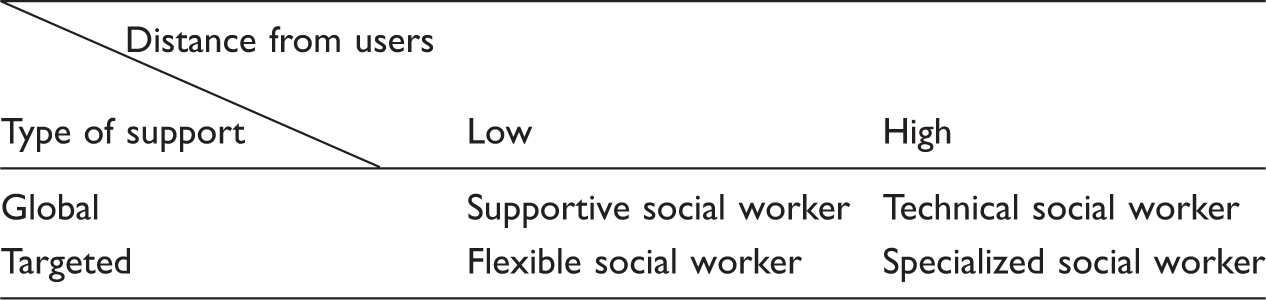
First, the supportive operator has a caring attitude, gets involved in the user’s human story, and devotes his/her time to giving suggestions that go beyond mere information. Therefore, s/he maintains a short distance from the user and, at the same time, provides comprehensive support, which is not limited to paperwork but also covers other areas such as employment, housing or welfare. Often, operators with this kind of attitude towards users tend to spend more time with them and consequently slow down the service. However, there are users who prefer this type of worker, who treats them as ‘people’ and not as ‘users’, and therefore are not bothered by the slowness of the operator, but rather prefer to go to him/her.
Second, the technical operator provides support to users, but does so because his/her extensive skills enable him/her to manage a broad spectrum of user needs. Moreover, long experience and a certain loyalty of users mean that many users return several times, and the operator needs to address various issues related to the same person or family unit. However, the technical operator is more detached in his/her relations with users and treats them all in the same way. This kind of operator is faster and very attentive to the correctness of the procedures and information given. Moreover, while being courteous, s/he maintains an attitude towards users that is mostly strictly professional.
Third, the flexible social worker, like the supportive one, maintains a friendly attitude and close proximity to the user. This implies a certain flexibility regarding the rules and a concern to treat users as persons with different needs. However, the intervention is still restricted to a single field, that is, mostly the bureaucratic and administrative one, without accounting for the user’s other possible needs or his/her personal history in its entirety.
Finally, the specialized worker is concerned only or mainly with particular categories of users (e.g. asylum seekers) or with specific procedures that require legal-administrative skills and knowledge not easily accessible to all operators (such as citizenship applications or the monitoring of contracts by operators working at union federations). His/her relations with users are brief and precise, and the relationship is essentially professional and detached.
The allocation of operators among the different categories varies both according to the individual background and attitudes and according to the tasks and experience of the operators. However, what matters, and what makes the service offered by the two unions effective, is the possibility for users to find the type of operator who best meets their needs related to information, advice and – in some cases – even emotional support.
Moreover, from the unions’ perspective, the mix of different types of operators is functional not only for the proper management of everyday activities through the maintenance of an acceptable level of flexibility, but also for the image and the role of the office itself. For example, the presence of supportive (and flexible) social workers promotes the image of a friendly union able to care for the user as a person and not just as a worker. By contrast, the technical or the specialized worker positively affects the perception of high competence of trade unions by managing to resolve complex situations and meeting specific needs.
Discussion and conclusion
In this article, we have sought to show how operators in union services dedicated to immigrant workers manage to build a relationship of trust and loyalty with these workers. Consequently, these organizations seek to link the logic of social rights (Connolly et al., 2014), or the ‘servicing model’ (Waddington and Hoffmann, 2000), to the greater involvement and participation of immigrant workers within the class or race/ethnicity logic and therefore to the ‘organizing model’.
The first step is to understand how different kinds of operators manage to foster the inclusion of immigrant workers within the union. The supportive operator, with greater emotional connection and an interest in the different needs of the user, is able to both create loyalty and promote other union services and structures. Loyalty is important not only to make the user return to the immigrant office, but also to convince him/her to participate in other union initiatives and become an active member. However, the supportive operator is more focused on the social rights logic and on the migrant’s needs as a person rather than as a worker. By contrast, the technical and specialized operators (especially those who deal more closely with contractual and legal issues of specific workers’ categories) are more successful in exploring ‘the possibility of transforming an individual problem into a collective claim’ (Cisl22). This is one of the main ways in which immigrant offices try to promote the passage from the servicing/social rights logic to the organizing/class or ethnicity logic. If an issue or problem is also shared by native workers, it leads to a general claim; if it only concerns immigrants, it leads to rights claims by migrants. An example of the passage to the class logic is the participation of many users in training courses organized by the CISL commerce, tourism and other services federation so that they can become delegates and defend the rights of all fellow workers. Among the many possible examples of the passage to the ethnicity logic, one concerns the hidden economy. By citing the bad and unfair conditions that workers in the construction sector reported, first to the immigrant offices and then to the construction federations, unions were able to achieve transposition of the 2009/52/CE directive, which became a national law in 2012 (l.108/2012).
Moreover, immigrant offices function similarly to worker centres by providing information about immigration-related initiatives. For example, the trust and loyalty created by the flexible, the supportive, and the technical operator (the specialized operator has a long-lasting relation with very few users) improves willingness to participate in local initiatives managed with other organizations and associations dealing with migrants. This was the case, for example, with repeated protests organized outside local prefectures to demand a longer stay permit for job searches. To some extent, this could be considered a successful example of community unionism.
Community unionism is pursued through a network of associations that both unions share, as well as through their own specific connections. CGIL, which has North African operators, works closely with a Moroccan association. CISL, with its authoritative native operators and long-standing ties with the Latin American community, works closely and frequently with a more official entity in the form of the Ecuadorian Consulate.
Therefore, immigrant offices and their operators help to reduce the tensions between different logics, conveying immigrant users to other union structures and promoting general or migrants’ claims. The latter are better addressed through local – though not yet frequent – actions, which open the way to a growing community unionism, where immigrant offices may play a role such as that of the American worker centres.
However, while emphasizing the importance of operators’ social skills in trying to overcome the servicing model to promote the full participation and inclusion of immigrants in the class logic – and thus move towards the organizing model – the sporadic initiatives observed herein show that there is still a long way to go in this direction. A more assertive political strategy is needed, with systematic connections between the immigrant offices and other union structures. Italian unions, similarly to unions in other countries, are fully aware that they still have a long way to go before the real inclusion of immigrant workers is achieved.
Footnotes
Declaration of conflicting interests
The author(s) declared no potential conflicts of interest with respect to the research, authorship and/or publication of this article.
Funding
The author(s) disclosed receipt of the following financial support for the research, authorship and/or publication of this article: The author(s) received financial support for the reseach (national funded project PRIN/2009/2009C8B8KX_004).