







Abstract
This qualitative industry case study evaluates job quality in the Australian platform-based food-delivery sector, one part of the growing gig economy where workers, as independent contractors, engage in digitally-enabled and controlled work that is remunerated on a piece rate basis. Using a multi-dimensional framework, we draw on worker accounts of economic security, autonomy and enjoyment to assess job quality. This study posits that to achieve a more refined picture of job quality, both objective and workers’ subjective understandings of work need to be understood in the context of their respective ‘fit’ in terms of individual circumstances, labour market alternatives and the broader socio-political context. This multi-level analysis problematises individual accounts that risk overemphasising the positive elements of platform-based work. Moreover, rather than sitting neatly in a Post- or Neo-Fordist extension of job quality, the findings reveal that the gig economy is a new juncture in capitalist production, the consequences of which need to be taken seriously by regulators, scholars, workers and other relevant stakeholders.
Introduction: Back to the future?
The emergence of the platform-based gig economy is situated in wider debates concerning the future of work (Byrnjolfsson and McAfee, 2014; Healy et al., 2017). This work is digitally organised and commonly remunerated on a piece rate basis (De Stefano, 2016). There are polarised views on the implications of these novel forms of work organisation for workers and society, highlighting the need to engage with and expand the job quality literature (Kalleberg and Dunn, 2016). Some (e.g. Mulcahy, 2017) have heralded gig work’s potential to improve labour market flexibility, while critics (e.g. Bornstein, 2015; Stewart and Stanford, 2017) argue that it is hyper-Taylorist and will erode income certainty and working conditions. In the Australian context, these contradictions are highlighted by recent state activity. A Senate inquiry (Education and Employment References Committee, 2017) raised concerns about the gig economy circumventing labour laws and undermining job quality; concurrently, in an attempt to reduce unemployment, the Commonwealth Government is pushing young jobseekers into the ‘gigosphere’ (Department of Social Services, 2017).
The gig economy is re-kindling historic debates concerning the changing configuration of work and capitalism, and whether these changes represent a Neo-Fordist or Post-Fordist extension (De Stefano, 2016; Healy et al., 2017; Knox and Warhurst, 2015; Rosenblat and Stark, 2016). Even the novelty of platform-based work is contested; Finkin (2016), for example, argues that gig work is merely a technologically enabled return to the ‘putting-out’ and ‘contracting-out’ systems of early industrial capitalism. Others (Healy et al., 2017) cast gig work as accelerating the fragmentation of work and therefore as an extension of Fordism, Taylorism, ‘digital Taylorism’ and Neo-Fordism. More optimistically, the configuration and social organisation of gig work has also been tied to Post-Fordist notions of flexibility (Mulcahy, 2017).
In this article we contribute to debates on job quality, focusing on the growing food-delivery sector of the gig economy. The article begins by demarcating and contextualising the gig economy. We then set out our theoretical framework. There is an emerging consensus that job quality is best understood via a multi-dimensional conceptualisation that can be operationalised (Kalleberg and Vaisey, 2005; Knox and Warhurst, 2015). We therefore develop a theoretical framework capable of capturing the tensions that exist between and within job quality attributes, and the tensions that exist between various levels of ‘fit’. Thus far, pronouncements about the quality of gig work have largely been speculative and not embedded in the experiences of workers (Kalleberg and Dunn, 2016). This study responds to this empirical gap through 58 interviews with food-delivery workers. After outlining the research methods, the findings section describes the experiences of gig workers. Using the frames of individual, labour market and broader ‘socio-political’ ‘fit’, the discussion dissects the tensions, challenges and opportunities in analysing and improving job quality in the food-delivery sector.
An introduction to the gigification of food-delivery
The gig economy’s connection with debates on the transformation of work in contemporary capitalism means it is helpful to briefly sketch out the main features of both Post- and Neo-Fordism, as these are linked to notions of job quality. Post-Fordism is commonly associated with the move towards more flexible and competitive forms of production requiring flexible types of work organisation and multi-skilled workforces (Piore and Sabel, 1984). While based around numerical and functional flexibility, a Post-Fordist world was supposed to herald an era of worker prosperity and quality jobs, characterised by autonomy and flexibility, opportunities for skill development, and reductions in under- and unemployment (Piore and Sabel, 1984). Critics of Post-Fordism (e.g. Fieldes and Bramble, 1992) argued that the push for increased organisational flexibility enhanced rather than replaced Fordism – creating Neo-Fordism. The impact of advances in information technology on the quality and nature of work, in particular, have been contentious, since these frequently result in divergent dynamic where work can be upskilled and Taylorised at the same time (Huws, 2009). Since technology and labour market flexibility are at the heart of the gig economy, it is useful to evaluate gig work and its quality in light of these debates.
In order to assess the quality of gig work, the first challenge is to define it. The gig economy has been loosely described as the ‘platform’, ‘sharing’, ‘crowd-based’, ‘on-demand’ or ‘gig’ economy (De Stefano, 2016; Sundararajan, 2016). Gig work has created a lot of hype and has been presented as the next stage of capitalist development, threatening to end traditional employment relationships (Sundararajan, 2016). It is typified by four basic characteristics: irregular work schedules based on customer demand; workers providing some or all capital (e.g. bikes or mobiles); work being paid at a piece rate; and work being arranged and/or facilitated via platforms (Stewart and Stanford, 2017). Furthermore, in the gig economy the automation of task allocation and performance management has resulted in a shift of managerial responsibilities from humans to machines, resulting in forms of ‘algorithmic management’ (Aloisi, 2016). Healy et al. (2017) contend that gig work is a phenomenon that warrants scholarly attention. We focus, in particular, on the ‘platform-based’ economy (De Stefano, 2016). This segment is defined as markets created by intermediaries or platforms who facilitate and manage interactions between buyers and sellers of services via digital platforms and mobile phone applications (hereafter ‘apps’), best exemplified by the ride-sharing service Uber. In stark contrast to ‘cloud-based’ forms of gig work – whose online, ‘virtual’, borderless nature presents different challenges and opportunities for workers – platform-based work still requires local human input and interactions (see Finkin, 2016).
Research on platform-based gig work thus far has primarily focused on regulatory issues (Aloisi, 2016; Prassl and Risak, 2016; Stewart and Stanford, 2017), in particular the classification of workers. In the Australian context, platforms such as UberEATS and Deliveroo engage workers as independent contractors rather than employees. This places them outside the minimum safety net provided by the industrial relations system, removing minimum standards and workers’ compensation in some jurisdictions. This arrangement has been presented as a form of ‘sham contracting’ (Bornstein, 2015), as appropriate and necessary for the gig economy to grow (Allen and Berg, 2014), or as illustrative of the need to update existing labour laws (Todolí-Signes, 2017). Policy discussions have primarily mirrored these concerns (e.g. Education and Employment References Committee, 2017), yet have also extended to mediating the disruptive impact of new entrants into existing markets (Dudley et al., 2017).
The phenomenon whereby customers are able to order food via online apps at the touch of a screen and have this delivered to their homes by workers who are engaged as independent contractors made its way to Australian shores in 2015, when the two investigated platforms Deliveroo and UberEATS entered the market. This segment of the gig economy is no cottage industry. In 2017, the market capitalisation of Deliveroo was AU$2.5bn (McDuling, 2017). Distinct from ridesharing, food-delivery work has low-entry barriers and requires relatively limited skills and assets, thereby providing new labour market opportunities to a swath of workers.
There are some differences between the platforms’ contractual arrangements, remuneration models and levels of workers' compensation. UberEATS, for instance, varies pay based on distance, while Deliveroo uses a fixed flat delivery fee, with the amount dependent on the mode of transport used. Deliveroo further provides select riders with a guaranteed number of deliveries in certain areas and times, called ‘shifts’. These shifts provide the platform with a core workforce that allows them to meet customer demand, supplemented by other riders who are paid perdelivery. Despite these differences, there are shared characteristics that make this work distinct from traditional food-delivery work, including the platforms’ reliance on the independent contractor classification, work processes directed and facilitated by apps, and proclaimed levels of mutually beneficial flexibility.
The labour process across the platforms underscores this similarity. Workers log in to a worker ‘app’ to signal their availability for work. When a customer places an order, a platform allocates the delivery to a worker via a notification on the app. The worker can either accept or reject the delivery. At this point, riders are only informed about the pick-up address, not the delivery location – limiting their ability to make informed decisions about accepting or rejecting orders. Once accepted, workers make their way to the restaurant, pick up and check the food (not always immediately), and once they confirm that the order is ready, the rider is notified of the delivery address. Next, workers travel to the customer’s address – which is the only part of the ‘gig’ for which they get paid. The delivery process is facilitated through the platform’s app and navigation software. Although platforms closely monitor the process, workers have a level of discretion about the routes they take. Workers, both during and between deliveries, are exposed to traffic hazards and the weather. They face dual time pressures: consumers awaiting their delivery and their own capacity to earn an income. Platforms measure worker performance using metrics collected by the app, including consumer ratings, acceptance, cancellation and average travel speed ratings. Utilising forms of ‘algorithmic’ management (Rosenblat and Stark, 2016), performance is continuously tracked, monitored and evaluated and used to suspend or terminate workers. Thus far, there has been limited investigation into workers’ experiences in this sector, nor have their perceptions on its quality been evaluated.
Theorising job quality in the gigosphere
Understanding whether gig work is good or bad appears simple enough; yet there is no widely accepted definition of job quality. In part, as others have noted (Findlay et al., 2013), this is because the job quality literature cuts across multiple scholarly fields, including economics, sociology and psychology, with each field having its own theoretical and normative interpretations, definitions and measurements. Economic approaches primarily focus on extrinsic factors such as pay, benefits and promotion (Kalleberg et al., 2000). Alternatively, sociological perspectives give attention to the intrinsic factors within the labour process, favouring complexity over routinisation, autonomy over control, and participation in workplace decision-making over managerial prerogative (Vidal, 2013). In turn, psychological perspectives focus on questions of worker wellbeing. From this perspective, a good job satisfies workers’ psychological needs (Parker and Wall, 1998). Despite these differences, there is a growing consensus that job quality should be seen as a multi-dimensional construct (Findlay et al., 2013; Kalleberg and Vaisey, 2005; Knox and Warhurst, 2015). That is, there are important dilemmas regarding the objective (pay and benefits) and subjective (physical effort or socialisation) dimensions and assessments of job quality (Eurofound, 2012; Muñoz de Bustillo et al., 2011). In line with the approach advanced by Knox et al. (2015), job quality should endeavour to account for both objective and subjective dimensions, recognising that worker perceptions of job quality are mediated by personal characteristics and preferences. The framework advanced here underscores that both subjective and objective job quality dimensions are important and should be understood within and across different levels of abstraction.
Adopting a multi-disciplinary approach, we pose that each of the three disciplinary foci relating to job quality can be incorporated using three overarching questions reflecting different dimensions of job quality. From an economic perspective, the central question is: What level of economic security does the work provide? This encapsulates health and safety, earnings and the likelihood of the work continuing into the future (Eurofound, 2012; Kalleberg et al., 2000). Health and safety is placed under economic security, as workplace injuries and accidents, for which workers may or may not have insurance coverage, have implications for income security now and into the future. From the sociological perspective, the inquiry becomes: What degree of autonomy do workers have over their work? Here, we take a wide view of autonomy, understanding that autonomy can be classified into high forms such as individual task discretion, control over job design and worker ‘voice’ (Dobbin and Boychuk, 1999), and into lower forms such as consultative participation (Gallie, 2013) and control over work time (McKie et al., 2009). The psychological focus, in turn, is about: What aspects and elements of the work provide enjoyment? The category of enjoyment does not refer to a summative measure of overall job satisfaction (Weiss and Merlo, 2015), which has been critiqued as an unhelpful measure of job quality (Muñoz de Bustillo et al., 2011). Instead, it is akin to forms of facet job satisfaction (Weiss and Merlo, 2015), yet taking a more holistic, socio-temporal and qualitative approach to evaluating this dimension of job quality. It focuses on the various facets that comprise the work, as well as other external factors (e.g. exercise) and conditions (e.g. weather or levels of social interaction) under which the work is performed and how these shape and influence workers’ intrinsic and subjective enjoyment.
These guiding questions enable us to bridge the disciplinary boundaries when assessing the quality of food-delivery work. These categories, however, should not be treated as discrete and, once operationalised, they can overlap, as highlighted in Figure 1 – capturing the tension between various facets of the work. Findlay et al. (2013: 444–446) define quality jobs as those that permit individuals to develop and deploy their skills and offer some degree of challenge commensurate with the job and the individual; offer a degree of task discretion and control; allow for voice and participation in decision making; provide pay and job security; and provide flexibility that is mutually beneficial in terms of working hours and demands. These characteristics are captured by the three dimensions of job quality – economic, autonomy and enjoyment – which form the starting point of our analysis. For example, a worker’s autonomy over their job may have significant implications for their enjoyment of aspects of their job. There is an understanding that individual experiences of job quality can pull in opposing directions. For instance, a casual job can provide economic opportunities via paid employment, yet at the same time can generate high levels of income uncertainty resulting in economic insecurity and stress.
The three dimensions of job quality.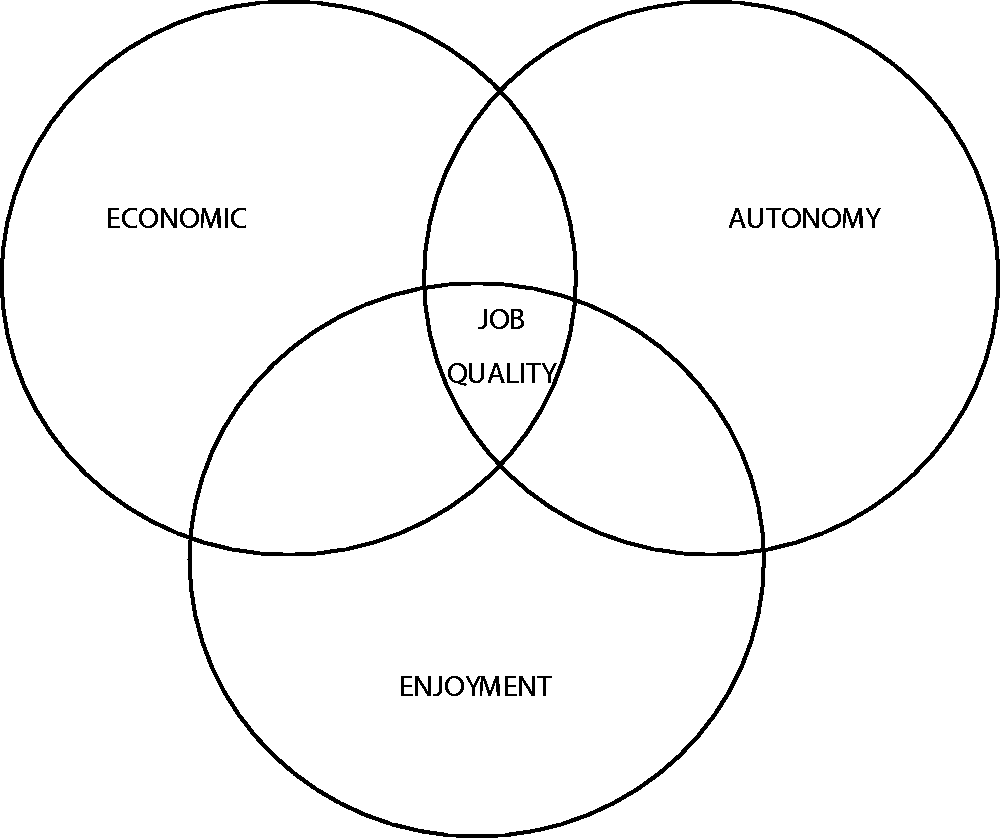
Going beyond the Findlay et al. (2013) definition of quality jobs, and in line with the call for work and context to be more thoughtfully engaged with (Cooke, 2018), a multi-dimensional approach to job quality requires a deeper understanding of worker needs, the workplace and labour market characteristics. As such, job quality is influenced by the ‘fit’ between the job and the individual’s needs. In terms of job quality, Cooke et al. (2013: 507) describe this ‘fit’ as the match between the job and the individual’s ‘circumstances at a specific stage of their life, such as their age and family or relationship expectations, along with their values on work and life and available alternatives in achieving personal life goals’. The notion of fit has been extended to include the labour market context (Kalleberg, 2003) – taking into consideration the factors that shape supply and demand for workers, and in turn influencing their willingness to engage in the work. For example, in examining the job quality experience of Mexican call centre workers, Galván (2012: 167) notes that ‘[m]ost workers in these jobs seem to tolerate bad jobs and low wages due to the jobs’ temporary nature and lack of better opportunities in the labour market’. Thus, how the job fits the individual and how the individual fits into the labour market both play an important role in shaping subjective perceptions of job quality (Knox et al., 2015).
We advocate an even wider emphasis since an individual, and even a labour market perspective, can neglect the broader societal context in which work takes place. While other scholars have recognised the importance of the labour market and broader societal settings as proxies and determinants of job quality (Cooke et al., 2013), it is suggested here that a multi-dimensional approach to job quality requires an explicit consideration of the wider socio-political context in which work is embedded. While some jobs subjectively ‘fit’ a particular individual’s personal and labour market circumstances, we argue that discussions of job quality should consider whether the work meets society’s expectations. In the Australian context, this approach echoes the ‘fair and reasonable’ standard set down in the Harvester Decision that contextualised individual needs within the expectations of a ‘civilised community’ (Higgins, 1907). Thus, we add a fourth vital job quality question: How does the job fit? This question is multi-levelled and dynamic, shifting and shaped by the individual job, labour market and broader socio-political context.
A multi-dimensional multi-level approach to job quality leads to problems of what weight or priority should be given to each characteristics or dimension (Osterman, 2013). One of the major weaknesses of current quantitative approaches to measuring job quality is the variable priority and weighting of different attributes (Muñoz de Bustillo et al., 2011). Moreover, there is little recognition that there are tensions across and within attributes. Frenkel (2015) suggests that a remedy to these weaknesses is for qualitative research to take workers’ subjective voices seriously. However, this approach still needs to be considered within the wider socio-political context, therefore this study adopts a holistic approach to analysing job quality (Kochan, 1998).
Research methods
Research design
This study utilised a qualitative industry case study design (Bray and Waring, 2009; Yin, 2013) to explore job quality in the food-delivery sector of the Australian gig economy. While food-delivery work is not novel, the re-configuration of contractual arrangements and the digital facilitation are. Hence, following Merriam (1998), a qualitative approach is warranted to investigate this form of work organisation in its natural setting. Rather than identifying the size and scale of the emergent sector, the aim here was to understand, and make-sense of, worker experiences (Morgan and Smircich, 1980). Therefore, riders operating on the Deliveroo and UberEATS platforms were interviewed – a sampling decision based on the platforms’ operational areas across the two locations where the research team was located, Melbourne and Perth.
Data collection and analysis
The primary interview data for this project were collected between January and June 2017. A total of 58 workers were interviewed using a semi-structured approach over 42 interviews, including one large group interview with 9 riders. Interviews were conducted until saturation was reached (Creswell, 2013). The research was undertaken in accordance with a university ethics protocol. Riders were approached without the knowledge or support of the platforms. In order to solicit an adequate number of informants, a multi-tiered participant recruitment strategy was employed, relying on a combination of street intercepts (Herzog, 2012), online participant recruitments initiatives (Mendelson, 2007) and snowball sampling techniques (Biernacki and Waldorf, 1981). As a result, interviews were conducted across multiple settings – each with advantages and disadvantages, providing richness to the data. For instance, the street intercepts enabled the researchers to engage with and observe the riders within their workplace, allowing demonstrations of the functionalities of the apps that direct and manage their work. They also allowed riders to provide referrals to befriended colleagues, and reveal subtleties affecting the work.
A disadvantage of the street intercepts, however, was that workers were ‘on-call’ during interviews. Workers were ‘logged in’, that is, available for work, but not actively engaged during these periods of time, highlighting the variability of demand workers experience throughout the day. Workers were not paid for these down times, yet had to be within relative proximity to restaurants in order to receive orders. Consequently, occasionally interviews ended prematurely when riders received delivery requests. In some instances details were exchanged, and discussions were reconvened at a later stage. The other face-to-face interviews, and phone interviews, occurred at a time and location at the convenience of riders, allowing for more extended discussions. As a result, the conducted interviews lasted between 5 minutes and 82 minutes, with an average of 33 minutes per interview.
Most interviewees were male (52 of 58), and 47 of the 58 riders indicated that they were in Australia on a temporary work, student or working holiday visa. As a result, several workers highlighted that work restrictions associated with visas limited their labour market alternatives – further discussed later. In addition, the delivery workers originated from a range of countries, including Brazil, China, Columbia, France, India, Malaysia and the UK. Consequently, English was a second language for many riders, with several suggesting that food-delivery work was an attractive form of work due to underdeveloped language skills: ‘I think is good for me because I don’t have skills, English skills for job, so yeah’ (Interview 20).
Workers did not necessarily exclusively operate for one platform, with 24% indicating that they operated across multiple platforms. Hence, workers could operate on both investigated platforms at the same time and interchangeably (i.e. multi-apping). Workers adopted this strategy to maximise their earnings. The majority of interviewees exclusively worked for UberEATS (49%), while 27% worked for Deliveroo. A total of 75% of riders used a bicycle as their primary mode of transport, 20% used a scooter or motorbike, while the remaining 5% used a car. Although car users were not initially targeted, a number of these workers contacted the research team during online recruitment, reflecting the opportunistic sampling approach (Creswell, 2013). It was identified that while delivery distances differed, the delivery process by car was similar, albeit less social than the two-wheel forms of delivery.
The primary data were coded and analysed via a thematic analysis, using a hybridised coding process relying on inductive and deductive approaches (Fereday and Muir-Cochrane, 2006). The data were freely coded in an Excel spreadsheet around five key themes identified in the literature: ‘economic security’, ‘fit’, ‘enjoyment of work’, ‘autonomy over the gig’ and ‘industrial relations issues’. In order to ensure inter-coder consistency and reliability (Campbell et al., 2013) a coding standardisation exercise was undertaken, where all researchers coded one of the lengthier transcripts. Emergent coding and themes in this transcript were discussed on a line-by-line basis until consensus was reached. To enhance familiarity with the data, in the first round the researchers coded each other’s interviews. Upon completion of the coding, the data were cleaned, further discussed to identify emergent themes, followed by a further round of second coding (Auerbach and Silverstein, 2003) by the first author to ensure consistency.
Findings: The three dimensions of job quality
Utilising the first three dimensions of the theoretical framework, we first describe the objective and subjective components of economic security, autonomy and enjoyment of elements of these workers’ jobs. We then highlight tensions within and between these dimensions, revealing the complexities of evaluating job quality within this segment of the gig economy.
Economic security
Economic security was relevant to riders in three ways: pay, income variability and economic risk. Characteristic of gig work, the bulk of riders were paid on a piece rate basis. Hence workers were not paid for their non-productive time, yet as one worker argued, time is viewed as the primary input through which their efforts could be measured: … sometimes the restaurant doesn’t have the food ready. So who’s paying for the waiting time? No one. It’s the rider who’s just got to wait … I think the most important currency is time because you can only measure your earnings compared to time you spent. (Interview 30)
The workers’ independent contractor status means that they carry all the risks in the labour process, decreasing their economic security. The inherent nature of delivery work – including its outdoor, road-based, and at times physical nature – exposes riders to various workplace hazards and risks, including fatigue and mistakes by other road users. Riders reported many near misses with cars, accidents and exposure to anti-social behaviour in public spaces. This, in conjunction with a lack of workplace insurance coverage, culminated in some distressing stories – highlighting the vulnerability of these workers: I met with an accident and my bike became two pieces, I was about to die instantly. … it wasn’t my mistake, it was some lady’s mistake. There were cops, ambulance and everyone was there. I had to stay at home for one month. I don’t have WorkCover, jobless, no income and yeah, that’s it. (Interview 23)
Measured against objective standards, such as the minimum wage and access to Occupational Health & Safety (OHS) coverage, food-delivery work provides low levels of economic security. For some workers, however, their subjective experience was that their gig work gave them important economic opportunities.
Autonomy over the work
The second dimension of job quality examined is the degree of autonomy at work and control over the gig. In contrast to the economic security, this dimension presented a messier picture due a number of inherently contradictory elements that shaped the nature of the work. Subsequently, some riders felt that they had a high degree of autonomy ‘… you can have complete control over your job’ (Interview 23), Others, however, felt more constrained.
Questions of autonomy and control related to the ability to choose working hours, delivery routes, acceptance or rejection of delivery requests and the capacity to cancel orders when problems are encountered – for example if a restaurant is taking too long to prepare the delivery. With respect to working hours for instance, workers almost universally viewed the autonomy over the when, where and how long they worked as high, and therefore a positive aspect of delivery work: ‘I choose my own schedule, organise my time working. I don’t have a boss, I actually administrate my time as I want’ (Interview 39). This ability to choose when to undertake the work – the temporal flexibility – is something both platforms strongly promote as a form of mutual flexibility.
Sitting behind the branding and guise of mutual flexibility sits a more complex picture. Work is much more tightly shaped and controlled in the labour process than the platforms advertise. First, workers have no control over the cost of delivering the food and what share they receive for their efforts. The platforms regularly set and change the pay rates and service fees, revealing that riders are ‘price takers’ with no discretion over pay setting.
Second, the apps that allocate and govern the work, and to which workers are continuously connected, largely control and direct the labour process, reducing rider autonomy over the gig. As one worker explained, ‘…you’re really just following what the app tells you, so you don’t have to think much. You just do what you’re told by the app’ (Interview 31). This app-based control comes in multiple forms, including GPS monitoring, gig allocation and performance monitoring. For instance, while riders can choose to accept or reject delivery requests, there is a direct impact on their performance rating. Both platforms require riders to respond to a delivery request within 10–15 seconds, with Uber introducing an automatic acceptance function. Workers are required to maintain an acceptance rating above 85% or face being locked out of the platform for a period of time – encumbering their ability to earn an income and threatening their economic security. A similar pressure applies to cancellations, where workers must keep these below 15%. Hence, while workers have the ability to accept, reject or cancel orders, there are built-in performance management functions which stop a large proportion of the workforce from exercising autonomy. Moreover, in some instances, acceptance ratings decreased without reason, and with limited opportunity for recourse or change – resulting in worker frustration.
Third, the platforms allocate deliveries to workers via algorithms. Workers had multiple and competing theories about how these systems operated. It was, for example, suggested that you need to be in the right position; closest to a restaurant; have the fastest average speed; be logged into the app for the longest; or have the highest customer satisfaction rating. This uncertainty played an important role in how work was approached. Workers also understood that they were constantly monitored by platforms and consumers. They reported being contacted by the platforms for heading in the wrong direction, while others talked about the embarrassment of receiving bad customer ratings – even when not at fault: Yes, they [customers] do rate us and that’s really embarrassing for us sometimes. So sometimes if the client – they enter their address incorrectly or sometimes you have to wait at the restaurant for the food to be cooked so there are very high chances that the customer – they get annoyed by this and they say – why did we have to wait for this for almost for a whole hour for one simple food, for one simple burger or one pizza. So they complain like that a lot so in that instance … if the delivery takes too long so then it’s really embarrassing for us. We have to wait at the restaurant as well and not to forget – no matter how long we wait at the restaurant we are not getting paid for that. If we wait for 30 minutes, we are not getting paid for that. It’s bad when we reach the customer and they complain about that and then they give us a negative rating and they give negative feedback as well. So it does affect our performance as well so if we have like 85 per cent rating in a row then it looks good. But if you have lower than 85 per cent rating, then it will be a problem for us. They [the platforms] might deactivate your account and they might – they can do whatever they want. (Interview 27)
The issue of autonomy at work highlights the importance of a multi-dimensional approach to understanding job quality, as well as the importance of incorporating subjective and objective dimensions. While it appears, objectively, that these gig workers have little autonomy over their work due to the control of the apps, workers subjectively considered the level of autonomy as an upside of the job.
Enjoyment at work
Despite strong concerns surrounding earnings, workers highlighted a range of enjoyable work elements – suggesting that platform-based work contains particular aspects that add quality, albeit subjectively enjoyed. For instance, workers indicated that they enjoyed social interactions with other riders, restaurants and customers. Waiting for deliveries provided opportunities for socialisation. Some workers also formed groups and socialised outside of work. Social interactions were generally viewed as positive and led to feelings of camaraderie: ‘I usually wave to my fellow riders when we see the uniforms, or carrying the Deliveroo bag’ (Interview 12). Interactions further included workplace support: ‘we help every night … So we have a group and you share knowledge to help each other’ (Interview 13). This social dimension contributed considerably to workers’ enjoyment. A small number of interviewees, however, did not want to engage in social activities - ‘I don’t really have any interest in making friends with other delivery people’ (Interview 31), highlighting that when job quality is considered from a worker perspective, there are strong elements of subjectivity.
Workers further indicated that cycling or riding their motorbike was an enjoyable aspect of the work, as one worker explained: ‘I was already getting into riding my bike just for fitness, and I thought I may as well get paid just to ride my bike’ (Interview 9). The outdoor nature was another factor that made riders prefer food-delivery work over perceived labour market alternatives, such as retail or hospitality work: ‘I prefer to be outside and not be stuck in one place attending to customers’ (Interview 2). Inclement weather, however, drastically reduced this enjoyment. Yet it was suggested that customer demand was highest under these conditions, forcing platforms to incentivise the work in order to maintain enough riders on the road – for example by providing one-off bonuses. Workers highlighted that under poor weather conditions the work-related risks were greater, earnings increased and enjoyment dropped – illustrating reinforcement and tensions between the job quality dimensions. The subjective and variable enjoyment of the work, as discussed in the following section, was also mediated by the context of the individual.
Tensions within and between the dimensions of job quality
In order to assess the quality of platform-based delivery work, following Figure 1, it is necessary to consider the interactions and tensions between the three dimensions of job quality. The tensions between the economic and enjoyment dimensions were most pronounced, as workers had to endure the lesser part of the work to increase their earnings. For example, while some cyclists enjoyed the exercise, low earnings meant that they had to keep riding to a point of fatigue. Moreover, the work was less enjoyable when the weather was windy and tiring after riding 50 kilometres. Physical exhaustion further detracted from other aspects of life. As one rider explained: ‘You can never do your homework, you are so tired and you just think about how to cook the next meal and sleeping, that is your life’ (Interview 19). The economic imperative also placed strains on collegiality, as more riders appeared to reduce the amount of work available. Subsequently, some riders developed an alternative understanding, or perhaps coping mechanism, of this tension, viewing the work more as a hobby or exercise than work. Moreover, several riders considered gig work as not ‘a real job’. There is thus a notable tension between workers’ subjective enjoyment of riding, the need to make money, and work-related risks.
Similarly, the economic and autonomy dimensions revealed how the temporal flexibility of the work is constrained. As noted earlier, riders regarded the ability to choose the time and location of work as a major positive; however, this low form of autonomy was further restricted by economic realities. The work is fully reliant upon customer demand and restaurant opening hours, meaning that despite the platforms’ proclaimed flexibility, it is largely constrained by societal dining preferences. As one rider captured it: Deliveroo and Uber said you are flexible to work when you want. But it’s not true because there is – okay it’s flexible, yes.
Discussion
In this section, we engage with the respective individual, labour market and socio-political ‘fit’ of food-delivery work, which we identified as a last critical step in evaluating job quality in a multi-dimensional and multi-level way. Subjective and objective evaluations of job quality are shaped and altered by the different levels of abstraction at which they are evaluated, exposing potential tensions between individual and collective perspectives of job quality. By assessing the three dimensions of job quality in the context of respective ‘fit’, we are able to reveal what is new, what is problematic, as well as situate this appraisal of the quality of the work within ongoing debates about the changing nature of work. As will be demonstrated throughout this section, any assessment of job quality in this segment of the gig economy requires the explicit consideration of all three levels of abstraction.
Individual fit
Riders’ perceptions of the quality of their work were shaped by their individual context, namely their circumstances, life stage and need for income. Indeed, individual fit is most pertinent when contextualising the subjective job quality category of enjoyment. Fitting work into an individual’s circumstances was a prominent theme during interviews. Riders indicated it was important that their work adapted around other commitments, such as study or travel. Individual fit also shaped other job quality dimensions. Workers suggested that gig work was acceptable to them because it was seen as a short-term source of income for a particular point in time. ‘I’m just waiting for this semester to end. So once my semester is end [sic] I will never work for Uber again’ (Interview 7). For some workers, the flexibility to fit the work around other commitments shaped their enjoyment of the work.
This means that subjective understandings of job quality are necessarily shaped by workers’ life circumstances, and the temporal flexibility offered by gig work allows workers to juggle their work- and non-work commitments. Workers viewed this ‘fit’ as being an important component of job quality, one for which they were willing to downgrade economic security and enjoyment. For the majority of interviewees, the positives of gig work offset the negatives, revealing their individual ‘fit’. This is no great surprise given the sampling technique, interviewing those still undertaking the work. There were also tensions between the fit and other job quality dimensions. The clearest example of this was the tension between fitting the work around individual life commitments and the economic necessity to work at the busiest times. As one university student observed, ‘I would say currently I fit my life around the work, because obviously I need to work around the busy times, like dinner or lunch time’ (Interview 12).
Labour market fit
The largely positive view of gig work’s ability to fit riders’ individual circumstances was, in part, informed by their relative labour market position and alternatives. That is, perceptions of autonomy are best contextualised by considering individual labour market options. Workers were acutely aware that they held tenuous positions in the Australian labour market. The interviewees were overwhelmingly young, non-Australian residents and had limited English language skills. Work restrictions associated with their visas limited their labour market alternatives. Given such handicaps, in combination with the low entry requirements for food-delivery work, the sector was viewed as a ‘good labour market fit’. Moreover, their perceived labour market alternatives, such as hospitality, were regarded as less desirable. Riders indicated that poor pay – including systematic underpayment, and abuse of temporary migrants (see Underhill and Rimmer, 2016) – and limited opportunities for continued employment made these alternatives less attractive than delivery work. In this context, they regarded gig work as providing relative autonomy and enjoyment. Riders thus consider both subjective and objective aspects of job quality through the lens of their available labour market options. The lack of better alternatives, however, did not entail that riders considered the work as particularly good, as one rider put it: It’s a shit job, yeah of course, it’s for a young man, young woman … Yeah it’s only for backpackers. Sometimes I can see an Aussie man or New Zealand doing this fucking job, I don’t understand, try to find a better job. (Interview 8)
Socio-political fit
If only the individual and labour market perspectives had been used to evaluate the quality of platform-based food-delivery work, then from the perspective of several riders the argument could be made that the work was acceptable or even good. Such analysis is blind to the wider context in which the work takes place, ignoring what is considered quality work within a broader societal perspective. The subjective and objective measures of job quality at the individual and labour market levels of aggregation are insufficient, and it is therefore necessary to consider job quality at a further level of abstraction. By placing job quality at the socio-political level, it is possible to consider job quality in light of the objective and subjective measures that society applies in order to determine what makes jobs acceptable and desirable, for example the minimum wage.
Platforms are currently able to organise work in a way that circumvents traditional standards that underpinned societal commitments to decent work. In Australia, there have been broadly accepted – yet at times contested (Ellem et al., 2005) – standards and principles that govern traditional employment relationships. In the context of the food-delivery sector, where workers currently operate as independent contractors, riders identified that their work did not meet these standards – especially in relation to pay and compensation for workplace injury. Yet as recent case law (see Fair Work Commission, 2017) revealed, the form of work organisation that is adopted by the platforms is not necessarily a form of misclassification under the current regulatory framework – the Fair Work Act 2009. However, the recent Foodora case (Fair Work Commission, 2018), found there was worker misclassification, underscoring the challenging legal landscape that surrounds gig work in Australia. Nevertheless, this study identified that workers struggled to earn a living wage, often irrespective of how hard they worked, and carried most of the risk associated with the work. The acceptability of these jobs, and the broader gig economy, from a societal perspective, therefore needs to be scrutinised.
Food-delivery work exposed riders to workplace risks and poor pay, leaving some, particularly those who were non-Australian residents, feeling like an underclass. One worker commented that ‘it’s like they exploit people that don’t have other options’ (Interview 6). This is not unique to the gig economy, as recent examples from the Australian services and agriculture industry highlight (Underhill and Rimmer, 2016). What is unique, and deeply concerning, is that the gig economy is seeking to operate within existing laws, unlike the unscrupulous actors in these other industries. If regulators permit platforms to effectively undercut traditional employment protections, the gig economy may create a permanent underclass of working poor in Australia akin to the United States (Peck and Theodore, 2000). Thus, when considering job quality in the gig economy, there needs to be consideration of gig work’s positionality in relation to jobs in the formal regulated economy.
At the moment, riders carry the majority of the economic risk associated with their work. The lack of regulatory requirements for the sector exposes society to parasitic behaviour from the gig economy, namely the costs related to workplace injuries and permanent disabilities. For instance, a number of workers indicated that they, or their friends, had made Medicare, transport accident or travel insurance claims for injuries that were sustained undertaking their work and therefore should have been treated as work-related incidents. These costs, and who bears them, need to be considered in understanding the socio-political elements of job quality in the gig economy.
Finally, workers reported that their experiences in the gig economy were discounted as irrelevant or as having limited value when pursuing alterative labour market opportunities. Chen (2015) observed that lower-skilled work with no skill recognition or formal training is an increasingly dangerous outcome for individual workers and society, as the tightening criteria for success in the labour market is formal training and a proven ability to do the work. In the future, this labour market criterion is likely to place gig workers in a highly disadvantaged position, potentially locking them out of the race for better jobs, pushing workers deeper into the gig economy or placing them into the world of long-term unemployment. Hence, it is concerning that the current Commonwealth Government is considering pushing vulnerable youth into the gigosphere without formal skill development by industry. The current adage that any form of work is better than relying on the social security system becomes particularly problematic when it is considered that a large proportion of riders were undertaking or had completed a tertiary education. There is thus the risk that the gig economy becomes a major source of low-quality jobs for those with tertiary qualifications, diminishing the opportunity for high-quality jobs for those without.
When food-delivery work is considered in the social context in which it is embedded, the quality of this work becomes much more problematic. The extension of job quality beyond individual perspectives allows deeper consideration of what prima facie appears acceptable, underscoring the importance of the adopted holistic approach. So where does this leave food-delivery work in terms of previous debates about the quality of work?
Evaluating food-delivery through a multi-dimensional job quality framework
The complexity of analysing job quality in the gig economy demonstrates the need for a multi-dimensional framework that incorporates worker experiences and perspectives. This study underlines the need to utilise an empirically grounded approach to assessing job quality in the platform-based gig economy, echoing calls (e.g. Frenkel, 2015) to take workers seriously. The findings demonstrate that simplistic critiques or commendations of gig work neglect the complex circumstances of gig workers and the conditions under which platform-based work is carried out. As highlighted, job quality is multi-dimensional and shaped across three different levels of abstraction, whereby the fit at each level can influence subjective understandings of the quality of the work.
Worker perspectives underlined how market forces exacerbate tensions within and between dimensions of job quality – resulting in reinforcing as well as antithetical impacts on quality. This was most conspicuous between the economic and enjoyment dimensions, where workers’ ability to sustain themselves was left to the ‘higgling of the market’ (Higgins, 1907). Nonetheless, it is a higgling that provides economic opportunity and makes sense for workers’ individual and labour market circumstances. While this ‘higgling’ is nothing new, riders’ accounts highlight that different pressures and technologies are at play. While the digitally-enabled economy may herald another era of low autonomy, low-skill and low-wage work devoid of social protections, characterising it as a return to the past, negates some of its more problematic aspects. The forms of work found in the platform economy, which may be considered the ‘first wave’ of technology-enabled gig work, are messy, evolving and may be a precursor to wider automation of work (Frey and Osborne, 2017). Hence, characterisations of capitalist social relations in the platform-based gig economy fit neither the Post- or Neo-Fordism mould, nor their conceptualisations of job quality. Platform-based work, in effect, is a mixture of processes that are mediated by contemporary social and technological circumstances, a messiness that was captured by our data and our multi-dimensional job quality framework. Thus, we argue that prior normative conceptualisations are inadequate to understand the contradictory nature of contemporary forms of capitalist production, and adopting such perspectives is inadequate considering the inherent tensions and contradictions generated by this form of work.
Our analysis further underlines that workers’ subjective perceptions of job quality in the gig economy are not primarily shaped by the technological aspects of the work; instead the regulatory configurations under which the work is performed appear more dominant. While this study does not claim that its sample is representative of the entire sector, due to its qualitative approach, the large proportion of riders who were in Australia on temporary visas suggests a highly transient workforce. This in turn influences their perceptions of quality as – similar to Galván’s (2012) findings in call centres – workers’ expectations about how long work would be undertaken shaped their perceptions of quality. Workers intended to operate in the food-delivery sector only short term, and most did not regard it as a career – merely something to get them by, which meant the jobs fit their individual circumstances. The majority of workers had clear exit strategies. Consequently, they were less concerned about some of the negatives, focusing on the positive aspects instead.
Assessing the quality of food-delivery work through the multi-dimensional framework and across the three levels of abstraction uncovered that characterising the work as merely ‘good’ or ‘bad’ fails to capture the importance of fit and how it shapes objective and subjective understandings of job quality. For example, the autonomy workers felt they had, most particularly the temporal flexibility of gig work, was of major importance and benefit to them. From the workers’ perspective, the outdoor and physical nature of the work made it more enjoyable than their limited immediate labour market alternatives. At the same time, the research raises serious questions concerning workers' ability to earn a living wage and bear all work-related risks – these concerns are further discussed below.
Regulating for quality jobs in the platform economy
The socio-political lens highlights that there are several serious social drawbacks associated with the current form of work organisation adopted by the evaluated food-delivery platforms. How Australian society, and its regulators in particular, respond to the externalities resulting from the current business models, while at the same time supporting the positive facets of the resultant work, further feeds into existing job quality debates.
In Australia, the protections that underpinned food-delivery work have traditionally been tied up in protection of employees through the employment relations system, specifically the award system. In the accessed platforms, however, these workers legally operate outside the traditional employment relationship. As such, there appears to be a regulatory blind spot for these particular contractors, who do not receive the benefits of employment or the autonomy of contractors. The situation exists that these workers may be sham contractors, as the Fair Work Ombudsman is trying to demonstrate in relation to food-delivery workers for another platform (Fair Work Ombudsman, 2018).
Although some have suggested the simple solution to reclassify these workers as employees (Stewart and Stanford, 2017), this ignores the platforms’ engagement with the regulatory regimes under which they operate as well as the realities and complexities of these work arrangements. Up to now, rather than addressing concerns around the classification of workers, the platforms have been aggressively seeking to push the boundaries of the regulatory regimes under which they operate. Their business models are premised on an independent contractor model, and they therefore seek to avoid potential reclassification at all costs. This is, for example, illustrated by pre-emptive and unilateral changes to the terms and conditions of engagement, ensuring that there is sufficient arm’s length in the relationship (Cunningham and Fox Koob, 2018; Uber, 2018). Moreover, the call for reclassification ignores the nature of the work and the technological systems that facilitate it. Workers engage in multi-apping, operating for and on multiple platforms, at times concurrently. They receive and accept order requests for one platform while completing deliveries for the other, raising questions about which platform holds the employment relationship in such instances, as well as who should be held responsible in case of accident or injury. It further ignores that workers’ subjective enjoyment of their work is largely derived from the constrained, yet substantial, level of temporal flexibility that is available. Under the existing Australian industrial relations systems, a reclassification to an employment relationship would inevitably reduce this flexibility and potentially compromise job quality.
An alternative proposal is to create a new hybrid, ‘third’ category between employers and contractors of dependent workers (Todolí-Signes, 2017). This currently exists in other jurisdictions, including Canada, Italy and Spain (Cherry and Aloisi, 2017). This position carries the risk, in terms of job quality, of downgrading employees’ status to dependent contractors. However, strengthening and updating the rules surrounding protection of contractors to create work arrangements that meet society’s and workers’ needs for job quality appear more feasible.
In terms of the app-based food-delivery sector, we contend that, in addition to possible reclassifications of work, Australian regulators could consider three more sectoral-based approaches in order to address some of the most pressing issues affecting workers in this sector. First, currently there are only very limited opportunities for worker voice and recourse against unilateral platform decisions – the former a higher form of autonomy (Dobbin and Boychuk, 1999). Due to the independent contractor status, workers for the assessed platforms are unable to access the Fair Work Commission, limiting their options in seeking redress to resolve disputes. Consequently, regulators could review this situation and provide workers access to traditional or alternative voice mechanisms, including widening the scope of the Commission, carving out a more pro-active role for the Australian Competition and Consumer Commission, or enacting an industry-specific tribunal. In the Australian context there are precedents for tribunals, such as the Road Safety Remuneration Tribunal (McCrystal and Orchiston, 2013) and the Coal Industry Tribunal (Smith, 1987). Second, issues around unsafe work practices were exacerbated by economic insecurity, as workers received no financial assistance in cases of workplace injury or accident. In order to improve safety and provide workers with adequate protection, sector-wide worker compensation requirements could be imposed on platforms, as well as minimum expectations around training. From a workers’ compensation perspective, for instance, such a move is currently under consideration at state level in Queensland (Peetz, 2018), whereas in other locales like New York City in the United States, the local government has initiated steps to curb the number of workers active in the ridesharing segment of the platform economy and introduce minimum wage rates (Josserand and Kaine, 2018). Third, greater transparency from platforms on average earnings across the sector could be demanded to ensure that riders are paid in line with the minimum wage. Platforms already collect data on earnings, service fee deductions and periods that workers are logged into their apps (i.e. time available for work); simple sector-wide reporting requirements to relevant government agencies would therefore result in greater transparency around earning potential.
In order to advance policy and scholarly discussions on gig work in Australia and internationally, the existing data gap needs to be addressed. Ample questions remain, such as how gig work is impacting on the composition of labour markets; for instance, is gig work resulting in an increasing number of low-skill and low-quality jobs or merely reorganising existing ones? From an international perspective, given the highlighted subjective perceptions of job quality, questions about the influence of social security system configurations on perceived experience arise, which could, for example, be assessed through comparative analyses. Hence we call for more qualitative, quantitative and longitudinal studies on the gigification of work.
Conclusion
This qualitative industry study evaluated the quality of work in the Australian platform-based food-delivery sector, using a multi-dimensional job quality framework focusing on three levels of abstraction. Using semi-structured interviews with workers operating across two digital food-delivery platforms, we ascertained riders’ perspectives on this novel form of work organisation in relation to their experienced levels of economic security, autonomy over their gigs and enjoyment of work in this sector. This allowed us to analyse both subjective and objective notions of quality. The multi-level nature of the framework – focusing on respective levels of individual, labour-market and socio-political ‘fit’ of the work – in turn enabled an assessment of the quality of work in the platform-based economy that extends beyond individual accounts, which could simplistically suggest that this type of work is good.
By situating the findings of this study around Post- and Neo-Fordist debates, we were able to demonstrate how the gig economy is a new juncture in capitalist production, and that the technology and work organisation do not fit previous predications around the reorganisation of work. The socio-political lens of the theoretical framework, in particular, illuminates the problematic nature of platform-based work from a job quality perspective. The availability of workers whose individual circumstances make these jobs acceptable, that is, young, temporary migrants often with limited English skills, means that other industries have the capacity to ‘gigify’, downgrading job quality across the economy and limiting the number of, and restricting access to, high-quality jobs. All of this suggests that the rise of the gig economy should not only be of concern to regulators, industrial relations scholars and the community, but, at a minimum, should elicit actions that eliminate the most concerning dimensions of gig work.
Declaration of conflicting interests
The author(s) declared no potential conflicts of interest with respect to the research, authorship and/or publication of this article.
Funding
The author(s) received no financial support for the research, authorship and/or publication of this article.