







Abstract
This paper focuses on the legal remedies for age discrimination and dismissal of older workers, identifying the factors that courts and tribunals in Australia and the United Kingdom (UK) consider when calculating compensation for two forms of damages: injury to feelings and future losses. A secondary aim is to determine whether these factors adequately consider the unique workforce participation challenges faced by older workers in both countries. Considering the similarities between Australian and UK age discrimination law and given that the latter jurisdiction has had considerably more successful cases than the former, this study adopts a comparative approach and draws on UK cases to inform the development of Australian age discrimination law. Analysis of all successful Australian and a selection of successful UK age discrimination and dismissal cases spanning from 2017 to 2020 suggests that Australian law might be strengthened by: adopting a scale of awards similar to the guidelines established in Vento v Chief Constable of West Yorkshire Police [2002] EWCA Civ 1871 (‘Vento’) for recognising and awarding injury to feelings; and by more readily awarding future losses, particularly for claimants who plan to work or who are already working past retirement age.
Introduction
A critical challenge that is currently, and will continue, to affect all OECD countries in the coming decades is population ageing (OECD, 2019). By 2050, the number of people aged 60 years and above will be more than double (United Nations, 2019). An ageing population, combined with a declining workforce, is likely to have a detrimental impact on economic growth, health care, and social benefits (Rouzet et al., 2019). Governments around the world encourage labour market participation, including prolonging the working lives of older workers, as a key strategy for easing the economic and social implications associated with an ageing population. Multiple policies aimed at workforce ageing, such as increasing the retirement age, incentivising private pension schemes, and promoting job mobility, have been implemented with varying success (OECD, 2019).
Although the workforce participation of older workers is now at its peak (Rouzet et al., 2019), the average age of actual retirement is still well below the normal government-issued pension age (OECD, 2020) and less than what it was three decades ago (OECD, 2019). Many older workers explain that their inability or unwillingness to work up until or past retirement age is due to experiencing ageism (Kulik et al., 2016). Ageism is the negative combination of age-based stereotypes, behaviours, and attitudes (Kite and Wagner, 2002), and forms of ageism, including discrimination, can have harmful long-term health impacts (McCarthy et al., 2019).
According to the latest report of the World Health Organization (WHO), ageism is a worldwide phenomenon, denying both younger and older people their human rights and dignity (WHO, 2021). Throughout the European Union (EU), ageism appears to be more pervasive than racism and sexism. One in three older individuals report having been a target of ageism, and approximately half of the people in the EU perceive that discrimination against people aged 55 or older is very or fairly widespread (WHO, 2021). Shifting attention from Europe to Oceania, ageism remains the most prevalent form of discrimination and the way people talk about ageing and older age is predominantly negative (Australian Human Rights Commission (AHRC), 2021). In Australia, for instance, the number of workers aged over 50 encountering ageism in the workplace has doubled over the last 5 years (i.e. 20.7% in 2021 vs 9.6% in 2016).
Trying to address age-related barriers to older workers’ workplace participation and to restrain differential treatment based on age, legislation directed at age discrimination has been introduced by governments around the world. Because of Australia's and the UK's unique historic ties, common values, and the UK's historical influence on Australia's legal foundations, strong similarities exist between these two countries’ equality legislation, including age discrimination laws (Blackham, 2017b; Dickens, 2007). Yet despite these similar core rationales underpinning age discrimination laws, important differences between Australian and UK jurisprudence have emerged.
Using a comparative approach (Finkin, 2019), this paper addresses how both countries use the law to better protect the rights of older workers who have been dismissed because of age discrimination. More specifically, in line with legal doctrinal scholarship, and using content analysis, this research examines the UK system to see whether it can make a practical contribution to the Australian one (Wilson, 2007). This research has two key aims. The first is to identify the factors that Australian and UK Tribunals and courts consider when calculating remedies for injury to feelings and future losses for individuals who are dismissed due to age discrimination. A fair assessment of the two forms of damages – injury to feelings and future losses – is particularly important for older workers as they are more likely than younger workers to have fewer opportunities to find employment after dismissal and are likely to have more to lose in terms of future earnings and psychological health if dismissed. Second, the paper seeks to determine whether these factors adequately consider the unique workforce participation challenges faced by older workers.
This paper is structured as follows. We first outline the methodology employed, along with its limitations. We then discuss the current state of Australian age discrimination laws, followed by an overview of age discrimination laws in the UK and a comparison of laws across the two jurisdictions. Legal issues and special considerations in relation to remedies for victims of age discrimination and dismissal in both Australian and UK contexts are then explored. The extracted Australian and UK age discrimination and dismissal cases are subsequently discussed in more detail, noting jurisdictional differences as they emerge. The paper closes with the study's key findings and conclusions.
Methodology
Two complimentary analysis techniques are employed in this research: legal doctrinal analysis and content analysis. Legal doctrinal analysis, the core legal research method, involves the rigorous and systematic description and explanation of the law and legal concepts, such as cases, statutes, and rules (Hutchinson and Duncan, 2012; Pearce et al., 1987). Comprising of two-steps, the legal doctrinal method involves first locating the doctrine (i.e. cases, legislation) and second, analysing the primary documents to determine the nature and parameters of the law. More than simply describing the law, this technique facilitates the exposition of the legal principles generated by the courts and legislature (Bartie, 2010), links this new information to extant knowledge (Hutchinson and Duncan, 2012), and points out new directions for legal theory (Taekema, 2021).
This research study also involves a qualitative and quantitative content analysis of successful Australian and UK dismissal and age discrimination cases. 1 Content analysis involves the systematic analysis of texts to identify similarities and differences across a sample of documents. However, rather than synthesising meaning from the text (cf. legal doctrinal method), content analysis is a way to deconstruct text (Hutchinson and Duncan, 2012). It is an effective tool when evaluating and comparing judicial decisions (Hall and Wright, 2008; Kirkham and O’Loughlin, 2019) which has several advantages, including yielding results which are highly replicable and reliable (Silverman, 2000); facilitating the analysis of a wide variety of texts (Blackham, 2020); and identifying patterns in judicial decisions across cases, rather than offering a detailed understanding of one specific case (Hall and Wright, 2008). As per the guidelines of Dannemann (2019), this research examines the similarities and differences in the law and case outcomes across the Australian and UK jurisdictions to gain a better understanding of what factors are considered when determining compensation and the adequacy of such compensation.
The choice to make comparisons in this research study across jurisdictions at the case level is appropriate because the cases are relatively comparable, in terms of type of matter and judicial weight, and each judgement provides a set of factual situations which exemplify how dismissal due to age discrimination is decided (Dannemann, 2019).
Data collection and abstraction
Australian decisions
As comprehensively discussed by Blackham (2020), to date, there have only been seven employer-dismissed successful age discrimination cases in Australia. Of these seven cases, five involve discrimination based on ‘old’ rather than ‘young’ age. These five relevant cases form the entirety of the Australian case sample. Data abstraction for the Australian cases included identifying the five cases and extracting data from each of the written judgements.
UK decisions
UK cases were identified using the publicly available Employment Tribunal Decisions Registry, which registers all judgements made by the Employment Tribunals in England, Wales, and Scotland. All cases identified using the ‘Age Discrimination’ filter on the registry were reviewed. The search for eligible cases commenced on 25 July 2020 and concluded on 19 August 2020 after all available cases (2590 cases) were reviewed. Cases were eligible for inclusion if the claim for age discrimination involved a dismissal, was successful, and for which the published judgements were available. Cases were excluded if they were initially successful but later withdrawn by the claimant, successful in either age discrimination or dismissal but not both, successful in dismissal and age discrimination but age was not found to be the reason for dismissal, and successful for dismissal due to ‘younger’ age discrimination.
Data abstraction for the UK cases was conducted in two stages. First, only cases that were successful for the applicant and involved claims of dismissal and age discrimination were extracted, reducing the number of cases from 2590 to 96. Second, the 96 extracted cases were reviewed in more detail, and those which satisfied the inclusion criteria were entered into a Microsoft Excel spreadsheet for analysis. This process further reduced the number of cases from 96 to 19. In line with previous research on age discrimination by UK employers (Irving, 2012), key details related to the claim and claimant were recorded. The UK Government's ‘Companies House’ website was accessed to determine the Standard Industrial Classification and extract key information about the respondent. Where available, details of the remedy, such as the magnitude of the award(s), award(s) classification, and reasons to justify the award(s), were also recorded in the spreadsheet.
Despite its obvious merits, our choice of methods also shows some limitations. One limitation of this research study was the reliance on the information provided in the UK judgements as published in the Employment Tribunal Decisions Registry. The first hurdle to capturing the relevant information is that not all judgements are accompanied by written reasons. Also, those with written reasons may not always have the remedy hearing published. Additional issues with respect to inconsistencies and delays by Tribunal staff in creating and uploading the judgements limited the scope of this research to only those with complete data. Therefore, it is reasonable to assume that the results of this study are a conservative snapshot of age discrimination and dismissal cases in the UK.
Overview of dismissal legislation in Australia and UK
Before comparing Australian and UK age discrimination law, it is important to first clarify what legal protections are available for employees who are dismissed by their employer. In Australia, dismissed employees can claim that their dismissal was unlawful via the adverse action and general protection provisions in Part 3-1 of the Fair Work Act 2009 (Cth) (‘FWA’) or; alternatively if dismissal was due to discrimination, the employment provisions in Part 2-4 of the Age Discrimination Act 2004 (Cth) (‘ADA’) (or state-equivalent legislation) would apply. Employees who are dismissed by their employer because of an unfair reason or because of an unfair process, may utilise the unfair dismissal provisions in Part 3-2 of the FWA and apply to the Fair Work Commission for remedy. Claims of unfair dismissal must be submitted to the Fair Work Commission within 21 days of the dismissal. Considering this, Australian claimants are restricted to only one course of action when seeking redress. ‘Double dipping’ is expressly prohibited in the ADA, 2 FWA, 3 and the common law principle of issue estoppel prevents a second action under state and territory laws.
In the UK, employees who are dismissed unfairly by their employer may be able to pursue legal action through the unfair dismissal provisions in Part 10 of the Employment Rights Act 1996. Prior to making a tribunal claim, employees may request to commence ‘early conciliation’ through the Advisory, Conciliation and Arbitration Service (ACAS). For early conciliation to commence through ACAS, the employer first needs to agree to take part in discussions and applications for early conciliation must be made within 3 months less a day since the dismissal. Employees who have been dismissed due to discrimination can seek action under the Equality Act 2010 (‘EqA’).
Overview of age discrimination legislation
Australian age discrimination legislation
Age discrimination is protected in Australia at the federal and the state and territory level. Because Australia does not have a Bill of Rights, commonwealth protections of human rights are provided for via s51 of the Australian Constitution as well as several international instruments including the United Nation's International Covenant on Civil and Political Rights, the International Covenant on Economic, Social and Cultural Rights, the Convention on the Rights of the Child, and the International Labour Organisation's Discrimination (Employment and Occupation) Convention, 1958.
At the federal level, age discrimination is prohibited under the ADA and, more specific to age discrimination in the workplace, in the FWA. According to s5 of the ADA, age discrimination, an expression of ageism, involves the detrimental or unfavourable treatment of individuals based on their chronological age, age group, or characteristics of their age group. It is unlawful for an employer to discriminate against an employee on the basis of age at all stages of the employment life cycle including recruitment, selection, development, promotion, and termination. 4 It is also unlawful for an employer to subject an employee to ‘any other detriment’ s18(2d), which may include setting unrealistic performance criteria or subjecting a worker to a hostile work environment. Both direct (s14) and indirect (s15) age discrimination, as well as harassment and bullying in the workplace, are prohibited under the ADA and under Part 3-1 – General protections (adverse action) provisions of the FWA.
The ADA has been heavily criticised for not adequately addressing the interplay of age in the workplace (Thornton and Luker, 2010). Part of the criticism is due to the broader context, specifically, whether legislation is a suitable mechanism to tackle ingrained societal assumptions about age in the work context (Bennington, 2004), however, some criticism is directly in relation to the quantity and types of exemptions listed in the ADA. There are various exemptions under the ADA, 5 including for example: superannuation; youth wages; taxation; and employment of domestic duties in a private household. Employers can also discriminate against employees on the basis of age if the need to do so is because of the inherent requirements of the job. 6 The ADA was revised in 2009 to remove the ‘dominant’ reason test to reduce the burden of proof on applicants. Instead, claimants now must demonstrate that age must be at least one of the reasons (but not necessarily the main reason) for the discriminatory behaviour. 7 Despite this change, to date, there has not been a successful case of age discrimination awarded under the ADA. Some scholars (e.g. Blackham, 2020; MacDermott, 2011) have argued that the FWA may be a better avenue to pursue age discrimination in the work context, claiming that the FWA provides a better mechanism for individual complaints (i.e. reverse onus of proof, parties bear their own costs) and because the Fair Work Ombudsman is well resourced, this line of action also has systemic advantages by way of ensuring enforcement.
There are also various state and territory laws that protect individuals from direct and indirect age discrimination at work. With the exception of the ACT and Victoria, all other jurisdictions (including federal) require some reference to a comparator, actual or hypothetical, and while all legislation (i.e. state, territory and federal) only require age to be ‘a’ reason, in Victoria, South Australia and Queensland, age must be a substantial reason.
It is important to note that due to complex statutory legislative system differences, age discrimination protections do vary across federal as well as state and territory jurisdictions (Rees et al., 2018). 8 While victims of age discrimination may be able to demonstrate contravention of both federal (ADA or FWA for workplace discrimination) and state or territory age discrimination laws, claimants are restricted to only one statutory scheme when seeking redress.
UK age discrimination legislation
In the UK, the EqA provides protection against direct and indirect age discrimination as well as age-related harassment and victimisation in several settings, such as health services, education, consumer services, as well as employment settings. Part 5 (s39) outlines that employers must not discriminate during the recruitment, selection, development, promotion, or termination stage of employment or subject the worker to any other detriment. Part 5 of the EqA also states that age discrimination encompasses both age and age group and that there is no minimum length of employment for an employee or job candidate to claim age discrimination.
Prior to the EqA, equality law in the UK was managed via several separate pieces of legislation such as, for example, the Race Relations Act 1976, the Disability Discrimination Act 1995, the Equal Pay Act 1970, and the Employment Equality (Age) Regulations 2006. With the intention to ‘harmonise discrimination law, and to strengthen the law to support progress on equality’ these separate acts were consolidated into the EqA. 9 Pre-Brexit, Article 14 of the European Convention on Human Rights and EU labour law (Employment Equality Directive 2000/78/EC) also provided protection against age discrimination. Although post-Brexit, EU 10 law no longer has a binding force on UK equality law, because many of the earlier (now incorporated and retained) UK anti-discrimination legislation has implemented EU Directives, the EqA and human rights law in the UK more generally, is strongly connected with EU law (Barnard, 2018; Schiek and Fanning, 2022), and improvements in UK law can be traced back to the input of EU law (Fredman, 2023).
Comparing Australian and UK legislation
There are several points of convergence between Australian and UK age discrimination laws. Like Australia, compulsory retirement is no longer permitted in the UK. Also, like the ADA, the EqA requires that the claimant demonstrate less favourable treatment because of their age and that this be established using a comparator in order for the respondent's conduct to be deemed as unlawful discrimination. Under s136 of the EqA, 11 the burden of proof lies with the respondent, whereas, under the ADA, it is with the claimant as per s15(2). There is, however, a reverse onus of proof if a claim is made under s361's adverse action provisions of the FWA. In both Australia and the UK, the major burden of enforcement still lies with individuals, though in the UK there is access to ACAS, which offers mandatory and free conciliation for claims relating to employment. A similar conciliation service is offered in Australia via the AHRC if the claim is pursed under the ADA. There is no expectation for conciliation if an adverse action claim due to age is made under the FWA.
There are also several points of difference between Australian and UK age discrimination laws. Unlike the Australian anti-discrimination law framework, which operates at multiple jurisdictional levels, the UK has the EqA as its main form of legislation, thereby making it less complex for claimants. Another difference between the Australian and UK contexts relates to indirect discrimination. To determine if the respondent's conduct constitutes unlawful indirect discrimination, Australian legislation tends to rely on the test of reasonableness, whereas the application of proportionality is more common in the UK (i.e. can the discriminator show that the discrimination was a proportionate means of achieving a legitimate aim?). Perhaps the main point of difference between Australian and UK law is that UK anti-discrimination law, which as mentioned previously, is founded in EU law,
12
allows for a general defence of justification. Specifically, s13 of the EqA states:
A person (A) discriminates against another (B) if, because of a protected characteristic, A treats B less favourably than A treats or would treat others. If the protected characteristic is age, A does not discriminate against B if A can show that A's treatment of B to be a proportionate means of achieving a legitimate aim.
This provision permits age discrimination when the employer can demonstrate that they have a justifiable reason for discriminating. There is no such objective justification defence available under Australian anti-discrimination law.
There are also procedural differences between the Australian and UK jurisdictions. Claimants in both Australia (under the ADA legislation) and the UK first lodge their complaints with a central body for assessment before the matter can be taken further. In Australia, complaints can be lodged with the AHRC and in the UK complaints are lodged with the ACAS. Typically, conciliation then occurs in both jurisdictions and if unsuccessful continues to the courts. There are more notable procedural differences across Australian state and territory jurisdictions, which are more streamlined than the federal system, 13 however, this is beyond the scope of this research study. 14
In the UK, costs are generally awarded to the winning party, however the Tribunal judges have some discretion as to whether an order for costs is made. 15 While the ordering of costs is also typical in Australian federal courts, costs tend to be awarded if a claim is brought under the ADA but not under the FWA, although s611 of the FWA does allow the Fair Work Commission to make a costs order if the application or response was vexatious or if it was clear that it had no reasonable prospect of success. Awarding of costs in Australia also varies across state and territories. For instance, in Queensland, the policy of the Queensland Civil and Administrative Tribunal is that parties bear their own costs, however, it is possible that an order for costs can be made by the Victorian Civil and Administration Tribunal. 16
Another point of difference relates to the number of cases in each country. Despite having very similar anti-discrimination laws, many more age discrimination cases have been brought in the UK than in Australia (Allen and Blackham, 2019). In a review comparing the law, policy, and practices relating to age discrimination in Australia and the UK, Blackham (2017b) offered several possible explanations for why this may be. One argument put forward is that age discrimination has a narrower definition under Australian law in comparison to the UK's. Also, the absence of the reverse onus of proof in the ADA makes it more difficult for complainants in Australia to reach the evidentiary burden of proof. However, as mentioned previously, the reverse onus of proof is available under the FWA. In the UK, unlike in Australia, respondents can defend age discriminatory conduct if such discrimination is justifiable. UK respondents are less concerned with concealing the discriminatory nature of their actions, and more concerned with demonstrating that their actions were justified. Therefore, UK cases tend to centre around whether the conduct is justifiable rather than whether it is discriminatory. Blackham (2017b) argues that this objective justification defence may facilitate UK Tribunals’ higher acceptance of discriminatory conduct.
Legal issues and special considerations in relation to remedies
Australian remedies
Notwithstanding the legislative differences across Australian jurisdictions, which in turn allow for significant differences in the type and range of orders that can be made for discrimination cases, in practice, the remedies ordered have been largely the same (Ronalds and Raper, 2019). At the federal level, section 46PO(4) of the Australian Human Rights Commission Act 1986 (Cth) (‘AHRC Act’) outlines that the Federal Court and the Federal Circuit Court ‘may make such orders (including a declaration of right) as it thinks fit’. If the Federal Court decides that any of the respondents have engaged in unlawful discrimination, then the court can make a range of orders including but not limited to declaratory relief; order the respondent to perform any reasonable act to redress any loss or damage suffered by the applicant; reinstatement of the applicant; payment of compensatory damages; vary the termination of contract to redress loss or damage suffered by the applicant; or an action for no further action. In contrast, the remedies for the state tribunals, apart from Tasmania which has a similar remedial power, 17 have the available remedies stipulated clearly in the relevant state and territory legislation.
Damages can only be awarded when it can be demonstrated that the loss or damage suffered by the claimant was ‘because of’ unlawful discrimination. Damages are designed to be compensatory and no more; that is, damages are designed to put the claimant back in the position in which they would have been if the unlawful discrimination had not occurred. There are three main types of damages: special damages covering economic loss (i.e. loss of income, medical expenses, future lost earnings); general damages covering non-economic loss (i.e. pain and suffering and hurt and humiliation); and aggravated and exemplary damages (i.e. pecuniary damages) (Ronalds and Raper, 2019). Given the limited application of aggravated damages and the uncertainty associated with determining whether punitive (rather than compensatory) exemplary damages can be ordered for unlawful discrimination, this study focuses on cases and discussions involving special damages and general damages. Apart from New South Wales, Western Australia, and the Northern Territory, there is no limit to the quantity of damages that can be awarded to a claimant in Australia.
Australian courts have been criticised for not systematically considering what principles should be followed when awarding damages (Rees et al., 2018). Richardson v Oracle Corporation Australia Pty Ltd [2014] FCAFC 82 (‘Richardson’), a case that involved multiple incidents of sexual assault and harassment, exemplifies the different factors that may be considered when determining damages. In the first instance, the claimant was awarded A$18,000 for pain and suffering, but no award was made for special damages. However, on appeal to the Full Court of the Federal Court, the damages awarded to Richardson were found to be inadequate. In addition to an award for special damages (A$30,000), Richardson was awarded A$100,000 for her pain and suffering. This case highlights that damages for unlawful discrimination cases may be calculated similar to tort (although not necessarily applied in the same way) and should consider community standards and expectations. Although this case focused on sexual discrimination, the principles may be applied to other forms of discrimination, including age discrimination.
UK remedies
In contrast to Australia, the influential case of Vento provides clear guidance for what the UK judiciary should consider when calculating remedies for discrimination. The case involved a 30-year-old female probationary police constable who was dismissed due to sex discrimination. The claimant was awarded £165,829 in the first instance for loss of future earnings, which was calculated based on an estimate that the claimant would have a 75% chance of working for the employer until retirement age (55 years). The order for damages was set aside on appeal; however, it was reinstated in the Court of Appeal. Like in Australia, future losses in the UK courts are more likely to be calculated from the hearing date until retirement age.
UK employees who have been dismissed due to discrimination will typically bring forward a claim of discrimination rather than unfair dismissal. Compensation for injury to feelings is available to those who have been discriminated but not those who have been dismissed (Fredman, 2023). Recognising that ‘translating hurt feelings into hard currency is bound to be an artificial exercise’ (at 50), Vento has been influential in providing direction on how to calculate general damages for non-economic loss such as ‘subjective feelings of upset, frustration, worry, anxiety, mental distress, fear, grief, anguish, humiliation, unhappiness, stress, depression, and so on’ (at 50). The Court of Appeal for England and Wales in Vento set out the guidelines for awarding compensation for injury, stating that it is distinct from a psychiatric or similar personal injury. Under the Vento guidelines, awards fall into one of three bands: the lower band, which is appropriate for less serious cases or where the discriminatory act is a once-off occurrence; the middle band, which is used for serious cases that do not merit an award of the upper band; and the upper band, which is used for the most serious cases, including lengthy experiences of discrimination. Interestingly, the wording in Vento suggests that the most serious forms of discrimination are most likley to be those based on sex or race. The sums for each band are updated annually via publication in the Presidential Guidance by the Presidents of the Employment Tribunals (England, Wales, and Scotland (2023)). Currently, the three bands from lower to upper span £1100–£11,200, £11,200–£33,700 and £33,700–£56,200 (with the possibility of exceeding the upper limit in serious cases), respectively. While the Vento bands (as these guides are known) are not binding, they have been widely adopted by UK courts.
Results
Australian cases
Table 1 displays the details of successful Australian (old) age discrimination cases involving dismissal. Two of the cases listed in Table 1 involved claimants who were made redundant by their employer, despite the dismissal not amounting to a true redundancy. In Richards v Webforge Australia Pty Ltd (2004) WAIRC 13207 (‘Richards’), a long-serving 60-year-old stock controller was made redundant after the respondent enlarged the role and decided that the claimant did not have the formal qualifications needed for the revised role and was too old for retraining. Considering the discriminatory age-related comments allegedly made by the employer and given that the work was still required, it was held that the dismissal was not a proper redundancy. In Lightning Bolt Co Pty Ltd v Skinner [2002] QCA 518 (‘Skinner’), two storemen in their late 50s were made redundant because a large client of the respondent was in liquidation. However, the men were soon after replaced by two storemen in their 20s. The Queensland Anti-Discrimination Tribunal found the two workers to have been unfairly dismissed based on their age, and both were awarded damages.
Summary of Australian age discrimination and dismissal decisions for ‘old’ age.
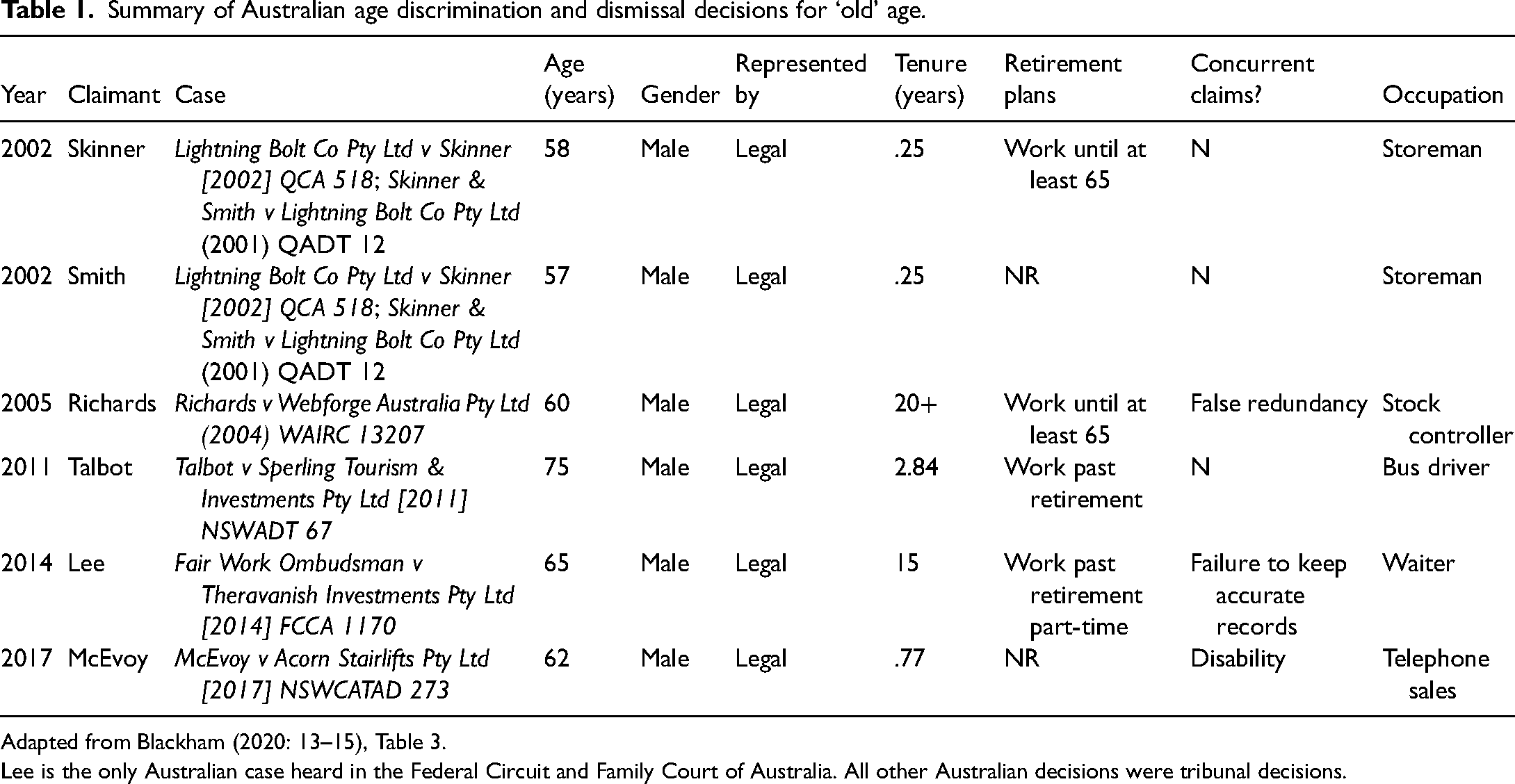
Adapted from Blackham (2020: 13–15), Table 3.
Lee is the only Australian case heard in the Federal Circuit and Family Court of Australia. All other Australian decisions were tribunal decisions.
The cases of Fair Work Ombudsman v Theravanish Investments Pty Ltd [2014] FCCA 1170 (‘Lee’) and Talbot v Sperling Tourism & Investments Pty Ltd [2011] NSWADT 67 (‘Talbot’) involved examples of claimants being discriminated against because of negative assumptions held by the respondents about older workers. In Lee, the respondent claimed that it was their policy to not employ any staff who had reached the retirement age of 65 years, thus citing age as the reason for dismissal despite the claimant's 15 years of good performance as a waiter. However, such a policy was later found to be non-existent, and the respondent was found to have contravened s351(1) of the FWA.
Talbot was brought under the Anti-Discrimination Act 1977 (NSW) and involved the dismissal of a bus driver whose contract was not renewed because the respondent was concerned that the claimant would not be able to meet the role requirements due to his age. The claimant was able to identify other drivers as actual comparators and demonstrate that despite also having driving infractions, they were not treated as harshly as the claimant. After discussions, the claimant was offered employment in a demoted role. The NSW Administrative Decisions Tribunal held that both the dismissal and demotion were instances of direct age discrimination.
The most recent age discrimination case involving dismissal in Australia is that of McEvoy v Acorn Stairlifts Pty Ltd [2017] NSWCATAD 273(‘McEvoy’). After the experienced 62-year-old telephone sales consultant was dismissed just 4 months into his employment contract, he lodged a complaint alleging that the dismissal was due to his age and disability status. The respondent cited poor hearing and a broken back as reasons for the termination, suggesting that the employer thought that his back injury would ultimately result in a compensation claim. Under the Anti-Discrimination Act 1977 (NSW), the claimant needed to establish less favourable treatment and causation for each of the independent claims. The NSW Civil and Administrative Tribunal held the respondent's conduct to be unlawful discrimination under the Act on both accounts.
Summary of Australian cases
This small collection of successful Australian cases reveals several interesting trends. First, as can be seen in Table 2, it appears that a wide range of factors was considered when awarding damages in cases involving ‘older’ age discrimination, as indicated by the variability in awards. For instance, general damages awards ranged from A$2500 to A$20,000. It is also worth noting that compensation for loss of future earnings tended to represent a small portion of the total damages awarded for age discrimination (except in one case, Skinner, where the applicant was awarded A$40,000 for loss of future earnings covering a 15-month period). A second observation is that all of these successful cases were brought by male claimants. Although not too much can be inferred from this observation based on the small sample – it may be that female claimants have stronger cases and are able to settle out of court or it may be that when compared to men, women experience less age discrimination in the workplace, are less likely to pursue claims for age discrimination, or face greater barriers in lodging a claim – it is interesting that no successful cases have been won by female claimants. Third, all cases involved claims for direct age discrimination by those who tended to be the least skilled and educated and for whom the effects of job loss were longer lasting and more profound (e.g. individuals in lower-level manual or service-type roles). A final observation is that apart from McEvoy, no other cases involved concurrent claims for discrimination; that is, discrimination due to age combined with other protected characteristics, such as race or sex. These observations largely reflect previous analyses of the Australian age discrimination laws (Blackham, 2020, p.28), which have argued that current laws have had limited success in addressing age discrimination in Australia.
Remedy details for Australian decisions.
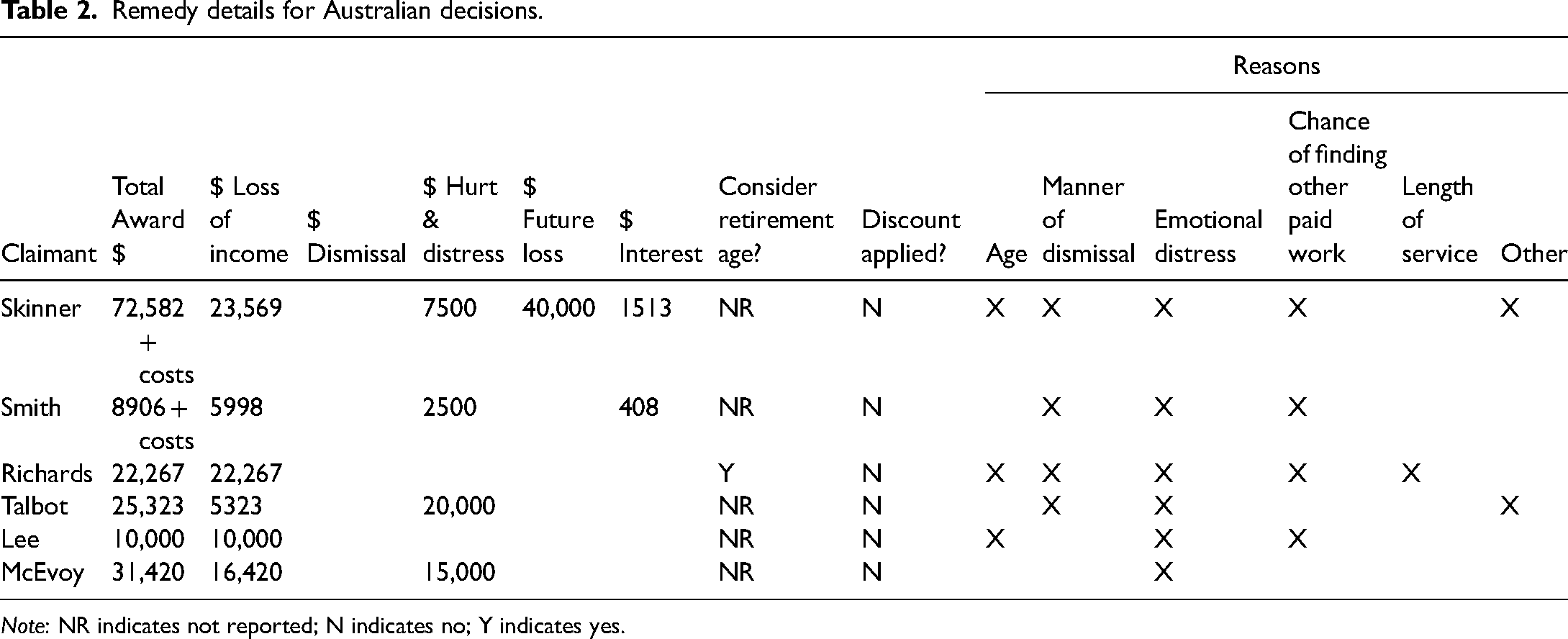
Note: NR indicates not reported; N indicates no; Y indicates yes.
UK cases
Table 3 presents the details of the UK cases. Of the 19 identified age discrimination cases, 17 cases involved direct discrimination. The remaining two were cases of indirect discrimination and included Broadist and HM Prison [2019] ET 2410153/2019 (‘Broadist’), which involved a ‘provision, criterion or practice’ (PCP; s19 EqA) and West and Funky Owl Pub (Holdings) Ltd [2018] ET 2415513/2018 (‘West’), where the Tribunal found in the claimant's favour because the respondent's PCP for bar staff to be aged between 18 and 25 was deemed to be indirectly discriminatory.
Claim characteristics UK employment tribunal decisions.
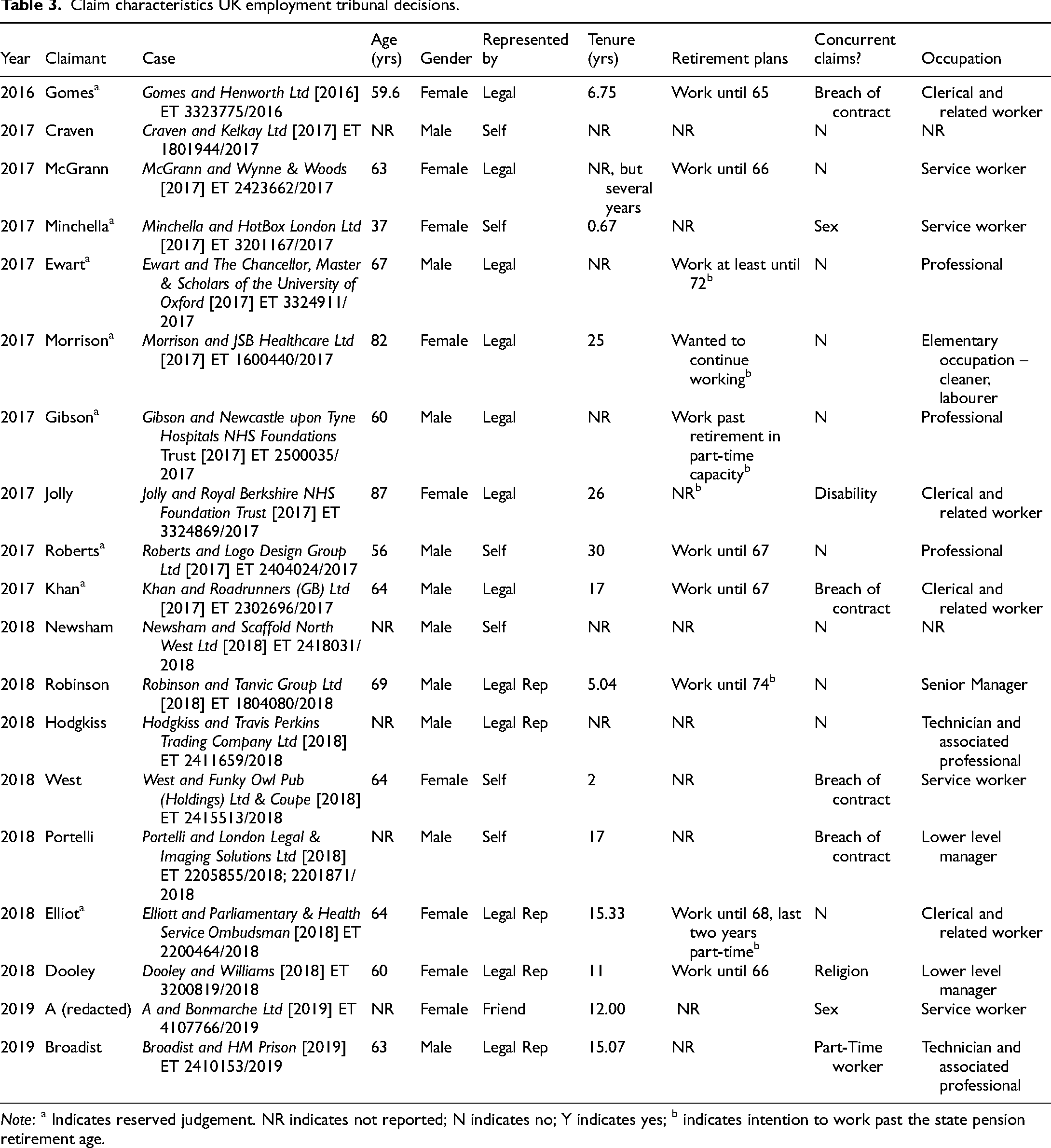
Note: a Indicates reserved judgement. NR indicates not reported; N indicates no; Y indicates yes; b indicates intention to work past the state pension retirement age.
Nine cases involved concurrent claims. Examples of cases of intersectional discrimination included: A and Bonmarche Ltd [2019] ET 4107766/2019 (‘A’, name redacted), where the claimant experienced harassing comments about her menopausal symptoms from her manager; Dooley and Williams [2018] ET 3200819/2018 (‘Dooley’), where the discrimination was on the basis of the claimant's age and Jewish faith; Jolly and Royal Berkshire NHS Foundation Trust [2017] ET 3324869/2017 (‘Jolly’), where the claimant was treated unfavourably because she was perceived by the respondent as fragile on account of her age and health condition; and Minchella and HotBox London Ltd [2017] ET 3201167/2017 (‘Minchella’), where the claimant was subjected to comments from co-workers that she was too old to have children.
Six of the 19 cases involved targeted redundancy due to age [i.e. Craven and Kelkay Ltd [2017] ET 1801944/2017 (‘Craven’), Dooley, Robinson and Tanvic Group Ltd [2018] ET 1804080/2018 (‘Robinson’), Hodgkiss and Travis Perkins Trading Company Ltd [2018] ET 2411659/2018 (‘Hodgkiss’), Elliott and Parliamentary & Health Service Ombudsman [2018] ET 2200464/2018 (‘Elliott’) and Gibson and Newcastle upon Tyne Hospitals NHS Foundations Trust [2017] ET 2500035/2017 (‘Gibson’)].
Three cases also involved open ageism on the respondent's part, such as citing age as the reason for dismissal [i.e. Roberts and Logo Design Group Ltd [2017] ET 2404024/2017 (‘Roberts’), Khan and Roadrunners (GB) Ltd [2017] ET 2302696/2017 (‘Khan’) and West]. In two cases, Portelli and London Legal & Imaging Solutions Ltd [2018] ET 2205855/2018; 2201871/2018 (‘Portelli’) and Dooley, the respondents were found to be motivated, at least in part, to dismiss claimants due to the claimants being older and, therefore, more expensive than younger staff. A further three cases involved poorly executed procedures on the respondent's part in response to disciplinary issues related to ‘poor performance’. In Gomes and Henworth Ltd [2016] ET 3323775/2016 (‘Gomes’) and Jolly, the claimants alleged that the respondent failed to provide adequate training to support improved performance, while Minchella involved complaints regarding the management of harassment.
Finally, two cases involved misguided expectations by employers in relation to when the claimant should retire. In the case of Ewart and The Chancellor, Master & Scholars of the University of Oxford [2017] ET 3324911/2017 (‘Ewart’), the respondent failed to consider that their special permission to have a compulsory retirement age was removed in 2011 due to legislative changes to the EqA. In Gibson, a very senior surgeon engaged in a common practice in the industry, which was to retire from his full-time position to take the position up on a part-time basis post-official retirement; there was, however, a misunderstanding, and once two new surgeons were hired, the respondent made the claimant redundant.
Summary of UK cases
Total awards. Details about the remedy were available for 13 of the 19 cases (see Table 4). A wide range of monetary values was awarded, reflecting the varied nature of expressions of age discrimination across the cases. The median total award was £40,022, with five of the 13 cases awarded damages between £30,000 and £50,000. The smallest award was £3187 for a case that involved a once-off incident of direct and indirect discrimination (West). The highest awarded sum was £210,212 to a long-serving senior designer (Roberts) who was dismissed due to his age. In this case, the impact of the dismissal on the claimant was severe – he subsequently became very depressed and anxious.
Remedy details for UK employment tribunal decisions.
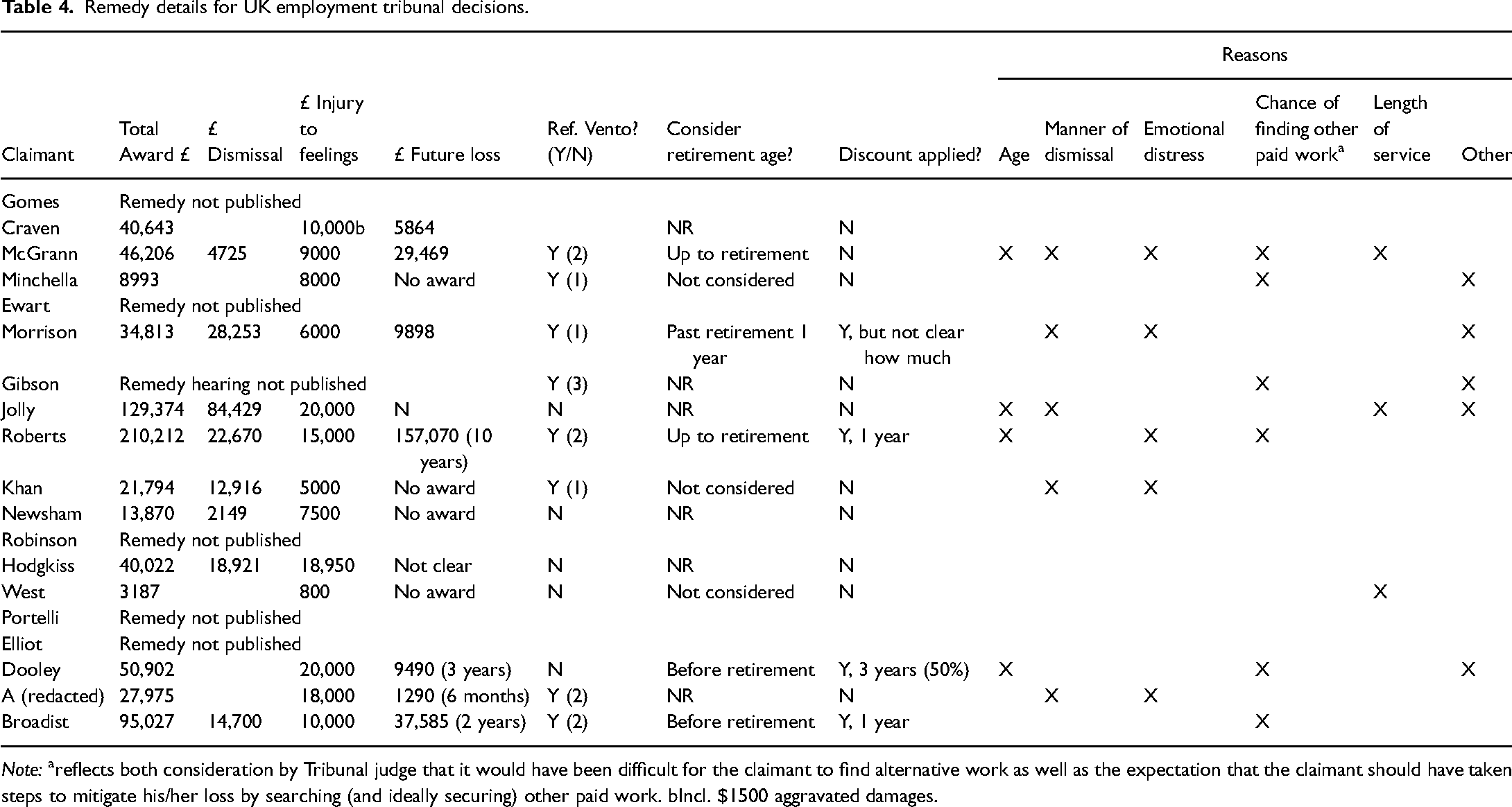
Note: areflects both consideration by Tribunal judge that it would have been difficult for the claimant to find alternative work as well as the expectation that the claimant should have taken steps to mitigate his/her loss by searching (and ideally securing) other paid work. bIncl. $1500 aggravated damages.
Injury to feelings
The highest award for injury to feelings was £20,000, which was awarded in both Jolly and Dooley. Both cases involved female claimants in their early 60s who had been working for their employers for 26 and 11 years, respectively. Both cases involved direct discrimination on the basis of age and another protected attribute – disability in Jolly and race in Dooley. In these cases, the Tribunal found that the discrimination experienced by the claimants had been serious and ongoing for a substantial period. The lowest awarded amount for injury to feelings was in the case of West, with damages amounting to £800. It can be argued that the amount is not commensurate with the loss of opportunity for the claimant to continue working in the role; however, the awarded amount was in line with what the claimant had requested as part of her schedule of loss.
Only eight of the 13 cases that reported financial data referred to the Vento bands. Analysis of the Vento bands of the cases (including reviewing historical Vento sums) revealed that most cases (n = 8) were placed in the middle band. The remaining cases (n = 5) all fell into the less serious lower band. Given the severity of some of the cases, it is surprising that the discriminatory treatment wasn’t considered serious enough to merit an award in the upper band. For instance, the claimant in Dooley experienced ongoing and persistent age and racial harassment in the form of derogatory comments, such as ‘she's old and lost the plot’ (at 19.1a) and ‘Jews always want something for nothing’ (at 19.5d), and victimisation by her supervisor over a 1-year period, which ultimately led to her unfair dismissal after 10 years of service. Another example is provided by Jolly. In this case, a long-serving employee filed a complaint for age and disability discrimination that she experienced while being investigated for work performance issues. The internal investigation, which lasted 4 months, was found to be biased and poorly conducted, resulting in the claimant experiencing tremendous shame and poor health and then being ultimately dismissed with no opportunity to request information on the reasons for the initial investigation.
Future loss
Seven cases included remedies for future loss, with the smallest amount awarded being £1290 (equivalent to 6 months of future wages). Part of the reason for the relatively small award was that the claimant (A) was able to seek alternative, albeit lower-paid work. Roberts reported the highest award for future loss, £157,070. While the sum reflects the senior position held by the claimant, the length of time for the award, namely 10 years, seems considerable in contrast with the claimant's relatively young age (56). The judgement remedy was not particularly detailed, so it is somewhat unclear as to why the Tribunal judged the claimant had ‘lost income until his 67th birthday’ (at 14) when surely it would be anticipated that the claimant would be able to find work within the 10 years before retirement. However, it is likely that the serious psychological and medical evidence presented by the claimant in terms of major depression and anxiety gave the impression that there was very little real prospect for the claimant to ever obtain equivalent employment due to systemic age discrimination in his industry.
Looking at the cases with financial data, the following factors may have influenced limited compensation for future loss: very short tenure (e.g. 2 years in West), being ‘young’ and finding better alternative employment post dismissal (e.g. Minchella), and leaving the country and therefore not seeking to mitigate future loss (e.g. Khan).
Consideration of retirement age and application of a discount
There is limited data to evaluate how the Tribunals determine awards for future losses for those who plan to work past or are already working past retirement age. Of the six cases involving claimants who indicated that they were currently working or planned to work past retirement age, the remedy judgement was only available for two cases: Morrison and Jolly. In Morrison, the claimant, aged 82 years, worked in the kitchen of a nursing home and experienced direct age discrimination from her line manager and employer, who held negative assumptions and stereotypes about the abilities of people in their 80s. The claimant was awarded 1 year of future lost wages, which the Tribunal considered to be ‘a reasonable forecast of future loss but due to the uncertainties of a working life’ (at 44). Given that the Tribunal had referred to the claimant as a ‘robust and hardworking individual’, it is unclear why the damages awarded for loss of future earnings was equivalent to only 1 year of wages. In contrast, the 87-year-old claimant in Jolly received a large award for past losses and injury to feelings but none for future losses. No information was provided in the judgement or remedy judgement to indicate the absence of future loss awards.
The reasoning and pattern of awards for future losses were not that much clearer for cases involving relatively younger claimants who specifically stated that they planned on working until retirement age. McGrann and Dooley both involved claimants in their early 60s who explicitly stated that they planned on working until retirement. The Tribunal awarded Mrs McGrann (aged 63 years) for future losses until retirement age. In contrast, Mrs Dooley (aged 60 years) was awarded only 3 years of future losses, leaving her 3 years short of retirement age. In Dooley, the Tribunal applied a 50% discount to her award based on uncertainties related to potential changes in her work hours in the future (i.e. her hours might be reduced or increased by her employer or the claimant may choose to work fewer hours), and her employability (i.e. the claimant's limited skills might mean that she is likely to find work that only pays the minimum rate). The factors listed by the Tribunal do not adequately clarify why a 50% discount was chosen – is the inference that the claimant may not have been able to expect ongoing employment at her current pay rate until retirement? Or is it perhaps that, because the claimant worked part-time, her employment status was considered as more precarious? However, no reference to her part-time status was made in the remedy judgement. It is unclear why Mrs McGrann received an award until retirement age, yet Mrs Dooley did not. At first glance, one may consider it appropriate to apply a discount to Mrs Dooley's award given she was 6 years from retirement and, therefore, more likely to be re-employed, in comparison to Mrs McGrann, who was 3 years closer to the retirement age of 60 years. However, considering that Mr Roberts, aged 56 years, was awarded 10 years of future losses with a discount of less than 10%, being younger does not seem a likely explanation.
Reasons
Perhaps unsurprising, the factors considered in the UK cases in the awarding of remedies were like those considered in the Australian cases, namely age, manner of dismissal, emotional distress, the chance of finding other paid work/mitigation on the part of the claimant of loss, and length of service. The most common factor was the chance of the claimant finding other equivalent paid work and whether the claimant had tried and was successful in mitigating any loss of their employment (31.6%). Interestingly, age was explicitly listed in very few cases (15.8%); however, it is likely that given all cases involved age discrimination, consideration of the claimant's age when awarding remedy was implied.
Discussion
Integrating the evidence provided by the Australian and UK age discrimination and dismissal cases reveals two key findings. The first is that although the reasons considered when awarding damages are similar across jurisdictions, there are clear differences in terms of the consistency in awarding compensation for injured feelings. The use of the Vento bands in the UK may make it easier for the Tribunals to ensure consistency when awarding this form of damages. Though not as common in the UK, it is not uncommon for Australian tribunals and courts to award compensation for hurt to feelings, humiliation, and distress; therefore, a similarly structured guide could potentially be utilised in Australia.
One caution to this, however, is the need for substantial consideration and debate as to whether implicit ageism, which is influenced by unconscious biases, underlies the award decisions regarding injured feelings. This study's findings show that no UK cases have attracted an award for injury to feelings past the middle Vento band. While it may be that none of the identified cases was sufficiently serious and ongoing, it may also be that the wording in Vento – that the upper band be reserved for serious cases of sex or race discrimination – suggests that age discrimination on its own, even if very serious and ongoing, is unlikely to warrant such a high award unless it intersects with sex or race discrimination. It seems an impossible exercise to ascertain whether one form of discrimination (e.g. race) is more serious or severe than another (e.g. age). However, as ageing is increasingly becoming a central demographic trend that has significant personal, social, and economic consequences (Rouzet et al., 2019; WHO, 2021), and given that ‘there is a certain ambivalence about the concept of age discrimination, which individuals would be reluctant to articulate in other areas of anti-discrimination regulation’ (MacDermott 2011: 185), discussions of these points need to be had to ensure a more fair, consistent, and predictable legal framework for claims of workplace age discrimination. Many older workers have worked with the same employer for substantial periods and are likely to derive a great deal of esteem and social benefits from being employed. Dismissal for these individuals, like young workers, is likely to be harmful and injurious to their feelings. However, unlike younger workers, older workers are less likely to have other opportunities to rebuild their esteem or be compensated for poor treatment after long and loyal service. It may be that injury to feelings resulting from age discrimination is not as injurious as discrimination due to race; however, evaluation of UK cases for intersectional cases of sex and age, as well as race and age, does not suggest that these cases necessarily warrant an award in the upper Vento band either. While it might be useful for Australian guidelines like the Vento guidelines to be drawn up, there should be consideration of whether the wording of the bands should be less restrictive to facilitate adequate compensation for the many different forms of discrimination.
The second key finding is the difference between the jurisdictions in their willingness to award future losses. Only one out of seven Australian cases analysed in this study, Skinner, saw the claimant awarded future lost earnings. On the other hand, just over half of the UK claims that had remedy data available included such awards. Although not all claimants received compensation for future losses up until retirement age, retirement age generally was factored into the calculation, with an additional discount then applied (which is typical in the UK system). Although the UK Tribunals seem more willing to award future losses than current Australian tribunals and courts do, the criteria used to calculate future losses were somewhat unclear and, therefore, inconsistent and unpredictable, as indicated by the variability among awards received by the claimants in the identified cases. It does seem that the UK Tribunals are particularly unlikely to award large sums for future losses for claimants who are over retirement age. This may reflect the reality that older workers, particularly those aged over 80 years, are unlikely to continue working for a sustained period due to having fewer life years and general age-related decrements when compared with younger workers.
Nevertheless, it must be acknowledged that there are limits to this assumption, given that it has been well established in the literature that working capacity, cognitive abilities, motivation, and health status become more heterogeneous with age (Gardiner and Chen, 2022). Therefore, there is potentially a large gap between state retirement age and the age at which an individual chooses to no longer work permanently. While not accounting for future losses beyond retirement age might be reasonable, for those who are in good health and who are willing to work it raises the question of what is fair compensation when discrimination based on age results not only in job loss and injury to feelings but also to loss of future earning opportunity? The inconsistent protection offered to older workers in the UK reflects the conclusions reached by Blackham (2017a): that there is limited consensus and sometimes contradictory values underlying the UK's policies towards age and employment.
Given that extensive research has demonstrated the inherent difficulty of finding new employment for older workers, experiencing age discrimination at the latter stages of one's working career has extremely serious consequences, including permanent exclusion from paid employment. As pointed out in Elliot, it is false to assume that individuals aged over 60 years have less financial need given that these individuals can incur significantly higher expenses related to increased caring responsibilities of older relatives as well as supporting economically dependent adult children. The range of UK cases reflects how age discrimination can occur regardless of occupational status, affecting those in both high- (e.g. Ewart and Gibson) and low-status occupations (e.g. Morrison and Jolly). While the effect of discrimination and dismissal is likely to be felt by those healthy, educated, and of high status as denial of the psychological and esteem benefits, those in lower-level and less well-paid work are likely to disproportionally suffer economically with lasting impacts on their own health and lifestyle.
Although the UK Tribunals appear to provide more compensation for future losses to claimants than current Australian tribunals and courts do, it could be argued that neither jurisdiction adequately compensates older workers who plan to work past retirement age. It is also not clear from the cases examined if such requests are commonly sought by Australian claimants. More broadly than age discrimination, it is generally a common practice by both jurisdictions to calculate future earnings up until retirement age. However, given that more workers are working up until and past retirement age, it may be inappropriate to continue to use calculations based on retirement age to determine future losses. Workers who plan to work past retirement age or workers who are already working past retirement and are dismissed due to age discrimination are unlikely to find alternative employment. Arguably, the current Australian and UK legal practices do not put these individuals into the position that they would have been if the discrimination had not occurred.
Increasing awards of future losses to dismissed and age discriminated workers also has important policy implications. Currently, the burden of future losses is carried by either the Australian taxpayer – the assumption that the aged pension will provide for the discriminated worker past retirement age – or the claimant themselves, who are expected to draw down from their hard-earned superannuation and/or personal savings, which may be insufficient for a comfortable retirement depending on their circumstances (Association of Super Funds of Australia, 2019). It seems unreasonable that the cost of an employer's unlawful behaviour be paid by the public and/or the discriminated victim. However, for future costs to be more readily awarded, thought needs to be given to how claimants can sufficiently substantiate claims for future earnings past retirement age. Although it will be difficult and take time for case law to enable a more fair, consistent, and predictable assessment of future losses for successful claimants, Australian tribunals and courts should seriously consider whether an award for future losses is warranted and clarify the reasons for their decisions. Care should be taken to assess the disproportionate effect of dismissal on older workers, particularly those who planned on working past retirement age, and the policy and fiscal implications of not ordering a remedy for future loss.
In line with previous legal commentary (Allen, 2010; Andrades, 2012), the results of this study show that compensating victims of discrimination is difficult. Across both jurisdictions, factors such as age, manner of dismissal, emotional distress, chance of finding other paid work, and length of service were commonly considered by courts and tribunals when calculating damages for older workers who were dismissed by their employer due to age discrimination. However, despite considering similar factors, the results of this research reflect that there are differences in terms of the consistency in awarding compensation for injured feelings as well as the willingness to award future losses. This adds to the well-established literature documenting the challenges faced by older workers (see Gardiner and Chen, 2022 for a review).
The comparative nature of this research demonstrates that UK law, and EU law given its strong influence on UK law, can meaningfully inform Australian law. For example, Australian age discrimination law may be strengthened by adopting a similar, but not identical, set of Vento guidelines for awarding injury to feelings and more readily awarding future losses, particularly for claimants who plan to work past or who are already working past retirement age. Currently, Australian courts do not seem cognisant of the more pronounced negative psychological impacts of age discrimination on older workers or how the loss of work can be particularly threatening to the self-esteem and identity as well as the financial security of vulnerable older workers.
Legislation and regulations
Australia
Age Discrimination Act 2004 (Cth).
Anti-Discrimination Act 1977 (NSW).
Anti-Discrimination Act 1991 (Qld).
Anti-Discrimination Act 1992 (NT).
Anti-Discrimination Act 1998 (Tas).
Australian Human Rights Commission Act 1986 (Cth).
Discrimination Act 1991 (ACT).
Equal Opportunity Act 1984 (SA).
Equal Opportunity Act 1984 (WA).
Equal Opportunity Act 2010 (Vic).
Fair Work Act 2009 (Cth).
Federal Circuit Court Rules 2001 (Cth).
Federal Court Rules 2011 (Cth).
Victorian Civil and Administrative Tribunal Act 1998 (Vic).
UK
Employment Equality (Age) Regulations 2006 (UK).
Employment Tribunal Rules of Procedures 2013 (UK).
European Union (Withdrawal) Act 2018 (UK).
Equality Act 2010 (UK).
Equality Bill 2009 (UK).
European union
Employment Equality Directive 2000/78/EC.
Cases and tribunal decisions
Australia
Fair Work Ombudsman v Theravanish Investments Pty Ltd [2014] FCCA 1170
Lightning Bolt Co Pty Ltd v Skinner [2002] QCA 518
McEvoy v Acorn Stairlifts Pty Ltd [2017] NSWCATAD 273
Richardson v Oracle Corporation Australia Pty Ltd [2014] FCAFC 82
Skinner & Smith v Lightning Bolt Co Pty Ltd (2001) QADT 12
Talbot v Sperling Tourism & Investments Pty Ltd [2011] NSWADT 67
Qantas Airways Ltd v Christie [1998] HCA 18
Richards v Webforge Australia Pty Ltd [2004] WAIRC 13207
Whiteoak v New South Wales [2014] NSWCATAD 45
UK
A and Bonmarche Ltd [2019] ET 4107766/2019
Broadist and HM Prison [2019] ET 2410153/2019
Craven and Kelkay Ltd [2017] ET 1801944/2017
Dooley and Williams [2018] ET 3200819/2018
Elliott and Parliamentary & Health Service Ombudsman [2018] ET 2200464/2018
Ewart and The Chancellor, Master & Scholars of the University of Oxford [2017] ET 3324911/2017
GLS v PLP [2013] VCAT 1367
Gibson and Newcastle upon Tyne Hospitals NHS Foundations Trust [2017] ET 2500035/ 2017
Gomes and Henworth Ltd [2016] ET 3323775/2016
Hodgkiss and Travis Perkins Trading Company Ltd [2018] ET 2411659/2018
Jolly and Royal Berkshire NHS Foundation Trust [2017] ET 3324869/2017
Khan and Roadrunners (GB) Ltd [2017] ET 2302696/2017
McGrann and Wynne & Woods [2017] ET 2423662/2017
Minchella and HotBox London Ltd [2017] ET 3201167/2017
Morrison and JSB Healthcare Ltd [2017] ET 1600440/2017
Newsham and Scaffold North West Ltd [2018] ET 2418031/2018
Portelli and London Legal & Imaging Solutions Ltd [2018] ET 2205855/2018; 2201871/ 2018
Roberts and Logo Design Group Ltd [2017] ET 2404024/2017
Robinson and Tanvic Group Ltd [2018] ET 1804080/2018
Vento v Chief Constable of West Yorkshire Police [2002] EWCA Civ 1871
West and Funky Owl Pub (Holdings) Ltd & Coupe [2018] ET 2415513/2018
Footnotes
Declaration of conflicting interests
The author(s) declared no potential conflicts of interest with respect to the research, authorship, and/or publication of this article.
Funding
The author(s) received no financial support for the research, authorship, and/or publication of this article.

Notes
Biographical notes
Dr