







Abstract
By analysing the interrelations between the regulatory framework, organisational dynamics and gender politics, we assess the challenges for Gender Equality Bargaining in Chile. Several factors in the political arena drive an optimistic outlook: feminisation of trade unions, new working rights for women and a recent labour reform which introduces new mechanisms to foster gender equality through collective bargaining. We wonder how these progressive movements cope with an evolving and increasingly fragmented institutional and organisational context. The empirical work is based on interviews with policy experts, labour inspectors and female union leaders from the mining, retail and banking sectors. The findings suggest a significant disconnect between how these debates are framed on gender politics and what happens at the regulatory and organisational levels in terms of policy design, implementation and enforcement, which ultimately undermines GEB. The article contributes to a greater understanding of the interrelationships between the factors that constitute the opportunity structure and the importance of looking at different spheres of regulation. The paper concludes that progressive gender politics must be combined with more structural reforms to the industrial relations system to pursue more successful outcomes.
Introduction
Renewing the trade union bargaining agenda with a focus on equality has been studied extensively in Anglo and Western European countries (see, e.g., Colling and Dickens, 1998; Erikson, 2021; Heery, 2006; Rubery and Hebson, 2018; Wajcman, 2000; Williamson and Baird, 2014). Scholars have examined the concept of ‘equality bargaining’ which aims to regulate equality and diversity matters in work and employment, thereby broadening the scope of collective bargaining (Briskin, 2006; Tailby and Moore, 2014). Within this field, research on ‘gender equality bargaining’ (GEB) has predominantly focused on issues related to gender equality and work–life balance (Gregory and Milner, 2009; Williamson and Baird, 2014). There are clearly new demands and some victories reflected in trade union agendas, policies and even in gender mainstreaming politics, though the quest for equality has proved rather elusive (Kirton, 2021).
Latin America's trade unions are also renewing their bargaining agenda, evident in the increasing number of women in leadership roles in the labour movement and concrete changes in collective agreements (Abramo and Rangel, 2003, 2005; Godinho, 2009; Goren and Prieto, 2020; ILO, 2022). The Chilean case serves as an example of the growing influence of gender politics, demonstrated by the significant rise in female union membership and leadership, new laws aimed at promoting gender equality in the workplace and labour market and the inclusion of equality clauses in some collective contracts, as well as the 2017 labour reform which targets gender quotas on union boards and the inclusion of equality clauses in collective agreements. However, these changes are taking place within a fully decentralised collective bargaining system (OECD, 2019), characterised by high fragmentation and marginalisation, with only a small portion of the workforce covered by multiple collective agreements at the firm level (Duran, 2022).
We analyse how the quest for GEB develops within this national context, drawing on the experience of mainly female union leaders in the mining, retail and banking sectors, as well as policy experts and labour inspectors who have coped with issues of policy design, implementation and enforcement. Our empirical analysis will be guided by two research questions: How is the Chilean industrial relations system, and specifically the state, respond to the new demands and reforms aimed at promoting equality bargaining? What are the consequences for union–management relations and internal union dynamics at the organisational level?
The paper examines these questions through the concept of ‘opportunity structure’ in equality bargaining (Colling and Dickens, 1998; Gregory and Milner, 2009; Williamson, 2012) as a suitable framework to analyse how progress in this area necessitates a convergence of gender politics, the institutional framework and organisational dynamics. It argues that although progress towards equality bargaining has been observed in Chile, mainly in gender politics, the other two factors show minimal change, and the paper explores the interactions between different components of the opportunity structure from a strategic–relational approach (Jessop, 2001) to explain why this is the case. Additionally, the paper highlights the significance of comprehending the strategic calculation of actors when utilising institutional resources or when they lack them, how the state intervenes in a fragmented and contradictory way in the process, and how this variety of responses strains organisational dynamics.
The contribution of the article is twofold. Firstly, it enriches the concept of the opportunity structure by accounting for the importance of a wider perspective of the GEB regulatory process, with a critical emphasis on the role of the different industrial relations actors and the state. Secondly, it highlights the specific dilemmas that arise in a country characterised by political progressivism in gender equality in recent years but under a highly fragmented industrial relations system.
The article reviewed literature on gender and trade unions, the opportunity structure and the strategic–relational approach to propose an empirical analysis framework. It then delves into Chilean gender politics, emphasising the shift in the trade union movement towards a gender equality agenda, and the political reforms that have influenced employment regulation. The research methodology and main results are discussed, noting challenges within Chile's regulatory framework, the state's complex role and the disconnect between the political and regulatory dimensions. Finally, the paper elaborates on the impact and development of these policies on organisational dynamics, specifically through the lens of mining, retail and banking unions, positing that progressive gender politics must be integrated with structural reforms to the industrial relations system to pursue successful outcomes.
Literature review: The opportunity structure in an ever-changing employment relations context
Early research on equality bargaining aimed to identify the factors that facilitated or inhibited bargaining for gender equality (Williamson, 2012). Colling and Dickens’ (1998) work recognised three regulatory levels that could influence the inclusion of new equality demands in collective bargaining: national, sectoral and organisational. Later, Gregory and Milner (2009) used the concept of the ‘opportunity structure’ to refer to three related areas where trade unions could renew their agenda. The first area is gender politics, which relates to the feminisation of membership and leadership in trade unions and progress in the political and women's rights arena. The second area is the regulatory framework, particularly the regulation of the working time regime and collective bargaining issues. The third area is organizational dynamics, where high-trust union–management relationships are more likely to build equality bargaining. Williamson (2012) argues that a favourable terrain for equality bargaining is generated when these three factors coalesce, although how these ‘bricks’ are placed depends on the sectoral or organizational context.
Research has shown that some aspects associated with gender politics have advanced in various countries, such as the feminisation of trade union membership (Schnabel, 2013), an increase in the number of women trade union leaders (Briskin, 2011; Kirton and Healy, 2013) and a growing influence of equality frames on trade union and government agendas (Guillaume, 2021; Rubery and Johnson, 2019). However, further elaboration is required on how and why changes related to gender politics may impact organisational dynamics and regulatory frameworks. Building on the idea that these factors constitute a structure, a strategic–relational approach would explore which actors, strategies, identities and contexts are targeted by these structural factors and how actors respond in a given context (Jessop, 2001). The interaction between different components of the opportunity structure can create diverse scenarios, contingent upon union strategies (Milner, 2022), regardless of common trends in gender politics at an aggregate level. This research stresses that notable progress on gender politics in government and union agendas may not necessarily result in significant change in GEB or actor interest in leveraging it. Furthermore, systemic gender inequality structures persist, permeating institutional and organisational dynamics (Acker, 1990; Wajcman, 2000) and inhibiting progress due to traditional frames (Kirton, 2021).
While previous research on the ‘regulatory framework’ has focused on the rules governing working time and collective bargaining (Gregory and Milner, 2009; Rubery and Hebson, 2018), viewing regulation solely as a set of targeted rules may be limiting (Baldwin et al., 2012). Instead, it is essential to examine state regulation as a decentralised phenomenon that relies on a network of actors and complex institutional assemblages (Martinez Lucio and MacKenzie, 2017). This also helps us to understand the ‘incongruences’ observed when studying the regulatory process on gender equality in the labour market (Williamson and Colley, 2023). Therefore, it is crucial to comprehend how various institutions come into play, and how different actors utilise these rules to intervene in the design, implementation and enforcement of equality policies and standards. This is particularly important in the context of state regulation emphasising individual rights over collective ones (Howell, 2021).
According to some perspectives, regulations that favour gender equality can motivate and mobilise unions to defend the rights of workers, such as equal pay (Berg et al., 2013; Colling, 2009), broaden the scope of collective bargaining when union power is declining (Heery, 2006) and protect gains made through collective bargaining from changes in employer behaviour and economic conditions (Williamson and Baird, 2014: 164). However, other research suggests that state intervention has not always produced favourable outcomes. For example, Stuart et al. (2013) examined the Union Modernisation Fund (UMF) in the UK, 1 finding a top–down approach seeking to control the modernisation of unions in areas such as equality and diversity, rather than empowering the grassroots. This exclusion of labour actors from decision-making meant state efforts to transform the role of trade unions had little impact. In France, Brochard and Letablier (2017) criticised the ‘administrative approach’ to the reform of collective bargaining to include work–family balance measures, as it failed to stimulate innovation in policy and practices and remained a voluntary scheme for employers.
In addition to the executive power, other state powers, particularly labour inspections and tribunals, have an increasing influence due to the growing juridification of labour conflict and strategic litigation by trade unions (Bondy and Preminger, 2021; Kirk, 2018). Thus, we might expect them to play a crucial role in implementing and enforcing the ‘regulatory framework’ of the opportunity structure. But although legal procedures may be pragmatic in some cases, it is uncertain whether litigation on issues such as equal pay encourages the renewal of the union bargaining agenda in the workplace, especially when the impact is individual rather than collective (Deakin et al., 2015). Therefore, institutions have diverse and sometimes contradictory ways of shaping the pursuit of GEB, and actors use different strategies to frame institutional opportunities and exploit new regulations.
On the other hand, the literature emphasises that the success of GEB depends not only on the national context but also on specific factors related to the industry or organisational context (Proctor-Thomson et al., 2021; Rigby and O’Brien-Smith, 2010), which are referred to as ‘organisational dynamics’ in the opportunity structure framework (Williamson, 2012). A union–management partnership approach has been suggested as more beneficial than an adversarial strategy (Dickens, 2000; Williamson and Baird, 2014), but this approach's success depends on how actors evaluate potential gains and losses, particularly in contexts where employers have increasing discretionary power, and institutional enforcement is weakened (Martinez Lucio and Stuart, 2005; Dobbins and Dundon, 2016). These are common external risks in different contexts and countries due to trends towards vertical disintegration of firms (Doellgast et al., 2021; Weil, 2014) and labour market dualisation (Pulignano et al., 2015), which undermine unions’ bargaining power and solidarity (Doellgast et al., 2018). Those who have often been labelled as ‘outsiders’ by these studies are women, over-represented in non-standard jobs and with less access to union representation (OECD, 2020; Rubery and Johnson, 2019). These tendencies are more noticeable in decentralised and company-level collective bargaining models, such as in Chile, which only covers directly employed workers, severely limiting the potential for addressing sectoral or national inequalities in the labour market. Moreover, inequalities between organisations accounts for a larger share of the gender pay gap (GPG) than inequalities within organisations (Cruz and Rau, 2022).
The above-mentioned institutional and organisational factors can cause traditional frames to prevail in trade union agendas, putting the basis of organisational unity at risk (Kirton, 2021). As gendered organisations, trade unions must deal with internal tensions that often hinder women's empowerment and leadership in trade unions (McBride, 2001). While the literature shows that women's leadership in trade unions can positively impact and promote equality bargaining (Rigby and O'Brien-Smith, 2010; Williamson, 2012), there is also evidence that their leadership styles may reflect the dominant male culture (Dickens, 2000; Healy and Kirton, 2013). Moreover, demands for equality may be seen as ‘women's issues’ and thereby relegated (Colgan and Ledwith, 2000; Cooper, 2012; Ledwith and Munakamwe, 2015).
In conclusion, understanding how institutional and organisational factors shape the opportunity structure for trade union strategies is complex. Internal and external tensions must be navigated, particularly in a climate where policy interventions can further exacerbate inequalities (Milner, 2022). The design, implementation and enforcement of new regulations or policies are undoubtedly influenced by different state institutions and spaces, which often face capacity limitations and adopt diverse approaches. Moreover, there is an inherent asymmetry of responses among organisations, where actors possess varying degrees of influence. These factors contribute to an uneven playing field and can shape the outcomes of regulatory initiatives. Thus, it is crucial to examine the interplay between progressive changes in gender politics and other elements of the opportunity structure, which may evolve at different rates and in varying directions.
Research context: Gender politics in Chilean labour relations
Chilean women have been vital in social and political activism, advocating for women's and labour rights during the 1960s agrarian reform (Garret, 1982) and prominently fighting for equal rights and democracy during the Pinochet dictatorship from 1973 to 1990 (Kornbluh and Byrne, 2003). Since the return to democracy in 1990, social democratic governments and left parties have made women's social rights and employment important issues in their campaigns to promote equal rights (Vaggione, 2001). However, despite pursuing alignment with international labour and human rights standards, many neoliberal labour market and industrial relations features have remained (Ugarte et al., 2015).
Yet, since 2006, women have assumed key positions in various spheres of power. Notable milestones include Michelle Bachelet's historic victory in the presidential elections, making her the first woman president of the country, as well as Barbara Figueroa's presidency of the largest Union Workers Confederation (hereafter ‘CUT’) in 2012. Additionally, women have shown exceptional leadership in political parties and organisations. Women's representation in firm-level unions has also increased, with more women joining and becoming union leaders. Additionally, grassroots activism has been crucial in advocating for gender equality, with feminist movements and millions of women regularly taking to the streets since 8 March 2014 (Perry and Borzutzky, 2021).
Certainly, this political change reflects to a variety of factors, but an important one is the massive entry of women into the labour market, going from 31.3% 2 at the return of democracy in 1990 and reaching 47% 3 in 2019. Despite this growth, Chile ranks low among Latin American countries for women's labour force participation (Chart 1). Additionally, the GPG in Chile is particularly high, 4 at 24% compared to 20% in Latin America in 2019. Addressing these challenges, politicians and social leaders have prioritised improving women's labour conditions, positioning Chile and Argentina as leaders in Latin America, driven by feminist movements (Perry and Borzutzky, 2021). Chile has enacted several bills in the last two decades, leading the way in the region. Key laws include the Sexual Harassment Act of 2005, criminalising sexual violence in the workplace; the Equal Pay Act of 2009, requiring equal pay for work of equal value for men and women; the Postnatal Parental Act of 2011, extending the pre- and postnatal period to 9 months, including childcare subsidies and flexible work arrangements; the Non-discrimination Act of 2012, prohibiting discrimination based on various factors; and the Parental Co-responsibility Act of 2013, promoting gender equality in caregiving. These laws have significantly contributed to the progression of gender equity labour regulations.
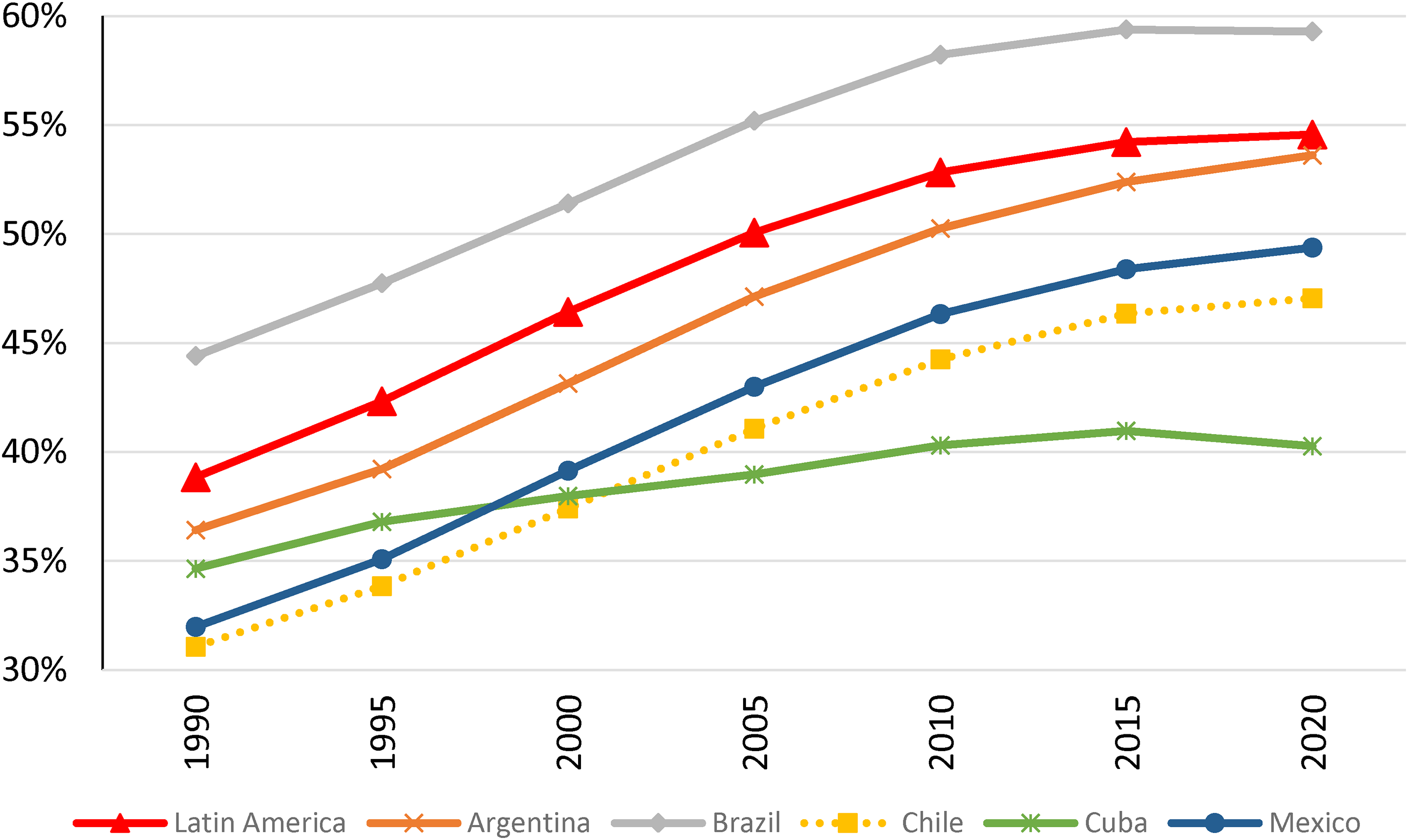
Women in the labour force in Latin American countries – 1990–2020 period.
Indicators reveal low unionisation and collective bargaining coverage rates in Chile. However, rates have risen in recent years due to increased female union membership. The Labour Inspection (Dirección del Trabajo) reported a 20.1% unionisation rate in 2020 (DT, 2021). Nevertheless, as Chart 2 shows, female union membership has led to overall unionisation growth since 2002, with even higher rates than their male counterparts in recent years, at 17.9% and 20.5% for men and women, respectively, in 2020. Conversely, Chile's collective bargaining coverage remains low at 12.6% in 2019. Yet, women achieved a remarkable 286% growth in collective agreement coverage during 1993–2021, compared to a mere 13% for men, as shown in Chart 3.
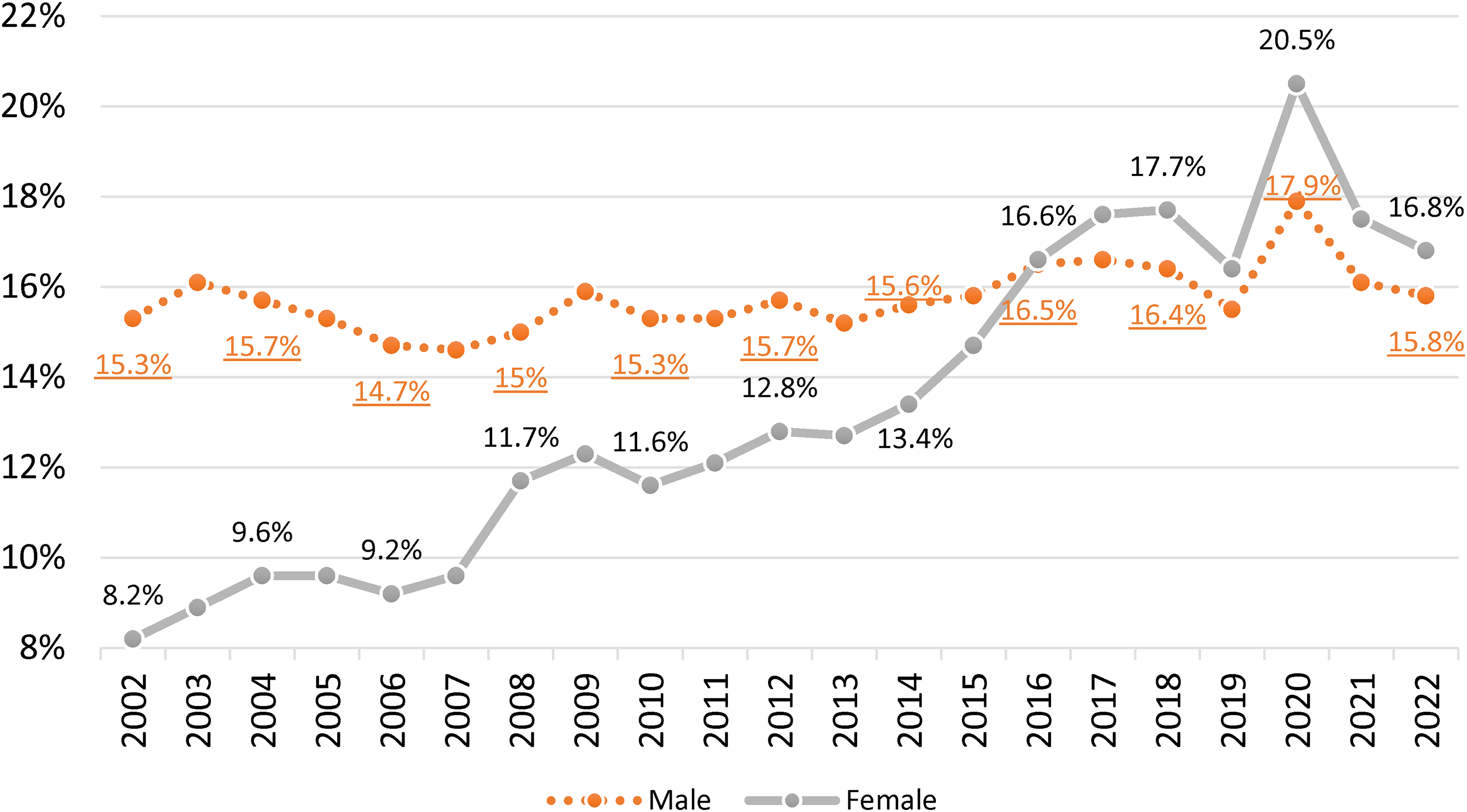
Chilean unionisation rates by gender 2002–2022.
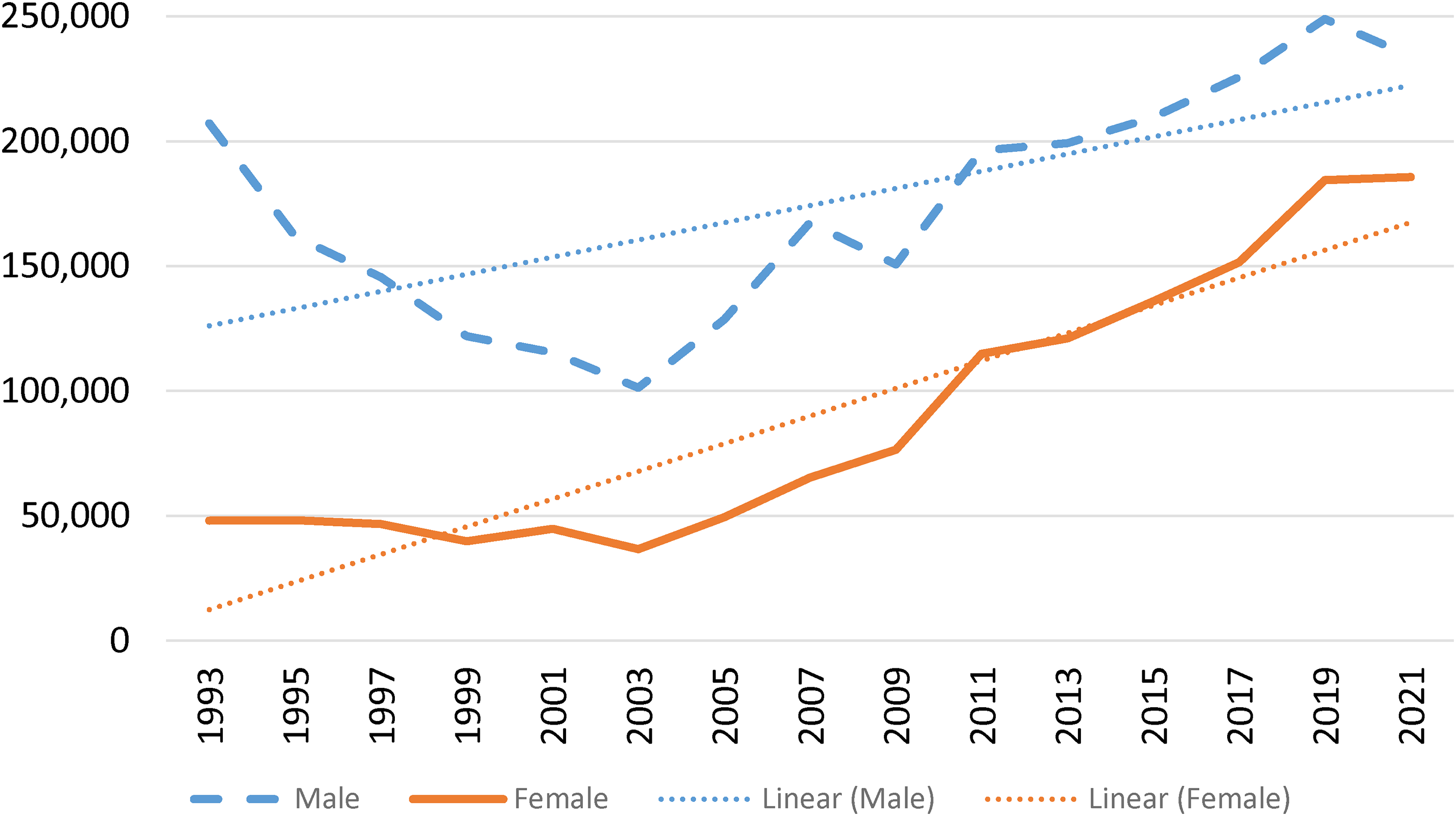
Number of Chilean workers covered by collective agreements entering into force every year – 1993–2021 period.
We also note an increase of women in union leadership, as indicated in Chart 4. In 2012, women constituted 23.6% of union leaders, an 11%-point gap compared to their share in union membership and a 17%-point gap compared to their share in the workforce. However, by 2022, this gap had narrowed considerably. Women in trade unions accounted for almost the same proportion of women in the employed labour force and made up 34.9% of trade union leaders, only 7 percentage points lower than other indicators. In 2016, President Bachelet's second government enacted Act 20,940 to compensate for the unequal share of women in union leadership roles and promote gender equality matters. The law, which entered into force in 2017, substantively amended the labour relations system by defining gender quotas and requiring union boards to consist of at least one-third women and mandating female union leaders’ participation in collective bargaining. The law also extended legal negotiation options on gender equality matters, such as co-responsibility, work organisation arrangements for carers, and equal opportunity plans.
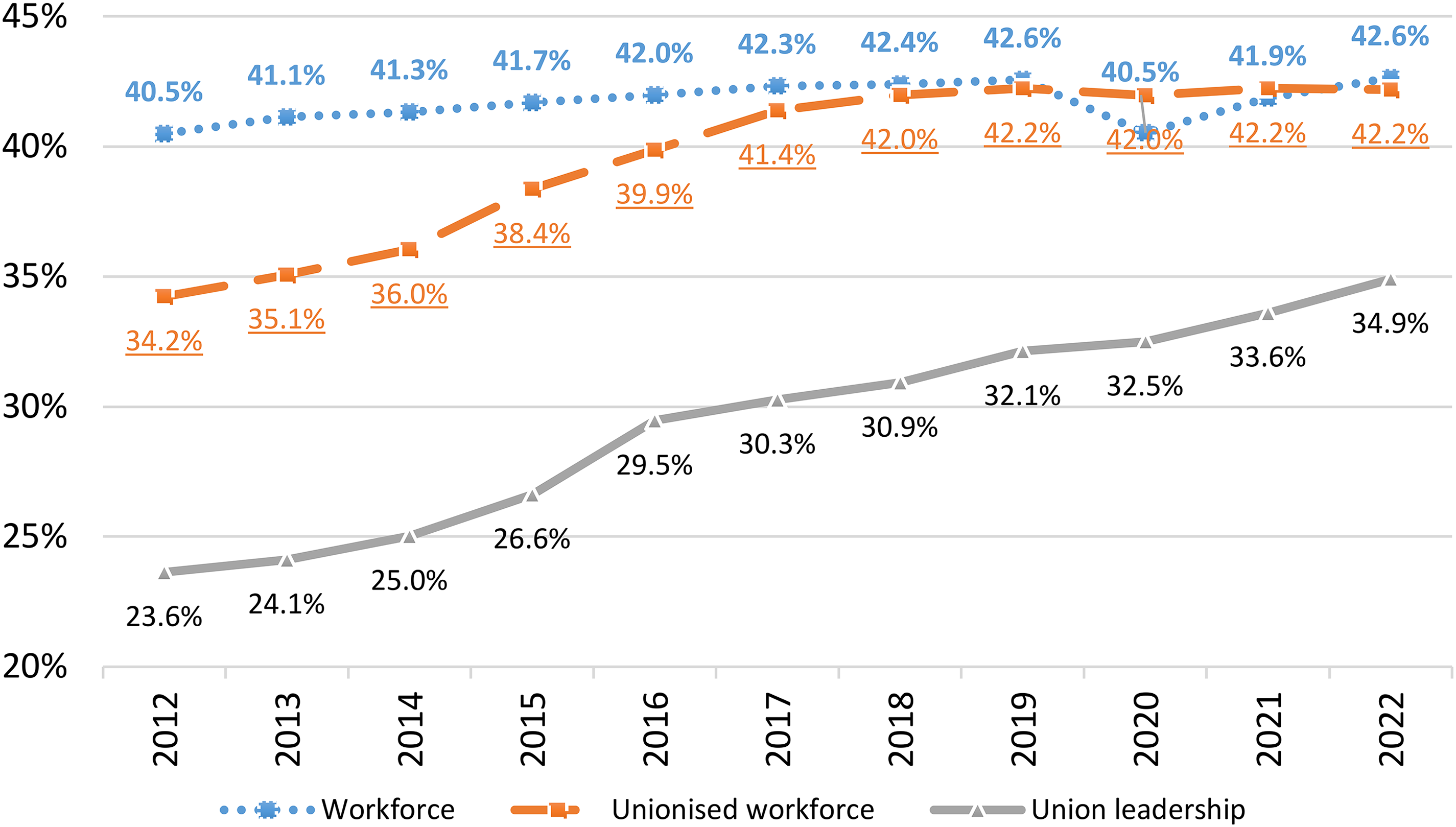
Women's share in the Chilean labour force, in trade unions and in leadership positions in trade unions.
Despite significant progress in promoting gender equity in Chile, barriers remain in applying gender equality policies in organisations due to institutional characteristics linked to an individualised employment relations model. The decentralisation of collective bargaining to the firm level and the high employer discretion in defining employment conditions hinder the definition and implementation of gender equality policies in the labour market (Abramo and Rangel, 2005; Ugarte et al., 2015). The core of Chile's labour regulation, established in 1979 by the ‘Plan Laboral’ under the military regime (Palacios-Valladares, 2010), promotes flexibility and deregulation of individual labour relations, confining them to the workplace level (Rojas, 2007). The limited availability of conflict resolution mechanisms at the company level has led both individual workers and trade unions to increasingly turn to the courts for addressing violations of fundamental rights and dismissals. This trend has been observed in Chile since the 1990s (Gutiérres-Crocco, 2020). Supporting this, data from the latest Labour Survey (2019) revealed that in 2018, 35% of firm-level unions reported rights violations to the Labour Inspection, while 11% pursued legal action in the courts.
Considering the employer's discretion to define terms of employment, employers and Chilean politics show a preference for the soft law approach. This preference is evident in initiatives like ‘Norm 3262’ (Gender Equality and Work–Life Balance System – a type of ISO 9000) and the ‘Gender Parity Initiative’, sponsored by the World Economic Forum and the Inter-American Development Bank, which aim to improve gender equity in areas such as salary, career mobility, hiring and discrimination and harassment prevention. However, they have only been adopted by a small percentage of organisations, yielding weak results (Ministry of Women and Gender Equity-MmyEG, 2021) and failing to effectively complement hard law regulations for promoting gender equality.
In summary, Chile has demonstrated progress in gender politics, with women occupying more union and leadership roles. The past 20 years have seen the implementation of gender equality policies in the labour market, pushed by feminist movements and political initiatives, resulting in a 2017 reform targeting gender equality in trade union leadership and collective bargaining processes. This creates a shifting political landscape for trade unions, employers and the government in Chile.
Methodology
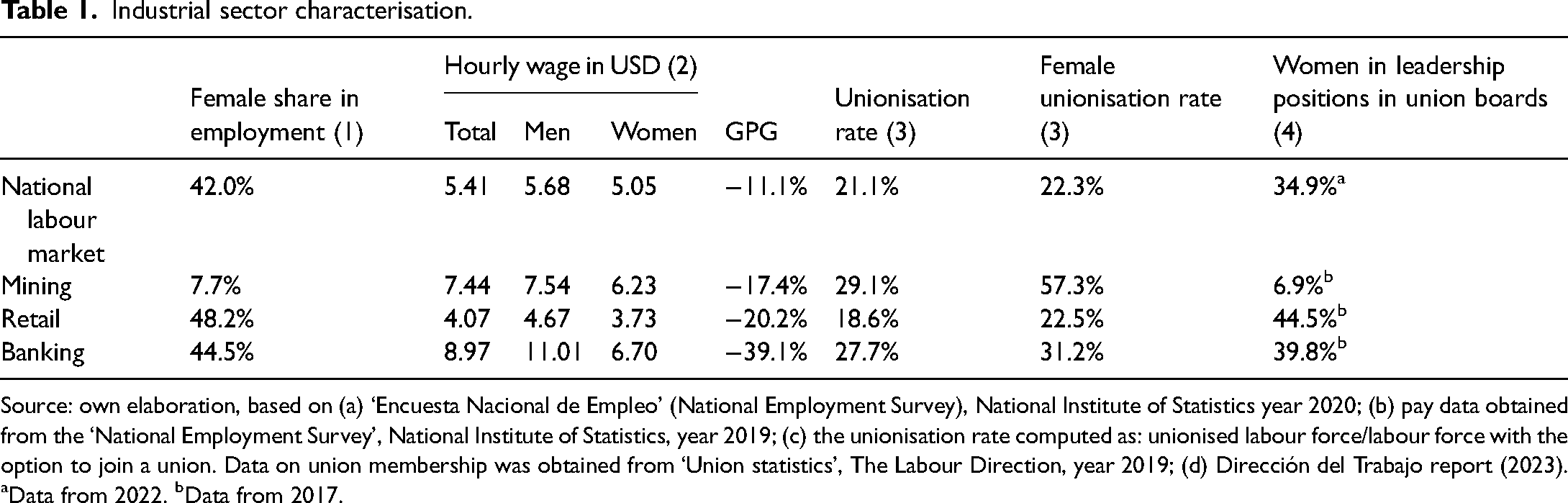
The research examines three industries as case studies to explore how gender politics, influenced by a shared institutional context, vary across different organisational settings and identify common features despite these differences. The sampling strategy aims to maximise variation between cases (Seawright and Gerring, 2008). The mining, retail and banking industries in Chile were chosen based on their levels of feminisation, unionisation rates and wage levels (Table 1).
Industrial sector characterisation.
Source: own elaboration, based on (a) ‘Encuesta Nacional de Empleo’ (National Employment Survey), National Institute of Statistics year 2020; (b) pay data obtained from the ‘National Employment Survey’, National Institute of Statistics, year 2019; (c) the unionisation rate computed as: unionised labour force/labour force with the option to join a union. Data on union membership was obtained from ‘Union statistics’, The Labour Direction, year 2019; (d) Dirección del Trabajo report (2023). aData from 2022. bData from 2017.
The male-dominated mining industry has low female participation in both the industry and trade unions. However, unions in this sector historically possess significant bargaining power and high unionisation rates, including among female workers (57.3%), offering better employment conditions than most other industries. The retail industry has a relatively low unionisation rate, but recent organising has made unions highly relevant (Bank, 2017). Feminisation rates in the sector are slightly higher than the national female employment rate (48.2%), but wages are comparatively lower than other industries. Banking is also a feminised sector with a higher unionisation rate than retail, but the highest GPG in hourly wages among the three industries, at -39%. Ugarte (2017) attributes this wider GPG to gender occupational segregation, lack of wage-setting transparency, barriers to women's promotion, and the absence of gender equality policies and practices.
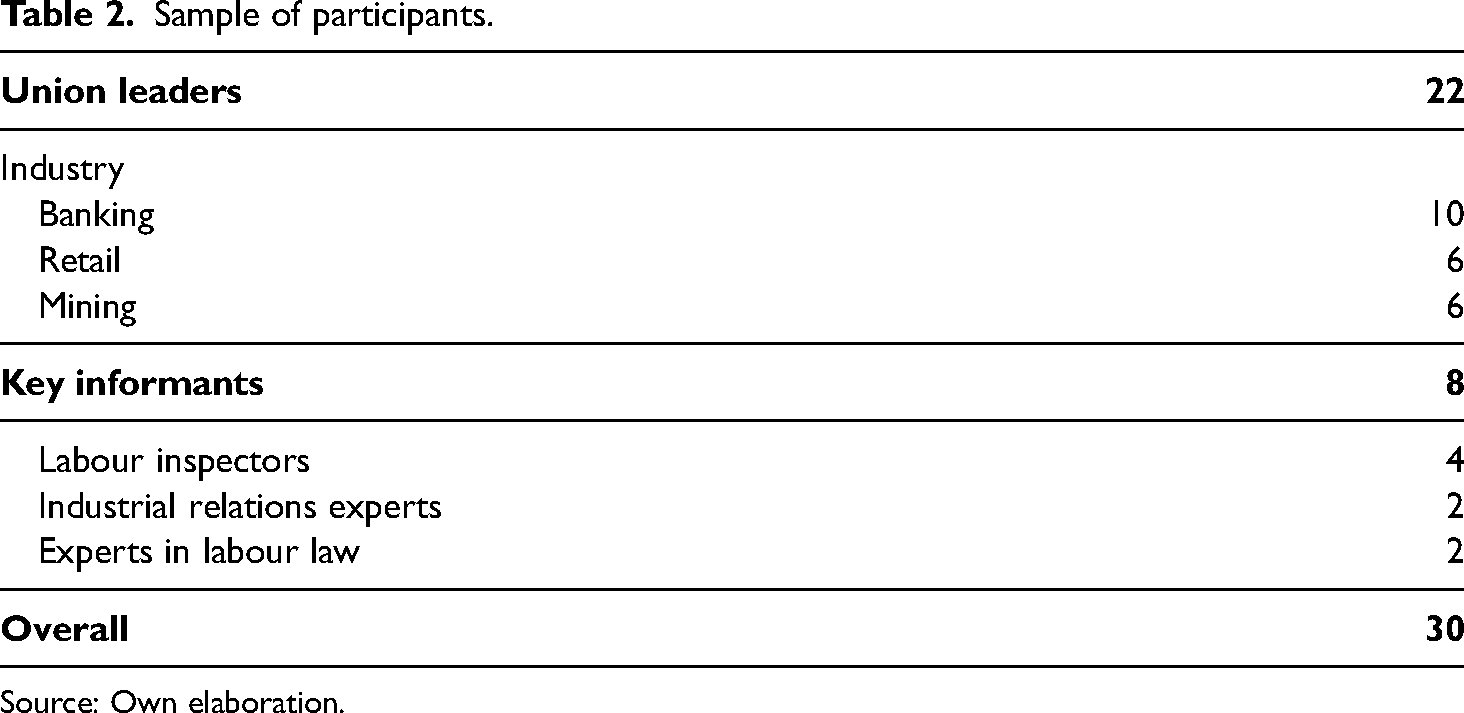
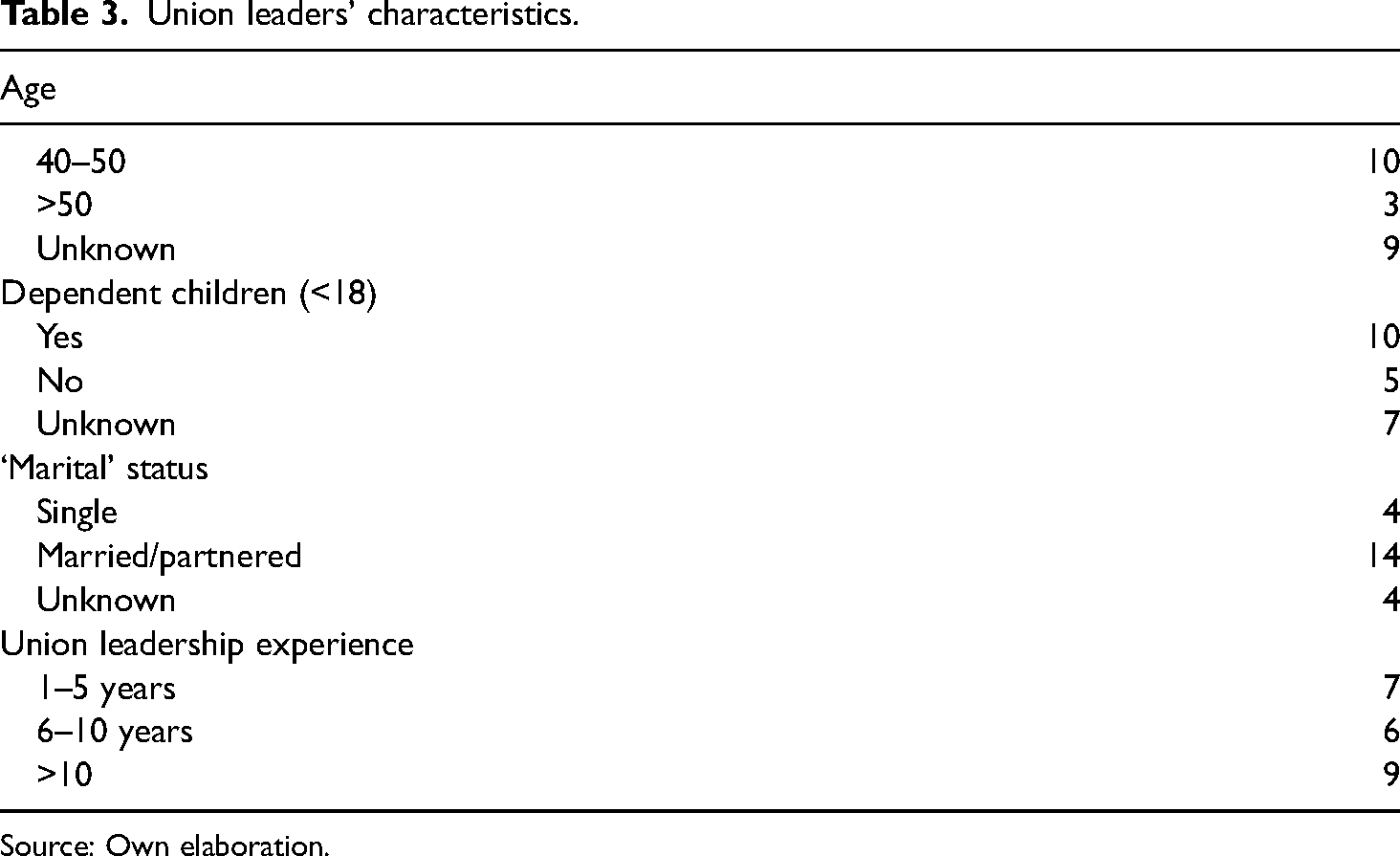
We conducted semi-structured interviews with 22 women union leaders from 19 firm-level unions, including 12 presidents, 4 directors, 3 secretaries, and 3 treasurers, as well as 8 policy experts in the field (Tables 2 and 3). We focused on leadership experiences in the context of the results of the labour reform from 2017. Interviews took place from July 2020 to July 2021, with three additional interviews in December 2022. Interviews with female union leaders followed a four-part structure, starting with their union trajectory and views on trade unionism in Chile, then the extent they have managed to include new gender equality issues in collective bargaining and other strategies outside the formal mechanisms to promote gender equality. Finally, they were asked about the challenges faced during the pandemic and the future of unions. Key informant interviews covered gender and industrial relations issues, contextual aspects of labour reforms, the role of the state and the historical development of female unionisation in Chile.
Sample of participants.
Source: Own elaboration.
Union leaders’ characteristics.
Source: Own elaboration.
Interviews were audio-/video-recorded, transcribed and analysed using NVIVO software. We also reviewed relevant materials, such as the Government Labour Council (Consejo Superior Laboral 5 ), CUT, policy documents, statistics and reports from the Labour Inspection, and the history of Law 20,940. Our qualitative approach paralleled prior gender and trade union studies like Cooper (2012) and Kirton (2021), employing similar research strategies, instruments and sample sizes focusing on female participants and enriching interviews with documentary review and expert insights, akin to Cooper (2012).
We analysed interviews using a mixed-method approach, combining deductive and inductive procedures, applying the opportunity structure framework and allowing for new codes to emerge. The analysis centred on the interaction between gender politics, the regulatory framework and organisational dynamics, resulting in four main categories: the impact of state and labour reforms on GEB, the role of labour inspection and juridification of labour conflicts, the extent of collective bargaining on equality issues when limited to the company level and the effect of individualisation of employment relations on union strategies, workers’ identity and union culture.
To protect participants’ anonymity, the interviews were conducted confidentially, and female union leaders were identified by their roles, such as president, director, treasurer or secretary, and a number representing the company in the mining, banking or retail industry they represented. The key informants were categorized as ‘industrial relations expert’, ‘labour inspector’ or ‘expert in labour law’ and assigned a number from 1 to 4 depending on the category.
Results
This section examines the interaction between gender politics, an evolving regulatory framework and its impact on organisational dynamics, focusing on GEB opportunities at the national level, drawing on experiences in the mining, retail and banking sectors, along with insights from labour inspectors and policy experts. The first section addresses the first research question regarding how actors use the regulatory framework, considering the role of labour inspection, tribunals, gender equity and equality regulations, labour reform and the limitations of the current industrial relations system. The subsequent section addresses the second research question, evaluating how these factors influence firm-level union strategies.
The role of the regulatory framework: Changes and continuities
Our analysis of documents and interviews reveals that GEB debates were underway before the labour reform. The Gender Agenda, formulated and promoted by the CUT after the first female leader's arrival in 2012 (expert in labour law, 1), focused on five key priorities: access to quality jobs, equal pay, maternity and paternity rights, childcare and the eradication of gender-based violence in the workplace. Retail and banking sector unions, with a highly feminised workforce, actively advocated for these issues. The Bachelet second administration published the ‘Manual for the Incorporation of gender equality in trade union action’ in 2015, resulting from dialogues between the government coalition and the CUT. Collective agreements also showed progress on gender equality issues before the reform, with 102 gender equality clauses found in 14 agreements analysed by the FES Foundation (2017). Our interviews revealed a consensus on the importance of institutionally endorsing these processes through specific mechanisms established by the labour reform.
While collective bargaining has been seen as an important avenue for addressing workplace discrimination in Chile, it is not the only one. Data from 2008 to 2021 show women filed more complaints than men in the Labour Inspection – 47–50% of complainants despite representing only 42% of the labour force. This trend is consistent across the three industries analysed. For example, in mining, women constituted an average of 12.5% of complaints despite comprising 7–8% of the workforce; in retail, 60% of complaints to 48% of workers; and in banking, 72% of complainants to only a 44% women's share of the sector (Dirección del Trabajo, 2020, 2021). The retail industry is especially significant in terms of absolute numbers, representing between 13% and 16% of total complaints received by the Inspection at the national level. While most complaints relate to unjustified dismissals, there are also issues related to non-compliance with maternity laws, GPGs and labour or sexual harassment. Despite regulatory support, these rights are not always enforced in the workplace, as reported by a trade union leader in the retail sector:
The issue of women and gender equality is very powerful […] and I wanted to address it from my perspective […] in 2015 I filed a complaint against the company for the wage gap, and from now on several cases have ended up in court. (Retail Union President/1)
Another union leader from the mining sector also refers to this point, stressing that there is some confidence in the Inspection's ability to address these issues:
When there is already an issue of harassment, whether it is labour or sexual, I sincerely prefer to go directly to the Labour Inspection instead of going to an internal investigation set up by the company. (Mining Union Director/6)
It was hoped that the labour reform could channel the growing conflict through dialogue and negotiation in the workplace, including gender equality matters. However, the ambitious proposal failed to address the core of the labour relations model (Caamano Rojo, 2016; Perez, 2021), despite targeting issues such as freedom of association, the right to strike, and collective bargaining. Most proposals were declared unconstitutional, and negotiations were conducted point by point, rather than comprehensively (Gamonal, 2020; Marzi, 2016).
Although Article 306 of the Labour Code was modified to allow for negotiation on gender and equality issues, an existing paragraph within the same article still grants employers full power to manage the company, limiting workers’ opportunities to demand change. Consequently, gender issues remain optional subjects for negotiation, despite being part of the law. This design problem, as one of the interviewed labour lawyers (1) points out, ‘is one of the incongruities of the law (…) there is certainly a contradiction, which is because in Chile there is no social pact to carry out this type of change’. Therefore, workers can present demands to address gender inequalities, but employers have the power to opt-out altogether, as explained by a union leader:
For the purposes of collective bargaining, I could add the issue of co-responsibility, caregiving, which are in the law. I presented it at the bottom of the collective agreement document, and noticed that this did not produce any positive or negative results, it was not even touched, you know, why? (…) when you need a counterpart that is open to this discussion, open to joint responsibility (…) you come up against a wall and absolutely nothing progresses. (Retail Union President/4)
Union leaders stated that policy design discussions halted, and the focus shifted exclusively to implementation. This reflects an ‘administrative approach’ to the policy debate described by Brochard and Letablier (2017), where institutional actors tend to overlook the underlying reasons for the reform's importance. Institutional actors became solely interested in monitoring whether unions met the gender quota in their board composition, overlooking the industrial relations model's weaknesses. The Government Labour Council's annual follow-up reports (2018, 2019, 2020) showed an increase in women in leadership positions, but this trend was present before the reform (see Chart 4), making it unclear whether the new regulation was responsible for the progress. Moreover, the reports did not mention progress made in collective bargaining on gender equality matters. The Labour Inspection did not receive new training to enforce the new law's terms, resulting mainly in additional administrative burdens, as some labour inspectors report:
The current labour legislation puts on a brake, but the latest reform came to spoil that even more because it put more obstacles, more deadlines. (…) I was impressed that the different departments [of the Labour Inspection] were only concerned with deadlines (…) so it's just bureaucracy. (Labour Inspector 3)
Hence, the voluntary nature of collective bargaining matters, combined with the overall weakness of unions’ ability to negotiate in the country, has led to the law not significantly altering the negotiation dynamics between unions and employers, as noted in interviews by labour leaders from the three sectors studied. One labour law expert (2) explains that the law ‘gives the impression that it is soft law, guidelines’, diluting the idea of ‘a duty on you that has to produce a result’. Although quantitatively assessing changes in collective agreements is beyond this research's scope, the interviews suggest that changes have been modest. The degree of change appears to depend on the agency and interest of the unions. One banking union leader recounts her bargaining experience as gradual, resulting from a process built up from previous negotiations rather than changes brought by the new law:
The previous negotiation was in 2018 (…) where we strongly campaigned and negotiated in order to reinforce the issue of women and childcare (…) that's when we got, as I said, the maternal aid; we already had the nursery, we had the kindergarten aid, but this time we included the maternal aid. (Banking Union Director/5)
However, there are also cases that have shown employers had to roll back certain rights acquired in the context of a crisis, such as the pandemic. Although the need for care-work was a national issue during the pandemic, it stressed the union–management relationships. A banking sector leader highlighted the importance of the Labour Inspection to challenge employers even after the reform, as the union ‘introduced a new request [to the Labour Inspection] for labour protection, because the company's women workers were left without nursery (…) and the company said “You deal with it, it's not my fault that they closed the nurseries”. However, it is a right of the workers to look after their babies while they are working’ (Banking Union President/3). Meanwhile, the Inspection's administrative records show a decrease in complaints regarding non-compliance with maternity laws, both in absolute and proportional terms. Between 2008 and 2016, such complaints accounted for an average of 6–7% of total complaints, but in recent years, this number has dropped to 3% (DT, 2020, 2021). Despite interviewees expressing confidence and some progress being made, the Inspection acknowledges enforcement difficulties, particularly with issues such as sexual and workplace harassment and the GPG. Such matters require more specific investigation, unlike non-compliance with maternity pay rules, which may be more straightforward in terms of when to impose sanctions. One inspector explains that ‘with regard to the issue of pay differentials (…) the investigations carried out by the Labour Direction hardly reach a conclusion because it is difficult to justify that these differences are due to gender discrimination [and not to gender differences in productivity or skills]. Something similar happens with the issue of sexual or labour harassment in the workplace, where we don’t have a clear procedure’ (Labour Inspector 4). Therefore, litigation will likely continue, although labour inspectors (1–2) and judicial statistics indicate that the courts mostly review cases of unjustified dismissals, and workers still employed by the company rarely want to take a juridical path.
Thus, the interaction of gender politics through new trade union leaderships, agendas and governmental efforts faces a regulatory framework that complicates the process in different phases of GEB. During the policy design phase, compromises led to a reform addressing only some initial concerns, leaving others unaddressed. As a result, the law's goal of promoting GEB was included in a patchy regulation under a model of firm-level unions and decentralised collective bargaining, which portends a fragmented and marginal impact. The implementation phase faces a significant problem as the law implies bargaining on gender equality issues is voluntary and has not been monitored. 6 Furthermore, enforcement of the regulatory framework is low, and trade unions regularly turn to Labour Inspection, whose powers of investigation for gender cases are limited by current regulation.
The role of organisational dynamics: Fragmented structures, fragmented responses
As already argued, the clauses regarding gender quotas in union leadership and openness to negotiating gender equality matters occur within a broader reform that maintains a fully decentralised collective bargaining model. At the level of organisational dynamics, interviews reveal this puts pressure on unions to adopt divergent positions, with some potentially benefiting from improved collective agreements, while others must continue fighting through alternative channels. Directly employed workers prioritise the construction and dispute over the content of collective agreements at the company level, a narrow but significant political struggle for those workers. Williamson and Baird (2014) argue that unions view the law as an opportunity to establish what is subject to economic fluctuations and changing workplace arrangements. However, in this case, unions are more concerned with endorsing collective bargaining agreements due to the low enforceability of national law in firms’ concrete reality. Culturally, workers perceive neither laws nor labour practices as legitimate until they are incorporated into collective contracts. A retail leader recounts her experience concerning the enforcement of breastfeeding laws: (…) you realise that the company doesn’t always comply with the law, or they interpret it the way they want to. They used to give you one hour for breastfeeding (…). [But] it's not just one hour, it's that hour plus the time you spend to get to the nursery to pick up your child or to get home, because it should be an effective hour of breastfeeding. We have managed to ensure that our colleagues have their effective breastfeeding hours, established by the Collective Bargaining Agreement. (Retail Union Treasurer/6)
The above passage highlights how collective bargaining helps enforce rights, not necessarily by adding up to what is already in national law, but by ensuring enforcement. However, it also shows the relationship between unions and employers can be adversarial, as employers may try to evade the law without violating codes of conduct. Outsourcing and temp services are common in many sectors, leaving a significant portion of the workforce covered by the company's collective agreements, disproportionately impacting women. As a result, gendered grievances may arise without clear channels for resolution within the organisation. For example, a retail union leader recounts a case of sexual harassment that was difficult to address:
A lot of people in the company come from subcontracted companies, the cleaning people, the security guards, the people in the bakery (…) they can’t negotiate, they can’t organise, they can’t articulate, nothing. One day a worker [female] was harassed by a supervisor, the guy grabbed her breast, and it wasn’t the first time, so she went to report him to the manager so that he would do something about it, and it turned out that the manager said he couldn’t do anything because it was out of his hands. (Retail Union President/5)
The narrow coverage of the collective bargaining model has led to the emergence of new union organisations, mainly composed of women, in subcontracting companies that provide services to other firms, particularly in feminised sectors like cleaning and call centre services. These workers prioritise the opportunities offered by legislation to obtain fundamental rights of incorporation and recognition (Heery, 2006), which depend on female union leaders to demand, audit and enforce the application of existing laws. In the call centre sector, more than 5000 women workers formed a federation campaigning for regularisation of the sector’s activity leading to Act 21,142 in 2019, regulating teleoperator work and giving them rights to resting times, health coverage and union organisation. This case shows the case-by-case basis of state interventions required to extend the coverage of certain rights due to shortcomings of the collective bargaining model and the limited scope available to firm-level unions. As a leader in the sector explains:
We, the call centre unions, created a federation, whose objective was to regulate the sector because there were many loopholes in the law (…) until 2018 when the bill was passed with all the amendments that we, the workers, introduced to the bill, and it was a very good law, which made substantial progress in the rights of call centre workers. (Retail Union President/4)
Thus, the progress of GEB at the organisational level is complicated by the fragmentation inherent in the collective bargaining model and the labour market segmentation between core and non-core workers, which divides workers and their strategies. Barriers to positioning equality agenda within trade unions mean that not all demands become part of the union agenda but are sometimes managed on a case-by-case basis by individual women within organisations. Women leaders often play an influential role in micro-dynamics that may be invisible when only examining formal bargaining channels (Bourguignon and Coron, 2021). Although the unions’ claims are shared by many female workers, interviews suggest difficulty in prioritising injustices on the trade union agenda. Instead ‘women's issues’ are dealt with on an individual basis (Healy and Kirton, 2013). These dynamics tend to be one-on-one between female workers and women union leaders, especially in male-centred industries such as mining: I could tell you that out of the 100% of calls I receive in a day, about conflicts or problems that affect colleagues, 80% are from women. It is beneficial to have a woman on the union board, because we know how to handle these problems, there is more confidence to address these issues [with a woman] compared to a man. (Mining Union Director/6)
These women's leadership supports individual women's disputes with employers without leading to the collective mobilisation of demands. Union leaders sometimes assume a supervisory role in protecting women's rights under specific conditions, such as caregiving rights, which are not always addressed through collective bargaining. Rather, due to the individual nature of the problem, they are given individual treatment by the union to protect the worker. A bank union leader commented on support provided to a worker to pay for home childcare services, stating, ‘we [the union] arranged with the company the possibility of not paying for the nursery and paying this money to the worker for the benefit of the caregiver at that time’ (Banking Union President/7). The individual treatment of demands could arise for various reasons, including worker discretion, union weakness in negotiating for workers as a whole or internal union culture that does not value integrating these issues into an inclusive agenda. This can result in further fragmentation of union action as echoed in Kirton's (2021) argument of a conceptual tension seeing demands for equality as a source of division rather than a basis for solidarity in unions. The representative voice of workers is often limited due to institutional restrictions, particularly in male-dominated industries like mining, where traditional frames prioritise wages, side-lining equality-focused issues. As a result, female union leaders in this sector hesitate to prioritise gender-focused agendas to avoid losing legitimacy, especially concerning employability. One mining union leader describes her experience as follows:
True, more women are being hired, but we don’t want it to be at the expense of men […] because we also understand that it would be worse for the working environment, it would be a disservice the company would do us if they start hiring women and the working environment becomes complex […] of course, the ‘old men’ would start to say ‘they are hiring women and they have just fired my colleague’. (Mining Union Director/5)
In summary, GEB development at the company/organisational level varies due to labour market fragmentation and a restrictive regulatory framework. The internal/protected sector prioritises collective bargaining, while non-standard and casual workers, often feminised, cannot bargain for gender equality issues due to regulatory and outsourcing models. Additionally, women union leaders may prefer individualised relations to avoid jeopardizing solidarity between workers, which limits the GEB progress. These constraints stem from the collective bargaining model, organisational management practices that exacerbate fragmentation and cultural barriers within unions.
Discussion and conclusion
This article examines the complexities of developing GEB in Chile, marked by progressive gender politics changes and a decentralised collective bargaining structure based on firm-level unions. We apply the ‘opportunity structure’ concept to explore GEB through gender politics, regulatory framework and organisational dynamics (Colling and Dickens, 1998; Gregory and Milner, 2009; Williamson, 2012). Despite progress in gender politics, we identify a disconnection with the regulatory framework and organisational dynamics. Combining a strategic–relational approach (Jessop, 2001) to the opportunity structure framework can illuminate this disconnection acknowledging that actors’ actions vary based on resources and scenarios arising from opportunity structure components’ interactions. This aligns with recent research in equality bargaining, such as Milner (2022) on union strategies and policy interventions that create opportunity structure unevenness and Williamson and Colley's (2023) identification of an ‘incongruence’ in gender equality regulation spheres, advocating for greater focus on their interrelationships. Our study moves in a similar direction, enhancing the comprehension of the interconnected dimensions discussed.
We argue that the ‘regulatory framework’ should be viewed as encompassing a complex and decentralised set of institutions, including state action (Martinez Lucio and MacKenzie, 2017). Hence, our study examines how Chile's industrial relations system and the state respond to new equality bargaining demands and reforms. While female union leaders and experts acknowledge progress in gender politics, necessary transformations in the industrial relations system remain unaddressed. In fact, the Chilean labour relations’ institutional foundations persist with only limited reforms on gender and equality issues in collective bargaining. The voluntary nature of integrating gender clauses into collective agreements does not drive meaningful progress. In this vein, Chile echoes British and French studies criticising top–down GEB policy design for procedural issues and neglect of the policy issue itself (Stuart et al., 2013; Brochard and Letablier, 2017). Ultimately, the lack of determination to change industrial relations foundations, together with soft regulation and low Labour Inspection enforcement capacity, hinders progress on GEB.
In addition, we argue that additional complexities arise at the organisational level, induced by external factors like the decentralised collective bargaining system and labour market dualisation, and internal problems, such as traditional frames prevailing in some unions (Kirton, 2021) that reinforce a pragmatic and wage-centred agenda while dismissing other gendered grievances (Cox et al., 2007). These challenges create organisational tensions within unions, hindering the advocacy for equality (Rigby and O'Brien, 2010). They impede GEB partnership development and exacerbate animosity and frustration in company-level relations. Therefore, we believe that without industry-wide bargaining, coordinating gender equality progress and addressing the working conditions of precarious female workers become unlikely. If the collective bargaining model remains unchanged, a feasible partial solution could involve implementing progressive gender equality legislation within the labour code but making it mandatory to enforce firm-level changes.
The issues are certainly unevenly manifested across the labour market. For example, legal mobilisation and complaints to the Labour Inspection are common in banking and retail unions with low structural power, but not in mining. While the internal culture problem of mining unions poses a challenge as equality demands struggle to unite mobilisation efforts, an unfavourable institutional context hinders GEB's advancement in all industries.
In summary, we see that regulatory change must embrace the principles of fairness and equity in the bargaining process (Briskin, 2006), levelling the bargaining space for workers to address these transversal issues vis-à-vis employers that under the current regulatory model there is no room to deal with. Implementing industry-wide or new forms of network-based collective bargaining could significantly address gender equality concerns related to long-term social interests. This is certainly not sufficient to change problems related to trade union culture and strategy, but the latter is certainly conditional on what happens to these external factors (Milner, 2022). Major constitutional reforms in Chile could greatly influence the industrial relations system by dismantling dictatorship-era institutional pillars and encouraging reorganisation of regulatory spheres. Without such reforms, collective bargaining might not achieve its full potential in promoting women's rights.
Finally, this study has limitations, and further research should address various aspects, such as understanding traditional frames’ weight that inhibits positioning a gender agenda in trade unions. Taking employers’ and male trade union peers’ opinions into account and asking workers about the importance of addressing these issues in collective bargaining could provide more insight into everyday conflicts related to gender equality at work. Measuring progress quantitatively in collective agreements is desirable but difficult due to the lack of a centralised database and the limited representativeness of each process and agreement involving few actors.
Footnotes
Acknowledgements
The authors value the comments and suggestions to earlier drafts from Professor Miguel Martinez-Lucio, the editor and the two anonymous reviewers.
Declaration of conflicting interests
The authors declared no potential conflicts of interest with respect to the research, authorship, and/or publication of this article.
Funding
The authors disclosed receipt of the following financial support for the research, authorship, and/or publication of this article: This work was funded by grants from the ANID National Fund for Scientific and Technological Development (FONDECYT N°11201015) from Chile and FEN research fund 2020 from the Faculty of Economics and Business, University of Chile.
