







Abstract
This article focuses on a significant psychosocial hazard – sexual harassment. It advances the existing body of theory on the antecedents of sexual harassment by drawing on the pressure, disorganisation and regulatory failure (PDR) framework. In doing so, it develops hypotheses about how the PDR variables contribute to sexual harassment and proposes a research agenda to empirically test them. An improved understanding of the influence of PDR on sexual harassment will also enable an examination of the effectiveness of recent regulatory changes designed to address this destructive and costly problem in Australia, and highlight areas requiring additional intervention.
Keywords
Introduction
Workplace psychosocial hazards are work-related factors that can cause psychological harm (Safe Work Australia, 2019). A psychosocial hazard typically stems from interactions between the work environment, job content, organisational conditions and workers’ capacities, needs and extra-job factors (ILO, 2016). A psychosocial risk poses a threat to the health or safety of a worker or other person arising from a psychosocial hazard (Work Health and Safety Amendment Regulation 2022 (New South Wales)). Sexual harassment is a significant psychosocial hazard (Safe Work Australia, 2019). Workers who experience it can suffer serious health problems, including psychological distress (such as anxiety and depression) and physical complaints (such as musculo-skeletal problems and chronic disease) (Einarsen and Mikkelsen, 2003; O'Leary-Kelly et al., 2009). In Australia, workplace sexual harassment is estimated to have cost $2.6 billion in lost productivity and $0.9 billion in other financial costs during 2018 alone (Deloitte, 2019). Sexual harassment has also been identified as one of the most damaging barriers to career success and satisfaction (Fitzgerald and Cortina, 2018).
Any worker can be affected by workplace sexual harassment. However, theory suggests that sexual harassment in the workplace is fundamentally a women's issue (e.g. Fitzgerald and Cortina, 2018), which is supported by data indicating that women are substantially more likely than men to experience sexual harassment (with women being 63% more likely to experience sexual harassment than men) (AHRC, 2022). Literature suggests that women are sexually harassed because they are women and when men are harassed, it is typically because they are perceived to be feminine rather than masculine, that is for being woman-like rather than man-like (Berdahl et al., 1996). Similarly, non-heteronormative workers are sexually harassed, albeit less often, based on their ‘otherness’ (Leskinen and Cortina, 2014). In rarer instances, cisgender men are victims of sexual assault by cisgender women (Martin et al., 2022), and men in female-dominated workplaces may be subjected to sexual harassment (Fitzgerald and Cortina, 2018).
Sexual harassment can therefore be seen as a specific, gendered example of socio-cultural issues involving power relations, suggesting that it reflects gendered systems of power (Schultz, 1997). Related research examining these extra-organisational factors suggests that sexual harassment stems from attitudes towards sexuality, hostile sexism, and beliefs about proper roles for men and women (Pryor, 1987; Pryor et al., 1995). Importantly, however, it is now largely accepted that it is the (intra-)organisational conditions rather than extra-organisational factors that are the most powerful predictors of workplace sexual harassment (Hulin et al., 1996; Pryor et al., 1995; Willness et al., 2007).
Sexual harassment can be understood in both psychological terms and legal terms (Fitzgerald and Cortina, 2018). In psychological terms, it has been defined as ‘unwanted sex-related behaviour at work that is appraised by the recipient as offensive, exceeding her resources, or threatening her wellbeing’ (Fitzgerald et al., 1997: 15). Legally, definitions vary between jurisdictions. Illustratively, Eurofound (2023) uses a broad definition encompassing harassment, bullying, violence, verbal abuse or threats and unwanted sexual attention, which are defined as adverse social behaviours representing ‘violence in the workplace’. In comparison, article L.1153-1 of the French Labour Code defines two types of sexual harassment, entailing: (i) unwanted and repeated comments or behaviour with a sexual connotation that create an intimidating, offensive situation or (ii) serious pressure with the aim of obtaining an act of a sexual nature (Lerouge et al., 2023). In Australia, the Australian Human Rights Commission (AHRC) (2022) 1 defines sexual harassment as any unwanted or unwelcome sexual behaviour where a reasonable person would have anticipated the possibility that the person harassed would feel offended, humiliated or intimidated. Harassment on the basis of sex (‘sex-based harassment’) is also prohibited. Sexual harassment and sex-based harassment are different, although they can occur in combination. Sex-based harassment is defined as any unwelcome conduct of a seriously demeaning nature by reason of the person's sex in circumstances in which a reasonable person would have anticipated the possibility that the person harassed would be offended, humiliated or intimidated. Examples of sex-based harassment include making sexist, misogynistic or misandrist remarks about a specific person.
Sexual harassment particularly affects women and is pervasive across all ages, socioeconomic groups, education levels, occupations and cultures (e.g. Antecol and Cobb-Clark, 2003, Gelfand et al., 1995). Its impact and pervasiveness are illustrated by recent high-profile cases in Australian state and federal houses of Parliament, leading to Elizabeth Broderick's review of New South Wales (NSW) Parliament and former federal staffer Brittany Higgins suing two Ministers and the Commonwealth (Broderick, 2022; Hartcher et al., 2022). The breadth and magnitude of its negative effects, and potential causes, were identified in a landmark inquiry by the AHRC (2020). The resulting Respect@Work Report included 55 recommendations and prompted significant regulatory change. There has been, however, limited theoretical work on the key factors contributing to sexual harassment, particularly work organisation variables (e.g. Balducci et al., 2011; Dollard et al., 2017). Work organisation broadly refers to the content and arrangement of work roles, tasks and activities. Significant elements include, for example, work scheduling, work intensity and demands, contingency and precariousness, and outsourcing and subcontracting (Bohle and Quinlan, 2000). Valid theoretical frameworks to underpin the conceptualisation and testing of relationships between work organisation and sexual harassment are needed. These theoretical frameworks will also provide a basis for evaluating the impact of policies and interventions designed to redress sexual harassment, including recent regulatory changes in Australia.
To contribute to theory regarding the origins of workplace sexual harassment, this article will explore the applicability of the pressure, disorganisation and regulatory failure (PDR) framework, which was developed to explain various effects of work organisation on health, safety and wellbeing (Bohle et al., 2015; Quinlan and Bohle, 2015). The PDR constructs were initially identified from literature reviews (Quinlan and Bohle, 2004, 2008, 2009; Quinlan et al., 2001), examination of critical incidents, government records (e.g. on workers’ compensation), court proceedings, and surveys and interviews of workers and managers (Johnstone et al., 2001; Mayhew and Quinlan, 1997, 1999; Underhill and Quinlan, 2011). A series of papers progressively refined the definitions of the constructs (Bohle et al., 2015; Quinlan and Bohle, 2004, 2008; Quinlan et al., 2001; Underhill and Quinlan, 2011). The PDR framework is complementary to others, such as job strain (Karasek, 1979; Karasek et al., 1981) and effort-reward imbalance (Siegrist, 1996), and provides a basis for future empirical testing of relationships with sexual harassment, and possibly subsequent development of policies and interventions to further address workplace sexual harassment.
The aims of this article are to: (i) briefly review existing regulatory frameworks dealing with sexual harassment, particularly in Australia; (ii) examine the impact of workplace sexual harassment; (iii) discuss theoretical frameworks currently used to explain sexual harassment, highlighting the key contribution of the work environment; (iv) examine existing evidence about associations between PDR variables and sexual harassment; (v) develop hypotheses about how the PDR variables contribute to sexual harassment and (vi) propose a research agenda to develop further evidence about the relationship between PDR and sexual harassment. This evidence may then be used to assess if recent regulatory changes adequately encompass significant organisational causes, and to design reforms if appropriate.
The following sections examine definitions of sexual harassment, and regulatory frameworks related to sexual harassment, before exploring the extant literature on workplace sexual harassment and its antecedents. Key existing models explaining the effects of work organisation on psychosocial hazards and worker health and wellbeing are then discussed, and evidence to support hypotheses about the contributions of the PDR variables to sexual harassment is presented. The conclusion discusses the potential significance of PDR in understanding organisational factors that underlie workplace sexual harassment, proposes a research agenda, and examines practical implications.
Sexual harassment: Definitions and regulatory frameworks
The ILO's Violence and Harassment Convention No. 190 (2019) provides the first international definition of violence and harassment at work. It refers to a range of unacceptable behaviours and practices, or threats thereof (whether a single occurrence or repeated), that aim at, result in, or are likely to result in physical, psychological, sexual or economic harm; including gender-based violence and harassment (ILO, 2019). Additionally, it defines gender-based violence and harassment as violence and harassment directed at persons because of their sex or gender, or affecting persons of a particular sex or gender disproportionately, which includes sexual harassment.
Convention No. 190 was ratified to protect workers and other persons in the world of work, including employees as defined by national law and practice; persons doing work irrespective of their contractual status (including gig workers/those in ‘employment-like’ work); persons in training, including interns and apprentices; workers whose employment has been terminated; volunteers; jobseekers and job applicants; and individuals exercising the authority, duties or responsibilities of an employer. To this end, Convention No. 190 and Recommendation No. 206 are the first international labour standards to provide a common framework to prevent, remedy and eliminate violence and harassment at work, including gender-based violence and harassment. The Convention includes the specific recognition, for the first time in international law, of the right of everyone to work in a context free from violence and harassment, and sets out the obligation to respect, promote and realise this right (ILO, 2019).
In Australia, sexual harassment is dealt with by various bodies of law, including state and commonwealth Work Health and Safety (WHS) laws, the Sex Discrimination Act 1984 (Cth) at the national level, and state and territory anti-discrimination laws. In addition, some forms of sexual harassment, including indecent exposure and sexual assault, may also be offenses under criminal law. In combination, these laws work to address sexual harassment and to create safer, healthier and more productive workplaces (Safe Work Australia, 2021).
Under WHS laws, sexual harassment is a workplace hazard and the risks of sexual harassment must be managed. An employer or person conducting a business or undertaking (PCBU) has a duty to eliminate risks to the health and safety of workers and other persons so far as is reasonably practicable (Safe Work Australia, 2021). If it is not reasonably practicable to eliminate risks, they must be minimised so far as is reasonably practicable, which means doing all that is reasonably possible to manage the risk of sexual harassment occurring in the workplace. Risk management involves identifying sexual harassment hazards, assessing the associated risks, implementing control measures to eliminate or minimise risks, and regularly reviewing control measures to ensure they remain effective (Safe Work Australia, 2021). It is also the responsibility of employers and PCBUs to set behaviour standards that provide a safe workplace for all workers and to foster a work culture where sexual harassment is not tolerated. A workplace policy dealing with sexual harassment can help set clear expectations about behaviours at work, and during work-related activities, and provide important information to workers, supervisors and managers, including defining sexual harassment and recognising that it is unlawful.
Under the Sex Discrimination Act 1984 (Cth), sexual harassment is unlawful in relation to employment as well as other areas of public life, including service delivery, accommodation and education. Accordingly, employers have a responsibility to take all reasonable steps to prevent sexual harassment in employment, such as by implementing a sexual harassment policy and providing training or information on sexual harassment. Additionally, on 12 December 2022, the Anti-Discrimination and Human Rights Legislation (Respect at Work) Act 2022 (Cth) came into effect, making important amendments to the Sex Discrimination Act 1984 (Cth). These changes were recommended by the Australian Human Rights Commission following its Respect@Work inquiry and they build on recent amendments made by the Sex Discrimination and Fair Work (Respect at Work) Amendment Act 2021 (Cth). Both changes were made to provide better protection for workers from sexual harassment and other forms of sex discrimination, harassment and unfair treatment in the workplace (AHRC, 2022).
In particular, the Anti-Discrimination and Human Rights Legislation (Respect at Work) Act 2022 (Cth) makes it clear that it is unlawful to subject another person to a workplace environment that is hostile on the ground of sex. It also introduces a new positive duty into the Sex Discrimination Act and confers new functions and powers on the AHRC to monitor and assess compliance with this positive duty, while lowering the test for a finding of sex-based harassment under the Sex Discrimination Act. The positive duty means that employers and PCBUs must take reasonable and proportionate measures to eliminate, as far as possible, sexual harassment, sex-based discrimination and harassment, hostile workplace environments and victimisation. The positive duty will operate concurrently with existing duties in WHS laws, that require employers and PCBUs to provide a safe working environment (AHRC, 2022).
The next section provides an overview of the academic literature on sexual harassment, focusing particularly on theoretical frameworks proposed to explain its causes.
Sexual harassment: Impact and theoretical frameworks
Sexual harassment is widely acknowledged as ‘a problem of enormous proportions’ (Fitzgerald and Cortina, 2018: 216), representing the most widespread of all forms of violence against women. More than 40 years ago, MacKinnon (1979: 55) observed that ‘[s]exual harassment is less “epidemic” than endemic’. The recent Broderick (2022) review, which focused on examining the ‘dehumanising’ workplace culture in NSW Parliament, found one in three staff had experienced sexual harassment or bullying in the past 5 years. The prevalence of sexual harassment and everyday sexism was unacceptable, and particularly high for women, people who identified as having a diverse sexuality, and younger people (24–35 years old) (Broderick, 2022). Overall, the Broderick review revealed strong and consistent themes around the prevalence of sexualised behaviours, indicating a need for urgent and concerted action.
The AHRC's most recent survey of workplace sexual harassment reveals little change in incidence between 2018 and 2022. According to AHRC (2022), sexual harassment continues to be an unacceptably common feature of Australian workplaces, with 33% of Australians sexually harassed at work in the past 5 years (41% of women and 26% of men). Half of the incidents cited were repeated and, of those, half were ongoing for more than a year. Reporting remains low, however, with only 18% of sexual harassment incidents reported and only a third of Australian workers believing that their organisation is doing enough to prevent it. International research has reported even higher rates over longer periods. In the USA for example, 59% of women reported experiencing some form of verbal or physical sexual harassment (Graf, 2018), and a study conducted in 28 European Union countries found that 55% of women reported encountering some form of sexual harassment during their working life (European Commission, 2023). Research conducted in Germany by Jenner et al. (2019) showed significant rates of harassment among men, with 62% reporting sexual harassment during their careers as physicians (compared with 76% of women). Such findings have led some academics to argue that ‘[h]arassment affects the majority of the workforce and everyone is at risk’ (Oertelt-Prigione, 2020: 2).
Typically, researchers conceptualise and measure sexual harassment using three sub-categories: gender harassment, unwanted sexual attention and sexual coercion (Fitzgerald and Cortina, 2018), although these more specific categories are not clearly represented in existing regulation. Gender harassment involves insulting, degrading or contemptuous attitudes towards women, including ‘woman-bashing’ jokes, insults about their competence, remarks about the irrelevance or sexual unattractiveness of older women, or comments about women having no place in certain types of jobs. A more hostile and sexualised version involves pornographic images or crude comments about women's sexuality or sexual activity, which can include the sexualisation of a whole work setting (e.g. sexually offensive posters, screensavers, cartoons or graffiti) rather than only targeting individual women.
Gender harassment can also include gender policing, which involves contempt for women who violate standards of stereotypical femininity (e.g. they do not present themselves or behave in a ‘womanly’ manner or they display ‘masculine’ interests). One facet is work/family policing, whereby women are deemed to be unfit and unwelcome in workspaces as they belong at home, especially when parenting. Examples include comments regarding women's ‘proper’ place being in the home and mothers not being reliable workers (Leskinen and Cortina, 2014). Research consistently reveals that gender harassment is the most common form of sexual harassment (e.g. Langhout et al., 2005; Leskinen et al., 2011), reinforcing the conclusion that sexual harassment primarily stems from gendered systems of power and efforts to defend such power (Fitzgerald and Cortina, 2018).
Unwanted sexual attention involves sexual advances that are uninvited, unwanted or unreciprocated by the victim. It can include verbal and physical behaviours such as sexually suggestive comments, attempts to establish a sexual relationship, and unwanted touching. Research indicates that unwanted sexual attention is reported by around 14% of women, and occurs less frequently than sexist hostility (41%), such as ‘woman-bashing’ jokes, and insults about competence or sexual unattractiveness, and sexual hostility (19%), such as hostile sexual comments, pornographic images or crude comments about female sexuality or sexual activity (Mazzeo et al., 2001).
Although sexual coercion was long thought to be the archetype of sexual harassment, its actual prevalence in the workplace is relatively rare (Fitzgerald and Cortina, 2018). Sexual coercion involves unwanted sexual attention combined with job-related pressures, such as threats or bribes. Examples include threatening termination if sexual demands are not met or offering a promotion in exchange for sexual favours.
Research has consistently demonstrated the negative impacts of sexual harassment. In Australia, the AHRC (2022) reported that two-thirds of people sexually harassed in the workplace (67%) experienced negative mental health impacts, including decreased health and general wellbeing (46%), reduced self-esteem and confidence (57%), decreased job satisfaction (62%) and organisational commitment (53%), and reduced productivity at work (50%). Similarly, Broderick (2022) revealed that participants described ‘devastating’ effects on their mental health, wellbeing, relationships and careers. In terms of international evidence, Nabe-Nielsen et al. (2016) demonstrated the longitudinal contribution of sexual harassment to sickness absence and Stockdale et al. (2009) revealed the contribution of sexual harassment to post-traumatic stress disorder, over and above history of past abuse and trauma.
The limited development of theory explaining the causes of sexual harassment is likely to contribute to its persistence (e.g. Gelfand et al., 1995; Welsh, 1999; Willness et al., 2007). Within the extant theory, both extra- and intra-organisational explanations of sexual harassment are identified. Focusing on extra-organisational factors, gender theorists contend that sexual harassment is a mechanism for maintaining male dominance over women by exerting gendered systems of power (O'Hare and O'Donohue, 1998) and patriarchal social mechanisms (Kosny and MacEachen, 2010). Accordingly, sexual harassment is depicted as a means through which overt and covert patriarchal power structures are wielded by men to defend their power and status by subjugating and subordinating women (e.g. Kensbock et al., 2015). While these extra-organisational factors play an important role in producing sexual harassment across a range of social contexts, it is the organisation-based antecedents of workplace sexual harassment that have gained the strongest empirical support (e.g. see Willness et al.'s (2007) meta-analysis) and subsequently form the primary focus of this article.
Drawing on the organisational perspective, conceptual work by Fitzgerald et al. (1995, 1997) suggests that two situational factors highlighted in the AHRC's (2020) findings, organisational context and job gender context, are key determinants of sexual harassment. Organisational context refers to aspects of organisational climate that promote tolerance of sexual harassment and the presence, accessibility and effectiveness of policies and procedures to eliminate it. Job gender context refers to the gendered nature of an individual's work group. Important factors include gender ratio, with male-dominated organisations more likely to exhibit sexual harassment, and job duties and tasks, with women doing work historically performed by men more likely to experience sexual harassment (Fitzgerald and Cortina, 2018).
Research findings, such as those from a meta-analysis of the antecedents of sexual harassment by Willness et al. (2007), highlight that organisational climate or tolerance of sexual harassment is the single most important factor determining if it will occur (also see Fitzgerald et al., 1995, 1997; Welsh, 1999). By comparison, job gender context is a less important predictor (Fitzgerald et al., 1997). However, the findings of Willness et al. (2007) do indicate that having fewer women in the immediate work environment or working in a job perceived to be atypical for women are both situational risk factors for sexual harassment. Supporting evidence shows that women working in industries such as construction and transport, or organisations dominated by men, are more likely to experience sexual harassment (e.g. AHRC, 2018, 2020).
Existing research clearly demonstrates the important role of organisational policies, procedures and implementation practices in shaping whether workplaces foster or inhibit sexual harassment. However, there is still insufficient understanding of the key organisational factors that promote positive change. Willness et al. (2007: 144) note, for example, that ‘we know that organisational factors are fundamental, and therefore, we should move toward identifying the organisational policies and procedures that are most critical for preventing the conditions that create a favourable organisational climate for SH [sexual harassment]’. A similar conclusion is also central to the AHRC's (2020) findings and recommendations.
Others have pointed to the need to examine workers at greatest risk of sexual harassment, including those involved in low-wage and precarious work, such as part-time, temporary and gig workers (Johnstone et al., 2001, Reuter et al., 2020). A study examining migrant workers in Nepal, for example, indicated that job insecurity made women more vulnerable to workplace abuses (Puri and Cleland, 2007), while an Australian study (LaMontagne et al., 2009) found that unwanted sexual advances were more common in temporary than ongoing employment. More broadly, an analysis of over 60,000 employees from 33 countries who participated in the European Working Conditions Survey in 2010 or 2015 revealed that precarious employment was associated with more sexual harassment for both women and men (Reuter et al., 2020). This relationship was stronger among workers with unpredictable work schedules, multiple jobs or limited knowledge of occupational health and safety risks. Precarious workers are also disadvantaged in terms of job security, regulatory rights and protection against poverty, which increase the risk of experiencing sexual harassment (Reuter et al., 2020).
The next section outlines how models of work organisation, and most specifically PDR, can improve our understanding of workplace psychosocial factors, particularly sexual harassment.
Work organisation and worker health and wellbeing
Two key work organisation models, Karasek's job strain (Karasek, 1979; Karasek et al., 1981) and Siegrist's effort-reward imbalance (ERI) model (Siegrist, 1996), underpin extensive research on the effects of work organisation on employee health and wellbeing (see Marmot et al., 1997, 1998; Ostry et al., 2003). Job strain was initially defined as a combination of high job demands and limited work control (Karasek, 1979), but the model was later expanded to include social support (Karasek and Theorell, 1990). Drawing on large UK and US datasets, Marmot et al. (1997, 1998) reported that elements of job strain, especially low job control, affect employee health, including coronary heart disease. The negative effects of aspects of job strain on health have been documented in diverse settings, but empirical support for some aspects of the model, particularly the interaction between demands and control, is mixed (Sargent and Terry, 1998; Schreurs and Taris, 1998). Siegrist's (1996) ERI model proposes that an imbalance between effort and reward at work produces negative effects on physical and mental health. It has been linked, for example, to higher blood pressure (Gilbert-Ouimet et al., 2012) and the severity of depression among women (Wang et al., 2012), to major depression among men and women (Wang et al., 2012), and to work-life conflict (Kinman and Jones, 2008). Overall, comparisons between job strain and ERI suggest that ERI is the stronger predictor of health outcomes (e.g. Calnan et al., 2004; Ostry et al., 2003).
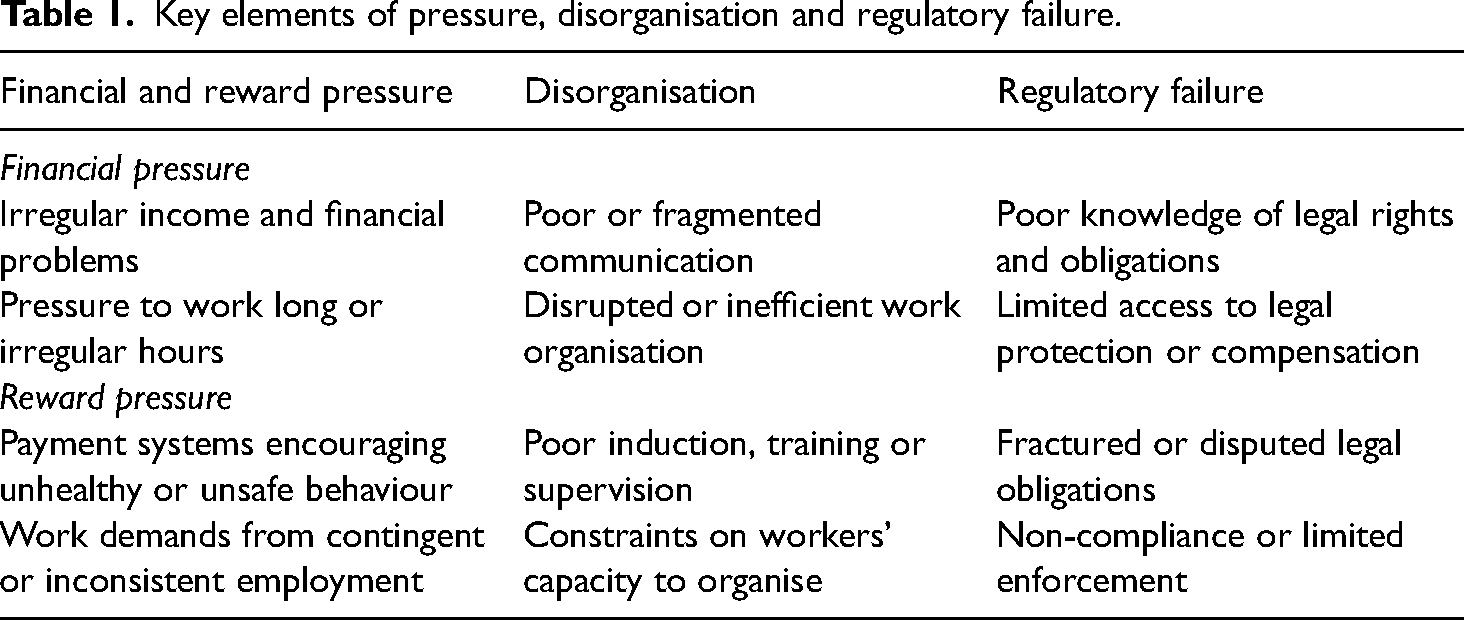
Pressure, disorganisation and regulatory failure, a complementary theoretical framework, has recently been developed to explain the effects of work organisation on health, safety and wellbeing (Bohle et al., 2015; Quinlan and Bohle, 2015). Existing research suggests PDR enhances understanding of the effects of work organisation on health and wellbeing. For example, a quantitative study indicates that PDR variables predict specific aspects of health and wellbeing among Australian workers aged between 45 and 65 (Bohle et al., 2015), supporting previous qualitative evidence (e.g. Quinlan et al., 2001; Underhill and Quinlan, 2011). Importantly, this study indicates that PDR and ERI explain similar proportions of variance in work-life conflict and mental health. PDR captures work environment factors arising from wider social influences, such as regulatory failure, that are not encompassed by other work organisation constructs, including ERI. The key elements of pressure, disorganisation and regulatory failure are summarised in Table 1.
Key elements of pressure, disorganisation and regulatory failure.
Evidence of relationships between PDR and sexual harassment
Previous research provides preliminary evidence that the PDR variables may be antecedents of another prominent psychosocial hazard, workplace bullying (Bohle et al., 2017; Knox and Bohle, 2019). The importance of identifying organisational factors that encourage bullying was recently highlighted by Gamian-Wilk et al. (2022), who demonstrated longitudinally that the working environment fosters bullying and elicits a negative worker behaviour, interpersonal hostility, rather than the other way around. The following sections discuss reasons to hypothesise that pressure, disorganisation and regulatory failure may similarly foster workplace sexual harassment.
Pressure
Pressure consists of two related elements: financial pressure and reward pressure (Bohle et al., 2015). Financial pressure stems from low income, arising from factors, such as irregular work, low hourly pay or unpaid sick leave, that impair workers’ capacity to meet their personal financial commitments. Reward pressure arises from payment systems (such as piecework) or employment arrangements (such as subcontracting) that encourage or require workers to work too intensely, sacrifice work quality, or neglect their health and safety. It overlaps somewhat with the reward construct in ERI, but reward pressure emphasises the pressure created by financial strain and payment systems, rather than forms of reward (such as esteem or promotion). The pressure component in PDR also includes elements such as contingent payment and irregular income. These elements are based on evidence, such as a study of temporary agency workers illustrating how irregular income creates pressure to work harder and pay less attention to health and safety, while undermining workers’ capacity to meet financial commitments (Underhill and Quinlan, 2011).
Existing evidence suggests financial pressure contributes to workplace sexual harassment. Power imbalances associated with low-skilled, low-status work and insecure jobs may increase workers’ vulnerability to sexual harassment because they fear that resisting or reporting it will negatively affect their income and employment (Ram, 2018). Supporting research confirms that temporary workers (Poulston, 2008) and low-status workers (Aslan and Kozak, 2012) are most vulnerable to sexual harassment. Workers who deal directly with customers may also experience greater sexual harassment (Good and Cooper, 2014; Hoobler and Swanberg, 2006; LeBlanc and Kelloway, 2002), particularly in hospitality and sales work where there is an acceptance of customer primacy – ‘the customer is always right’ – and workers are expected to please them (Ben-Zur and Yagil, 2005; Good and Cooper, 2014). Financial pressure can occur, for example, because employees may risk dismissal for resisting customers’ sexual advances (Adkins, 1995) or be denied access to the best tipping shifts or service locations if they complain about sexual harassment (Hall, 1993).
Previous research also suggests that reward pressure can precipitate sexual harassment, particularly in certain occupations and industries. In the hospitality industry, for example, workers are frequently hired on the basis of their attractiveness (e.g. Giuffre and Williams, 1994) and sexualised behaviour forms part of their work (Homel and Clark, 1994). Further, service-based occupations are often rewarded through commissions or tips from sales. In this sense, the customer has reward power over the service provider and coercive power based on their ability to withhold these discretionary elements of the transaction (Walker et al., 1972). Even staff members with ongoing work and more regular incomes are dependent on customers as organisational rewards are often related to customers’ evaluations of service performance (Fine et al., 1994). There is evidence that this customer power is associated with sexual harassment (Gettman and Gelfand, 2007), including sexual bribery and sexual coercion (Fine et al., 1994). This evidence is consistent with Good and Cooper's (2014) finding that retail and hospitality employees have difficulty responding to customer-perpetrated sexual harassment due to the constraints of contextual factors, including working conditions, social norms and the nature of sexual harassment as a workplace problem. Subsequently, employee silence was the norm. While some employees used informal voice, its impact remained limited because of the power differentials between employees and managers.
This literature provides preliminary evidence that both financial and reward pressure may be associated with higher rates of sexual harassment.
Disorganisation
Disorganisation refers to work disruption and inefficiency arising from procedural failures and ineffective formal and informal communication. It may stem from excessive use of inexperienced or poorly trained workers or ineffective induction, training or supervision, which are often found in workplaces with a high proportion of contingent or insecure workers. The disorganisation construct draws on the work of Dwyer (1991, 1994) and earlier French research on occupational injury. Research indicates that disorganisation caused by subcontracting chains is linked to increased injury rates, failure to report injuries or hazards, and increased anxiety and stress among workers (Iwi et al., 1998; Quinlan and Bohle, 2008). Disorganisation arising from restructuring or downsising may contribute to role ambiguity, task mismatch and uncertainty that may, in turn, precipitate negative effects on mental health (Reissman et al., 1999).
Disorganisation may facilitate sexual harassment through procedural failures, neglect or ineffective communication between workers or between workers and management. Research indicates it is associated with role stressors, including role conflict, role ambiguity and role overload, that are also related to sexual harassment (Bowling and Beehr, 2006). Other research indicates that high job demands and poor organisational communication are positively associated with sexual harassment (Muhonen, 2016). Disorganisation is further associated with managerial neglect of the development, implementation or monitoring of policies and procedures to combat sexual harassment (Aslan and Kozak, 2012; Rudman et al., 1995). Insufficient managerial awareness of the problem (Kensbock et al., 2015) can further promote organisational tolerance of sexual harassment, as can apparent indifference to effectively managing it (Pryor et al., 1995). Broderick (2022) also highlighted issues of neglect, noting that some managers were unaware of the prevalence of sexual harassment, while others denied its prevalence and impact.
The evidence above suggests that disorganisation will be positively associated with sexual harassment.
Regulatory failure
Regulatory failure concerns inadequate application of labour standards, allocation of employer responsibilities, and monitoring and enforcement of legal requirements concerning work and the workplace (Bohle et al., 2015; Mayhew and Quinlan, 1997). It also refers to limitations in workers’ knowledge of relevant WHS rules, standards and responsibilities or in their capacity or willingness to report problems. Regulatory failure may be directly associated with precarious work, for example due to the difficulties that casual and temporary workers experience in reporting health and safety issues or having them treated seriously (Underhill and Quinlan, 2011).
There are strong reasons, both specific and general, to predict that regulatory failure contributes to the prevalence of sexual harassment, and that failures at an organisational level are a significant element. Sexual harassment provisions are enshrined in legislation in Australia, like other advanced economies, and instances of sexual harassment highlight non-compliance with regulation. Research indicates that sexual harassment is more prevalent in workplaces where there is inadequate compliance with relevant regulation, including the lodging and examination of complaints (e.g. Aslan and Kozak, 2012). Within organisational climates that tolerate sexual harassment, employees tend to believe that their allegations will not be taken seriously and that the risks of reporting are too great, encouraging higher levels of sexual harassment (Bergman et al., 2002; Fitzgerald et al., 1997; Glomb et al., 1999). Fear of retaliation is a significant barrier to reporting and is likely to be greater in organisations that tolerate sexual harassment (e.g. Gutek and Koss, 1993). Similarly, Broderick (2022) noted a lack of awareness of policy and that workers who were aware had limited confidence in the ability of current policies to either prevent or respond meaningfully to harmful behaviours. Knowledge of reporting arrangements, and trust in them, was also low. Confidentiality was a particular concern, as was a high perceived risk of retribution or negative career impacts for those who report harmful behaviours. Importantly, regulatory failure is more likely to be evident among less powerful, precarious workers. Workers are less inclined to lodge complaints when they lack power, which is often associated with precarious work and low organisational status (Broderick, 2022; Ram, 2018). A further problem concerns issues of confidentiality and reliance on nondisclosure agreements (NDAs) recently highlighted in the Australian literature (e.g. Besley et al., 2022, MacFarlane, 2020). Focusing on sexual harassment, MacFarlane (2020: 363) argues that NDAs are ‘both immoral and unlawful’ as they fail to protect individuals from known sexual harassers. The AHRC (2020) recommends the creation of guidelines to inform the development of regulation on the use of NDAs in workplace sexual harassment matters.
The available evidence indicates that regulatory failure is a significant factor contributing to sexual harassment. Overall, the evidence presented above provides a sound basis on which to hypothesise that workers exposed to greater financial and reward pressure, workplace disorganisation, or regulatory failure are more likely to experience sexual harassment.
Discussion and conclusions
In an effort to extend the limited theory base underpinning current research and practice, this article examined a set of work organisation factors, drawn from the PDR framework, that are likely to contribute to sexual harassment. In doing so, it drew together existing evidence suggesting the PDR variables are potentially important antecedents of sexual harassment, and also highlighted the value of deeper examination of the role of work organisation factors more generally. We hypothesise that financial and reward pressures (e.g. low and irregular income or contingent work), high levels of workplace disorganisation (e.g. inadequate training or poor communication) or regulatory failure (e.g. discouragement of sexual harassment reporting or ineffective enforcement) directly contribute to sexual harassment.
Identifying important workplace factors has previously been highlighted as one way to strengthen theoretical understanding of the antecedents and causes of sexual harassment (Fitzgerald and Cortina, 2018; Fitzgerald et al., 1997). This article demonstrates that PDR has a potentially significant role in research on workplace sexual harassment, with implications for the development of organisational policy and practice. The limited overlap between PDR and other work organisation variables linked to sexual harassment strengthens this contribution. However, the relationships proposed here require rigorous empirical testing and evaluation, which will be facilitated by the development of a specific research agenda.
Research agenda
Research to test the validity of the hypothesised relationships between PDR and sexual harassment should encompass qualitative and quantitative methods. Qualitative research is needed to ground understanding of the role of the PDR variables by exploring whether workers’ experiences are consistent with the hypotheses developed here, and to enable refinement or re-specifications of those hypotheses. Quantitative research is needed to test the generalisability of the hypotheses developed. It should initially involve cross-sectional analyses to test the existence and magnitude of the proposed relationships. Longitudinal studies would then be necessary to generate stronger evidence about the direction of the relationships between PDR and sexual harassment and whether they are causal. This work should generate and evaluate evidence of direct or indirect effects of financial and reward pressure, disorganisation and regulatory failure. It should also examine whether PDR variables have interactive effects. It is conceivable, for example, that disorganisation and regulatory failure interact. Disorganisation, in the form of poor communication and procedural breakdowns, may exacerbate existing regulatory failure arising from inadequate monitoring and enforcement. It may also help clarify the mechanisms underpinning the relationships and identify important moderating or mediating variables. Finally, the explanatory model developed should be extended by examining the relative importance of other organisational variables, including role stressors such as role conflict, role ambiguity and role overload, which have been associated with sexual harassment (Bowling and Beehr, 2006). Multi-level studies (individual, work group, organisation, industry) should also be implemented to examine the importance of contexts and structures in producing outcomes.
Common research limitations should be addressed in later studies. Large, representative samples and longitudinal designs can be used to address common method variance and more rigorously test causal inferences. Random sampling across workplaces and occupations, and the greater variation in work organisation variables that it would capture, would also allow identification of antecedents and effects of sexual harassment that generalise across a wide range of contexts.
Tested and validated theoretical models will be critical to effectively combating sexual harassment, by facilitating the development of a robust evidence base, as the AHRC (2020) has called for. Carefully planned and coordinated research on organisational factors that promote sexual harassment will also be critical to evaluating the effectiveness of regulatory changes recently introduced in Australia in accordance with the AHRC's (2020) landmark Respect@Work report (see below). The focus of this paper is on intra-organisational factors, but future research could also usefully integrate the extra-organisational identified by gender theorists to develop and examine the importance of both intra- and extra-organisational antecedents of sexual harassment, and the relationships between them. Research of this nature could also enable the development of more comprehensive and effective policymaking.
Practical implications and recommendations
Sexual harassment is a complex, costly and destructive issue confronting individuals and organisations (AHRC, 2022; Willness et al., 2007). This article isolates specific work organisation factors that appear likely to promote it. It also describes key elements of a research agenda to test and refine understanding of the relationships hypothesised, and potentially contribute to the development of work organisation interventions that more effectively prevent or reduce workplace sexual harassment. To justify their use in practice, there must be strong evidence that interventions substantially diminish sexual harassment and minimise its negative and costly effects.
The relationships hypothesised here point to the importance of each of the PDR variables: pressure – including both financial pressure and reward pressure – disorganisation, and regulatory failure. Research suggests that sexual harassment is associated with financial pressure that stems from insecure work and income (Poulston, 2008; Ram, 2018) and consequently more secure employment may reduce financial pressure and its negative effects. In addition, providing more secure employment is inclined to assist in countering the power imbalances associated with forms of temporary work that contribute to sexual harassment (Poulston, 2008). Recent research also highlights that greater job security is positively associated with worker perceptions of job quality and their subsequent job satisfaction (Williams et al., 2022), both of which are inclined to produce organisational benefits, including higher productivity.
Previous research indicates that reward pressure can also contribute to sexual harassment, particularly in service-based occupations and industries. Workers are often hired on the basis of their physical attributes and sexualised behaviour is implicitly involved in their work, for example (Homel and Clark, 1994). Organisations reliant on reward programmes involving commissions or tips from sales (Gettman and Gelfand, 2007; Walker et al., 1972) or customer evaluations of service performance (Fine et al., 1994) require re-evaluating and adjusting to ensure that workers are not exposed to sexual harassment stemming from reward pressure associated with undue customer power.
In relation to disorganisation, communication channels and work procedures may benefit from improved specification or formalisation to increase clarity and transparency. Interventions of this nature would be consistent with earlier findings that sexual harassment is more common in organisations lacking detailed, clear and transparent procedures (Aslan and Kozak, 2012; Muhonen, 2016), along with role stressors including role conflict, role ambiguity and role overload (Bowling and Beehr, 2006). Insufficient managerial awareness of sexual harassment and how to address it or neglect of policies and procedures is also associated with higher incidences of sexual harassment (Kensbock et al., 2015; Pryor et al., 1995). Employee induction could be adapted to emphasise, for example, the importance of utilising formal communication channels and adherence to work procedures. Additionally, training programmes could focus on effective communication, clarifying employees’ roles, and building the necessary awareness and understanding of sexual harassment in the workplace.
Addressing regulatory failure by focusing on measures to improve regulatory compliance will also diminish sexual harassment. Greater compliance involves the development of policies and practices that meet statutory requirements concerning sexual harassment along with appropriate monitoring and enforcement, including promoting an effective union presence. Employee induction and training programmes might also be enhanced by a stronger focus on ensuring appropriate knowledge of relevant requirements and procedures, particularly the reporting of sexual harassment and the importance of ensuring confidentiality and whistle-blower protections (Gutek and Koss, 1993). Supervisor training should also emphasise compliance, monitoring and enforcement of sexual harassment policies and procedures, along with encouragement and support for reporting, including the lodging and examination of complaints (Aslan and Kozak, 2012). Better sexual harassment training, combined with genuine support for reporting, may also empower workers, which may prove protective against sexual harassment (Broderick, 2022).
Given the explicit duty to eliminate or minimise workplace psychosocial hazards imposed by recent regulatory changes, and the growing evidence that organisational factors significantly contribute to workplace sexual harassment, it is essential that union officials, managers and other professionals who may be involved in assisting and supporting workers who experience sexual harassment have received sufficient training to understand these developments. Training should reflect contemporary understanding of the breadth of the causes and antecedents of sexual harassment, including newly identified organisational ones. This may be particularly important, for example, in industries with predominantly male workforces or high levels of precarious work.
The recent regulatory changes in Australia, in conjunction with the other actions recommended by the AHRC (2020), are likely to enhance the effectiveness of regulation relating to sexual harassment. Nevertheless, gaps are likely to persist – in relation to enforcement for example – and should be carefully monitored. Valid and careful evaluation will be critical to assessing the effectiveness of the new regulatory requirements and determining whether further reforms are required. In any case, the recent changes are unlikely to address financial pressure, reward pressure or disorganisation in a substantive way. If rigorous evaluation and sound empirical evidence demonstrate that they are significant causes or antecedents of workplace sexual harassment, more targeted regulatory responses are likely to be required. Future research could usefully integrate intra- and extra-organisational factors to develop more comprehensive explanatory models of workplace sexual harassment and improved policymaking.
In conclusion, this article contributes to the under-theorised academic literature on the significant psychosocial hazard of sexual harassment. In doing so, it focuses on intra-organisational factors to advance understanding of possible work organisation antecedents by developing hypotheses that specify how PDR variables contribute to sexual harassment and a research agenda to empirically test them. Enhanced theory building and testing are critical to better understanding the antecedents of workplace sexual harassment and ways to address it. This is one important reason to support the AHRC's (2020) call for more evidence-based research to improve understanding of workplace sexual harassment and underpin the development of more effective solutions. Research of this nature will be essential to evaluating the effectiveness of recent regulatory changes introduced in Australia and determining whether further regulation and policy reforms are required, while also identifying the precise nature of any such changes. More specifically, an enhanced understanding of the influence of PDR variables on workplace sexual harassment is likely to facilitate the development of interventions that more effectively address a problem that has great costs, not just economically, but also in terms of social treatment, respect, equality and dignity.
Footnotes
Acknowledgements
We are grateful to Laura Good and Sally Hanna Osborne for their research assistance.
Declaration of conflicting interests
The authors declared no potential conflicts of interest with respect to the research, authorship, and/or publication of this article.
Funding
The authors received no financial support for the research, authorship, and/or publication of this article.
