






Abstract
Consumption of addictive products, such as gambling, alcohol, tobacco, gaming, fast food, and illicit drugs, is an important public health and policy issue. Research identifies that political ideology influences positive consumer behaviors, but little is known about whether political ideology shapes negative consumer behavior. Through a ten-study multimethod investigation including a large correlational study, a field study, and eight online studies (including six experiments), the authors reveal the relationship between political ideology and consumer responses to addictive products. Results indicate that political conservatism, as opposed to liberalism, is associated with more favorable consumer attitudes, intentions, and behavior toward addictive products, due to a stronger sense of agency, which reduces perceptions of product danger. The findings show that the positive relationship between political conservatism, sense of agency, perceived product danger, and subsequent responses to addictive products can be attenuated through exposure to personally directed threat appeals (i.e., threat messages with second-person pronouns). This research advances political ideology research in marketing by demonstrating how political ideology shapes responses to addictive products and provides practical ways to shift its potential harmful effects.
Keywords
Political polarization is at an all-time high: Of the 26 countries evaluated in the Edelman Trust Barometer (Edelman 2023), 21 are classified as either moderately or severely polarized, and 15 report that their societies are more divided than in the past. These partisan splits do not just shape elections; they extend into other aspects of life, including consumer behavior. While research has established that political ideology influences positive consumer behaviors, such as charitable giving (Winterich, Zhang, and Mittal 2012), investing (Han et al. 2019), educational planning (Jung and Mittal 2021), and recycling (Kidwell, Farmer, and Hardesty 2013), less is known about its role in negative consumer behaviors and outcomes. This is particularly concerning given that many negative and harmful consumer behaviors are closely linked to addiction, a major global public health challenge. Addiction negatively affects families, communities, and healthcare systems, with economic costs exceeding $700 billion annually in the United States (National Institute on Drug Abuse 2020). For example, substance addiction alone affects an estimated 48.5 million Americans (17.1%) and contributes to over 3.2 million deaths globally each year (Substance Abuse and Mental Health Services Administration 2024; World Health Organization 2024). Given the broad implications for public health and vulnerable consumers (Hill and Sharma 2020), understanding how political ideology shapes consumer responses to addictive products can advance marketing theory and practice.
Addictive products are distinct in their ability to create physiological and psychological dependencies, leading to significant harm to consumers’ physical, mental, social, and financial well-being in ways that differ from nonaddictive products (Griffiths 2005; LaRose 2010; Orford 2001). Previous research has largely focused on demographic factors to explain consumer behavior toward addictive products (e.g., Braun et al. 2016; Gaiha et al. 2023; Hailemariam, Yew, and Appau 2021). Political ideology, however, goes beyond demographics, shaping core values and regulatory attitudes, making it a potentially more powerful predictor of consumer responses to addictive products. Through a multimethod investigation, including a large-scale YouGov representative population survey with 454,737 participants, a field study analyzing 124,976 consumer ratings on Yelp, and eight online studies (six experiments), we identify a consistent relationship: Conservatism, as opposed to liberalism, is associated with more favorable consumer responses (attitudes, intentions, and behavior) to addictive products. This effect is driven by a stronger sense of agency (i.e., the perception of control over one's own actions), which reduces perceptions of product danger. However, when conservatives are exposed to personally directed threat appeals (i.e., threat messages highlighting the negative outcomes of risky behaviors using second-person pronouns, e.g., “you,” “your”), their sense of agency weakens, increasing perceived product danger and thereby reducing their favorable responses to addictive products.
This research makes a novel and important contribution to political ideology research in marketing (e.g., Chan and Ilicic 2019; Fernandes and Mandel 2014; Han et al. 2019; Jung and Mittal 2021; Jung et al. 2017; Kidwell, Farmer, and Hardesty 2013; Lin et al. 2026; Winterich, Zhang, and Mittal 2012; Zhu and Pechmann 2025). We advance the understanding of political ideology's role in consumer behavior by demonstrating how it influences harmful outcomes in the context of addictive products, an area that has been largely overlooked. Our findings not only expand theoretical frameworks in marketing but also provide actionable insights for public policy, consumer protection, and ethical marketing practices. Given the widespread availability and extensive marketing of addictive products, these insights are important for mitigating harm, informing policy decisions, and guiding responsible business practices in an era of deepening ideological divides.
Conceptual Development
To build our conceptual framework (see Figure 1), we begin by examining the addictive product literature. We then discuss political psychology literature that outlines the psychological differences between conservatism and liberalism, focusing on how these differences shape consumer behavior and decision-making. We then explore the concepts of the sense of agency and perceived product danger, which help explain how political ideology can influence consumer responses to addictive products. Finally, we discuss the literature on threat perception, analyzing how exposure to threat appeals and personally directed language can impact individuals’ sense of agency, perceived product danger, and, consequently, their responses to addictive products.
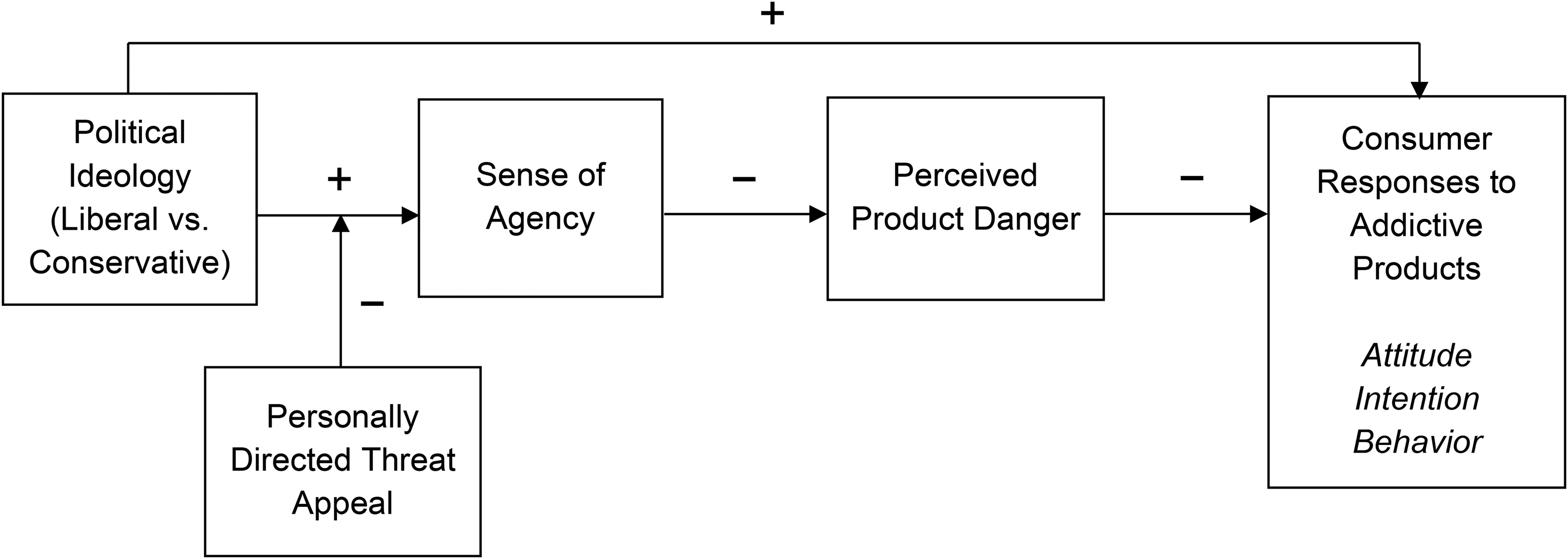
Conceptual Framework.
Addictive Products: Definition and Scope
In health and medical literature, addictive products are broadly defined as substances (e.g., alcohol, nicotine, illicit drugs, highly processed foods) or behaviors (e.g., gambling, gaming, sex) that can create physiological or psychological dependence (American Psychiatric Association 2013; Garber and Lustig 2011; Grant et al. 2010; Volkow, Michaelides, and Baler 2019; West and Brown 2013). These products include both legal (e.g., alcohol, tobacco, gambling, highly processed foods, gaming) and illegal categories (e.g., illicit drugs). A product is considered addictive when it (1) triggers compulsive use, (2) produces psychoactive effects, (3) reinforces repeated behavior, and (4) provokes intense urges and cravings (American Psychiatric Association 2013; West and Cox 2022). These products are often deliberately engineered with reinforcing features to activate the brain's reward system, releasing dopamine and generating pleasurable effects that promote repeated use, ultimately fostering dependency and impairing self-control (LaRose 2010; Lembke 2021; Volkow, Wise, and Baler 2017; Widyanto and Griffiths 2006). In contrast, nonaddictive products are rarely consumed compulsively and are less reinforcing, and in some cases, cravings for these products are linked to better health outcomes (e.g., minimally processed foods; McCullough, Guilkey, and Stark 2017; Meule 2020; Richard et al. 2017). The overuse of addictive products is closely linked to negative effects on physical, mental, social, and financial well-being (Griffiths 2005; LaRose 2010; Orford 2001). Yet, despite extensive research highlighting the dangers of addictive products, the role of political ideology in shaping consumer responses to these products has been overlooked.
Political Ideology: Differences in Consumer Responses Between Liberals and Conservatives
Political ideology has been widely studied in political and social psychology, with research showing that conservatives and liberals differ in personality traits, cognitive styles, and motivations (Janoff-Bulman 2009; Jost, Federico, and Napier 2009; Jost et al. 2007). Conservatives are more likely than liberals to avoid uncertainty, fear threats, seek security, and score lower on openness to experience and sensation-seeking (Jost et al. 2003; Kish 2013; Lane 1962; Nias 1973; Shook and Fazio 2009). The liberal–conservative distinction predicts behaviors beyond politics. Conservatives (liberals) donate more to charity and show greater intentions to recycle when these actions align with binding (individualizing) moral foundations (Kidwell, Farmer, and Hardesty 2013; Winterich, Zhang, and Mittal 2012). Conservatives also invest more in pursuit of social dominance (Han et al. 2019). Moreover, they prefer conformance-oriented (i.e., standardized and guided), as opposed to independence-oriented (i.e., flexible, autonomous), educational programs for their children due to their need for structure (Jung and Mittal 2021).
Does political ideology shape consumer responses to addictive products? While previous research would suggest that conservatives who are generally more risk-averse should have less favorable responses to addictive products, and liberals who are often more sensation-seeking and less risk-averse should have more favorable responses, this research challenges these assumptions: Conservatism is linked to more favorable responses to addictive products. We argue that this is because conservatism is associated with a stronger sense of agency or control over one's actions, decreasing perceived product danger and leading to favorable attitudes, intentions, and behavior toward addictive products. Next, we explore the underlying mechanism through which political ideology influences consumer responses to addictive products.
The Proposed Process: Sense of Agency and Perceived Product Danger Drive Consumer Responses to Addictive Products
Our conceptualization builds on the relationships between (1) political ideology and sense of agency, and (2) sense of agency and perceived product danger.
The sense of agency
The sense of agency is the subjective experience of initiating and controlling an action (Haggard and Eitam 2015; Synofzik, Vosgerau, and Voss 2013). It refers to being in control of one's actions, thoughts, and environment (Tapal et al. 2017). Sense of positive agency reflects feelings of authorship, control, and responsibility for one's actions and is associated with autonomy in navigating one's environment (Tapal et al. 2017). Sense of negative agency, in contrast, refers to the feeling that one's body, mind, and environment are not under one's control, and it is linked to existential helplessness and conditions such as obsessive-compulsive disorder (Tapal et al. 2017). We focus on the positive sense of agency, referred to here simply as the sense of agency, because it captures active decision-making, as opposed to feelings of helplessness.
Conservative ideologies often prioritize intrinsic values over outcomes, emphasizing personal responsibility (Jost 2017). This worldview leads to a focus on the personal significance of actions themselves, rather than the consequences those actions produce (see Web Appendix A for full discussion). For instance, conservative resistance to public health measures, such as smoking bans or restrictions on gambling, reflects a commitment to personal responsibility and limited government intervention, placing individual rights above collective outcomes (Patel and Rushefsky 2015; Skitka and Tetlock 1993). The conservative worldview is that addictive products, for example, are not inherently problematic but their consumption requires personal actions for which individuals are fully responsible (Schlenker, Chambers, and Le 2012). This conservative belief in control and responsibility over actions distinguishes it from liberal ideology, which often stresses environmental or systemic factors beyond individual control, challenging the assumption that individuals are solely responsible for their actions (Jost 2017; Jost et al. 2003; Skitka and Tetlock 1992). Thus, we argue that the sense of agency provides a strong psychological foundation for conservatives’ more favorable responses to addictive products, as it directly aligns with conservatives’ beliefs in personal responsibility (Schlenker, Chambers, and Le 2012). More specifically, we posit that conservatives’ (vs. liberals’) stronger sense of agency will drive more favorable responses to addictive products because it reduces their perception of product danger.
Perception of product danger
Perceived danger is a cognitive appraisal of harm (Herzog and Flynn-Smith 2001) and is distinct from threat, which demonstrates the negative consequences of risk behaviors (Ruiter et al. 2014). In the field of addiction, the perceived danger of products affects consumer behavior. Adolescents and young adults who perceive e-cigarettes as less harmful than traditional cigarettes show higher rates of use (Ambrose et al. 2014; Willett et al. 2019). Similarly, alternative nicotine products, such as pouches and snus (smokeless tobacco), are often adopted because they are perceived as less dangerous than traditional combustible cigarettes (Denlinger-Apte et al. 2021). These examples illustrate how consumers’ evaluations of product harmfulness shape attitudes and behaviors.
We highlight the role of the sense of agency and perceived product danger in shaping ideological differences in responses to addictive products. Specifically, we argue that a stronger sense of agency reduces perceptions of product danger, which may explain why individuals with a conservative ideology, compared with a liberal ideology, tend to respond more favorably to addictive products. Research indicates that a diminished sense of agency can heighten perceptions of danger, while enhanced agency may reduce danger perception (Slovic 1987). For example, cars are often perceived as less dangerous than airplanes as modes of transport, despite statistical evidence to the contrary, because they afford a greater sense of control (Damen 2019). Similarly, the minimax hypothesis suggests that control reduces individuals’ appraisal of danger, serving as a psychological buffer (Miller 1979; Thompson 1981). Building on this reasoning, we propose that political ideology shapes responses to addictive products through its influence on the sense of agency and the resulting perception of product danger. We propose that conservatism, grounded in a stronger sense of agency and a reduced perception of product danger, is likely to result in more favorable attitudes, intentions, and behaviors toward addictive products. Conversely, liberalism, associated with a weaker sense of agency and a heightened perception of product danger, is likely to foster less favorable responses toward such products. We hypothesize:
The Moderating Role of (Personally Directed) Threat Appeals
Research finds that conservatives exhibit a stronger negativity bias than liberals, attending more closely to and responding more intensely to negative rather than positive stimuli (Hibbing, Smith, and Alford 2014). According to the uncertainty-threat model of political conservatism, this ideology reflects a heightened sensitivity to threat, reflected in greater attention and reactivity to mortality salience, death anxiety, and fear of loss (Jost and Napier 2012; Jost et al. 2003). Conservatives not only score higher than liberals on measures of perceived threat (Jost et al. 2003) but also show stronger behavioral and physiological responses to threat-related stimuli. For example, conservatives are more likely to interpret ambiguous facial expressions as threatening (Vigil 2010) and have increased physiological reactivity (i.e., increased skin conductance and heightened orbicularis oculi startle blink electromyogram responses) to threatening stimuli (Dodd et al. 2012; Oxley et al. 2008).
Conservatives tend to focus more on actions than on outcomes. Grounded in values of personal responsibility and agency, conservative ideology emphasizes the importance of one's actions rather than the consequences those actions may produce (Jost 2017). However, exposure to threat-based information disrupts this focus. Threats highlight the negative outcomes of risky behaviors (Ruiter et al. 2014). For conservatives, this represents a conceptual shift, from acting with control to confronting the consequences of those actions. Because conservatives are also more sensitive and reactive to threatening cues (Jost et al. 2003; Oxley et al. 2008), this shift is especially disruptive. It draws attention away from their own ability to act and toward the potential consequences emphasized in the message, thereby undermining the sense of agency that typically anchors their worldview. This reduction of perceived control over their own actions aligns with prior research showing that threatening contexts impair cognitive functioning (Smith and Lazarus 1993), increase automatic behavior and perceptions of loss of control (Longo and Haggard 2009), and promote reliance on external sources of guidance, such as divine intervention (Kay, Moscovitch, and Laurin 2010). These effects are particularly relevant to threat appeals used in social marketing and health communications, which are explicitly designed to highlight the negative consequences of risky behaviors to shape consumer responses to addictive products. Research shows that threat appeals that present a personally significant threat followed by steps to mitigate that threat can effectively reduce favorable attitudes toward addictive products, discourage consumption, and motivate help-seeking behaviors (Calderwood and Wellington 2013; De Vos et al. 2017, 2021; Munoz, Chebat, and Suissa 2010).
We predict that conservatives’ heightened attention and receptivity to threat makes them particularly susceptible to threat appeal messages. By focusing on the consequences of risky behavior, threat appeals make conservatives aware that their actions can lead to outcomes beyond their control, weakening their sense of agency. Reduced sense of agency heightens appraisals of harm (Miller 1979; Thompson 1981), making the dangers associated with addictive products appear more severe. As their perceived product danger increases, conservatives’ responses to addictive products become less favorable. In contrast, liberals’ greater tolerance for uncertainty and ambiguity (Jost et al. 2003) may serve as a psychological buffer that helps them maintain a stable sense of agency when exposed to threat appeals. As a result, their perceptions of product danger and subsequent responses to addictive products should remain largely unchanged. Therefore, we hypothesize:
The effectiveness of persuasive messages depends on the extent to which the message is personally directed. Prior research shows that personally directed language, particularly second-person pronouns (e.g., “you,” “your”), positively influences brand attitudes (Cruz, Leonhardt, and Pezzuti 2017). Second-person pronouns increase involvement by encouraging self-directed attention (Pennebaker 2011). As a result, they are especially effective for those with an individualistic value orientation (Cruz, Leonhardt, and Pezzuti 2017). Consumers with individualistic traits and characteristics are particularly responsive to messages that focus on the self (Markus and Kitayama 1991; Triandis and Gelfand 1998). Political ideology reflects this value orientation. Conservatives endorse the individualistic values of self-reliance and individual rights, while liberals emphasize collectivistic values of social equality and justice (Schlenker, Chambers, and Le 2012; Skitka and Tetlock 1993). Based on this distinction, we predict that personally directed threat messages will be more persuasive among conservative audiences.
We propose that exposure to personally directed threat appeals will lead to a significantly greater reduction in the sense of agency among conservatives than nonpersonally directed threat appeals. Given conservatives’ heightened sensitivity to threat (Jost et al. 2003) and individualistic values (Schlenker, Chambers, and Le 2012), exposure to personally directed threat appeals (using second-person pronouns, e.g., “you,” “your”) is expected to result in less favorable responses to addictive products, stemming from a disrupted perception of control over one's actions and an increased perception of product danger. This prediction aligns with prior findings that exposure to threatening stimuli reduces perceived control (Kay, Moscovitch, and Laurin 2010) and that lower perceived control amplifies appraisals of harm (Miller 1979; Thompson 1981). Therefore, we hypothesize:
Empirical Plan
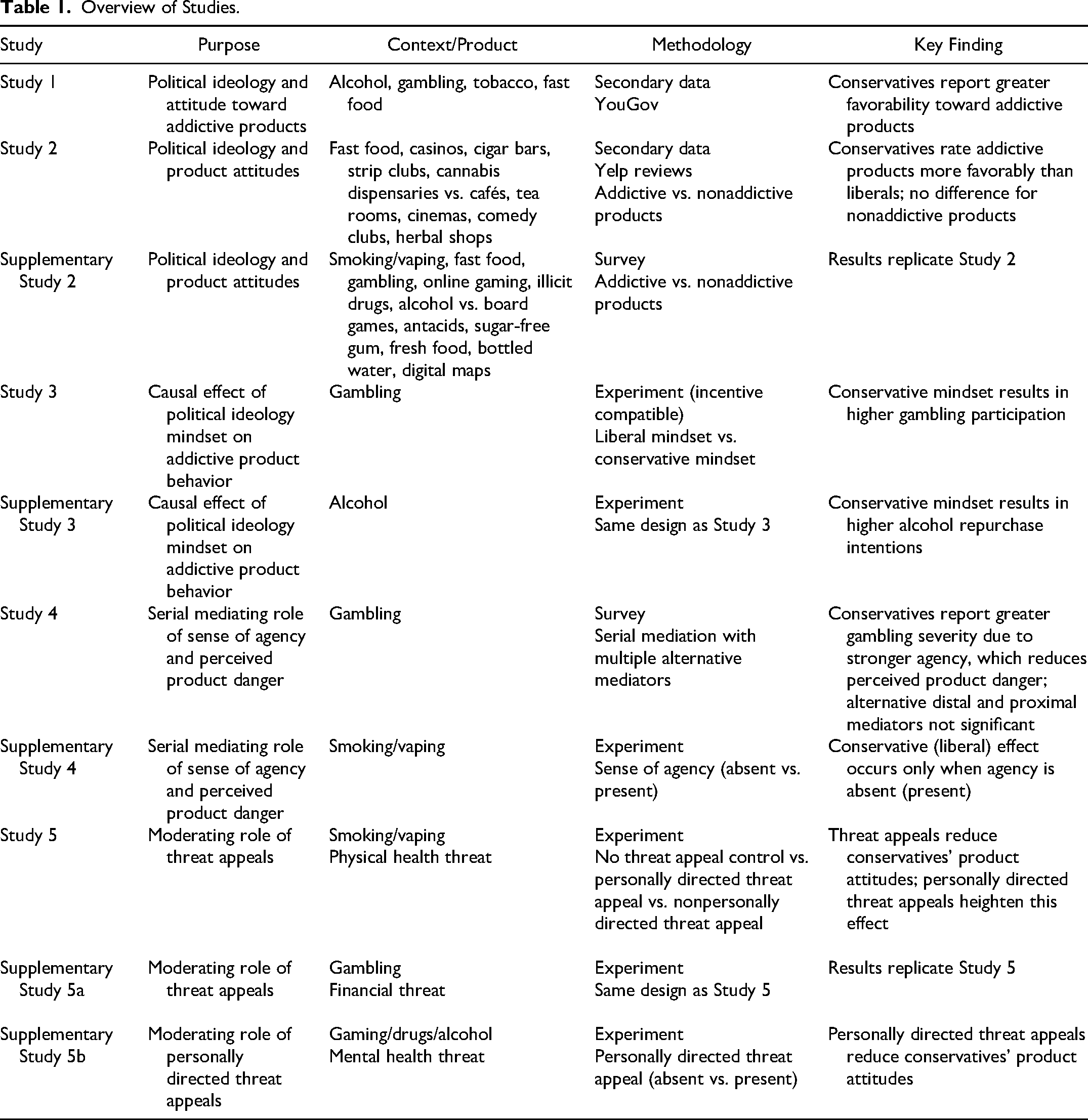
We report on ten studies that utilize multiple methodologies, primary and secondary data, real and hypothetical behavior, different samples, and diverse addictive product categories. We isolate the effect of political ideology by controlling for key demographic covariates including age, gender, income, education, ethnicity, and religiosity, which are related to responses to addictive products. To illustrate our argument that political ideology influences consumer behavior toward addictive products, we first conducted three pilot studies analyzing state-level behavioral patterns in terms of (1) Google search for online gambling, (2) smoking rates, and (3) drug use. The results support our assertion, with conservative states reporting higher online gambling search interest, smoking rates, and misuse of pain relief drugs, compared with liberal states (see Web Appendix B). Building on this foundation, Study 1 tests the link between political ideology and attitude toward alcohol, tobacco, gambling, and fast food using an archival dataset from YouGov over a five-year period (2019–2024) with a total of 454,737 participants. Study 2 extends generalizability by using real-world customer ratings data from Yelp, demonstrating that the effect does not apply to nonaddictive products (Supplementary Study 2 provides further evidence through self-reported attitudes). Study 3 manipulates political ideology and examines its impact on consumer behavior through an incentive-compatible lottery, while Supplementary Study 3 provides a conceptual replication in the context of alcohol repurchase intentions. Study 4 tests the psychological process and explores alternative explanations using both measurement of process and moderation of process designs (Supplementary Study 4). Having established the effect and its underlying process, we next investigated whether targeted interventions could attenuate ideological differences in responses to addictive products. To provide preliminary evidence of ideological differences in responses to threat-based messaging, we first conducted a pilot study examining the Centers for Disease Control and Prevention 2012 Tips from Former Smokers campaign. The results showed that smoking rates declined more sharply in conservative than in liberal U.S. states following the campaign, suggesting that conservatives may be more responsive to threat-based appeals (see Web Appendix B). Building on this, Study 5 tests the moderating role of threat appeals and the amplifying effect of using personally directed threat appeals for a physical health threat, while Supplementary Study 5a extends the analysis to a gambling-related financial threat. Supplementary Study 5b focuses exclusively on the presence versus absence of personally directed mental health threat appeals in gaming, alcohol, and drugs. An overview of the studies and results is provided in Table 1.
Overview of Studies.
Study 1: Political Ideology Predicts Favorability Toward Addictive Products—Evidence from Secondary Data
Study 1 examines the link between political ideology and consumer responses to addictive products. We analyzed an archival dataset containing consumer attitudes toward four addictive products: tobacco, gambling, alcohol, and fast food. This dataset includes results from YouGov, a global online opinion polling organization that samples a nationally representative group of U.K. (England, Scotland, Wales, and Northern Ireland) adults based on age, gender, and social class (YouGov 2024). YouGov's data collection methods ensure representativeness, validity, and consistency of measures, aiming to minimize measurement error and common method bias. The YouGov survey data has been utilized in previous marketing studies exploring consumer behavior (e.g., Colicev, Kumar, and O'Connor 2019).
Data
The YouGov dataset consisted of 528 data collection points spanning a five-year period (2019–2024), with responses from 454,737 participants. Initially, the data were organized into separate tables, each representing distinct demographic characteristics that were directly measured. These characteristics included political party vote (Conservative, Labour [liberal]), social grade (ABC1 for middle and upper social classes, C2DE for working and lower social classes), age (18–24, 25–49, 50–64, 65+), and gender (male, female). Each table presented the percentage distribution of responses for favorability ratings on a five-point scale (1 = “very unfavorable,” and 5 = “very favorable”), capturing aggregate public sentiment rather than individual mean scores. To facilitate analysis, we merged the individual data tables into a single dataset. We calculated mean scores by weighting the percentage of responses for each scale category and averaging them to create an overall favorability score. A key challenge during this process was the presence of missing data across demographic variables in the merged dataset. To address this issue, we applied a proportional imputation method (Valiente Fernández et al. 2023), which addressed missing values by distributing them according to the observed proportions within each category. This approach assumes that the missing data are randomly distributed and representative of the overall dataset. By using proportional imputation, we maintained the original distribution patterns within each variable.
Results
We aimed to assess the impact of political ideology on consumer favorability toward addictive products. For each product category k, a separate mixed-effects model was specified to allow differences across each category to be observed. The model incorporated both fixed and random effects to control for demographic variables including age, gender, and social grade, as well as time-based variations. The models were specified as follows:
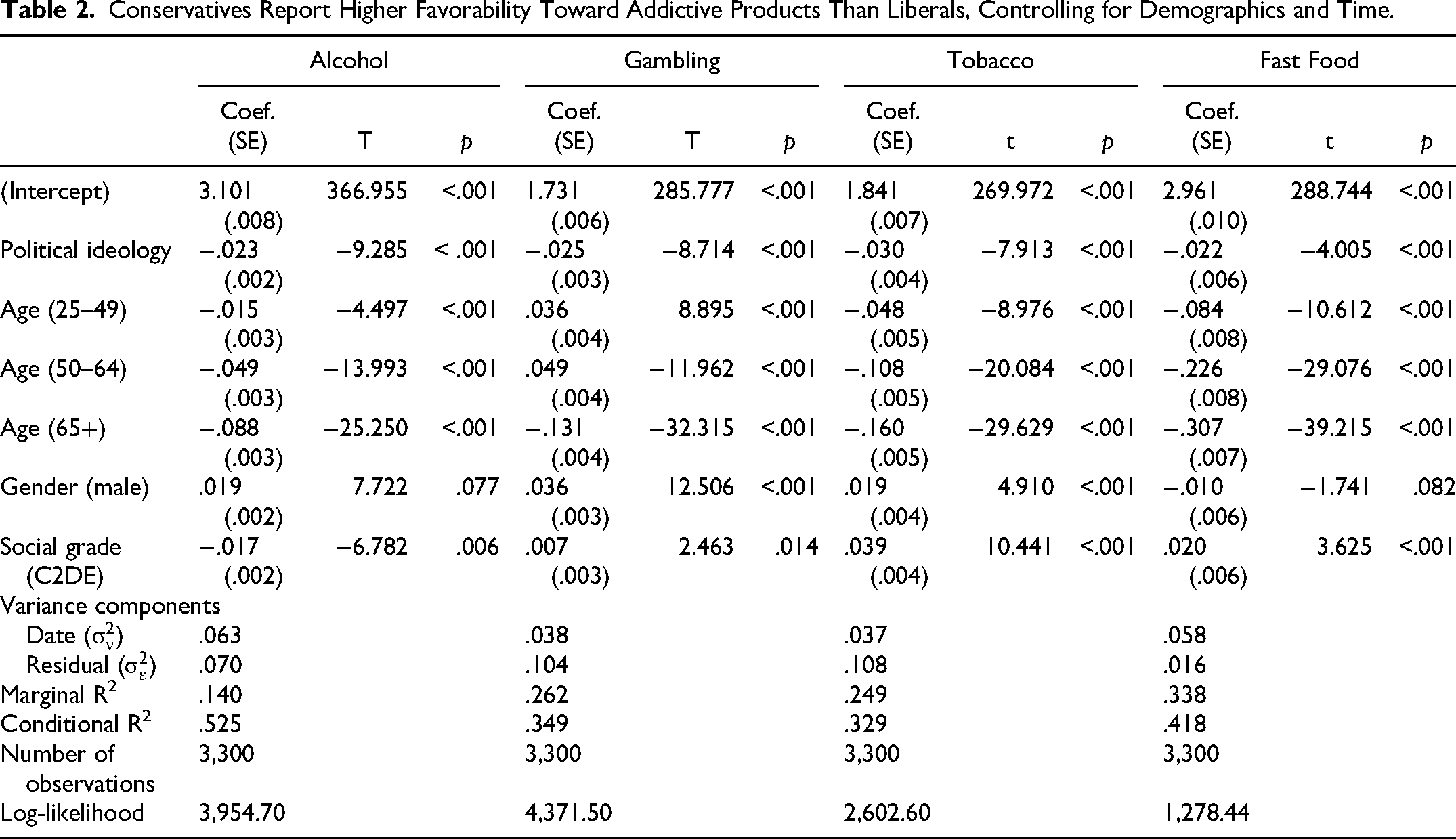
The mixed-effects models presented in Table 2 demonstrate the significant impact of political ideology on consumer favorability toward addictive products, while controlling for temporal factors, age, gender, and social grade. This effect was observed for alcohol, gambling, tobacco, and fast food (see Table 2). These findings suggest that individuals with a conservative political ideology consistently reported higher favorability for these products, compared with liberal respondents. This effect was shown to persist even after accounting for other demographic factors and time-based variations, highlighting the robustness of political ideology as a predictor of consumer attitudes toward addictive products and supporting H1.
Conservatives Report Higher Favorability Toward Addictive Products Than Liberals, Controlling for Demographics and Time.
To test robustness, we estimated additional models. Political ideology remained a significant predictor across all four product categories, both without covariates and when including covariates and their interactions (age, gender, and social grade; see Web Appendix C). These results confirm the robustness of the focal effect under more complex controls.
Discussion
Study 1 highlights political ideology as a strong and consistent predictor of consumer attitudes toward addictive products. Across alcohol, gambling, tobacco, and fast food, conservatives reported higher favorability than liberals, supporting H1. In contrast, demographic factors had mixed effects. Age, gender, and social grade were significant but varied by product. These findings reinforce that political ideology is a stable factor associated with consumer attitudes toward addictive products, independent of other demographic characteristics. A limitation of Study 1 is the lack of a nonaddictive product control, making it unclear whether conservatives’ favorable responses are specific to addictive products or reflect a general evaluative tendency. We address this question in Study 2.
Study 2: Political Ideology Shapes Consumer Attitudes Toward Addictive Products in Online Reviews
Study 2 examines the association between political ideology and consumer attitudes, using online customer ratings as a proxy for consumer attitude. Yelp customer rating data were integrated with county-level voting data from the 2020 U.S. presidential election to capture political ideology. Additionally, city-level demographic data, including gender, income, ethnicity, education, and age, were sourced from the U.S. Census Bureau (https://www.census.gov), while state-level religiosity data were obtained from Pew Research Center’s 2023–2024 Religious Landscape Study (Rotolo et al. 2025).
Data
We utilized the Yelp Open Dataset, which includes reviews of over 150,000 businesses contributed by more than 6.7 million customers. For this study, we focused on addictive and nonaddictive product categories to examine consumer attitudes and their relationship with political ideology. The addictive product categories selected were fast food (16,407 reviews), casinos (25,156 reviews), strip clubs (1,760 reviews), cannabis dispensaries (2,799 reviews), and cigar bars (1,750 reviews). To enable comparability, we included nonaddictive categories that are similar in their social and leisure-oriented nature but differ in the presence of addictive elements: cafés (42,117 reviews), cinemas (16,441 reviews), comedy clubs (5,949 reviews), herbal shops (501 reviews), and tea rooms (12,096 reviews). When selecting nonaddictive categories, we excluded businesses with references to addictive products. For example, herbal shops mentioning “cannabis” and cafés referring to “fast food” were excluded to maintain a clear distinction between the two groups. Our analysis included a total of 124,976 customer reviews: 47,872 for addictive products and 77,104 for nonaddictive products. Web Appendix D contains posttest results of perceived product addictiveness.
Measuring political ideology
Political ideology was measured using county-level voting data from the 2020 U.S. presidential election. Specifically, we calculated the proportion of votes cast for Joseph Biden (Democratic; liberal) and Donald Trump (Republican; conservative). Our measure was constructed by subtracting the proportion of Democratic votes from the proportion of Republican votes, resulting in a scale with both negative and positive values. Positive values indicate counties with a Republican (conservative) leaning, while negative values indicate counties with a Democratic (liberal) leaning. Following Fernandes et al. (2022), we aligned reviewers’ political ideology with the location of the reviewed business, based on the assumption that reviewers are predominantly situated in the local county where the business operates.
Controls
We included local-level variables such as income per capita, education (percentage of residents with a high school diploma or a bachelor's degree), ethnicity (proportion of White, Black, American Indian and Alaska Native, Asian, and Native Hawaiian and Pacific populations), gender (percentage female), and mean age, each sourced from the U.S. Census Bureau. Additionally, we controlled for state-level religiosity as reported by Pew Research Center. The religiosity index reflects the percentage of residents who (1) consider religion “very important” in their lives, (2) attend worship services at least weekly, (3) pray daily, and (4) believe in God with absolute certainty. Consistent with Fernandes et al. (2022), we also included review-based variables, such as the number of “useful,” “funny,” and “cool” votes each review received, the total number of reviews for each business, the word count of the review, and whether the business was currently open. Finally, to account for temporal factors, we included the month and year of each review.
Results
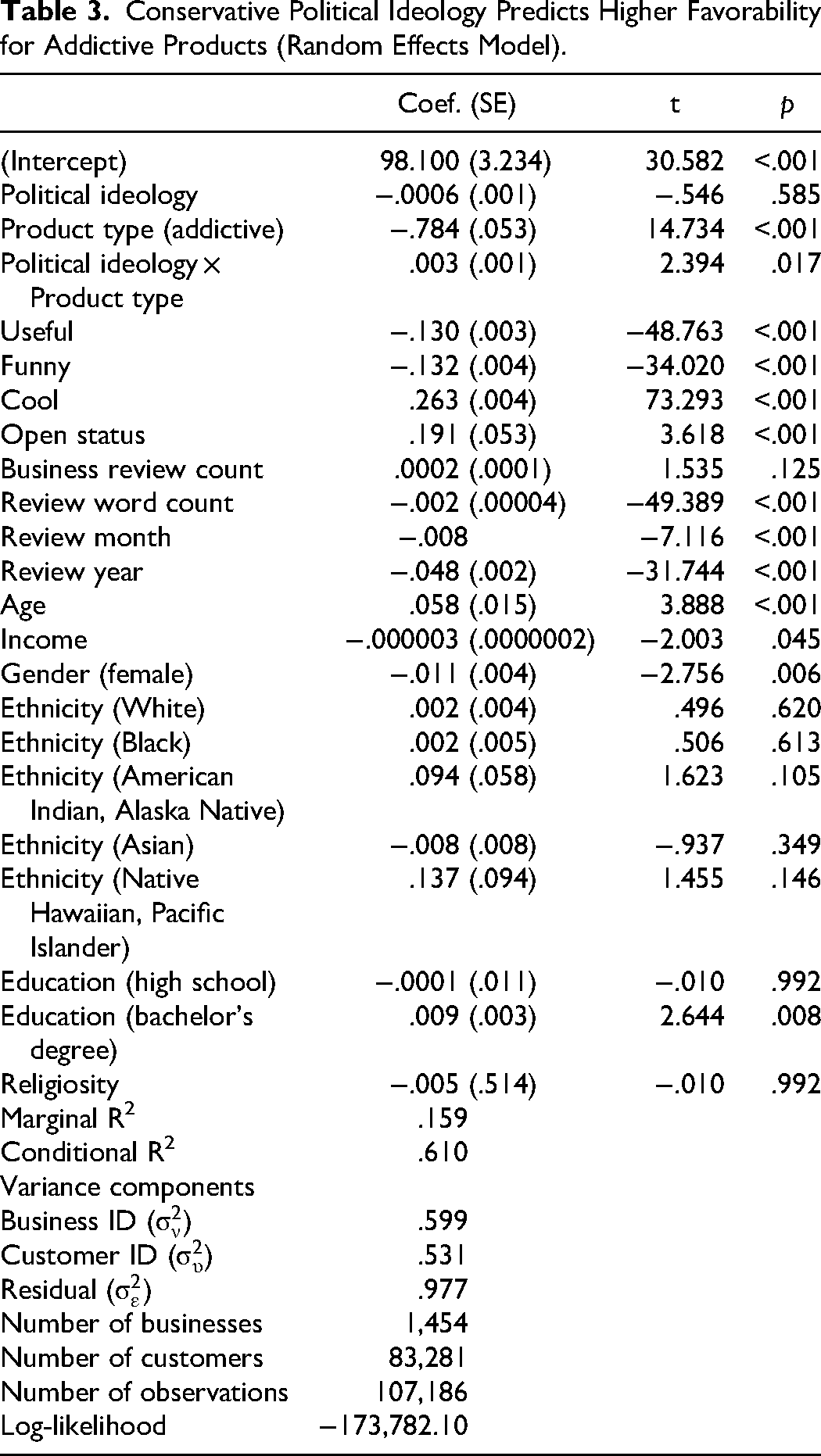
We aimed to examine the association between political ideology and attitude toward products. To account for unobserved heterogeneity across customers and businesses, we estimated a random-effects model with reviewer demographics and review characteristics included as covariates. The model was specified as follows: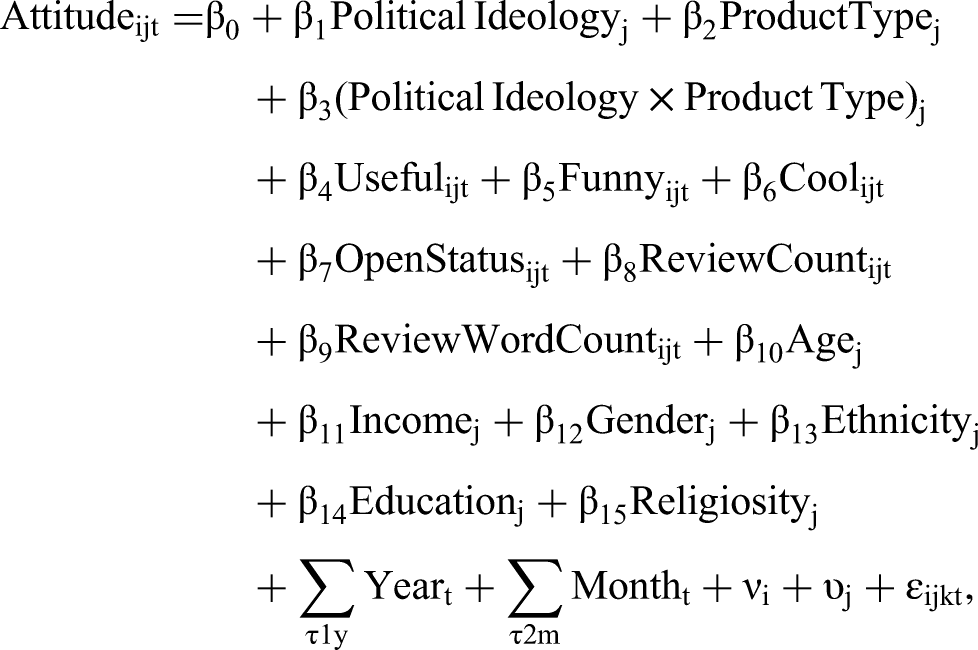
for customer i and business j, at time t, where
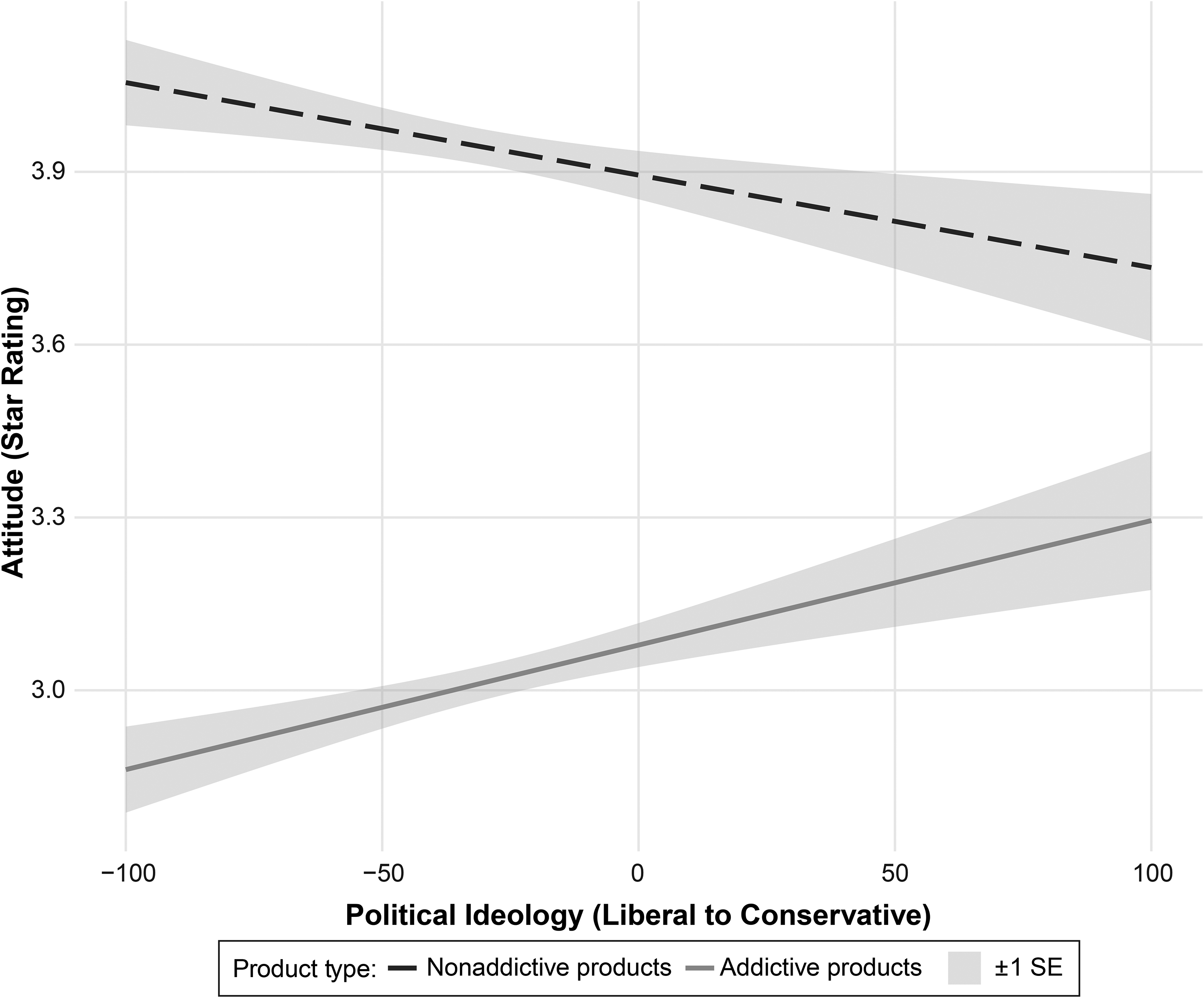
Conservative Ideology Increases Favorability Toward Addictive Products, with Nonaddictive Products Rated Highly Across the Ideological Spectrum.
Conservative Political Ideology Predicts Higher Favorability for Addictive Products (Random Effects Model).
Discussion
Study 2 reinforces the practical relevance and generalizability of the relationship between political ideology and attitudes toward addictive products in a real-world setting of customer reviews. The results show that conservatives report more favorable attitudes toward addictive products, such as fast food, casinos, and cigar bars, whereas attitudes toward nonaddictive products, such as cafés, tea rooms, and cinemas, remain consistently high across the ideological spectrum. These findings move beyond our prior observations to demonstrate that ideological differences are reflected in the field. However, it is important to acknowledge that the observed effects may capture both differences in who chooses to frequent such establishments and differences in how those consumers evaluate their experiences once there, which our design does not disentangle. Supplementary Study 2 (preregistered at https://aspredicted.org/gsz6-3bkf.pdf; Web Appendix E) complements these findings by examining self-reported attitudes in a controlled setting, where conservatives reported more favorable attitudes toward addictive products than liberals. Study 2 adds support for the interpretation of political ideology as a stable predictor of consumer attitudes related to addictive products, in both self-reports and observed marketplace behavior.
Study 3: Experimental Evidence of Political Ideology's Influence on Gambling Behavior
Study 3 investigates the causal relationship between political ideology and consumer responses to addictive products. By manipulating political ideology, we examine its effects on gambling behavior using an incentive-compatible design (preregistered at https://aspredicted.org/dcxx-zzm8.pdf). In the gambling task, participants were given the option to allocate their survey payment toward purchasing lottery tickets for a chance to win a larger monetary reward or to retain their full payment without gambling. This design closely emulates a gambling situation, requiring participants to make a trade-off between guaranteed compensation and the potential for a higher reward. We predicted that individuals in a conservative mindset would show greater engagement in this gambling task compared with those in a liberal mindset (H1).
Participants
We conducted an online experiment with 306 participants (140 male, 160 female, 6 other/not specified; Mage = 37.70 years, SD = 13.06) from Australia and New Zealand. Participants were recruited through the research panel Prolific. All participants were over 18 years of age. We evaluated participants’ task recall through a multiple-choice task, and participants who were unable to recall the context of the task were removed from the sample (n = 29). After employing this exclusion criteria, our valid sample resulted in 277 participants (126 male, 146 female, 5 other/not specified; Mage = 37.88 years, SD = 13.05).
Procedures
The study utilized a two-condition between-subjects design. We randomly allocated participants to one of the two experimental conditions: conservative mindset (n = 141) or liberal mindset (n = 136). To manipulate political ideology, we followed procedures adopted by Ordabayeva and Fernandes (2018), and participants were asked: “Please remember a time when you were talking to or interacting with someone who was obviously more [conservative/liberal] than you, and you felt that you had a more [liberal/conservative] position. Please take some time to think about the situation and describe it in detail, including whom you were with, what you did, what you and/or they said, how you felt, etc.” On the following page, participants were given the opportunity to win £15 (approximately AUD $30) by participating in a lottery. They were asked how many tickets (valued at 1 cent each out of their study payment [£.45; approximately AUD $.90]) they would like to purchase, ranging from 0 to 10 tickets. We then tested participants’ recall of the experience they were first asked to write about (multiple choice: “previous social interaction,” “going to the movies,” “learning a new skill,” “none of the above”; per Ordabayeva and Fernandes [2018]). Next, as a manipulation check we asked participants to report their political ideology (seven-point scale; Jost 2006; 1 = “extremely liberal,” and 7 = “extremely conservative”). On the following pages, we collected age, gender, income, education, ethnicity (items randomized), 1 and religiosity (Cronbach's α = .839) information. On the final page, participants were thanked for their participation and debriefed.
Manipulation Check
An ANOVA was conducted to assess participants’ self-reported political ideology. The analysis revealed a significant difference between groups (F(1, 275) = 31.90, p < .001, η2 = .104), with those in the conservative mindset condition rating themselves as more conservative (MConservative = 3.76, SD = 1.54) than those in the liberal mindset condition MLiberal = 2.82, SD = 1.25). These results confirm the effectiveness of the manipulation.
Results
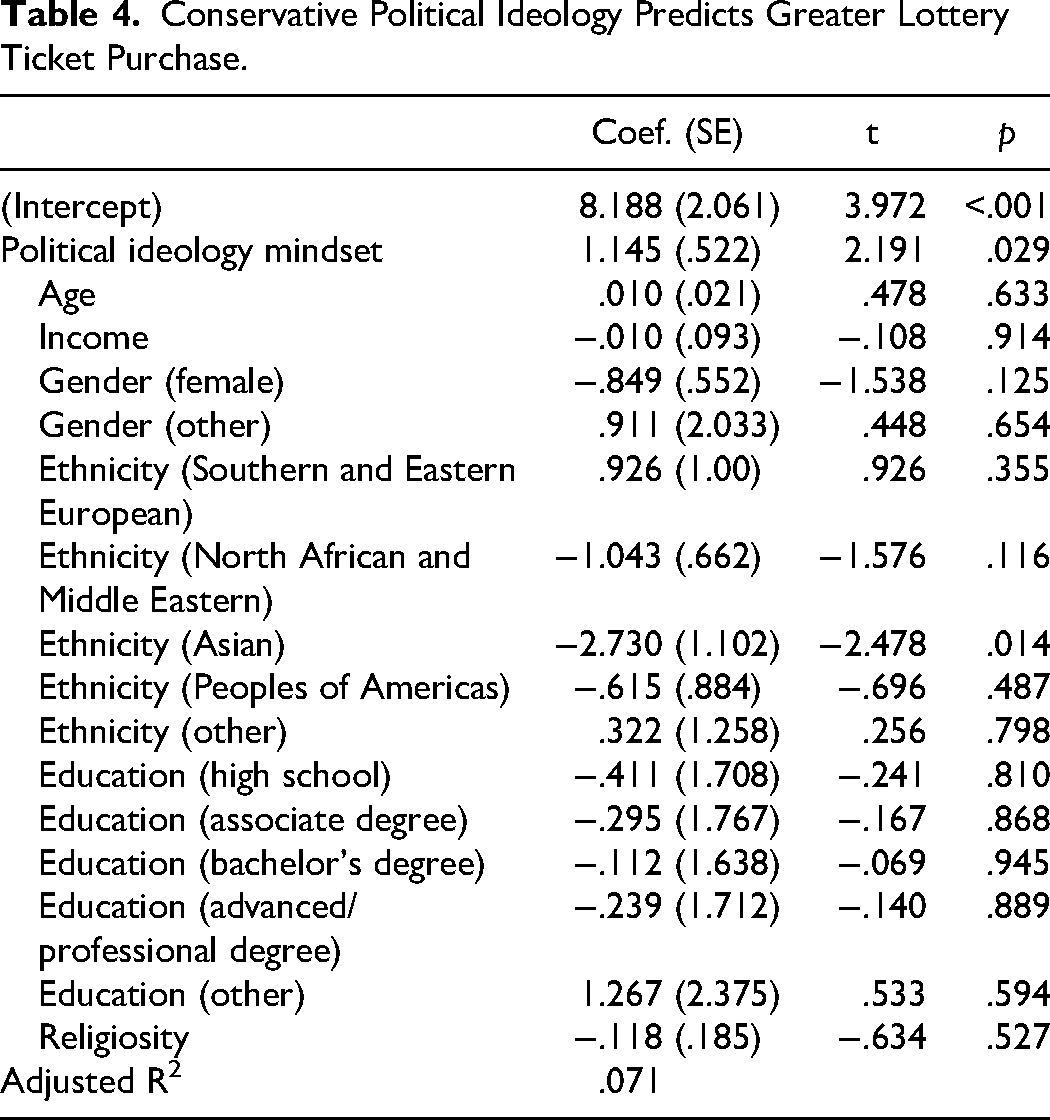
We hypothesized that participants in a more conservative mindset would purchase more tickets to win a prize (i.e., engage in gambling behavior) compared with those in a more liberal mindset. We constructed a generalized linear model to examine the effect of political ideology on ticket purchase. The model also accounted for age, gender, income, ethnicity, education, and religiosity. Results showed that political ideology was a significant positive predictor of ticket purchase irrespective of the inclusion of control variables, supporting H1. Detailed results are presented in Table 4. To assess the robustness of this relationship, we conducted auxiliary analyses. Specifically, we reestimated the model excluding all covariates to examine the association in isolation. Results of the analysis are presented in Web Appendix F.
Conservative Political Ideology Predicts Greater Lottery Ticket Purchase.
Discussion
The findings from Study 3 demonstrate the impact of political ideology on gambling behavior. The findings show that participants in a more conservative mindset exhibited stronger behavioral engagement, that is, greater participation in gambling, compared with those in a more liberal mindset. Supplementary Study 3 (Web Appendix G; preregistered at https://aspredicted.org/kh54-7k4d.pdf) extends this investigation to a different context, examining alcohol repurchase intentions. Consistent with Study 3, participants in a more conservative mindset reported higher repurchase intentions for alcohol than those in a more liberal mindset, reinforcing the robustness of the ideological pattern across domains. As political ideology reflects a relatively stable set of beliefs and values, the manipulation in Study 3 likely activated rather than altered participants’ political ideology. This activation is consistent with our theorizing, which centers on how heightened accessibility of ideology-consistent beliefs shapes responses to addictive products, rather than on inducing lasting changes in political orientation.
Study 4: Political Ideology Shapes Consumer Responses to Addictive Products Through Sense of Agency and Perceived Product Danger
Study 4 examines the link between political ideology and responses to addictive products, and tests the psychological process across different contexts. This study focuses on gambling and employs a measurement of process design to systematically compare sense of agency and perceived product danger to a range of alternative constructs linked to political ideology and addictive products (preregistered at https://aspredicted.org/4cbx-nw8x.pdf).
Participants
We conducted an online study with 778 participants from the United Kingdom (400 male, 371 female, 7 other/not specified; Mage = 41.15 years, SD = 14.05). Participants were recruited through the research panel Prolific. All participants were over 18 years of age. After excluding 41 participants who failed one or more attention check items, the final sample consisted of 737 participants (379 male, 351 female, 7 other/not specified; Mage = 41.58 years, SD = 14.15).
Procedures
Participants completed an online questionnaire and were first asked to complete nine items used to evaluate their gambling severity (total score). Next, participants reported on a series of constructs theorized to be influenced by political ideology. The order of presentation of mediators and their items was randomized across participants. Participants reported on the sense of agency (Cronbach's α = .881), harm moral foundation (Cronbach's α = .856), perceived product danger (Cronbach's α = .834), social dominance orientation (Cronbach's α = .909), fair market ideology (Cronbach's α = .816), self-efficacy (Cronbach's α = .913), locus of control (Cronbach's α = .759), autonomy (Cronbach's α = .815), competence (Cronbach's α = .824), belief in free will (Cronbach's α = .878), risk taking (single-item), perceived control (Cronbach's α = .913), and addiction attitude (Cronbach's α = .937). To ensure data quality, we included two attention check questions. These items were placed after the completion of four and then nine construct measures (positions held constant). For example, participants were asked: “What color is the sky? If you read this question, please do not click any of the options below, and simply click on the arrow button to proceed to the next question.” Participants who failed either of the attention checks were excluded from the final analysis to ensure the validity of the data. The full list of items and results of discriminant validity analysis are provided in Web Appendix H. On the following page, we asked participants to report their political ideology (seven-point scale; Jost 2006; 1 = “extremely liberal,” and 7 = “extremely conservative”). Finally, demographic data, including gender, age, income, education, and ethnicity (items randomized), were collected. On the final page, participants were thanked for their participation and debriefed.
Results
Predicting gambling severity
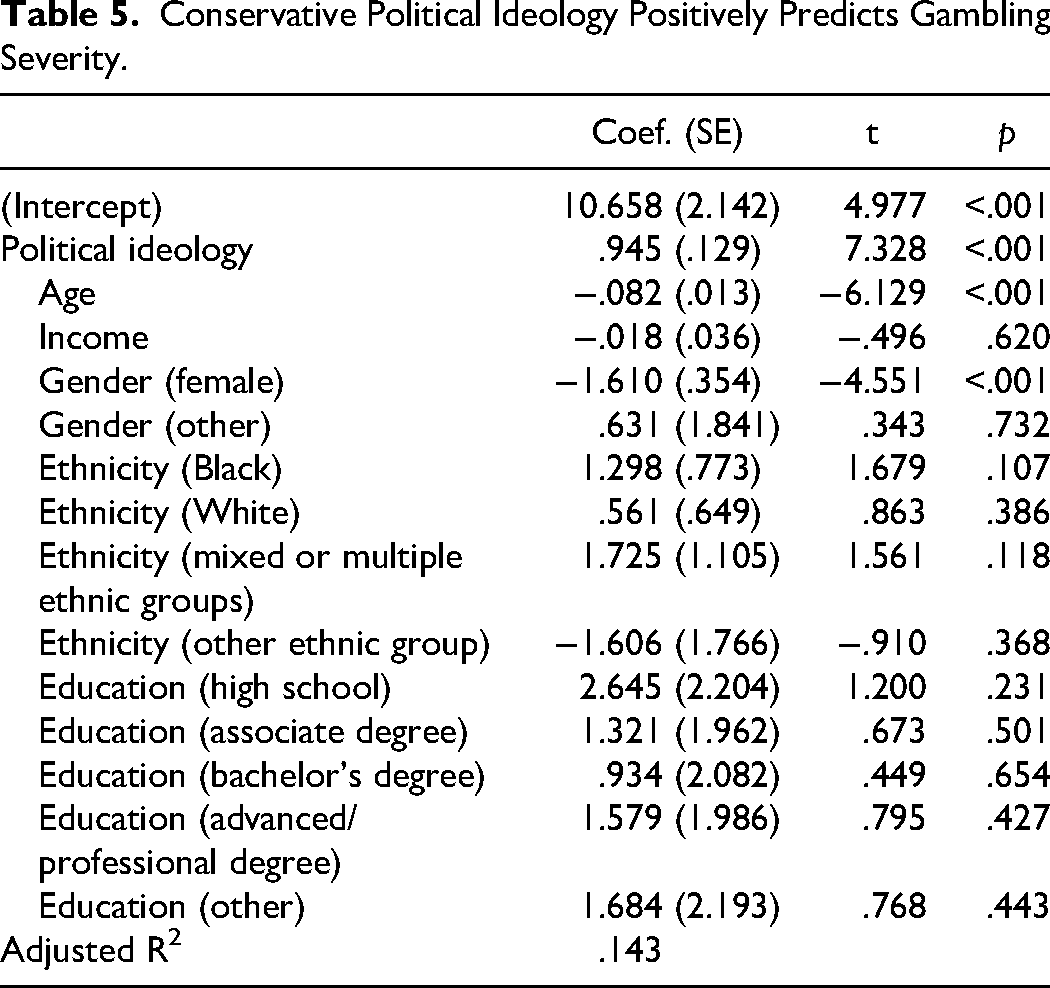
We expected that conservatism would be associated with higher gambling severity compared with liberalism. We constructed a generalized linear model to examine the association between political ideology on gambling severity, while controlling for age, gender, income, ethnicity, and education. The results indicated that political ideology remained a significant positive predictor of gambling severity even after accounting for these demographic variables. Full model results are presented in Table 5. To assess the robustness of this relationship, we conducted an auxiliary analysis. Specifically, we reestimated the model excluding all covariates to examine the association in isolation. Results from the analysis are reported in Web Appendix H.
Conservative Political Ideology Positively Predicts Gambling Severity.
Examining process
To examine whether the effect of political ideology on gambling severity was serially mediated by sense of agency (M1) and subsequent perceived product danger (M2), we employed the PROCESS macro bootstrapping procedure (n = 10,000 and Model 6; Preacher, Rucker, and Hayes 2007). As results were found to hold after controlling for age, gender, income, ethnicity, and education, the control variables were not included in the model. The analysis revealed that the 95% bootstrapped CI of the indirect effect of political ideology on gambling severity via sense of agency and subsequent perceived product danger did not include zero (effect = .01, SE = .01, 95% CI = [.01, .02]), confirming a significant serial mediation effect. Specifically, political ideology was positively and significantly associated with sense of agency (a1 = .08, t = 2.97, p = .003), sense of agency was significantly and negatively associated with perceived product danger (d21 = −.18, t = −3.58, p < .001), and perceived product danger was significantly and negatively associated with gambling severity (b2 = −.43, t = −3.40, p = .001), supporting H2.
To verify the causal ordering of variables, we conducted a second serial mediation analysis reversing the order of the mediators (Fairchild and McDaniel 2017), testing whether political ideology was associated with perceived product danger (M1), which in turn was associated with sense of agency (M2), and subsequently with gambling severity. The results showed that the 95% bootstrapped CI for the indirect effect of political ideology on gambling severity included zero (effect = −.01, SE = .001, 95% CI = [−.01, .01]), indicating no significant serial mediation effect. These results are consistent with the proposed ordering of variables and do not indicate evidence of alternative directional associations.
Auxiliary analyses exploring alternative mediators (i.e., perceived control, locus of control, competence, autonomy, self-efficacy, free will belief, moral harm foundations, social dominance orientation, fair market belief) and expanded serial models incorporating risk-taking and addiction attitudes are reported in Web Appendix H. These auxiliary analyses consistently highlight the distinct role of sense of agency and perceived product danger in the observed association between political ideology and consumer responses to addictive products.
Discussion
Study 4 extends the investigation of political ideology's influence on consumer responses to addictive products by examining gambling severity. This study compares the sense of agency with a range of psychological constructs associated with political ideology to assess their relative explanatory power. The findings provide evidence for the role of sense of agency and perceived product danger in shaping gambling severity. Specifically, conservatism was associated with higher gambling severity than liberalism, a relationship that was serially mediated by the heightened sense of agency, which in turn reduced perceived product danger of gambling. To test the generalizability of these findings and establish causal evidence, Supplementary Study 4 (Web Appendix I) adopts a moderation of process design (Spencer, Zanna, and Fong 2005), and extends to a new addictive product domain (smoking/vaping; preregistered at https://aspredicted.org/ccxj-fnv5.pdf). This study demonstrates that the sense of agency interacts with political ideology to shape perceptions of product danger and, consequently, attitudes toward smoking/vaping. The moderation pattern observed in Supplementary Study 4 reinforces the role of the sense of agency and perceived product danger in explaining ideological differences in consumer responses and provides convergent evidence that the effect generalizes across addictive product categories. Taken together, the results provide evidence for a sequential pathway whereby political ideology shapes the sense of agency, which in turn influences perceived product danger and ultimately drives consumer responses to addictive products.
Study 5: Personally Directed Threat Appeals Reduce Conservatives’ Favorability Toward Smoking/Vaping
Study 5 investigates the moderating role of threat appeals (personally directed vs. nonpersonally directed vs. no threat) on the relationship between political ideology and consumer attitudes toward smoking/vaping. Focusing on a physical health threat, we predicted that threat appeal messages would reduce conservatives’ sense of agency, increase perceived product danger, and consequently diminish their favorable responses to smoking/vaping (preregistered at https://aspredicted.org/sbnz-yw6f.pdf). We further predicted that personally directed threat appeals (using second-person pronouns such as “your”) would heighten this effect among conservatives. We also examined the role of user status in shaping the effectiveness of threat appeals on attitudes toward smoking/vaping (Web Appendix J).
Participants
We conducted an online study with 446 participants from Canada (225 male, 219 female, 2 other/not specified; Mage = 38.64 years, SD = 12.95). Participants were recruited through the research panel Prolific. All participants were over 18 years of age with no participants excluded from analysis.
Procedures
The study utilized a three-condition between-subjects design. We randomly allocated participants to one of the three experimental conditions: no threat appeal control (n = 146), personally directed threat appeal (n = 149), and nonpersonally directed threat appeal (n = 151). Participants were shown an advertisement (see Web Appendix J). Following this, participants rated their attitude toward smoking/vaping (seven-point scale; Franke, Keinz, and Steger 2009; 1 = “dislike,” and 7 = “like”; 1 = “bad,” and 7 = “good”; 1 = “not appealing,” and 7 = “appealing”; Cronbach's α = .893). On the following page, we measured perceived product danger (Study 4 measure, Cronbach's α = .840), along with sense of agency (Study 4 measure, Cronbach's α = .902). As a manipulation check, participants rated the threat level of the message (1 = “not at all threatening,” and 7 = “very threatening”) along with the degree to which the message was perceived as personally directed (“The message in the advertisement was directed at me”; 1 = “strongly disagree,” and 7 = “strongly agree”). Finally, demographic data were collected, including ethnicity (items randomized), gender, age, income, education, voting behavior in the 2025 federal election (“Which political party did you vote for in the 2025 federal election?”; Liberal [Mark Carney] vs. Conservative [Pierre Poilievre]; adapted from Han et al. 2019; items randomized), and religiosity (Cronbach's α = .802). Additionally, participants reported their smoking/vaping behavior (“Do you currently smoke/vape”: “Yes, daily,” “Yes, at least once a week,” “Yes, but less often than once per week,” “No, not at all”; item reverse-coded for analysis; Bryant et al. 2011). At the end of the study, participants were thanked for their participation and debriefed.
Randomization Check
A randomization check was performed to confirm approximate equal distribution of political ideologies (liberal vs. conservative) across the experimental conditions. A significant difference was not observed (χ2(2) = 1.95, p = .378), with an approximately equal distribution of political ideologies across conditions.
Manipulation Check
ANOVA models were used to evaluate participants’ perceptions of message threat and the extent to which the message was perceived as personally directed. The analysis revealed a significant difference between conditions in terms of perceived threat (F(2, 443) = 92.73, p < .001), with participants in the no threat condition rating the message as significantly less threatening (MAbsent = 2.08, SD = 1.50) when compared with both the personally directed (MPersonally = 4.44, SD = 1.93) and nonpersonally directed (MNonpersonally = 4.21, SD = 1.44) threat conditions. Furthermore, the personally directed threat condition was rated as significantly more personally directed (MPersonally = 4.87, SD = 1.35) than both the no threat (MAbsent = 2.47, SD = 1.72) and nonpersonally directed threat (MNonpersonally = 2.72, SD = 1.76) conditions (F(2, 443) = 99.02, p < .001). Full statistical details, including post hoc comparisons, are reported in Web Appendix J. These findings confirm that the threat appeal and personally directed manipulations were successful.
Results
Product attitude
We hypothesized that the presence of a personally directed threat appeal would reduce conservatives’ attitudes toward smoking/vaping. To test this hypothesis, we conducted a 2 (political ideology: measured between-subjects factor, liberal vs. conservative) × 3 (threat appeal: absent vs. present nonpersonally directed vs. present personally directed) ANOVA, with attitude toward smoking/vaping as the dependent variable. Age, gender, income, ethnicity, education, religiosity, and participants’ smoking/vaping behavior were included as covariates. Results showed a significant main effect for threat appeal (F(2, 433) = 8.05, p < .001, η2 = .036) and political ideology (1, 433) = 24.37, p < .001, η2 = .053). As predicted, a significant interaction between political ideology and threat appeal was found (F(2, 433) = 11.89, p < .001, η2 = .052). Post hoc comparisons revealed that conservatives (compared with liberals) reported a more favorable attitude toward smoking/vaping when the threat appeal was absent (F(1, 137) = 30.11, p < .001, η2 = .180) and when a nonpersonally directed threat appeal was present (F(1, 142) = 17.46, p < .001, η2 = .109). However, when a personally directed threat appeal was present, this difference diminished, with no significant differences between conservatives and liberals (F(1, 140) = .65, p = .423, η2 = .005). Importantly, further analysis revealed that conservatives’ attitude toward smoking/vaping decreased across the three conditions. Specifically, conservatives reported a less favorable attitude toward smoking/vaping in both the nonpersonally directed threat appeal condition (p = .017) and the personally directed threat appeal condition (p < .001) compared with the threat appeal absent condition. Further, when the threat appeal was personally directed, conservatives reported less favorable attitudes compared with the nonpersonally directed threat appeal condition (p = .006), suggesting that the inclusion of a second-person pronoun amplifies the impact of a threat appeal on attitude toward smoking/vaping for conservatives. No significant differences in attitude toward smoking/vaping were observed across conditions for liberals (p = .128). Figure 3 visualizes this interaction, and Web Appendix J presents summary statistics.
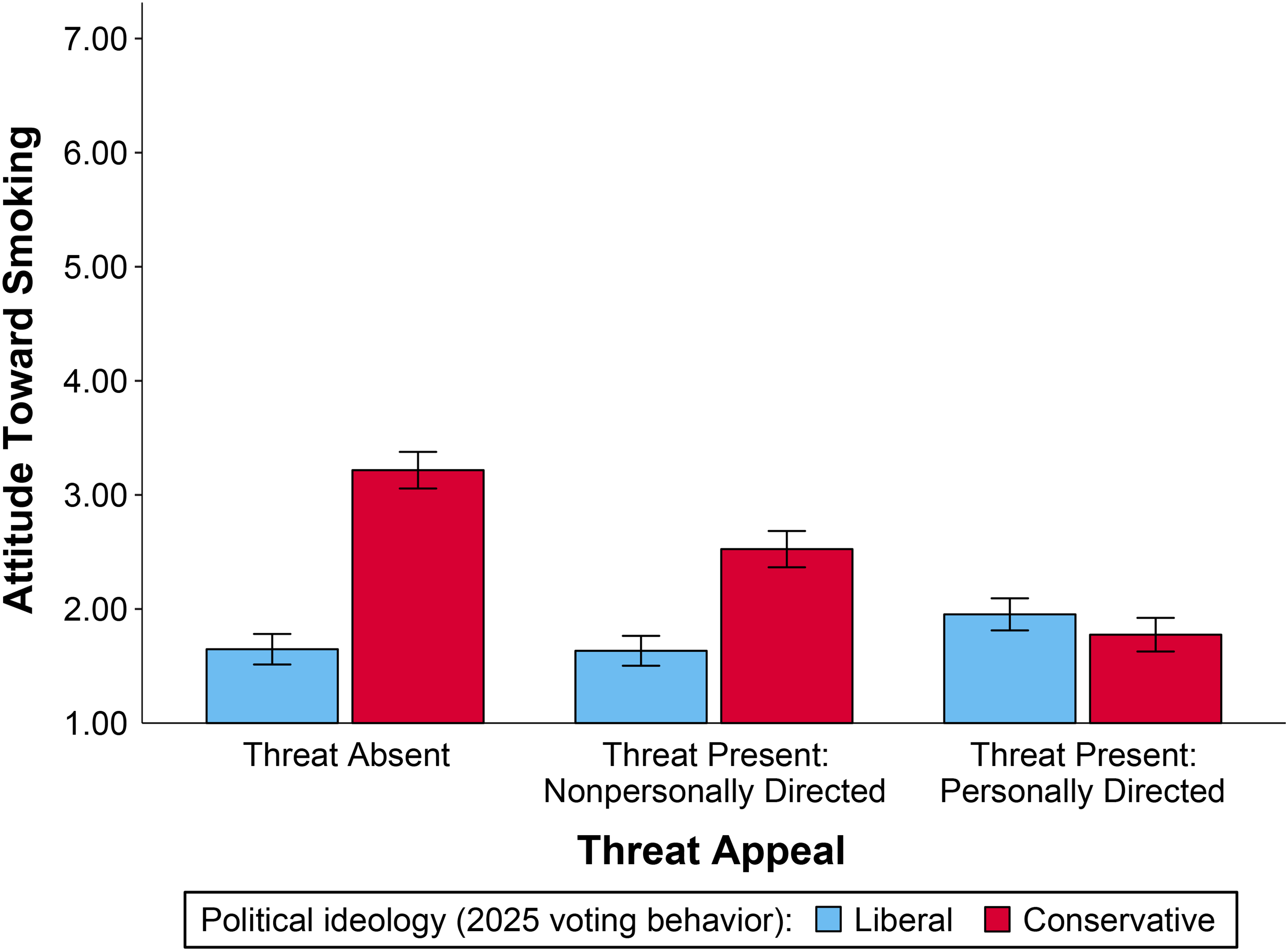
Personally Directed Threat Appeals Reduce Conservatives’ Favorability Toward Smoking/Vaping.
Exploring smoking/vaping status
Auxiliary analyses examining the role of smoking/vaping behavior in moderating the relationship between political ideology and threat appeal are reported in Web Appendix J. These analyses reveal that while both threat appeals reduced attitudes among conservative nonsmokers, personally directed threat appeals are particularly effective among both conservative nonsmokers and smokers. Full statistical outputs and visualizations are presented in Table and Figure WAJ2.
Examining process
Auxiliary analyses examining the moderated mediation process, including the role of sense of agency and perceived product danger as sequential mediators, are reported in Web Appendix J. We conducted two PROCESS models (Model 86). The first model examined the overall effect of threat appeal, comparing conditions where the threat appeal was absent versus present, without distinguishing between personally directed and nonpersonally directed threat appeals. The second model specifically focused on the type of threat appeal by comparing personally directed versus nonpersonally directed threats, excluding the no threat condition. In both models, the sense of agency and perceived product danger sequentially mediated the relationship between political ideology and addictive product attitudes. Results consistently demonstrated that the presence of a threat appeal reduced conservatives’ favorable attitudes through diminished sense of agency and increased perceived product danger, with personally directed threats having a more pronounced effect, supporting H3a and H3b. Full model specifications and statistical outputs are presented in Web Appendix Tables WAJ3 and WAJ4.
Discussion
Study 5 examined the moderating role of threat appeals on the relationship between political ideology and consumer attitudes toward smoking/vaping. The results demonstrated that threat appeals significantly reduce conservatives’ favorable attitudes compared with the absence of a threat appeal. Notably, while any form of threat appeal can reduce favorable attitudes among conservatives, personally directed threat messages (i.e., those that explicitly refer to second-person pronouns) have the strongest effect. Specifically, conservatives reported significantly less favorable attitudes when exposed to personally directed threat appeals compared with nonpersonally directed threat appeals, highlighting the unique impact of personally directed language in influencing responses to threat appeals and reducing the sense of agency, heightening perceived product danger. To further explore this effect, we examined whether user status was associated with differences in how threat appeals influenced attitudes toward smoking/vaping (see Web Appendix J). The findings indicated that conservative nonusers reported more unfavorable attitudes toward smoking/vaping in response to both personally and nonpersonally directed threat appeals. However, both conservative users and nonusers reported particularly unfavorable attitudes when exposed to personally directed threat appeals. This pattern suggests that personally directed threat appeals may be more strongly associated with negative smoking/vaping attitudes among conservative individuals, irrespective of their user status, indicating their potential relevance for broadly targeting this population. However, these findings should be interpreted with caution due to the relatively small sample of users, and replication with a larger user subgroup is warranted. Moreover, we tested whether the type of threat (physical health, financial loss, or mental health) influenced the effect. Study 5, which focused on physical threat (smoking/vaping), and Supplementary Study 5a (Web Appendix K; preregistered at https://aspredicted.org/z57q-qnfh.pdf), which examined financial loss (gambling), both showed that personally directed threat appeals had the strongest impact in reducing conservative attitudes toward addictive products. To further validate the role of personal directed threat appeals, Supplementary Study 5b (Web Appendix L; preregistered at https://aspredicted.org/w9s2-hfrs.pdf) examined the presence (vs. absence) of personally directed threat appeals addressing mental health risks associated with gaming, alcohol, and drug use, with consistent findings. These findings demonstrate that the heightened impact of personally directed threat appeals for conservatives is robust across different types of threats and addictive behavioral contexts.
General Discussion
This research introduces a novel relationship between political ideology and consumer responses to addictive products. Findings from this research provide convergent evidence that conservatism, as opposed to liberalism, is consistently associated with more favorable consumer responses to addictive products (see Summary Table in Web Appendix M). Evidence from secondary data, a field study, and eight online studies provides robust support for this relationship with various participant populations (a nationally representative group of U.K. adults from England, Scotland, Wales, and Northern Ireland; U.S. customers of fast food, casinos, strip clubs, cannabis dispensaries, and cigar bars; U.K., U.S., Canadian, Australian, and New Zealander adults on Prolific), and across various addictive product categories (tobacco, alcohol, fast food, gambling, gaming, illicit drugs, pornography). This research provides evidence of the psychological process underlying this effect: sense of agency and perceived product danger. We find that conservatism is associated with a stronger sense of agency and a reduction in perception of product danger, which results in more favorable responses to addictive products. We provide evidence that conservatives not only have more favorable attitudes and intentions toward addictive products but also engage in these behaviors more than liberals. Our results highlight that conservatives exhibit greater consumption, suggesting that their heightened sense of agency and reduced perception of product danger may contribute to riskier patterns of engagement with addictive products. These findings challenge the assumption that conservatives’ sense of personal responsibility and control over their own actions might help them maintain moderation when consuming addictive products. Instead, our findings suggest that their belief in control over their actions leads to an underestimation of harm, increasing engagement in potentially harmful behaviors. Furthermore, we demonstrate that exposure to threat appeals, particularly those that are personally directed, weakens conservatives’ sense of agency and increases perceived product danger, reducing their favorable responses to addictive products. These findings offer theoretical and managerial implications, and open new avenues for future research.
Theoretical Implications
Our research contributes to the fields of political and social psychology, as well as consumer behavior, by being the first to establish a link between political ideology and consumer responses to addictive products. This work is particularly important given the increasing calls for research on how political ideology influences consumer behavior (Shavitt 2017). While previous studies have primarily focused on positive consumer behaviors influenced by political ideology, such as recycling (Kidwell, Farmer, and Hardesty 2013) and investing (Han et al. 2019), our research shifts the focus to negative behaviors, showing that conservatives are more susceptible to the harmful effects of addictive products due to their heightened sense of agency and reduced product danger perception. This finding expands the understanding of political ideology and its impact on negative consumer behavior outcomes, such as attitudes, intentions, and behaviors toward addictive products. While previous studies have primarily concentrated on demographic factors to understand and predict consumer behaviors toward addictive products (e.g., Braun et al. 2016; Gaiha et al. 2023; Hailemariam, Yew, and Appau 2021), our research highlights the significance of also incorporating political ideology. Building on minimax theory, which posits that individual control minimizes perceptions of danger (Miller 1979), this framework suggests that political ideology influences how individuals apply these strategies in the context of addictive products. For conservatives, their stronger sense of agency acts as a cognitive buffer, minimizing the perceived harms associated with addictive products, thereby aligning with the minimax principle. Conversely, liberals, with a weaker sense of agency, perceive heightened product danger, leading them to adopt more risk-averse attitudes and behaviors. This extension to minimax theory offers a deeper understanding of the cognitive mechanisms underlying divergent responses to addictive products.
Our findings provide important theoretical contributions by extending the uncertainty-threat model of political conservatism and offering insights into the effectiveness of threat-based interventions. While prior research has often noted mixed evidence for the effectiveness of threat appeals (see Ruiter et al. 2014), we find that threat appeals can effectively reduce responses to addictive products among conservatives by leveraging their heightened sensitivity to threat (Jost and Napier 2012). Our study suggests that the impact of threat appeals may depend on audience-specific psychological mechanisms. Threat appeals often fail because they can trigger defensive reactions, such as avoidance or denial (Peters, Ruiter, and Kok 2013; Witte and Allen 2000). However, our research demonstrates that threat appeals can reduce favorable responses to addictive products, especially among conservatives, whose heightened sensitivity to threat makes them more receptive to such messaging. Conservatives focus on actions rather than outcomes, and threat appeals that emphasize the negative outcomes of risky behaviors can disrupt this action-oriented focus, thereby undermining their sense of agency. Importantly, exposure to threat appeals weakens conservatives’ sense of agency, heightening their perception of product danger and reducing their favorable responses to these products. This relationship between diminished agency and heightened product danger perception reduces the defensive reactions typically observed with threat appeals. These findings align with research suggesting that volitional processes play a critical role in determining why some individuals act while others do not (Abraham et al. 1999; Ruiter et al. 2014). While much of the literature on threat appeals has focused on efficacy (i.e., outcomes focus) in promoting protective behaviors (De Hoog, Stroebe, and De Wit 2007; Milne, Sheeran, and Orbell 2000; Witte and Allen 2000), our study highlights the need to examine action-based psychological mechanisms such as sense of agency.
Managerial Implications
Our findings offer insights for designing more effective and ethically responsible interventions in industries that market addictive products. Given that conservatives’ stronger sense of agency and lower perception of product danger make them more susceptible to addictive products, it is important for policymakers and public health professionals to be aware that industries could exploit these psychological and ideological tendencies to normalize harmful consumption behaviors (Grier and Kumanyika 2010; Hastings and Angus 2011). Public health interventions, targeted outreach programs, independent ethical audits, and transparency reporting should become components of industry reform. These tools would help safeguard against the manipulation of ideological beliefs for commercial gain.
Our research highlights a valuable opportunity for marketing managers and public health professionals to increase the effectiveness of their messaging by tailoring it to conservative psychological profiles. Conservatives exhibit heightened sensitivity to threats (Jost et al. 2003), which enhances their receptiveness to threat-based appeals. Importantly, our findings show that the specific content of the threat, whether it pertains to physical health (e.g., “Vaping increases your risk of heart disease”), mental health (e.g., “Prolonged gaming can increase your chances of anxiety and depression”), or financial consequences (e.g., “You could lose thousands before you realize it's a problem”), is less important to conservatives than the presence of a salient threat. Even more important, however, is how that threat is communicated. Our findings show that the effectiveness of threat appeals can be strengthened through language that is personally directed. Specifically, using second-person pronouns (e.g., “you,” “your”) heightens the perceived threat as it encourages self-directed attention (Pennebaker 2011). For example, a personally directed message such as “You may think you’re on track, but you could be losing more money than you realize” is more effective than its impersonal counterpart, “It might seem like everything's on track, but more money could be slipping away than is immediately apparent.” This personal focus in threat appeals reduces conservatives’ sense of agency, which in turn elevates their perception of product harm. These insights offer clear, actionable guidance for health professionals and marketing managers: Linguistic choices, particularly the strategic use of “you” or “your” in threat-based messaging, across email campaigns, digital advertisements, and public service announcements, can reduce conservatives’ favorable responses to addictive products.
We also provide evidence that threat-based messages can reduce addictive product attitudes among conservatives, particularly when they are nonusers. Our findings show that for conservative nonusers, both personally directed and non-personally directed threat appeals significantly reduce their attitudes toward addictive products compared with the absence of a threat. For conservative nonusers, personally directed threats (e.g., “Your smoking makes you at a much higher risk for chronic illness and early death”) are even more effective than nonpersonally directed threats (e.g., “Smoking increases the risk of chronic illness and early death”). However, the effectiveness of threat appeals appears more nuanced for users. Preliminary evidence from a pilot study (Web Appendix A) suggests that threat-based public service announcements can reduce smoking intentions among conservative users, but our experimental results indicate that only personally directed threat appeals have consistent potential to reduce their addictive product attitudes. One explanation may be that nonpersonally directed messages may activate defensive processing by lowering perceived risk (Brown and Smith 2007) or by leading audiences to spend less time attending to the message (Brown and Locker 2009), suppress thoughts about the threat (Nielsen and Shapiro 2009), or disengage entirely (Kessels, Ruiter, and Jansma 2010). Nonpersonal threats may carry the risk of triggering psychological reactance (Brehm 1966; Dillard and Shen 2005). However, user-based findings from our experiment should be interpreted with caution, as both user and nonuser samples in our studies were small, limiting the strength of inference. Nonetheless, across studies, personally directed threat appeals consistently emerge as the more effective approach for reducing addictive product attitudes among conservatives, including users. This approach should be considered a potentially valuable strategy in public health messaging, smoking/vaping cessation and responsible gambling efforts, and broader campaigns addressing addictive products within conservative populations.
To extend the reach and impact of these communication strategies, outreach efforts should move beyond geographic or demographic targeting. Instead, they should integrate into trusted conservative cultural and professional networks. Prior research suggests that conservative audiences respond well to messaging on platforms such as Fox News (Iyengar and Hahn 2009), and in conservative-majority regions, such as Texas or parts of the Midwest (Chan and Ilicic 2019), awareness campaigns could be even more effective when integrated into faith-based organizations, veterans' groups, and conservative business networks. Religious leaders and community institutions could play a role in educating their audiences about the risks of addictive products, embedding these messages within church programs, sermons, and small-group discussions. Similarly, conservative-leaning business associations could implement workplace education initiatives, helping employers and employees recognize the risks of addictive products within professional environments. By leveraging existing conservative institutions, interventions could be better targeted to conservatives, making them more persuasive and impactful.
Our findings support the need for changes in how industries communicate risk. Many companies, particularly in gambling, alcohol, and fast food, craft marketing campaigns that frame addictive behaviors as manageable, reinforcing a sense of control while downplaying risk (Crawford and Novak 2018). Many campaigns in these industries emphasize moderation strategies while failing to disclose that these products are designed to override self-control mechanisms (Grier and Kumanyika 2010; Hastings and Angus 2011). For example, campaigns such as Budweiser's “Drink Wiser” encourage consumers to pace their drinking and stay hydrated to maintain control, while Diageo and Smirnoff's “Drops of Advice” campaign provides guidance on setting drinking limits (Anheuser-Busch 2024; Diageo 2022). While these campaigns appear responsible on the surface, they divert attention from how the products themselves are designed to override self-regulation (Crawford and Novak 2018). Such messaging reinforces agency while downplaying actual risk, and may be particularly appealing to consumers who value the sense of control over actions, such as conservatives. To ensure accountability, one key solution is to introduce third-party ethical audits for advertising strategies in industries that exploit consumer sense of agency. Independent oversight bodies could assess the psychological framing of these ads, ensuring that they do not influence beliefs about sense of control and personal responsibility to encourage consumption, particularly among conservatives who may be more susceptible to such messaging.
To further support these efforts, regulators should mandate transparency reports from companies in high-risk addictive industries. These reports should provide detailed disclosures on marketing strategies, including how companies select target audiences and use behavioral data to influence consumer decision-making. For example, a list of platforms and media outlets where advertisements are placed should be disclosed to regulators. This would prevent companies from targeting vulnerable populations, such as by serving high-frequency alcohol ads on conservative media outlets known to attract conservative viewers who value personal responsibility and agency.
Finally, public policy needs to address the growing risks of behavioral microtargeting. This practice is concerning given the increasing sophistication of AI-driven consumer profiling, whereby companies leverage behavioral data to refine their messaging at an individual level. Policymakers should restrict the use of behavioral data to segment consumers based on conservatives’ beliefs about sense of control and personal responsibility. By implementing stricter digital advertising guidelines, policymakers can prevent industries from targeting vulnerable groups with messaging that encourages consumption.
Future Research Directions
Our findings open avenues for future research. Future studies could explore how political ideology influences other consumer behavior phenomena driven by the sense of agency and perceived product danger. Consumption of dangerous but nonaddictive products can span across various categories that involve potential harms tied to misuse, poor handling, or inherent hazards. Examples include transportation such as motorcycles, electric scooters, and off-road vehicles, as well as sports equipment such as skydiving gear and firearms. Conservatives might exhibit preferences for these products, which emphasize individual control over use, reducing their product danger perception. Examining how political ideology affects consumer behavior in these domains could provide valuable insights into broader patterns in risk-related consumption.
While this study focuses on the link between political ideology and consumer responses to addictive products, future research should investigate the broader social and economic implications of these responses over time. For instance, an ideological emphasis on agency and responsibility, rather than systemic solutions, could create barriers to equitable access to recovery and support services. This approach risks perpetuating existing inequalities and widening economic divides. Understanding the long-term effects of conservative attitudes and behaviors toward addictive products could reveal important consequences for public health, economic inequality, and social justice.
Supplemental Material
sj-pdf-1-jmx-10.1177_00222429261440794 - Supplemental material for Political Ideology Shapes Consumer Responses to Addictive Products
Supplemental material, sj-pdf-1-jmx-10.1177_00222429261440794 for Political Ideology Shapes Consumer Responses to Addictive Products by Jasmina Ilicic and Stacey Brennan in Journal of Marketing
Footnotes
Acknowledgments
The authors would like to express their sincere gratitude to the JM review team, Tracey Danaher (Monash University), and Ellen Garbarino (The University of Sydney) for their valuable feedback on earlier versions of this work.
Ethical Considerations
This study received ethical approval from the Monash University Human Research Ethics Committee (approval #41975) on March 4, 2024.
Consent to Participate
Participants indicated their informed consent by actively selecting “Yes” to participate in the study prior to beginning the questionnaire.

Funding
The author(s) disclosed receipt of the following financial support for the research, authorship, and/or publication of this article: Department of Marketing, Monash University Research Incentive Scheme; The University of Sydney Business School, The University of Sydney Publication Award Scheme.
Declaration of Conflicting Interests
The author(s) declared no potential conflicts of interest with respect to the research, authorship, and/or publication of this article.
Data Availability
Supplemental Material
Supplemental material for this article is available online.
Notes
Author Biographies
Jasmina Ilicic is Professor of Marketing, Monash Business School, Monash University, Australia (email: jasmina.ilicic@monash.edu). Stacey Brennan is Professor of Marketing, University of Sydney Business School, University of Sydney, Australia (email: stacey.brennan@sydney.edu.au).
References
Supplementary Material
Please find the following supplemental material available below.
For Open Access articles published under a Creative Commons License, all supplemental material carries the same license as the article it is associated with.
For non-Open Access articles published, all supplemental material carries a non-exclusive license, and permission requests for re-use of supplemental material or any part of supplemental material shall be sent directly to the copyright owner as specified in the copyright notice associated with the article.
