







Abstract
In an effort to combat food waste, many firms have introduced rescue-based foods (RBFs), which are made from ingredients that are safe to eat but would otherwise be wasted, often due to aesthetic issues or oversupply. Although the benefits of RBF are varied, some firms adopt strategies that highlight RBF’s waste-reduction benefits, such as reduced landfill use or lower environmental impact. This research posits that when firms adopt strategies that highlight associations between physical waste and RBF, those associations can generate negative mental imagery, which can trigger disgust and mitigate positive consumer attitudes toward RBF. When such associations are not present, demand is consistent with demand for conventional foods. The authors find support for the role of mental imagery in this demand mitigation process, with some promotional appeals stimulating thoughts of physical waste. Counterintuitively, this research reveals that when marketers adopt the common practice of using environmental benefit appeals that can trigger physical waste associations, such as the color green, consumer demand for RBF diminishes. Conversely, focusing on the societal benefits or limiting the number of cues available to create physical waste associations generates consumer demand for these foods on a level equivalent to that of conventional food.
Rescue-based food (RBF) is fully or partly made out of ingredients that are perfectly safe for human consumption and are within expiration dates, yet the food is destined to become garbage, often due to aesthetic issues or oversupply. Although marketers are not obliged by law to disclose that RBF would otherwise become waste, promotional messages that highlight the prosocial qualities of RBF are intended to differentiate RBF in crowded and competitive markets and to generate positive associations through corporate social responsibility (CSR) (Du, Bhattacharya, and Sen 2010; Peters 2019). However, the promotion of RBF varies in the extent to which it highlights the waste-reduction benefits such as diversion from landfills. For example, Instock Amsterdam restaurants (www.instock.nl) promote the use of unsold products from supermarkets, whereas Smart Food (www.matsmart.se) promotes its products by highlighting that “a third of the world’s food goes right into the garbage”; see Table 1).
Examples of Rescue-Based Food Promotion.
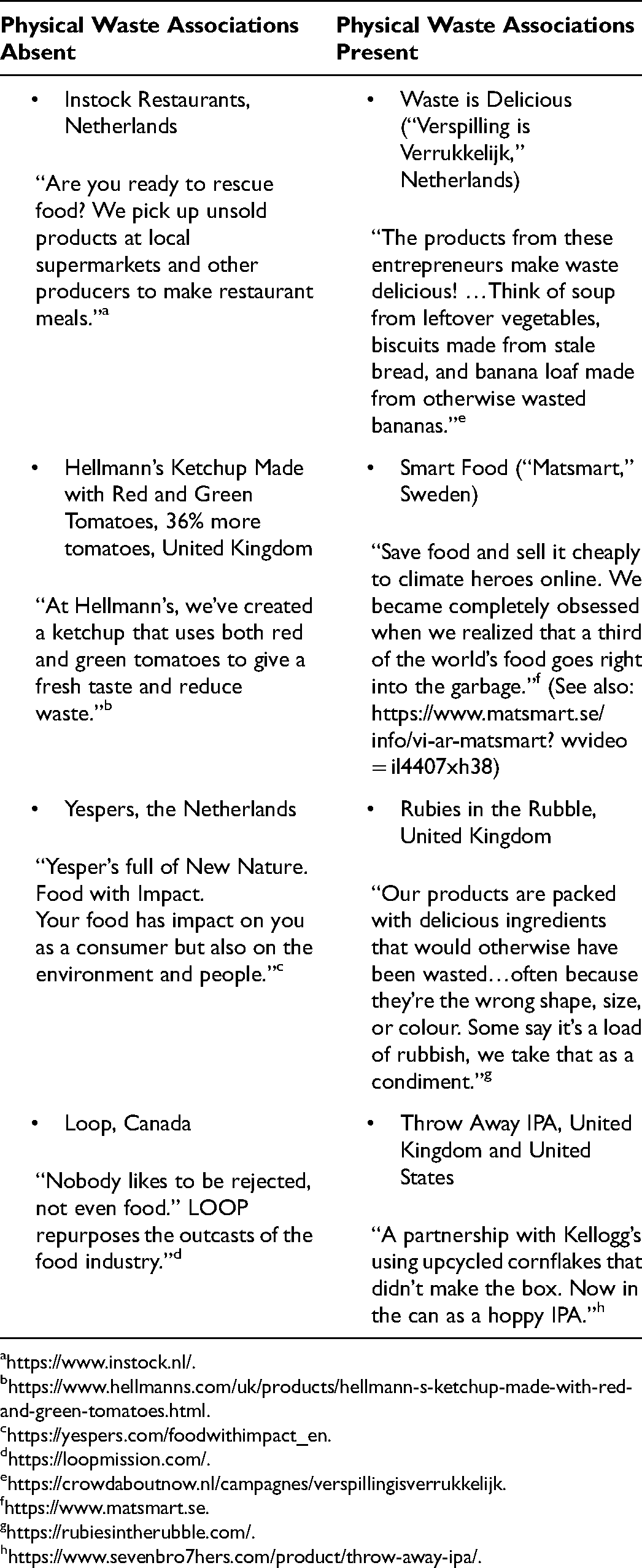
To quantify these differences in RBF promotions, we conducted a small-scale pilot study of managers working in the RBF category. Results demonstrate the common use of claims that highlight the waste-reduction benefits of this emerging product category, and that the use of these claims is motivated by the intuition that they motivate consumer preference (see Web Appendix A). 1 Almost two-thirds of the 31 RBF managers we surveyed made reference to waste when describing their company and its product(s) with comments like “[we turn] waste into valuable products and commodities” and “[we] regenerate nature and landscape through the production of ciders from waste apples.” More importantly, two-thirds of these managers also believed that consumers respond positively to RBF promotion that highlights the environmental benefits and associated waste-related messaging (e.g., less pollution, landfill waste). These findings are echoed by comments from Unilever CEO Paul Polman, who tweeted in 2017 that Unilever’s rescued ketchup “saves 2.5 M tomatoes a year from potential waste.”
The current research posits that promoting RBF using appeals that highlight the waste-reduction benefits of the category, although popular and perhaps intuitive among marketers, has an unintended consequence. Namely, marketers can unintentionally stimulate mental imagery of physical waste (e.g., trash, landfills), which in turn dampens demand. This potential is particularly acute in the food category, in which mental imagery of landfills and garbage, and the feelings of disgust such images can trigger, are antithetical.
Our research makes several contributions. First, we extend prior research that examines how different types of promotional appeals can encourage prosocial behavior (Andreu, Casado-Díaz, and Mattila 2015; Bhatt et al. 2018; White and Peloza 2009). Whereas substantial research has examined the efficacy of self- versus other-benefit appeals, we instead investigate the impact of two forms of other-benefit appeals (social and environmental benefits) to specify their distinct abilities to promote prosocial behavior in a food waste domain. In this context, adopting a green color scheme and highlighting environmental benefits in a promotional appeal can stimulate associations between RBF and waste, which negatively affects product perceptions. In establishing these effects, our research also addresses recent calls for insights into social and environmental CSR appeals as distinct constructs with unique impacts on consumer responses (Hanson et al. 2019).
Second, we provide novel insights into the role of mental imagery in determining consumer behavior. Extant research shows that mental visualizations can positively influence consumer preferences in a number of contexts such as new product evaluations (e.g., Zhao, Dahl, and Hoeffler 2014; Zhao, Hoeffler, and Dahl 2009), online shopping (Yoo and Kim 2014), and travel-related print advertising (Walters, Sparks, and Herrington 2007). We demonstrate that promotional strategies that are often effective in promoting prosocial products (e.g., environmental benefit appeals, the color green; Pancer, McShane, and Noseworthy 2017; White and Peloza 2009) can in fact evoke mental imagery of physical waste and have a negative influence on consumer evaluations of RBF. In particular, we highlight how mental imagery effects can have a negative impact on consumer evaluations. This represents an extension of previous research, which predominantly suggests that cues that trigger mental visualizations, such as website backgrounds with concrete and vivid information, can positively influence consumers’ online shopping behavior (Yoo and Kim 2014), travel booking intentions (Lv, Li, and Xia 2020), adoption of innovations (Zhao, Dahl, and Hoeffler 2014), and desire to eat (Lee and Kim 2020).
Third, we extend research into the psychological underpinnings of food waste (Block et al. 2016). For example, Grewal et al. (2019) find that the thought of consuming unattractive produce (e.g., potatoes, strawberries, apples) harms consumers’ self-perceptions, but this impact can be overcome by enhancing consumer self-esteem. We apply these insights to packaged and prepared food, which constitute a market that is approximately three times greater than that of produce (U.S. Foods n.d.). Moreover, we identify the effect of color on food preferences, a topic that Labrecque, Patrick, and Milne (2013, p. 188) cite as marked by “many gaps and numerous research questions [that] remain unaddressed.”
Finally, in proposing guidelines for marketing an innovative and sustainable food category, our research addresses calls for transformative solutions for reducing food waste (Block et al. 2016). Unlike organic or healthy food categories, RBF will require unique promotion strategies because of the potential for negative associations with waste and the impact of those associations on consumption of such foods. Because of the strong potential association between RBF and physical waste, the value proposition of RBF for consumers is highly complex and creates novel marketing challenges.
Rescue-Based Food and Physical Waste Associations
RBFs are diverse and include packaged products and restaurant dishes. As firms are not legally required to disclose the use of rescued ingredients, explicitly promoting that RBF ingredients would otherwise be wasted presents an important marketing opportunity. Notably, large-scale food scandals have prompted strong “consumer demand for greater transparency and information on food origin” (Feldmann and Hamm 2015, p. 153). Explicit information about food origins also provides distinctions with which marketers may differentiate their products (Nidumolu, Prahalad, and Madhavan 2009; Peters 2019; Stolzenbach et al. 2013) and influence consumer attitudes and behaviors (Piqueras-Fiszman and Spence 2015; Sirieix et al. 2013). Similar to other CSR activities that do not reflect legal obligations, firms can invest in and communicate their use of rescued ingredients to demonstrate support for social or environmental issues. Consumers reward such efforts with increased loyalty and referral behaviors (e.g., Creyer and Ross 1996; Du, Bhattacharya, and Sen 2010; Mohr, Webb, and Harris 2001; Sen and Bhattacharya 2001). Firms with strong CSR reputations benefit from enhanced relationships with a range of stakeholders, even beyond consumers (Peloza and Shang 2011). Therefore, marketers who promote the rescued nature of food ingredients can capitalize on the increasing support for firms that address pressing social and environmental challenges. The challenge for marketers, then, is to strike a balance between (1) the potential for rescued food to enhance attitudes toward the firm as a form of CSR while (2) disclosing the rescued nature of the ingredients of RBF in a way that does not elicit any unintended effects of associations with physical waste.
Physical Waste Associations
The promotion of CSR activities varies in the extent to which it influences consumer perceptions. In many cases, such disclosure can mitigate consumer demand for products due to a perception of inferior performance (e.g., Luchs et al. 2010). The current research proposes that disclosing the otherwise wasted origin of the ingredients in RBF could, unintentionally, evoke mental imagery of physical waste. In turn, this can generate feelings of disgust and have particularly damaging impacts on consumer demand in this food category.
Stimuli that can evoke mental imagery are important for the promotion of RBF because such imagery involves visualizing the sensory product experience (Lutz and Lutz 1978), and images of garbage are antithetical to food consumption. Consumers form mental imagery when exposed to visual, auditory, haptic, olfactory, and/or gustatory stimuli. Although multiple sensors might be applicable in a food consumption setting (e.g., tasting, seeing, even touching the food), visual imagery is the most impactful (Lee and Kim 2020; Yoo and Kim 2014), as both visual and text stimuli can elicit visual images (Wyer, Hung, and Jiang 2008). In fact, a feature of a product (e.g., green coffee) can make the product “so atypical of the category that people struggle to resolve it within an existing set of beliefs, and, consequently, the product suffers negative evaluations” (Noseworthy, Murray, and Di Muro 2018, p.1380). The otherwise wasted origin of RBF is an unconventional product feature, and research shows that the association of physical waste, spoilage, or deformation of food can cause food to take on “offensive and contaminating” properties that generate feelings of disgust (Huang, Ackerman, and Newman 2017; Rozin and Fallon 1987, p. 24). Feelings of disgust are part of consumers’ revulsion toward food perceived as contaminated in some way, and they can arise as a result of ideational (e.g., food origin) or sensory (e.g., texture) factors (Rozin and Fallon 1987). These feelings tend to persist beyond rationality and cognitive reasoning (Huang, Ackerman, and Newman 2017; Rozin and Fallon 1987). Thus, even if such products are perfectly fit for human consumption, consumers typically reject foods perceived as disgusting due to mental imagery that is offensive and contagious nature (Martins and Pliner 2006).
Although all RBF uses (fully or partly) ingredients that would otherwise be wasted, the salience of physical waste (and the mental imagery that those associations can create) varies depending on how the firm promotes the product. For example, a promotion might emphasize reduced pollution or diversion from landfills, or it might highlight reduced economic harm and benefits to farm communities. We predict that when a firm promotes RBF in a manner that creates associations with physical waste, mental imagery of waste and feelings of disgust will dampen consumer demand. In contrast, when such associations are not present, consumer preference for RBF will be similar to those for conventional foods.
To summarize, we predict:
Cognitive Load
CSR activities can encompass both social and environmental benefits, each with their own consumer considerations and associations (Catlin, Luchs, and Phipps 2017; Hanson et al. 2019). For example, social benefit appeals often refer to how consumer behaviors affect external stakeholders (e.g., other humans, animals), whereas environmental benefit appeals tend to cite physical degradation, environmental harm, or their mitigation to motivate consumer behavior. In a food waste context, social appeals do not carry inherent associations with physical waste, whereas the use of environmental appeals may lead to an association between RBF and physical waste due to the common use of physical waste in such appeals (e.g., pollution, garbage). In turn, consumers may be more likely to form mental visualizations that include environmental impacts such as (reducing) landfills and pollution, which in turn negatively affect their preferences (Huang, Ackerman, and Newman 2017; Rozin and Fallon 1987).
Drawing on our theorizing, we expect mental imagery will facilitate the associations between RBF and physical waste. The formation of mental imagery is a type of cognitive processing wherein an individual generates sensory or perceptual experiences in their working memory in the form of ideas, feelings, and memories (Zhao, Hoeffler, and Dahl 2009). This means that for consumers to form mental images, it requires cognitive effort (Jia et al. 2017). Considering that cognitive resources are finite, when consumers exert cognitive resources for other types of information (e.g., by reading factual information about the product) it can impact the process of forming mental imagery (Petrova and Cialdini 2005). Thus, the level of cognitive load imposed on the consumer can influence the mental capacity available for cognitive deliberation and mental visualizations. For example, Jia et al. (2017) find that when consumers are under high cognitive load, they are less able to generate mental images of themselves benefiting from a fictitious energy drink that promises to boost brainpower. Relevant for this research is that under conditions of low cognitive load, consumers have the cognitive resources needed to stimulate mental imagery of physical waste when exposed to promotions that feature environmental appeals that can generate physical waste associations. However, under conditions of high cognitive load, consumers will be less able to form mental imagery of physical waste in response to RBF that is associated with environmental cues such as trash and landfill diversion.
Cues in Environmental Appeals
Given the common association between the color green and the environment (Labrecque, Patrick, and Milne 2013), we focus our examination on how color impacts the efficacy of environmental appeals for RBF. Colors have symbolic value and cultural meanings because people repeatedly learn to associate colors with experiences or concepts (Elliot et al. 2007). These learned associations influence cognition and behavior (Elliot et al. 2007). Although green is often associated with the environment and is commonly used by marketers to promote environmentally friendly consumption, it can negatively impact consumer preference. For example, when dish washing soap packaging contains the color green, it conjures associations of dirty water and decreases consumer preference, which Won and Westland (2017) cite as evidence of the importance of context for determining color meaning. When environmental benefit appeals are paired with the color green to market RBF, we predict that the context evokes heightened associations with physical waste and thus reduces consumer preferences.
Our prediction concerning the color green is grounded in the argument that although environmental cues have the potential to generate associations with physical waste, relatively strong environmental associations are necessary for this to take place. For example, Pancer, McShane, and Noseworthy (2017) document the need for multiple environmental cues to generate environmental associations. Other research also points out the increased effect of combining two atypical product features (e.g., green and vitamin-enriched coffee; Noseworthy, Murray, and Di Muro 2018). Particularly relevant for this research is work showing that when a company uses several environmental claims (e.g., recyclable package, biodegradable materials, energy conservation) versus just one environmental cue, it can decrease consumer product evaluations (Chang 2011). Multiple environmental cues in product promotions (e.g., in an advertisement) can conflict with consumers’ set beliefs and brand attitudes and therefore negatively influence their product evaluations. Thus, the presentation of environmental information on its own may not be enough to create an association between a product and the natural environment, whereas environmental information paired with an additional cue (e.g., the color green) will create such an association. Other colors are less likely to generate the same environmental associations and may even create associations with cleanliness, such as in the case of the color white (Sherman, Haidt, and Clore 2012; Spence 2018). Therefore, when disclosure of environmental information is paired with a different color, we do not expect such associations to occur.
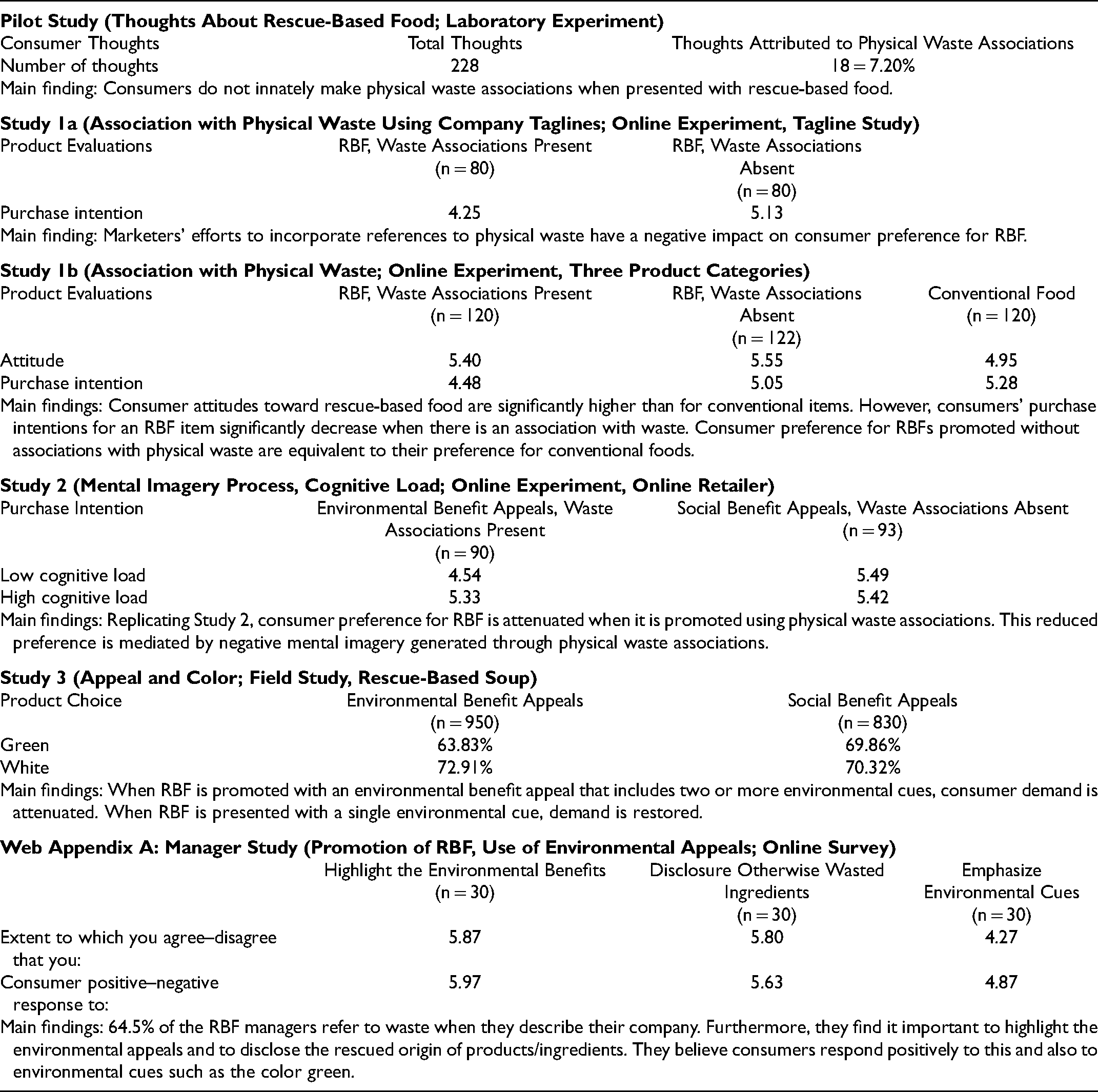
In the remainder of this article, we demonstrate that when rescued ingredient disclosure creates associations with physical waste, it evokes mental imagery of spoilage and garbage, and it mitigates consumer demand. First, in a pilot study, we show that consumers do not inherently associate RBF with physical waste. Taken together with the examples provided in Table 1 and our managerial survey, this means that the promotion of RBF can unintentionally create these negative associations. We explore this possibility directly in Studies 1a–b and the role of mental imagery in dampening consumer demand in Study 2. Then, in a field setting, Study 3 demonstrates how commonly used environmental appeals, which often include the color green, can generate associations with physical waste and thereby negatively influence consumer demand for RBF. In further support for the predicted process, and in our effort to provide practical guidance to marketers, we demonstrate that these effects can be offset by the use of a social benefit appeal or other colors that avoid negative waste associations. Figure 1 depicts our theoretical framework, and Table 2 summarizes the results of all studies.

Conceptual model.
Summary of Findings.
Pilot Study
We conducted a pilot study to explore consumers’ thoughts about RBF to establish a baseline for our conceptualization that consumers do not inherently generate associations between RBF and physical waste.
Method
Sample
Students (n = 229, 53% women; Mage = 20.4 years) at a major North American university participated in the study. They completed the study in a laboratory setting and received course credit for their participation.
Procedure
To generate participants’ thoughts about RBF, we first introduced them to the general category as an emerging marketplace phenomenon. This included providing a definition of RBF and two examples (Hellman’s Red & Green Tomato Ketchup and Instock Restaurant; see Table 1). Importantly, the examples were provided in a neutral fashion and did not present any particular appeal or association (see Web Appendix B). Everybody read the same information, and after reading the text, we asked participants to record their thoughts about RBF.
We developed descriptive codes directly on the basis of the data following the process prescribed by Miles and Huberman (1994). A coding scheme with six distinct categories emerged from the data, and only those thoughts that reflected associations with physical waste were considered a priori (Table 3). The thoughts were coded by two independent coders using the coding scheme, which was specifically based on the underlying associations between RBF and physical waste that were present in the thoughts. Coding disagreements were resolved through discussion.
Pilot Study: Thoughts Attributed to Rescue-Based Food.

Results and Discussion
We used Cohen’s κ to determine the interrater agreement on the coding of participants’ thoughts about rescue-based food. The results show strong agreement between raters (κ = .878 (95% CI = [.829, .927]), p < .001). Table 3 provides details on the coding process, and the categories presented in the far-right column of Table 3 represent the final coding categories and frequencies for this study. Thoughts related to physical waste only appeared in 7.2% of the total thoughts coded by the two raters. Examples of physical waste–related thoughts are “sounds like it is made out of leftovers” and “seem like cheap recycled goods.” This suggests that consumers do not have any inherent associations between RBF and physical waste. The thoughts that emerged did not reflect any particular associations, and they ranged from thoughts related to saving food in general (e.g., “people are starving in the world, it is important to use food”) to personal health (e.g., “seems much more healthy than the mass-produced foods you buy at the store” or “all natural, good for your health, low sugar”), pricing (e.g., “smart business move as far as costs”), taste (e.g., “does the ketchup taste the same?”), and a general lack of awareness/interest (e.g., “don’t really care”). To further explore whether there were underlying thoughts related to contagion and disgust in the data, we asked two new independent raters to code the thoughts in terms of whether they contained references to contagion or disgust. Similar to references to physical waste, these references were largely absent from consumers’ inherent thoughts about the category. Coder 1 only recorded nine thoughts related to disgust, and Coder 2 noted seven (κ = .482 (95% CI = [.174, .790]), p < .001). Contagion- or disgust-related thoughts were, for example, “being rotten or uneatable” and “could be seen as gross because the food is not as fresh.”
In summary, these results provide support for our prediction that consumers do not have a predefined schema for RBF and do not create automatic associations with either environmental benefits or, more importantly, physical waste. These results suggest that, absent of any specific framing through promotional appeals, demand for RBF as a category will not necessarily suffer due to mental imagery of trash- or solid waste–related associations. Rather, we posit that the manner in which firms promote these foods to consumers can create these associations and dampen demand. In the next two studies, we more explicitly examine different forms of ingredient disclosure and their impact on associations with physical waste, as well as the impact of this disclosure relative to conventional food products.
Study 1a
The objective of Study 1a was to provide initial support for our prediction that when RBF is associated with physical waste, it negatively impacts consumer preferences. Using promotional elements from brands listed in Table 1, we examined this prediction in both a packaged goods and a restaurant setting.
Method
Participants
A sample of 160 undergraduates (51% women; Mage = 20.65 years) took part in the study in exchange for course credit. No participants were removed from the sample prior to analyses. Furthermore, we did not exclude any participants from any samples in all subsequent studies.
Procedure
This study uses a two-factor, between-subjects design (physical waste association: present vs. absent) with two different contexts (restaurant, packaged goods) for replication purposes. Each participant viewed information for either an RBF restaurant or an RBF brand of packaged tortillas, either with or without physical waste associations. Using real brand names and promotional taglines from Table 1, we adapted the actual promotional taglines to allow for use in multiple product categories. Thus, the promotional positioning, with waste association being present or absent, is independent of product category. Given the innovative nature of this new food category, we provided a description of RBF. Thus, all participants viewed product information along with a brief description of RBF that stated, “this product is part of a group of products known as rescue-based food which is made from ingredients that are perfectly safe to eat yet about to be wasted” (Appendix A).
Measures
Purchase intention was the dependent variable, measured with a three-item, seven-point scale (“unlikely/likely,” “unwilling/willing,” and “not inclined/inclined”; α = .87; White and Peloza 2009). As a manipulation check, we asked participants to rate their association between the product they viewed and physical waste using a three-item, seven-point semantic differential scale; (“not linked/tightly linked,” “low association/high association,” and “no connection/high connection with waste”; α = .84; for the complete list of measures, see Appendix B).
Results and Discussion
Replicate conditions
The results from a univariate analysis with the context replicate as the independent variable shows that there was no main effect on physical waste associations (F(1, 158) = 1.206, p = .274) and no main effect on purchase intention (F(1, 158) = .216, p = .643). We further explored the effect of the context replicate as a covariate in an ANCOVA with first (1) physical waste associations and then (2) purchase intentions as the dependent variable. Waste association level was the independent variable. We specifically probed the interaction effect to ensure that the relationship between the covariate and the dependent variable was similar across different levels of waste association. This held for both waste associations (F(1, 156) = .591, p = .443) and purchase intentions (F(1, 156) = 2.473, p = .118; confirming homogeneity of the regression slopes in both cases). Accordingly, the full factorial ANCOVA demonstrates that the context replicate, as a covariate, had no effect on physical waste associations (F(1, 157) = 1.646, p = .201) and, similarly, no effect on purchase intention (F(1, 157) = .272, p = .603) when waste association level was the independent variable. Aligned with Ward and Dahl (2014) and for ease of interpretation, we therefore collapsed the data such that each level of physical waste association included two different contexts (each n = 80).
Manipulation check
Participants reported higher associations with physical waste in the condition in which waste association was present (Mpresent = 5.11) than in the condition in which waste association was absent (Mabsent = 4.24; F(1, 159) = 58.461, p < .001).
Purchase intentions
Analysis reveals a significant impact of waste association on reported purchase intentions. Controlling for the context replicate (F(1, 157) = .272, p = .603), purchase intentions (Mabsent = 5.13) were significantly higher in the condition in which waste association was absent than the condition in which waste association was present (Mpresent = 4.25, F(1, 157) = 41.93, p < .001). Using real-world promotional examples, this study shows that marketers’ efforts to incorporate references to physical waste have a negative impact on consumer preference for RBF. We thereby find support for our primary hypothesis that associations with physical waste decrease consumer demand for RBF. This result provides an important foundation for our reasoning, but we also aim to show that disclosure of the rescued origin of RBF can be a successful marketing strategy when it is promoted without physical waste associations. Considering that consumers want to behave in prosocial ways, RBF that is absent of associations with waste should retain consumer preferences similar to those of conventional products.
Study 1b
With Study 1b, we built on the findings from Study 1a in several ways. We directly examined how associations between RBF and physical waste affected consumer evaluations in a retail grocery setting, a critical context for addressing food waste worldwide. We included a control condition of conventional products and examined three different types of food products—bread, drinks, and potato chips—to help further generalize the findings.
Method
Pretest
The potential for RBF promotion with waste associations to generate feelings of disgust was confirmed in a pretest. After viewing information on rescue-based bread, one with waste associations and one without (see Appendix C), undergraduates (n = 90) responded to four items (“disgusted,” “revolted,” “unclean,” and “gross”; Argo, Dahl, and Morales 2006) on a seven-point continuum, with higher scores indicating higher levels of disgust (α = .89). Participants reported higher levels of disgust while viewing the information when waste associations were present (Mpresent = 3.56) than when they were absent (Mabsent = 2.57; t(88) = 3.293, p < . 001).
Participants
In the main study, a sample of 362 Amazon Mechanical Turk participants (38% women; Mage = 35.4 years, all United States residents) completed the study online and were compensated $.50 for their participation.
Procedure
Study 1b used a three-factor, between-subjects design (physical waste association: present vs. absent vs. control), with a product type replication of bread, juice, and chips. Each participant saw one of the products (i.e., bread, juice, or potato chips) as (1) RBF with physical waste associations, (2) RBF without physical waste associations, or (3) a conventional product. Participants saw a brief product description along with a product image and associated icons to vary physical waste associations. We varied the manipulations such that the RBF condition with physical waste associations referred (both in text and with icons) to saving waste and reducing landfill use, and the RBF condition without of physical waste associations cited saving food and limiting the use of resources (both in text and with icons). The control condition had the same type of products as the RBF conditions but featured conventional products made from conventional ingredients (see Appendix C).
Measures
We measured our dependent variable, purchase intentions, with the same three-item scale as in Study 1a (α = .95). To obtain participants’ attitudes toward rescue-based food, we adapted an attitude test pertaining to food waste, with a ten-item, seven-point semantic differential scale (“please indicate how well you think these words describe the product: moral/immoral, fair/unfair, useful/useless, beautiful/ugly, good/bad, excellent/awful, clean/dirty, healthy/unhealthy, commendable/despicable, desirable/undesirable”; α = .95; Verneau, La Barbera, and Del Giudice 2017). We also measured perceived risk to account for consumers’ potential perception that rescue-based ingredients may be unsafe (“buying this product is risky/uncertain/questionable”) using a seven-point scale (1 = “strongly agree,” and 7 = “strongly disagree”; α = .94; Gürhan-Canli and Batra 2004). To exclude confounding effects, we checked for loss versus gain framing effects of the product description on a two-item, seven-point semantic differential scale (“the product description mainly focused on (1) the positive [negative] consequences of [not] buying the product; (2) what is gained [lost] by [not] buying the product”; α = .81; adapted from Yoon and La Ferle 2018). For the manipulation check of physical waste associations, we used the same three-item scale as in Study 1a (α = .97; for all measures, see Appendix B).
Results and Discussion
The focal independent variable in this study was physical waste associations (present, absent, and control). We included several product types (bread, juice, and chips) for generalization purposes. Therefore, similarly to Study 1a, we first explored the effect of product type on our main variables: waste association and purchase intention. The ANOVA results show that there was no main effect on (1) waste associations (F(2, 359) = 1.216, p = .298) or (2) purchase intention (F(2, 359) = .318, p = .728). We then ran an ANCOVA to explore the effect of the product type replicate as a covariate. Aligned with the results of Study 1a, we found no interaction effect with the independent variable (i.e., levels of associations with physical waste; (F(2, 356) = .412, p = .662) on physical waste associations. When using purchase intention as the dependent variable, we found a similar pattern. There was no interaction between levels of waste associations and product type replicates (F(2, 356) = .655, p = .520). This means that the product types generated similar perceptions of waste association and purchase intentions. Comparably, the full factorial ANCOVA reveals that, when using waste association levels as the independent variable, there was no main effect of the product type replicate as a covariate (F(1, 358) = 2.558, p = .111) on waste associations or on purchase intention (F(1, 358) = .726, p = .395). Following the same procedure as in Study 1a, we therefore collapsed the data. Each level of the physical waste association thereby included three different product types (Nabsent = 120, Npresent = 122, and Ncontrol = 120) for the main analysis.
Manipulation check
An ANOVA using physical waste associations as the dependent variable and levels of physical waste association (present, absent, and control) as the independent variable shows that there was a significant difference between the conditions (F(2, 359) = 38.99, p < .001). Following Naylor, Lamberton, and Norton (2011), we contrast coded the data orthogonally and regressed the manipulation check variable on the two waste association contrast codes from Table 4. Aligned with our expectations, participants in the RBF condition with physical waste associations perceived relatively higher associations with waste (Mpresent = 5.49) than those in the condition without physical waste associations (Mabsent = 4.64) and those in the control condition (Mcontrol = 3.46; F(1, 359) = 51.73, p < .001). The results further show that participants rated the conventional products to be less associated with waste (Mcontrol = 3.46) than the RBF without physical waste associations (Mabsent = 4.64; F(1, 359) = 26.611, p < .001). Although the pilot study demonstrated that consumers do not hold any inherent associations between RBF and physical waste, it is not unexpected that when explicitly asked about those associations in the context of the definition of RBF (i.e., “ingredients…about to be wasted”), the condition in which we did not associate RBF with waste nevertheless resulted in a modest level of this association relative to our control condition. Thus, the manipulation appears successful.
Orthogonal Contrast Codes.

Hypothesis testing
The formal test of H1 uses analysis of covariance with purchase intention as the dependent variable, physical waste association (present, absent, and control) as the independent variable and product type as a control variable. This test reveals a main effect of the association with physical waste on purchase intentions (F(2, 358) = 7.455, p = .001), with no effect of the product type replicate (F(1, 358) = .726, p = .395; as seen previously). Additional analysis using the contrast codes from Table 4 as predictor variables reveals that participants in the control condition (M = 5.28) and the condition with no waste association (M = 5.05) reported higher purchase intentions than participants in the condition in which waste association was present (M = 4.48; F(1, 359) = 13.669, p < .001). Furthermore, and in support of H1, there was no significant difference in purchase intentions between the control condition and the condition with no waste association F(1, 359) = 1.199, p = .274; Figure 2).
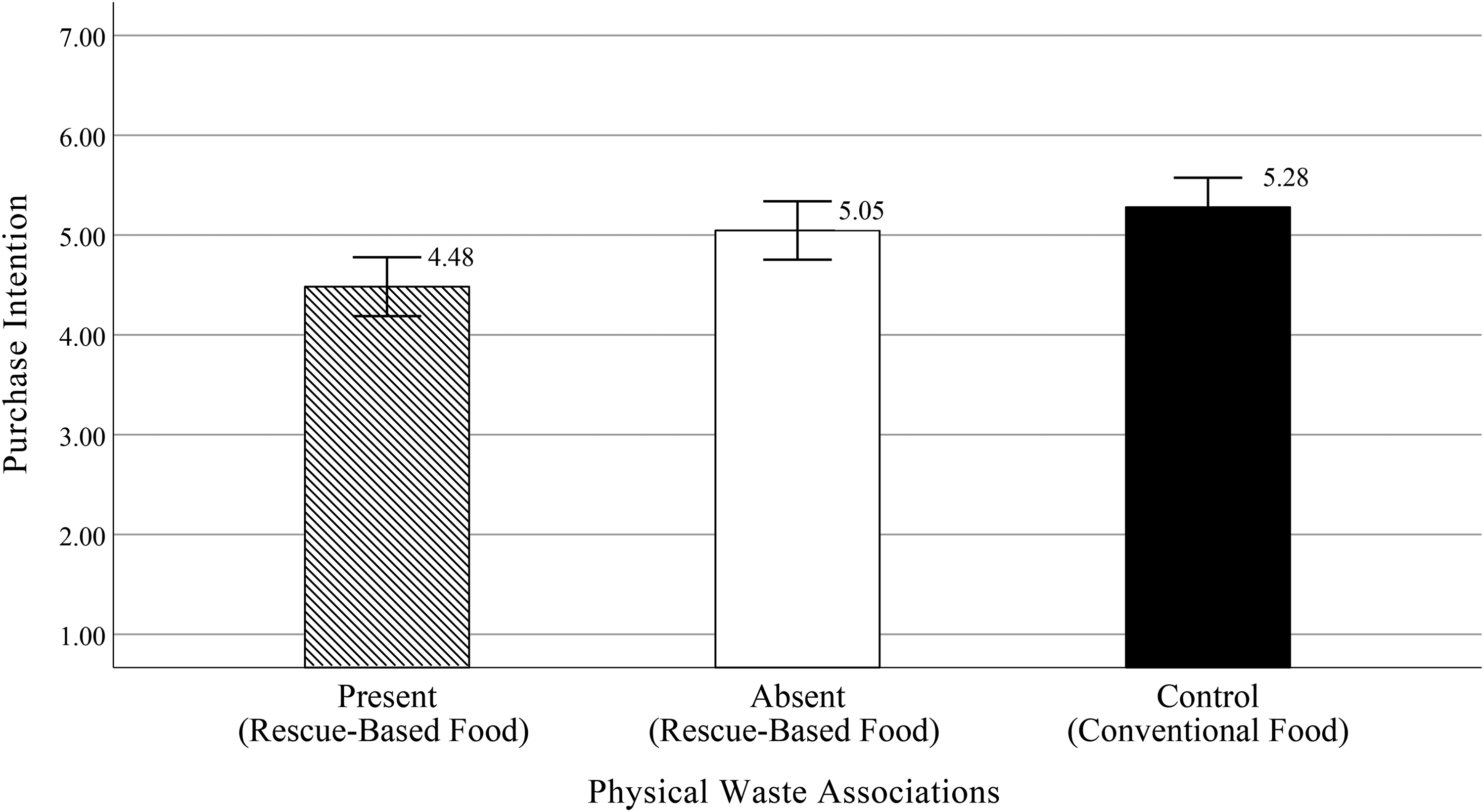
Study 1b: Effect of associations between physical waste and rescue-based food on purchase intentions.
Turning to our analysis of attitude, we reverse-coded the scale prior to analysis, such that a higher mean corresponds with a more positive attitude. The results demonstrate a main effect of the association with physical waste on attitude (F(2, 358) = 8.025, p < .001) when controlling for the product type replicate (F(1, 358) = .925, p = .337). In contrast to purchase intentions, using the contrast codes from Table 4, participants’ attitudes in the RBF condition with physical waste associations (Mpresent = 5.40) were similar to the RBF condition absent of waste associations (Mabsent = 5.55) and the conventional food condition (Mcontrol = 4.95; (F(1, 359) = 1.23, p = .268). Indeed, aligned with our reasoning that consumers have inherently positive attitudes toward RBF products, we find that attitudes are more positive in the RBF condition absent of waste associations (Mabsent = 5.55) than in the conventional food condition (Mcontrol = 4.95; (F(1,359) = 14.76, p < .001). A post hoc comparison using a Tukey HSD test further shows that there was no significant difference between the RBF conditions (Mpresent = 5.40; Mabsent = 5.55; p = .604) and that, in fact, participants reported significantly higher attitudes toward RBF with physical waste associations than conventional food (Mcontrol = 4.95, p = .012). This suggests that consumers have positive attitudes toward the RBF category in general, similarly to how they feel about other forms of CSR and pro-environmental products.
Collectively, and in conjunction with the pilot study, these results support our prediction that physical waste associations negatively influence consumers’ preference for RBFs, and that this negative impact can be driven by marketers’ attempts to promote RBFs’ waste-reduction benefits. Using three product type replicates, we demonstrate that the effects are not driven by inherent physical waste associations held by consumers. Rather, they are created by the strategies marketers use to promote RBF. Furthermore, these results indicate that consumers hold positive attitudes toward RBF and that disclosing the nature of these products can enhance relationships between brands and consumers. This study demonstrates the opportunity for marketers to introduce RBF and benefit from enhanced consumer attitudes, but it also highlights the pitfall of promoting RBF in a manner that can create associations with physical waste. Finally, we confirm that the results are not determined by risk perceptions or loss versus gain framing effects.
Study 2
Building on the results from the previous studies, Study 2 had a number of objectives. First, we directly tested H2 and our proposed mediation through mental imagery. We also introduced cognitive load as a moderator to provide further support for our underlying effects and to test H3. Third, building on Study 1b, we introduced appeal type and examined the effects on consumer preferences for RBF. Specifically, we used environmental (social) appeals as a means to increase (decrease) the level of RBF’s association with waste. We also introduced a new context in the form of an online retailer that features RBF. Doing so allowed us to consider a broader, more flexible range of RBF product categories and a mode of packaged goods delivery outside of the brick-and-mortar retailer context. The introduction of an online retailer, and the related delivery service component, provided a new context in which to test our hypotheses, which strengthens the overall support for our findings.
Method
Participants
A sample of 183 Amazon Mechanical Turk participants (44% women; Mage = 38.6 years, all United States residents) completed the study online and were compensated $.50 for their participation.
Procedure
Study 2 uses a 2 (benefit appeal: environmental vs. social) × 2 (cognitive load: high vs. low) between-subjects design. Using the same method as Jia et al. (2017; Study 3), we introduced the survey as a two-part process under the guise of studying multitasking. We first manipulated cognitive load by asking participants to remember either a short, two-digit number or a longer, eight-digit number and telling them they would be asked for the number at the end of the survey (we also told them to not write the number down and that no penalties would be assessed for incorrect answers). We then presented them with the survey portion related to RBF. Participants viewed a short description of an online retailer that featured RBF. We manipulated the appeal of the RBF such that the environmental appeal condition referred to garbage and resource degradation and thus was higher in physical waste associations. We also highlighted key words in green in the environmental appeal condition to further emphasize the environmental relevance of RBF. The social appeal condition cited inequalities and food insecurity, which reduced physical waste associations because there were no reminders of trash, landfills, etc. We used the color red to highlight key words in the social appeal condition (see Appendix D).
Measures
Purchase intention was the dependent variable, which we measured using the same three-item, seven-point scale from Study 1; α = .91). To measure participants’ ability to engage in mental imagery, we used a three-item, seven-point scale adapted from Jia et al. (2017) (“how vividly could you imagine the products being associated with physical waste”; “how clearly could you imagine the products being linked with physical waste”; “when you read about the products to what extent did images of physical waste come to mind”; 1 = “not at all,” and 7 = “very much”; α = .89). Finally, participants responded to two items measuring the degree to which they felt distracted and had difficulty concentrating while evaluating the online retailer (“as you evaluated the retailer, how difficult was it to concentrate/how distracted were you”; r = .78; Appendix B).
Pretest
To ensure that our manipulation did not influence perceptions of risk, we first pretested our stimuli with 64 Amazon Mechanical Turk participants (45% women; Mage = 36.3 years, all U.S. residents) separately from the main study. Participants viewed the RBF product (Appendix D) and responded to the same three-item risk measure used in Study 2 (α = .95). Analysis reveals no impact of the manipulations on perceptions of risk (Mpresent = 4.49, SD = 1.76; Mabsent = 4.28, SD = 1.95; t (1, 62) = .443, p = .660).
Results and Discussion
Manipulation check
Participants reported greater difficulty to concentrate in the high cognitive load condition (Mhigh = 4.14) than in the low cognitive load condition (Mlow = 3.47; F(1, 181) = 1.486, p = .023). Thus, our manipulation of cognitive load was successful.
Hypothesis testing
A 2 (benefit appeal: environmental vs. social) × 2 (cognitive load: high vs. low) between-subjects ANOVA, with purchase intention as the dependent variable, yields main effects for both appeals (F(1, 182) = 7.28, p = .039) and cognitive load (F(1, 182) = 3.49, p = .019) on purchase intentions. Notably, and in support of H1, the interaction of benefit appeals and cognitive load was also significant (F(1, 182) = 4.92, p = .027). In the social appeal condition, cognitive load did not affect purchase intentions (Mlow = 5.49, SD = 1.05; Mhigh = 5.42, SD = .97; F(1, 91) = .63, p = .750). However, in the environmental appeal condition, participants who were under low cognitive load reported significantly lower purchase intentions (Mlow = 4.54, SD = 1.88) than participants who were under high cognitive load (Mhigh = 5.33, SD = 1.11; F(1, 88) = 20.64, p = .018; Figure 3).

Study 2: Effect of cognitive load on purchase intentions.
When we use mental imagery as the dependent variable, the results are similar, with main effects for benefit appeals (F(1, 182) = 5.59, p = .046) and cognitive load (F(1, 182) = 5.45, p = .049). In concert with our prediction, the interaction between benefit appeals and cognitive load was also significant (F(1, 182) = 6.16, p = .036). In the social appeal condition, cognitive load did not impact participants’ ability to visualize physical waste (Mlow = 2.59, SD = 1.08; Mhigh = 2.61, SD = 1.07; F(1, 91) = .04, p = .916). This supports our finding in Study 1 that, absent of any promotional valence, consumers do not hold an inherent association between RBF and physical waste. In the environmental appeal condition, however, participants reported much greater ability to visualize physical waste under low levels of cognitive load (Mlow = 3.30, SD = 1.60) than under high levels of cognitive load (Mhigh = 2.59, SD = .88; F(1, 88) = 9.34, p = .011; Figure 4).

Study 2: Effect of cognitive load on mental imagery.
Finally, to examine the proposed mediating effect of mental imagery, we used bootstrapping (Hayes 2017, Model 8 for mediated moderation). This analysis demonstrated that the ability to visualize physical waste through mental imagery mediates the effect of benefit appeals on purchase intentions. The index of mediated moderation demonstrates a difference between the two cognitive load conditions (95% CI = [.0022, .4325]). In the low cognitive load condition, we found a significant mediation effect through mental imagery (IE = −.1754, SE = .0967, 95% CI = [−.3916, −.0193]) but no significant effect in the high cognitive load condition (IE = .0042, SE = .0538, 95% CI = [−.1107, .1144]). This supports our prediction that mental imagery, and the ability to visualize physical waste when marketers promote RBF in a manner that creates physical waste associations (i.e., by using environmental appeals), dampens consumer demand for RBF.
Study 3
Our objectives for Study 3 were threefold. First, we directly tested H4, which predicts that when two or more promotional elements associate RBF with the environment, it reduces consumer preferences for RBF. Second, we sought to enhance the generalizability of our findings by introducing a new product context (restaurant vs. packaged goods) and product category (soup). Third, we conducted this investigation in a field setting: a restaurant that sells both conventional and rescue-based menu items.
Method
Sample
This field study took place over an eight-week period in a restaurant located on a university campus in the Netherlands. Customers included students (60%) and staff (30%), as well as other visitors (10%). The profile of the sample was approximately 60% women, with average ages of 20 years among students and 52 years for staff and other visitors. The restaurant features different food stations (e.g., soups, sandwiches, salads, warm dishes, desserts), and its soup station offers two choices. The sample refers to 1,780 sales of soup.
Procedure
Study 3 employed a 2 (benefit appeal: environmental vs. social) × 2 (color: white vs. green) design. The restaurant always features a soup station with two choices. During the course of the eight weeks, we presented customers with a rescue-based soup (tomato, zucchini, bell pepper, celeriac, or mixed vegetable soup) and a soup with conventional ingredients (mushrooms, chicken, beef, tom yum, or mixed clear soup). The soups were paired successively throughout the week such that the rescue-based tomato soup and conventional mushroom soup were always offered on Mondays, the rescue-based zucchini soup and conventional chicken soup were always offered on Tuesdays, and so on (see Web Appendix C).
We manipulated the benefit appeals to reflect the common practice in the restaurant, which changed its signs weekly. In the environmental benefit condition, the signs noted reduced landfills and emissions; in the social benefit condition, they referred to helping farmers and increasing food security. For the rescue-based soups, this manipulated benefit was the only element of the appeal that changed. For the conventional soups, we replaced the benefit appeals with information about the type of soup and its ingredients. The price for both soups was the same—€3.60—before, during, and after the experiment.
We manipulated the color of the bowls stacked at the soup station (the restaurant uses a buffet-style presentation, so customers serve themselves). The restaurant provided white bowls during weeks 1, 2, 5, and 6 and green bowls during weeks 3, 4, 7, and 8. The interiors of both bowls were white, so the soup itself would not appear discolored when served. Under the guise of a survey designed to test new dishware, we conducted a pretest with restaurant patrons. The actual purpose was to determine if customers would perceive green bowls as unexpected, triggering increased elaboration and thus affecting their selection of the item paired with the green bowls. The pretest participants (n = 20) indicated their perceptions of the green bowls on a three-item scale (“this green bowl would be out of place/look odd/be a strange choice in the restaurant”; α = .80; 1 = “not at all,” and 7 = “very much”). The results indicate that customers did not perceive green bowls as unexpected (M = 4.33, t(19) = 1.214, p = .240, versus scale midpoint).
Results and Discussion
A chi-square test reveals that customers preferred the rescue-based soup significantly more (69%) than the conventional soup (31%; χ2(1, N = 1,780) = 264.380, p < .001), which was consistent throughout the experiment. This finding lends further support to the idea that consumers generally are willing to make prosocial choices and consume rescue-based food. For the test of color effects, we undertook a binary logistic regression. We found no main effect of benefit appeal (β = −.127, p = .375) but a direct effect of color (β = −.42, Wald = 9.02, p = .003) and a significant interaction effect between appeal and color on product choice (β = .40, Wald = 3.72, p = .054). Customers were less likely to choose the rescue-based soup promoted with an environmental benefit when paired with green bowls (63.83%; 293/459) than when paired with white bowls (72.91%; 358/491; t(948) = 3.02, p = .003). In the social benefit condition, customers were equally likely to choose the rescue-based soup whether the bowls were green (69.86%; 255/365) or white (70.32%; 336/465; t(828) = .14, p = .886; Figure 5). These results support our prediction that green reinforces associations with physical waste when paired with environmental benefits but that white attenuates this negative effect and, furthermore, that color exerts no effect if the appeal highlights social instead of environmental benefits.
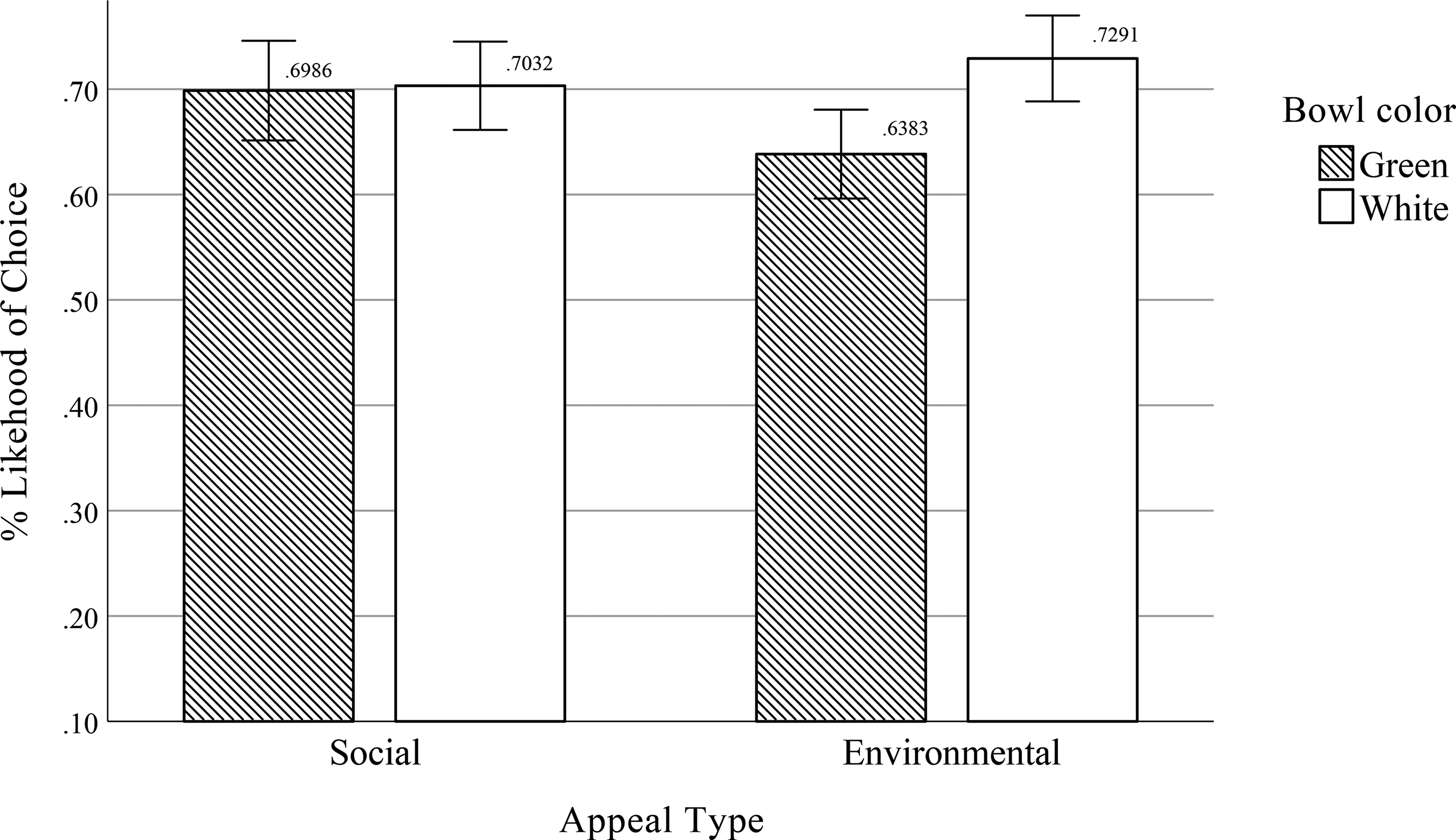
Study 3: Effect of appeal type and color on choice likelihood for rescue-based soup.
General Discussion
Food waste is a pressing environmental, social, and financial challenge. It is expected to create 2.1 billion tons of waste by 2030, accounting for an estimated $1.5 trillion loss (Block et al. 2016; Elks 2018), leading the United Nations (2015) to institute a Sustainable Development Goal of reducing food waste by half. To promote RBF, however, firms must strike a balance between establishing a socially responsible brand and ensuring that the products appeal to consumers. Evidence from the market suggests that firms use a range of promotional strategies, from those that highlight the social benefits of RBF to those that more explicitly use the waste-reduction benefits of RBF. Our research shows that consumers are not inherently negative about such products, but when waste associations are made salient, consumer demand is attenuated. Thus, in attempting to promote the products and the associated environmental benefits, marketers can evoke unintended, negative consequences.
Theoretical Implications
In exploring consumer preferences for RBF, we make several contributions to prosocial consumer behavior and CSR literature. Our findings may help explain and overcome the attitude–behavior gap that arises in CSR research and consumer support of sustainability (Cotte and Trudel 2009; Ozanne et al. 2016). That is, by promoting RBF as being made from ingredients that would otherwise become waste, marketers can demonstrate their commitment to CSR and offer consumers an easy way to incorporate their prosocial preferences into their choices. At the same time, previous research finds that citing prosocial attributes can have negative impacts on consumer preference (Luchs et al. 2010). Our findings demonstrate that the presentation and articulation of these prosocial attributes can determine the degree of this negative impact in the context of food. Indeed, we show that consumers do not hold predetermined waste associations in relation to RBF, but marketing actions can unintentionally stimulate such associations by evoking negative mental imagery of waste.
We also contribute to research on benefit appeals by examining both social and environmental benefits, which are two forms of other-benefit appeals. We highlight the need to distinguish between social and environmental benefits in consumer promotion. For example, environmental benefit appeals and the color green have often been associated with stimulating prosocial consumer behavior. Our results, however, demonstrate the potential for these popular promotional elements to dampen consumer support for environmentally friendly products when those elements trigger associations that are contrary to the performance for that category (i.e., food consumption associated with physical waste). In concert with previous research examining environmental promotional appeals, our findings suggest that associations between RBF and physical waste are not predetermined but instead occur when marketers unintentionally create them through the use of multiple elements that trigger those associations (e.g., verbal descriptions paired with the color green).
We extend research examining warm glow and positive impression management on prosocial behavior by examining distinct ways in which specific other-benefits impact consumers (Hanson et al. 2019). The impacts of specific appeals on consumer preferences in a product category can be negative or positive, depending on whether they generate associations that evoke problematic quality or performance expectations. Future studies examining benefit appeals can further explore these equivocal effects.
Finally, our research contributes to literature concerning color and its effect on consumer preferences (Labrecque, Patrick, and Milne 2013). Taking note of research that demonstrates multiple cues are needed to prompt consumers to categorize a product as environmentally friendly (Pancer, McShane, and Noseworthy 2017), we propose that colors other than green can attenuate the negative perceptions evoked when a strong environmental benefit appeal cues an association with waste. This offers a relatively simple, alternative way to restore consumer preferences to a level equivalent to what they express for conventional products. More broadly, we build on previous research demonstrating that the promotion of products with ethical attributes is strongly influenced by the type of product and brand in question (Wood et al. 2018).
Future Research
Along with these theoretical implications for marketers, our research reveals some promising directions for further study. In particular, future studies can investigate how associations with physical waste can impact consumer behavior in various product categories. Mental imagery also might affect preferences for products other than food. For example, soap made with the peels of rescued oranges may evoke similar negative mental images and thus suppress consumers’ intentions to buy or use the soap due to the relative intimacy of such products (Luchs et al. 2010). These effects may be less likely for less intimate products, such as vegetable-tanned leather, for which associations with physical waste may not carry the same negative impacts.
Future research can also examine how other environmental information can interact with the processes described here. For example, some food production practices result in much more extensive environmental damage than others. Meat, for instance, uses an intense amount of energy and creates significant levels of pollution and large amounts of waste. Although meat was present in some of the food products used in Study 3, most of our studies included nonmeat products. Future research can therefore more explicitly examine how our effects extend into food products that contain meat and the associated environmental impacts of meat-based ingredients.
Managerial Implications
RBF offers a viable option and scalable solution that can significantly contribute to the United Nations’ Sustainable Development Goals as well as firm profitability (Bhatt et al. 2018). We suggest some ways firms might capitalize on the potential market for RBF, reap reputational rewards associated with CSR, and mitigate consumer aversion to these products and their prosocial attributes. The ability to introduce RBF to the mainstream promises the potential to address the food waste challenge, creating shared value for marketers, consumers, and society.
However, well-intentioned innovation from marketers can have unintended consequences. As our research shows, a common tactic for promoting products with prosocial attributes—environmental marketing appeals—can actually backfire by creating an association with physical waste. The use of the color green, as is often applied in practice in combination with environmental benefit appeals, reinforces the generation of associations with physical waste. This does not imply that RBF marketers cannot reap relational rewards from disclosing the rescued nature of the ingredients in their products. It is important, however, that the messaging related to these products communicates their innovation in a way that does not inadvertently harm consumer demand. This is especially challenging because passion for the natural environment drives much of the innovation from the social entrepreneurs who create RBF, and environmental benefits can be seen as the most natural way to promote these products to others (as noted in our managerial study). Nevertheless, others who do not share this passion and deep knowledge of environmental impacts may view the same appeal in a different light, if not negatively, meaning that the promotion of such products could fall victim to “ideators’ bias” (Sting et al. 2019). Marketers who seek to compete in the growing RBF markets should highlight the social benefits and other prosocial qualities of the category and avoid signals that might trigger negative mental imagery of physical waste.
Finally, studying RBF in itself provides insights into how companies can contribute to finding effective solutions for food waste, one of the most significant problems of our time (Block et al. 2016). We identify barriers to prosocial choice and offer guidelines for how marketers need to take consumers’ psychological factors into account. Ultimately, this will help ensure consumer acceptance of RBF, which should help marketers build more viable business models.
Footnotes
Appendix A: Study 1a Materials
Appendix B
Appendix C
Appendix D
Associate Editor
Karen Winterich
Declaration of Conflicting Interests
The author(s) declared no potential conflicts of interest with respect to the research, authorship, and/or publication of this article.
Funding
The author(s) received no financial support for the research, authorship, and/or publication of this article.

Notes
References
Supplementary Material
Please find the following supplemental material available below.
For Open Access articles published under a Creative Commons License, all supplemental material carries the same license as the article it is associated with.
For non-Open Access articles published, all supplemental material carries a non-exclusive license, and permission requests for re-use of supplemental material or any part of supplemental material shall be sent directly to the copyright owner as specified in the copyright notice associated with the article.
