







Abstract
The aim of this article is to empirically analyse liberal peace arguments in the context of shared river basins. In particular, it argues that counter to the water war hypothesis, sharing a river need not necessary lead to conflict over the shared resource: relying on liberal arguments, joint democracy is expected to facilitate trust and thus cooperation over transboundary rivers. Furthermore, by mitigating asymmetries, facilitating (implicit) side-payments and issue linkage, both economic and political interlinkages may encourage cooperation over shared rivers. Previous work suggests that these factors might be a ‘fair-weather’ phenomenon, that is, that they play a role only for problems that are easy to solve. In this article, liberal effects are allowed to vary with the difficulty of the underlying problem by separating different issues and geographic situations. Empirically, the article focuses on intergovernmental behaviour using a new dataset on transboundary water events covering all international basins for a period of eleven years (1997–2007). The results show that indeed liberal peace factors matter with respect to intergovernmental interaction over shared river basins and the effect of joint democracy is more prominent under ‘fair-weather’ conditions.
Introduction
Many natural resources are not confined to the national territory and are thus shared by two or more countries. Interactions over shared resources, such as water courses crossing international borders, may give rise to interstate tensions or, ideally, foster cooperative behaviour. Especially with a view to climatic developments, attention to international water courses has grown. Changes in water resources are one of the most prominent physical effects of climate change. In particular, climate models foresee long-term changes in precipitation and run-off and also predict that more extreme events, such as floods and droughts, will occur more frequently than they did in the past. Such unprecedented hydrological changes might bring about changes in socio-economic systems and they might affect intergovernmental behaviour with respect to shared water resources.
This has led to claims that sharing a river might increase the risk of interstate conflict, the so-called ‘water war’ hypothesis (Starr, 1991). Other studies emphasize the non-negligible amount of cooperation over shared water resources (Brochmann & Gleditsch, 2006; Wolf, 1998; Wolf, Stahl & Macomber, 2003). In this article, I add to the emerging research on cooperation and conflict between countries over shared water resources. In particular, I develop a theoretical framework linking liberal peace to intergovernmental behaviour over shared resources. The gist of my argument is that sharing a river need not necessarily increase the risk of conflict over the shared resource, but that joint democracy and political and economic interlinkages foster cooperation over shared resources.
I empirically test my argument on a new events dataset, distinguishing different types of events (water quality, water quantity and joint management) and different geographical settings. My results indicate that liberal factors can foster intergovernmental cooperation over shared resources. They also confirm that it is worthwhile distinguishing different issue areas and geographical situations: for instance, the cooperation-enhancing effects of democracy and trade are most prominent in case of political interactions between two countries concerning water quality in border-demarcating rivers, but less so if joint management is concerned.
Whereas this study’s theoretical framework builds on existing literature, the empirical analysis goes beyond former research in several respects. First, I test my hypotheses on a new events dataset. In particular, I coded the intensity of cooperative and conflictive events between riparian countries’ governments with respect to shared international basins. Second, I consider a continuum of conflict and cooperation rather than relying on a binary coding. This conceptualization of conflict and cooperation allows for an encompassing test of the applicability of liberal explanations to cooperation and conflict over shared resources. Third, my empirical analysis is conducted at the basin-dyad-year level, where dyad refers to a pair of countries. This structure allows for a flexible and full-fledged test of my theoretical expectations, since basin-, country-, and dyad-specific effects may vary both across and within samples. I explicitly account for both interdependencies between dyads located in the same basin (some basins are shared by more than two countries) and interdependencies between basins shared by the same dyad (some dyads share more than one basin) by introducing respective spatial lags.
The remainder of the article is structured as follows: following a brief literature overview, the next section delineates the theoretical framework and presents empirically testable hypotheses. It is followed by a description of the research design and data collection. The empirical part is completed by the discussion of results, and the last section contains my conclusions and suggestions for future research.
Literature
In recent years, various large-N empirical studies on transboundary freshwater issues have been published. 1 Many of them focus on potential conflict between river-sharing countries over either the shared water resource or the borders it constitutes (cf. Toset, Gleditsch & Hegre, 2000; Stroh, 2004; Furlong, Gleditsch & Hegre, 2006; Gizelis & Wooden, 2010; Gleditsch et al., 2006). Whereas this literature provides relevant and important insights on the risk for militarized conflict between river-sharing countries, it is sometimes unclear whether water-related issues are actually at the core of such conflicts between river-sharing countries. In an effort to disentangle river-related from other types of conflict, the Issue Correlates of War Project (ICOW) codes events data on official interaction between countries that express claims on cross-border rivers (Hensel, 2005: 2). Hensel, Mitchell & Sowers (2006) and Brochmann & Hensel (2009), using these data, find that asymmetry (in terms of relative capabilities) in a dyad ameliorates river-related disputes, river institutions help to solve ongoing river claims, and the likelihood of successful negotiations over ongoing river claims increases with greater water demands and closer overall relations between riparian countries. Additionally, Hensel et al. (2008: 132) conclude that ‘Peaceful and militarized means for managing contentious issues are substitutable and driven by similar processes’.
Regarding cooperation over shared resources, several studies focus on institutionalized cooperation over rivers, that is, river treaties (cf. Conca, Wu & Mei, 2006; Gerlak & Grant, 2009; Hamner, 2009; Stinnett & Tir, 2009; Tir & Ackerman, 2009). We can distinguish efforts to explain why formal cooperation over shared rivers comes about and studies on specific aspects of such institutionalized cooperation. As to the former, Hamner (2009) empirically shows that states are more likely to enter into water treaties during times of water stress, in particular during a shared drought. Tir & Ackerman (2009), too, examine under what conditions riparian countries enter into treaties dealing with water quantity and quality, highlighting the importance of neo-liberal explanatory factors, such as riparians’ trade relationships, trade interdependencies and joint democracy. Based on a sample of 118 bilateral water treaties from 1944 to 1998 in 157 international river basins, Espey & Towfique (2004), in turn, find that the most important driving factors of bilateral water treaties are basin- rather than country-specific covariates such as the share of a country’s territory covered by a river basin. Country- and dyad-specific characteristics appear to have smaller effects on the probability of treaty formation. Hoffman (2003: 20) finds that ‘basins with treaties tend to be larger, have more riparians sharing the water, and be located at least partially on an international border’. These results are similar to those by Gerlak & Grant (2009), whose main finding is that institutional arrangements are more likely to be established over basins shared by multiple countries (more than two) and between predominantly democratic riparians with asymmetrical military capabilities.
Going beyond the mere question of when and why water treaties come about, Stinnett & Tir (2009) focus their attention on the degree of institutionalization of river treaties, and Zawahri & Mitchell (2008) explore when and why riparians choose bilateral over multilateral treaties. They argue (and find empirical evidence) that the chosen treaty type depends on state interests (e.g. dependency on a particular river), transaction costs and balance of power. Stinnett & Tir (2009) argue that certain river issues are rather complex, which is why potential member states value more institutionalized treaties.
Contrary to this widespread focus on institutionalized cooperation, this article refers to cooperation over shared resources including both formal agreements (such as river treaties) and non-institutionalized forms of cooperation, such as meetings between environmental ministers to initiate or foster joint management of shared basins. This conceptualization of conflict and cooperation allows for a more encompassing test of the applicability of the liberal triangle (joint democracy, economic and political interdependencies) to cooperation over shared resources. Apart from pioneering articles by Wolf and co-authors (Wolf, Stahl & Macomber, 2003; Wolf, Yoffe & Giordano, 2003) as well as Brochmann & Gleditsch (2006), existing studies on non-institutionalized forms of cooperation rely mainly on case study evidence (Stucki, 2005).
Finally, some studies consider pollution levels as an indicator for interstate behaviour. Sigman (2002, 2004) studies the effect of trade on international river pollution and Bernauer & Kuhn (2010) consider whether there is an environmental version of the Kantian peace. Their results suggest that the cooperation-enhancing effects of democracy and interlinkages might solely be a ‘fair-weather’ phenomenon. That is, these factors might foster cooperation only for problems that are easy to solve. Owing to data availability, Bernauer & Kuhn restrict their analysis to water pollution in upstream–downstream settings in Europe and therefore cannot explicitly test this supposition. This article is broader in scope as it analyses not only water quality, but also water quantity and joint management of all border-crossing and border-demarcating basins worldwide. In contrast to both Bernauer & Kuhn (2010) and Sigman (2004), it focuses on transboundary events reflecting intergovernmental cooperation and conflict.
Theoretical framework
My theoretical framework relies on (neo)-liberal factors, namely democracy, economic and political interdependence. I argue that sharing a river need not lead to conflict over the shared resource, but that joint democracy and economic and political interlinkages (the liberal triangle) foster cooperation over shared resources.
Previous work suggests that the liberal triangle of joint democracy and economic and political interdependencies might foster cooperation only under ‘fair-weather’ conditions. Gibler (2007) argues the democratic peace might be a spurious result, because countries in transition tend to solve their border issues prior to becoming democratic and then only face relatively easy to solve problems. He finds empirical evidence for this claim in a related article (Gibler & Tir, 2010). Independently, Bernauer & Kuhn (2010: 97) conclude that ‘the forces of democracy, trade, and national and international regulation and institutions do not easily produce decent international behaviour’. I expect interactions regarding water quality to be easier than water-quantity events, because water quality is non-excludable and – at least in border-demarcating basins – potential externalities regarding water quality are reciprocal (cf. Barrett, 1994). Even in border-crossing basins, the upstream country suffers from its own pollution unless it deals with point source pollution just in front of an international border. Regarding water quantity, in turn, a country might unilaterally withdraw water and thus overexploit the resource. 2 Finally, joint management refers to actions that alter the flow of a river, such as the construction of a dam. Since this concept is rather diverse in scope, classifying joint management events is less straightforward. The effects of the liberal triangle might thus be less distinct than for water quality and water quantity.
As schematically visualized in Figure 1, international rivers can follow several geographic settings (border-crossing, Figure 1a, border-demarcating, Figure 1b, or some mixture of both, Figure 1c). In upstream–downstream situations, clear power asymmetries between up- and downstream countries prevail. It is generally agreed that upstream–downstream problems are particularly difficult to solve, because of unilateral transboundary externalities (Bernauer, 2002; Durth, 1996; Marty, 1997, 2001). For instance, Song & Whittington (2004) find that fewer river treaties are concluded in upstream–downstream settings.
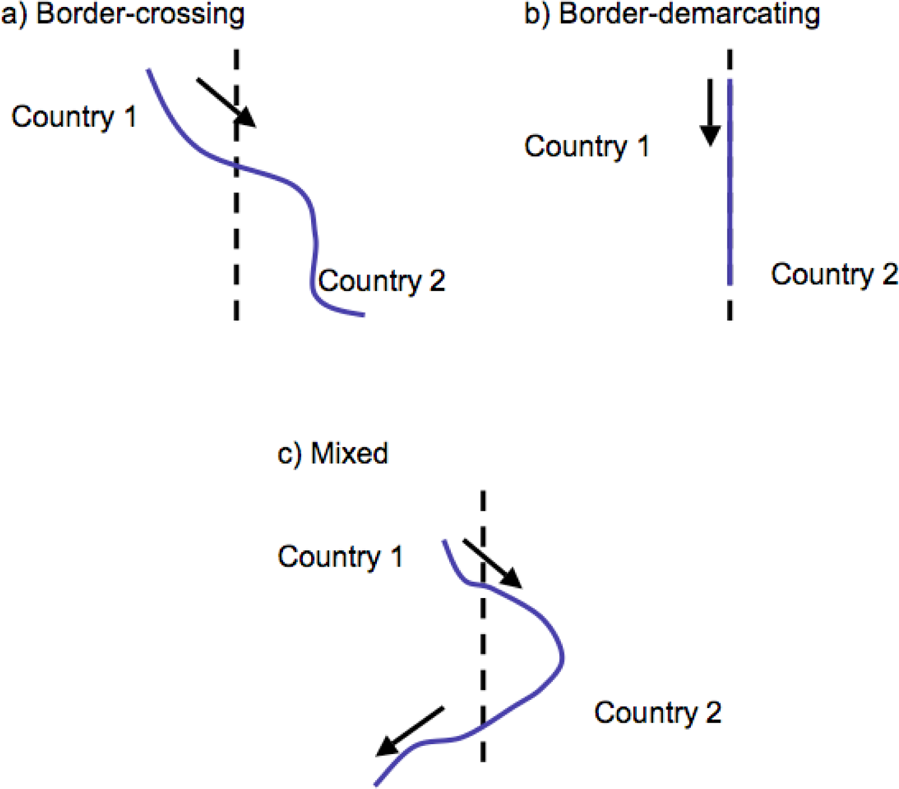
Different river types
Joint democracy
Previous research shows that democratic political leaders are concerned about their countries’ natural resources (cf. Bernauer & Koubi, 2009; Bernauer & Kuhn, 2010; Neumayer, 2002a; Ward, 2006). Furthermore, several scholars argue that democracies tend to cooperate more (Bayer, 2010; Leeds, 1999; Mansfield, Milner & Rosendorff, 2002; McGillivray & Smith, 2004) and that especially jointly democratic countries behave more cooperatively towards each other (cf. Leeds, 1999), also with respect to shared resources (cf. Bernauer & Kuhn, 2010).
Building on liberal approaches, we can essentially identify two reasons for democracies to behave cooperatively towards each other: democratic norms and democratic political structures (cf. Russett, 1993). With respect to democratic norms, democracies tend to share common values, identities, norms, and decisionmaking procedures. Democracies perceive other democracies as governed by the same or similar norms, such as resolving of political conflicts by compromise (cf. Bayer, 2010; Gaubatz, 1996; Risse-Kappen, 1997). This shared culture of cooperation and a habit of peacefully resolving domestic conflicts may translate to the international level (cf. Maoz & Russett, 1993; Russett & Oneal, 2001). With respect to natural resources, Midlarsky (1998: 346) posits that ‘regime responsiveness, political learning especially as the result of mutual identification, and the tendency toward cooperation in international institutions’ are important aspects of democracy for both peaceful relationships between democracies and environmental protection.
As regards political structures, in democracies, political leaders are held accountable via elections, political competition, and participation (cf. Bayer, 2010; Risse-Kappen, 1997). Such domestic constraints make commitments by democratic leaders more credible than those by their autocratic counterparts, because political leaders might put domestic citizens’ loyalty at risk if they make foreign threats and then back down.
In addition, democratic decisionmakers expect other democratic leaders to be similarly constrained domestically (cf. Bayer, 2010) and to therefore stick to their (international) commitments. With respect to natural resources, Bergin et al. (2005) emphasize that cooperation to reduce transboundary pollution requires trust and democratic governments have more reason to trust each other than to trust their non-democratic counterparts.
Especially in the context of events on border-demarcating or border-crossing rivers, it seems plausible that governments interact repeatedly. This will enforce the credibility of commitments. If a country defects in order to gain short-term benefits, it might be punished in the future. Threats of resorting to conflictive strategies once the other side defected (cf. Barrett, 1994) are more credible given audience costs in democracies. Hinting at liberal democracies’ juridical nature, Gaubatz (1996: 117) points out that, in addition, ‘current leaders [have] the power to commit future leaders’.
Furthermore, an important aspect of democracy is transparency, which means that information on possible government action is public and thus observable by other countries’ authorities (Levy & Razin, 2004; Mitchell & Prins, 2004) and its citizens. In other words, if government action is made public to domestic actors, it is difficult to discriminate against external actors (cf. Gaubatz, 1996), which will enhance democracies’ trustworthiness. Hence, democratic leaders perceive that possible gains from cooperation with other democratic governments outweigh the risk of defection. These considerations lead to the following hypothesis:
H1: The higher the (joint) level of democracy in a river-sharing dyad, the more cooperative the relationship of these two countries with respect to the shared basin.
It should be noted that the cooperation-inducing effect of democracy is not undisputed. For instance, democracies initiate more trade conflicts than other countries (cf. Sattler & Bernauer, 2010). Such conflicts, however, do not result in war, because democracies are better able to eventually resolve conflicts peacefully.
Economic interdependence
According to liberal theories, financial openness and trade interlinkages foster cooperation (Oneal & Ray, 1997). Trade interdependencies may facilitate implicit side-payments and issue linkages and thereby increase intergovernmental cooperation (Sigman, 2004). In the context of shared resources, Tir & Ackermann (2009) show that economic integration fosters the conclusion of bilateral environmental treaties. Furthermore, Neumayer (2002b) demonstrates that trade openness promotes multilateral environmental cooperation. He argues that multilateral cooperation might be a signalling device to facilitate future cooperation.
Both Bernauer & Kuhn (2010) and Sigman (2004) argue that trade interdependencies facilitate implicit side-payments and issue linkages that might foster cooperation over shared rivers, and Tir & Ackermann (2009: 11) add that ‘economic interdependence reduces transaction costs’. Based on this research, I argue that trade-induced relationships create opportunities for agreeing on means to cooperate over shared resources. Consequently,
H2: The higher the level of economic interdependence in a river-sharing dyad, the more cooperative the relationship of these two countries with respect to the shared basin.
The cooperation-enhancing effect of interlinkages is often cited as an important aspect in mitigating asymmetries in case of upstream–downstream situations (cf. Bernauer & Kuhn, 2010). Whether it also fosters cooperation in border-demarcating settings thus remains to be tested.
Political interdependence
Other forms of interaction, such as political agreements, also offer the possibility of changing governments’ incentive structures. For instance, Russett & Oneal (2001) highlight both political 3 and economic interdependence. Behaving uncooperatively on transboundary river issues might damage a country’s international reputation. This, in turn, diminishes a government’s prospects of successful negotiations on other issue areas with the same actors involved. Essentially, governments are assumed to be concerned about the (future) relationship with their neighbours, be it because of economic interdependencies or because they are linked via agreements on other issue areas (cf. Bannett, Ragland & Yolles, 1998) or simply because they care about possible future interactions and ‘condition actions in one time period on observed, past actions’ (Bannett, Ragland & Yolles, 1998: 64).
Bhaduri & Barbier (2008) formally show that, expecting the other country to favour a good political relationship, the upstream country diverts less than the individually rational amount of water and the downstream country agrees to a lesser amount of water being received from the upstream country. The degree to which governments care about good relationships with their neighbours might be reflected in general political interlinkages. I therefore expect that,
H3: The higher the level of political interdependency in a river-sharing dyad, the more efforts are made towards mutually beneficial river basin management.
Research design
I empirically test the above hypotheses on time-series–cross-sectional (TSCS) data of dyads sharing a river basin. That is, my empirical analysis is conducted at the basin-dyad-year level. This structure allows for basin-, country-, and dyad-specific effects to vary both across and within samples. Data on basin-dyads, including riparian states of both border-crossing and border-demarcating rivers 4 worldwide (i.e. which countries share what basin, which country is up-/downstream) are adopted from the Shared Rivers Database (Gleditsch et al., 2006). 5
Variables and operationalization
Dependent variable
The dependent variable is a river-sharing dyad’s degree of conflictiveness/cooperation in interaction on the shared resource. I define cooperation over shared resources as including both formal agreements, such as river treaties, and non-institutionalized forms of cooperation, such as meetings between environmental ministers to initiate or foster cooperation of shared basins. Likewise, conflict may be low scale (e.g. delaying talks/refusing to take part in talks), amount to violent conflict, or be anywhere in between. To assess the degree of conflictiveness and cooperation, I constructed a new events dataset on governments’ interaction over shared waters. This new dataset covers more than 260 river basins and 130 countries over 11 years.
Based on reported newspaper events, I code the degree of cooperation/conflictiveness of each event in integers ranging from –6 (most conflictive) to +6 (most cooperative). A similar approach can be found in the Transboundary Freshwater Dispute Database (TFDD), which reports events regarding conflict and cooperation over shared rivers based on a content analysis of different news sources (Yoffe & Larson, 2002). I adapted the coding scheme to tailor it to water-related issues 6 and extended the dataset by including more recent events, additional news sources, and some additional variables. An illustration of the data coding as well as an outline of the coding instructions can be found in the on-line appendix; more details are provided in Kalbhenn & Bernauer (2011).
Some governments tend to renegotiate the same problem over and over again. I therefore aggregate all events that pertain to the same issue by coding the dependent variable as the median cooperation/conflict score within the same event, if the latter is split into several interactions. I then apply a modified version of the approach suggested by Crescenzi & Enterline (2001) to account for the dynamics in interstate interaction. The main idea behind this approach is that interstate relationships are defined by previous interactions, whose influence on the perceived current interstate relationship depends on how much time has passed between such interactions, the accumulation of occurrences of conflict and cooperation, and on current cooperative and conflictive ‘shocks’, that is, events that take place between two states at time t. The dependent variable used in the following regressions is thus the level of conflict and cooperation in a basin-dyad-year, taking into account the prior level of cooperation and conflict (weighted by time between events and accumulation of occurrences) plus current shocks (details are provided in the on-line appendix).
Independent variables
Democracy
I proxy democracy using the polity variable of the Polity IV dataset by Marshall & Jaggers (2002; updated and modified by Gleditsch, 2008). Obviously, there are different means of assessing dyadic democracy (Goertz, 2008). I follow common practice (cf. Russett & Oneal, 2001) and use the weakest link logic. That is, the dyadic democracy score assumes the democracy score of the country in the dyad with the lower (monadic) democracy score of the two.
Interdependence: Trade dependence
Trade dependence is operationalized as the lower bilateral trade to GDP ratio in a dyad (cf. Gartzke & Li, 2003a,b; Oneal, 2003) using data from version 4.1 of the Expanded Trade and GDP dataset by Gleditsch (2002), augmented with data from the IMF direction of trade statistics.
Interdependence: Political integration
I proxy a dyad’s political integration by the number of international organizations (IGOs) both countries are a member of. The number of joint IGO memberships is coded based on data by Pevehouse, Nordstrom & Warnke (2004).
Control variables
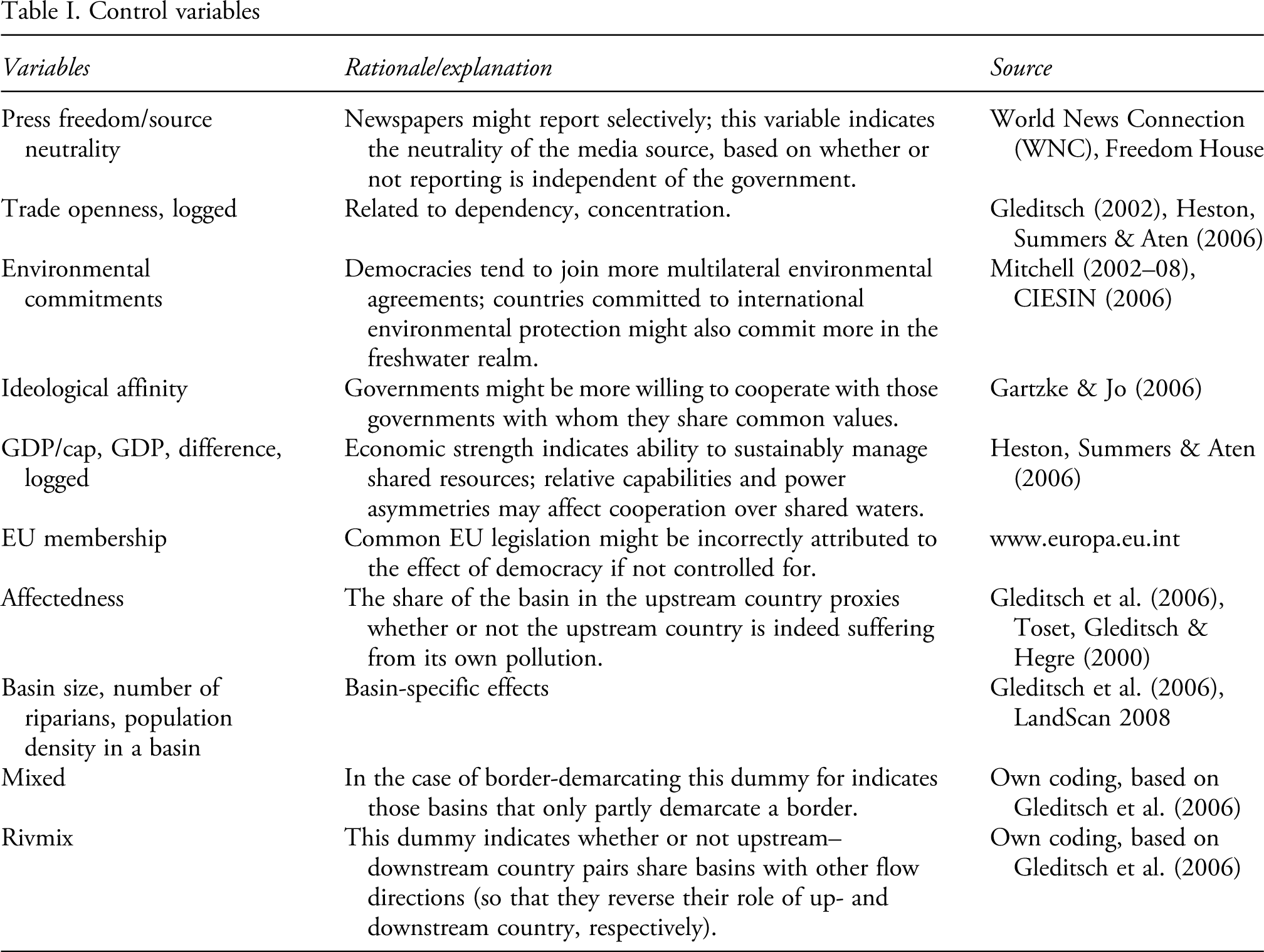
I include several country- and basin-specific control variables (Table I) that might interfere with the postulated relationship between liberal factors and cooperation/ conflict over shared river basins. In coding country-specific variables, I always use the weakest-link logic for mutual interactions as described above. A more detailed discussion of these variables can be found in the online appendix.
Control variables
Econometric approach
Some rivers are shared by just two countries, such as the Don, shared by Russia and the Ukraine. Others are shared by three, four or even more countries. Zimbabwe, South Africa, Mozambique and Botswana are all riparian to the Limpopo, yielding six dyads. The Danube with 17 riparians (136 dyads) is the largest basin in terms of the number of riparian countries. Furthermore, each of these dyads might share more than one river. Russia and the Ukraine, for instance, are both riparian to the Dnieper (and, as mentioned before, to the Don). Chile and Argentina share a total of 17 basins (the maximum number observed). This gives rise to a non-nested structure of basin-dyads with a maximum of 783 dyads, 263 basins and 1367 basin-dyads (depending on the respective subsample, i.e. border-demarcating vs. border-crossing basins).
I expect neither the interaction of dyads in the same basin nor the interaction taking place in different basins shared by the same dyad to be independent of each other. I therefore introduce spatial lags, accounting for both types of interdependencies, by specifying two NT × NT block-diagonal binary spatial weights matrices,

where y, the dependent variable, is a NT×1 vector of basin-dyads stacked by years,
Whereas possible basin-specific unit effects are captured by time invariant basin characteristics, described above, 7 I account for country-specific unit effects by introducing country fixed effects.
Given that m-STAR is not yet implemented in any statistical software package and the only code available relies on a maximization routine that does not allow for missing values, I have linearly inter- and extrapolated the data whenever applicable and substituted other missing values by the variable’s mean value.
Results
The empirical results reflect a non-negligible impact of liberal factors on intergovernmental behaviour regarding shared water resources. Considering these variables of main interest, namely joint democracy, trade interdependencies and joint IGO membership, it is worthwhile distinguishing between different issue areas: while the effect of joint democracy is predominantly positive and statistically significant (Tables II–VII), 8 its coefficient is negative for joint management in border-demarcating cases. A similar pattern becomes apparent with respect to trade dependency: when statistically significant, the coefficient is positive for most samples, but negative for both joint management samples (border-demarcating and border crossing) and for water quality in border crossing basins. Finally, joint membership in international organizations renders an interesting result: while mostly statistically insignificant, its coefficient is negative in border-demarcating basins and positive in border-crossing basins.
Water quality in border-demarcating rivers
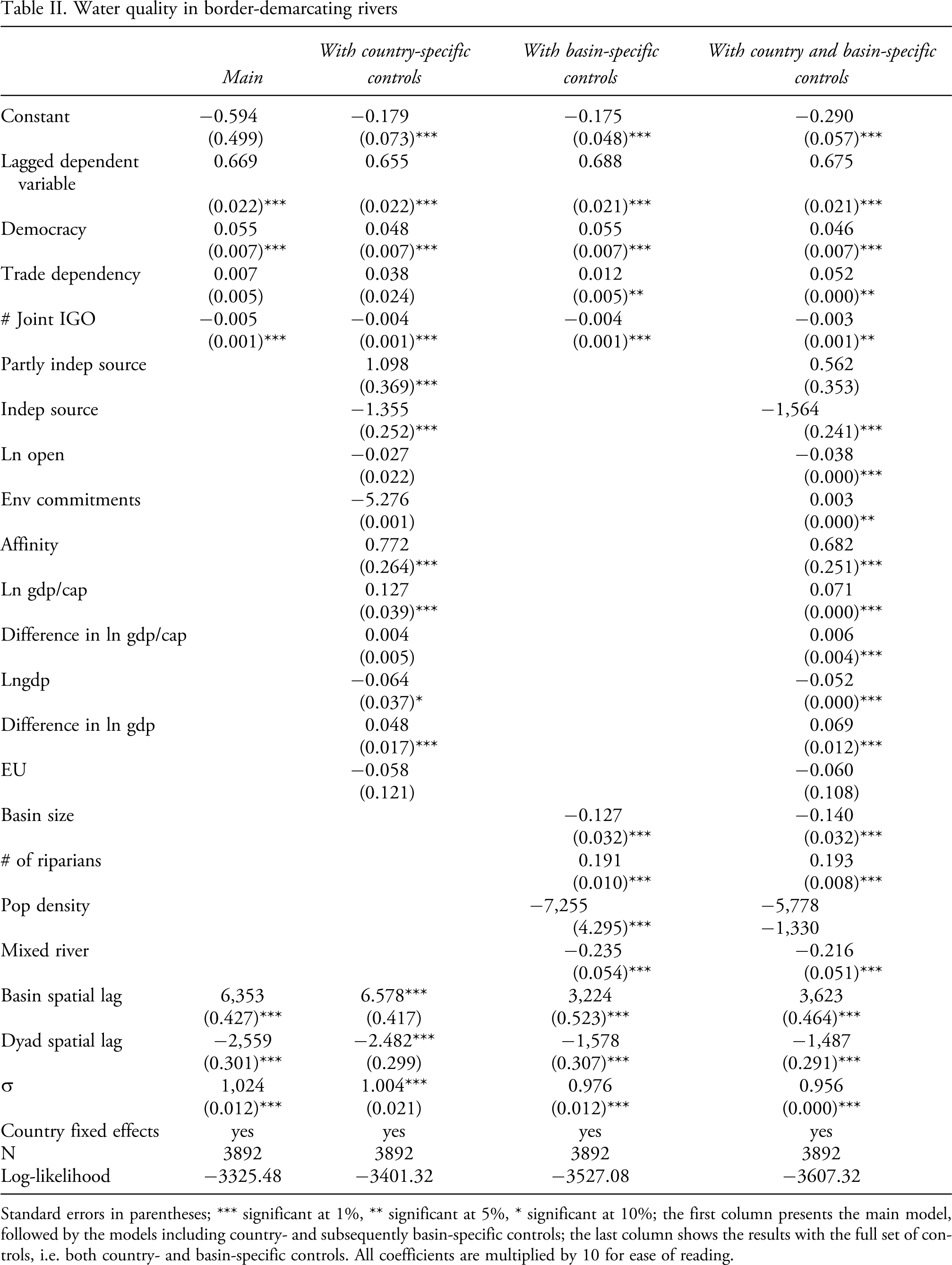
Standard errors in parentheses; *** significant at 1%, ** significant at 5%, * significant at 10%; the first column presents the main model, followed by the models including country- and subsequently basin-specific controls; the last column shows the results with the full set of controls, i.e. both country- and basin-specific controls. All coefficients are multiplied by 10 for ease of reading.
Water quantity in border-demarcating rivers
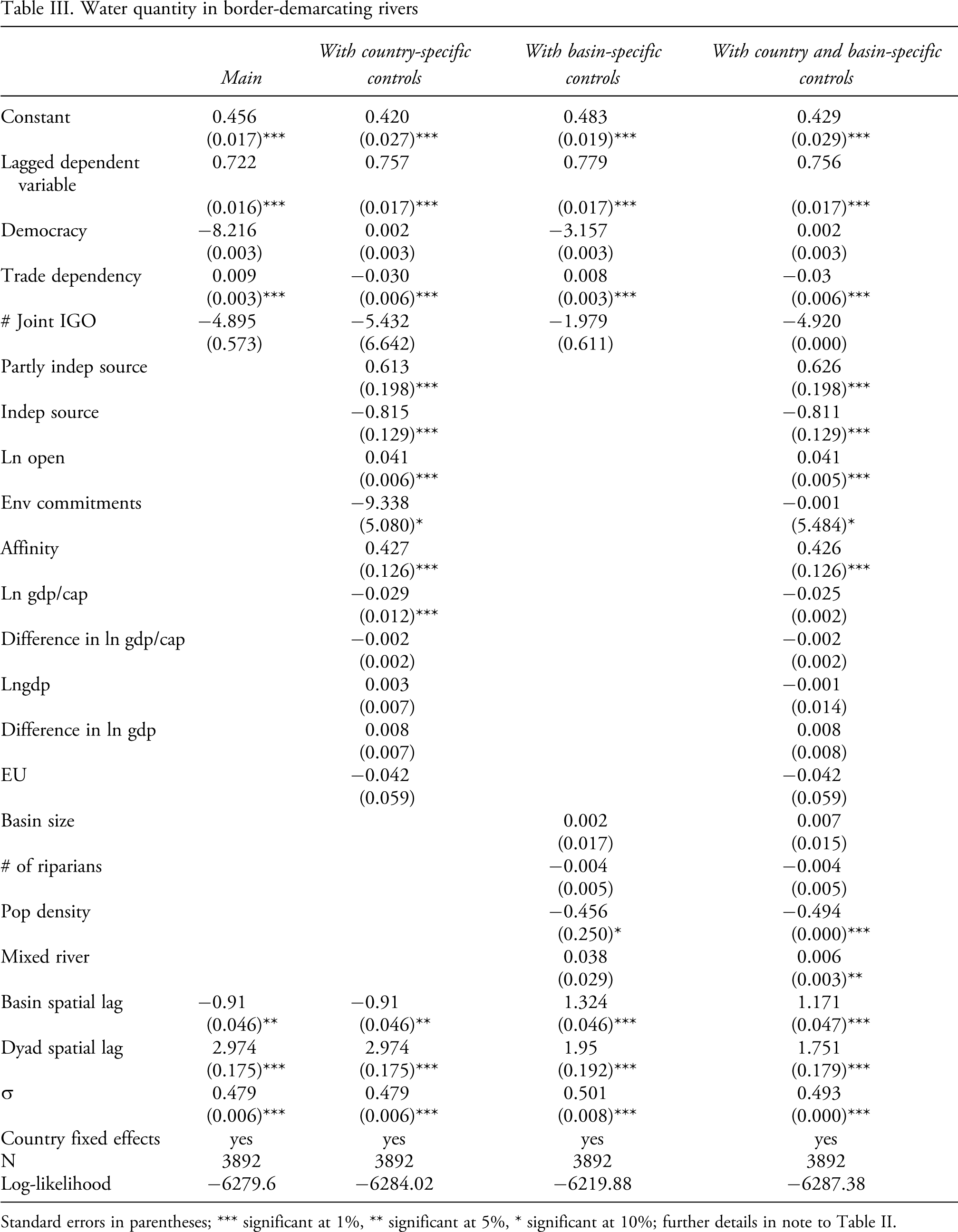
Standard errors in parentheses; *** significant at 1%, ** significant at 5%, * significant at 10%; further details in note to Table II.
Joint management in border-demarcating rivers
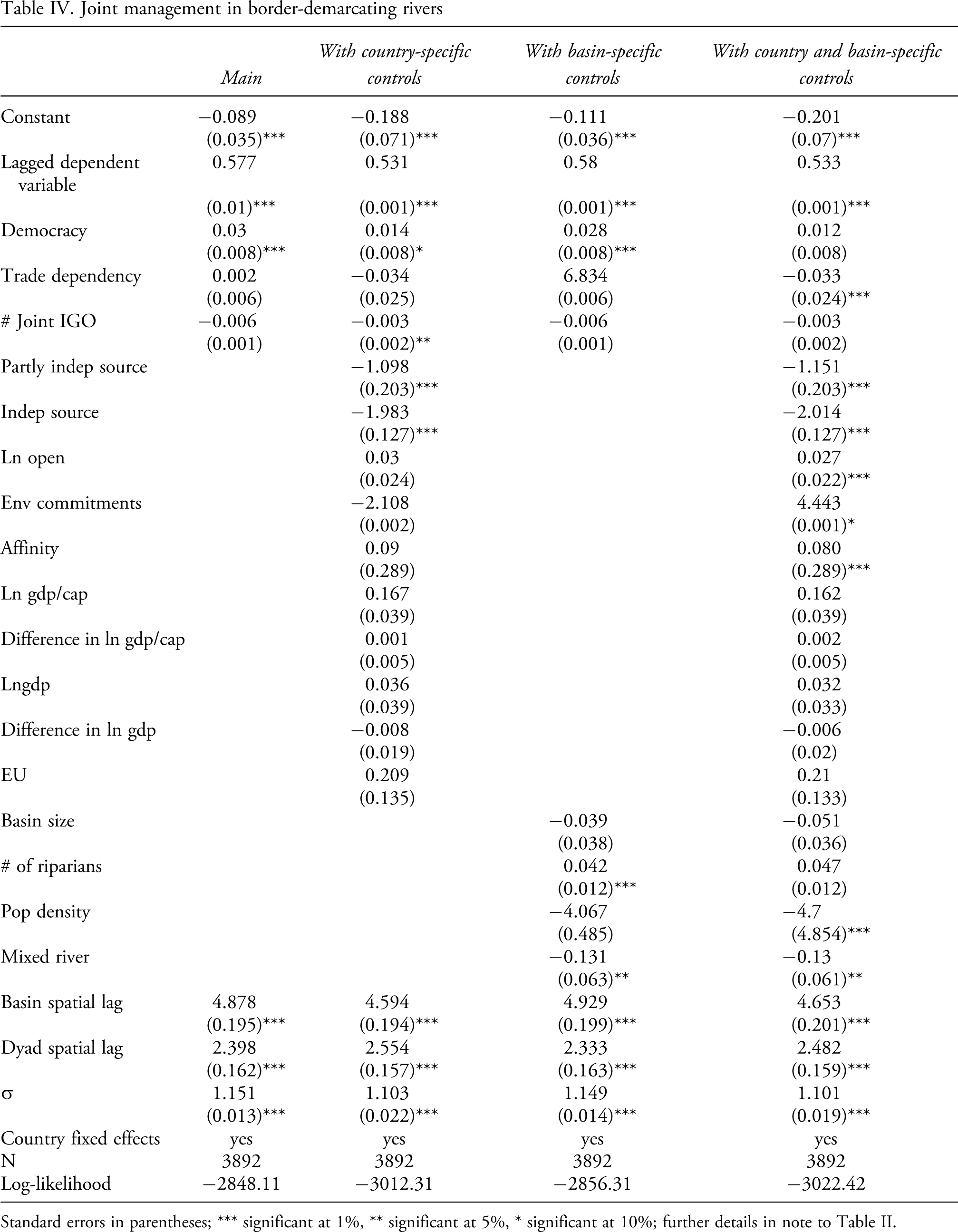
Standard errors in parentheses; *** significant at 1%, ** significant at 5%, * significant at 10%; further details in note to Table II.
Water quality in border-crossing rivers
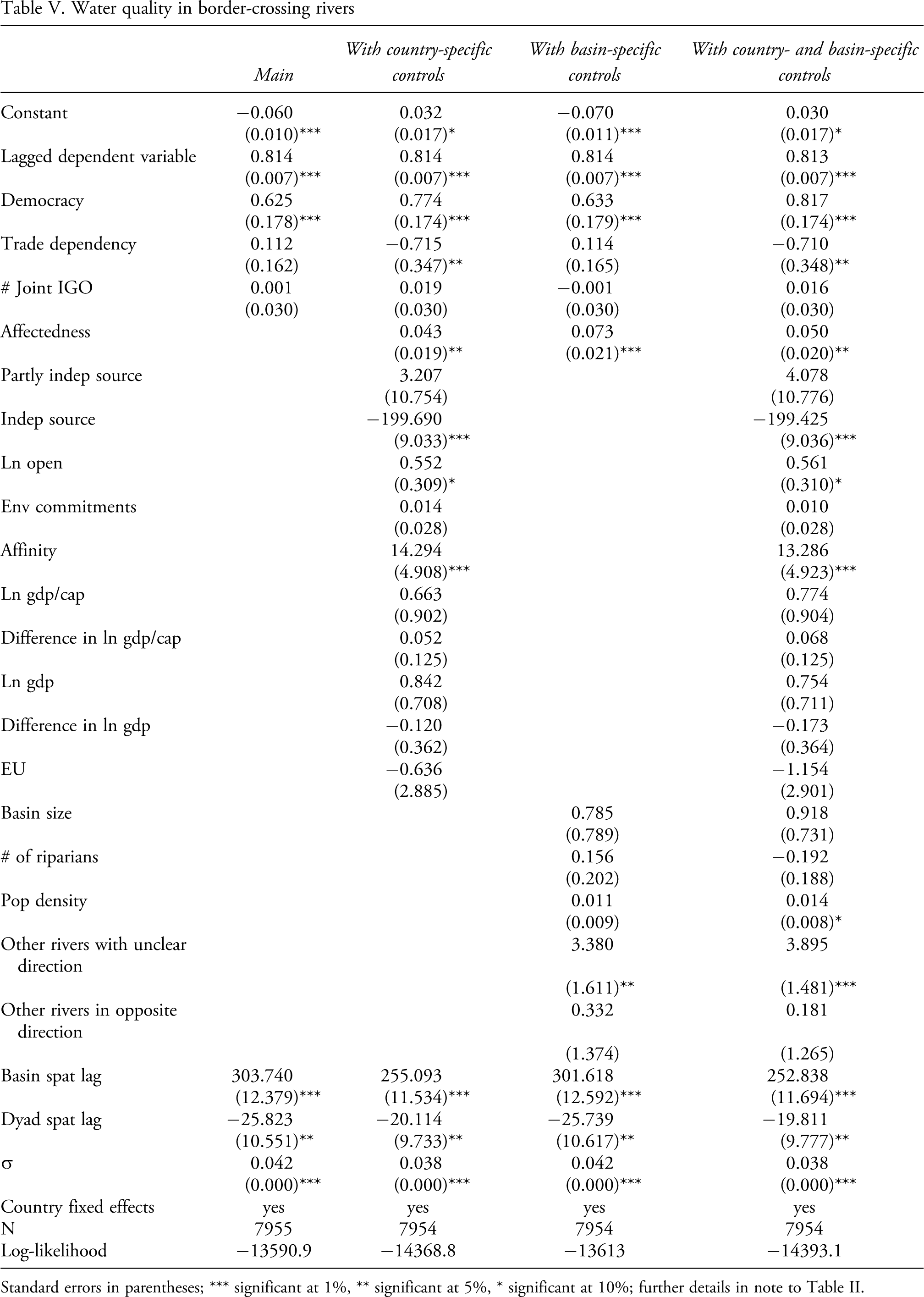
Standard errors in parentheses; *** significant at 1%, ** significant at 5%, * significant at 10%; further details in note to Table II.
Water quantity in border-crossing rivers
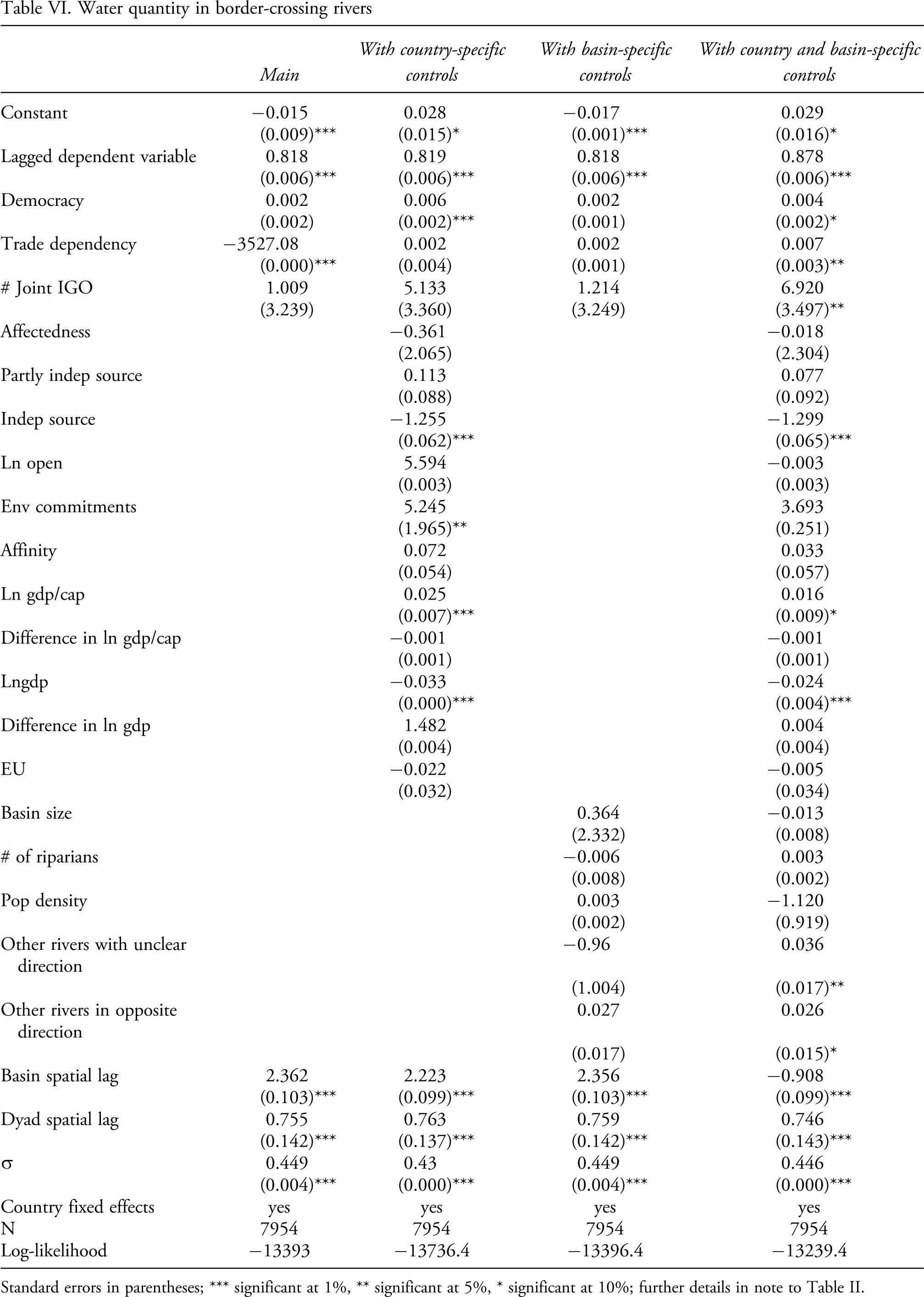
Standard errors in parentheses; *** significant at 1%, ** significant at 5%, * significant at 10%; further details in note to Table II.
Joint management in border-crossing rivers
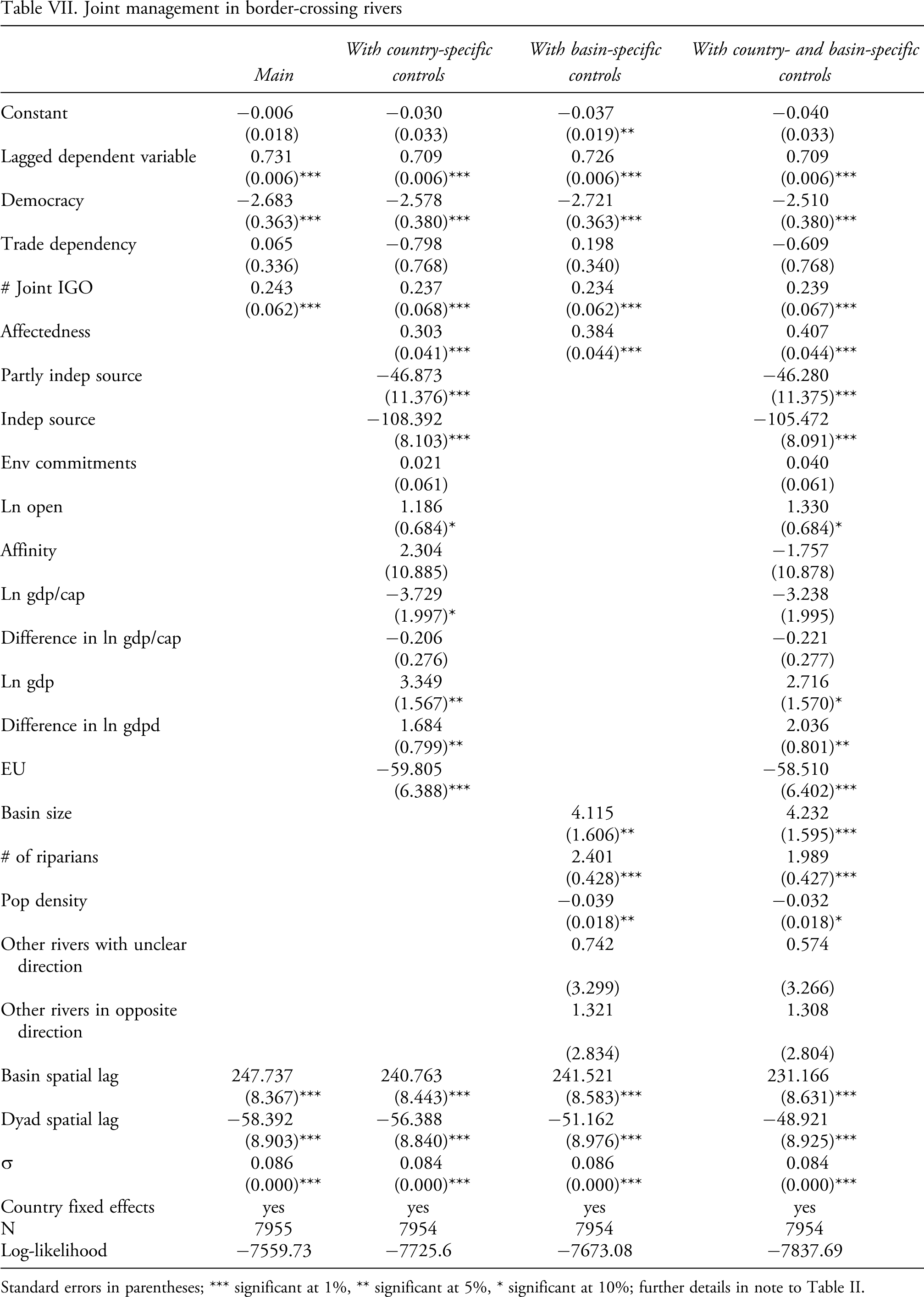
Standard errors in parentheses; *** significant at 1%, ** significant at 5%, * significant at 10%; further details in note to Table II.
While the statistically significant positive effect of joint democracy on water quality related events affirms theoretical expectations that the cooperation-enhancing effect of liberal factors might be a ‘fair-weather’ phenomenon (cf. Gibler, 2007), my results do not support Bernauer & Kuhn’s (2010) claim that upstream–downstream issues are necessarily less susceptible to the cooperation-enhancing effect of the liberal triangle. As such, the effect of joint IGO membership is positive in border-crossing basins (i.e. upstream–downstream situations) rather than in border-demarcating basins. Moreover, regarding events related to water quantity, all three liberal factors show a cooperation-enhancing effect in the border-crossing sample rather than in the border-demarcating sample.
Furthermore, these results show that findings regarding intergovernmental behaviour with respect to environmental quality cannot easily be transferred to cooperation and conflict over international basins in general. While my results support former research that joint democracy and trade interlinkages foster cooperation with respect to water quality, this does not always hold for joint management, where – quite the reverse – trade dependency is associated with more conflictive events. This divergence might be due to joint management being a rather vague issue area. In fact, joint management accounts for the largest share of all events coded in the original dataset (Kalbhenn & Bernauer, 2011) and might thus be less distinct than water quality or water quantity, but rather represent a ‘catch-all’ issue area. As regards future research, it might be worthwhile to define different subcategories of joint management and compare analyses of these more homogenous subcategories to those of the overarching (arguably rather heterogeneous) category of joint management.
With respect to the full model versus the reduced models (with none, only country-specific, or only basin-specific) control variables, the effects of democracy and joint IGO membership are largely independent of the inclusion of other control variables. Trade dependency, however, is more susceptible to the inclusion or exclusion of control variables. A possible explanation is the relationship between trade dependency and trade openness. For example, trade openness has a statistically significant and positive effect on water quantity events in border-demarcating rivers. In both models that include this variable, the coefficient on trade dependency turns negative. 9
Turning to the control variables themselves, we observe that affectedness, a proxy for the degree to which the upstream country is concerned by water-related issues, has a positive effect on interactions regarding both water quality and joint management. This might reflect that upstream countries behave more cooperatively towards downstream riparians if they are affected themselves. For instance, upstream countries with a larger share of the basin in their own territory benefit from clean water themselves and this might have positive externalities in downstream countries. The statistically insignificant coefficient for water quantity might reflect that it is rational for upstream countries to exploit the resource rather than behaving cooperatively. In line with the idea that countries that share common values behave more cooperatively towards each other, the coefficient of affinity is positive for all samples, save for joint management in border-crossing basins where it turns insignificant.
Finally, population density largely shows a negative effect on intergovernmental behaviour over shared basins. We should think that governments care most about those basins that potentially affect the livelihood of a high number of people (Beck, Bernauer & Kalbhenn, 2010). Apparently, such basins, where much is at stake, increase discordance between governments, and this might eventually affect those living in these basin areas.
As to spatial interdependencies, both basin and dyad spatial lags are estimated to be statistically significant for all issues in both geographic settings. The direction of the estimated effects, however, depends on the geographic situation and the issue at stake. Whereas the basin spatial lag is positive in most cases, its coefficient changes sign depending on the inclusion or exclusion of basin-specific control variables for water quantity. A possible interpretation is that while we observe positive spillover effects, some of these are captured by basin-specific factors.
The dyad spatial lag is estimated to be positive across issues areas and geographic settings, save for its negative coefficient in case of water quality and joint management in border-demarcating rivers. On the one hand, this result gives rise to optimism, indicating that dyads that behave cooperatively in one basin also do so in other basins. On the other hand, it might also mean that conflictive events are not confined to one basin a dyad shares, but might extend to other basins. Given that cooperative events occur far more frequently than conflictive events, the former effect (i.e. spread of cooperation) is more likely to prevail.
By way of example,
10
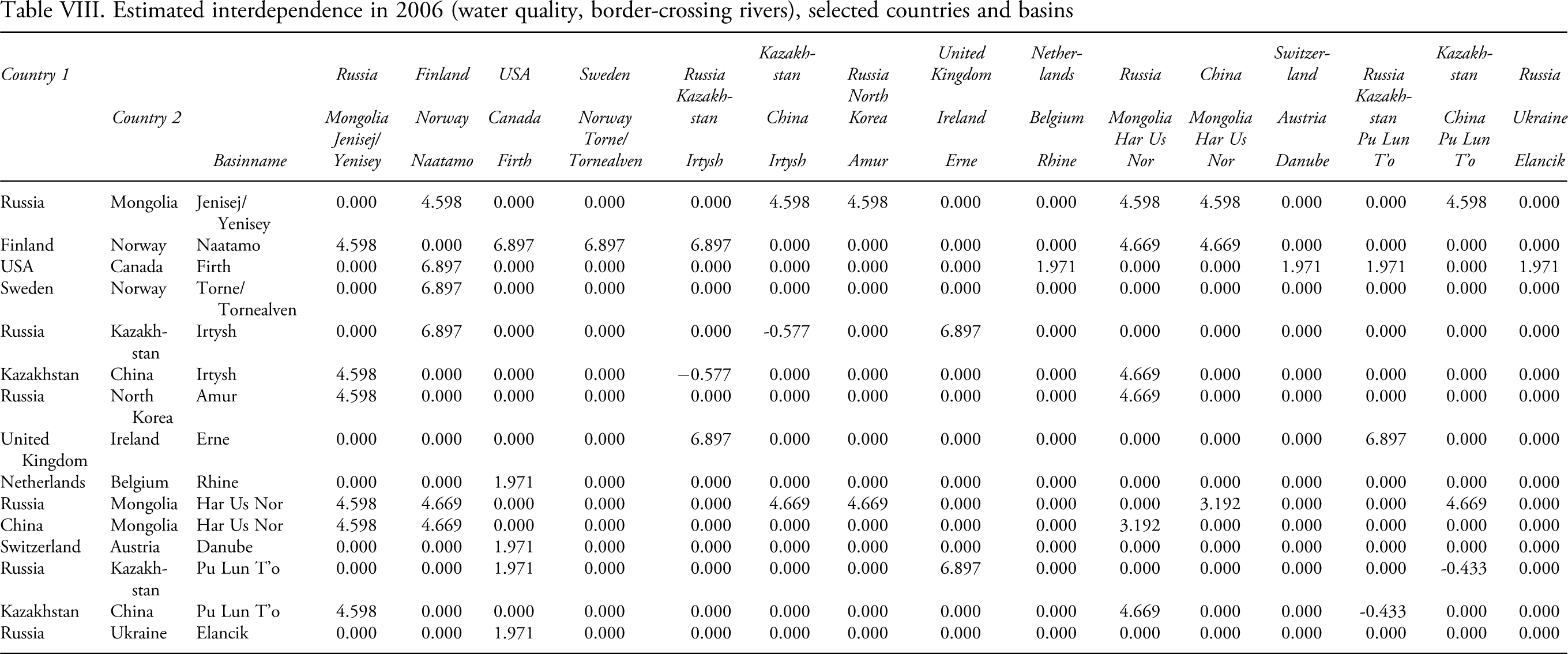
Table VIII shows the estimated interdependence (i.e.
Estimated interdependence in 2006 (water quality, border-crossing rivers), selected countries and basins
The regression coefficients in Tables II to VII only show the pre-dynamic impetuses (Hays, Kachi & Franzese, 2009), which is why I have calculated steady-state spatio-temporal effects and estimated the long-run effects of hypothetical permanent shocks for selected samples and counterfactuals. For the model at hand, the long-run steady state is obtained by recursively solving expression (1):
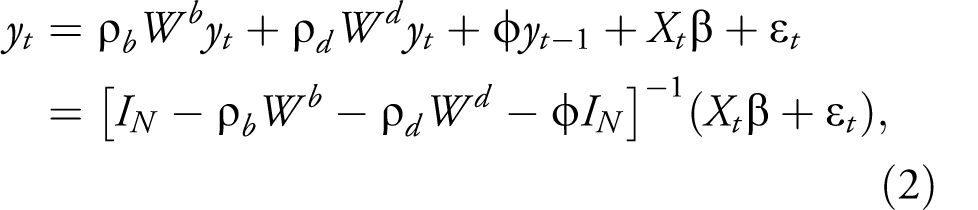
where I again follow the notation in Hays, Kachi & Franzese (2009) and adjust their equations 12 to the analysis at hand.
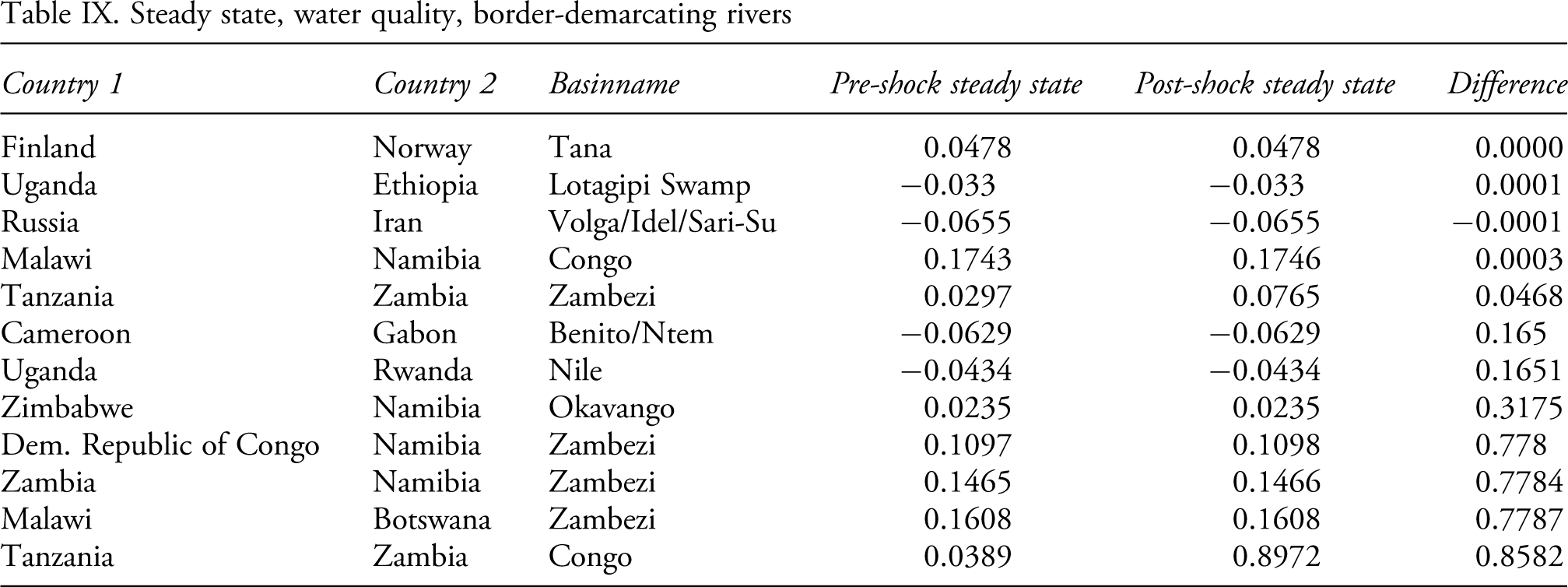
Table IX illustrates the effect of a hypothetical increase in the bounded cooperation score (on water quality) of Tanzania and Zambia on the Congo basin in 2004 of 0.5 13 on selected 14 basin dyads, where all other variables (and the spatial weights) are held at their 2004 levels. Starting with the first row, we observe that for basin-dyads that are obviously not linked to the ‘shocked’ basin dyad (neither via co-riparianship nor co-dyadship), the post-shock steady state is estimated to be exactly equivalent to the pre-shock steady state and thus the entry in the last column (titled ‘difference’ is zero). For dyads such as Cameroon and Gabon on the Congo basin, in contrast, the post-shock steady state is greater than the pre-shock steady state, owing to the fact that this dyad is linked to Tanzania and Zambia via the Congo basin. Indirect interdependencies become apparent for Zambezi riparians: it is not only the ‘shocked’ country-pair Tanzania and Zambia that displays a larger post- than pre-shock steady state, but also dyads not including either of the ‘shocked’ countries. As such, Malawi and Botswana experience an upward shift in the steady-state level of cooperation through indirect ties. The network effects go as far as inducing higher post-shock steady states for basins to which neither of the ‘shocked’ countries is riparian, such as the Benito/Ntem or the Lotagipi Swamp, and even Russia and Iran, that do not share any basins with either Tanzania or Zambia, display a (negative) difference in pre- and post-shock steady state on the Volga. Finally, we can see that the effect of the shock to Tanzania and Zambia on the Congo is reinforced through feedbacks within the network: although the shock itself was of magnitude 0.5, the post-shock steady state is almost 0.9 higher than the pre-shock steady state.
Steady state, water quality, border-demarcating rivers
Summing up, the results suggest that liberal peace arguments indeed help explain the prevalence of cooperation over conflict in international basins. Moreover, border-crossing basins do not necessarily seem less susceptible to the cooperation-enhancing effects of democracy or trade dependency. Finally, both basin and dyadic interdependencies play a non-negligible role in explaining cooperation and conflict over international water courses.
Robustness checks
I have checked the robustness of my results by using different specifications of the dependent variable, estimating the model without the lagged dependent variable and on a smaller sample leaving out particularly influential basins, namely those with the highest number of events. These additional results are presented in the online appendix. The main results pertain, save that democracy exhibits a positive effect on joint management events in border-demarcating rivers when omitting the lagged dependent variable. This is in line with the overall result that joint management events might follow a different pattern than those on quantity or pollution levels.
Conclusion
This article set out to analyse whether there is a liberal peace with respect to interaction over international river basins. Counter to the water war hypothesis, I argue that sharing a water resource need not increase the risk of conflict over the shared resource: the cooperation-enhancing effects of democracy and economic and political interlinkages might be conducive to cooperation over international basins.
Testing my argument on a new events dataset on cooperation and conflict over shared rivers, I find that liberal factors may indeed foster cooperation over shared resources. Interestingly, the effects of democracy and economic and political interdependence differ with respect to both the geographic situation and the issue at stake. As such, the cooperation-enhancing effect of democracy is most prominent for water quality, an issue that is arguably easy to deal with. This affirms theoretical expectations relating the cooperation-enhancing effect of democracy to fair-weather conditions (Gibler, 2007). Furthermore, it has an important implication with respect to the operationalization of cooperation: the output-related results in this study are similar to the outcome-focused results of other studies (e.g. Bernauer & Kuhn, 2010; Sigmann, 2004) when observing the same issue area, but do not or only partially hold for other issue areas, such as joint management. 15
Bernauer & Kuhn’s (2010) claim that upstream–downstream issues are less susceptible to the cooperation-enhancing effect of the liberal triangle, however, does not find empirical support in this study. For example, the effect of joint IGO membership is positive in border-crossing basins (i.e. upstream–downstream situations) and negative (or statistically insignificant) in border-demarcating basins.
The analysis further shows non-negligible interdependency effects. The behaviour of a certain dyad in one basin depends on the same dyad’s (or one of the country’s) behaviour towards other shared basins and it influences the behaviour of other countries in the same basin. With respect to policy implications, successful strategies for intergovernmental actions over shared resources should thus consider entire basins and not merely focus on single riparians. In addition, policymakers do well in setting a good example and behaving cooperatively, since this might eventually motivate their counterparts in other countries to do the same. While this article treats interdependency as an important control factor, future research should examine such interlinkages more closely. Rather than specifying admittedly simple binary weights, such research could derive more sophisticated weights at the theoretical level and test them empirically.
This article complements existing research by analysing new empirical data on a wide range of cooperation and conflict over shared basins, but it also raises questions for future research. As such, more in-depth studies are needed to explain the rather discouraging results with respect to joint management: while liberal factors appear conducive to good relations as regards water levels and water quality, this is not always the case for joint management.
As regards policy implications, a basin’s population density is mostly negatively associated with cooperation. In other words, we see more conflictive events in basins that are highly populated. A possible implication of this result is that in basins where much is at stake, because a high number of people are potentially affected by decisions and behaviour on water levels or water quality, the potential for intergovernmental discordance is higher. However, this also means that more people are affected by the consequences of such uncooperative behaviour.
Summing up, this article’s main findings justify cautious optimism as regards a liberal peace with respect to shared resources. Most notably, democracy exerts a positive effect on intergovernmental interactions regarding water quality and water quantity, even in cases of border-crossing basins that tend to be viewed as especially challenging.
Footnotes
Data replication
The dataset and command files used for the empirical analysis in this article can be found at http://www.prio.no/jpr/datasets and are explained in the online appendix.
Acknowledgements
This article was written in the context of the Swiss National Research Program on democracy in the 21st century. I am grateful for helpful comments on earlier versions by Michael Bechtel, Thomas Bernauer, Halvard Buhaug, Xun Cao, Kristian Skrede Gleditsch, Cullen Hendrix, Simon Hug, Vally Koubi, Lutz F Krebs, Sarah Mitchell, Idean Salehyan, Gabriele Spilker, Jaroslav Tir, Vera Troeger and Hugh Ward, three anonymous reviewers and the journal editors. Daniel Laupper, Joanne Richards, Bianca Sarbu, Maja Schaerer, Hannah Strohmeyer and Stephan Suter provided knowledgeable assistance in coding the data. I thank Lucas Beck and Stefan Schütz for preparing some of the GIS data and Tim Thomay for generous assistance in providing cloud computing space to run Matlab.
The data collection was partly financed by SNF grant 100012-120357.
Notes
References
Supplementary Material
Please find the following supplemental material available below.
For Open Access articles published under a Creative Commons License, all supplemental material carries the same license as the article it is associated with.
For non-Open Access articles published, all supplemental material carries a non-exclusive license, and permission requests for re-use of supplemental material or any part of supplemental material shall be sent directly to the copyright owner as specified in the copyright notice associated with the article.
