







Abstract
False information, rumours and hate speech can incite violent protest and rioting during electoral periods. To counter such disinformation, United Nations peacekeeping operations (PKOs) routinely organize election-education events. While researchers tend to study how PKOs affect armed group and state behaviour, this study shifts the focus to civilians. It argues that PKOs’ election education reduces violent protest and rioting involving civilians during electoral periods via three pathways. First, learning about PKOs’ electoral security assistance during election-education events may convince people that political opponents cannot violently disturb elections, thereby mitigating fears of election violence. Second, election-education events provide politically relevant information that can strengthen political efficacy and people’s ability to make use of peaceful political channels. Finally, peace messages during election-education events can change people’s calculus about the utility and appropriateness of violent behaviour. Together, these activities mitigate fears, reduce political alienation and counter civilians’ willingness to get involved in violence. To test these expectations, I combine survey data on people’ perceptions and attitudes, events data on violent protest and rioting, and a novel dataset on local-level election-education events carried out by the PKO in Côte d’Ivoire before four elections held between 2010 and 2016. The results show that when the PKO is perceived to be an impartial arbiter, its election-education events have violence-mitigating effects at the individual and subnational levels.
Introduction
Holding credible elections can serve as a stepping stone to democratic governance in war-torn countries. Yet, elections also heighten political competition and set incentives for politicians to mobilize voters using disinformation campaigns. Such disinformation campaigns, used here as a shorthand for false information, rumours and hate speech, may cause fear and legitimize violence, and contribute to escalating pre-existing tensions into violent protests and riots, for example coercive collective actions directed towards members of other distinct groups or government authorities (Human Rights Watch, 1995; Snyder, 2000: 37; Wilkinson, 2004: 23–26; Burchard, 2015). Civilians often have agency in executing or preventing violent protests and riots (Krause, 2017; Varshney, 2002). But it is important to note that politicians also use ‘violence specialists’ to establish ‘institutionalized riot systems’ (Brass, 1997: 15–16), and the behaviour of state security forces helps prevent or provoke rioting, too (Wilkinson, 2004).
The United Nations recognizes that disinformation poses an obstacle to peaceful elections. As Figure 1 shows, election education to counter disinformation has become a prominent election violence prevention tool for United Nations peacekeeping operations (PKOs) (cf. Blair & Smidt, 2019, for data in Africa). Election-education events combine civic and peace education
Number of elections in Africa with a PKO (not) engaged in election education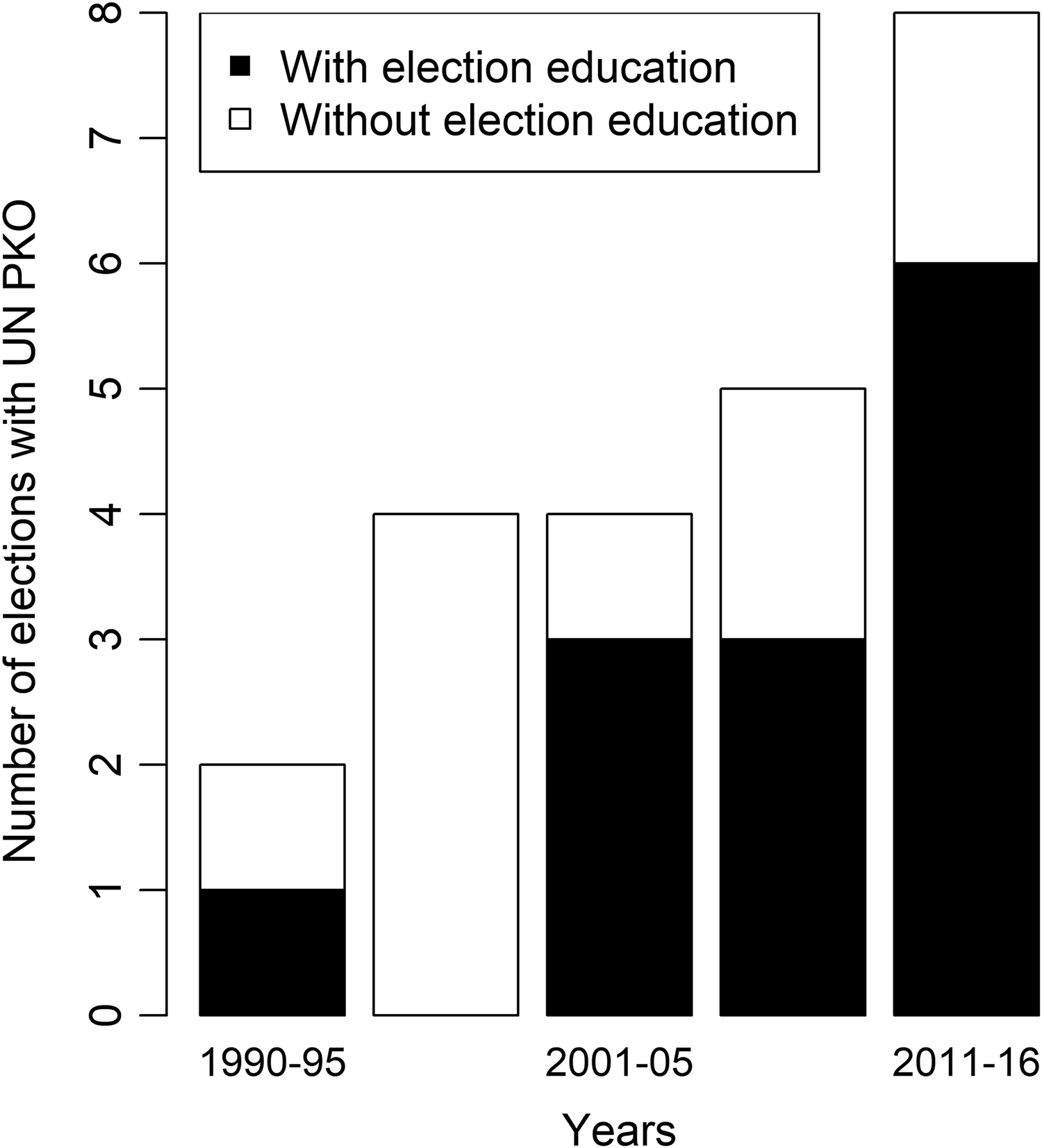
I argue that election-education events help people resist disinformation campaigns and, consequently, reduce election violence in the forms of violent protests and riots. First, learning about PKOs’ mandate to secure elections may convince people that opponents cannot violently disturb elections, thereby reducing fear and related motives for violence. Second, information on the viability of peaceful political participation can increase political efficacy, lowering incentives for political violence. Third, peace messages highlighting the utility and appropriateness of nonviolence introduce an alternative framing that contradicts disinformation campaigns and discourages the use of violent means. However, only if PKOs are perceived to be impartial will their interventions change people’s attitudes and reduce violent protest and rioting.
The argument is explored using novel data on PKOs’ election-education events in 107 departments (third-tier administrative units) in Côte d’Ivoire between 2010 and 2016. Matching methods address the non-random location and timing of election-education events. Survey and event data analyses provide evidence for the argument: if the PKO is perceived to be impartial, election education decreases protests and riots during electoral periods and mitigates people’s fear, strengthens their political efficacy and reduces their intention to use violence.
Côte d’Ivoire fulfils the scope conditions of the argument and thus serves as an ideal case to study it. First, different forms of election violence – including violent protests and riots – have accompanied elections since the introduction of multiparty politics in the West African country. Importantly, while militias and security forces often play a decisive role in the violent escalation of protests, civilians such as party members and youths are also involved and have agency in violent protests and riots in Côte d’Ivoire. If ‘violence specialists’ were solely responsible for this violence, election-education events – aimed at civilians – would remain ineffective. Second, grievances associated with contested land ownership, political discrimination and socio-economic group inequalities, among other factors, are underlying determinants of violent protests and riots. Yet, these grievances are attenuated by politicians’ disinformation campaigns during electoral periods (Akindes, 2004: 34–40; Langer, 2005: 32). Therefore, election-education events may address one specific source of election violence.
The article contributes to the literature on peacekeeping and election violence. First, effective peacebuilding requires a transformation of the attitudes and behaviours of people locally (Stedman, 2002: 20). Yet, case studies suggest that peacekeepers often remain ineffective at transforming attitudes and behaviours because they lack sensitivity to local contexts (Autesserre, 2014; Pouligny, 2000). Specific activities of PKOs have, however, received little systematic scrutiny. Evaluating election-education events locally may add nuance to the debate on the local turn in international peacebuilding. Second, previous works have presented mixed results on whether PKOs build peace and foster democratization simultaneously (Steinert & Grimm, 2015; Doyle & Sambanis, 2006; Heldt, 2011; Fortna, 2008; Paris, 2004). By focusing on election education, this article examines one possible mechanism of how PKOs contribute to peaceful democratization. Third, we know that election education can have security-enhancing effects in usually peaceful environments (Collier & Vicente, 2014). This study investigates whether this finding translates to war-torn countries.
Information, election violence and peacekeeping intervention
Civic education plays a crucial role in ensuring fair elections in usually peaceful countries (Pande, 2011, for an overview). However, we know little about whether education also assists the peacefulness of elections in countries emerging from war. This is surprising given the education interventions in many UN peacekeeping curricula (Mvukiyehe & Samii, 2017), the debate about the local turn in peacebuilding practice (Autesserre, 2014) and the discussion on whether and how international interventions can achieve peaceful democratization after war (Fortna, 2008; Heldt, 2008).
In non-consolidated democracies, voters often lack access to independent information. Not only are literacy rates and schooling years below the global average (Pande, 2011), also political elites manipulate information to mobilize voters. Election-related violence can be a deliberate or unintended product of their false information, threats, rumours, hate speech, etc. (Human Rights Watch, 1995; Snyder, 2000: 37; Wilkinson, 2004: 23–26; Boone, 2011: 1327; Burchard, 2015). Given the salience of information for peaceful elections, it is not surprising that scholars explore the impact of civic education interventions. Collier & Vicente (2014) demonstrate that an election-education campaign in Nigeria reduced vote shares for violent candidates, increased turnout and even reduced actual political intimidation. Existing research shows that education interventions have security benefits in usually peaceful countries (Vicente, 2014; Fujiwara & Wantchekon, 2013; Birch & Muchlinski, 2017: 4). Yet, as Finkel, Horowitz & Rojo-Mendoza (2012: 64) write: ‘[t]he impact of civic education in more chronically inhospitable contexts is still very much an open question’ (for exceptions, cf. Mvukiyehe & Samii, 2017; Mvukiyehe, 2018).
A violence-reducing effect of civic education efforts is not obvious. The influence of civilian-focused education might be limited because it fails to target the main organizers and perpetrators of violence: state and non-state elites and violence specialists, respectively (Claes, 2016). Especially in war-torn countries, the incentives of armed actors rather than the behaviours of voters may explain election violence (Birnir & Gohdes, 2018; Staniland, 2015). Moreover, von Borzyskowski & Kuhn (2020) show that politicians use more violence against ‘informed’ participants. Although their study looks at the effects of media exposure, security-enhancing effects of education interventions could be offset when politicians target the informed. This article empirically and theoretically explores this possibility of null or even positive effects of election-education interventions on violence.
More generally, scholars debate whether any type of local-level intervention by international peacekeepers can help establish peaceful relations in war-torn countries. Some case studies are pessimistic about external peacekeepers’ ability to meaningfully engage with local communities because they may lack sensitivity to and knowledge about local contexts (cf. Autesserre, 2014; Pouligny, 2000). In contrast, others assess the local turn in international peacebuilding more positively. Mvukiyehe & Samii (2017) provide experimental evidence that local education campaigns implemented by peacekeepers together with a Liberian civil society organization increased peaceful political participation and encouraged people to report election violence (cf. Mvukiyehe, 2018). Evaluating local election-education events contributes evidence to this debate.
Finally, analysing a specific type of peacekeeping activity, such as election education, provides an avenue for engaging with the puzzle of whether peacekeepers can simultaneously build peace and democracy (Paris, 2004). So far, the empirical literature has presented contradictory findings. Some works suggest that peacekeeping promotes peaceful democratization (Doyle & Sambanis, 2006; Grimm, 2008; Heldt, 2011). Others show that positive and negative effects cancel each other out, for example because internationally sponsored democratization introduces instability (Fortna, 2008; Paris, 2004). Thus, we need to empirically unpack peacekeepers’ positive and negative effects and study their specific activities – for example, by exploring election education and its consequences for the peacefulness of elections.
Disinformation campaigns and violence in elections
During electoral periods, politicians frequently employ violence-inciting disinformation campaigns (Snyder, 2000). Disinformation campaigns spread fears and exacerbate threats posed by out-groups, increase political alienation by emphasizing the ineffectiveness of institutions, and approve violent action (Human Rights Watch, 1995). The causes of violent protest and rioting are complex, involving ‘real’ economic and political grievances, but also militia networks and biased state responses to public displays of violence (Wilkinson, 2009). Yet, disinformation campaigns play a role in activating grievances and mobilizing civilians for violent action in Côte d’Ivoire (Klaus & Mitchell, 2015) and elsewhere (Human Rights Watch, 1995; Snyder, 2000: 37; Varshney, 2002; Wilkinson, 2004: 23–26; Boone, 2011: 1327). Disinformation is likely to be particularly impactful in divided and war-torn countries, where countervailing forces to neutralize it are weak. War can harden social boundaries, reduce information exchange between ‘rival’ groups and politicize the media (Belloni, 2008: 187–188). Education events thus serve as an important information source to counter disinformation.
Subnational patterns: Election-education effects
I argue that peacekeepers’ election-education events provide civilians with information that helps them resist violence-inciting disinformation (Blattman, Hartman & Blair, 2014; Collier & Vicente, 2014; Mvukiyehe & Samii, 2017; Mvukiyehe, 2018; Sharma, 2019). This information may mitigate fears, reduce political alienation and counter political elites’ approval of violence. In so doing, election education may reduce civilians’ inclination to participate in violent protests and riots and, consequently, reduce the frequency of their occurrence.
Though not directly targeted, election-education efforts may also influence politicians’ electoral strategies as civilians start opposing violent politics (cf. Collier & Vicente, 2014). Worrying about their electoral fate, politicians may abandon disinformation campaigns and refrain from hiring ‘violence specialists’ from organized armed groups. However, these effects are likely limited. Politicians and armed groups pursue their own agendas (Staniland, 2015) and usually do not participate in education interventions (Claes, 2016: 203). While positive indirect effects on ‘top-down’ election violence are possible,
1
the impact of election education should be most visible in relation to violent acts that are aided or abetted by civilians.
Hypothesis 1: There are fewer violent protests and riots in localities where peacekeepers have organized more election-education events.
Mechanisms: Protection, political efficacy and peaceful behaviour
Three mechanisms plausibly connect PKOs’ election-education events to fewer violent protests and riots during electoral periods, each one highlighting a specific informational aspect and effect. First, learning about PKOs’ support for peaceful elections during election-education events can augment people’s perceptions that political opponents cannot target them with violence. Peacekeeping research supports the idea that deploying peacekeepers reduces violence associated with elections (Brancati & Snyder, 2013), for example, by implementing electoral security plans or advising the election commission (Smidt, 2017). But only if citizens know about PKOs’ security-enhancing activities can these activities affect civilians’ perceived security. By informing people about peacekeepers’ mandates, election-education events can reduce insecurity. This argument resonates with the research on election monitoring. Receiving information on election monitors affects people’s beliefs about the incumbents’ ability to cheat in elections (Bush & Prather, 2018: 663–664; Brancati, 2014). Reinforcing this learning effect, election-education events signal the PKO’s interest in a specific locality. For instance, in Liberia, seeing a military patrol signalled protection and made civilians less afraid (Mvukiyehe, 2018). In contrast to patrols, however, unarmed civilian peacekeepers who organize the election-education events may signal interest but not necessarily protection. Instead, education mitigates fears by informing people about the PKO’s efforts in securing elections. By reducing people’s fear, election education mitigates a powerful incentive for violent self-defence, potentially discouraging approval and support of violent acts against political opponents in protests and riots.
Hypothesis 2a: Greater exposure to election education makes people less afraid of election violence.
Second, election education provides people with politically relevant information. Civilian peacekeepers emphasize the viability of peaceful political participation. Extant research shows that such information stimulates participation in national politics, such as voting (Collier & Vicente, 2014) or contacting government officials (e.g. Mvukiyehe, 2018). The provision of politically relevant information via election-education events should generally increase people’s political efficacy. Micro-level empirical evidence supports Gurr’s (2000) proposition that the perceived availability of political action channels to attain political goals can mitigate individuals’ incentives for violence (Finkel, Horowitz & Rojo-Mendoza, 2012).
2
Hypothesis 2b: Greater exposure to election education increases people’s political efficacy.
Election education also includes peace messaging. Peacekeepers highlight the utility and normative value of peaceful political behaviour. These messages are often reiterated by local leaders, for example customary authorities and state officials, and ‘practised’ through common activities, for example football matches. New information can lead people to resist the initial framing of an issue (Druckman, 2004). Thus, peace messages may motivate people to question violence-inciting disinformation (Kaufman, 2006). In Northern India, antiviolence appeals by local religious leaders made Sunni followers more likely to adopt peaceful behaviours, though these appeals were less effective in the victimized Shia group (Sharma, 2019). A citizen from Côte d’Ivoire has put it this way: ‘The politicians, they come to incite this thing [violence], but it just needs a good understanding, we will live in perfect harmony’ (Piccolino, 2018: 12). Overall, peace messages may make people less inclined to use violence.
Hypothesis 2c: Greater exposure to election education reduces people’s willingness to use violence.
Caveats: Local perceptions of UN peacekeepers
Election-education events cannot impose behavioural change. Their effects hinge on PKOs’ power of persuasion. However, election-education events are short (usually one day) and are organized by international peacekeepers who may lack relevant local knowledge and sensitivity to local contexts (Autesserre, 2014; Pouligny, 2000). Election education also does not physically change the security, material and political conditions. Yet, as argued above, by influencing people’s perceptions of these conditions and their attitudes to violent conflict and politics, even short-term information campaigns sponsored by international organizations may change political behaviour (Blattman, Hartman & Blair, 2014; Collier & Vicente, 2014; Mvukiyehe & Samii, 2017; Mvukiyehe, 2018).
A possibly more severe constraint is that the success of election education hinges on the trustworthiness of the messenger. If people do not trust the PKO, they may refuse to attend its education events and likely discount its message. Concerns about impartiality undermine trustworthiness. Bush & Prather (2018) show that election monitors in Tunisia only improved perceptions of electoral credibility if people viewed them as impartial. Another study in Bangladesh concludes that ‘given the widely held perception that the commission [the sender of peace messages] was a partisan tool, the [peace] messages seemed to have a limited effect’ (Macdonald, 2016: 47).
If people feel victimized at the hands of peacekeepers, they likely view them as partial and untrustworthy (Gordon & Young, 2017). Moreover, elite persuasion may influence the trustworthiness of peacekeepers. Piccolino & Karlsrud (2011) find that state officials in Côte d’Ivoire effectively mobilized popular opposition to the peacekeepers by publicly discrediting their efforts as ‘neo-imperialist’ and harmful. Overall, perceived victimization and elite persuasion buttressing this perception may reduce people’s trust in PKOs. Yet, only if a PKO is perceived to be trustworthy can election-education campaigns sooth fears, alleviate political alienation, mitigate people’s willingness to use violence and reduce violent protest and rioting.
Hypothesis 3: Variation in the effectiveness of election education depends on whether people perceive the PKO to be trustworthy.
Elections and peacekeeping in Côte d’Ivoire
Côte d’Ivoire is a West African country of roughly 23 million people. Economic recession, horizontal inequalities and growing anti-immigrant sentiments, among other factors, precipitated the outbreak of civil war in 2002 (Langer, 2005: 29–42). Several peace agreements were signed and, after a series of delays, elections were held in 2010 (Bekoe, 2018). Yet, then-president Laurent Gbagbo refused to accept the internationally recognized election victory of his long-time rival Alassane Ouattara. Post-election violence ensued, causing the deaths of over 3,000 people (Bassett, 2011).
In April 2011, the peacekeeping operation UNOCI (deployed since 2004) intervened in the post-electoral crisis and it helped the French military and Ouattara-loyal forces to arrest Gbagbo. At least since this intervention, many supporters of Gbagbo’s party, the Front Populaire Ivoirien (FPI), doubt the impartiality of UNOCI (Piccolino, 2018: 12–13). 3 As the FPI speaker explained, ‘[w]e have no interest [in meetings with UNOCI]. This is because for creating trust, one must have trust in the body that seeks to create trust.’ 4 In contrast, the PKO likely enjoys more trust among people without any party identification and people who support the Rassemblement des Républicains (RDR) of Ouattara and its coalition partner, the Parti Démocratique de la Côte d’Ivoire (PDCI) (Piccolino, 2018).
UNOCI engages in various election-education efforts to counter disinformation during electoral periods. Surprisingly, even after the 2011 electoral crisis, the content of its election-education events has not visibly changed (see Online appendix J for an assessment of varying effects over time). UNOCI also disseminates civic education through its radio. While UNOCI radio may have reduced violence nationally, its nationwide broadcasting cannot explain subnational variation in violence.
The origins of election violence in Côte d’Ivoire, in the form of protest and rioting and other forms, are complex, including socio-economic inequalities, migration and insecure land tenure (Akindes, 2004). Disinformation is one among many determinants of election-related protest and rioting. Pre-existing tensions between politico-ethnic groups are exacerbated by politically orchestrated false information, rumours and hate speech during electoral periods (Piccolino, 2018: 11–12; Klaus & Mitchell, 2015). For example, Human Rights Watch (2011: 5) reports how xenophobic rhetoric incites violence after the 2010 elections: ‘Gbagbo’s mouthpieces went further, comparing Ouattara supporters to “rats” and “culled birds” and exhorting followers to set up roadblocks and “denounce foreigners” – a call followed immediately by gruesome, targeted violence’. Politicians’ disinformation campaigns also stoked violence by emphasizing election-related threats of violent eviction from ancestral land (Klaus & Mitchell, 2015: 4). 5 In the run-up to the 2011 legislative elections, ‘media continued to air inflammatory statements’ (United Nation Security Council, 2011: 12). For example, FPI-leaning Le Nouveau Courrier (2011) spread accusations that ex-president Gbagbo was facing torture in prison. Around the 2013 local elections, violence-inciting disinformation campaigns persisted (United Nations Security Council, 2013). And as the 2015 presidential polls drew closer, the opposition renewed its anti-immigration rhetoric and fuelled longstanding doubts about whether Ouattara is Ivorian by birth and eligible to contest elections. This disinformation campaign led to violent demonstrations against the Constitutional Council’s decision to validate Ouattara’s candidature (Piccolino, 2016). Interviews carried out by Piccolino (2018: 12) in 2015 show that Ivorians see ‘elections are a cause of fear and insecurity’ and that ‘politicians are accused of instrumentalizing ethnic sentiments’.
In the 2010 electoral period, violent protests and riots account for a small portion of violent events. The large share of election violence occurs in the form of repression by Gbagbo-loyal special military units and armed militias in urban areas and, in rural areas, intimidation by Ouattara-loyal soldiers and ‘tit-for-tat’ violence committed by politico-ethnic militias (Straus, 2011). Following the post-electoral crisis, violent protests and riots make up a higher proportion of violent events across the 2011, 2013 and 2015 electoral periods. Coercion by ‘violence specialists’ is relatively less frequent, and elections are overall less contentious because the FPI’s boycott has reduced electoral competition and opposition groups have maintained less coercive capacity (United Nations Security Council, 2016: 2). Nevertheless, the PKO continues to report violent demonstrations, street fighting between supporters of Gbagbo and Ouattara and intercommunal riots around elections (United Nations Security Council, 2011: 2; 2013, 2015).
The discussion suggests that Côte d’Ivoire is an ideal case for examining the consequences of election education because the politics and violence in the country match the scope condition of the argument. First, the behaviour of civilians – the main target of election-education events – shapes violent protests and riots during electoral periods, though ‘violence specialists’ commit violent acts too. Second, disinformation incites violent protests and riots. Therefore, election-education events target one source of electoral insecurity. The findings of this study might be generalizable to other countries where these scope conditions – civilian agency in election violence and disinformation as a source of election violence – hold: for instance, in Kenya (Boone, 2011: 1327) and Nigeria (Ikeanyibe et al., 2018).
Côte d’Ivoire is not an easy case for finding evidence of effective election education, which strengthens the plausibility of generalizing the results to other cases. First, both civilians and ‘violence specialists’ are responsible for violent protests and riots in Côte d’Ivoire. ‘Violence specialists’ could potentially offset the impact of civilian-focused education. Thus, if election education ‘works’ in Côte d’Ivoire, it may also help reduce violent protests and riots in other cases where violent acts are executed by both civilian and non-civilian actors. Second, peacekeepers helped mitigate but did not prevent the large-scale violence related to the 2010 elections. Consequently, Ivorians may mistrust UNOCI’s promise to secure elections. 6 Thus, the results potentially hold in other countries where peacekeepers do not possess an unblemished civilian protection record.
Research design
The subnational relationship between election education and violent protest and rioting (Hypothesis 1) is explored across 107 departments (third-tier administrative units) and four electoral periods. 7 The electoral periods include the three months before and after the second round of the 2011 presidential elections, the 2011 legislative election, the 2013 local election and the 2015 presidential election. The micro-level mechanisms (Hypotheses 2a, 2b and 2c) are explored using survey data from 2013 and 2014. The impact of peacekeepers’ perceived trustworthiness (Hypothesis 3) is explored at both the subnational and the individual level. Both analyses employ ordered logit regression with region dummies. Standard errors are clustered by department.
To capture election-education activities at the local level, I collected novel data from 8,454 French and English press releases published on the UNOCI website (UNOCI News, 2017). Because of the large number of articles, I combined manual coding with an automated coding procedure (see Online appendix B). Between January 2009 and May 2016, UNOCI reportedly organized 598 election-education events.
8
Election-education events are community-based events in specific towns and villages. They invite local leaders (including customary authorities, civil society representatives, youth leaders and local government officials) and ordinary citizens from different political and ethnic groups. During the event, civilian peacekeeping personnel explain the PKOs’ mandate and emphasize the viability, benefit and moral value of peaceful political participation. Theatre, football matches and other activities are sometimes used to put peaceful behaviour ‘into practice’. The following is an example of a press release about UNOCI’s election education: UNOCI encourages Dabrouza inhabitants to promote peaceful presidential election in 2015: […] The UNOCI delegation to the event was led by Said Bacar Husseine of the Civil Affairs Office in Daloa who encouraged the population to continue their efforts to bring Côte d’Ivoire to a lasting peace. ‘Peace will not be effective unless you forget your grudges and exercise forgiveness,’ he advised. He called on them to work towards a peaceful presidential election that would be free of violence in 2015. ‘Elections are like a game. Your choice should be based on the candidate whose programme convinces you and avoid the use of violence for whatever reason,’ he cautioned. Other UNOCI staff took turns to educate the population about the mandate of their different sections and stressed the need for peaceful coexistence as the sole guarantee for the development of their village. (UNOCI News, 2014) Temporal distribution of election-education activities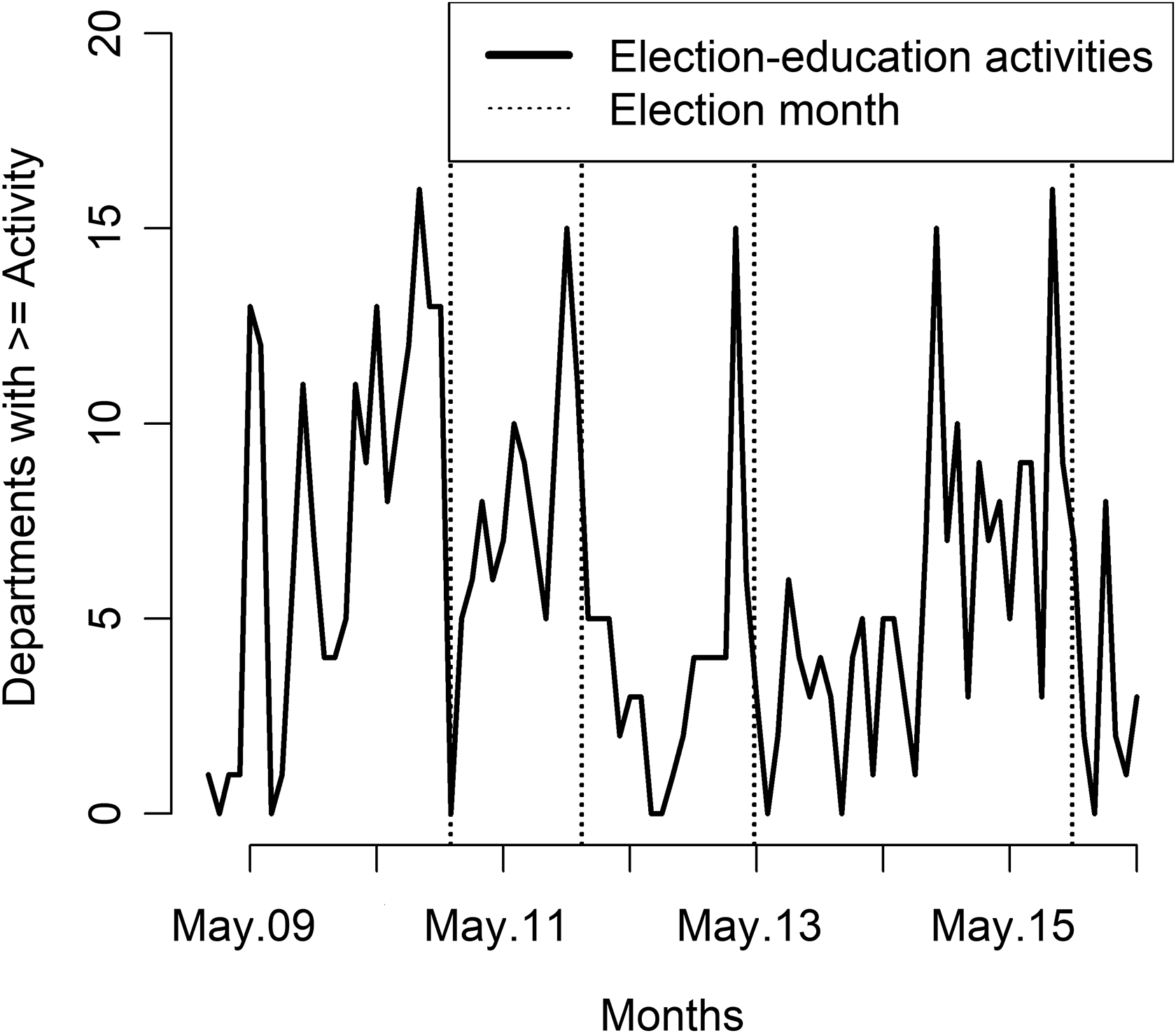
Main independent variables
For the subnational analyses, I create a count of election-education events in each department within the six months prior to the start of an electoral period. For the individual-level analyses, I calculate each survey respondent’s weighted exposure to election-education events. That is, I take the inverse of the distance from an election-education event in a specific (precisely geolocated) village or town to a respondent location. I disregard events more than 10 km away from respondents and total the remaining inverse distances in the period of six months before the survey was administered.
Figures 2 and 3 plot election-education activities over time and the geographic spread of these events between
Spatial distribution of election-education activities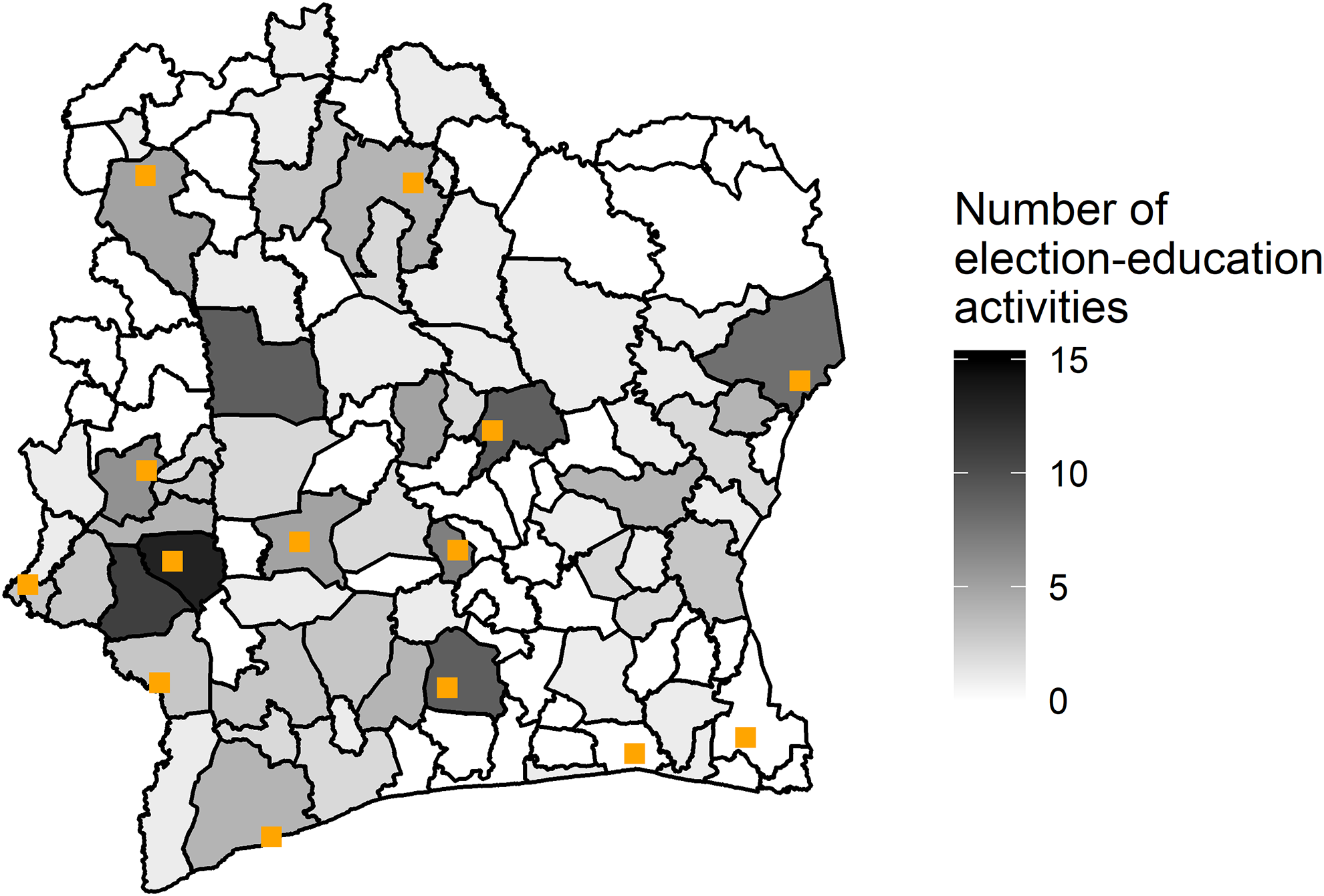
As explained above, Gbagbo-loyal opposition party supporters tend to mistrust the PKO. To test Hypothesis 3, the subnational analysis includes the interaction between the count of election-education events and an indicator for the departments that are strongholds of Gbagbo’s FPI. The individual-level analyses include the interaction between the respondent’s exposure to election-education campaigns and an indicator for whether she supports the FPI.
Dependent variables
The dependent variable for testing Hypothesis 1 is the count of violent protests and riots in a department over an electoral period. The information is taken from an integrated version of the Social Conflict in Africa Database (SCAD) (Salehyan et al., 2012) and the African Conflict Locations and Events Dataset (ACLED) (Raleigh et al., 2010). Duplicate events are discarded using an automated and reproducible methodology developed by Donnay et al. (2018). A total of 49 events are recorded in the four electoral periods.
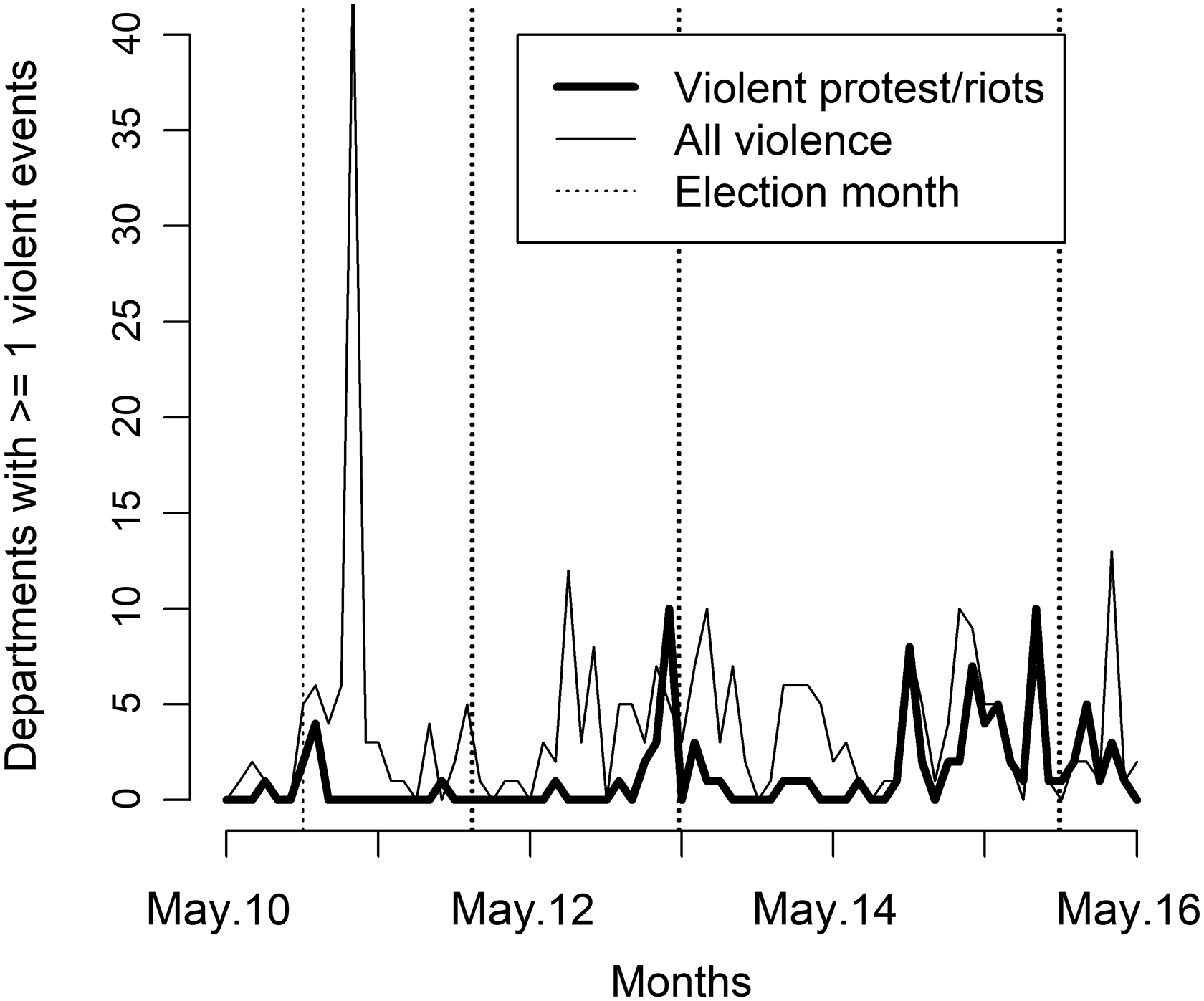
Temporal distribution of protests and riots compared to other violence
Instead of identifying election-related violence by the event’s issue, I identify relevant events according to their timing, for two reasons. First, violent protest and rioting in Côte d’Ivoire before and after elections likely stem from electoral dynamics (Klaus & Mitchell, 2015). Second, existing events datasets that identify election violence according to the event issues are not suitable. The VECO dataset by Fjelde & Höglund (2018) does not capture low-level violence but lethal violent conflict that causes at least ten fatalities per calendar year. The SCAD dataset records only six department-months with election-related violence between 2009 and 2016. To alleviate concerns regarding operationalization, the robustness tests show similar results for Hypothesis 1 if the analyses use the Electoral Contention and Violence (ECAV) dataset by Daxecker, Amicarelli & Jung (2019) available for the 2010 and 2011 elections. Figure 4 shows the temporal distribution of all violent protest and riots compared to all other types of violence, and Figure 5 shows their spatial distribution.
The individual-level measures to test Hypotheses 2a, 2b and 2c come from the geocoded Afrobarometer surveys from March 2013 (round 5) and September 2014 (round 6) (BenYishay et al., 2017). To capture the perceived threat of violence during the election campaign (Hypothesis 2a), survey respondents were asked: ‘During election campaigns in this country, how much do you personally fear becoming a victim of political intimidation or violence?’ (Afrobarometer Data, 2018). The answers range from not at all (0) to a little bit (1), somewhat (2) and a lot (3). To capture political efficacy (Hypothesis 2b), I use a survey item related to contact with the government. Respondents were asked: ‘During
Spatial distribution of violent protests and riots during electoral periods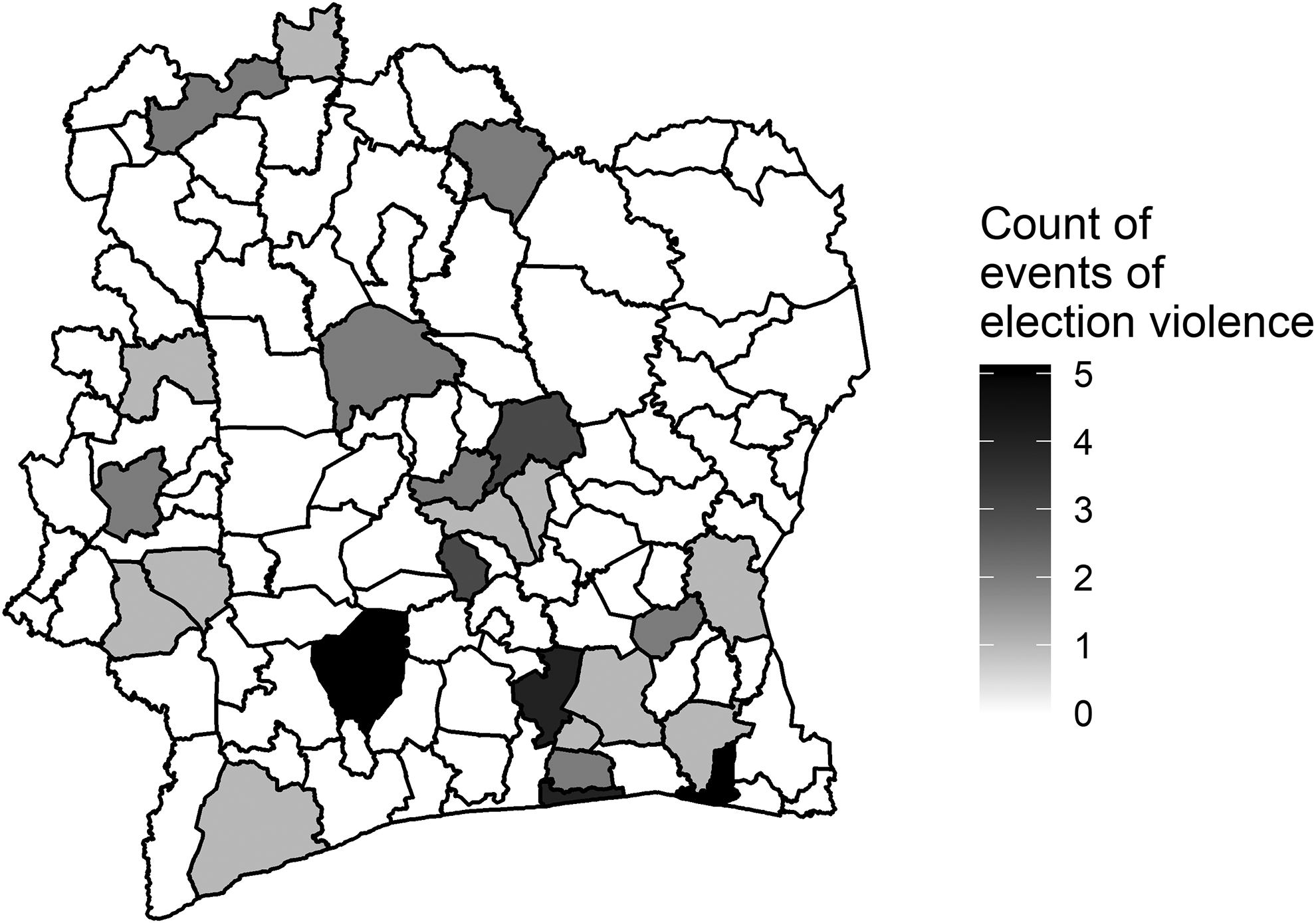
Control variables
Both the subnational and individual-level analyses control for potentially confounding factors. First, subnational deployment of police and military (UN police and UN military) may decrease violence and, consequently, enable election-education activities. I collected personnel data myself using the methodology developed by Ruggeri, Dorussen & Gizelis (2017).
10
Second, the analyses add a measure for Competitiveness.
11
Balcells (2017) observes that violence in Côte d’Ivoire is positively related to parity between government and opposition. Electoral tensions should attract education interventions. Third, geographical features should influence both peacekeepers’ ability to organize election-education events and violence (Ruggeri, Dorussen & Gizelis, 2017). Thus, I include Travel time
Endogeneity
If election education targets violence-prone departments, the statistical analysis underestimates its effectiveness in
Spatial distribution of survey measures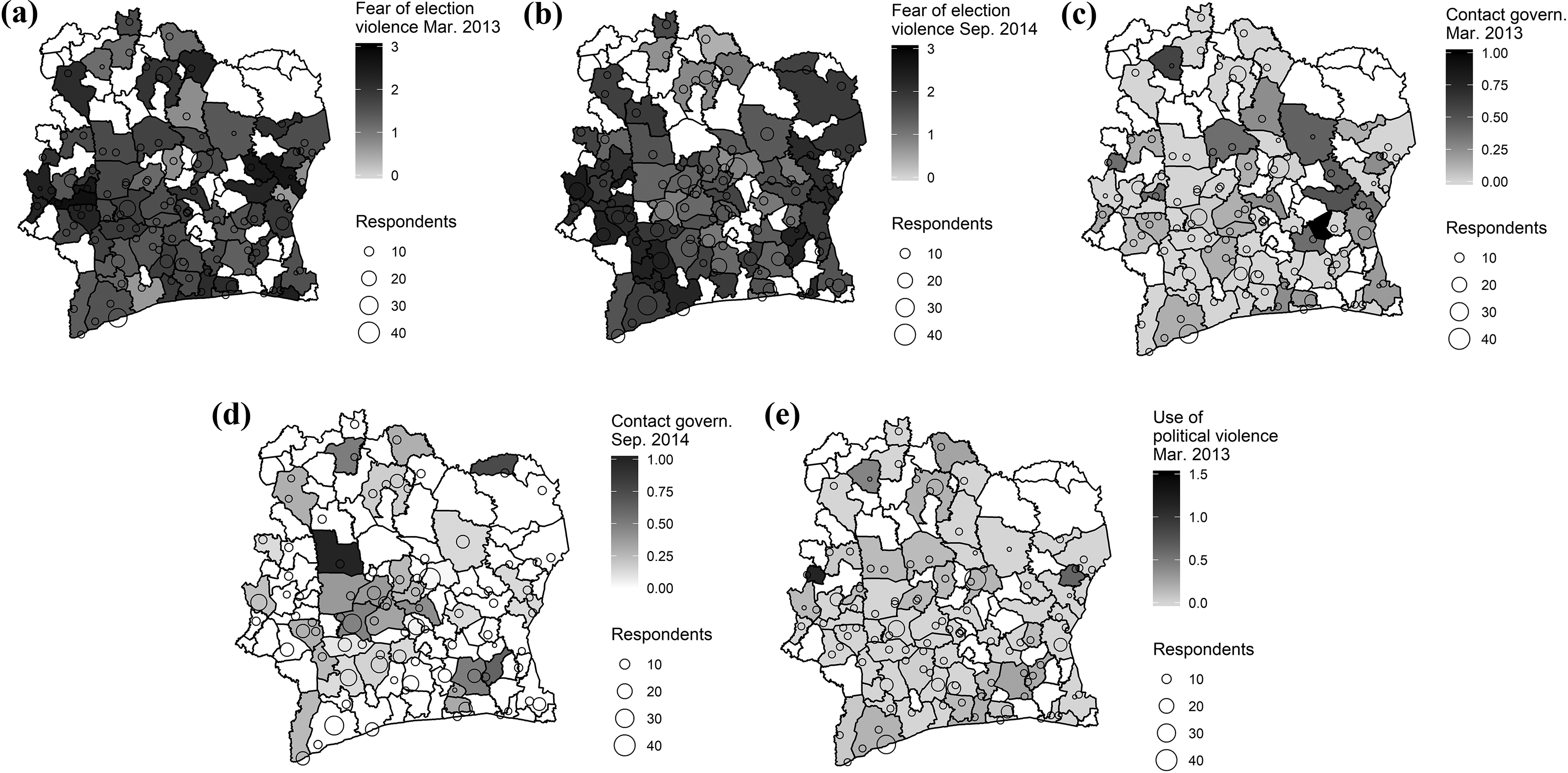
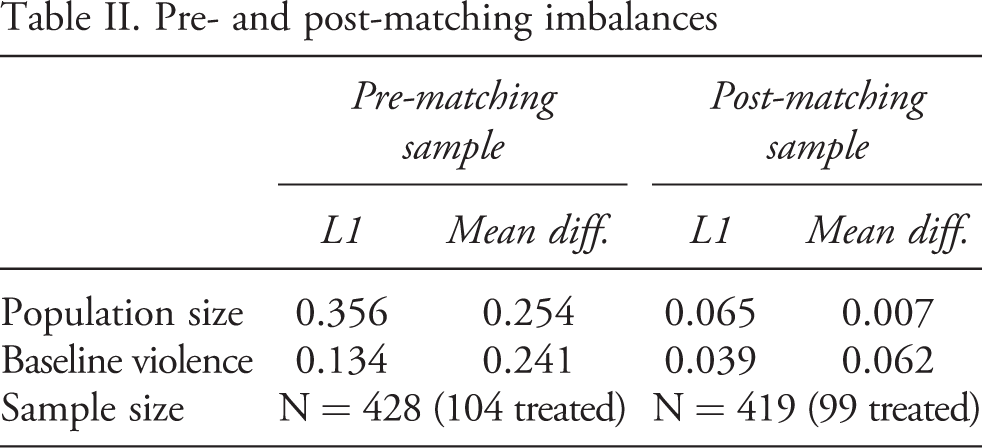
Next, I pre-process the sample to create a more balanced distribution of covariates with coarsened exact matching (CEM) (Iacus, King & Porro, 2011). CEM creates a quasi-experimental sample in which the matching variables are similarly distributed across departments with and without election-education events. CEM discards control observations that are too drastically different from treated observations. For the remaining cases, CEM produces weights that adjust remaining imbalances in the distributions of the matching variables. I use Baseline violence and Population size as matching variables because of their strong correlation with election education. 17
As Table II shows, the balance on all matching variables significantly improves after matching. The overall imbalance measure L1 shrinks from 38.9 to 16.3. L1 represents the percentage of observations with election education that do not have a ‘matching’ control observation without election education. While pre-processing the sample with matching will not recover the exact causal effect, due among other things to unobserved confounding, it should help to better approximate the impact of election education on election violence.
Analyses and results
The statistical analyses support the argument that PKOs’ election-education events can mitigate violent protest and rioting (Hypothesis 1) by soothing fears of election violence (Hypothesis 2a), reducing political alienation (Hypothesis 2b) and delegitimizing violence (Hypothesis 2c). Yet election education makes little difference in opposition strongholds and among opposition supporters, who tend to perceive the PKO as biased (Hypothesis 3).
Subnational impact of election education
Analyses of election-education campaigns
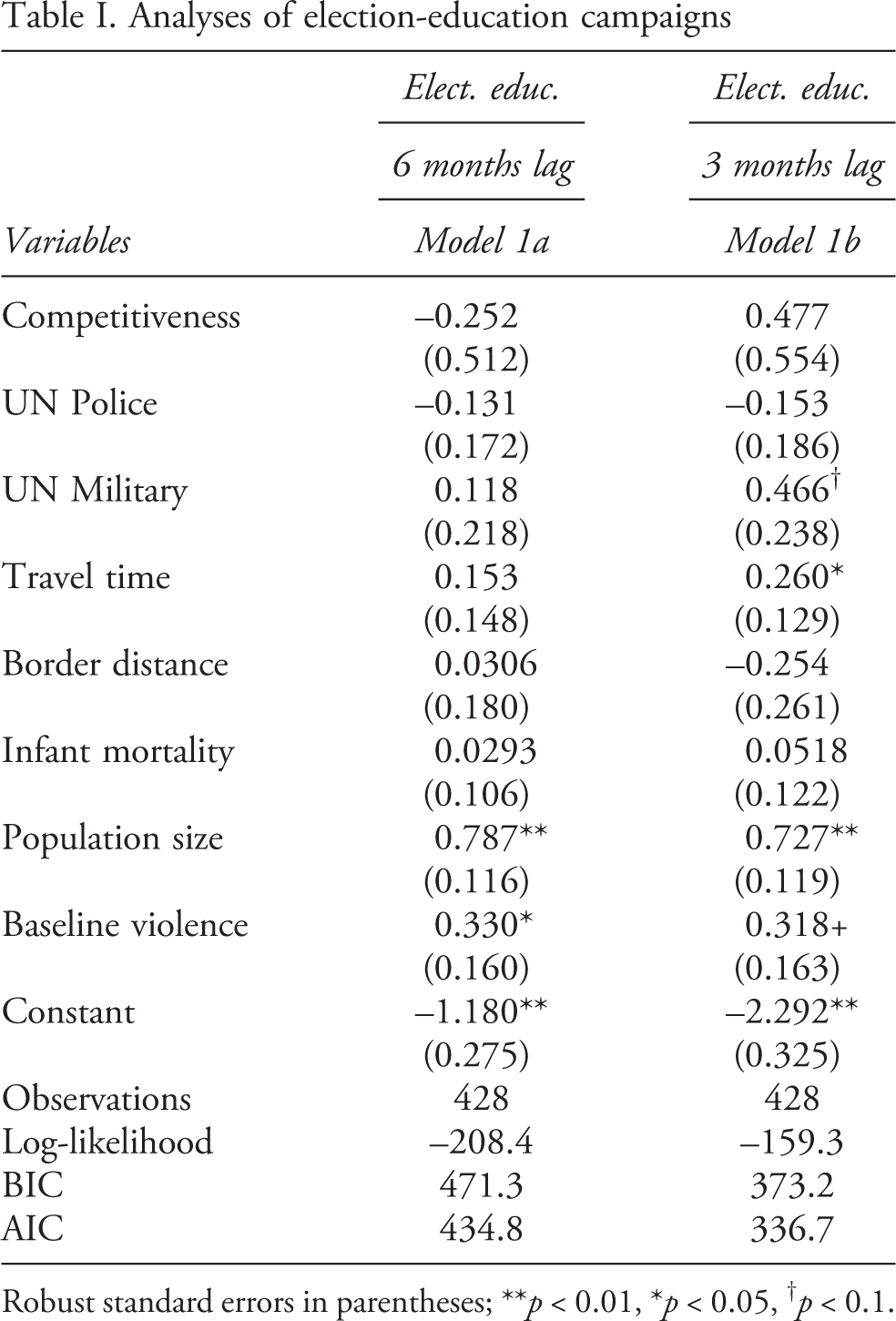
Robust standard errors in parentheses; **p < 0.01, *p < 0.05, † p < 0.1.
Pre- and post-matching imbalances
The effects of the control variables match prior expectations. Deploying more UN military and UN police negatively correlates with violence, though only the coefficient on police is statistically significant. Electoral Competitiveness has the expected positive effect. Travel time and Border distance have no effects. Infant mortality is negatively related to violent protests and riots, suggesting that these events take place in less socio-economically marginalized places. Finally, violence occurs more often in populous departments (Population size) with a history of violence (Baseline violence).
Individual-level impact of election education
The survey data analyses provide support for all three mechanism hypotheses. Table IV presents the ordered logit regressions on fear of election violence. Supporting Hypothesis 2a, the coefficient on election-education exposure is negative across all models. When the analysis excludes respondents who support the FPI (Model 8) or includes the interaction between election education and FPI support (Model 9), the coefficient on election-education exposure becomes significant. This finding supports Hypothesis 3. Table V presents the analysis of contact with government officials. Supporting Hypothesis 2b, the coefficient on election education is positive and significant across all models (Models 10 to 12). Again, as expected by Hypothesis 3, the effect is larger among non-FPI supporters (Model 11). Finally, Table VI shows the analysis of the intention to use political violence. While the coefficient on election education is negative, as expected by Hypothesis 2c, it never turns significant at conventional levels (Models 13 to 16). Moreover, the size of this coefficient gets smaller when the sample excludes FPI supporters (Model 14). One explanation is that election education only affects party supporters. The interaction between FPI support and election education in Model 15 and the interaction between support for any political party and election education in Model 16 have very similar effects (full tables with control variable results are in the Online appendix M).
Analyses of protest and rioting in the electoral period
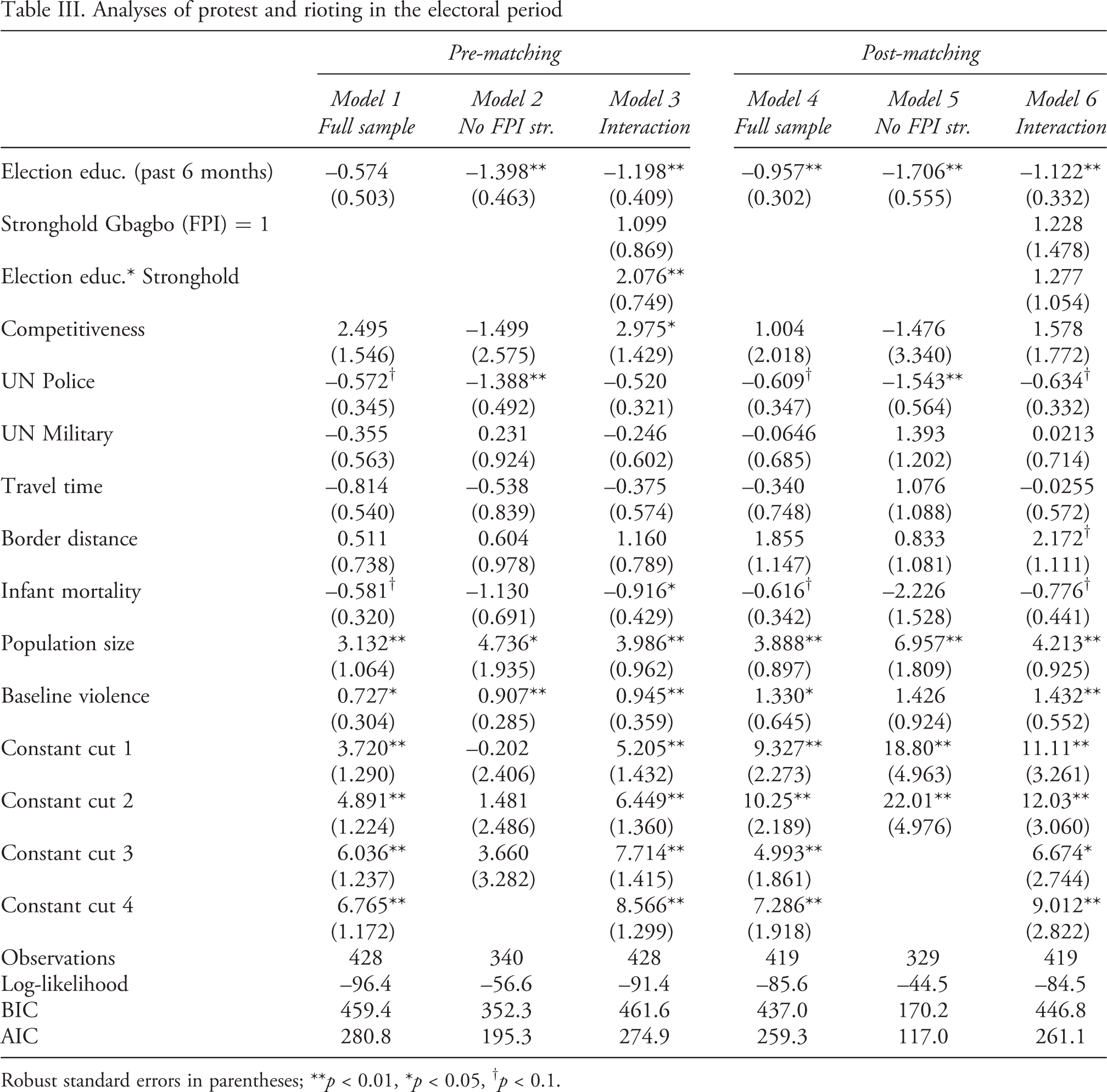
Robust standard errors in parentheses; **p < 0.01, *p < 0.05, † p < 0.1.
For the control variables, while departmental characteristics have no impact, the effects of respondents’ characteristics fit prior expectations. Support for the government parties (RDR and PDCI) is associated with less fear and more contact with officials. RDR supporters are more likely to say that they intend to use violence. An average female respondent exhibits greater fear, feels less politically empowered, and is less inclined to use violence than an average male respondent. Finally, formal education correlates with lower fear, greater political efficacy and lower support for violence.
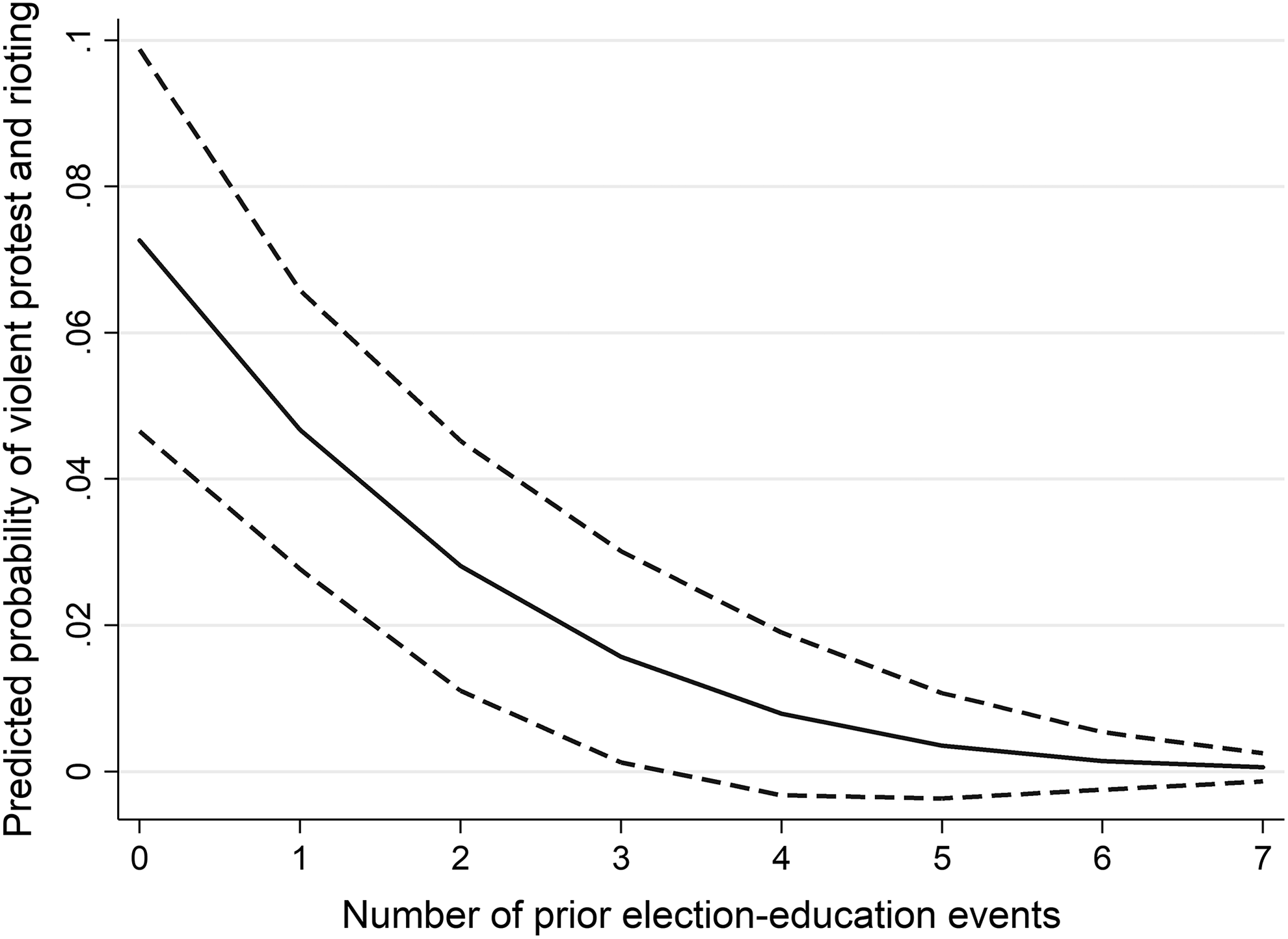
Predicted probability of violent protest and rioting
Analyses of fear of election campaign violence
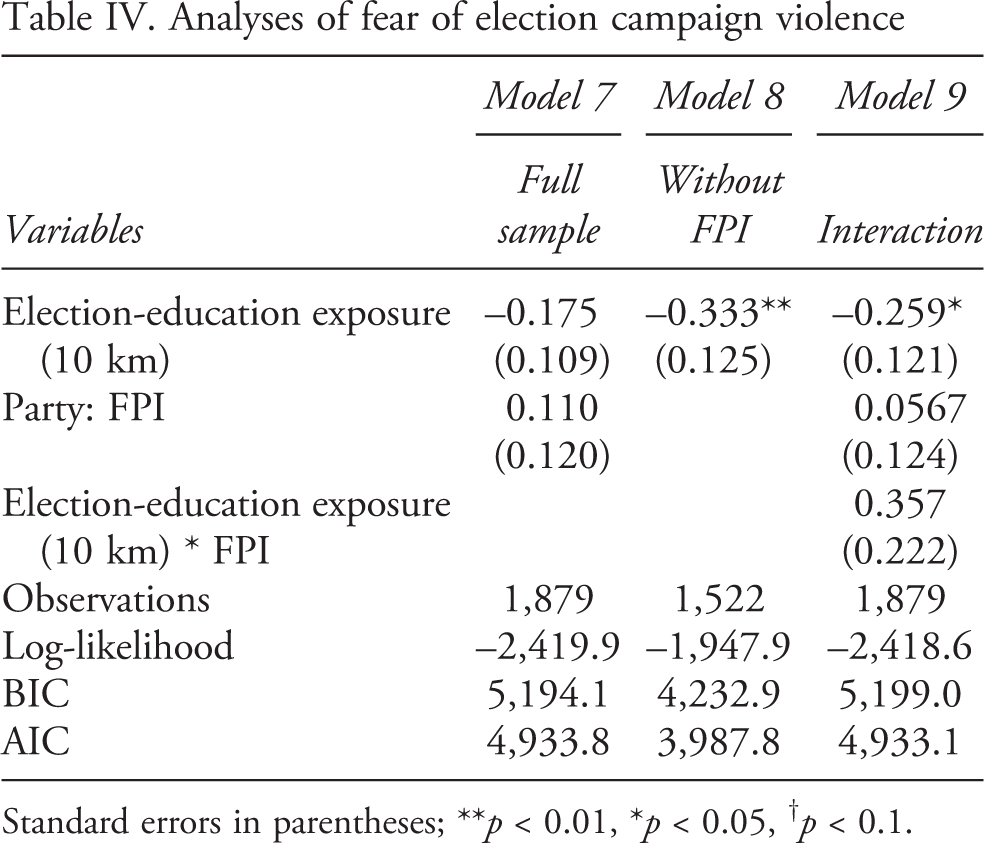
Standard errors in parentheses; **p < 0.01, *p < 0.05, † p < 0.1.
Robustness tests
Analyses of contacting government officials
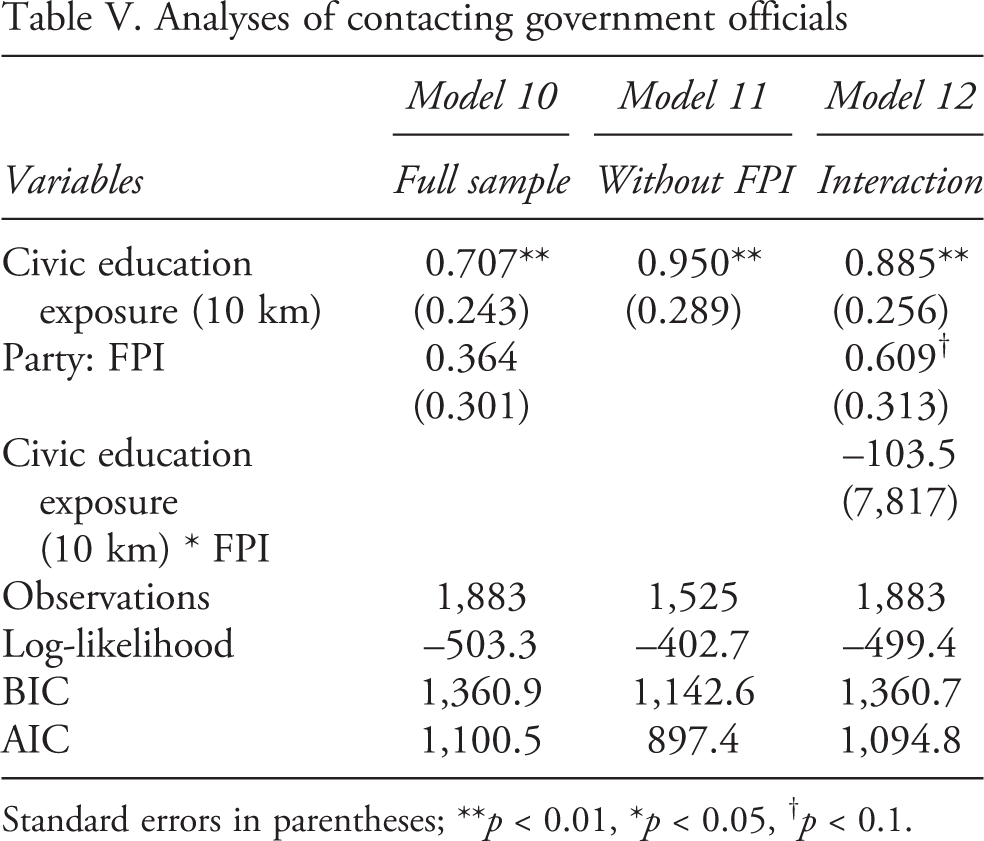
Standard errors in parentheses; **p < 0.01, *p < 0.05, † p < 0.1.
Analyses of intention or experience of using violence for a political cause
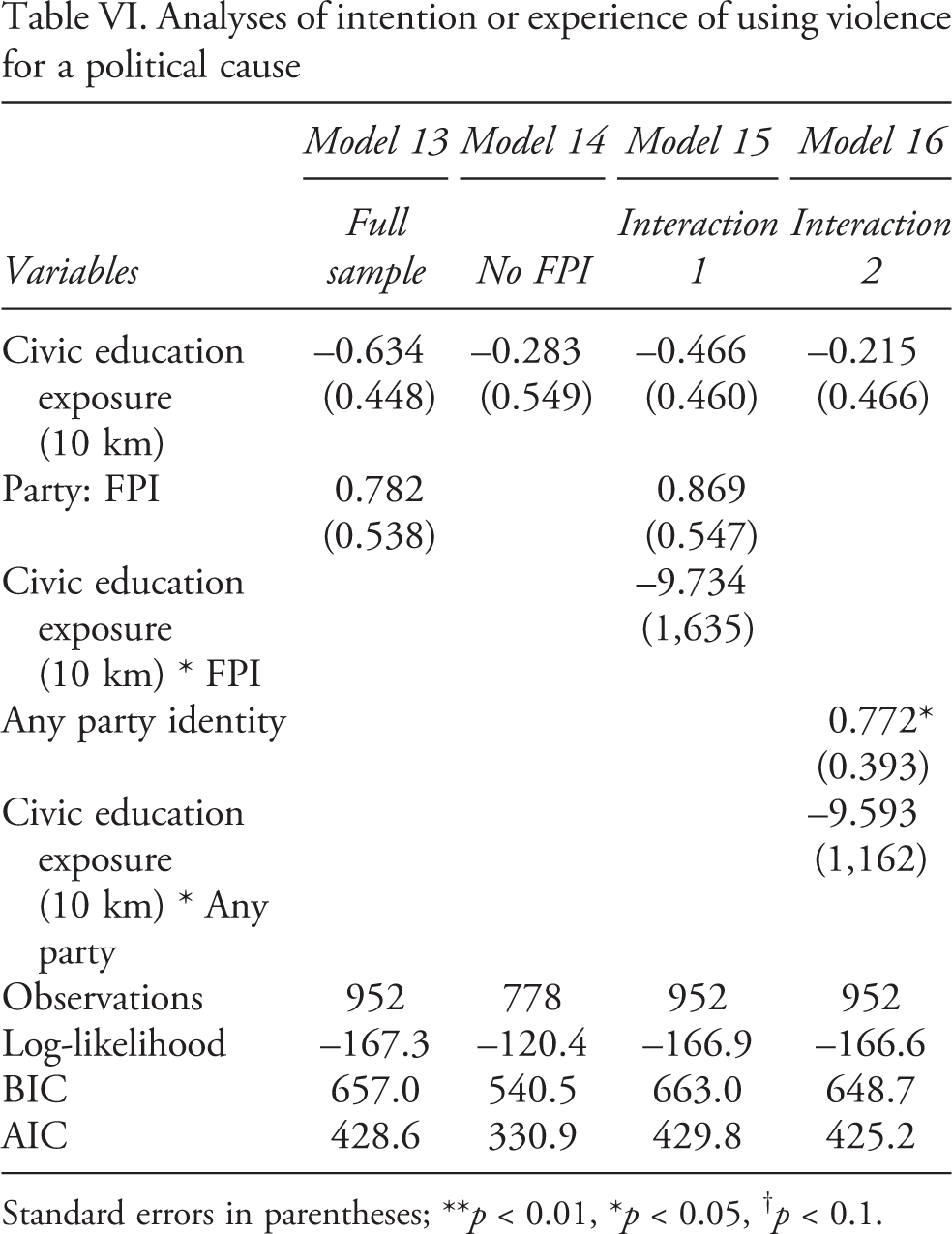
Standard errors in parentheses; **p < 0.01, *p < 0.05, † p < 0.1.
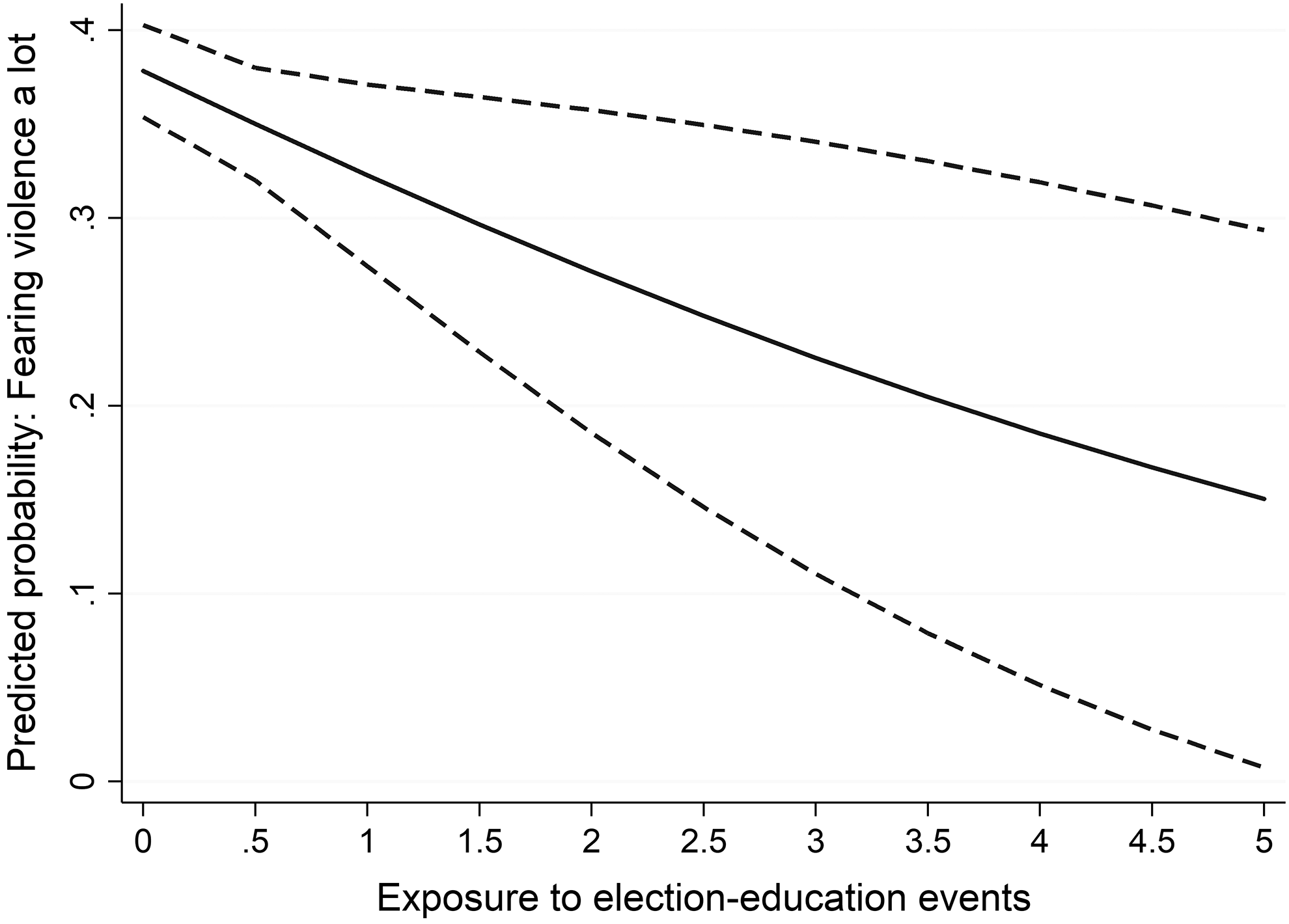
Predicted fear of election violence
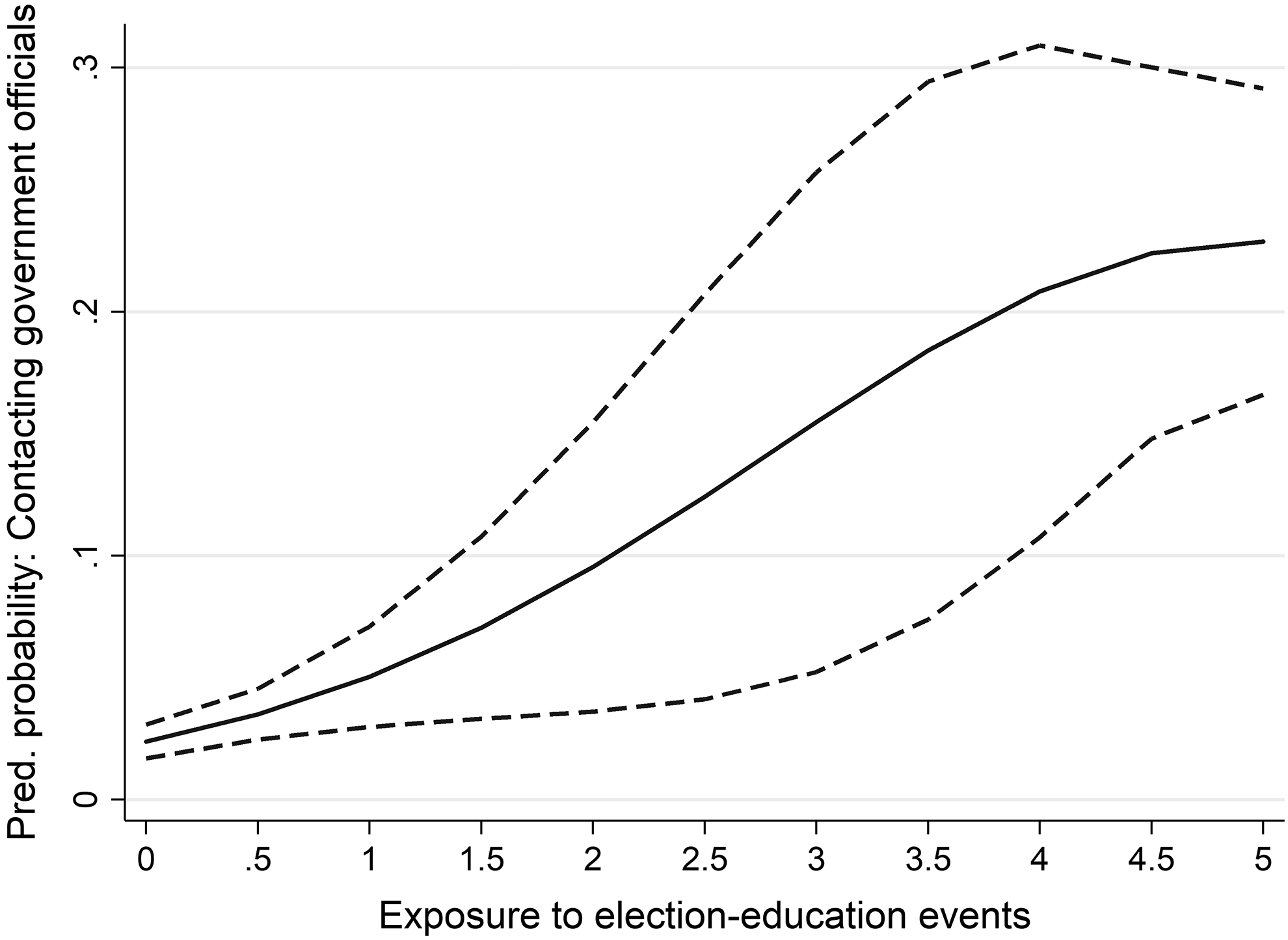
Predicted contacting of government officials
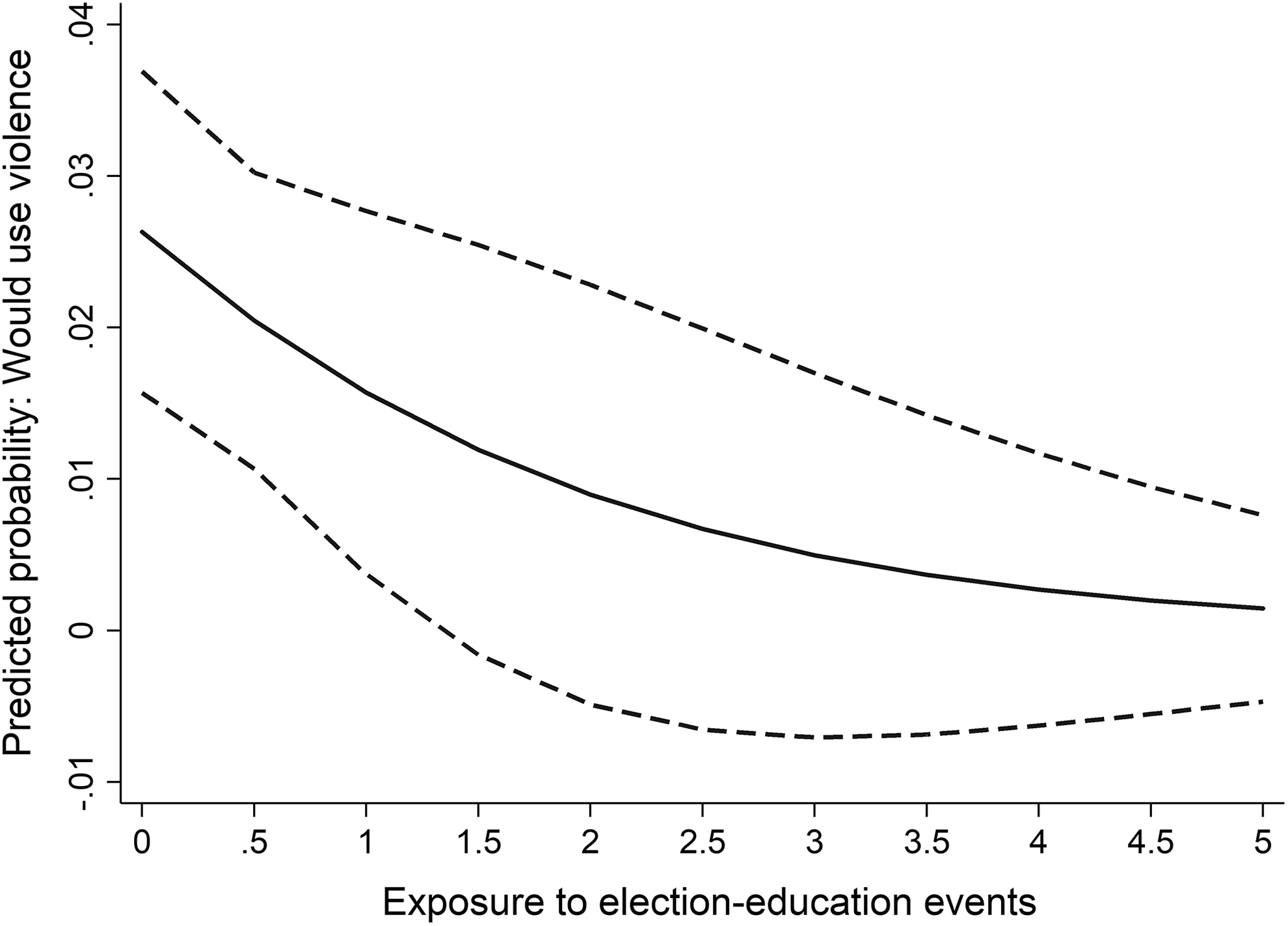
Predicted intention to use political violence
Conclusion
The analyses provide evidence that election education sponsored by the PKO in Côte d’Ivoire helped support the peacefulness of election processes in the war-torn country. Across subnational locations, election education is associated with fewer events of violent protests and riots. On the individual level, election education correlates with less fear of election violence, greater political efficacy and a reduced propensity to use political violence. However, UNOCI’s election education does not seem to affect fears and political efficacy among opposition supporters who tend to mistrust peacekeepers. Correspondingly, the estimated effect of election education on violent protest and rioting is smaller in the opposition’s electoral strongholds.
Evaluating external validity is difficult because we lack subnational data on election-education programmes for other countries. In principle, election education could be useful beyond Côte d’Ivoire because civilians have agency in violent protest and rioting elsewhere (Varshney, 2002) and disinformation campaigns trigger these events during electoral periods in other emerging democracies, too – for instance, in Kenya (Boone, 2011) or Nigeria (Ikeanyibe et al., 2018). However, further research on specific interventions is needed to establish generalizability. 19 In addition, domestic and international civil society actors sponsor similar election-education campaigns. It is imperative to evaluate their potentially complementary effects.
From a policy perspective, the findings suggest that election education is a worthwhile addition to the peacekeeping curricula. With the data at hand, however, we cannot assess the relative benefits of election education compared with other election-assistance activities. If election education becomes part of the peacebuilding repertoire, this study should prompt policymakers to remain attentive to three caveats: first, only if people trust the PKO can election education fulfil its full potential. Second, election education targets civilians who are usually not the main perpetrators of election violence. Third, election education mitigates election-related protests and riots but not election violence in other forms such as repression and intimidation by security forces.
The results have several implications for extant research on election violence prevention and postwar peacebuilding. First, the positive impact of peacekeepers suggests that outside interveners can sometimes overcome the many obstacles to meaningful local engagement (see also Mvukiyehe & Samii, 2017; Mvukiyehe, 2018). Yet, peacekeepers’ election-education efforts have largely failed among a crucial constituency: politically alienated opposition supporters. Thus, the results also highlight the importance of local perceptions for peacekeeping success (Autesserre, 2014). Second, the study speaks to the debate on whether peacekeepers can simultaneously build democracy and peace (Brancati & Snyder, 2013; Fortna, 2008). The findings suggest that peacekeeping operations may assist peaceful war-to-democracy transitions when they invest in election education. Third, the analyses provide a positive answer to the question posed by Finkel, Horowitz & Rojo-Mendoza (2012) on whether educating citizens works in chronically inhospitable environments. Finally, the findings show that civilian agency plays a role in election violence. The study therefore adds to the recent body of research exploring the spatial patterns and micro-foundations of election-related contention (Fjelde & Höglund, 2018; von Borzyskowski & Kuhn, 2020).
Footnotes
Replication data

Acknowledgments
I would like to thank the guest editors of the Journal of Peace Research, Sarah Birch, Ursula Daxecker and Kristine Höglund and three anonymous reviewers for guidance and constructive reviews. For comments on earlier versions of this article, I am grateful to Belén González, Adam Scharpf and Felix Haaß, the participants of the workshop on electoral violence at the University of Amsterdam (February 2018), the Folke Bernadotte Academy workshop on elections in emerging democracies (June 2018), and the panel on election violence at the European Consortium for Political Research General Conference (August 2018), especially to Inken von Borzyskowski and Mascha Rauschenbach. Remaining errors or omissions are my own.
Notes
References
Supplementary Material
Please find the following supplemental material available below.
For Open Access articles published under a Creative Commons License, all supplemental material carries the same license as the article it is associated with.
For non-Open Access articles published, all supplemental material carries a non-exclusive license, and permission requests for re-use of supplemental material or any part of supplemental material shall be sent directly to the copyright owner as specified in the copyright notice associated with the article.
