







Abstract
Objective:
(1) Examine associations of foster care exit type (e.g., reunification with birth family, adoption, guardianship/permanent relative placement, or emancipation from care) with risk of entry into state prison; (2) Examine racial disparities in those associations.
Method:
With data on over 10,000 Wisconsin youth who entered foster care in mid- to late-childhood, we present imprisonment rates in young adulthood by race, sex, and foster care exit type. Proportional hazards models with a robust set of covariates compared prison entry rates among the most common exit types—reunification, aging out, and guardianship/permanent relative placement.
Results:
Nearly 13 percent of the sample experienced imprisonment in young adulthood. Compared with emancipated youth, hazard of imprisonment was 1.58–1.96 times higher among reunified youth. Differences were largely unexplained by observed individual, family, or foster care characteristics. Imprisonment rates were similar for emancipated youth and youth exiting to guardianship/permanent relative placement. Hazard of imprisonment for reunified Black youth was twice that of reunified white youth, but racial differences in prison entry were statistically non-significant among emancipated youth.
Conclusion:
Efforts to reduce incarceration risk for all youth in foster care are needed. Reunified youth may benefit from services and supports currently provided primarily to emancipated youth.
Approximately 6 percent of U.S. children experience foster care by age 18 (Wildeman and Emanuel 2014). Children who experience foster care commonly have experienced maltreatment and other childhood adversities (Cho and Jackson 2016; Turney and Wildeman 2017) in addition to the disruption associated with foster care placement, and are more likely than children in the general population to exhibit adverse outcomes in multiple life domains (Gypen et al. 2017). Longstanding concerns have been raised about the life trajectories of individuals who experience foster care—and, especially youth who “age out” of care (remain in care until the age of majority and exit care without having obtained a permanent, legally-recognized family)—including claims that that the U.S. is “sending more foster kids to prison than college” (Bauer and Thomas 2019). However, while a great deal of research has interrogated whether individuals who experience foster care have higher rates of subsequent criminal and juvenile justice involvement than those who do not (Bald et al. 2019; Cusick and Courtney 2007; Doyle 2007, 2008), comparatively little research has considered how incarceration risk varies within the foster care population. Children experiencing foster care are a diverse population with heterogeneous experiences occurring before, during, and after care. An investigation of the rates and predictors of criminal justice involvement among youth who spent time in foster care—and heterogeneity therein by foster care exit type—stands to illuminate which foster care youth are at greatest risk for subsequent incarceration and thereby provide implications for effectively targeting prevention efforts.
Most children who experience foster care do not spend their entire childhood in care, nor do they commonly remain in care from initial removal until they reach the age of majority. Rather, foster care episodes vary in length, number, and types of placements, and children may exit and return to foster care more than once. Youth may exit care by being reunified with their families of origin, adopted by another family, or placed in legal guardianship or another permanent arrangement, most commonly with a relative caregiver. Some youth will reach the age of emancipation while still in care, which is commonly referred to as “aging out” of care. As such, the environments that children and youth experience and the individuals comprising their familial and social networks before, during, and after foster care episodes may independently and interactively impact their risk of criminal justice involvement.
In this study, we leverage integrated statewide longitudinal administrative data from Wisconsin to assess risk of incarceration in early adulthood among children who entered foster care (though not necessarily for the first time) in mid- to late-childhood. We focus specifically on whether risk of entering state prison in early adulthood differs by foster care exit type after adjusting for differences in demographics, pre-foster care environments, and experiences within foster care (time in care; number and types of placements). Our regression estimates draw comparisons among the three most common foster care exit types for youth spending time in foster care during mid- to late-childhood: reunification, guardianship/permanent placement with a relative, and aging out of care. In addition, we examine how rates of state prison entry—and the association between exit type and imprisonment—vary by race.
Background
Federal, state, and local policy strongly prioritizes “permanency,” defined as exiting care into a permanent legally recognized family, for children in foster care. Moreover, federal law prioritizes family reunification, whereby children return to the family from which they were removed whenever possible. To this end, states are typically required to make reasonable efforts to achieve reunification for a prespecified period of time. Approximately half (49 percent) of all children exiting foster care each year exit to reunification (U.S. Department of Health and Human Services [USDHHS] 2018).
When reunification is not achieved, adoption is the preferred alternative. For children placed with relatives, legal guardianship or a permanent custody arrangement is also permissible. Guardianship differs from adoption in that it does not require termination of the parental rights of the child’s birth parents. Approximately 25 percent of children exiting foster care each year exit to adoption and 18 percent exit to guardianship/permanent placement with a relative (USDHHS 2018). Rates of adoption are highest among youths who enter foster care in infancy or early childhood; youths experiencing foster care in later childhood and adolescence are more likely to exit to guardianship.
When no permanent placement is achieved, children emancipate from (age out of) foster care upon reaching “adulthood.” Traditionally, youth have aged out when they reach the age of majority (typically age 18). However, most states have now implemented provisions through which, under certain conditions, youth may remain in foster care, typically until age 21. The conditions vary by state but generally require that youth are engaged in education or employment activities or have a disability that inhibits such activities. Nationally, about 7 percent of all youth exiting foster care have aged out (USDHHS 2018). However, rates of aging out are near zero for children who enter care in early childhood and approach 50 percent among youth experiencing foster care as teenagers (Annie E. Casey Foundation 2018). 1
A large body of research documents adverse life outcomes among youth who age out of care as compared to the general population (Courtney et al. 2005; Pecora et al. 2006). In turn, federal and state policy has been increasingly responsive to the potential needs of these youth. Yet, whether youth who age out of care are substantially more disadvantaged than otherwise similar youth who exit foster care to permanency is unclear. The small body of research on the short- or intermediate-term developmental and behavioral outcomes associated with reunification or adoption compared to remaining in foster care (Bellamy 2008; Biehal 2007; Lloyd and Barth 2011; Taussig, Clyman, and Landsverk 2001) has produced mixed findings. Little research has compared youth who age out of care to those experiencing other foster care exits, in part because such comparison requires observing youth until the age of majority.
Foster Care, Exit Type, and Criminal Justice System Involvement
Criminal justice system involvement is of particular concern for youth experiencing and aging out of foster care given the lifelong implications of incarceration for employment opportunities and earnings potential (Pager 2003; Western 2002), housing (Henry et al. 2018), political participation (Weaver and Lerman 2010), and other opportunities throughout the life course (Henry et al. 2018; Pager 2003; Weaver and Lerman 2010; Western 2002). Criminal justice system involvement in early adulthood both reflects and affects challenges in other life domains, such as educational attainment, family relationships, and economic stability. Youth experiencing foster care have disproportionately faced poverty and a host of related challenges—from low quality public education options to high levels of extractive policing. In addition, frequently tenuous and troubled family circumstances, coupled with the adverse impacts of child maltreatment and family instability on social, behavioral, and academic functioning, may suggest particularly high risk for criminal justice system involvement. Indeed, before entering foster care, most youth have experienced abuse or neglect from parents or caregivers (USDHHS 2018), which may include experiencing or observing multiple forms of violence (physical or sexual assaults) and/or other illicit behaviors (use, manufacture, or sale of drugs; prostitution or sex trafficking). Consequently, many such youth are experiencing behavioral and mental health problems (McMillen et al. 2005; Steele and Buchi 2008) and are academically behind their peers (Stone 2007) by the time they enter care.
Foster care is intended to provide youth with a safe and stable environment until they return home, are placed in an alternative permanent setting or, if those options are not realized, reach adulthood. To this end, prospective foster, adoptive, and guardianship caregivers are subjected to criminal and child maltreatment background checks and home inspections; foster parents also receive ongoing training and monitoring, in addition to financial support (Child Welfare Information Gateway [CWIG] 2014, 2016). Because most adoptive or guardianship arrangements for children in care began as foster placements (USDHHS 2018), children’s experiences in their adoption/guardianship environments are typically monitored for a substantial length of time prior to establishing permanency. These standards are intended to ensure that foster, adoptive, and guardianship placements are safe, stable, and supportive. In addition, while in foster care, youth are guaranteed basic care (food, shelter, medical care, and clothing); they also tend to receive more preventive and treatment-related physical and mental health care than otherwise similar children, and their home environments are monitored. Like children actively experiencing foster care, those exiting to adoption or guardianship are typically eligible to receive financial support until age 18 and may be eligible for medical coverage until age 21 (CWIG 2015; USDHHS 2011). The combination of screening/eligibility standards and training for caregivers, services and financial supports for children, and monitoring of living arrangement during foster care may serve to protect youth against exposure to additional adversity, including additional abuse or neglect, economic deprivation, and unmet health needs.
In contrast, children who reunify rarely receive ongoing supports or monitoring, and the government assumes no ongoing responsibility for their care or safety. Moreover, upon exiting care, the environments to which reunified youth return may be similar to those they experienced prior to entering foster care. A substantial proportion of youth (30 percent) who are reunified experience additional maltreatment within a three-year period (Connell et al. 2009), and there is little evidence that the services families receive prior to reunification are effective at reducing subsequent maltreatment. Notwithstanding the preference for reunification, if the standards, monitoring and services available to children in foster care (and, to a lesser extent, in adoption and guardianship) are effective, youth in care may, all else equal, be at lower risk of subsequent criminal justice involvement than their reunified counterparts.
Net of services, resources, and supports, the quality and consistency of youths’ relationships likely matter for future incarceration risk. Entry into foster care, itself, may temporarily weaken or permanently sever familial relationships, as well as connections to peers, schools, and other socializing agents and institutions. Given that youth who reunify spend comparatively less time in foster care than those who age out or exit to alternative forms of permanency (USDHHS 2016), the latter groups may experience comparatively more changes in schools and home environments and lower stability and continuity of familial relationships prior to adulthood. Thus, they may be more strongly impacted (positively and/or negatively) by their experiences within foster care. Overall, youths’ academic and socioemotional challenges may be exacerbated by multiple placement changes within foster care and/or multiple transitions between family of origin and foster care (Clemens et al. 2018; Kimberlin, Anthony, and Austin 2009; Rubin et al. 2007), weak or strained connections with caregivers, negative behavioral influences from peers or adults (Lee and Thompson 2008) and, in some cases, maltreatment by foster parents, group home staff, or peers while in care (Euser et al. 2014). In particular, congregate care and placement instability—experiences especially common for older youth in care (Konijn et al. 2019; U.S. Children’s Bureau 2015)—may deprive youth of opportunities to develop stable connections with safe, supportive adults.
The strength of parent-child bonds may protect against or, in cases of toxic relationships, increase risk for criminal justice system involvement. Although reunification presents an opportunity to reestablish and strengthen family bonds (Courtney and Heuring 2005; Goldsmith, Oppenheim, and Wanlass 2004; Roberts 2012), the length of separation, prior quality of parent-child relationships, and safety and security provided upon reunification may influence their strength, quality, and developmental benefit. For children who do not reunify, prior experiences of abuse and neglect as well as complex feelings of loss and continued loyalty to one’s family of origin present challenges to forming attachments to new caregivers. Although older foster youth who receive quality care often form new attachments (Joseph et al. 2014), these frequently coexist with continued attachment to and identification with their birth family and the family’s beliefs, behaviors, and norms, regardless of whether they are ultimately reunified (Baker et al. 2016; Ellingsen, Shemmings, and Størksen 2011). Although healthy attachments may develop between children and foster parents, even absent legal permanency, for some youth who remain in foster care until adulthood, lack of adoption or guardianship may signal a weaker connection to or lesser commitment from the foster family (Schofield and Beek 2005). Moreover, children who exit to adoption or guardianship—and those who age out of care—may have continued contact with their birth parents or other relatives, creating a larger network of (positive and/or negative) influences and attachments (Boyle 2017; Collins, Paris, and Ward 2008).
Foster care exit type likely confers different levels of familial and institutional supports during the transition to adulthood. Even when constrained by economically disadvantaged contexts, families typically guide their children through the transition to adulthood, providing both financial and emotional support (Furstenberg 2010). Youth aging out of foster care tend to lack familial supports in ways that inhibit successful transitions to adulthood (Avery 2010; Courtney et al. 2011; Timberlake and Verdieck 1987). In recent years (including the latter portion of our study period), state and federal governments have assumed greater responsibility for youth aging out of care, including providing options for remaining in care beyond age 18 (CWIG 2017), though relatively few youth appear to do so; eligibility for continued Medicaid coverage until age 26 (as of 2014; CWIG 2015); and free or reduced-cost college tuition (Parker and Sarubbi 2017). Some supports are provided to all youth of a particular age prior to their foster care exit, regardless of whether they are expected to age out. Notably, whereas the institutional supports provided to youth in foster care, and those provided in adoptive or guardianship arrangements, are intended to enable caregivers to meet youths’ needs (and, in the case of adoption and guardianship, to avoid disincentivizing foster parents from pursuing permanency), the supports provided to foster care youth who (are expected to) age out are intended to prepare and assist them to live independently. Again, however, for exits to reunification, neither youth nor their parents receive substantial support.
Finally, it is important to recognize that the foster care and juvenile justice systems intersect in ways that may exacerbate incarceration risk. To begin with, a considerable proportion of older foster care youth experience some level of juvenile justice involvement and are overrepresented in juvenile delinquency cases (Ryan and Testa 2005; Yi and Wildeman 2018). Juvenile justice interventions themselves may, through labeling and exclusion, reinforce criminal behavior (Bernburg and Krohn 2003) and/or limit future social and economic opportunities, thus leading to higher rates of adult incarceration. Juvenile justice involvement may have especially negative implications for youth in foster care. Evidence suggests that the juvenile justice system treats children in foster care disproportionately harshly, subjecting them to detention and other penalties at higher rates than otherwise similar youth (Ryan et al. 2007). Once labeled delinquent or dangerous, youths’ opportunities to be placed in a stable family-like foster setting or achieve permanency through adoption or guardianship are narrowed, which may increase their risk of criminal behavior (Yi and Wildeman 2018). Even if reunified, youth ensnared in the juvenile justice system may face increased penalties if their parents are perceived as dysfunctional and unable to provide adequate supervision (Rodriguez, Smith, and Zatz 2009).
Heterogeneity by Race
An examination of linkages between foster care exit type and subsequent incarceration must consider potential heterogeneity by race/ethnicity. We focus our discussion on Black and white youth, where racial gaps in rates of both foster care placement and incarceration are especially large and persistent. In contrast, for example, although Hispanics have higher rates of incarceration than whites, they have similar rates of foster care placement (Yi, Edwards, and Wildeman 2020). Notably, Native Americans have disproportionately high rates of both incarceration and foster care placement, and Asians have disproportionately low rates of both (Mauer 2011; Yi et al. 2020). However, our data, like those used in most prior studies, lack adequate samples to support separate analysis of youths from those groups.
There is an ongoing debate over the extent to which disproportionality in each system is driven by racially biased behaviors and decisions within these systems. Relatively strong evidence points to racial bias in decisions to incarcerate criminal offenders. Compared with non-Hispanic whites, Blacks and Hispanics are incarcerated for less severe criminal activity (Kakade et al. 2012; Weaver, Papachristos, and Zanger-Tishler 2019) and, among those who commit more serious crimes, are disproportionately likely to experience incarceration (Hauser and Peck 2017). On rates of foster care entry, evidence of differential treatment is less consistent and appears to vary geographically (Maguire-Jack, Font, and Dillard 2020; Pryce et al. 2019; Putnam-Hornstein et al. 2013). However, racial disparities in both systems would likely persist even in the absence of differential treatment by race, given the lack of coordinated, large-scale compensatory efforts to address the legacy of racism and continuing evidence of racism in other aspects of social life that are relevant to foster care and criminal justice system involvement, including medical care (Giurgescu et al. 2011), housing (Korver-Glenn 2018), and employment (Quillian et al. 2017). Sustained racial inequality in economic and social opportunities and resources and the resulting differences in the contexts in which Black and white children experience childhood undoubtedly contribute to differential risk of foster care entry and subsequent incarceration by race.
It is less clear to what extent, conditional on having spent time in foster care, we should expect to observe differences in subsequent incarceration by race. To the extent that Black and white former foster youth have experienced similar levels of disadvantage and trauma, we might expect disparities in rates of post-foster care incarceration to be smaller than those observed in the general population; that is, differences in environmental antecedents to risk of criminal justice involvement by race may be smaller among the foster care population, even as race differences in criminal justice processes reflecting systemic bias persist. Yet, it is possible that Black and white foster youth do not experience similar pre- and post-foster care levels of disadvantage in their homes and communities, nor receive similar levels of services and supports during and after foster care. Despite well-documented inequities in the resources available, on average, to white and Black youth overall, research to date has not established whether such inequalities are observed among youth who experience foster care. Given that social and economic disadvantages confound risk of foster care entry, racial inequalities in pre- and post-foster care home and community environments may be comparatively small. However, as discussed below, there is some evidence that Black and white youth receive different types and levels of support—typically favoring white youth—in the child welfare system, which may suggest a lesser likelihood of post-foster care incarceration for white youth.
Thus far, our discussion has focused on why Black and white former foster youth, in general, may face differential risk of incarceration. This discussion, however, has provided no clear implications for why we may expect racial differences in incarceration rates by foster care exit type. We posit that there are two likely mechanisms for such differences. First, Black and white youth may be subject to differential foster care trajectories, in terms of placement types (non-kin foster homes, kin foster homes, congregate care) and (in)stability (number of removals from home; number of foster care placements). Such differences may subsequently influence both exit type and, even net of exit type, overall risk of incarceration. For example, once in foster care, Black children are overrepresented in congregate care settings (U.S. Children’s Bureau 2015) which are, in turn, associated with increased risk of juvenile delinquency and other adverse outcomes (Ryan et al. 2008). Black children also tend to spend more time care, which may reflect both higher rates of kinship care (Grogan-Kaylor, 2000), for which timelines for achieving permanency are less stringently enforced, and lower rates of reunification (Harris and Courtney 2003; Hayward and DePanfilis 2007; Lloyd Sieger 2020; Shaw 2010). At the same time, there is little evidence of racial disparities in placement stability (Konijn et al. 2019). 2
Second, Black and white youth may exit care to different resources and environments. This may be particularly the case for reunification and, perhaps to a lesser extent, guardianship and permanent relative placement. When foster children have a goal of reunification, child welfare services largely emphasize assisting their parents in meeting the conditions for reunification. Yet, there are limited resources to support families (e.g., to provide long term economic stability), and there is little evidence of effectiveness for many of the services provided to parents aimed at improving child safety or family functioning. Thus, any pre-placement disparities in the resources or environments of Black and white children may persist post-reunification. Moreover, studies suggest greater barriers to trust and engagement between Black families and child welfare agencies (Miller, Cahn, and Orellana 2012). This may manifest in disparities in the duration, nature, or effectiveness of both foster care, itself, and the services provided pre- and post-reunification, such that white families may receive more effective or longer-lasting support services. If so, white children may be reunified to better resourced, better supported, or safer environments. To the extent that racial disparities in post-reunification environments are larger and/or more favorable for whites than are racial differences in foster home environments, Black-white gaps in incarceration may be larger among youth who reunify versus age out. A recent review identified few studies on racial disparities in the effects of foster care or experiences therein on various developmental outcomes, and of those studies, little indication of especially harmful effects among Black youth (Barth et al. 2020). In addition, research on youth who have aged out of care has not found racial differences in educational attainment, employment, or mental health; however, disparities favoring whites were identified in rates of teen fatherhood, homelessness, receiving public assistance, and experiencing poverty (Dworsky et al. 2010; Harris et al. 2009; Shah et al. 2017; Villegas and Pecora 2012). The limited body of research on differences in crime and criminal justice involvement among youth who have aged out of care indicates no racial disparities in arrests (Ryan et al. 2007) and that youth of color who age out of care exhibit lower rates of crime than white youth who age out of care (Vaughn, Shook, and McMillen 2008).
Racial disparities associated with adoption and guardianship are not well-understood, in part due to a lack of research on older-child adoptions and guardianships. However, because most guardians are relatives and many served as the kinship foster parent(s) prior to guardianship, research on kinship care is relevant. Though limited, this research has found that kinship care is associated with higher rates of delinquency for both Black and white males, but not females (Ryan et al. 2010).
Summary and Hypotheses
Youth who age out of foster care have spent, on average, a longer period of their childhood in care than those who exit to reunification, adoption, or guardianship/permanent relative placement. Moreover, they are more likely to have experienced placement instability and congregate care. Although these experiences may, at least in part, be driven by pre-existing psychosocial characteristics of the youth themselves, they are also adversely associated with developing stable long-term relationships with supportive adults. Thus, youth who age out of care may be expected to have higher rates of imprisonment in early adulthood than those who exit to permanency.
At the same time, that youth who reunify receive lower levels of institutional supports and resources, and also face a higher risk of additional maltreatment exposure, may suggest such youth will be at heightened risk of criminal justice system involvement relative to those who exit to another form of permanency or age out. In addition, to the extent that racial minority youth experience more disadvantaged environments prior to entering foster care than white youth, reunification may increase disparities in imprisonment vis-à-vis greater exposure to social and economic disadvantage at the family and community levels. To the extent that youth who age out are placed within or return to their pre-foster care neighborhoods, racial disparities may be heightened in this subgroup as well. Youth who exit to adoption and guardianship are hypothesized to have the lowest rates of imprisonment due to more favorable experiences within foster care and benefits conferred by a permanent socially and legally recognized family (relative to youth aging out), as well as greater supports and resources upon exiting care (relative to reunified youth). There is little prior theory or research to guide expectations vis-à-vis racial disparities in outcomes among other forms of permanency.
Methods
Data and Sample
This study uses data from the Wisconsin Administrative Data Core, housed at the Institute for Research on Poverty at the University of Wisconsin-Madison. The Data Core is an integrated data system in which individuals and families involved in state-administered social welfare programs, including Child Protective Services, foster care, state prisons, public benefits (e.g., cash assistance, food assistance, government health care programs), and unemployment insurance, can be linked by inter- and intra-generational family relationships, household membership, and social welfare program participation, and followed over time.
Our primary sample is youths born between 1987 and 1997 and who entered foster care (though not necessarily for their first time) between the ages of 10 and 17. Wisconsin’s foster care records were not fully electronically available until mid-2004; thus, we include only children with removal dates on or after July 2004. This amounted to 14,193 youths experiencing foster care. Additional exclusion criteria were: youths known to have left the state of Wisconsin or to have died (n = 971); youths with missing data on foster care exit type (n = 278); youths who spent less than one week in foster care (n = 796) 3 ; and youths for whom we could not identify their birth mother or county of record (n = 152). This left a potential analytic sample of 11,996 youths. It is important to recognize that, although our sample of youth experiencing foster care between ages 10 and 17 is a select group that is not representative of all youth experiencing foster care, youths who experience care during later childhood and adolescence are most likely to age out of care. As such, our results are highly relevant for youth most at risk of aging out of care—a particularly important, vulnerable, and policy-relevant subset of the foster care population.
Sample youth most commonly experienced a final (last) exit to reunification (n = 7,370), followed by aging out (n = 2,291), and guardianship/permanent relative placement (n = 1,055). Smaller proportions of youth were indicated to have exited care to AWOL/runaway status (n = 664), detention in a correctional facility (n = 365), and adoption (n = 251). We present (state prison) imprisonment rates for youth experiencing each of these exit types, for the full sample as well as by sex and race. However, we limit our primary multivariate analyses to only those youth experiencing the three most common exit types in our sample: reunification, guardianship/permanent relative placement, and aging out. This approach was motivated by both empirical and conceptual considerations. Empirically, very few sample youths were adopted (n = 251) and, among them, only 8 were subsequently imprisoned during the observation period. Such a low overall rate of state prison entry among adopted youth resulted in too little variation for rigorous analyses; for example, many of the covariates were perfect predictors of non-imprisonment (e.g., no female adoptees were incarcerated). Conceptually, exits due to a youth becoming detained or going AWOL/running away occur outside of the foster care system. They are, thus, not useful counterfactuals for understanding the benefits or risks of system-supervised exits to permanency or emancipation. Our multivariate analyses therefore employ 10,716 youth who experienced foster care between ages 10 and 17 and exited to reunification, guardianship/ permanent relative placement, or emancipation (aged out). However, we present supplemental analyses in which we include youth experiencing all exit types in Supplemental Appendices A and B. 4
Measures
Our outcome of focus is entry into a Wisconsin state prison between age 18 and age 23. This measure does not capture imprisonment in jails or federal prisons, the former of which is substantially more common than state prison imprisonment (Maguire-Jack et al. 2020), whereas the latter is comparatively uncommon (Jones 2018). Our primary explanatory variable is foster care exit type, which is categorized as aged out, reunified, was adopted, or exited to a guardianship/permanent relative placement. As noted above, we present descriptive statistics and supplemental multivariate results that include detained and AWOL/runaway categories. Exit type is based on youths’ final (last recorded) reason for leaving foster care, after which no subsequent foster placements were observed, such that a youth who reunified, reentered care, and then aged out would be counted in the aged-out group.
Our analyses include youth characteristics, birth family characteristics, and foster care experiences as covariates. Youth characteristics are year of birth, sex, race/ethnicity, receipt of Supplemental Security Income (a proxy for disability), age at entry into foster care, and pre-removal maltreatment exposure. Race/ethnicity is coded as White (non-Hispanic), Black (non-Hispanic), Hispanic, Native American (alone or in combination with another racial or ethnic category), and other (including unknown). Pre-removal alleged maltreatment is based on CPS-investigated maltreatment allegations between July 2004 and a youth’s most recent (last) removal to foster care and is coded by type: no known abuse or neglect allegations, neglect only, physical or emotional abuse only, sexual abuse only, and multiple allegation types.
Birth family characteristics include birth mother’s age at her first birth and whether the child was a marital or nonmarital birth. We also constructed measures of youths’ birth mothers’ cash assistance receipt, food assistance receipt, imprisonment (in state prison) history, average wages, and employment spanning the youth’s birth through their last removal into foster care. 5 Lastly, we include a measure of whether the youth’s father has an imprisonment (in state prison) history, which was coded yes, no, or unknown (for youths who could not be linked to their biological father).
Foster care experiences consist of number of placements, number of removals from home of origin, percent of foster care days spent in kinship care, percent of foster care days spent in congregate care, indicators of any placement in detention or shelter care, and a log-transformed measure of total days spent in foster care.
Analytic Approach
We used Cox proportional hazard models to model time from a youth’s 18th birthday until prison entry. Hazard models are appropriate for addressing right-censoring in our data, wherein individuals are observed for at least one year but up to five years after turning 18 years of age. Right censoring occurs because we observe all youth until the end of 2016, regardless of when they were born. The hazard models estimate the risk of the outcome (first entry to prison) only among those in the sample who remain under observation (“at risk”) during each unit of time. The unit of time in the analysis is month, such that the “failure time” is equal to the number of months elapsed between a youth’s 18th birthday and the first month that they appear in a state prison. The global test of the proportional hazards assumption was statistically significant, indicating the assumption was unmet and the shape of hazard varied as a function of one or more covariates. Detailed tests indicated that female, year of birth, and birth mother’s pre-removal earnings and employment violated the proportionality assumption; however, results were substantively unchanged when those variables were modeled as time-dependent covariates (not shown); also, models estimated for the subsample of only male youth produced substantively similar patterns of association (Supplemental Appendix C). Thus, we focus on the more parsimonious models in our primary analyses. We also estimated standard logistic regression models (which ignore right censoring) in lieu of proportional hazard models. This approach (Supplemental Appendix D) produced the same patterns of findings as the hazard models.
We estimated a series of nested models of the hazard of entering state prison. Model 1 includes only exit type; Model 2 adds youth characteristics; Model 3 adds birth family characteristics; and Model 4 adds foster care characteristics. All models except Model 1 include county fixed effects. We also estimated a fifth model that replicates Model 4, but was estimated on only the subsample of youth with prior allegations of abuse or neglect because foster care entry for youths without allegations of prior abuse or neglect victimization may have resulted from their own behaviors, which may be correlated with both foster care exit type and propensity for future prison entry.
In addition, given well established differences in both foster care placement trajectories and incarceration rates for Black and white youth, we assessed whether there were differences in associations of foster care exit type with subsequent imprisonment by race. Specifically, we estimated models with an interaction between exit type and whether the youth is Black, with white youths serving as the reference group. Due to insufficient numbers of observations for other racial or ethnic groups, this model only included youth identified as non-Hispanic white or as non-Hispanic Black (youth identified as both white and Black were categorized as Black). There were too few females who experienced imprisonment in our sample to test interactions between sex and exit type.
Results
Rates of Prison Entry for Former Foster Care Youth
Rates of prison entry by race and sex, overall and within exit type, are shown in Table 1. On the whole, nearly 13 percent of the sample entered state prison between their 18th and 23rd birthdays. This was in part driven by high rates among the small group of youth who exited foster care to a detention facility or went AWOL/ran away from foster care and were not returned to care: 48.2 percent of those youth entered prison, as did 19.1 percent of youth who went AWOL. All other exit types were associated with lower rates of prison entry, though reunification was next highest at 13.2 percent, versus 8.6 percent youth who aged out, 7 percent for youth who exited to guardianship/permanent relative placement, and 3 percent for youth who were adopted.
Prison Entry Rates by Race, Gender, and Exit Type, Full Sample.
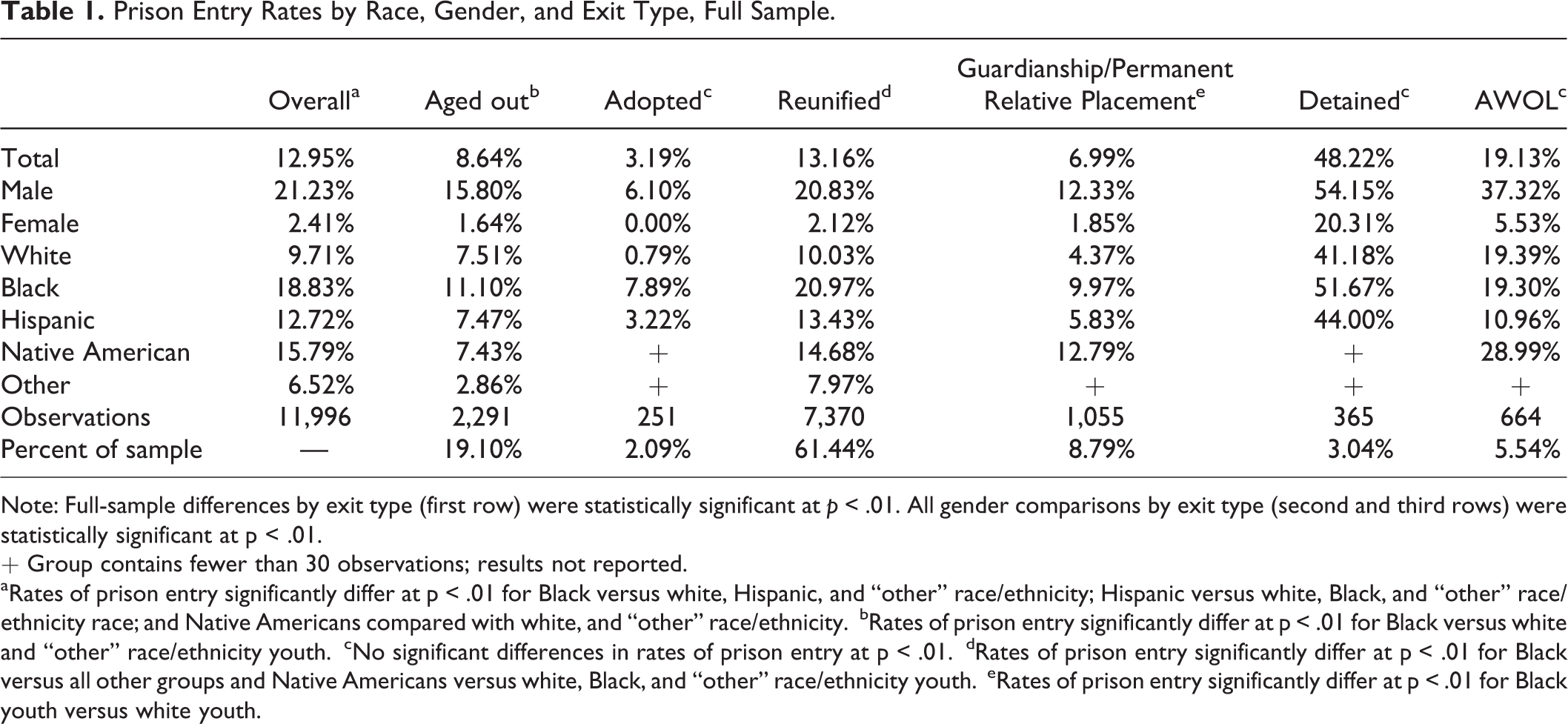
Note: Full-sample differences by exit type (first row) were statistically significant at p < .01. All gender comparisons by exit type (second and third rows) were statistically significant at p < .01.
+ Group contains fewer than 30 observations; results not reported.
aRates of prison entry significantly differ at p < .01 for Black versus white, Hispanic, and “other” race/ethnicity; Hispanic versus white, Black, and “other” race/ethnicity race; and Native Americans compared with white, and “other” race/ethnicity.
bRates of prison entry significantly differ at p < .01 for Black versus white and “other” race/ethnicity youth.
cNo significant differences in rates of prison entry at p < .01.
dRates of prison entry significantly differ at p < .01 for Black versus all other groups and Native Americans versus white, Black, and “other” race/ethnicity youth.
eRates of prison entry significantly differ at p < .01 for Black youth versus white youth.
Considering differences by sex, the raw data indicate that, consistent with incarceration patterns in the general U.S. population, males have substantially higher imprisonment rates than females (21.2 percent versus 2.4 percent). Moreover, the substantial male-female disparity in imprisonment holds exists across all foster care exit types. However, males and females in our sample exhibit much higher rates of imprisonment than are found in the general population. National estimates indicate that 2.7 percent of males and 0.2 percent of females ages 18–24 have spent time in prison (Bonczar 2003). That imprisonment rates are so much higher among the former foster care youth in our sample likely reflects that these youth are much more socially and economically disadvantaged, and have also experienced more trauma, on average, than youths in the general population.
Turning to differences by race and ethnicity, white former foster care youths and those of “other” race/ethnicity have the lowest rates of imprisonment (9.7 percent and 6.5 percent, respectively), with higher rates among Black (18.8 percent), Hispanic (12.7 percent) and Native American (15.8 percent) former foster youths. Moreover, Black former foster youths have a higher imprisonment rate than other (and particularly white) former foster youths for all exit types except AWOL/runaway. Within each racial/ethnic and sex category, youths who reunified had substantially higher imprisonment rates than youth who aged out or exited to other forms of permanency.
It is important to note that imprisonment rates in our sample are likely to be higher than imprisonment rates for all youth who spend time in foster care because our sample is largely comprised of youths who experienced a foster care entry at an older age. As shown in Table 2, the average age at foster care entry in our sample ranges from age 10, for youth who were subsequently adopted, to just under age 14 for youth who were reunified, with youth who exited care to guardianship/permanent relative placement and those who aged out experiencing, on average, first placements at ages 12 and 13, respectively. In addition, our sample includes youths who entered foster care for reasons other than child maltreatment, such as their own socioemotional problems, including delinquency. Prison entry was more common among youths with no known CPS allegations of abuse or neglect (16.9 percent) than among youths with CPS allegations of abuse or neglect (9.9 percent).
Descriptive Statistics, Analytic Sample.
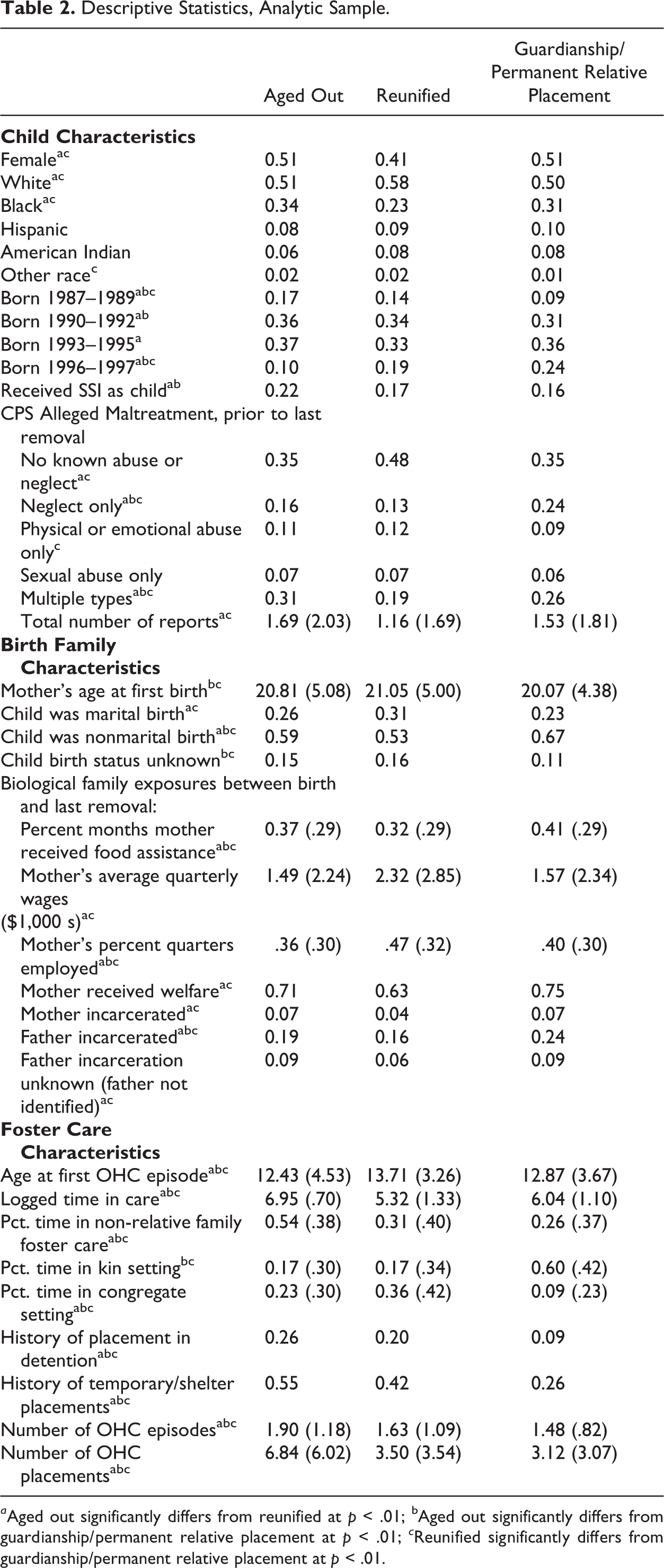
a Aged out significantly differs from reunified at p < .01; bAged out significantly differs from guardianship/permanent relative placement at p < .01; c Reunified significantly differs from guardianship/permanent relative placement at p < .01.
Characteristics of Youth Who Aged Out, Reunified, or Exited to Guardianship/Permanent Relative Placement
The descriptive statistics in Table 2 focus on youths who experienced one of the three most common foster care exits: reunification, aging out, and guardianship/permanent relative placement. This subsample is the focus of our remaining analyses. On the whole, youths who exited care to guardianship/permanent relative placement experienced relatively more kinship care than non-relative foster care, congregate care, detention, and shelter-care. Whereas youths who aged out spent an average of 23 percent of foster care days in congregate care, and reunified youths spent an average of 36 percent of foster care days in congregate care, youths who exited to guardianship or a permanent relative placement spent little to no time in congregate care. In addition, a sizable minority of youth who aged out or reunified spent time in a detention setting at some point—26 percent and 20 percent, respectively—compared to less than 10% of youth who were permanently placed with relatives. Youth who aged out had a higher average number of foster care placements (mean = 6.8) than all other groups (means ranged from 3.1 to 3.7).
Regression Results
Our primary interest is the association between type of exit (aged-out, reunified, or guardianship) and subsequent imprisonment. Table 3 presents results from proportional hazard models predicting prison entry. Reunification is consistently and significantly associated with increased risk of imprisonment relative to aging out of care, and this association is not substantially attenuated by the inclusion of the covariates measuring child, birth family, and foster care characteristics. The hazard ratios produced by Models 1 through 4 indicate that reunified youths are 58 percent to 78 percent more likely to experience imprisonment than are youths who age out of care. Moreover, the magnitude of association increases to 96 percent when youth with no known history of abuse or neglect (those who are disproportionately likely to have been placed in out-of-home care due to their own behaviors) are excluded from the analysis sample (Model 5), suggesting that the association between exit type and removal is not driven by these placements.
Cox Proportional Hazards Models, Hazard of Entering State Prison.
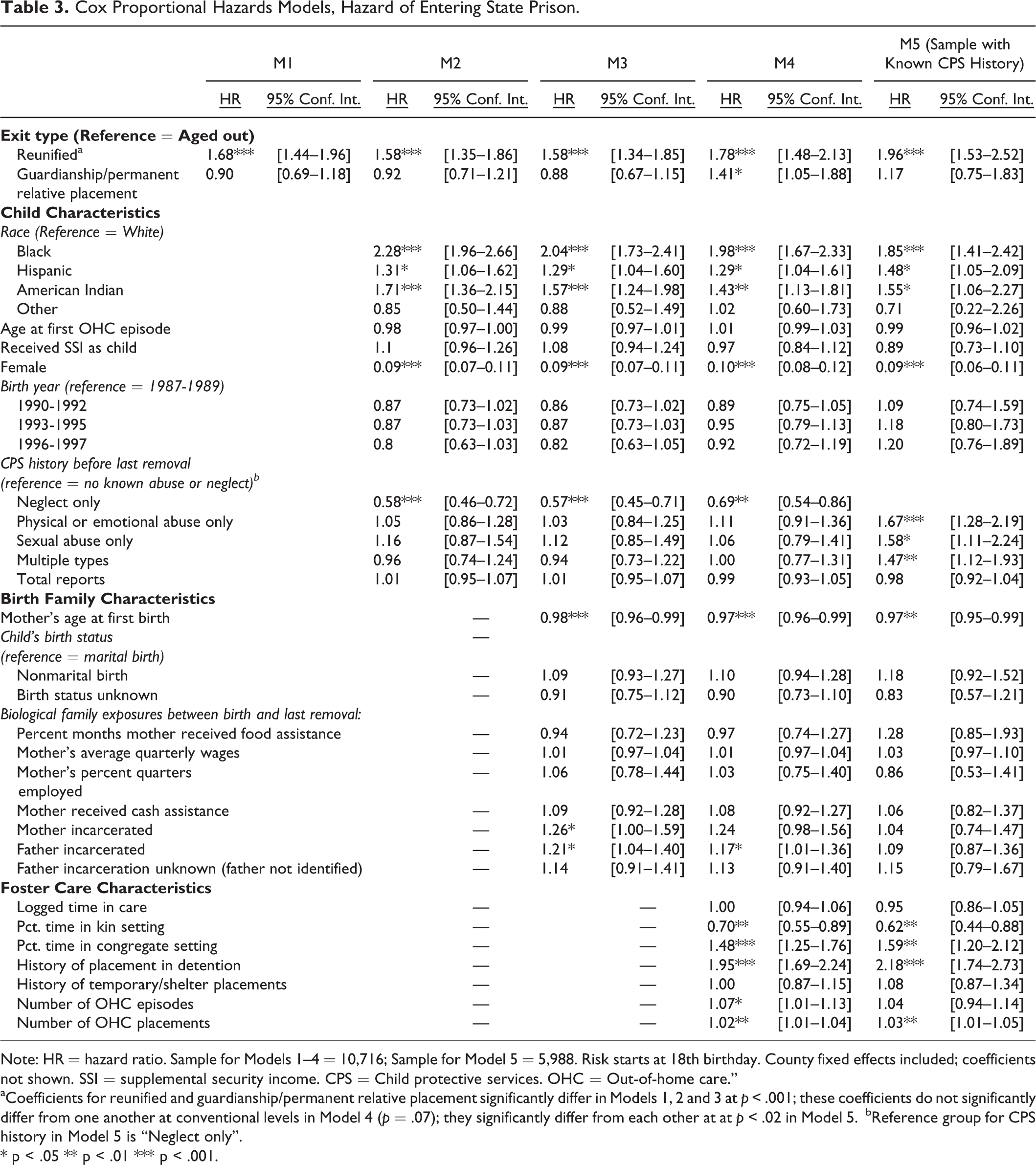
Note: HR = hazard ratio. Sample for Models 1–4 = 10,716; Sample for Model 5 = 5,988. Risk starts at 18th birthday. County fixed effects included; coefficients not shown. SSI = supplemental security income. CPS = Child protective services. OHC = Out-of-home care.”
aCoefficients for reunified and guardianship/permanent relative placement significantly differ in Models 1, 2 and 3 at p < .001; these coefficients do not significantly differ from one another at conventional levels in Model 4 (p = .07); they significantly differ from each other at at p < .02 in Model 5.
bReference group for CPS history in Model 5 is “Neglect only”.
* p < .05 ** p < .01 *** p < .001.
With respect to exiting care to guardianship/permanent relative placement, results from Models 1 through 3 reveal no significant difference from youth who age out of care. Post-hoc testing indicates that guardianship/relative placement is associated with lower risk of prison entry than reunification. That is, when accounting for differences in child and family characteristics, youth exiting to reunification are more likely to enter prison than both youth who aged out of care and those who exited to guardianship/relative placement. However, when foster care experiences were added as covariates (Model 4), the estimates indicate that youth who exited to guardianship/permanent relative placement are equally likely to experience imprisonment as youth who reunified, and are at 41 percent greater risk of subsequent imprisonment than youth who age out of care.
The difference in estimates produced by Model 4 (versus Models 1-3) suggests that differential placement experiences (time in care, types of care, episodes of care, number of placements) between youths who age out of care and those who exit to guardianship/permanent relative placement are important for understanding potential links with subsequent imprisonment. In particular, compared to youth who age out of care, those who exit to guardianship/permanent relative placement spent less time in care, had fewer foster care episodes and fewer placements, and experienced a greater proportion of their time in care in kin (relative) placements and a lesser proportion in congregate settings, detention, and temporary/shelter placements (Table 2). When these differences are uncontrolled, our results suggest no differences in subsequent imprisonment for youths who age out of care and those who exit to guardianship/permanent relative placement. However, after adjusting for them, we find a higher likelihood of subsequent imprisonment for youths who exit to guardianship/permanent relative placement than those who age out of care. Notably, however, this finding appears to be driven by youth who entered care based on their own behaviors, rather than as a result of being abused or neglected: the Model 5 estimate is substantially attenuated and no longer statistically significant compared with aging out. These results also suggest that youth who reunify have a higher likelihood of subsequent imprisonment than those who exit to guardianship/relative placement.
Turning to the covariates, there were significant racial and gender differences in risk of prison entry, with higher risk among Black, Hispanic, and Native American, youths than white youths, and higher risk among male than female youths. Both mothers’ and fathers’ imprisonment histories were associated with higher risk of imprisonment, though mothers’ prior imprisonment was not statistically significant in Model 4 and neither parent’s prior imprisonment was associated with prison entry in Model 5 (sample of likely maltreatment victims). Time spent in kinship care was negatively associated, and time in congregate care was positively associated, with prison entry. Number of removals and number of placements, which indicate instability in one’s home of origin and/or foster home environments, were both positively associated with prison entry. Interestingly, total time in care was not associated with risk of imprisonment.
Racial Disparities in Risk of State Prison Entry by Exit Type
Given racial disparities in both the foster care and criminal justice systems, we considered whether our findings regarding the relationship between exit type and risk of incarceration in state prison were consistent across racial groups. Given both the racial/ethnic composition of our sample and the low base rate of incarceration, we were able only to examine differential associations between exit type and prison entry for white and Black youths and could not consider other racial/ethnic groups. In Table 4, we show the results when Model 1 and Model 4 are estimated for only the subsample of white and Black youths in our sample and with the inclusion of Black × exit type interaction terms. The results of the uncontrolled model and full model reveal similar patterns of association. In the full model, the significant hazard ratio for reunified indicates that, relative to white youths who aged out of care, white youths who reunified are 32 percent more likely to experience subsequent imprisonment. The coefficient for Black (not statistically significant) suggests that, relative to White youth who age out, Black youth who age out have a 34 percent higher hazard of prison entry. The significant positive hazard ratio for Black × reunified indicates that the association between reunification and prison entry is larger for Black youth relative to white youth. Specifically, the hazard ratio for reunified Black youth relative to white youth who age out is 2.85 (the product of HRs for Black, reunified, and Black × reunified, or 1.32 × 1.34 × 1.61). This suggests that the hazard of prison entry for reunified Black youth is 2.16 times higher than for reunified white youth (2.85/1.32) and 2.13 times higher than aged out Black youth (2.85/1.34).
Race and Exit Type Interaction Models of Prison Entry.
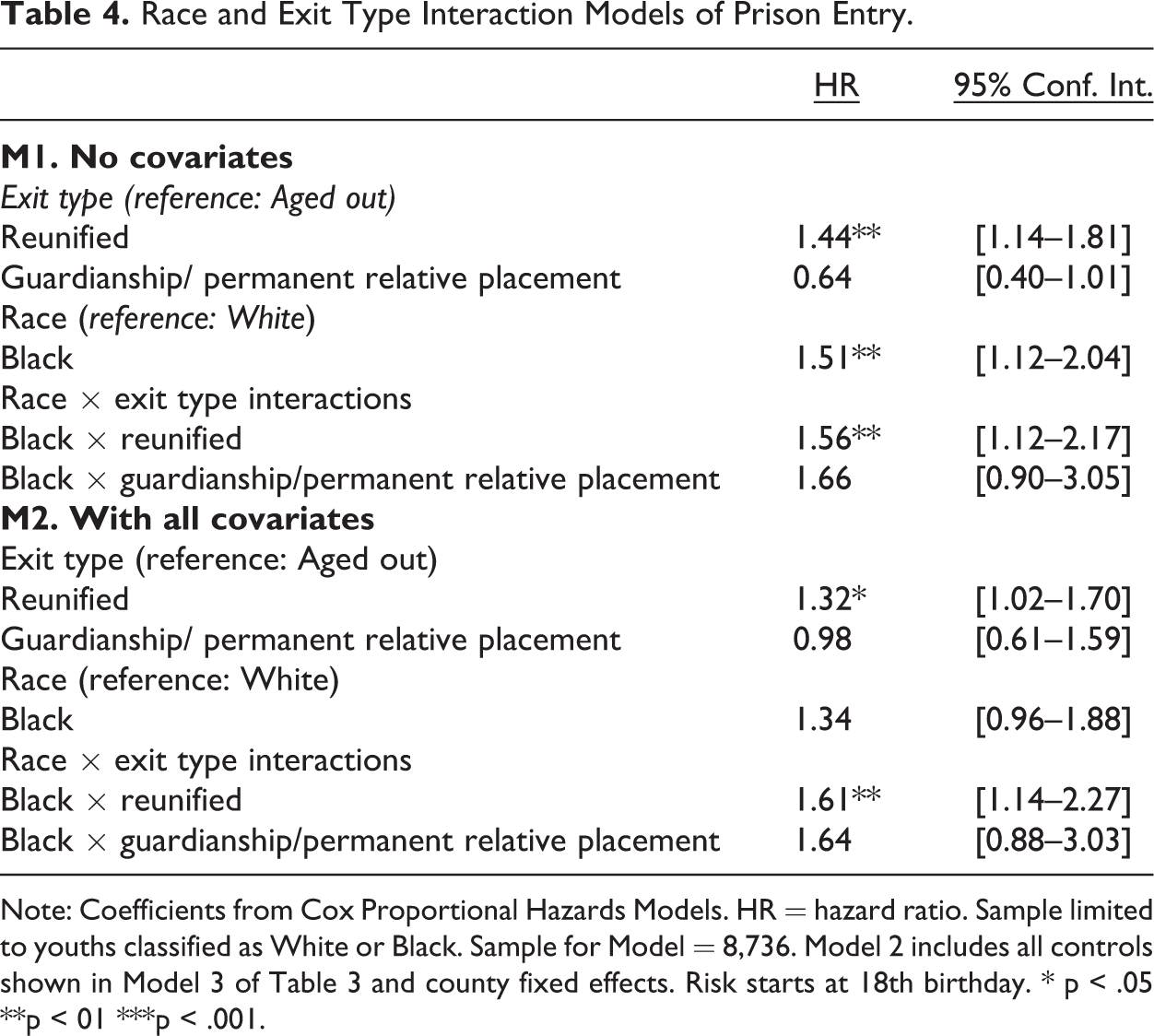
Note: Coefficients from Cox Proportional Hazards Models. HR = hazard ratio. Sample limited to youths classified as White or Black. Sample for Model = 8,736. Model 2 includes all controls shown in Model 3 of Table 3 and county fixed effects. Risk starts at 18th birthday. * p < .05 **p < 01 ***p < .001.
Among white youths, we find no significant differences in imprisonment for those who aged out and those who exited to guardianship/permanent relative placement. In addition, although the Black × guardianship/permanent relative placement interaction is not statistically significant, the magnitude of the interaction term is similar to that for Black × reunification, and lack of statistical significance likely reflects the comparatively small sample size for guardianship/permanent relative placement versus reunification.
To better understand why racial disparities in imprisonment are greater among reunified youth, we examined pre-foster care and post-reunification home environments (until age 18) by race for youths who exited to reunification. These comparisons are shown in Table 5. 6 Overall, black youths are both removed from and returned to more impoverished and potentially higher risk homes than white youths. Black youths are more likely to have parents in prison, have larger numbers of CPS allegations, and are more likely to be receiving public assistance both before and after their time in foster care.
Pre- Foster Care and Post-Reunification Environments by Race (Reunification Sample Only): Mean (SD) or Percentage.
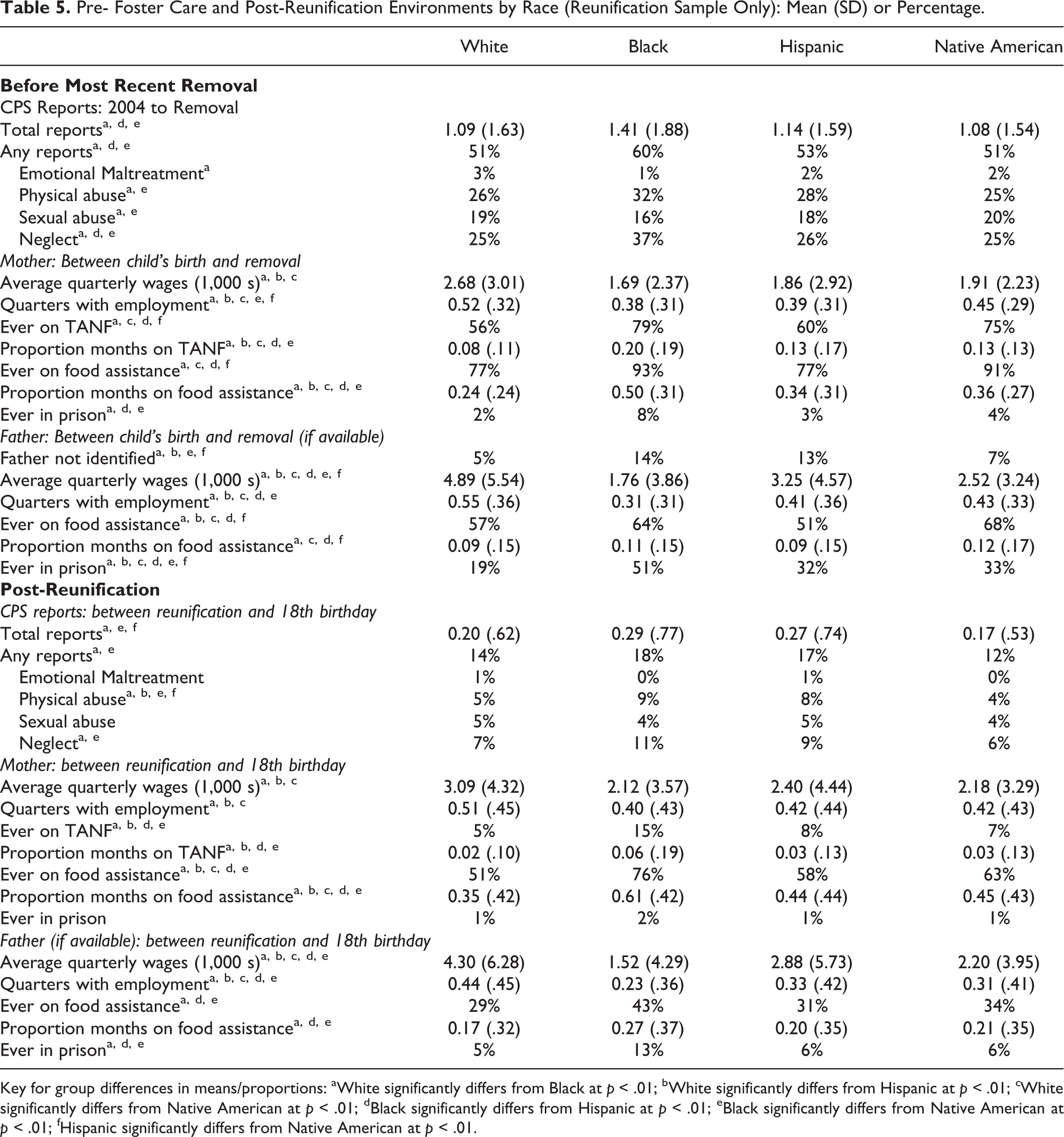
Key for group differences in means/proportions: aWhite significantly differs from Black at p < .01; bWhite significantly differs from Hispanic at p < .01; cWhite significantly differs from Native American at p < .01; dBlack significantly differs from Hispanic at p < .01; eBlack significantly differs from Native American at p < .01; fHispanic significantly differs from Native American at p < .01.
Discussion
This study examined risk of subsequent prison entry among individuals who spent time in foster care during adolescence, with a specific focus on identifying whether foster care exit type is differentially associated with future entry to state prison. Youths may exit foster care to permanency through reunification, adoption, or guardianship/permanent placement with a relative; alternatively, they may age out of (emancipate from) foster care. Without exiting to a permanent home, youth who age out of care may be deprived of opportunities to develop stable bonds with supportive caregivers that can help them successfully transition into adulthood (Hirschi 1969; Sampson and Laub 2003). Yet, the safety, stability, and resources of the homes that youth who exit care to permanency experience can vary considerably. Moreover, the extent to which the child welfare system provides ongoing support to youth who exit care and, in the case of permanency, to the families to which they exit, also varies substantially by exit type, as does the type(s) of support provided.
Our results indicate that youths who are reunified with their biological families are substantially more likely to enter prison in early adulthood than youths who age out of care. Youths exiting to legal guardianship or a permanent relative placement tend to have similar probabilities of subsequent imprisonment as youths who age out of care. Our data indicate that 15 percent of reunified youths were the subject of a post-reunification child maltreatment report, including 5 percent for alleged sexual abuse, 6 percent for alleged physical abuse, and 8 percent for alleged neglect (some were re-reported for multiple reasons). In addition, 7 percent of reunified youth experienced paternal imprisonment and 1 percent experienced maternal imprisonment after reunification. Such high levels of post-reunification adversity may, at least in part, help to explain the heightened risk of prison entry among reunified youth relative to youth who age out of care. As employed by Barn and Tan (2012), Agnew’s (1992, 2006) general strain theory provides a (post-hoc) theoretical justification for this finding, suggesting that experiencing such adversities, in the absence of extensive prosocial coping mechanisms and supports, leaves youth under considerable pressure—one outlet for which may be crime. Hirschi’s (1969) social bonding theory further implies that experiencing post-reunification abuse and/or neglect is likely to impede the reformation of attachments and commitment to a youth’s family of origin (see, also, Fromuth 1986; Magai, Distel, and Liker 1995). In addition, Aker’s (Akers 1973; see, also, Burgess and Akers, 1966) social learning theory suggests that exposure to such adverse environments increases opportunities for reunified youth to internalize beliefs regarding the acceptability or rewards of illicit coping mechanisms and behaviors, as well as imitate such behaviors, from the intimate personal group (family) that provides such an influential role in the social learning process (e.g., Foshee, Bauman, and Linder 1999). At the same time, given that youth who age out of care experience longer durations in care, greater placement instability (greater number of removals and placements), and more time in congregate care—each of which is thought to be associated with poor outcomes throughout the life course—our results are somewhat surprising.
Thus, these findings highlight the need to understand the role of child welfare policy vis-à-vis ex-foster care youth. Policy priorities in recent years have increasingly provided a range of services, including extended Medicaid coverage (CWIG 2015), college tuition waivers or funding supports (Parker and Sarubbi 2017), and the option to remain in foster care past age 18 (CWIG 2017), to support youth who age out of care. Such policies, which are intended to prepare and support youth to actively participate in the labor market, are consistent with both social support theory and institutional anomie theory of crime prevention (Cullen, Wright, and Chamlin 1999). Yet, many of the major provisions, including extended foster care and Medicaid coverage through age 26, were not in place or widely in use in Wisconsin during the time frame of this study (CWIG 2017; Courtney et al. 2005; Fox, Limb, and McManus 2007). Overall uptake of extended foster care, where available, remains low (Child Trends 2017), despite evidence of beneficial outcomes (J. S. Lee, Courtney, and Tajima 2014). Moreover, given relatively low rates of college attendance among youth aging out of care, tuition waivers or other educational subsidies may have important but limited impacts. Notwithstanding, efforts to reduce overall high rates of incarceration in early adulthood may be aided by expanded access to no-cost health insurance for all youth who exit foster care in adolescence (regardless of exit type), especially given high rates of mental health needs among youth from foster care (McMillen et al. 2005; Steele and Buchi 2008) and strong associations between mental illness and incarceration (Mulvey and Schubert 2016). More generally, the role of differential policy and practice responses by foster care exit type as a potential influence on subsequent outcomes is an area that is ripe for future research. Moreover, given that youth who age out of care spend longer in foster care than youth who reunify or exit to guardianship/other permanency, the nature and quality of supports and experiences within foster care also warrant additional inquiry.
We also considered whether there were racial differences in associations between foster care exit type and risk of state prison entry. In contextualizing these results, we caution that the effects of racism and intergenerational racial inequalities are inextricable from both observed and unobserved differences in pre- and post-foster care environments and have crucial implications for the interpretation of racial differences in imprisonment by foster care exit type. Black youths were less likely than white youths to be reunified with their family of origin and it is possible that this reflects underlying systemic bias wherein the threshold for reunification is higher for Black children than their white counterparts. If so, reunified Black children should return to safer and more stable environments than reunified white children. Yet, we found that reunification exacerbated racial disparities in prison entry, whereas there were no statistically significant racial disparities in prison entry for youth who aged out of care.
Our examination of pre- and post-reunification environments by race for youth who reunified suggests that Black youths experienced greater hardship in their families of origin, both before and after foster care—including higher rates of parental imprisonment, more reports of child maltreatment, and greater levels of poverty—which may suggest differential patterns of removal and reunification for Black and white youths and/or that Black families who come to the attention of the child welfare system are, on average, less advantaged than their white counterparts. We further note that, although we were unable to account for differences in neighborhood disadvantage, many of the Black youth in our sample were from Milwaukee County, which is consistently among the most segregated counties in the United States (Iceland, Weinberg, and Steinmetz 2002), and where public schools have vastly lower rates of high school graduation than in the rest of the state (Milwaukee Public Schools 2011). These different community contexts undoubtedly shape the post-reunification environments that Black and white youth experience. At the same time, there is some evidence that—despite overall racial disparities in foster care entry and strong correlations between socioeconomic status and foster care entry—rates of foster care entry among socioeconomically disadvantaged children are lower among Blacks than whites (Putnam-Hornstein et al. 2013), 7 although we are aware of no existing foster care research that directly speaks to reunification.
More generally, however, differences in pre-removal and post-reunification resources and environments may help to explain differential risk of imprisonment for Black and white former foster care youths. Although most children who experience foster care come from families experiencing substantial social and economic adversity, Black families face additional barriers to social and economic advancement, spurred by a long history of racist, exclusionary, and discriminatory institutions, policies, practices, and social contexts. Thus, Black youth who reunify—like their families of origin—are not presented with the same set of social, economic, and political opportunities as their white counterparts. The child welfare system itself is ill-equipped to address the full array of social and economic disadvantages of families that extend beyond child maltreatment. It is not feasible for such a “downstream” system—designed primarily to react to reported allegations of abuse and neglect—to attend to the vast inequities that result in the disproportionate impact on families of color. However, this underscores the importance of considering racial inequalities in assessing the needs of youth exiting care. Reunified older youth could be offered the same set of supports and services offered to youth who age out. Making such services available to the disadvantaged families to which many (and particularly Black) foster care youth reunify has the potential to help reduce racial disparities in subsequent imprisonment. More generally, families with children in foster care may benefit from enhanced access to array of supports (Medicaid coverage for parents and their children, financial supports) and evidence-based services (education, employment, mental health and substance abuse treatment) that are neither contingent upon nor denied on the basis of having children currently or formerly in foster care. The last two decades have brought about significant declines in racial disparities in the foster care population, in part due to meaningful declines in length of stay in care for Black children (Conn et al. 2013). Declines in disproportionate representation, however, should not detract from the urgency of attending to the safety and supportiveness of youths’ environments during and after foster care, in which disparities may be both substantial and within the purview of the child welfare system to address. As child welfare systems are increasingly called upon to address issues of racial inequality (Detlaff et al. 2020), our study implies that a narrow focus on entry and exit rates may be inadequate to achieve equitable long-term outcomes for systems-involved youth.
Our study has several limitations that warrant a cautious interpretation of our results. First, our outcome measure is entry to a Wisconsin state prison: we have no data on jails or other criminal justice system involvement; thus, our outcome captures those who have committed comparatively severe crimes (and are serving comparably long sentences). We also have no data on entry into federal prisons, though federal prions account for about 5 percent of the incarcerated population in Wisconsin (Jones 2018). Moreover, we have no information on the underlying criminal offenses that led to incarceration, which could provide further insight into the nature of associations between exit type and imprisonment.
Second, although we were able to adjust for a wide range of potential risk factors occurring before and during foster care placement, there may be other, unobserved, factors that affect both foster care exit type and risk of state prison entry, thus biasing our results. For example, because our CPS data extend back only to 2004, and not to the youths’ births, we likely understate the amount and types of maltreatment youth experienced in early childhood and prior to entering foster care. Consequently, we make no claims that our estimates are causal in nature.
Third, our sample is comprised of youth who experienced a foster care entry relatively late in childhood. Relative to the foster care population as a whole, youth in our sample experienced high rates of congregate care, a substantial minority entered foster care for non-maltreatment-related reasons, and very few were adopted. As such, our estimates of prison entry must be interpreted within these sample parameters and should not be generalized to the entire foster care population. We note, however, that youth cannot, by definition, age out of foster care without experiencing care in later childhood, and that those who enter care later in childhood are at highest risk of aging out. Thus, while not generalizable to the full foster care population, our results are highly relevant for youth most at risk of aging out of care. This group has long been viewed as a particularly important, vulnerable, and policy-relevant subset of the foster care population. In addition, our results cannot speak to the outcomes of older child adoption, where research is greatly needed (Rolock et al. 2018).
With these caveats in mind, this study provides new evidence that youths, and especially Black youths, who exit foster care to reunification are more likely to experience subsequent prison entry than those who age out of care. This stands in relative contrast to common policy assumptions that youth who age out are at much greater risk for poor outcomes throughout the life course than other youth who experience foster care. It is consistent, however, with recent research indicating that youths who age out of foster care are more likely to complete high school and enroll in college than those who exit care to reunification (Font et al. 2018). These findings suggest that, rather than specifically targeting youth who age out of care and those who are expected to do so, programs and services intended to promote healthy, successful transitions to adulthood are warranted for the larger group of youths experiencing foster care, most of whom will exit to family reunification or legal guardianship or a similar permanent relative placement. Specifically, youth who age out of foster care are typically offered a range of independent living services spanning multiple domains, including educational support; job training and career preparation; financial literacy, asset building, budgeting, and money management training; housing and home management education; health education and risk prevention; healthy marriage and family support; and mentoring; often they receive additional supports such as continuing Medicaid coverage and financial assistance for housing, education, and other necessities (Okpych 2015). Youth who reunify are typically neither offered nor eligible for such services. Yet the domains of wellbeing they address—education, housing, employment, financial stability, health and health behaviors—are highly relevant to preventing incarceration. Given evidence from this study—that youth who reunify are disproportionately likely to subsequently be incarcerated relative to youth who age out of care—and similar evidence on educational attainment (Font et al. 2018), extending such services to all youth who experience foster care as teens, regardless of exit type, appears warranted.
Supplemental Material
Supplemental Material, sj-pdf-1-jrc-10.1177_00224278211001566 - Foster Care, Permanency, and Risk of Prison Entry
Supplemental Material, sj-pdf-1-jrc-10.1177_00224278211001566 for Foster Care, Permanency, and Risk of Prison Entry by Sarah Font, Lawrence M. Berger, Jessie Slepicka and Maria Cancian in Journal of Research in Crime and Delinquency
Footnotes
Acknowledgments
We thank the Wisconsin Dept. of Children and Families, Dept. of Health Services, Dept. of Corrections, Dept. of Public Instruction, and Dept. of Workforce Development for the use of data, but acknowledge that these agencies do not certify the accuracy of the analyses presented.
Declaration of Conflicting Interests
The author(s) declared no potential conflicts of interest with respect to the research, authorship, and/or publication of this article.
Funding
The author(s) disclosed receipt of the following financial support for the research, authorship, and/or publication of this article: This work was funded by the Eunice Kennedy Shriver National Institute of Child Health and Human Development (R01HD095946, R21HD091459) and with support from the Population Research Institute at Penn State University (P2CHD041025).

Notes
Supplemental Material
Supplemental material for this article is available online.
References
Supplementary Material
Please find the following supplemental material available below.
For Open Access articles published under a Creative Commons License, all supplemental material carries the same license as the article it is associated with.
For non-Open Access articles published, all supplemental material carries a non-exclusive license, and permission requests for re-use of supplemental material or any part of supplemental material shall be sent directly to the copyright owner as specified in the copyright notice associated with the article.
