






Abstract
Objectives
The study examines how race-specific perceptions of law enforcement performance change across cohorts of Black and White youth in the past 20 years. Specifically, we explore how the race-specific cohort changes are related to changes in individual-level characteristics and perceived neighborhood racial composition.
Methods
We analyze perceptions of law enforcement performance among 26,029 Black and White youth surveyed between 2000 and 2019 through Monitoring the Future 12th-grade surveys. OLS regression analyses, supplemented by mediation and moderation tests, are conducted to examine our research questions.
Results
We find that cohort patterns unfolded differently for Black and White youth. Black youth in Cohort 2015–2019 report substantially lower scores on law enforcement performance than earlier cohorts, regardless of individual experiences and neighborhood contexts. In contrast, White youth in Cohort 2015–2019 display an increasing polarization: those in predominantly White neighborhoods report increased positive perceptions of law enforcement, while those in non-White neighborhoods report declining evaluations.
Conclusions
Race-specific perceptions of law enforcement are linked to dynamic multi-level processes, including individual experiences, neighborhood context, and macro-level social changes. Our findings suggest that the recent generation of Black and White youth face unique racialized challenges that should be addressed with updated policy initiatives and targeted community support.
Introduction
Black and White Americans, including adults and adolescents, have long held drastically different views of law enforcement (Stewart et al. 2009; Wu, Lake and Cao 2015). Compared to their White peers, Black youth consistently report more problematic attitudes and discriminatory treatment by the police (Fix, Aaron, and Greenberg 2023) and hold more negative attitudes toward law enforcement (Hurst, Frank, and Browning 2000). A large body of literature has examined these racial disparities in police perceptions, 1 linking them to differences in individual-level factors—such as political ideology (Ilchi et al. 2024), direct and vicarious contact with the police (Foster, Jones, and Pierce 2022), and legal cynicism (Sampson and Bartusch 1998), as well as contextual-level conditions, including neighborhood, school, and family contexts (Fix et al. 2023; Wu et al. 2015). Most existing studies, however, examine racial differences in police perception at a specific period, with far less attention to how these perceptions, and their correlates, have changed across cohorts among youth growing up in different historical contexts. Such tradition, as cautioned by Pickett (2019: 406), may “overlook the forest (shared trends) for the trees (contemporaneous differences in levels).”
Macro-level societal changes and major historical events may have substantial—while possibly differential—impacts on Black and White youths’ attitudes toward different social issues. For instance, the high-profile killings of unarmed Black civilians by White police officers since 2014, broadcast via the widespread use of social media, may have led to collective trauma and heightened mistrust among Black youth (Bell 2017). A growing body of studies has also documented a shifting Black–White gap in police perceptions, with a substantial decline in Black youths’ perceptions of law enforcement after 2015 (Fine et al. 2020; Fine, Kan, and Cauffman 2019; Fine, Rowan, and Simmons 2019).
Building on prior work on racial disparities in police perceptions and emerging evidence on perception trends, the current study argues that a framework integrating a dynamic cohort perspective with a race-specific analytical approach to study youths’ police perception is both timely and crucial for advancing the existing scholarship. Late adolescence is a critical stage for legal and political socializing, in which youth are actively constructing their attitudes toward authority and civic identities through interactions with peers, social institutions (e.g., family, schools, communities), and the broader historical context (Hinds 2007). At the individual level, adolescents experience heightened police surveillance and higher rates of police contact than any other age group in the United States (Hofer, Womack, and Wilson 2020; McAra and McVie 2005). Negative racialized encounters during this formative stage may be associated with perception changes that persist into adulthood (McLean, Wolfe, and Pratt 2019). At the macro-level, exposure to major historical events during late adolescence has been linked to collective changes in behaviors and attitudes, resulting in lasting cohort or generational differences (Alwin and McCammon 2003; Elder 1974). More importantly, with the enduring impacts of racial segregation and discrimination in the United States, these multilevel age-cohort processes are likely racially stratified (Bell 2017).
Therefore, the main goal of the current study is to advance our understanding of the shifting race-specific police perceptions across cohorts who grew up in different historical eras. Specifically, we focus on the extent to which these changes are associated with perceived neighborhood racial composition and other individual-level characteristics identified in prior research on police perceptions. Using data from the MTF 12th-grade surveys from 2000 to 2019, we examine three questions: (1) How do perceptions of law enforcement performance change across cohorts of Black and White youth in the past 20 years? (2) To what extent are changes in race-specific perceptions of law enforcement associated with individual-level characteristics and neighborhood-related factors? (3) Do the between-cohort changes in perceptions of law enforcement among Black and White youth vary depending on their local neighborhood context?
By situating youth police perceptions within a cohort-race-specific framework, findings from the study not only advance our understanding of the dynamic changes in racial disparities of police perceptions but also inform efforts to reduce persistent racial gaps in institutional trust, legal cynicism, and civic disengagement (Bell 2017). More importantly, given evidence that negative racialized experiences with the police can be consequential for youths’ educational outcomes, mental health, and risky behaviors (Jindal et al. 2022; Legewie and Fagan 2019), our findings help better understand the unique challenges faced by recent cohorts of Black and White youth, respectively, and have important implications for policy aiming at addressing the race-specific needs among young people in the future.
Correlates of Police Perceptions Among Black and White Youth
Racial disparities in police perceptions have existed ever since the invention of policing in the United States and persist until today (Cao, Frank and Cullen 1996). Over time, the tensions between residents of color and the police have been intensified by aggressive policing strategies such as broken windows policing and stop-and-frisk policies (Anderson 2014). Black youth in general hold more negative attitudes toward the police than White youth (Peck 2015). They are more vulnerable to police contact (Hagan, Shedd, and Payne 2005) and tend to report such encounters as harassing in nature (Browning et al. 1994). As a result, Black youth are less likely to report crime to the police (Slocum et al. 2010), have respect for or confidence in the police (Harris and Jones 2020), or believe that the police are honest (Taylor et al. 2001). Black youths’ negative attitudes toward law enforcement may impact the views of their friends and family and profoundly shape their worldview in the future (Brunson 2007). Extensive research has examined the sources of racial disparities in police perceptions, and most of these studies focus on racial differences in individual-level demographic characteristics, police contact experiences, and neighborhood-level factors.
In terms of individual-level demographic characteristics, research found that gender, family background, and political ideology are related to youths’ police perceptions. Male respondents tend to report more favorable attitudes toward the police than female respondents (Taylor et al. 2001), possibly because they are more likely to have confrontations with the police (Cao et al. 1996). Black boys are often stereotyped as violent, dangerous, and adult-like, and they experience even more racialized discrimination from law enforcement (Graham and Lowery 2004). Prior research also suggests that urbanicity and family structure are associated with youths’ negative experiences with the police (McAra and McVie 2005; Stewart et al. 2009). These characteristics are unevenly distributed across racial groups, as Black youth are more likely than their White peers to reside in urban or inner-city neighborhoods and in single-parent households (Peterson and Krivo 2010). The effect of political ideology seems less conclusive. Some studies suggest that affiliation with the Democratic Party predicts more negative attitudes toward law enforcement, especially among White youth (Fine, Rowan, and Simmons 2019). Other studies find that both conservative and liberal ideologies are related to positive police perceptions (Ilchi et al. 2024).
Second, a substantial amount of research attributed racial disparities in police perceptions to race-specific experiences related to crime, including prior contact with law enforcement, either due to delinquency or victimization (Burden et al. 2023). 2 Being stopped by the police may lead to reduced respect for and confidence in law enforcement (Brick, Taylor, and Esbensen 2009; Harris and Jones 2020). Victimization is also related to negative attitudes toward the police (Brick et al. 2009; Harris and Jones 2020). Even without contact, youth who perceive greater community disorders, fear of crime, and risk of victimization are more likely to develop negative attitudes toward the police (Brick et al. 2009). Direct and vicarious police contacts are especially associated with negative attitudes among Black youth (Foster et al. 2022).
Third, racial disparities in police perceptions are linked to racial differences in neighborhood contexts that stem from the enduring impacts of racial segregation in the United States (Brunson and Weitzer 2009). Black youth are more likely to grow up in disadvantaged neighborhoods characterized by poverty, single-headed households, limited educational resources and economic opportunities, high crime rates, and low collective efficacy (Peterson and Krivo 2010; Sampson, Sharkey, and Raudenbush 2008). Such racial–spatial divides are further extended to policing practices. Disadvantaged inner-city neighborhoods that are predominantly Black are often subject to intensive police surveillance and are more likely to experience frequent police contact and mistreatment (Kane 2002). 3 Police officers who work in majority Black neighborhoods are more likely to perceive the neighborhoods as having lower levels of collective efficacy and higher levels of crime, and such perceptions may lead to officers’ higher likelihood of using aggressive policing strategies during encounters (Sampson and Raudenbush 2005). The police have a long tradition of conflating predominantly Black neighborhoods with poverty and applying different policing tactics when policing racial minorities than when policing predominantly White neighborhoods (Westley 1953). “As is well known, the preferred targets of special police concern are some ethnic and racial minorities, the poor living in urban slums, and young people in general (Bittner 1970:10).”
Taken together, the divergent perceptions of law enforcement performance among Black and White youth are associated with race-specific experiences related to various individual correlates and diverse neighborhood contexts. While existing studies identify important correlates of youths’ police perceptions, most of the studies only offer a snapshot of a single time period and are limited in revealing how police perceptions and their correlates may have changed across time and cohorts. This is a critical research gap because public opinion about social issues is not static, and collective judgment about social institutions should vary dynamically over time (Althaus 2003; Page and Shapiro 1992). Below, we discuss the possible mechanism of change at both the individual and neighborhood level.
At the individual level, recent research on cohort or generational differences among youth has documented significant changes in youth culture and behaviors, including peer socialization and routine activities, parental supervision, participation in the labor market, engagement in delinquency, and attachment to institutions such as schools and communities (Osgood 2023; Twenge 2017). In addition, with the substantial decline in street crime and changes in law enforcement strategies in the past few decades (Baumer, Vélez, and Rosenfeld 2018; Vargas, Hagani, and Rojas 2025), youths’ street-level experiences related to crime and law enforcement contacts may have also changed. Therefore, the individual-level correlates of police perceptions reviewed above may have shifted across cohorts, and such changes may be associated with race-specific differences in police perceptions between cohorts.
At the neighborhood level, important changes in American neighborhoods have been documented (Hwang and McDaniel 2022). For instance, the progressive social changes of racial integration that unfolded over the past half-century may affect race-specific perceptions of the police. Increasing numbers of Black families have moved to and live in middle-class suburban areas, working in a wider range of occupations and attending private schools that were once exclusively for White children (Lacy 2007). Anderson (2015) describes these more advantaged suburban communities as “the White space,” as they traditionally exclude and may still discriminate against Black people. The general lack of hypersurveillance from the police may mean that Black youth who grow up in these communities experience less law enforcement mistreatment than their Black peers in disadvantaged urban neighborhoods (Leslie, Frankenfeld, and Hattery 2022). However, despite these positive shifts, phenotype and skin color continue to serve as a “master status,” deeply intertwined with violent ghetto stereotypes, triggering heightened surveillance when increasing Black people moved into “the White space” (Anderson 2015). Black youth remain subject to heightened scrutiny and are more likely to be stopped and questioned by police, especially if there has been a population growth of Black residents in the predominantly White neighborhoods (Stewart et al. 2009). As a result, Black youth in predominantly White communities may hold somewhat fewer negative perceptions of the police than their peers in disadvantaged urban areas (Brunson and Weitzer 2009), yet their views are likely to remain more negative compared to those of similarly situated White youth (Foster et al. 2022; Wu et al. 2015).
Given the significant shifts in individual and neighborhood-level factors, this study emphasizes the need to incorporate a dynamic cohort perspective when studying race-specific police perceptions. The following section contextualizes these trends by highlighting the historical events and macro-level social changes that uniquely define race-specific attitudes toward law enforcement among different cohorts.
Historical Context, Cohort Changes, and Youths’ Police Perception Trend
Prior research has long documented the impact of macro-level social structural changes and historical events on youth perceptions (Gray et al. 2019; Leiber, Nalla, and Farnworth 1998). Individuals from the same cohort experience the same major political events at similar ages, shaping their political views in the formative years (Jennings and Niemi 1981). Cohorts that grew up in different times were exposed to different neighborhood contexts, shifts in crime rates, changes in crime control policies, and salient social movements and protests, all of which can contribute to attitudinal differences toward law enforcement (Carter and Corra 2016).
Particularly, for youth who grew up in recent years, their perceptions of police may have been profoundly shaped by a series of high-profile incidents of police killing unarmed Black citizens between 2014 and 2020, including the shocking murder of Eric Garner, the death of Freddie Gray during police custody, the excessive use of force on Alton Sterling, and the shooting and killing of Philando Castile, Walter Scott, and Breonna Taylor following traffic stops or home searchers (Associated Press 2021). Many of the tragic deaths involve Black teenagers, including the 12-year-old Tamir Rice, the 15-year-old Jordan Edwards, the 17-year-old Laquan McDonald, and the 18-year-old Michael Brown (Associated Press 2021). To be clear, police brutality did not just emerge in the United States in recent years, but it has become more visible to the public due to the increasingly widespread use of cameras and social media (Campbell and Valera 2020). Specifically, these high-profile negative policing events are particularly influential on police perception among youth as they are more susceptible to procedural justice than adults (Murphy 2015) and many frequently use social media to learn about police online (Hsu, Choi, and Mogavero 2025), which may further damage their already problematic relationship with the police.
According to prior literature on trends of public opinion, impacts of the macro-level social changes on Black and White youths’ perceptions may be uniform or divergent. On one hand, studies have found evidence of parallel trends in perceptions of major social issues across different population groups—that is, while baseline differences between groups may exist at any given time, their respective trends tend to shift in the same direction and magnitude across cohorts and subgroups (Enns and Kellstedt 2008; Page and Shapiro 1992; Shi, Lu, and Pickett 2020). Researchers attribute the parallel pattern to the agenda-setting role of traditional mass media, which often exposes audiences from different backgrounds to the same major social events via changes in news coverage (Page and Shapiro 1992; Shi et al. 2020).
On the other hand, the literature on racial group identity suggests that the race-specific trends in youth perceptions, particularly regarding perceptions of police performance, may no longer shift in a parallel fashion. While members of a racial group often share attitudes rooted in a sense of linked fate (Dawson 1995; Miller et al. 1981), the salience of this identity is neither static nor universal; it should be modified by shifting historical contexts and cohort effects (Gay 2004; McClain et al. 2009; Smith, Bunyasi, and Smith 2019). For instance, following the murder of George Floyd, Black Americans expressed more negative emotions, such as anger and sadness, and experienced more symptoms, such as anxiety and depression, than White Americans (Eichstaedt et al. 2021). Fine et al. (2020) also documented that White youths’ police perceptions were more influenced by their personal concerns about crime, whereas Black youths’ perceptions were shaped more by shifts in policing practices and broader political climates. Researchers monitoring the impacts of high-profile police violence on public perceptions in recent years found that White Americans are more likely to attribute police brutality to the “bad apples” in the system, whereas Black Americans are more likely to think of broader social problems (Haider-Markel and Joslyn 2017).
It is therefore plausible that the recent cohort of Black youth who grew up constantly witnessing police brutality via social media (Campbell and Valera 2020) have experienced heightened salience of group identity as a Black American—linking their own self-interest to the group interest (Dawson 1995)—when forming their attitudes and perceptions. These shifts may have contributed to greater changes in negative sentiments toward the police among Black youth relative to their White peers. As Anderson remarked after the Ferguson Riot (2014): “Under authoritarian oversight and normalized police harassment, a generation of young people were bound to get fed up and respond with defiance and turmoil.”
Current Study
Building on the prior literature, the current study aims to advance our understanding of the shifting racial disparities in police perceptions among Black and White youth cohorts in the past 20 years. We develop a series of hypotheses for our research questions. First, we formally test the between-cohort changes in youth perceptions of police performance within each racial group. As multiple high-profile police brutality cases happened and were broadcast to the nation after 2014 (Associated Press 2021), we expect these highly visible police brutality cases have significant impacts on youth police perceptions that extend across racial groups. Specifically,
H1a: Black youth surveyed after 2014 are more likely to have negative perceptions of law enforcement performance than earlier cohorts.
H1b: White youth surveyed after 2014 are more likely to have negative perceptions of law enforcement performance than earlier cohorts.
Second, building on the prior literature on racial disparities in police perceptions, we examine how individual-level characteristics and neighborhood-level factors are associated with the between-cohort changes in perceptions of law enforcement performance among Black and White youth, respectively. Notably, as no objective neighborhood-level measures are available in the current dataset, we use perceived neighborhood racial composition as a proxy. Limitations and implications of such measures are addressed in the discussion of this article.
H2a: The between-cohort changes in perceptions of law enforcement performance among Black youth can be partially accounted for by changes in individual-level characteristics and neighborhood-related factors.
H2b: The between-cohort changes in perceptions of law enforcement performance among White youth can be partially accounted for by changes in individual-level characteristics and neighborhood-related factors.
Third, we expect that the broader social changes may interact with the effects of Black and White youths’ local neighborhood context and contribute to race-specific between-cohort changes in perceptions of law enforcement performance. Both Black and White youth from predominantly Black or racially mixed neighborhoods may be more affected by these highly visible cases of police brutality since 2014, as these incidents were more likely to occur in neighborhoods with more intense police supervision. Therefore, we develop the following two hypotheses:
H3a: The between-cohort differences in perceptions of law enforcement performance among Black youth are more pronounced in predominantly Black neighborhoods than in other neighborhoods. H3b: The between-cohort differences in perceptions of law enforcement performance among White youth are more pronounced in racially mixed neighborhoods than predominantly White neighborhoods.
Methods
Data
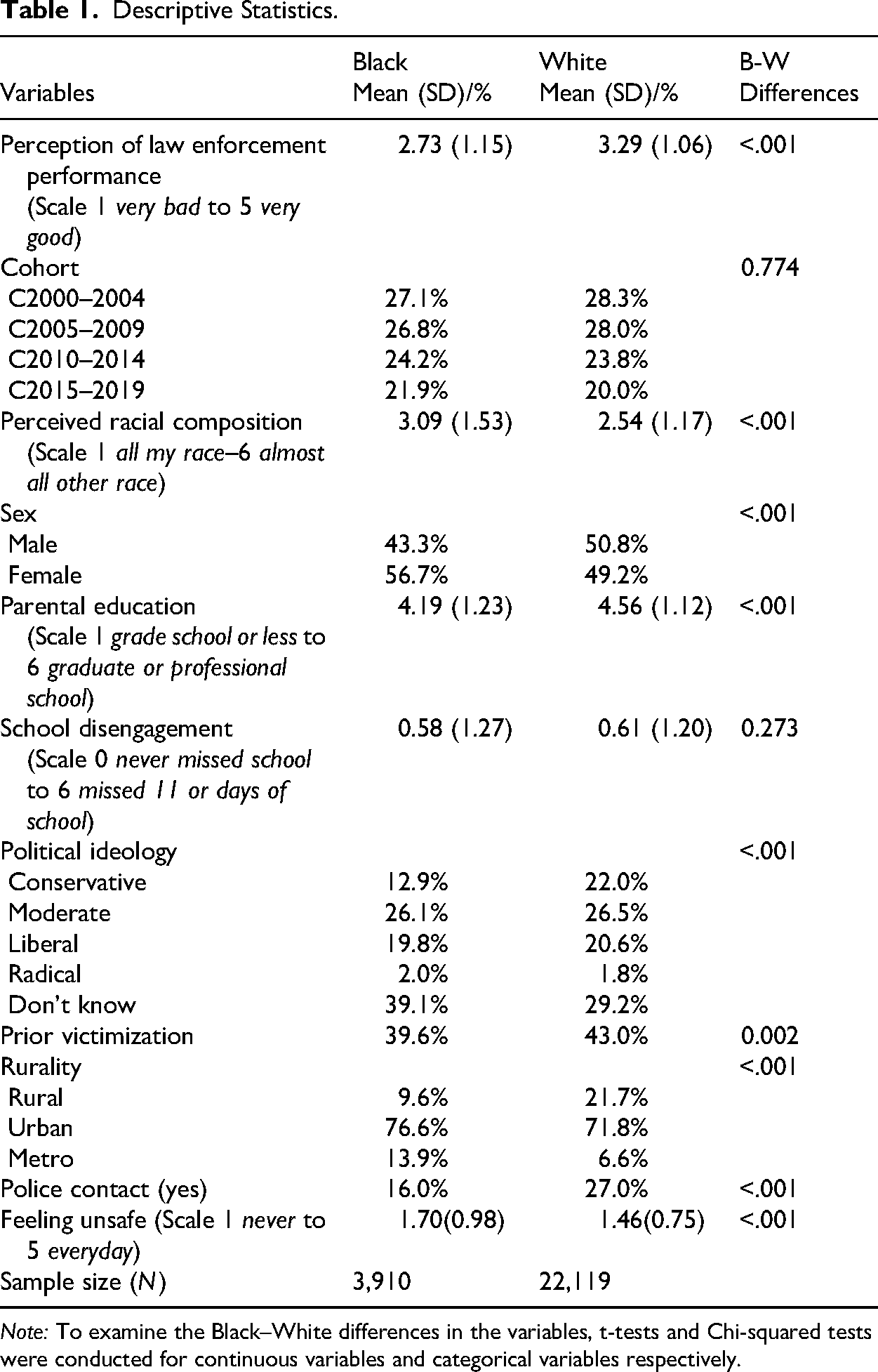
To test the hypotheses, we used Monitoring the Future (MTF) 12th-Grade Surveys from 2000 to 2019. MTF is a national representative survey administered annually to 12th-grade high school students since 1976. 4 We decided to focus on the time frame between 2000 and 2019 because it captures both a period of relatively low street crime rates compared to previous decades (Gramlich 2024) and the more recent emergence of high-profile cases of police misconduct and the killings of racial minorities (Associated Press 2021). Our analytic sample comprises 20 years of data from 26,029 Black and White adolescents who were surveyed during their senior year of high school. About 15% (N = 3,910) of the sample are non-Hispanic Black, and 85% of the sample (N = 22,119) are non-Hispanic White. Table 1 presents the descriptive statistics of the sample by race. T-tests and chi-square tests were conducted to examine the Black–White differences in different variables.
Descriptive Statistics.
Note: To examine the Black–White differences in the variables, t-tests and Chi-squared tests were conducted for continuous variables and categorical variables respectively.
Dependent Variables
The outcome variable is respondents’ perception of the law enforcement performance (see Dean 1980; Kusow, Wilson, and Martin 1997; Wu 2014). Respondents were asked a single question about how good or bad a job is being done by the police and other law enforcement agencies, and they can rank them from 1 (very poor) to 5 (very good). As shown in Table 1, the mean score of perception of law enforcement performance is significantly lower among Black youth than their White peers. We also present descriptive patterns of race-specific perceptions of law enforcement performance across our study period in the sample. As shown in Figure 1, although Black youth reported consistently lower scores on their perception of law enforcement performance than their White peers, such racial gap narrowed slightly in the late 2000s and early 2010s, but widened substantially after 2015. This pattern is consistent with findings from other recent studies (Fine et al. 2020; Fine, Kan, and Cauffman 2019)
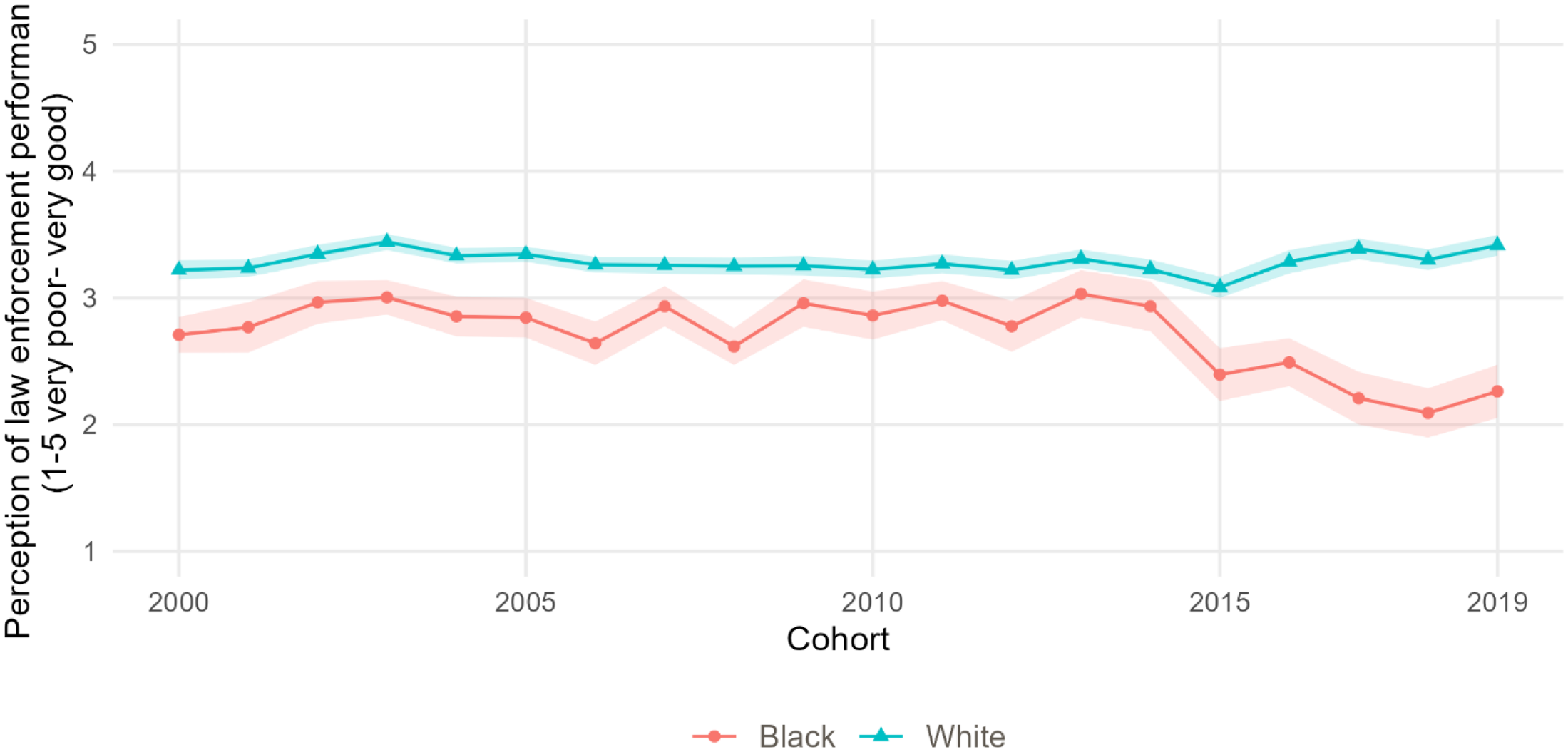
Trends in law enforcement perceptions by race.
We recognize that police perception is a multidimensional construct, and our single-item measure focused on overall performance cannot fully capture different dimensions such as procedural justice, perceived legitimacy, and willingness to cooperate (e.g., Hinds 2007; Leiber et al. 1998; Slocum and Wiley 2018). However, large-scale repeated cross-sectional youth surveys across multiple decades and cohorts rarely include multidimensional measures of police perceptions. Given that the primary goal of the current study is to examine the overall race-specific police perceptions across cohorts rather than to disentangle the internal constructs of police perceptions, our general measure of law enforcement performance that has been recorded consistently across decades in the MTF surveys still serves as a valid indicator. Many other large-scale national surveys in the United States (e.g., General Social Survey, American National Election Survey, and Gallup) also rely on similar single-item measures to assess long-term trends in perceptions of legal institutions or crime issues (Anderson, Lytle, and Schwadel 2017; Pickett 2019; Shi et al. 2020). We elaborate further on the implications and limitations of using this single-item measure in the discussion section.
Race and Cohort
Our sample includes non-Hispanic Black (N = 3,910) and non-Hispanic White youth (N = 22,119) only. The other race and ethnic groups are dropped from the sample. 5 To examine cohort differences, we divide respondents into four five-year cohorts—Cohorts 2000, 2005, 2010, 2015—representing 12th graders surveyed in 2000–2004, 2005–2009, 2010–2014, 2015–2019. This five-year cohort categorization follows common practices in prior cohort analyses in criminology (Anderson et al. 2017; Lu and Luo 2021; Shi et al. 2020), and reflects the observed changes in youths’ law enforcement perceptions recorded in existing studies that have also used MTF 12th-grade survey data (e.g., Fine et al. 2020). As noted above in Figure 1, the substantial decline in perceived law enforcement performance among Black youth and the widening Black–White racial gap in law enforcement perceptions emerged after 2015. Therefore, treating 12th graders surveyed between 2015 and 2019 as a distinct cohort is essential for adequately addressing our main research questions. 6
Individual-Level Characteristics
Measures for individual-level demographic and socioeconomic correlates include Gender (0 = male, 1 = female), Parental Education (measured on a 1–6 scale, from grade school to graduate/professional school), and the Urbanicity setting in which the respondent grew up (1 = rural, 2 = urban, 3 = metropolitan). As shown in Table 1, there are several noticeable Black–White differences in these individual-level variables. First, there is a significantly higher proportion of Black girls than Black boys in the sample; the sex ratio is more even among the White sample. Given that these surveys are conducted in a school setting, the low proportion of boys in the Black adolescent sample could be related to the significantly higher high school dropout rates and out-of-school suspension rates among Black boys, driven by the zero-tolerance policies and other adverse school experiences (see Caton 2012). Second, Black youth were significantly more likely than their White counterparts to grow up in metropolitan and urban areas and had parents with lower levels of education. Third, we also include a measure for political ideology, which is categorized as conservative, moderate, liberal, radical, and “don’t know/missing.” 7 Table 1 also shows significant racial differences in political ideology. Black adolescents were significantly less likely to choose conservative and more likely to choose “don’t know” as compared to their White peers.
Individual-Level Experiences
To measure potential racial differences in experiences related to crime or criminal justice that may be associated with their perception of law enforcement performance, we include School Disengagement, Prior Victimization, Police Contact, and Feeling Unsafe. School Disengagement is measured by how many whole days of school the respondent has missed because they skipped or “cut.” Responses range from 0 (“none”) to 6 (“11 days or more”). There was no significant Black–White difference in school disengagement.
Prior Victimization is coded as 1 if the respondent experienced any of the following seven forms of victimization in the past 12 months: something worth under $50 being stolen, something worth over $50 being stolen, someone deliberately damaged your property, being injured by someone with a weapon, being threatened with a weapon but not injured, being injured without a weapon, being threatened without injury by an unarmed person; otherwise, the variable is coded as 0. Police Contact is measured by whether a respondent received a ticket (or been stopped and warned) for traffic violation in the past 12 months, with 1 representing at least one police contact related to traffic violation and 0 representing no police contact related to traffic violation. 8 Feeling Unsafe is measured by how often the respondents feel unsafe going to or from school. Responses range from 1 to 5, representing “Never,” “Rarely,” “Somedays,” “Most days,” “Everyday.” Black youth in the sample reported significantly lower prior victimization rates, were less likely to have police contact, but more likely to feel unsafe than their White counterparts.
Notably, the lower levels of victimization and police contact rates observed among Black youth in the analytic sample may not reflect the actual Black–White differences, but may be related to the nature of a national representative school sample survey—excluding high school dropouts or frequent absentees who have higher risks of offending, victimization, and criminal justice contacts (Harlow 2003; Na 2022; Voelkl, Welte, and Wieczorek 1999). In particular, with racial disparities in school disciplinary practices and educational resources (Owens and McLanahan 2020), Black youth with greater risks of victimization and police contact may have disproportionately dropped out of school prior to 12th grade and therefore not be represented in the sample. Furthermore, the victimization measure focuses on petty crimes (e.g., theft, property damage, minor assaults), which may not adequately capture the level of serious violent crime that affects Black communities disproportionately (Sheats et al. 2018). The police contact measure is limited to contacts related to traffic violations. As White youth are more likely to own or regularly drive a car (Raphael et al. 2001), they may be more likely to report this type of police contact. We discuss the limitations of the measures and sample in greater detail in the discussion section.
Perceived Neighborhood Racial Composition
To examine how between-cohort changes in law enforcement perceptions of each racial group may be linked to potential changes in neighborhood-level context, we include a measure of perceived neighborhood racial composition in the estimation. The question asks respondents about the racial makeup of their neighborhood. Respondents were provided six response categories (1 = “all my race,” 2 = “almost all my race,” 3 = “mostly my race,” 4 = “about half my race,” 5 = “mostly other races(s),” 6 = “almost all other race(s)”). Over 75% of White youth and more than 50% of Black youth reported living in racially similar neighborhoods (rated 1–3 on the scale). MTF does not collect information on respondents’ residential addresses, so we are unable to measure objective neighborhood characteristics. Under this constraint, perceived neighborhood racial composition represents the closest available proxy for residential context. While recognizing the limitations of a subjective measure, evidence also showed that the two measures are often correlated and both in part reflecting the characteristics of the people living in there (Hidalgo et al. 2015; Weden, Carpiano, and Robert 2008). Additionally, because race is socially constructed and reflects social position and treatment rather than purely biological traits (Roberts and Rizzo 2021), perceived neighborhood racial composition may effectively capture residents’ subjective feelings of segregation and experiences of interracial interactions (Eschholz, Chiricos, and Gertz 2003). Therefore, while limited, this subjective measure still provides a meaningful approximation of respondents’ residential environment, particularly related to racial segregation.
Analytical Strategies
First, to examine cohort differences in perceptions of law enforcement performance within each racial group, we estimate two race-specific ordinary least squares (OLS) regression using cohort as independent variables. Second, to examine if the cohort differences can be explained by other individual-level or neighborhood-related factors, we include all the individual-level correlates and perceived neighborhood racial composition in the race-specific OLS regression models. We conduct mediation tests to formally assess how much of the between-cohort differences are attributable to the individual-level characteristics, police contact experiences, and perceived neighborhood racial composition. Third, to examine how cohort variations and perceived neighborhood racial composition may interact with each other, we introduce an interaction term—cohort × perceived neighborhood racial composition—to each race-specific model. To better visualize the interaction effects, we use race-specific predicted probability plots to demonstrate how predicted perceptions of law enforcement performance vary across cohorts and neighborhood contexts. We also estimate the regression model with a three-way interaction term (race × cohort × perceived neighborhood racial composition) to formally assess the racial disparities in law enforcement perceptions across cohorts and neighborhood contexts. Given that the survey was designed to be nationally representative, the sample size for Black youth is substantially smaller than that for White youth. As a result, estimates for Black youth are less likely to reach statistical significance due to lower statistical power and larger standard errors. Thus, our interpretation emphasizes effect sizes and directional patterns in addition to statistical significance. With the complex, multistage, stratified cluster sampling design of the MTF 12th grade survey, all analyses incorporated (1) sampling weights to ensure the estimates are nationally representative; and (2) survey design variables (i.e., strata and school-based PSUs) to account for clustering of students within schools and by strata. 9
Results
Cohort Differences
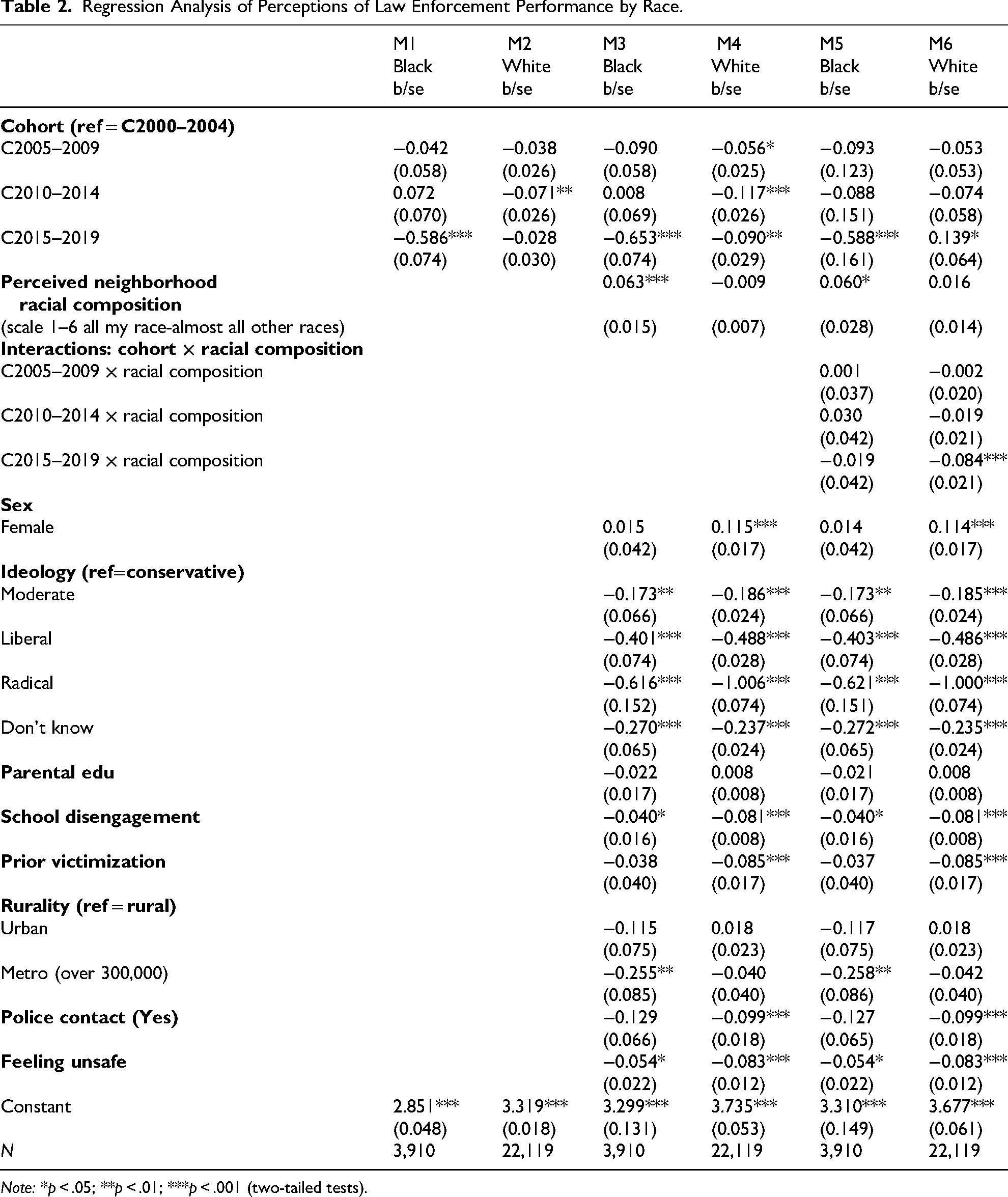
We first examine cohort differences within each racial group by including cohort as an independent variable in the OLS regression model on perceptions of law enforcement performance (Models 1 and 2 in Table 2). Consistent with the descriptive trends shown in Figure 1, we found significant cohort differences between cohorts, and such differences varied by race. Compared to Cohort 2000–2004, Black youth in the Cohort 2015–2019 reported substantially lower scores on law enforcement performance (a decrease of 0.586 point, p < .001). No significant differences were reported among the earlier Black cohorts (2005–2009 and 2010–2014) as compared to Cohort 2000–2004. In contrast, White youth exhibited a different cohort pattern. Although Cohorts 2005–2009, 2010–2014, and 2015–2019 all reported slightly lower scores of law enforcement performance than Cohort 2000–2004, only the difference between Cohort 2010–2014 and the reference cohort was statistically significant. Compared to Cohort 2000–2004, White youth in Cohort 2010–2014 reported 0.071 (p < .01) point lower in law enforcement performance. This decline, however, was much smaller than the decline observed among Cohort 2015–2019 Black youth. Following Paternoster et al.(1998), we conducted Z-tests to compare the cohort main effects between Black and White models, adjusting for sample size and standard error differences within each sample. Results confirm that the substantial decline in perceptions of law enforcement among Cohort 2015–2019 was significantly greater among Black youth than White youth (Z = −6.988, p < .001).
Regression Analysis of Perceptions of Law Enforcement Performance by Race.
Note: *p < .05; **p < .01; ***p < .001 (two-tailed tests).
In sum, while both racial groups experienced some changes across cohorts, the timing and magnitude of these changes were race-specific. For Black youth, a sharp decline in perceived law enforcement performance emerged only and specifically post-2015, likely reflecting the Black communities’ reaction to the series of high-profile incidents of police brutality against Black people during this period (see Bell 2017). For White youth, the magnitude of decline was much smaller; the timing started earlier; and the changes followed a more gradual pattern, with the most pronounced drop observed for Cohort 2010–2014. These results supported Hypothesis 1a, but not Hypothesis 1b.
Next, we included individual-level characteristics, police contact experiences, and perceived neighborhood racial composition into the race-specific models to assess whether the between-cohort changes were associated with these factors (Models 3 and 4 in Table 2). Contrary to our expectations, including these covariates did not attenuate the cohort coefficients. Instead, the magnitudes of some cohort differences were strengthened. Among Black youth, Cohort 2015–2019 reported 0.653 lower scores (p < .001) on their perceptions of law enforcement performance as compared to Cohort 2000–2004, holding all other individual-level characteristics and perceived neighborhood racial composition constant. Among White youth, compared to Cohort 2000–2004, the perception scores were significantly lower by 0.056 (p < .05) in 2005–2009, 0.117 (p < .001) in 2010–2014, and 0.090 (p < .01) in 2015–2019, holding other covariates constant. Formal mediation tests (see Appendix I) confirmed that the inclusion of these covariates did not produce a consistent reduction in the cohort coefficient in either race-specific model. That is, the race-specific cohort changes in perceptions of law enforcement performance were not attributable to changes in the individual-level measures or the perceived neighborhood racial composition. Instead, the slightly larger coefficients in Models 3 and 4 after including the covariates suggest suppression rather than mediation of these variables. Therefore, neither Hypotheses 2a nor 2b was supported by our results. The suppression patterns warrant further examination of potential interaction or moderation effects between cohort and other independent variables.
Before examining the next set of hypotheses, we also discuss the relationship between individual-level correlates, the perceived neighborhood racial composition, and perceptions of law enforcement performance in Models 3 and 4. It's important to note that the sample size of White youth is much larger than that of Black youth in the MTF data, as it's a national representative sample. As a result, even when coefficient magnitudes are comparable across the Black and White models, estimates for Black youth are less likely to reach statistical significance due to smaller sample sizes and larger standard errors.
Perceived Neighborhood Racial Composition
Perceived neighborhood racial composition was significantly related to Black youth's perceptions of law enforcement performance but had no statistically significant relationship with White youth's perceptions (Models 3 and 4 in Table 2). Specifically, a one-unit increase in the racial composition scale (ranging from 1 to 6) was associated with a 0.063-point increase (p < .001) in Black youths’ evaluation of law enforcement agencies (measured on a 1–5 scale, from “very poor” to “very good”). In other words, holding all the control variables constant, Black youth residing in predominantly Black neighborhoods reported significantly lower scores on law enforcement performance than Black youth living in neighborhoods with mostly non-Black residents. In contrast, the relationship between neighborhood racial composition and perceived law enforcement performance was not statistically significant in the model for White youth. To formally test the between-race difference in the effect of perceived racial composition, we conducted a Z-test following the approach proposed by Paternoster et al. (1998). Adjusting for sample size and standard error differences between the two racial groups, the Z-test result (Z = −4.350, p < .001) confirms a significant Black–White difference in the perceived racial composition main effect on race-specific youth's perceptions of police performance.
Other Individual-Level Correlates
Models 3 and 4 of Table 2 also highlight Black–White differences in the correlates of perceptions of law enforcement performance. For example, sex, prior victimization experiences, and police contacts were significantly associated with perceptions of law enforcement performance among White youth but not among Black youth. In contrast, residing in metropolitan areas was associated with lower satisfaction with law enforcement performance for Black youth, whereas this relationship was not statistically significant in the White youth sample. Despite these differences, some correlates were consistent across both groups: reporting conservative political views and feeling unsafe were both significantly associated with higher scores on perceived law enforcement performance, while school disengagement was linked to lower scores on perceived law enforcement performance for both Black and White youth.
Interaction Effects
Next, we examine how macro-level historical context and perceived neighborhood racial composition interact to shape Black and White youths’ perceptions by including an interaction term (race × racial composition) in each race-specific model. Results of Models 5 and 6 in Table 2 reveal racial differences in these interaction effects. Among Black youth, interaction terms between cohort and perceived neighborhood racial composition were not statistically significant, indicating that the cohort differences in Black youths’ perceptions of law enforcement performance did not vary by perceived neighborhood racial composition. However, significant interaction effects were observed among White youth: the relationship between cohort and perceptions of law enforcement performance varied depending on the perceived racial composition of their neighborhoods.
To help better interpret the interaction effects, Figure 2 presents the predicted scores across cohorts and perceived neighborhood racial composition for both Black and White youth. The top panel of Figure 2 illustrates that no significant interaction effects between cohort and perceived neighborhood racial composition among Black youth. Across all four cohorts in our sample, Black youth residing in predominantly Black neighborhoods consistently reported lower scores on law enforcement performance. Black youth in the 2015–2019 Cohort reported significantly lower scores on law enforcement performance compared to earlier cohorts, regardless of the perceived racial composition of their local neighborhoods. These findings indicated that cohort differences found in the Black youth sample did not vary across perceived neighborhood racial composition. Therefore, Hypothesis 3a was not supported. In addition, the findings reveal notably large effect sizes of cohort differences among Black youth. The coefficient for Cohort 2015–2019 is −0.588 (p < .001), which is substantially larger than the effect of perceived neighborhood racial composition effects (b = .060, p < .05), driving all Black youth in this cohort to unprecedentedly lower scores of law enforcement evaluation regardless of where they live.
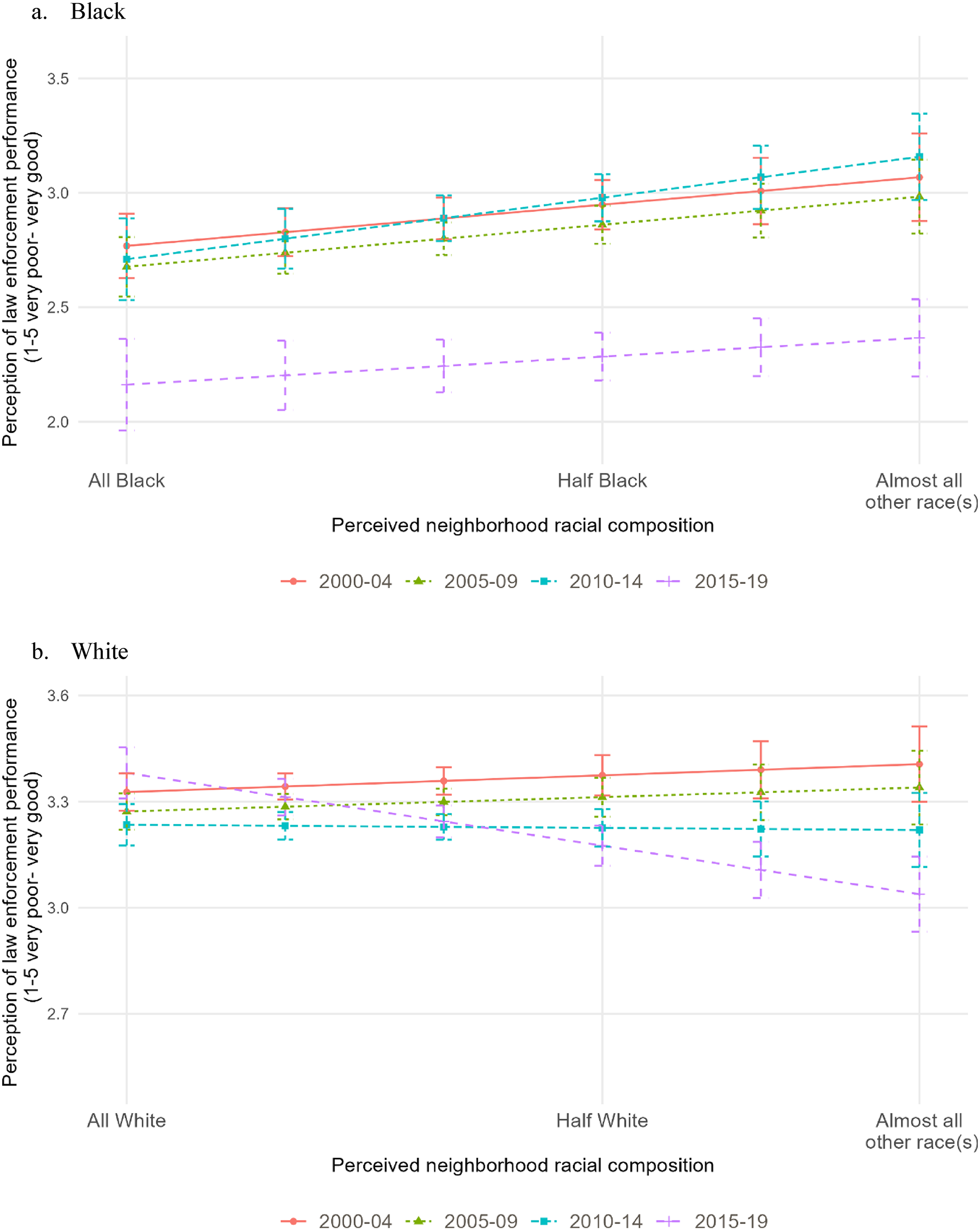
Predicted scores of law enforcement perceptions across neighborhood racial composition, by race and cohort. (a) Black and (b) White.
The bottom panel of Figure 2 illustrates the significant interaction effects between cohort and perceived neighborhood racial composition among White youth. For the first three cohorts (Cohorts 2000–2004, 2005–2009, 2010–2014), there were no significant differences in White youths’ perceptions of law enforcement performance across different neighborhoods. However, this pattern changed for Cohort 2015–2019. In this cohort, White youth from predominantly White neighborhoods reported the highest score on law enforcement performance: not only higher than other White youth living in mixed-race neighborhoods but also than White youth in earlier cohorts who had also lived in mostly White neighborhoods. This finding suggests that a widening divide in perceptions of law enforcement performance among White youth in Cohort 2015–2019, depending on the neighborhood context. Hypothesis 3b was supported.
Lastly, we compared the Black–White disparities in perceptions of law enforcement performance across neighborhoods with various perceived racial composition and across cohorts by introducing a three-way interaction term into the model (race × racial composition × cohort). This approach allows us to formally test how the interaction effects between racial composition and cohort vary across Black and White youth. Given the complexity of interpreting three-way interaction coefficients, we present predicted values by race, perceived neighborhood racial composition, and cohort in Figure 3 and Table 3 to illustrate the cross-group differences. Detailed model statistics are included in Appendix II for reference.
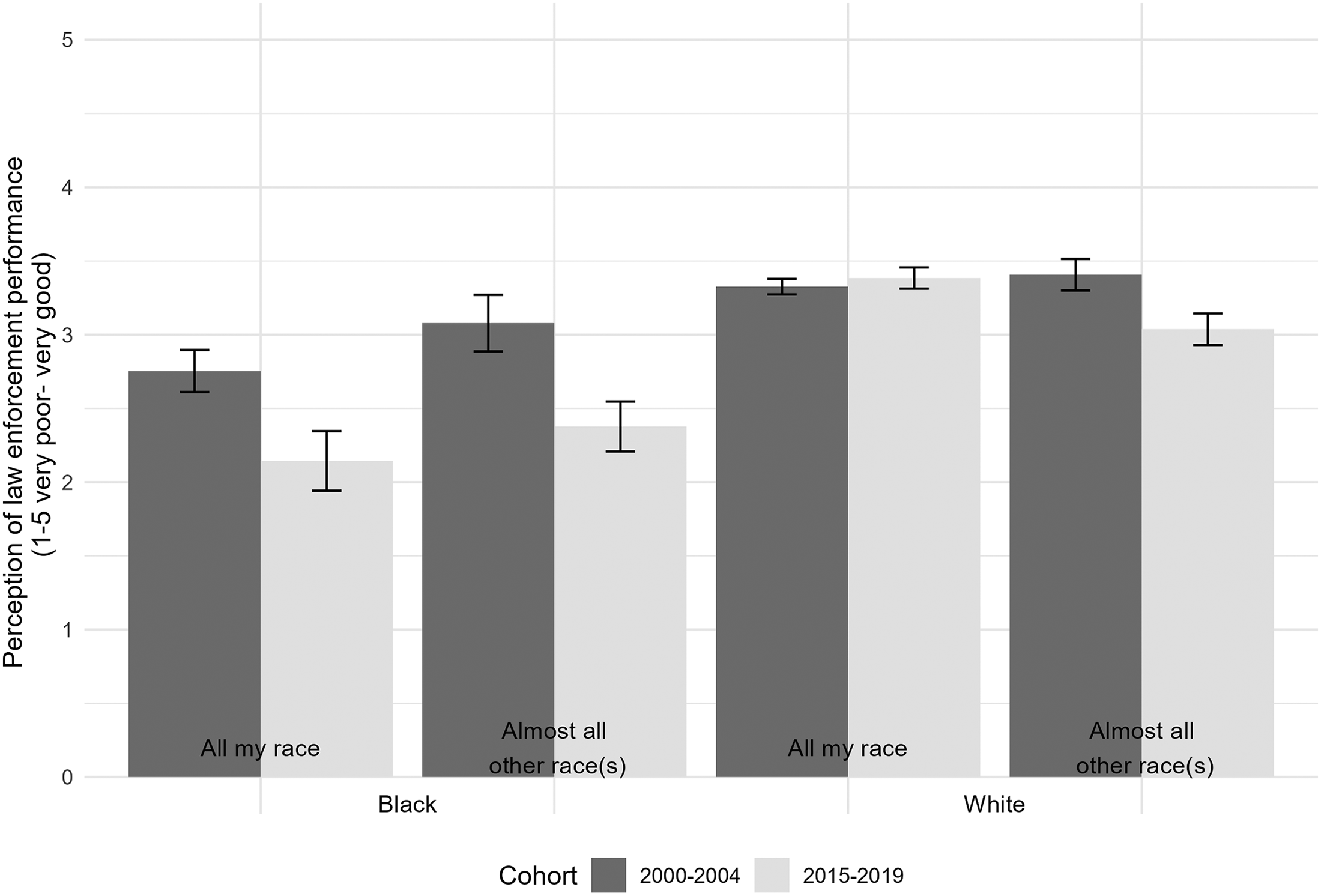
Predicted scores of law enforcement perceptions by race, perceive neighborhood racial composition, and cohort (all my race vs. almost all other race(s)).
Predicted Perceptions of Law Enforcement Performance by Race, Perceived Neighborhood Racial Composition, Cohort.
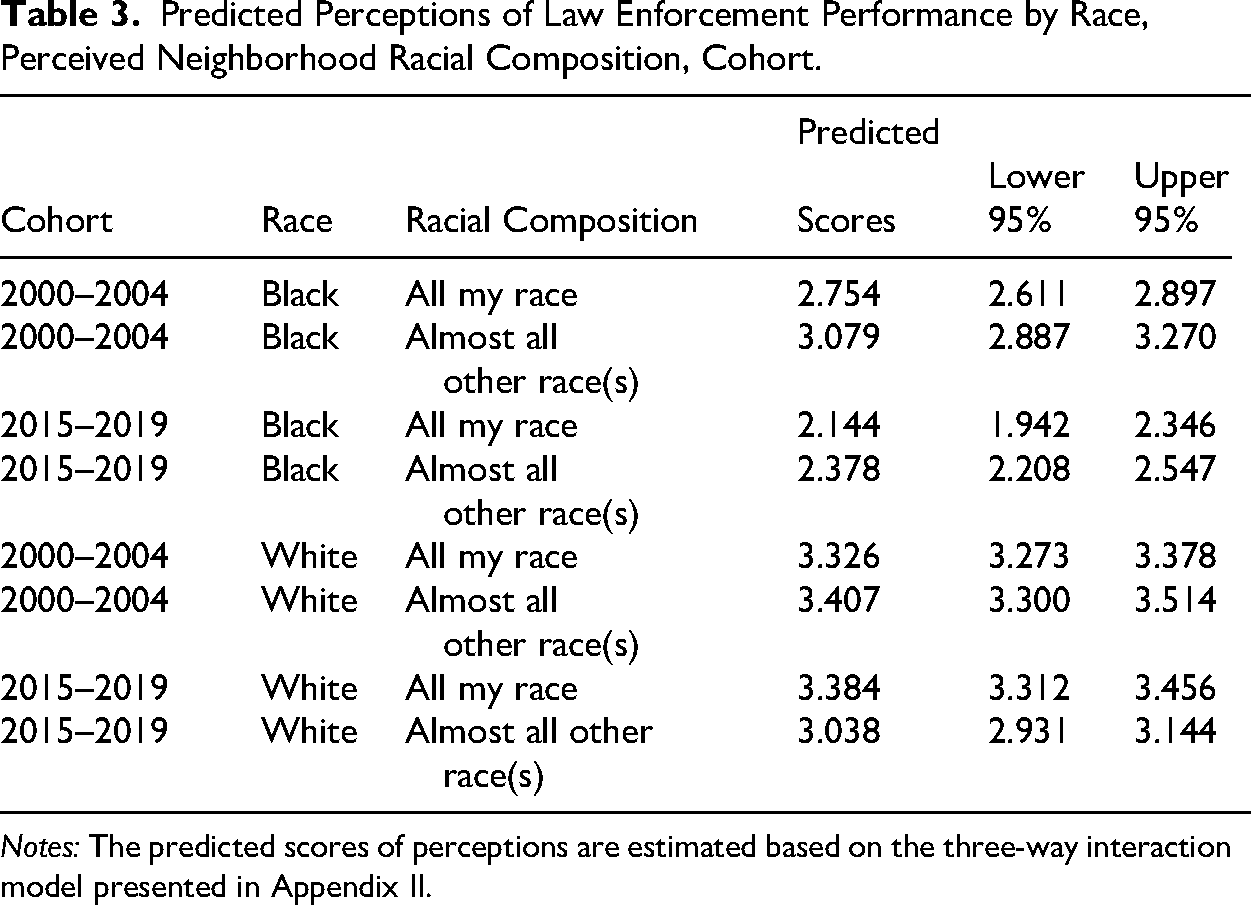
Notes: The predicted scores of perceptions are estimated based on the three-way interaction model presented in Appendix II.
We summarize three important findings based on Figure 3 and Table 3. First, holding other factors constant, Black youth consistently reported lower scores on law enforcement performance than their similarly situated White counterparts. For example, Black youth in the Cohort 2000–2004 residing in predominantly non-Black neighborhoods reported the highest predicted police satisfaction scores (3.079, 95% CI [2.887–3.270]) among all four groups of Black youth. However, this score remained significantly lower than that of White youth of the same cohort living in predominantly White neighborhoods (3.326, 95% CI [3.273–3.378]) and non-White neighborhoods (3.407, 95% CI [3.300–3.514]). Second, Black youth in Cohort 2015–2019 reported significantly lower satisfaction with law enforcement not only than their White counterparts but also Black youth from earlier cohorts living in a similar neighborhood, suggesting a strong cohort effect that extended across types of neighborhoods among Black youth after 2015. Third, among White youth, those living in racially mixed neighborhoods had similar levels of perceived law enforcement performance as those in predominantly White neighborhoods, with the exception of Cohort 2015–2019, where a noticeable decline in perceived law enforcement performance emerged for those reported to reside in mixed race neighborhoods.
Discussion
Interdisciplinary research has investigated how youth form attitudes toward law enforcement from different perspectives. The current study advances this body of research with a race-cohort-specific framework that recognizes youths’ perceptions are simultaneously related to individuals’ characteristics and experiences, perceived local community context, as well as macro-level social change. Overall, we find significant cohort differences in perceptions of law enforcement performance among Black and White youth, and such cohort differences cannot be accounted for by individual-level characteristics, police contact experiences, or neighborhood racial composition. More importantly, our results suggest that cohort differences operate differently across racial groups and may interact with neighborhood context, highlighting the importance of considering conditional and heterogeneous processes across youth groups when examining changes in law enforcement perceptions. Below, we summarize key findings among Black and White youth, respectively, unpack their theoretical and policy implications, and discuss the limitations of the study and directions for future researchers.
Black Youth
Among Black youth, we found significant differences in perceptions of law enforcement performance emerged after 2014: Black youth in Cohort 2015–2019 reported significantly lower scores of police performance than earlier cohorts, regardless of individual-level characteristics or perceived neighborhood racial composition. Notably, such a cohort difference is not just statistically significant but also substantively large, with an effect size that may outweigh some conventionally examined correlates of police perceptions. For instance, we find that even Black respondents living in predominantly non-Black neighborhoods, who typically report the highest levels of police performance among all surveyed Black youth, still exhibit significantly lower scores on law enforcement performance if they were in the 2015–2019 Cohort. Their perceived law enforcement performance drops to levels even lower than those of Black youth from earlier cohorts (2000–2014) living in the predominantly Black neighborhoods, who typically reported the most negative perceptions of law enforcement (see top panel of Figure 2). These findings are robust after adjusting for individual-level variations in socioeconomic status, political ideology, police contact, and victimization experiences, highlighting the importance of macro-level historical context in understanding Black youths’ law enforcement perceptions. Our finding is consistent with prior studies showing significant effects of police killings of unarmed Black citizens on reducing Black respondents’ trust in police, particularly among younger residents (Ben-Menachem and Torrats-Espinosa 2024).
In addition to the high-profile incidents of police brutality, we speculate that the widespread use of social media among teenagers may have played an important role in shaping the cohort differences among Black youth. Although police violence against minorities is not new, social media may have accelerated the diffusion of these incidents (Campbell and Valera 2020). This heightened visibility may have intensified the negative emotions among Black youth (Tynes et al. 2019), potentially overshadowing differences that may otherwise arise primarily from individual police encounters or local neighborhood context.
We conducted a supplemental analysis to further explore the potential relationship between social media use and race-specific law enforcement perceptions. In 2018, MTF introduced a new survey question on 12th graders’ daily social media use (“About how many hours on an average day do you spend on social networking sites like Facebook, Twitter, Instagram, etc.?”) with response categories from 1 to 7 representing “0 hr” to “9+ hrs.” Although we cannot formally test whether social media use mediates or contributes to the between-cohort decline among Black youth—as this measure of social media use is not available for earlier cohorts—we could still get insights into this relationship indirectly by examining how social media use may be related to race-specific law enforcement perception in 2018 and 2019. As shown in Appendix III, while social media use had no significant association with White youths’ perceptions of law enforcement performance, its association with Black youths’ law enforcement perceptions was both significant and strong. Compared to Black youth who reported spending 0 hr on social media, those reporting more than nine hours per day scored approximately one point lower (on a five-point scale) in their evaluations of police performance.
These results suggest that social media use is differentially associated with Black and White youths’ police perceptions. Among recent cohort of Black youth, the salience of racial identity in thinking about police and law enforcement may be heightened by social media through repeated exposure to graphic videos of police violence, as well as through the “echo chambers” of social media—in which the platform's feed algorithms limit the exposure of divers perspective, cluster like-minded users, and reinforce shared narratives (Cinelli et al. 2021: 1; Del Vicario et al. 2016). Such processes may intensify collective sentiments toward the police by linking individuals’ perceived fates to those of Black victims in highly publicized incidents, thereby aligning personal self-interest more closely with the broader well-being of Black Americans. Among the recent cohort of White youth, however, with the echo chambers on prior political orientations, the algorithmic news feeds may divide White youth in opposite directions that offset each other—encouraging some to align with law enforcement and White police officers, while prompting others to express solidarity with their Black peers (Piccardi et al. 2025).
These findings suggest that to narrow the racial gap in youths’ police perceptions, policymakers may need to address collective feelings of “social estrangement” among Black youth following the high-profile policing events; as these feelings arise from structural inequality beyond individual-level dissatisfactory police encounters, and policy efforts need to be made beyond offering police legitimacy training to individual police officers and police departments (Bell 2017). The collective sense of hopelessness and cynicism is so widely shared among Black youth that, regardless of their immediate neighborhood environment, they feel alienated and mistreated. And social media may highlight the feeling of legal estrangement and give “birth to a new form of race-based posttraumatic stress” (Bell 2017: 2108).
In addition to the social media effects discussed above, there may be other race-specific cohort processes shaping the observed patterns in perceptions of police performance. For instance, as discussed in the data section, high school dropout rates have declined among both Black and White youth in recent cohorts (Chapman, Laird, and KewalRamani 2010; National Center for Education Statistics 2024). As a result, compared to earlier cohorts, youth who may have been excluded from the 12th-grade school sample in the early 2000s due to school suspension, expulsion, or criminal justice punishment may have remained in school and thus been included in the 2015–2019 Cohort sample. These youth may hold different perceptions of law enforcement given their greater likelihood of criminal justice contact (Foster et al. 2022; Harlow 2003; Voelkl et al. 1999), particularly among Black youth. Future research should further explore other potential macro-level race-specific cohort mechanisms, including cohort differences in school dropout rates and school disciplinary practices, shifts in racial/ethnic and immigrant composition of different youth cohorts, or changes in parenting practices and supervision.
Young people's perceptions of law enforcement not only reflect transient feelings, but also shape their willingness to report crime and delinquency to authorities (Hurst et al. 2024), avoidance of engaging in public and political activities (Brayne 2014), increased firearm purchase (Sierra-Arévalo 2016), and increases in youth delinquency (Baumer and Staff 2025). Such dynamics may create a vicious cycle, in which neighborhood context, police perceptions, and chronic vicarious exposure to racialized trauma or social injustice through social media reinforce one another to further undermine the safety and well-being of recent generations of Black youth. Our study, therefore, calls for further research on how historical context, social media, local community environment, and other individual-level negative police experiences operate together and contribute to cumulative disadvantage for the new generations of Black youth (Williams 2021).
White Youth
The associations between cohort and perceptions of law enforcement performance operate differently for White youth as compared to their Black peers. Specifically, we find evidence of a shifting divide among White youth in the 2015–2019 Cohort. For earlier cohorts before 2015, White youths’ perceptions of law enforcement performance are related primarily to their individual police contact experiences and demographic correlates, and these perceptions showed little variation across perceived neighborhood context or time. In the 2015–2019 Cohort, however, we find a growing divide in White youths’ perceptions of law enforcement performance depending on the neighborhood: for White youth living in predominantly White neighborhoods, their levels of perceived law enforcement performance increased as compared to the earlier cohorts; for White youth living in predominantly non-White neighborhoods, Cohort 2015–2019 seemed to share the negative sentiment of their Black counterparts and reported lower levels of perceived law enforcement performance compared to the earlier cohorts.
It is possible that White youth living in the racially dissimilar neighborhoods have experienced more, either personally or vicariously, incidents of police misconduct in their community (Brunson and Weitzer 2009). It is also possible that the White youth in racially mixed neighborhoods resonated more with their Black peers who have been “fed up” with longtime police harassment and abuse (Anderson 2014). In contrast, White youth who live in racially similar neighborhoods are likely shielded from the negative police experiences and thus cannot relate to the social protests against police brutality. This may have inadvertently led some White youth, especially those who are more exposed to conservative ideologies and racial prejudice at home or school, to become even more empathetic with law enforcement compared to the previous cohorts (Reny and Newman 2021). However, since our model has controlled for these individual-level differences (e.g., prior victimization, police contacts, political ideology), they cannot fully account for the interaction effects.
In addition, the interaction effects with perceived-neighborhood racial composition among White youth may be linked to social media and their feed algorithms that filter youth into opinion-congruent groups and reinforce shared narratives (Cinelli et al. 2021; Del Vicario et al. 2016). For instance, White youth residing in racially similar communities may experience greater information clustering that reinforces pro-law enforcement narratives, whereas those from racially diverse communities are more likely to be exposed to platform-fed content that aligns more closely with their racial minority peers. Future research should further investigate how the local community contexts interact with, or potentially shape, patterns of online information clustering.
To further explore the widening divide among White youth across perceived neighborhood context in Cohort 2015–2019, we conducted supplemental analyses to examine the potential mediation effects of individual-level factors within the sample of White respondents in the Cohort 2015–2019. As shown in Appendix IV, political ideology accounted for a large portion of the association between perceived neighborhood racial composition and police perception, suggesting that the exposure to different ideological climates across communities may play an important role in shaping White youths’ law enforcement perceptions in Cohort 2015–2019. In addition, individual-level experiences related to crime and criminal justice (e.g., police contact, prior victimization, and feeling unsafe) also accounted for part of the association between perceived neighborhood racial composition and police perception. Nevertheless, after controlling for all of these individual-level factors, the coefficient of neighborhood racial composition remained robustly significant among White youth in Cohort 2015–2019. This suggests that the broader historical dynamics, such as the high-profile police violence incidents after 2014 amplified by social media use, may have influenced White youths’ police perceptions and polarized their opinions in ways that are not fully captured by the individual-level measures available in the current study.
These findings are consistent with the widening political divide among young people in the United States—a pattern increasingly documented by scholars (Abramowitz and McCoy 2019; Olson 2008). Young people from different socioeconomic backgrounds and community contexts seem to experience growing polarization in their perceptions of a range of social and political issues (Olson 2008), especially under the influence of fragmented viewership of social media (Roche, Pickett, and Gertz 2016). As a result, people with opposing perceptions and ideologies may have growing distrust of each other, which further undermines public health, civic engagement, trust in experts, and lowers community informal social control (Abramowitz and McCoy 2019). As the new generation of youth will play a critical role in shaping future electoral outcomes and policy agenda, it is important for future researchers to investigate the mechanisms driving the increasing polarization among the young cohorts as well as the consequences it may produce.
Limitations
This study is not without limitations. First, the estimates rely on repeated cross-sectional data, which do not include individual-level longitudinal measures to tease out the temporal order of different causal mechanisms. While our findings reveal complex dynamics between race, cohort, perceived neighborhood context, and law enforcement perceptions, we cannot draw conclusions regarding the causal directions of these relationships. We encourage future research using longitudinal data to further investigate the causal mechanisms underlying these processes.
Second, since our repeated cross-sectional data only include 12th graders across multiple historical periods—with little age variation—we cannot conduct a formal analysis to disentangle age, period, and cohort effects. Period effects have contemporaneous influences across all age groups, while cohort effects may arise when there are differential effects of social change and historical effects depending on the developmental stages of the group of individuals (Lu and Luo 2021). The substantial decline observed among Black youth after 2015 may reflect permanent cohort differences resulting from exposure to major police violence incidents during a formative developmental stage, or it can be broader period effects that affected all age groups uniformly during the time. We frame these patterns as cohort differences in the paper, given the timing of exposure during late adolescence, but we acknowledge that they may instead reflect temporary period shifts. Future studies with longitudinal follow-up measures should further assess whether such changes are indeed cohort-specific and have long-lasting impacts on the specific cohort.
Third, our study is based on a school survey and thus excludes high school dropouts and frequent absentees, groups that may have higher risks of direct or vicarious criminal justice and thus hold more negative perceptions of the police (Foster et al. 2022). As school dropout rates vary across racial groups (National Center for Education Statistics 2024), our estimates likely represent conservative estimates of race-specific perceptions of police performance. In addition, school dropout rates also have declined across time (National Center for Education Statistics 2024). As discussed earlier, some of the observed cohort differences in perceptions of police performance may therefore partly reflect cohort compositional changes in the 12th-grade student population—adolescents who would have been excluded from earlier school samples because of dropout may be more likely to be retained in more recent cohorts. Future studies with alternative sampling strategies (e.g., national representative adult sample or targeted samples to high-risk population), should examine whether similar race-cohort-specific patterns emerged in other population groups.
Fourth, due to data restrictions, we use perceived neighborhood racial composition as an approximation to measure neighborhood context. As discussed above, this measure is not equivalent to objective neighborhood indicators. Prior research has shown that perceived neighborhood conditions, although correlated with observed characteristics, may also reflect racial and economic stereotypes (Hidalgo et al. 2015; Sampson and Raudenbush 2005). Thus, the findings related to perceived neighborhood racial composition should not be inferred as direct evidence of neighborhood-level differences in concentrated disadvantage, crime rates, resource allocation, or policing strategies.
In addition, because the survey item on perceived neighborhood racial composition is measured on a scale from 1 to 6, ranging from “all my race” to “almost all other races”mpa#rdquo;, we were unable to identify how specific racial groups are represented in each respondent's neighborhood. For example, for a Black resident who reported living in areas with “almost all other races,” it should be interpreted as living in majority non-Black neighborhoods, which could be majority White, majority Asian, or racially diverse neighborhoods.
Notably, our interpretations related to the subjective neighborhood measure focus on two types of comparisons. First, we focus on contrasting perceived neighborhood racial composition at the extreme ends of the scale, where the subjective estimate and the objective neighborhood racial composition are unlikely to diverge significantly—for example, a Black respondent reporting living in a predominantly Black neighborhood is unlikely to reside in a predominantly White area based on objective measures. Second, we focus on cohort comparisons within the same racial group (e.g., comparing White youth who reported living in predominantly White neighborhoods vs. White youth who reported living in almost all other race(s) neighborhood), as the meaning of perceived racial composition is likely more internally consistent within the same racial group. As such, our results on between-cohort changes in the associations between perceived neighborhood context and law enforcement perceptions offer suggestive evidence that neighborhood-level influences on police attitudes may vary across historical periods and racial groups. Researchers with more information on respondents’ residential address may jointly examine both the subjective and objective measures to further disentangle how the race-cohort-specific changes in police perceptions are unfolded across neighborhood contexts.
Fifth, the MTF 12th-grade survey only has a single survey item on perception of general law enforcement performance, which does not measure other constructs of police perceptions, such as trust, confidence, feelings in specific scenarios. We were unable to construct a more comprehensive measure to quantify youths’ attitudes toward the police. As such, findings herein should be interpreted with caution when referring to other aspects of police perceptions (e.g., trust in the police, use of force, etc.). Moreover, this survey question may conflate the respondents’ perception of police and other law enforcement agencies, although Bell (2017) noted that trust in law enforcement and governmental institutions is often in the same direction. Specifically, the recent surge in Immigration and Customs Enforcement activities may mean attitudes toward the police and other law enforcement agencies may diverge or change together (Anderson 2025). Future researchers should investigate these possibilities.
Lastly, there are limitations associated with our control measures. As discussed in the data section, our measure of victimization is limited to minor forms of crime, and the measure of police contact is limited to contacts related to traffic violations. In addition, there are a number of important measures associated with youths’ police perceptions that we were unable to include due to the MTF data restrictions, such as legal cynicism (Hofer et al. 2020), attachment to parents (Wu et al. 2015), and comparative disadvantage of neighborhoods (Fix et al. 2023). Future research with more detailed measures will need to further investigate how these measures relate to the widening racial gap among the recent cohorts.
Conclusions
Despite the limitations, the current study advances our understanding of law enforcement perceptions among American youth through a race-cohort-specific perspective that situates individual perceptions within a dynamic macro-level historical context and racially stratified social structures. Results from the study reveal significant cohort differences in perceptions of law enforcement performance that: (1) are race-specific, (2) cannot be fully explained by individual-level characteristics and police contact experiences, and (3) vary depending on perceived neighborhood contexts. In particular, we highlight that youth who came of age after 2015 represent a distinctive cohort, and such unique cohort processes unfolded differently across Black and White youth. Black youth in the post 2015 cohort report substantially lower scores on perceived law enforcement performance, regardless of individual experiences and neighborhood contexts, while White youth in this cohort demonstrate widening divides in their perceptions of law enforcement performance depending on their perceived neighborhood racial composition.
Theoretically, findings of the current study offer new insights into research on public opinion trends, suggesting that the once-uniform effects of traditional news coverage on public perceptions across population subgroups (Enns and Kellstedt 2008; Page and Shapiro 1992; Pickett 2019) may have been substantially altered among the new generation of youth who grew up under pervasive social media influence. The high-profile police violence incidents in recent years, along with the algorithmically driven social media environment that reinforces in-group narratives and collective sentiments, may have heightened the salience of racial group identity in shaping individuals’ perceptions. Such processes may operate differently across Black and White youth, depending on neighborhood context and other individual backgrounds. We call for more research to monitor these important shifts in youths’ police perceptions, as well as other youths’ perceptions related to government agencies, in the next decade, and their long-term impacts on the young generation. Such efforts are essential for refining and further developing the classic theoretical framework of public opinion.
Methodologically, the study reveals complex interaction and moderation patterns among key correlates of law enforcement perceptions (e.g., race, cohort, perceived neighborhood racial composition, etc.). These results suggest the need to move beyond single-time-point analyses and additive mediation models that assume static and homogeneous effects of key correlates across population subgroups and across time for police perception research. Instead, we highlight the value of analytical approaches that focus on conditional and heterogeneous processes across racial groups and historical contexts when assessing perceptions among youth.
Lastly, in terms of policy implications, our study suggests that improving perceptions of law enforcement across racial groups requires a multifaceted approach, including improving individual police encounter experiences, community-level investment, and broader societal efforts to tackle structural dimensions of racial inequality, including White privilege, institutional discrimination, and blatant racism (Anderson 2014). More broadly, our findings align with a growing body of research across social sciences documenting substantial shifts in youth behaviors, attitudes, and well-being among Gen Z (Haidt 2024; Lu and Luo 2026; Neil and Sampson 2021; Osgood 2023; Patalay and Gage 2019; Twenge 2017). They all highlight the unique challenges faced by the recent cohorts of Black and White youth, including the compounded vulnerabilities arising from both personal-level racialized adverse experiences and collective trauma that amplified through social media among Black youth, as well as the heightened political polarization among White youth. Addressing these challenges will require updated policy initiatives and targeted community support that recognize and are tailored to the distinct experiences of contemporary youth.
Footnotes

Funding
The authors received no financial support for the research, authorship, and/or publication of this article.
Declaration of conflicting interests
The authors declared no potential conflicts of interest with respect to the research, authorship, and/or publication of this article.
Notes
Author Biographies
Appendix I. Mediation Tests of Cohort Differences in Race-Specific Perceptions of Law Enforcement Performance.
Appendix II. Regression Analysis of Law Enforcement Perception With Three-Way-Interaction (Race × Perceived Neighborhood Racial Composition × Cohort).
Appendix III. Predicted Scores of Law Enforcement Perceptions by Race and Social Media Use Frequency,2018–2019.
Notes: The predicted scores of police performance are estimated based on a model with race × social media use interaction terms, holding all the other variables (i.e., the same set of variables as in the main analysis) constant. The analytical sample of this analysis includes 12th-grade students surveyed in 2018 and 2019, as the social media use variable was only added in 2018. There are 242 Black respondents and 1,655 White respondents in this analysis.