







Abstract
This study was designed to examine to the extent to which impostor feelings, symptomatic of the psychological condition impostor phenomenon (IP), would be evident in early career university-level music educators. Those experiencing IP are typically successful individuals yet with impostor feelings that may include debilitating psychological effects related to an irrational fear of failure and exposure as a “fraud.” Participants were post–doctoral degree music education faculty in their first 4 years of full-time college teaching (N = 54). They responded to the Clance Impostor Phenomenon Scale and to scales adapted for faculty roles of undergraduate teaching, graduate teaching, and research. Results indicated that all participants experienced a moderate or higher level of impostor feelings on at least one of the scales, with five responses indicating intense impostor feelings on at least three scales. Participants’ responses to the Undergraduate Teaching Scale were the most positive. Scores for the Research Scale generated the strongest IP feelings, falling into the frequent or intense category for over 70% of the participants. Strategies that may help faculty members assuage or overcome their impostor feelings include realizing that they are not alone, working with peers, mentors and role models, and acquiring relevant experiences during doctoral preparation.
Music education faculty members working at colleges and universities generally have diverse workloads and responsibilities. They typically are expected to teach undergraduate teacher preparation courses, place or supervise students in field experiences and internships, advise students, and teach graduate courses and other courses, such as conducting, applied instruction, and ensembles (Sims, Jeffs, & Barrow, 2010). However, they report spending most of their time teaching and preparing to teach, as compared with other responsibilities (Hewitt & Thompson, 2006). Results of a survey by Brewer and Rickels (2012) indicated that music teacher educators spent on average about 12 hours per week teaching undergraduate students and 3 hours per week teaching graduate students, although the data varied by the type of institution (bachelor vs. doctoral granting).
Scholarly or creative activity often is included in music education faculty job expectations, as are recruiting and service to the campus, community, and profession (Brewer & Rickels, 2012; Sims et al., 2010). An analysis of 112 music education job advertisements during the 2007–2008 school year indicated that approximately 35% included publishing among the expectations listed (Sims et al., 2010), although average workloads according to number of hours per week reported by faculty surveyed were 12% research and 17% service, again differing by type of institution (Brewer & Rickels, 2012). Music education faculty teaching responsibilities may include conducting and applied music as well as traditional classes, creative activities in addition to publishing, and recruiting. Sims et al. (2010) concluded that when compared with analyses of vacancy postings in science and social studies education, “it is apparent that music education is a highly complex field, encompassing a very wide range of job descriptions and responsibilities” (p. 74).
Authors have raised questions and concerns about doctoral students’ preparation for various aspects of jobs as a music education professor (Conway, Palmer, Edgar, & Hansen, 2016; Kelly & VanWeelden, 2016). Responses to a survey of faculty who prepared doctoral music education students (Kelly & VanWeelden, 2016) indicated that it was important for doctoral students to observe and assist in undergraduate music education methods classes and student teaching, as well as to conduct their own research, present a poster, and present research at a conference, and that doctoral students had these experiences in almost all of the degree programs represented in the study. Experience with teaching “all or some of a graduate music education” class ranked among the least important and was experienced the least among all other activities except serving on school and college committees (Kelly & VanWeelden, 2016). Teaching graduate classes is an academic responsibility that doctoral students may not be or feel prepared for, and intentionally including this preparation into the curriculum has been recommended (Conway et al., 2016; Kelly & VanWeelden, 2016).
Based on the results of a survey of music education faculty, Rohwer and Svec (2014) identified a long list of research experiences and skills that respondents rated as important or very important for doctoral students in music education. Respondents viewed opportunities such as making an oral research presentation, attending and presenting a poster at a national conference, choosing a research question for study, and writing a literature review as the most valuable experiences in the preparation of future university faculty members. It appears that the value of these experiences is reflected in coursework, as indicated by the results of a review of the literature by Kelly and VanWeelden (2016), who concluded, “Doctoral program curricula for educating music teacher educators varied widely and emphasized research and music education philosophy” (p. 3).
Preparation to conduct research is clearly one of the goals and components of a PhD degree. Several authors have lamented, however, that many recipients of the doctorate in music education do not publish a study based on their dissertation, do not continue to conduct and publish research after graduation, and are not prepared adequately or feel unprepared to do so (Humphreys, 2006; Pellegrino, Sweet, Kastner, Russell, & Reese, 2014; Sims, 2016; Sims & Cassidy, 2015). Although Martin (2016) found that the means for the music education doctoral student participants in her study placed them within her “very confident” category as K–12 teacher educators, their mean responses were only within her “confident” category in their abilities to contribute original research or train and mentor graduate students.
Given the complexity of the job of music teacher educator, the transition from doctoral student to music education faculty member is likely to present a variety of challenges and may even be considered a struggle for some (Martin, 2016). A growing body of literature in music education has begun to address related issues, including the development of identity (Bond & Koops, 2014; Conway, Eros, Pellegrino, & West, 2010), socialization into teaching (Conkling & Henry, 2008), learning to teach graduate students (Conway et al., 2016), peer mentoring (Draves & Koops, 2011), and the role of a professional development community (Pellegrino et al., 2014).
A common theme that emerges when reading much of the music education literature cited to this point, particularly the qualitative studies, is participants’ feelings of self-doubt, worry, intimidation, or fear related to college teaching. Some of these statements are very consistent with what might be considered symptoms of the impostor phenomenon (IP), identified by clinical psychologist Pauline Clance in 1978. Individuals experiencing this irrational fear believe that they do not know enough to be legitimately pursuing their career or to be successful in it—in this case, an advanced degree, teaching in higher education, or conducting research—and not only fear that they will fail but, more important, fear that they will be exposed as a fraud. They are typically successful individuals, often perfectionists with a need to be the best at what they do; yet they do not believe that they are deserving of the successes that they have had, and they compare themselves unfavorably with peers and colleagues (Clance, 1985). IP feelings can range from mild to paralyzing, and they are not related to actual level of preparation or success—in fact, fear of not being able to repeat past successes triggers these feelings (Clance & Imes, 1978).
Debilitating effects of IP that can influence productivity may include persistent feelings of depression and anxiety, psychological distress, low self-confidence, insecurity, emotional exhaustion leading to job burnout, and fear of rejection (Clance & Imes, 1978; Harvey & Katz, 1985; Hutchins, 2015; Knights & Clarke, 2014; Topping & Kimmel, 1985). According to Hutchins (2015), “the experience and persistence of IP [are] adversely related to job well-being, satisfaction and performance” (p. 4). Cisco (2015) explained, IP feelings are not just low-self esteem, Type A tendencies, or generalized anxiety that result from stressful tasks; they are a unique and unfortunate blend of psychological disturbances that can have tremendous consequences for the sufferers, from lack of energy, insomnia, and severe depression, to an inability to enjoy one’s own success. Such consequences could thus prevent otherwise successful and capable individuals from achieving success, both for themselves and their communities. (pp. 135–136)
When viewed through the lens of IP, this description about teaching a new course—by one of the authors of a narrative study about music teacher educator identity—reflects the fear of exposure: “I spent hours researching, planning, and prepping for each class, hoping to avoid being caught not knowing an answer to a student question” (Bond & Koops, 2014, p. 41). The terms worry, intimidation, and doubt were common descriptions of initial experiences of early career music education faculty when faced with teaching graduate students (Conway et al., 2016). Participants in Martin’s (2016) study appeared to be exhibiting insecurities about others’ perceptions that are similar to IP feelings. As Martin described, they “believed that others were less likely to see them in the roles of ‘music teacher educator,’ ‘teacher mentor,’ and ‘researcher,’ when compared with how participants saw themselves,” a “disparity between self-identity and others’ perspectives [that] may eventually affect overall confidence for succeeding in academia” (p. 23). One of the three main themes that emerged from a study about doctoral students and early career music education faculty was self-doubt and fear of failure (Pellegrino et al., 2014). This statement from that study provides a good description of IP feelings: “As a group of both graduate students and early career music teacher educators, we found a shared sense of fear about our abilities as researchers” (p. 469).
According to research findings, intelligent, high-achieving individuals, including graduate students and university faculty, are most likely to suffer from IP (Brems, Baldwin, Davis, & Namyniuk, 1994; Cisco, 2015; Craddock, Birnbaum, Rodriguez, Cobb, & Zeeh, 2011; Harvey, 1981; Jöstl, Bergsmann, Lüftenegger, Schober, & Spiel, 2012; Knights & Clark, 2014; Neurieter & Traut-Mattausch, 2016; Topping & Kimmel, 1985). The impostor feelings of the faculty participants in the study by Knights and Clarke (2014) were “exacerbated by the feeling of not living up to an ideal image of what it means to be an academic” (p. 342). Hutchins (2015) explained that IP traits may “be further heightened within the ‘publish or perish’ academic culture, where performance targets are often vague, support can be inconsistent, and a highly competitive research and funding climate may inadvertently create a setting conducive to feelings of self-doubt and fraudulence” (p. 4). The results of Hutchins’s research indicated that impostor tendencies were significantly less prevalent for tenured faculty as compared with nontenured and tenure-track faculty.
The extent to which IP may affect music education doctoral students and early career faculty is as of yet unknown, but applying this theory may help explain some of the attitudes toward teaching and research that are found in the literature, that we have heard from peers or colleagues, or that we even have experienced ourselves in our years in higher education. For this initial study, we chose to explore the IP feelings of early career music education faculty members because, as McCormick and Barnes (2007) described, The transition from senior graduate student to junior faculty member can be a time of emotional upheaval. Change is stressful and this transition involves changes in role and in community, most likely accompanied by a separation from friends and support groups. (p. 6)
Because there is a large body of literature related to the IP feelings found in doctoral students, faculty, and professionals across various fields and given that IP was first defined and labeled by clinical psychologists, many interventions have been suggested and tested to help prevent and assuage these feelings. Thus, if IP is identified as affecting music education faculty in ways similar to other populations, there are strategies that may be recommended to assist. The first step, as in the treatment of many psychological conditions, is identifying that there is a problem, defining it, and understanding that one is not alone in one’s feelings. Therefore, the purpose of this study was to examine to what extent, if any, IP is evident in early career music educators, in life in general as well as in the major responsibilities of these faculty—undergraduate teaching, graduate teaching, and research. The findings are intended to assist those who may be suffering from IP and to help music education faculty better prepare their doctoral students and more effectively mentor early career faculty by developing an understanding of some of the ways that these individuals might be thinking about their work. Some of the previous studies, with a few exceptions, found that females were more adversely affected by IP feelings than males were, so gender was also a variable investigated in this project (Clance & Imes, 1978; Clance & O’Toole, 1988; Cokley et al., 2015; Harvey, 1981; Jöstl et al., 2012; Kumar & Jagacinski, 2006; Topping & Kimmel, 1985).
Method
For the purposes of this study, we defined early career music education faculty members as individuals teaching at a college or university in their first through fourth year past the doctorate. To identify a subject pool, we sent requests to doctoral advisors at all institutions that granted PhD degrees in music education, requesting that they send us the names and contact information of, or forward the invitation to, graduates who fit the target population. We also sent invitations to anyone we knew who fit the criteria, asked participants to pass on the request, and posted the recruitment statement on a Facebook page for music education researchers. As a result, 54 individuals completed enough of the survey to be considered participants. Eighteen additional individuals clicked through to the survey page but did not respond to the items. Perhaps they did not proceed because they did not fit the criteria specified, or they may have been disinterested or uncomfortable with the questions.
Because it is not possible to establish a response rate with any accuracy, we describe as much information about the respondents as was gathered so that the reader may determine the extent to which this sample may be representative of the population. Participants included 22 males and 32 females (40.74% and 59.26%, respectively), representing individuals in years 1 through 4 of being a faculty member after completing the doctorate (year 1 = 27.77%, 2 = 31.48%, 3 = 25.93%, 4 = 14.81%). When asked to “fill in the approximate percentages of your school-year workload,” divided among six given categories to total 100%, participants’ responses were distributed among undergraduate teaching (M = 52.33, SD = 21.75), research (M = 17.17, SD = 15.24), service (M = 13.44, SD = 8.46), graduate teaching (M = 9.69, SD = 14.40), administration (M = 4.87, SD = 8.93), or “other” assignments that respondents listed, such as supervision of student teachers, K–12 teaching, or conducting (M = 2.59, SD = 7.93). Participants’ primary areas of teaching (participants marked all that applied, so the total is greater than the sample) were band (n = 25), early childhood/elementary general music (n = 21), secondary general music (n = 20), choral (n = 15), orchestral (n = 9), and piano pedagogy (n = 1). Geographically, participants represented all 6 divisions of the National Association for Music Education: Southern, 29.63%; Southwestern, 24.07%; Eastern, 20.37%; North Central, 14.81%; Western, 7.4%; Northwest, 3.7%.
The psychologist who first identified IP created an instrument that has been used by most researchers in this area: the Clance Impostor Phenomenon Scale (CIPS; Clance, 1985). The CIPS includes 20 items rated on a scale from 1 (not at all true) to 5 (very true). Sample items include “I can give the impression that I’m more competent than I really am” and “I’m disappointed at times in my present accomplishments and think I should have accomplished much more” (the complete CIPS, including instructions for taking and scoring the test, is available at www.paulineroseclance.com/impostor_phenomenon.html). Previous researchers documented the scale’s acceptable internal consistency, reliability, and validity (Chrisman, Pieper, Clance, Holland, & Glickauf-Hughes, 1995; Cokley et al., 2015; French, Ullrich-French, & Follman, 2008; Harvey, 1981).
Given concerns expressed by the participants and authors of the music education literature described, we were interested in examining IP with respect to the primary responsibilities of music education faculty positions (Bond & Koops, 2014; Conway et al., 2016; Martin, 2016; Pellegrino et al., 2014). We were interested in whether IP could explain some of the feelings of anxiety about teaching and research that participants in those studies expressed or provide an explanation for why some music education faculty do not continue to undertake and publish research after completing the doctorate (Sims, 2016; Sims & Cassidy, 2016). Thus, scales more specific to these tasks seemed to be required than just the generic IP scale. Therefore, we requested permission from Dr. Clance not only to use the CIPS for this study (a condition of reproducing and administering the scale) but also to create adaptations specific to music education undergraduate teaching, graduate teaching, and research, which she granted (personal correspondence, June 24, 2016). To create these three new scales, we adapted items to be more specific to these faculty activities. For instance, we changed the original CIPS item “I’m afraid people important to me may find out that I’m not as capable as they think I am” to read “I’m afraid my graduate students may find out that I don’t know as much as they think I do.” We adapted the original item “I avoid evaluations if possible and have a dread of others evaluating me” to “I have a dread of getting reviews back on research I have submitted,” and so forth (see Appendix A for the three adapted scales, in the online version of the article). We kept items as parallel and consistent across the three scales as possible. However, the music education faculty activity scales included only 19 items, because one item did not transfer well from the original.
We provided instructions for each scale by inserting the specified designations into the CIPS instructions. For example, the following text includes the original CIPS instructions but with our inserted text in bold: For each question, please mark the number that best indicates how true the statement is of you
Additionally, at the end of each of the three faculty activity sections, participants had the opportunity to provide “optional comments” in a free-response text box.
In addition to the demographic data described previously, we sought to obtain data specific to participants’ research activity. Questions included the numbers of articles published/accepted, submitted and in review, and not accepted, by categories of research or practitioner. We requested the numbers of research posters and spoken papers presented, and we asked whether respondents had published a research or practitioner article based on the dissertation.
We combined the CIPS plus the music scales and demographic items into one online survey via Qualtrics software. Participants agreed to the Institutional Review Board–approved informed consent statement provided on the first page by clicking to proceed with the questions. Because we did not want responses to be based on any prior conceptions, we did not include the term impostor phenomenon in any of the recruitment documents or anywhere on the instrument itself. However, after the participants completed the survey and clicked to submit, a page of information about IP appeared for their information, including a link to the Clance website. Based on trial administrations of the survey with several third- or fourth-year doctoral students, we determined that the instructions were clear and that the survey would take about 15 minutes to complete. The actual response times recorded by Qualtrics were consistent with that estimate.
Results
Because the four scales composing the online survey were designed to investigate different aspects of possible IP feelings, we analyzed each separately. An individual’s score on the original Clance scale can range from 20 to 100. Although some authors have reported means and standard deviations, the CIPS data typically are reported by levels representing the strength of impostor feelings. According to Clance’s scoring guide, if the total score is 40 or less, the respondent has few Impostor characteristics; if the score is between 41 and 60, the respondent has moderate IP experiences; a score between 61 and 80 means the respondent frequently has Impostor feelings; and a score higher than 80 means the respondent often has intense IP experiences. The higher the score, the more frequently and seriously the IP interferes in a person’s life. (www.paulineroseclance.com/pdf/IPscoringtest.pdf)
Given that the music education scales were based on only 19 items, total scores could range from 19 to 95, and we adjusted the category divisions commensurately (19–36, 37–54, 55–72, ≥73).
To facilitate comparison among the CIPS and three music education faculty activity scales, we calculated the percentage of respondents whose scores fell within each category (see Table 1). Note that while all participants (N = 54) completed the Clance scale, one did not complete the Undergraduate Teaching Scale, and two did not complete the Research Scale. A greater number (n = 13) did not complete the Graduate Teaching Scale, with several noting in the comments or via the workload item response that they did not teach graduate students. The data for the Clance scale revealed that the majority of participants experienced generalized impostor feelings in the moderate to frequent range, and the same was true for graduate teaching. The participants’ responses to the questions in the context of undergraduate teaching were considerably more positive than for any of the other activities. When responding to questions from the perspective of a music education researcher, over 70% responded in such a way as to indicate frequent or intense impostor feelings, with only 4 of 52 respondents’ scores placing them in the “few characteristics” category.
Frequency of Impostor Responses by Clance Score Category and Activity.
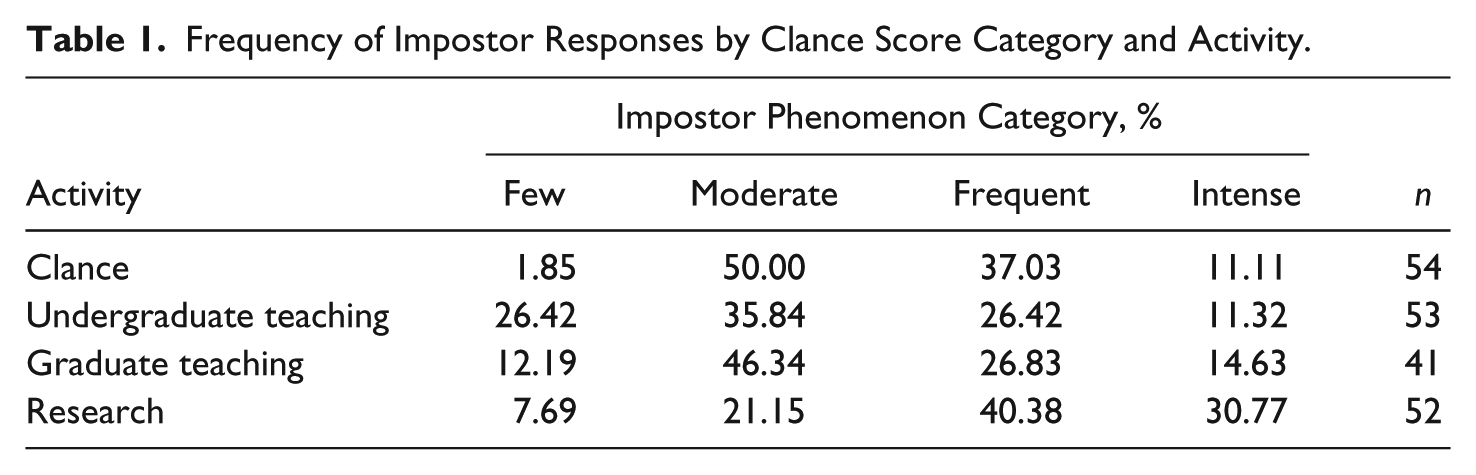
We examined the data across the four scores per participant and found no individual whose responses fell into the “few characteristics” category for all four scales. However, three participants had “few characteristics” scores for three scales, three participants for two scales, and nine participants for only one scale. Two participants had responses placing them into the “intense” category for all four scales, and three had responses reflecting intense feelings for three scales. The remaining 34 participants’ scores ranged across the moderate, frequent, and intense scales.
To examine how the participants’ responses to the four scales related to one another, we calculated correlations between the total scores for each possible scale pair. The correlations (r) ranged from .573 (undergraduate teaching and research) to .891 (undergraduate and graduate teaching), and all six were significant at the .01 level (see Table 2).
Pearson Product-Moment Correlation Coefficients for All Scale Pairs.
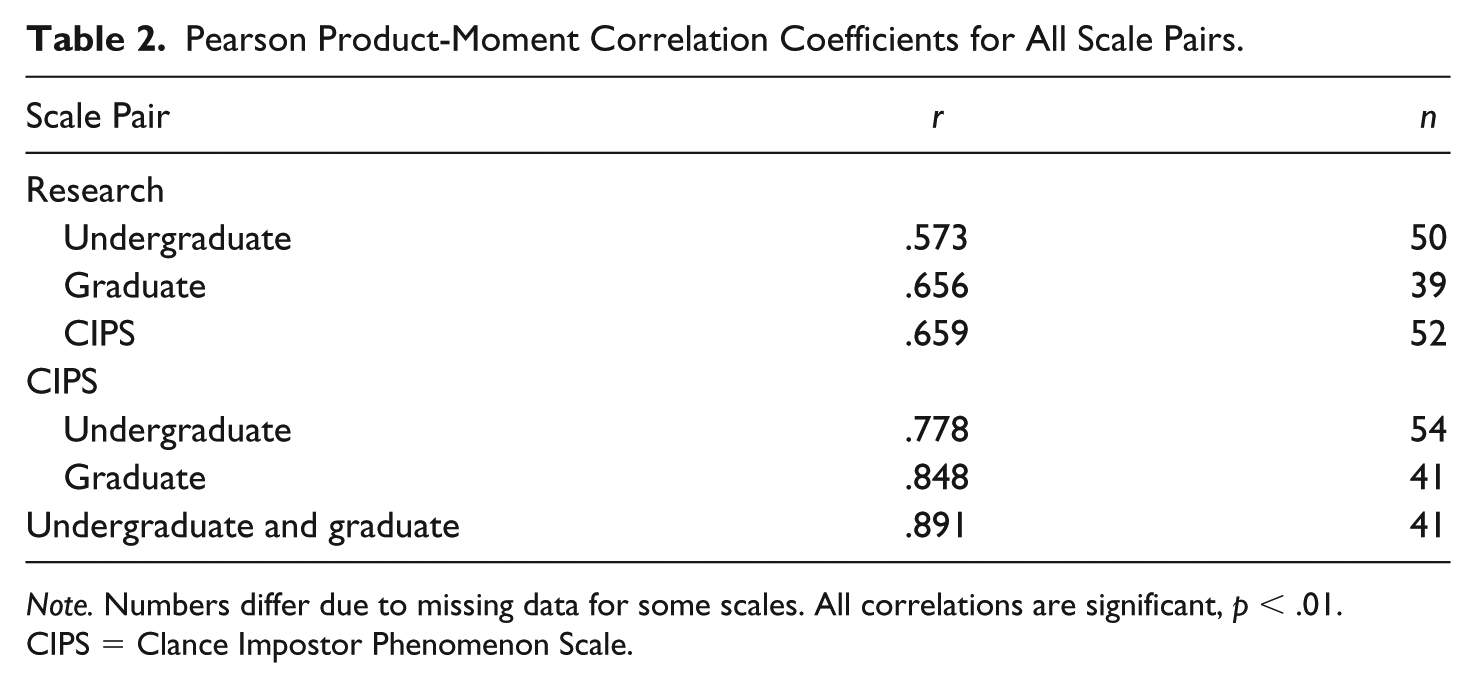
Note. Numbers differ due to missing data for some scales. All correlations are significant, p < .01. CIPS = Clance Impostor Phenomenon Scale.
Based on the results of Cronbach’s alpha computed for each of the 4 scales, internal consistency was high for each: CIPS, α = .922; undergraduate teaching, α = .955; graduate teaching, α = .957; research, α = .868. This is consistent with the findings in the literature cited previously.
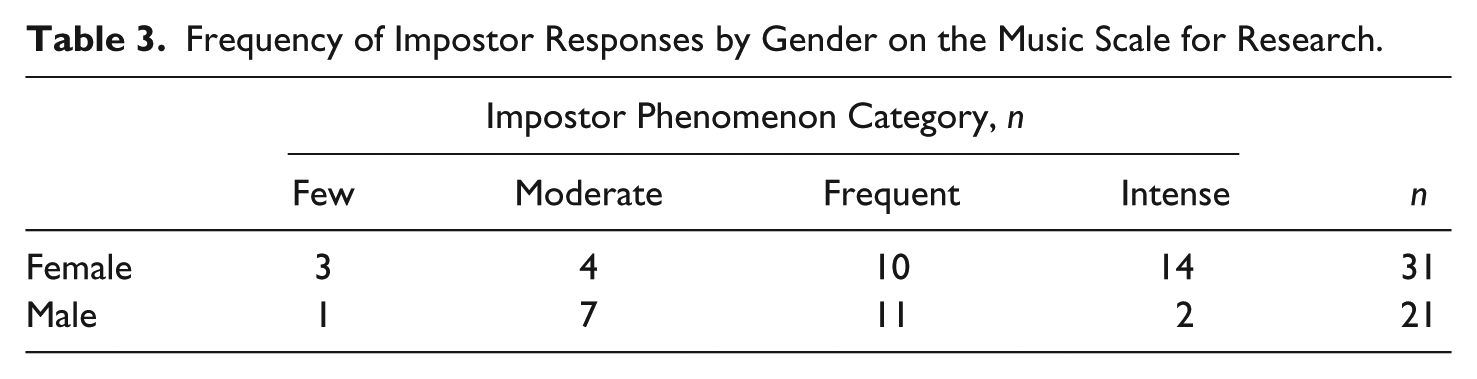
To investigate possible relationships between gender and the categories into which responses fell, we calculated two-way chi-square coefficients by gender and response category for each of the four activity scales. The only comparison resulting in a significant difference was for research, χ2(3) = 9.28, p = .026 (see Table 3). Responses of 24 of the 31 female participants (77.42%) fell into the frequent or intense category, while only 13 of 21 males’ responses (61.90%) did the same.
Frequency of Impostor Responses by Gender on the Music Scale for Research.
We wanted to get an idea of the research productivity of the sample to see if there might be a relationship to their IP feelings regarding research. The total number of products (publications, presentations) claimed ranged from 0 to 48, with a mean of 14.91 and a large standard deviation of 10.63 (see Table 4). The correlation between number of products and the total of the responses to the Research Scale items was negligible, r = −.043, p > .05.
Productivity Items per Participant and Percentage Responding None.
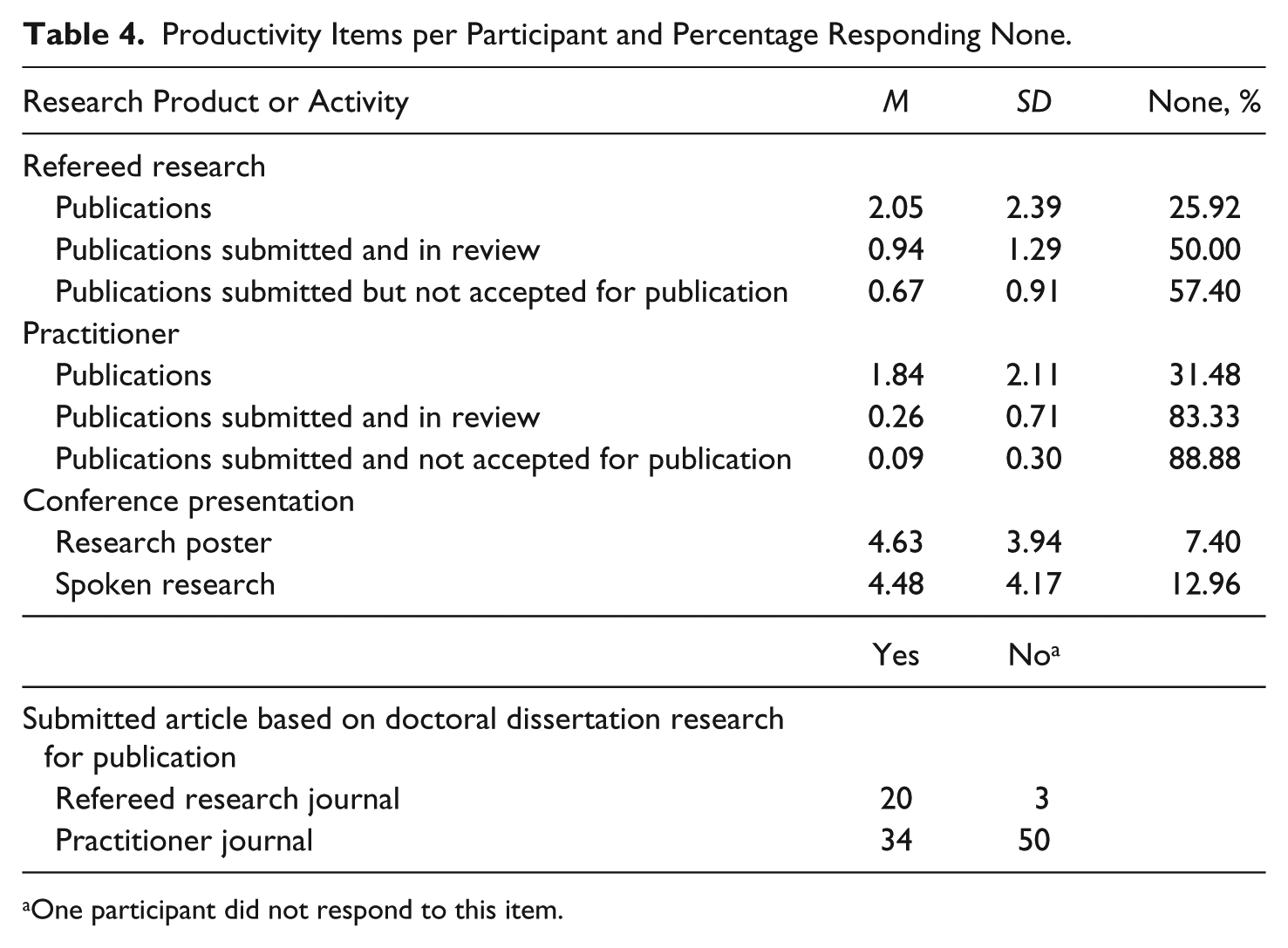
One participant did not respond to this item.
Twenty-three participants chose to give responses to one or more of the “optional comments” items. Many comments expressed the respondent’s unique circumstances, situation, or feelings, and several expressed some fairly strong emotional reactions. We believe that the comments are more informative and impactful when viewed in context, so rather than distill them into numerical summaries, we provide an appendix that contains information about each participant who commented, in addition to the comments provided (see Appendix B in the online version of this article). The information reported includes the individuals’ years of college teaching, gender identification, scores and levels for the four IP scales, and the section after which they made the comments.
Discussion
The responses of the early career music education faculty who participated in this study indicate that all participants experienced IP feelings on at least one of the scales, with many of the responses falling into the moderate and frequent ranges. These results are consistent with the findings in the extant research for faculty members in various academic fields (Bronstein & Farnsworth, 1998; Clance & Imes, 1978; Hutchins, 2015; Knights & Clarke, 2014; Topping & Kimmel, 1985), although given the difficulty of determining a response rate, the extent to which they are representative of the population of early career music teacher education faculty is unclear.
Impostor feelings can be debilitating, as described in the literature review, so findings such as these should be worrisome to the community of music educators in higher education. Given the body of research that has identified strong IP feelings among doctoral students and the responses of our participants who were only a few years past their doctoral studies, it is likely that music education doctoral students would also be found to exhibit IP feelings. Further research with that population seems warranted. One of the key remediation strategies noted in the literature is for those with IP feelings to identify these feelings and to learn that they are not alone (Craddock et al., 2011; Cisco, 2015; Hoang, 2015; Hutchins, 2015; Jöstl et al., 2012) and are to some extent even normal (Chrisman et al., 1995). Disseminating the results of IP studies in music education may help graduate students, faculty, and doctoral advisors recognize, share, and discuss these feelings openly, because “providing space and opportunities for students to have healthy dialogue can afford students the support they need to be successful” (Hoang, 2015, p. 46). Other strategies that have been found successful to remediate these feelings of inadequacy for doctoral students include interventions related to academic literacy—teaching the students early in their program to be literate in the language and discourse of their field, including explicit instruction in how to read and understand research articles and how to write literature reviews (Cisco, 2015).
The results of this study indicate that these early career music education faculty members were the most comfortable in their role as teachers. Of course, most people who enter music education doctoral programs are already experienced school music teachers, so they have honed their teaching skills and developed confidence in their instructional abilities. It is not surprising that the participants’ scores indicated the lowest levels of IP feelings for undergraduate teaching. Undergraduate teaching often gets practiced in graduate school, where many doctoral candidates hold graduate teaching assistantships, and music education doctoral students have been found to be “confident in their ability to effectively train and mentor future K–12 music teachers” (Martin, 2016, p. 21). Doctoral students rarely gain substantial and consistent experience teaching graduate coursework, given credential constraints and requirements of graduate faculty status at most universities (Conway et al., 2016; Kelly & VanWeelden, 2016). Thus, lack of experience likely explains why these early career faculty members would be less secure in teaching graduate courses. One participant noted, “I feel much less confident in my graduate teaching. The course material in my graduate class is mostly material that I only recently learned myself,” and another stated that the “only dimension of my university position for which I felt unprepared” was mentoring graduate research. On the basis of their research, Conway et al. (2016) concluded that “students (and the faculty advising the graduate programs) benefit from being intentional about preparation for graduate teaching” (p. 59). They provided ideas to help prepare doctoral students to teach graduate students, including giving guest lectures in master’s-level classes, observing and providing feedback to master’s student research, and working to become very comfortable with and reflect on the music education content. Cisco (2015) explained the importance of mentoring faculty members to work with graduate students: “Without such mentoring, graduate departments risk fostering a ‘blind leading the blind’ departmental culture, one that likely has negative effects on both instructors and students” (p. 129).
A majority of our respondents demonstrated frequent and intense IP feelings related to their role as a researcher. This was more noticeable among the responses of the female participants, consistent with findings in the literature reviewed (Clance & Imes, 1978; Clance & O’Toole, 1988; Cokley et al., 2015; Harvey, 1981; Jöstl et al., 2012; Kumar & Jagacinski, 2006; Topping & Kimmel, 1985). The traditional components of the graduate school curriculum—such as making oral presentations in class, attending and presenting a poster at a national conference, and writing a review of literature (Rohwer & Svec, 2014), considered important for preparing students for research expectations of university faculty—likely are not sufficient. Research projects completed while in graduate school, including the thesis and dissertation, are usually not products of independent work by the student. It should not be surprising that early career faculty members do not feel confident in their research skills when they are away from direct support of their mentors. One participant noted that having “very little experience writing/submitting articles in graduate school (none) which left me on my own to figure out that process.” Rohwer and Svec (2014) suggested that “practice with important research questions, reviewing literature, and using descriptive statistics may all be a part of an authentic process of working as a coauthor or simply seeing the process of article/topic development modeled with mentor faculty” (p. 62). Faculty involved in doctoral student preparation should consider ways to maximize student engagement in research projects and submission processes throughout the doctoral program. This might include opportunities to assist more advanced researchers with their work and formal feedback about their research throughout the program, not just at the dissertation stage (Major & Dolly, 2003).
If at least some early career faculty members largely feel like impostors in the realm of research, this may contribute to anxiety, procrastination, and fear of rejection, perhaps explaining the failure to publish an article based on the dissertation, seemingly an almost ready-to-go publication possibility, or to continue research productivity (Cisco, 2015; Humphreys, 2006; Knights & Clarke, 2014; Sims, 2016; Sims & Cassidy, 2016). As one participant in this study described some of these feelings, “I wish I could identify my mental blocks and hurdles with completing research through to publication.” Knights and Clarke (2014) explained that “a great deal of fragility surrounds the submission of articles to refereed academic journals, where repeated rejection is experienced, and where emotional resilience is essential for survival” (p. 344). One participant described experiences with the publication process as “terrible” and the remarks of reviewers “scathing, condescending, and arrogant” such that it was difficult to remain motivated to improve the manuscript. One suggestion includes faculty sharing with graduate students their own successes, struggles, and failures with the review process (Cisco, 2015). Perhaps completing a multiproject dissertation that results in three publishable journal articles, rather than a traditional monograph that needs to be reduced to article length for journal publication, would be a way to accomplish this (Sims & Cassidy, 2016). As Sims (2016) noted, “if we want to keep the community of actively publishing researchers growing, we should think about how best to prepare young researchers to be as successful as possible in conducting their research, from the moment they select their first research topics” (p. 267).
The finding that there was no relationship between participants’ Research Scale scores and their reported productivity numbers is consistent with the premise that IP reflects irrational fears and that strong IP feelings may occur among people who would be considered highly successful in their peer groups. The extent to which impostor feelings and their manifestations do or do not actually interfere with the productivity of music education researchers would be informative to investigate. Although IP feelings are generally discussed as having a negative impact, perhaps mild or moderate feelings may actually serve as a source of motivation for some individuals, with positive results. As one participant noted in response to this study, “typing all those ‘0’s in regard to publications and research was quite scary, and also motivating.”
The role of well-prepared and caring mentors and role models seems critical to help early career faculty and doctoral students assuage or overcome IP feelings and become socialized into faculty roles (Cicso, 2015; Conkling & Henry, 2008; Hutchins, 2015; Jöstl et al., 2012; Rohwer & Svec, 2014; Sims, 2016). One author has gone so far as to suggest that “the biggest single cause of research inadequacy among music education faculty is that some studied with inadequately trained, inexperienced researchers” (Humphreys, 2006, p. 192). It seems logical to assume that the best mentors and advisors would be faculty who manage their time well and prioritize being productive and who discuss this with their mentees or students. The question of what skills and knowledge qualify someone to become a faculty mentor or doctoral advisor would be an interesting one to investigate. Early career faculty or doctoral students also may benefit from working with one another in mentoring and supporting roles, with activities such as peer mentoring or participating in a professional development community or writing group (Draves & Koops, 2011; Hoang, 2015; Pellegrino et al., 2014). It was disheartening that participants in this study mentioned a “difficult advisor” or “dissertation chair disowned me” when asked to provide additional comments. Doctoral students who wish to develop into researchers might be advised to seek a graduate program where current and former students and faculty remain productive and to find an advisor who is an active researcher and who will remain in the mentor role after graduation. Hiring committees and administrators seeking new faculty whom they hope will remain active in research may want to consider the mentoring that the prospective candidate has had in this regard and/or their ability to provide a faculty member to serve as a role model and mentor.
We did not consider additional variables that may affect IP feelings in early career faculty. Some of the open-ended responses included comments regarding heavy teaching loads as a result of non–tenure track positions or institutions with a heavier teaching mission, making it difficult to find time for research. The load distributions reported here were generally consistent with those reported by Chandler and Russell (2012), within a few percentage points for research and service. Although their participants reported an average teaching load of 74% as compared to the average load of 63% reported here, Chandler and Russell did not include an “administration” workload category, which likely accounts for the difference. Given the reported breakdown of workloads, it appears that a number of participants were not teaching at institutions considered research intensive, which may have had an effect on their IP responses relating to research. Perhaps some took these jobs because they preferred to emphasize teaching versus scholarship or for other personal job preferences and opportunities, but perhaps some did not have strong-enough publication records to qualify for research-intensive jobs. Strategies should be considered to support recent doctoral graduates who wish to develop or remain active as researchers but who begin their careers in jobs that do not support that goal.
Other aspects of interest for further study might include the relationship of the IP measures to measures of identity, self-efficacy, or social comparison. Exploring the gender difference revealed on the Research Scale could help provide a more complete understanding of how this phenomenon affects music educators. Impostor feelings with respect to age or longevity in the profession could present a very interesting possible research question, as Hutchins (2015) reported that IP levels were higher for untenured faculty. It also could be valuable to consider whether IP affects undergraduate music education students as they progress through the various components of their program and enter the profession and, if so, how to help them identify and overcome these feelings.
Although this study had a relatively modest number of participants, the results are very much consistent with findings of previous literature and with what we know or have observed about doctoral preparation. When this topic is discussed with graduate students and colleagues, it appears that these issues resonate strongly and result in many providing anecdotes about their experiences of impostor feelings. To the extent that individuals suffering from IP feel relief by labeling these feelings and recognizing that many of their peers and colleagues share similar feelings, we expect that bringing this finding to the attention of the music teacher education community may be helpful. We hope that this study will provide a catalyst for discussions among colleagues, doctoral advisors, and faculty mentors to help them identify and provide assistance to those who may be struggling with impostor feelings.
Supplemental Material
DS_10.1177_0022429418812464 – Supplemental material for Impostor Phenomenon Responses of Early Career Music Education Faculty
Supplemental material, DS_10.1177_0022429418812464 for Impostor Phenomenon Responses of Early Career Music Education Faculty by Wendy L. Sims and Jane W. Cassidy in Journal of Research in Music Education
Footnotes
Declaration of Conflicting Interests
The authors declared no potential conflicts of interest with respect to the research, authorship, and/or publication of this article.
Funding
The authors received no financial support for the research, authorship, and/or publication of this article.

Author Biographies
References
Supplementary Material
Please find the following supplemental material available below.
For Open Access articles published under a Creative Commons License, all supplemental material carries the same license as the article it is associated with.
For non-Open Access articles published, all supplemental material carries a non-exclusive license, and permission requests for re-use of supplemental material or any part of supplemental material shall be sent directly to the copyright owner as specified in the copyright notice associated with the article.
