






Abstract
Research indicates that youths’ experiences in school-based music ensembles are shaped by a complex array of social and musical variables; however, the specific mechanisms promoting prosocial behaviors in these settings remain underexplored. Using an explanatory sequential mixed methods design (Strand I: quantitative: N = 113 ; Strand II: qualitative: n = 15), I examined the prevalence of prosocial and antisocial-aggressive behaviors within a high school band program. Results from Strand I indicated that antisocial-aggressive behaviors were relatively low compared to previous research, although relational aggression and attitudes toward bullying differed significantly according to participants’ self-reported assigned sex at birth. Strand II findings corroborated these low levels of aggression while revealing a nuanced distinction between bullying and teasing, which participants largely categorized as lighthearted. Critically, these data revealed high prevalence rates of prosocial behaviors, including peer connectedness, willingness to intervene in bullying episodes, and upstander behaviors, suggesting the band functions as a site for school belonging. Qualitative themes of trust and community further indicate that the band program fosters a sense of psychological safety, which facilitates social resiliency. These findings offer implications for music educators seeking to cultivate inclusive “cultures of care” and provide a baseline for understanding the relational benefits for long-term ensemble participation.
Introduction
Within the intricate landscape of adolescent social dynamics, school-based music ensembles offer a unique arena for fostering prosocial behavior and deep peer connections. This study examines sociomusical behavior, which is the complex interplay between musical activities and social interactions, as a mechanism for building community, collective identity, and peer support within ensemble settings (Abril, 2013; Morrison, 2001). However, the hierarchical structures and intense peer influences that promote teamwork with music ensembles can also illuminate broader, more troubling issues of peer victimization. This investigation is particularly urgent given The Centers for Disease Control and Prevention’s (CDC; 2024) reporting of rising school-based violence from 7% to 9% and bullying from 15% to 19% between the years 2013 and 2023. Therefore, the purpose of this study was to investigate the potentially paradoxical nature of youth participating in a high school wind band ensemble as both a potential protective factor fostering prosocial behavior and a possible risk factor for antisocial-aggressive behaviors. Furthermore, I sought to unravel the complex relationship between sociomusical interactions, peer victimization, and the development of prosocial behaviors among adolescent musicians. To contextualize this investigation, the following review of literature first establishes the prosocial potential and cohesive nature of music ensembles before demonstrating how sociomusical hierarchies and peer influences may inadvertently foster environments susceptible to peer victimization.
Prosocial Behavior and Positive Youth Development Research in Music Education
Arts and music classrooms may be generally perceived as safe learning spaces, and the National Association for Music Education (NAfME) has validated this perception by issuing a formal statement relating to safety, suggesting that music classrooms are a “safe haven” for musicians (NAfME, 2012). Accordingly, researchers in music education have demonstrated several prosocial behaviors present among school-age youth, and some scholars have defined these behaviors as “voluntary actions that are intended to benefit others” (Ilari et al., 2020, p. 399), including a wide range of behaviors, such as helping, sharing, comforting, and cooperating, as a means of prioritizing the needs of others (Siu et al., 2012). Prosocial behavior is considered a core indicator and an outcome of positive youth development (PYD; Damon, 2004).
PYD provides a strength-based framework for examining sociomusical behaviors, asserting that all young people possess the capacity for healthy social growth through musical involvement (O’Neill, 2006). Within this framework, Ilari and Cho (2023) used the five Cs model of PYD to demonstrate how musical engagement impacts a middle school student’s competence and school connectedness, which may serve as a protective factor against the harmful effects of peer victimization and bullying (Rawlings, 2017). Furthermore, key findings indicated significant differences in PYD scores by grade and gender, with factors such as enjoying music and participating in extracurricular activities predicting varying developmental outcomes. Given that collective music-making fosters prosocial behavior by requiring active synchronization and cooperation necessary to address complex interpersonal relationships (Yang et al., 2025), it appears that empowering youth to contribute meaningfully to their relationships, adopt prosocial defending behaviors, and exercise moral agency in the face of victimization can transform the music ensemble into a mechanism for fostering a safer and more inclusive school climate (National Endowment for the Arts, 2015; Rawlings & Young, 2021).
Music Ensemble Social Cohesion and Empathy Development
Building on this transformative potential, school-based music ensembles provide a comprehensive context to facilitate youths’ peer connectedness, feelings of belonging, and group social cohesion (Matthew & Kitsantas, 2007; Rawlings, 2017; Rawlings & Stoddard, 2017). Dagaz (2012) conducted an ethnographic study of two midwestern high school marching bands over a 2-year period, revealing prominent prosocial behaviors among band members. The research documented the development of a familial “affective commitment . . . through emotional connections to others in the marching band, leading to a high level of trust and acceptance” (Dagaz, 2012, p. 450). This “culture of care” is not limited to instrumental music ensemble settings; research in choral music ensemble contexts has similarly demonstrated that male adolescent singers develop deep interpersonal bonds that challenge traditional social barriers (Parker, 2016).
These findings draw attention to the potential of music ensembles to foster strong interpersonal bonds and create supportive communities; however, these social outcomes are often rooted in the distinct requirements of the art form itself. Beyond the broad social structure of the ensemble, the act of musical synchronization 1 may serve as a primary driver of these behaviors. For instance, Kirschner and Tomasello (2010) found that the shared intentionality required for joint music-making significantly increases subsequent cooperation among peers. This synthesis of trust and shared musical action highlights how school-based music ensemble settings may function as essential venues for fostering social cohesion and collective identity that define a student’s school experience.
Central to this collective identity is the development of empathy, a key psychological factor that conceptually links group music participation to positive social behavior. Research has demonstrated that long-term music training positively influenced youths’ empathy, sympathy, and prosocial behaviors. As a multidimensional construct, empathy serves as a strong predictor of prosocial behaviors (Roberts & Strayer, 1996) and comprises three distinct components: affective (feeling others’ emotions), cognitive (taking others’ perspective), and motivational (desiring to promote others’ well-being or alleviating their suffering; Decety, 2015).
Although research specifically examining empathy development within school-based music ensembles remains limited, broader studies of musical group interactions show that collaborative music activities, such as music ensembles, can significantly improve holistic empathy. Rabinowitch et al. (2013) found that children experiencing long-term musical group interactions self-reported higher empathy scores than the control group at the end of their investigation. Moreover, Saarikallio and Erkkilä (2007) explained that music ensemble participation during adolescence was an effective means of developing perspective taking, which is a cognitive skill that can actively thwart aggressive behavior.
Altogether, these findings suggest that school-based music ensemble participation may function as a powerful developmental tool for youth, enabling them to cultivate deeper empathy and prosocial skills. By engaging in collaborative musical activities, adolescents may develop a more nuanced understanding of empathy, potentially mitigate aggressive tendencies, and foster more compassionate interpersonal interactions.
Sociomusical Hierarchy and Peer Group Influence
Sloboda (2005) suggested that ensemble participation “can be a ready source of conflict between people,” as is the case with the hierarchical configuration of roles among performing musicians (p. 329); however, unofficial social systems of student-regulated hierarchies are often found in American school music ensembles, frequently based on musical talent and/or level of dedication to the ensemble (Adderley, 2009). Typically, role structure within a school music ensemble allows students who demonstrate advanced technical ability, leadership qualities, and interpersonal skills to be placed into positions of power over students who do not possess these characteristics (Abril, 2013). This dominant tradition of a music ensemble’s sociomusical hierarchy may be important to the group’s (or individual’s) perceived well-being (Adderley et al., 2003). Although there are rich traditions, values, and beliefs embedded in the school music ensemble culture, tensions may also exist with regards to certain aspects of ensemble culture.
In addition to examining the prevalence and motivations for sociomusical behavior, researchers have examined peer group influence. Studies have highlighted the pivotal influence of peer groups on shaping adolescents’ attitudes toward antisocial-aggressive and prosocial behaviors. This influence can become particularly pronounced during early adolescence, a critical developmental period when young people increasingly allocate more time to peer interaction (Brown & Larson, 2009; Steinberg & Monahan, 2007). Qualitative research in music education has documented the social strata inherent within secondary music ensembles, in which peer groups became increasingly stable and exclusive, with a clear social hierarchy (Abril, 2013; Adderley, et al., 2003). Taken altogether, peer groups are an important manifestation of one’s social status and self-identity and “school [music] ensembles are not just classes or performing groups, but guardians of their own specific culture, a culture that informs and enriches the lives of their members” (Morrison, 2001, p. 24).
Although empathy and collective identity may indicate a cohesive social climate, these psychological constructs are inextricably linked to the prevailing sociomusical hierarchies and structural norms of the group. The same shared intentionality and synchronization that foster deep interpersonal bonds also necessitate a clear organization of roles and responsibilities. Consequently, the music ensemble often functions through a sociomusical hierarchy and this system where musical talent, leadership, and technical proficiency determine a student’s status and power within a group (Abril, 2013; Sloboda, 2005). Understanding this transition from individual psychological growth to group structural dynamics is essential because these hierarchies can become the foundation for complex cooperation and conversely, social exclusion.
Although sociomusical hierarchies may dictate the formal and informal structure of the high school band, the lived experience of these dynamics may be understood through the integrated lenses of school belonging and psychological safety. School belonging was defined by Goodenow (1993) as the “extent to which students feel personally accepted, respected, included, and supported by others in the school social environment” (p. 80). Within the high school band, this sense of belonging is often a product of a shared common goal. However, belonging is distinct from psychological safety, which Edmondson (1999) defined as a “shared belief that the team is safe for interpersonal risk-taking” without fear of humiliation or social retribution (p. 354). These constructs allow for a more granular investigation into the social climate of the music ensemble. By distinguishing between the collective experience of belonging and the individual necessity for psychological safety, researchers can better evaluate the conditions under which prosocial behaviors are fostered or suppressed within established social tiers.
School Violence and Peer Victimization Research in Music Education
Although the music classroom is frequently referred to as a “safe haven,” I must reconcile this perception with the alarming prevalence of school violence and bullying reported in national data. Researchers report that school violence remains a significant public health concern, with data showing concerning trends in various forms of aggressive behavior among students. During the 2021–2022 school year, approximately 857,500 violent incidents were recorded in United States public schools, with 67% of schools reporting at least one violent incident (Burr et al., 2024). Although reports often identify “unsupervised areas,” such as hallways, cafeterias, and playgrounds, as the primary sites for victimization (Burr et al., 2024), there is a notable lack of disaggregated data specifically isolating the music ensemble environment. These data underscore the ongoing challenge of school violence, encompassing a range of behaviors including bullying, hate crimes, sexual harassment, and physical attacks or fights.
Music education researchers have recognized peer victimization and bullying as significant challenges confronting school-age musicians (Elpus & Carter, 2016; Rawlings, 2017; Silveira & Hudson, 2015). Historically, defining these distinct terms has been a challenging task that is complicated by untangling the layers of nuance associated with perpetrators’ intentions, group power dynamics (real or perceived), and repetitive behaviors. For the purposes of this study, “peer victimization” is understood as a broad term for various negative peer interactions, including physical (e.g., hitting, kicking), verbal (e.g., taunting, teasing), and social (e.g., rumor spreading, social network manipulation) aggression (Hong & Espelage, 2012). In contrast, the CDC’s National Center for Injury Prevention and Control (U.S.) Division of Violence Prevention (2019) explicitly defined bullying as a subcategory of youth violence characterized by unwanted aggressive behavior, an observed or perceived power imbalance, and repetition (or a high likelihood for it). Research by Hong and Espelage (2012) highlighted that although bullying involves victimization, not all victimization meets the technical criteria for bullying, specifically, the “power imbalance” and “repetition” elements.
The paradox of the music ensemble becomes most visible when reading the results from Elpus and Carter (2016), who examined data from the 2005, 2007, 2009, 2011, and 2013 data sets of the School Crime Supplement to the National Crime Victimization Survey to determine the prevalence of reported school victimization through physical, verbal, and relational aggression among U.S. performing arts students. Elpus and Carter’s research revealed that male students involved in music and theater faced significantly higher risks of bullying compared to their non-arts peers. Specifically, these students experienced a 69% increased likelihood of face-to-face bullying and a 63% higher chance of cyberbullying victimization. These findings highlight a critical tension in which the same “specific culture” that Morrison (2001) described as enriching can also become a site of exclusion. When the sociomusical hierarchies previously reviewed intersect with broader school dynamics, the music ensemble may inadvertently transform from a protective space into a potentially socially risky environment for those youth who do not fit the established social or musical norms.
Whereas Elpus and Carter (2016) illuminated the broad prevalence of victimization, other researchers have investigated the specific behaviors and social pressures that sustain these environments. For instance, Silveira and Hudson (2015) examined hazing within collegiate marching band participants (N = 1,233), revealing a complex relationship between observed behavior and social consequences. Although many of their participants (71.2%) did not witness hazing, some reported specific aggressive acts, such as being “yelled, cursed, or sworn at” (Silveira & Hudson, 2015, p. 12). It is notable that prevalence rates for these behaviors were low (8%). Participants who observed hazing reportedly remained silent, citing a fear of social retaliation or peer rejection as their primary deterrent. Because peer victimization and hazing produce similar physical and psychological trauma (Acquaviva, 2008), these findings emphasize the potential power of a peer group in regulating social behavior. Therefore, there is a clear need to further explain how the social strata within a high school music ensemble may shape both the occurrence and the concealment of aggressive behaviors.
Although Silveira and Hudson (2015) explicated the fear of social retaliation in collegiate settings, these dynamics often take root during the critical development time frame of middle school (ages 10–15). Rawlings (2017) addressed this void in the research by investigating the relationship between music ensemble participation, school connectedness, and peer victimization among middle school students. He reported that although youth enrolled in music ensembles are frequently associated with higher levels of school connectedness compared with youth not enrolled in a music ensemble, this social bond does not inherently serve as a protective factor against peer victimization. In fact, Rawlings’s findings suggest that the relationship between belonging and victimization is complex because feelings of connectedness may be secondary to the prevailing social strata. Although these social dynamics begin to materialize in middle school, they may likely set the stage for the stable and often exclusive peer groups observed in older cohorts. Given that middle school and collegiate settings (Silveira & Hudson, 2015) have received scholarly attention, the high school music ensemble represents a critical yet underexamined context.
The Current Study
The review of literature illustrates a fundamental tension within music ensembles where the same social cohesion that fosters prosocial potential can be used to marginalize peers or mask victimization when governed by rigid sociomusical hierarchies. Although the National Endowment for the Arts (2015) and O’Neill (2006) framed school-based music education instruction as a vehicle for PYD, the prevailing sociomusical structures can create a learning environment where certain students are excluded or targeted (Abril, 2013). Current research suggests that empathy and social cohesion may fail to fully mitigate the risk of bullying inherent in specialized social environments in performing arts contexts (Elpus & Carter, 2016; Rawlings & Young, 2021).
This potential juxtaposition necessitates a closer examination of how students navigate these dual realities. By investigating both the prosocial and the aggressive behaviors within a single ensemble, we can better understand the mechanism of sociomusical influence on adolescent well-being. Therefore, the purpose of this study was to investigate the potentially paradoxical nature of youth participating in a high school wind band ensemble as both a potential protective factor fostering prosocial behavior and a possible risk factor for antisocial-aggressive behaviors. This mixed methods study was designed to bridge the gap in the literature by addressing the following research questions:
Method
Design
Researchers have demonstrated new understandings about peer victimization and interpersonal violence in the past four decades; however, the overreliance on quantitative studies has limited our understanding of certain aspects of these behaviors and the bullying phenomenon. Torrance (2000) demonstrated that the lack of qualitative research on peer victimization (including bullying) was notable due to the social context associated with these behaviors and that “[qualitative research] offers the advantage of reaching an implicit understanding of a group and interpreting experiences from the participants’ own point of view” (p. 16). Considering the advantages of combining quantitative and qualitative research methods, an increasing number of researchers have selected to utilize a mixed methods research design to study bullying (Aziz et al., 2024; Bjereld et al., 2024; Snodgrass et al., 2024).
Given the purpose of the current study, I employed an explanatory sequential mixed methods research design. An explanatory sequential design is a two-phase approach that prescribes that a researcher collects quantitative data and then gathers qualitative data. Information compiled in the qualitative research phase supports and explains the quantitative data collected in the first phase (Creswell & Clark, 2017). McMillan (2015) expounded on this by stating, “explanatory sequential designs are used when the purpose of the study is to elucidate, elaborate on, or explain quantitative findings” (p. 373). Using an explanatory sequential design was appropriate for this study because it offered a framework for triangulation and methodological complementarity. The qualitative interview data explained the results from descriptive and inferential statistics, thereby providing a comprehensive and nuanced understanding of the sociomusical behaviors of youth in a high school band program. Figure 1 displays the data collection procedure.
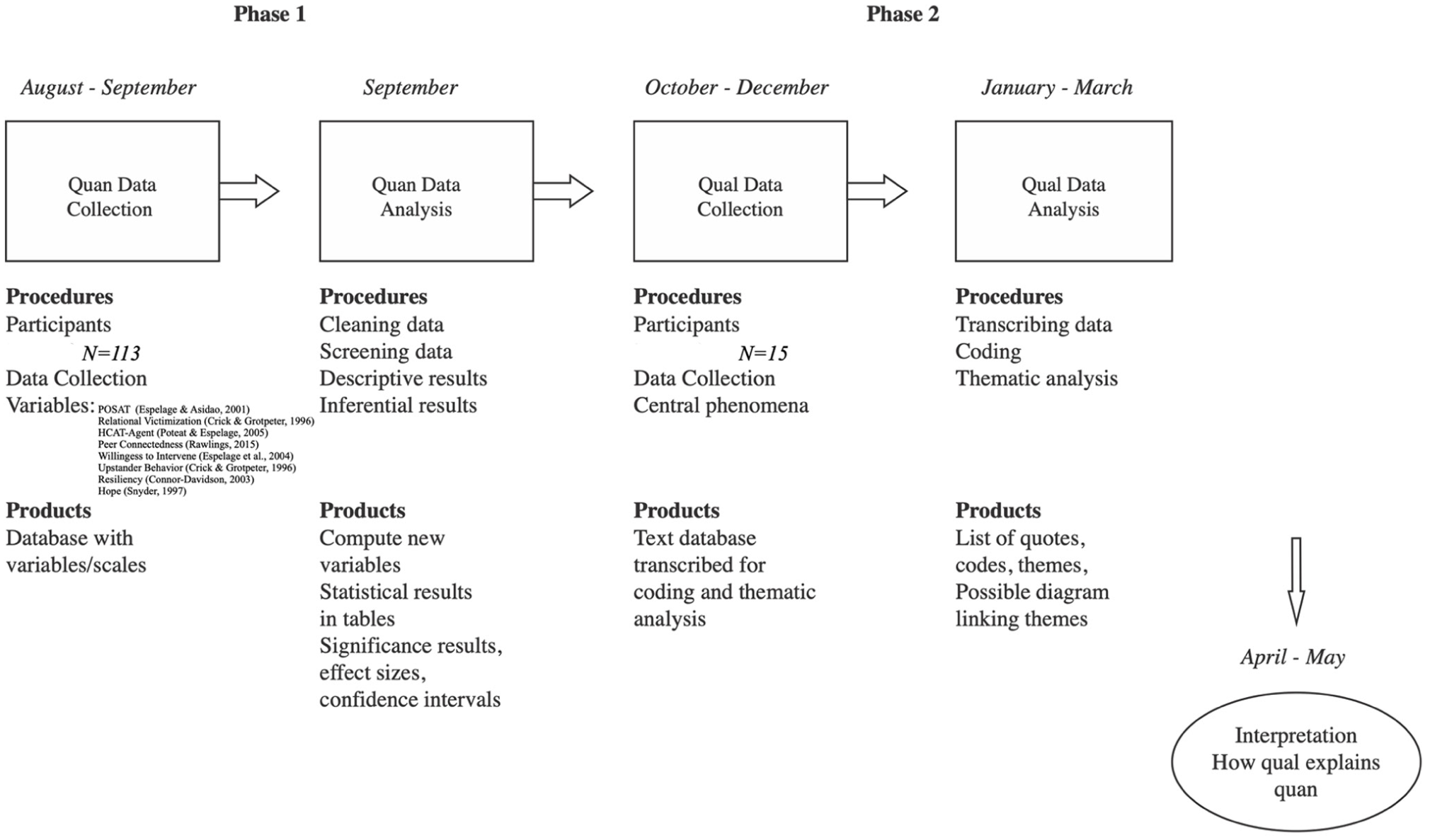
Data Collection Procedure.
Research Setting
This study took place in a suburban school district located in the intermountain West region of the United States. In 2019, this suburban area had a population of just under 294,000 residents with a median annual household income near $120,000 (U.S. Census Bureau, 2020). All five high schools in this suburban school district have instrumental music programs, and I conveniently selected one high school to participate in this study based on school building administrator and band teacher reciprocal interest and accessibility of youth participants. Within the high school, there were multiple music courses, including four band courses, four choir courses, two orchestra courses, one music theory course, and one marching band class that met after the school day. During the investigation, the school and district did not implement behavioral interventions, such as social-emotional learning or positive behavioral intervention and supports, within the student population. The University Institutional Review Board granted permission for this study, and the school district approved the study procedures alongside the questionnaire items.
Strand I: Quantitative Design
The goal of Strand I was to collect and analyze data from youth enrolled in a high school band program regarding the self-reported prevalence of antisocial-aggressive and prosocial behaviors.
Questionnaire development and pilot study
I developed the questionnaire following established standards in survey methodology (Stapleton, 2019). To refine the instrument, I pilot-tested the questionnaire with a small sample of high school band students (n = 3) from a neighboring district. These students helped measure completion time and participated in approximately 30-minute cognitive interviewing sessions regarding the items. Based on their feedback, I made minor modifications to the instructions and excluded their responses from the final data file. I selected measures that previous studies had already developed and validated. For the current sample, I calculated Cronbach’s alpha coefficients to measure internal consistency, which ranged from .79 to .91.
Participant sampling and consent procedures
Participants 2 (N = 109) were consenting 10th-grade (n = 39), 11th-grade (n = 49), and 12th-grade (n = 21) students enrolled in wind band courses during the 2018–2019 school year, and the current sample yielded a response rate of approximately 96.4%. Almost all students (96.3%) reported having attended the current school since the beginning of the school year, indicating a lower mobility rate of band students than overall school building percentages in the district (range = 3.9%–6.3%). Approximately 52.6% of the participants reported as male and 47.4% as female (only a binary response option was approved by the school district). Most participants reported having a mother figure (93.2%) and father figure (89.4%) in their lives.
A letter outlining the procedures of the study notified parents/guardians that their student was invited to participate, and they were asked to sign a parental consent form. For participants under the age of 18, written parental permission was required. Participants were assured that their answers would always remain anonymous, and those who elected to not participate or whose parents did not want them to participate went to another supervised classroom. Participants could withdraw from the research at any time, and participation in the present study was voluntary.
Questionnaires were electronically administered, and multiple safeguards were implemented to protect participants from being negatively affected by the content of the questionnaires. 3 Following a brief section of demographic questions, participants were asked to estimate and describe their experiences with and perpetration of multiple behaviors associated with prosocial and antisocial-aggressive behaviors. At the end of the questionnaire, I provided a question for the participants to volunteer to continue to Phase II of the study and asked that they write their name if they wished to be invited for an individual and focus group interview.
All methods were performed in accordance with the relevant guidelines and regulations related to ethics approval. A trained research assistant and I collected data in a school building computer laboratory. Participants were first informed about the general nature of the investigation. Next, I made certain that participants were sitting far enough from one another to ensure confidentiality, and they were then allowed to begin the questionnaire and continue at their own pace. The questionnaire took the participants approximately 15 minutes to 20 minutes, on average, to complete.
Measures
Demographic variables
Participants voluntarily reported their assigned sex at birth, 4 grade level, race, music class enrollment, primary instrument, school building attendance, and whether they had a mother figure or father figure in their life.
Positive attitudes toward bullying
The University of Illinois Positive Attitude Toward Bullying Scale (Espelage & Asidao, 2001) includes four items where youth are asked how much they agree or disagree with statements related to their attitude toward bullying. Response options were strongly disagree, disagree, agree, and strongly agree. Higher scores on this scale were interpreted as having a positive or favorable view of bullying, with a possible scoring range of 4 to 16. The scale’s Cronbach’s α was .65 in a middle school sample (Low et al., 2013), and I calculated a Cronbach’s α coefficient of .71 for this study.
Relational victimization
Distinct from physical or verbal victimization, relational victimization involves being the target of behaviors intended to manipulate an individual’s social reputation and interpersonal connections (e.g., spreading rumors through peers, intentional exclusion from social groups or events). Relational victimization was assessed using four items from Crick and Grotpeter (1995). Participants were asked to indicate how many times in the past 30 days they experienced a specific behavior with five responses options ranging from never to seven or more times and possible scoring range of 4 to 20. For instance, participants were asked, “When mad, other students get even by keeping me from being in their group of friends” and “Other students tried to keep me out of a friend group.” Higher scores indicated higher self-reported victimization. According to Crick (1996), the victimization subscale has good internal consistency (α = .89), and I calculated a similar score reliability (α = .84) for the current study.
Homophobic name-calling
The Homophobic Content Agent Target (HCAT) scale (Poteat & Espelage, 2005) contains two subscales that assess the extent to which individuals called other students homophobic epithets (agent; five items) and were called homophobic epithets by other students (target; five items) during the last 30 days. Response options include never, one or two times, three or four times, five or six times, or seven or more times. Poteat and Espelage (2005) recommended that participant responses be summed to create aggregate subscale scores. Possible participant aggregate subscale scores range from 5 to 25.
HCAT Agent subscale
The five-item HCAT Agent subscale measures how many times in the past 30 days a participant has called peers homophobic epithets. An example of an item is, “How many times in the last 30 days did you say the words like homo or gay to a friend?” Higher scores indicate higher homophobic name-calling perpetration. In the current study, the Cronbach’s α coefficient is .84.
Peer connectedness
Peer connectedness is defined as the subjective sense of belonging and the perception of being a valued member of a social network (Rawlings & Stoddard, 2017). The scale was developed to capture the unique social dynamics of the music ensemble setting, where collective music-making fosters distinct “intra-ensemble” bonds that may differ from general school-wide peer relationships. The scale utilizes a 4-point Likert-type response scale ranging from 1 (I have never felt this way) to 4 (I have felt this way often) to gauge the frequency of these social experiences, with a possible scoring range of 7 to 28. Sample items from the scale include statements such as “I feel like I am part of a group of friends in this ensemble,” “Other students in this class care about me,” and “I feel isolated from others in this music group” (reverse-coded). Rawlings and Stoddard (2017) computed a mean composite score across the seven items (α = .91), with the higher total indicating a stronger connection to and acceptance from peers. I calculated a similar score reliability (α = .82) for the current study.
Willingness to intervene
Espelage and colleagues (2012) conceptualized an adolescent’s willingness to intervene as a student’s self-reported intent or perceived likelihood to take action upon witnessing a bullying episode. The University of Illinois Willingness to Intervene in Bullying Episodes scale is a five-item scale developed from a series of interviews and questionnaires of students in third through eighth grades (Espelage et al., 2012). Participants were asked to what extent that they agree with statements about intervening directly or indirectly when they encounter bullying. Sample items from the scale include statements such as “If a kid is being teased a lot, I will tell an adult at my school” and “When a kid is being teased, I stick up for him or her.” Response options were presented on a 4-point Likert-type scale, and participants were asked to select one response from strongly disagree, disagree, agree, and strongly agree, with a possible scoring range of 5 to 20. Espelage and colleagues reported a Cronbach’s α coefficient of .75 for Waves 1 and 2. I calculated a similar score reliability (α = .79) for the current study.
Upstander behavior
Whereas modern literature uses the term “upstander,” Crick (1996) defined these actions as active prosocial interventions rooted in high-functioning social information processing and empathic concern. This measure includes four items assessing behaviors directed toward other peers, often referred to as caring for others. Participants were asked how often they engage in certain behaviors at school, such as “I try to cheer up other kids who feel upset or sad.” Response options were presented on a 5-point Likert-type scale, and participants were asked to select from never, almost never, sometimes, almost all of the time, and all the time. Higher scores indicated higher self-reported upstander behavior, with a possible scoring range of 4 to 20. Crick reported that a confirmatory factor analysis supported the scale’s construct validity and the scale’s Cronbach alpha coefficient of .89. I calculated a similar score reliability (α = .86) for the current study.
Resiliency
To assess psychological resilience, I employed the 10-item Connor Davidson Resilience Scale (CD-RISC-10; Campbell-Sills & Stein, 2007). Connor and Davidson (2003) defined resilience as the ability to thrive in the face of adversity. It is viewed as a “measure of stress coping ability” and a personal trait that enables an individual to bounce back from stressful events, tragedies, or trauma. Campbell-Sills and Stein (2007) described the CD-RISC-10 as a unidimensional scale that describes overall resilience. Response options were presented on a 5-point Likert-type scale, and participants were asked to select from not true at all, rarely true, sometimes true, often true, and true nearly all of the time. Higher self-reported participant scores reflected greater levels of resilience, with a possible scoring range of 10 to 50. Participants were asked how true these statements were, such as “I am able to adapt when changes occur,” “I can deal with whatever comes my way,” and “Under pressure, I stay focused and think clearly.” The scale has demonstrated strong internal consistency in adolescent populations, with reported Cronbach’s α coefficients typically ranging from .85 (Jeevarajan et al., 2025) and above. I calculated a score reliability of α = .81 for the current study.
Hope
Snyder et al. (1997) defined hope not as an emotion but as a cognitive set based on a reciprocally derived sense of successful agency (goal-directed determination) or “willpower” and pathways (planning of ways to meet goals) or “waypower.” For adolescents, Snyder et al. developed the Adult Hope Scale, and it is a six-item measure (three agency items, three pathway items). Response options were presented on a 6-point Likert-type scale ranging from none of the time to all of the time, with a possible scoring range of 6 to 36. Participants were asked how often they engage in certain thoughts at school, such as “I can think of many ways to get the things in life that are most important to me,” “I am doing just as well as other kids my age,” and “When I have a problem, I can come up with lots of ways to solve it.” The measure has demonstrated strong internal consistency in adolescent samples, with Cronbach’s α coefficients typically ranging from .72 to .86, and has shown high test-retest reliability over several months (Snyder et al., 1997).
Summary of Quantitative Results
I calculated descriptive statistics and bivariate correlations for all variables, and an examination of the correlation matrix revealed that no bivariate relationships exceeded the r > .80 threshold for multicollinearity. Furthermore, all assumptions for regressions analyses were satisfied according to the criteria established by Tabachnick and Fidell (2007). To address the first research question, I calculated descriptive and inferential statistics for all scales. To explore the potential variations in sociomusical behaviors, I conducted independent-samples t tests and one-way analyses of variance to identify mean differences on assigned sex at birth, grade level, race, music class enrollment, primary instrument, school building attendance, and whether the participants had a mother figure or father figure in their life. Table 1 displays demographic differences across antisocial-aggression measures.
Demographic Differences Across Antisocial-Aggression Measures.
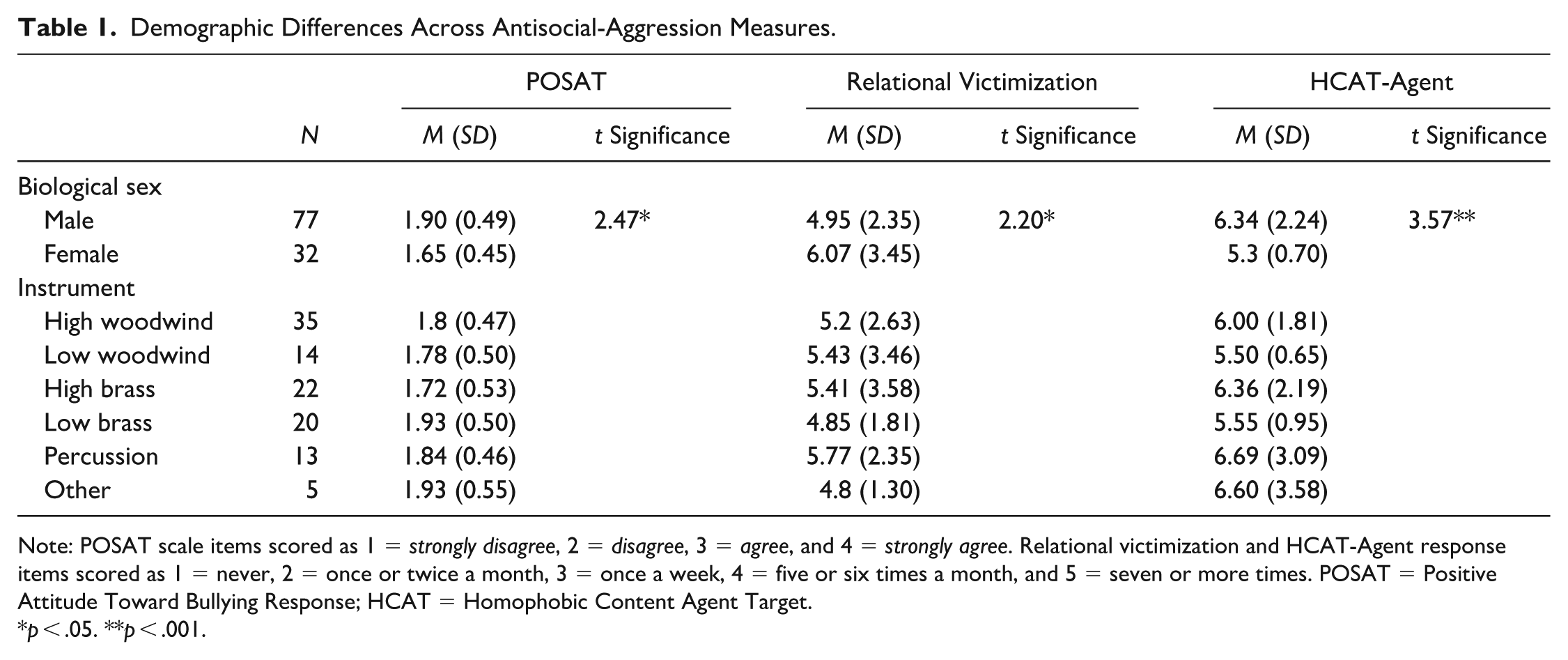
Note: POSAT scale items scored as 1 = strongly disagree, 2 = disagree, 3 = agree, and 4 = strongly agree. Relational victimization and HCAT-Agent response items scored as 1 = never, 2 = once or twice a month, 3 = once a week, 4 = five or six times a month, and 5 = seven or more times. POSAT = Positive Attitude Toward Bullying Response; HCAT = Homophobic Content Agent Target.
p < .05. **p < .001.
Throughout my analyses, I identified no significant results relating to a participant’s grade level, race, music class enrollment, school building attendance, or parental status. However, I identified significant relationships between participants’ self-reported assigned sex at birth, primary instrument, and several prosocial and antisocial-aggressive behaviors. For this sample, females (M = 6.07, SD = 3.45) reported being victims of relational aggression more often than their male peers (M = 4.95, SD = 2.35), t(114) = 2.20, p < .05. Male participants reported perpetrating more homophobic name-calling (HCAT; M = 6.34, SD = 2.24), t(114) = 3.57, p < .001, on average, compared with their female peers (M = 5.32, SD = 0.70). Despite these results, during bullying episodes, females were more likely to intervene compared with the male peers (see the supplemental document included with the online version of this article). On average, there are high levels of prosocial behavior and low levels of antisocial-aggressive behavior among the current sample of participants. 5 Table 2 displays demographic differences across prosocial measures.
Demographic Differences Across Prosocial Measures.
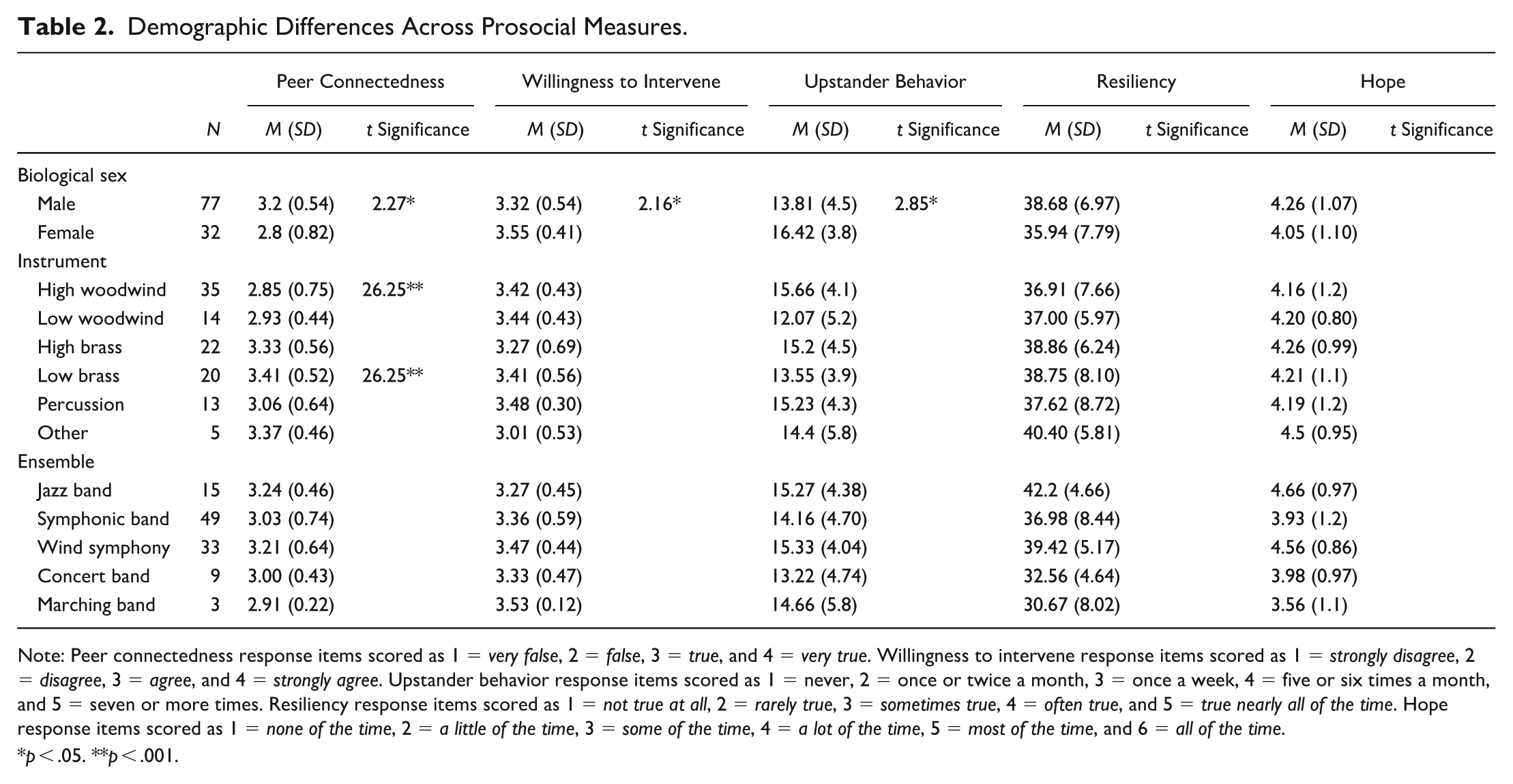
Note: Peer connectedness response items scored as 1 = very false, 2 = false, 3 = true, and 4 = very true. Willingness to intervene response items scored as 1 = strongly disagree, 2 = disagree, 3 = agree, and 4 = strongly agree. Upstander behavior response items scored as 1 = never, 2 = once or twice a month, 3 = once a week, 4 = five or six times a month, and 5 = seven or more times. Resiliency response items scored as 1 = not true at all, 2 = rarely true, 3 = sometimes true, 4 = often true, and 5 = true nearly all of the time. Hope response items scored as 1 = none of the time, 2 = a little of the time, 3 = some of the time, 4 = a lot of the time, 5 = most of the time, and 6 = all of the time.
p < .05. **p < .001.
In addition to gender effects on prosocial and antisocial-aggressive behaviors, there were cohort effects (i.e., primary instrument section) for youths’ feelings of peer connectedness. When examining these constructs further and to account for group-specific dynamics, I calculated regression analyses, and the results revealed a statistically significant prediction. After controlling for gender and primary instrument, the regression analysis revealed that upstander behavior was a significant predictor of resiliency (β = 0.38). Although effect size was small (ƒ2 = 0.04), this is consistent with educational research where social outcomes are typically multifaceted. This result may suggest that although upstander behavior is a component of the ensemble’s social climate, it functions alongside other unmeasured variables that shape students’ interactions.
Strand II: Qualitative Design
The data collection process involved two phases: individual participant interviews and two focus group interviews. This sequential design facilitated methodological triangulation, enabling the capture of both deep personal narratives and the social dynamics of the group (Lambert & Loiselle, 2008; Morgan, 1997). Qualitative data collection followed the cleaning, screening, and primary analysis of the questionnaire data. Based on results of the quantitative analyses, I developed an individual interview protocol to assist in explaining these quantitative results, and I consulted with two experts, experienced with qualitative interviewing, to review and refine the protocol as a way of ensuring content validity and to verify that the questions effectively addressed the nuances of the quantitative findings (Creswell & Clark, 2017). To enhance the neutrality and credibility of the interview protocol, I revised several items to eliminate leading language and incorporate more open-ended phrasing, ensuring that participants could provide unfiltered accounts of their experiences.
Overall, 23 students volunteered to participate in the qualitative phase of the data collection; however, over the course of this phase, eight participants could not start the individual interviews and therefore did not continue to the focus group stage of the qualitative data collection. Consequently, 15 youth completed two interviews (an individual interview and a focus group interview), and these participants represented each demographic variable, including assigned sex at birth, grade level, and primary instrument. Each semistructured individual interview was scheduled for an hour, and most participants averaged approximately 35 minutes to 45 minutes. Table 3 displays participant profiles.
Demographic Data of Youth Participants (Focus Group 1).
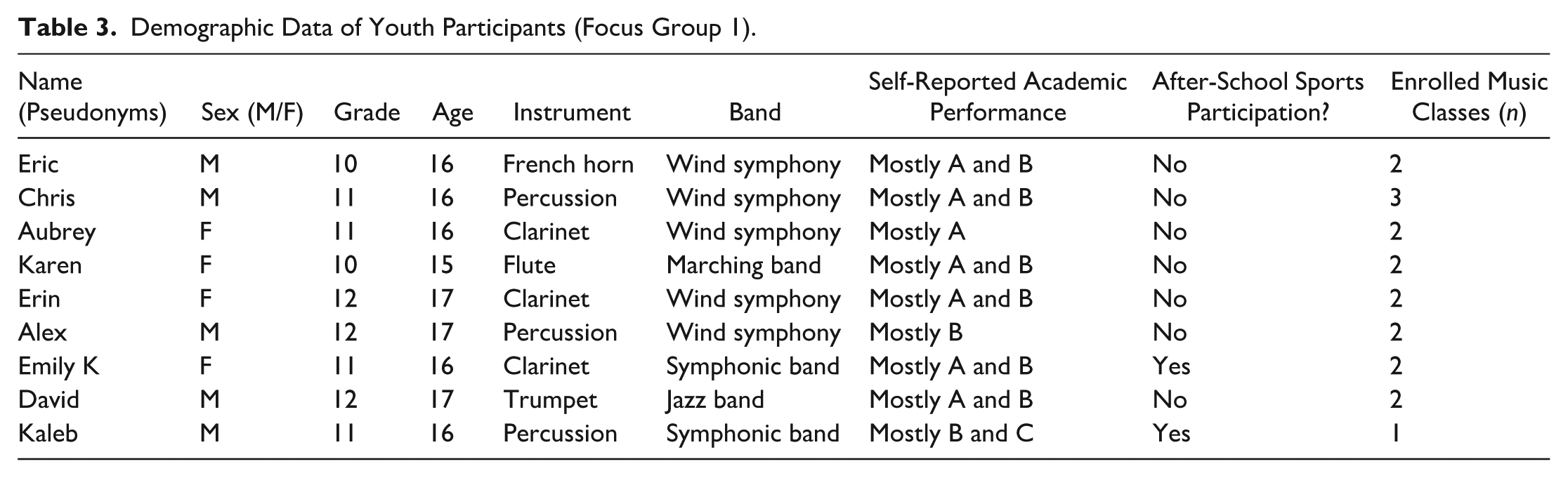
Demographic Data of Youth Participants (Focus Group 2).
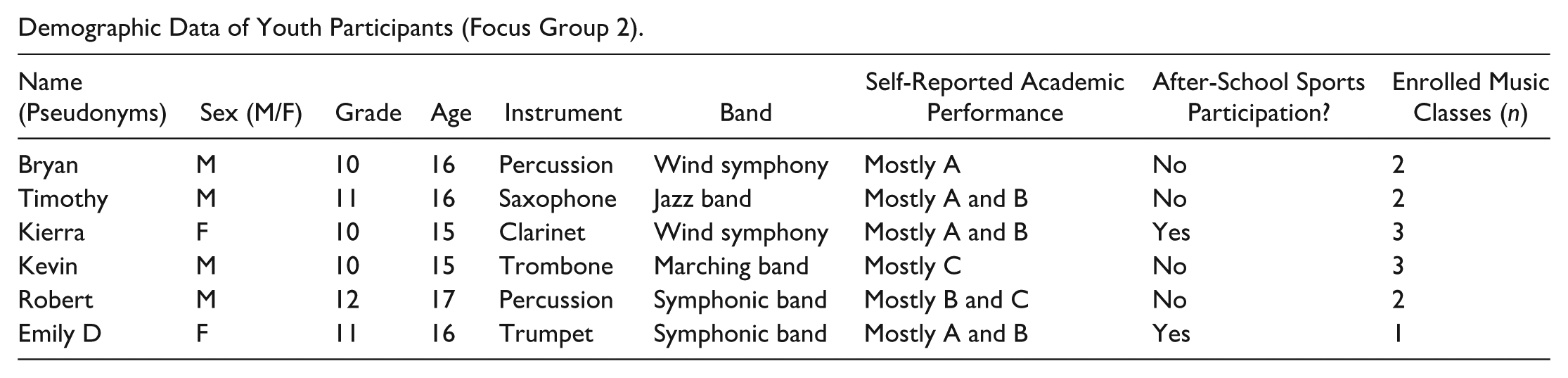
Following the semistructured individual interviews, I analyzed these data and developed a focus group interview protocol to confirm and to assist in further explaining their individual experiences. 6 I offered two focus group interview time slots, allowing participants to select their preferred meeting time. Each session lasted approximately 60 minutes. Throughout the focus group interviews, I facilitated the discussion to ensure equitable participation, which resulted in rich, collaborative conversation without any single individual dominating the conversation. To protect the participants’ identities, I assigned pseudonyms to the participant data and throughout this article; they are referred to with their assigned pseudonym and instrument to ease the reader in tracking these data. 7 Both phases of interview data collection occurred after the school day; audio recordings of the interviews were conducted within the high school building and took place over approximately 5 weeks.
I began analyzing the individual interview data by coding the transcripts using an a priori framework based on the quantitative results. 8 When these predefined codes did not immediately fit the data, I utilized descriptive pattern and thematic coding (Saldaña, 2021) to capture emergent nuances. Following this, I applied inductive analysis (Patton, 2015) to compare, sort, and synthesize the focus group data, keeping the findings grounded in the participants’ experiences. I then expanded this process using Stake’s (2006) open-ended coding procedure to ensure a comprehensive understanding of the phenomena. To establish trustworthiness (Patton, 2015), I utilized method triangulation to cross-verify findings between the quantitative results and interview transcripts. Furthermore, an independent coder reviewed a selection of four transcripts as a peer debriefing mechanism to validate coding consistency. Finally, to ensure credibility, I conducted member checks with three conveniently selected participants to verify that my interpretations accurately reflected their intended meanings (Creswell & Creswell, 2017).
Summary of Qualitative Findings
Sociomusical behavior is complex and requires a robust understanding of mechanisms and processes that recognize youth as experts in their music ensemble experience. One theme that was reinforced within these data was participant descriptions and nuanced details indicating prominent prosocial behaviors. Among these descriptions are behaviors including elements of peer connectedness (e.g., peer trust, respect), youths’ willingness to intervene in bullying episodes, feelings of belonging, caring for others, hope, and empathy. Additional qualitative themes comprised perceptions of friendship and resiliency. All themes, with sample participant statements, appear in the supplemental document included with the online version of this article.
A second theme that was reinforced within these data was participant descriptions and nuanced details clarifying instances of peer victimization within the high school band program. Participants offered information-rich descriptions explaining their experiences with relationally aggressive behavior (e.g., rumor spreading, social network manipulation) and offered distinctions when determining if antisocial-aggressive behavior escalates to a bullying episode. These distinctions focus on labeling the behavior as teasing (i.e., verbal aggression) and unfriendly rather than being considered bullying, which causes interpersonal conflict. A rare code within these data included the notion of competition among musicians provoking interpersonal conflict.
Mixed Methods Data Analysis
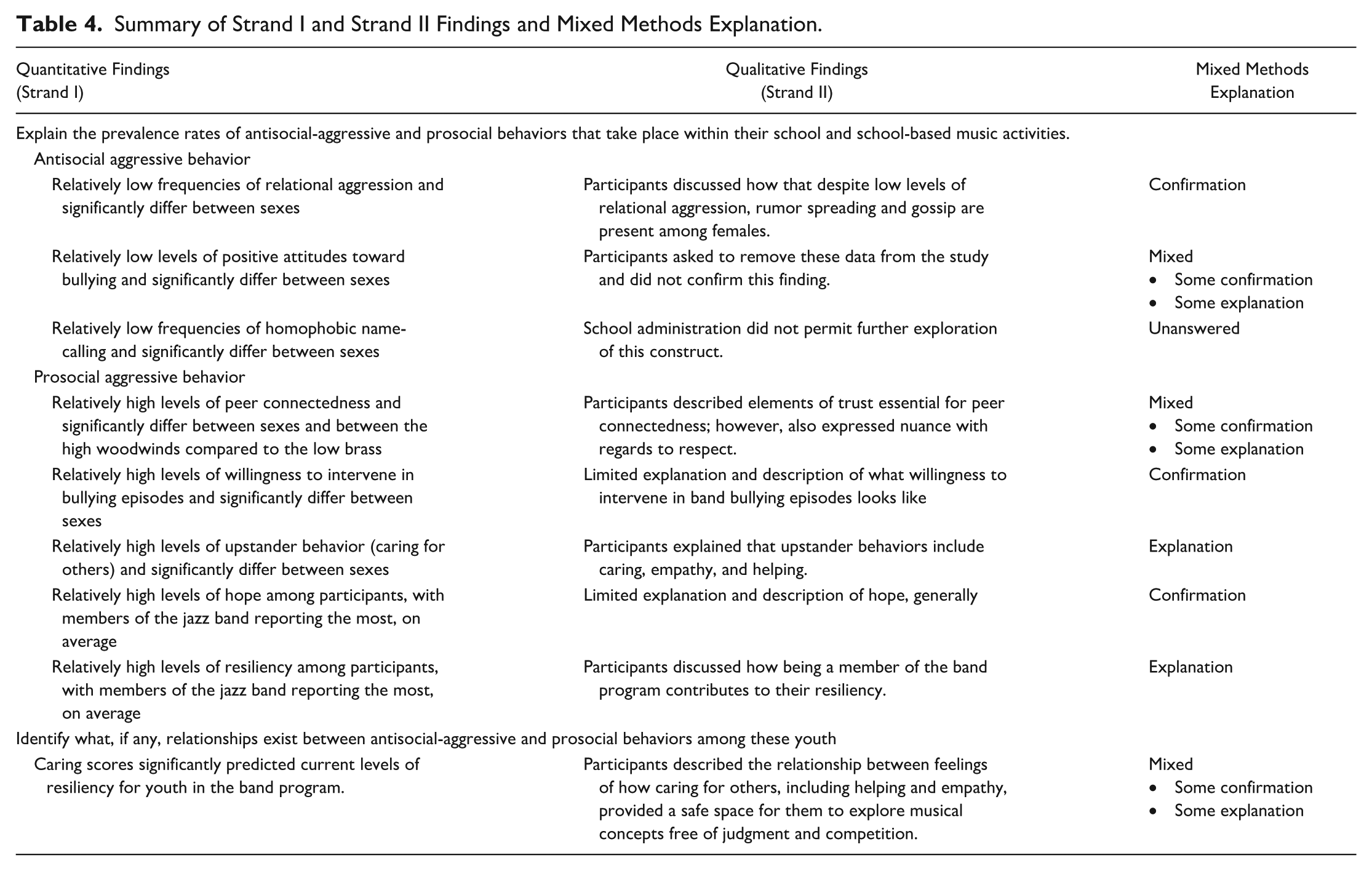
Quantitative and qualitative data were analyzed according to prescribed protocols commonplace with each paradigm. For the mixed method portion of the study, I compared findings to uncover explanations across multiple data sources (Miles et al., 2014). As with previously published mixed methods research in music education (Fitzpatrick, 2011; Prichard, 2017), I assembled a data matrix organized according to the three research questions. Table 4 presents the degree to which the interview data explain these quantitative results.
Summary of Strand I and Strand II Findings and Mixed Methods Explanation.
Mixed Methods Results and Discussion
The results of this mixed methods study are organized according to the research questions, with qualitative findings serving to elaborate on and refine the quantitative results. This presentation structure also emphasizes the extent of confirmation, contradiction, and explanation between the two data strands.
What Are the Prevalence Rates of Prosocial Behaviors and Antisocial-Aggressive Behaviors Among Participants Within Their School Environment and School-Based Music Activities?
Prosocial behaviors
I found that prosocial behaviors were relatively high or frequent compared to previous studies and aligned with prior research in music education. In Strand I, I identified statistically significant differences based on assigned sex at birth regarding peer connectedness, willingness to intervene (within bullying episodes), and youths’ upstander behaviors. Qualitative data provide confirmation and explanation of these results through the lenses of psychological safety and school belonging.
Youth participants reported relatively strong feelings of peer connectedness. Peer connectedness is defined as youths’ feelings of closeness and being supported and cared for by friends (Barber & Schluterman, 2008), which serves as a foundational element of school belonging. Both confirming these data and explaining these findings, participants highlighted trust as an indicator of peer connectedness and psychological safety:
I feel like band has helped with my social aspects because I know I can trust anyone that’s in the band room because I know who they are, and I know that they won’t judge me for being who I am. (Eric, French horn) I feel close enough and I trust them enough to be able to tell them very personal details about myself that I know that they’re not going to tell other people or like spread rumors about it. (Alex, percussion)
Within the individual interview data, one participant explained a unique perspective regarding how youth with power over other youth do not necessarily equate to feelings of respect:
The only reason Susan is in leadership is because she was in leadership before I got here and I feel like she didn’t explicitly know that but, from the section [perspective] they didn’t respect her because she hadn’t given them a reason to . . . someone, regardless of if it’s Susan, has to earn respect. (Robert, percussion)
This sentiment was not shared by other informants and is shared within this article to highlight the uniqueness of the varying perspectives describing peer connectedness. This disconnect between formal leadership roles and peer respect illustrates the complexity of the high school sociomusical hierarchy. Unlike the middle school settings described in Rawlings (2017), where connectedness is more generalized, these results suggest that by high school, perhaps social capital is more highly stratified. In the current study, the “connectedness” felt by the majority may inadvertently mask the marginalization of those who do not fit into the established social tiers, suggesting that psychological safety may be experienced unevenly across the ensemble’s social strata.
Youth participants reported relatively strong feelings of being willing to intervene within a bullying episode in response to the questionnaire. Youth’s willingness to intervene in episodes involving relational aggression may be dependent on multiple factors, including peer-group or class-level beliefs (Ingram et al., 2020). Moreover, an individual’s frequency of enacting caring behavior toward their peers is an influential factor associated with upstander behavior (Hart Barnett et al., 2019). During the interviews, there was limited discussion and explanation of this prosocial behavior. David (trumpet) described that “With the in-band experiences, there’s a lot of teasing that goes on [it’s] good-natured, like friendly roasts and stuff . . . [there was a time when] I stepped in and said, ‘that wasn’t cool-fix it and apologize’” (individual interview).
Researchers categorize bystander behaviors into three categories: upstanding (intervening), reinforcing (supporting), and passive (ignoring) behaviors (Salmivalli et al., 2011). Upstander behavior (i.e., a third party decides to defend a victim when witnessing a conflict) has been reported as an effective strategy to resolve bullying incidents, and researchers demonstrate that a youth’s willingness to intervene is a significant predictor of upstander behavior (Nickerson et al., 2014). Youth participants reported relatively frequent instances of demonstrating upstander behavior. Explaining this result, participants highlighted caring and school belonging as an indicator of upstander behavior:
It’s the community. It’s feeling like you’re a part of something, because everybody, you know, you walk down the hall, and you see another band kid, and even if you don’t know them very well, you’re like, you smile and wave, and they smile and wave back. (Karen, flute)
Finally, the data suggest that a high degree of psychological safety allows for social risks and mistakes to be handled within the group without fear of permanent exclusion:
I feel like it’s a lot easier to be able to make mistakes when you’re learning at first because when they do tease you, they don’t really mean it. They’re just trying to get a joke out of it. But then, in the end, they always come and help you and, like, make you feel better about it. (Emily D, trumpet, focus group)
Antisocial aggressive behaviors
I found that prevalence rates of antisocial-aggressive behaviors were relatively low compared to previous studies and aligned with prior research in music education (Rawlings, 2017; Rawlings & Stoddard, 2017). In Strand I, I identified statistically significant differences based on assigned sex at birth regarding relational aggression, positive attitudes toward bullying, and homophobic name-calling. My qualitative analysis confirmed that all youth participants experienced and perpetrated relatively low instances of relational aggression. Furthermore, female participants, who reported higher average perpetration that their male peers, provided detailed descriptions of this behavior:
I’ve had people spread rumors about me in the band program. . . . The motivation for it, I guess, is honestly, out of anger and just, frustration in the sheer moment. (Erin, clarinet) Once one person contributes a negative thing, which is so easy to do, and you can’t fall into that ease because that’s when you suffer from this clique that focuses on bad things, gossip, because the easiest conversation is “Guess what this person did today?” (Aubrey, clarinet)
I calculated a statistically significant difference between males and females regarding their attitudes toward bullying, although both groups reported relatively low levels overall. Specifically, females possessed strong negative feelings toward bullying, and males were slightly more positive. When youth participating in the focus group interviews were asked about the overall band having low levels of positive attitudes toward bullying, there was a brief discussion among the participants in Focus Group 1, and from the researcher’s logbook, this discussion confirmed the quantitative result. However, there were observable nonverbal indications of feeling uncomfortable (e.g., lack of eye contact, mumbling and side conversations; researcher’s logbook) with the prompt after asking the researcher for clarification. I observed similar reactions to my question during Focus Group 2. No additional interview data confirming this result were available to present because it was removed from the data file at the request of the participants. 9
Comments made during the focus group interviews and some individual interviews revealed explanations about what differences the participants believed existed with bullying versus teasing (verbal aggression) within the band:
Bullying and teasing happens in the band, particularly percussionists. I wouldn’t call this necessarily bullying [pause], it’s more like “roasting” and it’s mostly lighthearted. However, there was one time when it caused drama and a negative atmosphere because [name redacted] took the teasing in a different way . . . he avoided the band room for 2 months due to the conflict with the other percussionist . . . if someone is sensitive and they don’t want to be roasted, then I don’t think they should be. (Alex, percussion) There’s a lot of joking that gets taken a little too far sometimes. You know? Mostly between sections and people within sections. . . . [For example,] within the band, it’s more of a joke. (Kaleb, percussion)
Although participants described bullying more specifically as teasing behavior, known in the literature as verbal aggression, all participants did confirm that this occurs rarely within the band program. However, the qualitative nuance of “roasting” suggests that low prevalence does not equate to low impact. Although students labeled these interactions as “lighthearted,” the instance of a student avoiding the classroom space for 2 months indicates that for some, this culturally accepted verbal aggression may function as a barrier to the “safe haven” ideal documented by NAfME (2012). This finding suggests that in high school ensembles, it is possible that the social cost of “not being able to take a joke” may be an impetus for relational victimization. Moreover, the “safe haven” of the music room may be contingent on an individual’s ability to withstand peer-sanctioned aggression and may suggest that the social costs of participating in band remain high for those on the periphery of the program’s dominant social strata.
In addition to these findings, youth reported relatively low levels of perpetrating homophobic name-calling within 30 days before the questionnaire administration; however, on average, males reported doing this significantly more often than did females. School district administration did not permit further exploration of this finding because their approval of the interview questions was required for the investigation.
To What Extent, if Any, Do Relationships Exist Among Participants and Their Prosocial Behaviors and Antisocial-Aggressive Behaviors?
The regression analyses showed that youth participants’ upstander behaviors and their resiliency levels were both significant and multifaceted. Emily K (clarinet) explained, “the whole band bounces back together as well because sometimes you are having a bad day but then even if you’re having a bad day, all the way through rehearsal . . . . we’re going to work and have a better attitude and be ready for the next rehearsal” (individual interview). Emily’s explanation underscores the importance of fostering prosocial behavior in youth as a means of building resilience against having a bad day.
Two participants discussed, in depth, their feelings of resiliency from two differing perspectives. The first perspective focused on the attainment of resiliency through music ensemble participation, and the second perspective was in relation to the dampening effect resiliency has on peer victimization:
I’d say yeah, that’s true, because we’ve had so much more experience being in the extra ensemble [jazz] adds a lot more time of playing than if we make mistakes, we’re going to learn in there how to come back from them and it’s just going to become easier and we’ll be able to bounce back from things a lot easier. (Timothy, saxophone) I was being targeted because I was able to get the hang of music pretty quickly, but they gave up because they realized that they couldn’t get any reaction out of me. (Eric, French horn)
Upstander behavior is intrinsically linked to empathy, a crucial component in the development of resilience. When young people demonstrate care for their peers and community, they simultaneously strengthen their social connections and enhance their ability to understand and relate to others’ experiences (Toseeb et al., 2017). This increased social awareness and connectivity not only serves as a buffer against the isolation often associated with bullying but also equips youth with the emotional intelligence necessary to navigate complex social situations more effectively. Youth who engage in acts of kindness, cooperation, and support for others often exhibit improved problem-solving abilities and better anger control (Kuzucu, 2016). These prosocial factors contribute significantly to a young person’s capacity to bounce back from stressful events, including experiences of bullying (Singh et al., 2021).
Summary and Implications
This study was designed to examine the sociomusical behaviors of youth enrolled within a high school band program. The results indicate rich, nuanced descriptions of these behaviors while corroborating previous research on the prevalence of youths’ antisocial-aggressive behaviors in music ensemble classrooms. Results indicate relatively low instances of antisocial-aggressive behavior and moderately frequent instances of prosocial behavior. Furthermore, findings contribute to the literature about music ensemble participation by explicating new information about sociomusical behaviors demonstrating that (a) clustered, peer-level analysis is essential when analyzing youths’ self-reports; (b) high prevalence rates of prosocial behaviors, including peer connectedness, willingness to intervene in bullying episodes, and upstander behaviors, are supported by qualitative themes of trust; and (c) the high school band program provides a unique lens into the complexities of friendship, victimization, and resiliency.
Future research directions should be informed by both the findings and specific limitations of this study. Because these data were collected in 2018, this sample provides a critical prepandemic baseline of in-person ensemble dynamics. These results capture evidence of sociomusical structures, such as within-instrument section hierarchies, that remain in practice among instrumental music education settings. However, a notable limitation involves the “institutional silence” encouraged during data collection. The school district’s prohibition on exploring homophobic name-calling through interviews highlights the ethical and administrative challenges of studying sensitive topics. This restriction creates a gap in the data, leaving questions regarding LGBTQ+ inclusivity unanswered, yet it also serves as a finding because it illustrates how administrative gatekeeping may mask exclusionary school climates. To counter this, administrators and educators should proactively confront such institutional silence by creating explicit, safe spaces for discussion of sensitive topics, thereby ensuring that school belonging is not a privilege reserved for the majority.
The high prevalence of prosocial behaviors found in this study supports Laurence’s (2008) assertion that music ensembles catalyze empathic relationships essential for peace building. In this affluent suburban context, the ensemble functions as a protective social ecosystem where high levels of trust and upstander behavior foster a “culture of care.” Specifically, participation appears to develop both individual and collective resilience, providing students with the stability needed to resolve conflicts with care. These findings suggest that music teachers should prioritize relational leadership skill building through intentionally decoupling social capital from performance hierarchies to ensure these positive social outcomes are accessible to all students.
The results regarding antisocial-aggressive behavior corroborate past findings; however, the qualitative data suggest a normalization of verbal aggression that quantitative measures may overlook. Participants described “roasting” as “lighthearted,” yet the instance of a student avoiding the band room for two months due to such “teasing” reveals a potential paradox. This suggests that the “safe haven” of the ensemble may be contingent on a student’s ability to navigate a high-stakes “roasting” culture. Recent scholarship continues to explore these nuances sociomusical boundaries, investigating how the social architecture of ensembles can simultaneously foster belonging for some while reinforcing peripheral status for others (Martin, 2025). For practitioners, this indicates a need to move beyond a passive acceptance of “friendly” teasing and instead work with students to co-construct social boundaries that preserve psychological safety for those on the periphery of the dominant social strata. Furthermore, the higher reports of relational aggression among females and homophobic language among males suggest that sociomusical experiences may be deeply gendered. These distinctions may influence how youth perceive their curriculum and self-report their experiences with peers. Future researchers should limit focusing on prevalence rates to investigate how these cultural norms, often protected by the “clique” of a section, impact long-term student retention and well-being.
These mixed method results indicate that youth experience and perpetrate sociomusical behaviors within a social context, and therefore, these behaviors may vary based on peer group dynamics and friendship. The participants expressed how most of their close friendships have been formed through the band program. The trust built through spending time together in rehearsals, performances, and social events is a common thread among these data, making these relationships special and reliable. This trust is something that comes naturally within the band context as participants shared a common goal and experiences. Additional research should provide clustered, peer-level analysis of youths’ self-reports in different settings because these results may prompt important data for researchers about accurate representation, contextual understanding, nuanced interpretation, and identification of group trends. One approach to accomplish this research is through collecting friendship nominations as data for researchers to identify friend groups and assess individual participant popularity. The current study did not include a measure for friendship nominations, and despite this potential limitation, future researchers should collect and analyze their data as clustered by peer groups to account for peer group behavior dynamics. To enhance the generalizability of the research, future studies should include a broader range of schools with comparable music courses that better represent the national landscape of curricular music education. Such an approach would enable more comprehensive clustered analyses and produce findings relevant to a broader array of educators and administrators, particularly in terms of informing educational policies and school music program design.
However, even within this prosocial environment, critical tensions emerged that warrant a modest and careful interpretation of the “safe haven” narrative mentioned throughout this article. The qualitative evidence of roasting traditions and the institutional silence surrounding sensitive topics, such as homophobic name-calling, revealed that social cohesion can exist alongside and perhaps even mask subtle forms of exclusion. Furthermore, the 2018 data collection time frame and the administrative restrictions on interview content represent significant contextual boundaries. These constraints illuminate the ethical and social complexities inherent with school-based research and suggest that even in high-functioning programs, a culture of silence may be a persistent challenge. Future research should treat these findings as a localized foundation, moving beyond this specific case to investigate how similar social strengths might be cultivated in a more diverse or high-risk educational environment.
Unraveling the relationship among sociomusical interactions, both peer victimization and the development of prosocial behaviors, is complex, and analysis of these data revealed that the prevalence of prosocial behavior and explanation of peer dynamics indicates a unique contribution to music education research. These results revealed high prevalence rates of prosocial behaviors, including peer connectedness, willingness to intervene in bullying episodes, and upstander behaviors, which were supported by qualitative data highlighting trust and community within the band setting. These findings offer insights for researchers planning future studies with school-based populations. Given that most of the research in music education addresses youths’ victimization experiences, this study addresses and extends previous research to involve the development of prosocial behavior and data needed in the growing body of research focused on describing the music ensemble experience among high school youth.
Supplemental Material
sj-docx-1-jrm-10.1177_00224294261447754 – Supplemental material for The Sociomusical Hierarchy and the “Safe Haven” Paradox: A Mixed Methods Study of Prosociality, Victimization, and Belonging in a High School Band
Supplemental material, sj-docx-1-jrm-10.1177_00224294261447754 for The Sociomusical Hierarchy and the “Safe Haven” Paradox: A Mixed Methods Study of Prosociality, Victimization, and Belonging in a High School Band by Jared R. Rawlings in Journal of Research in Music Education
Footnotes

Ethical Considerations
This study received ethical approval from the University of Utah Institutional Review Board (Approval No. 00112112) on May 15, 2018.
Consent to participate
All youth participants under the age of 18 provided written informed consent prior to participating. Parental/guardians provided written informed consent prior to participating. Informed consent was obtained verbally before participation.
Funding
The author disclosed receipt of the following financial support for the research, authorship, and/or publication of this article: Research was supported by College of Fine Arts and the University Research Committee at The University of Utah (No. 1U01/CE001677; CE001827) to Jared R. Rawlings (principal investigator).
Declaration of Conflicting Interests
The author declared no potential conflicts of interest with respect to the research, authorship, and/or publication of this article.
Data Availability Statement
Due to the sensitive nature of the data collected from minor participants, full data sets cannot be made publicly available. To protect participant privacy and comply with ethical guidelines, only construct-level data and carefully redacted and anonymized transcript excerpts are available upon reasonable request. Researchers interested in accessing these limited data should contact the corresponding author with a detailed research proposal outlining their intended use of the data. All requests will be reviewed by the institutional ethics committee to ensure compliance with confidentiality agreements and protection of participants. Any shared data will be provided under a strict confidentiality agreement and must be used solely for the approved research purposes.
Supplemental Material
Supplemental material for this article is available online.
Notes
Author Biography
References
Supplementary Material
Please find the following supplemental material available below.
For Open Access articles published under a Creative Commons License, all supplemental material carries the same license as the article it is associated with.
For non-Open Access articles published, all supplemental material carries a non-exclusive license, and permission requests for re-use of supplemental material or any part of supplemental material shall be sent directly to the copyright owner as specified in the copyright notice associated with the article.
