







Abstract
An adapted alternating treatments design was used to compare mother-developed and delivered social stories and video modeling in teaching social skills to children with autism spectrum disorder (ASD). Mothers’ opinions about the social validity of the study were also examined. Three mother–child dyads participated in the study. Results showed that mothers could develop social stories and video images with 100% accuracy and implement them with high treatment integrity. Results also showed that both interventions were effective in teaching social skills to children with ASD, and both mothers and children could maintain and generalize their acquired skills; video modeling was more efficient for two children and social stories were more efficient for one child. Finally, mothers’ opinions about the social validity of both interventions were positive. Future research is needed to support these findings.
Keywords
Social stories (SS) and video modeling (VM) are two interventions that are used to teach various skills to children with autism spectrum disorders (ASD). Gray (2002) defined SS as short stories used to help individuals with ASD understand complex social situations. They are individualized narratives, in which the expectations from the child are indicated, the appropriate behavior in a certain social situation is described, and the information about the child is shared (Styles, 2011). They are either directly read by the child or someone reads them to the child; then the child is expected to perform the behavior in a related social context. SS have been used for teaching social interaction and communication skills (Adams, Gouvousis, VanLue, & Waldron, 2004; Balcik & Tekinarslan, 2012; Delano & Snell, 2006; Hanley-Hochdorfer, Bray, Thomas, Kehle, & Elinoff, 2010; Olçay-Gül & Tekin-Iftar, 2016; Sansosti, Powell-Smith, & Kincaid, 2004; Scattone, Tingstrom, & Wilczynski, 2006; Thiemann & Goldstein, 2001), safety skills (Suzer, 2015), and play skills (Barry & Burlew, 2004; Kourassanis, Jones, & Fienup, 2015) to individuals with autism across various age groups.
VM has its roots in Bandura’s (1977) Social Learning Theory. This theory proposed that human behavior is primarily learned by observing and/or modeling others. Modeling is defined as a process by which a model—live, recorded, and/or imagined—demonstrates behavior that can be imitated by the learner (Corbett & Abdullah, 2005; Delano, 2007). VM intervention combines modeling and video demonstration as visual cues (Bellini & Akullian, 2007). The individual watches the model while practicing the target behaviors and then is asked to perform these behaviors (Bellini & Akullian, 2007; Delano, 2007; Nikopoulos & Keenan, 2003). It is used to change the behavior of the individual or to teach new behaviors. In VM, the target behavior can be modeled by the individual himself, by an adult model, or by a peer model (Sigafoos, O’Reilly, & De La Cruz, 2007). It has been effectively used to teach a variety of skills to children with ASD such as social skills (Charlop, Dennis, Carpenter, & Greenberg, 2010; MacDonald, Sacramone, Mansfield, Wiltz, & Ahearn, 2009; Mason, Rispoli, Ganz, Boles, & Orr, 2012; Nikopoulos & Keenan, 2003, 2004, 2007; Reagon, Higbee, & Endicott, 2006), play skills (Besler, 2015; MacDonald et al., 2009; Ozen, Batu, & Birkan, 2012; Paterson & Arco, 2007; Sani-Bozkurt & Ozen, 2015), vocational skills (Kellems, 2010), imitation skills (Treshko, MacDonald, & Ahearn, 2010), and safety skills (Akmanoglu & Tekin-Iftar, 2011).
Parents have an essential role during the education of children with ASD, and the benefits of parent training on their children’s performance have been demonstrated for decades in special education. When effective parent-training programs are delivered, parents can reliably implement training and teach their children with ASD (DiPipi-Hoy & Jitendra, 2004; Tekin-Iftar, 2008). However, there are only a few studies reporting the effectiveness of parent-delivered SS (Dodd, Hupp, Jewell, & Krohn, 2008; Olçay-Gül & Tekin-Iftar, 2016) and VM (Besler, 2015; Cardon, 2012). When the research on the effectiveness of both interventions is considered individually, the need for more research comparing the SS and VM developed and implemented by the mothers is obvious. Several other problems exist within the current literature. First, there appears to be no research comparing these two interventions when teaching children with ASD. Second, in the majority of the cited research, SS and VM were often combined with other interventions such as scheduling, prompting strategies, and corrective feedback (Akmanoglu & Tekin-Iftar, 2011; Barry & Burlew, 2004; Hagiwara & Myles, 1999; Kuoch & Mirenda, 2003). Because of the possible confounding effects of other interventions, the unique effects of these interventions are still questionable. Third, parents rarely have been included in these studies, and there are only four studies in which parents conducted all stages of the instruction from developing SS/video images (VI) to implementing them, including data collection. Therefore, it is valuable to show whether parents can complete the intervention entirely. Fourth, in some studies, maintenance and generalization of the effects of SS were not examined (Brownell, 2002; Hagiwara & Myles, 1999) or maintenance effects were not obtained (Hagiwara & Myles, 1999; Sansosti & Powell-Smith, 2006; Thiemann & Goldstein, 2001). Fifth, there are no studies investigating the social validity of these two interventions together using interviews. The present study attempted to address all these research needs. Therefore, answers to the following questions were sought in the study: (a) Is it possible to train the mothers of the children with ASD to develop SS and VI accurately and implement SS and VM reliably? (b) Should they be taught to use them reliably and can they generalize them to teach different behaviors to their children? (c) Which one is more effective in teaching social skills to children with ASD in terms of acquisition, maintenance, and generalization? (d) Which one is more efficient in teaching social skills to children with ASD? (e) What are the opinions of the mothers?
Method
Participants
Three mothers (Nisa, Meral, and Selin) and their children with ASD (Kerem, Ruzgar, and Yaman) were participants in the study. Mothers were chosen from the parent lists of public special schools for children with ASD and/or special education and rehabilitation centers in Eskisehir, Turkey. The first researcher interviewed the prospective participants and selected three mothers who volunteered to participate in the study. The participating mothers’ ages were between 33 and 45. Two of them hold college degrees and one has a primary school degree (Selin). The participating children were diagnosed as having ASD by child psychiatrists in public hospitals.
Kerem was a 7-year-old male with ASD. He was a first grader during the study and receiving support services from a rehabilitation center. He had expressive verbal skills. He could read and write, and, when prompted, use greeting words. Ruzgar was a 6-year-old male with ASD. He was attending a university unit to receive special education services. He had receptive and expressive language skills. He could perform age-appropriate social skills such as greeting others and saying “thank you” and “please.” Yaman was a 10-year-old male with ASD. He was attending a special school for children with ASD. Yaman had also been receiving special education from a rehabilitation center. Yaman’s reading and writing levels were below his peers. He had limited problem-solving skills and lacked understanding of a cause–effect relationship. All the children could attend for 5 min during an activity but none of them initiated and/or maintained social interactions with peers and adults around them. There were no adaptive behavioral scores for the children.
The prerequisite skills that the children had for inclusion in this study were the ability to (a) attend to visual and/or audio stimuli for 5 min, (b) follow simple directions, (c) listen to others, and (d) comprehend the contents of a story read to them. Several verbal directions, such as “Do this jigsaw,” were delivered to test visual and audio acuity. The first researcher to test direction-following skills within 5 s delivered simple directions such as “Look at your mom” or “Come to me.” To test listening skills, the first researcher read a story and asked questions to assess whether they listened well enough to answer, including who, what, when, where, why, and how (5W1H) questions to assess comprehension (e.g., “Who picked the pink car?” “How many children are there in the room?”). None of them had teaching history with any of the interventions.
Settings and Materials
Different settings were used during the study. Mother-training sessions were conducted in a classroom at the special education and rehabilitation center that one child attended and in the homes of two children. Mother-delivered SS and VM took place in their homes. During mother-training sessions, the researchers used manuals they wrote on how to develop SS and VI, a laptop computer, and a projector. A Handycam camera and data collection forms were used to monitor data in the study.
Experimental Design
An adapted alternating treatments design was used to compare the effectiveness of mother-developed and delivered SS and VM in teaching social skills to children with ASD (Wolery, Gast, & Hammond, 2010). Due to possible sequence effects, both interventions were delivered with an unpredictable sequence and each intervention was delivered for no more than three consecutive sessions. Rapid alternation was used and at least 1-hr break was inserted between the sessions. The same reinforcers and reinforcement schedules were used throughout the interventions to control for internal threats of validity.
Dependent Variables, Response Definitions, and Data Collection
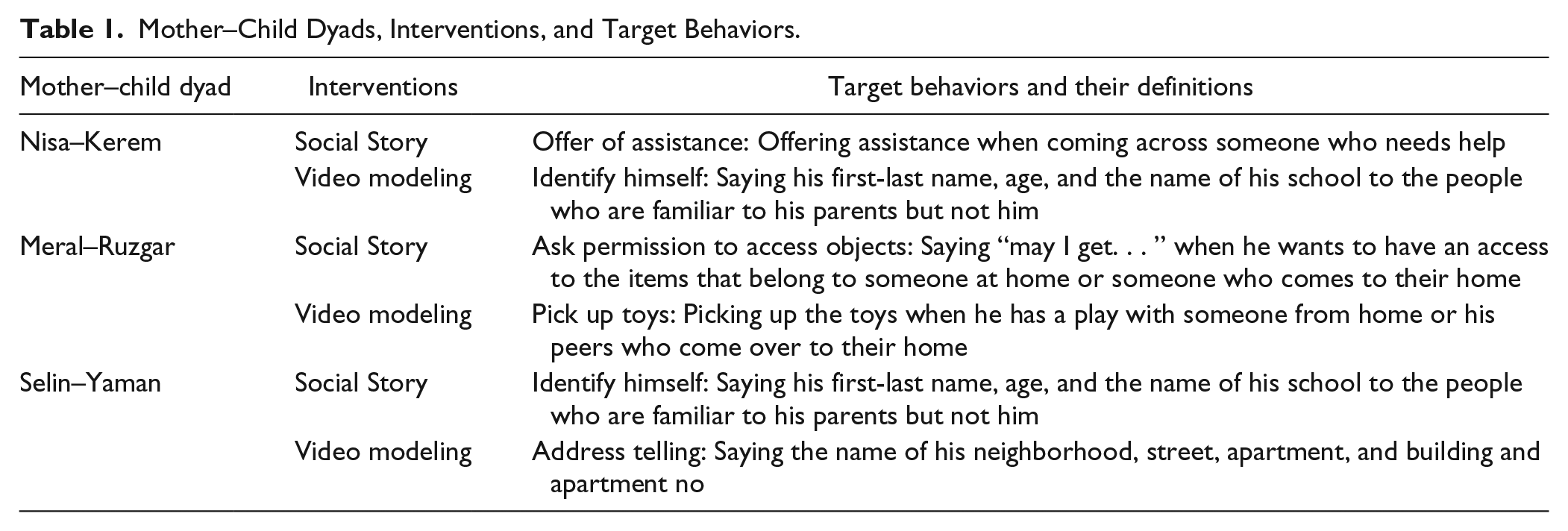
Two dependent variables and two social skills were selected for each child. The dependent variable of the study was the percentage of occurrences of the target behaviors. They were selected based on an interview conducted with the mothers and teachers of the children. Mother–child dyads, interventions assigned to these target behaviors, and target behaviors and their definitions are presented in Table 1. Target behaviors were assessed by designing and/or controlling the settings. The researchers planned and controlled five occasions that were expected to evoke the target behavior during each session. The scenarios for these occasions were given to the mothers in advance. For example, to assess “offer of assistance,” the researcher planned five occasions the child would offer assistance (e.g., father coming home holding several bags, mother holding a tray and wanting to open the door). The child was taught to say “Do you need help? I can help you.” There were three types of responses during all experimental sessions: (a) correct response, (b) incorrect response, and (c) no response. Correct responses were defined as performing the behavior within 5 s when the target stimulus was provided. Incorrect responses and no responses were defined as performing the behavior incorrectly or did not perform any response within 5 s.
Mother–Child Dyads, Interventions, and Target Behaviors.
General Procedures
The study consisted of baseline, intervention, maintenance, and generalization sessions. Prior to these experimental sessions, training sessions were conducted to teach the mothers how to develop SS and VI as well as how to deliver intervention with SS and VM reliably. The mothers conducted all experimental sessions in a one-to-one instructional arrangement in their homes and collected the data throughout the study. All sessions were videotaped. Prior to the study, a pilot study was conducted with a mother–child dyad.
Mother-Training Sessions
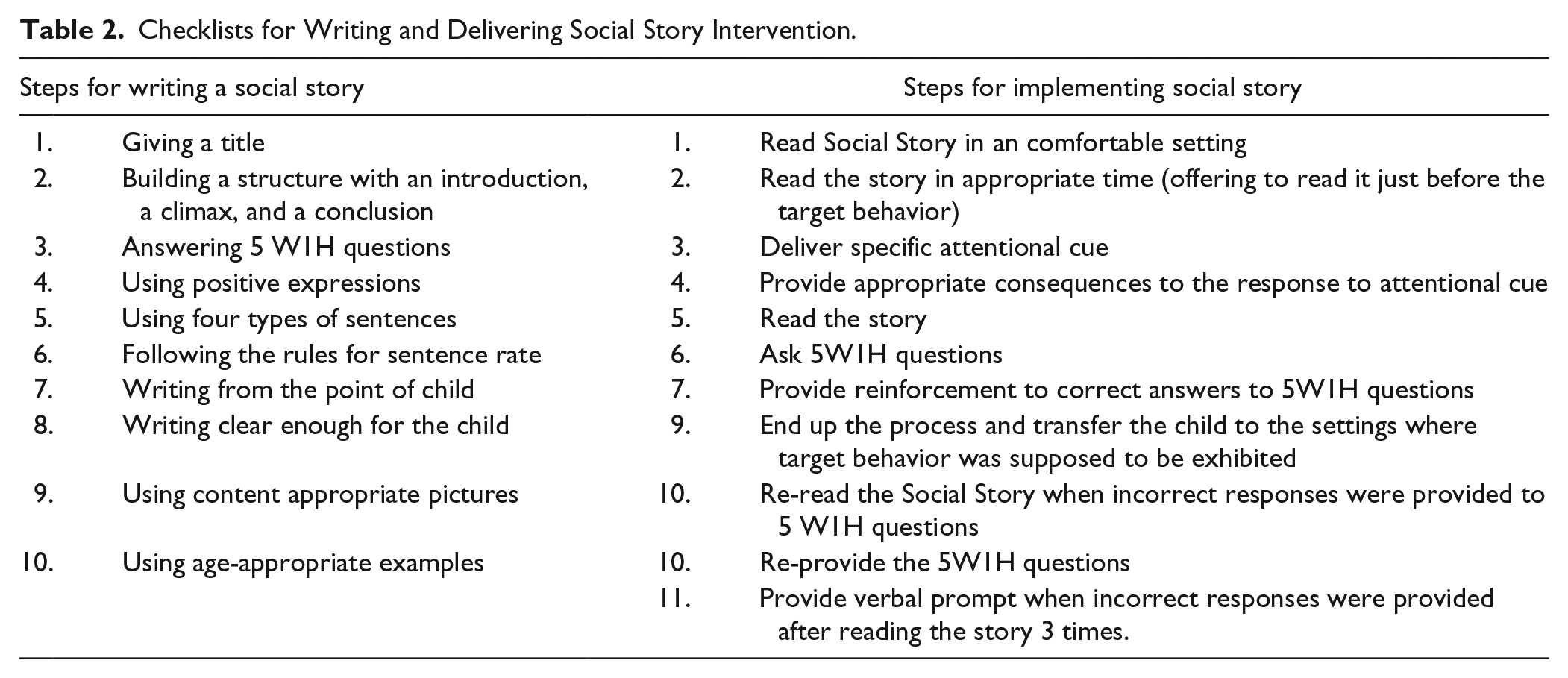
Mothers were trained in two weekends (one intervention was taught per weekend) on the following skills by the first researcher: (a) how to write a SS and implement a SS intervention and (b) how to develop VI and implement a VM intervention. Both interventions were taught in a one-to-one instructional arrangement. First, they were pretested on their ability to develop and deliver a SS intervention and to develop and deliver a VM intervention by using two guides: (a) “Checklist for Writing and Delivering Social Story Intervention–CSSI” (modified by Olçay-Gül & Tekin-Iftar, 2016) and (b) “Checklist for Developing Video Image and Delivering Video Modeling Intervention–CVMI.” These checklists are presented at Tables 2 and 3, respectively. First, each mother was asked to select two social skills as target behaviors for her child, to develop a SS/VI aiming to teach these target behaviors, and, finally, to implement SS and VM session with her child. The mothers were able to write their SS and develop VI with maximum 22% and 33% accuracy, respectively, during the pretest assessments. They were trained through the following sequence.
Checklists for Writing and Delivering Social Story Intervention.
Checklists for Developing a Video Image and Delivering Video Modeling Intervention.

Description
The researcher presented PowerPoint presentations explaining the SS/VM, how to develop a SS/VI, and how to collect data during SS/VM interventions. The researcher then asked several questions to check their understanding of the contents. When they answered the questions with 100% accuracy, the researcher modeled developing SS/VI. Also, the mothers were given two manuals (one for each) to read or check whenever they needed. (Manuals are available upon request.)
Modeling to develop SS/VI
The researcher modeled developing each type of sentence in a SS and asked them to develop their own. She reviewed all sentences written by participants and provided feedback. After that the researcher read three SS and analyzed them using CSSI (see left column in Table 2). For presenting how to develop VI, the researcher arranged a peer model prior to the session who was trained how to be a model. The researcher modeled how to prepare a VI by recoding the behavior of the peer model. After the recording, they discussed every step in CVMI (see left column in Table 3). Then, the researcher explained how to select a target behavior.
Practicing to develop SS/VI
The mothers were asked to develop SS/VI by taking into consideration the information provided to them earlier. The researcher role-played as a model for mothers as they practice the development of VI. She evaluated the mother-developed SS and VI by using the checklists. One mother needed more training on the first two parts; others completed them with 100% accuracy.
Modeling to implement SS/VM
The researcher provided SS/VM for each mother by using the SS/VI she developed. She followed the steps in CSSI and CVMI (see right columns in Tables 2 and 3), respectively, for the SS and VM. She modeled both correct and incorrect examples of the SS/VM interventions.
Role-playing
The mother role-played as the interventionist and the researcher role-played as the child. The mother performed SS and VM interventions. The researcher provided feedback to them until 100% accuracy was reached.
Baseline Sessions
Baseline sessions were conducted prior to intervention to get stable data for at least three consecutive sessions on the target behaviors. These sessions were conducted once a day in three consecutive days at the homes of each dyad. They were conducted just before opportunities set by the researchers in which target social skills were supposed to be performed. A baseline session was conducted as follows. The mother secured her child’s attention by delivering a specific attentional cue, such as “Kerem, our room is so messy. Should we tidy the room together?” If the child showed gestural (e.g., shake his head) or verbal attention (e.g., says “Ok”), the mother reinforced him verbally “Great!” Then, the mother created an occasion that would allow the child to offer assistance, such as “Our dining room is so messy. I need to tidy the room, but this coffee table is so heavy to move. How can I carry it over there?” Then, she waited 5 s for a response. Correct responses resulted in verbal reinforcement and incorrect and no response were ignored.
Intervention Sessions
There were five training trials per day, and interventions were conducted 5 days per week. The sequence of the interventions were randomly assigned and told to the mothers daily. Intervention sessions were initiated once stable baseline data were obtained. The criterion was 100% correct responses for three consecutive training sessions for each child. Interventions with both of them were conducted just before opportunities set by the researchers in which target social skills were supposed to be performed.
Mother-Delivered SS Intervention
Each child sat facing the mother, who secured her child’s attention by delivering a specific attentional cue, such as “Ruzgar, let’s read our story. Are you ready?” His attending was reinforced verbally and the mother started to read the social story. Then, the mother asked comprehension questions (5W1H) about the story. Correct responses resulted in social reinforcement. Incorrect responses or no response resulted in re-reading the part of the study specifically related to the question and re-asking the question. Correct responses were reinforced socially (“Yes, you did it great!”). If the child responded incorrectly, the mother provided the correct response and took the child to the setting where the target behaviors were supposed to occur. After criterion was met, a three-step fading hierarchy was initiated: (a) reading it by omitting the directive sentence, (b) reading only the title and the first and last sentences, and (c) only showing the book prior to occasion (Olçay-Gül & Tekin-Iftar, 2016).
Mother-Delivered VM Intervention
The mother–child dyad sat next to each other. The mother secured her child’s attention by delivering the specific attentional cue, “Ruzgar, I prepared a video for you. Shall we watch it together?” The child’s affirmative response was reinforced by the mother with “Great! You are awesome.” Then, they watched the video together, she reinforced her child’s watching behavior verbally, such as “Yaman, you watched it carefully. Thank you!” They then went to the setting where the target social skill was supposed to be performed, and a friend of the mother delivered a task direction such as “Tell me your address please.” The mother waited 5 s for her child to respond. Correct responses resulted in verbal reinforcement, and incorrect and no responses resulted were ignored.
Maintenance and Generalization Sessions
Maintenance and generalization sessions were conducted just like baseline sessions. Maintenance sessions were conducted only with two mother–child dyads to see whether the mothers and their children maintained their acquired social skills over time. The Meral–Ruzgar dyad was absent due to the child’s health conditions and some other home-related problems during the maintenance probe sessions. Maintenance sessions were conducted for the Nisa–Kerem and Selin–Yaman dyads at 5, 10, and 14 weeks and 4, 10, and 14 weeks after the intervention, respectively. Generalization sessions were conducted in a pre-posttest format. Like maintenance, both mothers and children were probed for generalization in the study. Mothers were assessed as to whether they could develop a new SS/VI for teaching different skills. The children were assessed as to whether they could generalize the acquired skills across different settings. Pre-test sessions were conducted prior to intervention and posttest sessions were conducted after the criterion was met.
Reliability
Reliability data were collected for at least 30% of each experimental condition. The sessions in each condition were selected randomly. An independent observer and a special education teacher who was familiar with the interventions collected reliability data. Interobserver agreement (IOA) was calculated by using a point-by-point method. For the treatment integrity, the following behaviors were taken into consideration during baseline, maintenance, and generalization sessions with both target behaviors: (a) having materials and settings ready, (b) presenting target stimuli, (c) presenting appropriate behavioral consequences, and (d) collecting data during the session. Treatment integrity data during interventions were collected by CSSI and CVMI (see right columns in Tables 2 and 3).
Social Validation
The mothers were interviewed about the goals and interventions used in the study and the results of the study by the first researcher through semi-structured interviews. A total of nine questions were asked of the mothers. Once the interview questions were developed by the researchers, the question forms were sent to five experts electronically to obtain their opinions about the content and forms of the questions. The question form was modified accordingly. The question form was designed to reveal (a) why the mothers chose the target behaviors to be taught to their children, (b) what they thought about SS intervention, (c) what they thought about VM, (d) what were the contributions of this study to their daily home life (if any), (e) what were the contributions of this study to their children’s social life (if any), (f) had they observed the behaviors they taught their children over time and across different settings and persons, (g) what were the most liked and least liked part of the study, (h) what were the contributions of this study in their personal and social life (if any), and (i) what were the possible contributions of this study in their social interaction and communication with their children. Social validity data were analyzed descriptively. The first researcher conducted the interviews and transcribed data verbatim.
Results
Findings About Developing SS and VI and Reliability
Mothers’ skills on developing SS/VI were assessed in a pretest–posttest manner. During these assessments, the mothers were asked to select two target behaviors and write a SS for one of them and develop a VI for the other one. The checklists presented in Tables 2 and 3 (see left columns) were used to assess their performances. Findings showed that Selin, Meral, and Nisa could write SS with 11%, 22%, and 22% accuracy, respectively, during the pretest, and they could write them with 100% accuracy during the posttest. Regarding developing VI, Selin could not develop a VI and Nisa and Meral could develop them with 33% and 22% accuracy during the pretest, and they were able to develop their VI with 100% accuracy during the posttest. Last, they asked to write a new SS and develop a new VI to teach different target behaviors to their children. Generalization assessment was also conducted using the checklist mentioned above, and findings showed they were able to generalize their acquired skills to teaching different target behaviors with 100% accuracy.
Regarding reliability, 100% accuracy was obtained for IOA analysis in each experimental condition across the children. All parents except Meral (88% accuracy; range = 88%–90%) delivered the experimental conditions with 100% compliance during SS intervention. Regarding VM intervention, all parents delivered the experimental conditions with 100% compliance except during intervention conditions. Nisa implemented VM intervention with 100% compliance, and Meral and Selin delivered these sessions with an average of 88% (range = 88%–90%) and 95% (range = 88%–100%) compliance, respectively.
Effectiveness of Mother-Delivered SS and VM Interventions: Acquisition, Maintenance, and Generalization
Figures 1 through 3 display the percentages of correct responses during baseline, intervention, and maintenance conditions across the interventions for Kerem, Ruzgar, and Yaman, respectively. As seen in the figures, Kerem and Ruzgar had no correct responses in none of their target behaviors. Yaman had no correct responses in his target behavior, identifying himself, taught by SS, and he performed his other target behavior, telling his address, with a mean of 20% accuracy during baseline condition. Once their mothers started to deliver interventions with SS and VM, the levels and trends of their data changed therapeutically and they reached the criterion by performing with 100% accuracy after the interventions. Kerem’s data showed the immediate effects of both interventions were 0%. However, when levels of his data across baseline and intervention conditions were compared, significant increases were noted in the intervention conditions. Although his levels of data were 0% (Mdn) during the baseline sessions in both of his target behaviors, they were 80% (Mdn) during intervention conditions. The immediate effects of both interventions were 0% for Ruzgar as well. However, there were significant changes in the data levels. Although his data levels were 0% during the baseline sessions in both of his target behaviors, they were 100% during intervention conditions. Yaman’s data showed that the immediate effects of SS and VM interventions were 0% and 20%, respectively. However, when levels of his data across baseline and intervention sessions were compared, significant increases were seen in the intervention conditions. Although his levels of data were 0% during the baseline sessions in both of his target behaviors, they were 100% during intervention conditions. During SS intervention, a three-step fading process was followed with all children, and they performed with 100% accuracy in these sessions as well.
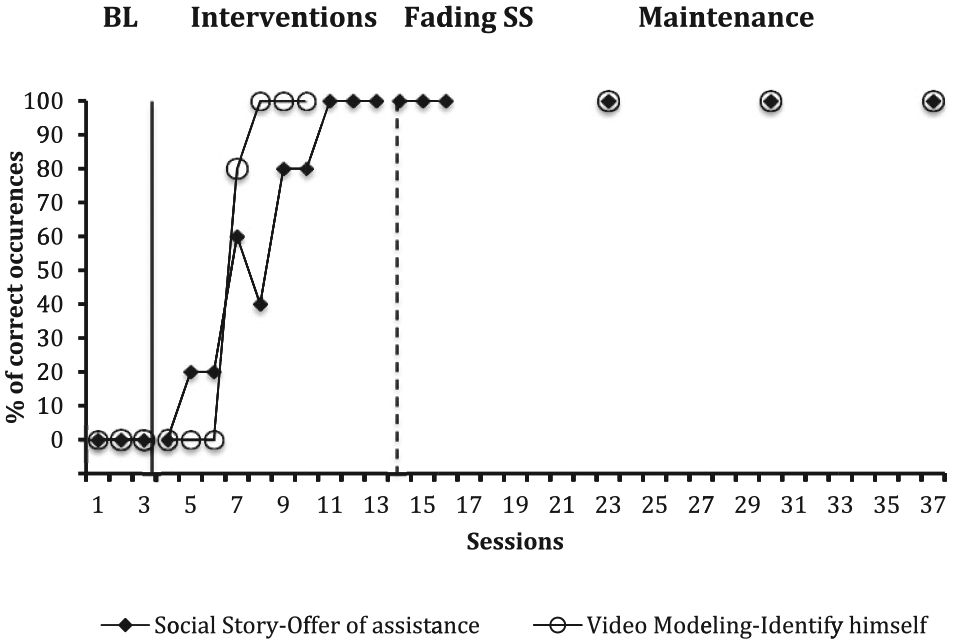
Percentage of correct occurrences on social skills during baseline, intervention, and maintenance sessions for Kerem.
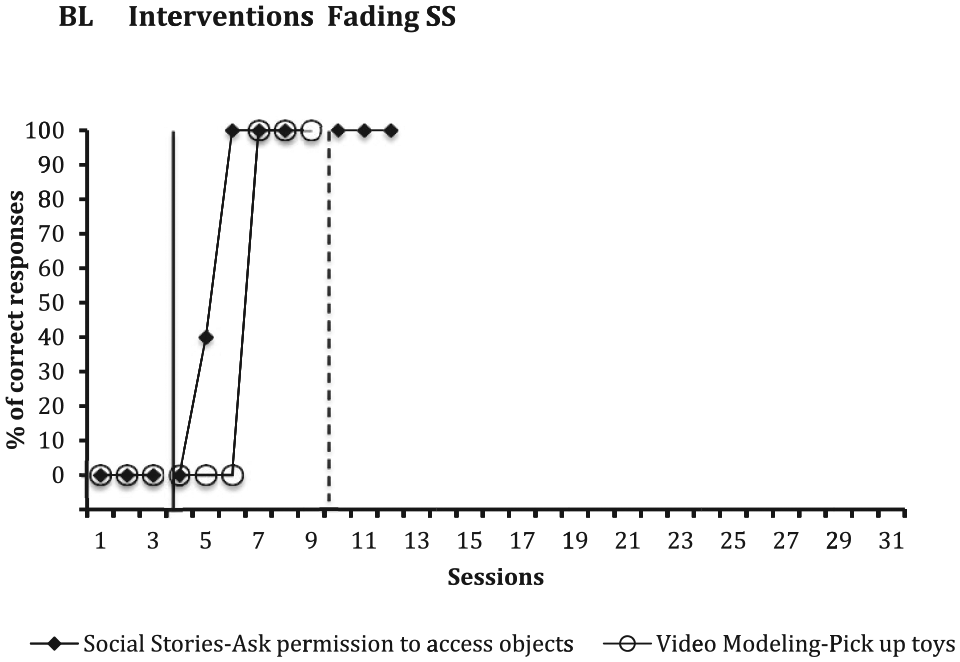
Percentage of correct occurrences on social skills during baseline, intervention, and maintenance sessions for Ruzgar.
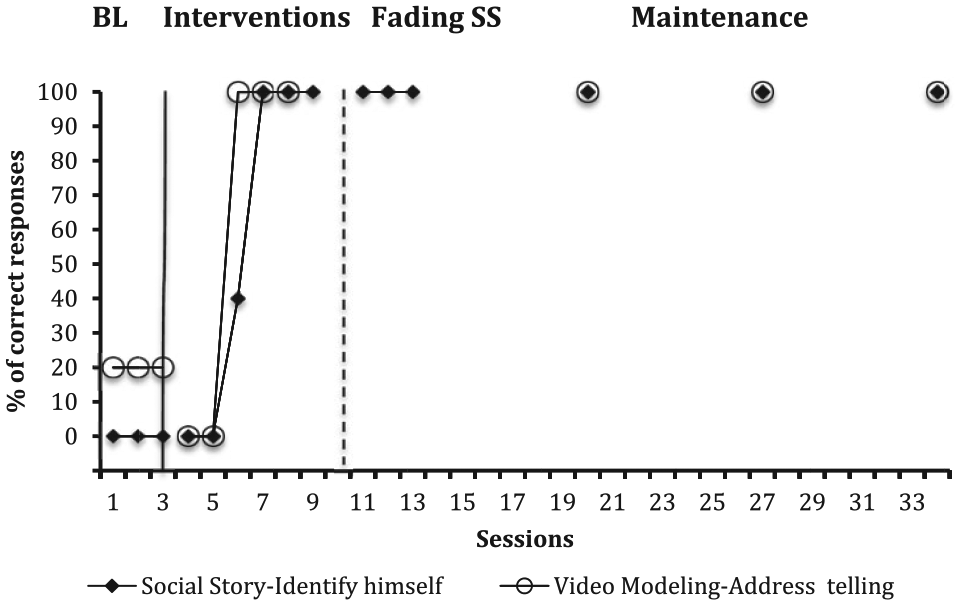
Percentage of correct occurrences on social skills during baseline, intervention, and maintenance sessions for Yaman.
Maintenance data were collected for two children. Data showed that Kerem and Yaman maintained their target behaviors with 100% accuracy. All children generalized the acquired target skills across settings with 100% accuracy.
Efficiency of Mother-Delivered SS and VM Interventions
Efficiency data—the number of training sessions to criterion, the number of training trials to criterion, the number and percentage errors to criterion, and total training time to criterion—for mother-implemented SS and VM interventions to teach social skills to three children with ASD are presented in Table 4. Consistent efficiency findings in favor of one intervention could not be determined. Although VM seemed to be more efficient across all efficiency parameters in Kerem and Yaman, it was not replicated with Ruzgar. The SS intervention was more efficient across all parameters in Ruzgar.
Efficiency Data.
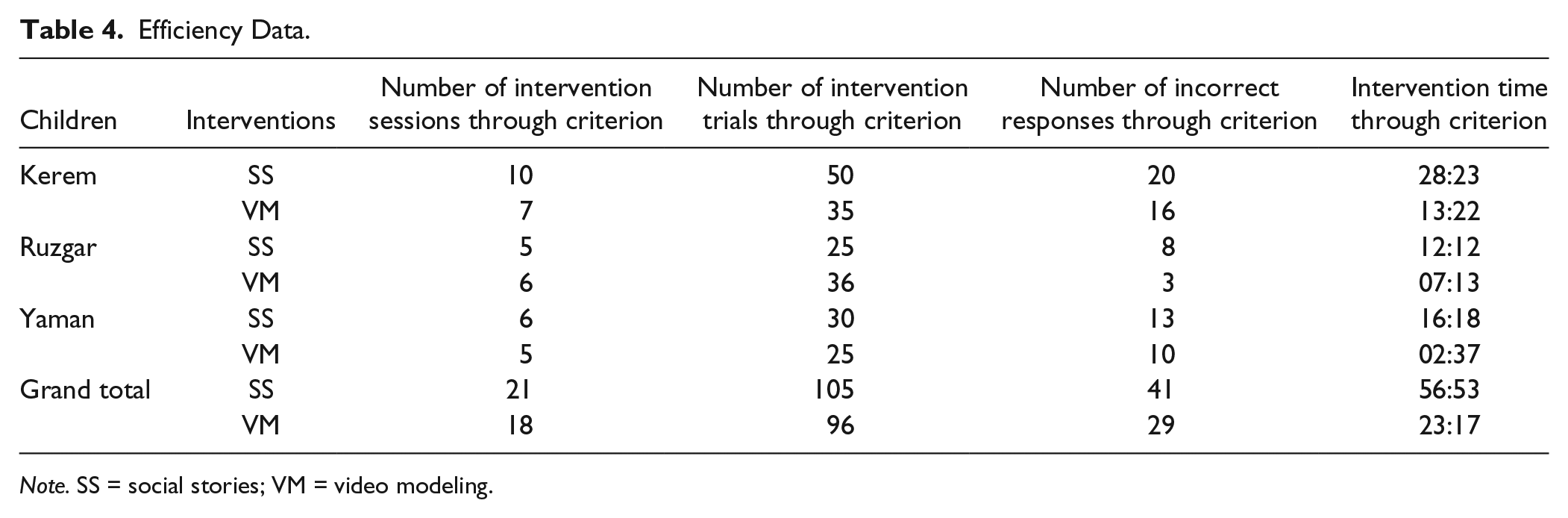
Note. SS = social stories; VM = video modeling.
Social Validity Findings
Mothers were asked why they chose these target behaviors in the study. They indicated that they were important skills. Nisa said, “Teaching these skills would help him become more independent,” Meral indicated that “My son has autism and experiences problems in these skills so they are important.”
Mothers’ opinions about SS and VM were asked in the next two questions separately. They indicated that learning how to develop and implement them was not difficult, and did not take a long time; implementing them contributed positively in their daily lives; and there was no economic burden to their budgets. Meral said that “The presentations and manuals that you have presented to me were very informative; we have planned everything step by step.” She compared the preparation processes and said, “VM is more time-consuming, requires more devotion as compared to social stories . . . ” Selin said, “I learned it easily.”
When asked the contribution of the study to their children’s daily home lives, the mothers indicated the positive impact of both interventions. Nisa said, “He became more orderly; he does things before I say; I even think him to be better than his peers,” and Selin said, “Luckily we have studied; he understands better; it had a positive impact on his understanding what he reads.”
Regarding the contribution of the study to the social life of the child, mothers stated the positive impact as well. Nisa said,
It helped him to maintain positive relations with others; he can demonstrate the skills in every setting; if something happens to him, when I am not around, he can introduce himself as taught and they can reach out to me or his teacher, which is something good;
Selin said, “Before, he was not going near his friends, I was engaging them; now, without our telling, he goes on his own, talks . . . helped him to communicate.” Mothers also stated the positive impact on the interaction with others. Selin said, “Of course it had an impact; he talks better, he expresses himself better, helped him to communicate.”
When the mothers were asked whether their children maintained the behavior change in different settings and with different people, mothers stated that they maintained and generalized the skills. Meral said, “We had problems outside, now no more,” Nisa said, “My child is more confident now, I enjoy this. The point of view of other people has also changed,” and Selin said, “Yes he does, when different people visit home.”
The mothers were asked about the aspects of the study, they liked or disliked. The responses were collected under the topic “thoughts about the study.” All the mothers stated that there was no aspect of the study they disliked. The mothers stated they liked the study with its training, implementation, and positive effects on their children and themselves.
The mothers were asked about the contribution of the study to their own daily living and social lives. The mothers stated that the study had quite a positive effect on their daily living. Nisa said, “You become happy when you see him achieving something; it is very motivating; now everything is more orderly at home,” and Selin said, “His father and sisters saw what he can achieve; they were asking me how will you study that, and, when we finish, they said we were never expecting that . . . ”
Finally, mothers were asked to describe the contribution of the study to their interaction with their children and their attitude toward them. They all stated that the study had a positive impact, and now they understand each other better.
Discussion
This study was designed to investigate whether the mothers of the children with ASD could develop SS/VI accurately and implement SS and VM interventions reliably and whether effectiveness and efficiency of these two interventions differ in teaching social skills to children with ASD. Moreover, effects of both interventions were compared during maintenance and generalization. Social validity of the study was investigated by obtaining the opinions of the mothers about the goals, procedures, and results of the interventions.
All mothers learned how to develop a SS/VI and implemented intervention with their children with 100% accuracy. These findings are consistent with the findings of previous studies (Besler, 2015; Cardon, 2012; Olçay-Gül & Tekin-Iftar, 2016). In addition, the mothers in this study generalized these skills for teaching different behaviors. There are several studies, especially with SS, in which parents delivered SS intervention (Adams et al., 2004; Kuoch & Mirenda, 2003); however, in those studies, a researcher–parent partnership was established and the researchers prepared training materials. To date, there are only three studies in which parents were responsible for developing SS (Olçay-Gül & Tekin-Iftar, 2016) and VI (Besler, 2015; Cardon, 2012) as their training materials. In this particular study, mothers were responsible for development of both SS/VI. Therefore, it can be said this study enhances the related literature that mothers could learn to develop training materials for SS and VM interventions. At the same time, they implemented both interventions with a high degree of treatment integrity. These results are consistent with the previous studies investigating implementation of SS (Olçay-Gül & Tekin-Iftar, 2016) and VM (Besler, 2015; Cardon, 2012). In comparing the reliability findings of this study with previous studies, it is noted that mothers implemented these interventions as correctly and reliably as teachers and professionals (Sansosti & Powell-Smith, 2006; Scattone et al., 2006).
Effectiveness data showed that mother-delivered SS and VM were almost equally effective in teaching social skills to three children with ASD. To date, there are no studies comparing the effects of these two interventions either delivered by teachers and professionals or parents. Therefore, this study contributes to the literature about the effects of these interventions. It should be noted that the immediate effects of both interventions were not observed. However, significant increases were obtained after a specific period of time with both SS and VM. It was observed that all children liked their stories, they wanted the stories to be read to them (especially Kerem and Yaman), and the drawings used in the stories described the target behaviors well. Therefore, it could be argued that all these details could be the source of the progress in SS intervention. As previously stated, significant increases were obtained in the VM intervention in all three children as well. It was also observed that the children seemed to like to watch the videos and doing so might have been reinforcing for them. All of these features might have contributed to these promising outcomes.
Maintenance and generalization data showed no difference between SS and VM. Researchers were able to collect maintenance data for only two children (Kerem and Yaman). Both Kerem and Yaman maintained their target behaviors at criterion levels. In contrast to these findings, maintenance effects of SS were not observed in several studies (Sansosti & Powell-Smith, 2006; Thiemann & Goldstein, 2001). Maintenance findings for VM are consistent with the findings of the previous studies as well (i.e., Besler, 2015; MacDonald et al., 2009; Paterson & Arco, 2007). As a result, the maintenance findings of this study contribute to the positive maintenance effects of SS and VM interventions. Two types of generalization data were collected in the study—one for the mothers and one for the children. Mothers were able to develop new SS/VI and implement them to teach new behaviors to their children, and children were able to generalize the target behaviors they acquired across different settings. This is the only study that taught two interventions to mothers and tested for generalization effects. Findings for the children showed they generalized the skills they acquired via SS and VM with 100% accuracy. These findings are highly promising when considering lack of generalization of acquired skills, and the gap between home and school is a well-documented problem in children with ASD.
Analyses of the efficiency data of this study did not result in a consistent conclusion as to which procedure is preferred. Results showed that VM was more efficient across all efficiency parameters in two children (i.e., Kerem and Yaman) and SS was more efficient in the other child.
Beside its experimental significance, the clinical significance of the study was investigated through social validity. In general, it is noted that social validity was tested by using a researcher-made questionnaire via subjective evaluation in the previous studies. However, the psychometric features of the majority of these questionnaires are generally weak. To analyze the social validity, we collected social validity data through semi-structured interviews with the mothers, and the data were analyzed descriptively. From this perspective, this study adds to the literature by conducting a deeper analysis for social validity. Mothers found the target behaviors of this study to be important, found the procedures easy to use, and found the learning outcomes in their children extremely important. Also, mothers were happy to be able to work with their children and to teach them. The social validity of this study supports the findings of the previous studies investigating social validity of SS (Olçay-Gül & Tekin-Iftar, 2016) and VM (Besler, 2015) from parents’ perspectives. As a particular finding, mothers reported that developing and implementing SS intervention was much easier and fun.
This study has several strengths. First, the mothers prepared SS/VI with high accuracy and implemented them to teach their children with high treatment integrity. Therefore, it can be interpreted that a strong experimental validity was established in the study. These findings also showed that the mother-training sessions were well designed and effective. Therefore, this process can be considered a model for institutions and researchers who want to provide parent training. Second, as previously stated, as both interventions seemed to be effective, we can recommend both interventions to parents and professionals. Third, presently there are very few studies that specifically focus on the process of developing and implementing SS (Olçay-Gül & Tekin-Iftar, 2016) and VM (Besler, 2015; Cardon, 2012) interventions completely by the parents. In this study, the mothers completed the whole process starting from development of training materials to implementing the interventions and collecting the data. Fourth, the target behaviors of this study were highly functional social skills. Functional skills should be taught in natural settings, and therefore, we chose to integrate these behaviors into the daily routines in the home settings even though the presence of the risk of some possible extraneous variables could potentially occur in these environments. As a result, this study sheds light on how to design home intervention to teach various behaviors to children with ASD. Fifth, as mentioned, the mothers developed SS/VI with high accuracy and implemented both interventions with high treatment integrity. These findings are especially important when considering the educational levels of the mothers. Even a mother with only an elementary school education was successful during this study and was able to teach social skills to her child. Even if some parents have such disadvantages, they still may be able to provide an education for their children.
Besides these, several points observed during the study should be noted. The children not only learned the target skills that were planned but also exhibited several appropriate behaviors related to target behaviors. For example, it was observed Kerem started conversations such as offering assistance to his mother. Yaman asked the people who came over to his home to identify themselves. It can be argued that these target behaviors can be considered as pivotal skills. Researchers also observed that the quality of the target behaviors improved during the fading sessions in the SS intervention. It was noticed that the children performed the target behaviors with enthusiasm and used better tone of voice and body language. Therefore, we recommend educators and parents to conduct fading sessions after the acquisition. Finally, even though the mothers voluntarily participated in the study, at the onset of the research, they were reluctant. This may have been due to their lack of information and/or experience with SS and VM interventions. Once they realized they were able to provide these interventions, they become more enthusiastic.
Although the findings of the study are encouraging, the results should be interpreted cautiously for the following reasons. First, it was assumed that the target behaviors of each child were equal in difficulty based on the number of steps in the target behaviors and the topography of the behaviors. We could have conducted an experimental analysis to validate this assumption. In other words, we could have taught these skills to other children and analyzed whether they learned them in an equal amount of time. Second, we did not have a third target behavior that would be in equal difficulty level as a control behavior. We could have had control behaviors for the children and collected baseline data periodically to see if there would be an improvement in these behaviors. Third, there were only three mother–child dyads in the study, and the findings can be limited to these three children. Fourth, we were unable to collect maintenance data with a mother–child dyad due to health and home-related problems with one participant involved in the study.
Based on the findings and limitations of the study, the following recommendations can be made. First, parents are advised to learn and use these interventions to teach their children with ASD. In addition, the schools and other institutions should consider using the mother-training program developed in the study as a parent-training model to teach the parents/guardians of their students. This study is the first to compare the mother-developed and implemented SS and VM interventions. Replication studies can be designed to refine these methods as well as to compare the effects of these interventions in teaching different behaviors. We did not obtain consistent findings in terms of efficiency across the children. Replication studies are needed to clarify efficiency findings. In addition to that, the possible reasons of not having a consistent result across the children might be due to individual characteristics of the children. The relationship between the characteristics of the children and efficiency parameters should be investigated in future research. The use of technology is an inevitable part of today’s life. Therefore, the use of mobile devices and computers, which also helps to decrease stigmatization toward children with ASD, can be considered for use in future research. We did not conduct experimental analyses to determine the difficulty levels of the target behaviors. To make stronger conclusions, experimental analysis can be planned while designing future research. Social validity data can be collected from other persons at home in future research to obtain more insight about the meaning of these skills in real life.
Footnotes
Acknowledgements
The authors thank the participants for their participation and collaboration in this study. The authors also thank Dr. Belva C. Collins for her insightful review and feedback during preparation of the manuscript and Dr. Seray Olçay-Gül for her feedback during the study.
Authors’ Note
The first author completed this study in partial fulfillment of the requirements of doctoral education in special education at Abant Izzet Baysal University, Bolu, Turkey. This study was presented at the Annual Convention of Association for Behavior Analysis in San Antonio, TX, in May 2015.
Declaration of Conflicting Interests
The author(s) declared no potential conflicts of interest with respect to the research, authorship, and/or publication of this article.
Funding
The author(s) disclosed receipt of the following financial support for the research, authorship, and/or publication of this article: Elif Tekin-Iftar is grateful to Turkish Academy of Sciences and The Scientific and Technological Research Council of Turkey (TUBITAK) for their supports.