







Abstract
We offer a comparative investigation of the compensation and benefits afforded to cooperating teachers (CTs) by teacher education programs (TEPs) in 1957-1958 and 2012-2013. This investigation replicates and extends a description of the compensation practices of 20 U.S. TEPs published by VanWinkle in 1959. Data for the present investigation came from 18 of those TEPs. Descriptive statistics and qualitative analyses were used to identify trends and make comparisons across the two time periods. Findings indicate that compensation for CTs continues to fall into five categories: (a) monetary compensation, (b) professional learning opportunities, (c) CT role-focused resources, (d) engaging CTs in the college/university community, and (e) professional recognition. Changes in the nature and quality of benefits indicate that in many instances, the programs in our sample offer less to their CTs than they did in 1957-1958 while expectations for CTs have historically increased.
Cooperating teachers (CTs), who give up their classrooms for student teachers (STs) to learn in and who provide the immediate instructional support for these novices, are essential to traditional university-based teacher preparation as we understand it in the United States today (e.g., Zeichner, 2010). The importance of CTs to traditional teacher education is well supported in research on student teaching (e.g., Hamman, Fives, & Olivarez, 2007; Weiss & Weiss, 2001; Zeichner, 2002), and CTs have been found to “influence the career trajectory of beginning teachers for years to come” (Ganser, 2002, p. 380). In many U.S. teacher education programs (TEPs), the majority of the student teaching experience is left in the hands of CTs, who typically have varied perspectives on this role (e.g., Hall, Draper, Smith, & Bullough, 2008), diverse expectations for participation (e.g., Clarke, Triggs, & Nielsen, 2014), little preparation for the work (e.g., Wang & Odell, 2002), and receive limited, if any, compensation to serve as a CT (e.g., Greenberg, Pomerance, & Walsh, 2011).
The nature of the CT role has changed with developments in teacher education. For example, Hahn (1951) reported on a project by the Utah State Department of Public Instruction in which deans, directors of TEPs, and university supervisors were surveyed about the student teaching experience. In this work, Hahn (1951) indicated that the “traditional” student teaching experience encompassed “one hour per day student teaching for one quarter [school term]” (p. 119). In contrast, the student teaching experience of the 2000s typically involved a much longer period of time leading to increased expectations for CTs hosting student fieldwork, practicum, or internship experiences (e.g., Fairbanks, Freedman, & Kahn, 2000; Korthagen, 2004).
CTs typically receive little or no preparation, recognition, support, compensation, or benefits for their role as CTs (Clarke, 2006; Knowles & Cole, 1996). Thus, we have a cadre of school-based teacher educators who enact the expanded CT role, which includes mentoring, supervision, and modeling expertise for extended periods of time, in addition to fulfilling their existing teaching obligations, for “very meager compensation in relation to the work that they do” (Zeichner, 2002, p. 60). This context evokes questions regarding what, if any, compensation and benefits are offered to CTs for their work. Herein, we offer a comparative investigation of the benefits and compensation afforded to CTs by TEPs in 1957-1958 and 2012-2013 in light of the expanding CT role. In this investigation, we focus on the perspective of TEPs, not the CTs, regarding compensation and benefits offered to CTs.
Conceptual Framework
Our investigation was sparked by VanWinkle’s (1959) description of the efforts made by TEPs to compensate and enculturate CTs. This article raised the question for us as to the nature of these practices in the present time. We were also informed by Korinek’s (1989) investigation into the kinds of compensation or benefits CTs preferred. In essence, VanWinkle (1959) described what TEPs were doing for CTs, and Korinek (1989) directly asked CTs what they would like to receive. We synthesized the findings from these two publications to frame our current investigation.
In 1959, VanWinkle offered a brief commentary in the Public Relations column of the Journal of Teacher Education in which he reported on responses from 20 U.S. TEPs (gathered during the 1957-1958 academic year) with respect to how the TEPs (a) engaged CTs with the goals of the college/university and TEP and (b) helped CTs to see the importance of their role in the student teaching experience. Responses to the following two questions were sought from members of the American Association of Colleges for Teacher Education (AACTE) institutions across the United States:
How do departments, schools, and colleges of education help their cooperating teachers in off-campus schools learn about the institution’s aims and program of teacher education, and what are these institutions doing to help their cooperating teachers feel that they are playing an important role? (VanWinkle 1959, p. 125)
VanWinkle (1959) described the responses from 20 TEPs that he felt represented a cross section of “desirable public relations activities in reference to cooperating teachers” (p. 236). In this article, he offered a synopsis of the responses from 20 schools, with the goal of sharing a wide variety of approaches for both helping CTs in their role and making CTs feel valued. We performed a content analysis on these responses and identified several types of compensation: recognition (e.g., listed in college catalog), professional status (e.g., part-time faculty), monetary compensation (e.g., US$35 for each ST to the school), course tuition (e.g., tuition-free extension courses during the year an ST is hosted or the summer following), social invitations (e.g., social hour with refreshments following the orientation program), workshops (e.g., formal and informal held off and on campus), direct support in teaching STs (e.g., TEP representatives work with CTs on the problems STs face), inclusion in decision making around student teaching (e.g., CTs cooperatively developed the student teaching handbook with faculty), and college/university access (e.g., library access, tickets for athletic events).
Thirty years later, in the same section of the Journal of Teacher Education, Korinek (1989) described her findings regarding teachers’ compensation preferences for serving as CTs. Korinek provided a descriptive analysis (frequencies and percentages) of the replies from 97 teachers to a survey about the type of compensation they preferred for fulfilling the CT role. The survey identified eight categories of possible compensation or benefits that might be offered by TEPs to CTs. These categories included monetary compensation, adjunct faculty status, professional development (PD), professional activities, college teaching, classroom/professional materials, classroom assistance, and public recognition.
We identified five overarching themes presented by VanWinkle (1959) and Korinek (1989): (a) monetary compensation, (b) professional learning opportunities, (c) CT role-focused resources, (d) engaging CTs in the college/university community, and (e) professional recognition. Table 1 illustrates these themes and describes the kinds of activities that we attributed to each. The purpose of this investigation was to compare current and past compensation activities and to analyze these findings in light of current expectations for CTs.
Conceptual Framework: Compensation and Benefits for CTs.
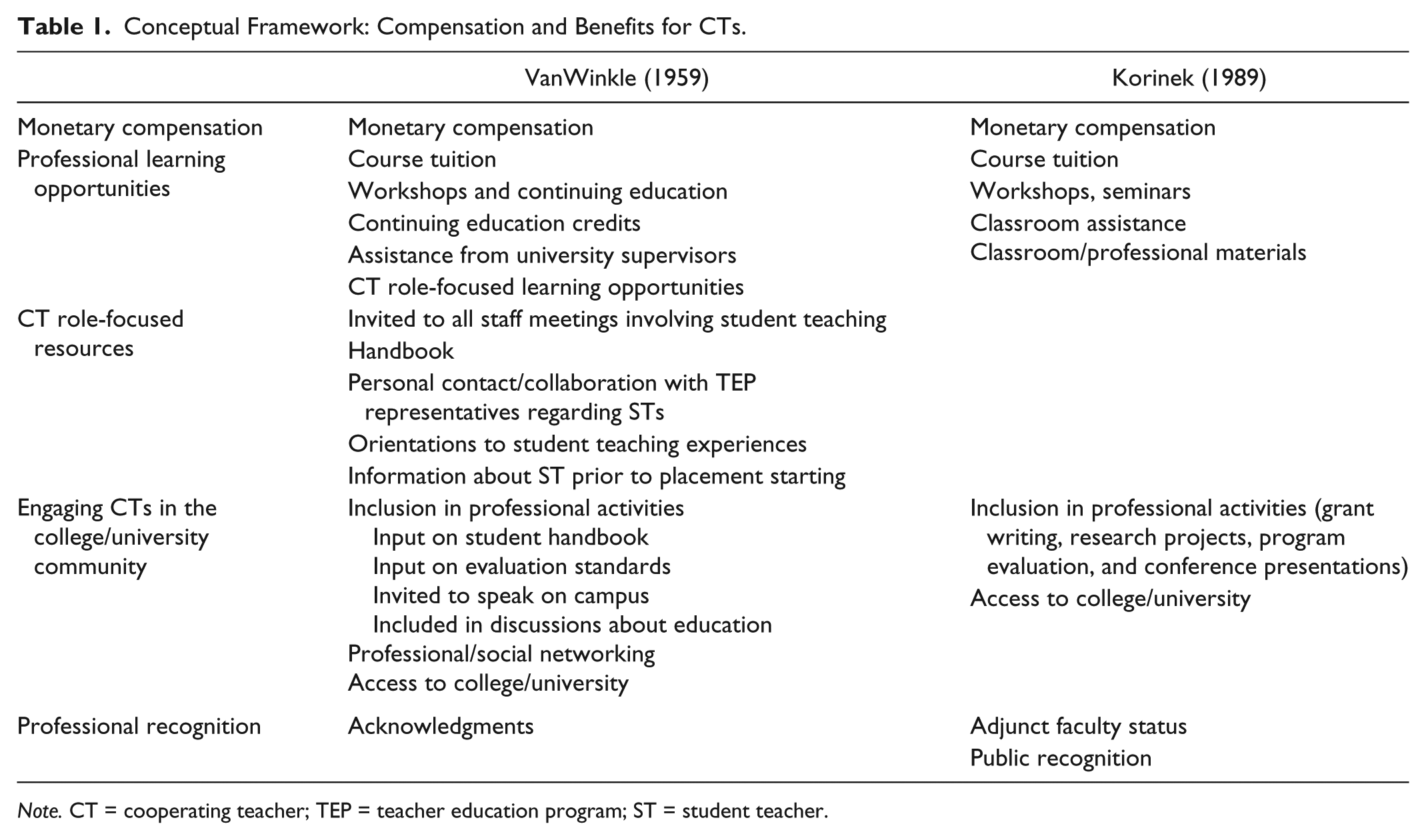
Note. CT = cooperating teacher; TEP = teacher education program; ST = student teacher.
Literature Review
Here, we review existing research on CT compensation and benefits organized by the conceptual framework that emerged from our review of the articles by VanWinkle (1959) and Korinek (1989). In addition to summarizing their findings, we offer evidence from additional research to further explicate the circumstances of CTs’ compensation and benefits.
Monetary Compensation
VanWinkle (1959) described cash payments from six of the 20 TEPs in his article. These payments to CTs ranged from US$35 to a maximum of US$200. The second most preferred compensation among Korinek’s (1989) participants was monetary compensation; these participants indicated a range of payment amounts from US$100 to US$1,400 (the latter based on the same pay rate that coaches received in the school district). In 1992, Barker and Burnett (1994) surveyed 404 TEPs about the monetary compensation offered to CTs and found that 70.8% of programs offered monetary payments that ranged from US$25 to US$500, with an average stipend of US$112. In 2011, the National Council on Teacher Quality (NCTQ) published a report that evaluated 134 elementary TEPs (Greenberg et al., 2011). Although critiqued for their research methods with respect to evaluating the quality of student teaching experiences (e.g., AACTE, 2011), the authors of this report drew attention to the limited amount of monetary compensation offered to CTs. Greenberg and colleagues (2011) found that monetary remuneration of CTs across the programs they investigated consisted of a stipend of no more than US$250 and was often much less. Together, these studies illustrate that a range of payment options are available across TEPs. Differences in the amounts reported may be reflective of the specific institutions included in each investigation.
Professional Learning Opportunities
Opportunities for professional learning as part of the CT experience were evident in VanWinkle’s (1959) report and Korinek’s (1989) findings. We divided professional learning opportunities into two categories: self-selected opportunities and CT role-focused opportunities.
Self-selected learning opportunities
Some TEPs allowed for CTs to choose their own learning paths by offering CTs the choice of course tuition or free access to continuing education opportunities. Teachers in Korinek’s (1989) study ranked PD (i.e., course tuition, seminars, and summer institutes) first among their preferred forms of compensation. VanWinkle (1959) identified four TEPs that offered tuition remission of some kind, and more recently, Barker and Burnett (1994) reported that 82.2% of the TEPs in their sample offered tuition waivers.
Continuing education credit was a common benefit offered by TEPs to CTs in 1959. VanWinkle (1959) reported that the College for Teachers at Albany, New York (now the University at Albany, State University of New York) offered CTs “two points” of continuing education credit for serving as a CT. In the majority of U.S. states, teachers are required to garner continuing education credit to maintain their teaching license/certification (e.g., Boser, 2000; Goldhaber, Grout, Holden, & Brown, 2015). Continuing education credit is not the same as college/university credits/tuition; however, in many cases, teachers can use college/university credits to count toward their continuing education requirements.
Researchers have argued that CTs can experience PD through the activity of mentoring STs (Simpson, Hastings, & Hill, 2007). For instance, serving as CTs provides the opportunity for CTs to sharpen their professional insights (Hastings & Squires, 2002) and to improve teaching practices in their classrooms (Hudson & Hudson, 2010). We saw instances where CTs are awarded continuing education credits for this work as a self-selected learning opportunity for two reasons. First, most CTs in the United States take on this role by choice and do so to both give back to their profession and learn from the experience (Sinclair, Dowson, & Thistleton-Martin, 2006). Second, while engaged in the CT role, CTs can choose what and how they want to learn from this experience.
CT role-focused learning opportunities
The TEPs in VanWinkle’s (1959) report offered CT role-focused learning opportunities consisting of workshops or conferences that supported CTs’ development as CTs. For instance, VanWinkle reported that two TEPs offered PD held at the college/university—one provided a workshop focused on problems in student teaching, and the other one offered a lab school to observe STs. Similarly, when Korinek (1989) asked teachers to identify their preferences for content of PD related to their responsibilities as CTs, her sample consistently reported preferences for training in supervisory skills, observational techniques, and problem solving. Recent investigations also indicated that CTs need support, understanding, time, and space to reflect with like-minded professionals on how to best work with STs (e.g., Achinstein & Athanases, 2005). Thus, professional learning opportunities directed at the CT role itself seem relevant.
CT Role-Focused Resources
CT role-focused resources can be categorized as materials, meetings, and ST-focused resources (see Table 1). VanWinkle (1959) described the materials TEPs offered as student teaching handbooks (offered by three TEPs) and ongoing bulletins about student teaching. Meetings held to discuss, orient, and explain student teaching and the CT role in this process were identified as a second type of role-focused resource. Three kinds of meetings emerged in VanWinkle’s (1959) report: (a) annual or semiannual orientations for CTs describing the expectations of serving as CTs, (b) ad hoc meetings and personal contact with college/university staff/faculty, and (c) formal meetings between CTs and college/university supervisors, facilitated by the TEPs.
Some TEPs in 1959 provided CTs with what we consider to be ST-focused resources. These included materials or information about STs who would share CTs’ classrooms. Two TEPs described by VanWinkle (1959) referenced sharing biographical information about STs with CTs: The University of Kansas sent personal information about each student to their respective CT prior to the start of student teaching, and the University of Albany provided CTs with a copy of their ST’s weekly seminar report.
Engaging CTs in the College/University Community
CTs have been offered opportunities to engage with the college/university community as a form of benefit or compensation for their work (see Clarke et al., 2014). Included in the responses VanWinkle (1959) reported was the notion of connecting CTs to TEPs through access to the college/university and/or inclusion of CTs in key activities related to teacher preparation. Korinek (1989) also found that inclusion in college/university activities and access to college/university resources were offered to CTs as potential benefits; however, her participants ranked these the least preferred of the benefits offered. Three features emerged as general methods for engaging CTs in the college/university community across these two accounts (see Table 1): (a) including CTs in professional activities, (b) professional and social networking opportunities, and (c) access to the college/university resources.
Inclusion in professional activities
Professional activities in which CTs were included referred to both direct contributions to TEPs (e.g., input on handbooks or evaluation standards) and invitations to participate in larger educational conversations (e.g., speak on campus, participate in research activities). Kahn (2001) and Korinek (1989) reported conflicting perspectives on involving CTs in the development of final evaluation standards for STs. Kahn (2001) reported that CTs would like to have more input on the curriculum of methods courses and on the development of TEPs in general, which could enhance the overall success of the student teaching experience. Among Korinek’s (1989) participants, however, such activities were rated among the least preferred potential benefits or compensation for serving as CTs.
Beyond participating in the development of TEPs, other professional activities were used to engage CTs in the TEPs. VanWinkle (1959) reported that two TEPs invited CTs to speak to STs and that the New Jersey State Teachers’ College at Glassboro (now Rowan University) invited their CTs to participate in an annual meeting about educational issues in the surrounding area.
Opportunities for professional and social networking
Opportunities for professional and social networking were described by VanWinkle (1959), albeit not in these terms. These opportunities afforded CTs ways to connect professionally and socially to the larger education community. VanWinkle reported that TEPs offered opportunities for building or enhancing social and professional networks that included invitations to social functions or special occasions and the presence of college supervisors at K-12 school functions. Specifically, he noted events such as teas to honor CTs (e.g., State Teacher College Towson, Maryland), dinner and a play on campus with university professors (e.g., University of Miami, Florida), and various luncheons and dinners. We characterized these as social/professional networking opportunities as they gave CTs an opportunity to interact with each other across their schools and districts as well as with members of the college/university community. This social aspect allowed CTs to potentially form professional relationships and identify potential resources in the community.
Access to college/university resources
Access to college/university resources (e.g., library, curriculum resource center) or on-campus community events (e.g., plays, athletic events) were described by VanWinkle (1959), Korinek (1989), and Barker and Burnett (1994). Korinek (1989) placed this benefit within the larger category of adjunct faculty status and privileges. She listed privileges such as a faculty title, bookstore discounts, use of campus libraries, computers, and recreational facilities, or free access to campus events as benefits associated with faculty status. She found that 80% of CTs included the overall category in their top three preferred compensation choices, noting it was most preferred by elementary education teachers. Barker and Burnett (1994) reported a similar list of “other benefits” offered to CTs beyond monetary compensation and tuition waivers. Other benefits included such things as adjunct faculty status, library privileges, reduced tickets to athletic events and to shows on campus, and discount coupons for use in the bookstore.
Professional Recognition
Finally, recognition or acknowledgment of CTs was identified by both VanWinkle (1959) and Korinek (1989) as a form compensation or benefit. However, there seemed to be some nuanced distinctions in forms of recognition. Both authors identified status and acknowledgments as separate approaches to providing CTs with recognition. In VanWinkle’s (1959) report, only one TEP, Lake Forest College, offered CTs a formal title—part-time faculty. Barker and Burnett (1994) reported adjunct faculty status among the “broad array of other benefits” offered to CTs (pp. 18-19). Adjunct faculty status ranked third in CTs’ preferences for compensation in Korinek’s (1989) study. Our understanding of these articles indicated that there may be a missing but important distinction between the idea of a “title” and the “benefits” that may be associated with that title. Here, we have teased these apart so that college/university access that may be associated with a title (e.g., adjunct faculty) is included under access to the college/university, and here, we focus solely on the title given as a form of recognition.
Beyond titles, TEPs also offered public recognition as a benefit for CTs. VanWinkle (1959) reported that 10 of the 20 TEPs in his report offered CTs this type of acknowledgment. Six TEPs indicated that CTs’ names were listed in the college catalog, one school (Eastern Montana College of Education) attempted to have the teachers’ names published in a local newspaper, and two others offered letters or certificates of appreciation from the dean. In 1989, however, only 15 teachers in Korinek’s study identified public recognition (awards, letters, etc.) as a type of compensation they would like to receive; overall, it was ranked last among the types of compensation desired.
Comparison of Sociohistorical Contexts
The purpose of the present investigation is to compare the compensation and benefits described by VanWinkle (1959) with those offered by the same TEPs in 2012-2013. Therefore, it is necessary to compare the sociohistorical contexts that framed CTs’ work at these points in time. When VanWinkle presented his report, education in the United States was influenced to varying degrees by four sociopolitical events: (a) increases in student enrollment in public K-12 classrooms, (b) fear and suspicion spread by McCarthyism, (c) large-scale reform efforts in math and science, and (d) school desegregation. The post–World War II baby boom in the United States led to a 53.7% increase in public K-12 school enrollments from 27,517,000 in 1950 to 42,299,000 in 1960 (U.S. Bureau of the Census, 1992). Increased enrollments led to increased class sizes, which prompted school expansion plans and teacher recruitment campaigns. This most likely increased the need for more teachers to take on the CT role.
The McCarthy era, also referred to as the Red Scare, extended from the late 1940s through the 1950s and was marked by an organized political effort to identify and sanction individuals who were thought to be communists (Schrecker, 1986). Teachers and school leaders, especially those with activist or progressive agendas, were often targeted, accused of communist activities, fired, and placed on blacklists, which prevented them from getting another teaching position (Edelsky, 2005). The events associated with McCarthyism influenced some school hiring policies as well as led to curriculum censorship (Edelsky, 2005).
Pressure on schools also increased when the Soviets successfully launched the satellite Sputnik. This sparked U.S. leaders to declare that Americans could no longer be complacent concerning education, and initiatives were created to make U.S. students more competitive in mathematics and science. In addition, the Civil Rights Movement, marked by the Supreme Court overturning Plessy v. Ferguson (1896; stated separate but equal was legal) in Brown v. Board of Education (1954), was in full swing by the 1950s. Teachers at the time of VanWinkle’s (1959) exploration worked in a context with limited resources, while under potential political threats, to address content in new and improved ways, amid the context of major social reform in the United States. The effects of McCarthyism and the Civil Rights Movement may have influenced teachers’ willingness to take on STs.
Just as the sociohistorical context of the 1950s may have influenced CTs’ experiences in this role, events of the 2000s may shape the perspective of CTs in their work with STs. First, demographic shifts in the diversity of the student population are evident; the U.S. Census Bureau estimated that minority groups comprised 56.4% of all youth below the age of 18 in 2014 and that by 2060, minority groups could comprise nearly 64.4% of all youth below the age of 18 (Colby & Ortman, 2015). Second, following the September 11 attacks on the United States, some have argued that a new era of McCarthyism emerged that allowed for the push of a conservative agenda in education (Edelsky, 2005). Third, the No Child Left Behind Act (2002) has ignited debates about the best methods for examining student achievement levels, and initiatives such as the Common Core State Standards have placed further accountability pressure on educators (Porter, McMaken, Hwang, & Yang, 2011). Finally, incidents of school violence such as the shootings at Columbine High School in 1999 and at Sandy Hook Elementary School in 2012 have placed a great deal of stress on school communities regarding school safety. Thus, in the United States today, teachers are faced with a more diverse student body that may require new instructional methods, an increased emphasis on achievement levels and accountability, and growing instances of school violence. These contextual events may create more work for teachers in their primary role of classroom teacher, and consequently, teachers may be less inclined to take on STs in this context.
Method of Inquiry
We conducted a survey-based investigation of the benefits and compensation offered by TEPs. Because this research involved programmatic data, our institutional review board for research with human subjects determined that our investigation did not meet the requirements for research with human subjects and therefore waived the need for approval of this work.
Data Sources and Procedures
This is a replication investigation of VanWinkle’s (1959) work; therefore, we contacted the same 20 TEPs he described for inclusion in the current investigation. The TEPs, listed in Table 2, demonstrate a range of U.S. TEPs in terms of geography, school size, and school mission. Email invitations to participate were sent to contacts identified from TEP websites, and we followed up with phone calls to nonresponders. These contacts typically held director positions in their college/university (e.g., director of teacher education, director of field experiences, and director of student teaching) or were department chairs (e.g., associate professor and chair education department).
Schools Included in VanWinkle’s Report and Our Data.
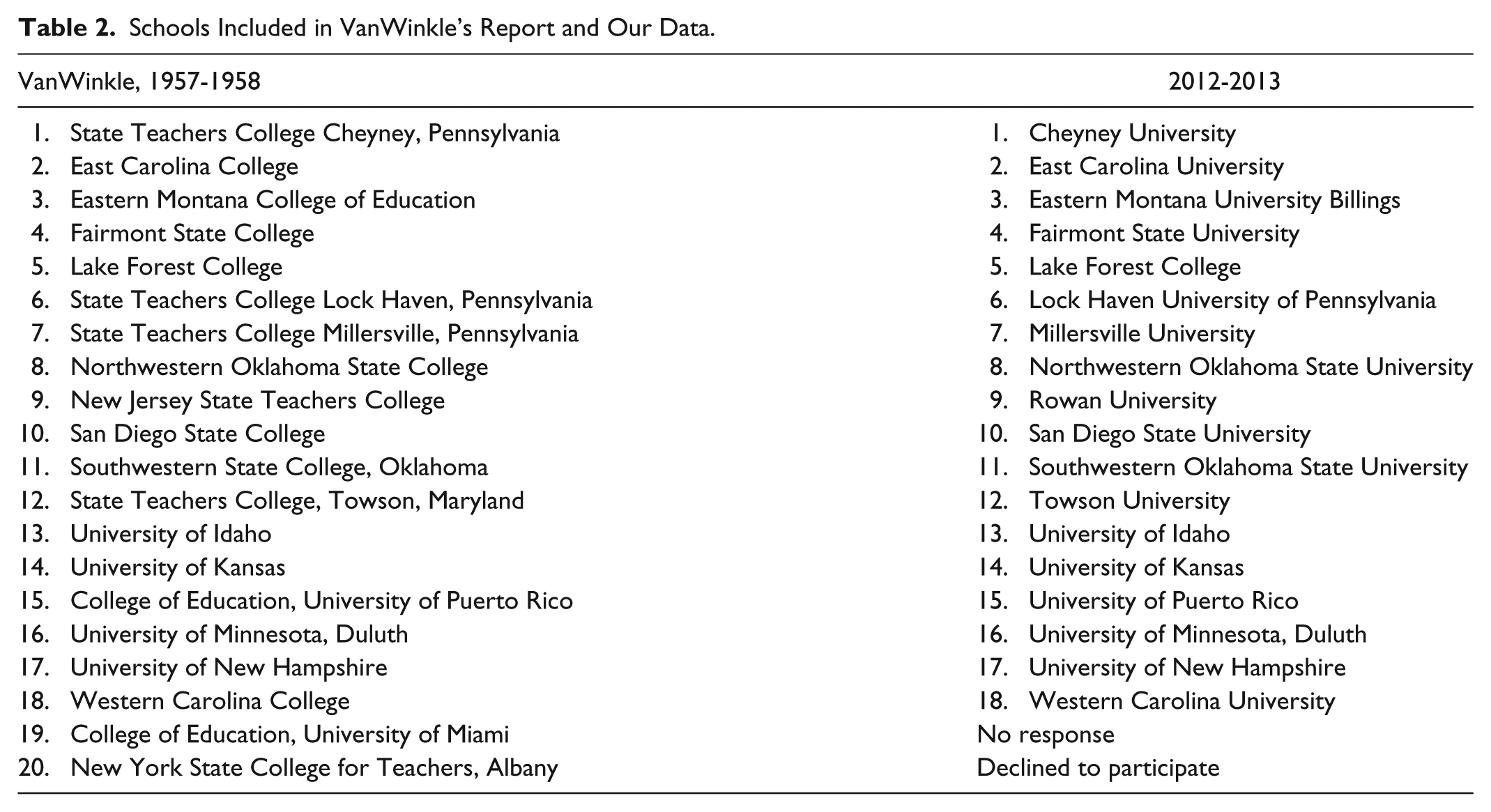
We received 19 replies to our requests for information, one TEP declined to participate, and one did not respond to our requests. Thus, we have data from 18 TEPs. Seventeen TEPs completed our online questionnaire, and one responded to the same questions through a phone interview. Data were gathered from July 2012 to February 2013. The 18 TEPs in our sample were located in 13 U.S. states and one territory. These schools reflected various kinds of institutions including small colleges (e.g., Lake Forest College, Illinois), secondary campuses of large universities (e.g., Lock Haven, Pennsylvania), mid-size universities that grew out of normal schools 1 (e.g., Towson University, Maryland), and large land-grant state universities (e.g., University of Kansas).
Questionnaire
We developed an online questionnaire to elicit information reflective of our analysis of VanWinkle’s (1959) findings (see the appendix). Our questionnaire included 21 items that allowed for both selected (responders choose responses from a list) and constructed (responders freewrite responses) responses around the five themes described in our conceptual framework.
Analysis
We engaged in quantitative and qualitative descriptive analyses of the responses to our questionnaire. We calculated descriptive statistics for responses to selected response items and developed thematic comparison matrix of the work of VanWinkle (1959), Korinek (1989) and our data to illustrate similarities and differences in compensation and benefits over time and CTs’ reported preferences.
Findings and Discussion
Our findings are organized around the five main themes identified in our conceptual framework: (a) monetary compensation, (b) professional learning opportunities, (c) CT role-focused resources, (d) engaging CTs in the college/university community, and (e) professional recognition. Unfortunately, direct comparisons of frequencies between VanWinkle’s (1959) report and our data are not possible. VanWinkle did not report on each possible item from each of the TEPs in his investigation. He wrote, “These replies are abridged, so that none indicated all the activities of any particular institution” (p. 125). In contrast, our current data has responses on each item from the responding TEPs. Although this limited the conclusions that we could draw, we argue that this analysis gives us some insight into the characterization of benefits offered to CTs both historically and presently.
Monetary Compensation
In comparison with VanWinkle’s (1959) report, we found a similar range in the dollar amounts offered as monetary compensation in the data we collected in 2012-2013. Figure 1 summarizes the range of monetary compensation amounts offered among TEPs in 2012-2013. Compensation amounts ranged from US$0 to US$490 with an average of US$232 across the 18 TEPs in our sample. Four TEPs offered no monetary compensation in 2012-2013.
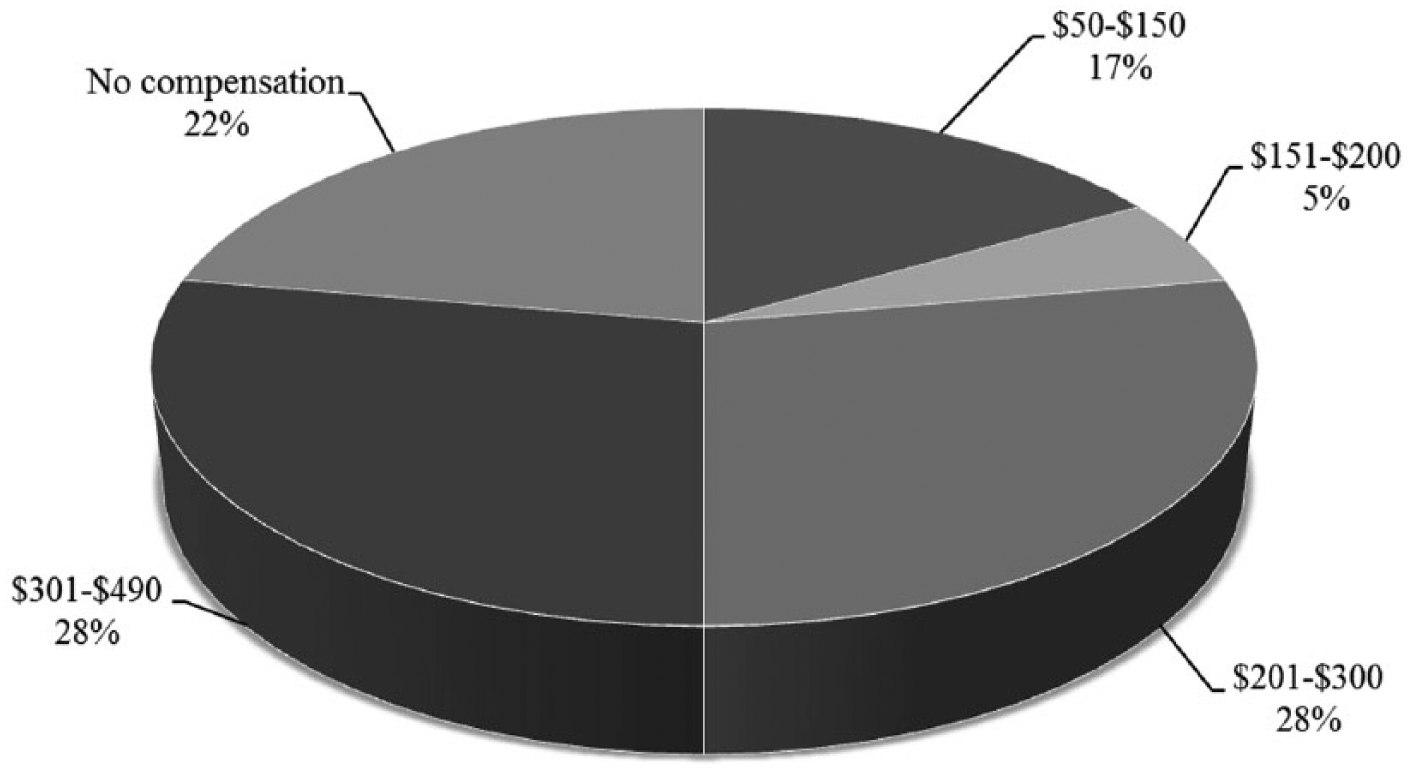
Compensation amounts among 18 schools in 2012-2013.
However, when comparing compensation rates from 1959 and 2012-2013, we must also consider the nature of inflation. According to the Inflation Calculator at www.dollartimes.com (Financial Calculators, n.d.) US$1.00 in 1959 had the same buying power as US$7.81 in 2013. Therefore, a US$200 stipend, the highest paid in 1959, would have the buying power of US$1,588.93 in 2013. The lowest amount reported paid in 1959 (other than no stipend at all) was US$35; in 2013, this would have the buying power of US$278.06, which is more buying power than the average stipend of US$232 offered to CTs from the responding TEPs in our 2012-2013 investigation. Thus, monetary compensation for CTs, when given, has not kept up with inflation, indicating that current CTs, although receiving similar dollar amounts, are actually receiving less buying power for those dollars than their counterparts did in 1957-1958. Of note, in both time periods, there were TEPs that did not offer any monetary compensation for doing this work.
Professional Learning Opportunities
Table 3 illustrates the number and type of opportunities for professional learning that TEPs offered to CTs in our sample. We describe the findings reported in Table 3 in the sections below.
Professional Learning Opportunities Offered by TEPs in 2012-2013.
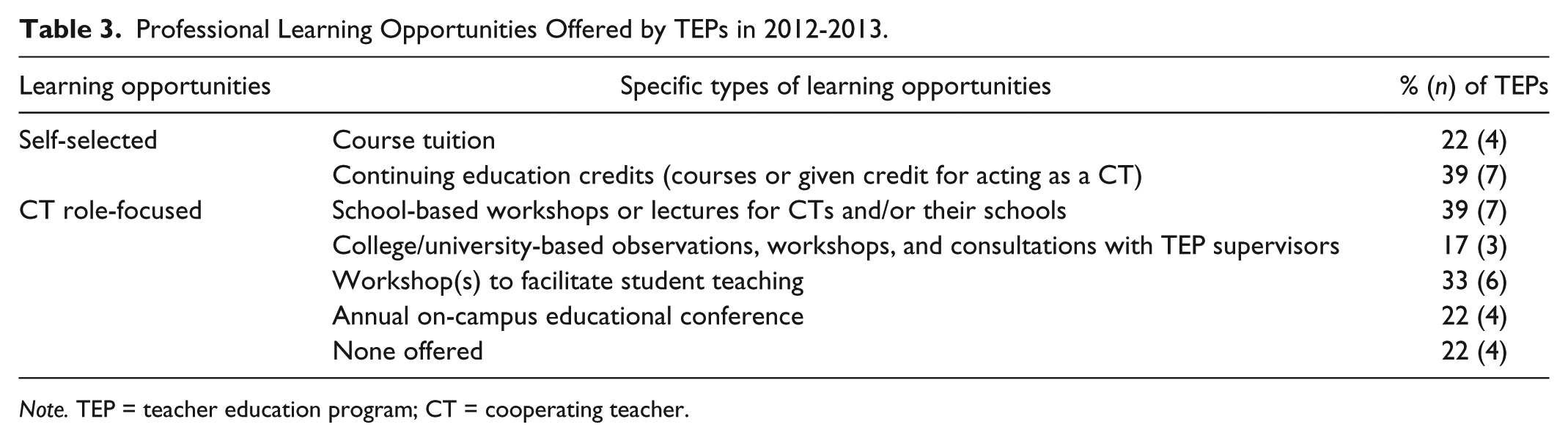
Note. TEP = teacher education program; CT = cooperating teacher.
Self-selected learning opportunities
VanWinkle (1959) identified four TEPs that allowed CTs to self-select their learning experiences (through tuition remission). Four TEPs in our sample also indicated that they offered tuition remission. However, the elaborated responses from these schools indicated variation in options and restrictions in the amount of credits available, how they could be used, and requirements for use. Specifically, the common restriction was that CTs could only take college courses that forwarded their work as CTs (e.g., courses in mentoring). Two additional TEPs allowed CTs the option to audit 2 college/university classes (in lieu of monetary compensation), suggestive of the practice of allowing CTs to select their preferred method of professional learning.
Responses to our questionnaire indicated that 39% of TEPs offered opportunities to earn continuing education credits for licensure requirements by simply fulfilling the role of CT. Researchers have argued that serving as CTs is a form of professional learning for teachers, and therefore, it can also be interpreted as a benefit to CTs (Hastings & Squires, 2002; Hudson & Hudson, 2010; Simpson et al., 2007). In addition, if CTs receive continuing education credits, then these teachers do not need to seek out or complete other PD activities.
It seems that tuition reduction or remission may be one autonomous form of PD that was offered to CTs in the past (VanWinkle, 1959) but has been reduced as an option among the current sample of TEPs. Most of the college/university credit compensation among our sample is directly tied to the work of the CT as a CT. As will be discussed in the next section, almost all TEPs offered some form of training or support for CTs in their role as a CT, but this training may not satisfy the desire for PD identified by Korinek’s (1989) sample. As changes in K-12 curriculum continue in the United States with the advent of the Common Core State Standards Initiative, practicing teachers may prefer to take non-education-related courses that will enhance their subject matter knowledge in key fields like science, mathematics, and technology to better meet the needs of the new curriculum and their students’ learning needs and interests (see Porter et al., 2011).
CT role-focused learning opportunities
Common in 1957-1958 and in 2012-2013 were learning opportunities that focused on improving CTs in their CT role. In 2012-2013, forms of CT role-focused learning opportunities among the TEPs surveyed included school-based workshops or lectures for CTs (n = 7, 39%), workshops focused on facilitating student teaching (n = 6, 33%), annual on-campus educational conferences (n = 4, 22%), and visits to the college/university to observe classes, consult with college/university personnel, or attend workshops (n = 3, 17%). Of note, four of the TEPs reported offering a few (i.e., two to three) of these opportunities to their CTs, and another four of the TEPs reported that they do not offer any of these professional learning opportunities.
Specialized CT role-focused learning opportunities were reported by the TEPs in our sample. For instance, the University of Puerto Rico reported that every 5 years, an updated 15-hr course on pedagogy and evaluation methods is offered to CTs. Millersville University invites CTs to a seminar sponsored by the Department of Educational Foundations and a 1-day technology workshop. At the University of Idaho, CTs can receive guidance in aspects of coteaching by attending a coteaching workshop. These directed learning opportunities may be reflective of the kinds of content training preferred by CTs in Korinek’s (1989) study. Topics like these, however informative, serve primarily as a form of necessary orientation to initiatives that the TEPs are implementing, rather than serving as PD that address CTs’ learning interests. The primary purpose guiding the learning activities identified in the current sample seems to be improving CTs as CTs; although these role-focused opportunities may provide CTs with professional learning experiences, some seem to be more clearly directed at providing CTs with support to complete the administrative and supervisory work of their role.
CT Role-Focused Resources
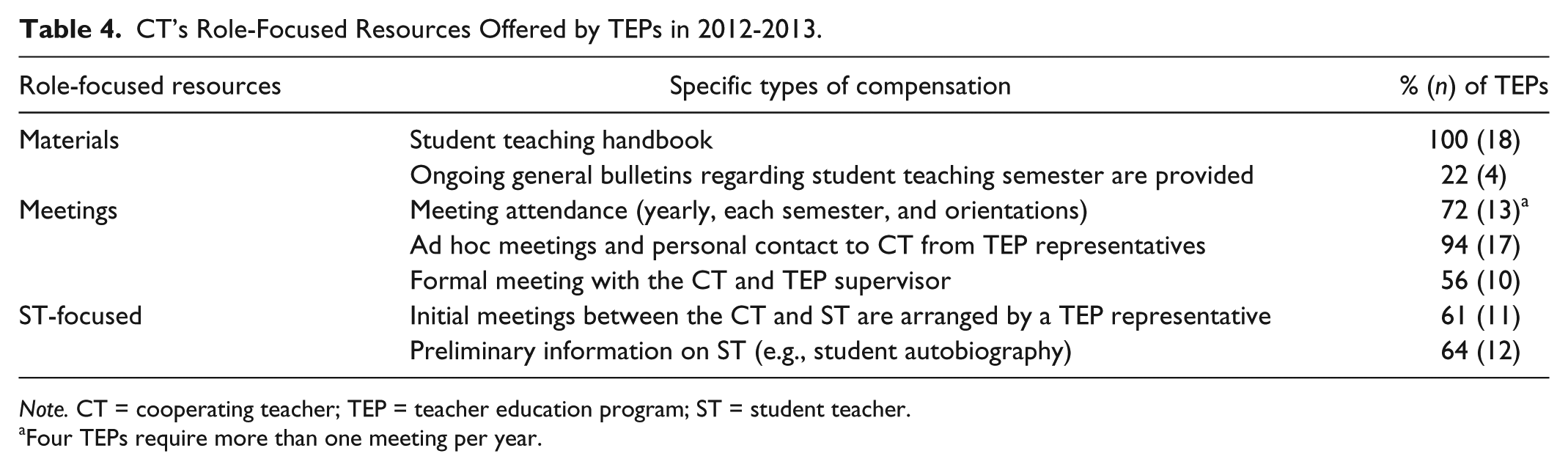
Role-focused resources were organized into three categories: materials, meetings, and ST related (see Table 4). Most TEPs in our sample offered an array of resources through a combination of materials, meetings, and information on STs. Materials included student teaching handbooks (offered by all 18 TEPs) and ongoing bulletins about student teaching (offered by four, 22% of TEPs).
CT’s Role-Focused Resources Offered by TEPs in 2012-2013.
Note. CT = cooperating teacher; TEP = teacher education program; ST = student teacher.
Four TEPs require more than one meeting per year.
Similar to the findings from VanWinkle (1959), the 2012-2013 TEPs indicated three types of meetings that were seen as a role-focused resource for CTs: (a) annual or semiannual orientations to describe the expectations for serving as a CT (n = 13, 72%), (b) ad hoc meetings and personal contact with college/university representatives (n = 17, 94%), and (c) formal meetings between the CT and the college/university supervisor (n = 10, 56%). VanWinkle (1959) cited efforts made at East Carolina College to keep their program highly personalized. Although the majority of TEPs in 2012-2013 indicated that personal contact and attention from TEP representatives were used in their open-ended responses, none of these programs indicated the same level of concern with respect to maintaining these personal relationships. This could be a limitation of our questionnaire, or it could indicate a change in the ways that CTs and TEPs are connecting.
As indicated in Table 4, TEPs offered ST-focused resources that seemed to support the development of a relationship between the CT and the ST. These resources offered by TEPs included setting up an initial meeting between the CT and the ST (n = 11, 61%) and providing biographical information about STs to the CT (n = 12, 64%). One of the 2012-2013 TEPs reported that among the information on the STs they shared with the CTs included weekly seminar reports. East Carolina University explained that they offered CTs “Taskstream 3 accounts to view [STs’] progress reports.” Given the current focus on data-based decision making in education, it is curious that STs’ general biographical information and program progress are not shared more frequently and consistently between TEPs and CTs who support STs.
Engaging CTs in the College/University Community
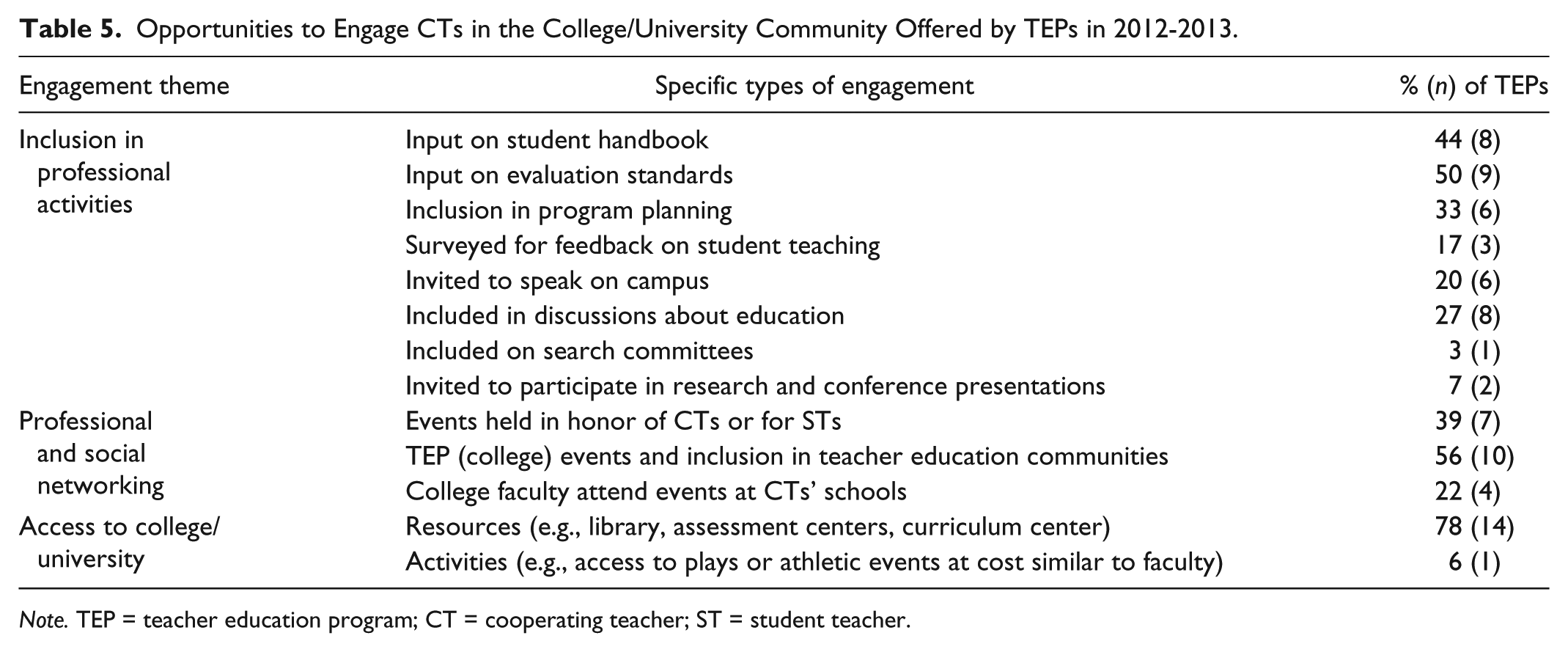
Table 5 illustrates the variety of methods used by 2012-2013 TEPs to engage CTs in the college/university community. These methods consisted of (a) including CTs in professional activities, (b) providing opportunities for professional and social networking, and (c) offering access to the college/university.
Opportunities to Engage CTs in the College/University Community Offered by TEPs in 2012-2013.
Note. TEP = teacher education program; CT = cooperating teacher; ST = student teacher.
Inclusion in professional activities
The 2012-2013 TEPs invited CTs to directly participate in the TEP activities by contributing to (a) the student teaching handbook (n = 8, 44%), (b) evaluation standards (n = 9, 50%), and (c) program planning (n = 6, 33%). The current findings are reflective of VanWinkle’s (1959) description of similar activities offered to CTs. Two TEPs elaborated that they have established student teaching advisory boards with regular meetings where CTs are invited to participate.
Other professional activities used to engage CTs in 2012-2013 were similar to VanWinkle’s (1959) findings. These activities included inviting CTs to speak on campus (n = 6, 20%), engage in discussions about education (n = 8, 27%), serve on college/university hiring committees (n = 1, 3%), and participate in research activities (n = 2, 7%). It appears that CTs’ voices in collaborative efforts have been somewhat of a focus both historically and in the present, however, reasons for doing so varied depending on perspective. For instance, VanWinkle (1959) reported on this inclusion as a means for better equipping CTs with information that would further the goals of the TEP. In contrast, recent calls for this inclusion of CTs may reflect issues of power (Graham, 1999) and the value of CTs’ perspectives to improve instruction in TEPs (Kahn, 2001). This shift was also noted by Clarke and colleagues (2014) who determined that the nature of research in this area has shifted from research on CTs, to research with CTs, to research by CTs.
Opportunities for professional and social networking
All but three of our responding TEPs in 2012-2013 provided some form of social/professional networking for their CTs, and many reported offering multiple networking opportunities. Networking opportunities included a range of activities similar to those described by VanWinkle (1959), with invitations to college/university receptions and special events as the most frequently selected response among the TEPs in our data (see Table 5).
An examination of our data and VanWinkle’s (1959) report revealed two interesting themes. First, special events for CTs continue to be used as a form of compensation. VanWinkle reported that CTs at the University of Miami, Florida, were invited to dinner and a play on campus with faculty. In 2012-2013, the University of Idaho reported that it holds an annual reception with a chocolate fountain, and Lake Forest College, Illinois, described an award ceremony where CTs were honored by their STs. Second, few TEPs in 2012-2013 embraced the use of online technologies to support networking with CTs. Given the development of online communities, we asked specifically about the use of this tool in our questionnaire and found that only four TEPs (22%) offered this to their CTs. We found this number to be surprisingly low given the ease of online technologies and the extensive use of varied social media platforms.
Access to college/university resources
A majority of the TEPs who responded to our questionnaire (78% or 14) offered direct access to the college/university in some form (e.g., library, curriculum center, assessment center, or wellness center). One offered indirect access in the form of video resources. Only one respondent (Southwestern Oklahoma State University) offered tickets to athletic events held at the university. Access to college/university resources and community, however, cannot be considered a universal fit for all CTs and TEPs. Kahn (2001), for example, pointed out that the quality of access to college/university resources and events is geographically specific. CTs’ geographic proximity to the college/university could either limit the availability or enhance the quality of this access. Thus, access may not be perceived as a valuable benefit by some CTs. This issue could be somewhat ameliorated by offering online access to resources such as the library or curriculum center.
Professional Recognition
Professional recognition could take the form of a special title or public recognition of CTs by the TEP. We found that six TEPs (20%) offered CTs a formal title in our 2012-2013 sample. Titles such as clinical faculty or supervisor were most common, but other titles included host teacher, guide teacher, CT, and collaborating teacher. Public acknowledgment or recognition was offered by seven (39%) TEPs in 2012-2013. Such acknowledgments took the form of a letter or certificate (of appreciation or participation) from the college/university or TEP. Recall this kind of recognition was among the least preferred forms of compensation among Korinek’s (1989) sample of teachers.
Limitations
This investigation is limited in that the comparison report published by VanWinkle (1959) did not provide an exhaustive list of the benefits offered to CTs by each TEP. This prevented us from making clear comparisons in frequency or averages in the types of compensation offered from that time to our current data. Second, as a replication of VanWinkle’s work, we gathered data from only 18 TEPs, which may not reflect a representative sampling of the field today. Although these data are limited, they provide some perspective on the current nature of CT compensation and benefits as is experienced by CTs today. The goal of our article was to compare the nature of compensation and benefits as reported by VanWinkle, and this sample allowed us to make those comparisons. Third, as with VanWinkle’s original publication, the present findings represent the perspective of the TEPs with regard to compensation and benefits and do not indicate the degree to which CTs perceive these opportunities to actually be compensation or benefits.
Conclusion and Implications
The purpose of this investigation was to compare current and past compensation and benefits activities offered to CTs and to analyze these findings in light of current expectations for CTs. We identified five approaches to compensating CTs for their role in teacher education: (a) monetary compensation, (b) professional learning, (c) CT role-focused resources, (d) engagement in the college/university community, and (e) professional recognition. These varied approaches span both the kinds of TEPs surveyed and the historical context of teacher education in the United States.
The changing landscape of teacher education with increased emphasis on the quality of field experiences has led to a broadening of the CT role (Clarke et al., 2014; Kahn, 2001). Kahn (2001) indicated that this expanded role may call for a deeper understanding of the CTs experience and a reconsideration of how CTs are compensated. Bartlett (2004) claimed that teachers, generally, are not only an overworked labor force but also will often strive to sustain increased demands of the profession without additional compensation or benefits. Our findings support this claim, in that some of the TEPs surveyed offer no monetary compensation for CTs. As noted previously, the nature of student teaching has evolved from 1 hour a day for a quarter (Hahn, 1951) to long-term embedded teaching placements for STs (e.g., Fairbanks et al., 2000; Korthagen, 2004). Several TEPs in our study followed teacher practicum models that require multiple placements in schools and varied amounts of compensation offered based on that duration. For instance, East Carolina University offered one of the largest stipends (US$400), but this is for a two-semester (full year) placement of STs in CTs’ classrooms. Thus, although expectations for the amount of time CTs devote and the responsibility they accept for STs have increased, the monetary compensation in terms of dollar amounts for CTs has decreased or remained flat. Furthermore, when inflation is considered, CTs in 2012-2013 received less in terms of buying power for their work than their counterparts did in 1957-1958. Because they offer limited monetary compensation, TEPs must manage a precarious balance in what they can ask of CTs who are investing large amounts of their own time with little pay for the development of the TEPs’ STs. It seems warranted to recommend that TEPs take a close look at their monetary compensation practices for CTs.
As outlined by many researchers, CTs often find that their own PD is one of the biggest rewards for performing this service (e.g., Belton, Woods, Dunning, & Meegan, 2010; Clarke et al., 2014; Hudson & Hudson, 2010; Sinclair et al., 2006). CTs reported that they continue to engage in this role, not for direct compensation, but to “give back” (Hastings, 2004) and to engage in personal PD as they learn new strategies and theory from their STs (Clarke et al., 2014; Simpson et al., 2007). A striking finding across the data gathered by VanWinkle (1959), Korinek (1989), and us, is that none of the TEPs seemed to focus on giving CTs support for their personal learning and reflection while serving as CTs. The workshops described in our data focused on how to be an effective CT but not on how to harness this experience for their own professional learning. Given the finding that CTs seek this role to experience professional learning (e.g., Sinclair et al., 2006), this may be an area where TEPs can provide more authentic learning opportunities for CTs.
Teachers continue to take on the CT role and provide meaningful contexts for future teachers to practice their profession. Supports for CTs offered by TEPs indicated efforts to facilitate the student teaching experience for the ST. However, while some of these role-focused resources for CTs have become standard (e.g., copies of the student teaching handbook) others have stagnated (i.e., providing CTs with information about STs before and during the practicum). In both VanWinkle’s (1959) report and our data, at least one school indicated the importance of the relationship between CTs and the TEP supervisors as a role-focused resource. Part of the TEP supervisor’s role was to facilitate and develop that relationship by providing one-on-one contact and support. TEPs may want to consider how this kind of communication about the STs and with the TEP supervisors could best be facilitated, perhaps by embracing social media in new and targeted ways.
Although compensation and benefits for serving as a CT has remained stagnant or decreased, the expectations for CTs and the professional risks they take are increasing. In the sociopolitical context of today, when CTs take on STs they put their emotional well-being and professional status at risk. In his study on the emotional experience of CTs in the practicum, Hastings (2004) found that CT teachers reported feelings of guilt, anxiety, responsibility, disappointment, stress, frustration, and satisfaction. One teacher in Korinek’s (1989) study commented “no amount of money compensated for a very problematic student teacher” (p. 49). Furthermore, in the United States, assessments of teachers’ effectiveness are now frequently related to the test scores of their students (Sanders, 2000; Wayne & Youngs, 2003). When CTs, who teach a tested grade level or content area, share their classrooms with STs, the CTs are risking their own employment status by allowing the STs to learn to teach with their students. In the United States, more needs to be done to safeguard CTs in these positions from the potential repercussions of taking on STs.
A recent trend in TEPs is to reenvision the ST experience and the roles of the CT, ST, and TEP through the lens of coteaching (Bashan & Holsblat, 2012). In this new model, STs share the classroom with their CTs in a method akin to the coteaching model developed for special education inclusion classrooms (Strogilos & Stefanidis, 2015). This model allows CTs to remain in their classrooms throughout the semester and work with STs as a team in ways that could benefit CTs, STs, and the K-12 students in the classroom. This model, however, may not be available in all states, as state licensing boards often determine the parameters of student teaching.
TEPs have a responsibility to ensure not only that their STs have meaningful field experiences but that the CTs who manage a vital component of teacher education for TEPs are appropriately compensated, prepared, and recognized. A startling finding in the review of the literature we conducted for this article was the absence of discussion on CT compensation or benefits in research on CTs. Many articles describe problems or challenges with CTs (e.g., Anderson & Stillman, 2013) and the knowledge and skills they need to fulfill this role successfully (Clarke et al., 2014); however, these same articles fail to mention the nature of compensation afforded to these professionals. The findings presented here should inform both research and practice related to student teaching and the role of CTs in this experience. Researchers who examine CTs should take our findings as salient contextual considerations in their analysis of CT quality. In practice, TEPs should consider the variety of practices offered as compensation and benefits to CTs and begin conversations about how these practices can be better facilitated within the confines of individual programs. It is our hope that this investigation will spark a larger dialogue regarding the expectations of CTs and the compensation and benefits offered to them such that new and innovative approaches might be generated.
Footnotes
Appendix
Authors’ Note
A previous version of this article was presented at the 2013 Annual Meeting of the American Educational Research Association, San Francisco, California.
Declaration of Conflicting Interests
The author(s) declared no potential conflicts of interest with respect to the research, authorship, and/or publication of this article.
Funding
The author(s) received no financial support for the research, authorship, and/or publication of this article.
Notes
Author Biographies
References
Supplementary Material
Please find the following supplemental material available below.
For Open Access articles published under a Creative Commons License, all supplemental material carries the same license as the article it is associated with.
For non-Open Access articles published, all supplemental material carries a non-exclusive license, and permission requests for re-use of supplemental material or any part of supplemental material shall be sent directly to the copyright owner as specified in the copyright notice associated with the article.
