






Abstract
Teachers’ knowledge of common student struggles is widely recognized as a key component of teacher knowledge across subject areas. However, most large-scale research has focused on measuring teachers’ awareness of student struggles, with little attention paid to how teachers interpret their underlying reasons. This study examined 743 mathematics teachers’ knowledge of common student struggles with ratios and proportional relationships, an important content area in the middle school mathematics curriculum. Teachers were asked to identify the most common incorrect student solutions to eight mathematical tasks and to interpret the underlying reasons for these struggles. While many teachers demonstrated awareness of empirically documented common student struggles, they tended to attribute these struggles to procedural issues rather than to conceptual misunderstandings. Hierarchical logistic regression analyses indicated that teachers’ awareness of common student struggles and their own content knowledge were linked to how they interpreted students’ struggles.
Introduction
For decades, the education community has recognized that students bring considerable prior knowledge into the classroom (Driver & Easley, 1978; Shulman, 1986; Vosniadou, 2012). Students often experience common struggles with newly introduced concepts when their existing knowledge conflicts with or is misapplied to these ideas. To help them overcome these struggles, teachers need to attend to students’ understanding of the content to inform their instruction. Such knowledge, namely the knowledge of common student struggles (KOCS), has been recognized as a key component of teacher knowledge by policy and professional standards documents (National Council of Teachers of Mathematics [NCTM], 2000; National Research Council, 2001) and by researchers across subjects (Ball et al., 2008; Copur-Gencturk & Tolar, 2022; Park & Oliver, 2008; Schneider & Plasman, 2011; Shulman, 1986). Scholars argue that common struggles provide a window into student thinking and create important opportunities for teachers’ inquiry that can encourage conceptual change. These struggles should be noticed and addressed by teachers who possess adequate KOCS (Carpenter et al., 1988; Jacobs et al., 2010; Meyer, 2004; Stockero et al., 2020; Wilhelm et al., 2017). However, earlier research indicates that teachers may not be aware of certain common student struggles and may face challenges in interpreting these difficulties and adapting instruction to better align with students’ understanding of the subject content (Gomez-Zwiep, 2008; Meyer, 2004; Morrison & Lederman, 2003; Peterson et al., 1989).
To date, most research on teachers’ KOCS has been conducted in subjects such as physics, biology, computer science, and earth science (Chen et al., 2020; Gaigher, 2014; Moodley & Gaigher, 2019, 2019; Qian et al., 2020; Sadler et al., 2013). Descriptive evidence shows that teachers demonstrate some awareness of common student struggles and tend to interpret the underlying reasons in the procedural rather than the conceptual way (e.g., Gaigher, 2014; Mthethwa-Kunene et al., 2015). Other studies have provided evidence for the positive role of teachers’ KOCS in student learning outcomes (Chen et al., 2020; Sadler et al., 2013). Despite these advances in science education, our understanding of teachers’ KOCS in mathematics remains limited. One possible reason is that in large-scale studies, teachers’ KOCS are often investigated as part of a broader conceptualization of teachers’ knowledge of student mathematical thinking, with specific findings related to the KOCS as a distinct subscale seldom reported (Bell et al., 2010; Hill et al., 2008; Krauss et al., 2008; Tatto et al., 2008). While some large-scale studies have assessed teachers’ awareness of common student struggles using multiple-choice items, they have not explored how teachers interpret the reasons behind these struggles or how they respond in instruction (Hill & Chin, 2018; Hoth et al., 2022). This mismatch between the conceptualization and operationalization of KOCS limits our understanding of the full scope of teachers’ KOCS. In contrast, small-scale studies provide rich insights into how preservice or inservice teachers make sense of students’ struggles, and how their understanding shapes their instructional decisions (Aliustaoğlu & Tuna, 2021; An & Wu, 2012; Heinrichs & Kaiser, 2018; Moru & Qhobela, 2013). These studies are especially valuable for capturing the nuanced and situated nature of KOCS, but their findings may not generalize to broader teacher populations because of their small sample size (usually less than ten). In addition, this line of work often relies on student struggles in teachers’ own classrooms but seldom addresses the common struggles that have been well documented in prior empirical research. Thus, it becomes difficult to make generalizable claims about teachers’ KOCS across studies, as teachers’ familiarity with student struggles may differ depending on the characteristics of the students they teach.
To further our understanding of teachers’ KOCS in mathematics, this study examines middle school mathematics teachers’ knowledge of common student struggles in Grade 6 and 7 ratios and proportional relationships documented in prior research conducted in both U.S. and international contexts. We focus on ratios and proportional relationships because this content area plays a critical role in the middle school mathematics curriculum and is fundamental to student understanding of advanced concepts in mathematics and physics, such as algebraic reasoning and quantities involving derived measures (Dougherty et al., 2016; Siegler et al., 2013; Thompson & Saldanha, 2003). Previous research indicates that both students and teachers struggle to understand key ideas within this domain, and teachers frequently find teaching these concepts to be particularly challenging (Izsák & Jacobson, 2017; Copur-Gencturk et al., 2022; Orrill & Brown, 2012). Despite this, there has been limited investigation into inservice teachers’ KOCS and how it relates to other types of teacher knowledge within the same content area. The rationale for focusing on teachers’ knowledge of students more broadly, rather than only of their own students, is twofold. First, prior research from both U.S. and international settings has documented recurring student struggles in ratios and proportional relationships (e.g., De Bock et al., 2007; Dougherty et al., 2016; Harel et al., 1994; Karplus et al., 1983; Noelting, 1980; Van Dooren et al., 2009, 2010). The recurrence of similar difficulties across educational contexts suggests that these struggles are likely relevant to teachers’ work in the U.S. context as well. However, we do not assume that these struggles are identical across educational contexts. We draw on this literature to identify a research-documented professional knowledge base that may matter for teaching, while recognizing that contextual factors such as curriculum, task design, instructional norms, and students’ opportunities to learn may shape how these struggles are expressed and how frequently they arise. Second, we are particularly interested in teachers’ content-specific knowledge about student thinking, rather than their familiarity with the performance of a particular class or subgroup of students. This approach allows us to examine whether teachers recognize and interpret struggles that have been repeatedly documented in prior research, while reducing the influence of classroom-specific familiarity.
Informed by prior work (Ball et al., 2008; Carpenter et al., 1988; Copur-Gencturk & Tolar, 2022; Copur-Gencturk et al., 2025; Corey et al., 2021) suggesting that knowledge of student mathematical thinking is concept- and task-specific, we asked 743 middle school mathematics teachers across the United States to answer eight mathematics items, identify the most common incorrect options chosen by students, and analyze the reasons for student struggles behind the errors. The study provided large-scale evidence on teachers’ KOCS in ratios and proportional relationships, the relationship between two components of KOCS (i.e., awareness of common student struggles and interpretations of these struggles), and the association between KOCS and teachers’ content knowledge (CK).
Conceptualizing Teachers’ Knowledge of Common Student Struggles
Teachers’ knowledge of common student struggles is one part of Shulman’s (1986) construction of pedagogical content knowledge (PCK), in which he emphasized that teachers should be familiar with the conceptions and preconceptions students bring into learning and be able to help students overcome misconceptions. Scholars in mathematics education have then followed and elaborated this construct, albeit with different names (e.g., Ball et al., 2008; Copur-Gencturk & Tolar, 2022; Krauss et al., 2008). For example, in the conceptualization of Mathematical Knowledge for Teaching (MKT), Ball et al. (2008) argued that the knowledge of common student misconceptions about particular mathematical content is central to the work of teaching. Similarly, knowledge of student misconceptions and difficulties is identified as one of the three components of teachers’ PCK in the COACTIV construct (Krauss et al., 2008). In the science education literature, misconception is a more commonly used term to describe students’ “erroneous interpretations” of the concepts after they are exposed to the school curriculum (Vosniadou, 2012, p. 10). In this article, we used struggles instead of misconceptions because we believe that student struggles are part of the learning process through which students achieve a complete understanding of a mathematical concept. We used the term common student struggles to refer to recurring difficulties documented in prior empirical research within a specific content domain. We view them as recurring patterns of difficulty identified in prior research that may serve as a research-based professional knowledge base for teachers. We then conceptualize teachers’ knowledge of common student struggles as encompassing two key components, adapted from Even and Tirosh’s (1995) framework: “knowing that” and “knowing why”. “Knowing that” refers to teachers’ awareness of common struggles that students experience, as documented by research. “Knowing why” extends this understanding to include teachers’ comprehension of the underlying reasons or sources of these struggles. For example, in adding
Common Student Struggles in Ratios and Proportional Relationships
Ratios and proportional relationships are critical topics in elementary and secondary mathematics (NCTM, 2000; National Mathematics Advisory Panel, 2008) and are essential for learning a wide range of mathematics and science concepts (Izsák & Jacobson, 2017; Lobato & Ellis, 2010; Thompson & Saldanha, 2003). Yet, these are among the most cognitively challenging concepts for students to learn and the most difficult for teachers to teach (Lamon, 2007; Van Dooren et al., 2005). Prior research over the past few decades, conducted in both U.S. and international contexts, has documented several recurring struggles students experience when solving ratio and proportional problems. One common struggle involves distinguishing between additive situations and multiplicative situations. For example, students may add equal amounts to each term of a ratio, rather than multiplying each by the same factor to scale ratios (Dougherty et al., 2016; Harel et al., 1994; Karplus et al., 1983; Noelting, 1980) or conversely, overuse multiplicative methods to solve problems with an additive structure (Van Dooren et al., 2009). This confusion stems from students’ difficulty distinguishing between additive situations, which involve absolute differences, and multiplicative situations, which rely on relative comparisons (Van Dooren et al., 2010). Another frequent struggle arises from students’ improper application of linearity to nonproportional arithmetic word problems. This struggle occurs because students do not recognize that linear relationships do not necessarily have a constant of proportionality (De Bock et al., 1998; Van Dooren et al., 2008). In addition, students often misapply direct proportionality to situations involving inverse proportionality (e.g., De Bock et al., 2007; Van Dooren et al., 2008). For example, they may incorrectly assume that two quantities increase or decrease together when, in fact, one increases as the other decreases. This struggle reflects a lack of understanding of the fundamental distinction between direct proportionality, where variables covary in the same direction, and inverse proportionality, where they covary in opposite directions (De Bock et al., 2007; Van Dooren et al., 2008). Taken together, these studies document several recurring struggles in students’ learning of ratios and proportional relationships and provide a useful research-based foundation for examining whether teachers are aware of such struggles and can interpret their underlying causes.
Teachers’ Knowledge of Common Student Struggles Across Disciplines
Teachers’ knowledge of common student struggles is believed to have consequences for teachers’ instructional decisions (Carpenter et al., 1989; Jacobs et al., 2010; Peterson et al., 1989; Sadler et al., 2013). Most research on KOCS has been conducted in STEM disciplines such as physics, biology, computer science, and earth science (Chen et al., 2020; Gaigher, 2014; Moodley & Gaigher, 2019; Qian et al., 2020; Sadler et al., 2013). This body of work is typically grounded in Shulman’s (1986) conceptualization of PCK and focuses on teachers’ awareness of common errors students make, the reasons for these errors, and how they can be addressed in instruction. A common approach used to understand KOCS is to present teachers with multiple-choice items originally given to students and ask them to identify the most frequently incorrect options chosen by students (Chen et al., 2020; Sadler et al., 2013). Other studies use more open-ended approaches (e.g., interviews and constructed-response items) that ask teachers to elaborate on student struggles and propose appropriate teaching strategies (Gaigher, 2014; Mthethwa-Kunene et al., 2015). These studies yield several notable findings. First, teachers demonstrate a general familiarity with the types of struggles students frequently encounter. In many cases, these students’ struggles are interpreted in terms of procedural challenges, such as calculation errors, rather than in relation to students’ conceptual understanding (Gaigher, 2014; Mthethwa-Kunene et al., 2015). Correspondingly, instructional responses tend to focus on procedural support, with fewer instances emphasizing strategies for conceptual change (Gottheiner & Siegel, 2012; Lucero et al., 2017; Moodley & Gaigher, 2019). Second, studies have indicated a positive association between teachers’ CK and KOCS within the same content area (Gaigher, 2014; Hartelt et al., 2022). While Lucero et al. (2017) found that teachers’ CK and KOCS appeared to operate independently, they suggested that a minimum threshold of teachers’ CK was required to recognize common student struggles. Third, and the most relevant to the significance of KOCS, some studies have shown that teachers’ awareness of common student struggles was associated with student learning outcomes (Chen et al., 2020; Sadler et al., 2013). For example, Chen et al. (2020) found that students whose biology teachers could predict the most common wrong answers outperformed students whose teachers could not in the posttest, controlling for their performance in the pretest. These findings have led many science education scholars to argue for the development of KOCS in teacher preparation programs and teacher professional development programs (Moodley & Gaigher, 2019; Qian et al., 2020).
In mathematics education, research explicitly focused on teachers’ KOCS is relatively limited and has typically been conducted on a small scale (Moru & Qhobela, 2013; Öçal, 2018). For example, Moru and Qhobela (2013) examined the knowledge of five mathematics teachers from one Lesotho secondary school regarding common student errors and misconceptions in sets. Five items with open-ended questions displaying common errors students make in learning the idea of set concepts were used to assess teachers’ knowledge of identifying and diagnosing students’ errors. Large-scale studies generally measure teachers’ awareness of the most common student errors but seldom explore teachers’ reasoning processes of student struggles (e.g., Hill & Chin, 2018; Hoth et al., 2022). For example, Hill and Chin (2018) measured teachers’ awareness of common student struggles by asking over 200 fourth- and fifth-grade teachers to select the most common incorrect answers students in general would choose on a set of mathematics test items. One exception was Zhang, Max, et al. (2024), who used open-ended items to prompt 701 Chinese primary school mathematics teachers to list the most common misconceptions students have and analyze the reasons for these misconceptions. Other relevant work has been conducted with preservice teachers. However, these studies focus more on preservice teachers’ knowledge of student mathematical thinking rather than specifically on common student struggles identified in prior literature (Aliustaoğlu & Tuna, 2021; Heinrichs & Kaiser, 2018; Stephens, 2006; Tanisli & Kose, 2013), except for the study by Isiksal and Cakiroglu (2011).
Existing work in mathematics education has shown that teachers demonstrate an awareness of common student struggles and that such awareness varies across specific concepts (Hill & Chin, 2018; Moru & Qhobela, 2013; Zhang, Max, et al., 2024). Both preservice and inservice teachers find it difficult to interpret the underlying reasons for students’ struggles (Tanisli & Kose, 2013; Zhang, Max, et al., 2024). They tend to attribute these struggles to procedural issues such as calculation mistakes or to psychological factors such as students’ self-efficacy and carelessness, while relatively few teachers focus on students’ conceptual understanding (Isiksal & Cakiroglu, 2011; Moru & Qhobela, 2013; Stephens, 2006). In terms of predictors of teachers’ KOCS, some studies have found a positive relationship between teachers’ CK and their awareness of common student struggles (Hoth et al., 2022; Tanisli & Kose, 2013). Other studies have reported that student-centered beliefs about mathematics teaching and learning are also positively associated with teachers’ KOCS (Hoth et al., 2022; Zhang, Meng, et al., 2024). Overall, there remains a lack of large-scale empirical evidence on the current status of inservice mathematics teachers’ KOCS, the interrelationship among its components, and its connection with other types of teacher knowledge, such as CK.
The Present Study
As mentioned above, despite the theoretical importance of teachers’ KOCS, large-scale empirical evidence regarding teachers’ KOCS in mathematics is limited. In this study, we aimed to understand whether teachers were aware of the most common struggles students experience when learning ratios and proportional relationships and explore how they analyzed these struggles. By using data collected from 743 middle school mathematics teachers, we aimed to answer the following questions:
Method
Participants
We invited in-service middle school teachers across the United States to participate in the study through unique and publicly available teacher email addresses obtained from an educational database company for a fee. A total of 743 teachers completed the survey. Table 1 presents the descriptive statistics of teachers’ characteristics. Most teachers in the sample identified as White (78.2%) and female (70.79%), which is similar to the demographics of U.S. teachers (U.S. Department of Education, National Center for Education Statistics, 2022). Teachers had an average of 15.68 years of experience, with a standard deviation (SD) of 7.78 years. In addition, the majority of teachers had a credential in mathematics (78.60%) and were certified through a formal teacher preparation program (80.75%, as opposed to being certified through alternative routes).
Teachers’ Characteristics in the Sample Compared With the National Representative Sample.
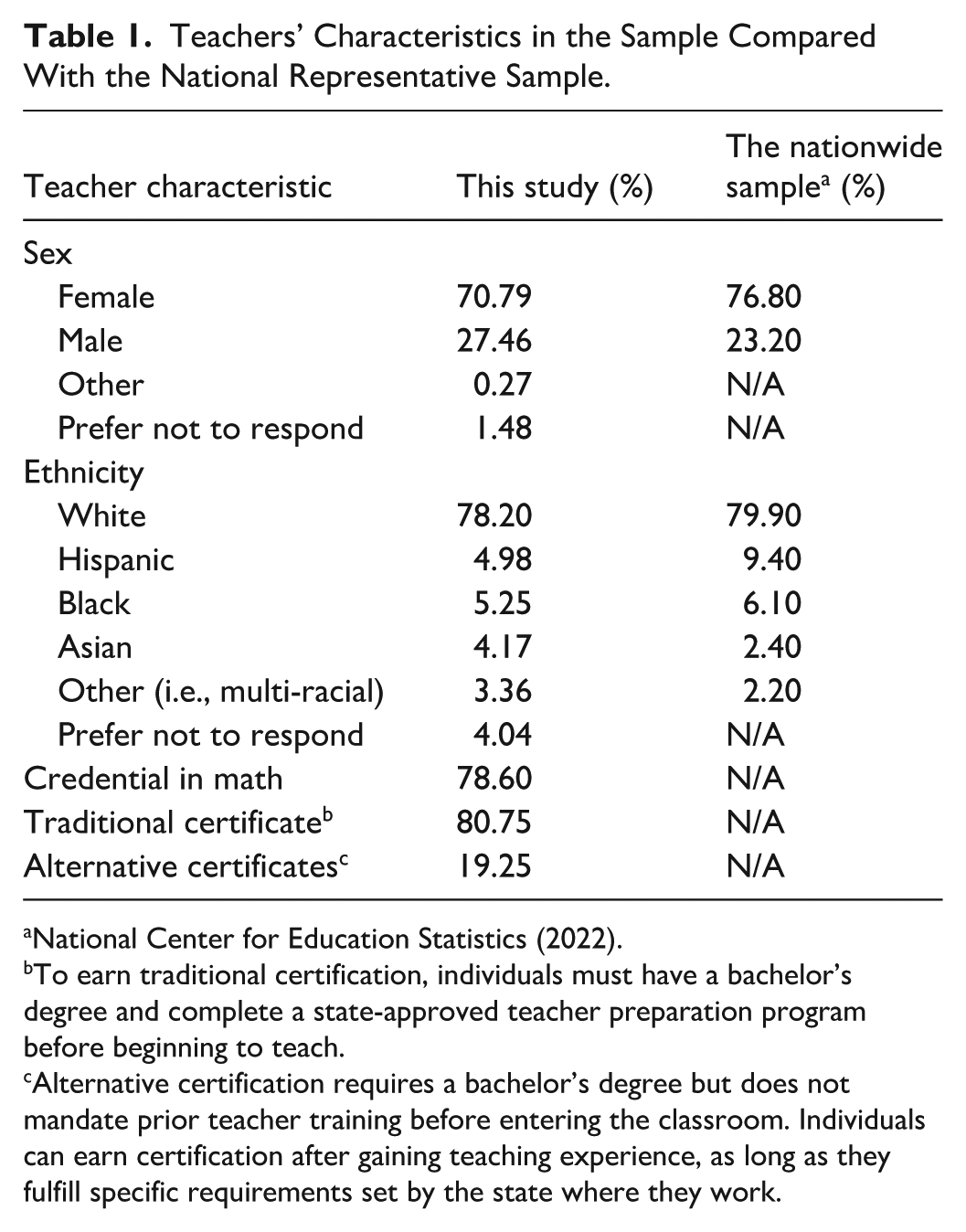
To earn traditional certification, individuals must have a bachelor’s degree and complete a state-approved teacher preparation program before beginning to teach.
Alternative certification requires a bachelor’s degree but does not mandate prior teacher training before entering the classroom. Individuals can earn certification after gaining teaching experience, as long as they fulfill specific requirements set by the state where they work.
The Mathematical Tasks and Knowledge of Common Student Struggles
We identified three “most common” struggles students experience in the area of ratios and proportional relationships, as documented by empirical research, including difficulty distinguishing between additive and multiplicative situations (Dougherty et al., 2016; Harel et al., 1994; Karplus et al., 1983; Noelting, 1980; Van Dooren et al., 2005), between linear relationships and proportional relationships (De Bock et al., 1998; Van Dooren et al., 2008), and between direct proportional relationships and inverse proportional relationships (De Bock et al., 2007; Van Dooren et al., 2008). The second author developed eight four-option multiple-choice items using common forms of mathematical tasks in U.S. curricula, including missing-value problems, comparison problems, and qualitative problems (de la Torre et al., 2013). These items were designed to elicit empirically identified common student struggles in this content area. Each item had one correct option and three incorrect options. One of the incorrect options resulted from a very common struggle, while the other two resulted from some random errors. We asked teachers to answer each multiple-choice item to assess their understanding of concepts in ratios and proportional relationships.
Aligned with our conceptualization of teachers’ KOCS as comprising “knowing that” and “knowing why” (Even & Tirosh, 1995), we then followed a two-step process to examine teachers’ KOCS. After teachers answered a multiple-choice item, we asked them to identify the most common incorrect answer that sixth- and seventh-grade students would choose for the item. This question aimed to capture whether teachers knew the most common student struggles (i.e., “knowing that”). For instance, research has shown that students often overgeneralize proportional reasoning to situations where it does not apply (Van Dooren et al., 2005). Therefore, we considered teachers who identified the response a student would give by incorrectly applying proportional reasoning in a non-proportional situation as demonstrating KOCS. Following teachers’ identification of the most common struggle for the item, we asked them to explain the mathematical reasoning underlying this specific struggle (i.e., “knowing why”). Figure 1 is an example item for capturing teachers’ content knowledge and knowledge of common student struggles.
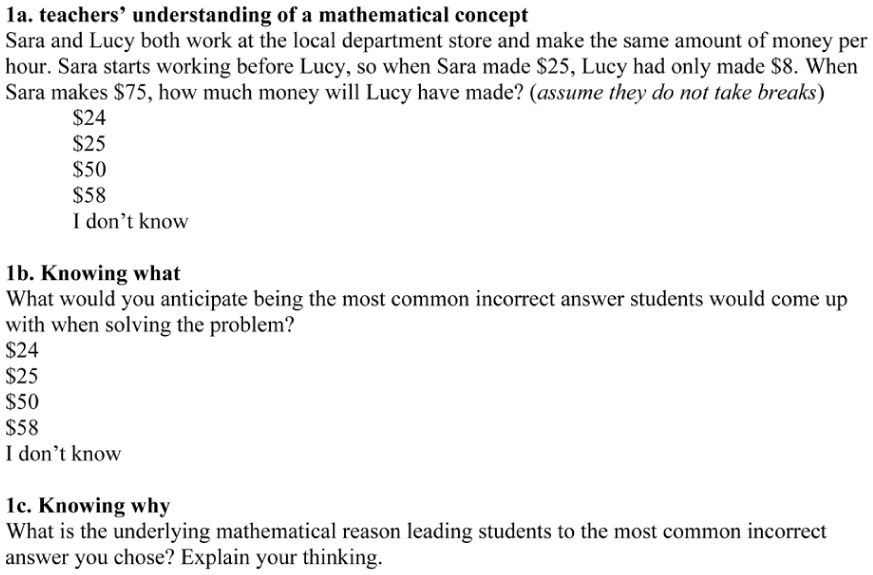
An example item for capturing teachers’ content knowledge and KOCS.
Analytical Approach
To understand teachers’ awareness of the most common student struggles and the way they interpreted the underlying reasons (i.e., Research Question 1), we calculated the percentage of different types of responses teachers provided across eight multiple-choice and open-ended items. For multiple-choice items, teachers were credited if they correctly identified the most common incorrect solutions. Teachers’ interpretations of underlying reasons were coded using a seven-category coding scheme (see Table 2 for a detailed description of each interpretation category, along with example teachers’ responses to the item in Figure 1). The coding scheme for teachers’ open-ended responses was developed using a hybrid deductive-inductive approach. Initial rubric categories were adapted from the Mathematical Descriptive code developed by Hiebert et al. (2017) and rubrics used to assess teachers’ rationales for student struggles with fractions (Copur-Gencturk et al., 2025). These sources informed an initial three-category framework: generic, procedural, and conceptual, which served as the starting point for coding. The rubric was then refined through an iterative process of examining teachers’ responses, during which additional categories emerged as necessary to capture the full range of interpretations evident in the data. As a result, the rubric was expanded from three to seven categories to more precisely distinguish nuances in teachers’ interpretations of student struggles. We want to emphasize that teachers’ interpretations were coded independently of whether teachers correctly identified the most common incorrect student responses. This approach allowed us to explore how teachers interpreted various types of student errors, rather than disregarding their interpretations when they were not aware of the most common student struggles as documented by empirical research. Specifically, if a teacher connected a student’s solution to the key mathematical concept targeted by the multiple-choice item, or if they described a critical mathematical idea that was missing and contributed to the specific struggle, we coded their responses as conceptual. Returning to the example of students’ overgeneralization of proportional reasoning to nonproportional situations, we coded the following teacher’s response as conceptual because it focused on how students made sense of the problem:
They might just be on autopilot, and this problem sounds like many problems they are asked to solve that can be solved with a proportion. So, they might just use a proportion and not even think about how much that answer does not make sense.
Categories of Teachers’ Interpretation About Student Struggles.
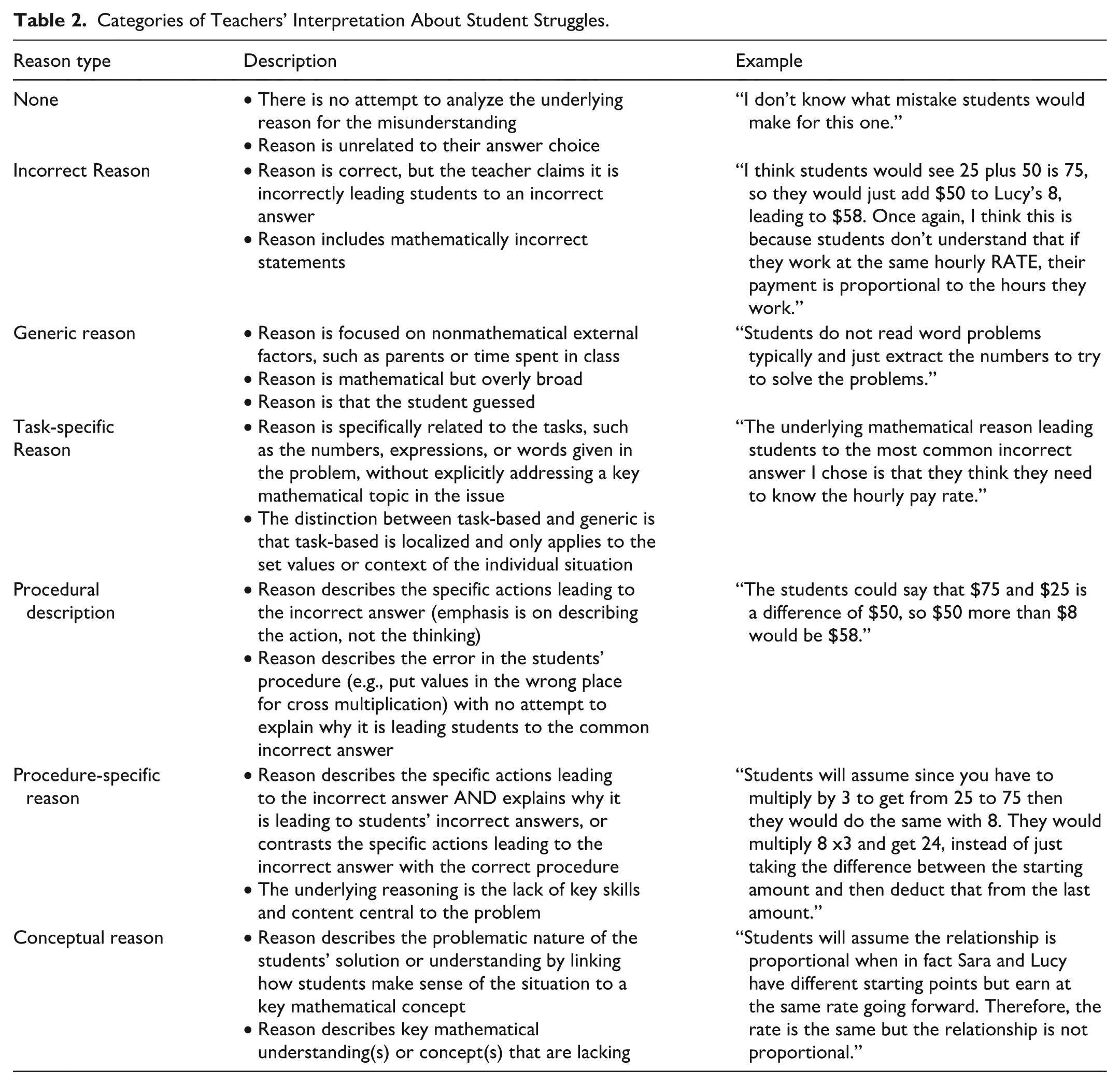
To ensure analytic rigor, we used a structured, multi-stage coding process. For each item, two raters (the second author and third author) first jointly coded a small subset of responses to calibrate their use of the rubric for that specific task. During this norming phase, two raters discussed category definitions and documented item-specific decision rules, which resulted in the final sets of seven coding categories. Once a substantial agreement was reached, the raters independently coded the remaining responses for that item. After independent coding, the raters reviewed all discrepancies and resolved them through discussion until consensus was reached. In these discussions, each rater explained the rationale for the initial code, and both raters revisited the rubric and challenged underlying assumptions before agreeing on a final code. This process of iterative refinement, independent coding, and discrepancy resolution was repeated for each item. The average kappa statistic was 0.79, ranging from 0.61 to 0.92 across items, suggesting substantial agreement between the raters.
To investigate the relationship between teachers’ awareness of common student struggles and their interpretations of the underlying reasons, we employed two-level (item nested within teachers) logistic regression analyses in STATA 18. Following previous studies (Chen et al., 2020; Hill et al., 2008; Sadler et al., 2013), we treated teachers’ knowledge as item-specific. We hypothesized that the relationship would be more pronounced among teachers’ own understanding of a certain concept, their prediction of students’ common struggles related to this concept, and their reasoning about those struggles. We conducted item-level analyses because student struggles in understanding a certain mathematical area may be attributed to different misunderstandings, highlighting the need for teachers to have targeted, concept-specific knowledge. Item-level analyses can reveal specific “blind spots” in teachers’ knowledge that may potentially impact teachers’ instructional decisions. In contrast, aggregated analyses may overlook these nuanced differences in teachers’ knowledge of particular concepts. Since we were specifically interested in understanding whether teachers could provide conceptual rationales for students’ common struggles, we recoded the categories of teachers’ interpretations as binary: conceptual or not conceptual and, therefore, adopted a two-level logistic regression model. Specifically, at level 1, the log odds of providing a conceptual interpretation of a common struggle in item i, answered by each teacher t, were predicted by two binary variables: the teacher t’s own performance on the mathematics item (i.e.,
Level 1:

Level 2:

We also examined how different combinations of teachers’ CK and their awareness of common struggles on each item were related to the probability of the teacher providing conceptual interpretations. For each item, a teacher’s knowledge may fall into one of the four possible categories (
Level 1:

Level 2:

Results
Teachers’ Knowledge of Common Student Struggles
Based on our analyses of 5,944 responses, most of the time (64.2%), teachers were aware of common student struggles across eight multiple-choice items (see Figure 2).
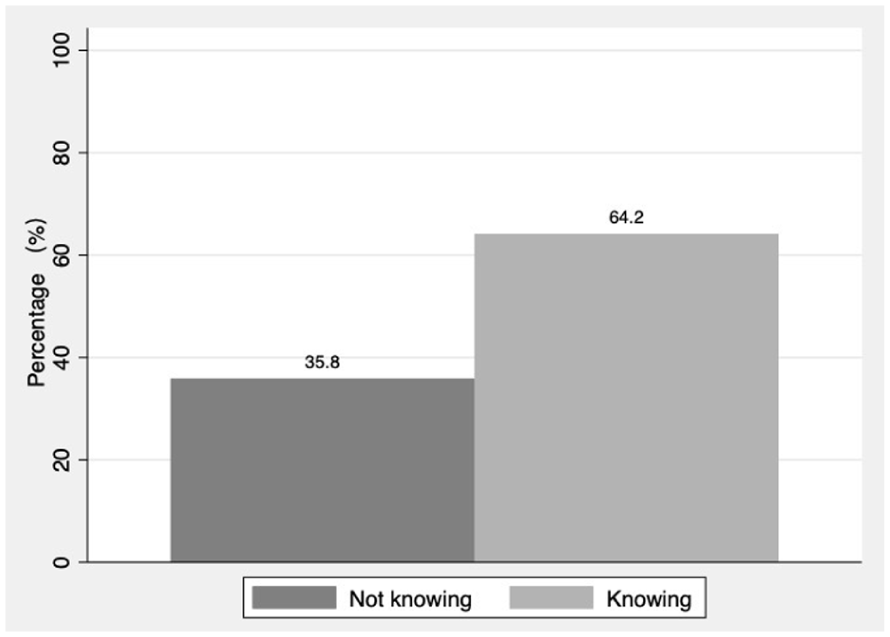
Percentage of teachers’ awareness of the most common student struggles across all mathematics items.
To explore how teachers interpreted common struggles, we asked teachers to describe the underlying mathematical reason that led students to the struggle they had identified as the most common. As displayed in Figure 3, our analysis showed that only 17.4% of the responses linked student struggles to the key mathematical concepts targeted by the items (i.e., coded as conceptual). Around half of the responses (57.8%) described or explained the procedures students carried out (e.g., placing values in the wrong place for cross multiplication), rather than their conceptual misunderstanding, which led to their struggles. Although the prompt asked teachers to provide mathematical reasoning specifically, 8.6% of teachers’ responses still focused on non-mathematical factors such as parents, time spent in class, or student guessing. We also explored the extent to which individual teachers provided consistent conceptual interpretations of student struggles across items. We found that 37.5% of the teachers did not provide conceptual interpretations of any of the most common struggles they identified. Only 6.33% of the teachers provided conceptual interpretations for more than half of the most common struggles they identified.
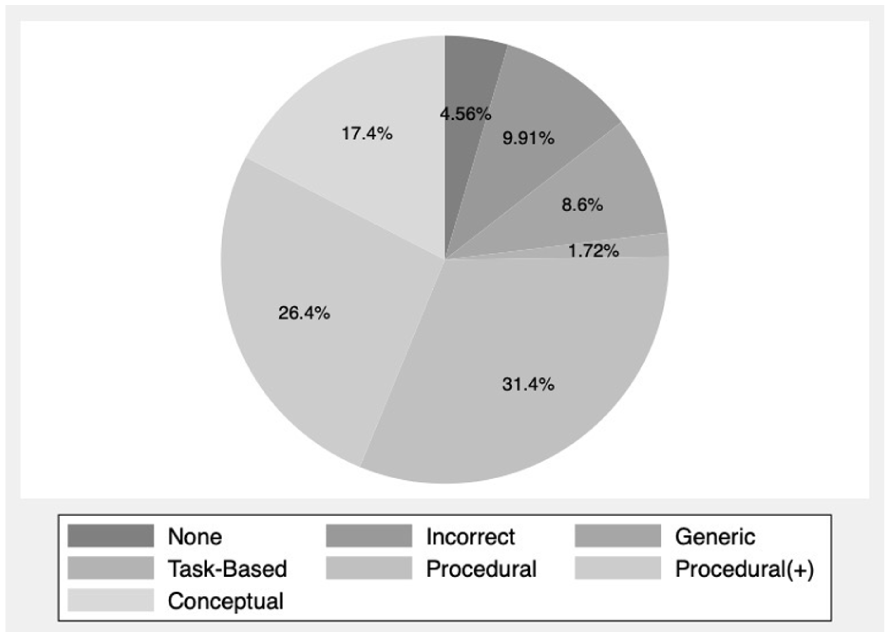
Percentage of categories of teachers’ interpretations of underlying reasons for common student struggle across 5944 responses.
The Relationship Between Teachers’ Awareness of Common Student Struggles and Reasoning About These Struggles
Following the descriptive analyses of teachers’ KOCS, we next examined whether knowing the most common struggles, as identified in empirical research, was related to the probability of teachers providing conceptual interpretations of the underlying reasons for student struggles. As noted above, we recoded teachers’ interpretations as a binary variable. In Table 3, we reported the odds ratios of teachers providing conceptual interpretations. The results showed teachers’ awareness of the most common struggles was related to the way they interpreted underlying reasons for these struggles (p < .001). The odds that a teacher would provide a conceptual interpretation of student struggles on an item were 2.47 times greater when the teacher was aware of the most common struggle, compared to when they were not aware of the most common struggle, controlling for other variables. Teachers’ own performance on the mathematics item was also significantly related to how they interpreted student struggles. When a teacher was not aware of the most common struggle on one item, the odds of providing a conceptual interpretation of student struggle were 3.61 times greater if the teacher provided a correct answer to the mathematics item themselves, compared to when the item was answered incorrectly.
Estimated Odds Ratio of Providing Conceptual Interpretations.
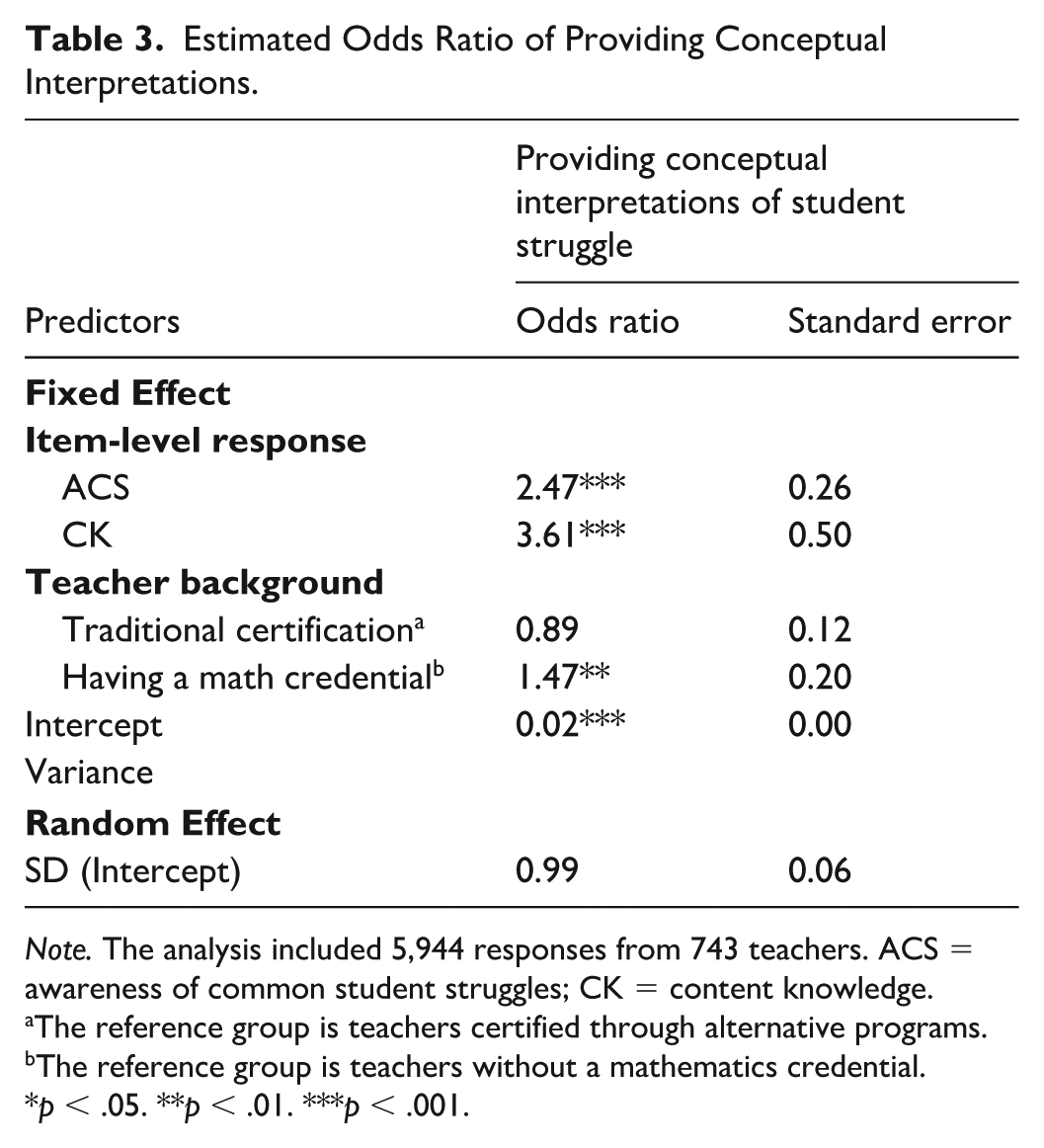
Note. The analysis included 5,944 responses from 743 teachers. ACS = awareness of common student struggles; CK = content knowledge.
The reference group is teachers certified through alternative programs.
The reference group is teachers without a mathematics credential.
p < .05. **p < .01. ***p < .001.
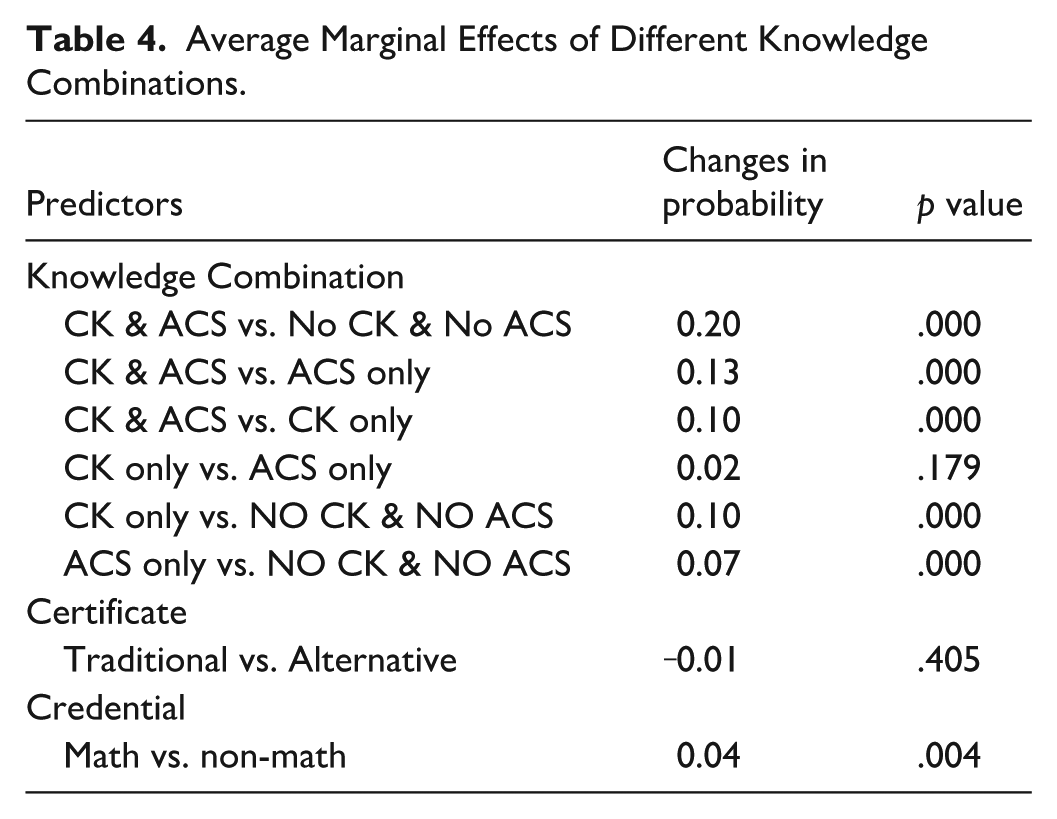
We also examined the relationship between teachers’ different knowledge combinations on each item and their interpretations of common student struggles. Descriptive analyses showed that teachers’ performance on CK and their awareness of the most common struggle (ACS) in combination fell into one of the four categories: both CK and ACS (56.44%); CK, no ACS (17.50%); ACS, no CK (7.72%); and no CK, no ACS (18.34%). Figure 4 displayed the probability of providing conceptual interpretations by these four categories. Results from the two-level logistic regression model indicated that teachers with responses in the category of both CK and ACS (i.e., correctly answered the mathematics item and knew the common student struggle) had the highest predicted probability of providing a conceptual interpretation of students’ struggles, compared to responses of other knowledge combinations. The differences were statistically significant (p <.001; see Table 4). Teachers with a response in the category of CK only had a higher probability of analyzing students’ struggles conceptually than those in the category of ACS only. However, the difference was not statistically significant (p = .179; see Table 4). In terms of teachers’ professional background, we found that the odds of providing a conceptual interpretation for a teacher with a credential in mathematics were 1.47 times higher than those for teachers without a credential in mathematics (p < .01), controlling for other variables.
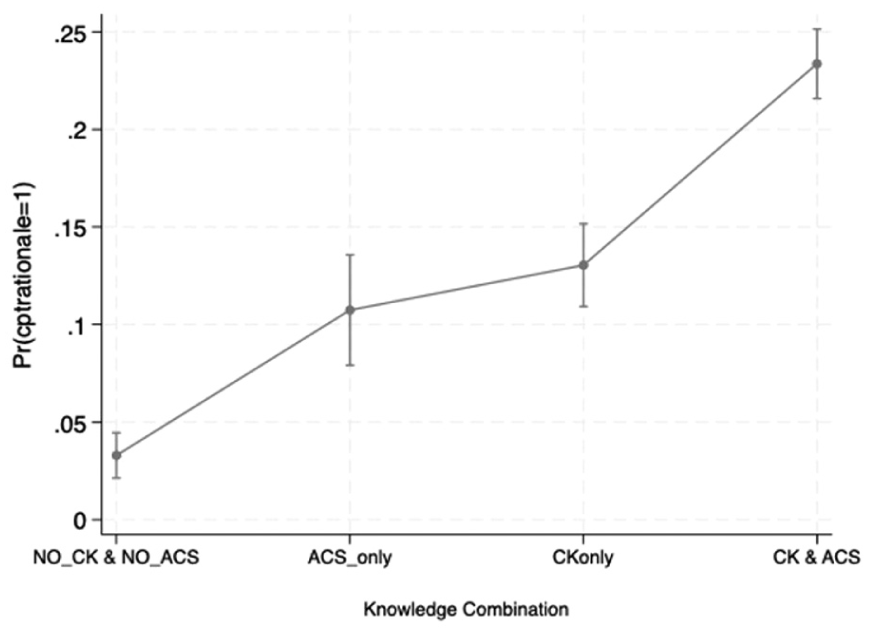
The probability of providing conceptual interpretations by teacher knowledge types.
Average Marginal Effects of Different Knowledge Combinations.
Discussion
Given the theoretical importance of KOCS and the limited research explicitly focused on teachers’ KOCS in mathematics, this study examined whether middle school mathematics teachers were aware of research-documented common student struggles in ratios and proportional relationships and how they interpreted the underlying reasons for these struggles. We also explored how teachers’ awareness of common struggles and their CK were related to the way they interpreted these struggles.
Based on 5,944 responses from 743 teachers across eight items, our analyses showed that teachers demonstrated some awareness of common student struggles in ratios and proportional relationships. However, when it came to their interpretations of the underlying reasons, teachers most often attributed student struggles to generic or procedural issues, rather than to a lack of conceptual understanding of the principles and rules in this content area. The results aligned with findings from previous case studies (Gaigher, 2014; Isiksal & Cakiroglu, 2011; Moru & Qhobela, 2013; Mthethwa-Kunene et al., 2015; Son, 2013) and extended this line of work by providing large-scale evidence from a national sample of in-service teachers. Because teachers in prior small-scale studies were often drawn from the same schools or districts, their KOCS may have been shaped in part by similar teaching contexts. Our national sample may reduce this concern to some extent and thus offers stronger evidence that these patterns are not limited to one local context. In addition, it is important to note that teachers’ scores for interpreting student struggles did not depend on whether they identified the research-documented most common incorrect response. Teachers received credit for interpretation if they linked the identified struggle to a specific mathematical concept missing in students’ thinking. Even with this scoring approach, teachers who identified the research-documented common student struggle were still more likely to provide conceptual interpretations of the underlying reasons. These findings suggest that familiarizing teachers with common student struggles, as identified in prior literature, may encourage them to reconsider the mathematical concepts students may not understand and that may prevent them from solving these problems successfully. Although this study did not directly examine how teachers address student struggles, we anticipate that teachers who interpreted student struggles in a conceptual way would be more likely to provide instructional strategies that aim to facilitate conceptual change (Copur-Gencturk et al., 2025). Future studies are needed to make a stronger claim about the relationship between teachers’ interpretation of common student struggles and their instructional practice.
In addition, we found teachers’ own performance on mathematical items significantly predicted the probability of providing conceptual interpretations of underlying reasons for student struggles. This probability increased by 10% if they simultaneously identified the most common student’s incorrect answer to the mathematical item. However, our results also showed no significant difference in the probability of providing conceptual interpretations between teachers who knew the mathematical concepts only and those who were only aware of the common student struggles. This finding is consistent with the positive relationship between CK and KOCS reported in science education literature (Gaigher, 2014; Hartelt et al., 2022) and helps explain the mechanism underlying the development of teachers’ PCK (Copur-Gencturk et al., 2019; Copur-Gencturk & Li, 2023; Krauss et al., 2008; Tröbst et al., 2018). Taken together, these findings suggest that a robust conceptual understanding of common student struggles can be better supported when teachers have both strong CK and awareness of common student struggles.
Overall, the findings of this study underscore the need to develop teachers’ KOCS in both teacher preparation and professional development programs. Prior research on teachers’ knowledge of student mathematical thinking suggests that such knowledge is more likely to develop through practice-based and content-specific learning opportunities than through broad discussions of student thinking at a general theoretical level (Copur-Gencturk et al., 2024; Franke & Kazemi, 2001; Kazemi & Franke, 2004). In particular, studies have shown that analyzing authentic student work on mathematics tasks can help teachers attend more closely to students’ strategies, errors, and the underlying mathematical misunderstandings reflected in them (An & Wu, 2012; Copur-Gencturk et al., 2019; Kazemi & Franke, 2004). In addition, video-based professional learning, particularly video clubs, can support teachers in noticing and interpreting student thinking conceptually during classroom interaction (van Es & Sherin, 2008). Consistent with this line of work, Kennedy’s review of PD programs suggests that programs that provide teachers with insight into student understanding and engage them with classroom artifacts such as videotapes of classroom events and student work samples tend to generate stronger effects on student learning. Because KOCS concerns a more specific aspect of teachers’ knowledge of student thinking, these approaches may be productively adapted in teacher education and professional development to focus more explicitly on research-documented common student struggles, the conceptual misunderstandings underlying them, and instructional responses that support conceptual change. In addition, reviews of PD programs have shown that programs targeting both CK and PCK are more successful than those targeting either of them in isolation (e.g., Kennedy, 1998; Scher & O’Reilly, 2009). This is consistent with our finding that teachers’ CK was associated with more conceptual interpretations of student struggles and suggests that efforts to develop KOCS may be strengthened by pairing them with opportunities to deepen teachers’ own understanding of the mathematical content (e.g., Copur-Gencturk & Li, 2023).
Limitations and Future Directions
Despite the findings and implications noted above, we acknowledge several limitations of our study. First, although our sample was large and national in scope, it was not randomly drawn. Therefore, the findings should not be interpreted as nationally representative of all U.S. middle school mathematics teachers, and caution is needed in generalizing beyond the teachers included in this study. Although recruiting teachers from across the United States may reduce the influence of a single shared local context, we did not collect detailed contextual information about teaching contexts. As a result, we could not examine how contextual factors may have shaped the student struggles teachers identified or the ways they interpreted those struggles. Future research could collect richer data on teaching contexts to better understand how such factors influence teachers’ KOCS. By extension, our analyses at the teacher level only controlled for teachers’ pathways to certification and whether they held a specialized math teaching credential. These binary indicators provided limited information about the features and quality of training teachers had received previously. Future studies should gather more detailed information about teacher education coursework, professional development experiences, and other opportunities to learn about student thinking to generate more actionable implications for KOCS development. Finally, because we collected open-ended responses to eight items from over 700 teachers, and due to resource constraints and the considerable time required for teachers to complete the study, we were unable to ask these teachers to report how they would address student struggles or to collect student performance data. Therefore, we could not examine how teachers’ KOCS was related to mathematics instruction and student achievement. Future research is needed to collect data on teachers’ KOCS, instructional practice, and student performance, which would provide stronger empirical evidence that teachers’ KOCS plays an important role in teaching and learning. With recent advances in using artificial intelligence for text analyses, and preliminary results showing that large language models can effectively code constructed-response items measuring teachers’ PCK and CK (Chu et al., 2024), future research may benefit from using AI to help with coding open-ended responses.
Conclusion
Knowledge of common student struggles has been considered a key component of teacher capability for effective teaching. While teachers’ KOCS has been extensively studied in science domains, large-scale evidence regarding how teachers interpret common student struggles remains limited in mathematics. This study contributes large-scale evidence from a U.S. sample of inservice middle school mathematics teachers showing that student struggles in ratios and proportional relationships were often interpreted in generic or procedural rather than conceptual ways. The findings further suggest that stronger mathematical content knowledge, together with awareness of research-documented common student struggles, may support teachers in identifying the conceptual misunderstandings underlying student errors. In addition to attending to teachers’ knowledge of students more broadly, teacher educators and professional development designers should place greater emphasis on teachers’ knowledge of research-documented common student struggles, which often reflect recurring conceptual difficulties in learning specific mathematical ideas. More research is needed to extend the investigation of in-service teachers’ KOCS to other mathematical content areas and other subject areas and to uncover how teachers’ KOCS influence instruction and student learning.
Footnotes

Funding
The authors disclosed receipt of the following financial support for the research, authorship, and/or publication of this article: This work was supported by the National Science Foundation in the United States under Grant Number 1813760 and Herman and Rasiej Mathematics Initiative. Any opinions, findings, conclusions, or recommendations expressed in this material are those of the author(s) and do not necessarily reflect the views of the National Science Foundation and Herman and Rasiej Mathematics Initiatives.
Declaration of Conflicting Interests
The authors declared no potential conflicts of interest with respect to the research, authorship, and/or publication of this article.