







Abstract
The 18th National Congress of the Spanish Society for Laboratory Animal Science (SECAL), held in Bilbao from 18 to 21 November 2025, brought together approximately 400 professionals from across the laboratory animal science community. The meeting featured a comprehensive and high-quality scientific programme addressing key topics such as biosafety, occupational health, the use of aquatic models, technological innovation and the implementation of the 3Rs (Replacement, Reduction and Refinement) principles. The congress combined plenary sessions, workshops, oral and poster presentations and round-table discussions, fostering knowledge exchange and professional interaction. A dedicated session on the translation of animal research to clinical applications provided an interdisciplinary perspective involving scientists, welfare experts and patient representatives. The event highlighted the continued commitment of the community to scientific excellence, ethical responsibility and innovation, reinforcing the role of the SECAL Congress as a leading national forum in laboratory animal science.
The Spanish Society for Laboratory Animal Science (SECAL) successfully held its 18th National Congress in Bilbao (Spain) from 18 to 21 November 2025 (Figure 1). The event brought together approximately 400 participants, including researchers, veterinarians, animal facility managers, technicians and other professionals working in the field of laboratory animal science. The high attendance and active engagement of participants reaffirmed the congress as a key national meeting point for scientific exchange, professional networking and continuing education in this specialised discipline.
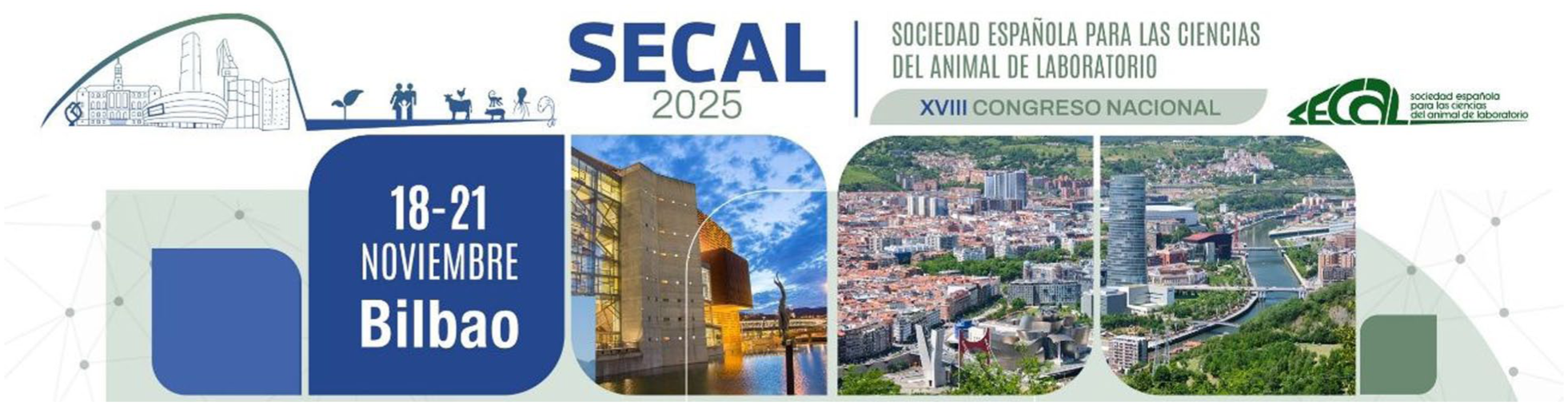
Image from the 18th SECAL Congress (source: Congress website).
The congress was structured around a comprehensive and high-quality scientific programme designed to address current challenges and emerging trends in laboratory animal science. The organisers aimed to create a dynamic and inclusive environment that would facilitate interaction among attendees from diverse professional backgrounds. To this end, the programme combined pre-congress workshops, plenary lectures, oral communications, poster sessions and round-table discussions, ensuring a balanced approach between knowledge dissemination and active participation.
Pre-congress workshops provided hands-on training opportunities and practical insights into specific topics of interest, allowing participants to engage more deeply with specialised techniques and methodologies. These sessions were particularly valued by early-career professionals and technical staff, who benefited from direct interaction with experienced practitioners and experts in the field.
The plenary sessions featured invited speakers of national and international recognition, who addressed key issues shaping the future of laboratory animal science. These included developments in regulatory frameworks, advances in experimental models and ongoing efforts to improve animal welfare standards. The high level of the invited lectures contributed significantly to the overall scientific quality of the meeting and stimulated constructive discussion among participants.
Among the central topics covered, biosafety in research animal facilities received considerable attention. Sessions dedicated to this area explored practical aspects such as the prevention of biological risks, contingency planning, incident management and the adaptation of biosafety protocols to different types of installations. These discussions highlighted the increasing complexity of research environments and the need for robust, flexible and well-implemented biosafety strategies.
Occupational health and safety in animal facilities was another key theme addressed during the congress. Presentations and round-table discussions focused on risk assessment, staff protection measures and the importance of continuous professional training. Particular emphasis was placed on the integration of current regulations into daily practice, as well as on fostering a culture of safety within animal facilities.
The use of aquatic species in biomedical research was also prominently featured in the programme, reflecting the growing importance of these models in various research areas. Sessions covered topics such as housing conditions, welfare considerations, breeding management and experimental use of fish and other aquatic organisms. Speakers highlighted both the opportunities and the challenges associated with these models, as well as the need for continued refinement of husbandry and experimental protocols.
Technological innovation emerged as another major focus of the congress. Several presentations addressed the application of digital tools, artificial intelligence and automated data analysis in laboratory animal science. These approaches are increasingly being used to enhance data quality, improve reproducibility and optimise experimental design. Furthermore, they offer potential benefits in terms of reducing animal use and refining experimental procedures, in line with ethical and scientific expectations.
The principles of the 3Rs (Replacement, Reduction and Refinement) were a cross-cutting theme throughout the congress. Numerous contributions demonstrated ongoing efforts to develop alternative methods, minimise animal use and improve experimental techniques to enhance animal welfare. These discussions underscored the commitment of the scientific community to conducting responsible research that aligns with both ethical standards and scientific rigour.
One of the most notable and well-attended sessions of the congress was entitled ‘From animal research to the patient’, which was also broadcast via live streaming. This session provided a multidisciplinary platform for dialogue between researchers, animal welfare experts and representatives of patient organisations. Discussions focused on the role of animal research in the development of new therapies, the societal perception of animal experimentation and the importance of transparency and effective communication with the public. The session highlighted the need to bridge the gap between scientific practice and societal expectations, fostering trust through openness and dialogue.
The scientific programme was further enriched by a wide range of oral communications and poster presentations, which reflected the diversity and vitality of ongoing research in laboratory animal science. These contributions covered a broad spectrum of topics, from experimental techniques and animal models to welfare assessment and facility management. The high quality of the submitted work demonstrated the strong research activity within the community and provided valuable opportunities for discussion and collaboration.
The congress also benefited from the participation of numerous sponsors and exhibitors, with a total of 34 companies supporting the event. Their presence contributed to the overall success of the congress and facilitated interaction between the scientific community and industry stakeholders. This collaboration is essential for the continued development of technologies, products and services that support high standards in laboratory animal science.
Beyond the scientific programme, the congress offered valuable opportunities for networking and professional exchange. Informal discussions, social events and shared activities contributed to strengthening existing collaborations and fostering new professional relationships. These interactions are an integral part of the congress experience and play a crucial role in building a cohesive and collaborative scientific community.
Overall, the success of the 18th SECAL Congress can be attributed to the combination of a high-quality scientific programme, strong participation and effective organisation. The positive feedback received from attendees highlights the relevance and impact of the meeting within the field of laboratory animal science.
The congress once again demonstrated its importance as a platform for knowledge dissemination, continuing education and professional networking. It also reinforced SECAL’s role in promoting best practices, supporting scientific excellence and advancing ethical standards in the use of animals in research. As the field continues to evolve, meetings such as this will remain essential for addressing emerging challenges and fostering innovation in a responsible and collaborative manner.
