







Abstract
A deficient philosophical anthropology is likely the root of many of society's ills and poor health outcomes. We neither understand our complexity nor clearly see the higher goods that we should aim for. Additionally, Christians, and specifically Christian physicians, need an anthropology that coheres with theology. Harmony of the biopsychosocial-spiritual dimensions oriented towards the basic goods is a philosophical anthropology that leads to better health outcomes while coherent with Christian theology. Harmony, or the right relationship among the dimensions, is synergistic and best achieves our goals. These higher goals should be the basic goods (life, health, work, play, marriage, friendship, knowledge, aesthetic experience, personal integrity, and harmony with the Divine) which can be normative and rightly order our actions. Balance among all dimensions is a critical element of harmony; however, the dominance of the psychological leads to imbalance resulting in a myriad of problems. Self-transcendence of the psychological restores balance. The spiritual dimension is best defined as the “transcendent” comprising the good (the virtues), the true (transcendent truths of nature, humanity, and God), the beautiful, and a relationship with God. This best distinguishes it from the other dimensions. Sin harms the relationships among the dimensions while Jesus Christ redeems them.
Keywords
Introduction
Despite continued economic and technological progress along with expanding freedoms, patients and healthcare professionals suffer from high and increasing rates of anxiety, stress, and depression (Diener and Seligman 2004). This decline in human flourishing is likely a direct result of a truncated and deficient philosophical anthropology or view of the human. According to Professor Carl Trueman's analysis of the history of intellectual thought and Professor Carter Snead's review of philosophical and legal thinking, the current dominant view of the human is psychologically driven and has been labeled “expressive individualism” (Snead 2020, 5; Trueman 2020, 43–45). This understanding of our humanity prioritizes our psychological thoughts, emotions, and desires above all and posits that fulfilling these desires is the best pathway to human flourishing. The fulfillment of psychological desires is usually centered around sexual expression and economic activity (career and consumption) (Hofmann, Diel and Seibel 2018).
However, this view has resulted in high rates of psychological disorders and dysfunction (Humphrey and Bliuc 2021) and social harms, especially to men (Hafera 2024), likely resulting in increased drug use along with other adverse health effects. Expressive individualism has also led to increasing family estrangement and social hostility (Coleman 2021). The prioritization of the psychological subsequently instrumentalizes the biological and social aspects of our humanity while relegating the spiritual as merely optional. Our most pressing need within medicine today and the broader culture is to capture a true vision of the human to re-order our lives and the lives of our patients. A holistic understanding of the human will decrease disease, improve health, and regain human flourishing while promoting the common good.
Additionally, Christians, and especially Christian physicians, need a philosophical anthropology that coheres with their deeply held theological beliefs. Ideally, a model of the human that both appeals to the culture at large while providing avenues for deep theological truths and insights would form a basis for a fully integrated patient–physician experience that should lead to greater health outcomes and flourishing for both patient and physician whether they are Christians or not.
Harmonious multidimensional living oriented to the basic goods can fulfill these needs. The biopsychosocial-spiritual (BPSS) model outlines the dimensions while the basic goods guide the prioritization of our harmonious efforts. We will define each of the four interrelated dimensions followed by a discussion of harmony and its key elements of balance, mutual subordination, and self-transcendence. The synergy of harmony can be adversely impacted if the dimensions are not in balance. Mutual subordination reminds us of the correct orientation of each dimension toward the others while self-transcendence focuses on correcting the dominance of the psychological. The basic goods will serve as a framework to prioritize our harmonious activities. We will then use this expanded understanding of the BPSS model explaining how this holistic approach results in better patient health predominantly through studies and review articles that look at the impact that constituent elements within the psychological, social, and spiritual dimensions have upon biological health. Throughout our discussion we will extend this model to show its deeper Christian theological insights. Our approach will be an essay exploring a new and expanded philosophical anthropology which will be supported by multiple applications including other authors’ reflections along with medical and nonmedical examples that highlight the ideas or concepts that we have developed.
Biopsychosocial-Spiritual Model
George Engel proposed the Biopsychosocial model in 1977 as a response to the dominant and limited biomedical model (Engel 1977). This model recognized that the human was more than just a biological engineering problem, but rather a complex being whose biological health outcomes were frequently affected by psychosocial factors.
Daniel Sulmasy built upon this model in 2002 by including the spiritual dimension, which he defined as “an individual's or a group's relationship with the transcendent” (Sulmasy 2002). He acknowledged that other authors had called for an expansion of the biopsychosocial model to include spirituality; however, he claimed that no one had grounded their proposed model in a philosophical consideration of the nature of man. Sulmasy's philosophical anthropology hinged upon man as “a being in relationship” and also “intrinsically spiritual” (Sulmasy 2002). Applying this to the work of the physician he said, On [the biopsychosocial-spiritual] model, healing is not, as it is often characterized, a “making whole.” Rather, healing, in its most basic sense, means the restoration of right relationships. What genuinely holistic health care means then is a system of health care that attends to all of the disturbed relationships of the ill person as a whole, restoring those that can be restored, even if the person is not thereby completely restored to perfect wholeness. A holistic approach to healing means that the correction of the physiological disturbances and the restoration of the milieu interior is only the beginning of the task. Holistic healing requires attention to the psychological, social, and spiritual disturbances as well. (Sulmasy 2002)
Thus, the relationships that could be disturbed in a patient were both intrapersonal—the body or the mind—and extrapersonal—between the patient and the environment, other persons, or the transcendent.
We receive largely intact Sulmasy's view of the nature of man and of the BPSS model as described above. However, we aim to provide a more fully articulated philosophical anthropology in support of this model. We propose a more specific definition of the spiritual dimension while adding the key concept of harmony with its constituent elements of balance, self-transcendence, and mutual subordination to clarify the “right relationships” among the dimensions. This expanded anthropology better coheres with the vast recent empirical work on spiritual practices while validating thousands of years of human experience searching for the sacred or transcendent. This holistic model of man provides a solid conceptual bulwark against the reductive materialist tendencies of modern science in general and within medicine. We will also provide a more thorough and experiential description of the biological, psychological, social, and spiritual dimensions.
The Four Dimensions
The Biological
It is readily apparent that a human being is a physical or material being. This is appreciated through our senses and interactions with other material bodies and forms the basis for the embodied human experience. Furthermore, our ability to incorporate nutrition into our bodies, grow, and reproduce affirms our living nature.
This yields the first dimension in the BPSS model: the biological. The biological is the human body with all its anatomy and physiology. The focus in healthcare is commonly on disease which is best defined as the body outside of normal limits resulting in a functional impairment (Matthewson and Griffiths 2017).
Lastly, each of the four dimensions has its own internal good which assists in understanding the ends which should be kept in mind as we attempt to rectify each dimension's problems. The internal good of our biological dimension is health. It should be noted that “health” can be used more broadly and address all the dimensions of our humanity; however, we will use “health” only for the biological dimension.
The Psychological
Our experience of ourselves does not end with our physical body. Perhaps even more constantly and consciously we are aware of our thoughts, feelings, and desires. In response to either good or bad experiences, we respond with positive or negative feelings, respectively. These experiences and feelings can then beget desires or aversions. For example, if we smell appetizing food, we experience a pleasing aroma and, especially if we are experiencing the feeling of hunger, we are led to desire the food and the pleasure accompanying its consumption. Even recalling to our imagination, the past sensation of food can lead to its desire. Similarly, we can also understand the many feelings and desires that arise from our current and past experiences, even something as complex as a fear of rejection later in life resulting from earlier poorly developed supportive relationships. All these experiences—our thoughts, feelings, and desires—we include in the psychological domain in the BPSS model. They can be well-ordered—such as the moderate desire for food when we are hungry or a reasonable desire for the approval of others—or imbalanced—such as the desire for excessive or unhealthy food or an excessive and dysfunctional fear of rejection.
The internal good of this dimension could be described as mental wellbeing. However, the Greek term eudaimonia or the well-lived life, or the Hebrew term shalom (a peaceful harmonious life) both better address the goods of internal peace and existential meaning that are essential to the psychological dimension. Aristotle defines eudaimonia or happiness as “an activity of soul in accordance with perfect virtue” (Aristotle 2020, 24). The positive psychologists have identified three routes to happiness: (a) positive emotion and pleasure (the pleasant life); (b) engagement (the engaged life); and (c) meaning (the meaningful life) where the latter two have shown to lead to the greatest and most lasting happiness (Seligman, Sheen and Peterson 2005). In modern happiness terminology, shalom is most closely associated with the meaningful life (Pennington 2015). In this state, our thoughts, emotions, and desires do not run roughshod over the other goods of our human nature, but rather, they are subjected to rational considerations of what is objectively good for us and for our neighbor and guided and empowered by the virtues. It should be noted that materialistic consumer societies work synergistically with expressive individualism to harm eudaimonia (Ryan, Huta and Deci 2008).
The Social
So far, we have considered human nature insofar as it exists in the individual's own experience. Human beings are clearly more than atomized individuals. Aristotle claimed that humans are political or social creatures by nature. Nancy Pearcey adds “Humans are intrinsically social beings who thrive on interdependence and nurturing” (Pearcey 2018, 237) while Diener and Seligman state “Supportive, positive social relationships are necessary for well-being” (Diener and Seligman 2004). We are born into families and form bonds of affection with friends that provide for mutual giving and receiving. Indeed, we depend on society for many of the goods of life, whether it be roads, clean water, higher education, or cultural experiences. That all these levels of society are natural to man, rather than conventional, can be seen by the fact that they all fulfill some fundamental need of human nature. Human beings are clearly social.
One of the fundamental biological causes of this dimension is man's neurobiology that is activated by interpersonal social cues. The brain has mirror neurons that discharge both when an individual executes an action and when someone observes another individual performing the same or a similar action (Bonini et al. 2022). Additionally, mirror neurons are important in the perception of emotions and empathy for others. Obviously, social contact is vital to activating these biological capabilities. Furthermore, humans have the capacity for speech, but it requires social contact. Man's naturally social quality is verified by the adverse impact of loneliness (Park et al. 2020; Diener and Seligman 2004). This interpersonal aspect is included in the social dimension of the BPSS model.
However, the social dimension includes anything in creation outside the individual self, thus in addition to our relationships with other individuals it also includes our relationship with nature. Our interaction with the environment can have a positive or negative impact on our wellbeing. The World Happiness Report demonstrated that being outdoors in green (parks and trees) or blue (lakes, canals, and rivers) spaces is “predictive of a significant boost in happiness” (Helliwell et al. 2020). However, dirty air and contaminated water can harm our health while an unsightly neighborhood can frustrate or annoy us. Humanity's obligation to mind after the environment is thus vital to our own biological and psychological wellbeing. Thus, we see the profound relationship that the environment has on our human flourishing and our reciprocal duty toward its stewardship and care.
The social dimension's internal good is frequently called the “common good.” The common good is “the sum total of social conditions that make the flourishing of human beings and communities possible” (Messer 2021, 301). The common good is a broad concept with several underlying institutional goods (e.g., rule of law, security, and functioning economic system) and environmental goods (e.g., clean air and potable water sources), but also includes relational goods such as the basic goods of marriage and friendship. Thus, a well-ordered social dimension results in the common good contributing a vital dimension to our human flourishing.
The BPSS relational model's inclusion of the social dimension has strong roots in Christian thinking. First off, the triune God Himself has been described as a “community” or even a “society” (Ware 1995, 27). God's character is one of love and since love is relational the three persons of the Trinity have been in loving community forever. Since humans are “made in the image of the Trinitarian God, are interdependent and coinherent,” we are likewise social beings (Ware 1995, 62). This fundamental integrity of humans with one another is ultimately realized in the church. Jesus in His high priestly prayer stated, “Holy Father, protect them in your name that you have given me, so that they may be one, as we are one” (John 17:11). Furthermore, Paul expounds this notion when he says, “so we, who are many, are one body in Christ, and individually we are members one of another” and later when he says, “Now you are the body of Christ and individually members of it” (Romans 12:5; 1 Corinthians 12:27). Henri Nouwen observes this strong integrity with God and others during our prayers when he says, “all those who have become part of our lives are led into the healing presence of God and touched by him in the center of our being” (Nouwen 1981, 86).
Additionally, Christian teaching can further inform our right relationship and obligations to the environment. The recent Dignitas infinita from the Catholic Church stated “Indeed, it belongs to human beings’ dignity to care for the environment” (Dicastery for the Doctrine of the Faith 2024). Ultimately, the nonhuman social dimension or environment needs restoration just like the human element which can be partially realized in this world by being good stewards of creation, but the dignity of the environment is made explicit since it along with humans will be fully redeemed in the world to come (Redd 2018, 133).
The Spiritual
The spiritual is the dimension with the most diverse definitions. Many different realities are classified as spiritual including religious feelings, beliefs, practices, a search for the sacred, or even what gives greatest meaning in life which may include social relationships, nature, or vocation; however, we agree with Sulmasy that the spiritual is the orientation toward the transcendent and not merely an adherence to religious social conventions or psychologically based thoughts or feelings (Hatala 2013; Puchalski et al. 2014; Sulmasy 2002). Sulmasy did not further define the transcendent, but the historical notions of the good, the true, and the beautiful help define things that are transcendent across time and cultures. Certainly, a relationship with God would also lie in the spiritual dimension. This definition of the spiritual is robust for four reasons: (1) it clearly distinguishes the spiritual dimension from the other three dimensions, (2) these four areas within the spiritual dimension all work harmoniously together, (3) it better differentiates humans from the rest of nature, and (4) it concurs with the vast human experience to seek the sacred or transcendent.
Through this dimension, we can conceive of ideas that are beyond our direct sense experience. When we recognize transcendent truth, beauty, and goodness, we then frequently ask where we and the world came from and for what purpose we exist. These questions go beyond the mundane occurrences of our lives and lead us to contemplate fundamental and transcendent realities. These thoughts can then give clarity and order to an otherwise seemingly chaotic and difficult existence.
The “transcendent good” can be defined as the virtues such as courage, justice, temperance, and prudence (cardinal virtues) along with faith, hope, and love (theological virtues). These virtues transcend the individual, culture or religion and help us achieve the internal goods of the other dimensions. The virtues commonly are viewed as a suite of virtues that help us in various instances in our multidimensional lives. Aquinas highlighted specific instances where a single virtue would be most needed but the need for all the virtues would define a virtuous life, and thus we elect to keep these transcendent qualities in the spiritual dimension. Lewis’s the Tao summarized Natural Law duties that humanity has had across cultures and times which all invariably required an attendant virtue (Lewis 1955, 95). Seligman and colleagues echoed a similar list of transcendent “virtues and character strengths” “that almost every culture across the world endorses” (Seligman, Sheen and Peterson 2005). John H. Garvey says that “The virtues are habits that channel our freedom in the direction we ought to go” (Garvey 2022, 15). Tyler VanderWeele concludes that virtues are one of the core central aspects of human flourishing (VanderWeele 2017). Lastly, “selfless love” can be viewed as a root virtue for the other virtues and can also be viewed as the internal good of the spiritual dimension.
The “transcendent true” consists of truths that reside above the individual or the social constructs of any given time and space. This includes truths about the nature of creation, of humanity, and of God. Basic transcendent truths about creation are vital to prevent harm to ourselves, and for humans to understand how best to work with and live alongside nature. Transcendent truths about the function of the human body are an essential foundation in the practice of medicine. Additionally, transcendent truths of the human are essential to understanding the dimensions of the human and the right ordering of relationships among the dimensions along with the internal goods of each dimension. Finally, transcendent truths about God can give ultimate meaning and direction for our lives, not to mention insight to life after death.
Cultures throughout history have had religions or spiritualities that acknowledge the existence of a higher being and some form of afterlife. Not all cultures may have had fully formed philosophical arguments for the proof of the spirituality of the human soul and the existence of God, as did the ancient Greeks, but all have intuitively recognized this reality, sought after, and maintained truth claims about the nature of God.
The “beautiful” includes works of art, architecture, literature, and nature that have been acclaimed as beautiful across cultures and ages. Examples of the transcendently beautiful include statues like Michelangelo's David, paintings like DaVinci's The Last Supper, or architecture to include many of the Gothic-era cathedrals. Music also fits in this category, such as pieces composed by Bach, Beethoven, or Mozart. Flowers or mountain vistas are some things in nature often categorized as transcendently beautiful.
Although abstract notions of virtues, truths, and the beautiful lie in the spiritual, ultimately a relationship with the Transcendent or God is greater. Intricate systems of religious ritual and morality have historically been developed that regulated all aspects of human life with a view toward maintaining a good relationship with the transcendent and ultimately attaining happiness in the afterlife. This orientation of our lives and choices toward transcendent realities is what we call the spiritual dimension of the BPSS model.
The good, true, and beautiful also reflect a deep Christian tradition as things that should be focused on to bring about greater piety and holiness. This spiritual Way toward holiness has been divided into purification, illumination, and union. Purification is a straightforward embrace of the virtues thus of the good (Ware 1995, 106). Additionally, the Catechism of the Catholic Church teaches that the gifts of the Holy Spirit both “complete and perfect the virtues of those that receive them” showing the interrelationship of the Holy Spirit with the virtues (Catechism of the Catholic Church 1997, no. 1831). Illumination is contemplation, including the contemplation of nature, which thus includes elements of the true. Scientific facts and knowledge of the cosmos are part of that, but the spiritual aspect also includes seeing “the Creator present in everything” or “Wisdom sees that they [creation] are a reflection of heaven, that the beauty we know has a deeper meaning” (Ware 1995, 106; Garvey 2022, 173). Lastly, union with God goes beyond transcendent truths about Him, but more importantly is a loving relationship with Him. Thus, embodying the good and pursuing the true in a loving bidirectional relationship with God results in a beautiful life.
The question of where notions of the transcendently good, true, and beautiful come from can be adequately addressed only by something or someone outside our human experience. The source of this transcendence is God who is outside of time and space. The Christian understanding of the One who is perfectly good sustaining all the virtues, while knowing all the true, and who is completely beautiful can be found in the Christian God who is perfectly whole lacking nothing. Furthermore, Jesus Christ perfectly embodied all that is good and true while living the most beautiful story ever told.
The good, true, and beautiful, along with a relationship with God are all essential and tightly intertwined components of the spiritual dimension (Sosler 2024, XVIII). They optimally work best together, whereas if one or more of the areas are lacking it can result in problems. Thiago Silva, writing for the Lewis Institute, states “Without truth, discipleship is shallow. Without goodness, it is hypocritical. Without beauty, it is lifeless” (Silva 2025). For instance, the good unmoored from the true can result in sappy sentimentalism while the true without the good can be unloving judgementalism. On the positive side, the grace of God empowers us to exercise the virtues assisting us in loving God and loving our neighbor as ourselves. The virtue of selfless love lies in the spiritual dimension with its ultimate source emanating from God who is the definition of love. This selfless love then empowers us to serve the other dimensions of our humanity and thus to realize the greatest level of eudaimonia or shalom.
In addition to Christian theology supporting and providing more insight to the spiritual dimension, the BPSS model, by separating the psychological from the spiritual, can help distinguish among the natures of creation, humanity, and God. Each of these three have different constitutive dimensions which aid in classification. Humanity necessarily has all four dimensions while the rest of nature (animals the most complex form) has at most three dimensions (biological along with psychological and social). Bishop Ware claims that “animals also possess a soul” but that “through his spirit that man apprehends God and enters into communion with him” (Ware 1995, 48). The Catechism of the Catholic Church echoes this idea when they state “‘Spirit’ signifies that from creation man is ordered to a supernatural end and that his soul can gratuitously be raised beyond all it deserves to communion with God” (Catechism of the Catholic Church 1997, no. 267). Regarding the uniqueness of the virtues, Aristotle noted that “creatures are not brave, then, which are driven to danger by pain or passion” while later stating that “justice is essentially something human” (Aristotle 2020, 46, 75). Thus, humans are the only beings in creation that have a spiritual dimension that can know transcendent truths, embody the virtues, and have a bidirectional relationship with God (angels also have this type of relationship but since they lack a material aspect are thus of a different nature). These traits best distinguish humanity from the rest of creation and the spiritual dimension as we define it best fulfills the communicable attributes of God that humans can possess consistent with being made in the image of God. God's nature does not necessarily have a body (God is Spirit); however, He can elect to take on a body as did the Second Person of the Trinity. God has a dimension outside of these four that encompasses His incommunicable attributes such as His omnipresence, omnipotence, and omniscience (Deity dimension).
In summary, we hope that the above reflections on human nature, guided by common experience and philosophical insights, provide a firm justification for our assertion that human nature contains biological, psychological, social, and spiritual dimensions. Each dimension has its internal good (biological-health, psychological-eudaimonia, social-common good, spiritual-selfless love) which should be sought after. Few people, even in modern times, would fundamentally deny the first three domains. The spiritual domain, however, is often relegated to the sidelines based upon a materialist understanding of the human along with a prevailing neutral or even negative view of religion. Defining the spiritual dimension as the “transcendent” avoids these pitfalls while also showing that this dimension is essential for achieving the internal goods of the other three dimensions. Lastly, defining these dimensions helps to better show differences between the nature of man, creation, and God.
Harmony and Its Elements
Identifying the four dimensions of our humanity is an essential first step, but harmony best encapsulates the right relationship among the dimensions. The notion of harmony can be somewhat elusive and thus a discussion of its constitutive elements is necessary so that we can better understand and work toward it. We propose that the additional elements of harmony are balance, mutual subordination, and self-transcendence. All three of these contribute in a very tangible way toward a harmonious life.
Harmony
Harmony is a synergistic effect that is achieved when all four dimensions work together toward a goal—what we call “multidimensional living.” Harmony's close relationship with healing is exemplified by a definition of healing that brings about “a harmony between the mind, the body and the spirit” (Egnew 2005, 258). Research has shown that leveraging the other dimensions of our humanity results in better disease outcomes versus a purely biomedical approach to disease. For example, Hatala's review article cites multiple studies that prove the spiritual dimension's positive effects on the other three dimensions (Hatala 2013). Additionally, incorporating all four dimensions into human activities results in greater achievement of the four internal goods thus maximizing each activity's ability to promote human flourishing not only in our psychological dimension (eudaimonia) but for others as well (the common good) while using and strengthening the good or virtues simultaneously.
For instance, work can be viewed from a psychological perspective focusing on achievement (career) and/or economic productivity (money). However, this imbalanced view of work then adversely affects the other dimensions causing us to work to excess. This results in health problems in the biological dimension, instrumentalizes others (that harms the common good), and lacks selfless love and temperance, thus harming the spiritual dimension. On the other hand, higher levels of spirituality correlate with greater wellbeing (eudaimonia), less mental illness (psychological), less substance abuse (biological), more stable marriages (social), and better work performance (social) thus demonstrating the harmonious synergy that can be attained among the dimensions (Seligman 2011, 149).
Balance
Balance is essential to the harmonious work of all creation (e.g., physiology of the body, the ecosystem, the physical laws of the universe, etc.) while its importance in our lives has both ancient roots and modern rediscovery. St. Anthony of Padua (1195‒1231) has been described as “balanced, gentle, and caring” (Nouwen 1981, 22) while Ryff and Singer in 2008 summarize their article on psychological wellbeing with “Thus, we close with renewed appreciation for the idea of balance, both as a conceptual guide and as an empirical reality that scholars of well-being need to better understand” (Ryff and Singer 2008). Using the BPSS model, we see that balance is much more than merely a “work-life balance” but as the good of all four dimensions being given significant weight in our lives and behavior. The close relationship of balance and healing can be seen in this definition of healing as “the process of bringing together aspects of oneself, body-mind-spirit, at deeper levels of inner knowing, leading toward integration and balance with each aspect having equal importance and value” (Egnew 2005). For example, exercise benefits the biological but also has significant psychological and social gains, thus demonstrating the multitude of benefits by being in balance (Hawkins, McPhee and Brown 2020).
Mutual Subordination
Balance is important and reminds us to incorporate all our dimensions in our activities; however, it could be misunderstood as each dimension striving for its own internal good which will not be fruitful. Thus, the concept of “mutual subordination” is the attitude that each dimension should subordinate its interests to the others. Alasdair MacIntyre promotes the notion of “uncalculated giving and graceful receiving” (MacIntyre 1999, 121) while Tom Koch indicates “personhood is a conclusion resulting from the caring an individual gives or receives” (italics in original) (Koch 2012, 185). Both these authors reinforce the vital importance of giving to others with others reciprocating. Expanding this notion further with more implications on the BPSS model, St. Theophan in the nineteenth century explains it delightfully well when he says For both the bodily and intellectual needs are natural to us, just as are the spiritual needs; and the satisfaction of them cannot in and of itself create disorder and confusion in our lives anymore than does the satisfaction of the spiritual needs. Develop them all in harmony and in natural mutual subordination, and then human life would flow like a charm! (St. Theophan 2017, 81)
Ryff and Singer state “happiness would never be achieved if made an end in itself” (Ryff and Singer 2008). Although we acknowledge the utility of dimension-specific therapies such as drugs and procedures for the biological or psychotropic medications and Cognitive Behavioral Therapy for the psychological, none of the dimensions can directly achieve their own internal good in isolation but rather is naturally dependent upon the others to achieve their own internal good or telos. Aristotle stated, “happiness is activity in accordance with virtue” (Aristotle 2020, 139). The highest virtue of “selfless love” of each dimension toward the other dimensions is key. Thus, the internal good of the psychological dimension (eudaimonia) is dependent upon exercising the good (the virtues) through relational activities in either social or spiritual dimensions.
An example of the health of the body helps summarize the critical importance of mutual subordination. The body (biological) serves the other three dimensions by subordinating itself to them to help achieve their internal goods; however, the body, in turn, needs to be served (mutual subordination) by the other three dimensions for it to achieve its internal good of health which it cannot achieve by itself. The psychological dimension cares for the needs of the body, the social dimension acts to meet economic and environmental health needs, and the spiritual dimension provides the psychological dimension with the selfless love it needs to subordinate its desires to the needs of the body.
Self-Transcendence
The increasing dominance of the psychological dimension through notions of expressive individualism and our ubiquitous consumer culture in the West requires a special discussion. Currently, the psychological dictates its desires to the other three dimensions resulting in harms to each of the other three dimensions’ internal goods while paradoxically the psychological cannot realize its own internal good (eudaimonia) (Lasch-Quinn 2006, XVII–XVIII). The psychological pleasure of eating now outweighs selfless love of the body resulting in overeating and our current obesity epidemic. The psychological also increasingly views other people as instrumental to their own psychological desires. Hence, we see increasing familial estrangement and social fragmentation (Coleman 2021). Lastly, our orientation to the spiritual (virtues, truths, and to God) becomes a means to achieve our psychological desires and not to serve something or Someone worthy of service intrinsically and this inversion of traditional spirituality has been coined “Moralistic Therapeutic Deism” (Cunningham 2023).
Thus, balance among our dimensions is vital for human flourishing and the key to balance today is to transcend the psychological. Holocaust survivor and psychiatrist Viktor Frankl said, “self-actualization is possible only as a side-effect of self-transcendence” (Frankl 1985, 133). The philosopher Simone Weil expanded upon self-transcendence which she called “true attention” (Weil 1951, 111–112) as that which “consists of suspending our thought, leaving it detached, empty and ready to be penetrated by the object” (Panizza 2017, 4). We define “self-transcendence” as putting aside but not obliterating one's own thoughts, emotions, and desires to fully embrace another dimension.
This transcendence of the psychological can be oriented to any of the other three dimensions with beneficial effects. One can transcend the psychological toward the biological by exercising or resisting the desire to eat an unhealthy diet. Posture-based physical fitness (e.g., Pilates) and mindful breathing exercises are two other applications. Transcending the psychological toward the social results in increased empathy toward others reflected in the idea that we “should seek first to understand, then be understood.” Additionally, it has been shown that giving social support is more important to longevity than receiving social support (Diener and Seligman 2004). A meta-analysis of generic meditation exercises which commonly were self-transcending resulted in lower rates of depression and anxiety (Goyal et al. 2014). Additionally, self-transcendence can help cope with suffering (Ge and Yang 2023) while also decreasing depression in the elderly (Reischer et al. 2021). Furthermore, another example of self-transcendence is when we are lost in the beauty or wonder of creation that can result in a greater sense of oneness with nature. “Beauty, properly understood, offers us a way of self-transcendence” (Wilson and Clayton 2022). James Matthew Wilson states “Every time we recognize the beauty of some being, some form, we transcend history, culture, fate” (Wilson and Clayton 2022). Transcending toward either the biological or the social has beneficial effects on human flourishing specifically reducing psychological disorders and increasing levels of meaning and eudaimonia while promoting the common good.
Some have classified mindfulness, meditation, and prayer as spiritual practices without distinction. However, we argue that mindfulness, meditation, and related practices are more generally self-transcendent techniques that can bring us to another dimension rather than to the spiritual dimension per se. Additionally, we agree with Martin Seligman and acknowledge gratitude as a positive technique which if expressed out of selfless love can meet our definition of self-transcendence (Seligman 2011, 171). Gratitude is a virtue and thus resides in the spiritual dimension and optimally should be directed to another person (social) or toward God (spiritual). However, gratitude out of a motivation to be viewed well by others or to make one feel good psychologically would not meet our criteria, and likely would not have the same beneficial effects on human flourishing. Meditation on nature (the social) or on one's body such as in posture-based physical fitness or mindful breathing (the biologic) again help to bring balance, but neither would be classified as transcendent (spiritual). However, self-transcendence toward either the biological or social can also activate and strengthen the virtues of the spiritual dimension thus highlighting the close interrelationship among the dimensions.
Explaining the optimal relationship among the dimensions leads naturally to the question of why it is so difficult to have optimal relationships or wholeness today. This is fully explained by the creation narrative in Genesis. Adam and Eve while in the Garden of Eden lived in perfect relationship with their bodies (biological), with each other and creation (social), and with God (spiritual). However, the effects of the Fall broke the previously perfect relationships among the four dimensions, leading to a state which can be called “sin” generally, and other such terms as “the state of original sin,” “concupiscence,” “the fomes of sin,” “the law of sin,” etc. (Messer 2021, 287). Nancy Pearcey remarks “that all relationships are disrupted by the fall, including our internal relationship with ourselves (our psycho-physical unity), our relationship with others, our relationship with God, and even our relationship with nature” (italics in original) (Pearcey 2018, 140). She further notes that “Harmony in the created order is replaced by alienation” (Pearcey 2018, 140). The full effects of sin can be viewed as “ultimately dehumanizing” (Redd 2018, 99). For example, the Fall resulted in disease and death affecting the biological dimension. The biological and psychological dimensions and their right relationship were disordered through the loss of control of the passions by reason, as initially manifested in Adam and Eve's shame at seeing their nakedness. Within the psychological dimension, the intellect, emotions, and will no longer work harmoniously together due to original sin (Garvey 2022, 30). In the social dimension, interpersonal discord arose early and most vividly in Cain's murder of Abel. Additionally, within the social realm, the environment became a place with thorns along with dangerous animals and adverse weather conditions. Finally, the Fall also clearly disrupted Adam and Eve's relationship with God and led to (without redemption) eternal separation from a perfect and righteous God (Messer 2021, 287). This left humanity in a difficult and seemingly hopeless situation.
Jesus Christ lived the model of a harmonious life while being perfectly related to God through His flawless subordination to God's will (spiritual dimension). Jesus also redeemed sinful humans through His acts of healing (the biological), reconciliation among people (the social), and ultimately harmonized humans with God through His sacrificial death on the cross. Scott Redd emphasizes the redemptive goal of Christ when he said, “Christ … is about the work of redeeming His people from sin, from brokenness unto wholeness” (Redd 2018, 82). Jonathan Pennington builds upon the notion of wholeness when he says, “Thus to speak of salvation as the New Testament does is a vision of God bringing true shalom or human flourishing” (Pennington 2015). The person and work of Christ then give temporal hope in mending our broken relationships while promising eternal life and perfect restoration of our humanity, redeeming forever all the brokenness of our relationships among the four dimensions leading to wholeness and human flourishing.
Thus, harmony of the BPSS model helps identify the right relationship among the four dimensions with additional insight from the concepts of balance, mutual subordination, and self-transcendence. The difficulties in our current world can be explained by the effects of the Fall and the notion that sin is the breaking of those ideal relationships. Ideally, our activities should be oriented toward achieving each dimension's internal goods. However, the common good is quite broad and can leave us without a framework for properly ordering the goods within the social dimension. Additional problems may arise when there is a competition of internal goods.
The Basic Goods
These problems can be solved through the natural law concept of the basic goods. Beyond the internal goods proper to each of the four dimensions given above, there are many other goods in human life. “Goods” in general have the notion of something that is desirable or is an end. Such things can be intrinsically desirable or can be used instrumentally to obtain something else. Finnis, Grisez, and Boyle posit a plurality of goods they call “basic goods,” characterizing them as “aspects of the fulfillment of persons” in accord with human nature and do not need a further reason beyond themselves to justify an act (Finnis, Grisez and Boyle 1987, 107). They further assert that the basic goods are good in different ways and incommensurate to each other, and mutually irreducible parts of human nature. Finnis, Grisez, and Boyle underscore the priority of the basic goods in our lives when they say, “Insofar as it is in your power, allow nothing but the principles corresponding to the basic goods to shape your practical thinking as you find, develop, and use your opportunities to pursue human fulfillment through your chosen actions” (Finnis, Grisez and Boyle 1987, 121). They also underline the importance of virtues and moral truths (part of transcendent truths) in ordering our lives towards the basic goods. An additional tenet is that the basic goods ought never to be intentionally harmed (Curlin and Tollefsen 2021, 39). We adopted Christopher Tollefsen's list of basic goods which are life, health, knowledge, work, play, esthetic experience, marriage, friendship, personal integrity, and harmony with the divine (Tollefsen 2018). The basic goods thus expand and order goods within the social dimension's “common good” while also directly representing an intrinsic good or adding to goods in the other three dimensions. Lastly, there is also an obligation of nonmaleficence toward each basic good.
Furthermore, the ten basic goods can be assigned under each of our four dimensions. Life and health are biological. The social dimension incorporates work, play, marriage, and friendship. Knowledge and esthetic experience can be either of a transcendent nature (spiritual) or a culturally contingent nature (social). Harmony with the divine aligns with the spiritual. Lastly, aspects of personal integrity can be subsumed under eudaimonia where a truly eudaimonic life is one that is both highly integrated and oriented towards meaning which would usually include one or more of the basic goods.
Laying aside a theoretical consideration of the basic goods, we view the basic goods as a valuable practical perspective in the pursuit of human happiness and fulfillment. They help us to prioritize basic goods over instrumental ones and act as a guide when we are tempted to intentionally harm a basic good to promote another basic good (nonmaleficence). Other goods such as the pursuit of wealth, pleasure, food, etc. are instrumental goods and should therefore not be given more importance or sought after with greater effort and diligence than the basic goods. Still less should the basic goods be treated as instrumental goods for the sake of seeking goods which are themselves instrumental. An example of this could be seeking knowledge or a career merely for the purpose of making money for its own sake or for the sake of living in luxury without a thought to the value of the work or knowledge itself. Additionally, making poor lifestyle choices such as unhealthy eating, though pleasurable, makes food a kind of ultimate end rather than an instrumental good ordered to the basic good of health. In the context of a harmonious human, Finnis, Grisez, and Boyle state Integral human fulfillment is not individualistic satisfaction of desires or preferences. The ideal of integral human fulfillment is that of the realization, so far as possible, of all the basic goods in all persons, living together in complete harmony. Integral human fulfillment is not individualistic satisfaction of desires or preferences. The ideal of integral human fulfillment is that of the realization, so far as possible, of all the basic goods in all persons, living together in complete harmony. (Finnis, Grisez and Boyle 1987, 131)
Prioritizing the Basic Goods
Finally, Finnis, Grisez, and Boyle assert that God is the ultimate end of human actions because fulfillment through the basic goods is a participation in divine goodness since God is the source of all goodness (Finnis, Grisez and Boyle 1987). Furthermore, those who have made a Christian commitment will seek to avoid sin in order to preserve harmony with the divine. Jonathan Pennington surveying several critical terms (shalom, blessedness, and wholeness) in the Bible concluded that We have a set of overlapping ideas that paint a picture of what is the greatest good for humanity: to be in a right wholeness relationship with God. Inherent in this idea is that one's true flourishing and well-being will come only through this right relationship with God. (Pennington 2015)
Thus, when we receive salvation and give glory to God, we are then in greatest harmony with the divine which should be the ultimate basic good while all other basic goods should be penultimate in importance (Messer 2021, 288). Although this ultimate basic good resides in the spiritual dimension, the spiritual dimension still serves the other dimensions particularly the psychological and social in order for them to achieve their own internal goods.
Patient Care Applications
In the previous section we considered human nature from a theoretical and philosophical perspective to justify our assertion that the four dimensions of humanity need to be working in harmony and oriented to the basic goods. Now we will utilize this framework for the practical care of a patient as a whole person thus achieving better health outcomes.
When a patient comes to a physician, he—or she—is experiencing some problem which needs to be addressed. This problem is typically perceived as primarily of a bodily nature, thus a visit to a physician rather than a professional dealing in another dimension. However, this bodily dysfunction is often bound up with or even a manifestation of a problem in some other dimension of the patient's life, such as stress at home or work (social), lack of access to healthy living conditions (social), or unhealthy lifestyle choices (psychological and/or spiritual). All these problems involve some aspect of the patient's life not working in harmony. The physician's or more broadly any healthcare professional's challenge is to determine which dimension is primarily at fault and direct the most effort at that dimension while leveraging the other dimensions to assist in bringing about the most healing (Plante 2011, 67). Although most healthcare professionals focus on the biological, it is vital that they be able to suspect or recognize potential disorders in the nonbiological dimensions. Then a consultation to a professional of one of the other dimensions such as a psychologist (psychological dimension), counselor (social dimension), or spiritual advisor (spiritual dimension) would be appropriate.
Psychological Dimension
The psychological dimension is a key focus of patient complaints in modern healthcare. Patients commonly complain of psychological symptoms, but the impact on the biological health is often overlooked or understated by their treating healthcare professional. Additionally, our innate biological focus of a patient's problems can easily result in psychological disorders and complaints treated either primarily or even exclusively with biological means.
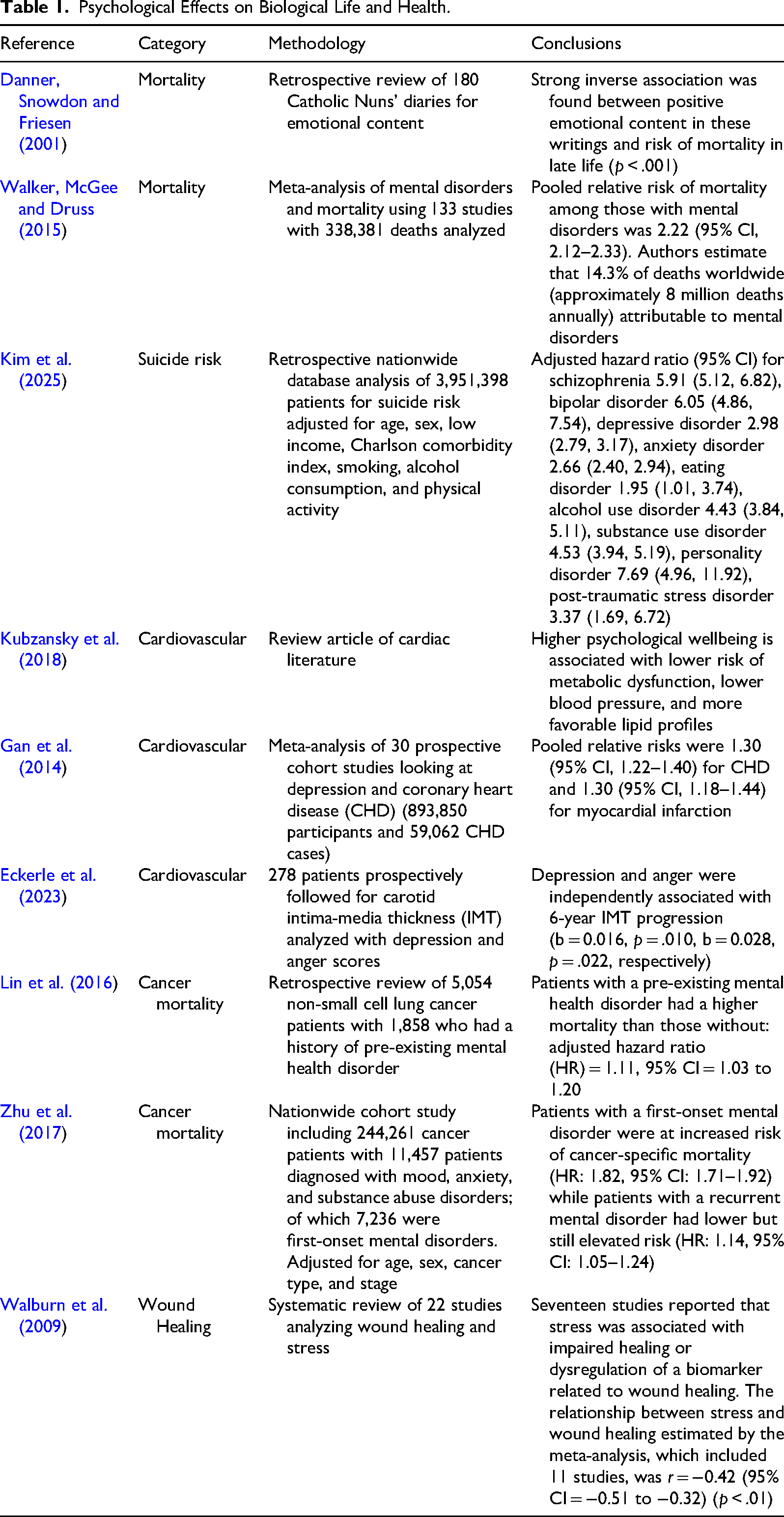
Psychological disorders result in poorer health outcomes while greater psychological wellbeing results in better ones (Diener and Seligman 2004; Ryff and Singer 2008). Positive emotional wellbeing has also been shown to correlate with increased longevity (Danner, Snowdon and Friesen 2001). The psychological effects on both risk and prognosis of many diseases have been extensively proven (Seligman 2011, 204). For example, the interaction of psychological disorders on cardiovascular disease has been hypothesized through increased inflammatory markers (Seligman 2011, 206; Kubzansky et al. 2018). Cancer risk is generally not as strongly tied to psychological disorders; however, the prognosis of those with cancer can be substantially impacted by psychological wellbeing or disorder (Seligman 2011, 203; Zhu et al. 2017; Lin 2020; more references in Table 1).
Psychological Effects on Biological Life and Health.
Finally, healthcare professionals should employ more often or refer to others who are expert in psychological techniques to help restore balance in their patients. Psychological interventions such as meditation, cognitive behavioral therapy, and positive psychology techniques can all positively impact psychological wellbeing with less or no need of psychotropic medications all without any side effects and at no or minimal cost (Hatala 2013; Goyal et al. 2014; Diener and Seligman 2004).
Social Dimension
The impact of poor social relationships has been brought into clear focus due to the recent loneliness epidemic in America. The Surgeon General's report on loneliness cited increased risks of biological and psychological problems including cardiovascular disease, dementia, stroke, depression, anxiety, and premature death. The biological risk of loneliness is the healthcare equivalent risk to smoking nearly a pack of cigarettes per day and worse than obesity and physical inactivity (U.S. Surgeon General 2023).
The social dimension is also the key factor in healthcare delivery. Much has been written about the social determinants of disease and healthcare outcomes (U. S. Department of Health and Human Services n.d.). Many social variables can have as much or more influence on the patient's health outcome than the biological treatments. However, the patient–physician relationship of the social dimension is one where there is a vital need for a deeper sharing of our humanity with one another. A key component of this relationship centers on compassion. Dr. Edmund Pellegrino said, “If the patient is to be healed in the fullest sense, then the physician or nurse must have compassion” (Pellegrino 2008, 272). Thus, compassion is vital to the therapeutic relationship.
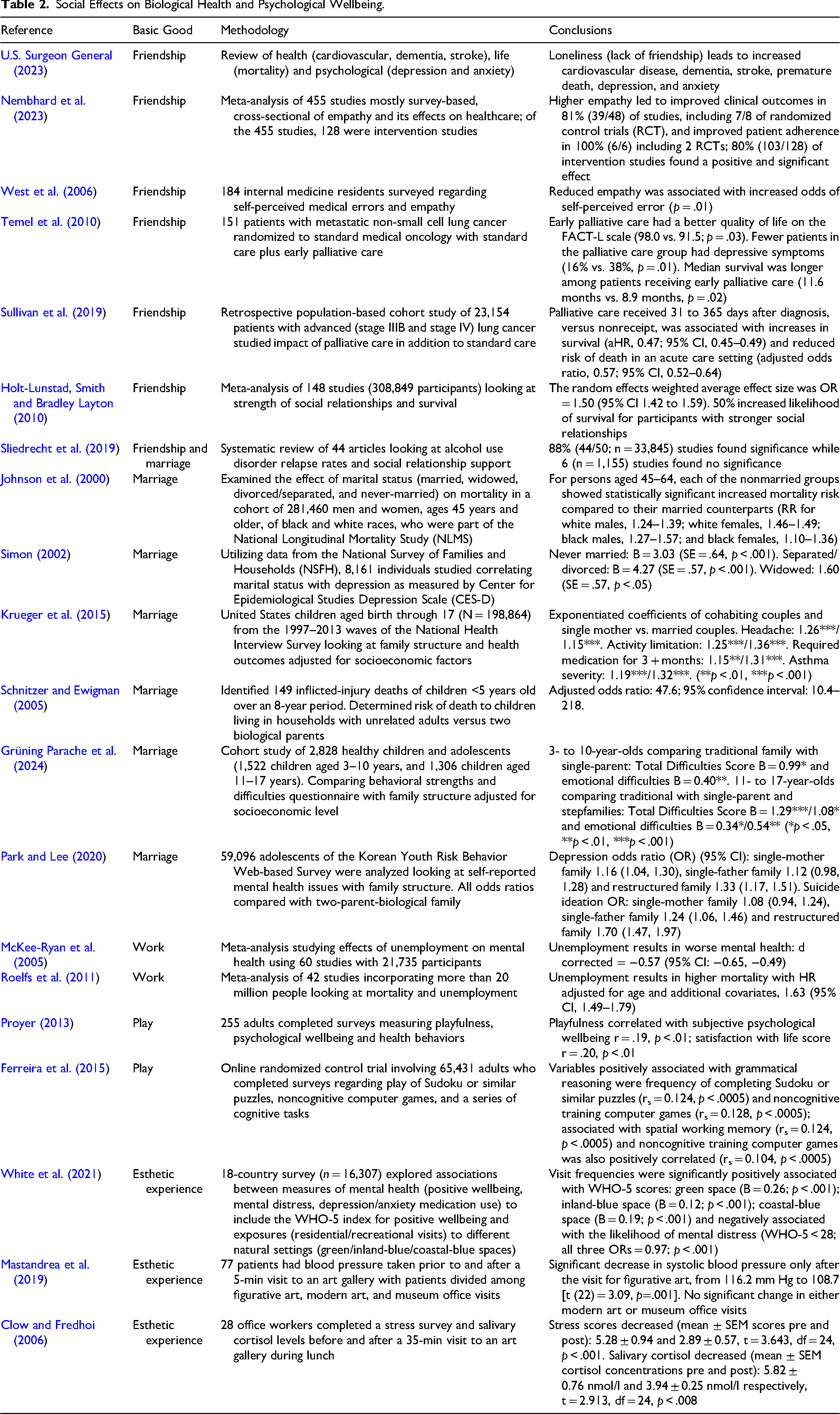
Greater compassion and empathy result in better physical and psychological patient outcomes, improved patient adherence, and prevents physician burnout (Nembhard et al. 2023; Lains, Johnson and Johnson 2024). Studies have shown that terminally ill patients when treated by palliative medicine physicians working with social support staff result in better quality and longer life versus other patients with standard biological treatment (Temel et al. 2010; Sullivan et al. 2019). Additionally, chronic pain is now widely regarded as a biopsychosocial phenomenon with numerous studies showing the benefit of adding the psychosocial dimension to biological treatments (Moseley and Butler 2015). Furthermore, social determinants can be the difference between successful treatment or relapse in alcohol use disorder and other addiction problems (Sliedrecht et al. 2019). Lastly, the connection between compassion and several virtues (spiritual dimension) is highlighted by Malenfant et al. when they say, “Patients and healthcare providers both recognized the intrinsic qualities or virtues of individual healthcare providers to be integral to providing compassion, some of which included virtues of love, kindness, genuineness, consideration, understanding, and wisdom” (Malenfant et al. 2022).
Another relational effect likely enhanced by compassion is the trust and confidence the patient has in the physician. This results in increased patient compliance but also the placebo effect (Colloca 2018). Taking a placebo frequently makes the patient feel and do better. A profound example is antidepressant medications. Although there is a therapeutic benefit above placebo with these medications, the greatest therapeutic effect stems from taking anything from the physician whether it is the active drug or a placebo (Seligman 2011, 47). More references showing the social dimension's impact on our biological and psychological dimensions is in Table 2.
Social Effects on Biological Health and Psychological Wellbeing.
Self-Transcendence and the Spiritual Dimension
Much research has been performed on “spirituality”; however, varying definitions of the spiritual dimension have been used. Our definition includes some aspects of spirituality in these studies but excludes others. For instance, some divide religiosity into both intrinsic (prayer and meditation) and extrinsic (social observances and community) with arguments made that intrinsic religiosity has more impact on health (Shattuck and Muehlenbein 2020). Thus, we propose that the one best unifying theme regarding the positive impact of spirituality as commonly defined in the literature on human flourishing is through the concept of self-transcendence. Self-transcendence helps flourishing by the mechanism of restoring balance. A recent extensive review demonstrated the impact that spirituality has on end-of-life care and on health more generally all leading to increased human flourishing emphasizing the vital importance of the spiritual dimension to achieving balance and harmony (Balboni et al. 2022).
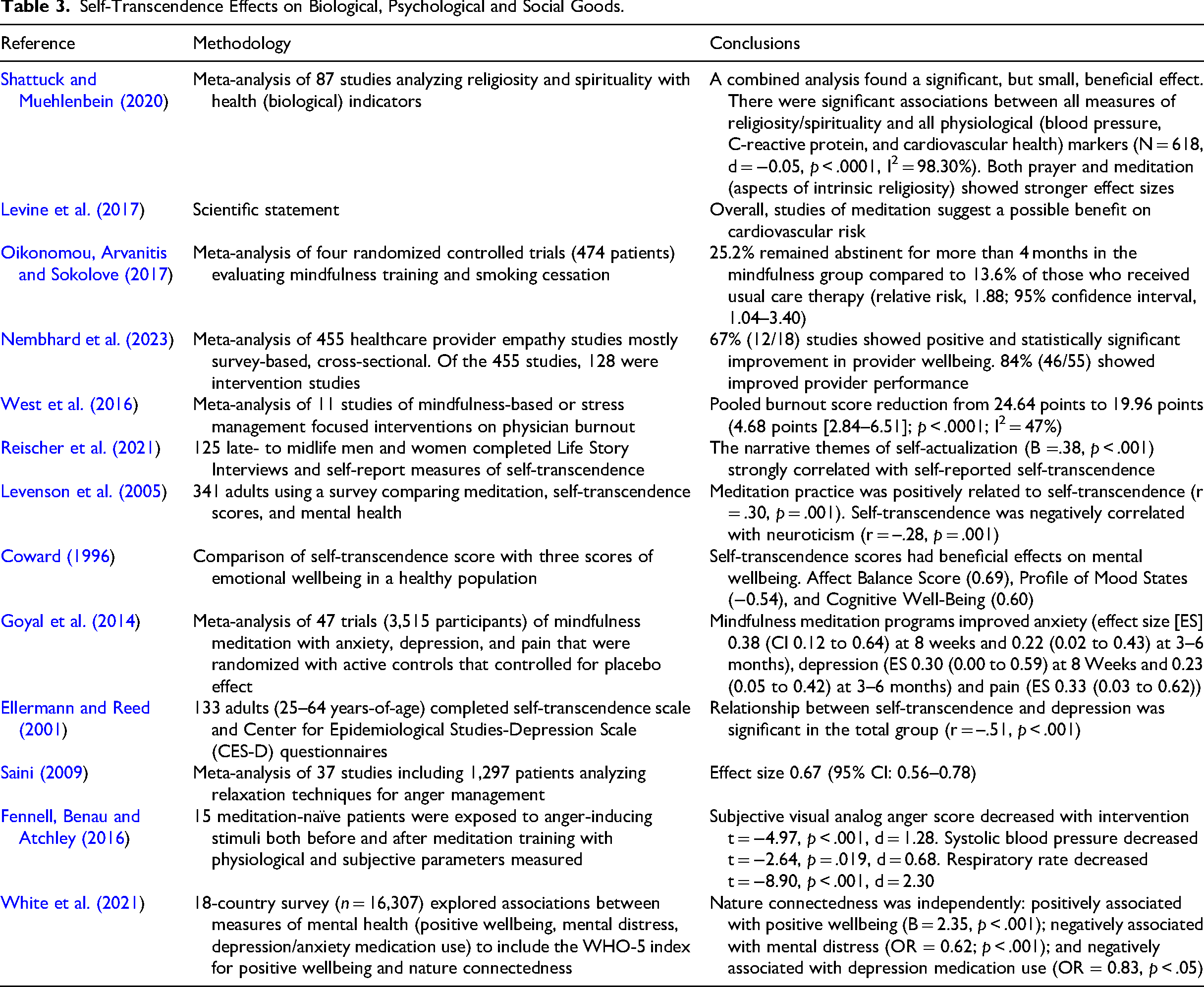
Whether you self-transcend toward the biological such as with posture-based physical fitness or breathing exercises (biological), focus on the environment (social), or pray to God (spiritual), the result is greater human flourishing as shown through positive effects on biological, psychological, and social indicators (Shattuck and Muehlenbein 2020; Kubzansky et al. 2018; Lucchetti, Koenig and Lucchetti 2021; Diener and Seligman 2004). In fact, the American Heart Association issued a scientific statement recommending meditation as an adjunct cardiovascular risk reduction method (Levine et al. 2017). A recent study showed that gratitude has also been shown to lower cardiovascular risk in addition to decreasing overall mortality (Chen et al. 2024). Additionally, with as little as eight weeks of meditation, patients have decreased anxiety and depression (Goyal et al. 2014; additional references in Table 3).
Self-Transcendence Effects on Biological, Psychological and Social Goods.
The virtues in the spiritual dimension also lead to better health outcomes. Patients scoring higher ratings on optimism or the virtue of hope have less cardiovascular disease and tend to have better outcomes with cancer (Seligman 2011, 203). Patients with self-regulation or temperance have a 62% reduced risk of cardiovascular disease (Kubzansky et al. 2011). Conversely, up to 40% of deaths in America can be attributed to poor desire control or lack of temperance (Hofmann, Diel and Seibel 2018). Tyler VanderWeele sums up the effect on many health outcomes associated with religious attendance which can be thought of as a marker for the spiritual dimension when he says … there are now numerous well-designed longitudinal studies that suggest that regular religious service attendance is associated with greater longevity, a 30% lower incidence of depression, a fivefold lower rate of suicide, better survival from cancer, and numerous other outcomes. (VanderWeele 2017)
In addition to our psychological and biological dimensions, self-transcendent practices positively impact our social dimension too. This interrelationship and beneficial effects on our human flourishing is summed up by psychologist Lisa Miller when she says … altruism and love of neighbor correlated with cortical thickness across the spiritual network of the brain, including regions of bonding, suggesting a robust protective benefit of relational spirituality, a personal spirituality that emphasizes both our commitment to other humans and our awareness of a transcendent or higher power—and how divine and human love are linked. (Miller 2021, 222)
It is also important to note the relationship between a patient's perception of God and their human flourishing. Studies conclude that viewing God as loving and merciful leads to better biological, psychological, and quality of life outcomes versus viewing God as distant, judging, and punishing, which resulted in poorer outcomes (Iannello et al. 2022; Lucchetti, Koenig and Lucchetti 2021). This highlights the importance of knowing correct transcendence truths about God.
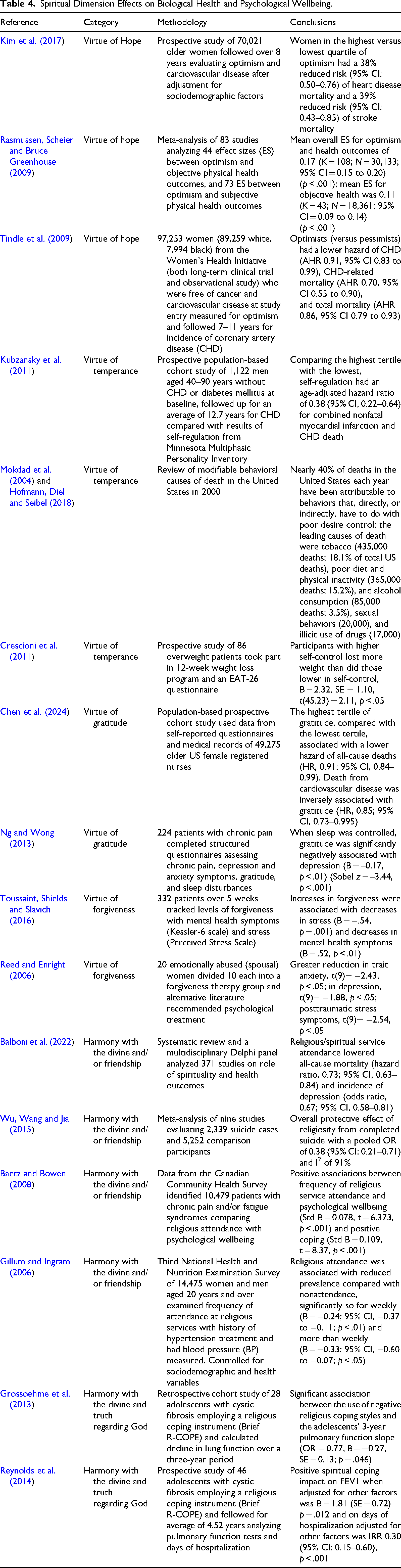
It is evident that the biological, psychological, social, and spiritual dimensions “each intertwine to shape one's health” (Hawkins, McPhee and Brown 2020, 218). Saad et al. concluded their opinion piece with this statement regarding the BPSS model: “A sincere and profound application of this new view of the human being would bring remarkable transformations to the concepts of health, disease, treatment, and cure” (Saad, De Medeiros and Mosini 2017). Additionally, this model with its recognition of the importance of the spiritual dimension will not only lead to better biological and psychological wellbeing but toward increasing the common good and particularly the basic goods (e.g., marriage and friendship) in the social dimension (Hawkins, McPhee and Brown 2020). A fuller list of studies supporting the spiritual dimension's impact are in Table 4.
Spiritual Dimension Effects on Biological Health and Psychological Wellbeing.
Conclusion
This philosophical anthropology contributes four significant innovations over the prior BPSS model. The first is a fuller definition of the spiritual dimension defining the transcendent to be the good, the true, and the beautiful, which importantly incorporates the virtues (the good). Love, the most important transcendent good or virtue, empowers the right relationship among the four dimensions. This optimal relationship is conceptualized through harmony, which is the second important contribution. Harmony is guided by the virtue of love and is more fully defined through its constitutive elements of balance, mutual subordination, and self-transcendence. Harmony brings about synergy and better achieves our goals and goods. Balance is achieved through mutual subordination of each dimension toward the others while self-transcendence specifically addresses the subordination of the psychological dimension.
The third important contribution is through the identification of an internal good in each dimension (biological being health, the psychological being eudaimonia, the social being the common good, and the spiritual being selfless love) and the fact that no dimension can achieve its own internal good. Only through mutual subordination can each dimension selflessly work toward the goods of the other dimensions while they in turn have the other dimensions each work for its own good. These ends are expanded upon and better prioritized by the natural law idea of the basic goods. Basic goods should be intrinsically valued and should not be intentionally harmed. These basic goods are life, health, work, play, knowledge, esthetic experience, marriage, friendship, personal integrity, and harmony with the divine. Realizing these basic goods brings about avenues for eudaimonia and subsequently ultimate meaning in this life.
Lastly, although this model of the human is nonsectarian, it also provides rich insight into and coherence with Christian theology. It explains the effects of sin through broken relationships among all four dimensions. Jesus Christ's redemptive person and work is exemplified by physical healings (biological), restoring right interpersonal relationships (social), and reconciling sinners to a righteous and holy God (spiritual). Humans by their nature incorporate all four dimensions while the rest of creation has at most three of the dimensions. The imago Dei is best represented by humanity's spiritual dimension which apprehends the transcendently good, true, and beautiful with a bidirectional relationship with God.
This more fully explicated BPSS model when harmoniously working toward the basic goods provides all healthcare professionals and especially Christian ones with a philosophical anthropology to approach each patient to bring about greater healing through restoring right relationships.
Footnotes

Funding
The authors received no financial support for the research, authorship, and/or publication of this article.
Declaration of Conflicting Interests
The authors declared no potential conflicts of interest with respect to the research, authorship, and/or publication of this article.
Disclaimer
Neither the Defense Health Agency, any other component of the Department of Defense nor the U.S. government has approved, endorsed, or authorized this activity.