







Abstract
The diversity of dental patterns is a fundamental topic in disaster victim identification. The current scientific literature, however, is scarce of data regarding young individuals. This study aimed to assess the radiographic diversity of dental patterns, considering missing, unrestored, and filled teeth in young individuals. The sample consisted of 7219 panoramic radiographs of individuals between 12 and 22.9 years. The permanent teeth, except third molars, were coded as missing, unrestored, or filled and odds ratios (OR) were calculated based on sex, dental arch, and age. The sex-combined sample had 1.116 distinctive dental patterns. “All unrestored” teeth was the most common pattern (OR: 0.437) followed by the sequence of unrestored teeth except restored mandibular first molars (OR: 0.021). Females had more distinctive dental patterns than males (p < .001), while males had more unrestored teeth (p < .001). In the age category of 12–12.9 years, the OR for finding a distinctive dental pattern was 11%, while in the age category of 22–22.9 years it increased to 58%. On the other hand, the OR for “all unrestored” gradually decreased according to age (74% in the younger category, and 23% in the older age category). The distinctiveness of dental patterns among young individuals is affected by the predominance of unrestored teeth. However, registering a single filled tooth in a remaining unrestored dentition can reduce exponentially the probability of finding an identical pattern of missing, unrestored and filled teeth.
Introduction
Odontology is considered a primary method for human identification. 1 It means that this method figures among the most reliable together with friction ridge analysis and DNA. 2 Human identification by dental means occur through the comparison between postmortem (PM) and antemortem (AM) data. 3 Ideally, optimal comparisons are enabled when proper radiographic AM data is available. 4 The Academy Standards Board and the Approved American National Standards (via The Best Practice Recommendation #108) have endorsed the importance of having radiographic analysis for dental human identification. 5 Radiographic imaging is fundamental in dental human identification because they reveal features of the roots, crowns, and adjacent bone structures that may be highly distinctive. 6
Most of the dental features visualized in radiographs can be categorized as morphological, therapeutical and pathological. 7 Authors have demonstrated that the combination of only a few dental features, namely missing, unrestored and filled teeth generates patterns that can be as distinctive as mitochondrial DNA.8–10 A recent systematic review that screened 5.700 individuals, followed by a meta-analysis of six eligible cross-sectional studies (n = 2.553 individuals), showed an expressive (97%) radiographic diversity of dental patterns, especially when maxillary and mandibular teeth are combined. 11 Most of the meta-analyzed studies that have investigated the radiographic diversity of dental patterns, however, sampled adult individuals.12–17 In addition, they addressed samples with an average size of 425 radiographs 11 —a sample size that is considerably small to provide inferences about dental diversity.
Investigating how age can affect the radiographic diversity of dental patterns is important to understand, for example, how distinctive the dentition of a young victim can be in a mass disaster scenario. To do so, a large sample of radiographs from children, adolescents and young adults is desired. The present study aimed to assess the radiographic diversity of dental patterns in young individuals considering missing, unrestored, and filled teeth.
Methods
Study design and ethical aspects
An observational analytical cross-sectional study was performed following the recommendations of the Enhancing the Quality and Transparency of Health Research, more specifically the Strengthening the Reporting of Observational Studies in Epidemiology statement. 18 The study followed the World Medical Association's Declaration of Helsinki (2013). Ethical approval was obtained from the institutional committee of ethics in human research (protocol: 67311423.1.0000.5374).
Sample and participants
The sample consisted of 7219 digital panoramic radiographs of Brazilian females (n = 4191) and males (n = 3028) with age between 12 and 22.9 years (mean age = 17.62 ± 3.18 years) (Table 1). The inclusion criteria followed in part the sample selection process of Perez (2015) 15 and consisted of panoramic radiographs obtained by convenience (all the available) from Brazilian individuals within the established age interval, with proper image quality and with available data about patients’ date of birth, date of image acquisition and sex. The exclusion criteria consisted of patients with visible bone and dental lesions, missing parts of the maxilla and mandible, and individuals below the age of 12 years and above the age of 22.9 years. The established age interval was determined above the age of 12 years to enable the inclusion of a higher number of erupted permanent teeth in the analysis of dental patterns, while the upper limit at the age of 22.9 years was determined to enable a higher amount of fully developed teeth. All the radiographs were acquired between 2000 and 2022 for diagnostic and therapeutic purposes. It means that no patient was exposed to ionizing radiation for research purposes.
Sample distribution based on sex for each age category.
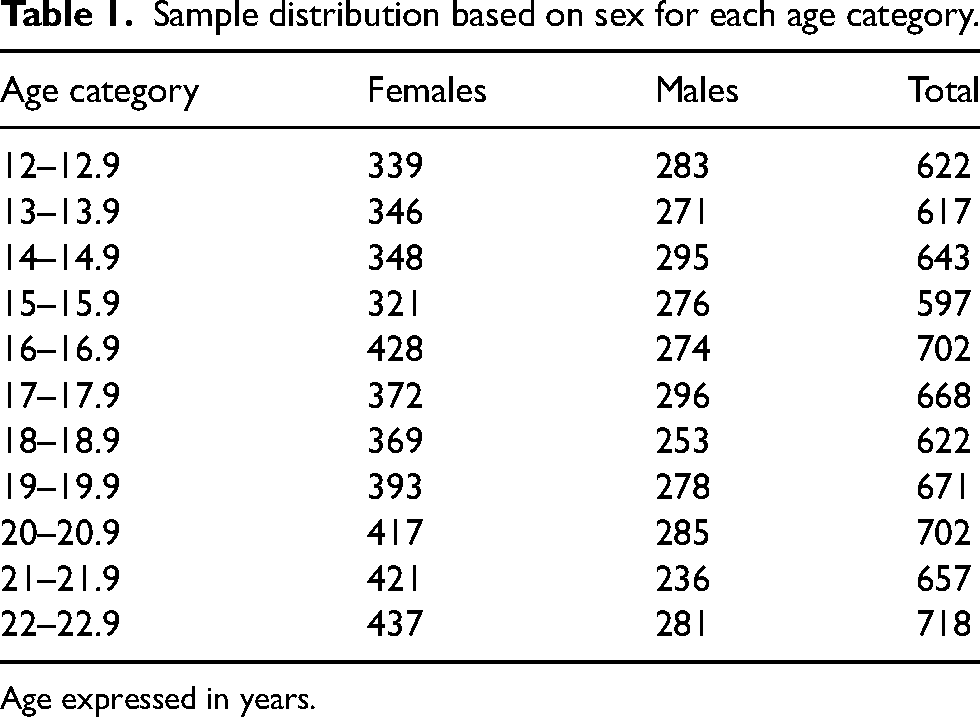
Age expressed in years.
Settings
The radiographs were imported as .jpeg files to a personal computer and analyzed individually by a forensic odontologist with 3 years of experience supervised by another forensic odontologist with 13 years of experience. The maximum number of radiographs analyzed per day did not exceed 30 to avoid visual fatigue. All the analyses were accomplished on a 15″ screen with Adobe Photoshop CS6™ image viewer (Adobe Inc. San Jose, CA, USA). Magnification of 100% and adjustments of brightness and contrast were allowed. The main examiner registered for each permanent tooth one of the following codes: “X” for missing, “H” for unrestored, and “R” for filled teeth—according to the dental features used by Adams (2003). 8 Data tabulated to every individual would have a 28-digit dental pattern coded with the combination of X, H, and R (Figure 1). The 28-digit dental pattern represents the sequence from the permanent maxillary central incisor (tooth #11—International Dental Federation notation system) to the permanent maxillary second molar (tooth #17), followed by the same sequence in the maxillary left quadrant (from tooth #21 to #27), mandibular left quadrant (from tooth #31 to #37), and mandibular right quadrant (from tooth #41 to #47). Following pioneering studies on the topic, third molars were not included. 8
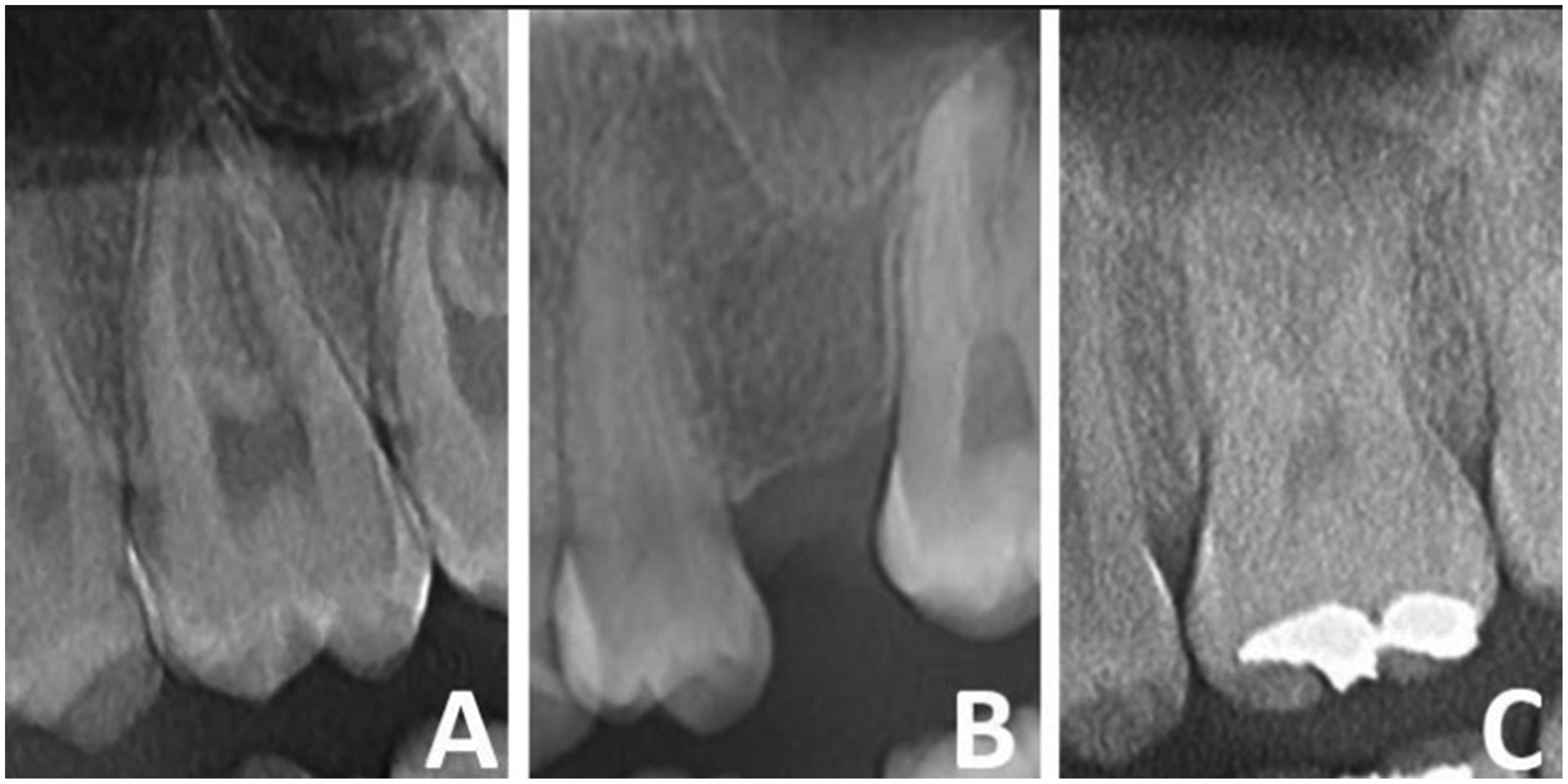
Radiographic representation of unrestored (A; coded as “H”), missing (B; coded as “X”), and filled (C; coded as “R”) teeth.
Variables
The dependent variable of this study was the final sequence of 28 digits consisting of the dental pattern assigned for each radiograph. Individual's dental arch (maxilla, mandible, and combined), sex (female, male, and combined) and age (categories) were the independent variables and were considered based on their effect to change the final dental pattern. Age was converted from a numeric ordinal variable into a categorical variable as follows: 12–12.9 years, 13–13.9 years, 14–14.9 years (…) 22.9 years (11 age categories of one year each).
Examiner reproducibility
The main examiner reassessed 700 radiographs of the main sample 30 days after the main analysis. The main and second analyses were compared to each other by means of Kappa statistics and consisted of the intraexaminer reproducibility test. The second examiner assessed the same 700 radiographs, and the outcomes were compared to the main examiner. This comparison consisted of the interexaminer reproducibility test and was accomplished with the same statistic approach. The intra- and interexaminer reproducibility tests led to Kappa values of 0.87 and 0.83, respectively.
Statistical analysis
The number of occurrences of each dental pattern was counted as absolute values (n). The 28-digit dental patterns were analyzed by means of OR to rank the most distinctive sequence of codes. Comparisons between females and males were accomplished by means of two-sample test for equality of proportions with continuity correction. The same test was additionally used to compare females and males considering the sequence of 28 H codes (all virgin teeth). All the tests were performed separately for maxillary and mandibular teeth, as well as for the combination of both. When it comes to age, comparisons between females and males were performed with the Wetch two sample t-test. Statistical analyses were performed with R software (R Foundation International, Vienna, Austria) considering the statistical significance (p) of 5%.
Results
The initial analysis performed in this study consisted of a combined sample of females and males, regardless of age. In this scenario, 1.116 possible unique combinations of the codes X, H, and R were detected—meaning an overall distinctiveness of 25%. The most common dental pattern among young individuals was “all unrestored” (28 × H) with an OR of 0.437 (n = 3.155). By adding R to the permanent mandibular first molars, the OR decreased to 0.021 (n = 154), and subsequently reduced with variations in the quantity and position of the code R. Among the ten most common dental patterns there was no X code. In females, there were 1.276 unique dental patterns—representing 30% of distinctiveness, while in males there were 761 combinations and 25% of distinctiveness. The most common dental pattern was “all unrestored” in both sexes (Table 2). The two-sample t-test for equality of proportions between independent samples with continuity correction led to p < .001 meaning that there is a higher chance of distinctive dental patterns among females compared to males. Conversely, there was a higher chance of unrestored teeth among males compared to females (p < .001).
Ten most common dental patterns ranked based on sex.
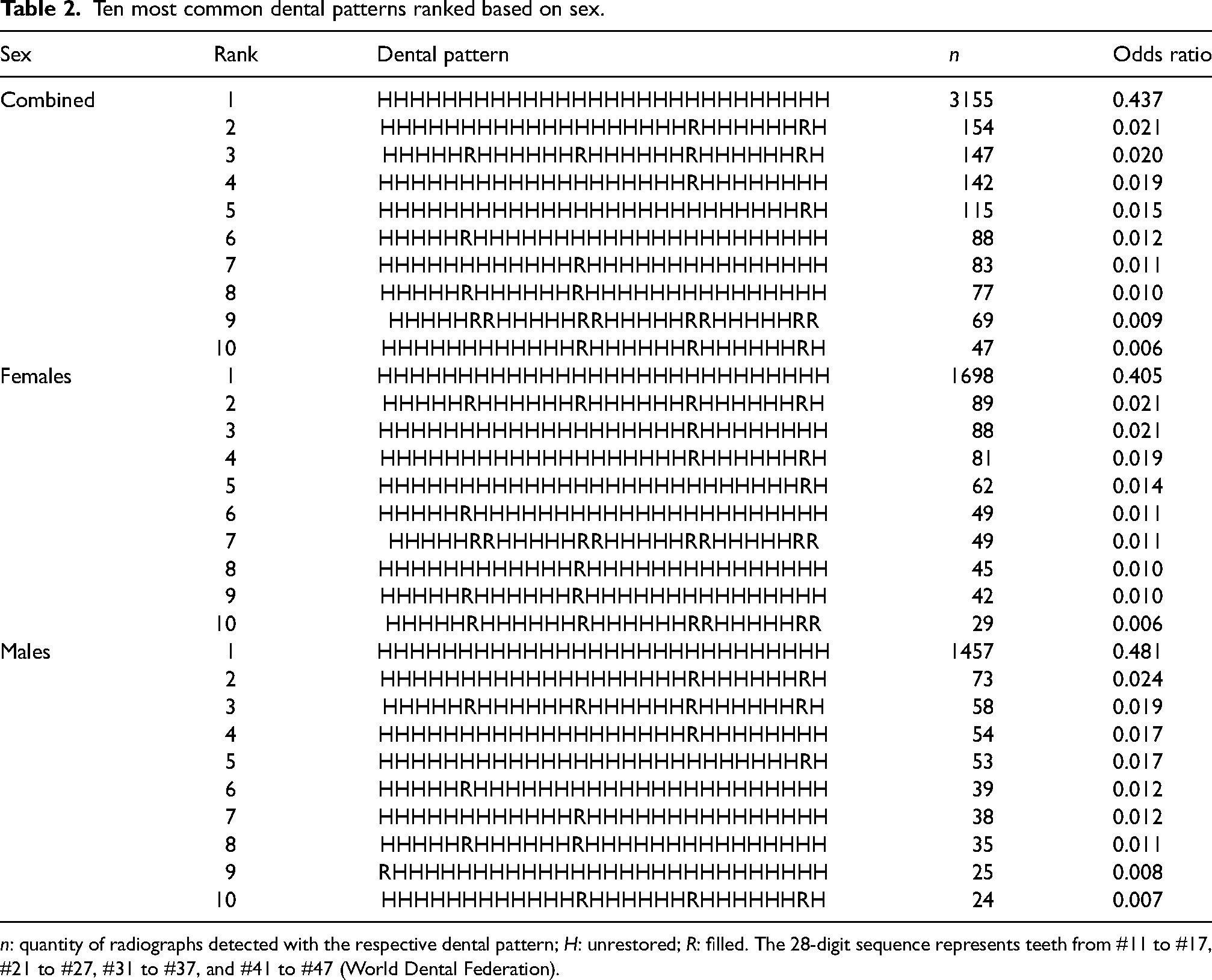
n: quantity of radiographs detected with the respective dental pattern; H: unrestored; R: filled. The 28-digit sequence represents teeth from #11 to #17, #21 to #27, #31 to #37, and #41 to #47 (World Dental Federation).
The individual analysis of dental arches in the sex-combined sample showed 810 distinctive dental patterns in the maxilla (11% of distinctiveness). The OR to find the dental pattern “all unrestored” (14-digit sequence) in the maxilla was about 55%, but when both permanent molars are restored, the odds decreased 27.5 times (to 2%). There were 592 unique combinations (14% of distinctiveness) when the maxilla was considered in females only, and 366 combinations (12% of distinctiveness) in males (Table 3). The maxillary teeth of females were more distinctive than males (p < .001), while unrestored maxillary teeth were more common in males (p < .001). In the mandible, there were 414 unique combinations (6% of distinctiveness). The chance of finding “all unrestored” teeth was about 53%. In females, there were 311 different dental patterns, while in males there were 222 (7% of distinctiveness). There was no statistically significant difference between females and males when it comes to the distinctiveness of mandibular dental patterns (p > .05), however unrestored teeth were more common in males (p < .001) (Table 4).
Ten most common maxillary dental patterns ranked based on sex.
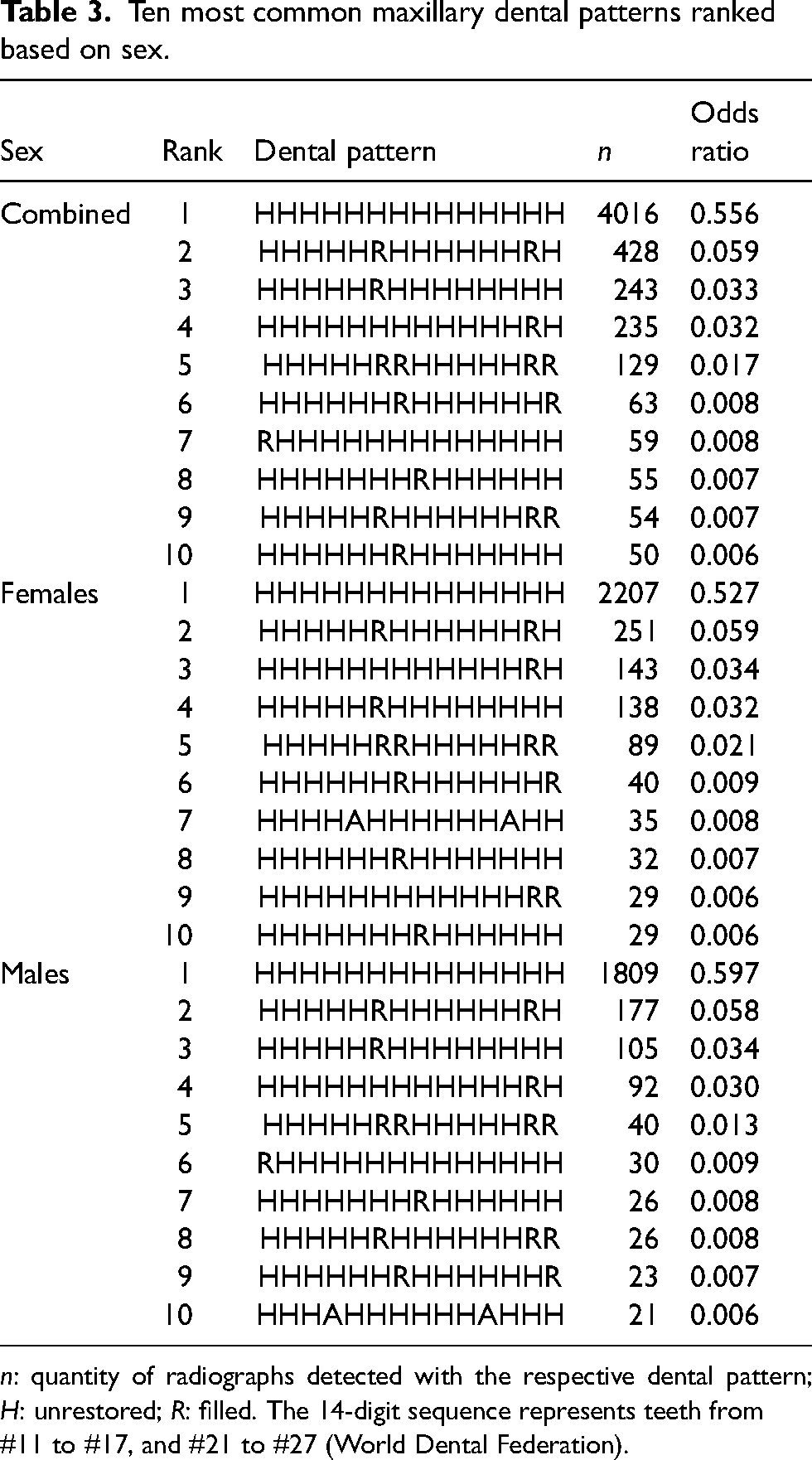
n: quantity of radiographs detected with the respective dental pattern; H: unrestored; R: filled. The 14-digit sequence represents teeth from #11 to #17, and #21 to #27 (World Dental Federation).
Ten most common mandibular dental patterns ranked based on sex.
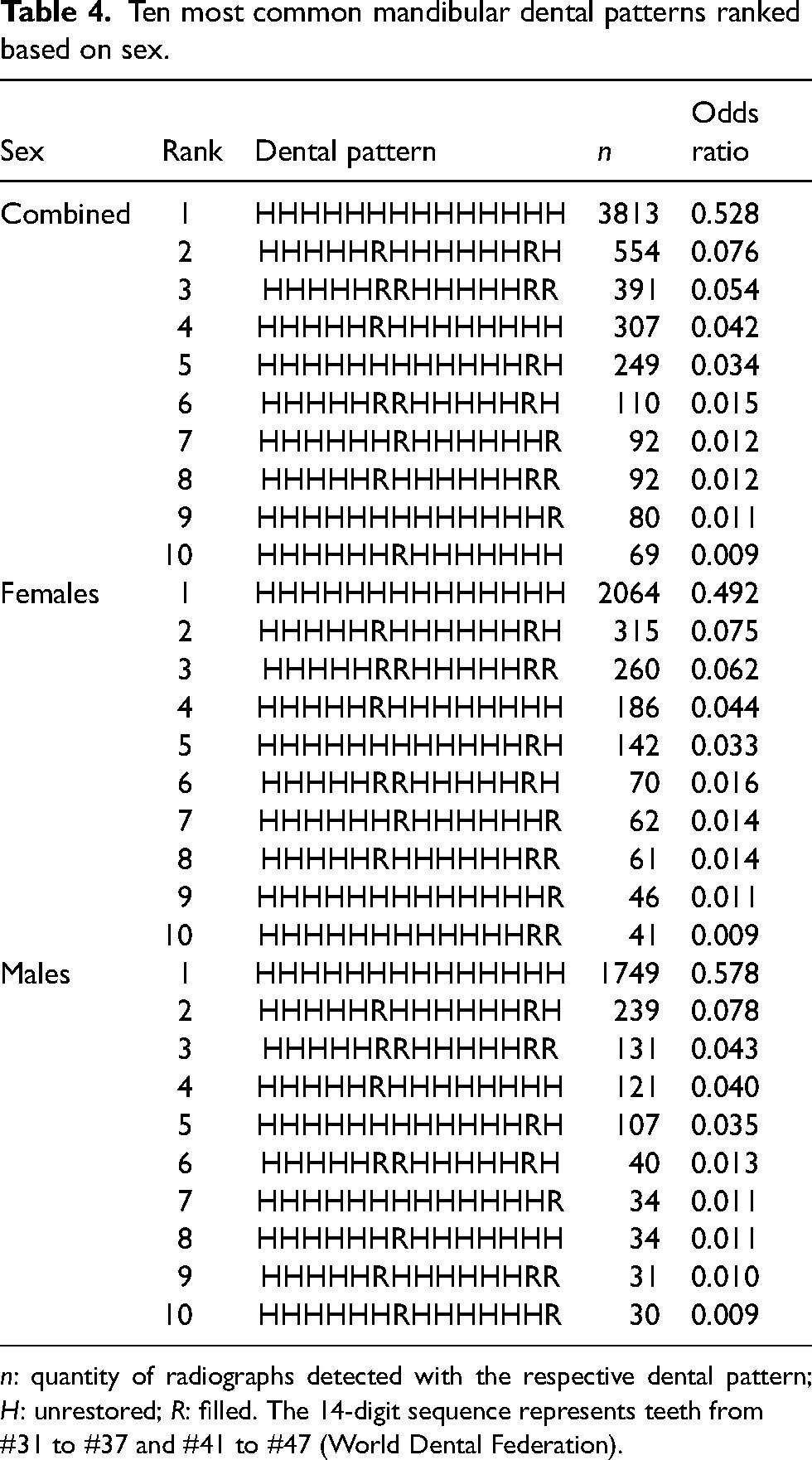
n: quantity of radiographs detected with the respective dental pattern; H: unrestored; R: filled. The 14-digit sequence represents teeth from #31 to #37 and #41 to #47 (World Dental Federation).
The age-based analyses showed increasing odds of distinctiveness with time. In other words, when the age categories progressed, a gradual increase in the chance of finding distinctive dental patterns was observed. By the age of 12–12.9 years, the OR for distinctive dental patterns was 11%, while in the age category of 22–22.9 years it increased to 58%. Oppositely, the OR for the dental pattern “all unrestored” gradually decreased according to age (74% in the younger category, and 23% in the older age category) (Table 5). The t-test led to a p > .05, meaning that there was no difference between females and males regarding the distinctiveness of dental patterns and the presence of the pattern “all unrestored” according to age.
Odds ratio for distinctive dental patterns and for the presence of the pattern “all unrestored” according to age.
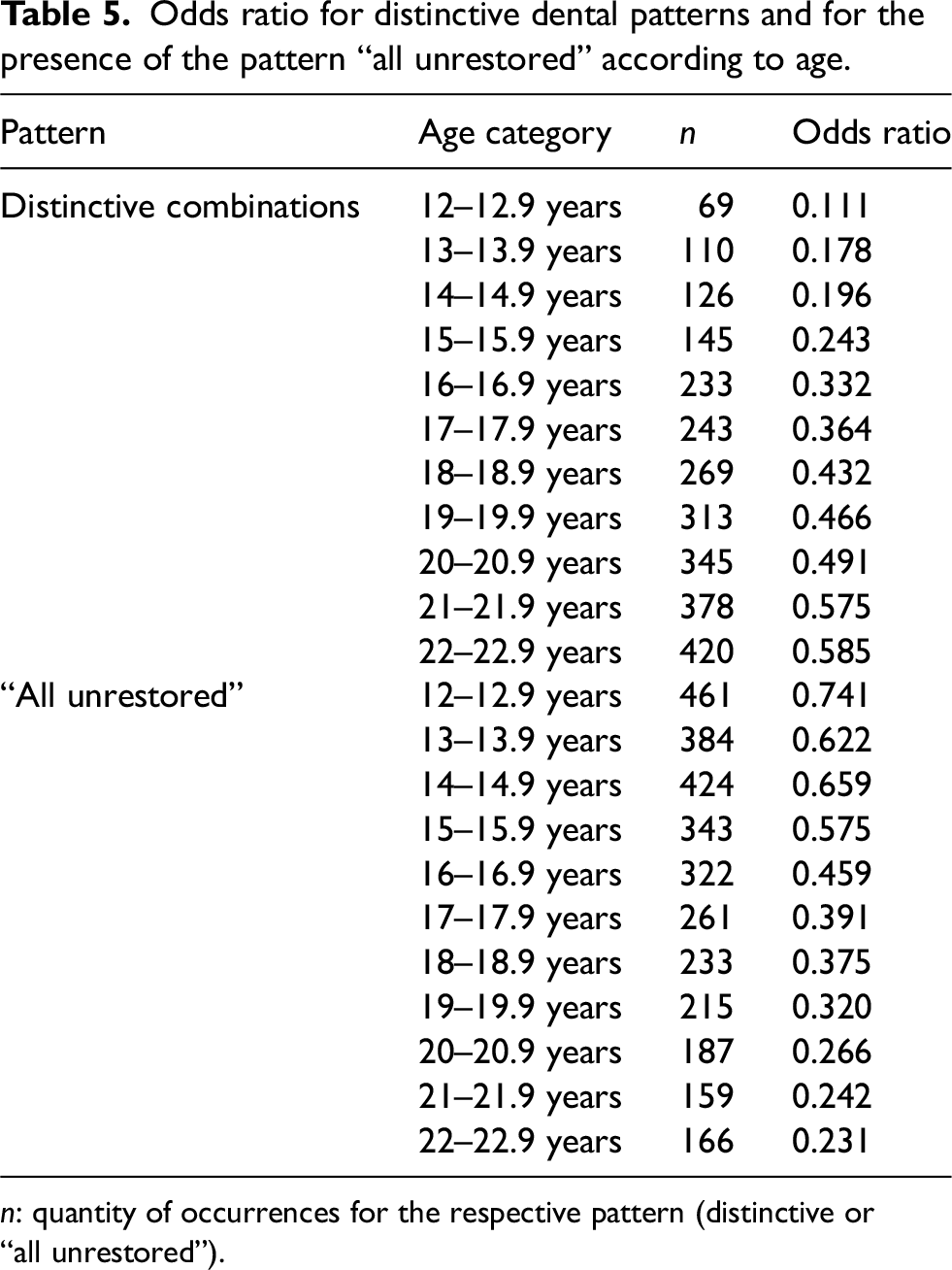
n: quantity of occurrences for the respective pattern (distinctive or “all unrestored”).
Discussion
The 2004's tsunami, hurricane Katrina in 2005, and the terrorist attacks in schools in Russia (2004) and Pakistan (2014) are examples of mass disasters that involved several young victims, including children. Ideally, dental interventions should be preventive in young individuals. Even in adults, Dentistry is getting less restorative, especially in developed countries. It means that therapeutic dental features would be scarcer compared to morphological ones. This phenomenon was confirmed by the predominance (OR: 43%) of patterns of “all unrestored” teeth in the present study. For least 20 years, forensic odontologists have highlighted the importance of dental features such as present and unrestored teeth for human identification 8 —in addition to other morphological identifiers related to dental status. 6 In dental human identification, the combination of dental features into distinctive patterns is more relevant than attempting identification through the search of a single distinctive dental feature. Hence, unrestored teeth may have a valuable role in the process of building dental patterns.
Authors have endorsed the distinctiveness of the human dentition by explaining that the multiple surfaces of the human dental crowns might have different features that can lead to unique combinations 19 (not to say the root-related features, and the different restorative materials). When dental human identification is accomplished in a DVI scenario, however, comparisons are initially based on coded dental charts, ideally by means of computer-assisted tools that indicate best-matches. 20 While on one hand the coding systems can speed the comparison process and facilitate communication, they normally fail to detail all the nuances that are inherent to a dentition, such as the shape of restorations. In short, two persons could have different dentitions but the exact same charts.3,21 The point is that dental patterns do not need to be fully distinctive (100% of distinctiveness or, in other words, unique) to be useful in DVI. If the dental patterns are distinctive enough to narrow the lists of missing persons and reduce labor time, there is already a gain in a field that require fast and accurate response. Later, forensic odontologists can individually compare the reference AM data with the few identical PM reference data. In the present study, for instance, the pattern “all unrestored” was able to reduce the sample almost in half—a reduction that is valuable but not always decisive depending on the magnitude of the disaster. However, when two restorations were charted for the permanent mandibular first molars the odds of finding the pattern decreased to 2%, facilitating further individual image-based comparisons by forensic odontologists.
In the present study, the dental pattern “all unrestored” was the most common among 1.116 combinations, and it occurred 1.698 times in females (out of 4191 individuals) and 1.457 times in males (out of 3028 individuals). Comparatively, the North American Odontosearch (www.odontosearch.com) tool set for females only (combined generic data version 3.2), with generic coding, unspecific for race, and within a similar age interval (14 to 23 years) led to 2.731 occurrences out of 8.656 individuals—indicating that the selected pattern would happen in 31.5% of their sample, while in our study the odds reached 40%. When the Odontosearch is set for males, the prevalence stays similar at 31.3%, while in our study the odds were 48%. The mild difference between datasets might be explained by the younger age limit set in the present study's sampling process, which included 1.239 individuals between 12 and 13.9 years, while the U.S. database sampled individuals older than 14 years. Our study demonstrated a predominance of “all unrestored” dental patter in the younger age categories (that decreased with time).
The influence of time on dental distinctiveness was evidenced with the odds that revealed 11% of chances of finding distinctive dental patterns in the first age category (12–12.9 years) increasing up to 58% of finding the distinctive dental patterns in the older age category (22–22.9 years). From an inverse perspective, the odds for the dental pattern of “all unrestored” was at 65% by the age of 14 years, decreasing to 23% by the age of 22 years. In the U.S. database, it started at 48.4% by the age of 14 years and decreased to 21% by the age of 22 years. Other authors15,16,19 also have categorized age to understand the influence of time on dental distinctiveness and their results were confirmatory with ours. These results illustrate the importance of time-related dental changes for human identification. These changes can be related to progressive decay, such as missing teeth, or due to visible dental treatment, such as restorations. From a practice perspective, the dental changes may have a significant role if explainable discrepancies 22 are detected between AM and PM data. For example, if a young adult dies by the age of 20–23 years and the available AM dates back 10 years, several changes might be detected but explained based on the influence of time. In this case, the forensic expert must keep in mind the possibility of a gradual transition from a virgin dentition (“all unrestored”) to a more distinctive dental pattern.
When the dental arches were analyzed separately, the maxillary teeth showed a higher possibility of dental patterns (n = 810) compared to the combinations of mandibular teeth (n = 414). Opposite findings are reported in a recent meta-analysis 11 that shows higher dental distinctiveness in the lower jaw. The rationale behind the difference might rely on the younger age of the individuals sampled in our study. Since most of the studies sampled individuals from the age of 20 up to the 70–80 years,14–17,23,24 their samples could have more missing and restored teeth (once more the effect of time), especially in the mandible, which would increase the level of distinctiveness of the mandibular dental patterns. Future studies in the field could investigate what is the overall moment of transition in which the mandibular dental patterns become more distinctive than the maxillary ones.
This study was accomplished only with dental patterns established with three simple dental features (missing, unrestored, and filled). This methodological decision was taken to enable comparable outcomes with the existing literature. 8 Future investigations should address a broader variety of dental features to test their distinctive power in the field of human identification, especially among young individuals in which the need for patterns built from more dental features seem to be necessary. Studies should focus on dental features cataloged on existing DVI coding systems. It is worth mentioning that some coding systems are strongly based on clinically detectable dental features,4,25 hence the distinctiveness of dental patterns should be investigated not only on bidimensional radiographic images, but also via clinical inspection and even by means of three-dimensional imaging, such as cone-beam computed tomography. Studies contrasting the dental patterns detected clinically with those observed by means of radiographic imaging are fundamental because optimal dental human identification is only achievable when radiographic resources are available.
In conclusion, the radiographic distinctiveness of dental patterns among young individuals was initially discrete and jeopardized by the predominance of unrestored teeth. However, registering a single filled tooth in a remaining unrestored dentition reduced exponentially the probability of finding an identical pattern of missing, unrestored and filled teeth. Distinctiveness was more pronounced in females compared to males, and for patterns of maxillary teeth compared to mandibular teeth. Time played a relevant part to increase the distinctiveness. From the youngest age category to the oldest one, the odds for distinctive dental patterns increased five times.
Highlights
The distinctiveness of dental patterns was investigated in 7.219 radiographs;
Missing, unrestored and filled teeth were searched in young individuals;
“All unrestored” teeth was the most common among 1.116 dental patterns;
Females had more distinctive dental patterns than males (p < .001);
Distinctiveness increased systematically according to age.
Footnotes
Declaration of conflicting interests
The authors declared no potential conflicts of interest with respect to the research, authorship, and/or publication of this article.
Funding
The authors disclose the following financial support for the research, authorship, and/or publication of this article: This work was partially funded by the Coordination for the Improvement of Higher Education Personnel (CAPES)—Finance Code 001.
Authorship contribution
Priscilla Bortolami and Renata Ventura: conceptualization, methodology, software, formal analysis, investigation, writing—original draft, and writing—review and editing; Rizky Merdietio Boedi: conceptualization, methodology, software, validation, data curation, writing—original draft, writing—review and editing, and visualization; Debora Moreira and Luiz Renato Paranhos: conceptualization, methodology, investigation, writing—original draft, writing—review and editing, visualization, supervision, and project administration; Ademir Franco: conceptualization, methodology, validation, investigation, data curation, writing—review and editing, supervision, project administration, and funding acquisition.
