







Abstract
Death due to strangulation is generally considered homicidal unless proved otherwise. Here a case of accidental strangulation by a faulty machine is presented and discussed where the deceased was strangled by a heated rubber belt of a rice mill machine. The ligature mark was an assortment of abrasion and dermo-epidermal burns. The term “thermal ligature strangulation” is proposed for such an occurrence.
Introduction
Strangulation is a form of mechanical asphyxia by compression of the neck with an extraneous force. It can be accomplished by a ligature, hands or by other means. Such deaths are generally considered homicidal unless proved otherwise. A unique assortment of compression of the neck and burn injuries is described, where the victim was accidentally strangled by a heated rubber belt of a rice mill machine.
Case report
A 35-year-old lady, who worked as a sweeper in a rice mill, in a hamlet of Mysore District in South India, was reported to have been accidentally strangled at her workplace. The rubber belt of the machine was said to have detached from its position (Figure 1) and the lady was strangled by the heated rubber belt. This was further aggravated by entanglement of the loose apparel of the sari worn by the lady. Thus, an accidental strangulation occurred along with dermo-epidermal burns of the neck (Figure 2). She was immediately taken for medical aid, where she was diagnosed with quadriplegia. A magnetic resonance imaging scan of the cervical vertebra showed post-traumatic severe anterolisthiasis of C5 over C6 vertebra with compression and contusion of the spinal cord. The lady died of the injuries a day later.
Heated rubber belt of the rice mill machine, dismantled from its position. Assortment of abrasions and dermo-epidermal burns on the neck.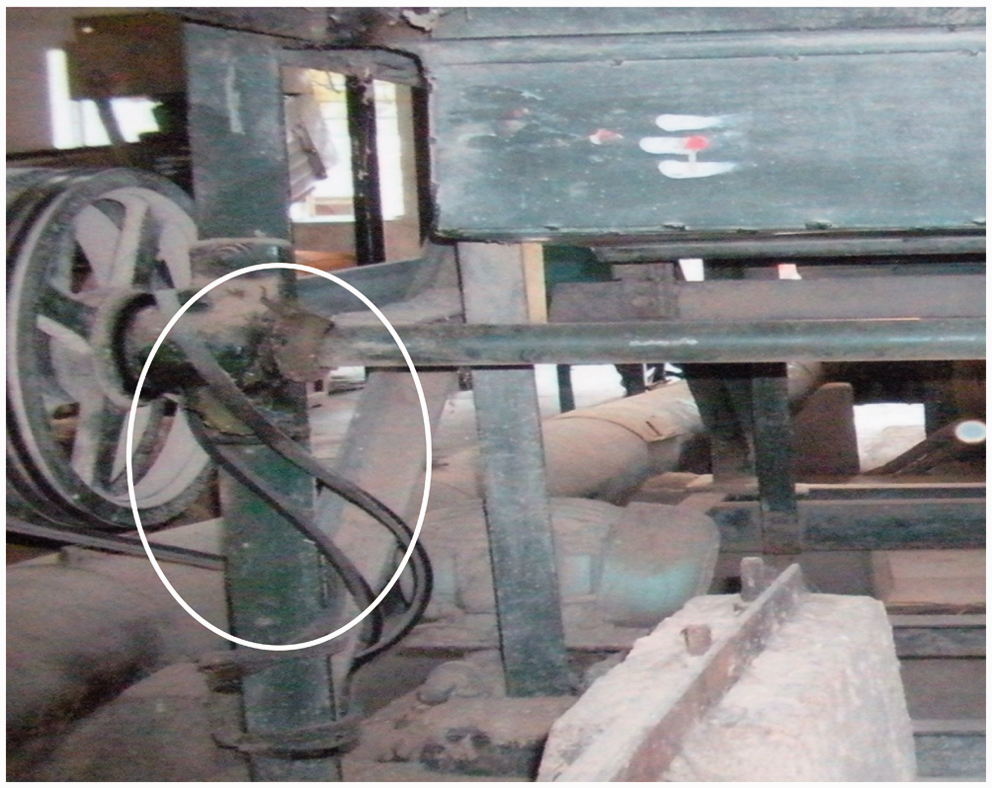
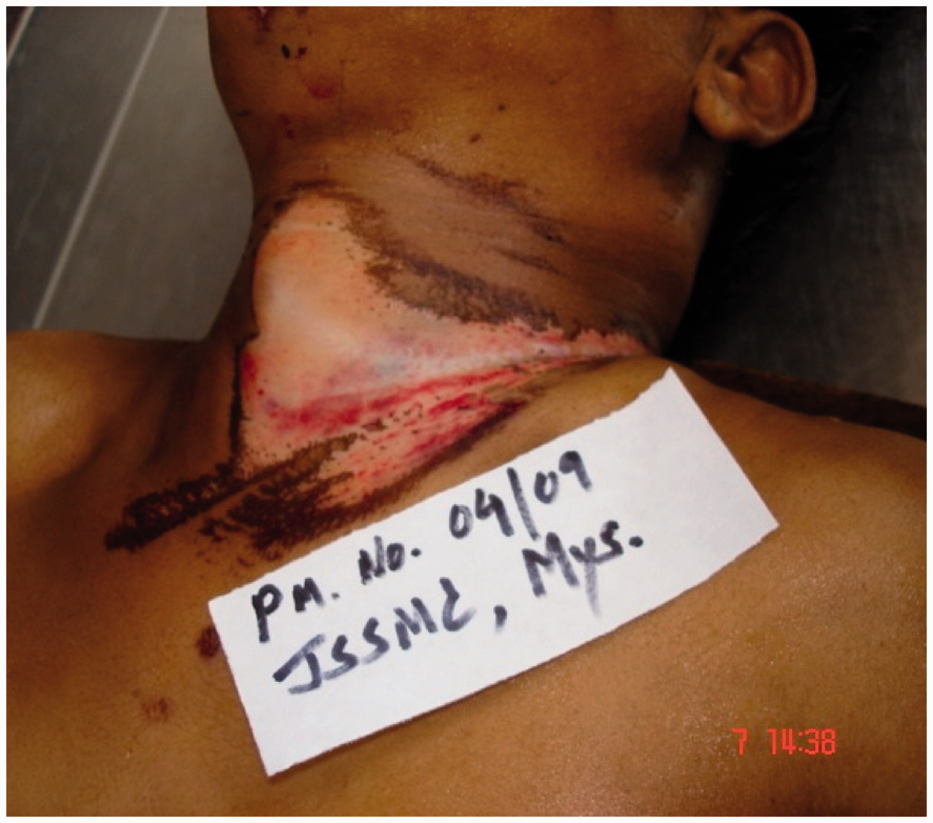
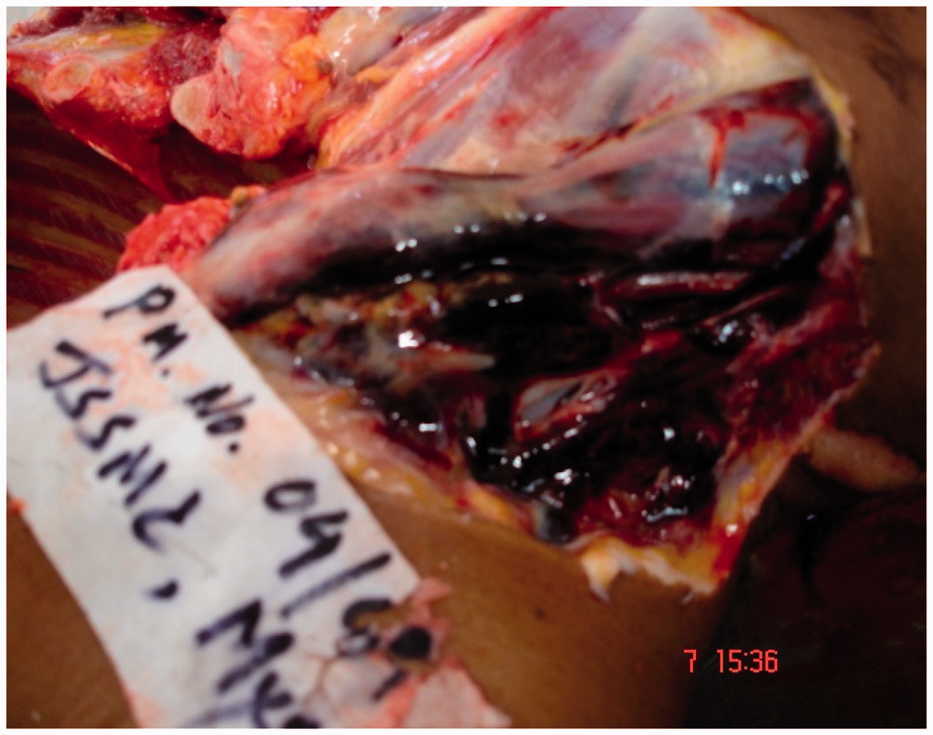
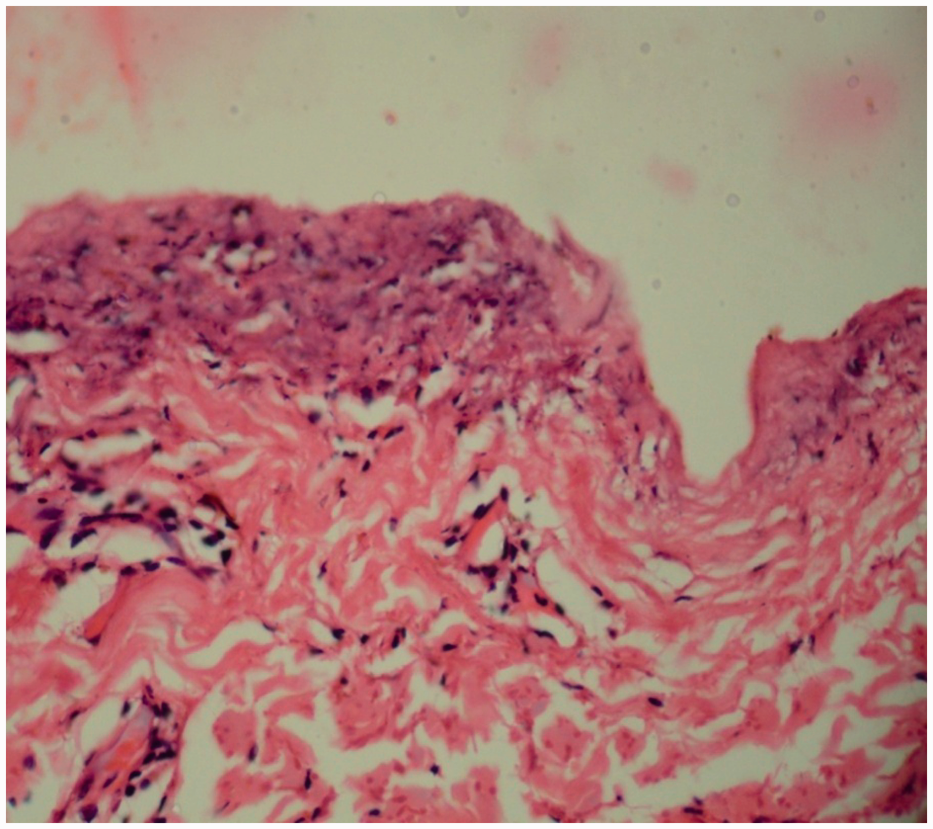
A medico-legal autopsy was conducted on the day of her death. On external examination, an abrasion with a dermo-epidermal burn was present on the circumference of the neck, with a dry and reddish surface (Figure 2). The scalp hairs were found to be singed at the nape of the neck (Figure 3). A layered dissection of the neck revealed contusions in the subcutaneous plane and strap muscles of the neck corresponding to the external mark of compression (Figure 4). The thyroid cartilage, hyoid bone, carotid and jugular vessels were intact. The brain and lungs were oedematous. Other organs were intact and unremarkable. Histopathological analysis of the compression site on the neck revealed epidermal folding (Figure 5), a feature of compression of the skin with loss of epidermis and focal sub-epidermal necrosis (Figure 6), which are features of antemortem burn injuries.
1
The cause of death was opined as mechanical asphyxia due to compression of the neck by ligature strangulation with a heated rubber belt of a rice mill machine.
Singeing of scalp hairs at the nape of the neck. Contusions at the strap muscles of the neck. Rolling of epidermis, a feature of compression injury (H and E staining, 45×). Focal subepidermal necrosis, a feature of dermo-epidermal burns (H and E staining, 45×).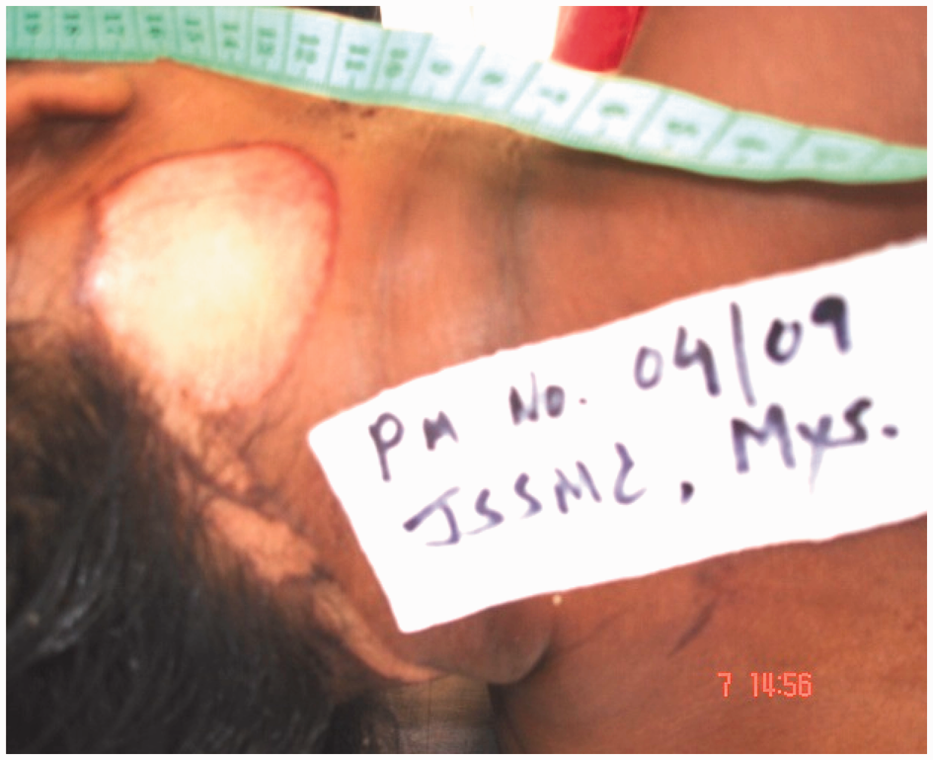

Discussion
Ligature strangulation is reasonably common and most of such cases are homicidal in nature. Accidental strangulation is uncommon and is generally observed either in children or elderly individuals. 2 However, a few cases have been reported of adult individuals who were either intoxicated or engaged in sexual activities enhanced by hypoxia. 3 Peculiar cases of accidental strangulation have been reported as being caused by a vehicle seat belt and a roller type massage device.4,5 Accidental strangulation has also been reported in industrial accidents where belts, ropes or clothing are caught in rollers or other parts of the moving machinery. 6 It is axiomatic that all such items with moving loose parts used in the manufacturing industry, unless carefully vetted from safety precautions, could result in a fatality.
In the Indian subcontinent, the reported accidental strangulations are mainly due to the entanglement of the loose apparel worn by women like traditional Indian attires of “sari”, “chunni” and “dupatta”, while they pillion ride a bicycle, motor cycle or cycle rickshaw.7,8
In the present case, the victim was a healthy adult lady, who got entangled in the heated moving rubber belt of a rice mill machine along with her own apparel. She sustained “heated compression” of the neck. A plausible reconstruction of the events was made by visiting the scene of occurrence. The temperature of the rubber belt while in motion was found to be 99 to 104 degree Celsius. Personal interviews with the co-workers of the victim indicated that the loose floating end of the sari worn by her was initially entangled in the moving belt of the machine. Subsequently, the belt got dislodged from the machine and encircled the neck causing strangulation. The unique features observed in this case were singeing of the hairs and dermo-epidermal burn injuries, which were confirmed by histopathological examination. The heated rubber belt of the machine, along with compression of the neck, had caused burn injuries too, due to the heat of the rubber belt. The term “thermal ligature strangulation” is proposed for such a unique combination of compression of the neck with burn injuries. To avoid such mishaps, safety measures may be adopted fitting a guard to prevent entanglement of clothing in moving belts. A strict implementation of dress code and abandoning loose apparel is needed in such workplaces.
Conclusion
This case has demonstrated compression of the neck due to accidental strangulation along with a thermal injury to the neck. The decisive feature distinguishing this entity from other types of accidental strangulation is the presence of the heat of the ligature material which had caused compression of the neck.
Footnotes
Competing interests
None
Funding
None
Ethical approval
Not applicable
Guarantor
MA
Contributorship
MA, RGHK and GNPK wrote the first draft of the manuscript. HVC, KRN and RGM researched literature and conceived the manuscript. All the authors reviewed and revised the manuscript for intellectual content and approved the final version of the manuscript.
Acknowledgements
None