Abstract

The Medico-Legal dinner of the Society was held on 17th June 2013 at the Royal College of Gynaecologists. It was most generously sponsored by SAGE and Goodman Lawrence & Co. Sir Mark Walport proposed the toast to The Law and Lord Dyson proposed the toast to Medicine.
The Toast to the Law by Sir Mark Walport
I frequently start with Google when preparing speeches and talks – but on this occasion I had to work particularly hard. A search on “Toast to the Law” revealed little apart from a string of references to the Medico-Legal Society, which appears to have a strong hold on this particular toast – at least as it is recorded on the internet – 3 out of the first 36 links being to the Medico-Legal Society.
Sir Mark Walport.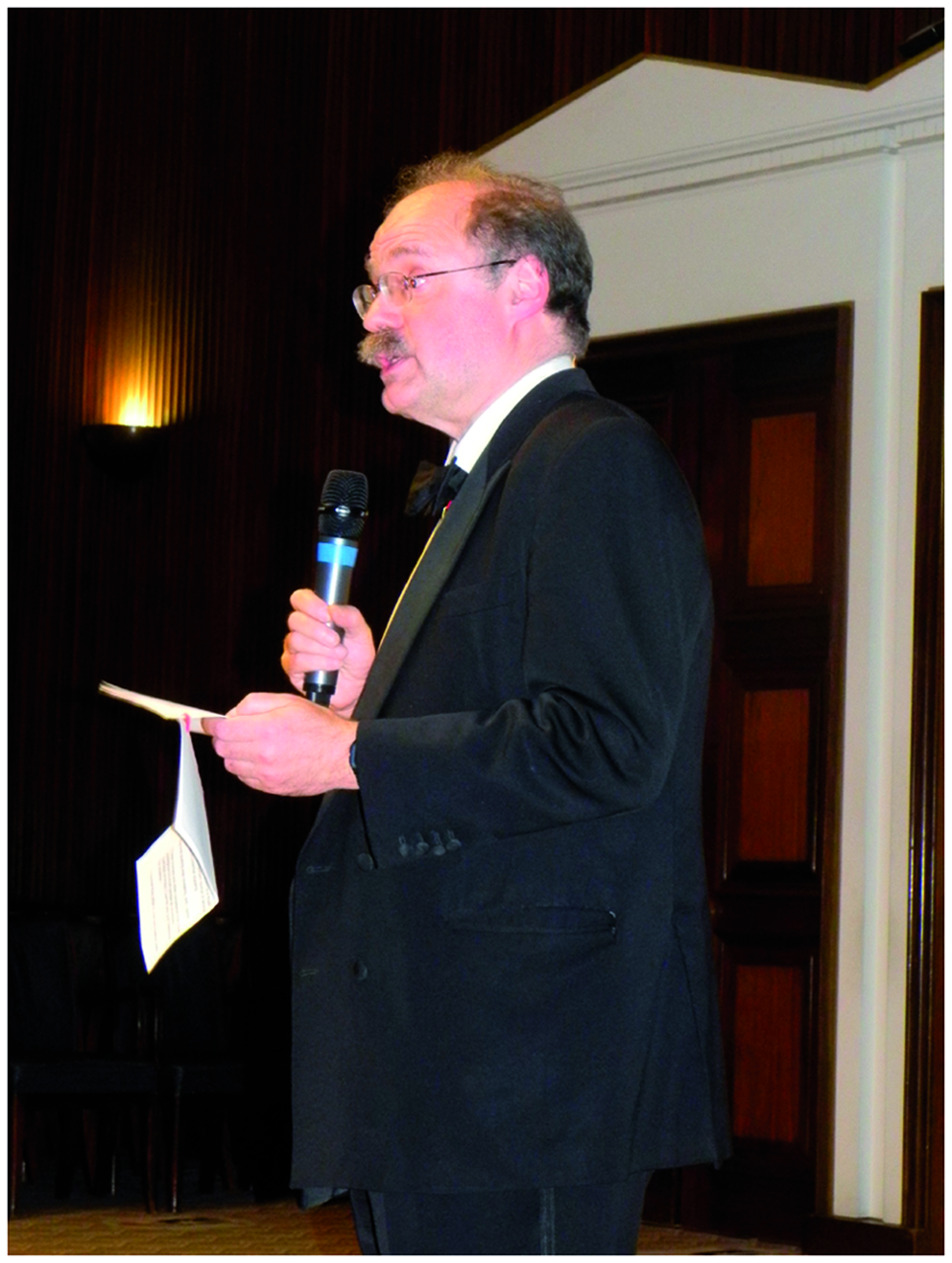
So that search having failed I searched on “law and medicine”. This took me to the website of The Student Room, which is a much used and therefore important source of advice and wisdom to potential students. The first posting was revealing, and I quote:
“These courses are often considered the most prestigious by most people at university (perhaps wrongly), Law for arts and Medicine for science. However they differ in one very distinct way, in that, for Law, the university you went to means a huge deal when regarding future employment, when in Medicine it is told that it does not matter as all medical schools are kept up to a high standard (and league tables keep changing so much, and only 20 or so medical schools anyway).”
One reply said: “My law teacher giving advice to people who want to be relatively successful barristers is that you have to do Law at Oxford. End of. She believes that's the only way to truly succeed due to a class/uni thing.”
A comment in response to that was equally revealing.
“Well that's immediately obviously rubbish given that of the twelve current Law Lords, five of them were at Cambridge.”
Now I stopped at this point – though I checked the facts on the Supreme Court website, which may or may not be a reliable primary source, and of the 12 Justices of the Supreme Court, 5 went to Cambridge, 5 to Oxford, and one each to Edinburgh, Queen's Belfast and Durham. And the astute amongst you, all I hope, will have spotted that that's 13 universities for 12 judges – one having owned up to 2 universities.
The Student Room gives food for thought. For me, thoughts about the confusion between education and training, equity and elitism; thoughts about professionalism and the boundaries of evidence. These are topics that are of interest to both medicine and the law.
The first confusion revealed by the participants in that web exchange was about the role of universities in the development of doctors and lawyers – because of course universities provide education and many lawyers receive their legal training as postgraduates. Indeed I was delighted to see that the undergraduate degree of the President of the Supreme Court, Lord Neuberger, was in chemistry. And this is extremely important. Education and training are often confused – and in this case a clear illustration is the best way to clear the mist. Quite simply, we mostly want our children to have sex education. But we mostly do not want them to have sex training. And talking of sex, or rather gender, it is a matter of concern that 11 of the 12 Justices of the Supreme Court are men.
It is a key feature and indeed, a defining feature of the professions of law and medicine that they are underpinned by advanced education, provided within universities imbued with the values of freedom, scholarship, debate, argument and enquiry. The training of lawyers and medics is, or certainly should be, largely a postgraduate matter.
Even more often confused are issues of equity and elitism. It is entirely appropriate that our most senior judges should come from elite educational institutions – though that elitism should not be excessively narrow. The issue of equity is that able young people, regardless of their backgrounds, should have equal access to elite universities. And that of course is a challenge for our schools. And it has long struck me as paradoxical that we think nothing of supporting elitism in sports, but that it has become a dirty word in education.
Let me say something about evidence – because it is evidence that underpins both our professions – but with some important distinctions.
What we have in common is our absolute respect for evidence in diagnosis – the fingerprint of the disease or of the crime – and the increased power of the science that contributes to that evidence, for example, the DNA fingerprint as the clue to the identity of both criminal and disease.
Lord Atkin, Lord of Appeal, speaking at this dinner on December 17th 1937, and reported in the BMJ on Christmas Day in that year, noted that the concern of both professions was the ascertainment of the truth. For this purpose the lawyer depended on the veracity of the persons he examined; the medical man had at his disposal more effective means of examination, though occasionally very unpleasant ones.
Where I fear we diverge, and each have our own problems, is in how we use evidence in treatment.
In the case of medicine, for which the current mantra is “evidence-based medicine” – all too often we do not practise what the evidence tells us to do. And that is the power of the use of data in the practice of medicine – to hold us to account.
The report of another medico-legal dinner, held at the Medical Jurisprudence Society Dinner in New York in March 1902 contains a salutary reminder that evidence doesn't stand still. At that dinner Mark Twain was the principal speaker, who held in his hand Jaynes' Medical Dictionary, published in 1745. I quote from Twain: “I read in that book of a case of a man who died of a severe headache – why severe? The man was dead. Didn't that cover the ground?”
The doctor's treatment included leeches, cupping and scarification. Twain noted that “all of that has passed away and modern medicine and surgery have come in”.
But I don't think that any practitioner now, looking at a medical textbook of 1902, would be persuaded of the evidence base of much that was practised then – and I think that a practitioner looking at a textbook of 2013 in 2113 will think the same. So we must all be relentless in our continuing research and analysis of new evidence.
But what about the law? In the case of the law – all too often, evidence on the effects of the prescription of judges – sentencing – on reoffending and deterrence is either not considered or ignored.
And of course the law has a problem that is largely absent in medicine. In the case of the law, sentencing follows another driver, that of ideology, and that is retribution. So I am told that there is good evidence that shows that short custodial sentences have harmful effects on the recipients, their families and those with whom they interact. There are two responses to this – one is to make short custodial sentences longer, the other, of course, is to evaluate alternatives to custodial sentencing.
As Government Chief Scientific Adviser, I do think that the law should take a stronger look at the evidence base for sentencing policies.
And importantly I think there is a very hard problem that should challenge the medical and legal professions to work more effectively together – which is that our prisons have many inmates who have serious mental illness. But before we jump to conclusions about the humaneness of medical solutions, we should never forget that, in the past, being found insane resulted in many cases in a far worse outcome than a prison sentence.
This evening is a celebration and my role is to propose the Toast to the Law. The California Legislature in 1887 passed “An Act to prohibit the sophistication and adulteration of wine, and to prevent fraud in the manufacture and sale thereof.” And it defined wine as “the juice of grape fermented, preserved, or fortified for use as a beverage, or as a medicine”. And where law and medicine turn from evidence to judgement is in the assessment of the quality of wine – a topic on which our professions are level pegging.
So let us now take this particular medicine together. I ask you to rise and drink the toast to the Law.
The Toast to Medicine by Lord Dyson
I am delighted to propose a toast to Medicine tonight. The medical and legal professions are both noble professions that form an essential part of the bedrock of our society as any other civilised democratic society. They both have traditions of excellence and integrity that reach back into the mists of time. They have much in common. After all, both lawyers and medical practitioners seek to put right what has gone wrong and to act in the best interests of those for whom they assume responsibility. Both are expected to observe high standards of professional care. Both are closely monitored (some say far too closely and bureaucratically) by regulatory authorities.
Lord Dyson.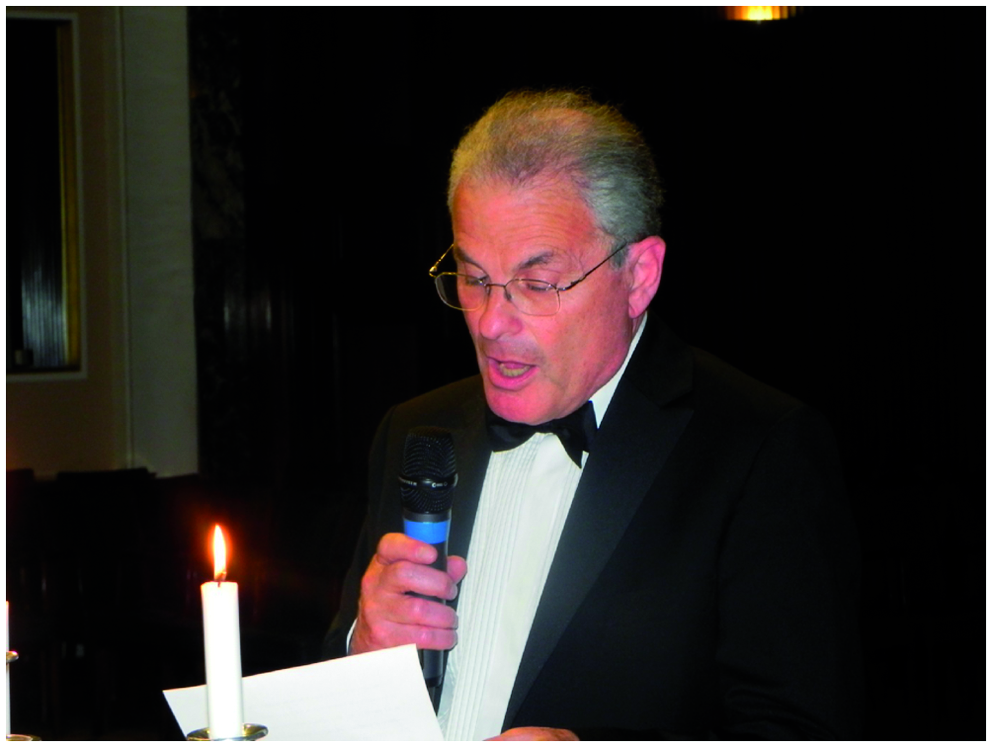
But of course there is much that is different. We are not in competition with each other. That is just as well, because I have to accept that you win hands down in the popularity stakes. Lawyers have never been popular. Look at the lawyers in Shakespeare and Dickens and Balzac and countless others. And descending a little in the scale, look at what Frank Dobson MP once said: “The only place for a lawyer in the NHS is on the operating table”. He may not be the deepest political thinker, but he was tapping a rich seam when he said this.
On the other hand, doctors have never come in for the same kind of treatment. It is fairly obvious why doctors are much more popular. If we are cured of a terrible illness or helped to be relieved of some nagging pain, we are so grateful. We are even prepared if necessary (and if we can afford to do so) to pay a lot of money for the privilege of being restored to good health. After all, without our health we are lost. Chronic pain can be quite overwhelming and dominating of one's entire life. Fortunately, I cannot speak from experience of the stress and psychological pain of divorce proceedings or indeed of any other form of litigation. But for most people, it is not of the same order as the stress and pain of serious illness. On the whole, the relief that the medical profession can bring is greater and more appreciated than what even the best lawyers can achieve. Why are lawyers so unpopular? It can't merely be because they are so expensive. After all, many doctors don't exactly come cheap and not all lawyers charge the earth. But this evening is not the time to debate this interesting question. It is notable that doctors, nurses and teachers repeatedly appear at the top of popularity league tables that are published in the media from time to time. It is curious that judges, who are often criticised by politicians and the media for being privileged and out of touch are right up there too. And when the going gets rough for the government, they are quite happy to ask a judge to chair an inquiry. But perhaps judges are not thought of as lawyers. It is all very odd.
Since about 2005, the judges have also been eligible to serve on juries. That is rather odd too.
But I have been asked to propose a toast to Medicine. So it is to Medicine that I should return. I have no medical qualifications and no knowledge of medicine other than what I have picked up as a result of injuries and episodes of illness (and latterly through rather hopeless searches of Google). So I thought I should say a few things about Medicine and the Law and the relationship between the medical profession and the Law. There are many points of intersection between the two.
I have been involved in a number of fascinating medical cases over the years. I would like to make brief mention of a few of them. As long ago as about 1989 (when I was still at the Bar), I was defending the Coal Board in a test case brought by the estate of a deceased coal miner who had died of emphysema. He had worked in the Kent mines for about 40 years and had been a heavy smoker. He also suffered from pneumoconiosis and chronic bronchitis. There were many issues in the case, including whether the Coal Board had been negligent in failing to provide a suitable system for dust suppression. But the big medical question was whether the emphysema was caused or contributed to by the coal dust or whether it was caused by the smoking. The plaintiff's medical expert said that it was the coal dust; the Coal Board's expert said that it was the smoking and went so far as to say that coal dust could not be responsible. The court was inundated with epidemiological papers which were of considerable complexity. The plaintiff's expert was young and relatively inexperienced. She had written a PhD thesis in support of her view that coal dust could cause emphysema. There was not much support in the literature for her view or at least if there was, it was not shown to the judge. We won the case. A few years later, a different judge heard another claim on behalf of a coal miner. I was not involved in this case. By this time, there had been developments in medical research. Or at least, the epidemiology that was shown to the second judge showed that it had become fairly clear that the plaintiff's expert in the first case had been right.
I think the first judge reached the right conclusion on the material that was placed before him. But perhaps a medical assessor might have reached a different conclusion at that time. Judges and lawyers are skilled at understanding technical issues in all sorts of areas. But I did wonder at the time whether a cutting edge issue of this degree of difficulty and controversy was best resolved in a court of law.
I experienced this problem in an even more acute form when a few years later I tried a case about a negligent dentist. It was a notorious case about a dentist who had done major work on the teeth of more than 100 patients, all of which was more or less unnecessary. To add insult to injury, much of the work had been botched. I had to assess the damages in a number of specimen cases. In one of the cases, there was an issue as to whether a particular tooth had needed to be crowned. Each side called a distinguished professor of dentistry on a number of issues, including this question of whether the tooth had needed to be crowned. This turned on the interpretation of an X-ray of the teeth that had been taken before the work had been done. The X-ray was shown on a wall in the courtroom. Each professor tried to persuade me that his view was correct. This was a forlorn and hopeless exercise. I saw some rather blurred dark patches and some rather blurred lighter patches. If the professors could not agree on the interpretation of an X-ray, what hope was there for me? I did my best, but I am sure that they were not fooled. It must have been as frustrating for them as it was for me. This did not seem a sensible way of resolving such an issue. I was reduced to deciding it on the basis that the burden of proof was on the plaintiff and, since I had not been persuaded, the plaintiff failed on this issue. Hardly a satisfactory way of resolving it.
I was confronted by a very difficult problem in a case involving a doctor in South Wales. A patient of the medical practice was asthmatic and had been prescribed Ventolin by the practice for quite some time. Late one afternoon, she came into the practice complaining of severe stress. The doctor, who was a locum, prescribed her some beta-blockers. The patient took the drugs and, tragically, died within a few hours. You will all know that beta-blockers are contra-indicated for asthmatics. The death was reported to the practice by the Coroner and the doctor was notified. He panicked and went to the computer screen where he found a series of entries of Ventolin. He deleted the entries from the screen, but they remained on the hard-disk. In his panic, he failed to remove the damning evidence that, if he had checked her history, he would have seen the clearest possible evidence that she was asthmatic. He was charged with attempting to pervert the course of justice and gross negligence manslaughter. He contested both charges. He was convicted on the first charge, but acquitted of manslaughter. He was clearly guilty of negligence, but this jury were not sure that it was gross negligence. On the evidence, I thought it plainly was, but it was the jury's view that counted, not mine. But how was I to sentence him for attempting to pervert the course of justice? About 10 patients were called to say what a caring and wonderful GP he was; how he would come out in the middle of the night to see them in their homes; and how they would be distraught if he were to be sentenced to a term of imprisonment. I sentenced him to 6 months. It seemed to me that a clear message had to be sent out that GPs who doctor medical records will be severely punished. This was intended to be a deterrent sentence. If he had pleaded guilty and said that he had acted in a blind panic and was really sorry for what he had done, then I might well not have sent him to prison. Incidentally, although his patients thought that he was wonderful doctor, he had previously been in trouble with the GMC for incompetence.
I could go on for a long time with stories of medical cases in which I have been involved. But it is getting late. Before sitting down, however, I would like to touch on two other topics which, so some extent, link our two professions. The first is litigation for professional negligence. I have spoken elsewhere on the question of whether we are in the grips of a Compensation Culture generally. If there is a tendency to be too quick to sue professional persons or indeed anyone else, it is certainly not the fault of the judges. Judges are astute to hold professional persons liable only if they fall below the standard of care reasonably to be expected of them. Judges most certainly do not subscribe to the view that if there is pain there is blame. But conditional fee agreements (no win no fee agreements) undoubtedly encouraged claimants to have a go. They had nothing to lose. It was no wonder that bill boards sprang up outside hospitals on which solicitors advertised their services to anyone who was dissatisfied with the treatment they or members of their family had received. In the result, much unwarranted litigation was generated by solicitors who reckoned that defendants were likely to pay something (plus costs) to get rid of even fairly trumped up claims. But since April of this year, conditional fee agreements have come to an end and I hope that the abuses of the past few years will be behind us.
The second topic that I would like to touch on is very different. I know that from time to time doctors have to make hugely difficult life and death decisions and not merely when their patients are on the operating table. But judges also have to make extraordinarily difficult decisions which may more properly be regarded as belonging to the world of moral philosophy than the Law. I have in mind examples such as the famous conjoined twins case, where the court had to decide whether to sanction a medical intervention which would certainly result in the death of one twin with a realistic prospect that the other twin would survive; or not to sanction any intervention, in which case both twins would almost certainly die. Then there are cases, sadly not uncommon, where the court is called on to decide whether to sanction switching off a life-support machine.
The final group of cases that I would like to mention is that of Nicklinson and others, where the court is being asked to decide whether the statutory offence of assisting a person to commit suicide is contrary to the human rights of the person who wishes to commit suicide. I cannot comment on this in any detail because we have not yet given our judgment. Although the issue is one of law, it is one on which most people have strong moral views on one side or the other. It engages the medical profession in a very real way. That is not least because the DPP has issued a policy document setting out the factors that he takes into account in deciding whether it is in the public interest to prosecute someone for assisting suicide. One of the factors is whether the assister is a professional carer, such as a doctor. An issue in the case is whether the DPP's criteria for deciding whether to prosecute are sufficiently clear for a doctor or other professional carer to be able to make an adequate assessment of the chances of being prosecuted for assisting a patient to commit suicide. These are deep questions.
But I do not want to end on too sombre and portentous a note. As I said at the outset, both of our professions are noble professions and we have much in common. The fact that such a society as yours exists at all says it all. You could not imagine anyone founding a medico-accountancy society or a medico quantity surveyor society or a medico-bankers society. That is why, although the lawyers will always lose out in the popularity stakes, we should encourage each other to prosper.
I have great pleasure in proposing a toast to Medicine.
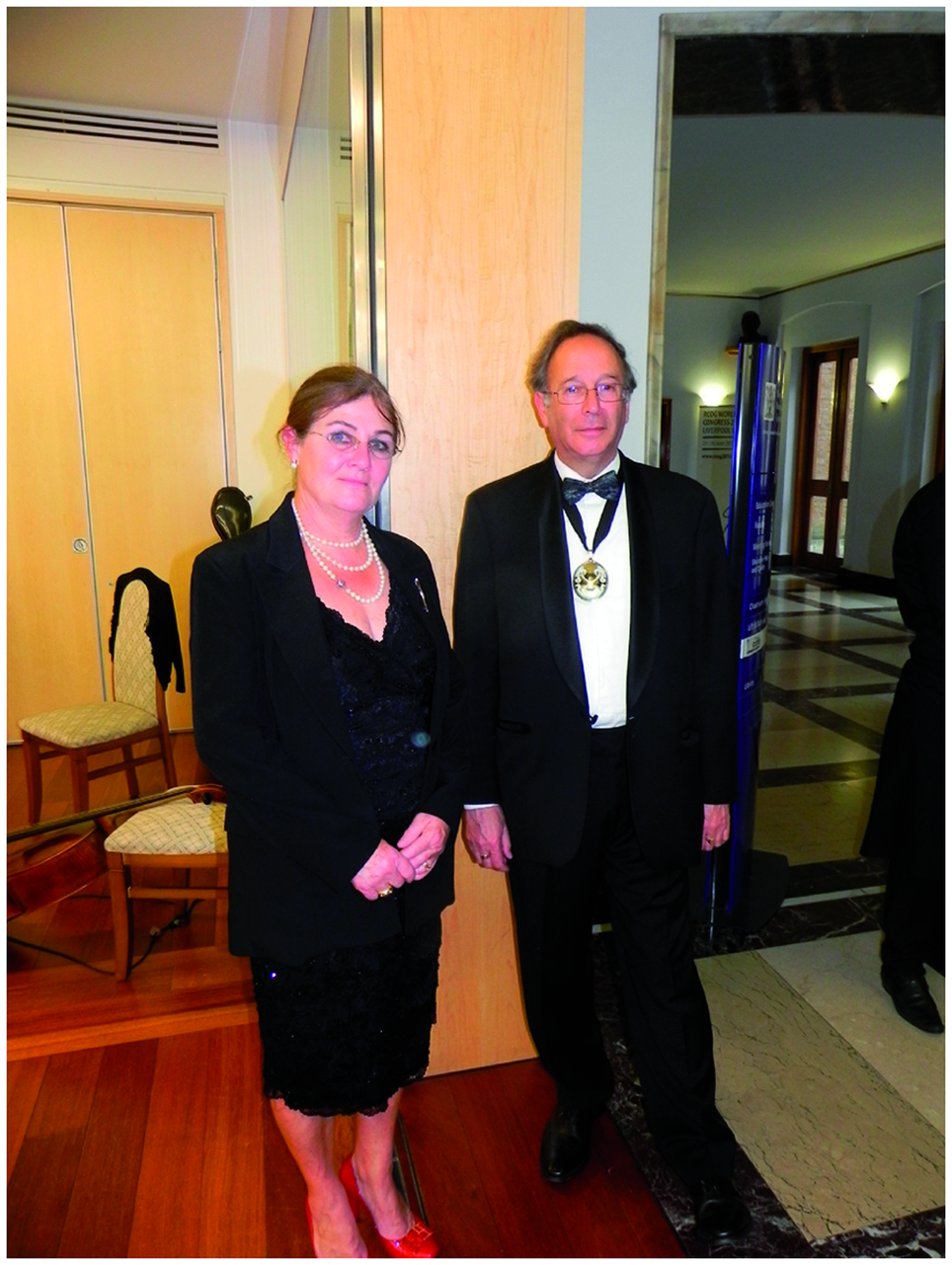
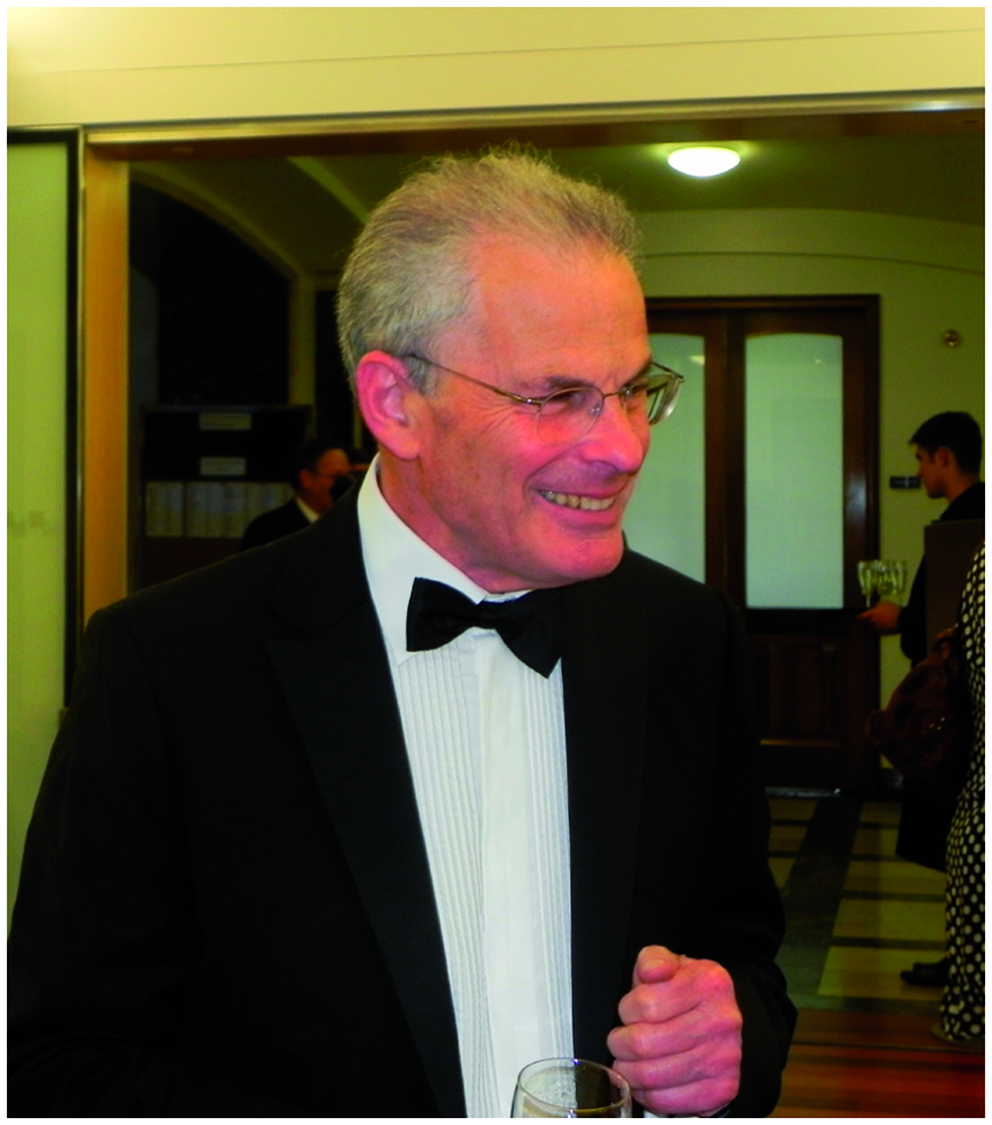
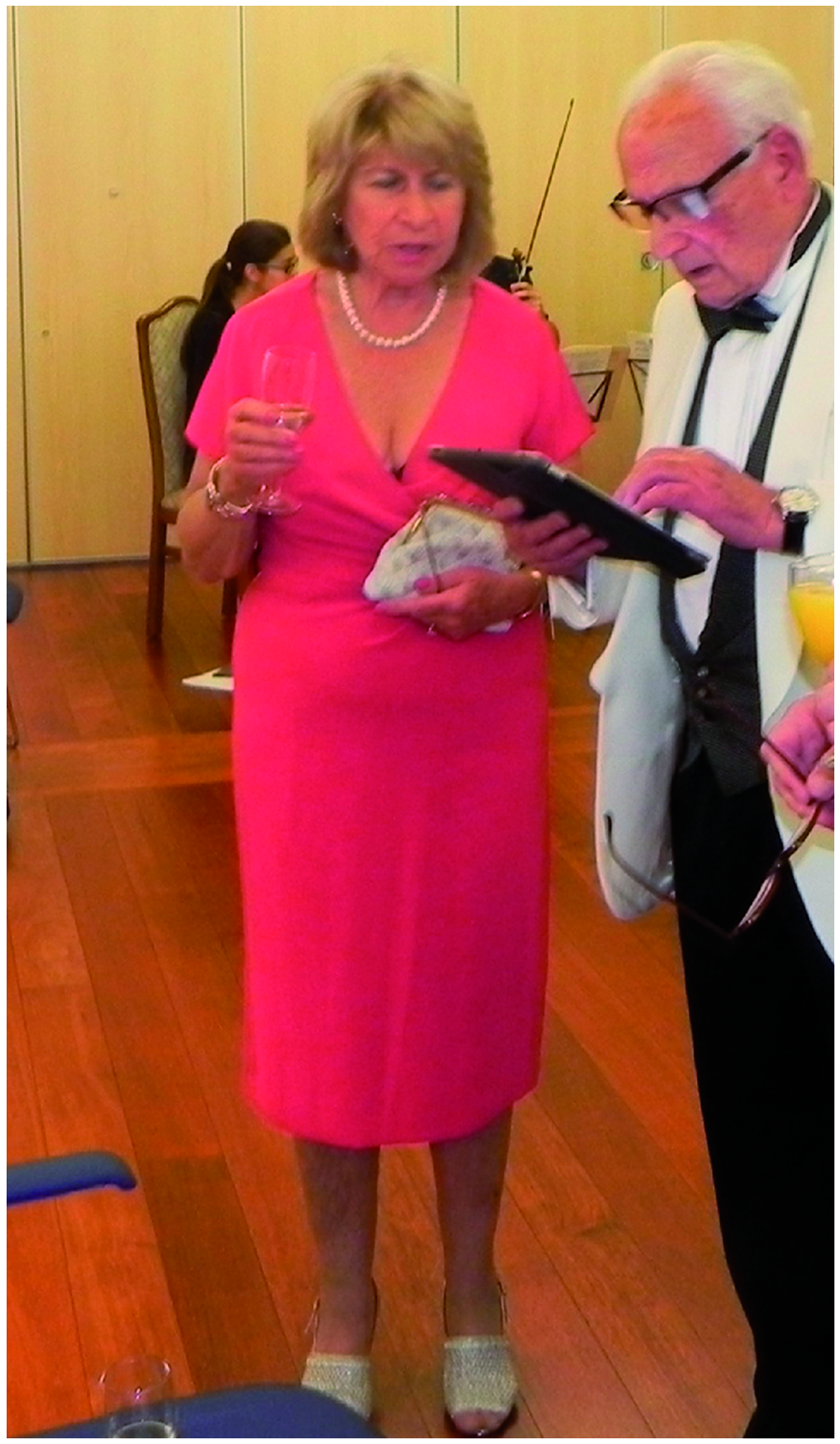
Medico-Legal Society President Dr Martin Mansell, and his wife, Catherine. Lord Dyson. Diana Brahams, Medico-Legal Journal Editor and Dr Neville Davis, Medico-Legal Society Honorary Acting Medical Secretary.