







Abstract
Sudden unwitnessed, unexpected deaths when the bodies are found in public places require a complete and meticulous medicolegal autopsy to ascertain the cause and manner of death to avoid further unnecessary investigations by the legal authorities. Such deaths attributed to gastrointestinal causes at autopsy are relatively uncommon. We report a case of sudden unexpected death due to strangulated inguinal hernia in a 60-year-old man. The body was discovered in a public area near a place of worship. The present case illustrates a potentially preventable sudden unexpected death due to a surgically correctable gastrointestinal condition. In the present case, the individual feared being hospitalised for treatment of his scrotal swelling with potential surgery and the eventual loss of daily income. In our opinion, such apprehensions may have delayed the potentially life-saving hospital surgical intervention in the individual.
Introduction
Sudden unexpected deaths need a complete medicolegal autopsy to ascertain the cause of death, 1 most especially if the death was unwitnessed. The autopsy findings may assist the investigating authority in concluding the death was natural.2,3 Sudden unexpected deaths are mainly attributed to the cardiovascular system, followed by the respiratory and central nervous systems. 4 A Jamaican study revealed that the central nervous system, respiratory and cardiovascular causes accounted for nearly two-thirds of sudden unexpected deaths. 5 We report a rare case 6 of sudden unexpected death due to gangrenous small intestinal obstruction caused by herniation of a portion of the small intestine into a right sided indirect inguinal hernial sac in a 60-year-old man, who was a homeless street balloon seller.
Case report
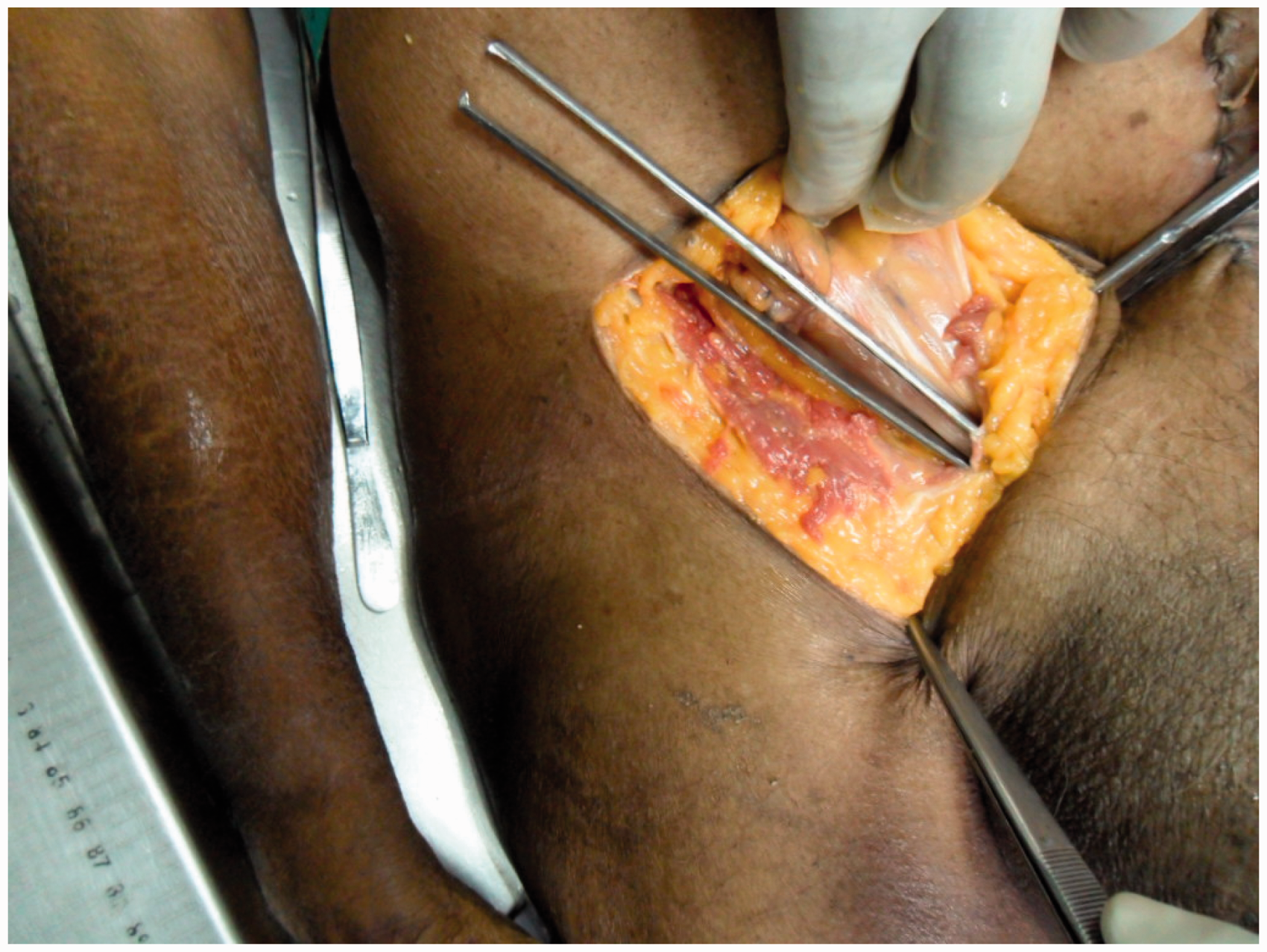
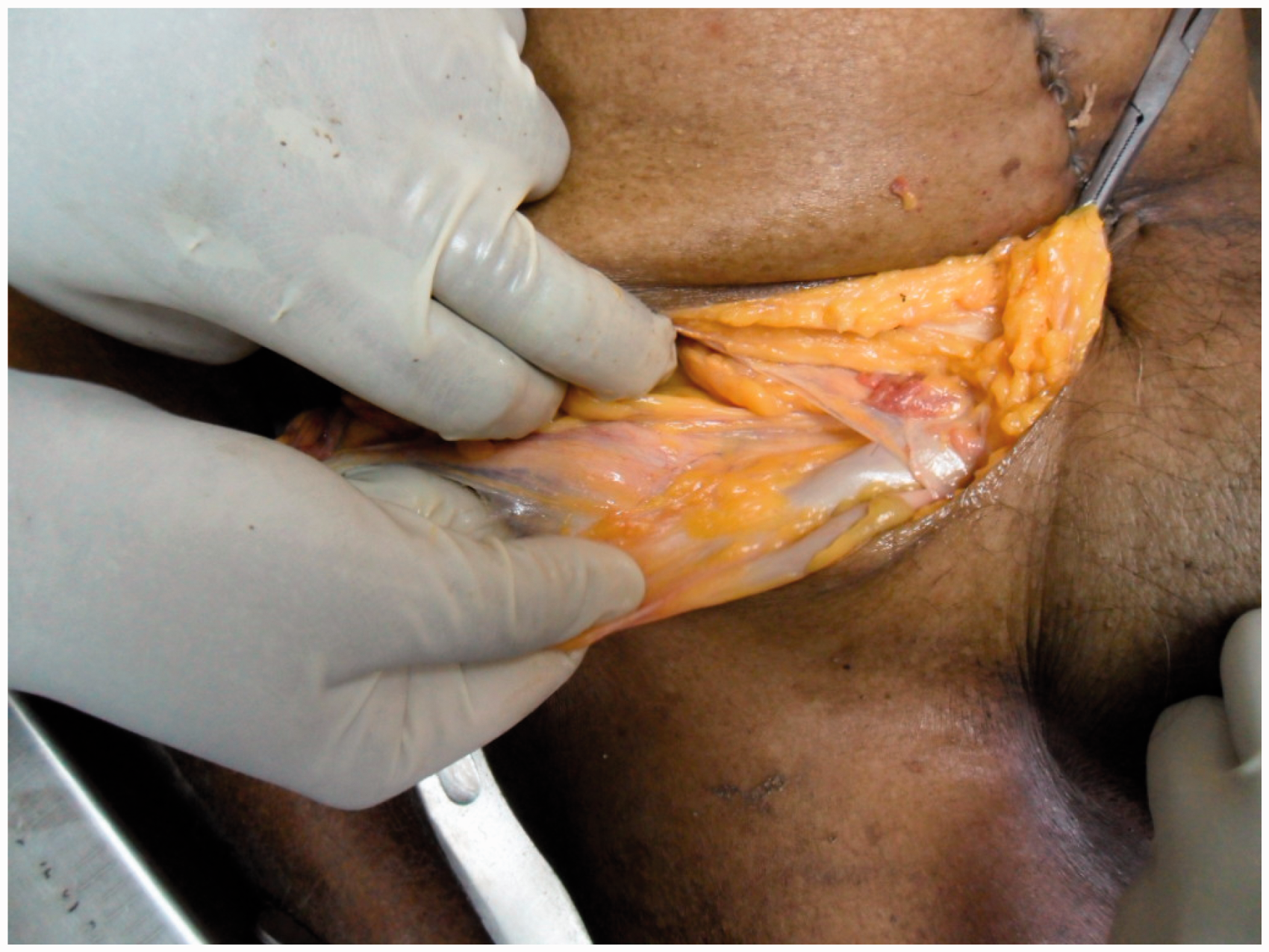
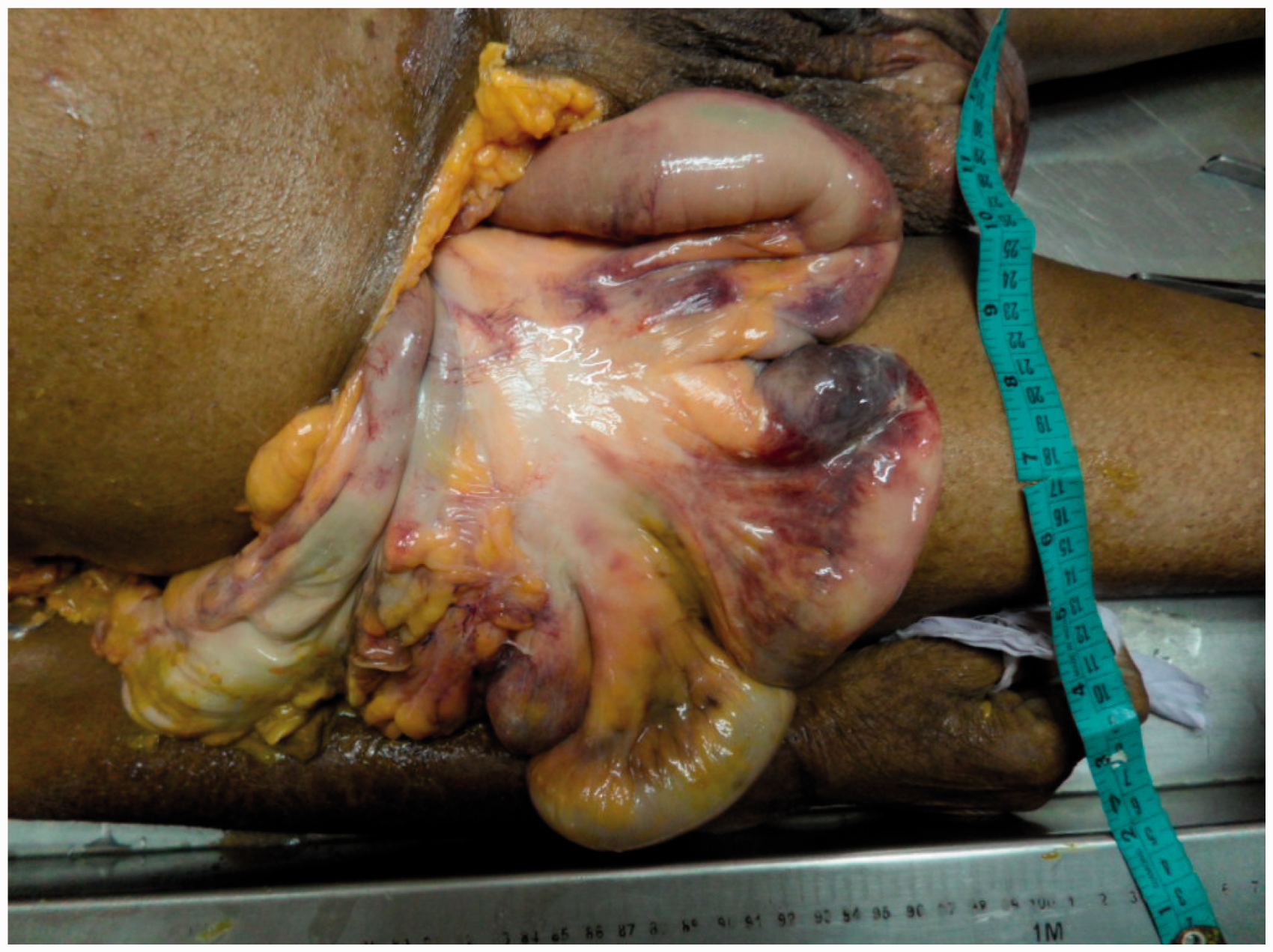
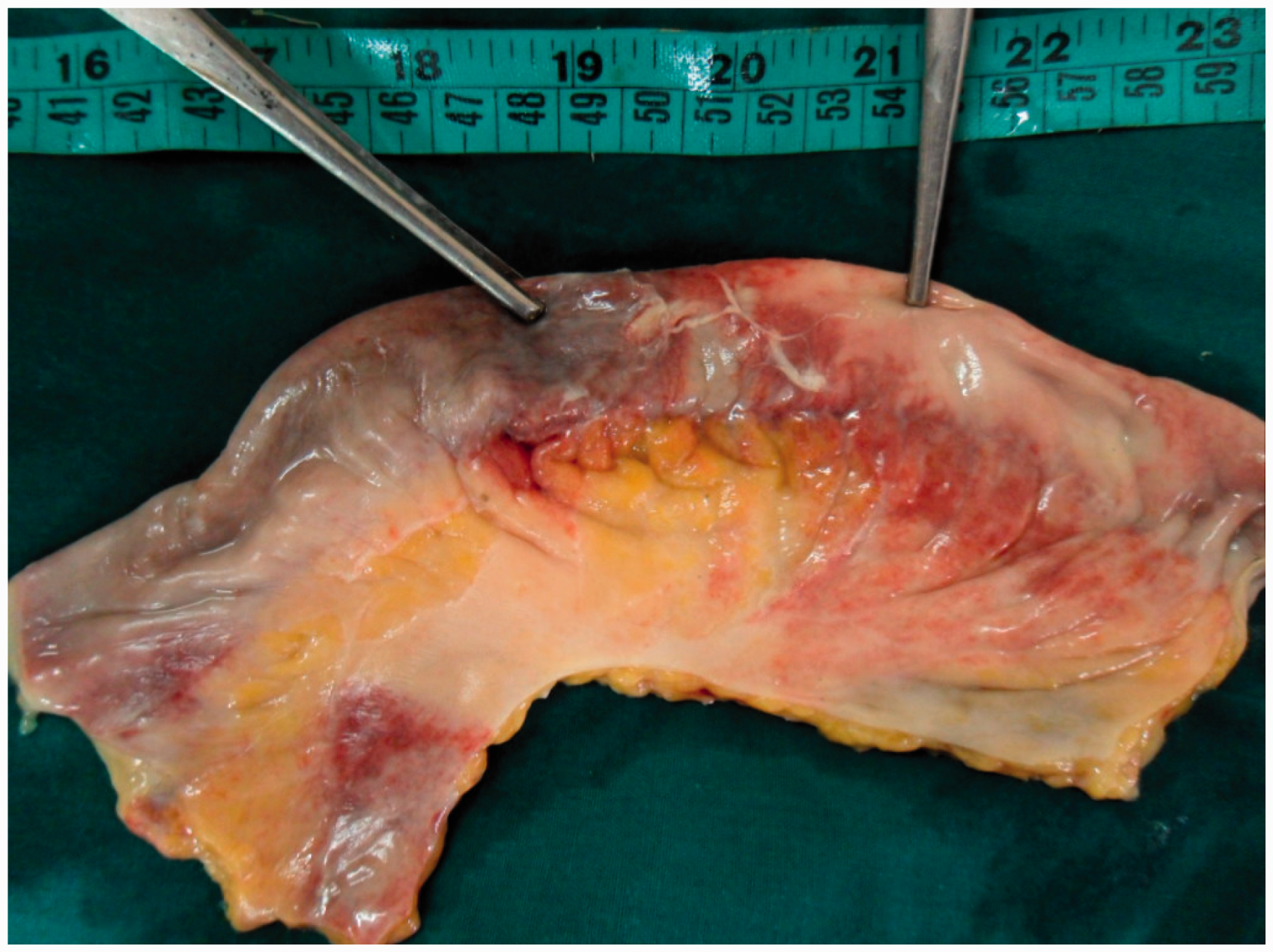
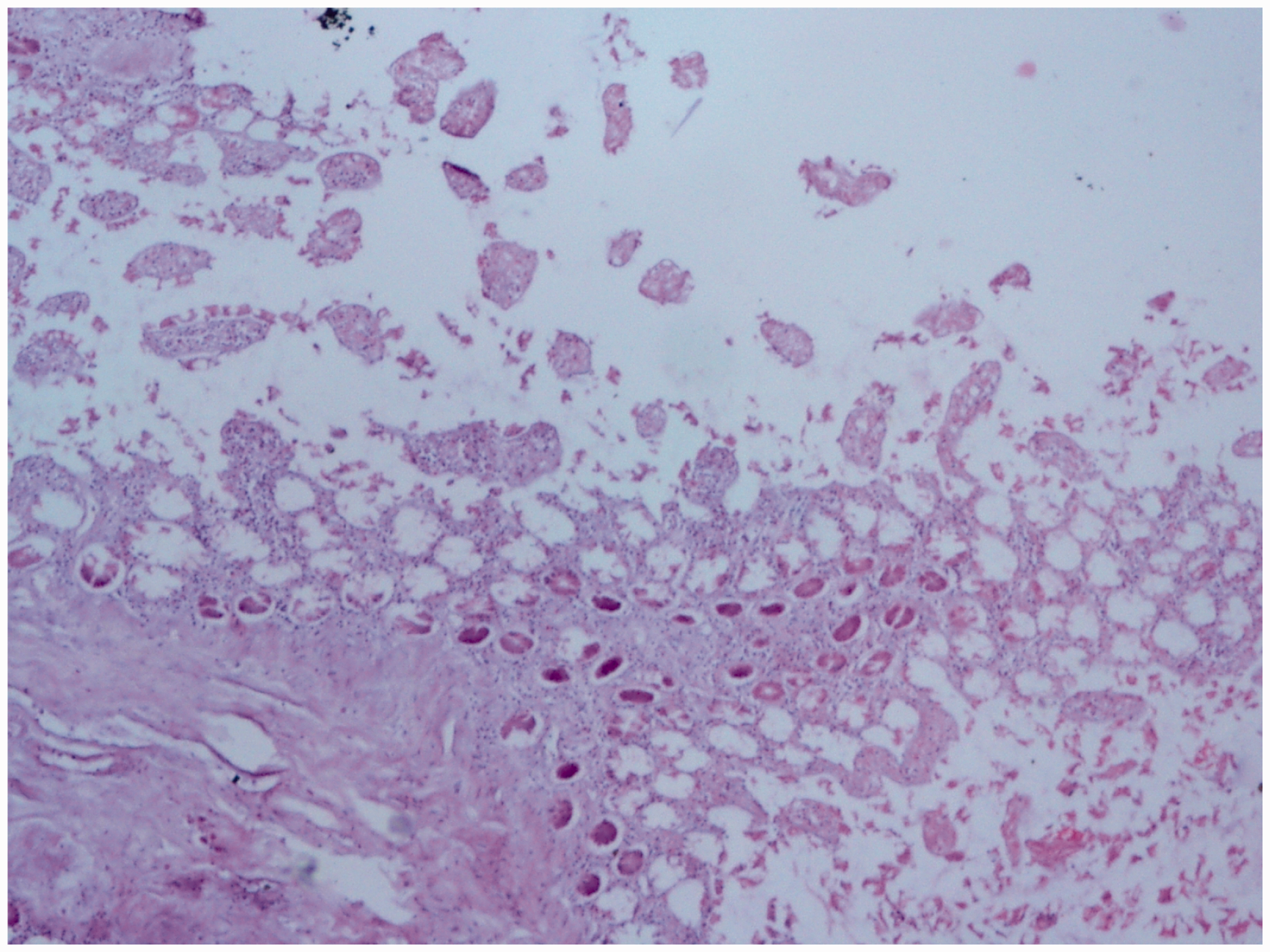
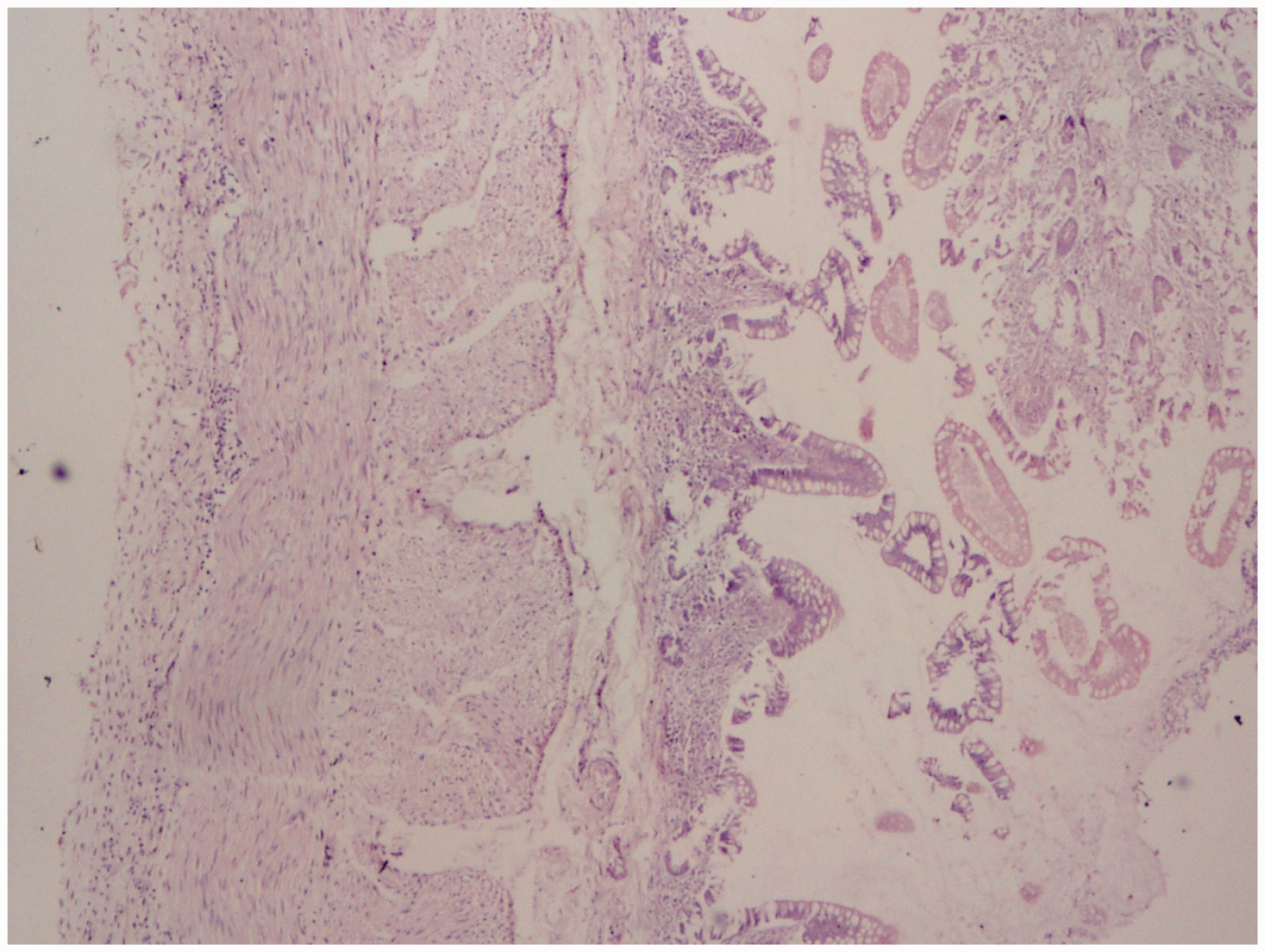
The body was found lying near a place of worship in Mangalore, India. As the death was in a public place, a medicolegal autopsy was conducted. On external examination, the most significant finding was a scrotal swelling measuring 22 × 18 × 10 cm with the penis buried within it (Figure 1). Palpation of the scrotal swelling and routine intra-abdominal examination revealed an irreducible right-sided inguinal hernia. The intra-abdominal intestinal coils were intact and unremarkable. The inguinal hernia was further explored, only after an otherwise complete autopsy, through a separate obliquely placed incision parallel to the right inguinal ligament (Figure 2). Further dissection revealed a strangulated right-sided indirect inguinal hernia with loops of the bowel present in the hernial sac (Figures 3 and 4). A segment of the small intestine measuring 16 cm in length was partly inflamed and partly gangrenous (Figure 5). Histopathology of this segment showed extensive necrosis with acute inflammatory infiltrate (Figure 6). The segment of the small intestine proximal to the gangrenous segment was dilated. Histopathology of this segment revealed oedema, focal ulceration of the mucosa with infiltration by lymphocytes and plasma cells (Figure 7).
Scrotal swelling with the penis buried within it. Obliquely placed anterior abdominal wall incision parallel to the right inguinal ligament. Exploration of the neck of the inguinal hernia. Bowel loops from the inguinal hernia sac. Partly inflamed and partly gangrenous segment of the small intestine. Photomicrograph of the gangrenous small intestine showing sloughing of the mucosa (Haematoxylin and eosin × 100). Photomicrograph showing focal ulceration of the small intestinal mucosa with infiltration by lymphocytes and plasma cells (Haematoxylin and eosin × 100).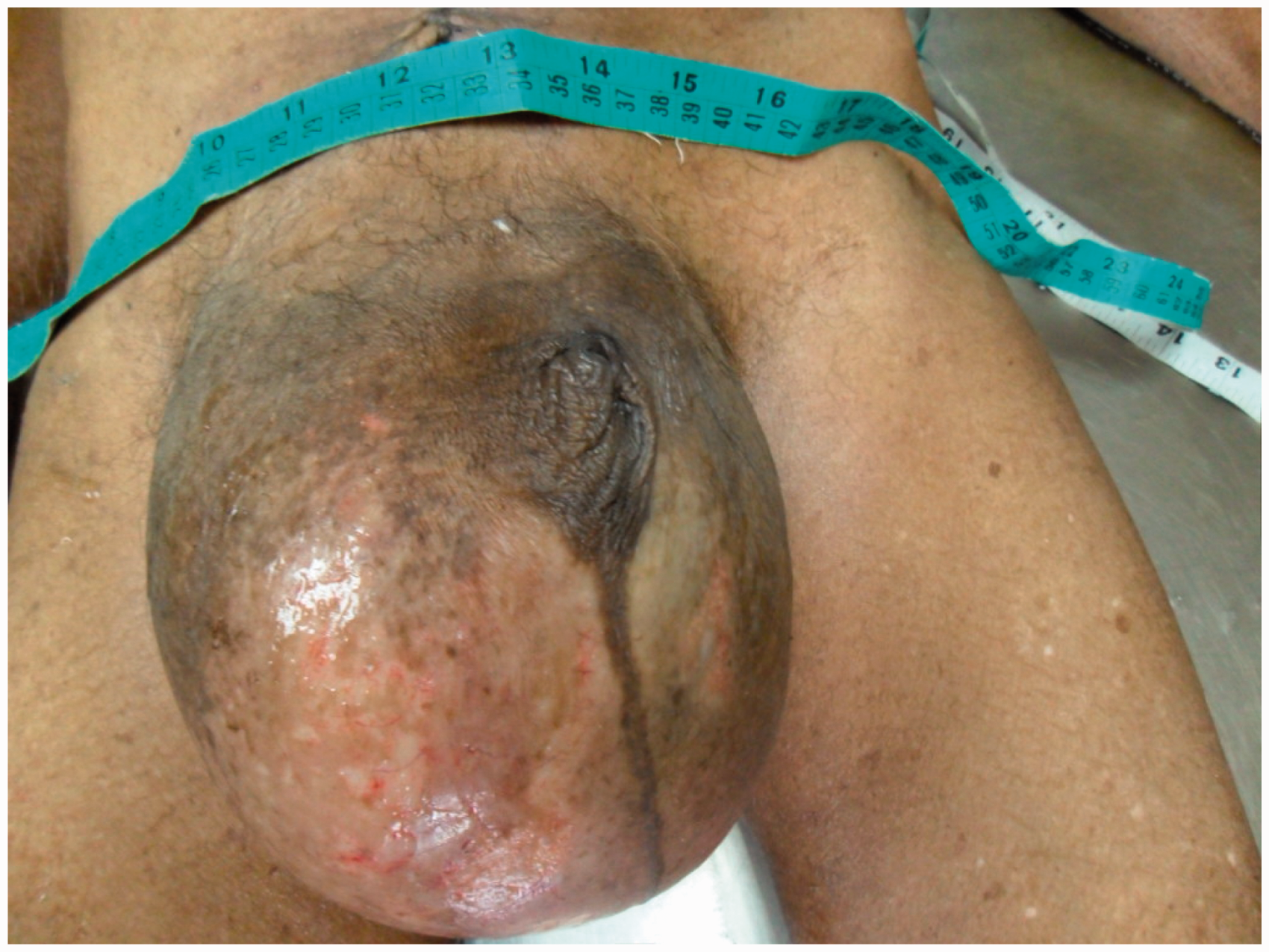
Based on the information furnished by the fellow street vendors to the investigating authority, the deceased street balloon seller feared being hospitalised for treatment of his scrotal swelling with potential surgery and the eventual loss of independence including his daily small income. Death was considered to be consequent to small intestinal strangulation caused by herniation of a portion of the small intestine in a right-sided indirect inguinal hernial sac. There were no other significant organic diseases or injuries present that could have directly caused death or contributed to the deceased’s death. In addition, routine postmortem toxicological analyses utilising chromatography and mass spectrometry were negative for alcohols, pesticides, common illicit and prescribed drugs.
Discussion
Inguinal hernia is a common problem in men that occasionally causes death. Inguinal hernia is termed reducible if the hernial contents can be pushed back into the abdominal cavity. It is termed irreducible or incarcerated if the hernial contents cannot be returned to the abdominal cavity. An irreducible inguinal hernia may entrap bowel and cause obstruction of the bowel, or it may become strangulated if the contents of the hernial sac become ischaemic. In the present case, a segment of the small intestine was found strangulated in the inguinal hernial sac. A strangulated inguinal hernia warrants emergency surgery. Mortality increases sharply if surgical treatment is delayed either due to delayed presentation of the patient or to misdiagnosis. 7 In the present case, the death could have been prevented by a timely hospital surgical intervention.
Sudden unexpected deaths due to underlying gastrointestinal causes in adults are rarely reported.8,9 Pannell and Byard 8 reported a case wherein an 84-year-old woman was found unexpectedly dead at her home. Autopsy revealed the cause of death to be due to consequences of an infarcted sigmoid volvulus. 8 Byard and Wick 10 reported a case wherein a 23-year-old woman was found lying dead in bed at home. Following an autopsy, her death was attributed to consequences of colonic herniation through a congenital mesenteric defect, with obstruction and resultant ischaemic necrosis of the small intestine bordering the defect. Byard reported a case where an 83-year-old woman was found dead on the kitchen floor at her home. 9 Autopsy revealed that death was caused by herniation of a portion of the small intestine into a direct inguinal hernial sac that was also occupied by an acutely inflamed appendix. Byard 9 also reported another case where an 84-year-old woman was found dead in bed at home. Autopsy revealed that death was due to consequences of small intestinal obstruction caused by herniation of a portion of the small intestine through a defect created by the greater omentum that had adhered to an area of acute serosal inflammation associated with acute diverticulitis of the jejunum. 9 In an audit of sudden unexpected deaths due to acute abdomen in adults aged above 70 years, Ng et al. 11 reported four cases of small intestinal obstructions due to peritoneal adhesions, three cases due to volvulus, and one each due to ceacal carcinoma and diaphragmatic hernia. Two cases of large intestinal obstructions, attributed to rectal carcinoma and sigmoid volvulus, were also identified by Ng et al. 11
Footnotes
Declaration of conflicting interests
The authors declared no potential conflicts of interest with respect to the research, authorship, and/or publication of this article.
Funding
The authors received no financial support for the research, authorship, and/or publication of this article.