







Abstract
There is inadequate research and study into the use of garlic and other herbal medicine in clinical practice; accordingly, the general population should be cautious when using such complementary and herbal treatments. We report a case which highlights the potential complications following the application of garlic-related naturopathic remedies mostly on skin burns.
Keywords
After the World Health Organization (WHO) declared corona virus disease (Covid-19) a pandemic, the Government of Nepal imposed a nation-wide lockdown from 24 March 2020. Initially, during lockdown the number of infected reduced with no mortality reported till 16 May 2020. There were many rumours that Nepalese would be least affected from this virus, as they consumed herbs like ginger, garlic and turmeric in their food. The Nepalese prime minister while addressing the national assembly on 12 June 2020 claimed that turmeric can cure Covid-19 infection. 1 The vast majority of Nepalese people still believe herbal remedies can cure ailments including Covid-19.
A 21-year old woman, desperate to get rid of facial moles, searched the internet during the lockdown period. A web page recommended garlic paste would remove her moles. She prepared a fresh garlic paste and applied it on the numerous moles over her face and kept it overnight. In the morning she developed multiple erythema and a burning sensation over her face that prompted her to seek medical attention. On examination, she had 8–10 erythematous, slightly painful lesions around face moles without urticaria or vesicles suggestive of first-degree chemical burns. She was prescribed analgesics, fusidic acid, and betamethasone ointment and moisturiser. Regular review appointments were arranged to monitor the progress of healing of the burns and counselling to overcome the psychological impact regarding multiple facial lesions in this young lady (Figure 1). The patient was followed up at two months when she had made a full recovery.
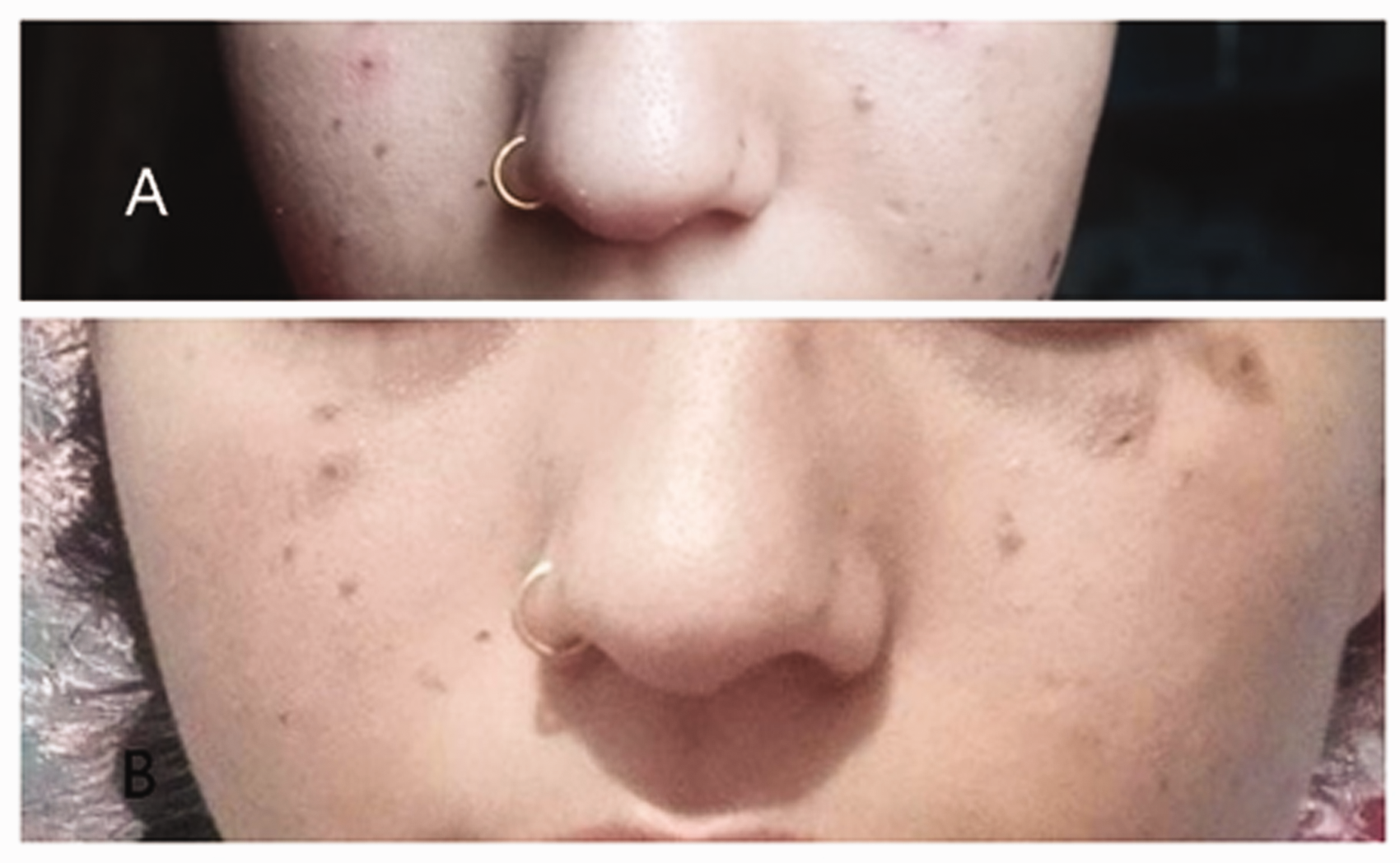
(a) Facial burn after topical application of the garlic at day 4. (b) Appearance at 2 weeks’ follow-up.
Garlic (Allium sativum L.; family: Amaryllidaceae) is commonly used as a food and a spice in Nepalese society. It has been used as an important traditional medical treatment for several medical disorders since ancient times, as long ago as 3000 BC.2,3 However, various allergic and hypersensitivity reactions like contact dermatitis, anaphylaxis, generalised urticaria, angioedema, pemphigus vulgaris and photo-allergy have been reported with garlic use, as well as alteration of platelet adhesion and aggregation and chemical burns occur when fresh garlic is applied on the skin, particularly under occlusive dressings. 4
There has been inadequate research and studies on the use of garlic and other herbal medicine in clinical practice. So, the general population need to be wary of and should apply caution when using such complementary and herbal treatments. This case report highlights the potential complications following the application of garlic-related naturopathic remedies mostly focusing on skin burns. Health workers should have an idea regarding various herbal medicines which are used by the patients and also be aware of the potential side effects and of the need to educate the patient to obtain detailed knowledge regarding risk versus benefits of the herbal medicines like garlic. Serious complications and side effects can occur from the uncontrolled use of herbal treatment products so careful consideration is needed before using garlic as a medicine for the treatment of different diseases or conditions.
Footnotes
Declaration of conflicting interests
The author(s) declared no potential conflicts of interest with respect to the research, authorship, and/or publication of this article.
Funding
The author(s) received no financial support for the research, authorship, and/or publication of this article.