






Abstract

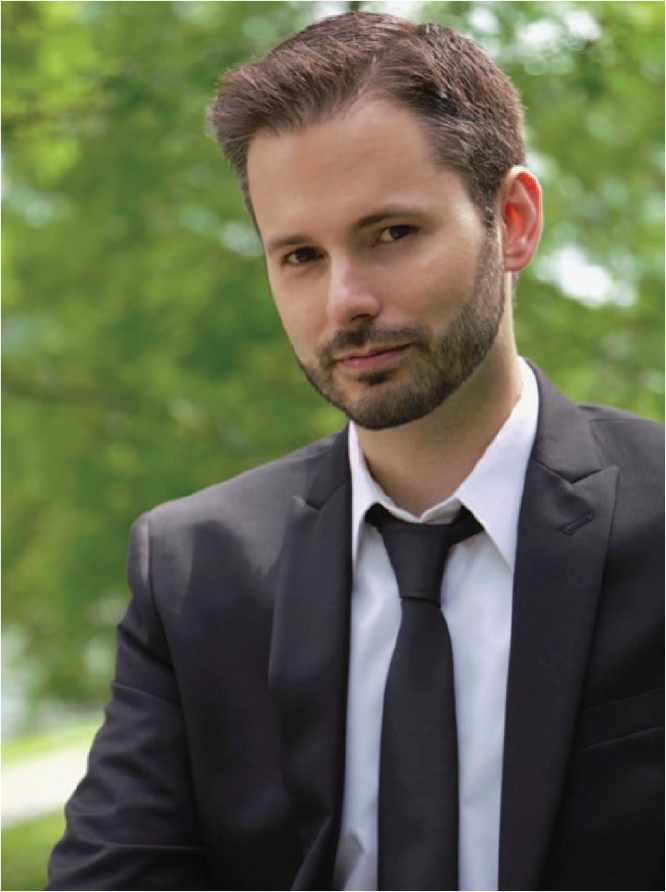
Photo of Eric Rubinstein courtesy of Carlos Casilla
Education is all about perspective. This most current global pandemic has brought to light a variety of challenges for our students that may have previously gone ignored, and despite our best efforts, the landscape of choral music as a whole will undoubtedly look different. Instead of only looking at temporary alternatives and accommodations, perhaps all this is an opportunity to elicit permanent change.
I was recently asked how I prepare my preservice teachers for a career in twenty-first-century music education. My response: Be inspired to try new things, question what people might consider “traditional,” and always do what is best for your students. We owe it to our future music educators and the profession as a whole to shift our teaching with the circumstances in which we find ourselves. We are on the front lines of education reform, and we should feel empowered to effect change through progressive practices in our classrooms, our culture, and our curricula.
Diversity and Inclusion
Diversity has always been a popular buzzword in education vernacular, but in light of the Black Lives Matter movement, this conversation seems more timely than ever. This particular moment has me questioning how often we actually address diversity and inclusion in the classroom. We can expose students to a variety of diverse backgrounds or teach acceptance, but are we actually teaching diversity?
Educators and administrators may adopt inclusive practices that address race, cultural identity, and socioeconomic status (SES), but what about students from other minorities or those from marginalized groups? When we look at our students, we see a sampling of those who are represented in our community, including (but not limited to) people of various religious backgrounds, abilities, and disabilities; groups having a wide range of sexual and gender identities and orientations; and 504/IEP/exceptional learners, among others.
While teaching in both urban and suburban communities, I have often seen educators misunderstand or misrepresent three key ideas: multiculturalism, interculturalism, and cross-culturalism. Multiculturalism is, perhaps, most familiar and refers to a society that includes several cultural identities with little to no active engagement across groups. “For example, in a multicultural neighborhood, people may frequent ethnic grocery stores and restaurants without really interacting with their neighbors from other countries.” 1 Interculturalism describes communities in which there is an explicit understanding (and respect) for all cultures based on a mutual exchange of ideas. Last, cross-culturalism compares different cultures. “One culture is often considered ‘the norm,’ and all other cultures are compared or contrasted to the dominant culture.” 2 These aforementioned ideas may expose students to diverse and underrepresented communities, but not all of them support students from those backgrounds.
When considering the needs of our students, best practice suggests that diversity is more of an umbrella concept than a term that describes what is measured at an institutional level. A change in perspective might shift the dynamic inside your classroom for the better.
Privilege in the Classroom
The very nature of choral singing is to provide collaborative and shared experiences through song. That may be easily understood on the surface, but if we truly explore our own teaching practices, we may find that “traditional” pedagogies perpetuate privileged behaviors instead of creating true collaborative efforts. This creates a philosophical dilemma: Do we connect with students through whichever strategies are effective for the whole or insist on maintaining a curriculum even if it is only effective for the few? “Perhaps a balance is needed between the musical experiences taught traditionally and what students might bring from outside the classroom.” 3
Our most widely known methodologies often rely on available resources, materials, time, and access. Although there is ample proof of the effectiveness of these strategies, how else can we provide a meaningful and educational experience that might include some of these practices instead of ascribing to them exclusively? For example, responsorial (call-and-response) singing has been a part of our history since colonial times. 4 Why, now, isn’t call-and-response singing an acceptable pedagogy for all choirs?
Throughout my teaching career, I have always taken an interest in those who especially value traditional Western music in the classroom. What are the values that cause music to be designated as “traditional”? There is certainly a place in our curricula for our favorite choral chestnuts, but they are not necessarily representative of the students who sing them. How can we include more of our students’ music in our programs?
Repertoire selection can be a delicate dance that takes a number of variables into account. We make every effort to program as broad a variety as possible, including pieces of different tempi, textures, languages, orchestrations, texts, and backgrounds. On the whole, conductors are also becoming more sensitive to programming a variety of composers that reflect a range of ages, genders, geographical regions, and cultural identities. Through musical representation, we are creating a more inclusive experience for all our singers. Conversations about culturally responsive pedagogy are ongoing and should continue with the commitment to avoid idiomatic programming. For example, the music of female composers often goes beyond that of women’s/treble choirs, and in similar form, the repertoire of African American composers is more complex than arrangements of concert spirituals.
One piece of varied programming that may go overlooked is a variety of tonal colors and timbres. For example, once we teach the concept of forward resonance, what repertoire could we use to support and reinforce student learning? Although it may challenge what we have done in the past, one of the most effective ways is to teach through popular or commercial music. Those familiar with either genre can identify their respective difficulties and “teachable moments,” and yet, vernacular music is often stigmatized. “What is missing is the recognition and acceptance of a growing body of ‘student’ music and opportunities to incorporate that music as an entry point to the school music experience.” 5
Ensemble/Course Offerings
In my experience, female singers outnumber males in many choral programs. What does your ensemble structure look like? What is your “top” choir, and why?
The conservatory model suggests that the more advanced choir be a mixed ensemble, and oftentimes, the training choirs might be divided by high and low voices. Considering the imbalance of voice parts in many programs, are we creating a more competitive atmosphere among our female students that does not exist among male students? Are we inadvertently devaluing the number of talented girls and women by making the women’s choir the place for “leftovers”? This second-place status promotes the idea that the individuals in these ensembles can only rise to the challenge of being adequate or acceptable. 6 Their sole function is “to prove themselves worthy of eventually singing in the mixed choir.” 7 Whether intentional or not, this structure creates “prestige hierarchy” and a stigma that boys/men are treated differently (perhaps, better) than girls/women. For example, a girl with a strong voice and who has been to a theatre camp and had voice lessons since middle school may be excited to land a secondary part in a high school musical. A male counterpart in the same musical who has had no such specialized training may have been asked to play a lead role after a drama teacher told him he’s needed in the performance.
Ensemble offerings are often reflections of student participation, curriculum priority, and teacher expertise. As mentioned earlier, a commitment to varied programming will ensure a well-balanced choral experience among students. Despite our best efforts, however, we may be inadvertently separating what we consider to be “serious” music from ev- erything else. Many programs offer a variety of subgenres (e.g., show choir, pop ensemble, madrigal group, jazz ensemble, gospel choir). Do we give our students those outlets to quench their musical thirst, or do these ensembles exist to not deter from our “serious” concert choirs?
These uncertain and challenging times have required directors to engage with choral music in slightly different ways. This has allowed us to evaluate our true priorities in music education and explore new curricular avenues. The future of choral music relies on our commitment to keeping an open mind and (occasionally) stepping outside of our comfort zones. Progressive teaching practices and an updated perspective will help make us more informed teachers and give us the confidence to jump into education reform with both feet.
Footnotes
Notes
Eric Rubinstein is an assistant professor of choral music education at the Aaron Copland School of Music, Queens College, City University of New York. He can be contacted at