






Abstract
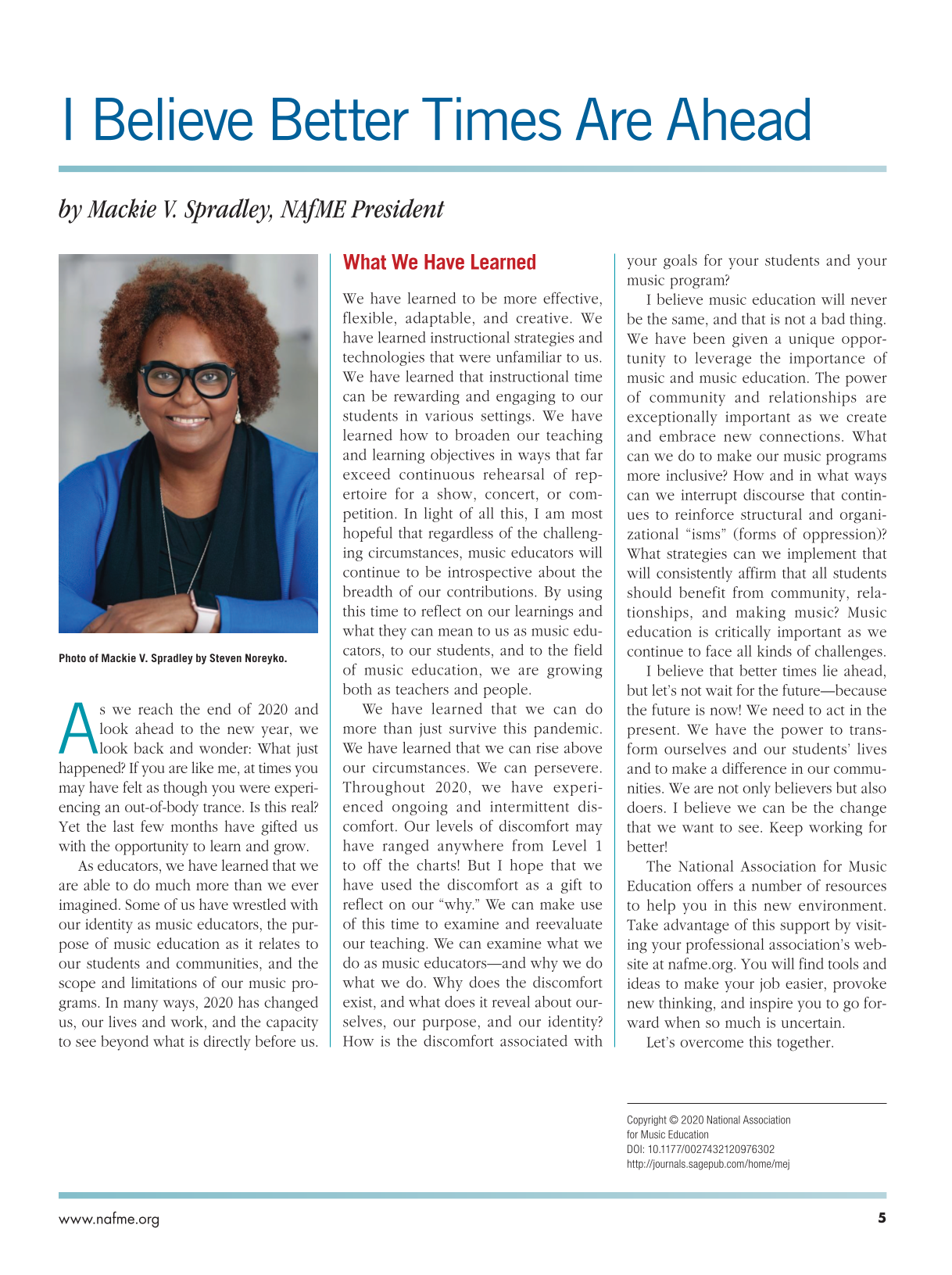
Photo of Mackie V. Spradley by Steven Noreyko.
As we reach the end of 2020 and look ahead to the new year, we look back and wonder: What just happened? If you are like me, at times you may have felt as though you were experiencing an out-of-body trance. Is this real? Yet the last few months have gifted us with the opportunity to learn and grow.
As educators, we have learned that we are able to do much more than we ever imagined. Some of us have wrestled with our identity as music educators, the purpose of music education as it relates to our students and communities, and the scope and limitations of our music programs. In many ways, 2020 has changed us, our lives and work, and the capacity to see beyond what is directly before us.
What We Have Learned
We have learned to be more effective, flexible, adaptable, and creative. We have learned instructional strategies and technologies that were unfamiliar to us. We have learned that instructional time can be rewarding and engaging to our students in various settings. We have learned how to broaden our teaching and learning objectives in ways that far exceed continuous rehearsal of repertoire for a show, concert, or competition. In light of all this, I am most hopeful that regardless of the challenging circumstances, music educators will continue to be introspective about the breadth of our contributions. By using this time to reflect on our learnings and what they can mean to us as music educators, to our students, and to the field of music education, we are growing both as teachers and people.
We have learned that we can do more than just survive this pandemic. We have learned that we can rise above our circumstances. We can persevere. Throughout 2020, we have experienced ongoing and intermittent discomfort. Our levels of discomfort may have ranged anywhere from Level 1 to off the charts! But I hope that we have used the discomfort as a gift to reflect on our “why.” We can make use of this time to examine and reevaluate our teaching. We can examine what we do as music educators—and why we do what we do. Why does the discomfort exist, and what does it reveal about ourselves, our purpose, and our identity? How is the discomfort associated with your goals for your students and your music program?
I believe music education will never be the same, and that is not a bad thing. We have been given a unique opportunity to leverage the importance of music and music education. The power of community and relationships are exceptionally important as we create and embrace new connections. What can we do to make our music programs more inclusive? How and in what ways can we interrupt discourse that continues to reinforce structural and organizational “isms” (forms of oppression)? What strategies can we implement that will consistently affirm that all students should benefit from community, relationships, and making music? Music education is critically important as we continue to face all kinds of challenges.
I believe that better times lie ahead, but let’s not wait for the future—because the future is now! We need to act in the present. We have the power to transform ourselves and our students’ lives and to make a difference in our communities. We are not only believers but also doers. I believe we can be the change that we want to see. Keep working for better!
The National Association for Music Education offers a number of resources to help you in this new environment. Take advantage of this support by visiting your professional association’s website at nafme.org. You will find tools and ideas to make your job easier, provoke new thinking, and inspire you to go forward when so much is uncertain.
Let’s overcome this together.