






Abstract

Photo of Scott R. Sheehan © Ashlee Wilcox Photography, LLC

Music education holds a deeply personal significance for every individual, as it serves as a unique avenue for self-expression, cognitive development, and emotional exploration. The diverse array of musical genres and styles mirrors the rich tapestry of human experiences, allowing each individual to forge a deeply meaningful connection with the art form. Similarly, the process of growing musically varies from person to person, shaping the educational journey in distinct ways. Whether students engage in the structure of ensemble music-making or participate in more individualized musical expressions of composition and improvisation, the educational experience becomes a personalized narrative, woven into the fabric of an individual’s identity. Beyond technical proficiency, music education provides a vehicle for students of every background to articulate their emotions, thoughts, and cultural affiliations, fostering a sense of self-awareness and community. Consequently, recognizing the inherent subjectivity of musical preferences and learning styles underscores the vital responsibility of every music educator to tailor music education to the unique needs and aspirations of each learner, thereby nurturing a lifelong relationship between the individual and the transformative power of music.
Music by its very nature exists in community, and music education serves as a powerful conduit for communication and connection across time and cultures. This educational endeavor fosters a shared understanding of the universal language of music, enabling people from diverse backgrounds to communicate on a profound level. Moreover, as musicians collaborate within ensembles, a unique dynamic emerges, strengthening interpersonal relationships and creating a collective experience that transcends individual contributions. The dichotomy between individual musical expression and collaborative creation underscores the intricacies of human experience, allowing for individual exploration of cultural nuances and personal narratives. In essence, music education serves as a conduit for the transmission of cultural heritage, fostering a sense of interconnectedness that is vital for the promotion of empathy and understanding in an increasingly globalized world.
The National Association for Music Education (NAfME) stands as a stalwart advocate and collaborative community, providing unwavering support to music educators and tirelessly championing the cause of equitable access to music education. Founded on the cornerstones of advocacy and public policy, research and music teacher education, professional learning and growth, and the keystone of equity in music education, NAfME’s Strategic Plan calls for a culturally relevant and robust music education for every student. As this plan is actualized, NAfME is committed to orchestrating efforts to ensure that the transformative power of music is accessible to every human being throughout their life.
NAfME has a profound dedication to cultivating a community where the voices of all people not only are heard but are valued and celebrated. The NAfME Strategic Plan envisions a future where every person, regardless of background or circumstance, is afforded the opportunity to engage in and contribute to an infinite array of musical experiences throughout their life. NAfME’s Mission, Vision, and Belief Statements inspire music educators to create an inclusive space where individuals not only create, perform, respond, and connect with music but, more important, also find a sense of belonging and significance.
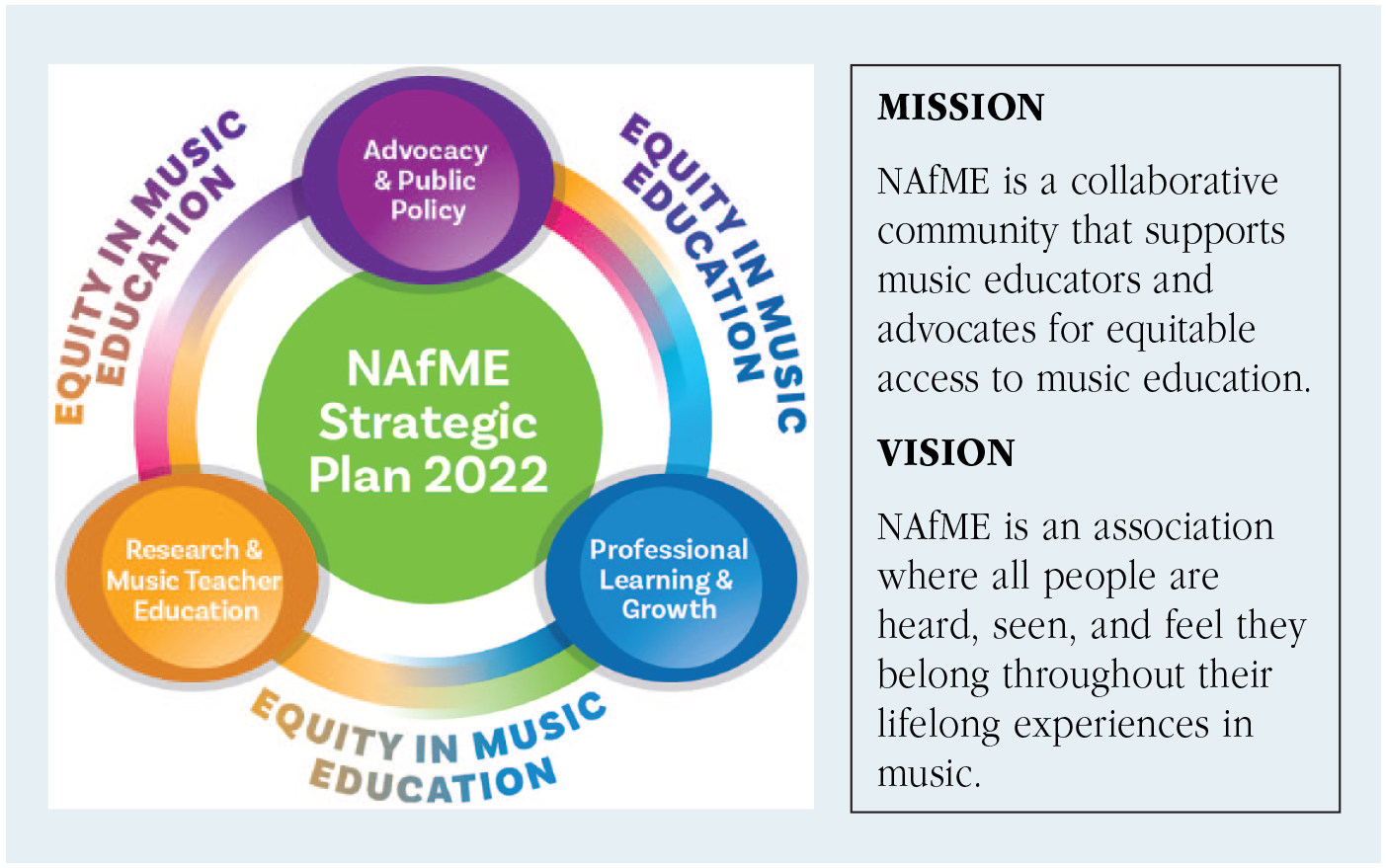
Since the adoption of the association’s new Strategic Plan in November 2022 and the release of A Blueprint for Strengthening the Music Teacher Profession in June 2023, NAfME has been steadfastly devoted to shaping the future landscape of music education. The initiatives, goals, and work set out in each of these guiding documents are numerous and complex; however, NAfME’s resolve toward making systemic change is unwavering. In the past year, the association has embarked on several projects and initiatives aimed at actualizing the NAfME mission in pursuit of service on behalf of members.
The Small Schools Initiative was launched in spring 2023 to connect music educators who share similar teaching situations and learning environments. The task force has focused on redefining success as it relates to measuring students’ musical growth and understanding. Two articles have appeared in recent issues of Teaching Music magazine sharing perspectives from music educators who are making a difference in small schools across the country. Watch for more town hall meetings in the winter and spring to learn more and collaborate with small school colleagues from across the United States and beyond.
NAfME published a report on divisive concepts laws in March 2023 and is currently conducting a second survey to learn more about how these laws, executive orders, and policies are impacting music education and are limiting what music curriculum can be taught across the country. More information and resources for music educators are available on the NAfME website.
A Blueprint for Strengthening the Music Teacher Profession was released in June 2023 and shared during the Forging the Future of Music Education Symposium that took place as part of the NAfME National Leadership Assembly this past June. Implementation plans are currently underway to mitigate the barriers that exist for students wanting to enter the music education profession as well as the challenges that were identified during the degree program and during the first 5 years in the profession. Another primary goal of the Blueprint is to create the necessary changes so the music teacher workforce is reflective of the students who are in today’s music classrooms. The full report is available on the NAfME website, and all members are encouraged to read the report and share what you can do to assist with making the changes needed so more students have the opportunity to thrive in a successful career as a music educator.
In June 2023, NAfME debuted a new website that contains a very robust resource center and search functions. It also houses the NAfME Learning Center, which is a member benefit containing more than 100 hours of profession learning in the form of webinars and online content. The new website is easy to navigate and offers members access to all of NAfME’s many initiatives, programs, and resources as well as new blogs, calendars, and upcoming professional learning opportunities. Check the website regularly to stay up-to-date with all things NAfME.
Currently under development and coming in 2024 is an Equity in Music Education Resource Center and a Repertoire Diversity Database. Information for the 2024 Music in Our Schools Month will be shared soon. Also, additional initiatives in development include expanding student opportunities and Tri-M offerings, providing more resources for collegiate members, and a cutting-edge artificial intelligence initiative. Watch your email and check the website for these and other exciting ways NAfME is responding to meet the needs of members.
NAfME’s why is centered on the profound impact of music education on individual growth, cultural connectivity, and music’s effect on the broader societal landscape. The association tirelessly advocates for equitable access to music education, embodying a commitment to cultural relevance, authentic representation, and inclusivity. The initiatives outlined in this article collectively demonstrate NAfME’s proactive approach in shaping the future of music education. As external challenges continue to pressure preK–16 school systems, NAfME’s resolve holds steadfast that all music and all students have a place in school music curricula. The hard work set forth in the NAfME Strategic Plan is just beginning.