







Abstract
Despite extensive efforts in a better understanding of associations between death anxiety and various factors, efforts studying the complex associations across those variables are still limited. This study was conducted to better understand the possible complexity between death anxiety and myriad of factors, by first extracting the most important features, and then assessing the complexity of variables by checking all pairwise interaction terms. We found most of associated factors of death anxiety are related to the concept of attachment or caring for loved ones. Ill-effect attachment with positive associations with death anxiety included factors such as attachment to the physical side of oneself, being alone before death, and the possibility of death being the end of us. On the other hand, supernatural conceptions of worldviews such as believing in God, believing that the soul is separate from body, and being religious buffer against the death anxiety.
Introduction
Death is an inevitable aspect of life, and despite how hard we might try, sooner or later we will be acquainted with that incident. The unpredictability and inevitability of death make us to feel horror, and that feeling is a fundamental source of anxiety (Yalom, 2020).
Death, in general, and death anxiety, in particular, could be linked to a wide array of anxiety disorders, related to quality of life, and psychological well-being. Generally, various aspects of death have been discussed in the literature review, such as fear of death or death anxiety. The current study considered various factors such as welfare of family, supernatural agents, and belief in God.
The following paragraph will incorporate few studies that considered some of those factors. The unknown after death, suffering, lost opportunity for salvation, and the welfare of family were named as factors impacting the fear of death (Bednarski & Leary, 1994). Burke et al. (2010) discussed the fundamental components of death dissect into factors such as the end of personal consciousness, how loved ones will fare without us, and missing out on life (Burke et al., 2010). In another study, the impact of believing in supernatural agents in the face of death was evaluated (Conte et al., 1982). It was found that mortality salience led to stronger belief in God, religious, and divine intervention.
Based on the Terror Management Theory (TMT), the idea of death has wide-ranging effects on lives; impacting choices, behaviors, and ones’ psychological well-being, and thus, its mismanagement is expected to result in psychological problems (Dezutter et al., 2009). To highlight the importance of death anxiety, that phenomenon should be looked at from its psychological disorder concerns, which play important roles in various aspects of everyday life (Downey et al., 2010). For instance, in the past study, a connection between clinical anxiety symptoms and death anxiety was made (Fleet et al., 1998). Fry (1990) observed individuals with panic attacks had to go to the emergency room due to fear of dying from heart attack (Fry, 1990).
Despite the importance of death anxiety, and also the efforts being made studying various aspects of phenomenon, the current efforts in the literature only consider simple unidimensional associations of death anxiety, and thus the majority of those studies ignore the complexity of factors to death anxiety. That is despite the fact that it has been highlighted that stratification of the population could provide a richer understanding regarding the real impacts of various variables (Brown et al., 2016). For example, does the association between belief in God and death anxiety vary across people with different marital status, or is it stable?
Thus, this study is conducted to challenge the assumption of unidimensional association between death anxiety and other factors by considering all pairwise interaction terms. Before considering all pairwise interaction terms, a comprehensive and reliable methodology for dimension reduction of data is needed to incorporate only important variables in the model. That is especially important due to high number of available variables considered here.
In summary, the main questions this study seek to answer are as follows: 1) Are the associations between various factors and death anxiety unidimensional or interactive? For instance, is the association of not being remembered by loved ones and death anxiety stable or varied based on other factors, such as marital status? 2) How the the associations of different factors vary with death anxiety? For instance, while factors such as religiosity and belief in God might be anxiety-buffering, other factors such as death familiarity or the feeling of being lonely after death might contribute to death anxiety.
Data and Methods
Data
The questionnaires were uploaded on the Qulatrics platform and advertised in Amazon Mechanical Turk between February and May 2015; the data were made available where the original study was published (Jong et al., 2019). Few points are worthy to be highlighted regarding the data.
The respondents were asked in the attention test to only select “none of the above” option, where those questions were disguised as Positive and Negative Affect Schedule (PANAS); so those responses whom selected an option instead of “none of the above” were flagged as failure to attention check.
Descriptive statistics of important predictors.
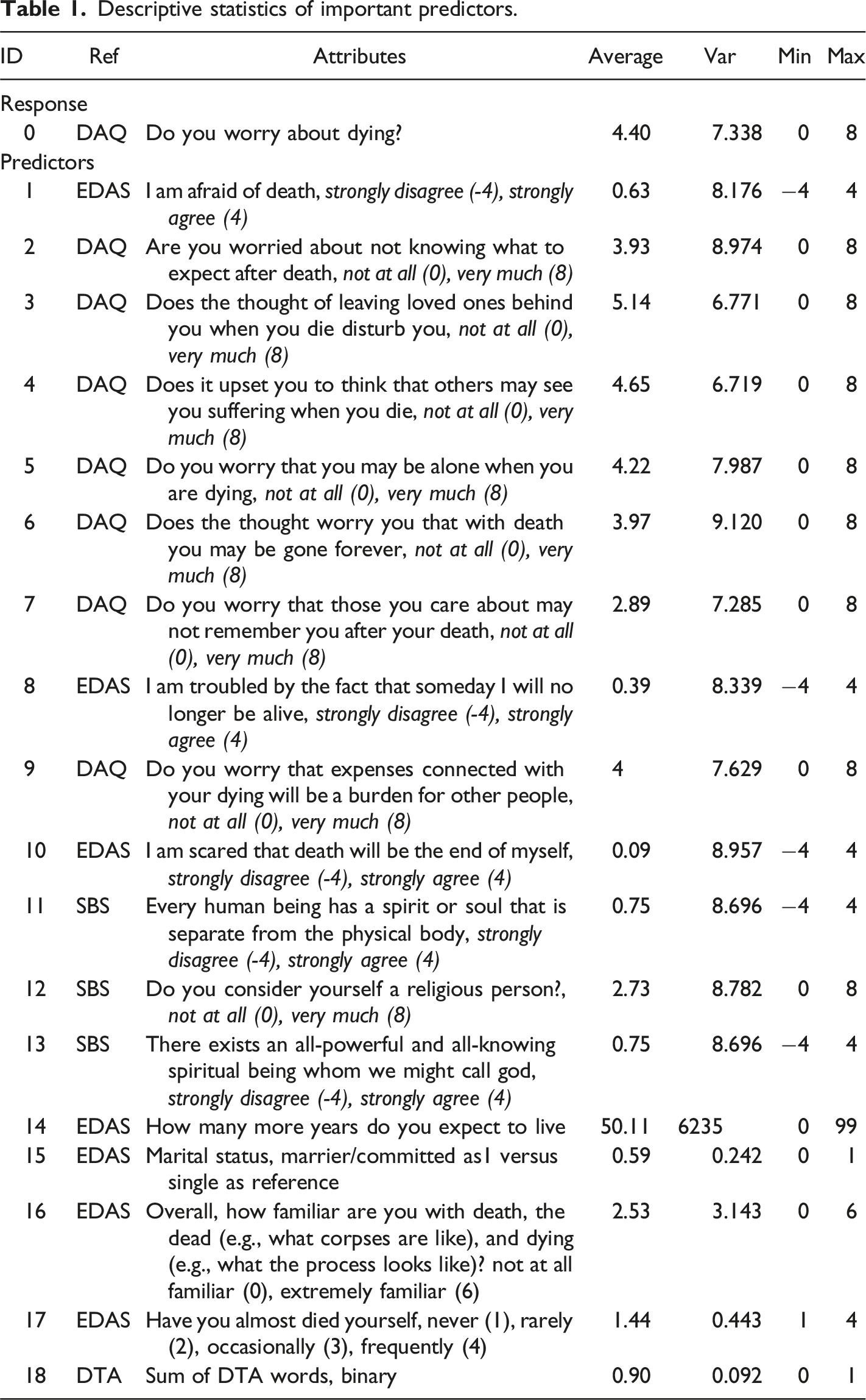
The DAQ is based on a 15-item scale measuring factors, such as fear of suffering, loneliness, unknown and personal extinction (Greenberg et al., 1994). On the other hand, the EDAS is based on a 12-item scale, measuring death anxiety, and fear of nonexistence (Jong & Halberstadt, 2018).
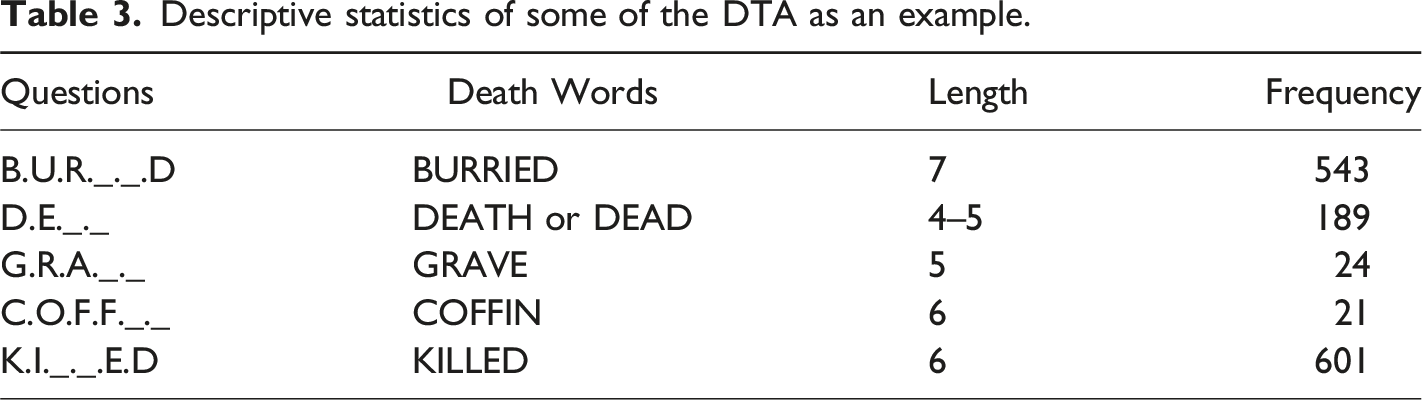
The death thought accessibility (DTA) was used to measure fear of death (Hayes et al., 2010). It has been argued that thoughts of death occur when those thoughts are highly accessible but outside the consciousness (Hayes et al., 2010). To address the bias, participants were not directly informed regarding the exact topic that they are expecting to see, and DTA questions are presented to them at the start of the questionnaire.
To test the hypothesis of the impact of death-related words, two variables were created and considered: the sum of death-related words frequencies and the binary predictor of whether respondents choose any death-related word or not. The sum of DTA has been investigated in different contexts. For instance, exposing people with disabled individuals (Hayes et al., 2008), or thoughts of cancer, which was found to increases the DTA (Hirschberger, 2006).
Regarding the supernatural belief scale’ (SBS), the SBS variables were used to assess the relation between death anxiety and religious beliefs (Iverach et al., 2014). The results of that study highlighted that death anxiety is associated with respondents’ religious identification, and also compared with non-religious individuals, religious participants experienced death anxiety with lower magnitude. Despite considering different SBS variables, such as existence of God or subjective religiosity, the majority of those predictors were removed by means of the recursive feature elimination (RFE) process or due to multicollinearity issue.
Despite the consideration of exposure to death such as participating in hunting, and mortuary preference, those variables were also found not to be important to be incorporated in death anxiety analysis and thus were dropped. Finally, subjective rating of religiosity and spirituality were used based on supernatural belief scale questions (Iverach et al., 2014).
Statistical Techniques
Primarily, more than 100 variables were considered in the analyses. However, dimension reduction by means of RFE, being based on decision trees, was used to choose the optimal number of variables based on a better predictive power. Various numbers of predictors were set to be considered in the model, with the range of 10 to 120, with the interval of 10. In the RFE technique, the cross-validation splitting strategy was used. The RFE excluded the majority of attributes to come up with only 40 variables. It should be noted that due to the importance of incorporating the demographic characteristics in the model, all those variables were considered for their significance, even in case of being dropped by means of RFE.
As not necessarily the multicollinear variable would be dropped by the RFE model, variable inflation factor (VIF) was also used to exclude the multicollinear variables, with VIF >5. Along with employment of the VIF, statistical analysis was conducted to ensure that in case of two multicollinear variables, predictors with higher significant levels will be kept in the model. After highlighting significant variables to be kept in the model, the VIF was employed again to come up with the final predictors.
In summary, the process is designed to keep the most important predictors based on the prediction power of the model, while dropping the multicollinear variables. Figure 1 highlights the process of coming up with most important features. Also, it should be noted that in this study, to be consistent, only datasets related to US were considered. Finally, it should be noted that all the processes are conducted in R and RFE technique was employed by CARET package in R (Kuhn, 2008). Flow chart of the methodological steps.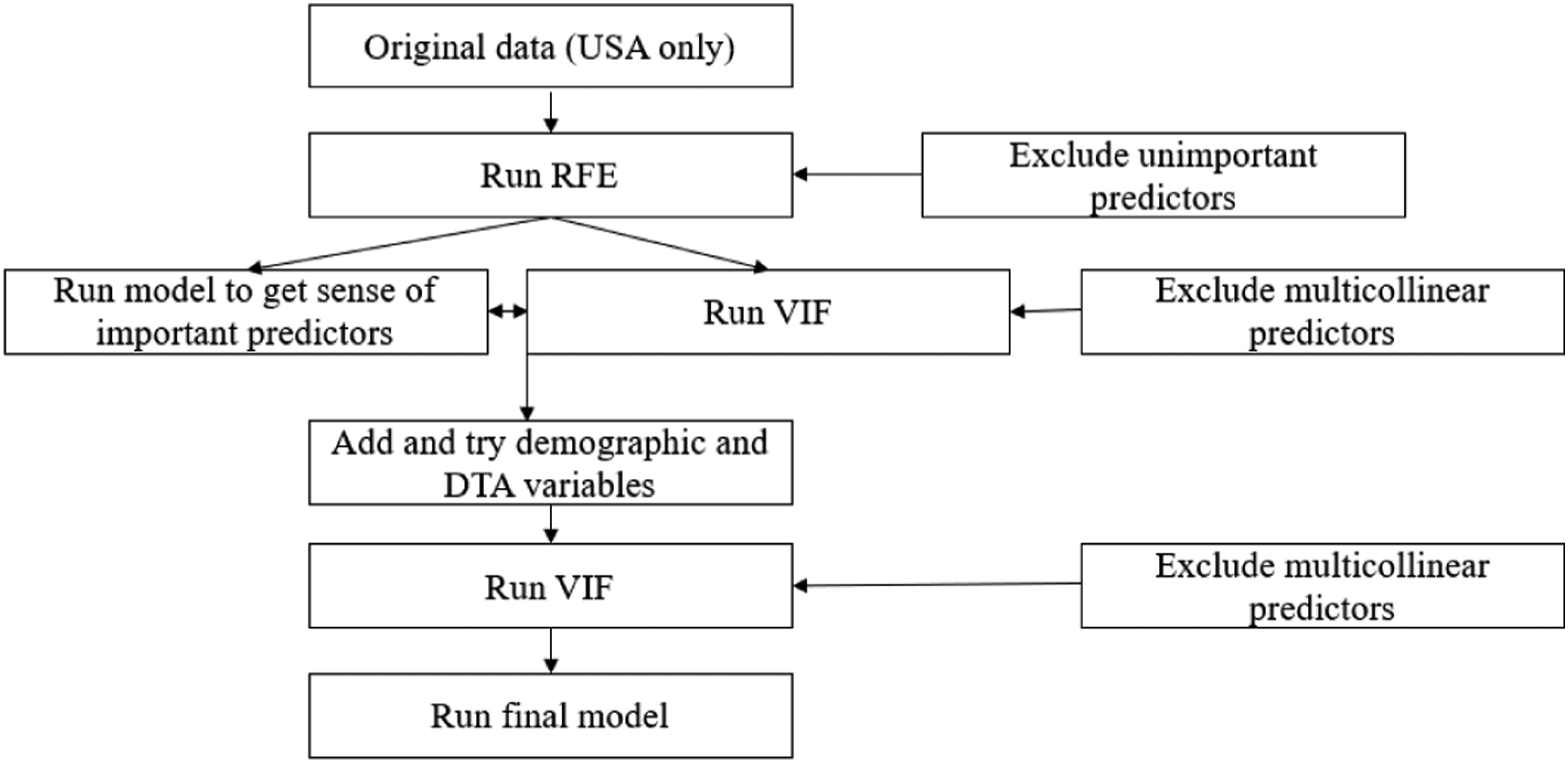
Results
Out of 813 obtained results, 13 individuals did not pass the attention check, and 39 individuals did not complete the survey, and thus were discarded from the analysis (Greenberg et al., 1986). No significant differences were found between respondents with different ages or genders, so those variables are not included in the results. The descriptive summary of significant variables is included in Table 1. It should be reiterated that death anxiety is our response, or dependent variable.
Some variables that were highlighted to be important by the RFE, but removed due to high VIF or lack of significance.
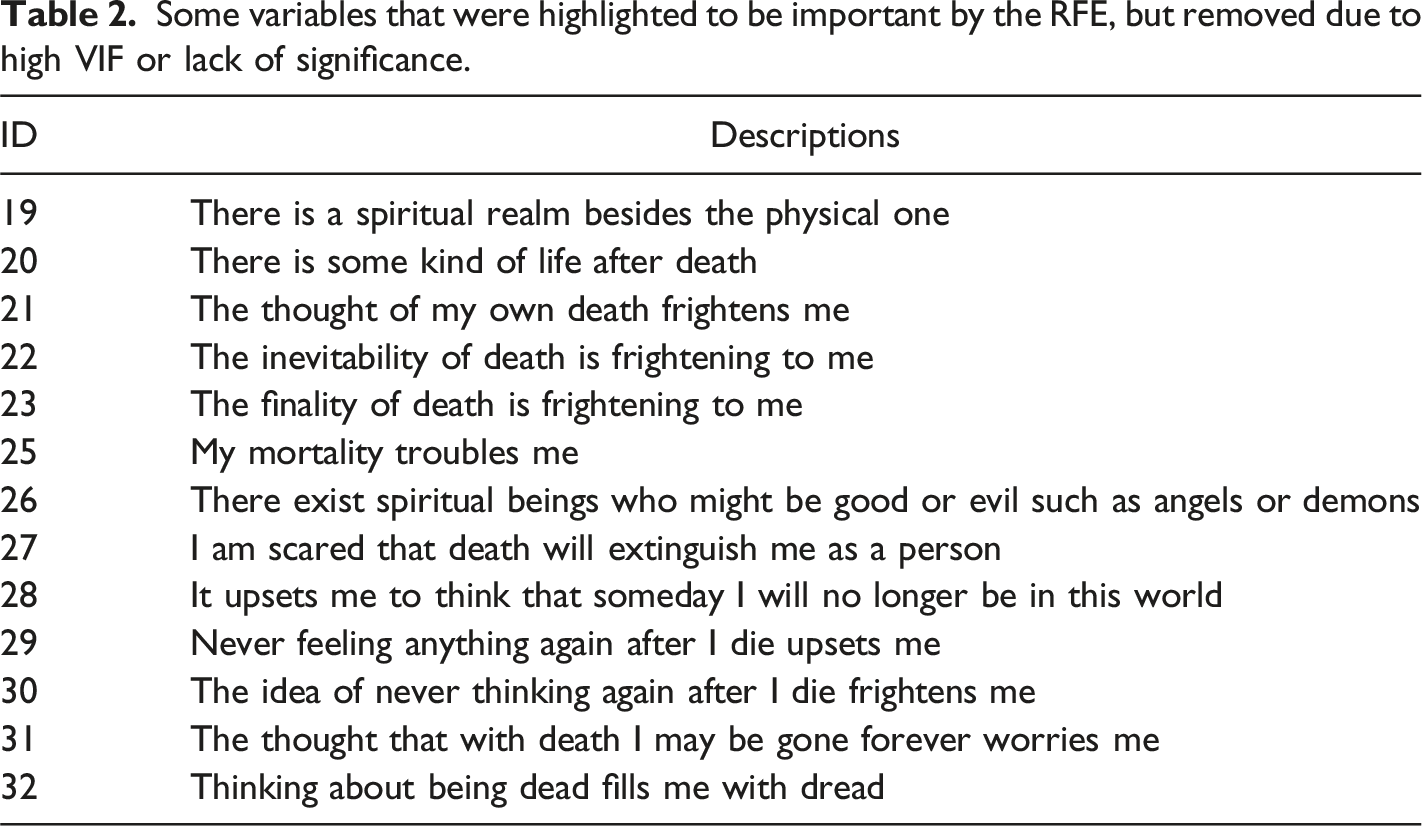
As can be seen from Tables 1 and 2, no variable related to mortuary preference, e.g., burial, cremation, or organ donation, and exposure to death, e.g., witnessing the family member die or participating in hunting, were found to be important, even before doing VIF.
Descriptive statistics of some of the DTA as an example.
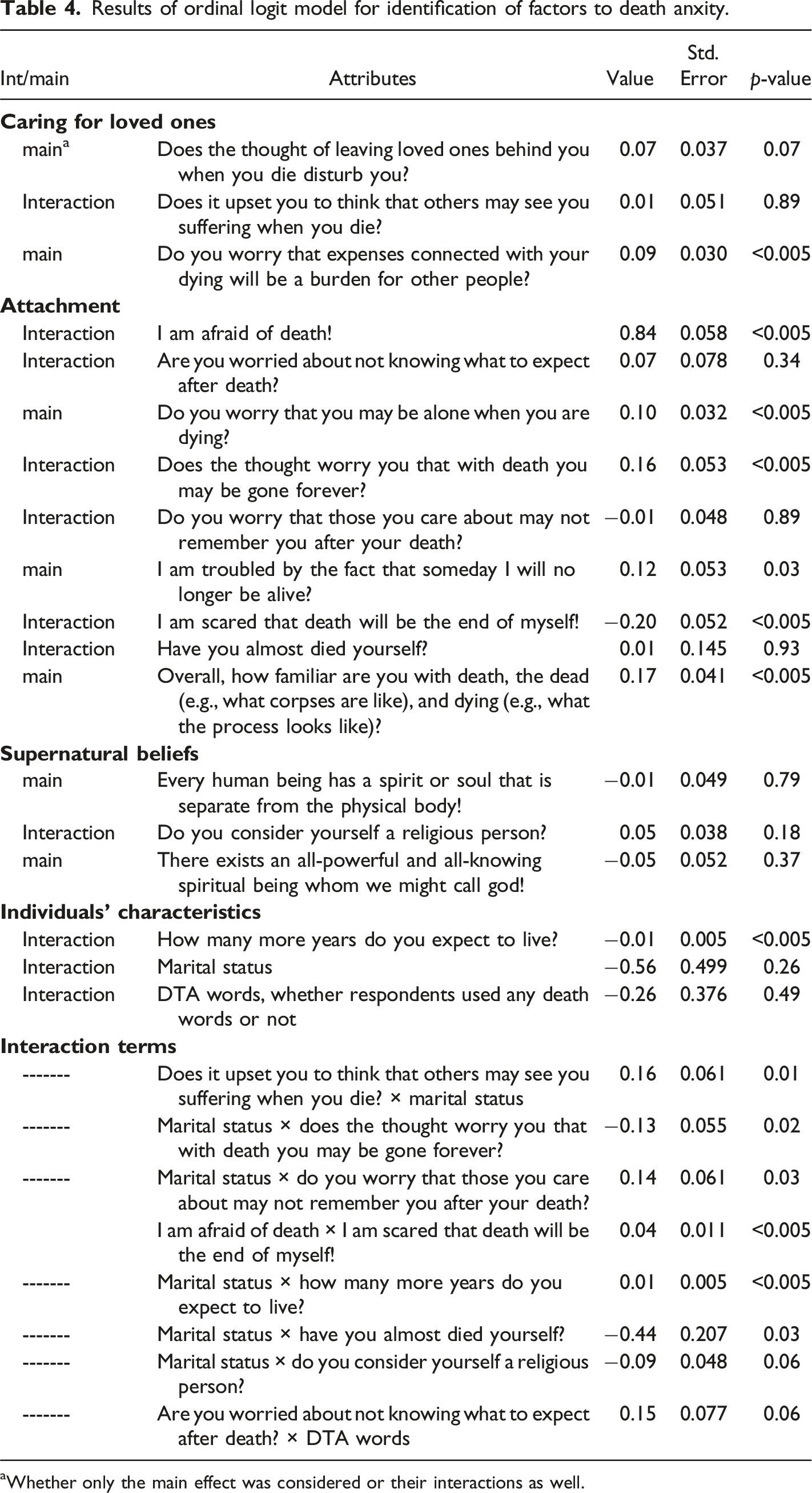
Results of ordinal logit model for identification of factors to death anxity.
aWhether only the main effect was considered or their interactions as well.
On the other hand, all supernatural beliefs offset the feeling of worrying about death. This impact was achieved by considering the main effects and interaction terms. For instance, consider
Regarding death anxiety, and Individuals’ characteristics, the result especially highlights that marital status has the highest impact, compared with other interaction and related main effect terms,
To further elucidate the nature of the effects, we provided Figure 2. The signs, “+” pr “−”, highlight the impact of variables on death anxiety. The impacts of those variables considered in the interaction terms were made by considering their main, and the related pairwise interaction terms. Association of death anxiety, the positive and negative associations are highlighted by “+” and “−” signs.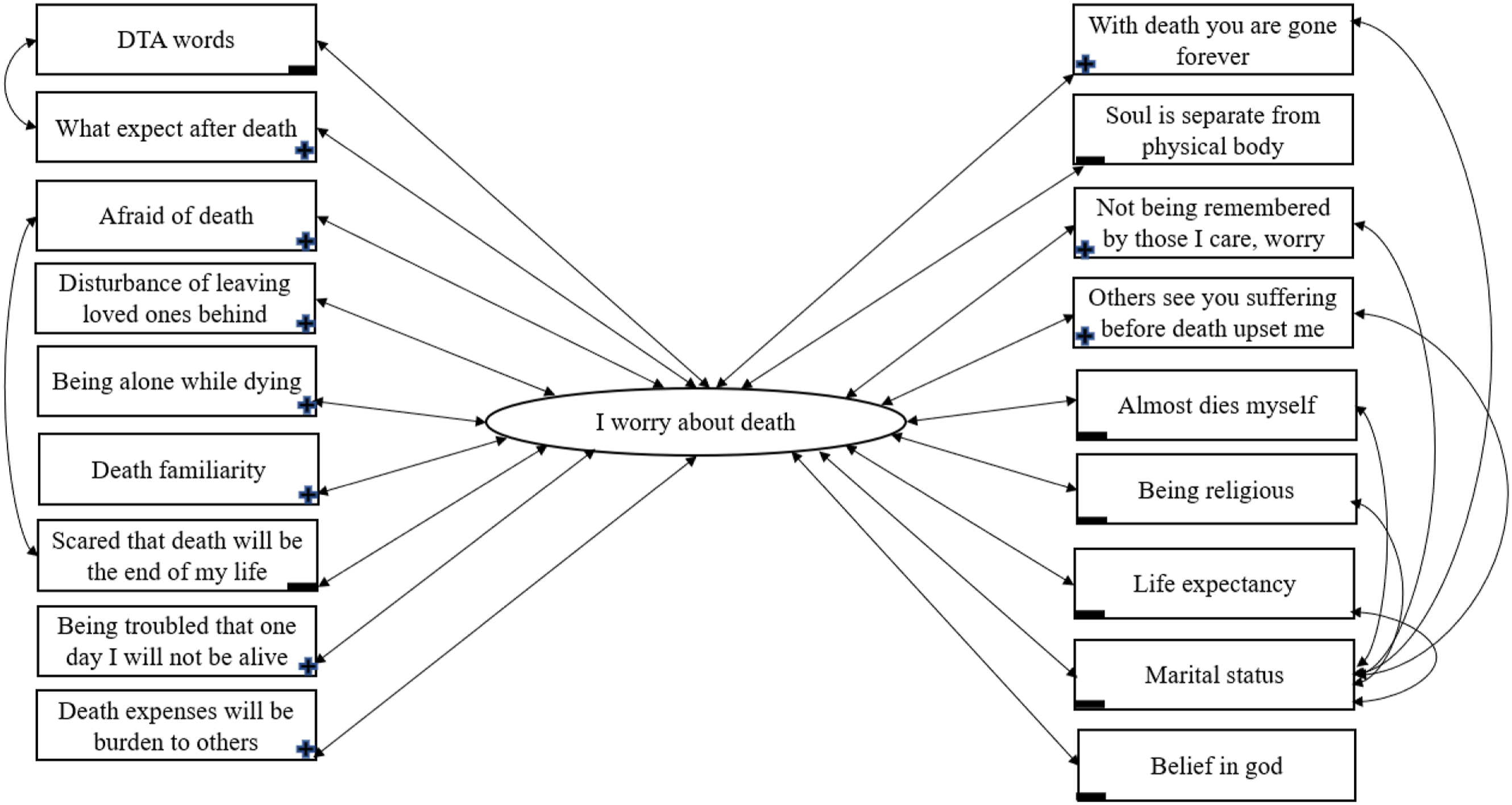
Discussion
This study was conducted to evaluate the associations between a myriad of factors and death anxiety. The variables are divided into four main categories of caring for loved ones, attachment, supernatural beliefs, and individuals’ characteristics. In general, while attachments contribute to the death anxiety, supernatural beliefs and being married offset that negative feeling. However, as discussed, the impact of most variables is not unidimensional but vary based on the impacts of other predictors.
Inclusion of various attachments is especially important as death anxiety has been described as a threat to belonginess (Jong et al., 2013). Here, we define belongingness or attachment not only in terms of losing loved ones, but also losing ones’ own physical body due to death. Inclusion of oneself is especially important as the strongest emotional human reaction has been described as involvement in the death of oneself (Jong et al., 2019). In addition, death anxiety could be linked to death awareness and the self-preservation instinct, which is common to all animals (Maxfield et al., 2014).
Positive association between death anxiety and factors such as “death will be the end of me”, or “I would be troubled by the fact that I am not longer alive one day”, all could be linked to the death awareness, which increase death anxiety through the reality that individuals should get detached from their physical bodies. In other words, having trouble with not being alive one day could be explained by the fact that individuals might not come to terms with mortality.
The positive association of death familiarity, e.g., how familiar are you with death, and death anxiety could be linked to the fact that the anxiety-buffer functioning is disrupted by the death-related incidents, which increased the death familiarity in those individuals. Those events are expected to challenge ones’ cultural worldview and thus tarnish the safe, just, and predictable world (Dezutter et al., 2009).
The positive association of death anxiety and the sense of being forgotten by those we care about is expected. One explanation for the impact might be due to the association between self-esteem and attention we get from others (Dezutter et al., 2009). Thus, lower attention from others might results in lower self-esteem, and consequently higher death anxiety. Our result is in line with the previous study, which linked death anxiety to fear of loneliness (Greenberg et al., 1994). Although the primary reason for fear of death has been linked to concerns of being separated from friends and family (May & Yalom, 1989), the interaction of that factor and leaving loved ones behind were checked, but no significant interaction was identified.
It was discussed that interpersonal concern appears to be a more important source of death anxiety than uncertainty about what happens after death and fears of no longer existing (Jong et al., 2019). In addition, separation anxiety is the main cause of death anxiety, with the highest magnitude, resulting from loss of togetherness with family and loved ones (Mikulincer & Florian, 2000). However, we found that, specifically, the magnitude of impacts of the variables of leaving loved ones behind and worrying about not knowing what happens after death are identical,
In this study, we considered both the total number and the binary predictor of DTA, but the latter, or whether the respondents used any death words or not, was found to be an important predictor for death anxiety. Past studies highlighted that a threat to self-esteem increases the DTA (Norenzayan & Hansen, 2006), while the affirmation of individual’s worldview reduces the DTA (Peters et al., 2013). However, compared with those studies, we used the binary version of DTA, and found those individuals that used at least one DTA word are experiencing death anxiety with a lower degree.
It should be highlighted that the impact of DTA is in tandem with what to expect after death. In other words, while the DTA has a negative association with death anxiety, not knowing what to expect after death has a positive association. The interaction of DTA is expected to be related to unconscious mind of those people who have a varied association with death anxiety, based on the degree of worrying about what they might expect to experience after death. Although, it has been discussed that worldview threat increases DTA (Schimel et al., 2007), the use of binary variable of DTA is expected to be related to expectation about after death, which is observed from its interaction. However, the impact needs more investigation to be confirmed.
It was found that belief that the soul is different than body is negatively associated with death anxiety. That factor is expected to signify an increase in our inner part, self-esteem or self-worth, through differentiating between the physical-animal, destructive, and non-physical/destructive nature of the human beings; thus, these individuals are less vulnerable to death anxiety.
We found that subjective evaluation of being religious is associated with lower death anxiety, while the impact varies based on being married or single. For a religious person or a person believing in God, life might be full of misery and death could be seen as a welcome alternative to meet with God. The negative association between those factors could also be explained by past study, which found that death awareness motivates religiosity (Conte et al., 1982), and consequently decreases death anxiety.
In this study, the interaction between marital status and myriad of factors were found to be important. That provides further support for the role of committed and married relationships on reduction of death anxiety, with the highest impact across all interaction terms. This could be contrasted with past studies. For instance, the desire for belonginess or interpersonal attachments was named as a fundamental human motivation (Jong et al., 2019); also, the sense of belonginess was found to have an important impact on emotional patterns and the lack of belonginess was found to have ill effect on health, adjustment, and well-being (Jong et al., 2019).
Being single and its positive association with death anxiety might be because those individuals did not secure particular emotional attachments, compared with married people, and thus they experience increased death anxiety. These results are in line with the previous study that people with insecure attachment styles are more likely to exhibit psychological distress (Smith et al., 1984).
The interactive relationships between life expectancy, or how many more years we expect to live, and marital status, with similar coefficients’ signs, might be expected as it has been highlighted that close interpersonal relationships provide psychological comfort throughout the life span (V. Fortner, 1999). That comfort by means of marriage could be reflected as a varied life expectancy in individuals. However, it should be noted that the interactive associations of those factors and death anxiety were missing from the literature.
Similar explanation applies to the interaction of marital status, worrying about being remembered after death, and worry that we would be gone forever. The associations between those variables and death anxiety varies based on whether individuals are married or single. The interaction between worrying about being remembered by those we care about after death and marital status, for instance, might be expected as marriage could change circle of people we care about, e.g., children and related acquaintances.
One might argue that the application of the binary version of DTA is not acceptable, and the total frequencies of all these words should have been considered instead. In response to that argument, it should be reiterated that the authors employed both variables, and the RFE technique picked the binary version as a better variable to predict the death anxiety. The binary version of DTA along with its interaction with a variable such as what to expect after death, highlight an interactive relationship of these variables, calling for future studies.
The findings of this study are limited to the US only, so caution should be taken while interpreting the results. In addition, the attention test was conducted and the respondents who failed were removed from the analysis. However, due to high dimensionality of the questionnaire, it is expected that some respondents might lose their interest at the end of the questions so future studies might limit the number of questions to prevent dissuading the respondent from providing the most accurate results. That could be achieved by conducting a pilot study and highlighting most important features to be included in the survey so the questionnaire would consider only those items.
In this study, the focus was only on the death anxiety of respondents. However, another avenue for future investigation is to consider the impact of the death of loved ones and check its association with death anxiety while considering all other interaction terms.
Despite the shortcoming, our results highlight important, and complex associations between death anxiety and other factors. Also, we did a comprehensive methodology to incorporate the most important features based on predictable power of the model and removing multicollinear attributes.
We agree that the negative association of being scared that death is the end of our lives and death anxiety might be counter intuitive, and we argue the impact needs more investigation. We did not drop that predictor to call for more investigation to understand that association. It might be hypothesized that respondents with higher fear are interactive with religiosity or belief in God. In other words, the impact could be linked to the explanation that fear of death is lowest for those with strong or no faith (Wong et al., 1994). But both of those interaction terms were checked, and they were found to be not important. Also, all measures such as visiting a shrine or number of religious ceremonies that individuals attended were considered but dropped by RFE as they might not be a good indicator of faith.
Finally, the solution to death anxiety has been proposed by believing some parts of the person will continue, symbolically (e.g., children or achievements), or literally (e.g., afterlife heaven) (Yalom, 2008). That is also confirmed by our results in terms of negative association of being religious, believing in God, or even believing in soul and death anxiety. Another important variable was marital status and we found that a sense of a good belongingness, or a committed or married relationship, could reduce death anxiety.
Footnotes
Declaration of Conflicting Interests
The author(s) declared no potential conflicts of interest with respect to the research, authorship, and/or publication of this article.
Funding
The author(s) received no financial support for the research, authorship, and/or publication of this article.
