







Abstract
This study aimed to evaluate the psychometric properties of the Grief Impairment Scale (GIS) using a network psychometric model. A total of 1048 individuals from Peru and El Salvador participated. A network psychometric model was used to determine internal structure, reliability, and cross-country invariance. The results indicate that the GIS items were grouped into a single network structure through Exploratory Graph Analysis. Reliability was estimated by structural consistency, and it was found that when replicating the network structure within an empirical dimension, a single network structure was consistently obtained, and all items remained stable. Furthermore, the network structure was invariant, thus functioning similarly across the different country groups. In conclusion, the GIS presented solid psychometric evidence of validity based on its internal structure, reliability, and cross-country invariance. Therefore, the GIS is a psychometrically sound measure of functional impairment symptoms due to grief for Peruvian and Salvadoran individuals.
Introduction
The death of a loved one is one of the most painful and stressful events in life, often affecting one’s ability to perform daily activities (Simon et al., 2020). Some of the most affected by loss can even become disabled by their grief (Üstün & Kennedy, 2009). Functional impairment is defined as impairment of functioning in personal, family, social, work, educational, or other important areas of life (World Health Organization [WHO], 2023). Furthermore, functional impairment is considered a clinically important criterion for diagnosing various mental illnesses (Üstün & Kennedy, 2009) and distinguishing between normal and disordered ranges (First et al., 2015). Functional impairment is not only an important factor to consider when referring an individual for psychiatric services (McFarlane, 1988), it is also a common reason people seek medical care (Weiss et al., 2018).
Previous studies have reported a strong association between the symptoms of complicated grief and disruptions in daily functioning (Kristensen, Weisæth, Hussain, & Heir, 2015; Maccallum & Bryant, 2020; Nielsen et al., 2020). It has been suggested that individuals grieving the death of a loved one, for any reason, who exhibit symptoms of separation distress or post-traumatic stress, are at increased risk for functional impairment (Breen et al., 2021; Gallagher et al., 2020; Lee & Neimeyer, 2022; Neimeyer & Lee, 2022). Although functional impairment plays a central role in various mental illnesses, few studies have focused on different aspects of functional impairment in bereaved individuals, often concentrating more on maladaptive grief emotions that exclude functional impairment (Caycho-Rodríguez et al., 2023a). However, assessing functional impairment is important for health professionals, whether for the diagnosis or treatment of factors associated with disabling grief (Lichtenthal et al., 2018).
There are measures that assess functional impairment due to grief in individuals who have experienced the death of a family member or a loved one. Notable among these are the five-item long, Work and Social Adjustment Scale (WSAS; Mundt et al., 2002), the Inventory of Functional Impairment (IFI; Rodriguez et al., 2012), which is an 80-item tool assessing functional impairment related to post-traumatic stress disorder across seven domains (romantic relationships, family relationships, work, friendships and socializing, parenting, education, and self-care), and an item from the PG-13-Revised (PG-13-R; Prigerson et al., 2021) which asks “Have you experienced a significant reduction in social, occupational, or other important areas of functioning (e.g., domestic responsibilities)?”. Additionally, the emotional role and social functioning subscales of the SF-36 have been used to assess functional impairment of daily activities due to emotional impairment before bereavement, six months after bereavement, and three years after bereavement (Nielsen et al., 2020), among other measures.
Although there are numerous measures of functional impairment to chose from, these instruments have many notable limitations when assessing functional impairments related to grief. For example, many of these measures are incomplete because they do not assess important domains of functioning that are known to be affected by elevated grief, such as one’s biological functioning, cognitive and behavioral patterns, and social impacts (Lee & Neimeyer, 2023). Another issue is instrument length. The IFI, for example, is excessively lengthy (80 items), potentially leading to unreliable results due to respondent boredom and fatigue. The WSAS and the PG-13-R are also problematic in that their response options yield limited clinical utility. For example, the WSAS is based on a highly subjective assessment of perceived severity (0 indicates no impairment and eight indicates very severe impairment), while the PG-13-R is based on a dichotomous “yes” or “no” response. A more clinically useful alternative is the use of a frequency-based measure of symptoms, which is often used in diagnostic and treatment evaluation processes in medical care and research settings (Lee & Neimeyer, 2023).
In response to the need for a more clinically useful measure of functional impairment related to grief, the Grief Impairment Scale (GIS) (Lee & Neimeyer, 2023) was recently developed. The GIS was developed based on the biopsychosocial model of illness, which assumes that illness affects various domains of human functioning (Engel, 1977). Accordingly, the GIS measures functional impairments due to grief, as expressed in the biological, psychological, and social domains of functioning (Lee & Neimeyer, 2023). Specifically, one item of the GIS measures health problems caused by grief. This aspect of the biological domain is captured by such physically experienced phenomena, such as sickness, sleep disturbances, and low energy. Two of the GIS items capture the psychological domain of functioning and reflect cognitive (i.e., thinking difficulties) and behavioral (i.e., unhealthy behaviors) issues known to be impacted by elevated grief. Two of the GIS items capture the social domain of functioning, as reflected by difficulties in fulfilling responsibilities (e.g., work) and having positive engagement with others (e.g., avoiding people). The GIS features response options based on the frequency of functional impairment due to grief over a period of 30 days, differentiating it from other measures, such as the WSAS and the single impairment item PG-13-R (Lee & Neimeyer, 2023).
The original study of the GIS involved 363 American adults grieving the death of a loved one, reporting adequate evidence of validity based on internal structure, relationships with other convergent and divergent variables, reliability, diagnostic accuracy, and measurement invariance by age, gender, and race (Lee & Neimeyer, 2023). Subsequent studies have evaluated the psychometric properties of other language versions of the GIS, such as Spanish and Persian. The Spanish version of the GIS applied to a Salvadoran sample reported the presence of a unidimensional structure, good reliability, adequate item characteristics, criterion validity based on its relationship with a measure of depression, and partial invariance by sex (Caycho-Rodríguez et al., 2023b). Additionally, one study evaluated the Persian version of the GIS, providing support for a unidimensional structure, good internal consistency and test-retest reliability, evidence of convergent validity based on its relationships with prolonged grief and functional impairment, evidence of divergent validity supported by weaker correlations with anxiety and depression, and measurement invariance by sex (Yousefi & Jafari, 2023). Collectively, these studies provide cross-cultural support for the GIS as a reliable and valid measure of functional impairment due to grief.
Although the original GIS study and the studies that adapted and validated it in Spanish and Persian provide strong evidence for the psychometric integrity of the instrument, they are limited in their scope. Specifically, these studies are grounded on a standard measurement method based on reflective latent variable models, where each indicator or item of the GIS regresses on a latent variable (Borsboom et al., 2003). The reflective latent variable model assumes that the items are a function of the latent variable; that is, responses to a test are caused by the latent variable. From this perspective, under reflective models, item scores are assumed to reflect an individual’s position in the construct. For example, a person with greater functional impairment due to grief is likely to score highly on GIS items. However, this model does not allow full certainty that the latent variables are directly related to psychological attributes, and the latent variables, which are based on data, may be influenced by the sample; thus, there is a possibility that the model do not fully represents a psychological attribute (Bollen, 2002). Moreover, the assumptions of the reflective model raise the question of whether psychological constructs exist before and independently of the instrument used to measure them, or whether their variations truly produce changes in the outcomes of the measurement procedure (Borsboom et al., 2004).
While the use of reflective latent variable models is a common practice when evaluating the psychometric properties of self-report measures, such as the GIS, it is important to complement the results with evidence derived from other alternative and contemporary methods, such as network psychometric analysis (Dias et al., 2023). Network psychometrics is a new statistical model that aims to estimate models of undirected networks (Epskamp et al., 2016). The network psychometrics approach assumes that psychological characteristics do not have a common latent cause of behavior, but rather are systems made up of behaviors or symptoms that interact with each other (Schmittmann et al., 2013). Therefore, the behaviors or symptoms of a psychological characteristic may directly influence and/or be influenced by other symptoms or behaviors of the same psychological characteristic or another, as they do not measure psychological characteristics but are part of it (Magnavita & Chiorri, 2022). From this perspective, psychological characteristics are not attributes between people, as conceptualized in the classic approach, but a network of symptoms or components that can evolve over time (Cramer et al., 2012).
From the network approach, psychometric measures would measure the relationships between the symptoms or behaviors of psychological characteristics and not the characteristics themselves (Borsboom, 2008; Cramer et al., 2012). Psychometric measures refer to a specific group of symptoms or components that are interdependent and that form a network determined by the activation of these symptoms or components (Cramer et al., 2012). Networks are composed of nodes (items or symptoms) and edges (indicating relationships) that connect nodes. A psychometric network would allow for the estimation of the weights of the edges, which would be suitable for representing a psychological construct where the nodes are the items or indicators of a questionnaire, while the edges connecting the nodes are partial correlations. Therefore, the covariation between two nodes is conditionally independent of the other nodes within the network. Within the models of network psychometrics, exploratory graph analysis (EGA; Golino & Epskamp, 2017) has been developed, which seeks to identify latent dimensions in network models, through clustering algorithms for weighted networks (walktrap) (Pons & Latapy, 2006). From this approach, the nodes are grouped into ordered and connected subnetworks, which are mathematically considered equal to the latent variables (Epskamp et al., 2017; Giraud & Tsybakov, 2012).
There are some advantages to the psychometric network approach to measurement development. First, different simulation studies have demonstrated that EGA is as accurate or better than factor analytic techniques in identifying number of dimensions (Christensen, 2020; Golino & Demetriou, 2017; Golino & Epskamp, 2017). For example, it has been shown that EGA demonstrated 100% accuracy in determining the number of factors within a data set, while exploratory factor analysis reported an accuracy rate between 10% and 49%, and confirmatory factor analysis reported an accuracy rate of 74% (Golino & Demetriou, 2017; Keith et al., 2016). Second, the psychometric network approach is not constrained by the assumption that item scores are explained by one or more unique underlying causes, as does the classical psychometric approach does. In network psychometrics, there are more possibilities in explaining causal relationships among items. For example, some items may reflect a unique cause, whereas others may reflect heterogeneous causes, and some may even exhibit reciprocal cause-and-effect processes (Costantini & Perugini, 2012; Schmittmann et al., 2013). The network approach is not only advantages because it provides more opportunities to explore relationships among test items, but appears to be more grounded in reality. Despite the differences between classical and network approaches, they should not be viewed as rival perspectives. Rather, they appear to compliment each other by generating unique information about the relationships between items of a measure (Magnavita & Chiorri, 2022).
Given the above context, the present study aimed to evaluate the psychometric properties of the GIS based on metrics corresponding to a network psychometric model in samples from two Latin American countries, Peru and El Salvador. Specifically, evidence of validity based on internal structure, reliability, and measurement invariance among country samples were evaluated. As mentioned earlier, relatively few studies have evaluated the psychometric properties of the GIS (Caycho-Rodríguez et al., 2023a; Lee & Neimeyer, 2023; Yousefi & Jafari, 2023). While previous research studied the network structure of functional impairment symptoms related to grief using the Spanish version of the GIS (Caycho-Rodríguez et al., 2023b), no studies have reported the use of modern methods such as network analysis to evaluate its psychometric properties. Moreover, at the Latin American level, few studies have used network psychometric models, including those that have evaluated the psychometric properties of the Subjective Well-Being Scale (Ventura-León et al., 2023), Revised Mental Health Inventory (R-MHI-5; Rojas-Mendoza et al., 2024), Wisconsin Schizotypy Scales–Short Forms (Serpa-Barrientos et al., 2023), and Patient Health Questionnaire-4 (PHQ-4; Caycho-Rodríguez, Travezaño-Cabrera, et al., 2024). Having evidence of the psychometric properties of GIS from a modern network psychometric model will not only better our understanding of the measurement of grief-related impairment, but this particular information will provide much needed cross-cultural evidence to support its use in non-English speaking countries.
Evaluating and comparing the psychometric properties of the GIS in two Latin American countries is important if we consider that the way people face the death of a family member or loved one, the emotional experience, and the impact that this episode has on daily activities are not only shaped by individual experiences but also depend on the cultural context in which it occurs (Jakoby, 2012; Lund, 2021; Neimeyer et al., 2014; Silverman et al., 2021; Smid et al., 2018). In this sense, experiencing grief for the death of a loved one or family member in Latin American countries, characterized by the presence of highly stressful factors, such as inequality, poverty, and a higher prevalence of chronic diseases (Pablos-Méndez et al., 2020), can impact one’s ability to cope with death and daily functioning (Kim et al., 2017). Furthermore, while cultural differences may exist, similarities may also be observed in the way grief impacts daily activities; therefore, comparing the metric properties of a measure, such as GIS, between different countries is relevant. Moreover, the validation of a brief measure of functional impairment in grief is particularly useful for clinical practice and the development of public health policies (Gentry et al., 1995).
Methods
Participants and Procedure
This study analyzed a subset of data collected as part of a larger project titled “Measuring Functional Impairment Due to Grief in Latin America” which was approved by the Chair of Medical Psychology at the Faculty of Medical Sciences of the National University of Asunción under Resolution No. 0708 00 2022 of the Board of Directors of the Faculty of Medical Sciences of the National University of Asunción, Article 2, which refers to the ethical approval process for non-experimental studies (approval code: 002_008_2023). Additionally, the recommendations of the Declaration of Helsinki (World Medical Association, 1964) were followed. The study did not involve invasive or potentially harmful procedures; therefore, the approval of a single country’s ethics committee was sufficient.
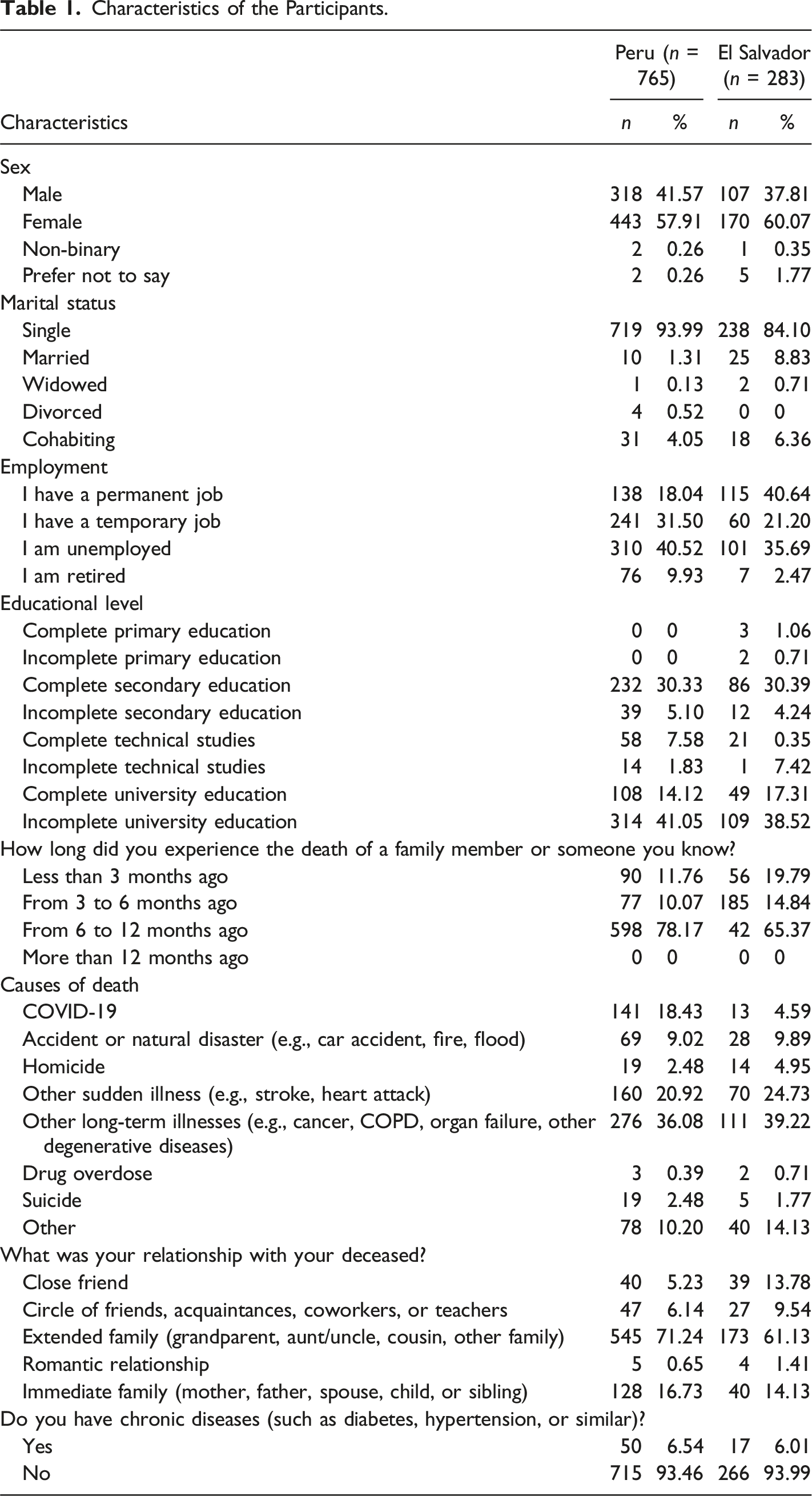
The total sample consisted of 1048 individuals from Peru and El Salvador, who were selected through non-probabilistic convenience sampling according to the following inclusion criteria: (a) being over 18 years old, (b) being a national of Peru or El Salvador, (c) having experienced the death of a family member or loved one, and (d) accepting informed consent. The inclusion of the two countries in the study was not done through a systematic process. The inclusion of the countries was the result of a negotiation based on the potential interest of researchers from each country in participating and the possibility of meeting the research requirements. A Monte Carlo iterative method for network analysis was used to determine the number of participants based on an a priori power of 0.80, a density of 0.40, five nodes, and a sensitivity of 0.60 (Constantin et al., 2023). Based on these parameters, a minimum sample size of 300 participants is suggested. Data were collected through an online survey developed on the Google Forms platform, which was distributed via different social media platforms such as Facebook and Instagram in each country. All participants provided informed and voluntary consent before participating in this study. Furthermore, they were informed that their participation was anonymous, that their data would be confidential, and that they had the right to withdraw from the study at any time.
Characteristics of the Participants.
Measures
Grief Impairment Scale (GIS) (Lee & Neimeyer, 2023). GIS aims to measure the impact of grief due to the death of a loved one across various biopsychosocial domains of functioning. The GIS consists of five items: “Experienced problems with thinking because of your grief,” “Experienced health problems because of your grief,” “Engaged in unhealthy activities to cope with your grief,” “Unable to fulfill an important responsibility in life, such as work/school, housekeeping, and/or caring for others, because of your grief,” and “Unable to positively engage with others because of your grief.” Each item has five response options: 0 = 0 days/never, 1 = 1–3 days/rarely, 2 = 4–15 days/occasionally, 3 = 16–29 days/often, and 4 = 30 days/always. The sum of the scores for each item yields a total score ranging from 0 to 20, with higher scores indicating a greater frequency of functional impairment due to experienced grief. The Spanish version of GIS was used in this study (Caycho-Rodríguez et al., 2023a, 2023b).
Data Analysis
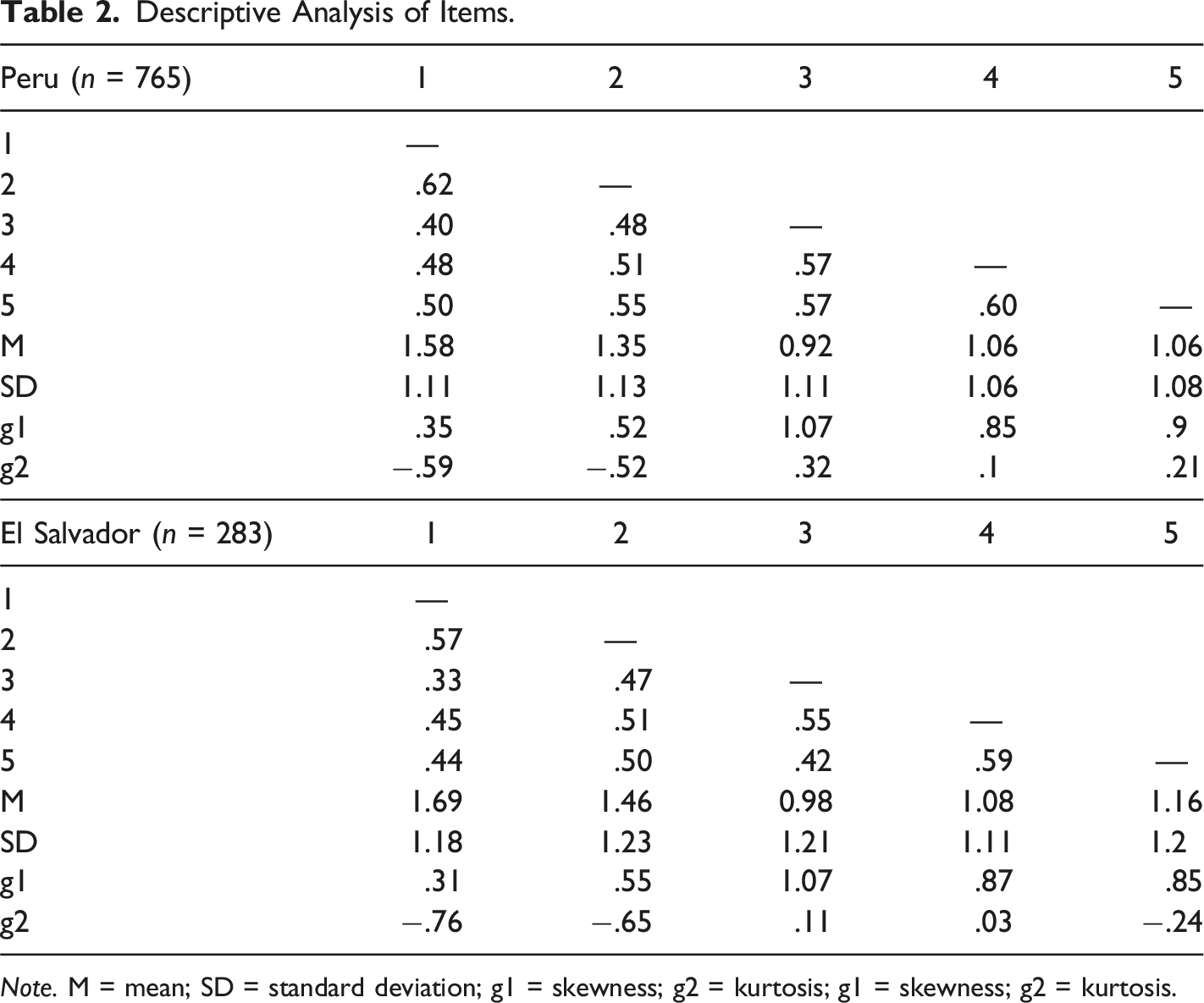
Descriptive analyses were first conducted for mean, standard deviation, skewness (As), and kurtosis (Ku), with acceptable values considered when As < ±2 and Ku < ±7 (Finney & DiStefano, 2006). To evaluate the internal structure, an Exploratory Graph Analysis (EGA) (Golino & Epskamp, 2017) was performed using the Gaussian Graphical Model (GGM), estimated via the Graphical Least Absolute Shrinkage and Selection Operator (GLASSO), a regularization method in the (inverse) covariance matrix that reduces coefficients and shrinks them to zero, resulting in a sparse network structure (Friedman et al., 2008). Additionally, the Walktrap algorithm (Christensen et al., 2023) and Louvain unidimensionality method (Christensen, 2023) were used to determine the number of communities. Network loads were also calculated, defined as the standardization of the strength of the node divided among the dimensions identified by the EGA, with cutoff points considering values of small (.15), moderate (.25), and large (.35) network loads (Christensen & Golino, 2021b).
Reliability was assessed using the bootEGA approach, employing two values: structural consistency, defined as the proportion of times each dimension estimated through EGA had the same item composition in a set of replicated EGA samples. Item stability indicates how often items are replicated in their empirically derived and other dimensions (Christensen, Golino, & Silvia, 2020). For these estimates, 1000 resamplings were used to determine structural consistency and item stability, with values above .75 considered acceptable (Christensen & Golino, 2021a).
Before performing measurement invariance, differences in sample sizes between the two countries were identified. Therefore, a data-balancing procedure using the synthetic minority oversampling technique (SMOTE) (Wongvorachan et al., 2023) was employed to equalize the data. Subsequently, the measurement invariance was conducted in a series of steps. Initially, configural invariance estimation was performed by conducting an EGA for each group separately, dividing the participants by country. This was performed with the intention of visualizing whether the nodes were grouped into identical communities for each group. Additionally, the results obtained from the bootEGA in the total sample were used to determine whether the nodes were consistently organized into the same communities and if the number and structure of these communities varied (Jamison, Golino, & Christensen, 2022). Metric invariance was then estimated using the permutation test, which allowed us to check whether the network loads were the same between the groups. To determine metric invariance, the item values must be non-significant (p > .05, adjusted p > .10) (Jamison et al., 2022).
Statistical analyses were performed using the R program and RStudio environment (R Studio Team, 2021). The “EGAnet” (Hudson & Alexander, 2024) and “PsyMetricTools” (Ventura-León, 2024) packages were used.
Results
Descriptive Analysis
Descriptive Analysis of Items.
Note. M = mean; SD = standard deviation; g1 = skewness; g2 = kurtosis; g1 = skewness; g2 = kurtosis.
Exploratory Graph Analysis
Figure 1 shows the estimated dimensionality using EGA, which identifies one community in the Peru sample. Additionally, EGA identified one community in the El Salvador sample. Regarding network load values, most items showed large values (>.35) in network loads for both Peru and El Salvador, except for Item 4, which showed small values in both countries (see Table 3). Exploratory network analysis and item stability. Network Loadings by Country.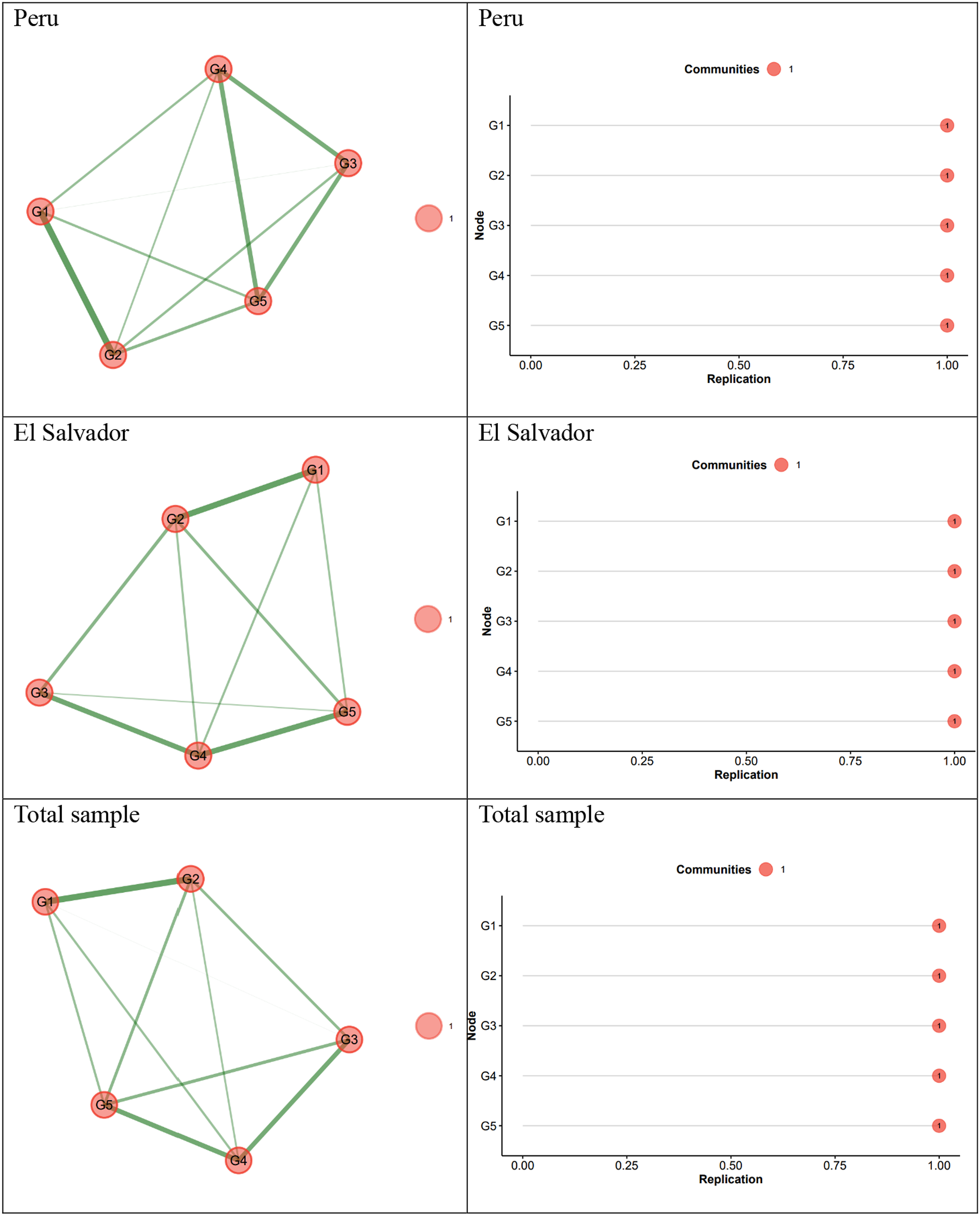
Item Stability and Structural Consistency
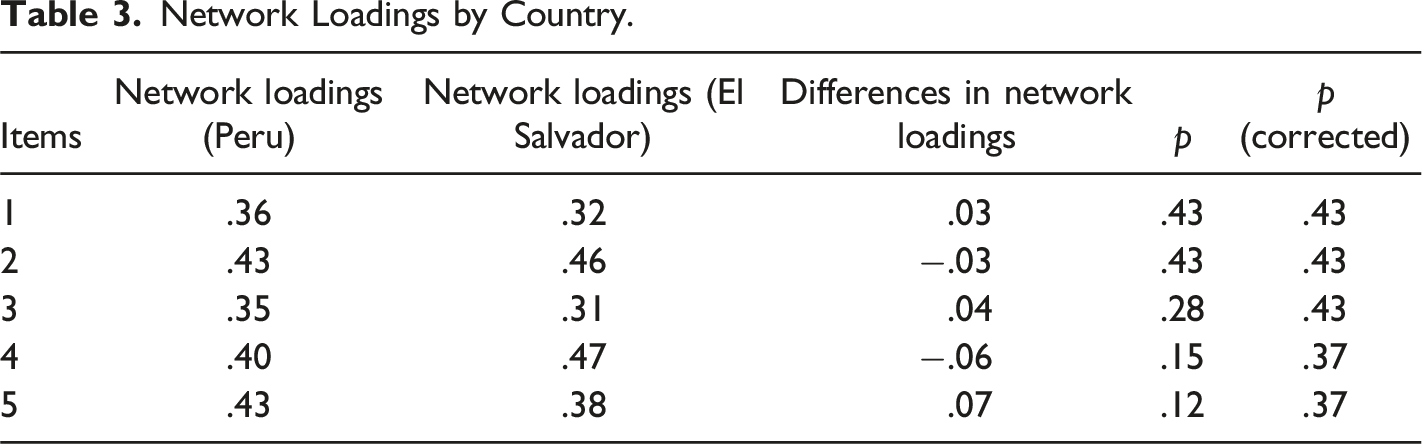
Figure 2 shows that in the Peruvian sample, item stability provided acceptable values (≥.75) and remained in the initial EGA structure. Similarly, the structural consistency showed that one community replicated 100% of the time. In the Salvadoran sample, it was identified that the item stability showed adequate values (≥.75) and was retained in the community identified by the EGA. Additionally, the structural consistency showed that the community replicated 100% of the time. Metric invariance by country.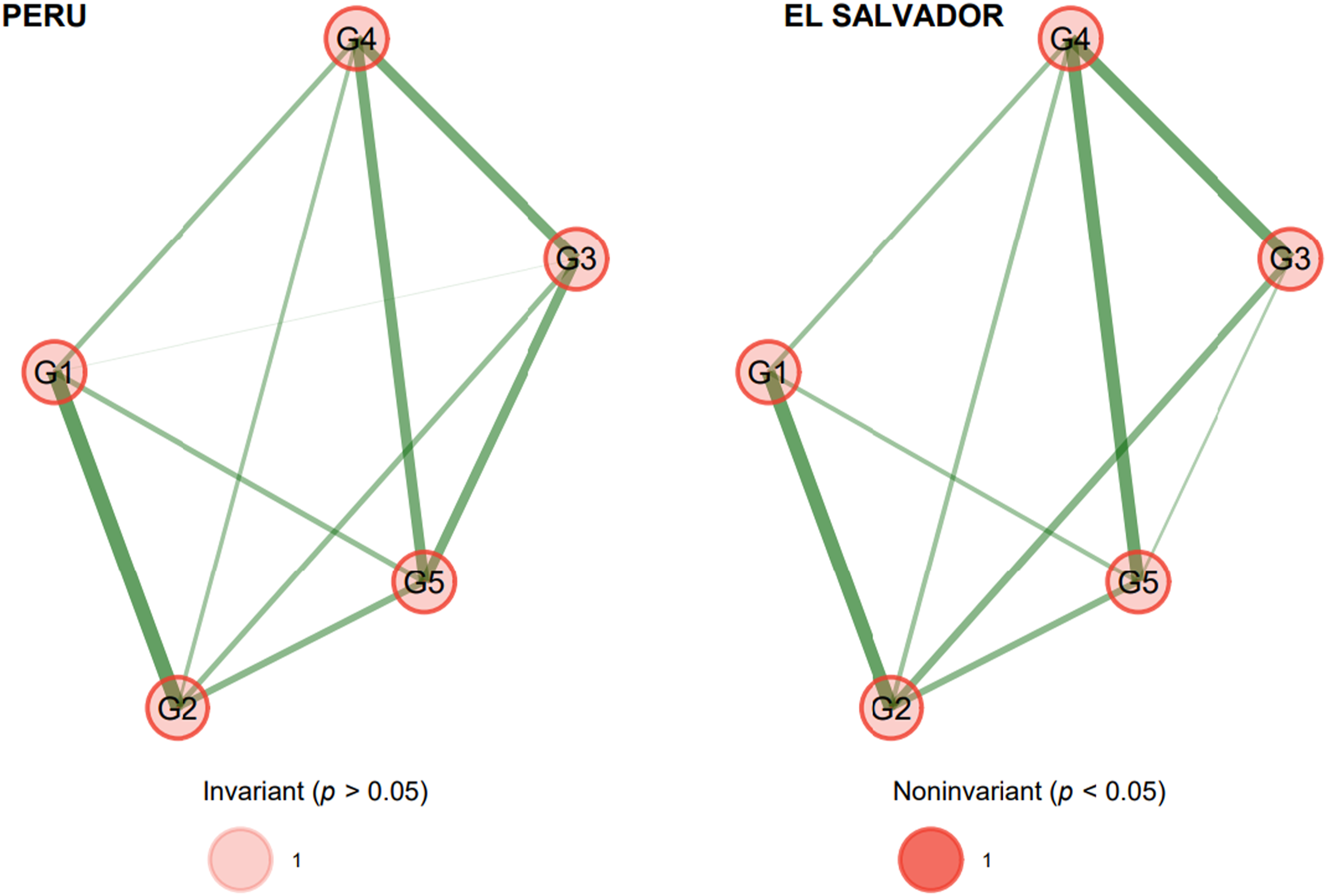
Measurement Invariance
Figure 1 illustrates that the EGA for both samples by country (Peru and El Salvador) shows clustering of nodes in one community. Moreover, the bootEGA conducted on the combined sample corroborated this finding, demonstrating a consistent clustering of nodes within the same community (see Figure 1). These results provide evidence for configural invariance. Subsequently, metric invariance analysis was performed. Visually, Figure 2 shows that all nodes were shaded and transparent, indicating metric invariance. Table 3 shows that the items did not exhibit significant differences (p > .05, adjusted p > .10) in network loads. This indicates that the instrument functions similarly, regardless of the country.
Discussion
To the best of our knowledge from the scientific literature, this study is the first to analyze the psychometric properties of the Grief Impairment Scale (GIS) from a network psychometric approach. A previous study applied the network approach to identify the dynamics among symptoms of functional impairment due to grief using GIS in a Peruvian sample (Caycho-Rodríguez et al., 2023b), but not specifically its psychometric properties. The findings of the present study aimed to contribute to the existing literature on GIS by evaluating the validity of its structure, reliability, and measurement invariance in samples from two different Latin American countries using a contemporary psychometric model.
As previously mentioned, the network psychometric model does not rely on the assumption of latent variables to explain the relationships among items; rather, the covariance among items results from their interaction. Network psychometrics offer an insightful and complementary approach to traditional latent variable modeling (Epskamp et al., 2017). The results reported by the EGA indicate that in both Peru and El Salvador, the presence of a single network structure of functional impairment due to grief is confirmed, with solid network loads and an adequate level of precision, as indicated by high levels of stability (Christensen & Golino, 2021b). The presence of a single network in both countries, based on the network psychometric model, aligns with previous studies reporting a single dimension using traditional latent-variable methods (Caycho-Rodríguez et al., 2023; Lee & Neimeyer, 2023; Yousefi & Jafari, 2023). These findings not only confirm previous findings of the GIS, but provide more cross-cultural support for its use in South American countries.
Confirming a single network structure of the GIS in Peru and El Salvador also suggests that its five items are indicators of functional impairment due to grief and not of other bereavement-related constructs, such as post-traumatic stress (Ziegler & Hagemann, 2015). An obvious advantage of validating a small, single network structure of functional impairment is that the measurement of this grief-related phenomenon can be done quickly and precisely. Respondents of the GIS, therefore, are likely to report more accurate and reliable information because they are not burdened by fatigue and boredom that plague lengthy scales. Moreover, researchers wanting more quality data of grief-related functional impairment will find the GIS a desirable choice because brief scales also increase participation rates (Caycho-Rodríguez et al., 2022a). From the patient-centered care model, it is necessary to have global measures that are easy to interpret and can generate positive implications in clinical research and practice of health professionals (Caycho-Rodríguez et al., 2023c).
The results of data balancing and item stability analysis indicated the presence of stability and configural invariance in the GIS. Although previous studies have evaluated the measurement invariance of GIS by age, gender, and race using multigroup invariance methods (Caycho-Rodríguez et al., 2023e; Lee & Neimeyer, 2023; Yousefi & Jafari, 2023), there has been no evidence of GIS invariance between different countries and less so from the network psychometric model, until this study. The results of this study also reported metric invariance, which indicates that the network loads of the GIS were invariant between samples from Peru and El Salvador. In this sense, the findings suggest that GIS is a viable measure for identifying real differences in the networks of symptoms of functional impairment due to grief caused by the death of a loved one between both countries.
Because cultural characteristics of a country can impact emotional experiences and management of grief among the bereaved (Lund, 2021; Silverman et al., 2021), it was important to examine the psychometric integrity of the GIS from this country-level perspective. Therefore, the results of this study show that the despite the cultural differences and differences related to inequality, poverty, and the presence of diseases between the countries (Pablos-Méndez et al., 2020), the network structures of functional impairment due to grief appear to be similar between the bereaved in Peru and El Salvador. This finding could pave the way for initiating more cross-cultural studies of network models of functional impairment due to grief between other countries that share similar characteristics. These important studies are part of a research line on the scientific study of grief and its consequences in different sociocultural contexts, which has received increased attention these past several years (Stroebe et al., 2001). Examples of such studies in Latin America include those by Caycho-Rodríguez et al., 2023, 2024b.
These findings should be interpreted in the light of some limitations. First, the selection of participants was carried out using non-probabilistic sampling; therefore, the results cannot be generalized to the populations of the participating countries. Additionally, the non-probabilistic nature of the study led to samples in both countries being composed mostly of women, people between 18 and 30 years of age, and singles. This has resulted in the sample not being fully representative of the national populations of Peru and El Salvador. Future studies should use probabilistic sampling to address these limitations. Likewise, it would be advisable to expand the number of participants, which would allow for a greater precision of the findings. Second, the use of a virtual platform to collect data may have prevented the identification of individuals who responded to the survey or ensured that they met the inclusion criteria to participate in the study. Third, the GIS is a self-report measure that can generate social desirability bias. Fourth, no other measures theoretically related to functional impairment due to grief were included, which prevented knowledge of the evidence of validity based on the relationship with other variables of the GIS from a network model. For example, subsequent studies could include measures of separation distress or post-traumatic stress disorder that are related to a higher risk of functional impairment due to grief (Breen et al., 2021; Lee & Neimeyer, 2023). Fifth, test-retest reliability was not assessed, limiting the evidence of the temporal stability of the GIS. Sixth, it is important to mention that, compared to traditional multigroup structural equation methods, network psychometric models only allow the estimation of metric invariance in network loads (Jamison et al., 2022). Therefore, when the methodological possibility of assessing stricter invariance in network psychometric models arises, research should be conducted to test stricter invariance of the GIS based on this method to replicate and expand the findings of the present study.
Despite the limitations of the current study, these findings can have important implications for research and clinical practice in the participating countries. First, the network psychometric model provides a new framework for conceptualizing and interpreting functional impairment, measured with the GIS, as a complex system of mutually interacting symptoms, both in Peru and El Salvador. This finding supports future studies of grief-related functional impairment symptoms being viewed as an ecosystem through the lens of a network analysis. Second, the network psychometric model generates a visual form of network graphs that allows mental health professionals and researchers with little or no previous experience in psychometric analysis to interpret the findings intuitively. Third, because it is incorrect to assume that psychometric instruments, such as the GIS, automatically provide equivalent measurements between different countries, studies like this one are vital in ensuring the psychometric integrity and cross-cultural validity of psychological instruments. Fourth, increasing psychometric support for a brief self-report measure will allow for the quick assessment of grief-related functional impairment, which opens the possibility of future studies related to improving mental health in people grieving the death of a loved one (Kristensen et al., 2015; Nielsen, Christensen et al., 2020). Finally, as the GIS is a brief measure, it can be used within broad network models, as has been used in other brief psychological measures associated with the experience of the death of a loved one, such as dysfunctional grief (Caycho-Rodríguez et al., 2024b) and post-traumatic growth (Caycho-Rodríguez et al., 2023e).
In conclusion, this study provided solid evidence for the psychometric properties and cross-cultural validity of the GIS, through the study of bereavement samples from Peru and El Salvador. The network structure of the GIS was consistent with the presence of a single factor, as reported in previous studies conducted using latent variable models. In addition, this single network was accurately replicated across all the bootstrap samples. Moreover, the findings contribute to the literature on functional impairment due to grief by providing evidence that the network model parameters of GIS exhibit measurement invariance; that is, identical and comparable dimensional networks were identified among samples from Peru and El Salvador.
Footnotes
Author Contributions
TC-R and AT-C provided initial conception, organization, and main writing of the text. AT-C analyzed the data and prepared all figures and tables. JV-L, LWV, JB-Ch, DEY-L, PDV, JT, CC-L, MEL-R, MR-B, IB, FJ-A, ShAL were involved in data collection and acted as consultants and contributors to research design, data analysis, and text writing. The first draft of the manuscript was written by TC-R, and all authors commented on previous versions of the manuscript. All authors read and approved the final manuscript.
Declaration of Conflicting Interests
The author(s) declared no potential conflicts of interest with respect to the research, authorship, and/or publication of this article.
Funding
The author(s) received no financial support for the research, authorship, and/or publication of this article.
Ethical Statement

Data Availability Statement
The data presented in this study are available on request from the corresponding author.
Author Biographies
S