







Abstract
How can we reach farmers with ecologically-based Integrated Pest Management (IPM) while creating a supportive context for adoption by farmers and relevant stakeholders? We assessed a new method – Adaptive Learning Networks – from reflections of varied stakeholders, farmer diaries and survey data procured in 2016 and 2019. This method is different from current IPM approaches, in that an explicit focus of learning was on engaging other stakeholders to enable adoption by farmers. For example, access to IPM products, providing new services and creating new policies were intrinsically part of the learning process, alongside learning on-farm IPM techniques. The main consideration is to ease farmers from being locked into the practice of pesticide reliance. The method facilitated multi-stakeholder learning that led to an adaptation of the IPM tools and techniques in the case examined. The priority of this new method was socio-technical learning, wherein varied stakeholders modify interactions, incentives and arrangements relating to pest management. Comparing 2016 and 2019 data, there was a significant reduction in insecticide, herbicide, and rodenticide applications. The observed outcomes indicate the potential to enable a wider spread of IPM technologies.
Introduction
Integrated Pest Management (IPM), a method that provides ecology-based solutions for pest control to farmers, has been promoted for over 50 years. Many proven IPM techniques show increased yields and profits for farmers with reduced insecticide use and biodiversity benefits (Way and Heong, 1994, Huan et al., 1999, Heong, 2005, Waddington et al., 2014). Rejesus (2019) documented an average of 13% increase in yield and 19% increase in profit from IPM. Moreover, IPM is introduced to farmers through a variety of approaches, including farmer field schools, media campaigns and national programs (Escalada and Heong, 1993, Winarto, 2005, Huelgas et al., 2008, Rejesus et al., 2009). While IPM has proven to have substantial ecological and economic value, adoption by farmers remains overall low (Orr, 2003, Parsa et al., 2014). Researchers and extension agents introducing IPM to farming communities are typically successful when sustained support can be offered (Van den Berg and Jiggins, 2007). In places where IPM was successfully introduced, results and best practices in one location often appeared difficult to reproduce elsewhere (van de Fliert et al., 1995, Van den Berg and Jiggins, 2007). Moreover, handling crop pests through IPM is often opposed by a consolidated network of pesticide producers, traders and advisors, creating supply-chain dependencies that are difficult to step away from by farmers, resulting in a situation characterised as pesticide lock-in and a pesticide treadmill (Teng, 1994, Peshin et al., 2009, Schreinemachers et al., 2017. Flor et al., 2020, Deguine et al., 2023). A common lesson from these studies is that successful implementation of IPM requires changes beyond the farm level, creating incentives and rewards for a wider set of stakeholders to support IPM. However, IPM introductions are mostly and primarily targeting farmers through participatory methods.
This paper presents results from a study on the recent introduction of IPM practices for rice cultivation in Cambodia that addressed rice farmers as well as input supply-chain and service stakeholders. Our findings point out two dynamics that may increase the future uptake of IPM practices. These are, firstly, the development of alternative commercial products that offer benefits to both farmers and supply-chain stakeholders. Examples from our study area are biological control products and mechanical seeders that made farmers and service providers cooperate rather than dissociate. Secondly, IPM practices overlap with a wider change towards more sustainable agriculture. The project-initiated experiments aimed at a reduction of chemical pesticides also stimulated reduction of other inputs such as seeds and irrigation water. In other words, IPM benefits from a more general, slow but progressive, disintegration of the chemical-reliant, external-input driven intensification paradigm in agriculture.
IPM was introduced in Cambodia in 1993 through the common implementation method of Farmer Field School (FFS). The IPM program in Cambodia was supported largely through a series of Food and Agriculture Organization projects, based on experiences of IPM-FFS in Indonesia (Winarto, 2004). Since 1996, Cambodian IPM projects have primarily followed the FFS approach, with a total 8769 IPM-FFS implemented by 2015 (Chhay et al., 2016). In FFS, farmer groups have facilitated learning activities coordinated by an extension agent. The focus of learning is on pest identification, thresholds and IPM options. There is an established IPM network composed of extension staff and trained farmers who could facilitate FFS all over the country (Chhay et al., 2016).
IPM-FFS emphasizes monitoring pests, experimenting with tactics, and empowering farmers through a ‘farmer first’ approach for pest management decisions (Matteson, 2000). In many cases, particularly with small, well-facilitated groups, there is documented success in adoption and economic benefits to farmers (Winarto, 2005, Chhay et al., 2016). Further spread of IPM practices depends on the effectiveness of trained farmers to establish follow-up IPM-FFS activities, such as field schools with non-trained farmers (Rebaudo and Dangles, 2011). This farmer-centered lateral dissemination mechanism typically requires continuous facilitation support from external agencies (Rejesus et al., 2009, Horgan, 2017, Wyckhuys et al., 2019).
IPM includes a range of pest and disease control techniques aimed at reducing reliance on synthetic chemical pesticides (Stern et al., 1959, Pretty and Bharucha, 2015). The difficulty in helping farmers shift out of pesticide use is in establishing a clear and observable connection between minimal application and maximum effects on their productivity, health and ecosystem, for example by assessing effects against an economic threshold (Matteson, 2000). Farmers can weigh the cost of intervention against potential economic losses if nothing is done about the pest problem. Threshold analysis has been proven knowledge-intensive, with farmers often swayed towards pesticide use by external influences such as pesticide marketing (Morse and Buhler, 1997, Horgan, 2017). One way to further support farmers in reduced pesticide use, is to involve other stakeholders, such as traders and extension officers.
International traders, national and village-based dealers of agro-chemicals clearly benefit from selling pesticides. Pesticide imports for agricultural application in Cambodia increased in the 2000s (Matsukawa et al., 2016, FAO, 2017). In farming communities, the use of pesticides differs per area. Insects and diseases are not equally distributed across the country, leading to differentiated use patterns of insecticides, molluscicides, herbicides or rat poison (Matsukawa et al., 2016). Changes in the agronomic practices of farmers, for example shifting from transplanting to direct seeding, varying seed rates, higher or lower fertilizer application, and varying irrigation regimes also influence farmer reliance on pesticides (Flor et al., 2019). Moreover, traders and extension officers are influential sources of information and providers of inputs that push Cambodian farmers to maintain pesticide-reliant practices (Flor et al., 2020). As the introduction of IPM continued over the past two decades, pesticides also became widespread, and for most farmers have become the preferred technological option for addressing pest problems.
In an attempt to reverse this trend, the Adaptive Learning Network (ALN) approach was launched under the umbrella of a project called Ecologically based Integrated Pest Management for Rice in Cambodia (EPIC), funded by the US Agency for International Development out of the Feed the Future Innovation Lab for Integrated Pest Management. 1 A common element between ALN and IPM-FFS is early engagement of farmers through on-farm technology trials. What makes the ALN method different from IPM-FFS is the explicit attention and engagement of other stakeholders such as service providers, producers of IPM products, extension officers and government officials. The model emerged out of a perceived need to find ways for IPM technologies to be better integrated in the context of Cambodian agriculture.
The ALN method was pilot-tested for adapting rice IPM in Cambodia over a three-year period (2016–2019). Researchers, extension staff and key farmers in the project tested varied management options for rats, snails, insects, weeds and diseases following the IPM framework. The ALN method combines adaptive learning by farmers about IPM tools and techniques with learning among other stakeholders about supportive arrangements required for practicing IPM. Such learning is not limited to farm and technical concerns, but also involves learning about policies, enabling access to IPM products and knowledge outreach (Figure 1). ALN also includes learning about what it implies for coordinating on-farm activities or enhancing cooperation among farmers, as well as learning about how external stakeholders can support change in practices. This paper presents an analysis of the activities in the ALN method and what learning outcomes emerged for the stakeholders that were engaged. Moreover, we examined the main outcomes of the project in terms of changes in pest and disease control practices and reduction of pesticide use.
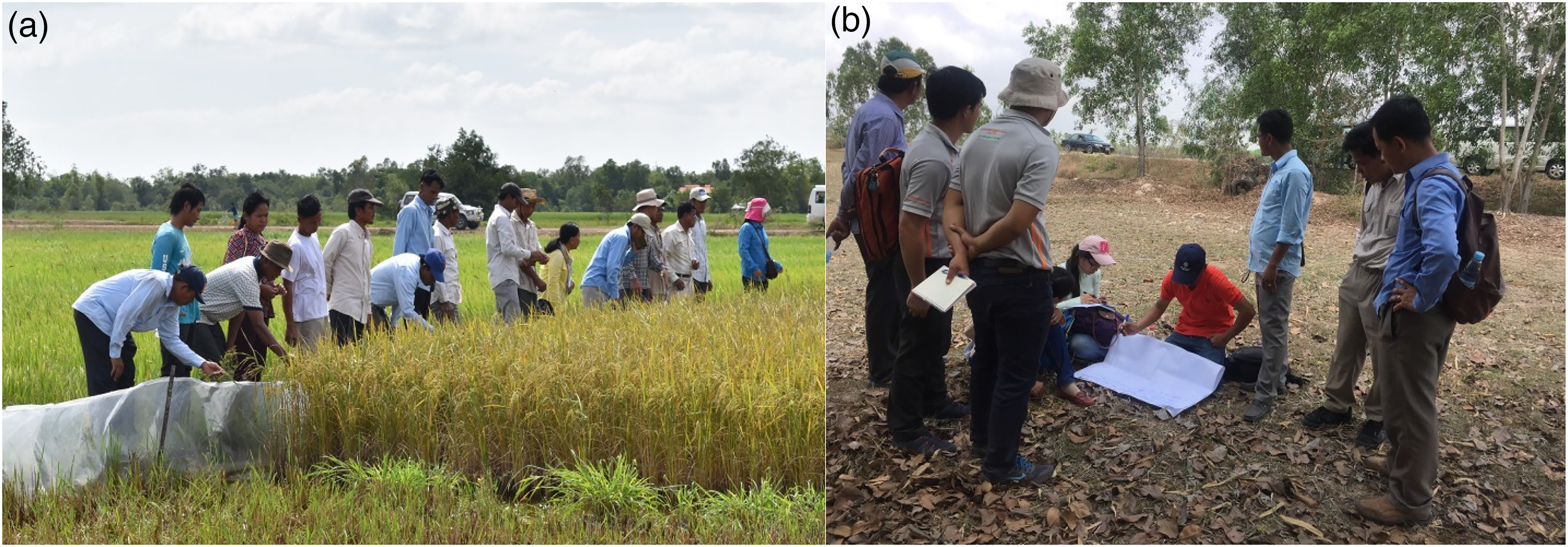
Activities under adaptive learning network method included observation and reflection by farmers on trials of pest management technologies (a), and discussions by stakeholders from the government and private sector after observing the results of the trials (b).
Methodology
Analytical framework
Our analysis of the outcomes is based on a practice-oriented methodology of technology adoption. Rather than considering adoption as a rational decision-making process by farmers, the adoption process gets shape in a varied set of interactions in practice, implying several performative learning effects that result in adjusted farming practices (Maat and Glover, 2011, Stone, 2016, Glover et al., 2020). Interactions take places in diverse settings, in farmers’ fields as well as in other places such as central meeting spots in the villages, agro-shops or meeting rooms of companies, extension services and other organizations involved. Consequently, learning about IPM is about making sense of pest management and evaluating the opportunities and constraints it offers in the practical setting of the farm, which extends beyond the field. Most learning theories acknowledge the performative component, captured by learning-by-doing or experiential learning. However, these notions typically refer to knowledge derived from performance, whereas a practice-based methodology looks at knowledge as performance (Richards 1989). The methodological implication is to analyze the learning effects of projects in terms of follow-up activities. Most projects anticipate change at the farm level. However, farmers are not the only actors who are supposed to adapt. Coordination to manage pests beyond individual plots, or access to IPM products and services require other actors to make changes as well.
Our approach resonates with the IPM paradigm presented by Dara (2019), also emphasizing wider socio-economic, regulatory and organizational aspects that support and facilitate IPM innovations, thereby also highlighting business and sustainability aspects including sellers, producers and consumers. The wider arrangements in support of farm level change and the actors responsible for these arrangements are often framed as an innovation system (Biggs and Matsaert, 2004). The functions of an innovation system include entrepreneurial experimentation, knowledge development and diffusion, influence on the direction of search, market formation, legitimation and resource mobilization (Hekkert et al., 2007, Bergek et al., 2008). The ‘system learning’ is equally performative and can be analyzed through the activities of the various ‘system actors’ that enable embedding of IPM methods in rice farming practices.
Based on this conceptual approach, we studied the ALN method as a series of project activities from which other actors follow-up with further action. Projects imply a temporary shared practice of farmers, extension workers, experts and other relevant project actors, typically consisting of meetings of one or more days in a particular field location. The outcomes of such meetings envision and require further activities, for example farmers applying IPM in their fields. The activities in which IPM technologies are applied and continually used by farmers comprise one type of follow-up activity we studied.
The other type of follow-up activity is based on the lessons other stakeholders in pest management take from project events. These stakeholders are researchers involved in the farm experiments, traders looking for new inputs to sell and government officials working on budgets, rules, planning and monitoring. These stakeholders, it is expected, support farmers in using IPM in their fields and help to expand IPM activities across locations. We term these supportive activities as system activities, as they are beyond the domain of individual farms.
The objective to make IPM technologies become embedded in farming routines requires influential changes across diverse aspects of pest management on-farm and beyond. The follow-up activities of stakeholders, relating to project programming, services, contractual arrangements, or legislation, facilitate the further development of IPM activities in a wider set of farming practices. In other words, the innovation system is adapted to fit components supportive of the farmers adopting IPM, for example with new policies or accessible IPM-related services that provide value for money.
Methods
We documented project activities implemented under ALN from 2016–2019, covering five cropping seasons of rice. The activities consisted of farmer meetings and participatory experiments in two villages in each of four provinces: Battambang, Kampong Thom, Prey Veng and Takeo (Figure 2). We examined documents such as reports, meeting notes, and protocols to understand events and activities over time, the type of learning this involved, and who was involved in the activities.
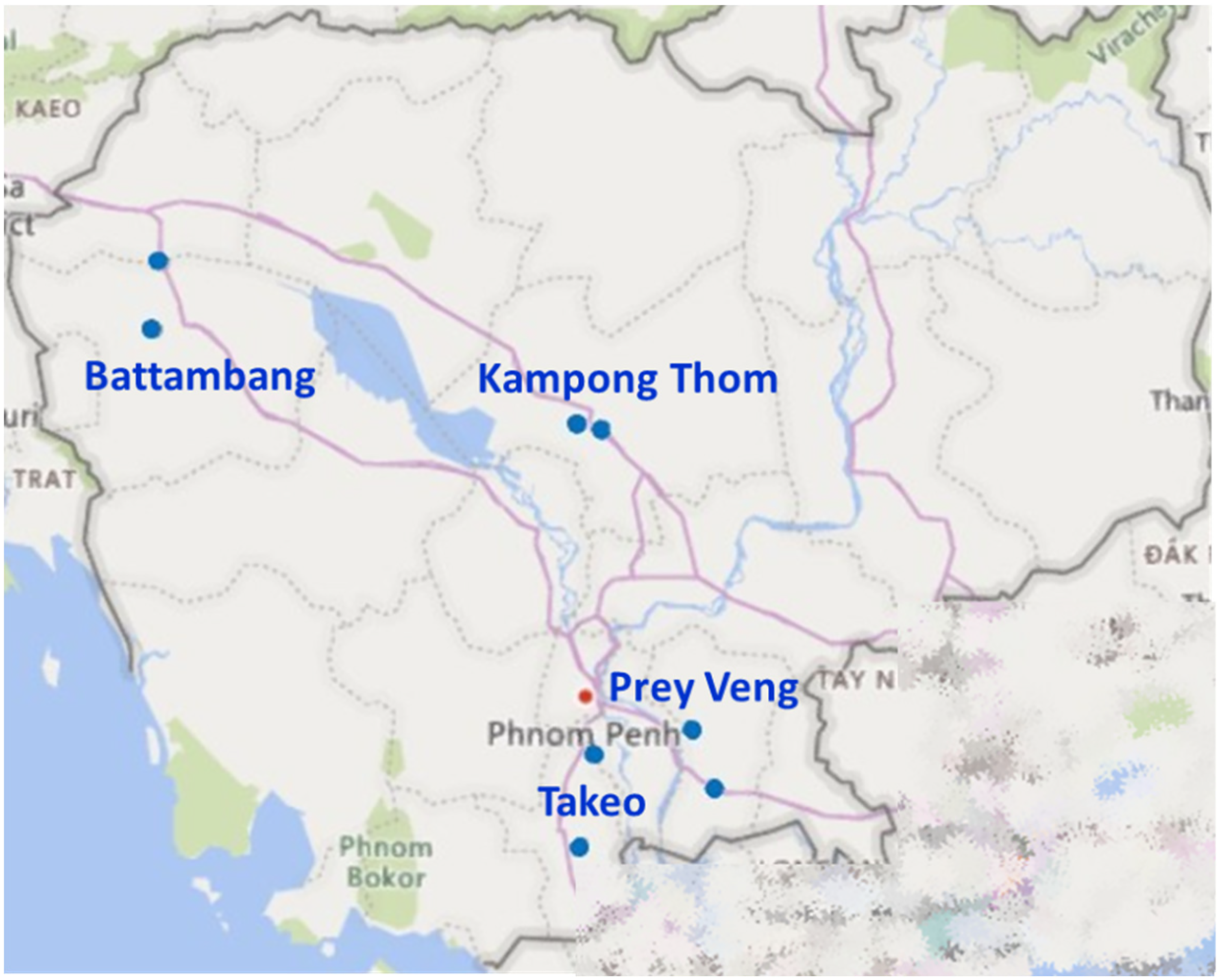
Map locating two villages as study sites in each of the four provinces in Cambodia.
Part of the ALN method is to have reflection meetings with farmers at the end of the season. In these meetings, invited farmers are divided into groups of cooperators (farmers who implemented trials in their fields) and observers (farmers who visited the trials, or were not directly involved). The reflection, initially facilitated by researchers, is guided by four questions. What did farmers try (or observe)? What worked for them? What did not work or could be improved? What will they do (or change in their practice) in the coming season? The answers to these questions are shared with each other and documented. Documents of 28 reflection meetings from 2017 to 2019 were analyzed using open coding in Atlas.ti (ATLAS.ti Scientific Software Development GmbH, 2013), to surface the themes that emerged in the discussions by farmers.
We collected data of farming activities by using farmer diaries, by which farmers recorded their farm practices and inputs. Extension staff collected the diaries (and supplied new ones) at least twice per season. The farmers reported in the diaries on what they had done in the trial plots, what inputs used, its costs as well as information about the crop and selling the harvest. Data from diaries were obtained from a total of 56 rice farmers who implemented researcher-led trials in 2017, and 72 rice farmers who implemented farmer-led trials (modified trials according to preferences of the farmers) in the 2018 wet season, and 2018–2019 dry season. Farmers in one site in Takeo implemented rodent management technology only, while other farmers integrated a wider set of IPM practices in their trials. The activities of the farmers in these groups were separately analyzed using descriptive statistics.
The system activities were studied by participant observation of the first author, complemented with a review of project reports. Additionally, data from two surveys were used to establish overall effects, using various indicators (see Table 3) for changes implemented by the farmers. The first survey was a baseline study in 2016. A follow-up survey was done in 2019 among the same farmers as in the 2016 survey (N = 234, matching N = 199). These farmers were from eight villages in Prey Veng, Kampong Thom, Battambang and Takeo. Respondents were randomly selected from the list of farmers maintained by the Village Leader. We predominately included data from the 199 respondents (matched pairs) included in both 2016 and 2019 surveys, but also analyzed the full dataset from the 2019 survey separately. Both surveys address the type of pest control practices farmers used in their fields, the 2019 survey specifically asking about adoption of IPM practices. A paired sample T-test was used to assess the difference in pest management practices, particularly in the use of pesticides.
Results
The conceptual division of project activities between farm activities and system activities appeared less clearcut in reality. Indicators are the relative presence of different types of stakeholders, the location where activities took place and anticipated follow-up action. For example, an evaluation meeting with predominantly farmers and a smaller number of other stakeholders can be held in the village and have extension support as main item for discussion, anticipating follow-up action from extension officers. The activities plotted along a timeline (Figure 3) therefore provide an indicative division rather than a precise classification.
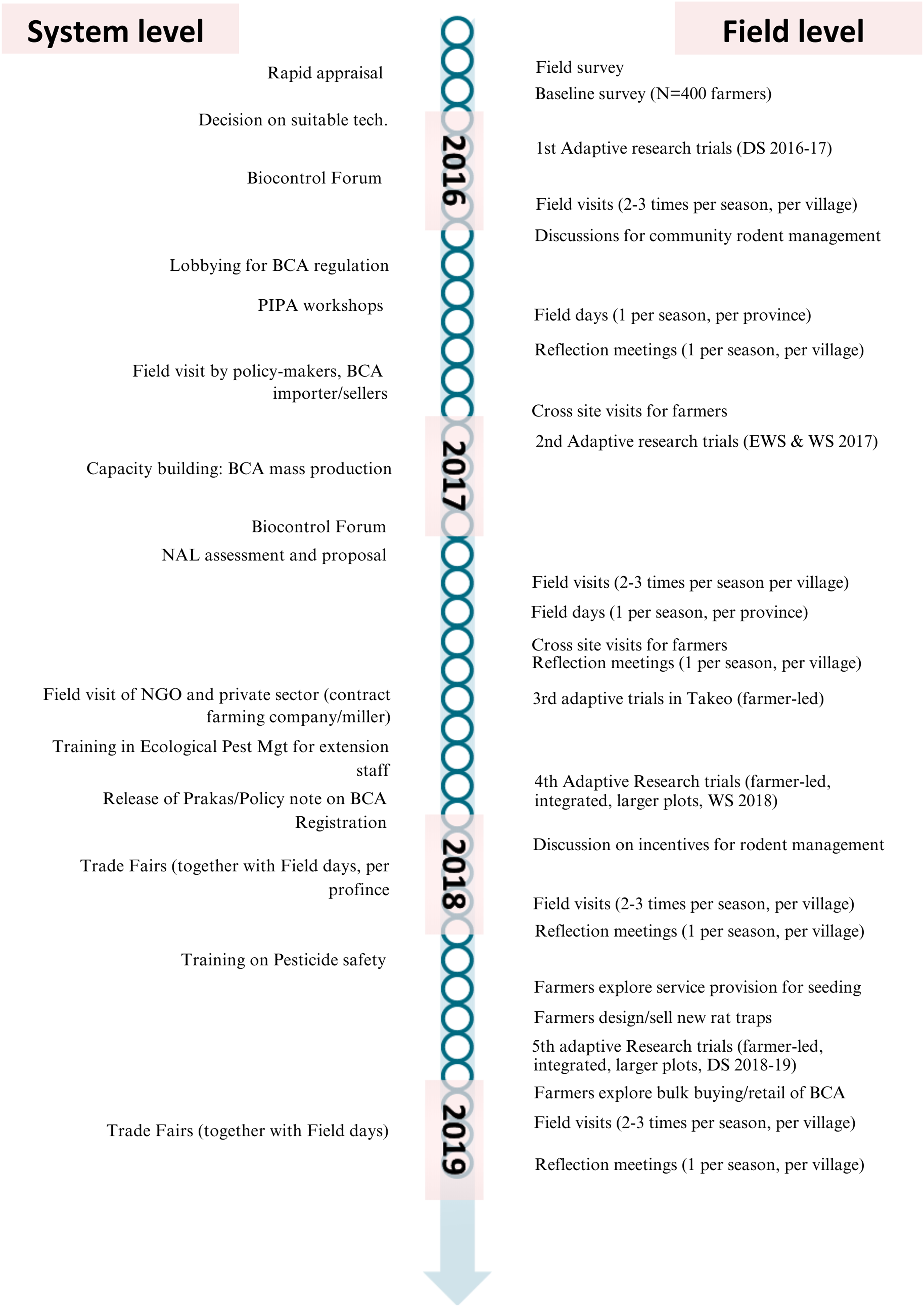
Timeline of learning activities implemented from 2016–19, showing activities at system (left) and field (right) level; DS = dry season, WS = wet season, EWS = early wet season, BCA = biological control agents, PIPA = participatory impact pathway assessment, NAL = National Agricultural Laboratory.
The field level activities started with assessments of the ecological conditions and pest problems that farmers experienced and identified as priority. Farmers who volunteered to cooperate with extension staff and researchers made decisions on which potential technologies would be of interest for experimentation. Several field experiments were set up to induce cycles of learning on the tools and techniques. The experiments on tools and techniques for IPM differed in each village, as the decision was based on ecological conditions, key pest problems, and choice of the farmers. The activities involved farmers who implemented trials, researchers, extension staff, and farmers observing the trials
The facilitation of the trials followed an adaptive research process in which experiments in the first two seasons were mainly initiated by researchers and in subsequent seasons mainly initiated by the farmers based on evaluation of the earlier experiments (cf. Chou et al., 2020, Stuart et al., 2020). The trials in the first two seasons covered an array of IPM techniques. Project staff compared the results with the current practices of the farmers in the village (based on the 2016 survey), as well as the common practice of the farmer doing the experiment. In the case of rodent management trials, which were implemented by groups of selected farmers, there was additional participation by farmers with plots neighbouring the experimental plots. Hence, farmers’ preferences for additional pest control practices or adjusted techniques to include in the following season played an important role in the subsequent trials.
The extension staff and researchers organized two to three field visits and one field day per season for farmers to observe the experiments. Farmers implementing the trials had opportunities to interact with each other and compare their respective practices. The field days were facilitated learning activities to allow observation and sharing between those who implemented on their fields, and the other farmers. Reflection meetings were set up after every season to bring together what was learned over that learning cycle. Notably, the farmers implemented experiments on 0.5 ha plots (SE Mean 0.03), which was on average 21% of their total cultivated area. Over time, these learning activities explored other concerns such as working with service providers, finding incentives for community action on rodents or designing and selling traps.
While the field learning activities were ongoing, there were system level activities to support the farmers to adopt IPM techniques. These included addressing constraints in the mechanism to legally register and sell biological control products in Cambodia. During the years the project was operational, there was no formal registration for BCA, resulting in limited access to these products (The Regional BCA Expert Working Group, 2014). The learning activities included fora on the production and trade of biological control agents (e.g., predators, entomopathogenic fungi, biopesticides). Activities were also implemented to involve policy makers and traders to observe the adaptive trials. The activities targeted at policy makers urged them to help importers, producers and traders to register BCA for selling. There were other activities that targeted intermediaries such as extension staff and non-government organizations (NGOs). Lastly, there were trade fairs, involving IPM-related businesses, which targeted linkages between manufacturers or traders of IPM products, retailers and service providers in the villages, as well as farmers. In other words, the trade fairs aimed to establish and strengthen linkages across the supply chain for non-chemical pest control products.
Learning by farmers
From the reflection meeting documents covering 2017–2019, three general thematic categories emerged. These are learning about the IPM techniques and products, learning about implementing trials and coordinating community-wide pest management activities, and learning about trial results.
Learning about the IPM techniques and products involved farmers selecting options, deciding on the trade-offs between options, exploring the fit with other agronomic practices, modifying the technologies, assessing the experience of those who implemented and those who observed, and understanding the costs and accessibility of the options (Table 1).
Themes and topics that farmers discussed during the reflection meetings over four cropping seasons, 2017–2019.
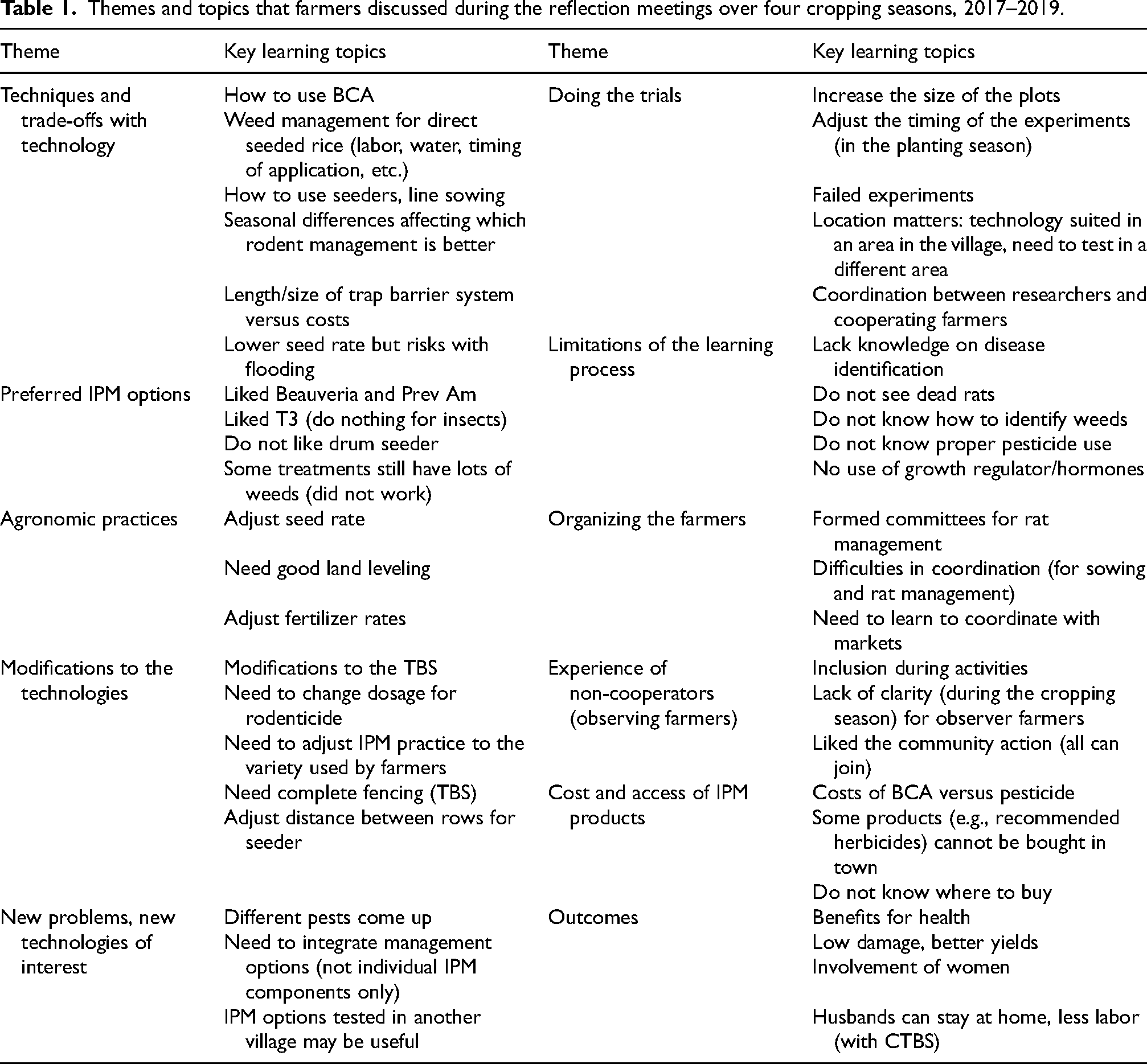
The farmers implementing or observing the trials had preferred options, but also provided critical discussions on implementation, proposing modifications and ways to incorporate IPM techniques and/or products with other practices. Examples of IPM techniques are direct seeding using line seeders, integrated weed management, use of BCA or no insecticide spraying (‘do nothing’). The discussions helped farmers to select what worked and how to adjust the underlying techniques. Examples of points brought up in the discussions are ‘need to strain the BCA after mixing with water,’ ‘application at specific time of the day,’ ‘timing weed management with availability of irrigation water,’ and ‘need for proper leveling of the plots.’ For rodent management, farmers had significant modifications on the use of a Trap Barrier System (TBS), which can be a community TBS or a linear TBS. The first type consists of a 20 × 20m2 strategically located field fenced with plastic where rats are trapped before entering other fields. The linear TBS is a 150 m plastic fence alongside the rice fields that direct rats towards traps at certain points (see Stuart et al., 2020 for details). The farmers preferred their plots to be completely fenced with plastic, managed by one farmer and suited for a small group. Following the trials, farmers also reflected on the costs. Some farmers only compared the costs of pesticides with the IPM alternative, the latter often being more expensive. Other farmers also noted the higher yield and reduced application of pesticides that gave them a net income gain.
Farmers also critically examined the results of the techniques (Table 1). For example, farmers considered the number of dead rats as the indicator of success. However, some experiments implied a lower direct catch, such as control tactics that suppress rodent populations at the start of the season or using a rodenticide that results in rats dying in burrows and out of sight. Such observations made them critical to the technology. Overall, meetings and experiments had positive effects on organized activities and coordination of rat hunting. Village leaders often participated in the meetings, leading to discussions about adjustments of local policies that would help the collective pest control activities. Moreover, farmers felt more confident to raise issues about input supplies and prices for their harvest. The meetings also revealed issues that were not addressed in the experiments, for example the difficulty in identifying weeds and diseases.
Furthermore, farmers examined the outcomes of the trials not only in terms of yield and damage, but also with respect to labour dynamics within households, for example being able to sleep at home rather than being out trapping rats at night, and perceived health impacts for being less exposed to chemicals. More importantly, farmers were able to identify other concerns that they want to address such as other pests, as well as other ‘solutions’ they want to try which they had observed from the IPM trials of other farmers.
Learning by system stakeholders
There were observable changes made by non-farmer stakeholders engaged in the learning activities. Not all the changes were directly linked with the farm level activities, but were implemented while field experiments of farmers were on-going. We examined this system level learning against the framework of innovation system functions (Table 2). One change is that the government released a Prakas (policy note) in 2018, which provided for BCA products to be legally registered in the country. This provides legitimation for selling and promoting these products for use by farmers. The government did not implement direct preferential policies, for example subsidies, for biological control products. There were promotion activities to support the existing business stakeholders around IPM products, most prominently the field days and trade fairs that extension staff organized together with companies selling BCA and mechanical seeders.
Changes implemented by non-farmer stakeholders within the system, organized according to innovation system functions.
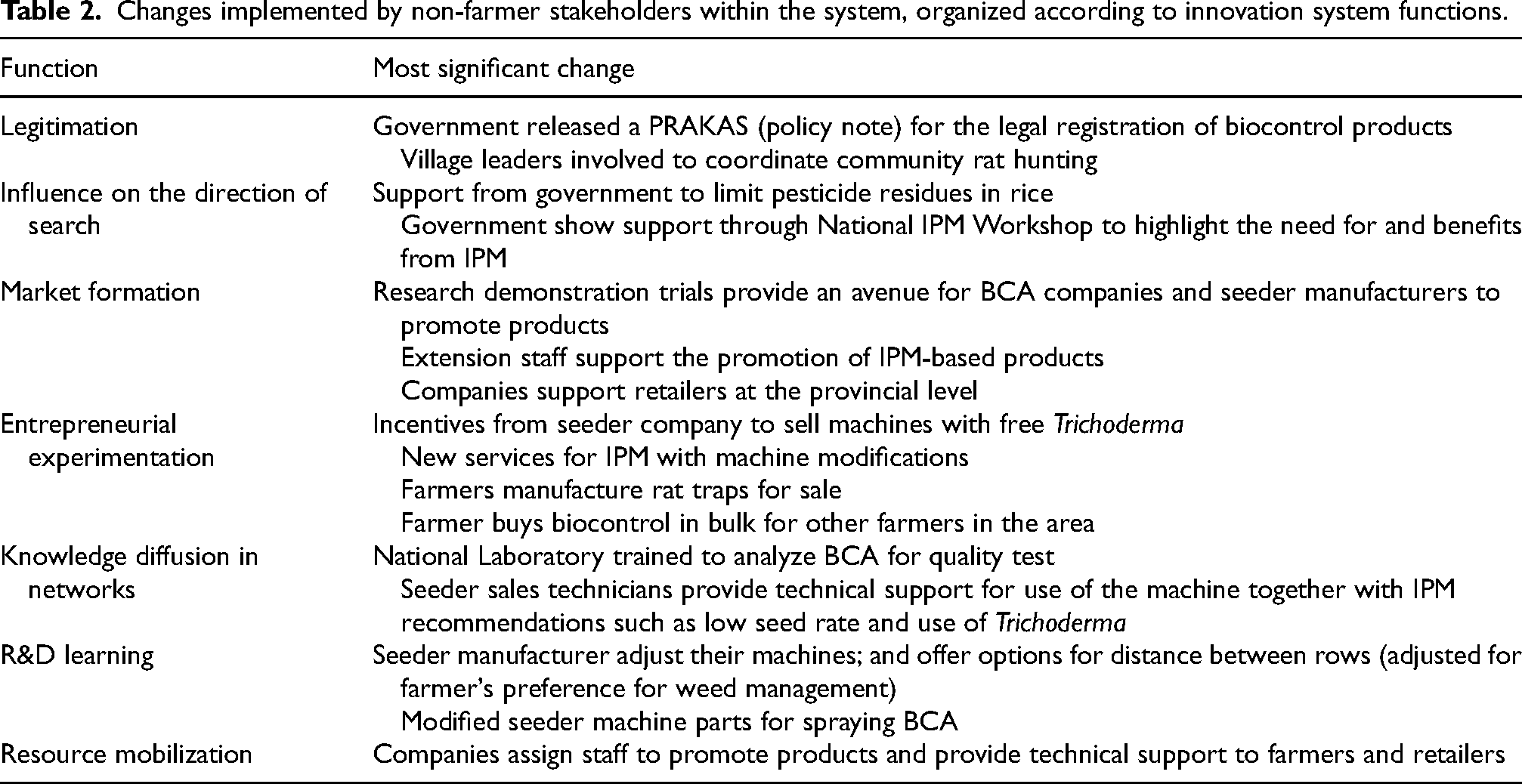
By 2019, at least three BCA companies started to locate their staff in provinces and explore local branch dealers (Table 2). One farmer bought BCA in bulk to be used by other neighbouring farmers. Moreover, a variety of rat traps, designed and made by small craft businesses, were manufactured and sold to farmers. This further increased locally-based trade networks across provinces. Manufacturers of mechanical seeders were particularly active, adjusting their products to meet the preferences of farmers. These seeders, rotating drums connected to a tractor, releasing a few seeds at a fixed distance creating a lined crop pattern. Farmers have options for 15 cm or 20 cm distance between rows. The sale of seeders was bundled with BCA. This is an incentive to sell machines with a discount, giving free BCA. These activities indicate an interest among varied stakeholders to create a market for BCA. Farmers who bought seeders also get technical advice on how to use BCA with the seeder. Moreover, service providers started to offer services for applying a BCA to address disease in rice, Trichoderma, alongside seeding services.
At the national level, a laboratory that checks pesticides for registration has trained staff to start quality analysis of BCA products submitted for registration. The actions of the stakeholders also create positive indirect benefits, in that a broader network of actors is sharing recommendations aligned with IPM to farmers. There were limited activities or expansion of trade and investment on IPM among those in the network. Some companies have invested in sales agents placed in the province, to promote BCA to farmers. The technicians and BCA sales staff, however, struggled to expand the market.
Pest management practices of farmers
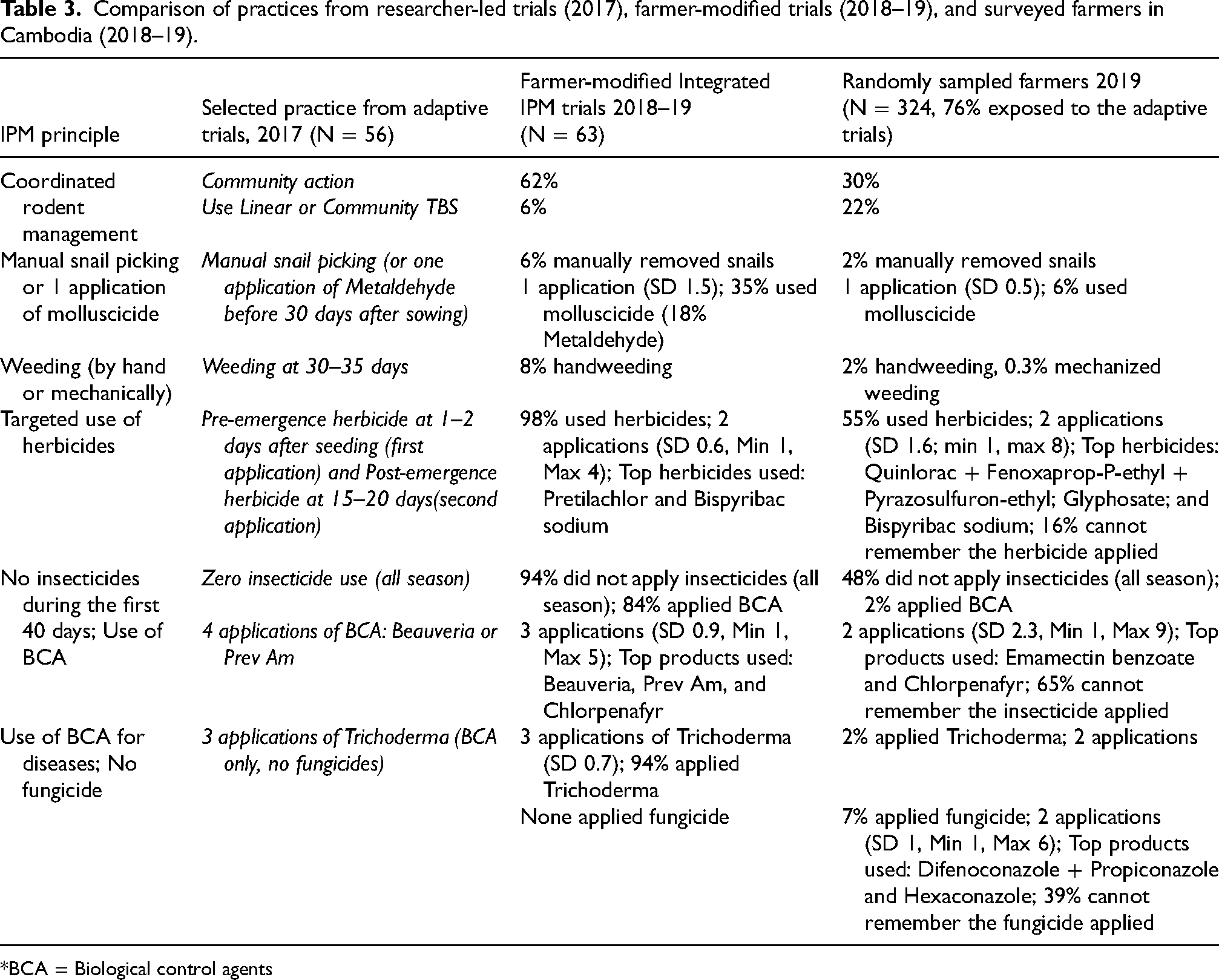
A key question is whether the ALN method increases the use of IPM. We compared practices across key principles of IPM that were covered in the learning activities to examine the learning and modifications made by farmers involved in ALN from 2017 and 2018–2019 (Table 3). We also examined the practices of randomly sampled farmers (N = 324) in the same villages for observable uptake of IPM practices (Last column in Table 3).
Comparison of practices from researcher-led trials (2017), farmer-modified trials (2018–19), and surveyed farmers in Cambodia (2018–19).
*BCA = Biological control agents
In 2017, farmers selected options for each IPM principle, which then became the take-off point for recommendations and sharing across the groups. These practices were selected by farmers from researcher-designed experiments. Modifications made by farmers were evident in the 2018–2019 practices in terms of tool or technique under each IPM principle, for example the number of applications or type of products (Table 3). Moreover, different farmers combined components differently or did not apply some of the IPM principles.
Farmers integrated new IPM techniques alongside their other practices. There is adoption of IPM practices, considering village level assessment from randomly surveyed farmers, although to a limited extent (Table 3). Notably, farmers selected some IPM practices but did not abandon pesticides completely. In some cases, such as for weed management, the selected technique focused on fine tuning the current practice to match their crop establishment practices, seed rate, and weed problems. There were pesticides that were identified as better suited to control observed weeds such as using pre-emergence herbicide, but the products were not available in the villages (as shown in Table 1). As such, only farmers conducting the IPM experiments used this chemical. Similarly, BCA options were available only to a limited extent, as the sellers were mostly from Phnom Penh.
The survey results show clear differences in pest control practices between the two sample years as none of the practices pre-existed introductions. The 2019 results
Adjustments in pesticide use
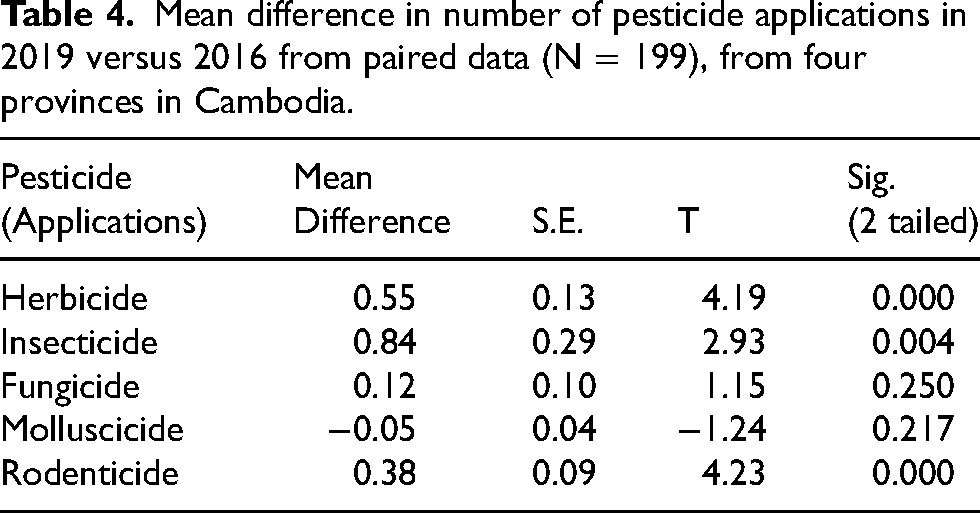
From the total sample of farmers surveyed in 2019 (N = 324), 76% indicated they were exposed to the IPM learning activities. In each village an average of 49% of farmers said they received training on IPM. Detailed in Table 3, there were varied adjustments in the practices of farmers in the village related to different principles of IPM. The results also show that farmers still used pesticides in 2019 although with a different division of the kind of pesticides used. Table 4 shows the change in pesticide use from randomly selected farmers in 2016 and 2019 (n = 199 paired responses). There is a significant difference in herbicide, insecticide and rodenticide applications. Farmers in the communities, whether directly involved in the trials or as observers, reduced their herbicide, insecticide and rodenticide use. Notably, there is a slight increase in molluscicide application although not significant.
Mean difference in number of pesticide applications in 2019 versus 2016 from paired data (N = 199), from four provinces in Cambodia.
Discussion
We assessed the ALN method as implemented in Cambodia. We used follow-up activities from project events as a method to identify learning effects from the introduction of IPM techniques and activities at system level to analyze system learning. At the farm level, we observed several changes in pest control activities. Farmers actively involved in the experiments and those who only observed the trials included selected IPM techniques in their crop management practices (Table 3). The learning thus involved an integration of new and old practices. Overall, there was a decrease in use of insecticides, herbicides and rodenticides between 2016 and 2019 for farmers in the villages (Table 4). Adjustments on the techniques, adoption of new techniques and availability of products for pest control were all observed but with substantial variation. The findings fit with other studies showing similar variation in learning outcomes (Douthwaite and Gummert, 2010).
The key feature of the ALN method is to address change simultaneously at farm and system level. Our findings show substantial change in activities of system actors. Our findings underline the importance of timely coordination in initiating change at farm level and system level (Hekkert and Negro, 2009). For example, as the project introduced BCA to farmers, registration of BCA that would allow producers and importers to enter the Cambodia market had just been arranged, resulting in limited availability of BCA. Such regulatory changes, restricting the use of pesticide and stimulating alternatives, provide important incentives for the use of biological alternatives to pesticide.
Our results show that incentives can also be established at more local level. Project efforts to create linkages between service providers, agro-input traders and farmers seem to have positive effects in making these actors experiment jointly to find out how alternative crop management practices can be implemented. Our findings contrast with ‘textbook’ introductions of IPM that exclusively focus on learning with and for farmers. The interactions between farmers, agro-dealers and service providers require the development of products that combine the interests of all these stakeholders. Increased use of biological control products should not only be assessed on technical-ecological grounds but also on the social-economic implications as they may increase the acceptance among agro-dealers and service providers to move away from chemical pesticides. Clearly, such local arrangements can gain further momentum when extended to the national level through policy support and changes in the regulation of pesticide trade and application.
The experiments initiated by the ALN method also hint at a wider change towards sustainable farming practices. The reduction of seed rates has various implications for the management practices of farmers. Pest-related effects of wider plant spacing include disease transmission, as well as management of weeds and insects (Castilla and Savary, 2003, Chauhan et al., 2011). Line sowing alongside timely weed management also has yield effects, aside from improved nutrient management (Awio et al., 2022). Such combined effects are typically difficult to measure as many factors are involved and outcomes are conditional on local circumstances. Despite a lack of clarity over causal factors and reproducible effects, IPM may benefit from a broader movement to make rice cultivation more sustainable. The notions of Agroecological Crop Protection (Deguine et al., 2023), System of Rice Intensification (Glover, 2017), or Nature-based solutions (Griscom et al., 2017, WBCSD, 2022) are examples of approaches for rethinking rice pest management. What such notions have in common with the ALN method is a focus on farm-based experiments with a broad outlook, regarding a wide set of crop management practices and the involvement of various stakeholders.
The importance of farm-based experiments does not take away the equally crucial support from the wider system of government agencies and private-sector stakeholders. Although it is clear that the ALN method is a useful way to address dependencies and interactions between farm- and system-level change, our results do not provide clear guidelines on specific dependencies or the range of interactions to be included. These will have to be identified and selected for each particular case study. The ALN method addresses such dependencies up-front and our results suggest that the government and other stakeholders in Cambodia will further work on the changes needed to increase the uptake of IPM practices.
Conclusion
The ALN method has clear potential to facilitate learning by farmers and other stakeholders to adapt IPM techniques to their needs, resulting in reduced pesticide reliance. The ALN method can be a valuable tool for learning about IPM techniques coupled with learning about the required systemic changes to enable adoption. Our findings show that a combination of learning about pest management in the field and system learning resulted in coordinated change. This change is evident in the practices of involved stakeholders as well as reduced pesticide use among farmers. The results indicate the potential for increased uptake of IPM when introduced with the ALN method.
Footnotes
Acknowledgements
This study was implemented under the Ecologically based Participatory Integrated Pest Management for Rice in Cambodia (EPIC) Project of the International Rice Research Institute (IRRI) funded by the United States Agency for International Development (USAID) (AIDOOA-L-15-00001), under the Feed the Future Innovation Lab for Integrated Pest Management. We also acknowledge funding support from the Postdoc Talent Program of the Wageningen Graduate School (500/2100.P9505.00/AQ3887), through the Wageningen School of Social Sciences (WASS). We are grateful for the collaboration and support through the Closing Rice Yield Gaps with Reduced Environmental Footprint (CORIGAP Pro) (Grant number 81016734) funded by the Swiss Agency for Development and Cooperation (SDC). Lastly, we thank Akhara Ouk, Angkeasath Neath, Seila Khun, Renee Lorica, Abigail Mabilangan, George Norton and Sara Hendery for their help in various stages of the research and writing.
Author's Note
Alexander Stuart is also affiliated with Pesticide Action Network, Brighton, UK and Buyung Asmara Ratna Hadi is also affiliated with Food and Agriculture Organization of the United Nations, Rome, Lazio, Italy.
Data availability
Raw data were generated at IRRI. Derived data supporting the findings of this study are available from the corresponding author R.J.F. on request.
Declaration of conflicting interests
The authors declare that they have no conflict of interest.
Approval to implement this research was obtained through the Provincial Department of Agriculture Forestry and Fisheries of each province site. Moreover, the local authority of each site was informed about the research, what data would be collected and how it will be used, as well as anonymity of the respondents. They approved the implementation and coordinated with the researchers, to enable entry and reach farmers in their area. All the public and private stakeholders engaged in the project were aware of the participatory research and provided consent for data collection activities. In the surveys, informed consent was obtained prior to each interview, with the respondent aware of the reasons for data collection, how these will be used, and their rights to participate or not.
Funding
The author(s) disclosed receipt of the following financial support for the research, authorship and/or publication of this article: This work was supported by the United States Agency for International Development, Direktion für Entwicklung und Zusammenarbeit, Wageningen University and Research (grant number AIDOOA-L-15-00001, 81016734, 500/2100.P9505.00/AQ3887).
