







Abstract
The adoption of drone technology is increasingly recognized as a strategic pathway for improving agricultural productivity and supporting sustainable rural development, particularly in developing countries. However, the effective integration of drones into farming systems depends heavily on the capacity of agricultural extension services to facilitate knowledge transfer, awareness creation, and informed decision-making among farmers. This study aims to develop a comprehensive extension framework to promote drone technology adoption in rice cultivation in Iran. Using a qualitative research design, semistructured interviews were conducted with experts, researchers, and extension specialists involved in smart agriculture and drone applications. The collected data were analyzed through thematic coding to identify key components, enabling conditions, and extension requirements for facilitating adoption. Findings highlight the importance of institutional support, tailored training programs, policy incentives, and cross-sectoral collaboration in strengthening farmers’ readiness to adopt drone technologies. The proposed framework provides practical guidance for extension systems and policymakers seeking to advance technological innovation and modernize rice production in developing-country contexts.
Keywords
Introduction
Agriculture ensures food security and is one of the main economic sectors in developing countries (Abbasi et al., 2022). It is crucial for human survival and economic growth, especially in developing countries (Alam et al., 2023; Aliloo et al., 2024). Technological change and adoption of improved production techniques are important steps in the development process of every agrarian economy (Azumah et al., 2018). Agriculture has evolved, leading to the shift to “Agriculture Generation 4.0,” a new generation of farming techniques that utilize modern technologies like remote sensing and intelligent machines to meet growing food demands (Alam et al., 2023; Aliloo et al., 2024). So, conventional agricultural systems need to be transformed into intelligent ones using emerging technologies to gather and analyze data (Lioutas et al., 2019). “Agriculture 4.0” covers a wide range of topics from pre- to post-production, improving the agricultural sector’s resilience, productivity, and sustainability (Dibbern et al., 2024). In scientific communities, emerging technologies like robotics, artificial intelligence, the agricultural internet of things, big data analytics, machine learning, drones, plant genetic engineering, and vertical agriculture are seen as promising ways to update traditional agri-food systems (da Silveira et al., 2023).
Real-world, agriculture is also undergoing a rapid shift with the integration of digital technologies, leading to new forms of production that many producers and researchers consider revolutionary (Klerkx et al., 2019). Initial phases of digital farming, dubbed “Agriculture 3.0” were sensor-based and designed to tailor treatments and inputs to the right place and time by accounting for variability at increasingly finer scales. Agriculture 4.0 extends this approach to include sensors, robotics, the internet of things, cloud computing, data analytics, and decision support systems into an integrated and smart approach to production that is fundamentally different from previous forms of Agriculture 4.0. The movement toward Agriculture 4.0 is well underway, marked both by an increase in studies related to its development as well as the burgeoning claims for its revolutionary changes to agricultural production (Hurst & Spiegal, 2023). Among the emerging technology options related to Agriculture 4.0, the use of drones in agriculture has become more attractive in recent years (Betti Sorbelli et al., 2023; da Silveira et al., 2023; Hafeez et al., 2023; Hurst & Spiegal, 2023; Klerkx et al., 2019; Lee & Shin, 2023; Li et al., 2023; Meesaragandla et al., 2024; Praveen Kumar & Naveen Kumar, 2023).
Today, drones can be used in a wide range of human life (Merkert & Bushell, 2020). Drones are becoming one of the most attractive and well-known technologies in the world and are used by various industries (Greenwood, 2018), including agriculture. In comparison to other agricultural 4.0 options, they are less expensive and easier to operate (Deepa et al., 2020). Drones offer real-time data on farms, enabling farmers to make informed decisions about input usage and reducing labor costs. They can perform various agricultural operations more precisely. They are environmentally friendly and low risk, offer high mobility, and improve agricultural productivity (Aliloo et al., 2024). The use of drones in Iran’s rice fields, which supply about two-thirds of the national rice consumption requirements (86 million Iranian citizens) (IranianStatisticsCenter, 2024), can bring many benefits, including multiple unique technical features of the drone, improving farm management, and environmental and well-being (health) benefits (Aliloo et al., 20 24).
Agricultural extension services are crucial for the development of the agriculture sector, transferring agriculture-based technologies to diverse farmers and individuals for their welfare (Ali & Man, 2016). Anderson (Anderson, 2008) defines agricultural extension and advisory services as organizations that assist agricultural production workers in resolving issues, and acquiring information, skills, and technologies to enhance their livelihoods. Moreover, Ponniah et al. (2008) define agricultural extension as the provision of essential agricultural information and technologies to farmers. The current technology transfer models in agricultural extension rely on the transfer of modern knowledge and information to the farmers through extension agents (Dhehibi et al., 2022). The term agricultural technology transfer is used to describe the process of formally transferring new agricultural innovations, from research institutions to the agricultural fields, to enable farmers to utilize the knowledge and enhance the economy (Altalb et al., 2015). Transfer of technology is an integral part of the extension interventions involving the transfer and diffusion of technical innovations and know-how to the farming population (Koutsouris, 2018), though extension has other functions, such as communication interventions and human and social development (Karamidehkordi, 2013; Karamidehkordi et al., 2022).
The scientific literature on drones has primarily focused on the technical aspects of applying drone technologies to improve agricultural practices and productivity (Betti Sorbelli et al., 2023; Hurst & Spiegal, 2023; Li et al., 2023; Meesaragandla et al., 2024; Praveen Kumar and Naveen Kumar, 2023), as well as improving post-farmgate processes, such as logistics activities (Ali & Man, 2016; Deepa et al., 2020; IranianStatisticsCenter, 2024). By now, there is a large body of predominantly natural and design science-oriented literature on the applications of drones in agriculture. However, given the literature and to the best of our knowledge, few studies have been conducted on how extension/ advisory services can disseminate this technology among farmers. A recent systematic review has proposed the analysis of agricultural extension's role in facilitating the adoption of drones and the requirements that these services need to help farmers make informed decisions about drone use (Aliloo et al., 2024). Hence, in line with the studies of the technical aspects of this technology, it is necessary to pay special attention to the dissemination of this technology among the end users (farmers) so that while filling the research gap in this field, it can accelerate the adoption of drones among farmers.
In summary, the knowledge gap lies in the absence of a qualitative, extension-based framework that explains how agricultural extension and advisory services can effectively facilitate the diffusion and informed use of drone technology among rice farmers in Iran, bridging the gap between technological innovation and practical on-farm adoption. Therefore, due to the novelty of drone technology in rice cultivation, despite significant progress in their hardware development, poor attention has been paid to the software aspects, particularly in planning and managing their application in agriculture. This is especially true for rice cultivation. Consequently, the main question of the research is as follows:
What is the extension framework for using drone technology in rice cultivation in Iran?
By utilizing a qualitative approach, this research not only contributes to the existing literature on the providing extension framework for the diffusion of drone technology in rice cultivation as the main objective of the study but also serves as a roadmap to policymakers, specialists, extension agents, and agricultural practitioners in developing the application of drone technology in rice cultivation.
The paper reviews the literature and provides a conceptual framework. The data collected through semistructured interviews and how to analyze them are explained in the materials and method section. Following this, the findings, discussion, conclusion, research limitations, and future research directions are presented, respectively.
Conceptual framework
Agricultural extension helps to reduce the gap between potential and actual performance on farmers’ fields by accelerating the transfer of technology (i.e., reducing the technology gap) and helping farmers become better farm managers (i.e., reducing the management gap). It also plays an important role in assisting research institutions in disseminating knowledge and innovations suited to agricultural conditions and farmers’ resources. Therefore, the extension system facilitates both the adoption of technologies and their adaptation to local conditions. The former involves translating innovations from the knowledge sources and new research results to farmers, while the latter helps convey farmers’ knowledge, problems, and constraints to researchers. In other words, the main goal of the agricultural extension system is to facilitate knowledge and innovations among different relevant stakeholders, particularly between researchers and farmers. This system promotes desirable mobility, growth, and development in rural and agricultural communities by advising farmers to enhance their decision-making and by educating them on how to make better decisions and identify their goals and capabilities (Anderson & Feder, 2007).
In the past few decades, agricultural drones have garnered significant academic interest. In practice, these drones have revolutionized farming by providing significant cost savings, enhanced operational efficiency, and improved profitability for farmers. (Rejeb et al., 2022). Common applications of drones in agriculture include weed mapping and management, crop spraying, vegetation health monitoring and disease detection, irrigation management, vegetation growth monitoring, and yield estimation (Tsouros et al., 2019). In the transition of developing countries’ agriculture, extension services can help smallholder farmers access science-based information to boost agricultural output and resource efficiency through farming technologies such as drones (Thi Hoa Sen et al., 2024). At the same time, the agricultural extension system is facing many barriers in encouraging farmers to use the technology tools of precision agriculture, such as agricultural drones. These barriers include the costs of adoption, facility maintenance, skilled labor, mobile internet access, mobile devices, broadband internet, digital training, education background, producers’ age/generation, lack of trust in technology, regulatory challenges, and government policies, collision with farming traditions, lack of state support, the necessity of tests and an action plan for technology implementation, and farm size (Dibbern et al., 2024). At the same time, by focusing on the drivers of the transfer and adoption of agricultural drone technology—including personal, technology-related, economic, social, institutional, and informational drivers—it is possible to take steps to remove the barriers and facilitate the use of agricultural drones by farmers (Pedersen et al., 2024). In this process, the agricultural extension system plays an important role.
Leagans (1961) believes that agricultural extension is an educational process that involves working with people, not for them; helping people to rely on themselves, not on others, and to be the main actors in their own lives, not others. In other words, it involves helping people by educating them to apply useful knowledge. According to Van den Ban and Samanta (Van den Ban & Samanta, 2006), every extension system is an external organization. This organization interacts with local farming communities and collaborates with local farmers to improve farm production, family well-being, and social life. It is qualified to perform this task only because it has access to new and useful knowledge for farm people and is based on the accumulation of new and useful knowledge for its clients. This set of new knowledge is the starting point for all extension efforts. Van den Ban and Samanta (Van den Ban & Samanta, 2006) argued that any extension system has five main components, comprising new knowledge sets, farming communities that need knowledge, organizational structure, communication methods, infrastructure, and support services.
Roling (1982), in the context of creating a systematic approach in extension, believes that extension is a holistic phenomenon composed of six important and interconnected factors that are related to each other, and a change in one leads to changes in the others. He also introduces five interconnected components of an extension system as system goals, target group or clientele, what extension offers to people, communication methods, and organization (Zamanipour, 2008). From the perspective of Swanson et al. (1997), every extension system has an organizational structure, leadership, human resources, facilities and equipment, planned objectives, methods used, and links with other organizations and government institutions, and finally, clients (clientele). Karamidehkordi (1998) and Malekmohammadi (2001) believe that the pillars of the agricultural extension system in Iran include: characteristics of the beneficiaries, content, extension methods, dissemination technology, organization and management, and implementing agents. Rana’i Kurd Shuli and Mortazavi (2016) believe that the main components and pillars of the extension system are: audience, human resources, budget and financial resources, organizational structure, approaches and methods, content, and media. It is assumed that achieving the goals and missions of the extension system with the expected efficiency and effectiveness depends on creating changes and reforms in these elements, which can better facilitate the role of extension in the innovation process. Daku (1997) acknowledges that the main elements and pillars of extension as an organizational entity include the target group, goals, provisions, methods, and organization (internal structure and connections with other organizations and related target groups).
Although there is no consensus on the pillars of the extension system, according to the review of the previous literature related to the extension system, the most important pillars of this system include goals, clientele, content, message transmission methods, service provider organization, and human resources as shown in Figure 1.
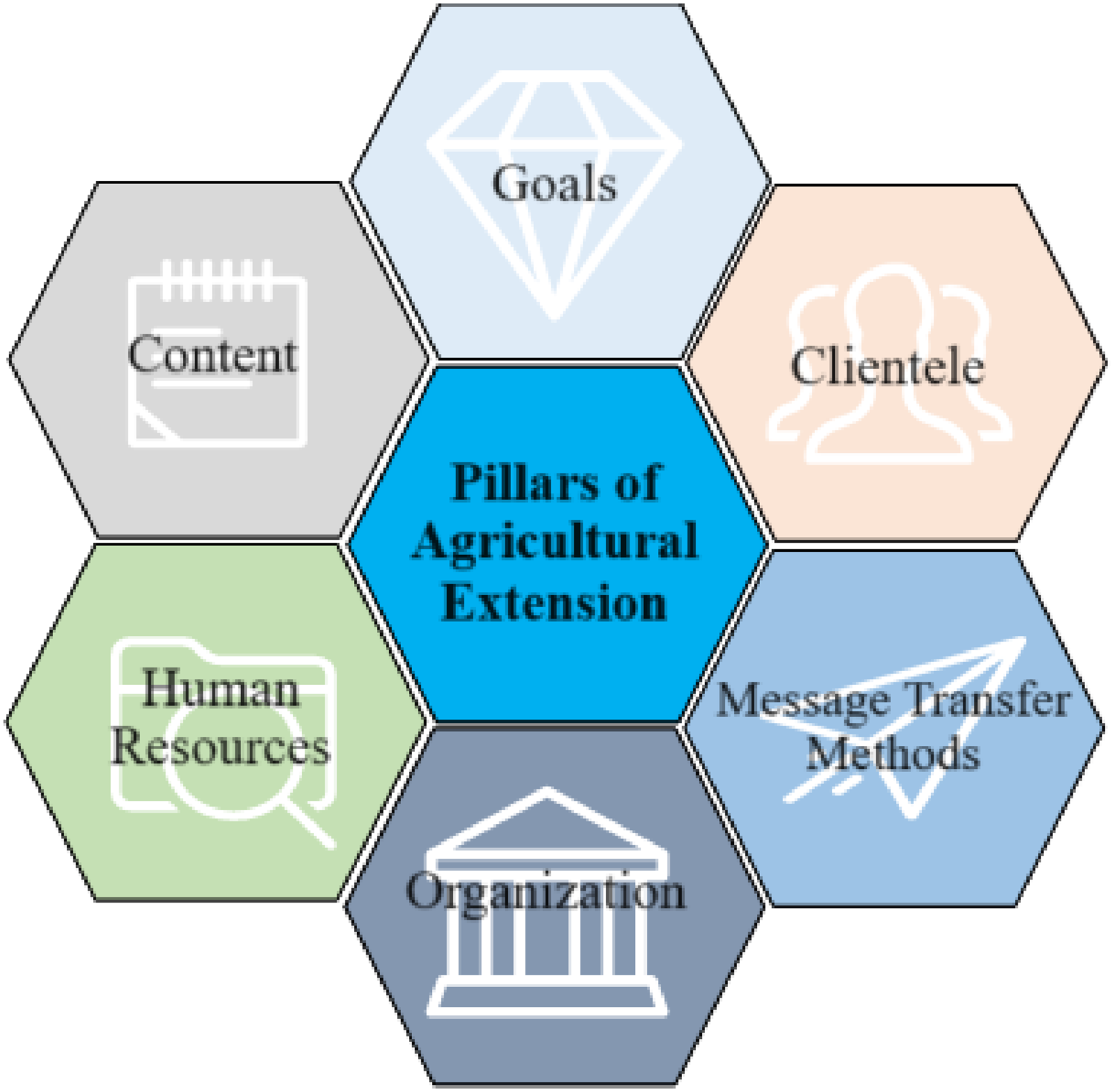
The pillars of the agricultural extension system based on literature.
Goals
Goals in life have been likened to a compass that gives direction to individual and organizational life, guiding decisions and encompassing various benefits based on different life situations and development philosophies (Boreham & Schutte, 2023). For an organization, a goal is the purpose that it strives to achieve with all its existence and operational capabilities. Therefore, goals must be clearly defined, understood, and communicated before any action is taken (Buford et al., 1995). Agricultural extension, as a system, is one of the most important tools for disseminating advanced agricultural technologies and plays a significant role in the rural development process. It is recognized as the most important engine for transferring knowledge, innovation, and development. Moreover, it is a two-way educational-communicative process that uses learning techniques to improve farmers’ knowledge and change attitudes and behaviors, leading to the adoption of new technologies and improvement of skills for both farmers and extension workers, ultimately resulting in the sustainable improvement of farmers’ incomes and production efficiency (Speranza et al., 2009). The main function or practical goal of agricultural extension is to educate farmers and empower them to solve agricultural problems by finding the best solutions and practically implementing these solutions (W. M. Rivera & Qamar, 2003). Agricultural extension work is a complex and extensive task that addresses all areas of agriculture, agricultural techniques, agricultural innovations, and the farmers themselves, providing diverse services and assistance to farmers. The most important goals of extension include creating awareness of innovations or new technologies for clients, convincing them of the usefulness or importance of these technologies, changing behavior toward their adoption, and providing support services to adopters. Additionally, extension acts as an intermediary between researchers and farmers by informing farmers and conveying their problems to researchers. It also consolidates changes to prevent their cessation, links financial resources with farmers by connecting them to essential agricultural inputs, and strengthens and supports farmer organizations. (Altalb et al., 2015).
Clientele
The audience of agricultural extension, especially in countries where the agricultural sector consists of a large number of relatively small farmers (as is common in most developing countries), lives in geographically scattered areas. Therefore, these audiences differ based on the characteristics of the regions in which they live. Among these differences are low-quality transportation facilities, the occurrence of illiteracy, and limited communication with electronic mass media, which can limit the ability to reach the audience and increase the cost of accessing extension services (Chambers, 1988). From the education perspective, agricultural extension is a non-formal educational process directed toward the rural population. Its audience consists of male and female farmers, all members of rural communities, including youths and adolescents, and other stakeholders involved in the agricultural sector. The extension system provides the necessary recommendations, information, or innovations to help farmers and other audiences identify and overcome their problems, make better use of resources/technology, introduce new technologies (new varieties, crops, breeds, etc.), present promising new research results, and create opportunities (processing, marketing, etc.) (Khalid & Sherzad, 2019).
Content
In the agricultural sector, extension is responsible for identifying, selecting, and disseminating new technologies through education. With sufficient knowledge of all fields, facilities, and existing deficiencies, the extension can identify suitable technical knowledge and technologies, determine appropriate methods of transfer, and design educational programs for its audience. The preparation and selection of content play a significant role in increasing the effectiveness of extension services (Rostami Abbasi et al., 2017). The purpose is to integrate and convert research findings (new technical knowledge), local knowledge, experiential knowledge, existing technical knowledge, and the knowledge of other countries into the content of extension programs that is adaptable to the knowledge level, needs, education, and age of the beneficiaries (Rana'i Kurd Shuli and Mortazavi, 2016).
Message transmission methods
Agricultural extension is a key institution that aims at improving rural communities’ livelihoods through the transfer and exchange of information and playing a significant role in agricultural and rural development (Butt et al., 2015). Fabregas et al. (Fabregas et al., 2017) point out that agricultural extension is one of the main policy tools that governments use to diffuse and increase the adoption of advanced technologies among farmers. In this context, the successful adoption of improved agricultural methods is predicted through the effectiveness of information transmission and dissemination methods to create new knowledge and understanding of modern technology practices among rural farmers. An effective extension system involves timely and sufficient access by farmers to relevant advice, along with appropriate incentives for the adoption of new technologies, provided that the socio-economic and ecological conditions of farmers are suitable (Anderson & Feder, 2004). Since the extension system intends to transfer beneficial content to people continuously, it uses various methods to educate rural communities. Extension methods are tools used by extension workers or agents to achieve their set objectives as promoters. Therefore, extension methods are crucial to the success of extension programs, as they serve as the means and tools for shaping new agricultural perspectives and technologies, and for transferring innovations to a wide and diverse audience of farmers. Diversifying these methods can effectively help in the dissemination of new agricultural technologies to farmers (J. Al-Mashhadani et al., 2017).
Garforth (1993) categorized extension methods into three types: individual, group, and mass methods. Additionally, studies on categorization concerning various sources, communication, and information pathways have classified them into four categories: interpersonal sources (family members, local officials, neighbors and acquaintances, model farmers, sellers and distributors of agricultural inputs, participation in courses and educational classes), multimedia (television, radio, and satellite programs), electronic media (educational films and CDs, the internet, computer programs and software), and printed sources (scientific books, newspapers and magazines, extension publications, photos, charts, and posters).
Human resources
Today, human resources are considered the most important, effective, and valuable factor for any organization. Many experts view the comparative advantage of any organization as a function of the capabilities, creativity, and performance of its human resources. The extension organization is no exception to this rule, and it is evident that the efficiency of extension agents plays a crucial role in the success of extension programs. The foundation and main structure of an extension system are its extension agents and experts, and this efficiency is achieved through the professional competencies of the staff (Shahpasand et al., 2021). Moreover, extension currently encompasses a wide range of communications and learning activities planned by specialists from various fields for rural people, including agriculture, health, and business studies (Khan et al., 2006). In other words, extension is constantly evolving, and organizational changes necessitate changes in the development of programs for staff and human resources. The continuous evolution of technologies and related jobs forces employees to acquire the necessary competencies to remain in their jobs and enhance their effectiveness. In light of ongoing external changes affecting the extension organization, it is crucial to focus on opportunities related to core competencies. This approach will enhance the professional value of the extension, as well as develop, train, and improve the effectiveness of its staff (Jahi & Newcomb, 1981; Karamidehkordi, 2012).
Competence is an individual characteristic that plays a significant role in improving individual performance and achieving organizational success. It encompasses knowledge, skills, and abilities, as well as other attributes such as values, motivation, and innovation (Massey et al., 2004). Udo and Koppensteiner (2004) describe the dimensions of competence as abilities (talent and capacity to perform tasks), attitudes (feelings and beliefs), behavior (how a person acts), knowledge (conceptual information), personality (traits), and skills (proficiency). Issahaku (2014) states that competence is a skill, personal attribute, or motivation that is demonstrated through various behaviors and contributes to outstanding performance in a job. This quality includes having sufficient competence and the ability to perform a specific task. On the other hand, competency assessments are designed to evaluate the knowledge, education, skills, experiences, and individual capabilities in fulfilling responsibilities. Ghimire and Martin (2011) classified the competencies needed by extension agents in four areas, which include needs assessment competencies, teaching and learning principles competencies, evaluation competencies, and teaching and learning competencies. Lindner et al. (2003) stated that the most common competencies and skills required for agricultural extension agents include critical thinking, communication, business and economic knowledge, and interpersonal and human relations skills. Karbasioun (2007) introduced the Texas Hexagon Competency Development Model as a prominent model in the field of agricultural extension in the United States concerning the competencies required for agricultural extension agents. This model lists the core competencies in six areas of agricultural extension, including subject matter expertise, communication, the development and involvement of others, action orientation, organizational effectiveness, and personal effectiveness.
Service providing organization
According to Axinn and Thorat (1972), extension is one of the forums where government employees and NGOs meet face-to-face with farmers to make decisions for natural resource management. Therefore, it can be said that extension is an organization or institution through which poverty reduction, environmental sustainability, gender equality, and sometimes democratic goals are pursued practically and realistically (Swanson & Rajalahti, 2010). In many countries, a combined approach focusing on public agricultural extension services is used, which has not been very successful in achieving sustainable agricultural goals (Hayati & Rezaei-Moghaddam, 2006). The major challenges of this system in serving farmers comprise dealing with diverse ecological conditions (Lybbert & Sumner, 2012), the lack of budget and transportation facilities and educational equipment, the shortage of specialized extension personnel, inappropriate content, outdated information among personnel (Souri et al., 2012), lack of strong connections between extension organizations, research institutions, and universities (Karamidehkordi, 2013), poor staff motivation (Rezaei et al., 2010), the dispersion and abundance of the audience, and the inability to cover all beneficiaries and transfer appropriate technology to them. These challenges indicate a need to reform this organization (Feali et al., 2015). Extension must be able to connect products with people while considering national policies such as food security. Focusing on individuals rather than products and creating connections requires efforts and changes in the organization and conditions of extension. It is necessary to understand how farmers and extension agents will interact with various groups and with government, private, and NGOs to create sustainable livelihoods (Schauber & Castania, 2001). Therefore, considering the current conditions in the organizational structure of agricultural extension, there is an increasing tendency to change the paradigm and break the monopoly of government service delivery, which is also referred to as pluralistic extension. In a pluralistic extension system, diverse institutions such as government structures, the private sector, NGOs, civil societies, and agricultural and rural associations are responsible for providing agricultural and rural extension services (Axinn & Thorat, 1972; Issahaku, 2014; Karbasioun, 2007). In India, for instance, attention has been given to pluralistic extension for collaboration between the private and public sectors to address issues such as population growth and food security (Singh et al., 2014). In Latin America, pluralistic extension has been established to achieve various goals such as rural development, technology transfer, increased agricultural productivity, food security, and adaptation to climate change, and it is being implemented as a dynamic advisory system (Klerkx et al., 2016). Based on the long-term goals of agricultural development, it is crucial to make the right decision at any given time about which organization (government, private sector, or NGOs) should step in to provide better services and achieve desirable objectives. In some cases, close and continuous cooperation among all three sectors is necessary (W. Rivera & Alex, 2004).
Considering the emerging nature of drone technology in agriculture and the unique role of facilitating agricultural extension in its development and recommendations to be used by farmers, it is essential to design an effective framework for the extension system to develop and introduce drones in a favorable time horizon. The current study aims to conceptualize this framework by investigating the development, introduction, and use of drones in Iran's rice cultivation.
Materials and methods
Method
This study constitutes qualitative research. Data were collected through semistructured interviews and analyzed using a deductive content analysis approach.
Target population
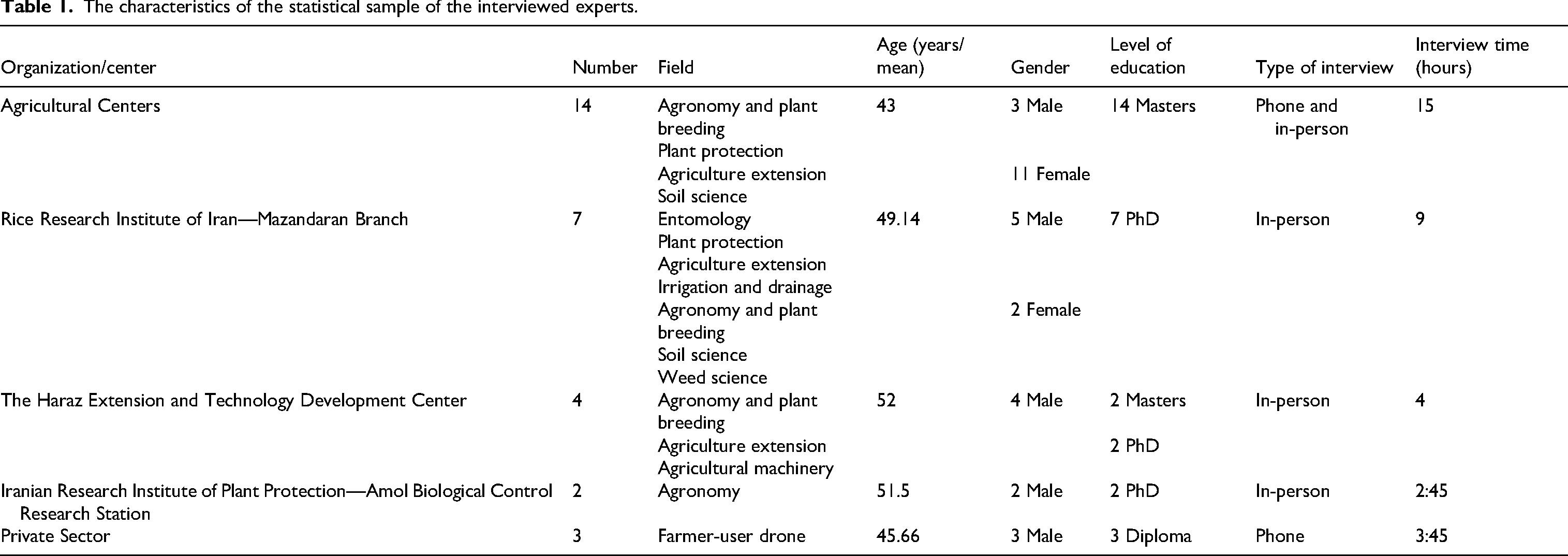
The target population in this research includes specialists and experts in agricultural extension, agricultural drone owners, and rice farmers. They were selected based on three main criteria: relevance to the subject of study, having the necessary experience in the research area, and possessing specific knowledge about the research topic. Ultimately, 30 individuals were identified as the statistical sample and interviewed. The details of the distribution of the interviewees are provided as follows (Table 1).
The characteristics of the statistical sample of the interviewed experts.
Sampling
A purposeful sampling method using the snowball sampling technique was used for selecting experts and specialists. Accordingly, the research initially started with a limited number of individuals, and subsequently, the interviewed individuals were asked to introduce other experts and key informants who met the necessary conditions and criteria for participation in this study. The sample size continued until data saturation was achieved. Ultimately, data saturation was obtained after conducting 30 interviews. In other words, after conducting interviews with 30 experts, no new themes or substantive insights emerged; therefore, the selected sample size was considered sufficient to address the research objectives and ensure methodological rigor.
Data collection
The data were collected by individual semistructured interviews, consisting of two main steps. In the first step, the technical specifications of the interview, including the format and type of interview, the location and time of the interview, and the method of selecting participants, were addressed. In the second step, the interview questions regarding the extension implications (requirements) for the adoption of drones by rice farmers were presented to the interviewees. The questions were about the pillars of extension: objectives, content, clientele, transfer methods, agent competencies, and the providing organization. To initiate the interview in this step, the interviewers introduced themselves and the research ahead to create a friendly atmosphere. Subsequently, the interviews proceeded, focusing on the overall objectives of the research. During the interview, all points raised by the interviewers were recorded throughout the interview process. Based on the interviewees’ responses, the interviewers posed follow-up questions to obtain further details in each area. Throughout the interview process, the interviewers made every effort to gather the interviewees’ perspectives and information related to the subject matter without imparting any particular bias to their statements. It is worth noting that the interviews were conducted both in person and over the phone. The duration of each interview ranged from 1 to 1.30 hours.
Data analysis
A qualitative content analysis technique was employed to analyze the data collected in this research. This technique is used to interpret the subjective content of textual data through a systematic process of coding and identifying themes and patterns. In other words, the qualitative content analysis method involves the induction of qualitative data and the effort to create meaning that can study a large volume of qualitative data to identify consistencies and intrinsic meanings (Patton, 2002). The selection of categories plays a central role in the process of qualitative content analysis, with the categorization system being the main and pivotal tool of content analysis (Seuring & Gold, 2012).
Categorization is the most important step in content analysis. The categories were inductively derived from the interviews (30 participants). After determining the unit of analysis (the interviews), the collected data were carefully reviewed, and the relevant information was extracted and determined as items related to each of the six pillars of the agricultural extension system, where a separate code was assigned to each item. After reviewing the concepts, a single category was considered for closely related items. To evaluate the validity and reliability of the data, four criteria were employed: credibility, transferability, dependability, and confirmability (Cohen & Crabtree, 2006).
In other words, the methodology adopted followed established content analysis procedures and, as a result, ensured the consistency and reliability of the findings. In addition, interviews were conducted with diverse stakeholders, based on the principle of theoretical saturation, which supports the internal validity of the study. External validity was addressed through a thick description of the research context and process. Finally, five interview participants reviewed and confirmed the findings, further enhancing the study's credibility.
Results
At this stage, the results of the content analysis of the conducted interviews are described in detail to identify the extension requirements for the use of drones in agriculture.
Goals
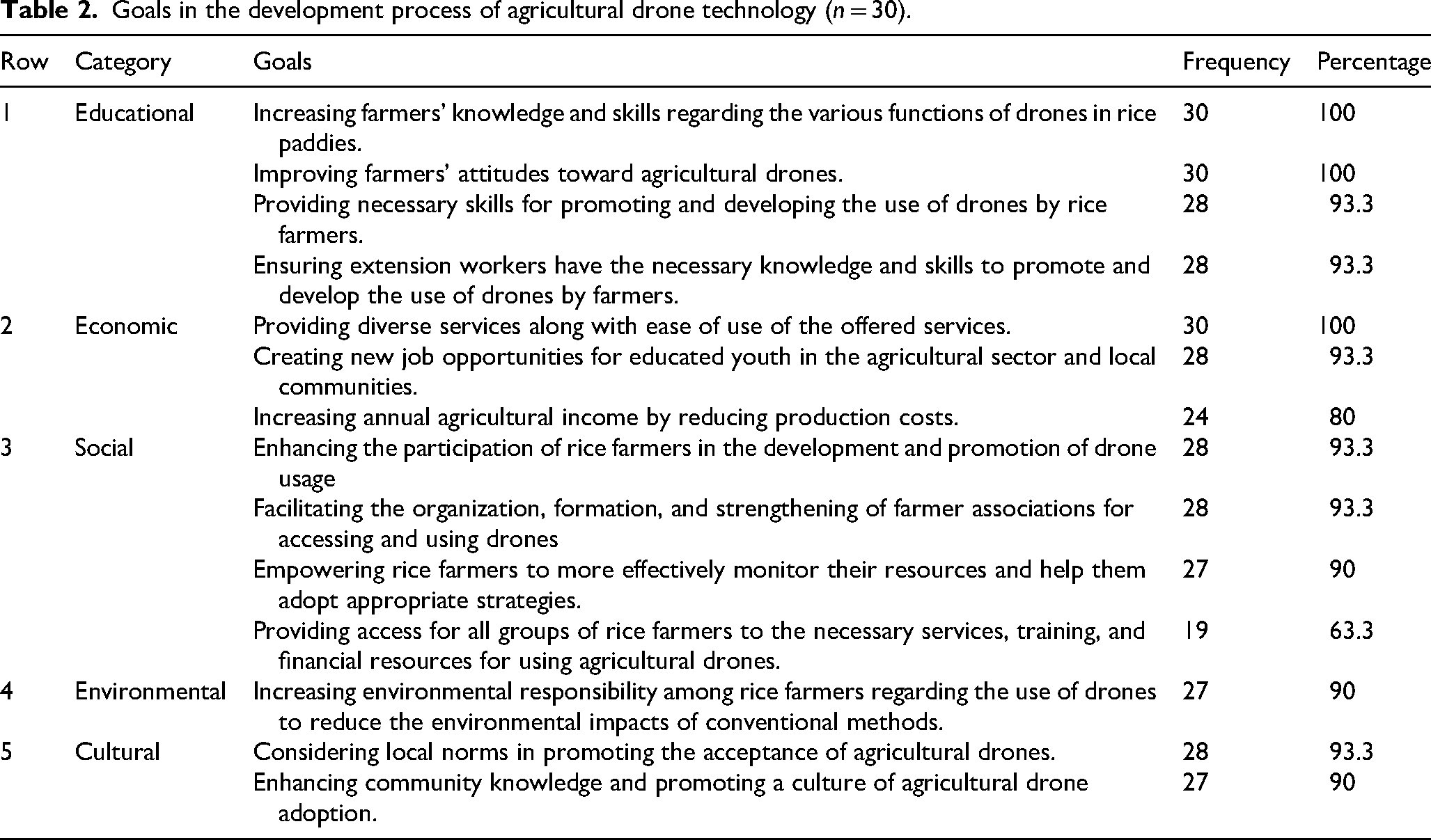
According to Table 2, the extension goals of using agricultural drones in rice cultivation have been classified into five categories: “Educational,” “Economic,” “Social,” “Environmental,” and “Cultural.” In the educational category, the goals of “increasing farmers’ knowledge and skills regarding the various functions of drones in rice paddies” and “improving farmers’ attitudes towards agricultural drones” had the highest frequency (30 repetitions). The most frequent goal from the economic perspective was “providing diverse services along with ease of use of the offered services” (30 repetitions). In the social category, the goals of “enhancing the participation of rice farmers in the development and extension of drone usage” and “facilitating the organization, formation, and strengthening of farmer associations for accessing and using agricultural drones” had the highest frequency (28 repetitions). Moreover, the goal of “increasing environmental responsibility among rice farmers regarding the use of drones to reduce the environmental impacts of conventional methods” was identified as the most crucial environmental goal (27 repetitions). Finally, in the cultural category, two key goals were identified, “considering local norms in promoting the acceptance of agricultural drones” and “enhancing community knowledge and promoting a culture of agricultural drone adoption.”
Goals in the development process of agricultural drone technology (n = 30).
Clientele
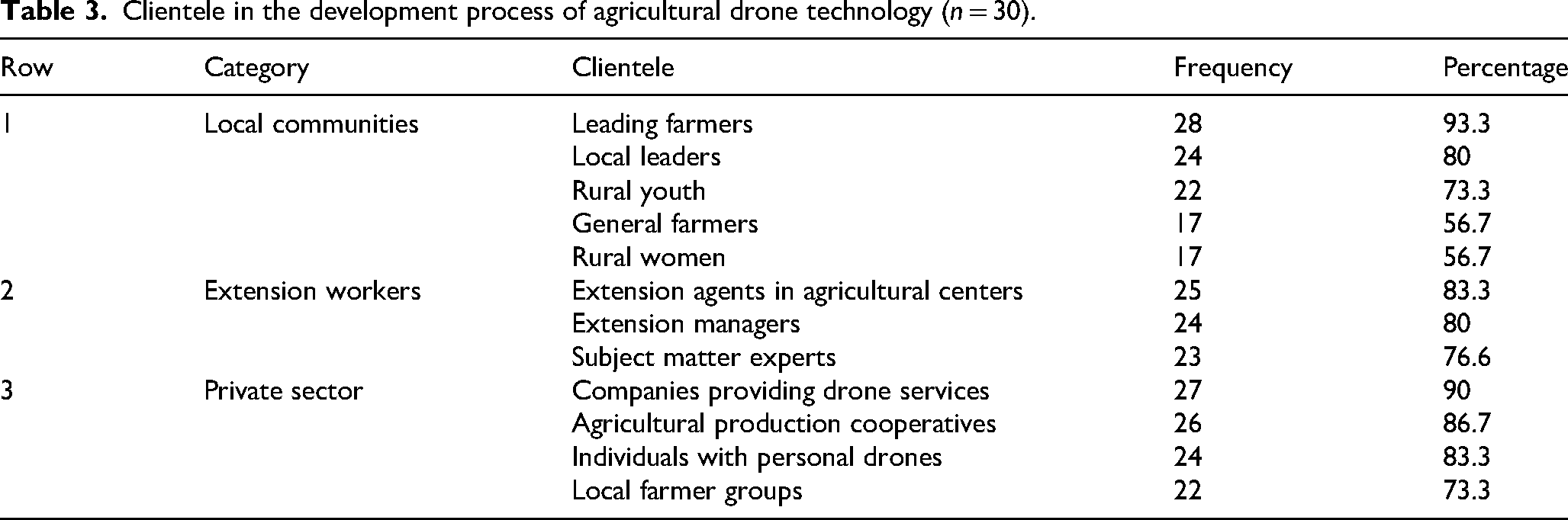
According to Table 3, the client for the extension of agricultural drone usage in rice paddies has been classified into three categories, including “local communities,” “extension workers,” and “private sector.” “Leading farmers, local leaders, and rural youth,” “extension agents in agricultural centers, extension managers, and subject matter specialists,” and “companies providing drone services and agricultural cooperatives” had the highest frequencies among local communities, extension workers, and private sector categories, respectively.
Clientele in the development process of agricultural drone technology (n = 30).
Content
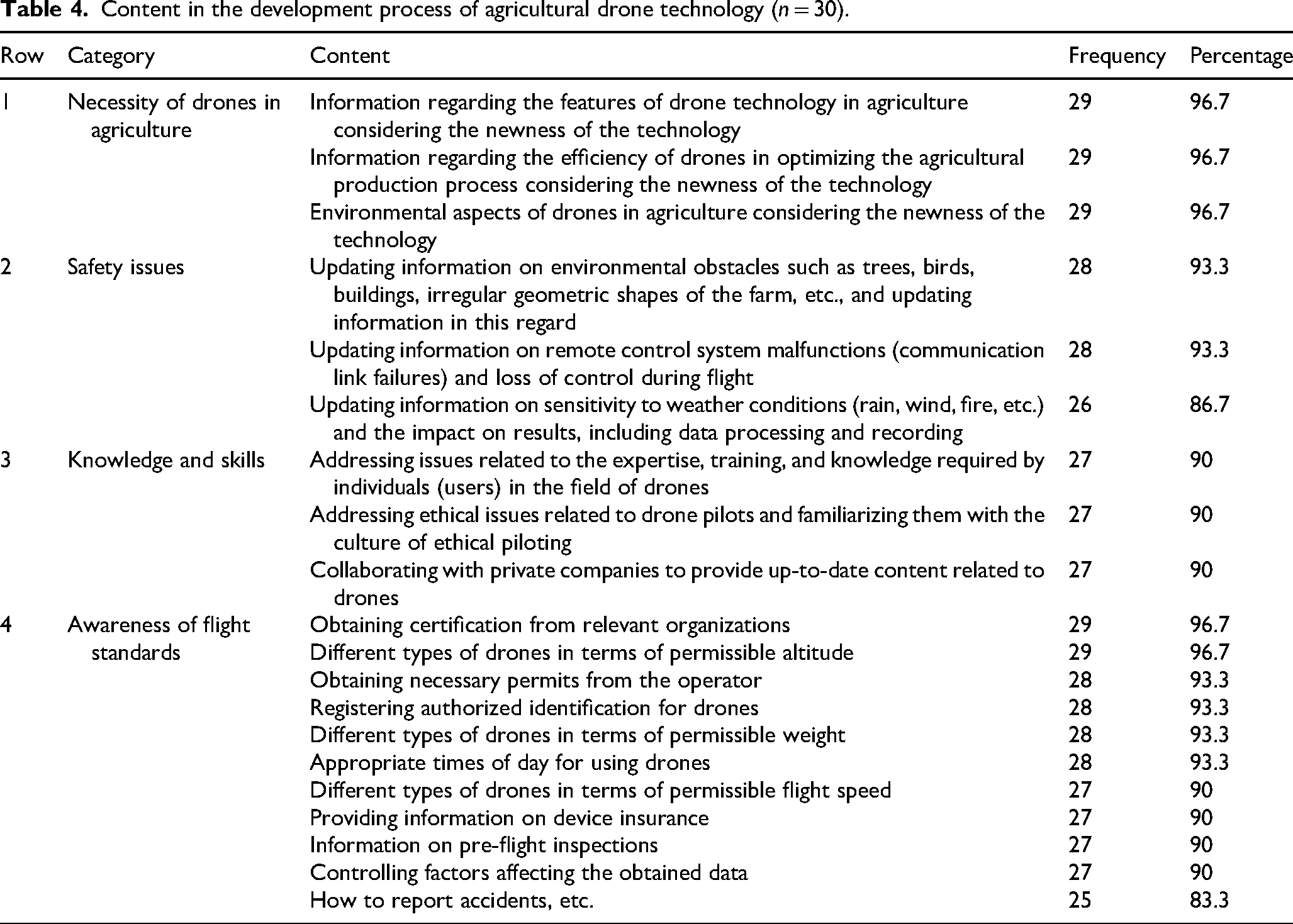
According to Table 4, the content for promoting the use of agricultural drones in rice paddies has been classified into four categories: “the necessity of drones in agriculture,” “safety issues,” “knowledge and skills,” and “the awareness of flight standards.” In the category of the necessity of drones in agriculture, “information regarding the features of drone technology in agriculture considering the newness of the technology,” “information regarding the efficiency of drones in optimizing the agricultural production process considering the newness of the technology,” and “environmental aspects of drones in agriculture considering the newness of the technology” (29 repetitions) were identified as three main contents in this area. In the category of safety issues, “updating information on environmental obstacles, such as trees, birds, buildings, irregular geometric shapes of the farm, etc., and updating information in this regard” and “updating information on remote control system malfunctions (communication link failures) and loss of control during flight” (28 repetitions) had the highest frequency. In the category of knowledge and skills, “addressing issues related to the expertise, training, and knowledge required by individuals (users) in the field of drones,” “addressing ethical issues related to drone pilots and familiarizing them with the culture of ethical piloting,” and “collaborating with private companies to provide up-to-date content related to drones” (27 repetitions) were identified as three most important contents in this area. In the category of awareness of flight standards, the contents “obtaining certification from relevant organizations” and “different types of drones in terms of permissible altitude” (27 repetitions) had the highest frequency.
Content in the development process of agricultural drone technology (n = 30).
Organizations providing services
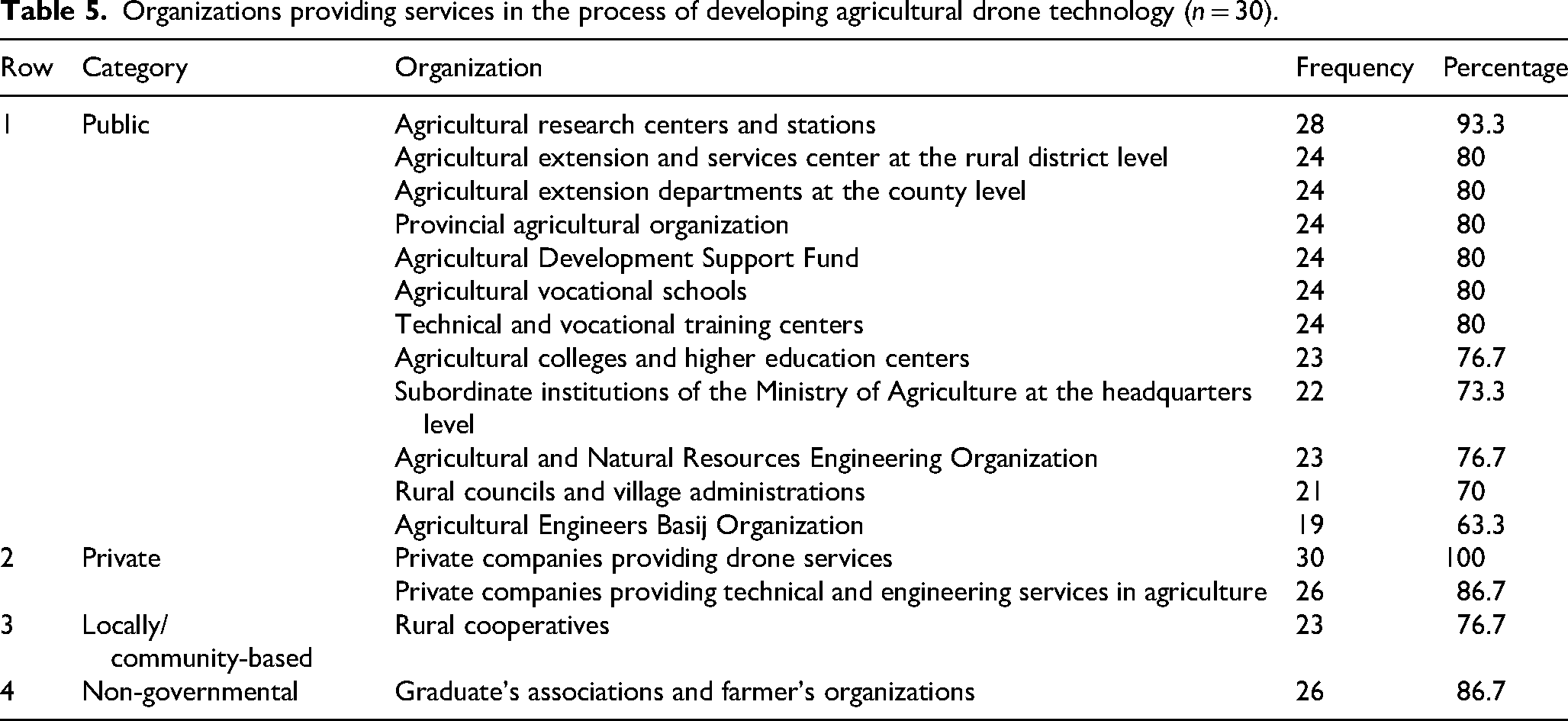
According to Table 5, organizations providing services in promoting agricultural drone use in rice paddies have been classified into four categories: “public,” “private,” “local groups,” and “non-governmental organizations.” The main governmental organizations were “agricultural research centers and stations,” and agricultural extension and development centers and organizations at rural areas, county, and provincial levels. Private companies providing drone services and those providing technical and engineering services had the highest frequency among private organizations. Rural cooperatives (23 repetitions) were the only locally based organizations, identified by the experts. In the NGOs category, “graduate associations and farmer organizations” was the only identified organization.
Organizations providing services in the process of developing agricultural drone technology (n = 30).
Message transfer methods
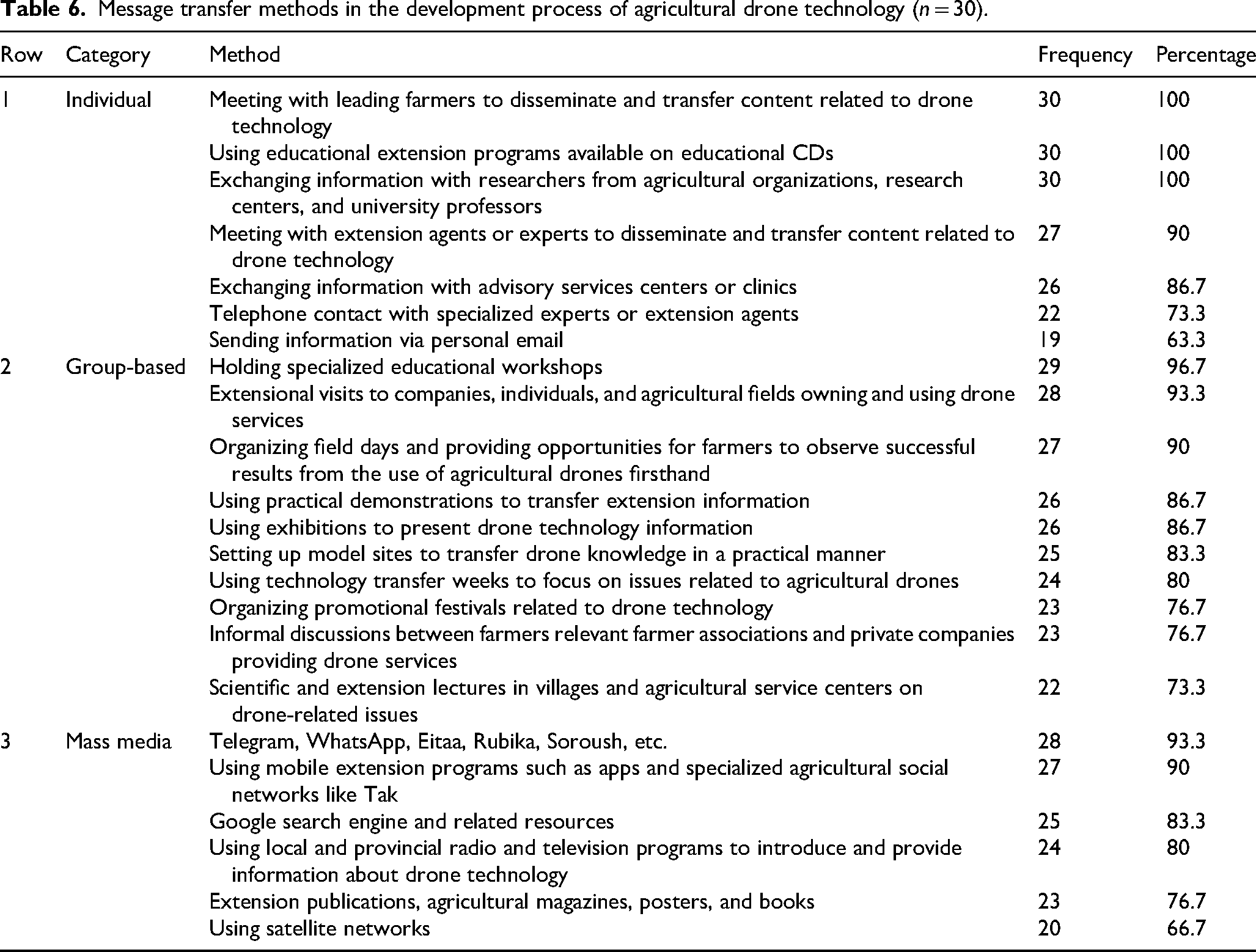
According to Table 6, the channels for disseminating messages regarding agricultural drone use in rice paddies have been classified into three types of media: “individual,” “group-based,” and “mass media.” The individual methods with the highest frequency were “meeting with leading farmers to disseminate and transfer contents related to drone technology,” “using extension training programs available on educational CDs,” and “information exchange with researchers from the agricultural organization, research centers, and university professors” (30 repetitions). The key group-based methods were “holding specialized educational workshops” and “extensional visits to companies, individuals, and agricultural fields” (29 repetitions). The most frequent mass and electronic media were also “the international social media such as Telegram and WhatsApp and the national media such as Eitaa, Rubika, Soroush, etc.” and “using mobile extension programs such as apps and specialized agricultural social networks like Tak” (28 repetitions).
Message transfer methods in the development process of agricultural drone technology (n = 30).
Human resources
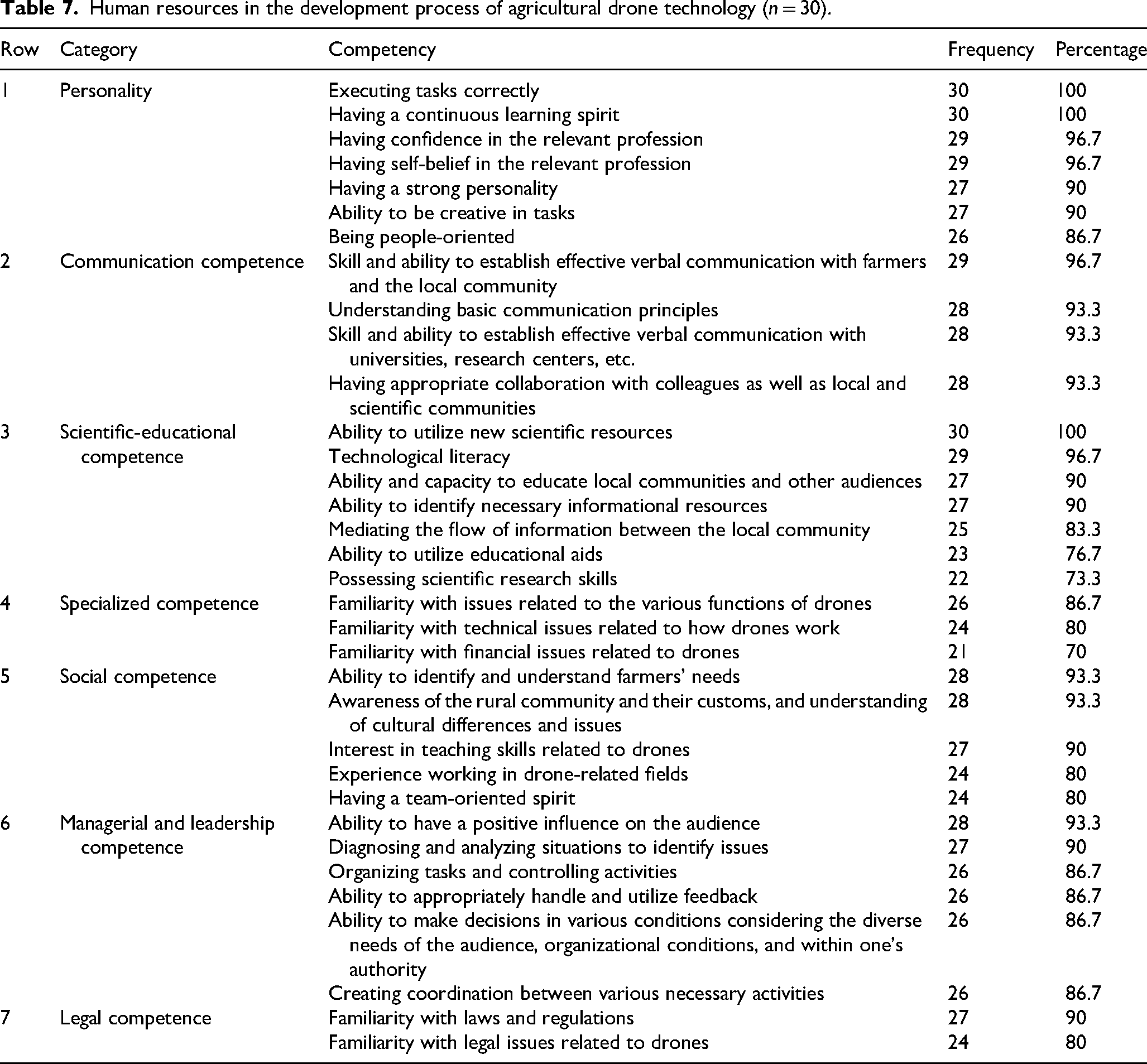
The human resources needed for the extension program of agricultural drone use in rice paddies were classified into seven categories (Table 7): “personality,” “communication competence,” “scientific-educational competence,” “specialized competence,” “social competence,” “managerial and leadership competence,” and “legal competence.” The personality category consisted of seven concepts, particularly “executing tasks correctly,” “having a continuous learning spirit,” “having confidence in the relevant profession,” and “having self-belief in the relevant profession.” The communication competence category was constructed by four main competencies, particularly “communication skills and ability to establish effective verbal communication with farmers, local communities, research centers’ personnel, university staff, and other relevant specialists,” “Understanding basic communication principles,” and “appropriate collaboration with colleagues, local communities and scientists.” In the scientific-educational competence category, the competencies of “ability to utilize new scientific resources,” “ability and capacity to educate local communities and other audiences,” and “ability to identify necessary informational resources” had the highest frequency. The specialized competence category also encompassed three competencies, particularly “familiarity with issues related to the various functions of drones and their technical issues.” The social competence category was constructed by five key competencies, particularly “ability to identify and understand farmers’ needs,” “awareness of the rural community and their customs,” “understanding cultural differences and issues of the audience,” and “Interest in teaching skills related to drones.” The managerial and leadership competence category consisted of six important competencies, especially “the ability to have a positive influence on the audience” and “Diagnosing and analyzing situations to identify issues.” Finally, the legal competence category comprises the competencies of familiarity with laws and regulations, including legal issues related to drones.
Human resources in the development process of agricultural drone technology (n = 30).
Discussion
Drones are among the new and important technologies in precision agriculture, which have various goals and applications in agriculture. Some of the most important objectives include remote sensing, estimating crop health, weed detection, water management, spraying, reducing labor, and increasing the speed of agricultural operations. The various goals and functions of drones in agriculture highlight the necessity and importance of this technology in the agriculture sector. Besides drones’ importance in agriculture, drones are recognized as an emerging technology in agriculture, which has certain requirements for their application in this sector. Accordingly, the requirements for the extension of drone use in rice farming were examined and analyzed based on six major components of the agricultural extension system (Figure 2). Examining the macro-level requirements indicates that it is essential to define the educational goals of increasing farmers’ knowledge and skills regarding the various functions of drones in rice paddies (Altalb et al., 2015; Swanson et al., 1997; Zamanipour, 2008), improving farmers’ attitudes toward agricultural drones (Speranza et al., 2009), having extension workers equipped with the necessary knowledge and skills (Speranza et al., 2009), and providing necessary skills for the extension and development of drone use by rice farmers (W. M. Rivera & Qamar, 2003). The economic perspective also emphasizes the goals of providing diverse services along with the ease of use of the offered services (Altalb et al., 2015; Swanson et al., 1997) and creating new job opportunities for educated youth in the agriculture sector and local communities (Shabanali Fami, 2012). Additionally, the social and cultural goals underline enhancing rice farmers’ participation in the development and extension of drone usage” (Altalb et al., 2015; Zamanipour, 2008), facilitating the organization, formation, and strengthening of farmer associations for accessing and using agricultural drones (Altalb et al., 2015; Schauber & Castania, 2001), and considering local norms in the adoption of agricultural drones (Rogers, 2003). Moreover, the other objective of the extension service for disseminating agricultural drone technology is to provide access to services, training, and necessary financial resources to all rice farmers to use agricultural drones. The experts believe that not all farmers require access to these services and resources, due to the complexity of training and usage of drone technology and the high initial cost of drones. It becomes particularly essential to deliver these services and resources to individuals or groups who provide drone services to their farms or other farmers. In this context, Zhang and Kovacs (2012) noted that access to reliable technical support plays a pivotal role in facilitating the adoption of drone technologies.
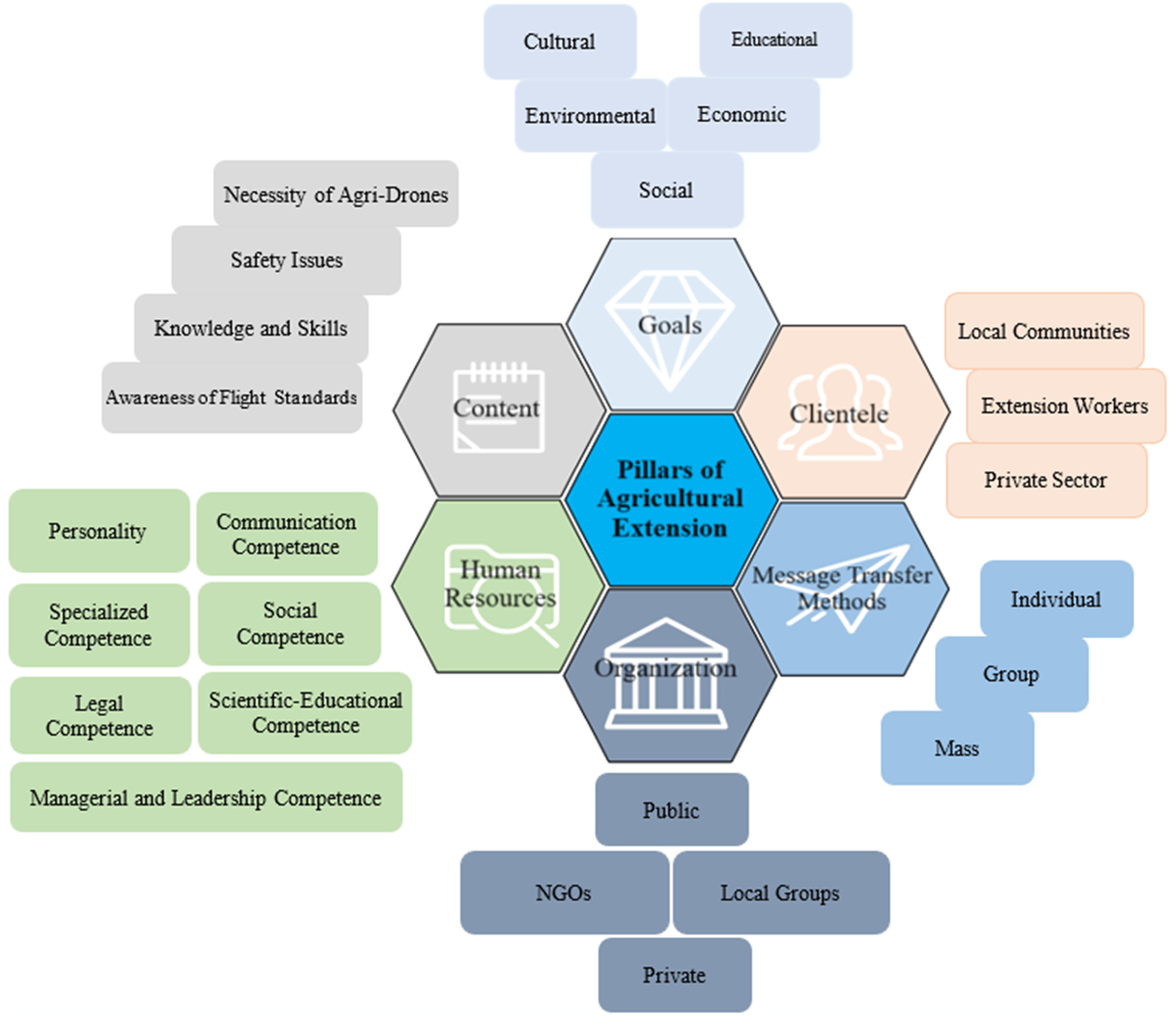
The extension framework for the use of drone technology in rice cultivation.
The client for the extension service can include a wide range of actors, including private companies, individuals active in this field, and extension workers. The results highlight that the prioritized extension audiences in the process of adopting new agricultural drone technology are local communities, particularly leading farmers, the private sector such as companies providing drone services, agricultural production cooperatives, and individuals with personal drones, and the extension staff, particularly extension agents in agricultural centers. Ayamga et al. (2023)acknowledge that in Africa, young people are the primary target clientele for digital technologies, including the use of drones in agriculture. In general, extension seeks to meet the needs of its audience through proper identification. The agricultural extension system covers various types of audiences, including a range of farmers, stakeholders, and multiple partners aimed at developing the agricultural sector, including drone technology use (Feder et al., 2001).
Developing and selecting content is one of the most critical steps in extension programs, and it must be ensured that appropriate content tailored to the audience’s needs is provided and precisely determined what is required and desired. Therefore, suitability should be defined within the scope of what is technically feasible, economically viable, socially acceptable, environmentally safe, and sustainable (Swanson et al., 1997). Considering the newness of drone technology in agriculture, the prioritized contents for the extension programs on this technology are categorized as the features of drone technology in agriculture (Rostami Abbasi et al., 2017), and the efficiency of drones in optimizing the agricultural production process (Rostami Abbasi et al., 2017). The necessity of drones in agriculture emphasizes that the extension program contents should consider the environmental aspects of drones in agriculture. Considering the awareness of flight standards, the contents should focus on obtaining certification from relevant organizations, familiarity with different types of drones in terms of permissible altitude, obtaining necessary permits by the operator, registering authorized identification for drones, different types of drones in terms of permissible weight, and appropriate times of day for using drones. The contents should also highlight the safety issues and the update of information on environmental obstacles (such as trees, birds, buildings, irregular geometric shapes of farms, etc.), remote control system malfunctions (communication link failures), and the loss of control during flight. In this context, Ayamga et al. (2021) proposed a framework for developing agricultural drone regulations in Africa. These results are linked to Rana'i Kurd Shuli and Mortazavi (2016), who emphasize that research findings (new and existing technical knowledge), local knowledge, experiential knowledge, and knowledge from other countries are considered as the content for extension programs, but they should be appropriate to beneficiaries’ knowledge, needs, education, and age.
The choice of information transmission methods is crucial for the effectiveness of extension programs (Bardon et al., 2007). The results show the prioritized methods of disseminating new agricultural drone technology are meeting with leading farmers to transfer content related to drone technology, using educational multimedia, exchanging information with researchers and academia, holding specialized educational workshops, field visits to companies, and agricultural fields owning and using drone services, and using international and national social network applications. Some studies also support these results by arguing that diversifying information transmission methods can help the effective dissemination of new agricultural technologies (Al-Mashhadani et al., 2017). On the other hand, some others emphasize choosing information transmission methods based on criteria, such as cost, coverage level, complexity, skill, participation, message, audience, available resources, and complementarity (Shabanali Fami, 2012). Ayamga et al. (2023) have shown that young African enterprises, under the initiative Africa Goes Digital (AFGD), leverage WhatsApp for communication and knowledge sharing, and use Twitter to showcase success stories and establish partnerships for implementing development projects in collaboration with governments and development agencies.
Human resources, as a key component of the extension systems, are valuable assets for any institution. The competencies related to these resources are the main factor for their success in their profession and work environment. Our results reveal that the prioritized required competencies for the extension service regarding personality are implementing tasks correctly, having a continuous learning spirit, having confidence in the relevant profession, and having self-belief in the relevant profession. Among the scientific-educational competencies, the key competencies are the ability to utilize new scientific resources and having technological literacy regarding drones. Human resources also require communication competencies, particularly communication skills and the ability to establish effective verbal communication with farmers, local communities, researchers, specialists, and academia. Other researchers have also emphasized knowledge competencies (Fabregas et al., 2017; Lindner et al., 2003), personality competencies (Al-Mashhadani et al., 2017; Fabregas et al., 2017); communication (Al-Mashhadani et al., 2017; Garforth, 1993; Lindner et al., 2003; Shahpasand et al., 2021), educational skills (Al-Mashhadani et al., 2017; Lindner et al., 2003; Singh et al., 2014), and research competencies (Al-Mashhadani et al., 2017); (Lindner et al., 2003). In this context, Zhang and Kovacs (2012) have shown that the successful adoption of drones in precision agriculture depends on tailored outreach programs and required professional training.
Agricultural extension is an organization in which government employees and NGOs meet face-to-face with farmers to make decisions for natural resource management. Given the emergence of new technologies with various functions, there are different governmental and private organizations and sectors with which agricultural extension needs to cooperate to play its role effectively. This collaboration ensures that agricultural extension can continue its path coherently, considering the changing conditions of rural communities and sustainable agriculture. Our results indicate that the key organizations providing agricultural drone services are private companies that deliver drone services and public agricultural research centers and stations. In Africa, Ayamga et al. (2023) have shown that the Technical Centre for Agricultural and Rural Cooperation ACP-EU (CTA) has played a pioneering role as a development agency by supporting enterprises through the provision of drones and training for agricultural applications. In this regard, Rivera (1996) and Kokate et al. (2016) believe that diverse institutions, including government structures, private sector organizations, civil societies, and agricultural and rural associations, are responsible for providing agricultural and rural extension services within the framework of pluralistic extension. In India (Singh et al., 2014) and Latin America (Klerkx et al., 2016), pluralistic extension systems have been established to achieve multiple objectives related to rural and agricultural development.
Based on the results and to extend the use of agricultural drones among the rice farmers’ communities, the following aspects should be considered by stakeholders:
Enhancing the knowledge and improving the attitudes of leading rice farmers, and agricultural extension agents regarding the necessity, importance, and various functions of agricultural drones. Explaining flight standards and safety issues to agricultural drone users through a combination of individual, group, and mass media methods, as well as providing incentives (e.g., offering incentive packages) for their participation in promoting and developing the use of drones in rice farming. Focusing on and strengthening the professional competencies of agricultural extension experts in terms of personality, communication, and scientific-educational dimensions to persuade the rice farming community to use agricultural drones. Providing diverse drone services, including spraying pesticides, liquid fertilizers, monitoring, and field inspections, with the participation of private drone service providers, individuals with personal drones, and agricultural production cooperatives. Facilitating the organization, formation, and strengthening of farmer associations for accessing and using agricultural drones. Considering local norms in promoting and developing agricultural drones, similar to any other technology. Paying attention to creating a suitable platform for the work of educated rural youth, especially graduates of the agriculture sector in the field of agricultural drones. Focusing government policies on the following priorities:
Providing financial incentives, such as equipment subsidies and low-interest loans, to reduce barriers to entry. Developing regulatory frameworks to ensure the safe, efficient, and standardized use of drones in agricultural practices. Promoting public–private partnerships with drone service providers and conducting awareness campaigns to increase acceptance and trust among farmers.
Conclusion, research limitations, and future research directions
Today’s agricultural operations are vastly different from those of a few decades ago. In recent years, numerous advanced technologies have entered the realm of agricultural operations, enabling producers to monitor and scrutinize every aspect of their agricultural activities closely. Technological advancements have significantly contributed to increased efficiency in agriculture. Like many other industries, agriculture is experiencing dynamic and diverse transformations in the digitalization of its infrastructure and operations. As a result, farmers have increasing access to digital applications and precision agriculture technologies, and a wide range of technologies are available to them as decision-support tools for efficient processes in agriculture. Among these technologies, precision agriculture technologies support spatial and temporal variability through the use of information and communication technologies (Gabriel & Gandorfer, 2023). Sensors, remote sensing, or aerial imagery are aspects of precision agriculture that have led to the proper management of inputs. Precision agriculture, with the help of advanced machines, equipment, tools, and remote sensing technology, identifies in-field variations. This accurate data collection leads to precise farm management. Agricultural drones are among the new and important technologies of precision agriculture, which have various goals and applications. Since drones are recognized as an emerging technology in agriculture, they have certain requirements for their application in the agricultural sector. Hence, it is essential to develop an extension package to help us integrate drone technology into the agriculture sector. This will greatly assist in formulating effective extension policies for drone development and use in rice cultivation. As the main message of the research, it should be noted that any new technology that emerges, in practice, requires a series of guidelines for its application. The technology of agricultural drones is no exception to this rule. The use of drones in rice cultivation is essential and beneficial from different perspectives. Therefore, the results of this study can serve as a reliable extension package for promoting the use of drones in rice cultivation for diverse purposes. One of the key strategies in using this extension framework and covering all its dimensions is to benefit from a pluralistic extension approach. It is suggested that future research focuses on how to benefit from the pluralistic extension approach in promoting the use of agricultural drones.
In the end, it should be stated that this study, like any other research, has limits. The current research is based on conducting interviews with experts using six pillars of the agricultural extension system, consisting of goals, clientele, content, message transmission methods, service provider organization, and human resources. Other researchers can use other methodologies or analyze and stratify components differently based on other criteria.
Footnotes
Acknowledgments
This study is taken from the first author's doctoral dissertation in the Department of Agricultural Extension and Education College of Agriculture, Tarbiat Modares University (TMU). Hereby, the authors would like to acknowledge the support of that institution and all the participants in this project.

Ethical approval and informed consent statements
Ethical approval was obtained from the Technical Committee of the College of Agriculture, Tarbiat Modares University (TMU). In addition, verbal consent for participation was obtained.
Funding
This research did not receive any specific grant from funding agencies in the public, commercial, or not-for-profit sectors.
Declaration of conflicting interests
The authors declare that they have no known competing financial interests or personal relationships that could have appeared to influence the work reported in this paper.
Data availability statement
Data will be made available on request.