






Abstract
As global attention shifts toward sustainable protein sources, there is growing interest in how cultivated beef can complement existing livestock systems. This study explores pathways for integrating cultivated beef into existing beef production systems through inclusive and sustainable food system models. Focusing on the United States (feedlot-based systems) and France (extensive grazing systems), the research draws on 40 semi-structured interviews, which were conducted with beef producers, cultivated beef stakeholders, and food system experts, along with the analysis of policy and industry reports. A transition-oriented, responsive, and sustainable food system model framework was developed. Four country-specific models are designed to reflect producer realities, market conditions, and policy environments: the feedlot-cultivated beef hybrid co-production model (USA), the feedlot-to-bioreactor transition co-operative (USA), the pasture-based co-production model (France), and the regional biofood innovation clusters (France). These models emphasise risk mitigation, equity, and participatory inclusion, and offer strategic options for beef producers, policymakers, and cultivated beef firms. The findings highlight the importance of enabling policy, consumer awareness, infrastructure adaptation, effective communication, and justice-oriented assessment criteria to ensure a just transition in the protein sector, including producer participation, fair benefit-sharing, livelihood protection, cultural recognition, and access to transition support. This study contributes to food system transformation research by proposing food system models that integrate cultivated beef innovation into broader strategies of resilience and sustainability.
Introduction
The global food system is under increasing pressure to meet environmental sustainability and food security-related goals, while also ensuring social justice for producers (Food and Agriculture Organization (FAO), 2024; Sandhu et al., 2025; Schneider et al., 2023). The environmental impact of the livestock sector is a critical concern. The livestock sector accounts for approximately 14.5% of anthropogenic greenhouse gas (GHG) emissions, with beef production contributing a significant share (Gerber et al., 2013). As there is a need to reduce emissions and improve food system resilience, protein innovations, such as plant-based protein and cultivated meat, are emerging as potential pathways to a sustainable transition (Stephens et al., 2018; Tuomisto, 2019). However, this integration raises concerns about its implications for existing livestock producers, especially in countries with diverse beef production systems. This study examined how cultivated beef can be sustainably and inclusively integrated into the beef production system. Beef-based food system models have been proposed for feedlot beef production in the United States and for extensive grazing in France to support a just transition for beef producers while addressing broader food system transformation goals.
Cultivated beef, produced by culturing animal cells, offers promise for environmental efficiency, animal welfare, and resource use reduction (Humbird, 2021; Sinke et al., 2023). Moreover, this technology offers pathways for reducing antibiotic use and zoonotic disease risk, both of which are growing concerns in industrial animal farming (Godfray et al., 2018). However, the development of cultivated beef also raises concerns about inclusiveness, and social justice. While the developers of this innovation are advancing cultivated beef production technology, it is equally important to ensure the innovation is inclusive for existing food producers, particularly livestock producers. The livelihoods of these producers are rooted in the conventional beef production systems. Understanding the risks faced by beef producers, how they perceive cultivated beef, and what models might enable them to participate in the transition is crucial to avoid a split food system that excludes primary producers (Hocquette et al., 2025).
This study focuses on the United States and France, two countries with varying beef production systems and cultural contexts. In the United States, beef production is highly industrialised and dominated by large-scale feedlots, with standardised genetics, centralised processing, and efficiency-driven supply chains shaping how innovations emerge and diffuse. In France, beef production systems are highly heterogeneous, encompassing Label Rouge and Appellation d’Origine Protégée quality schemes, local breed programmes, and co-operative or inter-professional networks. These collective structures play a mediating role in the way innovation is perceived and adopted, balancing economic resilience, environmental commitments, and the preservation of regional identities. These differences in the contexts offer comparative insight into the risks, opportunities and strategies for integrating cultivated beef into existing food systems. This study aimed to answer the research question: What food system models can support the integration of cultivated beef with conventional beef production system while ensuring inclusion and sustainability? Cultivated beef remains at an early stage of technological and regulatory development (Gu et al., 2025). Although regulatory pathways are advancing in a limited number of national systems (Good Food Institute (GFI), 2026), the models proposed in this study should be understood as forward-looking transition pathways rather than descriptions of an already widely available consumer option.
Framework for food system model development
In this study, a just transition refers to the integration of cultivated beef into existing beef production systems in ways that protect producer livelihoods, share benefits and include producers in decision-making, and recognise the social, cultural, and territorial values of conventional beef production. Rather than treating cultivated beef only as a technological or environmental innovation, this study understands just transition as a process shaped by distributional justice, procedural justice, and recognition justice (Kaljonen et al., 2023). Distributional justice concerns how costs, benefits, risks, and opportunities are shared among producers, firms, workers, consumers, and rural communities. Procedural justice concerns whether beef producers and other affected stakeholders have a voice in transition governance and business model development. Recognition justice concerns whether farmer knowledge, livestock identities, rural traditions, and territorial food cultures are respected rather than displaced. Accordingly, the proposed models are assessed in terms of whether they support producer participation, fair benefit-sharing, livelihood protection, cultural recognition, and access to transition support.
To make the justice-oriented assessment criteria more explicit, Table 1 links the three just transition dimensions used in this study with the criteria applied in the development and assessment of the proposed models.
Relationship between just transition dimensions and justice-oriented assessment criteria used in the models.
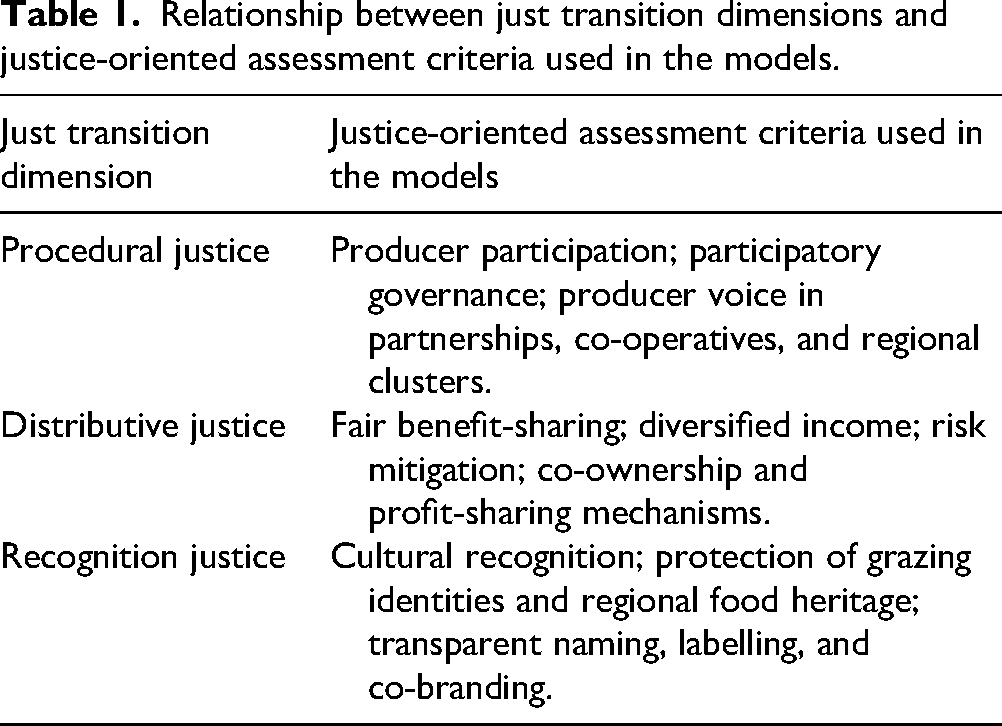
In addition, access to transition support, including training, infrastructure, advisory services, and public incentives, is treated as an enabling condition that supports producer participation across these dimensions.
An analytical framework was developed to guide the formulation of sustainable and inclusive beef-based food system models that integrate cultivated beef. The framework was informed by four complementary approaches: the High-Level Panel of Experts on food system transformation (HLPE, 2020), the Inclusive Business Models Framework of the International Finance Corporation (IFC, 2016), the Multi-Level Perspective (MLP) on sustainability transitions (Geels, 2011), and The Economics of Ecosystems and Biodiversity for Agriculture and Food framework (TEEB AgriFood) (TEEB, 2018). These approaches were selected because they address different dimensions of agri-food system transition. MLP provides the main transition logic by explaining how niche innovations interact with established socio-technical regimes under broader landscape pressures. In this study, cultivated beef is understood as a niche innovation, while conventional beef production systems are understood as established regimes. HLPE contributes a systems-level understanding of food system transformation, including resilience, equity, sustainability, and multi-actor governance. IFC adds attention to producer inclusion, market access, finance, knowledge, and risk-sharing. TEEB AgriFood extends the framework by considering visible and hidden environmental, social, and economic costs and benefits.
The four approaches were therefore not treated as equivalent theories, but as complementary inputs into the development of a practical analytical framework. MLP informed the transition structure of the framework, while HLPE, IFC, and TEEB informed the food system, inclusion, and sustainability dimensions. This was important because integrating cultivated beef into conventional beef systems involves not only technological feasibility, but also producer livelihoods, infrastructure, market participation, environmental outcomes, policy support, and social legitimacy. Together, these approaches informed the development of the Transition-oriented, responsive, and sustainable food system models framework. The resulting 10-dimensional framework, presented in Figure 1, was used to guide the design of country-specific food system models for the United States and France. Within this framework, the dimension of social equity and transition justice was operationalised through the assessment of producer participation, fair benefit-sharing, livelihood protection, cultural recognition, and access to transition support. The framework was applied deductively to structure model development, while qualitative insights from interviews and document analysis were used inductively to refine the content of each model. The details of the 10 dimensions and the contribution of each framework are provided in Supplemental Material 1, Table S.1.
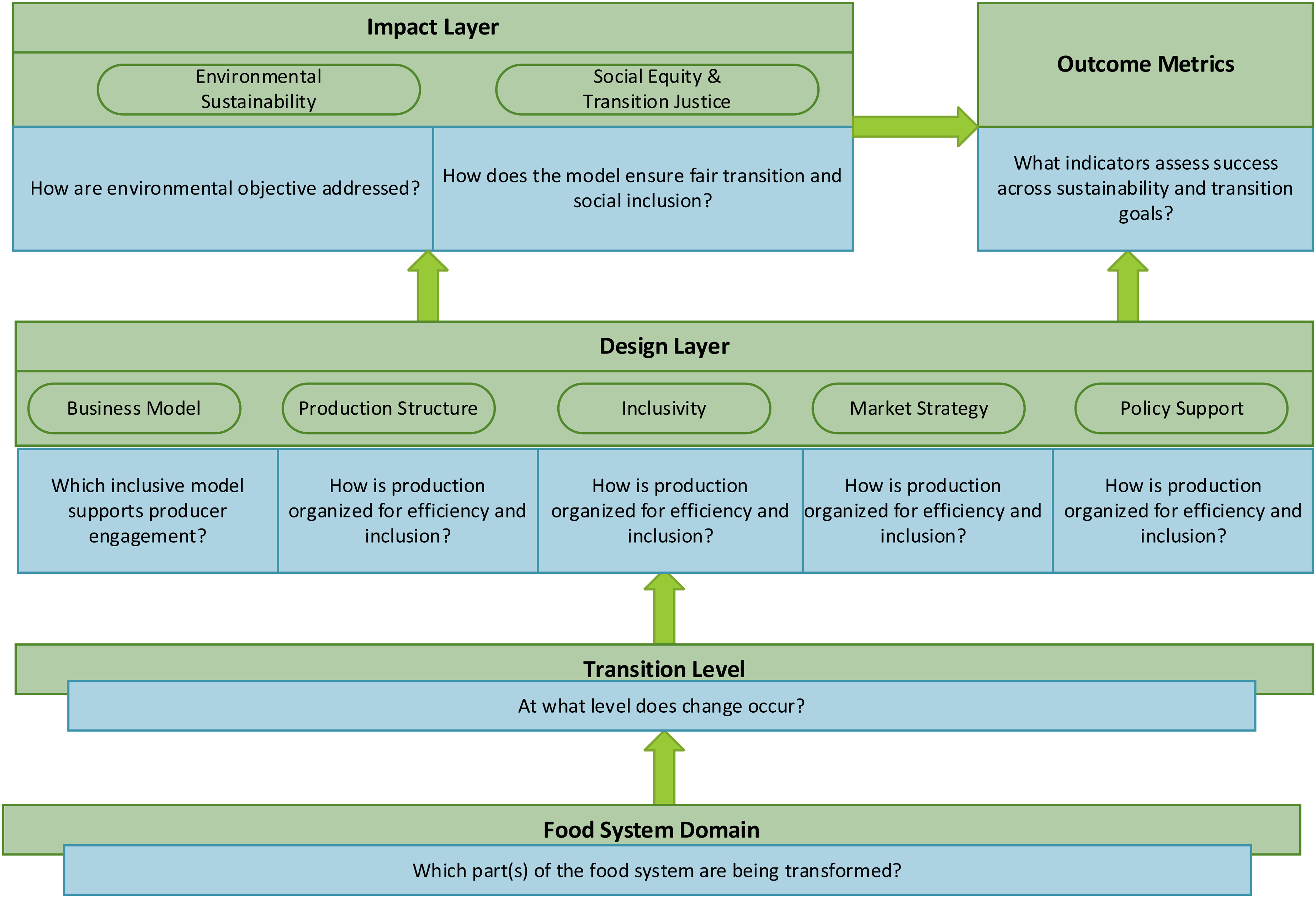
Transition-oriented, responsive, and sustainable food system models framework dimensions.
Methodology
Research design
This study adopts a qualitative case study research design, following Yin's (2014) recommendation to draw on multiple sources of evidence, to assess the risks, opportunities, and transition pathways for beef producers and subsequently considers their relevance to cultivated beef. This study aimed to develop sustainable and inclusive context-specific food system models that integrate cultivated beef. The production contexts considered for the study are feedlot-based beef production systems in the United States and extensive grazing beef production systems in France. In-depth interviews were conducted with beef producers, cultivated beef producers and food system experts. These interviews were complemented with secondary data sources, including policy documents and industry reports, to strengthen analytic validity.
Data collection
This study utilised a qualitative data collection strategy combining in-depth interviews and document analysis to explore the risks, opportunities and transition strategies in integrating cultivated beef into beef-based food systems in the United States and France.
Primary data: Semi-structured interviews
Primary data was collected through in-depth interviews with three main stakeholder groups:
Beef producers in the United States, primarily operating feedlot systems, and in France, primarily operating extensive grazing systems. Food system experts and researchers familiar with livestock transition and cultivated meat technologies. Cultivated meat industry actors.
A total of 40 in-depth interviews were conducted. In the United States, 13 stakeholders, including 10 beef producers and 3 experts, were interviewed. In France, 17 stakeholders comprising 12 beef producers and 5 experts were interviewed. We also included 10 experts representing the global cultivated meat industry and researchers. The expert category included participants with expertise in livestock systems, cultivated meat, food policy, sustainability transitions, agricultural economics, and food innovation.
A purposive sampling approach was used in this study. Snowball sampling helped identify additional relevant participants. The interview duration was 30–90 min and was conducted in-person and virtually, depending on availability and location. A semi-structured interview guide with open-ended questions covered the following five areas:
Risks and challenges in beef production. Sustainability and resilience in the meat-based food system. Stakeholder engagement and collaboration. Market and business operations. Technology, innovation and future strategies.
The themes utilised in the interview guides are included in Supplemental Material 2, Table S.2.1.
All interviews were audio-recorded with the consent of the participants. The study adhered to ethical standards regarding confidentiality, voluntary participation, and secure handling of sensitive information. In France, interviews with producers were conducted with the assistance of a French interpreter. After sending interview invitations to experts, researchers, the cultivated meat industry and beef producers, 40 stakeholders were agreed to be interviewed. Supplemental Material 2 (Table S.2.2) provides details of the respondents and interviews. Transcripts from the French interviews were translated into English prior to coding. All transcripts were anonymised and uploaded into NVivo 14 for thematic coding and matrix analyses. Data collection continued until saturation was reached, ensuring that no substantially new themes emerged from subsequent interviews (Bouncken et al., 2025).
The US sample included producers from key cattle-producing states such as Kansas, Nebraska, Texas, Virginia, North Carolina, and Tennessee. Most interviews were conducted online, reflecting the wide geographical spread of participants. The sample also included experts from universities and policy-oriented think tanks, primarily based in California, who provided broader perspectives on livestock sustainability debates, regulatory developments, and emerging protein technologies. The French sample included producers primarily from Nouvelle-Aquitaine, with additional expert representation from the Massif Central region representing a diversity of breeds and market orientations.
Secondary data: Industry document and policy analysis
A total of 15 documents were purposively selected and coded to supplement interview data and enable triangulation: policy and regulatory documents from the United States (5), France and the European Union (5); five global industry publications on cultivated meat, sustainability transitions, and inclusive business models (Supplemental Material 2, Table S.2.3).
These documents were collected from authoritative sources such as government departments, regulatory agencies and leading cultivated meat and agri-food industry platforms. This selection followed a purposive sampling strategy that focused on policy relevance, institutional authority, and thematic alignment with the study's area of interest (Bowen 2009; Mogalakwe 2006). Document analysis complements the primary data, and offers insights into institutional perspectives and policy directions. The inclusion of documents enabled methodological triangulation with stakeholder interviews, thus strengthening the analytical depth and trustworthiness of the study (Golafshani, 2003; Nowell et al., 2017).
Thematic mapping
A thematic mapping process was used to systematically explore and interpret the qualitative data. This process involved reading the transcripts by the first author, who coded and clustered the data from the interviews and documentary sources using NVivo 14. The iterative coding process, supported by peer de-briefing (with co-authors) and constant comparison, enhanced the trustworthiness, reliability, and validity of the qualitative analysis (Golafshani, 2003; Sandhu and Kulik, 2019). Themes were initially identified through an inductive approach and then structured into a comprehensive thematic map to visualise relationships and interdependencies (Braun and Clarke 2006).
The thematic map (Figure 2) reflects four core analytical domains:
Risks and challenges of beef production. Market demand and the future of meat. Policy and industry influence in shaping a just transition. Sustainable and inclusive business models for transition.
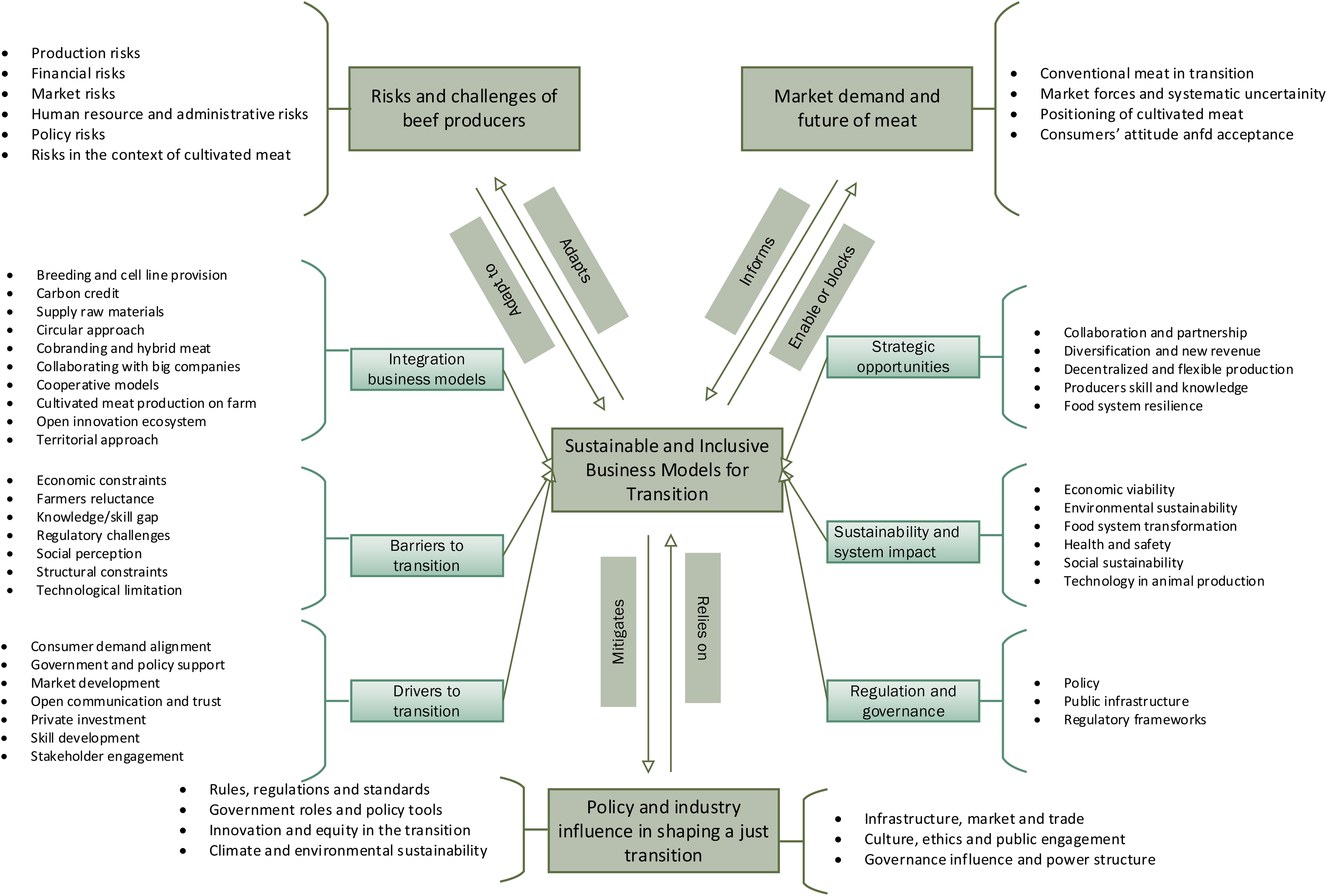
Thematic map illustrating key domains and interrelationships identified through inductive thematic analysis.
The thematic map explains the interconnections among the themes. The relationships among subthemes were mapped to guide interpretation. The coding trees of the four themes are provided in Supplemental Material 3 (Figures S.3.1–S.3.4). These domains were also used as a basis for model development. This structure allowed the study to maintain coherence by aligning qualitative insights with a sustainable and inclusive food system model framework.
Development of producer-inclusive food system models
Each model was designed to provide a pathway that allows the integration of cultivated beef while protecting the interests of beef producers. Designing models followed a two-stage process to ensure that they are relevant to a specific context, practically useful and aligned to sustainability goals (Fereday and Muir-Cochrane, 2006; Fiala et al., 2024; Miles and Huberman, 1994). First, a deductive approach was used to structure a transition framework that provides dimensions to ensure that every model addresses the key elements of a sustainable and just transition. Second, an inductive approach was used to shape the content of each model based on the themes that emerged from the NVivo coding. This dual strategy aligns with established approaches to theorising and model development in applied social science (Patton 2014).
The thematic analysis revealed four core themes, which we used to inform and populate the framework dimensions. A mapping matrix was developed to ensure consistency between the themes and framework dimensions (Supplemental Material 1, Table S.1). The models were further refined by substantiating them against the risks of beef producers, policy and regulatory context, and stakeholder inclusion indicators. This type of iterative refinement is considered essential in complex system research, in which multiple actors and interdependent variables are involved (Langley, 1999). It also enhances the credibility, transparency, and practical relevance of research findings by supporting theory-data coherence and stakeholder alignment (Bitsch, 2005; Tracy, 2010).
To ensure that the proposed food system models are both grounded in empirical evidence and focused on context-specific risks, each model was assessed across three validation lenses: (i) alignment with producer risks identified in the thematic analysis; (ii) coherence with existing or emerging policy frameworks in the respective countries; and (iii) the extent of inclusion and benefit-sharing, livelihood protection, cultural recognition, and transition support for beef producers and other stakeholders as outlined in Supplemental Material 5, Table S.5. In addition, Supplemental Material 6 (Tables S.6.1–S.6.4) provides the validation for component descriptions of each model.
Results
The results are presented according to the main themes identified through thematic analysis. To strengthen the transition-oriented interpretation, these themes are also read through the MLP. Risks and challenges in beef production are interpreted as pressures within existing beef regimes; market demand and the future of meat reflect broader landscape and consumer pressures; policy and industry influences shape the interaction between conventional beef regimes and cultivated beef niches; and sustainable and inclusive business models represent possible transition pathways.
Thematic findings
Risks and challenges of beef production
Farmers in both countries said that unpredictable weather, such as droughts, is making it harder to grow feed and raise cattle (Supplemental Material 4, Table S.4.1). US producers emphasised the severity of recent multi-year droughts and French farmers pointed to the growing challenge of early spring droughts that threaten grass growth and silage production. A French farmer explained: While we’ve long experienced hot summers, a concerning phenomenon has emerged: early spring droughts. If we want to continue livestock farming in these areas, it's essential to secure this period without relying excessively on water. This means ensuring sufficient grass growth in spring to produce silage or hay. This will be a key issue in the coming months and years (FF4).
When it comes to labour-related risks, the differences between the two countries become more noticeable (Supplemental Material 4, Table S.4.1). In the United States, the labour shortage is a major concern. Beef producers struggle to find and keep workers, and many fear for the future of their operations. In France, the problem is less about labour availability and more about youth disengagement and the challenge of succession planning. Although both countries worry about the next generation, in the United States, it is linked to immediate labour shortages, while in France, it is more about long-term continuity of the farm. On the economic and market side, French farmers are more concerned about profit margins and their dependence on subsidies, such as payments from the Common Agriculture Policy (CAP). In contrast, the US producers are more focused on business resilience and staying almost amid constant risks. As one American producer put it, ‘I have to spend way too much time dodging bullets, finding protectionary tools in working with bankers in a very high equity need, it's not enjoyable’ (UF2).
In both countries, producers face financial pressure, but the sources of the pressure differ. France relies more on public support, while US producers express the strain of surviving market shifts without much of a safety net (Supplemental Material 4, Table S.4.1). Producers in both countries voiced frustration with regulatory demands. In France, this was coded more frequently, with many expressing pressures between environmental expectations and feasibility. In the United States, participants highlighted mismatches between existing infrastructure (e.g. limited packing capacity) and new regulatory or technological demands.
Beyond these longstanding challenges, producers in both countries are increasingly concerned about the emergence of cultivated meat and alternative proteins (Supplemental Material 5). While US and French farmers share uncertainty about how this trend may affect their future, they interpret these risks differently. US producers are feeling growing market pressure, particularly from shifting retail space and consumer attention. In contrast, French farmers express concerns about both cultural and environmental issues. Many view these alternatives as undermining the tradition of animal husbandry and the values of their rural life. Several were sceptical of environmental claims associated with cultivated beef and perceived the innovation not only as an economic threat but also a challenge to their identity.
Market demand and the future of meat
Beef producers, researchers, and experts are witnessing significant shifts in the future of meat demand, driven by climate change, shifting consumer values and emerging technologies (Supplemental Material 4, Table S.4.2). Many participants noted that conventional meat is undergoing a transition with concerns about rising costs, environmental pressures, and demographic change affecting production continuity. Market uncertainty is another dominant theme across regions. US producers described struggling with the volatility of both environmental and economic conditions. French producers shared a similar dissatisfaction with rapidly shifting market and policy signals: ‘We adapt every year, policies shift, markets shift, it's exhausting’ (FF1).
Cultivated meat actors suggest that the future of meat lies in a diverse and de-centralised system, combining conventional, regenerative, and cellular production models, acknowledging both limitations and opportunities in current systems (Supplemental Material 4, Table S.4.2). Regarding the positioning of cultivated beef, there is a growing consensus that its early market success will lie in niche and high-end segments, rather than mass substitution (Supplemental Material 6). US farmers showed some openness to co-existence, provided transparency and labelling are ensured. As one producer expressed: ‘There's room for both cultivated and conventional, but clear labelling is needed’ (UF6). As for consumers, globally, their responses were found to be conditional on price, taste, and health appeal, underscoring the importance of effective communication and trust.
Policy and industry influence in shaping a just transition
One of the most defining factors shaping the future of meat and protein systems is the regulatory and policy environment (Supplemental Material 4, Table S.4.3). Across interviews and policy documents, it is emphasised that the rules and standards governing food systems are increasingly complex and often lag behind technological advancement. The joint United States Department of Agriculture-Food and Drug Administration (USDA-FDA) agreement confirms this complexity, stating their commitment to ‘ongoing cooperation to refine the details regarding the Parties’ respective roles to provide for comprehensive and coordinated oversight’ for cell-based meat, especially around labelling and safety standards (FSIS-FDA, 2023). In France, regulatory ambiguity around cultivated meat is intensified by a societal scepticism toward technology. This scepticism is reflected in EFSA's novel food guidance, which highlights the importance of biosafety and ethical sourcing but also reveals significant regulatory gaps in consumer labelling, traceability, and risk assessment for novel protein technologies (EFSA NDA Panel et al., 2024). One French expert explained: We have a lot of the civil society in France that is quite dubious about technology in the food industry as something that would be either problematic in terms of health and environmental concerns. But this is a kind of a general assessment, necessarily grounded by science (FE4).
Transparency remains a recurring demand among US producers. Regulatory documents, such as the USDA-FSIS policy, now mandate pre-approved labelling and inspection for cultivated meat products to ensure public trust and market integrity (FSIS-FDA, 2023). In both the United States and France, farmers emphasised the critical role of government policy in enabling or undermining their resilience. For many, the viability of small and medium producers is tightly linked to public support. In the US context, although some producers expressed concern about regulatory shifts, it is important to note that livestock producers rely heavily on Farm Bill-related subsidies, crop insurance, and disaster assistance, forms of support that remain central to their economic stability. This urgency is endorsed in USDA's Climate-Smart Agriculture Strategy, which supports rural economies and ‘voluntary incentives that benefit producers’ are critical to a climate-aligned transition (USDA, 2021). In France, the reliance on CAP subsidies was a recurring theme. French strategy documents such as the Sustainable Nutritional Behaviour Change (SNBC-2) Summary and Farm to Fork Strategy reaffirm this dependence, promoting ecological transitions but offering limited clarity on protein system transformation (F2F Strategy, 2020; Ministère de la Transition Écologique, 2020).
US experts pointed out gaps in support for innovators and early adopters, calling for better policy design. Meanwhile, cultivated meat and global experts advocated for context-specific and inclusive innovation frameworks, noting that equitable transitions depend on who has access to emerging tools. The Agricultural Innovation Agenda in the United States echoes this concern by encouraging inclusivity and private–public collaboration to ensure equity in technology deployment (USDA AIA Vision Statement, 2020). A just transition is also defined by governance and inclusion, particularly procedural justice, because many interviewees voiced concerns about power imbalances in the food system. US and French experts agreed that farmers often have little say in decisions that directly affect their livelihoods. Global and cultivated meat stakeholders observed that conventional producers continue to receive established subsidies and policy support, while regulatory requirements for novel proteins appear to be tightening. Several US states have introduced or passed restrictions on cultivated meat, and comparable initiatives have emerged in parts of Europe (e.g. Italy, with France considering similar measures). These developments indicate a policy landscape in which regulatory changes for emerging protein technologies co-exist with long-standing support for traditional protein sectors. Global voices highlighted how lobbying can skew regulatory priorities: ‘Policies reflect who holds power in the system, it's not usually the farmer’ (GE6).
Addressing these imbalances will require not just technical regulation but strong, inclusive processes and ethical frameworks. Balancing the challenges faced by innovation will also be important for understanding how the transition unfolds, a topic examined further in the discussion and conclusion. This balance between innovation and justice is critical for a food future that works for all. In the agricultural context, operationalising a just transition requires linking high-level principles to concrete instruments such as agri-environmental schemes, carbon farming programmes, or territorial transition contracts. These mechanisms can reward farmers for environmental services while acknowledging their cultural heritage and professional know-how as part of a fair transformation process.
Sustainable and inclusive business models for transition
Integration and business models
There is growing recognition that the protein transition will require inclusive and innovative business models (Supplemental Material 4, Table S.4.4). Producers are facing many risks, so they need to transition to sustainable practices, with or without alternative proteins, as current production systems are facing structural sustainability and economic challenges. Also, farmers must be given the flexibility to explore emerging opportunities, otherwise they risk exclusion. When considering models that include cultivated beef, it is important to recognise that the need for adaptation is not driven solely by technological innovation but also by broader ecological, economic, and social forces. Cultivated beef may offer risk diversification, create new market opportunities, or reduce environmental pressure, however, it is not the sole driver of change. This distinction reinforces that farmers should not be framed as transitioning simply because of cultivated meat. Rather, cultivated meat models must be designed in ways that respond to the wider ecological, economic, and social pressures that farmers already face.
US actors emphasised on-farm cultivated beef integration and de-centralised production models, while French participants highlighted territorial and circular approaches, including biomass and cell media provisioning. Global cultivated meat industry actors and experts highlighted the importance of co-branding, hybrid meat concepts, and open innovation ecosystems as pathways to bridge conventional and novel food systems.
Drivers and barriers to transition
Economic and market concerns dominated discussions, with cost, scalability, and cultural acceptance seen as major challenges (Supplemental Material 4, Table S.4.4). US producers generally expressed uncertainty about how cultivated beef fits into their operations, while French stakeholders emphasised the challenges of balancing sustainability, animal welfare, and affordability. Global experts warned about social resistance and the risk that benefits accrue only to larger players. At the same time, drivers included open communication, consumer trust, institutional demand signals, and climate concerns. As one cultivated meat expert explained: ‘The demand for protein is growing; we’re not replacing beef, we’re adding to the toolbox’ (CI1).
Naming and messaging
The role of naming and messaging also emerged as a critical issue. US producers emphasised that terms like ‘beef’ convey meaning and identity. As one US interviewee noted, ‘If they call it “beef”, that takes something away from what we do’. In France, where public sensitivity toward food technology is more pronounced, concerns were raised about both ecological claims and public acceptance. Producers and experts stressed that communication must be handled carefully, with one French expert explaining, ‘We have to explain to the consumer what it is and communicate a lot to show there is no problem in terms of sanitary quality’ (FE1). These concerns point to the importance of transparent, evidence based, culturally sensitive communication that aligns with evolving labelling standards and broader food-policy debates as the sector evolves (Supplemental Material 4, Table S.4.4).
Strategic opportunities
The interviews reflected optimism despite constraints (Supplemental Material 4, Table S4.4). Diversification was the most frequently cited opportunity, where producers looked to blend revenue sources, add value through premium products, implement on-farm innovations, or explore alternative land uses. US producers discussed using excess pasture, co-producing biogas, or transitioning to complementary crops. Cross-sector collaborations and strategic alliances were seen as essential, particularly when enabling farmers to access expertise and infrastructure. De-centralised and flexible models were also highlighted as both adaptive and inclusive, with potential for rural employment and food system resilience.
Sustainability and system impact
System-wide benefits were widely discussed, particularly in the United States and France (Supplemental Material 4, Table S.4.4). While US producers emphasised profitability and economic viability, French stakeholders were more focused on environmental sustainability, including land and water management, waste reduction, and GHG mitigation. Notably, social sustainability featured strongly across all regions. Employment, co-existence with conventional meat, and community engagement were seen as important dimensions of a just transition. French farmers were also vocal about protecting rural identity and values in the face of technological change. One French farmer stated, ‘This isn’t just about food, it's about identity. We raise animals with care, and that can’t be replaced by machines’ (FF4). The challenge is to maintain livelihoods while pursuing reductions in emissions and improvements in efficiency.
Regulation and governance
The success of food system transitions depends heavily on governance (Supplemental Material 4, Table S.4.4). Regulatory frameworks, transparency, and traceability were cited by stakeholders as key factors. Participatory governance also emerged as a core priority. Several stakeholders stressed that producers must be involved in policy development. Meanwhile, public infrastructure planning and fair investment were seen as essential to avoid transitions that benefit only dominant players. Stakeholders emphasised that food innovation should be guided by both ethical and cultural considerations, rather than solely by economic logic.
Proposed food system models as producer-inclusive transition pathways
The findings from the thematic analysis revealed a complex relationship between production challenges, policy landscapes, market uncertainties, and socio-technical transitions surrounding cultivated beef. In response, four sustainable and inclusive food system models are proposed: two tailored to the feedlot-based system in the United States and two for the extensive beef production in France. These models address the risks identified by producers, leverage policy, and market drivers, and apply a transition framework integrating sustainability transition theory, inclusive business model design, and food system thinking. These models are conceptual and empirically grounded. They are not presented as fully implemented or validated business models, but as producer-inclusive transition pathways that could be further tested through participatory design, scenario analysis, or pilot studies.
Model 1: Feedlot-cultivated beef hybrid co-production model (for: US feedlot producers interested in diversification without leaving cattle production)
This model enables feedlot producers to participate in the cultivated beef value chain supplying animal inputs (cells, feed by-products) and hosting bioreactor modules through joint ventures while continuing conventional cattle production (Figure 3; Supplemental Material 6, Table S.6.1). Producers may partner with cultivated beef firms to host small-scale bioreactor modules near or on farms and supply inputs such as animal cells, land, energy, feed by-products, or manure-derived resources. In return, they could receive income through joint ventures, input supply, or profit-sharing arrangements.
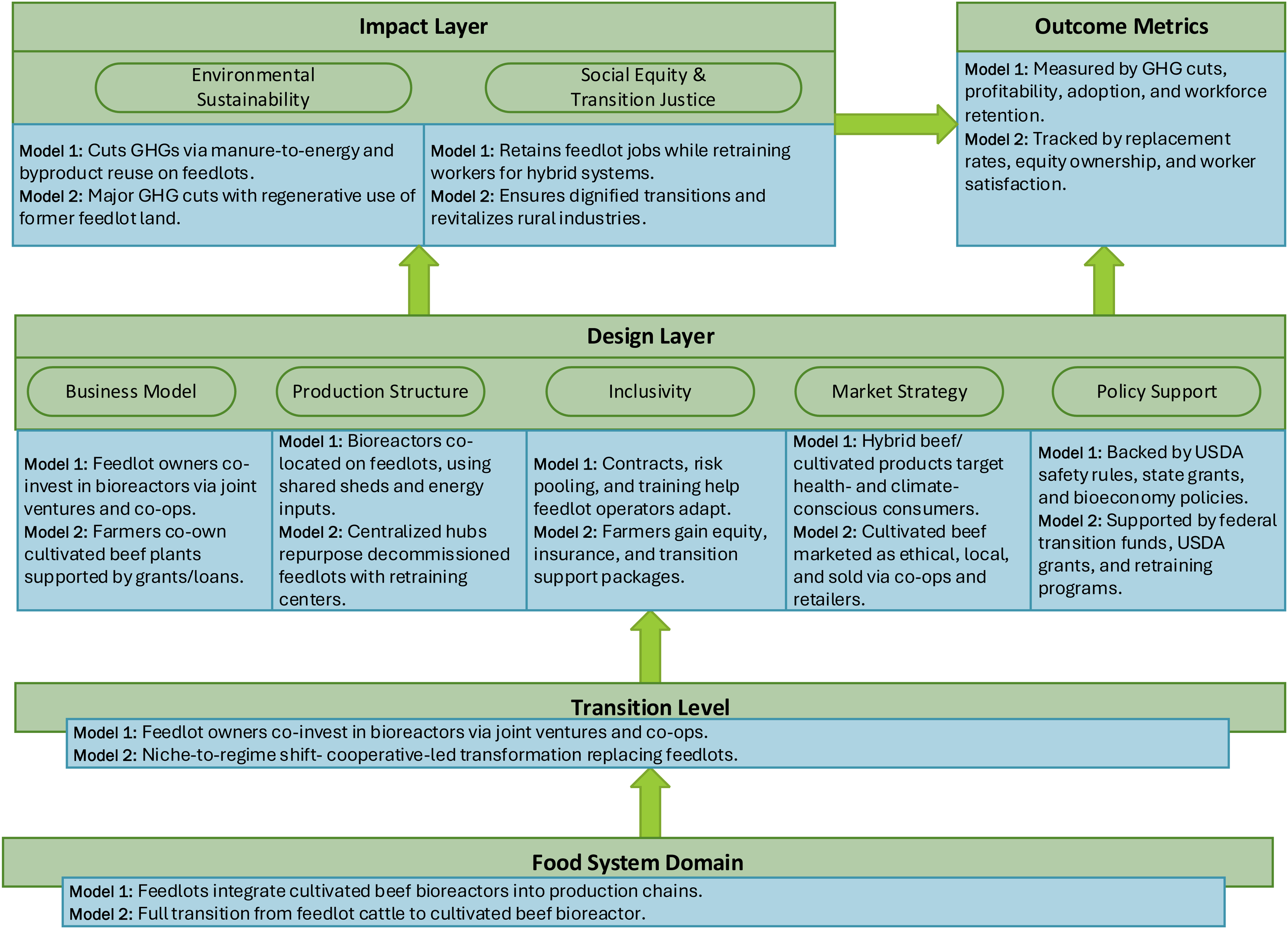
US models of feedlot transitions: hybrid co-production (Model 1) and feedlot-to-bioreactor co-operative shift (Model 2).
The model links on-farm feedlot activities with regional processing hubs that coordinate cell cultivation, hybrid product formulation, and distribution. Co-branding and transparent labelling could help maintain continuity with existing feedlot identity while responding to sustainability and quality expectations. Training programmes would also be needed to support staff transition into basic bio-processing, monitoring, and related technical roles.
This model offers producers opportunities for revenue diversification, risk management, job retention, and participation in emerging protein markets without requiring them to abandon cattle production. However, it would require investment, technical training, clear governance arrangements, and fair partnerships to ensure that producers benefit as active participants rather than only as low-value input suppliers.
Model 2: Feedlot to bioreactor transition co-op (for the producers seeking long-term exit from cattle production but desiring continuity in protein production)
This model is focused on de-centralised and inclusive transition; this model supports gradual substitution of conventional meat with cultivated beef produced by the same producers (Figure 3; Supplemental Material 6, Table S.6.2). It reduces the dependency on volatile commodity markets. In this model, small and medium-sized feedlot producers who want to gradually stop raising cattle due to low profits or future policy pressures can join/create a co-operative that owns and operates cultivated beef bioreactors. Instead of losing their farms or leaving the industry, they invest in the new system. Their land and buildings are repurposed, and former feedlot workers are retrained to work in biomanufacturing. This gives them steady income and helps keep rural communities alive, while also reducing emissions and modernising the local food system.
Producer-owned co-operatives managing small-scale bioreactors to enable distributed cultivated beef production at or near farm sites, focusing on institutional buyers and niche consumers. This model offers higher autonomy and ownership among small and mid-sized producers, along with lower GHG emissions and flexibility in production. It also promotes regenerative land use on former feedlot land. However. It requires training and heavy financial support mechanisms. In this model, beef producers take on the role of co-op members who own and operate the cultivated beef system, recipients of public incentives for sustainable innovation, and act as agents of localised protein production.
Model 3: Pasture-based co-production model (for French extensive cattle producers seeking to diversify, preserve cultural practices, and access emerging protein markets without abandoning livestock entirely)
This model preserves cultural and ecological functions of pasture-based beef while integrating cultivated beef into less culturally sensitive product categories (e.g. ready meals) (Figure 4; Supplemental Material 6, Table S.6.3). This supports a dual system that maximises ecological and market synergies. In this model, French farmers who raise cattle on open pastures keep doing what they’ve always done. However, they also sell a small sample of animal cells or natural materials (e.g. grass feed) to cultivated beef companies. This means they keep their cows, preserve the landscape and local food identity, and still earn new income from a future-looking industry. Instead of competition, this model encourages harmony between tradition and innovation.
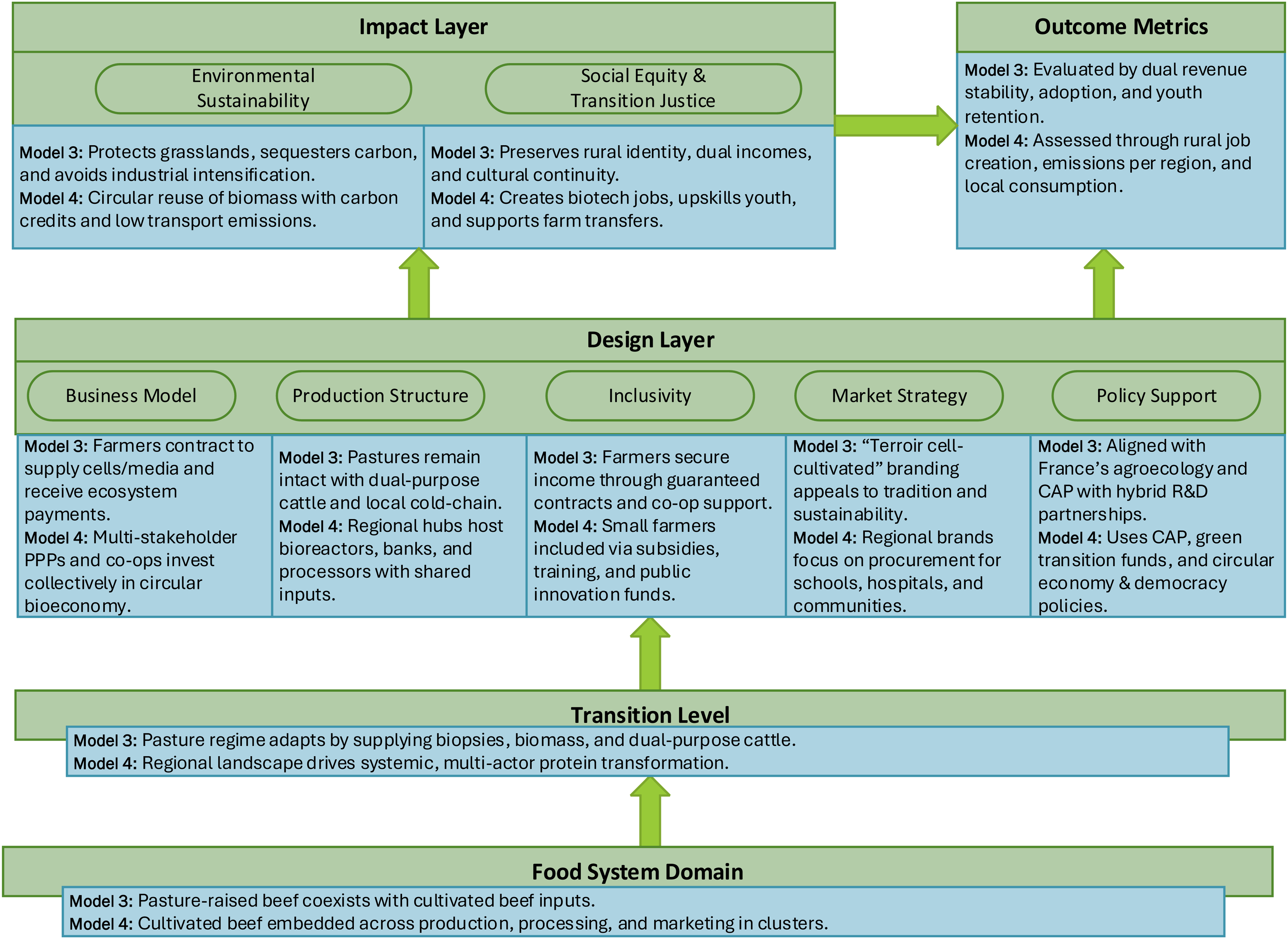
French models of pasture-based co-production (Model 3) and regional biofood innovation clusters (Model 4).
Extensive beef production can be maintained for high-quality conventional markets, while cultivated beef is developed for processed and export markets. Territorial branding would combine environmental stewardship and innovation. This model supports rural livelihoods and preserves landscape value. It also opens access to new markets and climate funding opportunities. At the same time, it requires strong consumer communication and alignment with ethical sourcing. Beef producers play the role of providers of cell lines or co-branding partners. They also serve as custodians of traditional systems co-existing with innovation, and benefit from climate-linked subsidies and territorial development funds. While this model provides an inspiring avenue for co-existence between tradition and innovation, its implementation would face practical constraints. Rural areas where extensive systems dominate often lack the biotechnological infrastructure needed for cell-based production. Moreover, the association of ‘cultivated’ and ‘terroir’ identities may raise symbolic and marketing challenges that must be carefully addressed through transparent communication and territorial governance.
Model 4: Regional biofood innovation clusters (for the French regional governments, co-operatives, and innovation hubs aiming to foster collaborative cultivated beef development while anchoring traditional producers)
This model is designed as a landscape-level shift, this model creates a regional ecosystem of innovation anchored by sustainability and food security goals. It enables new entrants and existing producers to participate in emerging bioeconomies (Figure 4; Supplemental Material 6, Table S.6.4). This model brings together everyone in the region, including farmers, governments, researchers, and startups, into a single network. Instead of each farmer working alone, the region shares bioreactors, labs, and marketing. Traditional beef farmers can join the project by providing inputs, accessing training, and even co-owning facilities. It transforms rural areas into centres of innovation, creating jobs, keeping young people engaged in farming, and allowing cultivated beef to grow in harmony with local culture.
In this model, cross-sector clusters integrate cultivated beef, precision agriculture, and agri-food startups. They share infrastructure (labs, logistics, marketing) supported by the regional government with a focus on youth employment and food resilience. It promotes long-term competitiveness and food sovereignty. However, this model requires a high level of coordination and depends on public investment, with some risk of fragmentation before reaching scale. Beef producers play important roles as co-creators in cluster activities through training, partnerships, and pilot projects. They also act as transition agents, gaining upgraded roles and new income streams while being protected under transition justice frameworks and policy safeguards. This model resonates with existing French initiatives such as the ‘Territoires d’innovation’ programmes or the Agri Sud-Ouest Innovation cluster, which already promote cross-sectoral collaborations among farmers, research institutions, and regional authorities. Embedding cultivated beef initiatives within such structures could enhance feasibility, legitimacy, and youth engagement at the territorial level.
Discussion
The findings show that integrating cultivated beef into existing beef systems is not only a technological or market challenge, but also a transition governance challenge. This means that the success of integration should be evaluated not only by market uptake or environmental performance, but also by whether producers can participate in decision-making, share in benefits, protect livelihoods, maintain cultural recognition, and access transition support. The proposed models suggest that cultivated beef can support a just transition only if conventional producers are included through ownership, benefit-sharing, infrastructure access, training, and culturally legitimate forms of participation. This study contributes to the growing body of knowledge addressing how conventional livestock systems can adapt to emerging protein innovations, particularly cultivated beef. The study contributes to ongoing discussions on climate-aligned food policy and governance, providing a framework that is adaptable to diverse contexts (International Labour Organization (ILO), 2015; Rockström et al., 2020; Sandhu et al., 2025). It complements and extends prior studies for food system diversification and focuses on the need for inclusive and participatory innovation in transitions (Frison and IPES-Food, 2016; Newell and Mulvaney, 2013). Based on the proposed models and empirical evidence from stakeholders, the study also contributes to the cultivated meat literature, which has often focused on technical feasibility and consumer acceptance, but less on how conventional producers can be meaningfully included in this transition (Bryant and Barnett, 2020; Stephens et al., 2018).
Across the four models, just transition is addressed in different ways. The US hybrid co-production model supports fair benefit-sharing through diversified income, joint ventures, and producer participation in cultivated beef value chains. The feedlot-to-bioreactor co-operative model places stronger emphasis on producer ownership, retraining, and livelihood continuity. The French pasture-based co-production model contributes to recognition justice by preserving grazing practices, territorial identity, and cultural values while allowing limited participation in cultivated beef markets. The regional biofood innovation cluster model supports procedural justice through shared infrastructure, regional governance, training, and multi-stakeholder collaboration. However, each model also requires safeguards to ensure that benefits do not concentrate among large firms, startups, or better-resourced producers.
Thematic synthesis and cross-context comparison
Beef producers in both countries are facing rising pressures from environmental regulations, fluctuating input costs, and socio-demographic changes. In the United States, feedlot-based producers highlighted risks related to infrastructure, shrinking profit margins, biosecurity threats, and reduced labour availability. This aligns with the literature on structural constraints in industrialised livestock systems (Cowley, 2021; Joshi et al., 2026a; Smith et al., 2024). French extensive beef producers expressed concern over generational succession, landscape-based practices, and territorial identity. Their challenges were less about technological obsolescence and more about ecological sustainability obligations and expectations related to cultural values (Joshi et al., 2026a; Lewisch and Riefler, 2023). Beyond these established pressures, producers in both countries are also responding to a new layer of uncertainty connected to cultivated meat. In the United States, industry actors perceived cultivated beef as an opportunity for product diversification, in processed food segments or as a potential ‘niche’ for environmentally conscious consumers. This indicates the gradual uptake model is predicted in protein transition (Stephens et al., 2018). French respondents pointed to a reduction in red meat consumption and emphasised the policy support for agro-ecological food systems. Cultivated beef was sometimes perceived as incompatible with culinary traditions and beef heritage of France. This highlights the technological and cultural differences in food innovation (Mridul, 2023). However, global actors have noted strong potential for co-existence and hybrid pathways to diversify and enhance resilience (FAO, 2022).
Recent consumer research confirms that acceptance of cultivated meat remains conditional. Willingness to try or purchase cultivated meat is shaped by perceived safety, naturalness, taste, price, regulatory trust, terminology, familiarity, and perceived environmental and animal welfare benefits (Food Standards Agency, 2025; Hanan et al., 2024; Onwezen and Dagevos, 2024; To et al., 2024). In the United States, recent survey evidence suggests modest purchasing interest, while French consumer studies indicate stronger caution, with earlier France-focused research reporting limited willingness to consume cultivated meat regularly and sensitivity to cultural, dietary, and value-based factors (GFI, 2024; Gousset et al., 2022; Hocquette et al., 2022). These findings suggest that consumer uptake will depend not only on sustainability claims but also on transparent communication, clear labelling, sensory quality, affordability, cultural legitimacy, and trust. In both countries, policy frameworks were viewed as either enabling or constraining transition. In the United States, respondents emphasised the need for clearer regulatory pathways, especially for food safety and labelling (Sexton et al., 2019; Stephens et al., 2018), while French debates were shaped by public engagement, CAP, climate goals, and agro-ecological strategies. Aligning cultivated beef with a just transition requires attention to ethical concerns, biosafety, cultural values, and institutional inclusion (Geels, 2011; HLPE, 2020). US models emphasised co-ops, shared infrastructure, and joint ventures, aligning with risk-sharing and co-ownership principles (IFC, 2016). French models focused more on territorial and multifunctional approaches, including regional biofood innovation clusters and co-operative cell-sourcing initiatives. Overall, successful integration depends on policy alignment, infrastructure compatibility, transparency, trust-building, and meaningful producer participation.
Framework utility and theoretical implications
The 10-dimensional framework developed in this study served as a strategic lens for designing sustainable and inclusive food system models that integrate cultivated beef into diverse current contexts. The framework provided a deductive blueprint that covers critical domains of system transformation. It helped map qualitative findings into strategic model elements. Theoretically, the framework establishes the value of using multi-dimensional and interdisciplinary perspectives to understand transitions in livestock and protein systems. One of the perspectives used in the study was MLP, which enabled the models to recognise shifts occurring at multiple levels from niche innovations to regime-level dynamics. Similarly, TEEB and HLPE pillars ensured the holistic interpretation of sustainability, and the IFC's inclusive business lens strengthened the focus on justice and participation of beef producers. The resulting models consider cultivated beef as one possible component within pluralistic, hybrid, and inclusive food system futures. This supports the idea that changing food systems needs both clear direction and local understanding. Transitions should follow shared goals but also adapt to the specific challenges, cultures, and institutions in each place (Elzen et al., 2012; Levidow et al., 2012). Thus, the proposed transition framework supports a more participatory and resilient approach to protein transition policy and innovation, where farmers are actively involved in the process rather than having changes forced on them.
Policy and practice implications
As cultivated beef moves from technological novelty to commercialisation, integrating it into existing beef systems requires policies that are both structurally responsive and socially equitable. This section outlines the implications for policy and practice, drawing on evidence from the United States, France, and interviews with global stakeholders.
Policies should prioritise just transition mechanisms that balance risks and benefits, including co-ownership, transition finance, and rural inclusion schemes that allow producers to participate as shareholders, suppliers, or service providers in emerging bioeconomies (FAO, 2023; ILO, 2015). These mechanisms should be designed around justice criteria, including fair distribution of benefits and risks, producer participation in governance, recognition of farming knowledge and territorial identity, and practical support through finance, training, infrastructure, and advisory services. Clear rules for cultivated beef production, traceability, safety, and labelling are also needed to support co-existence and market trust. Governments should combine regulatory clarity with incentives for sustainable livestock practices, novel protein development, regional innovation hubs, co-operative models, and rural infrastructure such as small-scale facilities, cold chains, and training programmes (European Commission, 2018; IPES-Food, 2022; Systemiq, 2024; USDA, 2023).
The proposed models support national climate and food security goals while also aligning with global efforts, such as the Sustainable Development Goals and the Paris Agreement. Integrating cultivated meat into national protein strategies through carbon credits, reforestation incentives, or low-emission labelling can help reduce GHG emissions and support rural livelihoods (FAO, 2023; United Nations Environment Programme and Climate and Clean Air Coalition, 2021). In France, territorial food planning, and in the United States, conversations around regenerative agriculture, offer practical ways to connect cultivated meat with broader environmental goals. Hence, policy and practice must move beyond binary thinking, that is, conventional and alternative protein production. It should embrace integrated approaches that are region-specific, inclusive, and future-oriented. The 10-dimensional framework proposed in this study provides a practical tool for evaluating and designing such strategies. Beyond national contexts, this study echoes broader European strategies such as the Farm-to-Fork and SNBC-2 frameworks, which promote agro-ecological and low-carbon transitions. Cultivated and conventional meat should be viewed as complementary pathways contributing to food sovereignty, rural livelihoods, and the multi-functionality of livestock systems, rather than as competing alternatives.
Challenges and trade-offs
Technological and infrastructure
A key challenge is aligning cultivated beef requirements, such as bioreactors, sterile production environments, and growth-media supply chains, with existing beef infrastructure. In the United States, feedlot producers were concerned that current equipment and land use may not suit these new systems. Although barns or storage units could potentially be repurposed, this would still require investment, technical expertise, and regulatory clarity (Mattick et al., 2015; Stephens et al., 2018). Similar barriers exist in France, particularly in rural pasture-based regions with limited biotechnology infrastructure. Blended public–private finance could help reduce upfront costs, de-risk early adoption, and support shared regional infrastructure.
Economic viability and social equity
Inclusive models, such as co-operatives or hybrid meat ventures, may face short-term profitability challenges because shared decision-making can reduce efficiency and increase coordination costs (Ryschawy et al., 2019). Hybrid products may also remain too expensive for lower-income consumers, limiting food access benefits (IPES-Food 2022). Conversely, company-led models may scale faster but risk increasing farmer dependence if firms control patents, technologies, or supply chains. Shared-value agreements, benefit-sharing contracts, and public procurement for affordable hybrid products could help balance profitability, producer equity, and consumer access.
Cultural resistance and perceptions
Cultural acceptability is a major challenge, especially in France, where beef production is closely linked to culinary heritage, terroir, and artisanal practices. Cultivated beef may be perceived as threatening authenticity, producer identity, and consumer trust. Similar concerns appeared in the United States, particularly around labelling and whether cultivated products should use the term ‘beef’. Co-branding, regional identity, transparent communication, and participatory branding involving farmers, chefs, and food councils could help reduce distrust and strengthen cultural legitimacy (Bryant and Barnett, 2019; Joshi et al., 2026b).
Policy and governance complexities
Policy frameworks for cultivated meat remain fragmented, with classification, labelling, and food safety rules still evolving. Aligning cultivated meat with agricultural, environmental, and rural-development goals is also challenging (Jaisli and Brunori, 2024). Public funding and incentives must avoid widening inequalities between large and small producers or between conventional and alternative protein sectors (FAO, 2023; Jaisli and Brunori, 2024). Integrated transition frameworks and multi-stakeholder advisory councils could help ensure that regulation and incentives support diverse producer groups.
Environmental sustainability and energy intensity
Cultivated meat may reduce land use and GHG emissions, but its actual environmental impact depends on energy sources, production scale, and material inputs (IPES-Food, 2022; Lynch and Pierrehumbert, 2019). In fossil-fuel-dependent regions, emissions benefits may be limited. Circular approaches, such as waste reuse and manure integration, also require infrastructure and monitoring that may be lacking in rural areas. Linking cultivated meat development with renewable energy transitions and energy-efficient bioreactor systems could improve sustainability outcomes.
Each model requires balancing the trade-offs among inclusivity, efficiency, cultural values, and sustainability goals. A one-size-fits-all solution is not feasible.
Limitations and future research
This study had several methodological and contextual limitations that must be acknowledged. This study focused on two production systems (feedlot-based and extensive grazing) in two countries, the United States and France. Although they offer contrasting results, the findings may not be generalisable to other production contexts. Furthermore, while the sample included producers, experts, and industry stakeholders, the perspectives of other actors, such as consumers, retailers, and civil society, were not included. Future research should expand stakeholder inclusion to provide a more comprehensive systems view. As cultivated meat is still an emerging technology, with limited commercial deployment, many responses were based on perceptions, assumptions, or limited information. It also makes it difficult to evaluate the long-term social, economic, and environmental impacts. Longitudinal studies, once cultivated meat becomes more widely available, will be necessary to evaluate how models perform in practice.
The 10-dimensional framework enabled the development of structured models; however, the proposed models are still at a conceptual stage. They are based on empirical data but have not been implemented or tested in real-world settings. Feedback from stakeholders during the analysis provided some support; however, no formal design workshops or pilot projects were conducted. Future research should focus on working directly with stakeholders to design the models, test them in practice, and explore different scenarios together to improve and validate them. The regulatory and technological landscapes for cultivated meat are advancing rapidly. This dynamism means that models may need updating as conditions shift. Ongoing policy monitoring, scenario planning, and responsive model frameworks are essential to maintain relevance. Based on these limitations, several future research areas emerge. Expanding the research to include more countries, particularly in the Global South, would be beneficial in understanding diverse farming contexts. Participatory model design is important to involve farmers, local governments, and community groups in designing new models. Future work should measure how different transition models affect emissions, profits, land use, and fairness. Lastly, governance research will be required to examine power dynamics, policy coherence, and stakeholder accountability across protein systems.
Conclusions
This study explored how cultivated beef can be integrated into beef-based food systems using inclusive and sustainable transition models. By focusing on two contrasting national contexts, feedlot-based systems in the United States and extensive grazing systems in France, we developed four context-specific food system models. Through thematic analysis of stakeholder interviews and document review, themes such as producer risks, market uncertainties, policy readiness, and equity considerations were synthesised into a 10-dimensional transition framework. This framework ensured the models are both theoretically and empirically based. Each model offers distinct pathways for enabling a just transition in the protein sector. Importantly, these models do not aim to displace existing beef producers but to support their transformation, creating value through new technologies while protecting rural livelihoods and ecosystem integrity. It also shows that while cultivated beef has potential, its use should be part of wider changes that need to respect local knowledge and support those who are most at risk of marginalisation. Future efforts should focus on the co-designing, piloting, and iteratively refining these models in collaboration with producers, policymakers, and industry stakeholders.
Supplemental Material
sj-docx-1-oag-10.1177_00307270261465430 - Supplemental material for Integrating cultivated beef into conventional beef production systems: Food system models for just transition
Supplemental material, sj-docx-1-oag-10.1177_00307270261465430 for Integrating cultivated beef into conventional beef production systems: Food system models for just transition by Priyambada Joshi, Ayon Chakraborty, Lee Recht, Marie-Pierre Ellies-Oury and Harpinder Sandhu in Outlook on Agriculture
Footnotes
Acknowledgements
The authors gratefully acknowledge the support of colleagues at Bordeaux Sciences Agro during interviews conducted in France, which made this research possible. We extend our sincere thanks to all interview participants for generously sharing their time and insights, which were essential to this study. We also thank Dr John Albechhalany and Ms Lucie Massiet of Bordeaux Sciences Agro for their assistance with interpretation during the interviews and with the translation of interview transcripts.

Ethical considerations
Ethical approval for this study was obtained from the Low-Risk Human Research Ethics Committee of Federation University Australia (approval reference: 2022/206) prior to commencing the study, ensuring that all research activities adhered to established guidelines for research involving human subjects. All research activities were conducted in accordance with the National Statement on Ethical Conduct in Human Research (2007, and all updates) and the specific conditions outlined by the Ethics Committee. Participation was voluntary, and respondents were informed about the purpose of the study, the nature of their participation, and their right to withdraw at any time without consequence. Anonymity and confidentiality were rigorously maintained throughout the study, and no personal identifying information was collected.
Funding
The authors disclosed receipt of the following financial support for the research, authorship, and/or publication of this article: This study is supported by Federation University Australia and the Aleph Farms project G2355. Financial support for this research is provided by Aleph Farms, Israel, along with Federation University, Australia.
Declaration of conflicting interests
The authors declared the following potential conflicts of interest with respect to the research, authorship, and/or publication of this article: Co-author Lee Recht was previously employed by Aleph Farms till August 2024. The remaining authors declared no conflicts of interest.
Data availability statement
The data used in this study cannot be made publicly available due to confidentiality.
Supplemental material
Supplemental material for this article is available online.
References
Supplementary Material
Please find the following supplemental material available below.
For Open Access articles published under a Creative Commons License, all supplemental material carries the same license as the article it is associated with.
For non-Open Access articles published, all supplemental material carries a non-exclusive license, and permission requests for re-use of supplemental material or any part of supplemental material shall be sent directly to the copyright owner as specified in the copyright notice associated with the article.
