






Abstract
Decision support systems can improve pest-management decisions, yet adoption and sustained use among farmers remain uneven and shaped by perceptions of the technology and attitudes toward uncertainty. This study examines uptake of a wheat pest-management DSS among Italian producers by linking technology-acceptance mechanisms to attribute-based choice behavior. We combine a survey of 239 wheat farmers with a discrete choice experiment in which DSS alternatives vary in annual subscription fee, subscription duration, field-level monitoring stations, forecast lead time, number of pest/disease targets covered, and frequency of on-site scouting visits. We estimate a hybrid two-stage model: Technology Acceptance Model constructs are first recovered via partial least squares structural equation modeling to obtain latent adoption-intention scores; these scores and farmers’ risk aversion are then incorporated as membership covariates in a latent-class conditional logit model of choice. Results support the Technology Acceptance Model, with perceived usefulness and perceived ease of use positively associated with adoption intention. The discrete choice experiment identifies two preference segments: a feature-oriented class that values field-level monitoring, longer lead times, and broader target coverage, and a commitment-averse class that dislikes longer subscription durations and longer forecast horizons. Adoption intention increases the likelihood of belonging to the feature-oriented class, whereas higher risk aversion shifts farmers toward the more cautious segment. The findings provide actionable guidance for DSS design and service bundling—particularly contractual arrangements and feature configurations—tailored to heterogeneous behavioral profiles, thereby improving the effectiveness and scalability of digital advisory tools in crop protection.
Introduction
Modern cereal production faces a dual challenge: feeding a growing population while reducing the environmental footprint of agriculture (Halpern et al., 2022). Wheat is a cornerstone of the European food system, but its yields and quality are threatened by fungal diseases and insect pests (Fantin et al., 2017). At the same time, excessive pesticide use raises concerns for human health and biodiversity and undermines the long-term sustainability of agricultural production systems (Sanaullah et al., 2020; Spina et al., 2024). Policies such as the European Union's “Farm to Fork” strategy ask farmers to reduce pesticide use and adopt more sustainable practices; yet these goals remain difficult to realize without the use of novel technologies that can support farmers in optimizing input use (Getahun et al., 2024). Digital tools, particularly Decision Support Systems (DSS), offer a way to transform large volumes of environmental, agronomic, and market data into actionable advice (Castrignanò et al., 2020). DSS are applied across multiple management domains, nutrient scheduling, irrigation timing, and pest or disease control, supporting recurrent decisions that are both agronomically and environmentally consequential (Dicks et al., 2014; Rinaldi and He, 2014). By forecasting pest pressure, identifying optimal intervention times and suggesting eco-compatible tactics, DSS aim to increase productivity and reduce pesticide inputs, thus satisfying the dual goals of economic viability and ecological sustainability (Rose et al., 2016; Rossi et al., 2014).
In its most generic form, a DSS is a computer based, interactive model that guides users through clear decision stages and presents “what–if” analyses for different management options (Kragt and Llewellyn, 2014; Matthews et al., 2008). Contemporary systems integrate data streams from on farm sensors, weather stations and modeling platforms to generate site specific recommendations for fertilization, irrigation and pest control (Kukar et al., 2019). Previous research shows that such tools can enhance yields and profitability while reducing externalities, notably by improving nutrient management and forecasting disease outbreaks (e.g., Basso and Antle, 2020; Finger et al., 2019; Kurlavičius, 2009). For farmers and their advisers, software tools can record data efficiently, analyze it and produce evidence-based recommendations (Marcelino et al., 2024; Rose et al., 2016).
However, despite this potential, on farm uptake remains stubbornly low (Marinko et al., 2025). Studies across several countries find that computer-based DSS are seldom used in routine farm decision making (Akaka et al., 2024). This “implementation problem” stems from the fact that farm decisions are often qualitative, intuitive, and context dependent, whereas many DSS require detailed quantitative inputs and complex interpretation. Recent reviews emphasize that DSS failures are rarely due to algorithmic limitations alone, but rather to insufficient consideration of usability, transparency and farmers’ decision heuristics (Zhai et al., 2020).
Understanding why farmers underutilize DSS represents a key research gap, as it enables the redesign of tools that are more effective and better tailored to farmers’ needs and decision environments. In this respect, Discrete Choice Experiments (DCE) provide a rigorous way to elicit farmers’ and advisers’ preferences for specific DSS attributes and to quantify the tradeoffs they are willing to make between cost, complexity, risk, and service characteristics. Kragt and Llewellyn (2014) pioneered the use of DCEs to improve the design of a weed management decision tool for Australian advisers. Their results showed that advisers valued reliable and accurate results and placed a high premium on models requiring short input times; they also found significant preference heterogeneity across market segments. The study concluded that developers must identify the most valued attributes before building DSS. Subsequent research extended the DCE approach to farmers. Oyinbo et al. (2019) analyzed Nigerian maize farmers’ willingness to adopt an ICT-enabled extension service providing site specific fertilizer recommendations. Farmers strongly preferred site specific, digital recommendations over generic advice, but their willingness to adopt was heterogeneous; better off farmers were more willing to invest, whereas poorer and risk averse farmers preferred less intensive strategies. Providing information on the riskiness of expected outcomes and allowing users to switch between low and high-risk recommendations increased the appeal of the service (Oyinbo et al., 2019). Altobelli et al. (2021) conducted a DCE on irrigation advisory services across several countries, including Italy. They found that farmers most valued receiving weather forecasts and water use records, and that willingness to pay varied with individual risk attitudes.
In Europe, where precision farming technologies are still adopted by a minority of farmers, DCE studies have shown that high initial costs, incompatibility with traditional knowledge and lack of social networks deter adoption (Blasch et al., 2022). These studies underscore that preferences for decision aids are context-specific and influenced by risk attitudes, resource endowments, and social networks, highlighting the need for targeted designs.
Despite this emerging literature, research on farmer preferences for pest management DSS in Europe remains scarce. Italy is an important wheat producer where pests such as Septoria and fusarium cause significant yield losses, yet adoption of DSS is limited. Existing DSS tend to be pathogen specific and often require the installation of local weather stations and complex calibration, making them ill-suited for diversified farms. As a result, there is little evidence on which features Italian farmers consider most useful when evaluating a pest management DSS. Addressing this gap is critical for two reasons. First, without a clear understanding of farmers’ willingness to pay for different service attributes, technology providers risk designing tools that remain on the shelf. Second, policies seeking to encourage sustainable pest management need to align economic incentives with farmers’ subjective perceptions of risk and complexity.
This paper responds to this gap by applying a discrete choice experiment to elicit Italian wheat farmers’ preferences for attributes of a digital DSS designed to support pest management. Our survey presented farmers with alternative service packages that varied along six dimensions derived from stakeholder consultations: (i) annual subscription fee, (ii) subscription duration, (iii) monitoring station centralized or for each field, (iv) forecast lead time, (v) number of pest or disease targets, and (vi) number of on farm scouting visits by technicians. Farmers were asked which package they would choose or whether they would opt out. By combining random parameter logit and latent class models, we estimate marginal willingness to pay for each attribute and explore heterogeneity in preferences. The findings will inform both technology developers and policymakers about which service features maximize perceived benefits and encourage adoption.
The remainder of the paper is organized as follows: Section 2 presents the conceptual framework and research questions; Section 3 describes the data, DCE design and empirical strategy; Section 4 reports the results; Section 5 discusses the findings and implications; and Section 6 concludes.
Conceptual framework
Drivers and barriers to DSS adoption
Despite their potential benefits, the adoption and effective use of DSS in agriculture remain uneven and context dependent, reflecting the need of the interaction between tool design, farm characteristics and farmers’ behavioral responses to uncertainty (Zhai et al., 2020).
Empirical evidence highlights that a wide range of factors influence the use of DSS. A mixed methods study in the UK showed that a set of fifteen factors influence adoption, including usability, cost effectiveness, performance, relevance to user needs, and compatibility with compliance requirements (Rose et al., 2016). Some of these factors are technical (e.g., forecast accuracy or robustness across weather conditions), while others are behavioral (e.g., ease of use, model trust, compatibility with existing practices and peer recommendation). Crucially, these dimensions are not independent: technological features such as complexity directly shape behavioral responses by affecting trust, perceived control, and willingness to rely on recommendations. To increase adoption rates, many authors advocate user centered design approaches that explicitly account for farmers’ decision environments, workflows, and advisory networks, rather than focusing solely on model accuracy (Akaka et al., 2023; Rose et al., 2018). Surveys conducted across Europe showed that many DSS are technically sound but underused due to the low engagement of farmers and advisors during the development phases (Nowatzke et al., 2024). As a result, farmers often perceive DSS as “black boxes,” distrust their outputs, or consider them too complex and time consuming. Even when tools are freely available, adoption is constrained by high learning costs, lack of transparency, and limited compatibility with existing local pest management practices (Adereti et al., 2024). Consequently, some researchers suggest sharing decision models through open platforms to enhance transparency and foster trust (Rossi et al., 2023; Sullivan et al., 2024).
A notably salient barrier concerns the technological design of DSS themselves, which are frequently developed through a technology-push approach rather than being based on end-user needs. This leads to limited usability, poor integration with farm routines, and inadequate consideration of uncertainty in outputs (Ara et al., 2021; McCown, 2002). Farmers may find it difficult to translate advice into practical choices when DSS fails to openly convey risk and unpredictability, especially in settings where market and climate uncertainties are prevalent (Ara et al., 2021).
Beyond technical aspects, economic factors play a pivotal role in shaping adoption decisions. High initial costs, uncertainty of returns and long payback periods may discourage farmers from engaging with DSS, especially when perceived benefits are not immediately tangible and require strict adherence to suggestions (Masi et al., 2022; Pierpaoli et al., 2013). Such constraints are often strengthened by broader structural barriers identified in the sustainability and innovation literature, including limited access to capital, technological knowhow, and dedicated support services, which can disproportionately affect smaller or more risk-exposed farms (Barbosa Junior et al., 2022).
Behavioral and psychological factors are important intermediaries of the aforementioned limiting factors. Empirical studies on smart and digital agriculture have identified that perceived usefulness is a key driver of adoption intentions, while perceived risk, complexity, and lack of trust in digital systems decrease the willingness to rely on algorithm-based recommendations (Li et al., 2023). In this scenario, farmers’ attitudes toward risk are particularly relevant: when outcomes are uncertain or deviations are perceived as costly, risk-averse farmers may prefer flexible, experience-based decision strategies over DSS recommendations (Ara et al., 2021; Nastis et al., 2019). As a result, DSS adoption should not be seen as a binary outcome, but rather as a spectrum ranging from experimentation to selective or partial implementation, reflecting heterogeneous behavioral responses to uncertainty and perceived control.
When considered together, this body of evidence suggests that the observed patterns of DSS adoption and use result from the interaction of technological design, economic incentives, farmers’ perception- and experience-informed evaluations of the technology (e.g., perceived usefulness and perceived ease of use), and their risk preferences. Collectively, these factors shape the individual structure of preferences over DSS attributes and, ultimately, DSS adoption. Building on this integrated viewpoint, the following paragraph introduces our hybrid discrete choice framework, which explicitly accounts for these mechanisms by combining Technology Acceptance Model-based latent constructs (TAM; Davis, 1989) with risk preferences to explain both adoption intention and heterogeneity in attribute-based choices.
Hybrid modeling approach
Translating these insights into an empirical strategy requires a framework that links farmers’ cognitive evaluations of DSS, their risk preferences, and the attribute-level trade-offs embedded in adoption decisions. This study combines a behavioral technology-acceptance framework with a DCE to explain adoption of a DSS for wheat pest management.
Discrete choice experiments elicit preferences by observing choices among alternatives described by multiple attributes whose levels vary across repeated choice tasks. Within the random utility framework, each choice is assumed to reflect the alternative that yields the highest utility, where utility consists of a systematic component linked to observable attributes and a random component capturing unobserved influences on decision making (McFadden, 1974; Train, 2009). The systematic component allows the estimation of the relative importance of individual attributes and the tradeoffs respondents are willing to make among them, including monetary tradeoffs that can be expressed as willingness to pay (Hensher et al., 2015; Louviere et al., 2000). The random component, in turn, reflects heterogeneity in preferences, perceptions, and decision processes that is not directly observed.
In this study, the hybrid framework builds on this structure by relating part of this unobserved variation to farmers’ latent cognitive evaluations of the DSS and their attitudes toward uncertainty, while remaining fully consistent with the random utility formulation. Specifically, the cognitive component is grounded in the Technology Acceptance Model (TAM; Davis, 1989), according to which perceived usefulness (PU) and perceived ease of use (PEU) shape farmers’ intention to adopt the DSS. Beyond these cognitive constructs, we incorporate farmers’ risk attitudes, which are expected to affect both adoption intention and the way farmers evaluate and trade off DSS attributes.
To capture the joint influence of behavioral factors and attribute trade-offs, we employ a hybrid two-stage estimation strategy (Califano et al., 2024): we first estimate the TAM via partial least squares structural equation modeling—PLS-SEM (Hair et al., 2011), and then incorporate the estimated latent intention scores and risk aversion into a latent-class conditional logit model for the DCE. Figure 1 illustrates the conceptual overview of the framework, in which intention to adopt DSS and risk aversion jointly influence the probability of belonging to different latent preference classes, which in turn determine farmers’ preferences for specific DSS attributes revealed through the discrete choice experiment.
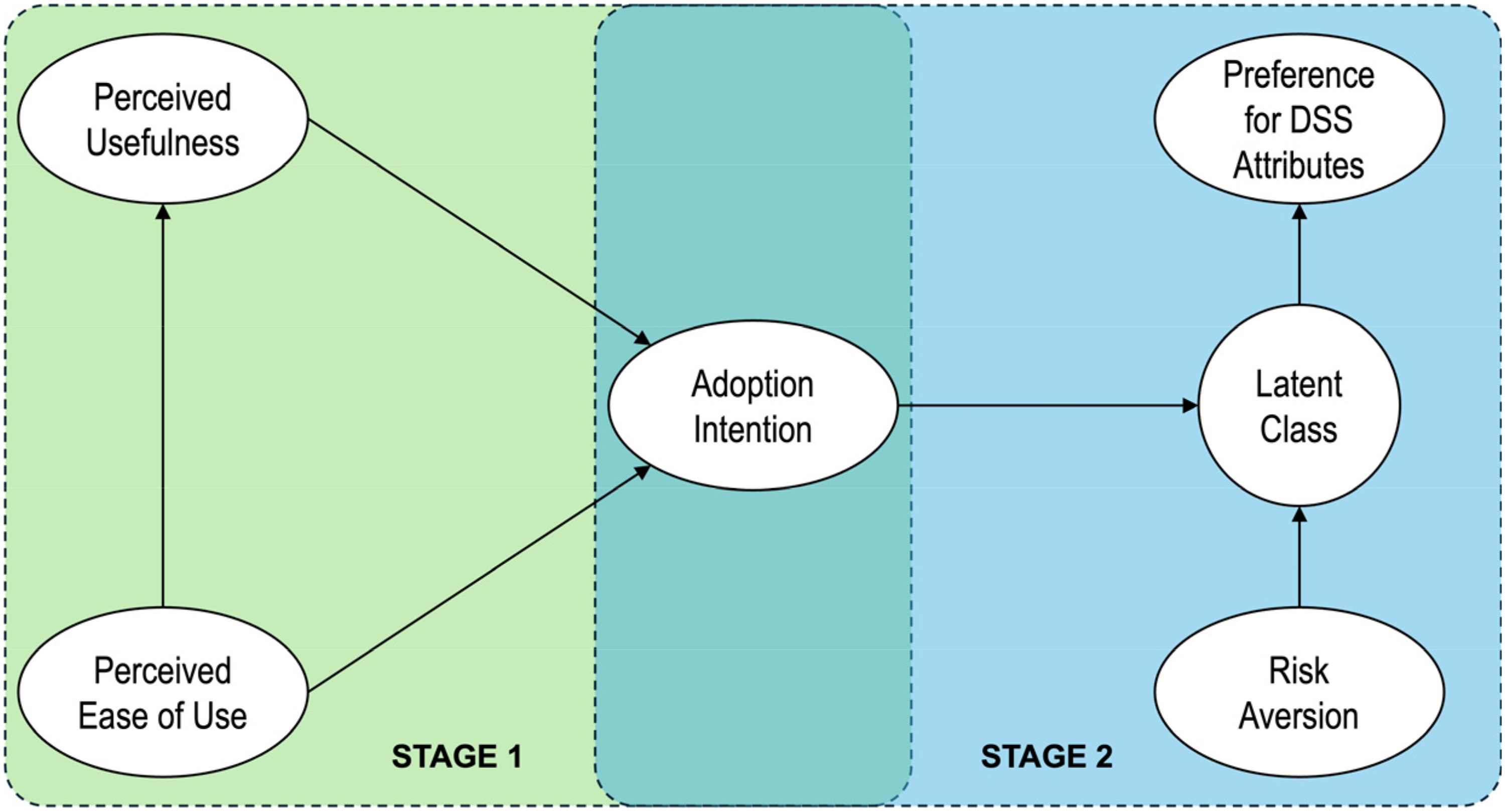
Overview of the conceptual framework.
In the first stage, perceived usefulness and perceived ease of use shape adoption intention in line with the TAM. In the second stage, adoption intention is treated as a summary indicator of farmers’ motivational readiness toward digital decision tools, while risk aversion captures their general attitude toward uncertainty. Rather than entering directly into the utility function, these psychological factors operate at the class-membership level, allowing them to explain heterogeneity in preference structures across farmers.
This approach allows to address three interrelated research questions. First, we ask whether (and to what extent) farmers’ cognitive evaluations of the DSS, as captured by perceived usefulness and perceived ease of use, translate into a stronger intention to adopt the tool for wheat pest management (RQ1). Second, we investigate farmers’ preferences for alternative DSS designs by eliciting the relative importance of key DSS attributes and the tradeoffs farmers are willing to make among them (RQ2). Third, we examine whether heterogeneity in these attribute preferences can be systematically explained by farmers’ motivational readiness to adopt digital tools and their attitudes toward uncertainty (RQ3).
Methods
Survey design and participants
Data were collected via structured face-to-face questionnaires administered by trained technicians from Consorzi Agrari d’Italia (CAI) between November 2024 and February 2025. Respondents were recruited through farm visits and CAI-organized meetings in the Centre–North of Italy, targeting wheat-growing areas that are typically more exposed to pest and disease pressure. Participants were screened using predefined eligibility criteria to ensure they cultivated soft and/or durum wheat in the most recent production season. In total, 239 eligible wheat growers completed the questionnaire. Participation was voluntary and preceded by written informed consent; all procedures complied with EU data-protection requirements (GDPR), including anonymization of records and secure data handling.
The questionnaire comprised four sections. Following an introductory page describing the research and a written informed-consent form, Section 1 gathered sociodemographic and farm characteristics, including gender, age, education, computer skills and social-media use. Section 2 presented the DCE tasks alongside a description of DSS and their potential benefits; additional questions asked farmers how they wished to receive DSS alerts, the preferred frequency of alerts, the maximum time they were willing to spend inputting farm data, and their preferred payment scheme. Section 3 included Likert-scale items measuring the TAM (Davis, 1989) constructs: perceived usefulness (PU), perceived ease of use (PEU) and intention to adopt (INT), as well as risk attitudes. The TAM constructs were measured using 18 items adapted to the agricultural DSS context, with responses recorded on five-point Likert scales ranging from 1 (“strongly disagree”) to 5 (“strongly agree”). Six items captured PU, six captured PEU, and three assessed INT.
Risk attitudes were measured using the seven-item Risk Propensity Scale (Meertens and Lion, 2008), validated in Italian by Marton et al. (2023). Responses were reverse-coded where necessary so that higher scores indicated greater risk aversion. Table A1 reports the full list of items included in the questionnaire with their main statistics. Finally, Section 4 collected detailed farm information, including location, utilized agricultural area, primary cropping system, wheat area, and participation in agro-environmental measures.
Discrete choice experiment
Based on stakeholder consultations with CAI agronomists and technicians, six attributes were identified to characterize alternative DSS service packages. The selected attributes reflect the salient characteristics of the service configuration that CAI is likely to commercialize in the near term. The annual subscription fee captured the cost of the service per farm and took three levels (80€/year, 140€/year, and 200€/year). Subscription duration indicated how long the contract would last and varied between 1, 3, and 5 years. Monitoring station configuration described whether the CAI monitoring stations would be installed in each field or only at the farm level. The forecast lead time reflected how many days in advance the system would signal infection risk, with levels of 3 days and 7 days. The number of targets referred to the number of diseases and pests covered by the service and could be 1, 3, or 5. Finally, onsite scouting visits captured the number of in-person visits from CAI technicians, taking values of 1 or 5. These levels were chosen to reflect realistic ranges encountered in CAI's commercial offerings and were refined through a pilot study with local farmers. Because respondents were likely to dislike long questionnaires, we employed a modified Fedorov algorithm to generate an efficient fractional factorial design. The final design consisted of 12 choice tasks organized into four blocks; each respondent completed one block and therefore faced three DCE tasks. Each task presented two alternative DSS packages defined by the attribute levels plus an opt-out alternative (“none of the two”), consistent with best practice for DCE studies. Attribute levels were systematically rotated across blocks to minimize correlation and maximize D-efficiency.
Choice data were analyzed using a latent class conditional logit model (Train, 2008; Yoo, 2020). Under the random utility framework, the utility of farmer i choosing alternative j in choice situation t is specified as


Results
A total of 239 wheat farmers completed the questionnaire. Most respondents were male (92%), with a mean age of 51.7 years (SD = 13.3). Education levels were relatively high: about 57% held at least a high school diploma, and 10% had a university degree or higher. Farms were predominantly located in Northern Italy (Figure 2). On average, respondents operated medium-sized farms with a utilized agricultural area (UAA) of M = 105 ha (SD = 109) and cultivated both soft and durum wheat. Figure 3 reports the empirical cumulative distribution function (ECDF) of UAA in the sample, indicating, for example, that around 60% of farmers operated farms below 100 ha.
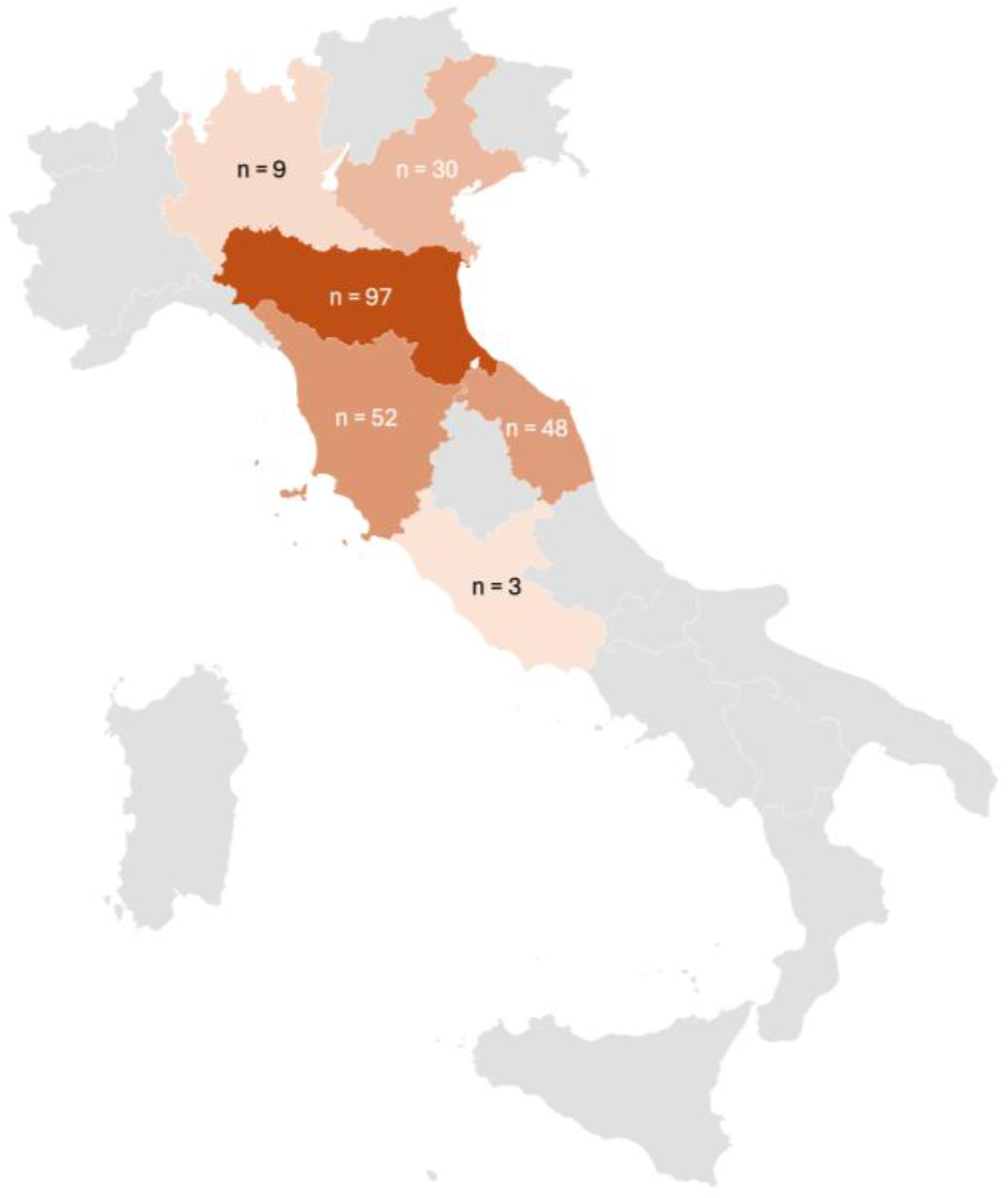
Geographic distribution of surveyed wheat farms across Italian regions. Shading indicates the number of respondents per region.
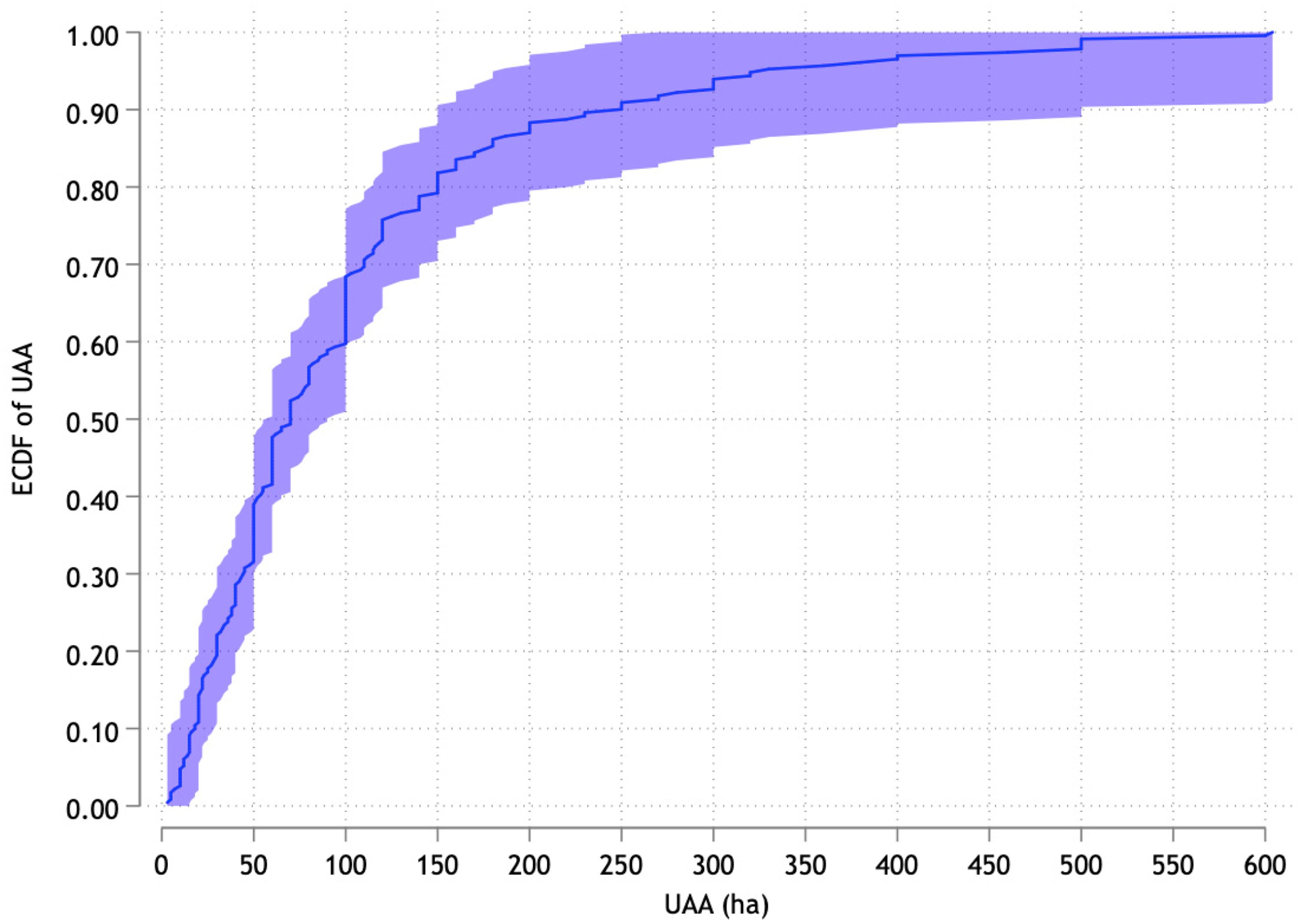
Empirical cumulative distribution function of utilized agricultural area.
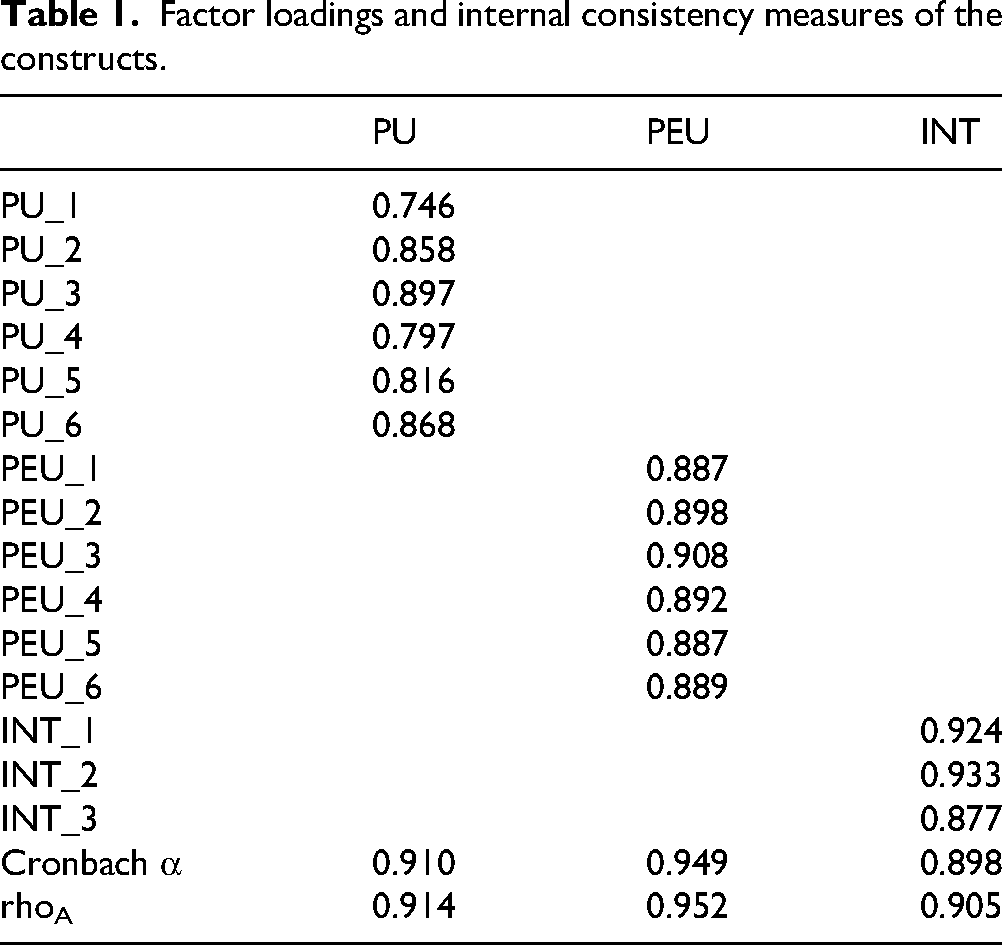
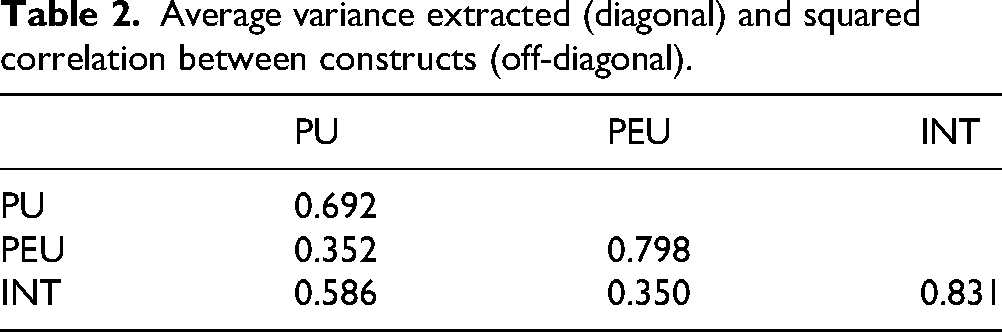
Regarding the first stage of analysis, the measurement part of the PLS-SEM results confirmed the reliability and validity of the TAM constructs. Factor loadings for perceived usefulness, perceived ease of use, and adoption intention ranged from 0.746 to 0.933 (Table 1), exceeding the recommended minimum of 0.70. Cronbach's α and rhoA values exceeded the recommended thresholds as well, indicating satisfactory internal consistency. The average variance extracted (AVE) exceeded 0.69 for all constructs, and the square roots of AVE were larger than the squared correlations between constructs (Table 2), demonstrating discriminant validity.
Factor loadings and internal consistency measures of the constructs.
Average variance extracted (diagonal) and squared correlation between constructs (off-diagonal).
The structural portion of the PLS-SEM examined the hypothesized relationships among the TAM constructs, directly addressing RQ1. Perceived usefulness had a strong positive effect on the intention to adopt the decision support system. Perceived ease of use was also positively associated with adoption intention and, as expected, exerted an indirect influence through perceived usefulness. All hypothesized paths were significant and in the expected direction, supporting the underlying TAM (Figure 4).
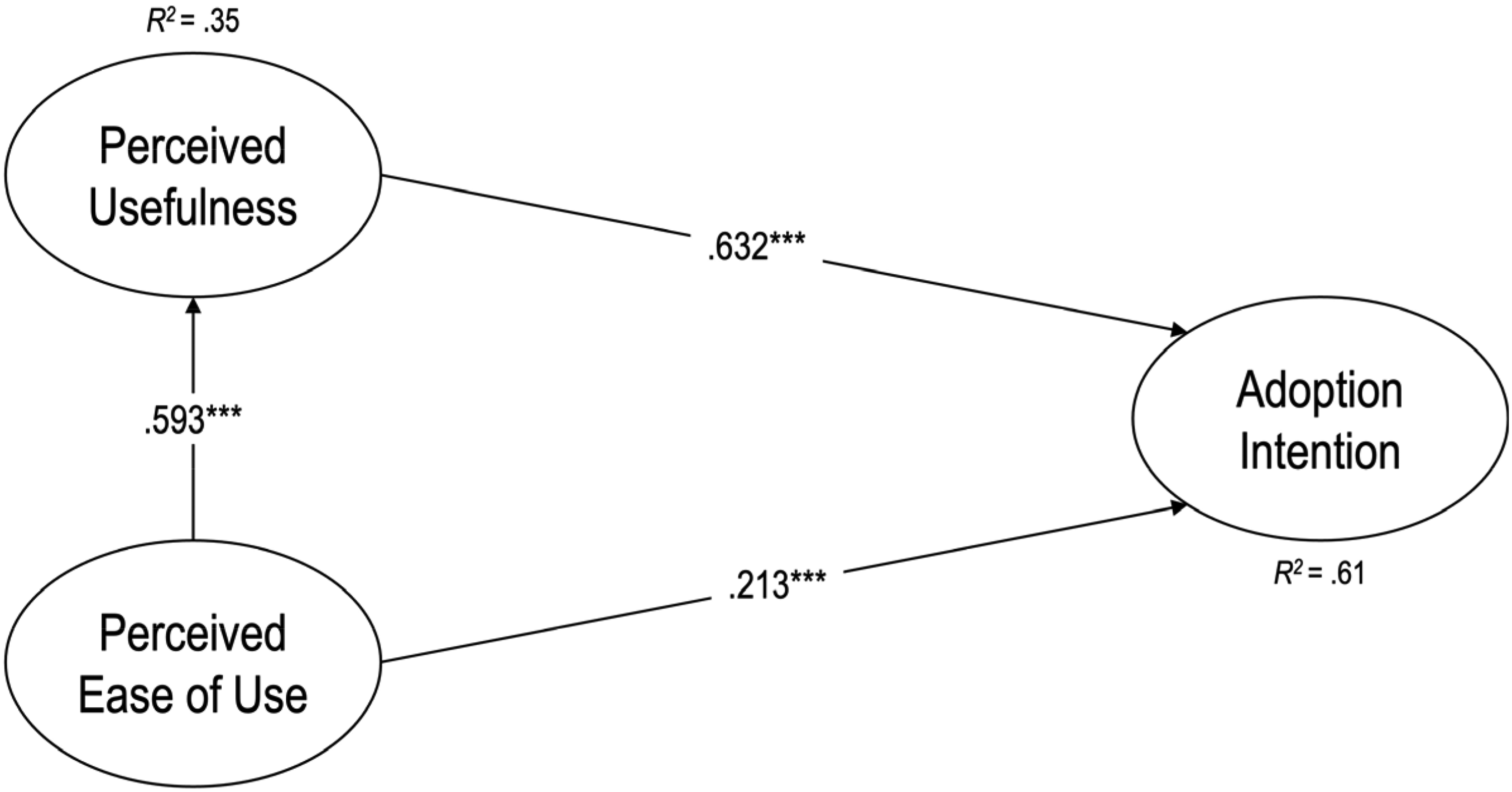
Results of the structural model of PLS-SEM.
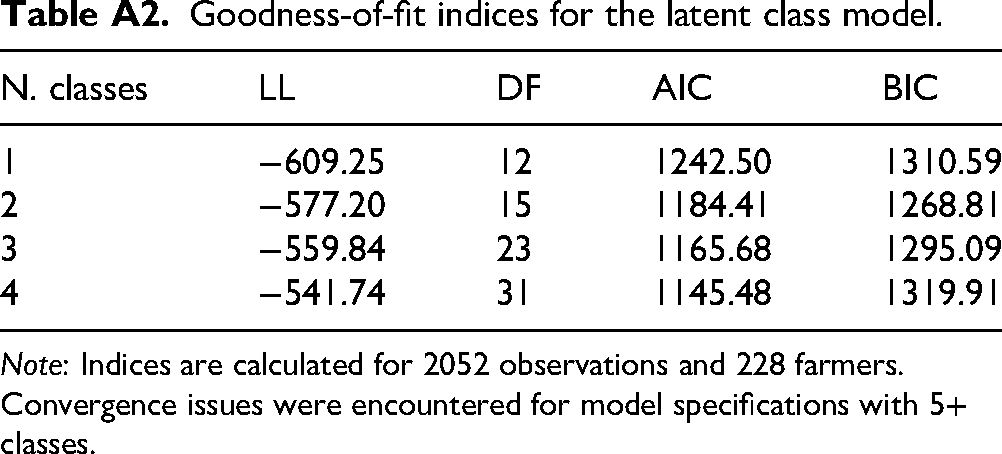
In the second stage of analysis, we used the predicted latent score of adoption intention (R2 = .61) and the standardized scores of risk aversion as membership covariates of a latent class choice model. Model selection criteria favored a two-segment latent class specification (see Table A2, Appendix). The estimated choice model provides direct evidence on farmers’ preferences for alternative DSS designs and on the tradeoffs they are willing to make among key system attributes, thereby addressing RQ2.
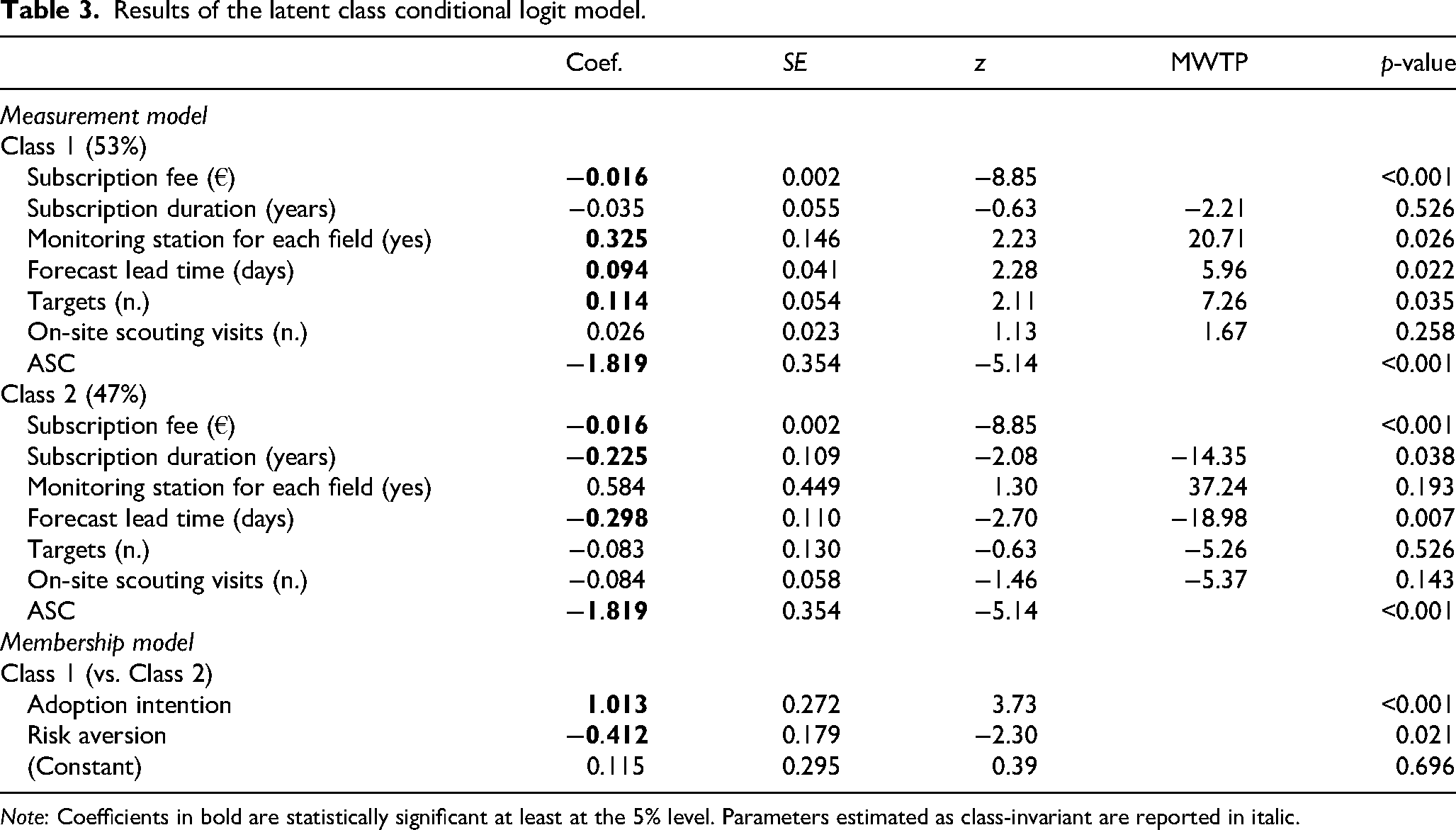
The first latent class, comprising approximately 53% of the sample, can be interpreted as a group of functionality-oriented and innovation-ready farmers. Farmers in this segment derived positive utility from improvements in service quality and were willing to pay for enhanced DSS functionality (Table 3). In particular, they valued the installation of monitoring stations at the field level, longer forecast lead times, and broader coverage in terms of the number of pests or diseases monitored. For these farmers, the duration of the subscription contract did not significantly affect utility, suggesting a relatively low sensitivity to long-term commitment when the perceived benefits of the service were sufficiently high. Similarly, the number of onsite scouting visits did not play a central role in their choices, indicating a preference for technologically mediated information rather than increased human interaction. In monetary terms, farmers in this class were willing to pay approximately €20.7 per year for per-field monitoring, €6.0 per year for a longer forecast horizon, and €7.3 per year for each additional target covered by the system.
Results of the latent class conditional logit model.
Note: Coefficients in bold are statistically significant at least at the 5% level. Parameters estimated as class-invariant are reported in italic.
The second class, representing about 47% of farmers, exhibited a markedly different preference structure and can be characterized as risk-minimizing and commitment-averse users. For this group, longer subscription durations significantly reduced utility, pointing to an aversion to long-term contractual commitments. In contrast to the first class, an increase in forecast lead time was also negatively valued, translating into a negative willingness to pay. This pattern suggests that these farmers may perceive longer forecasting horizons as introducing additional uncertainty or complexity rather than actionable benefits. Other service attributes, including the installation of monitoring stations, the number of targets covered, and the frequency of on-site scouting visits, did not significantly influence choices, indicating a generally cautious and selective evaluation of DSS features rather than outright rejection of the technology.
Differences in attribute preferences were systematically related to farmers’ psychological characteristics, thus providing a positive answer to RQ3. Specifically, as the coefficients of class membership show, higher adoption intention significantly increased the likelihood of belonging to the functionality-oriented class (Table 3—membership model). In odds-ratio terms, a one-unit increase in the latent adoption-intention score increased the odds of being classified as an innovation-ready user by a factor of approximately
Discussion
This study aimed to understand which features Italian farmers consider most useful when evaluating a pest management DSS, addressing three interrelated research questions. First, we examined whether and to what extent farmers’ cognitive evaluations, namely Perceived Usefulness and Perceived Ease of Use, translate into a stronger intention to adopt DSS (RQ1). Second, we explored how farmers value specific DSS attributes and whether distinct preference structures can be identified across users (RQ2). Third, we assessed how behavioral traits, particularly adoption intention and risk aversion, shape not only adoption propensity but also the way farmers evaluate contractual and technological features of DSS (RQ3). Together, these questions address a broader objective: understanding how technological design and policy incentives can be better aligned with farmers’ subjective perceptions of risk, complexity, and commitment.
Building on the theoretical framework of the Technology Acceptance Model and integrating it with a Discrete Choice Experiment within a hybrid latent-class framework, the analysis not only provides a description of adoption barriers but also contributes to a structured interpretation of how cognitive assessments, risk attitudes, and contractual design characteristics jointly shape farmers’ preferences.
In response to RQ1, the findings reveal that DSS acceptance and adoption is not a one-dimensional phenomenon but reflects a set of cognitive beliefs about utility and ease of use, as well as a variability in how farmers perceive commitment costs and uncertainty, consistent with broader patterns documented in the agricultural innovation literature. Perceived Usefulness (PU) and Perceived Ease of Use (PEU) significantly and positively shape adoption intention, confirming the original formulation of the Technology Acceptance Model (Davis, 1989) and reinforce the idea that farmers’ willingness to engage with DSS is primarily driven by assessment of whether the tool improves decision quality and fits into existing work routines. These positive associations observed in our data are consistent with long-standing evidence that farmers assign significance to the instrumental value of agricultural technologies in their decisions (Akaka et al., 2024; Caffaro et al., 2020; Hannus and Sauer, 2021). The significance of the model demonstrates that cognitive acceptance constructs remain central even when DSS become more complex and data-intensive, confirming the key role of these factors in understanding the drivers of agricultural innovation (Petrović et al., 2024).
Addressing RQ2, the analysis reveals heterogeneity in farmers’ preferences for DSS attributes, which can be grouped into two entirely consistent behavioral profiles. For the first segment (functionality-oriented and innovation-ready farmers), DSS appears to be an investment aimed at increasing capacity rather than a constraint. In contrast, the second segment (risk-minimizing and commitment-averse users) suggests selective engagement shaped by concerns about lock-in and uncertainty. The segmentation of preferences identified is consistent with previous DCE studies that highlighted heterogeneity in farmers’ assessments of agricultural technologies (Kragt and Llewellyn, 2014; Oyinbo et al., 2019). Farmers in the first segment derive positive utility from field monitoring, broader coverage of pests and diseases, and longer forecasting periods, while showing limited sensitivity to contract duration. This configuration suggests that these farmers interpret the DSS primarily as an instrument that improves decisions rather than as a restrictive service contract. From an economic perspective, their willingness to pay for more informative and spatially specific content suggests that marginal improvements in predictive power are perceived as reducing production uncertainty rather than increasing it. This interpretation is consistent with recent evidence showing that innovation-oriented farmers value DSS when these tools expand their strategic decision-making space, particularly in pest and disease management contexts, where anticipatory information can support input optimization and risk mitigation (Miriti et al., 2025). Notably, the positive assessment of longer forecasting horizons among innovation-ready farmers distinguishes this segment from patterns observed in other advisory contexts, such as irrigation and fertilization, where farmers often prefer short-term, easily interpretable advice (Altobelli et al., 2021; Blasch et al., 2022; Kopainsky et al., 2019).
Conversely, risk-minimizing and commitment-averse farmers show a clear disutility for longer subscription durations and longer forecasting horizons, while remaining largely indifferent to most technological improvements. This segment does not show a categorical rejection of DSS but interprets attributes through the lens of exposure to commitment and decision-making responsibility. Long-term contracts are perceived as binding, and similarly, longer forecasting horizons may be interpreted not as added informational value but as increased ambiguity and cognitive load, particularly when forecasts are probabilistic and require interpretation rather than direct execution. This finding is consistent with recent qualitative and quantitative studies showing that many farmers associate advanced digital advisory tools with a loss of autonomy and greater responsibility for outcomes driven by algorithmic recommendations. (Charatsari et al., 2022; Gardezi et al., 2022; Ingram and Maye, 2020). Overall, the response to RQ2 highlights that farmers’ preferences for DSS attributes are structured around two distinct frameworks rather than isolated attributes. One framework prioritizes information depth and technological empowerment, while the other prioritizes contractual flexibility and limited commitment.
Finally, in response to RQ3, the results show that a stronger intention to adopt increases the probability of belonging to the functionality-oriented and innovation-ready farmer's segment, while higher risk aversion shifts farmers toward the risk-minimizing and commitment-averse profile. Behavioral traits therefore influence not only whether DSS are considered, but also how specific technological and contractual features are evaluated once adoption is contemplated. This finding is consistent with evidence showing that innovation attitudes and openness to digital tools are not limited to predicting adoption overall but also influence the type of technology package considered acceptable (Caffaro et al., 2020; Feisthauer et al., 2024).
Importantly, the negative association between risk aversion and membership in the functionality-oriented segment, net of adoption intention, rules out a simplistic interpretation whereby risk-averse farmers are simply less willing to adopt DSS. Instead, risk aversion appears to reshape which attributes are perceived as risky, thereby altering the structure of preferences. This is consistent with recent empirical syntheses showing that risk preferences influence not only adoption levels, but also the mode and extent of adoption: more risk-averse decision-makers may adopt in limited (or selective) forms, while avoiding high-commitment configurations (Spiegel et al., 2021). Risk aversion may also plausibly explain why the commitment-averse segment assigns a negative value to longer forecast periods. Risk-averse farmers may interpret long-term forecasts as less reliable, more difficult to translate into concrete actions, and more prone to generating “false positives” that could lead to unnecessary interventions or costly precautionary behavior (Engle-Warnick et al., 2007).
From a theoretical perspective, the findings support an integrated view of DSS adoption in which cognitive acceptance, risk attitudes, and attribute-level trade-offs are mutually reinforcing rather than independent drivers. From a practical standpoint, the results suggest that a one-size-fits-all approach to design DSS is unlikely to be effective. For innovation-ready farmers, investments in advanced monitoring, broader pest coverage, and longer forecast horizons are likely to enhance perceived value and willingness to pay. For more cautious farmers, however, reducing perceived commitment, through shorter contracts, modular subscriptions, or trial periods, may be more effective than adding technological features. This aligns with recent recommendations to decouple technological sophistication from contractual rigidity in digital advisory services (Rose et al., 2016; Sullivan et al., 2024). If DSS are to contribute meaningfully to pesticide reduction targets under strategies such as Farm to Fork, support schemes should not only subsidize access but also encourage flexible service models and advisory support that lowers perceived risk. In this respect, embedding DSS within knowledge transfer mechanisms, advisory services and Agricultural Knowledge and Innovation Systems (AKIS) may be particularly relevant for risk-averse farmers, as human mediation can enhance trust, familiarity and perceived relevance of DSS, thereby supporting learning and adaptation over time (Lundström and Lindblom, 2018; Marinko et al., 2025).
Conclusion
This study combines a Technology Acceptance Model with a discrete choice experiment to examine wheat farmers’ interest in a pest-management DSS and the trade-offs they make across key service attributes. The results indicate that behavioral acceptance is central: perceived usefulness and perceived ease of use are positively associated with intention to adopt. Preferences are also heterogeneous, with evidence of a segment valuing richer informational content and functionality, and another segment that is comparatively more cautious and sensitive to perceived lock-in and longer planning horizons. Taken together, the findings suggest that adoption decisions reflect not only expected agronomic benefits but also perceived complexity, uncertainty, and commitment costs. From a practical standpoint, the results imply that a one-size-fits-all strategy is unlikely to maximize uptake. For innovation-ready farmers, investments in monitoring granularity and richer information content are likely to raise perceived value; for more cautious farmers, reducing perceived lock-in through shorter contracts, modular subscriptions, or trial periods may be more effective than adding features. These design implications are directly aligned with the observed negative valuation of long commitments in the second segment and the limited contract sensitivity in the first.
Several limitations should be acknowledged. First, the sample is drawn from wheat farmers engaged with CAI in the Centre–North of Italy and may therefore overrepresent commercially oriented or better-connected producers, which constrains external validity. Second, the behavioral constructs rely on self-reported measures and capture adoption intention rather than observed adoption and continued use. Third, the analysis does not explicitly model the social and institutional environment in which DSS adoption occurs—such as advisory intermediation, peer effects, and broader AKIS linkages—which may affect farmers’ responses and valuation of DSS attributes. Finally, as with all stated-preference approaches, DCE responses are hypothetical and based on a finite set of attributes and levels; consequently, relevant DSS features may be omitted, potentially affecting estimated preferences.
Future research should test whether the importance of user-centred DSS design generalizes to other agro-ecological and production systems, especially more capital-intensive sectors (e.g., viticulture) and settings characterized by more frequent and complex management decisions than low-input wheat. Beyond risk attitudes, future analyses should incorporate peer effects and antecedents of perceived risk, such as trust and advisory credibility, and model the social and institutional context (i.e AKIS linkages) to assess how intermediation shapes perceived risk and commitment costs.
Notwithstanding these limitations, this paper contributes novel empirical evidence by jointly modeling farmers’ technology acceptance and attribute-level preferences, thereby highlighting the relevance of user-centred DSS design and the role of behavioral factors in shaping DSS adoption decisions.
Footnotes
Ethics declaration
This study involved human participants. The research protocol, including the survey and discrete choice experiment procedures, was reviewed and approved by “Comitato etico per la ricerca con soggetti umani in campo non biomedico”—University of Naples—Federico II, approval/reference no. PG/2025/0029406; 6 March 2025. All participants received written information about the study and provided informed consent prior to participation. Participation was voluntary, and responses were collected and analyzed in anonymized form in accordance with applicable data protection regulations.

Funding
This work was supported by the European Union—NextGenerationEU [National Recovery and Resilience Plan (PNRR)—Mission 4, Component 2, Investment 1.4—Directorial Decree No. 1032 of 17/06/2022, Project Code CN00000022].
Declaration of conflicting interests
The authors declared no potential conflicts of interest with respect to the research, authorship, and/or publication of this article.
Data availability
Data are available from the corresponding author upon request.
Appendix
Items used alongside their mean score and standard deviation. Goodness-of-fit indices for the latent class model. Note: Indices are calculated for 2052 observations and 228 farmers. Convergence issues were encountered for model specifications with 5+ classes.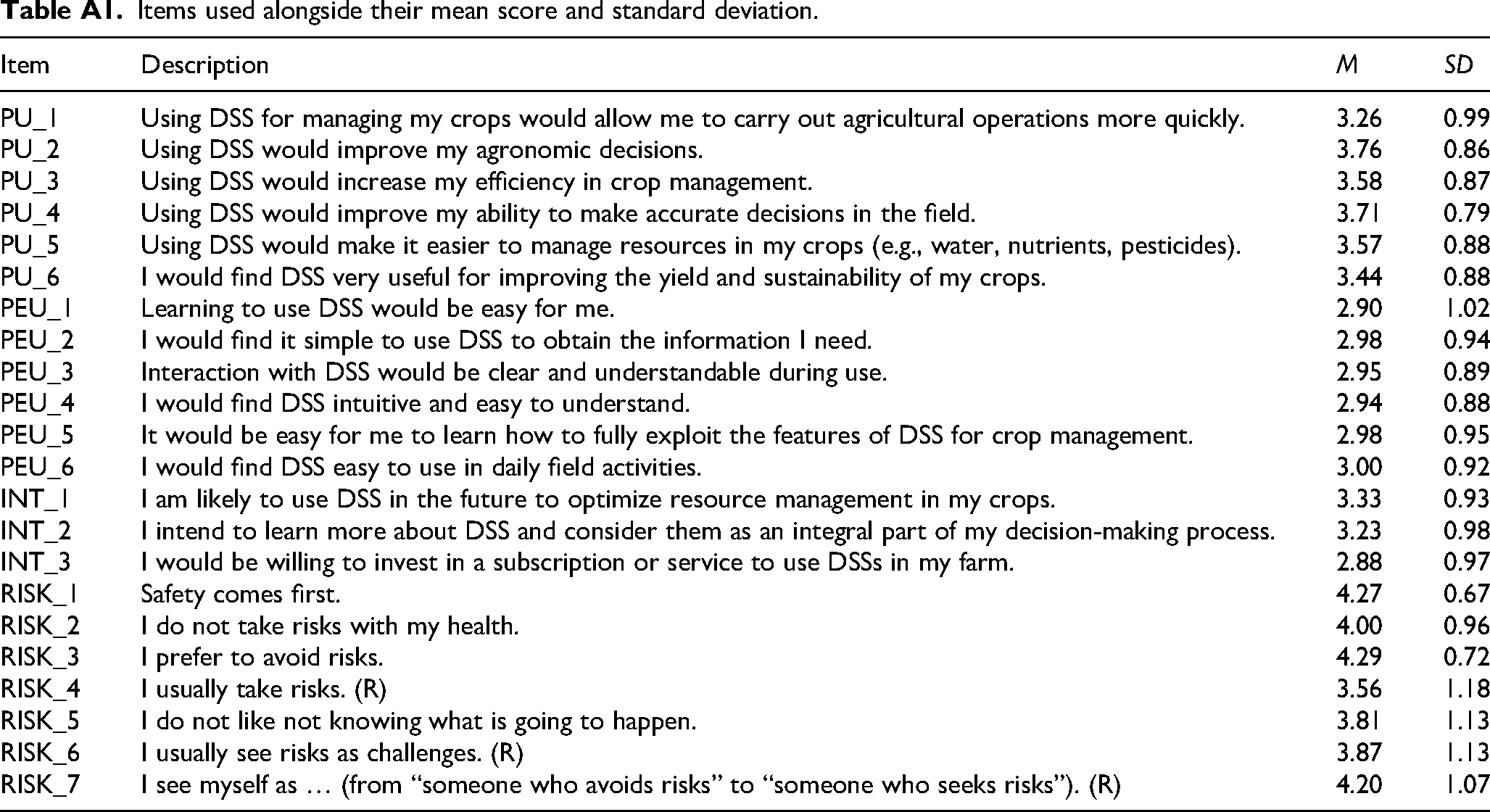
Item
Description
M
SD
PU_1
Using DSS for managing my crops would allow me to carry out agricultural operations more quickly.
3.26
0.99
PU_2
Using DSS would improve my agronomic decisions.
3.76
0.86
PU_3
Using DSS would increase my efficiency in crop management.
3.58
0.87
PU_4
Using DSS would improve my ability to make accurate decisions in the field.
3.71
0.79
PU_5
Using DSS would make it easier to manage resources in my crops (e.g., water, nutrients, pesticides).
3.57
0.88
PU_6
I would find DSS very useful for improving the yield and sustainability of my crops.
3.44
0.88
PEU_1
Learning to use DSS would be easy for me.
2.90
1.02
PEU_2
I would find it simple to use DSS to obtain the information I need.
2.98
0.94
PEU_3
Interaction with DSS would be clear and understandable during use.
2.95
0.89
PEU_4
I would find DSS intuitive and easy to understand.
2.94
0.88
PEU_5
It would be easy for me to learn how to fully exploit the features of DSS for crop management.
2.98
0.95
PEU_6
I would find DSS easy to use in daily field activities.
3.00
0.92
INT_1
I am likely to use DSS in the future to optimize resource management in my crops.
3.33
0.93
INT_2
I intend to learn more about DSS and consider them as an integral part of my decision-making process.
3.23
0.98
INT_3
I would be willing to invest in a subscription or service to use DSSs in my farm.
2.88
0.97
RISK_1
Safety comes first.
4.27
0.67
RISK_2
I do not take risks with my health.
4.00
0.96
RISK_3
I prefer to avoid risks.
4.29
0.72
RISK_4
I usually take risks. (R)
3.56
1.18
RISK_5
I do not like not knowing what is going to happen.
3.81
1.13
RISK_6
I usually see risks as challenges. (R)
3.87
1.13
RISK_7
I see myself as … (from “someone who avoids risks” to “someone who seeks risks”). (R)
4.20
1.07
N. classes
LL
DF
AIC
BIC
1
−609.25
12
1242.50
1310.59
2
−577.20
15
1184.41
1268.81
3
−559.84
23
1165.68
1295.09
4
−541.74
31
1145.48
1319.91