







Abstract
Fundamental movement proficiency (FMS) is most successfully acquired during early school years. This cross-sectional study assessed FMS proficiency in Singaporean children at the start of and following 2.5 years of primary school physical education (PE). Participants were 244 children from Primary 1 and 3 levels. Fundamental movement skills (FMS) were assessed with the Test of Gross Motor Development–Second Edition (TGMD-2) that includes locomotor (LOCO) and object control (OC) subtests. Most children were rated “average” and “below average” for LOCO skills but “poor” and “below average” for OC skills without significant gender differences on either subtest or overall FMS proficiency and without FMS mastery. These young Singaporean children failed to exhibit age-appropriate FMS proficiency despite early PE exposure, and they demonstrated lags in FMS compared with the TGMD-2 U.S. normative sample. We discuss implications for sports competence perception, difficulty in coping with later movement learning expectations and reduced later motivation to participate in PE and play. We also discuss implications for preschool and lower primary school PE curricula with a particular focus on both OC skills and LOCO skills requiring muscular fitness like hopping and jumping.
Introduction
Fundamental movement skills (FMS) acquired during early elementary school years provide the necessary foundation for normal motor development, a positive self-image, self-perceived sports competencies, and life-long interests and participation in health-promoting physical activity (PA; Fisher et al., 2005; Olrich, 2002). Low FMS proficiency along with, low PA, and physical fitness levels together or independently may increase childhood obesity and other health risks (Lopes, Maia, Rodrigues, & Malina, 2012).
FMS must be actively taught, as it should not be assumed that children will acquire movement proficiency in the natural course of their growth and development. Once learned, FMS must be continuously practiced, refined, and combined with other movement skills to facilitate carry over to specialized sports activities. Children who do not receive adequate motor skill instructions and practice may suffer from developmental delays in their gross motor abilities (Gallahue & Ozmun, 2006) and experience frustration and difficulty in learning more advanced skills (Booth, Macaskill, Mclellan, Phongsavan, & Okely, 1997), ultimately discouraging sports participation (Butcher & Eaton, 1989) and reducing motivation toward a physically active and healthy lifestyle. Thus, early FMS proficiency can serve as a vaccine against an unhealthy sedentary lifestyle.
While school-based physical education (PE) programs can play a vital role in developing FMS proficiency (Okely & Booth, 2004a), a surprisingly low prevalence of FMS mastery was reported in third and fourth grade Australian children (Van Beurden, Zask, Barnett, & Dietrich, 2002), and there have been other reports of emerging declines in children’s neuromotor fitness (Harvey et al., 2007), even extending from childhood into adolescence (Branta, Haubenstricker, & Seefeldt, 1984) and with such associated adverse health outcomes as adiposity (Okely & Booth, 2004b), and reduced cardiorespiratory well-being (Okely, Booth, & Patterson, 2001). Despite the well-accepted importance of PE in children’s FMS development, existing school PE programs have come under criticism for not providing the learning environment required to develop motor proficiency (Morgan & Hansen, 2008). Thus, there have been recommendations for greater emphasis on necessary training and resources to ensure quality FMS instruction (Lubans, Morgan, Cliff, Barnett, & Okely, 2010).
Expected Learning Outcomes of Singapore School Physical Education Curriculum at the Lower Primary Level (Ministry of Education Singapore, 2006).
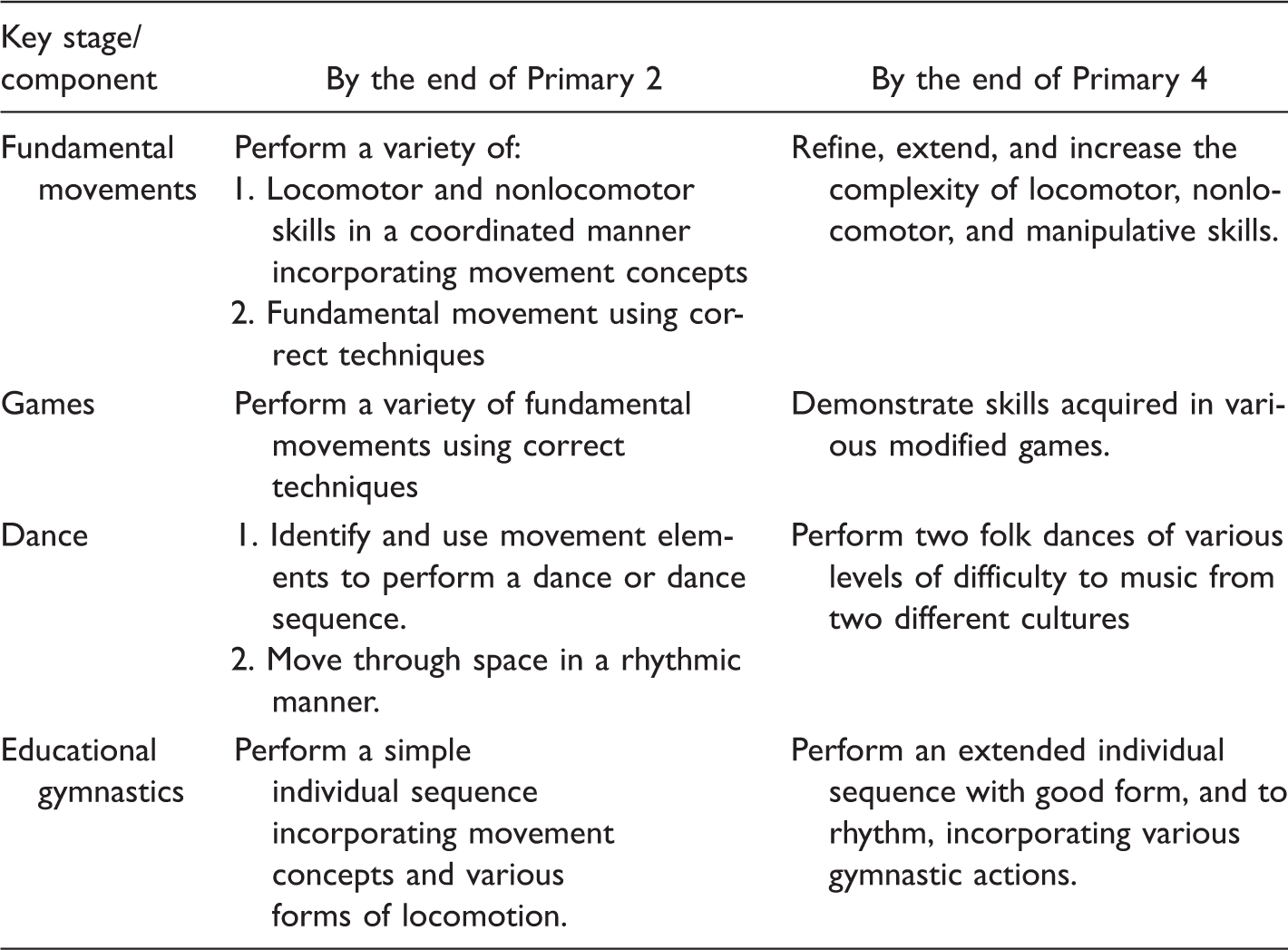
To date, there have been no published descriptions of actual FMS proficiency levels in lower primary school Singaporean children, although studies on Singaporean primary (Gilbey & Gilbey, 1995) and secondary school (Lye, Mukherjee, & Chia, 2015) students have shown a failure to achieve recommended levels of moderate-to-vigorous intensity physical activity (MVPA), engagement in excessive levels of sedentary activity, and an associated risk for long-term adverse health outcomes. Given the association between FMS proficiency and habitual physical activity in preschool children (Williams et al., 2008) and in older children and adolescents (Holfelder & Scott, 2014), more data regarding early FMS proficiency are needed. Thus, this research aimed to (a) measure, describe, and report developmental FMS proficiency of Singaporean children at the lower primary school level; (b) compare FMS proficiencies of Singaporean children with similar aged children from the normative U.S. sample of the Test of Gross Motor Development–Second Edition (TGMD-2); and (c) test the hypothesis that FMS proficiency in lower primary children improves through primary school grades with exposure to the school PE curriculum and environment.
Method
Participants
A convenience sample of 244 children (P1: 60 boys and 60 girls; P3: 72 boys and 52 girls) from four government-aided primary schools in Singapore participated in this study. Primary schools from different geographical strata of Singapore were invited to participate in the study, and schools that agreed to participate from each strata were selected in order to provide geographic, ethnic, and socioeconomic diversity. Prior to data collection, research approval was obtained from the university’s institutional review board, the Ministry of Education Singapore (MOE), and all school principals. Informed parent consent and student provided assent were also obtained beforehand.
Instrument
As stated earlier, we used the TGMD-2 (Ulrich, 2000) to measure each student’s gross motor skills. For the Primary 1 (P1) level, all tests were completed within the first two weeks of the school Term 1; while, upon request, the participating schools delayed the onset of PE lessons to the third week to permit this initial testing. For the Primary 3 (P3) level, the motor skill assessment was done during Term 3 of the school calendar. Thus, P1 students were tested before exposure to the PE curriculum, while P3 students were tested after 2.5 years of their prior exposure to the PE curriculum. As the Singapore school system requires children to be six years old prior to school admission, children starting P1 ranged from 6.0 to 7.5 years and were divided into three age-groups at six month intervals (age month: 6-0 to 6-5, 6-6 to 6-11, 7-0 to 7-5). P3 participants were divided into two age-groups at yearly intervals (8-0 to 8-11; 9-0 to 9-11).
The TGMD-2 is a valid and reliable process-oriented FMS test instrument specifically designed to measure the gross motor development of children from 3 years, 0 months to 10 years, and 11 months of age (Ulrich, 2000). The test measures 12 gross motor skills grouped into two subtests: (a) locomotor (LOCO) and (b) object control (OC). The LOCO subtest measures gross motor skills that require coordinated body movements, while OC subtest measures general ability on ballistic and manipulative skills. The six skills that comprise the LOCO subtest are run, gallop, hop, leap, horizontal jump, and slide, and the OC subtest includes striking a stationary ball, stationary dribble, catch, kick, overhand throw, and underhand roll.
FMS Procedures
All TGMD-2 trials were conducted in the indoor sports hall of the participating schools. To avoid any distraction, no other PE or sports lessons were conducted in the hall during the FMS testing sessions. Following an accurate demonstration and verbal description by one of two trained researchers and one practice trial, a child was given two trials for each skill. Both trials were video recorded, and each child’s skill rating was based on the video analysis by the same researchers. Each skill had a set of three to five performance criteria, and the child’s performance was assessed using a score of 0 or 1 for each performance criterion in each trial. If the skill criterion was adequately demonstrated, one mark would be given, while a zero mark was given if the participant failed to sufficiently demonstrate the skill criterion. We also determined the group’s percentage of “mastery” and “near mastery” for each FMS both overall and by gender. A student was considered to have demonstrated mastery on a subtest skill when he or she had fulfilled all the performance criteria for both trials, while near mastery was considered as meeting all but one performance criterion of the skill.
The TGMD-2 has 48 performance criteria in total for the 12 gross motor skills assessed. The researchers performed the rating process again after four days to determine intrarater reliability. Reliability coefficients for the two subsets and gross motor quotient (GMQ) were determined to indicate the reliability among the two video-based assessments.
The TGMD-2 provides four types of scores: raw scores, percentiles, standard scores, and age equivalents, accounting for gender differences. Age equivalents were presented in year-month format as per the TGMD-2 guidelines (e.g., an age of 6 years and 5 months equates to an age equivalent of 6-5). The raw score for each skill was then summed up to provide a subtest raw score for LOCO and OC skills. The raw score for the LOCO and OC subtests were then converted into standard scores, percentiles, and age equivalents. Subsequently, the subtest standard scores were summed up and converted to percentile ranks and GMQ. A total standard score of 20, a GMQ of 100, and a GMQ percentile ranking of 50 indicated that the participant performed as well as did the average performance of the test’s normative samples.
Descriptive ratings were assigned to each student based on subtest standard scores and GMQ (Ulrich, 2000) as follows: “very superior” (subtest standard score = 17–20, GMQ > 130), “superior” (subtest standard score = 15–16, GMQ = 121–130), “above average” (subtest standard score = 13–14, GMQ = 111–120), “average” (subtest standard score = 8–12, GMQ = 90–110), “below average” (subtest standard score = 6–7, GMQ = 80–89), “poor” (subtest standard score = 4–5, GMQ = 70–79), and “very poor” (subtest standard score = 1–3, GMQ < 70).
Analysis
All statistical analyses were performed using IBM®SPSS® Statistics Version 21.0 (IBM Corporation, NY, USA, 2012). Descriptive statistics were calculated by gender and reported as mean and standard deviations. Normality was assessed using the Kolmogorov–Smirnov test and the interpretation of histogram and q–q plots. Independent Student’s t test was used to evaluate between-gender comparisons. The a priori significant α level chosen for all statistical tests was p < .05, unless otherwise stated.
Results
Both intrarater and interrater reliability were established prior to the FMS assessments. Using precoded video recordings of 20 children, the coefficient α for the LOCO score, OC score, and GMQ were determined which for intrarater reliability ranged from .84 to .93 and for interrater reliability was .86 to .91.
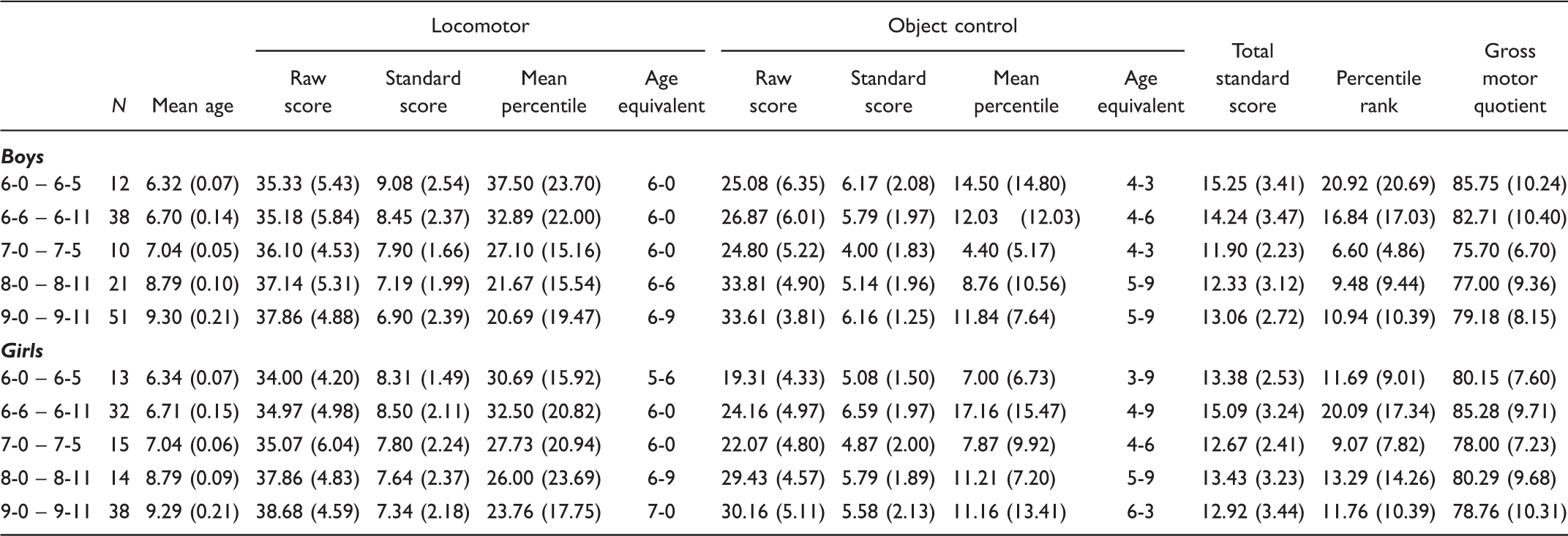
Locomotor, Object Control, and Overall Performance of Singaporean Children on the Test of Gross Motor Development (TGMD-2).
Among the P1 students, the highest level of mastery and near mastery was attained in running followed by galloping and leaping. Apart from these skills, mastery in all other skills was rather low across boys and girls. In the OC subset, apart from catch, less than 50% participants attained near mastery levels.
Similar results were observed in P3 students with participants showing the highest level of mastery in running followed by, gallop, slide, and leap. However, students showed low levels of mastery in hop (∼17%) and jump (∼5%). For jump, even near mastery was attained by only about 20% participants. In OC skills for P3s, apart from catch, the level of mastery was generally low (≤20%) in other skills across boys and girls. Moreover, apart from catch and kick, less than 50% participants had attained near mastery of the other four OC skills.
For P1 children, no significant effect for gender was observed (p = .579) for overall skill proficiency. Most of the students across both genders had an average descriptive rating (68.3% boys; 65% girls) on the LOCO subtest and a poor or below average on OC and overall GMQ. No FMS assessed were mastered by all students. For P1 boys (Figure 1), 31.7% and 36.7% obtained descriptive ratings of poor and below average, respectively, on the OC, and for GMQ, 43.4% and 31.7% were rated poor and below average, respectively. Similarly for P1 girls (Figure 1), 36.7% and 28.3% had a descriptive rating of poor and below average, respectively, for OC skills, while 33.3% of the girls were rated poor, 38.3% were below average for GMQ. No student was rated either “superior” for OC and GMQ or “very superior” across LOCO, OC, and GMQ.
Descriptive rating of the subtests (locomotor and object control) and gross motor quotient for P1 boys and girls.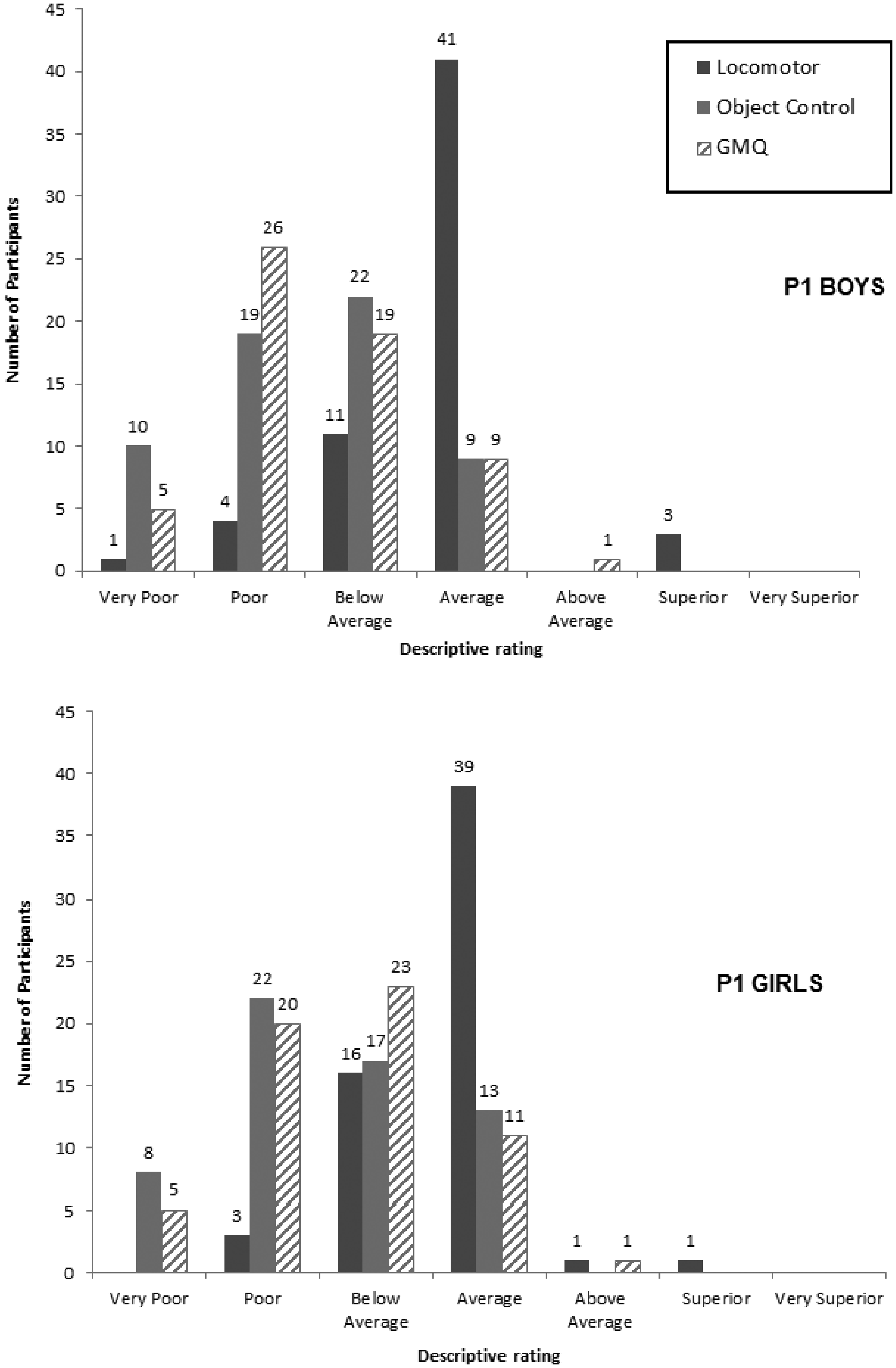
No significant gender difference on overall FMS proficiency was observed for P3 participants (p = .187). On the LOCO subtest, the descriptive rating for most P3 students across both genders (Figure 2) was either average (43% boys; 51% for girls) or below average (26.4% boys; 26.9% girls), while, on the OC subtest, most were considered below average (48% boys; 53% girls) or poor (30% boys; 20% girls) and on overall GMQ, most were rated poor (75% boys; 71% girls). Similar to P1 students, none of the FMS assessed were mastered by all P3 children and no P3 student was rated superior on either LOCO, OC, or GMQ.
Descriptive rating of the subtests (locomotor and object control) and gross motor quotient P3 boys for girls.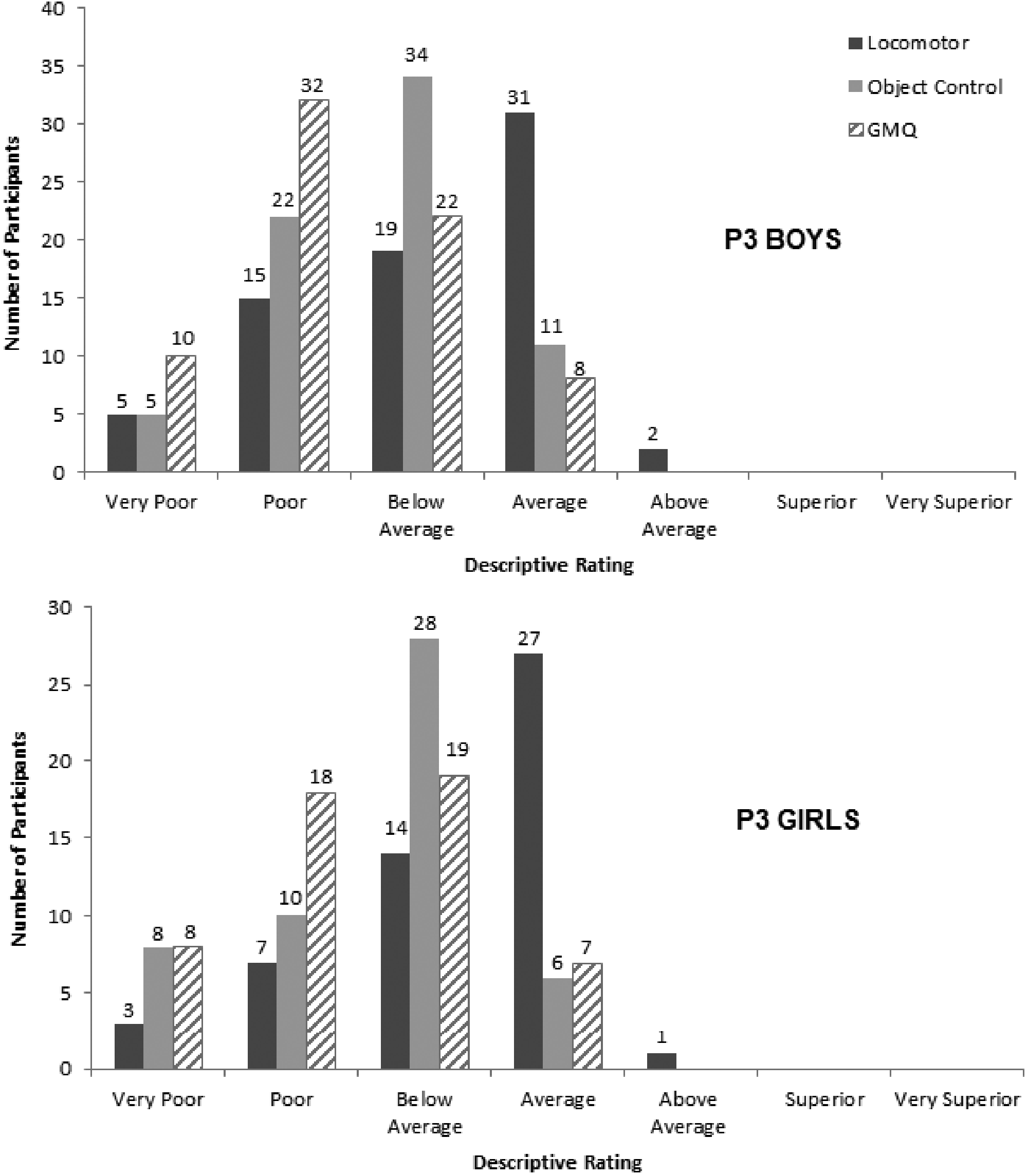
Both P1 and P3 students had mean TGMD-2 age equivalencies lower than their chronological age for both LOCO and OC skills. Among P1 students, there was a trend toward lower GMQ scores with increasing age (6.0–7.5 years) and, comparing P1 to P3 students, there was a non-significant trend toward higher scores in P3 age-group students (Figure 3).
Change in gross motor quotient across different age categories from P1 to P3 level.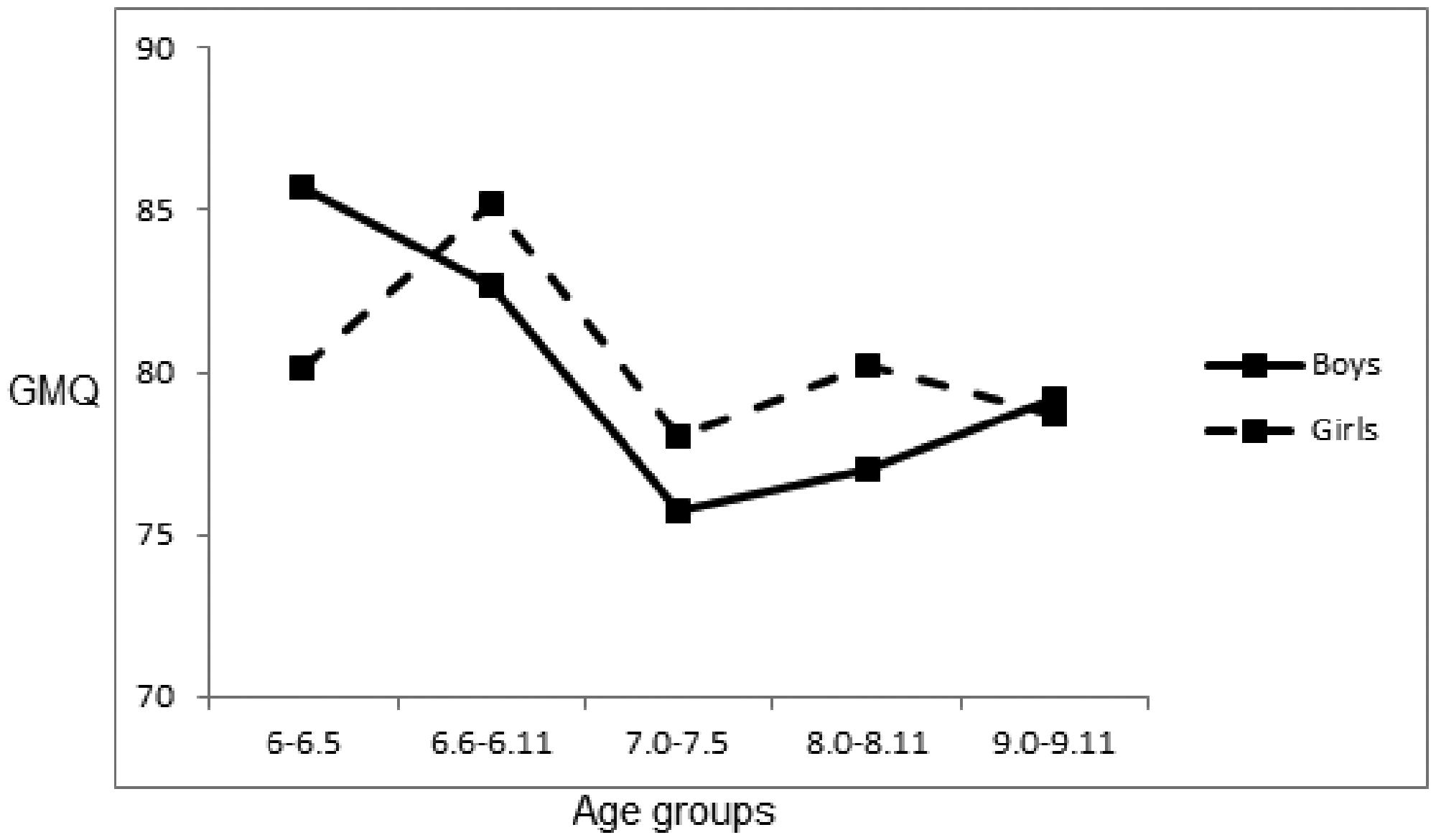
Among the total of 244 participants, no student obtained a maximum score on either the LOCO or OC subtest. For LOCO skills, of the maximum score of 48, four P1 and P3 participants each (total 8; 3.2%) obtained a score > 45 and 16 P1 and 54 P3 students (total 70; 28.7%) obtained a score of 40 to 45. For the OC skills, no participant scored > 45, and only nine P3 students (total 8; 3.7%) scored of 40 to 45. Of the 78 children who scored ≥ 40 on LOCO subset skills, only 6 (7.7%) also scored ≥ 40 on the OC subset.
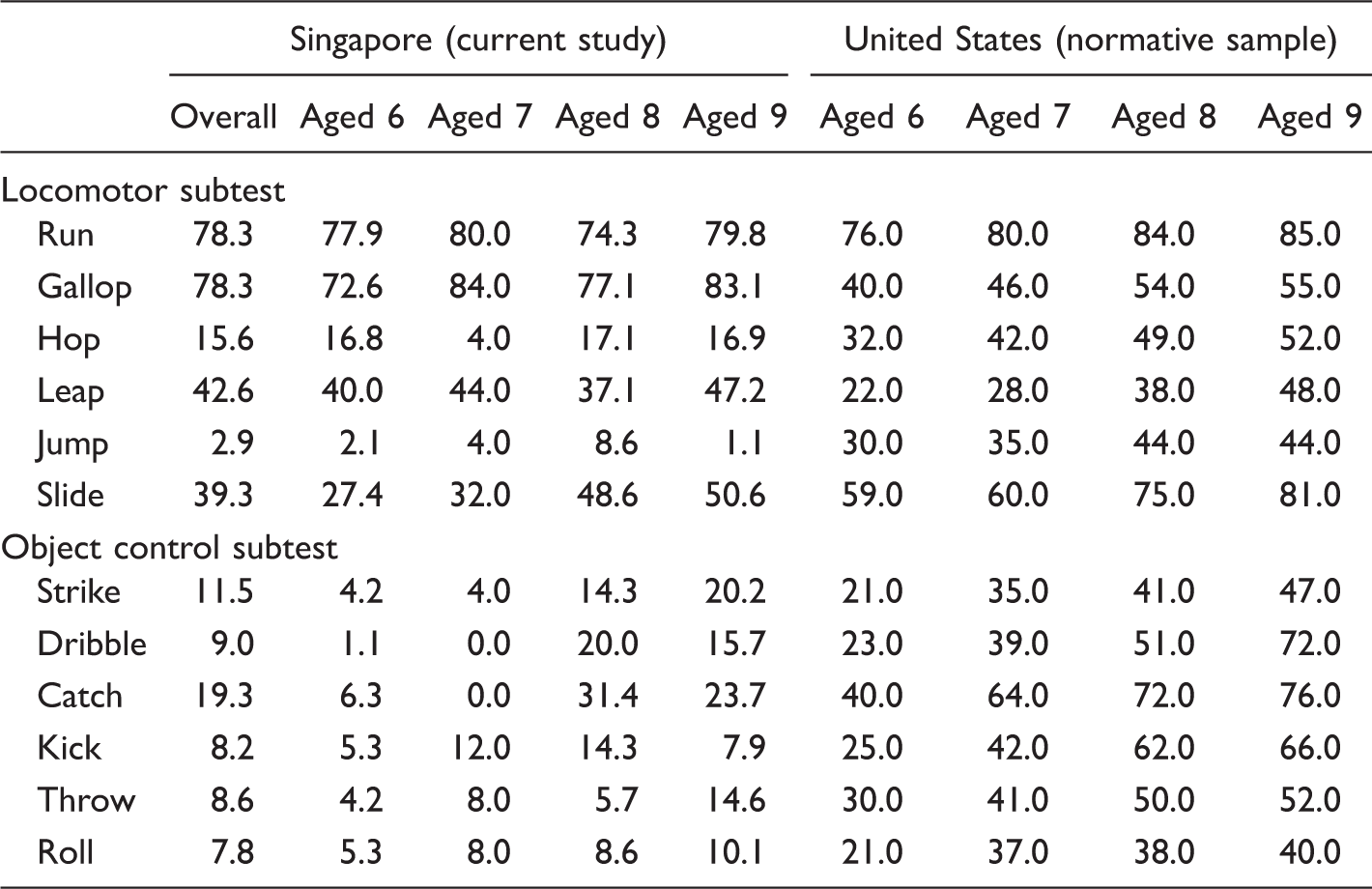
TGMD-2 Mastery Comparisons (Percentages) of Singaporean and U.S. Children.
Note. TGMD-2 = Test of Gross Motor Development–Second Edition.
Discussion
This study provides unique FMS data for Singaporean children at the start of primary school and following 2.5 years of their exposure to the primary school PE curriculum. This is the first study to report motor proficiency assessed through standardized testing in Singaporean lower primary school children and seemingly one of the few studies to provide developmental FMS proficiency of 6- to 9-year-old typically developing Asian children. Additionally, using normative U.S. data from TGMD-2, this study permits a comparison of FMS proficiency in Singaporean and U.S. children.
The present study’s limitations include its cross-sectional design, meaning that group comparisons, at a single point in time, between P1 and P3 students substituted for actual longitudinal observation for inferring the effects of PE exposure over time. Additionally, this study employed a relatively small sample, and without previously published data, there could be no comparisons of FMS proficiencies at different points in time. Finally, despite comparisons of FMS in Singaporean participants with from the United States, this study could not compare the school curriculum or teacher training in these populations.
It is generally assumed that FMS are mostly established between 4 and 6 years of age (Gallahue & Ozmun, 2006) and that children beginning primary school should demonstrate sufficient age-appropriate mastery of TGMD-2-determined fundamental LOCO and OC skills to be engaged in school PE curricula. However, the results of this study did not support these assumptions. Organized PE lessons delivered by trained and qualified physical educators reflect the further assumption that exposure to the school PE environment and curriculum will provide children with adequate stimulus, opportunities, and practice to lead them to master developmentally desirable FMS as they progress through school. However, our hypothesis that early motor proficiency would improve over time between P1 and P3 grade levels was not supported by these data, despite 2.5 years of primary schooling between these groups. Moreover, we found no area of FMS to have been mastered by all children and no children with mastery in all measured FMS. These results raise significant concern for Singaporean children since early motor skill proficiency is a key predictor of sports competence perception and adolescent physical activity and general health (Barnett, Morgan, van Beurden, & Beard, 2008).
Students in the present study at both P1 and P3 levels had mean motor age scores that were lower than their chronological age. While overall motor proficiency was low in this sample, broadly poor OC skills were of particular concern. While studies on other populations have also reported low OC proficiency in children (Goodway, Crowe, & Ward, 2003; Southall, Okely, & Steele, 2004; Valentini, Spessato, & Rudisill, 2007), participants of this study had lower OC subtest scores compared with both the U.S. TGMD-2 normative sample and compared with scores reported in a study of Hong Kong children (Pang & Fong, 2009). Using the same instrument (TGMD-2), the descriptive rating for the majority of 6- to 9-year-old children in Hong Kong were average and above average for OC (Pang & Fong, 2009), while the majority in the present study were in the below average, poor, and very poor category with no student rated as above average or superior for OC skills. The Hong Kong children aged 6 to 7.5 years had OC GMQ ranging from 109 to 112 and 109 to 117 for boys and girls, respectively, while the participants in the present study had a GMQ of 75 to 86 and 78 to 85 for boys and girls, respectively. Thus, Singaporean children are not ready to cope with the movement learning expectations of the primary school PE curriculum. Among the P3 age-group (8 to 0 to 9 to 11), Hong Kong children had higher GMQ scores (boys, range 102 to 106 vs. 77 to 79; girls, range 109 to 111 vs. 78 to 80) compared with these Singaporean children. It is also noteworthy that these results showed almost no change in the GMQ when comparing children at P1 and P3 grade level. Remarkably, Pang and Fong (2009) and authors of an earlier Hong Kong study (Wong & Cheung, 2006) reported mastery or near mastery of OC skills by a much higher percentage of participants in both age categories compared with that in the present study.
Low OC proficiency in Singaporean students and in the previously reported studies (Pang & Fong, 2009; Van Beurden et al., 2002; Wong & Cheung, 2006) is a significant concern, since OC proficiency during elementary school has been shown to predict both adolescent physical activity and time spent in MVPA and organized activities (Barnett, van Beurden, Morgan, Brooks, & Beard, 2009). Moreover, it has been previously shown that in both boys and in girls, proficiency in OC skills has a particular influence on self-perceived sports competence which in turn may promote PA and fitness during adolescence (Barnett et al., 2008). Therefore, it is reasonable to speculate that a recent report of significantly lower MVPA levels and excessive sedentariness among Singaporean adolescents (Lye et al., 2015) is an outcome of poor OC proficiency levels during the early primary school years.
Contrary to previous studies (Hardy, Barnett, Espinel, & Okely, 2013; Okely & Booth, 2004a; Pang & Fong 2009; Spessato, Gabbard, Valentini, & Rudisill, 2012; Vandaele, Cools, de Decker, & de Martelaer, 2011) reporting that boys generally perform better than girls in OC skills as striking, kicking, dribbling, throwing, and catching, the present study showed no significant gender differences. The Singapore lower primary school PE curriculum advocates equal gender opportunities of FMS practice, development, and achievement of its objectives (MOE, 2006), but there is gender stereotyping in activity selection and engagement (Blatchford, Baines, & Pellegrini, 2003; Pellegrini, Blatchford, & Kato, 2004), with boys receiving greater social and family support to engage in PA than girls (Gonçalves, Hallal, Amorim, Araújo, & Menezis, 2007). These factors have been suggested as possible reasons for gender differences in FMS proficiency, but the absence of significant gender differences in FMS proficiency in this study suggests that sociocultural and environmental context in Singaporean child development are fertile area for future research.
Children in the present study performed better in LOCO skills compared with OC skills. Similar findings have been reported in 6- to 9-year-old typically developing children (Pang & Fong, 2009; Vandaele et al., 2011; Wong & Cheung, 2006), but the overall LOCO proficiency of current participants was particularly low compared with both the U.S. normative sample (Ulrich, 2000) and Hong Kong children (Pang & Fong, 2009). While the percentage of children demonstrating mastery on run, gallop, and leap in this study was comparable to the U.S. normative sample, this was not the case for hop, jump, and slide, and Pang and Fong (2009) reported a far superior performance in all the LOCO skills among their Hong Kong participants. In our Singaporean sample, mastery was demonstrated by 78.3%, 78.3%, and 42.6% children on run, gallop, and leap, respectively, compared with mastery achieved by 94%, 81%, and 95% on the same skills by the Hong Kong children (Pang & Fong, 2009). Remarkably, children in the present study fared rather poorly on such LOCO skills as hop and jump with mastery by merely 15.6% and 2.9%, respectively. These skills require sufficient force to lift the body off the ground over a short distance and hence are likely to be largely affected by muscle strength of the lower limbs. Interestingly, other studies have also reported low levels of mastery on hopping and jumping (Okely & Booth, 2004a; Pang & Fong, 2009; van Beurden et al., 2002) and a decline in vertical jump competency over time (Hardy et al., 2013).
Muscular strength is a prerequisite for many motor skills (Malina, Bouchard, & Bar-Or, 2004) and thigh muscle strength has been reported to be a significant factor for locomotion movements in 7-year-old children (Tveter & Holm, 2010). A period of inactivity causes reduced muscular fitness leading to reduced vertical jump performance in prepubertal children (Ingley, Sleap, & Tolfrey, 2006) and reduced standing long jump performance in 7-year olds. (Faigenbaum et al., 2013). Therefore, habitual participation in physical activities under qualified instruction is purposely designed to enhance muscle strength, FMS, and improved proficiency in strength-requiring motor skills (Lopes et al., 2012; Malina et al., 2004). Early exposure to activities that enhance muscular fitness and motor skills is beneficial to children, while poor levels of mastery in hop and jump skills in both P1 and P3 participants in the present study suggest insufficient exposure to activities involving jumping and hopping during preschool and initial primary school years.
Lower primary school years represent a critical developmental window, making gross motor skills acquisition a basis for and an end product of sound PE instruction (Barton, Fordyce, & Kirby, 1999). Children with greater motor skill competence show higher engagement in spontaneous PA participation on a regular basis and those with motor difficulties may choose not to participate in PA as a coping strategy (Bouffard, Watkinson, Thompson, Dunn, & Romanowski, 1996). The finding in this study that of the 78 children who scored ≥ 40 in the LOCO subtest, only six of them also scored at this level on the OC subtest suggest that while some FMS like walking will acceptably develop for most children, most other FMS must be taught, practiced, and reinforced to be adequately developed. It is wrong to assume that all FMS will be mastered without good PE because trained physical educators provide movement experiences that involve FMS (Olrich, 2002). However, previous research suggests that PE teachers should do more than merely provide enjoyable activities. They must actively work to include purposeful, developmentally appropriate programs and activities for mastering FMS (Colvin, Markos, & Walker, 2000). Our results provide strong corroboratory evidence for a PE curriculum that is more than a supportive syllabus with qualified teachers. Since FMS proficiency was alarmingly low during the early primary school years in this population, more is needed to decrease the likelihood of reduced motivation for PE, PA, and sports participation in later years.
Future research should develop population-specific TGMD-2 norms for typically developing children in Singapore and the data from this study can be a benchmark in this process. Researchers should also examine Singaporean children’s physical activity level comparing it to FMS in order to obtain greater insights into the relationship between FMS, physical activity, and sedentariness in these children. As a lack of a structure in PE and motor programs in preschool is of concern, it is critical to more closely examine the Singaporean preschool PE content, age appropriateness, level of exposure and learning outcomes and to examine the knowledge and training levels of preschool teachers especially in the area of motor development and physical activity needs.