







Abstract
Communication through discussion and conversations is fundamental to human life; but when such discourse escapes the control of a teacher in the classroom, it becomes little more than chatter. This noise challenges teaching methods and the teaching stance with students. Yet, its impact on comprehension has rarely been studied. The aim of this literature review was to examine the research on the impact of classroom noise generated by chatter on students’ comprehension performance. We adopted the PRISMA (Preferred Reporting Items for Systematic Reviews and Metanalysis) guidelines to examine this literature. This review covered a 10-year period (papers written between 2009 and 2019), with nine experimental studies selected from the 2,954 papers screened. In 89% of these nine studies, there were significant comprehension differences on all tests, revealed when comprehension took place in a noisy environment due to chatter. This review indicated an essential need for a field survey to better understand the impact of chatter on comprehension. Other studies are recommended to highlight any correlation between measured chatter and student comprehension in a real classroom environment.
Introduction
Classroom noise levels can be high, with the main sources of noise the students within them. In some countries, like France, legislation has fixed the maximum noise level at 43 dB per classroom (legifrance website). In England, a study of high school classrooms showed that noise levels in occupied classrooms varied from 45 - 77 dB, depending on the age and number of students and on the classroom activity, with an average lesson noise level of 64 dB (Shield et al., 2015). Excessive noise is annoying for students, and it affects student academic performance (Astolfi & Pellerey, 2008; Klatte et al., 2013; Shield & Dockrell, 2010). Students have been found to be sensitive to the disruptive effects of noise; high levels of disturbance and annoyance have been reported with loud outdoor and indoor noise levels (Avsar & Gonullu, 2010; Skarlatos & Manatakis, 2003). The noise emitted by other students talking has been cited as particularly disturbing (Astolfi & Pellerey, 2008; Connolly et al., 2013).
Correlations between the annoyance and rated effect of noise on students' schoolwork have been shown to be significant (Lundquist et al., 2000). Negative effects of high noise levels have been documented in many aspects of students’ learning, including speaking, reading, writing, and math (Bistrup et al., 2003; Dockrell & Shield, 2006; Shield & Dockrell, 2003). Previous studies have found that younger students are more susceptible to the negative effects of noise than are older students (Elliott & Briganti, 2012; Klatte et al., 2010; Meinhardt-Injac et al., 2015). For example, an older comprehensive review of studies on the negative impact of noise on student comprehension found that student capacity to recognize sentences when surrounded by noise deteriorated most for young children when comparing 15-17
Chief considerations for assessing the quality of school based education are the physical and technical infrastructure of the school building, classroom size, teacher quality, curricular syllabi and learning materials (e.g., textbooks). Certainly, each of these factors are very important, but another equally important but much less frequently considered factor is the students’ interactive behavior, particularly when they are chatting together. The sound of the other learners’ chatter has been identified as a decisive factor in the level of classroom noise (Astolfi & Pellerey, 2008; Connolly et al., 2013; Enmarker & Boman, 2004). While, as noted above, student performance in reading and mathematics has been shown to be impaired by classroom chatter, compared to quiet conditions, for primary school students (Shield & Dockrell, 2008), little is known about the way(s) in which chatter impacts comprehension. Students who struggle with excessive noise may simply tune out all stimuli, automatically shutting down learning channels. In specific literature dedicated to hearing in noisy conditions, there has been a tendency to attribute children’s difficulties solely to the children’s deficits in selective attention (Leibold et al., 2010; Wightman et al., 2010). The ability to comprehend complex verbal information in adverse listening conditions is vital for children, if they are to achieve academic success. Most research in this area has focused on the effect of noise on lower level auditory perception skills, such as auditory discrimination and recognition (Gustafson & Pittman, 2011). Increasingly, however, there has been recognition of a need to evaluate the effect of other students’ chatter on comprehension. The aim of the present literature review was to examine the impact of noise generated by student chatter on comprehension among young students (under the age of 25). We reviewed specifically those studies that have addressed the effects on comprehension of noise generated by classroom chatter.
Method
The types of research studies we sought to select for close scrutiny were: (a) Population: Students; (b) Intervention: Chatting; (c) Comparison: Chatting versus quiet; (d) Outcome: Comprehension; and (e) Study: Clinical Trial. We conducted this systematic review of selected studies by following the established guidelines of the Preferred Reporting Items for Systematic Reviews and Meta-Analyses (PRISMA; Shamseer et al., 2015).
Search Strategy
We searched for publications that examined and reported on the influence of students’ chatter on comprehension and testing. We included both medical and educational studies. Initial databases of peer-reviewed literature included PubMed, ERIC, Ulysse, Psycinfo, PsycArticle and CAIRN. We searched these databases for English and French-language manuscripts published between January 1, 2009 and February 24, 2019, using search criteria of “school, classroom, chatting, gossip, babble, noise and comprehension.” We chose a limit of 10
Study Selection
We included studies that described the impact of noise generated by student chatter in a classroom on student comprehension. We selected only peer-reviewed empirical articles. Studies were excluded for the following reasons: (a) evaluation of the impact of noise on students with hearing disabilities (e.g. cochlear implant); (b) evaluation of the impact of noise comparing different classroom insulation conditions; and (c) studies in which there were no objective data of any kind evaluating student comprehension (e.g. only teacher ratings). The flowchart for the study selection procedures in this review is shown in Figure 1. We used a student cut off age of 25
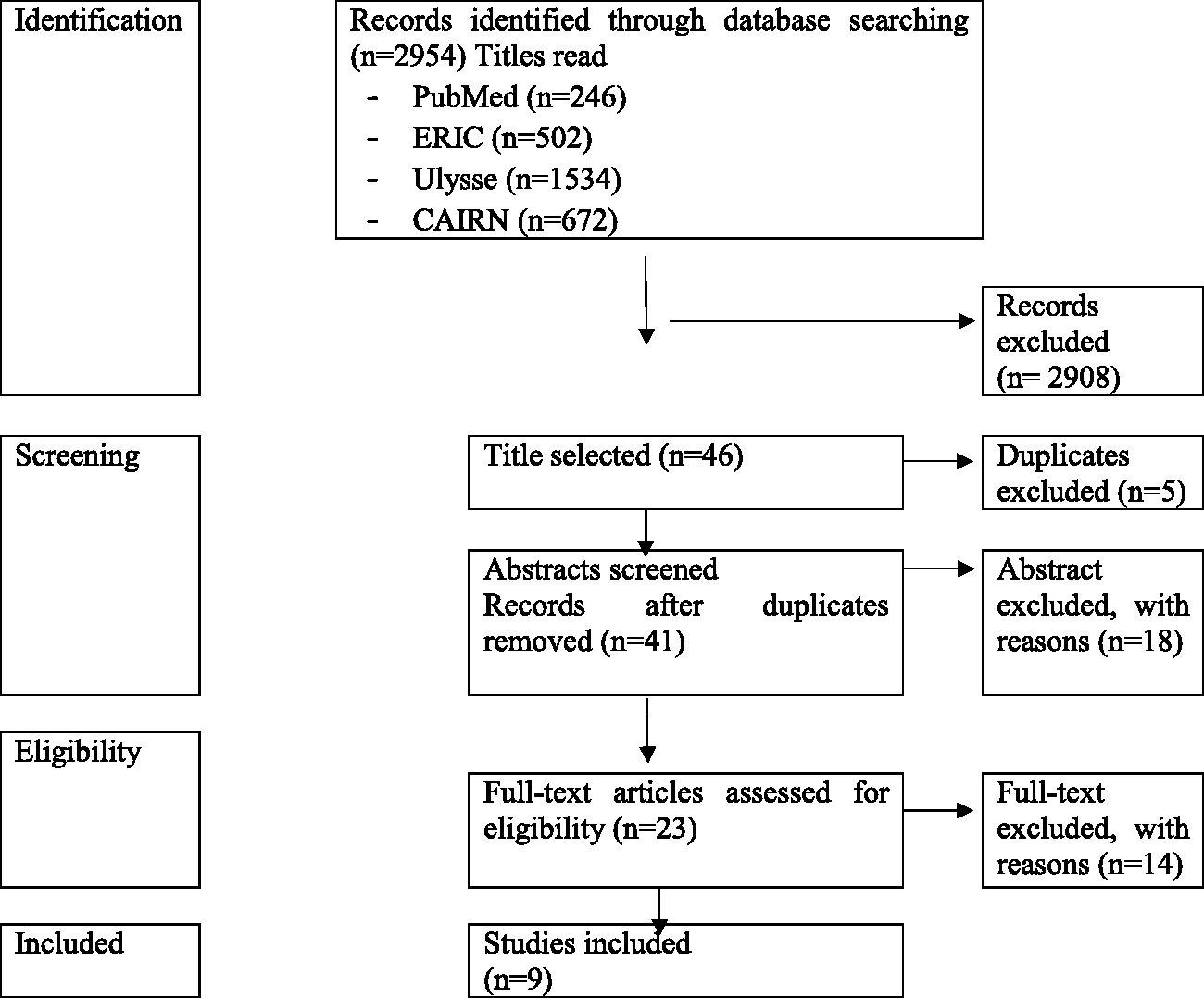
Flowchart for Literature Review Study Selection.
Outcome Measures
The outcome variable of interest was comprehension. Students were classified according to the criteria adopted by the original investigators. We defined chatter as a sound source due to internal noise in the classroom mainly generated by discussions between students that can induce a high noise level. Chatter was constrained to being from within the classroom.
We gathered demographic data regarding the students (number of students, nationality, age, language of the study) so as to better describe and judge the validity/reliability of the impact of classroom chatter on comprehension across various student samples. We examined different types of student comprehension performance testing conducted in order to engage in a final outcome analysis regarding the results of these evaluations.
Data Extraction
Initially, three reviewers (authors A-S.L., J.R. and G.S.) screened all potentially eligible studies (2,954) to determine whether the title and abstract were consistent with the search criteria presented above. We then classified articles as relevant, potentially relevant or not at all relevant. In a second step, two reviewers (authors A-S.L, J.R.) independently examined the full text of all papers that had been classified as relevant. These two reviewers individually decided whether or not these relevant studies were eligible for further consideration, based on the inclusion and exclusion criteria mentioned above. An independent investigator (author A.E.) re-checked the full text of these assessed papers for their eligibility in order to make a final selection decision. This same independent investigator (author A.E.) also reviewed the eligibility of all the studies that had first been classified as “potentially relevant”, and A.E. made a final decision about these studies as well. We created a data extraction file on an Excel data spread sheet (Microsoft, Redmond, Washington, USA) in order to register the details of the study design in terms of primary outcome (chatter noise impact on comprehension in a classroom), and to register the available data characteristics of the student population (age, sex, number of students, language, hearing test).
Results
Demographic Data for Students
After reviewing the culled article database, excluding duplicates, checking the titles and abstracts, and reviewing the full texts, we rejected 14 of the 23 potentially relevant studies because they were (a) evaluations of the impact of noise on students with hearing disabilities (three articles), (b) evaluations of the impact of noise comparing different classroom insulation conditions (six articles), (c) studies in which the only student evaluation was a subjective evaluation from the teacher (three articles), or studies without any evaluation (two articles)
For obvious technical reasons, neither the operator nor the outcome assessor was blinded in any of four randomized studies we reviewed (Connolly et al., 2019; Jones et al., 2015; Prodi & Visentin, 2015; Yang et al., 2017). A summary of the judgments of the authors of this review regarding the risk of biases at the level of individual studies for these four randomized studies is provided in Figure 2.
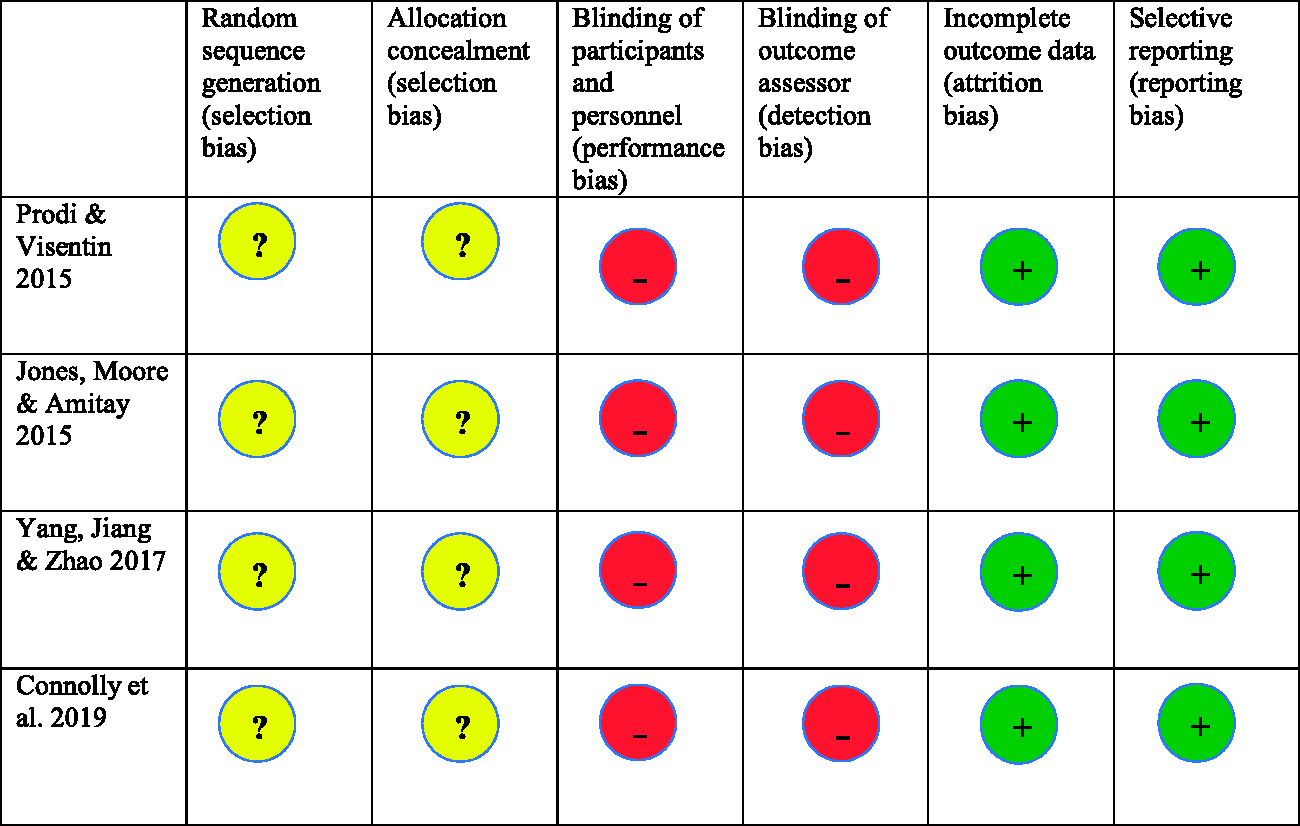
A Summary of the Review Authors’ Judgments Regarding Risk of Biases at the Level of Individual Randomized Studies.
We selected nine studies to include in our final analysis. Collectively, these studies enrolled a total of 2,814 students (see Table 1). Among these nine studies, four (45%) were conducted in the United States (Magimairaj et al., 2018; Osman & Sullivan, 2014; Riley & McGregor, 2012; Sullivan et al., 2015;), two (22%) were conducted in Italy (Prodi et al., 2013; Prodi & Visentin, 2015), two (22%) were conducted in the United Kingdom (Connolly et al., 2019; Jones et al., 2015) and one (11%) was conducted in China (Yang et al., 2017).
Descriptive Data for the Nine Reviewed Studies.
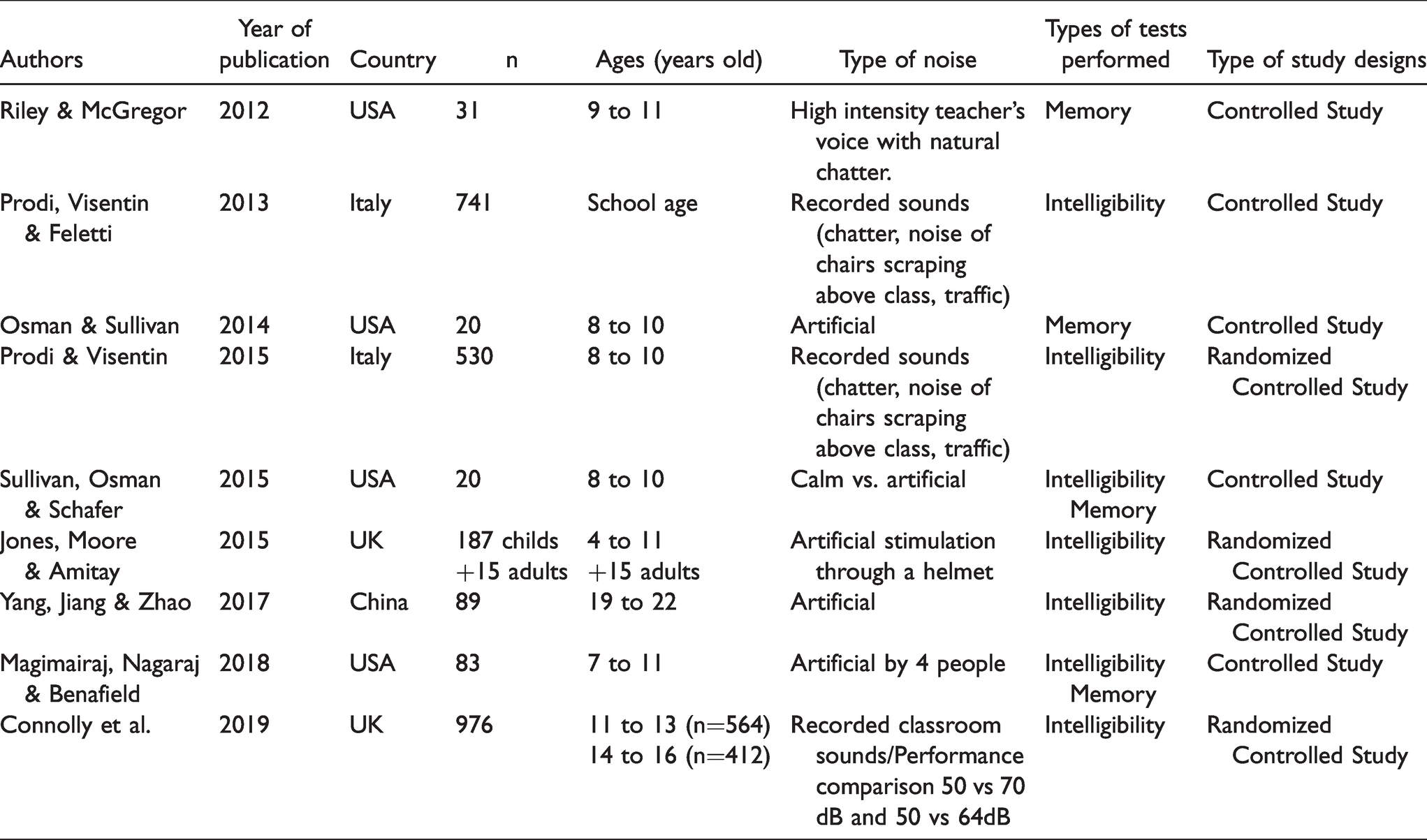
Among the nine studies included, seven (78%) were based on student populations aged from 4-11
Types of Comprehension Performance Tests Conducted
All of the selected studies experimentally assessed the impact of chatter on student comprehension (Connolly et al., 2019; Jones et al., 2015; Magimairaj et al., 2018; Osman & Sullivan, 2014; Prodi et al., 2013; Prodi & Visentin, 2015; Riley & McGregor, 2012; Sullivan et al., 2015; Yang et al., 2017). In all of these studies, students were exposed to a reproduced experimental classroom rather than their actual everyday class situation. In all studies, students knew they would be evaluated on their capacity to respond in a sound environment comparable to that of a noisy, chatter-filled classroom.
The tests carried out on student participants were all performance tests, with five of these (56%) intelligibility tests (Connolly et al., 2019; Jones et al., 2015; Prodi et al., 2013; Prodi & Visentin, 2015; Yang et al., 2017), two of these (22%) memory tests (Osman & Sullivan, 2014; Riley & McGregor, 2012), and two of these (22%) both intelligibility and memory tests (Magimairaj et al., 2018; Sullivan et al., 2015). The comprehension tests that were utilized were different between all studies. One study used a word identification test presented by a smartphone image in parallel with recorded noises of students chatting (Prodi et al., 2013). In another study, students performed a tone-in-noise detection task, in which the masking noise varied randomly in each presentation (Jones et al., 2015). This study used selective attention tests, measuring the degree to which listeners were influenced by each spectral region of the chatter stimulus and testing was done in a sound-attenuating booth using headsets (Jones et al., 2015). Two studies used specific tests such as the Learning Style Inventory for English to measure listening comprehension tests in a situation of chatting noise (Yang et al., 2017) and the Bamford-Kowal-Bench Speech-in-Noise Test (Magimairaj et al., 2018). In another study, electronic tools were used by administering reading tasks on laptop computers while students were exposed to different levels of classroom noise played through headphones (Connolly et al., 2019). Memory tests involved word retention testing (Riley & McGregor, 2012) and auditory working memory tasks (Forward Digit Recall, Backward Digit Recall, Listening Recall Primary, and Listening Recall Secondary) (Osman & Sullivan, 2014).
Tests were performed in various sound environments across these studies, including both artificial environments (pre-recorded soundtracks or created chatter noise) in eight (89%) articles (Connolly et al., 2019; Jones et al., 2015; Magimairaj et al., 2018; Osman & Sullivan, 2014; Prodi et al., 2013; Prodi & Visentin, 2015; Sullivan et al., 2015; Yang et al., 2017) and natural environments (chatter noises induced by students in the classroom at the time of testing) in one (11%) (Riley & McGregor, 2012). The artificial noises were designed to be comparable to students’ chatter, and they were associated with chairs scraping on the floor above the classroom and car traffic in three (33%) of these articles (Connolly et al., 2019; Prodi et al., 2013; Prodi & Visentin, 2015) or involved actual chatter between 2-4 people in six (67%) cases (Jones et al., 2015; Magimairaj et al., 2018; Osman & Sullivan, 2014; Riley & McGregor, 2012; Sullivan et al., 2015; Yang et al., 2017). Multiple test sessions were performed in five (56%) studies (Jones et al., 2015; Magimairaj et al., 2018; Osman & Sullivan, 2014; Prodi & Visentin, 2015; Riley & McGregor, 2012) and, for the four other studies (44%) there was only one test session.
Outcome Analysis
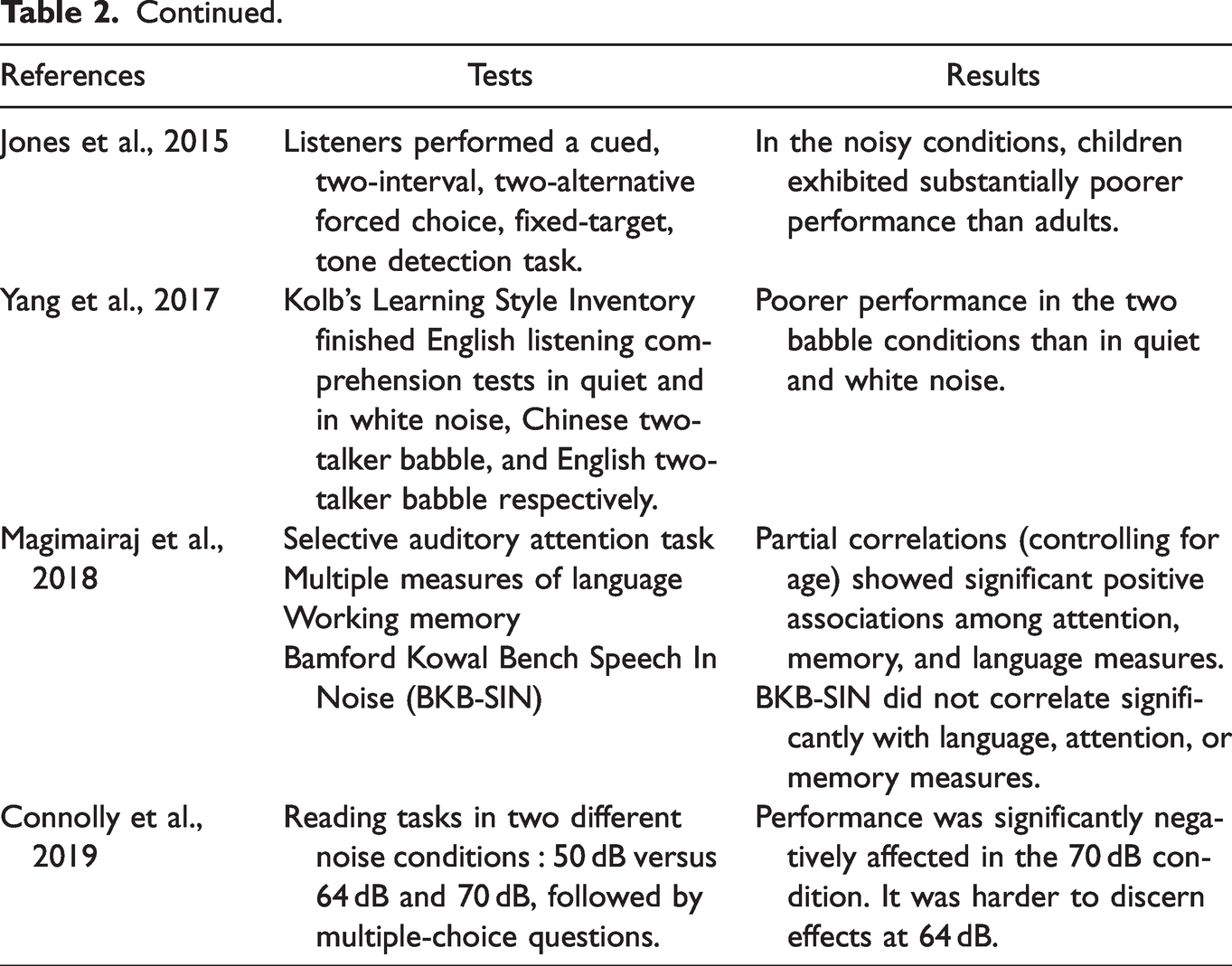
Tests and study outcomes are shown in Table 2. There was a significant comprehension difference for all tests in the noisy (due to chatter) sound environment in eight (89%) studies (Connolly et al., 2019; Jones et al., 2015; Osman & Sullivan, 2014; Prodi et al., 2013; Prodi & Visentin, 2015; Riley & McGregor, 2012; Sullivan et al., 2015; Yang et al., 2017). The measured comprehension ability was not influenced by variations in the teacher's voice or articulation, but only by chatter-like noise. However, when chatter was low and the teacher articulated well, as in one study, there was no obstacle to the students’ understanding, whatever their memory capacity (Riley & McGregor, 2012). In two other studies, in which working memory subtests were administered in quiet and multi-talker chatter noise conditions of 0
Comprehension Test Results of the Nine Studies.
Discussion
This literature review revealed that only a tiny fraction (nine articles or 0.31%) of the published articles in French and English over the last ten years that investigated the impact on student comprehension of classroom chatter noise (2,954 articles) met criteria for experimental research focusing on learners below the age of 25 with comprehension outcome measures. Of these nine studies, all were laboratory-based and none involved actual classrooms. Of these nine studies, eight (89%) found student comprehension to have been adversely affected by noise associated with student chatter for all tests (Connolly et al., 2019; Jones et al., 2015; Osman & Sullivan, 2014; Prodi et al., 2013; Prodi & Visentin, 2015; Riley & McGregor, 2012; Sullivan et al., 2015; Yang et al., 2017).
These studies, and other literature, have made clear that noisy classroom conditions are a barrier to students’comprehension. While understanding speech in poor listening conditions has been widely acknowledged as a crucial problem for school-age children, recommended noise levels and reverberation times for classrooms have often been exceeded worldwide. Younger children have been found to be particularly vulnerable to the negative effects of noise (Shield et al., 2015). One explanation for this adverse comprehension effect of noise in the environment is that competing noise may increase the demand for energy consuming cognitive processes during auditory perception. This increased cognitive load may come at the expense of available cognitive processing resources for such other cognitive tasks as working memory. Working memory has been conceptualized as the limited capacity system of cognitive processing that is responsible for encoding, storing, processing and retrieving information. In conditions of comprehension difficulty through hearing degradation conditions, explicit processing resources are required to discriminate a mismatch between the phonological information that must be extracted from the distorted speech signal and the core phonological information that is important to comprehension and long-term memory (Magimairaj et al., 2018; Osman & Sullivan, 2014; Sullivan et al., 2015; Yang et al., 2017).
In general, as auditory processing becomes more complex, comprehension systematically deteriorates (Connolly et al., 2019; Jones et al., 2015; Osman & Sullivan, 2014; Prodi et al., 2013; Prodi & Visentin, 2015; Riley & McGregor, 2012; Sullivan et al., 2015; Yang et al., 2017). This review suggested probably that degraded sound quality may be better supported, despite how clever the cognitive load theory seems to be, but to date without studies of real class conditions, it is difficult to answer. Students in the study by Yang et al. (2017) were not only the only adult students among these studies, but they were also the only students trying to comprehend a non-native language while class room chatter was in their native language. Second language acquisition is remarkably different from first language comprehension in several ways (VanPatten et al., 2020).
Learning is the process of performance improvement across time. To assess learning, one needs to assess performance at multiple time points. However, the studies included in this review were not longitudinal in nature, and we cannot assume, without further research, that they inform us well regarding learning over time. Additionally, most outcomes in these studies were based on intelligibility which has more to do with perception of learning material than actual learning. Of particular importance, these studies involved simulate rather than actual classroom chatter.
Limitations of Past Research and Directions for the Future Research
Noise certainly has a significant adverse impact on listening comprehension, and these studies provide several new insights regarding the links between degraded sound and auditory comprehension. It would have been useful to have at least one real-world study of actual classroom chatter noise to confirm this consensus impact of student chatter on classroom comprehension from simulated classroom chatter studies. There is a clear need for future research. In addition, integrating this research theme with research investigating effective teacher management of classroom noise is critically important, as this variable may have a significant positive effect on student comprehension that was not evaluated by these experimental classroom studies (Prodi & Visentin, 2015; Riley & McGregor, 2012).
Unstandardized outcome measures of student comprehension are a further complication to interpreting the results of these nine studies, and future studies will benefit from the adoption of standardized outcome measures. While interrelationships between noise generated by classroom chatter and children’s comprehension performance skills were observed among many for school-age children with different comprehension abilities, the association between working memory, auditory attention and performance measures differed with the nature of the outcome task performed (Magimairaj et al., 2018). Listening-in-noise (including chatter) testing implied the presence of greater cognitive demands and increases in individual differences in performance. In better, but not optimal conditions, performance management improved and the effect of noise was attenuated (Prodi & Visentin, 2015). These studies (8 of 9) reported a negative impact of chatter noise on comprehension on all tests. Still, we should point out that insufficient statistical power due to so small a sample size also prohibits statistical analyses and prevents us from drawing irrefutable conclusions. Another limitation of this review is that comparisons between the different studies was made difficult by the fact that some of the tests were conducted as a one-off experiment (Prodi & Visentin, 2015; Sullivan et al., 2015; Yang et al., 2017), while another was a longitudinal study that took place over three years using a different research method (Jones et al., 2015). Only 56% (5 of 9) of these studies utilized outcome measures administered over several test sessions (Riley & McGregor, 2012; Osman & Sullivan, 2014; Magimairaj et al., 2018; Jones et al., 2015; Prodi & Visentin, 2015). Future studies (and future literature reviews) might focus particularly on the ways in which various different student profiles (e.g., student disabilities) may interrelate with classroom noise in its effects on student comprehension. Finally, in addition to the foregoing limitations, another can be advanced regarding the skills attainment of each student within the varied cultural teaching context across these nine studies. That is, as each country has very specific curricular requirements, a French teacher may not expect the same performance test results for a given age group as a teacher from another country. The nine studies included in this review can only be transposed from one country to another with significant reservations, and more research is needed in order to separately analyze these variables in various different comprehension contexts.
Systematic reviews have certain limitations. Most of them have been focused on a single index test. We didn't focus on a specific test, but we used seven search criteria. Many systematic reviews have relied on a relatively limited number of databases to identify potentially eligible studies. We did not limit our search and opened it to six databases. A limit of 10
Conclusion
In conclusion, the tests carried out in the nine experimental studies reviewed here have clearly shown that noise from student chatter has a negative impact on students' comprehension, especially for memorization work. All of these studies relied upon an experimental classroom environment and an artificial manipulation of classroom noise, comparing learners’ test performances accross a varied series of exercises in both quiet and noisy environments. These studies systematically found students to have obtained poorer results when noisy chatter was introduced during the test-taking. How students can perceive the learning materials rather than comprehensing itself should be more pertinent. It is now essential for researchers to design real-world classroom studies in order to assess any significant difference in student outcomes in actual versus experimental classrooms. Given trends toward greater noise in many environments, researchers might also address comparative interventions related to reducing noise in the environment versus boosting learner capacity to perform well in spite of it.
Footnotes
Author Contributions
A.-S. L. designed the study, collect and analyze the data, draft, and revise the final manuscript. A. E. analyze the data. G. S. collect the data. J.-M. P. analyze the data. J. R. designed the study, collect and analyze the data, draft, and revise the final manuscript.
Declaration of Conflicting Interests
The author(s) declared no potential conflicts of interest with respect to the research, authorship, and/or publication of this article.
Funding
The author(s) received no financial support for the research, authorship, and/or publication of this article.
