







Abstract
Resting heart rate variability (HRV) may be a useful index of both brain-based executive function and general health. Our purpose in this study was to quantify relationships among HRV, perceptual-motor performance metrics, and wellness survey responses. A cohort of 32 male Reserve Officer Training Corp (ROTC) cadets completed a dual-task upper extremity reaction time (UERT) test, two tests of whole-body reactive agility, and a 10-item wellness survey that produced a 0–100 Overall Wellness Index (OWI). We averaged participants’ resting HRV measurements twice per week over 10 weeks to derive an intra-individual grand mean (HRV-IIGM) and over a series of days we calculated an intra-individual coefficient of variation (HRV-IICV). We used median values for the two HRV metrics (HRV-IIGM and HRV-IICV) to separate the cadets into equal-sized high and low HRV groups to form the dependent variable for logistic regression analyses. We found a significant inverse relationship between HRV-IIGM and HRV-IICV (r = –0.723, p < .001). Differences in UERT in the left versus right visual hemifields (L–R Diff) and OWI scores were strongly related to both HRV-IIGM ≤ 4.49 and HRV-IICV ≥ 6.95%. Logistic regression models that included L–R Diff and OWI showed 71% classification accuracy for HRV-IIGM (Model χ2 [2] = 12.47, p = .002, Nagelkerke R2 = 0.430) and 81% classification accuracy for HRV-IICV (Model χ2 [2] = 14.88, p = .001, Nagelkerke R2 = 0.496). These findings suggest that resting HRV, perceptual-motor efficiency, and overall wellness are highly interrelated, supporting a multi-factor biopsychosocial assessment to guide the design and implementation of interventions to maximize operational effectiveness for ROTC cadets and other military personnel.
Introduction
The human perception of salient environmental stimuli is essential for situational awareness (Saus et al., 2006; Thayer et al., 2009), and it involves brain circuits that overlap with circuits for decision-making and executing motor responses (Gallivan, 2014; Selen et al., 2012; Svoboda & Li, 2018). In this paper, we use the term “perceptual-motor efficiency” to refer to optimal functioning of interrelated neural processes that generate rapid and accurate motor responses to environmental stimuli. In the complex and dynamic scenarios presented during participation in competitive sports, perceptual-motor efficiency is essential for both effective performance and injury avoidance. Similarly, for military personnel engaged in combat, rapid, and accurate motor responses to environmental stimuli can be essential for operational success and survival (Davidson et al., 2016). Recent technological advances in neuroimaging and neurophysiological testing have revealed reciprocal connectivity among brain circuits involved in emotional regulation, behavioral functioning, and physiological functioning, meaning that mental states, performance capabilities, and general health status are highly interrelated (McCraty & Shaffer, 2015; Thayer et al., 2009; Williams et al., 2019a). Assessments that can reveal coexisting weaknesses or impairments in different functional domains may guide the development of targeted interventions for interrelated problems.
Heart rate variability (HRV) refers to fluctuations in the amount of time that elapses between successive heartbeats, such that HRV reflects the relative activity of the parasympathetic and sympathetic branches of the autonomic nervous system (Koenig & Thayer, 2016). Numerous studies have documented associations between resting HRV and various indices of efficient information processing (Colzato et al., 2018; Hansen et al., 2003; Hansen et al., 2004; Holzman & Bridgett, 2017; Jennings et al., 2016; Saus et al., 2006; Spangler et al., 2018; Thayer et al., 2009; Williams et al., 2016; Williams et al., 2019a). The seemingly paradoxical phenomenon of “heterostasis” refers to variability in one system that provides stability in another related system (Williams et al., 2016). In this way, elevated resting HRV has been linked to optimal executive control of goal-directed behaviors and such neurocognitive processes as working memory, selective attention, inhibition, and cognitive flexibility (Williams et al., 2019a). Interestingly, an average index of HRV values obtained on separate days has been inversely associated with the magnitude of day-to-day HRV fluctuations over the same time period (Flatt et al., 2019). Thus, the concept of heterostasis was introduced to represent the association between high variability in heartbeat intervals observed during a given recording session and low day-to-day variability in corresponding measurements over time.
Perceptual-motor efficiency requires early recognition of salient environmental stimuli, rapid cognitive processing of sensory inputs needed for response decisions, and activation of a sequential motor movement program to generate an effective multi-segmental response. The neural processes linking decision-making to sensorimotor control overlap to such an extent that a provisional motor response is initiated even before the decision-making process has been completed (Gallivan, 2014; Selen et al., 2012; Svoboda & Li, 2018). Despite inherent limitations in relating overt behavioral measures to covert neural processes, quantification of upper extremity or whole-body responses to cognitively demanding visual stimuli may provide a sufficiently precise indirect estimate of perceptual-motor efficiency to identify suboptimal information processing within the brain. For example, asymmetrical motor responsiveness to salient visual stimuli may be explained by (a) involvement of specialized areas within the brain’s right hemisphere for selective attention and stimulus evaluation (Serrien et al., 2006; Wilkerson et al., 2018, 2020, 2021b), and (b) disrupted structural integrity of the corpus callosum white matter tracts that convey both excitatory and inhibitory signals between the brain hemispheres (Locke et al., 2020; Takeuchi et al., 2012). Mild traumatic brain injury (mTBI) caused by a sport-related concussion is known to disrupt the connectivity within and between brain networks (Taghdiri et al., 2018), but differences in corpus callosum white matter integrity among healthy individuals have also been associated with slowed neural processing speed and performance inconsistency (Fjell et al., 2011).
Microstructural disruption of white matter tracts has been related to persistent post-concussion symptoms (PCS) among athletes who sustained mTBI on two or more occasions (Taghdiri et al., 2018), but many individuals who deny a history of mTBI report a comparable number of physical, cognitive, emotional, and sleep-related problems (Asken et al., 2017). Thus, a survey that documents the frequency and temporal proximity of such problems might serve as a useful index of overall wellness, regardless of whether they are related to a prior mTBI or some other factor. Systemic brain inflammation has provided a plausible explanation for the associations of psychosocial and psychiatric factors with health-related disorders (Marsland et al., 2017). Furthermore, negative associations have been documented between HRV and markers of an inflammatory response (Williams et al., 2019b). The anterior cingulate cortex and the ventromedial prefrontal cortex of the right hemisphere have been shown to influence both HRV and emotional regulation (Lane et al., 2009; Winkelmann et al., 2017), which suggests that a complex set of interrelated neural processes may be involved in autonomic function, perceptual-motor efficiency, and overall wellbeing (Colzato et al., 2018).
White matter tracts provide structural connectivity among spatially separated brain areas, whereas functional connectivity represents co-activation patterns among the multiple components of a brain network. Metastability represents an optimal balance of excitatory and inhibitory activity that links the structural and functional connectivity of brain networks (Garrett et al., 2013; Hellyer et al., 2015). Microstructural disruption of axons comprising white matter tracts may alter transmission of electrochemical impulses, thereby creating neural noise that disrupts the synchronization of oscillatory signals (Fjell et al., 2011). Interactions among the default mode network (DMN), salience network (SN), executive control network (ECN), and central autonomic network (CAN) provide a plausible neural basis for interrelationships among HRV, perceptual-motor efficiency, and level of self-reported overall wellness (Goulden et al., 2014; Menon, 2011).
The DMN exhibits greatest activation when attention is focused internally, which is deactivated by the SN to shift attention to an external focus on environmental stimuli that are potentially relevant to a goal-directed behavior controlled by the ECN (Jennings et al., 2016). The anterior insula and the anterior cingulate cortex are critical brain areas that structurally connect the DMN, SN, ECN, and CAN. Consistency in the output of interrelated brain processes appears to depend on variability in the synchronization of neural oscillations among distributed components of brain networks (Garrett et al., 2013; Grady & Garrett, 2018; Hellyer et al., 2015; McCraty & Shaffer, 2015). Inhibitory interneurons play a central role in generating oscillatory brain activity, and a balance of excitatory and inhibitory neural signals is believed to be a key factor in regulating autonomic, affective, and cognitive processes (Colzato et al., 2018; Grady & Garrett, 2018; Hellyer et al., 2015; Holzman & Bridgett, 2017). Thus, impaired functional connectivity may explain associations among resting HRV, responsiveness to environmental stimuli, regulation of emotional responses, and subclinical inflammation (Marsland et al., 2017).
Reserve Officer Training Corp (ROTC) cadets are trained to provide leadership in the exceedingly stressful and unpredictable scenarios encountered in warfare. The collective findings of numerous studies suggest that resting HRV might serve as a useful index of neural processing efficiency among interconnected brain networks. Thus, our purpose in this study was to assess, within a group of male ROTC cadets, the possible interrelationships among HRV, measures of perceptual-motor performance, and overall wellness.
Method
Participants
We acquired baseline data from a cohort of 32 male ROTC cadets (M age = 21, SD = 2.7 years; M height = 178.8, SD = 7.7 cm; M weight = 79.3, SD = 10.4 kg) who volunteered to complete three brief tests of perceptual-motor performance capabilities and to respond to electronic survey items pertaining to their physical, cognitive, emotional, and sleep-related problems. Post-baseline, we acquired one-minute resting HRV measurements twice per week, immediately prior to 6 a.m. physical training sessions, over a 10-week period. All study procedures were approved by the university’s Institutional Review Board, and all participants gave informed written consent prior to any data collection.
Performance Measures
Dual Performance Reaction Time
The cadets performed a dual-task upper extremity reaction time (UERT) test that required manual contact with illuminated buttons on a height-adjustable board (Dynavision D2™ System; Dynavision International; West Chester, OH). Previous research using this system has documented a test-retest intraclass correlation coefficient (ICC2,1) of 0.75 for two tests administered at a 48-hour interval to 42 recreationally active young adults (Wells et al., 2014) and a reliability coefficient (ICC3,1) of 0.88 among 34 university students who were tested five times at 2-week intervals (Klavora et al., 1995). We simultaneously presented the Eriksen flanker test on a centrally located tachistoscope (>>>>>, <<<<<, >>><>>, or <<><<). This test used the direction of the center arrow in each arrow group as the cue for the correct directions of responses to 48 arrow groups. Participants responded by pressing one of a pair of illuminated buttons in corresponding locations on the left and right sides of the board (Figure 1). The 60-s perceptual-motor flanker test was preceded by a familiarization trial. Among numerous performance metrics that can be derived from the reaction time and response accuracy data, the findings of previous research that used the same dual-task UERT directed primary attention to any difference in performance between the left versus right visual fields (Wilkerson et al., 2021b). This metric demonstrated good predictive validity for identification of elite athletes with a history of sport-related concussion (AUC = 0.770; ≥ 38 ms: 86% positive predictive value and 69% negative predictive value). Design of the Dual-Task Upper Extremity Reaction Time Test. Only 12 pairs of buttons in corresponding locations on the left and right sides of the board (identified by circles) were illuminated. Correct directional response corresponded to the direction indicated by the center arrow of a 5-arrow flanker test displayed on the board tachistoscope (rectangular screen located at midline).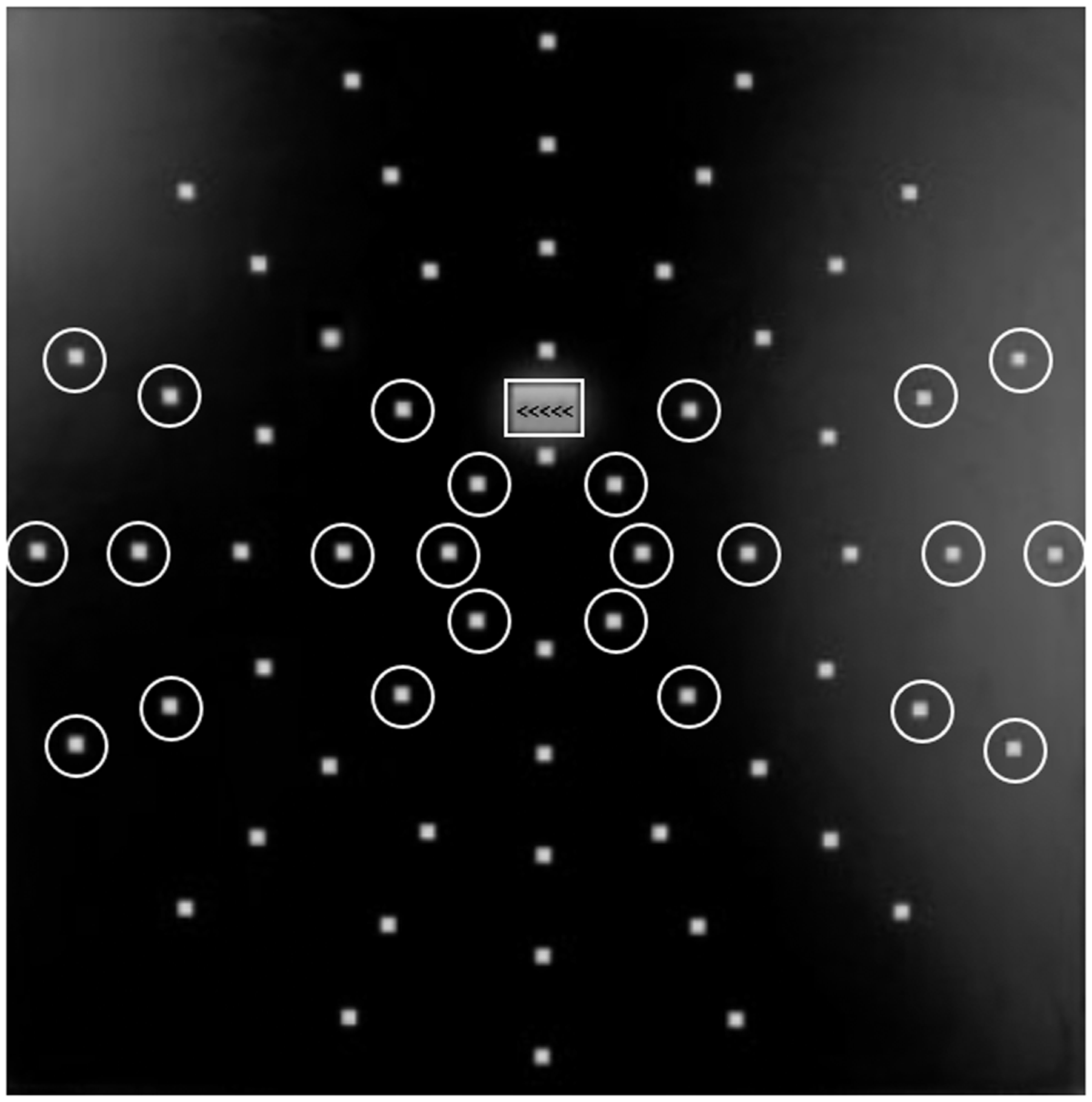
Whole-Body Reactive Agility
We employed two tests of WBRA that utilized a motion analysis system (TRAZER® Sports Stimulator; Traq Global Ltd; Westlake, OH) that required movements to spatial coordinates corresponding to the locations of virtual targets presented on an 86 cm × 58 cm monitor. A lateral movement test involved 1.8-m side-shuffling responses to deactivate 20 right or left virtual targets presented in random order. A diagonal movement test involved 2.5-m forward or backward responses in right or left directions to deactivate 12 targets in random order. Both WBRA perceptual-motor tests were preceded by a familiarization trial. Performance metrics included reaction time, speed, acceleration, and deceleration, as well as asymmetry in opposite movement directions. Further details of test design features, derived performance metrics, measurement reliability, and predictive validity have previously been reported (Wilkerson et al., 2018, 2020, 2021b).
Overall Wellness Index (OWI)
We used the OWI, developed by the lead author (Wilkerson et al., 2021a), to quantify the frequency and temporal proximity of various self-reported problems (SRPs) selected from a list of 82 impairments that have been associated with post-concussion syndrome (Taghdiri et al., 2018; Kontos et al., 2012; Supplemental Table). Optimal overall wellness corresponds to an OWI value of 100, with lower values resulting from a combination of frequency and temporal proximity of problems identified within each of 10 categories. Previous research involving healthy college students demonstrated that OWI ratings among its 10 problem categories had good internal consistency (Chronbach’s α = 0.817) and good discriminatory power for identifying individuals who reported a history of sport-related concussion (AUC = 0.709). The total number of SRPs on the OWI have been shown to be a very good indicator of overall physical and mental status, with 0 representing an optimal level of wellness (Wilkerson et al., 2021a).
HRV Measures
We obtained our participants’ resting HRV measurements between 5:30 and 6:00 a.m., using wireless finger-pulse plethysmography and a smartphone app (Elite HRV CorSense® monitor and app, Asheville, NC) following a one-minute stabilization period during which the participants were in a seated position. Nearly perfect correlations (r = 0.99) have been documented for inter-beat intervals derived from electrocardiography and the same smartphone app in both supine and standing positions (Gambassi et al., 2020). Some cadets did not arrive early enough to have a measurement completed on every occasion before physical training began at 6:00 a.m. The natural logarithm of the root mean square of successive differences (lnRMSSD) in the inter-beat intervals was averaged across all measurements obtained from each cadet to derive an HRV intra-individual grand mean (HRV-IIGM) value. Fluctuations in the magnitude of lnRMSSD values across all recording sessions were quantified as the HRV intra-individual coefficient of variation (HRV-IICV). Previous research has demonstrated that HRV-IICV could be reliably calculated (ICC = 0.90) from as few as three randomly selected recordings obtained during the same week (Nakamura et al., 2017).
We calculated a Pearson bivariate correlation coefficient to confirm the existence of an inverse relationship between HRV-IIGM and HRV-IICV, and to quantify relationships with possible predictor variables. We used median values for both HRV metrics to create binary categorizations for assigning equal numbers of cadets to high (Hi) and low (Lo) groups (Hansen et al., 2003). We used receiver operating characteristic (ROC) analyses to assess the discriminatory power of various perceptual-motor performance and survey-derived metrics for identification of Lo HRV-IIGM and Hi HRV-IICV cases. We assessed the relative predictive strengths of the various metrics by ROC area under curve (AUC) values, cross-tabulation analyses of binary predictors derived from cut-points derived from Youden’s index, and Mann–Whitney U-tests for assessment of differences between groups. We used logistic regression analyses of continuous variables to identify the strongest two-factor models for prediction of Lo HRV-IIGM and Hi HRV-IICV. We used predicted probabilities for group membership derived from the logistic regression analyses to generate ROC-AUC values for the respective 2-factor models, with a value ≥ 0.80 considered an indicator of very strong discrimination.
Results
The 32 cadets participated in an average of 14.5 (SD = 2.9) HRV measurement sessions (range: 7–18) over the 10-week study period. There was an inverse relationship between HRV-IIGM and HRV-IICV (Figure 2), with r = −0.723 (p < .001). Median intra-individual values defined Lo HRV-IIGM as lnRMSSD ≤ 4.49 and Hi HRV-IICV as ≥ 6.95%. A history of sport-related concussion was self-reported by 34% (11/32) of the participants (single occurrence = 6, two occurrences = 4, three occurrences = 1; most recent occurrence: 0.7–8.6 years prior, M years = 4.0, SD = 2.5 years), but no association was found between this report and either Lo HRV-IIGM (p = .500) or Hi HRV-IICV (p = .500). Inverse Relationship (r = −0.723) Between Intra-Individual Grand Mean of all Heart Rate Variability Measurements Acquired during Study Period and Intra-Individual Coefficient of Variation (i.e., inconsistency) Among Heart Rate Variability Measurements Acquired on Different Days.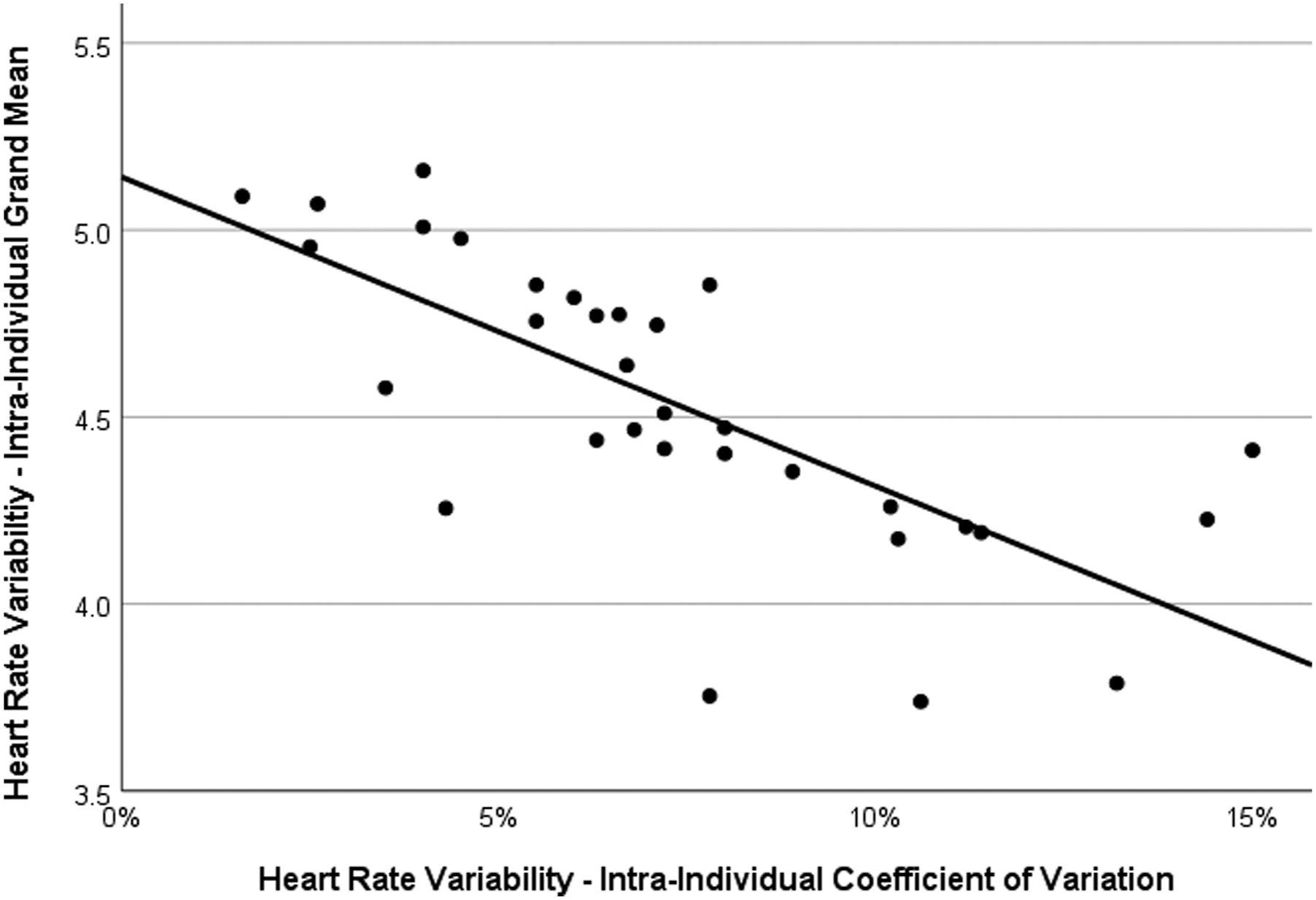
Univariable Prediction Accuracy for Low Heart Rate Variability (Natural Log of Root Mean Square of Successive Differences) Intra-Individual Grand Mean (≤4.49).
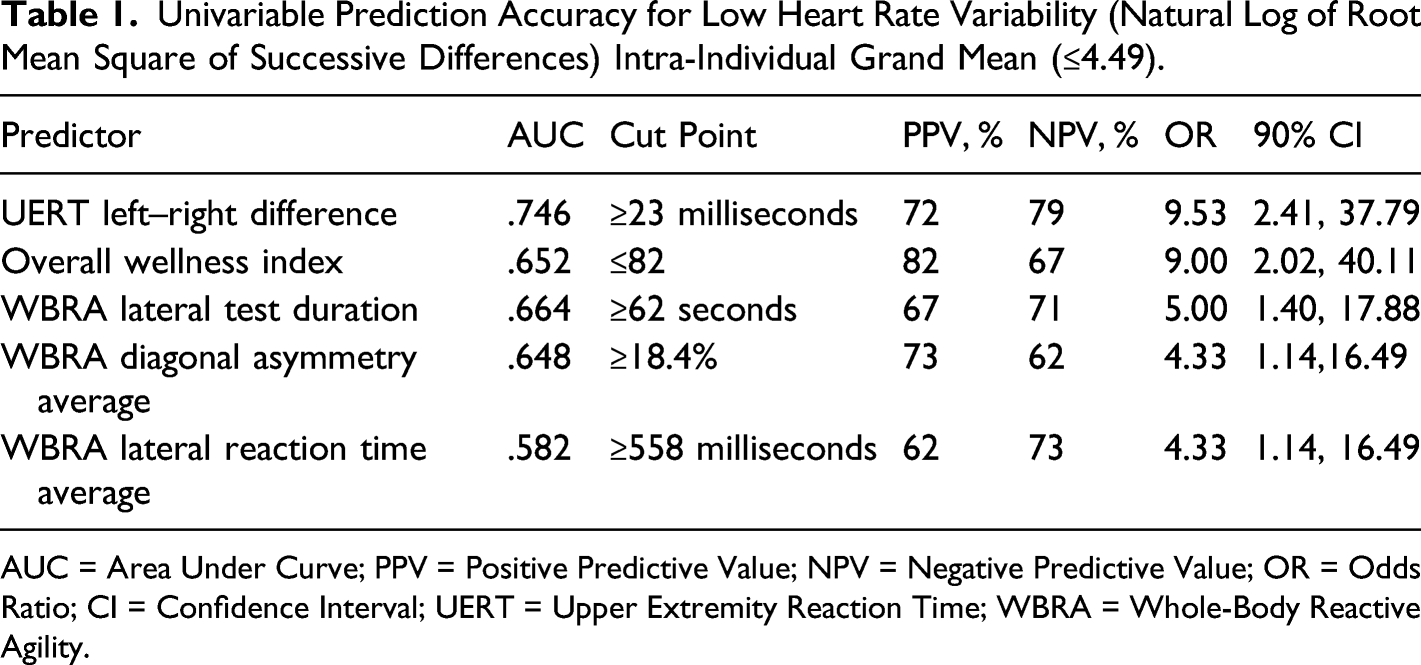
AUC = Area Under Curve; PPV = Positive Predictive Value; NPV = Negative Predictive Value; OR = Odds Ratio; CI = Confidence Interval; UERT = Upper Extremity Reaction Time; WBRA = Whole-Body Reactive Agility.
Univariable Prediction Accuracy for High Heart Rate Variability (Natural Log of Root Mean Square of Successive Differences) Intra-Individual Coefficient of Variability (≥6.95%).
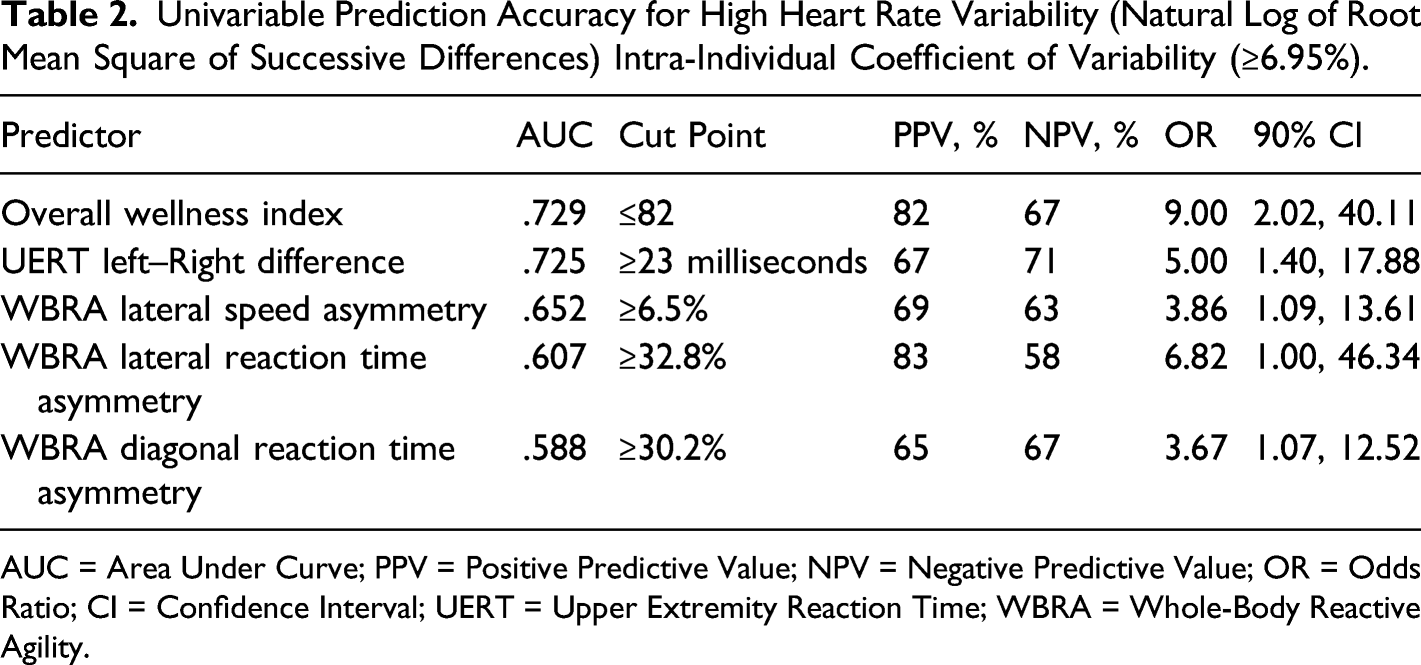
AUC = Area Under Curve; PPV = Positive Predictive Value; NPV = Negative Predictive Value; OR = Odds Ratio; CI = Confidence Interval; UERT = Upper Extremity Reaction Time; WBRA = Whole-Body Reactive Agility.
Descriptive Statistics for Predictors of Low Heart Rate Variability Intra-Individual Grand Mean (≤4.49) and High Heart Rate Variability Intra-Individual Coefficient of Variability (≥6.95%): Means (SDs), Medians (interquartile ranges), Minimum and Maximum Values.
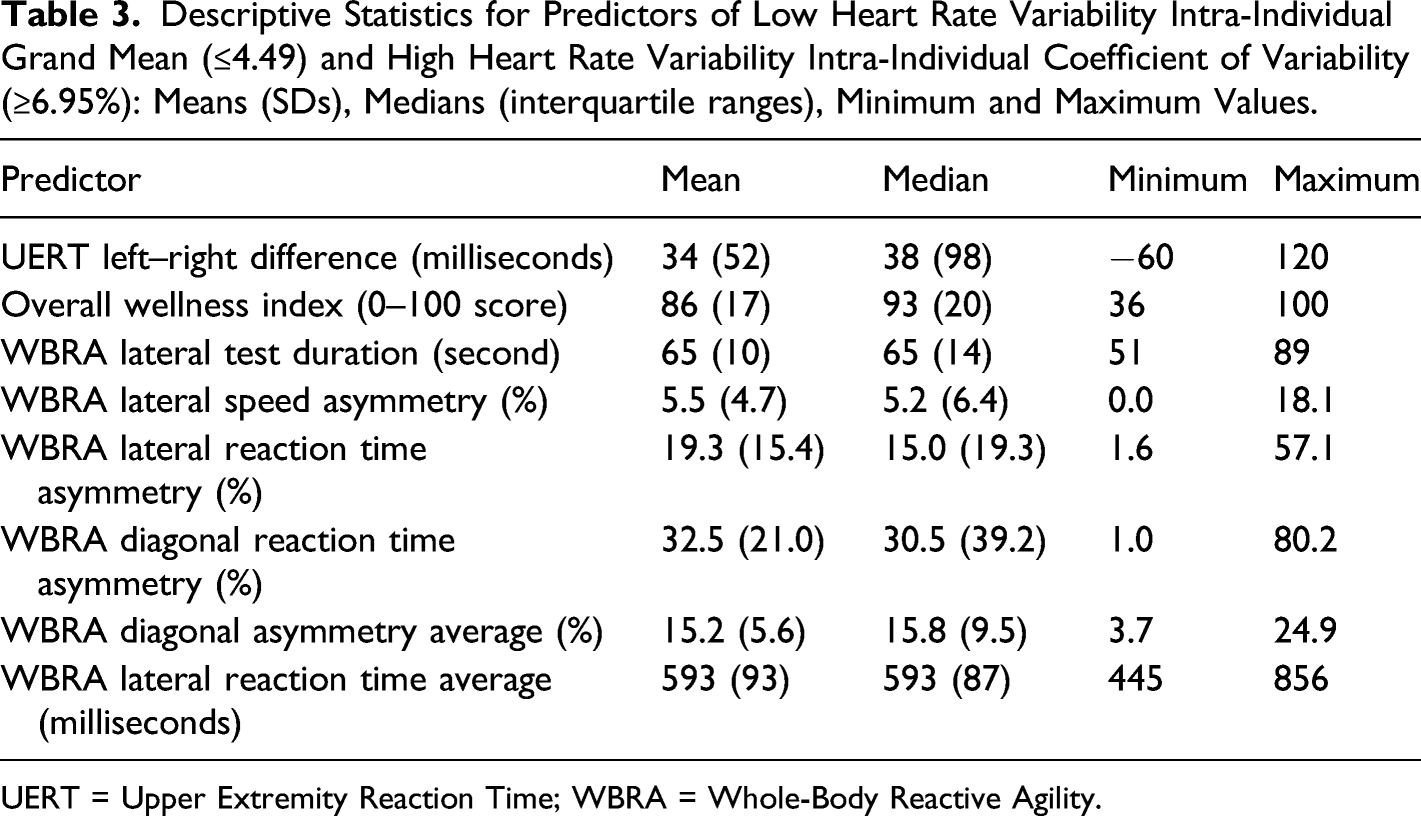
UERT = Upper Extremity Reaction Time; WBRA = Whole-Body Reactive Agility.
Median Values (Inter-Quartile Ranges) and Mann—Whitney U-test Results for Difference Between Groups.
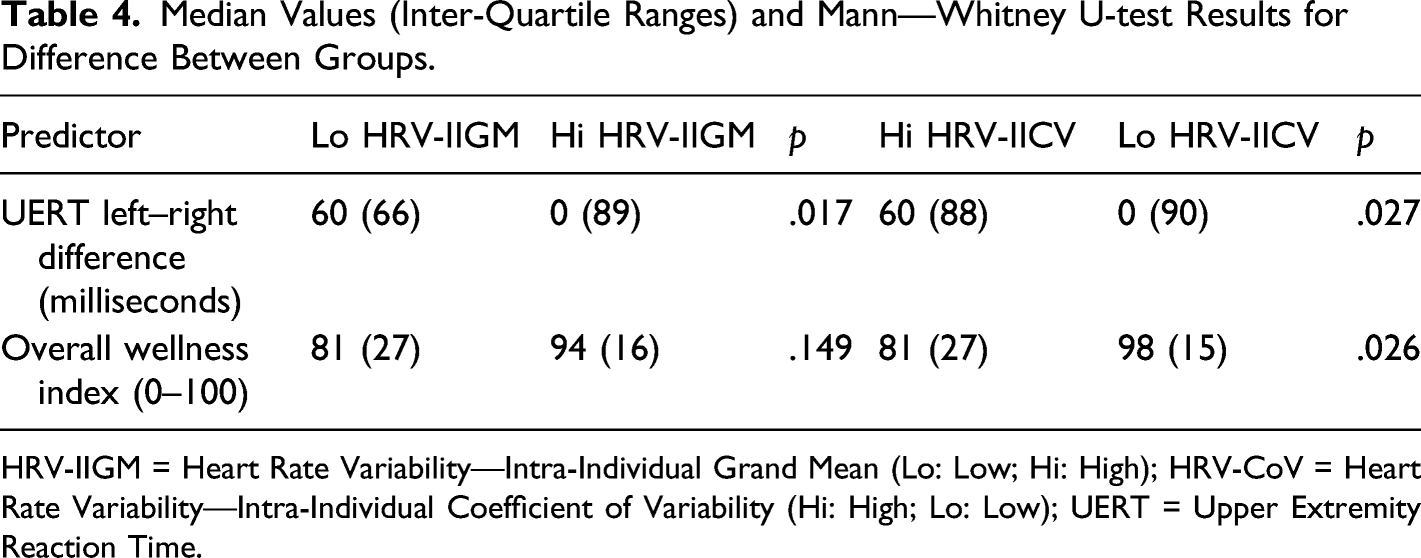
HRV-IIGM = Heart Rate Variability—Intra-Individual Grand Mean (Lo: Low; Hi: High); HRV-CoV = Heart Rate Variability—Intra-Individual Coefficient of Variability (Hi: High; Lo: Low); UERT = Upper Extremity Reaction Time.
A 2-factor logistic regression model for Lo HRV-IIGM had 71% classification accuracy (Model χ2 [2] = 12.47, p = .002, Nagelkerke R2 = 0.430) and adequate goodness of fit (Hosmer and Lemeshow χ2 [8] = 8.15, p = .419). Separate depictions of the discriminatory power of the two predictive factors, along with the discriminatory power of the combined 2-factor model (AUC = 0.818), are provided in Figure 3(a). A 2-factor logistic regression model for Hi HRV-IICV had 81% classification accuracy (Model χ2 [2] = 14.88, p = .001, Nagelkerke R2 = 0.496) and optimal goodness of fit (Hosmer and Lemeshow χ2 [8] = 3.81, p = .874). Separate depictions of the discriminatory power of the two predictive factors, along with the discriminatory power of the combined 2-factor model (AUC = 0.863), are provided in Figure 3(b). Receiver Operating Characteristic Curves for Two-Factor Logistic Regression Models, Both of which Included Upper Extremity Reaction Time Left Minus Right (UERT L-R) Difference and Overall Wellness Index 0–100 score. A. Predicted probability of low heart rate variability—intra-individual grand mean (Lo HRV-IIGM). B. Predicted probability of high heart rate variability—intra-individual coefficient of variation (Hi HRV-IICV).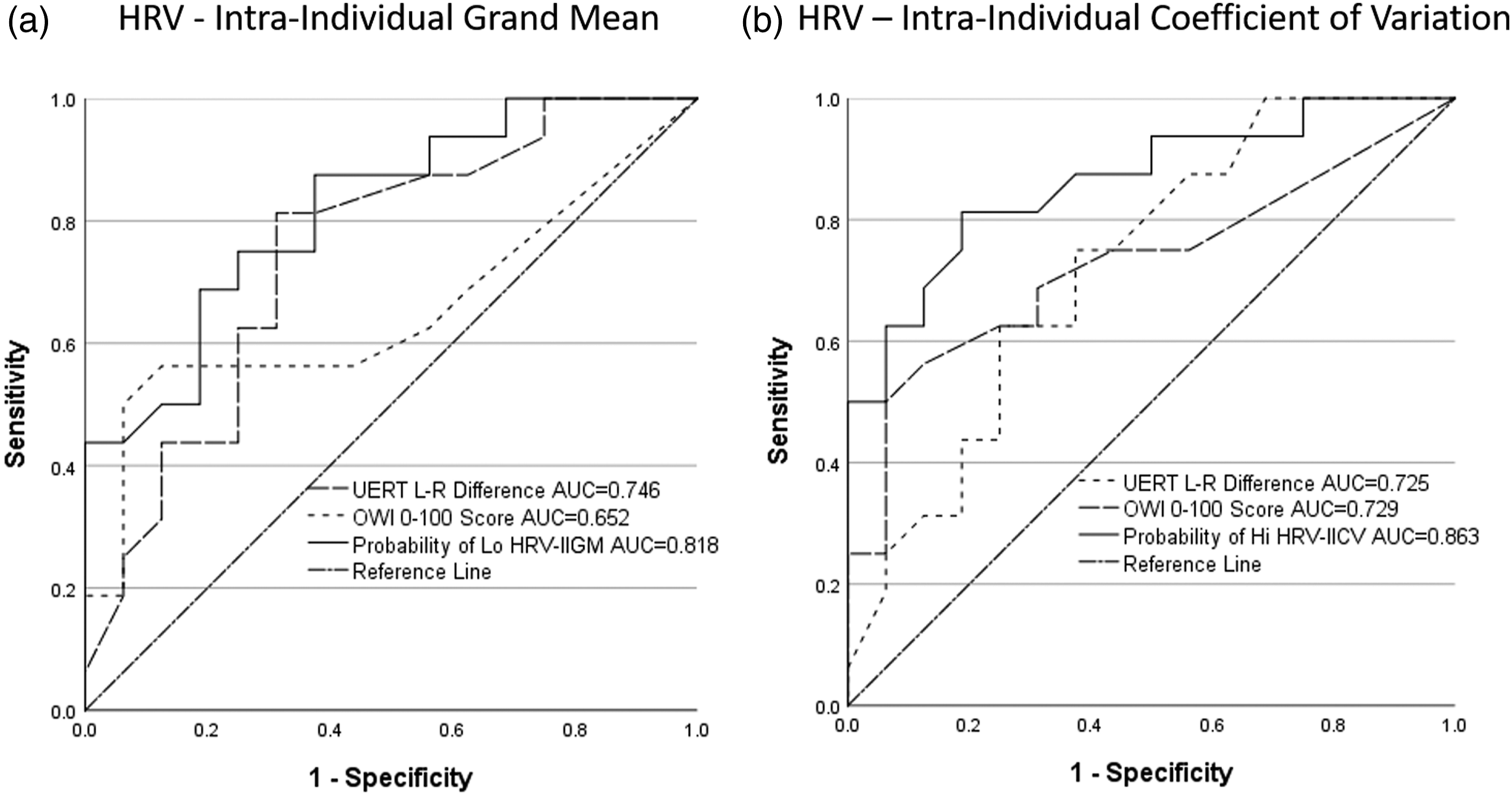
Among 13 cadets who exhibited optimal HRV values, the median OWI score was 98 (range: 82–100), and the median number of problems reported was 1 (range: 0–4). Among 19 cadets who exhibited at least one suboptimal HRV value (i.e., Lo HRV-IIGM or Hi HRV-IICV), the median OWI score was 82 (range: 36–100) and the median number of OWI problems reported was 3 (range: 0–26). The most commonly reported problems among the latter subgroup were sleeping less (n = 6), misplaced objects (n = 6), fatigue (n = 5), drowsiness (n = 5), muscle aches (n = 5), joint aches (n = 5), body pains (n = 4), and anxiety (n = 4).
Discussion
A novel finding of this study was a strong association of asymmetrical perceptual-motor responses favoring the right visual field with both averaged HRV measurements and degree of consistency in HRV measurements over time. Hemi-spatial neglect of visual stimuli (i.e., reduced awareness) in the left visual field has been a well-documented phenomenon among individuals who have sustained stroke-related damage in the right hemisphere (He et al., 2007). Previous research has demonstrated such an association among athletes with concussion history (Wilkerson et al., 2018, 2020, 2021b), but prior concussion did not reveal an effect in the logistic regression results for either of the two HRV metrics assessed in this cohort. However, we found that symptoms linked to post-concussion syndrome were associated with both HRV-IIGM and HRV-IICV. A potentially important consideration for interpreting our results is frequent reporting of physical, cognitive, emotional, and sleep-related symptoms among athletes who have not sustained a known concussion (Asken et al., 2017). Although previous research has demonstrated microstructural disruption of white matter tracts proportional to the number of PCS selected from a list that included 75 of the 82 OWI survey SRPs (Taghdiri et al., 2018), the microstructural integrity of axons may be adversely affected by factors other than concussion. A relationship between corpus callosum white matter integrity and consistency in flanker test performance for incongruent trials has been documented among healthy individuals (Fjell et al., 2011).
Subclinical inflammation can disrupt functional connectivity both within and between brain hemispheres (Locke et al., 2020; Marsland et al., 2017), and dysregulated inhibition is believed to decrease the efficiency of interhemispheric interactions (Davidson & Tremblay, 2016). Manual responses to stimuli in the left visual field are normally 20–30 ms faster than those in the right visual field, but impaired functional connectivity can slow right hemisphere perceptual processing of stimuli presented in the left visual field (Asanowicz et al., 2013; He et al., 2007). Furthermore, reduced transcallosal inhibition among individuals diagnosed with post-concussion syndrome has been associated with increased excitability of musculature in the right hand (Locke et al., 2020). Because an inverse relationship has been documented between resting HRV and levels of inflammatory biomarkers (Williams et al., 2019b), hemi-spatial neglect might exist without a history of concussion or repetitive head impacts.
A meta-analysis of 51 studies demonstrated an inverse relationship between resting HRV and markers of inflammation (Williams et al., 2019b), which may be explained by SN connectivity to subcortical brain regions that control both autonomic and endocrine processes (Marsland et al., 2017). Because subclinical brain inflammation can result from systemic processes that are unrelated to trauma-induced tissue damage, such mechanisms may mediate development of symptoms corresponding to those frequently reported following concussion. The most common SRPs among ROTC cadets with Lo HRV-IIGM or Hi HRV-IICV included sleep disruption, fatigue, drowsiness, muscle aching, and joint aching, which correspond to concussion-like symptoms previously documented among college athletes who denied a history of concussion (Asken et al., 2017). A prolonged inflammatory response may be the cause of long-term persistence of PCS (Locke et al., 2020), which may be exacerbated by endotoxin derived from gram-negative bacteria in the gastrointestinal tract (Marsland et al., 2017).
Although our sequential analyses focused on the two factors that demonstrated strongest associations with HRV-IIGM and HRV-IICV, assessment of WBRA may provide additional information about perceptual-motor efficiency. Functional reactive movements require both central interpretation of environmental stimuli and peripheral motor responses that initiate changes in the positions of extremity segments. Bilateral lower extremity movements required for whole-body displacements involve much more complex motor activation patterns than those associated with unilateral reaching responses, which complicates interpretation of possible contributors to WBRA asymmetry in right versus left movement directions. Consistent with the findings of previous research designed to identify persisting effects of prior concussion (Wilkerson et al., 2018, 2020, 2021b), some WBRA asymmetries demonstrated substantial associations with the resting HRV metrics. Despite lack of a complete understanding of the neural basis for such performance asymmetries, altered balance of excitatory versus inhibitory neurotransmission between hemispheres may be a key factor that links the central and peripheral components of perceptual-motor efficiency (Davidson & Tremblay, 2016; Takeuchi et al., 2012). The results of a recent study support the potential for dual-task UERT training to reduce WBRA asymmetries (Wilkerson et al., 2021b). Further research is needed to assess the potential benefit of WBRA training for enhanced integration of perceptual and motor processes.
Limitations and Directions for Further Research
Our relatively small cohort precluded stratified analyses of possible contributors to the observed asymmetries of UERT and WBRA, such as number of previous concussions and a possible interactive effect between hand and eye dominance. Because previous research has demonstrated that resting HRV data for males and females cannot be treated as equivalent (Koenig & Thayer, 2016), and the number of female ROTC cadets represented only 22% (9/41) of potential study participants, the analysis was limited to data derived from males. The possible influence of sex on the observed relationships among variables remains as an important consideration that needs to be investigated. Despite strong conceptual links between our observations and relationships established by studies that have used neuroimaging and neurophysiological methods, future research to further elucidate neural correlates of associations among resting HRV, perceptual-motor efficiency, and overall wellness will be needed to confirm the validity of our interpretation of the study’s findings. Furthermore, the results derived from our study of ROTC cadets might not be generalizable to other populations, such as active duty military personnel. Acknowledging the study’s limitations, our results suggest that coexisting impairments in different domains of human function may identify individuals who would derive benefit from interventions designed to enhance overall wellness and performance.
Neural inhibition originating from the right hemisphere appears to play an important role in regulation of resting HRV (Colzato et al., 2018; Hansen et al., 2004; McCraty & Shaffer, 2015), cognitive flexibility (Colzato et al., 2018; Grady & Garrett, 2018; Hellyer et al., 2015; Holzman & Bridgett, 2017), selective attention (He et al., 2007; Spangler et al., 2018), emotional control (Thayer et al., 2009; Winkelmann et al., 2017), systemic inflammation (Williams et al., 2019a), and movement symmetry (Adler et al., 2018; Davidson & Tremblay, 2016). The bidirectional connectivity among sensory, cognitive, motor, and autonomic control regions of the brain suggests that global synchronization of neural oscillations may affect all of them in an interdependent manner (Hellyer et al., 2015). Research evidence supports the potential for improvement of emotional and physical health through HRV biofeedback, paced breathing, progressive muscle relaxation, and mindfulness training (Lehrer et al., 2020), as well as improvement of perceptual-motor efficiency through dual-task UERT training (Wilkerson et al., 2021b).
Because resting HRV-IICV demonstrated strong associations with measures of perceptual-motor efficiency and overall wellness, training adaptations that promote neural synchronization among spatially separated brain areas might be expected to lessen day-to-day fluctuations in responses to internal and external sources of stress associated with prolonged exposure to a combat environment. The possibility that improvement in the function of one brain network may enhance that of a related network supports a biopsychosocial approach to optimization of both the health and performance of individuals who are regularly subjected to intense mental and physical demands (Asken et al., 2017).
Conclusion
Resting HRV, both the average of measurements obtained on different days (HRV-IIGM) and the consistency of intra-individual measurements across days (HRV-IICV), was strongly related to differences in the speed of upper extremity responses to stimuli in left versus right visual hemifields and self-reported physical, cognitive, emotional, and sleep-related problems. Potentially important associations of lesser strength were also observed for WBRA metrics. Collectively, these findings suggest that resting HRV, perceptual-motor efficiency, and overall wellness are highly interrelated. A biopsychosocial approach to assessment may provide highly valuable guidance for the design of programs intended to maximize the future operational effectiveness of ROTC cadets under demanding conditions.
Supplemental Material
sj-pdf-1-pms-10.1177_00315125211067359 – Supplemental Material for A Neuro-Integrative Assessment of Perceptual-Motor Performance and Wellness in ROTC Cadets
Supplemental Material, sj-pdf-1-pms-10.1177_00315125211067359 for A Neuro-Integrative Assessment of Perceptual-Motor Performance and Wellness in ROTC Cadets by Gary B. Wilkerson, Marisa A. Colston, Ashley N. Grillo, Abigail J. Rogers, Tyler Perry and Shellie N. Acocello in Perceptual and Motor Skills
Footnotes
Declaration of Conflicting Interests
The author(s) declared the following potential conflicts of interest with respect to the research, authorship, and/or publication of this article: Whole-body reactive agility data were acquired from equipment loaned by Traq Global Ltd (Westlake, OH). The study included analysis of survey responses that constitute a portion of a more comprehensive survey (Sport Fitness and Wellness Index) copyrighted by the lead author subsequent to the study’s completion.
Funding
The author(s) received no financial support for the research, authorship, and/or publication of this article.

Supplemental Material
Supplemental material for this article is available online.
References
Supplementary Material
Please find the following supplemental material available below.
For Open Access articles published under a Creative Commons License, all supplemental material carries the same license as the article it is associated with.
For non-Open Access articles published, all supplemental material carries a non-exclusive license, and permission requests for re-use of supplemental material or any part of supplemental material shall be sent directly to the copyright owner as specified in the copyright notice associated with the article.
