







Abstract
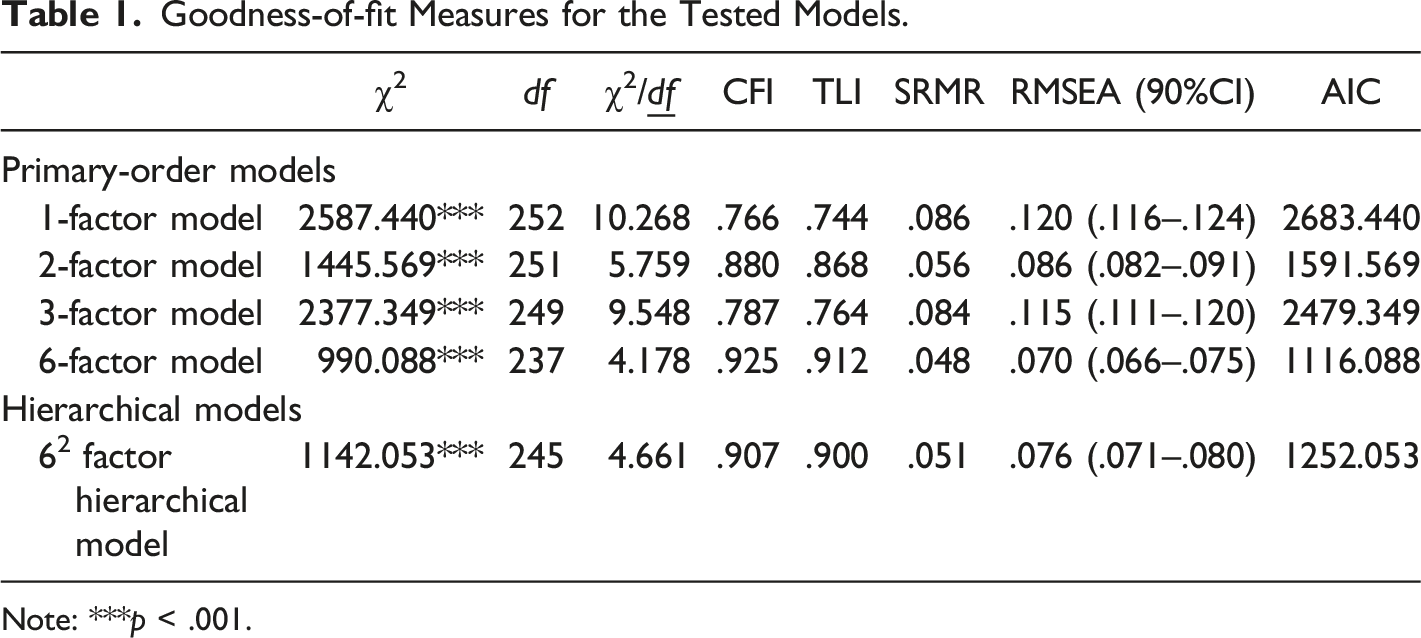
Building upon self-determination theory, our objective in this research was to adapt and analyze psychometrically the Interpersonal Behaviors Questionnaire (IBQ) in sport. Our participants were 642 professional athletes (55.14% men, M age = 22.81) who completed an online survey measuring their perception of coaching behaviors, need satisfaction, need frustration, and motivation. The results showed a good fit for the 24-item IBQ with a six-factor correlated model (χ2/df = 4.178; CFI = .925; TLI = .912; SRMR = .048; RMSEA = .070), and we obtained evidence supporting its convergent and discriminant validity. The analyses also underpinned measurement invariance across gender, age, and sport, and confirmed good reliability. Criterion validity was met by positive associations of autonomy-supportive, competence-supportive, and relatedness-supportive behaviors with need satisfaction and autonomous motivation; and of autonomy-thwarting, competence-thwarting and relatedness-thwarting behaviors with need frustration, controlled motivation and amotivation. The adapted IBQ can be applied to the assessment of professional Romanian athletes’ perceptions of need-supportive and need-thwarting coaching behaviors.
Introduction
Coaches’ behaviors perform a pivotal role in shaping athletes’ psychological experiences and performance-related outcomes (Chu & Zhang, 2019; Raabe et al., 2019). Previous sport research has well documented that need-behaviors from coaches, particularly autonomy-supportive behaviors, were positively linked to players’ adaptive psychological and performance outcomes, whereas need-thwarting behaviors, specifically autonomy-thwarting behaviors, were positively associated, instead, with maladaptive consequences (Chu & Zhang, 2019; Raabe et al., 2019). To inform coaches about potential benefits derived from adopting need-supportive behaviors and potential risks from the use of need-thwarting behaviors in their coaching practice, sport researchers must gather deeper insights into the nature of distinct manifestations of these interpersonal coaching behaviors. Drawing from self-determination theory (SDT) (Ryan & Deci, 2017), Rocchi, et al. (2017) developed the Interpersonal Behaviors Questionnaire (IBQ) for international use in sport to more accurately assess athletes’ perceptions of coaching behaviors by differentiating three types of coaches’ need-supportive behaviors (i.e., autonomy-supportive, competence-supportive and relatedness-supportive behaviors) and three types of need-thwarting behaviors (i.e., autonomy-thwarting, competence-thwarting and relatedness-thwarting behaviors). As no SDT-grounded instruments were found to measure these six types of coaches’ interpersonal behaviors in the Romanian sport context; we sought to adapt the IBQ in sport (Rocchi, et al., 2017) to this population and to assess the psychometric properties of this newly adapted IBQ version.
Self-Determination Theory: Need-Supportive and Need-Thwarting Behaviors
SDT is one of the most commonly used psychological theories for studying how socializing agents influence motivation, performance and wellbeing in sport (Raabe et al., 2019). Specifically, coaches have been identified essentially as socializing agents who can contribute to either promoting or undermining athletes’ motivational processes and performance-related consequences (Chu & Zhang, 2019; Raabe et al., 2019). Drawing from SDT, Rocchi, Pelletier, Cheung, et al. (2017) proposed a more detailed conceptualization for interpersonal behaviors from any socializing agent by differentiating among six specific types of behaviors. Particularly, a coach can adopt, in their coaching practice: (a) autonomy-supportive behaviors that provide meaningful rationales for exercises and opportunities for choice, promote exercise involvement and recognition of their athletes’ views; (b) competence-supportive behaviors that provide clear expectations and optimal goals for training and competitions, helpful information and instructions for successful exercise completion, and valuable positive feedback after exercise achievement; (c) relatedness-supportive behaviors that provide understanding, emotional availability, mutual care, and display genuine connection with players; (d) autonomy-thwarting behaviors that use a coercive language, strategies based on guilt-induction, make demands without previous justification, and incorporate contingent rewards and punishments; (e) competence-thwarting behaviors that provide messages to discourage athletes from attempting difficult exercises, question and doubt their skills to overcome challenges, and emphasize their mistakes with negative feedback; and/or (f) relatedness-supportive behaviors that display aversion and active dislike toward athletes, exclude them from opportunities and exercises, fail to listen to them, and remain unavailable when needed. SDT-grounded research has categorized the autonomy-supportive, competence-supportive and relatedness-supportive behaviors as need-supportive behaviors, and has categorized the autonomy-thwarting, competence-thwarting and relatedness-thwarting behaviors as need-thwarting behaviors (Buzzai et al., 2021; Tóth-Király et al., 2020).
SDT initially posited that need-supportive and need-thwarting behaviors represented opposite poles along a single need-nurturing continuum (Deci & Ryan, 2000). Nonetheless, SDT-based research currently posits that need-supportive and need-thwarting behaviors constitute distinguishable but relatively related constructs (Ryan & Deci, 2020; Vansteenkiste et al., 2020). Prior researchers argued that low levels of need-supportive behaviors did not necessarily entail the presence of need-thwarting behaviors, since need-supportive behaviors failure to accurately capture and suitably retain the active intensity and nature of the psychological experiences associated with a need-thwarting environment (Vansteenkiste et al., 2020). Thus, need-indifferent behaviors (i.e., low scores of need-supportive behaviors) are thought to depict only the opposite pole of need-supportive behaviors along the need-nurturing continuum (Bhavsar et al., 2019). Specifically, any need-indifferent environment would reflect an absence of perceived need-supportive elements (e.g., opportunities for choice, useful information, and emotional availability), but they would fail to fully capture the presence of perceived need-thwarting aspects (i.e., coercion, repeated and negative feedback, and active aversion) (Bhavsar et al., 2019). To illustrate this, coaches, who predominantly implement need-indifferent behaviors, are prone to disregard their athletes’ views and their inner motivational resources (i.e., autonomy-indifferent behaviors), failing to provide them with clarifying and guiding instructions about the exercise to be completed (i.e., competence-indifference behaviors), and showing inattention toward fostering connectedness with them (i.e., relatedness-indifference behaviors). In contrast, a coach, engaged in need-thwarting behaviors, tends to utilize coercion and intimidation (i.e., autonomy-thwarting behaviors), emphasizing the athletes’ faults and making them doubt their abilities (i.e., competence-thwarting behaviors) and exhibit active dislike toward them (i.e., relatedness-supportive behaviors). In accordance with this theoretical distinction between need-supportive and need-thwarting behaviors, SDT postulates a dual-process model to explain human functioning by establishing both a bright side with need-supportive behaviors, and a dark side with need-thwarting behaviors (Vansteenkiste et al., 2020).
A growing body of research has broadly shown that need-supportive and need-thwarting behaviors co-occur in a determined context, with each distinctly contributing to specific motivational processes and affective, behavioral and cognitive consequences (Burgueño et al., 2022; Shannon et al., 2021). In line with the SDT assumptions (Ryan & Deci, 2020; Vansteenkiste et al., 2020) and consistent with previous research in sport (Chu & Zhang, 2019; Raabe et al., 2019), coaches’ need-supportive behaviors were positively and primarily associated with the satisfaction of basic psychological needs (BPN) for autonomy (i.e., experiencing initiate and willingness), competence (i.e., experiencing effectiveness and mastery) and relatedness (i.e., experiencing belonging and connection), and with autonomous motivation (i.e., behavior is undertaken by experiences of psychological freedom, volition and reflective self-endorsement). In contrast, coaches’ need-thwarting behaviors were positively and primarily related to the frustration of BPN for autonomy (i.e., feeling pressured and pushed in an unwanted direction), competence (i.e., feeling ineffective and helpless) and relatedness (i.e., feeling socially alienated and alone), as well as for controlled motivation (i.e., behaviors undertaken by experiences of external and self-imposed pressure and coercion) and amotivation (i.e., the full lack of intentionality and volition toward the wanted behavior) (Pulido et al., 2018; Rocchi & Pelletier, 2018). Additionally, previous sport studies found a negative and weak correlation between need-supportive behaviors and need frustration, and between need-thwarting behaviors and need satisfaction and autonomous motivation (Rocchi, Pelletier, & Desmarais, 2017).
Measures of Need-Supportive and Need-Thwarting Behaviors in Sport
To the best of our knowledge, no SDT-based instruments were found to measure the professional athletes’ perceptions of coaches’ interpersonal coaching behaviors in the Romanian sport context. The absence of such measures of coaching behaviors has hampered not only an understanding of the role that Romanian coaches play in motivating their athletes and improving their sports achievements at specific time points of the season, throughout the season or in Olympic cycles, but also any comparison of this role played by Romanian coaches and coaches from other countries.
At the international level, Rocchi, et al. (2017) recently developed the Interpersonal Behaviors Questionnaire (IBQ) in sport to judge how an individual (i.e., athlete) perceives the interpersonal behaviors of a specific social agent (i.e., coach), and to inform the target social agent (i.e., coach) about their interpersonal behaviors (IBQ-Self). Indeed, this instrument was created to overcome the limitations of previous scales available for interpersonal behaviors in sport, since most prior instruments focused exclusively on either the assessment of autonomy-supportive behaviors (e.g., Autonomy-Supportive Coaching Questionnaire, Conroy & Coatsworth, 2007; Sport Climate Questionnaire, Balaguer et al., 2009; Perceived Autonomy Support Scale for Sport, Gillet et al., 2010) or autonomy-thwarting or controlling behaviors (e.g., Controlling Coach Behaviors Scale; Bartholomew et al., 2010). Little attention had been directed to the potential role that coaches’ competence-supportive (and-thwarting) and relatedness-supportive (and -thwarting) behaviors might play in athletes’ motivational processes and performance-related outcomes.
The IBQ in sport was created by a comprehensive series of different studies (Rocchi, et al., 2017; Rocchi, Pelletier, Cheung, et al., 2017) that provided a solid body of psychometric evidence in support of a 24-item, six-factor correlated model. Additionally, such studies gathered evidence supporting the instrument’s measurement invariance across gender, convergent and discriminant validity, as well as its reliability and criterion validity. This instrument has been adapted and psychometrically supported for samples with different sociolinguistic characteristics, including Canadian high school athletes (Camiré et al., 2019), Spanish physical education students (Burgueño & Medina-Casaubón, 2021), Italian middle school students (Buzzai et al., 2021), Portuguese exercisers (Rodrigues et al., 2021), as well as Japanese (Xiao & Toyama, 2020) and Hungarian (Tóth-Király et al., 2020) adults. Despite the IBQ’s good psychometric performance, there were some psychometric problems that could compromise the instrument’s validity, including high correlations between autonomy-supportive, competence-supportive and relatedness-supportive behaviors, and between autonomy-thwarting, competence-thwarting and relatedness-thwarting behaviors (Burgueño & Medina-Casaubón, 2021). There was also a marginal value in average variance extracted for the competence-supportive behaviors subscale (Buzzai et al., 2021). Moreover, previous research psychometrically underpinned the six-factor correlated model against alternative one-factor, two-factor and three-factor correlated models (Buzzai et al., 2021).
The Present Research
Our objective in this research was to adapt the IBQ in sport to the Romanian context and to examine the psychometric properties of the resulting version in a sample of professional Romanian athletes. To assess the IBQ’s internal structure, we compared the six-factor correlated model initially proposed by Rocchi, et al. (2017) to alternative one-factor, two-factor and three-factor correlated models with a plausible theoretical endorsement (Buzzai et al., 2021). Once the best-fit model was identified, we examined measurement invariance across gender, and discriminant and convergent validity; and we examined the instrument’s reliability. We inspected the instrument’s criterion validity by a series of partial correlation analyses. Consistent with the SDT assumptions (Vansteenkiste et al., 2020), and, following previous research on sport (Pulido et al., 2018; Rocchi & Pelletier, 2018), we hypothesized that autonomy-supportive, competence-supportive and relatedness-supportive behaviors would be positively correlated with need satisfaction and autonomous motivation, whereas autonomy-thwarting, competence-thwarting and relatedness-thwarting behaviors would be positively correlated with the frustration of each BPN, controlled motivation and amotivation. In line with Rocchi, et al. (2017), we also expected cross-correlations between need-supportive behaviors and need frustration, controlled motivation and amotivation, and between need-thwarting behaviors and need satisfaction and autonomous motivation.
Method
Participants and Setting
Approval for this research was obtained from the Ethics Committee of the Vasile Alecsandri University of Bacau (code: 12661/1/27.08.2021), and, as will be detailed below, all participants gave their informed consent. The participant sample in this study included 354 male and 288 female athletes (N = 642), with an average age of 22.81 years (SD = 5.78, range = 18–51). The athletes had been competing in their respective sport at the international and/or national level for an average of 11.05 years (SD = 5.00, range = 3–28), had been working with their current coach for an average of 5.60 years (SD = 2.50; range = 2–15), and had trained with them an average of 7.99 hours a week (SD = 2.11, range = 5–14). Furthermore, 305 athletes practiced individual sports, including athletics, tennis, Olympic shooting, swimming, triathlon, or sky, while 337 practiced team sports such as football, basketball, volleyball, rugby, water-polo, or ice hockey.
Similar to previous sport research (Camiré et al., 2019; Rocchi, et al., 2017), the participating athletes were recruited by emailing an invitation letter to them through a purposive sampling method. Once we obtained the athletes’ informed consent, every participating athlete received a link to access the online survey questionnaire. Prior to questionnaire completion, they reviewed detailed information about the research project, the treatment of data exclusively with research and academic goals, as well as information regarding voluntary and anonymous participation, and the absence of any need for correct or incorrect responses, since we only wanted to know their perceptions of their sport. To be eligible for this research, potential athletes had to meet the following inclusion criteria: (a) professional athletes competing at the international and/or national level; (b) older than 18 years old; (c) had been working with their current coach for at least 1 year; and (d) providing personal informed consent. A total of 800 professional athletes were forwarded the invitation letter by email with the help of distinct Romanian sport federations and professional clubs. Three reminders were sent at a 2-week interval. We obtained a response rate of 80.25% (n = 642). The online survey questionnaire took on average 16 minutes (SD = 3.20, range = 10–20) to complete.
Instruments
Interpersonal Behaviors from Coaches
To assess the athletes’ perceptions of need-supportive and need-thwarting behaviors from their coach, we used the Romanian version of the Interpersonal Behaviors Questionnaire (IBQ) in sport (Rocchi, Pelletier, & Desmarais, 2017). Items are headed by the stem: “My coach…” and include 24 items grouped into four items per factor to measure these factors: (a) autonomy-supportive behaviors (e.g. “Supports the choices that I make for myself”); (b) competence-supportive behaviors (e.g. “Provides valuable feedback”); (c) relatedness-supportive behaviors (e.g. “Is interested in what I do”); (d) autonomy-thwarting behaviors (e.g. “Pressures me to do things their way”); (e) competence-thwarting competence (e.g. “Questions my ability to overcome challenges”); and (f) relatedness-thwarting behaviors (e.g. “Is distant when we spend time together”). Items are responded to on a 7-point Likert scale, ranging from “1” (do not agree at all) to “7” (completely agree). In the validation study (Rocchi, Pelletier, Cheung, et al., 2017), a good fit was obtained for the six-factor correlated model: χ2 (df = 237) = 342.83, p < .001; χ2/df = 1.45; CFI = .96; TLI = .95; SRMR = .04; RMSEA = .03 (90% CI = .02–.04), as well as good reliability scores for autonomy-supportive behaviors (α = .80), competence-supportive behaviors (α = .77), relatedness-supportive behaviors (α = .77), autonomy-thwarting behaviors (α = .82), competence-thwarting behaviors (α = .82), and relatedness-thwarting behaviors (α = .82).
Need Satisfaction and Need Frustration in Sport
To assess athletes’ perceptions of their need satisfaction and need frustration, we used the Romanian sport version (D. I. Alexe et al., 2022) of the Need Satisfaction and Frustration scale (Longo et al., 2016). This scale begins with this item stem: “In my trainings and competition…” and includes 18 items grouped into three items per factor measuring these six factors: (a) autonomy satisfaction (e.g. “I feel completely free to make my own decisions”); (b) competence satisfaction (e.g. “I feel I can accomplish even the most difficult tasks”); (c) relatedness satisfaction (e.g. “I feel I’m perfectly integrated into a group”); (d) autonomy frustration (e.g. “I feel forced to follow directions regarding what to do”), (e) competence frustration (e.g. “I sometimes feel unable to master hard challenges”); and (f) relatedness frustration (e.g. “On occasions, I feel people are a bit cold towards me”). Items were responded to on a 7-point Likert scale ranging from “1” (strongly disagree) to “7” (strongly agree). In this study, the six-factor correlated model obtained an acceptable fit: χ2 (df = 120) = 253.92, p < .001, χ2/df = 2.12; CFI = .97; TLI = .96; SRMR = .042; RMSEA = .042 (90% CI = .036–.048). Good reliability was found for autonomy satisfaction (α = .78), competence satisfaction (α = .89), relatedness satisfaction (α = .75), autonomy frustration (α = .81), competence frustration (α = .87), and relatedness frustration (α=.87).
Motivation for Sport
To assess athletes’ perceptions of their motivation, we used the Romanian version (C. I. Alexe et al., 2022) of the Behavioral Regulation in Sport Questionnaire (Lonsdale et al., 2008). This instrument is headed by the item stem “I participate in my sport…” and includes 24 items grouped into four items per factor, measuring (a) intrinsic motivation (e.g. “Because I like it”), integrated regulation (e.g. “Because it’s a part of who I am”); (b) identified regulation (e.g. “Because I value the benefits of my sport”); (c) introjected regulation (e.g. “Because I would feel guilty if I quit”); (d) external regulation (e.g. “Because I feel pressure from other people to play”); and (e) amotivation (e.g. “But I question why I continue”). Items are responded to on a 5-point Likert scale ranging from “1” (almost never) to “5” (almost always). In accordance with previous research (Rocchi, et al., 2017), a mean score for autonomous motivation was estimated by averaging intrinsic motivation, integrated regulation and identified regulation; also a mean score for controlled motivation was computed by taking average values from introjected and external regulation. In this study, the six-factor correlated model obtained an acceptable fit: χ2 (df = 237) = 857.96, p < .001, χ2/df = 3.62; CFI = .93; TLI = .91; SRMR = .050; RMSEA = .066 (90% CI = .062–.071). Good reliability was found for intrinsic motivation (α = .85), integrated regulation (α = .82), identified regulation (α = .75), introjected regulation (α = .78), external regulation (α = .85), and amotivation (α = .90).
Procedure
We followed the international test commission guidelines (Bartram et al., 2018) for the process of translating and adapting the IBQ into the Romanian context. First, English items from IBQ were translated into Romanian by two translators, and they were then back translated by an independent pair of translators. Second, the original version and both translated versions were qualitatively analyzed to assess their degree of accuracy. Minor discrepancies in the translations were resolved through a meeting of the two translation teams. Third, items from the agreed version were qualitatively examined by two experts in the field sport psychology, who determined their correct correspondence with the psychological variable they aimed to measure. Fourth, this new version of the instrument was administered to a group of 11 athletes, who reported their correct understanding of the content of all 24 items. This translation process gathered evidence in support of the IBQ’s content validity.
Data Analysis
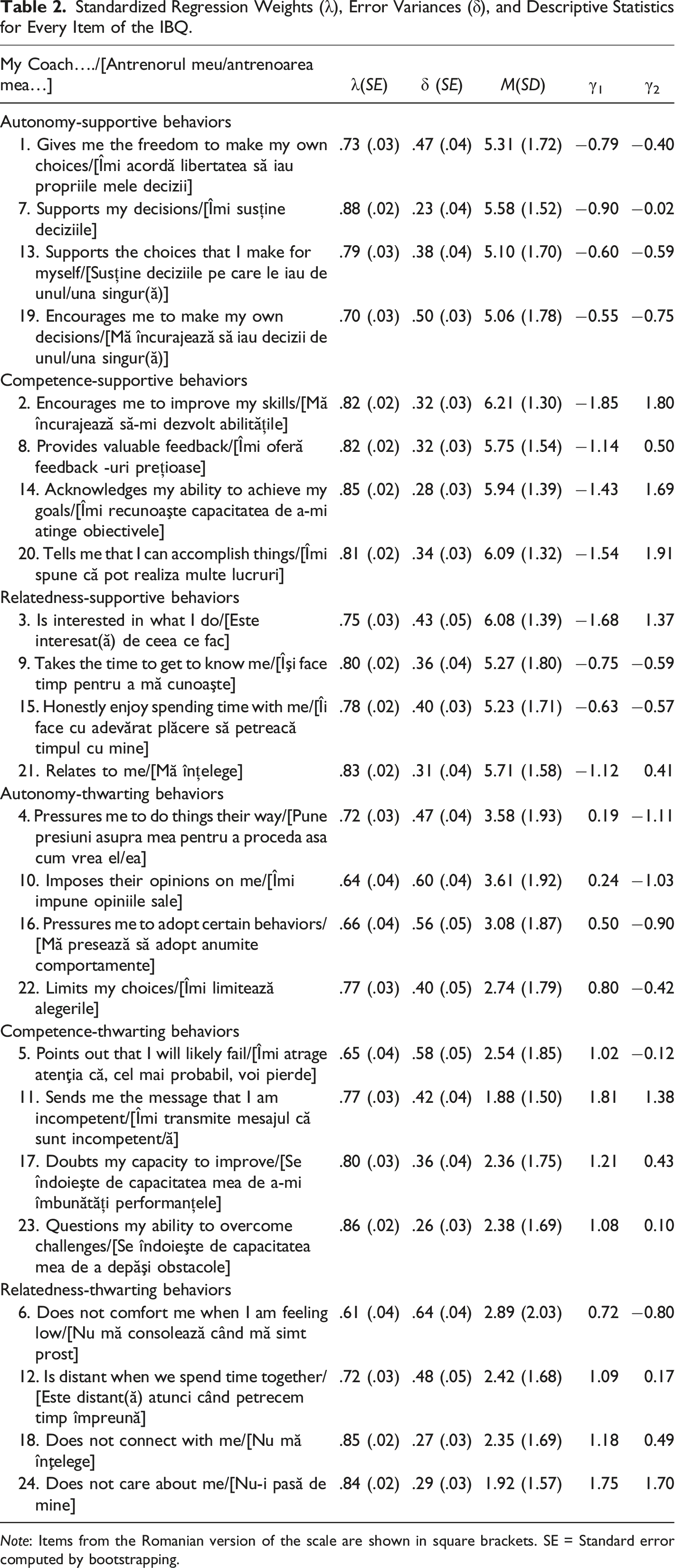
Data analyses were run using the Statistical Package for Social Sciences (SPSS®, version 27, IBM Corporation) and AMOSTM (version 27.00). For demonstrating IBQ validity, based on its internal structure, we tested the robustness of the 24-item six-factor correlated model against alternative one-factor, two-factor and three-factor correlated models following a confirmatory factor analysis (CFA) approach. We followed Kline’s (2016) proposal to use the maximum likelihood method and the bootstrapping technique with 5000 iterations when the multivariate normality assumption is violated (Mardia’s coefficient = 237.64, p < .01). The model’s goodness of fit was assessed by the ratio between chi-square and degree of freedom (χ2/df), Comparative Fit Index (CFI), Tucker–Lewis Index (TLI), Standardized Root Mean Squared Residual (SRMR), Root Mean Square Error of Approximation (RMSEA) paired with its 90% confidence interval (90% CI), and Akaike Information Criterion (AIC). While a good fit is obtained with χ2/df values lower than three, CFI and TLI values greater than .95 paired with SRMR and RMSEA values up to .060 (Hu & Bentler, 1999), χ2/df values as high as five, and CFI and TLI values above .90 in conjunction with SRMR and RMSEA values below .080 are representative of a suitable fit to the observed data (Marsh et al., 2004). AIC is typically used to select among competing non-hierarchical models, indicating that the model with the smallest AIC value is chosen as the best-fit (Kline, 2016). Standardized residual covariances are acceptable with absolute values up to 2.58, and standardized regression weights are suitable with values over .50 (Hair et al., 2018). Next, descriptive statistics for every item were, respectively, computed.
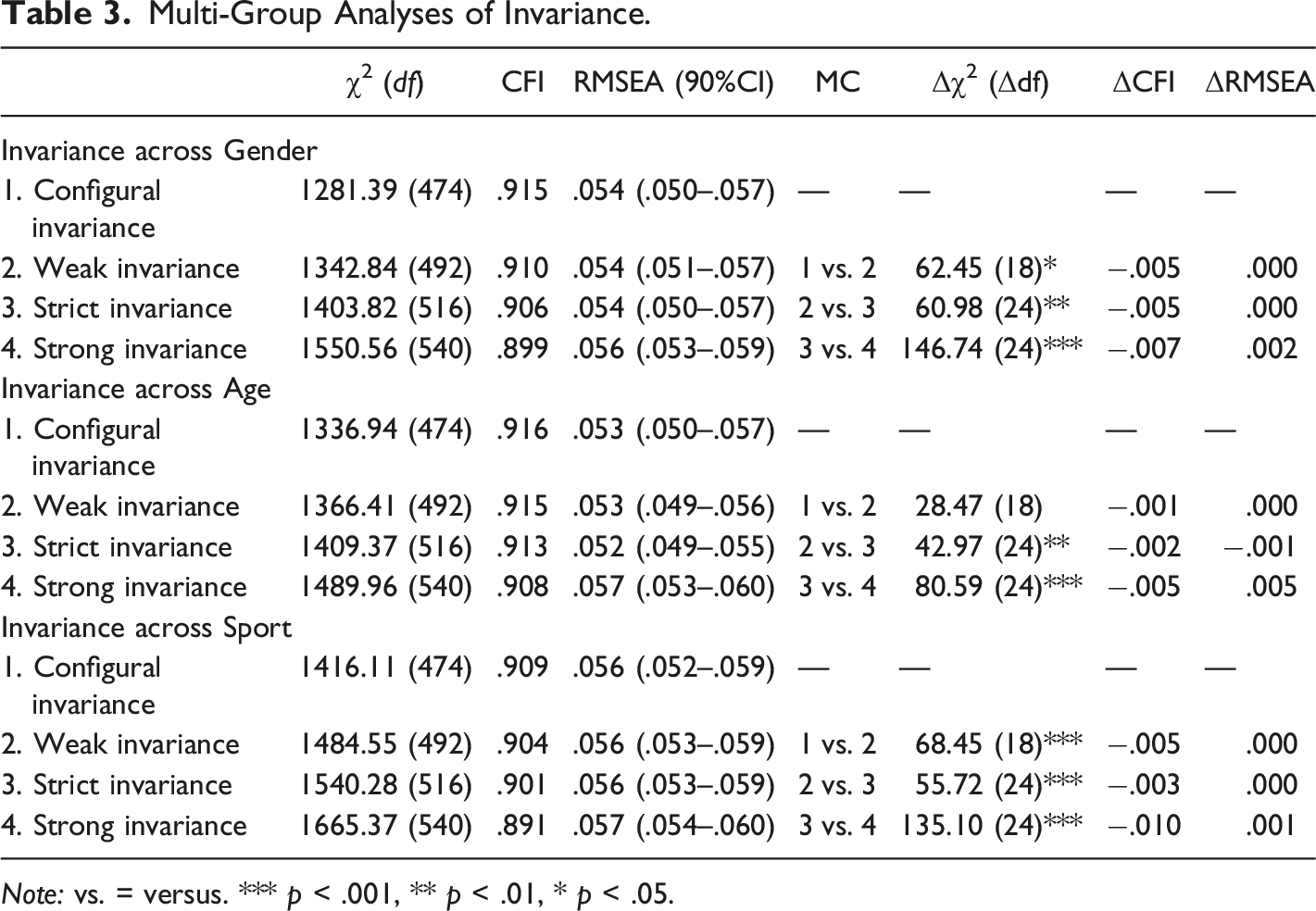
We tested the IBQ invariance across gender, age and sport, respectively, in a number of steps, with additional constraints imposed in a sequential manner following the methodological proposal outlined by Putnick and Bornstein (2016): configural invariance (i.e. equivalence of model form), weak invariance (i.e. equivalence of item factor loadings), strong invariance (i.e. equivalence of item factor loadings and item intercepts), and strict invariance (i.e. equivalence of item factor loadings, item intercepts and item error variances). Differences smaller than .010 and .015 in CFI and RMSEA values between each two progressively constrained models are indicative of the instrument’s invariance (Putnick & Bornstein, 2016).
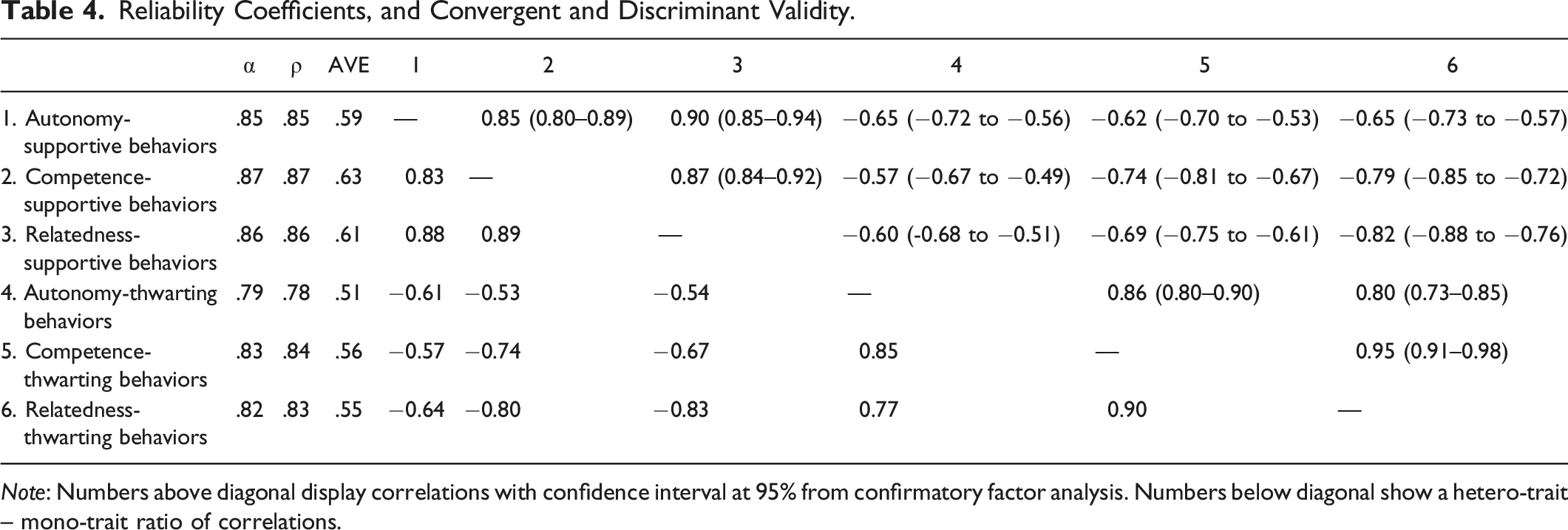
We assessed the instrument’s convergent validity using average variance extracted (AVE). This coefficient is suitable when values are greater than .50 (Hair et al., 2018). To examine the IBQ’s discriminant validity, we used confidence intervals at 95% (95% CI) of correlations among latent factors and heterotrait–monotrait ratio of correlations (HTMT; Henseler et al., 2015). A good level of discriminant validity is achieved when the upper limit of the 95% CI of the inter-factor correlation in question does not exceed 1.00 (Anderson & Gerbing, 1988), and when HTMT scores are as high as .90 (Henseler et al., 2015). The scale’s reliability was analyzed by Cronbach’s alpha (α) and Raykov’s composite reliability coefficient (ρ). Both display good reliability with scores higher than .70 (Viladrich et al., 2017). Finally, to examine the IBQ criterion validity, we conducted a partial correlation analysis for each IBQ factor individually by associating it with the satisfaction and frustration of each need and with each type of motivation, after controlling for its respective need-supportive or need-thwarting behaviors.
Results
Confirmatory Factor Analysis
Goodness-of-fit Measures for the Tested Models.
Note: ***p < .001.
Standardized Regression Weights (λ), Error Variances (δ), and Descriptive Statistics for Every Item of the IBQ.
Note: Items from the Romanian version of the scale are shown in square brackets. SE = Standard error computed by bootstrapping.
Invariance Analyses
Multi-Group Analyses of Invariance.
Note: vs. = versus. *** p < .001, ** p < .01, * p < .05.
Convergent Validity, Discriminant Validity and Reliability Analysis
Reliability Coefficients, and Convergent and Discriminant Validity.
Note: Numbers above diagonal display correlations with confidence interval at 95% from confirmatory factor analysis. Numbers below diagonal show a hetero-trait – mono-trait ratio of correlations.
Criterion Validity Analysis
Partial Correlations between Interpersonal Behaviors from Coach, and Need Perceptions and Motivation in Sport.
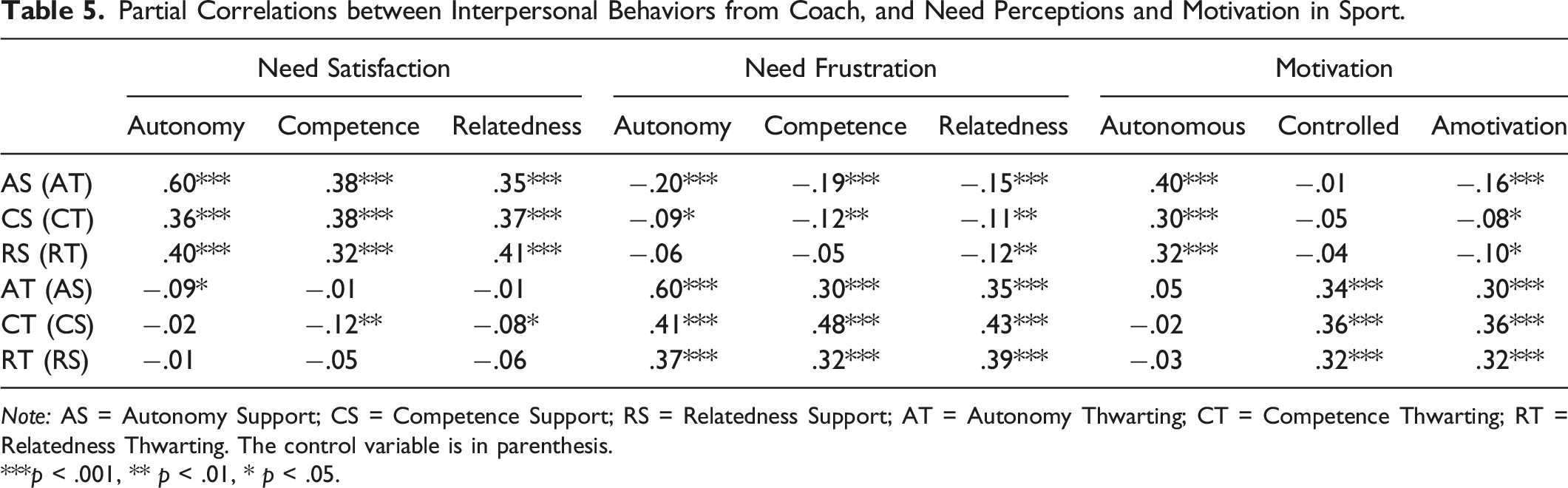
Note: AS = Autonomy Support; CS = Competence Support; RS = Relatedness Support; AT = Autonomy Thwarting; CT = Competence Thwarting; RT = Relatedness Thwarting. The control variable is in parenthesis.
***p < .001, ** p < .01, * p < .05.
Discussion
Our objective with this research was to gather validity and reliability evidence for the use of the IBQ in sport (Rocchi, et al., 2017) with professional Romanian athletes. Our results provided psychometric support for the administration of this instrument in measuring athletes’ perceptions of autonomy-supportive, competence-supportive, relatedness-supportive behaviors, and autonomy-thwarting, competence-thwarting, and relatedness-thwarting behaviors from their coaches in the Romanian context.
The results derived from CFA showed that the six-factor correlated model obtained a better psychometric performance than alternative one-factor, two-factor and three-factor models, consistent with previous research (Buzzai et al., 2021; Xiao & Toyama, 2020). These findings provide not only empirical support for the current SDT-based conceptualization differentiating among six types of interpersonal behaviors (Rocchi, Pelletier, Cheung, et al., 2017), but they also reinforce the premise that need-supportive behaviors and need-thwarting behaviors represent distinct but associated variables (Vansteenkiste et al., 2020). Indeed, the results of this research showed that the six types of interpersonal behaviors could represent two more general categories, one named need-supportive behaviors, comprising autonomy-supportive, competence-supportive and relatedness-supportive behaviors, and a second category labelled as need-thwarting behaviors, consisting of autonomy-thwarting, competence-thwarting and relatedness-thwarting behaviors. However, it should be noted that the six-factor correlated model and two-factor hierarchical models are not rivals; both can be used, depending on the researcher’s goal. To illustrate this, to analyze the separate effects of each coach’s interpersonal behaviors, researchers can utilize the six-factor correlated model. Alternatively, the two-factor hierarchical model can be used to analyze the general effects of need-supportive and need-thwarting behaviors from coaches on the athletes’ motivational processes and outcomes.
The results from multi-group analyses met evidence in support of measurement invariance across gender, age, and sport for the Romanian version of the IBQ. These findings are in line with the original validation study (Rocchi, Pelletier, Cheung, et al., 2017), the instrument’s adaptations to sport (Camiré et al., 2019; Rocchi, et al., 2017), and its use in other contexts (Burgueño & Medina-Casaubón, 2021; Buzzai et al., 2021; Rodrigues et al., 2021; Tóth-Király et al., 2020). It is worth noting that this study also expands evidence of the IBQ’s measurement invariance by adding the invariant character across the type of sport practiced by professional athletes. Indeed, these findings demonstrate that the Romanian sport version of the IBQ performs equally for male and female athletes, regardless of their age and type of sport. Therefore, these results are of great practical utility to researchers for examining the potential mean differences of the six types of coaches’ interpersonal behaviors perceived by professional athletes.
Aligned both with the original validation study (Rocchi, Pelletier, Cheung, et al., 2017) and different adaptations of the instrument, our research showed good convergent validity for the Romanian sport version of the IBQ with AVE scores higher than .50. This would imply that every item from each latent factor adequately captured the meaning of each interpersonal behaviors under measurement. Moreover, the results from latent correlations along with HTMT scores displayed a satisfactory level of discriminant validity, consistent with previous studies (Rocchi, et al., 2017; Rodrigues et al., 2021; Xiao & Toyama, 2020). Akin to Burgueño and Medina-Casaubón (2021), it is important to underscore that high scores for the correlation between competence-supportive and relatedness-supportive behaviors, and between competence-thwarting and relatedness-related behaviors were found. Although such values do not suppose discriminant validity problems, they suggest a certain difficulty of professional athletes to distinguish the provision of useful information and valuable feedbacks for tasks (competence-supportive behaviors) from the creation of a social supportive environment (relatedness-supportive behaviors), as well as to differentiate between messages to make athletes doubt their own abilities (competence-thwarting behaviors) and the display of active aversion to them (relatedness-thwarting behaviors). Hence, further research is needed to determine whether these findings were essentially due to the specific characteristics of the professional sport context. On the other hand, values higher than .70 for Cronbach’s alpha and Raykov’s coefficients showed a suitable degree of reliability for the Romanian sport version of the IBQ, aligned with previous studies on the instrument in other contexts (Burgueño & Medina-Casaubón, 2021; Rocchi et al., 2017; Rocchi, Pelletier, Cheung, et al., 2017; Rodrigues et al., 2021).
The results obtained through partial correlation analyses provide evidence endorsing the criterion validity of the Romanian sport version of the IBQ. These findings are in line with previous research on sport (Camiré et al., 2019; Rocchi, et al., 2017; Rocchi & Pelletier, 2018), such that athletes’ perceptions of need-supportive and need-thwarting behaviors from their coaches were distinctly related to specific motivational experiences in the sport context. Specifically, the three types of need-supportive behaviors are positively associated with the satisfaction of each BPN and autonomous motivation, and negatively associated with the autonomy, competence, and relatedness frustration, and amotivation. A plausible explanation is that coaches’ need-supportive behaviors not only energize need satisfaction and autonomous motivation among professional athletes, but also buffer need frustration and amotivation. Conversely, the three types of need-thwarting behaviors from coaches were positively correlated with need frustration, controlled motivation and amotivation. A possible justification would be due to coaches’ need-thwarting behaviors tend to directly yield maladaptive motivational process reflected in athletes’ need frustration and amotivation. Thus, these results strengthened the existence of a dual-process model to understand the human functioning by distinguishing a bright motivational path with need-supportive behaviors, need satisfaction and autonomous motivation, from a dark motivational path with need-thwarting behaviors, need frustration, controlled motivation and amotivation.
Limitations and Directions for Further Research
Although these results underpin the use of the IBQ in the Romanian sport context, there were some limitations in this study. First, our use of purposive sampling limits the generalization of our results. Future investigators should re-examine the psychometric properties of the Romanian sport version of the IBQ for varied athletes of different ages, performance levels (e.g., club, county, or regional) and competition levels (e.g., amateur, or semiprofessional). Second, our cross-sectional design does not permit us to determine causal relationships among the variables under study. Further longitudinal or experimental research is needed to gain clarity on how the six types of coaches’ interpersonal behaviors may influence professional athletes’ perceptions of their need satisfaction, need frustration, and amotivation in sport. Third, the order of presentation of the three instruments used in this research was randomized, which might have influenced the response process in some way. Future studies should consider this point. Fourth, we relied on respondents’ self-reports to validate the Romanian sport version of the IBQ, and future studies are needed to conduct a data triangulation with an external observer to verify that self-reports on these measures correspond to others’ observations of real-world coaching behaviors.
Practical Implications
The new Romanian sport version of the IBQ now permits new researchers to gain better insight into the differentiated role that each coach’s interpersonal behaviors may have on the development of athletes’ need-based experiences and motivation, as well as their affective, behavioral, and cognitive consequences both in training sessions and in distinct periods of competition. This multidimensional instrument will help provide coaches with useful and practical information regarding both the potential benefits derived from the adoption of need-supportive behaviors to promote this type of coaching strategy and possible risks linked to need-thwarting behaviors. In this way, this tool may help optimize coaching strategies to advance peak performance in sport.
Conclusions
This research gathered meaningful evidence in support of a new Romanian sport version of the IBQ as a valid and reliable measure of professional athletes’ perceptions of six types of coaches’ interpersonal behaviors as described by Rocchi, Pelletier, Cheung, et al. (2017). Likewise, the Romanian version of the IBQ will be useful for determining if all six coaches’ interpersonal behaviors impact need-based experiences and behavioral regulation in the same way. This instrument will allow us to deeply examine how professional athletes’ perceptions of the six types of interpersonal behaviors from coaches may fluctuate over time and contribute to the development and maintenance of their dynamic motivation throughout the season.
Footnotes
Declaration of Conflicting Interests
The author(s) declared no potential conflicts of interest with respect to the research, authorship, and/or publication of this article.
Funding
The author(s) disclosed receipt of the following financial support for the research, authorship, and/or publication of this article: This work was supported by the Vasile Alecsandri” University of Bacau, Spanish Ministry of Universities and Rafael Burgueño was personally supported by a Margarita Salas postdoctoral fellowship (grant number: RR_A_2021_02) from Spanish Ministry of Universities.
