







Abstract
Previous mastery motivational climate (MMC) movement interventions have enhanced fundamental motor skill (FMS) competence across diverse groups of preschool-age children. Yet, an adequate intervention length has not been established. Our purposes in this study were to (i) compare FMS competence in preschool children across two doses of MMC interventions, and (ii) describe changes in children’s FMS ‘mastery’ across doses. We used secondary data analysis from a larger MMC intervention study in which 32 children (M age = 4.4) received FMS testing (TGMD-3) at the mid-point of intervention and at post-intervention. A two-way mixed ANOVA with Group as the independent variable and FMS competence across three Time points as the repeated measure was significant for both Group and Time main effects for locomotor and ball skill competences separately. There was a statistically significant interaction between Group and Time on locomotor (p = .02) and ball skills (p < .001). Both groups showed significant improvements in their locomotor skills at each time point, but the intervention group improved faster than the comparison group. For ball skills, only the MMC group significantly improved by mid-intervention, and the comparison group showed significant improvements from pre-to post-intervention only. Children in this study were most likely to show mastery in running first, followed by sliding at mid-intervention. Few children mastered skipping, galloping, and hopping across the study. For ball skills, overhand and underhand throwing were more likely to be mastered, and few children mastered one and two-hand striking across the study. Collectively, these findings suggest that duration of instructional minutes may not be the most effective proxy for identifying a dose-response relationship of MMC intervention. Moreover, focusing on the patterns of skill mastery can help inform researchers and practitioners as to how to allocate instructional time during MMC interventions to optimize FMS competence for young children.
Introduction
It is well accepted that fundamental motor skills (FMS) are building blocks for later participation in more advanced movement patterns (e.g., sports) and engagement in physical activity (Clark & Metcalfe, 2002). FMS consists of both locomotor (e.g., run, jump, and slide) and ball skills (e.g., catch, kick, and throw), and often include aspects of balance. The development of FMS during preschool years is critical, as prior research has consistently supported a relationship between FMS competence and both physical activity and weight status of young children (Cattuzzo et al., 2016; D’Hondt et al., 2013; Rodrigues et al., 2016). FMS competence also plays an essential role in the developmental trajectories of health in early childhood (Robinson et al., 2015; Stodden et al., 2008). Moreover, these FMS must be taught and reinforced in young children as they are not naturally acquired. While several types of motor skill interventions have been effective in developing children’s FMS (Logan et al., 2012), mastery motivational climate (MMC) movement programs have been effective for skill improvement among diverse groups of children.
MMC interventions are an evidence-based means of motivating young children to learn FMS (Rudisill, 2016). According to achievement goal theory, an individual’s primary goal in most settings (i.e., work, sport, and physical education) is to demonstrate competence or ability (Nicholls, 1989). The instructor can manipulate and reinforce the meaning of achievement in a given context, by assuring that individuals attribute successful task performance to effort rather than ability. In this scenario, all learners can be high achieving if they give maximal effort. Implementing Epstein’s (1989) six dimensional TARGET structures is an effective way for instructors to manipulate the meaning of achievement and enhance an individual’s motivation towards skill mastery. These structures and how they were implemented in this study are further described in the Method section of this article.
While MMC intervention effectiveness has been established, the optimal dose or intervention length/intensity remains unknown for FMS development in young children. Simply stated, while MMC studies have been successful, they have varied in both dose or length of intervention and in effectiveness (e.g., as defined by effect size reported by Cohen’s d). Our review of this literature led to the question, “How much is enough?” These interventions are briefly reviewed below. For the sake of clarity and consistency, we reviewed only (a) studies for preschool children, (b) studies that specifically considered mastery climates, and (c) we arranged these studies by intervention dose in minutes.
To our knowledge, the shortest published MMC intervention for 3–5 year-old US children was by Robinson (2011) who employed a 9-week, 432-minute intervention and found improvements in the children’s ball skills (with no effect size reported on the magnitude of improvement). Similarly, Robinson and Goodway (2009) found a 9-week, 540-minute mastery intervention to be effective for 4-year-old children’s ball skills and showed a moderate effect size of 0.65. Moreover, a separate intervention by Valentini and Rudisill (2004) found a similar effect size for ball skill changes in 3–5 year olds, although their intervention was three weeks longer and included an additional 300 minutes of instruction for a total of 840 minutes. This study also found that children’s locomotor skills improved twice as much as their ball skills. Yet, Martin and colleagues’ (2009) intervention for kindergarteners was 900 minutes long and yielded much smaller effect sizes of 0.54 for locomotor and 0.23 for ball skills, respectively. However, it should be noted that this intervention was across only a 6-week time span. The longest reported mastery climate intervention for this age group in terms of length was by Johnson et al. (2019) in a study spanning nine months and 870 minutes of instruction. They reported moderate to large effect sizes of 0.7 for locomotor skills and 1.13 for ball skills. While these studies provide no collective consensus on how large a dose is sufficient, these data provide practical information on the importance of preserving program resources.
A second gap in this literature can be seen in a dearth of studies that have described participant changes in ‘skill mastery.’ Skill mastery is defined by participant demonstrations of all but one of the criteria for a skill across two formal assessment trials. If more than one criterion is missing, there is no mastery for that skill. We addressed this gap in the present study by examining changes in participant skill mastery between groups across both locomotor and ball skills over the course of this study. To date most studies only reported changes in overall FMS competence.
Our purpose in this study was to compare differences in young children’s FMS competence across a shorter treatment (intervention mid-point) and a longer treatment (post-intervention), representing two different doses of MMC movement intervention. We hypothesized that both the shorter and longer intervention doses would be effective in enhancing these children’s locomotor skills. Our secondary purpose was to examine differences in the rate of the participants’ FMS changes when comparing the motivation mastery group and a comparison group. We hypothesized that the mastery group would show significantly greater improvement than the comparison group across the intervention. Additionally, we hypothesized that the comparison group would not show significant improvement in their locomotor or ball skills at the mid-point of the intervention. Finally, we describe changes in children’s FMS ‘mastery’ across doses and between groups.
Method
Participants, Setting, and Design
For this study, we used a secondary data analysis from a larger intervention study (Johnson et al., 2019), and we gathered data from additional measures on a second convenience sample of participants who were stratified across groups. These were two classes of students (with 18 children each) who were recruited for additional testing and analyses at the mid-intervention point of the study. These two classrooms (E and H) came onto separate playgrounds at the same time each day (10:40 a.m.–11:20 a.m.); they were randomly assigned to either a planned motor-skill MMC intervention or a comparison group who received no change in their daily experience. Thirty-two participants met the following inclusion criteria: (a) their parents provided informed consent, (b) they completed pre-, mid, and post-testing, and (c) they showed at least an 80% attendance rate across the intervention. Among these 32 participants, 23 were African American children, five were Caucasian children, and four children identified as multiracial. We obtained approval for the study from the authors’ Institutional Review Board for Human Subjects Research, as well as from the Board of Directors and Parent Advisory Council of the Head Start center.
Mastery Motivational Climate Intervention Group
Children in the mastery group (n = 16; Girls = 10; Boys = 6; M age = 4.4) were exposed to a climate that incorporated the six required TARGET (Task, Authority, Recognition, Grouping, Evaluation, and Time) structures that are considered critical for promoting achievement motivation (Ames, 1992; Ames & Archer, 1988; Epstein, 1989). Our primary goal was to promote FMS learning and physical activity for each learner. Participants were given specific encouragement and instruction to learn the proper execution of these skills. The TARGET structures were implemented through a variety of strategies to meet the needs of a wide range of learners. Each session included six to eight activity stations that were reflective of the items on the Test of Gross Motor Development (TGMD-3; Ulrich, 2013), including, for example, throwing, kicking, catching, hopping, skipping, jumping and other foundational skills like balance. These tasks were highly modifiable to match the skill of each learner. Thus, both the least and most skilled individuals could find success at each station. Children were also given complete authority over their behaviors during the intervention. That is, they had autonomy to select which activity stations they would participate in, who engaged with them, and how long they chose to remain at each activity station. The instructor gave recognition to each child, according to the effort the child presented. A private evaluation was based on skill progression and was individualized. Other key unique features, critical to the implementation of a mastery climate, were: (a) the children helped create the playground rules at the onset of the program, (b) the children controlled the learning process, while the instructors served as facilitators, and (c) knowledge of performance was embedded within the activity station, such that the children received feedback without verbal commentary from the instructors.
Comparison Group
The comparison group (n = 16; Girls = 10; Boys = 6; M age = 4.4) were exposed to a similar climate on the same days and times as the intervention group. They had access to similar playground and gym equipment (e.g., tumbling mats, soccer balls, paddles, hula hoops, footballs, etc.). A key difference was that the activity stations were not formally established as in the mastery motivational group. The children had complete autonomy over how they played during the session, whom they interacted with, and how long they engaged with the equipment. This group received no formal FMS instruction from the instructors. Their teacher interactions were centered around encouragement to engage in physical activity, and they were given praise for their effort.
Data Fidelity
Two trained team members viewed 10 10-minute recordings of the playground sessions across the intervention period for both classes to assess the playground climates’ adherence to the TARGET structures. Recorded segments were selected at random. The percentage of the adherences to TARGET training were as follows: Task (MMC = 93%, CG = 100%); Authority (MMC = 94%, CG = 100%); Recognition (MMC = 94%, CG = 87%); Grouping (MMC = 100%, CG = 100%); Evaluation (MMC = 98%, CG = 84%); Time (MMC = 100%, CG = 100%).
Assessment
We measured the children’s FMS competence three times across the duration of the intervention. Pre-testing occurred within a 2-week period prior to the intervention. The mid-testing occurred near the halfway point of the intervention, and post-testing happened within 2 weeks of the conclusion of the intervention. There were 29 total sessions across the 9-month intervention. The mid-test assessment took place after session 14 of the 29 total sessions or around the fourth month.
Fundamental Motor Skill (FMS) Competence
We administered the TGMD-3 (Ulrich, 2013) to assess the participants’ FMS competence. The TGMD-3 is a popular and validated assessment for children ages 3–10, and it provides qualitative measures of FMS competence based on a set of criteria for each skill. The assessment includes 13 items across two subscales. The locomotor subscale includes six items (running, galloping, hopping, sliding, skipping, and jumping) and the ball skill subscale includes seven items (forehand striking, two-hand striking, overhand throwing, underhand throwing, dribbling, catching, and kicking). Administrative protocols for this assessment began with a demonstration by a trained research team member to show the participant the proper execution of the skill. Each participant was then given one practice trial for the skill followed by two formal trials that were scored. These trials were videotaped and retroactively assessed. Each skill was evaluated according to a set of performance criteria. If the participant exhibited the criterion skill, they were given a score of one for that criterion on that trial; if they did not successfully perform a criterion, they were given a score of zero for that trial. Each skill had at least three criteria, and each trial was scored independently. In this study, the raw scores of the locomotor and ball skill subscales were added together and analyzed separately. Based on the criterion for each skill, the locomotor subscale ranged from 0 to 46, and the ball skill subscale ranged from 0 to 54.
TGMD-3 Coding Procedures
The lead researcher trained two members of the research team who coded all trials from the TGMD-3. Prior to coding, training scores were calculated into percent agreement between both coders. A minimum standard of 90% agreement or above was established a prori to ensure interrater reliability. The two raters established an inter-observer agreement of 92%. Both raters were unaware of the participant’s treatment group (mastery or comparison) or their time of testing (pre-mid-posttest). All trials were coded at the conclusion of the study. To confirm the reliability of these data, an additional independent rater coded a random selection (10%) of trials. This rater’s agreement was 90%.
Fundamental Motor Skill Mastery
We assessed skill mastery using the TGMD-3 scores for each participant across the 13 skills. As previously stated, each skill on the TGMD-3 has three to five criteria that are measured. Skill mastery is defined as the participant demonstrating all but one of the criteria for a skill across the two formal trials. As an example, the skill of overhand throwing includes four criteria measured across two trials. While the maximum score a child can get for throwing is eight, ‘skill mastery’ for this skill would be a score of seven for this skill. We repeated this process for all 13 skills on the TGMD-3 at pre-test, mid-test, and post-test for each participant.
Data Analysis
To test our hypotheses, we used a two-way mixed analysis of variance (ANOVA) with repeated measures. We used Group as the independent variable and performance on locomotor and ball skills across three Time points as the repeated measure/dependent variable. We followed up on significant ANOVA results with simple main effect analyses for both group and time with separate analyses for locomotor and ball skills. To measure changes in skill mastery, we completed a descriptive analysis of TGMD-3 scores at pre, mid, and post-test across the 13 skills and between the two groups.
Results
Raw Score Means and Standard Deviations for Fundamental Movement Skills Between Groups and Across the Intervention.
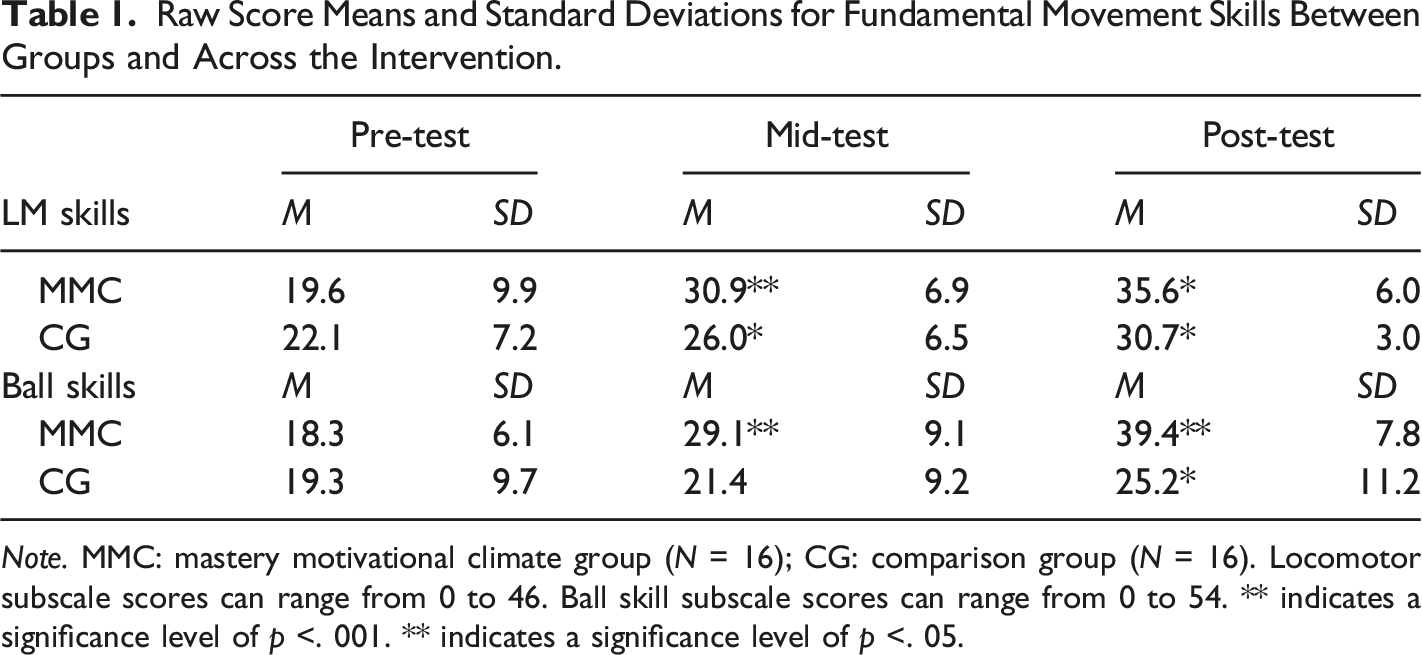
Note. MMC: mastery motivational climate group (N = 16); CG: comparison group (N = 16). Locomotor subscale scores can range from 0 to 46. Ball skill subscale scores can range from 0 to 54. ** indicates a significance level of p <. 001. ** indicates a significance level of p <. 05.
Locomotor Skill Changes
There was a statistically significant interaction between the intervention Group and Time on locomotor skills, F(2, 68) = 6.65, p = .02, partial η2 = .164 (Figure 1). In follow-up simple main effects, run for Group and Time, there were no significant group differences in locomotor skills at pre-test (p = .390). There was a statistically significant group difference in locomotor skills at the mid-point of the intervention, F(1, 34) = 4.8, p = .04, partial η2 = .124, with locomotor skill scores significantly higher in the mastery group compared to the comparison group. There was also a similarly statistically significant group difference in locomotor skills at the conclusion of the intervention, F(1, 34) = 10.2, p = .003, partial η2 = .230. Regarding Time, there was a statistically significant effect of Time on locomotor skills in the comparison group, F(2, 38) = 14.72, p < .001, partial η2 = .437, with an increase at mid-test compared to pre-test (p = .024), and better locomotor skills at post-test than at mid-test (p = .007). There was also a statistically significant effect of Time on locomotor skills for the mastery group, F(2, 30) = 45.38, p < .001, partial η2 = .751, with increased skills at mid-test compared to pre-test (p < .001), and increased skills at post-test compared to mid-test (p = .004). Differences in Locomotor Raw Score Means at Pre, Mid, and Post-Test between Groups.Note. *Indicates significant differences between groups. Range of locomotor (LM) scores is 0–46. MMC: mastery motivational climate; CG: comparison group.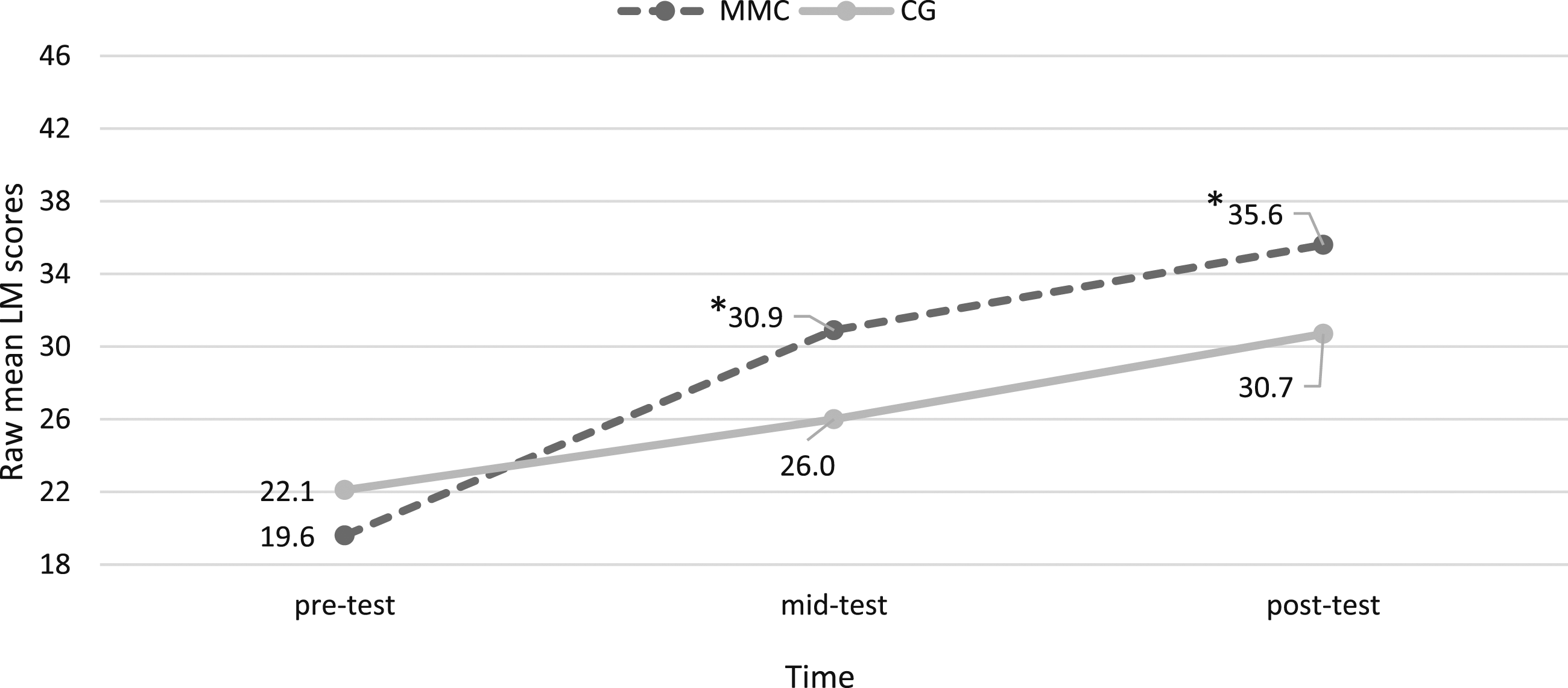
Ball Skill Changes
There was a statistically significant interaction between the Group and Time effects on ball skills, F(2, 68) = 18.60, p < .001, partial η2 = .354. Follow-up simple main effects for Group and Time revealed no significant group differences in ball skills at pre-test (p = .722). There was a statistically significant Group difference in ball skills at the mid-point of the intervention, F(1, 34) = 6.4, p = .016, partial η2 = .158, with ball skill scores significantly higher in the mastery group compared to the comparison group. There was also a similar statistically significant group difference in ball skills at the conclusion of the intervention, F(1, 34) = 18.3, p < .001, partial η2 = .350. Regarding Time effects, there was a statistically significant effect of Time on ball skills for the comparison group, F(2, 38) = 7.74, p = .002, partial η2 = .290, with no statistically significant increase in ball skills between the pre- and mid-test (p = .104), but with a significant increase between the pre-test and the post-test (p = .004), and between the mid-test and post-test (p = .02). Finally, there was a statistically significant Time effect on ball skills for the mastery group, F(2, 30) = 54.0, p < .001, partial η2 = .783, with a statistically significant increase in ball skills between the pre- and mid-test (p < .001), and between the mid-test and the post-test (p < .001) (Figure 2). Differences in Ball Skill Raw Score Means at Pre, Mid, and Post-test between Groups. Note. *Indicates significant differences between groups. Range of ball skill (BS) scores is 0–54. MMC: mastery motivational climate; CG: comparison group.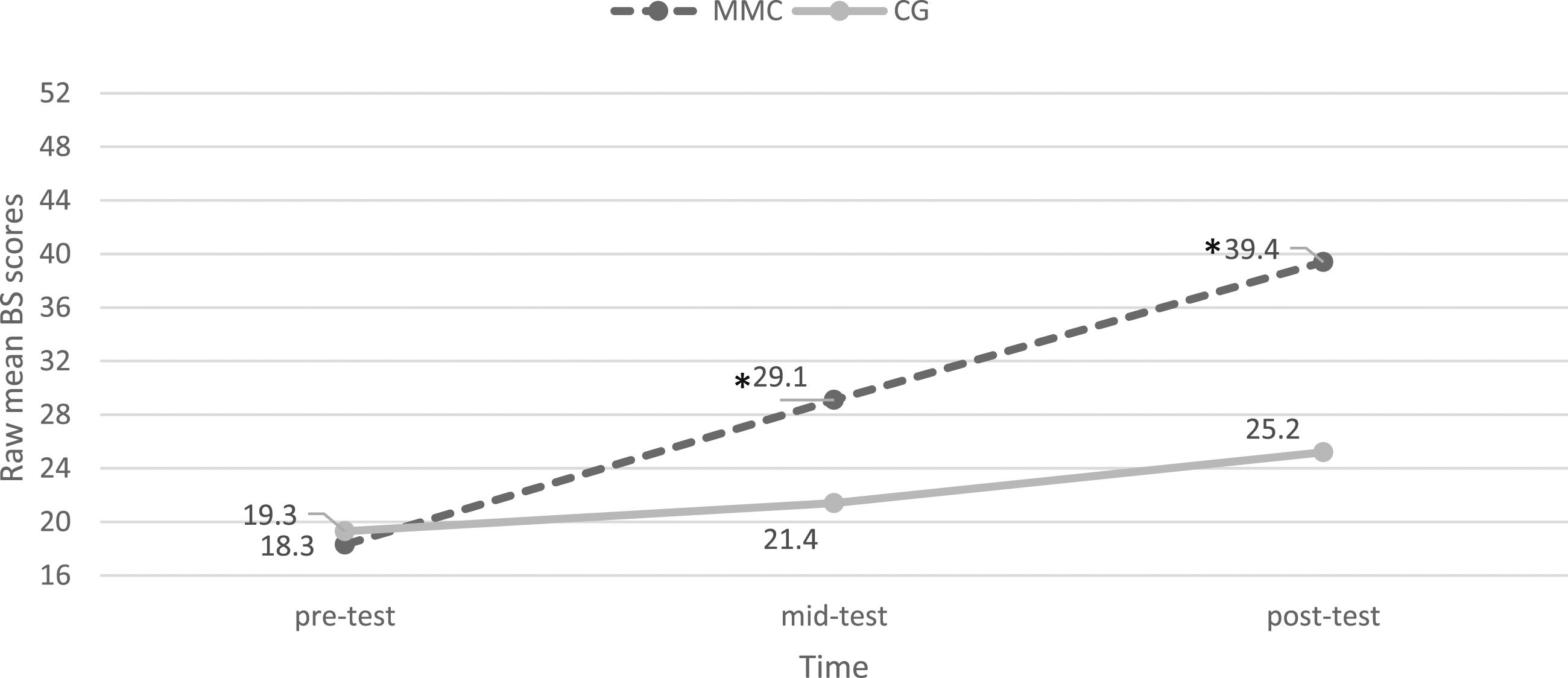
Pre-Test Locomotor Skill Mastery
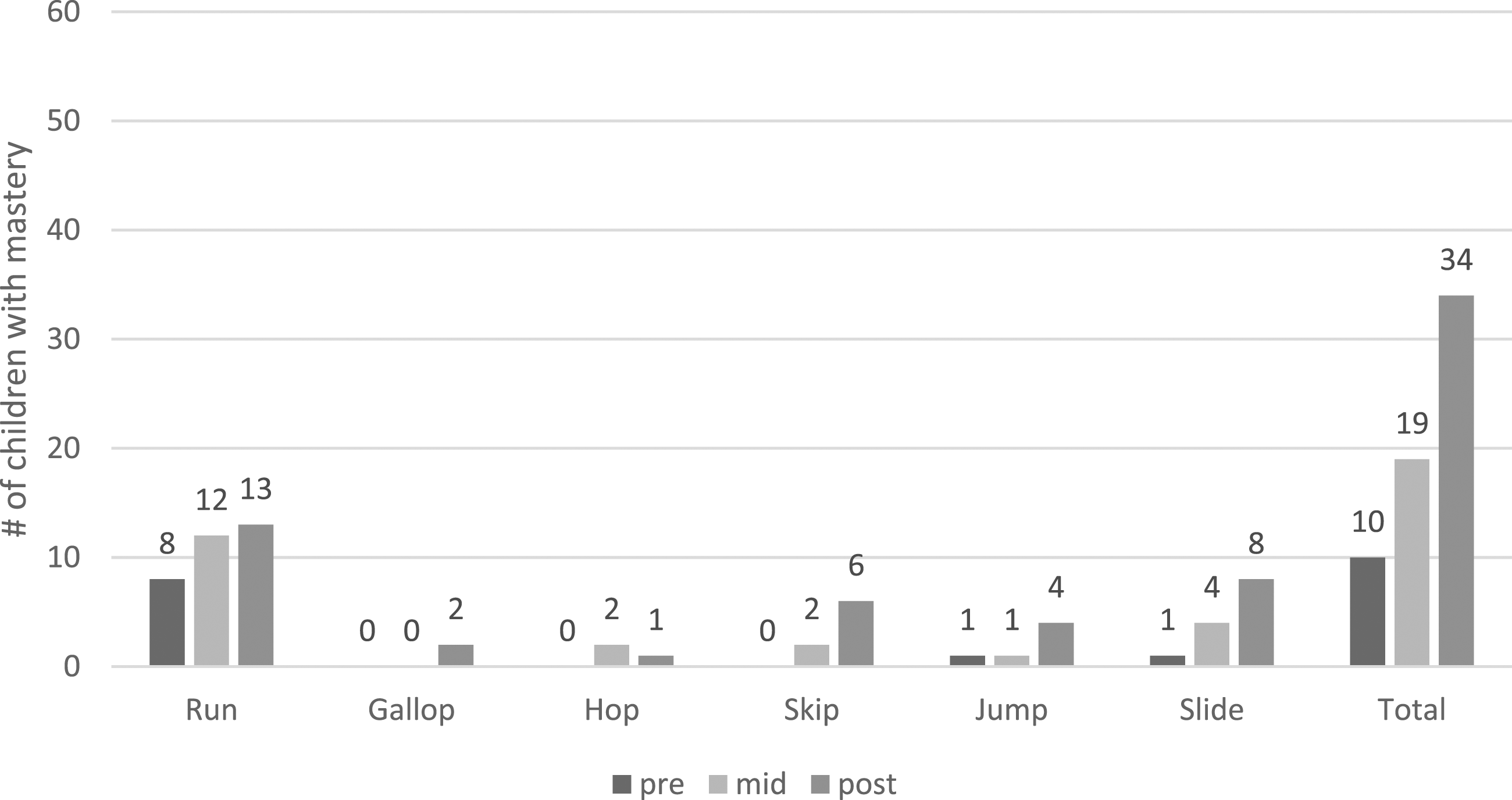
At pre-test, very few children in both groups displayed skill mastery in any of their locomotor skills. Specifically, across both groups no children showed mastery in hopping, one child showed mastery in galloping, two displayed mastery in each of jumping and sliding, three in skipping, and sixteen (50%) in running. In terms of group differences, of 96 locomotor skills assessed (16 participants * six skills), 14 were mastered by the mastery intervention group (14%), compared to 10 by the comparison group (10%).
Mid-Test Locomotor Skill Mastery
At mid-test, there was a substantial increase in the number of children who displayed skill mastery in locomotor skills. Across each locomotor skill individually, four children showed mastery in hopping compared to zero at the pre-test. Three showed mastery in galloping compared to just one at pre-test. Five children showed mastery in jumping compared to two at pre-test. Nine children showed mastery in sliding compared to two at pre-test. Seven children showed mastery in skipping compared to three at pre-test. Finally, running was again the most mastered locomotor skill as 22 children (69%) showed mastery levels of running.
Examining group differences at mid-test, of 96 locomotor skills assessed 29 were mastered by the mastery group (30%), compared to 19 locomotor skills by the comparison group (20%). Moreover, 15 additional locomotor skills were mastered for the mastery group and nine skills for the comparison group from pre to mid-test.
Post-Test Locomotor Skill Mastery
At post-test, there was another significant increase in the number of children who displayed skill mastery in their locomotor skills. Across each locomotor skill individually, six children showed mastery in hopping compared to none at pre-test and four at the mid-test. Six showed mastery in galloping compared to one at pre-test and three at the mid-test. Jumping increased from two to five to 17 across the three tests respectively, while sliding increased from two to nine to 19. Skipping increased from three to seven to 14. Finally, running was the most mastered locomotor skill as 26 children (81%) showed mastery levels of running.
In terms of group differences, of 96 locomotor skills assessed (16 participants * six skills), 54 were mastered by the mastery intervention group (56%), compared to 34 locomotor skills mastered by the comparison group (35%) at post-test. Moreover, 25 additional locomotor skills were mastered for the mastery group and 15 additional skills were mastered by the comparison group from mid to post-test. Figures 3 and 4 present these changes in locomotor skill mastery for each group across the three tests. Changes in the Number of Children with Mastery in Locomotor Skills at Pre, Mid, and Post-test by Locomotor Skill for the Mastery Group. Changes in the Number of Children with Mastery in Locomotor Skills at Pre, Mid, and Post-test by Locomotor Skill for the Comparison Group.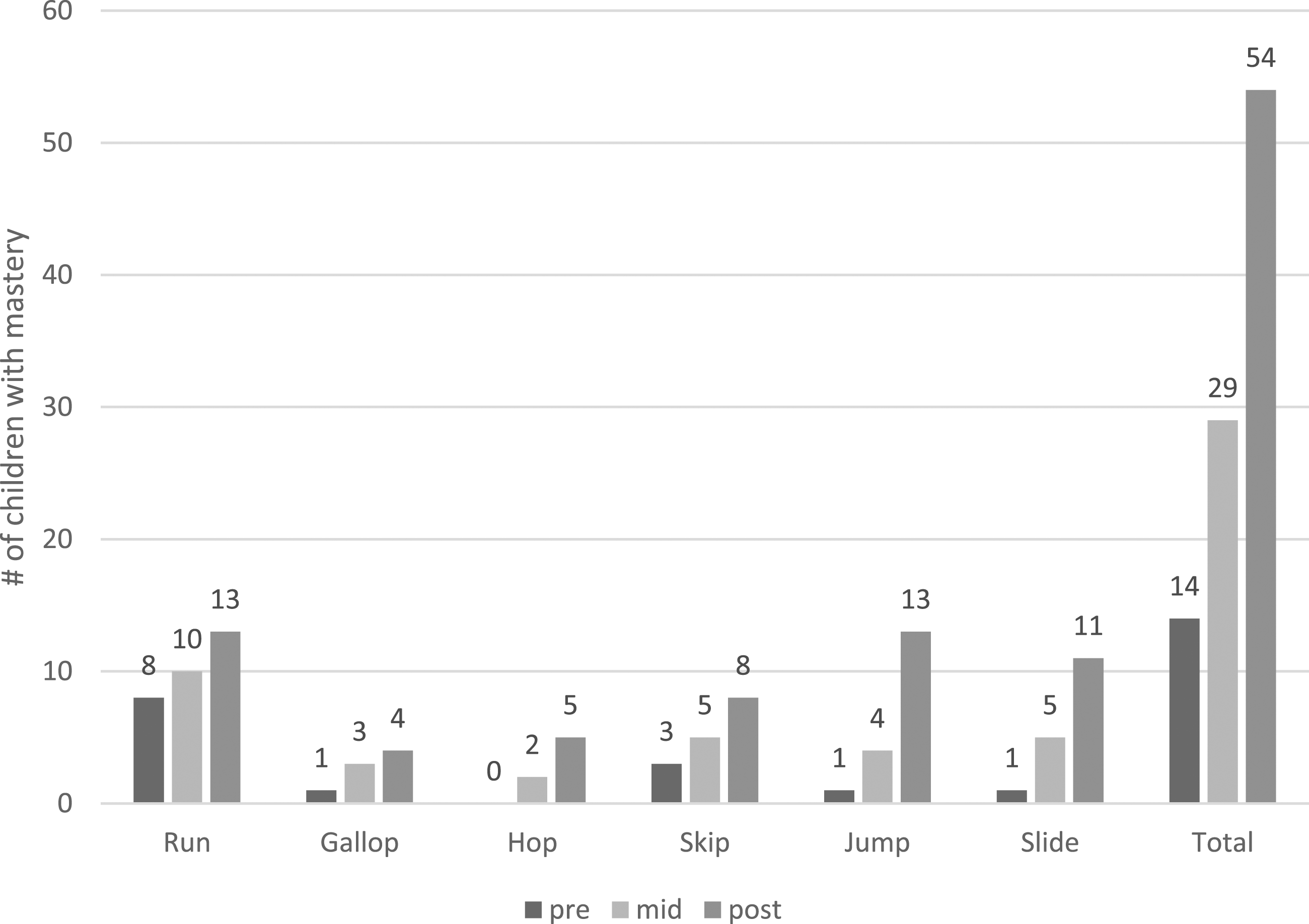
Pre-Test Ball Skill Mastery
At pre-test, almost no children in either group displayed skill mastery in any of their ball skills. None showed mastery in catching, kicking, or one hand strike. One child showed mastery in each of two hand strike, overhand throw, and underhand throwing. Four children across both groups showed mastery in dribbling. Examining differences by group, of 112 ball skills assessed (16 participants * seven skills), two were mastered by the mastery group (<1%), compared to five by the comparison group (4%).
Mid-Test Ball Skill Mastery
At mid-test, there was a slight increase in the number of children who displayed skill mastery in their ball skills. Across each ball skill individually, one child showed mastery in kicking and one in one hand strike, compared to zero at the pre-test. Four children showed mastery in catching compared to zero at the pre-test. While one child showed mastery in two hand strike at pre-test, no children showed this mastery at the mid-test. Two more children showed mastery in dribbling from pre-to mid-test. The largest improvements were displayed in overhand and overhand throwing. Seven more children mastered overhand throwing and 11 more children showed mastery for underhand throwing.
Examining group differences, of 112 ball skills assessed, 17(15%) were mastered by the mastery group), compared to 15 (13%) by the comparison group. Moreover, 15 additional ball skills were mastered by the mastery group and 10 additional skills were mastered by the comparison group from pre to mid-test. Changes in the Number of Children with Mastery in Ball Skills at Pre, Mid, and Post-test by Ball Skill for the Comparison Group.Note. 2HS: two hand strike; 1HS: one hand strike; DRB: dribbling; CTH: catching; KCK: kicking; OHT: overhand throwing; UHT: underhand throwing.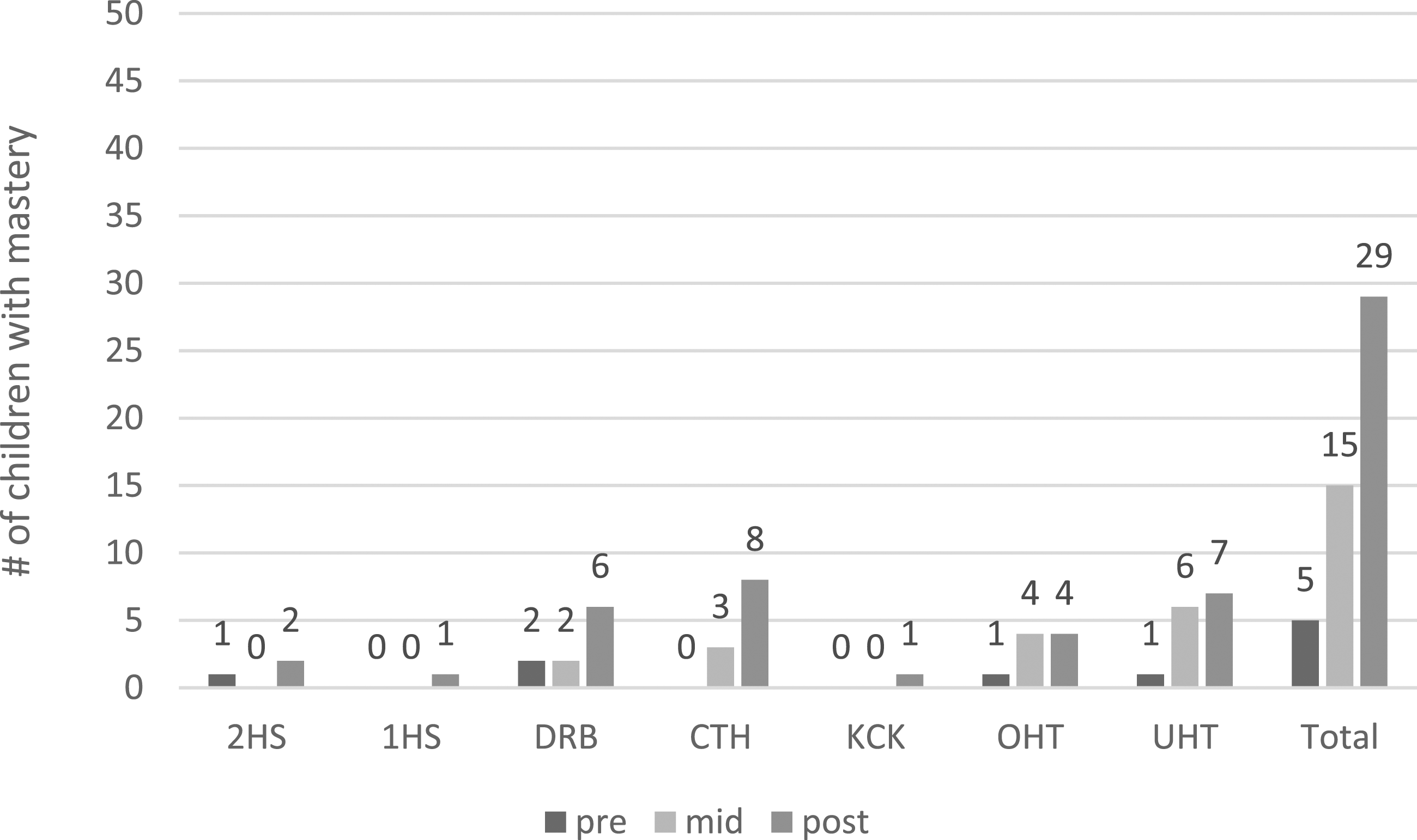
Post-Test Ball Skill Mastery
At post-test, there was a significant increase in the number of children who displayed skill mastery in their ball skills. Across each ball skill individually, seven children showed mastery in kicking across these three tests, compared to none at pre-test and four at the mid-test. 14 children showed mastery in catching across all three tests compared to zero at pre-test and four at the mid-test. Seven children showed mastering of the two-hand strike on post-test. Four additional children mastered overhand throwing, and five more children mastered underhand throwing at this time point. The largest increase in ball skills from mid to post-test was in dribbling as 10 more children showed mastery at post-test. Underhand throwing was the most mastered ball skill, with 17 (53%) of the children showing mastery levels across both groups.
Examining group differences, of 112 ball skills assessed, 47 (41%) were mastered by the mastery group), compared to 15 (26%) by the comparison group. Moreover, 30 additional ball skills were mastered by the mastery group and 14 additional skills were mastered by the comparison group from mid to post-test. Figures 5 and 6 present the changes in ball skill mastery for each group across the three tests. Changes in the Number of Children with Mastery in Ball Skills at Pre, Mid, and Post-test by Ball Skill for the Mastery Group.Note. 2HS: two hand strike; 1HS: one hand strike; DRB: dribbling; CTH: catching; KCK: kicking; OHT: overhand throwing; UHT: underhand throwing.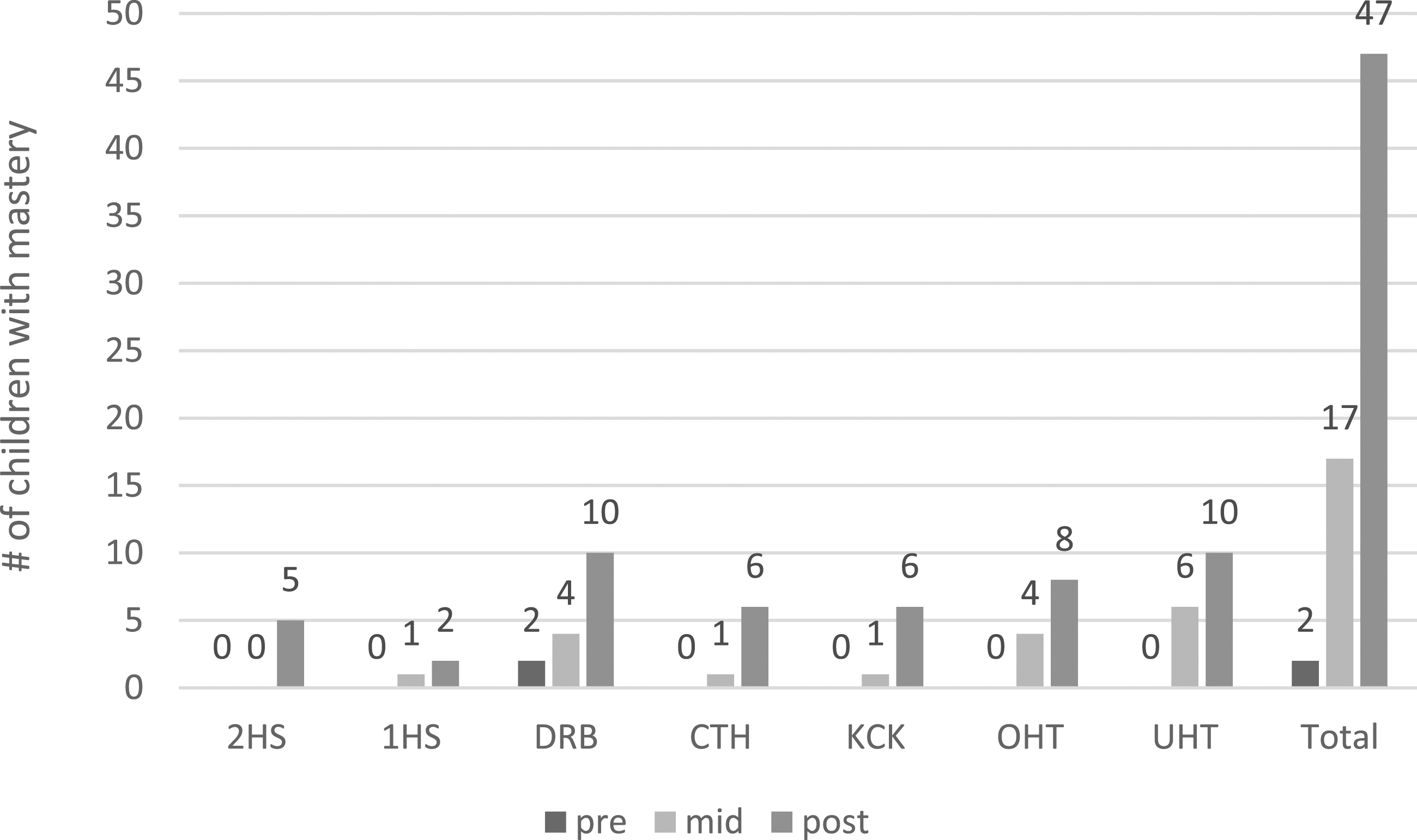
Finally, regarding total skill mastery across all three assessment points and between the two groups, there was an increase in locomotor skill mastery for the mastery group, from 14 (14%) to 29 (30%) to 54 (56%) skills across the three test points, respectively. For the comparison group, locomotor skill mastery changed from 10 (10%) to 19 (20%) to 34 (35%) skills. Regarding total ball skill mastery for the mastery group across these time points, there was a change from 2 (<1%) to 17 (15%) to 47 (41%). For the comparison group, ball skill mastery changed from 5 (4%) to 15 (13%) to 29 (26%).
Discussion
Our purpose in this study was to compare differences in young children’s FMS competence after a shorter (mid-point) and longer (post-test) dose of a MMC intervention. Our first hypothesis was supported, as the mastery group showed significant improvements in both locomotor and ball skills across both doses of the intervention. Our second hypothesis was also supported, as the mastery group showed a higher rate of improvement than the comparison group. While these groups were not different in skill competence prior to the intervention, there were significant differences between groups at the mid-test and at the conclusion of the intervention period; this improvement included both locomotor and ball skills. Finally, the mastery group also showed greater skill mastery across the intervention doses compared to the comparison group. The following discussion will examine how these findings compare to previous mastery climate FMS interventions for preschool and kindergarten-age children.
These data permit a unique comparison to previous mastery intervention literature in that our inclusion of both mid-testing and post-testing allows comparisons of dose effects in terms of minutes of intervention and effect size of skill change across multiple studies. Considering the shorter intervention dose, at mid-testing our participants had received 420 minutes of instruction. This is similar to the 432 minutes in Robinson’s (2011) study in which she found significant changes in ball skills. Our mastery group also made significant ball skill improvements halfway through the intervention. Similarly, Robinson and Goodway (2009) reported a moderate effect size for the change in ball skills after a 540-minute mastery intervention. For the longer intervention dose, at post-test our participants had received 870 minutes of instruction, similar to the 900 minute intervention by Martin et al. (2009) who found much smaller effect sizes. We propose that, although these studies were similar in the minutes spent in intervention, Martin et al. (2009) used a much shorter calendar period of 6 weeks versus our period of 36 weeks. Six weeks may not be sufficiently long to consolidate skill learning in children of this age. Valentini and Rudisill (2004) had a slightly shorter intervention than the current study (by 30 minutes) but reported larger effect sizes for changes in locomotor skills, even while their changes in ball skills were much smaller.
Considering these data collectively, the duration of instructional minutes as a proxy for a dose-response relationship may not be the most effective way to determine an adequate or ideal length of mastery interventions for young children. This observation is consistent with a meta-analysis on the effectiveness of FMS interventions that explored a dose-effectiveness relationship and did not find a significant relationship between minutes of intervention and FMS development (Logan et al., 2012). These authors posited that intervention length is not the most accurate indicator of actual instruction time, although not all investigators separated those two concepts in their reporting. Moreover, this review was across several different types of interventions and numerous age groups. Robinson et al. (2017) also reported a non-significant relationship between intervention dose (minutes) and change in FMS scores for children across their CHAMP FMS interventions.
We agree that total minutes of intervention is not a critical index of dose effect for children in this age group, and we contend that other participant and contextual factors must be considered including age (there can be large differences between a 3- and 4-year-old), sex, environment, assessments used, and beginning FMS competencies. For instance, although similar in age, the participants in the shorter interventions by both Robinson and Goodway (2009) and Robinson (2011) included primarily boys and took place in an midwestern, urban context; in contrast, we included majority girls from a southern, rural cultural background. Additionally, the children in those studies had much lower ball skill scores at pre-test, which suggests that they had more room for improvement. This difference could be attributed to a difference in their FMS assessment. They used the TGMD-2, while we used the TGMD-3. It appears that children of different skill levels and contextual factors can learn their ball skills across different mastery intervention doses (Rudisill, 2016), but if we are to effectively compare their performance across MMC interventions, futures studies must include children who begin with higher FMS to determine whether they would respond differently to MMC intervention dosages.
Based on our findings, if the intervention dose itself is not the best proxy for measuring MMC intervention effectiveness, what should we focus on instead? We assert that examining how instructional time is allocated during interventions in relation to changes in ‘skill mastery’ can provide us with strategies to enhance the design of motor skill interventions. As such, we compared changes in skill mastery for each skill across the intervention time points and between groups. As expected, many of the participants lacked skill mastery prior to the intervention. Moreover, for this age group, running was the most mastered locomotor skill across all time points. This finding was not surprising as running is one of the most commonly experienced locomotor skills for this age group outside of formal instructional settings (Johnson et al., 2022). Newell (2020) supports this notion and highlights running as one of the earliest developed locomotor skills. Yet, beyond running, there is no clear order of progression for practitioners in teaching locomotor skills to young children. In this study, sliding appeared to be the next best mastered locomotor skill. Similar to previous assertions; galloping, skipping, and hopping appear to be most challenging for this age group (Roberton, 2013; Roberton & Halverson, 1988). Developing such a process will also help inform intervention design and skill sequencing including how often a particular skill should be practiced across interventions. Our typical intervention session generally had more ball skill related activities compared to activities exclusively designed to practice locomotor skills. When examining the skill mastery patterns of children for ball skills; underhand throw, overhand throw, and dribbling were more likely to be mastered first. On the one hand, these findings align with the development of overhand throwing mastery at age four (Newell, 2020); however it is also surprising, as this sample primarily consisted of young girls and many studies have reported gender differences in ball skills and especially for overhand throwing (Johnson et al., 2020). Other ball skills such as one and two-hand striking were the least mastered skills across the intervention, which may indicate a need for children to spend more instructional time on these specific skills that may take longer to develop. Extending this skill mastery analysis in future studies can help to generate more refined skill and task progressions for FMS development of young children.
Limitations and Future Recommendations
There were several limitations in this study. From a design standpoint, the intervention study that produced this data was quasi-experimental, as there was no random assignment of participants to each condition, reducing internal validity. Instead, the groups were assigned to conditions according to the playground schedule. Additionally, the sample size of children in this study was small and homogenous, and the children were developmentally delayed or at-risk for delays; thus, the effect sizes may be inflated. Thirdly, as mentioned earlier, including a traditional control group would have allowed for a better comparison between all three conditions. Finally, we compared differences in effect sizes across two different assessments. Some of the older studies measured FMS competence using the second edition of the TGMD. There are key differences between these assessments, as they assess different ball skills, and these results must be interpreted within the context of this study.
Conclusion
Our findings support the notion that mastery climate interventions are effective for FMS improvement in young children across a wide range of dosages; children in the mastery group showed significant improvements in locomotor and ball skills across both the shorter and longer dosages. While a MMC intervention is better than no intervention, the duration of instructional minutes as a proxy for a dose-response relationship may not be the most effective way to determine an adequate or ideal length of mastery interventions for young children. Instead, we highlight other factors to take into consideration when evaluating the effectiveness of a MMC intervention beyond dose and effect size. Finally, we suggest that examining the development of FMS mastery patterns can help inform researchers and practitioners on intervention design and skill sequencing in movement settings.
Footnotes
Declaration of Conflicting Interests
The author(s) declared no potential conflicts of interest with respect to the research, authorship, and/or publication of this article.
Funding
The author(s) received no financial support for the research, authorship, and/or publication of this article.
Ethical Approval
Approval for the study was obtained from the authors’ Institutional Review Board for Human Subjects Research. There are no acknowledgements associated with this paper.
