







Abstract
Haiku poetry, a short poem with a clear form, has the potential to elucidate many unknown aspects of linguistic art. Previous studies on haiku appreciation have shown that negative emotion and cognitive ambiguity reduce aesthetic evaluation. Considering the importance of negative emotions and ambiguity in art, it is beneficial to clarify the process of emotional and cognitive changes during aesthetic evaluation. This study examined the temporal effects of emotional and cognitive changes on aesthetic evaluation from multiple perspectives by measuring the ratings of each section of haiku, continuous emotional reports, and physiological changes in pupil diameter. The 112 students first rated the haiku at three time points on items such as beauty, valence, and ambiguity. Next, they rated the same haiku continuously for 20 seconds using a joystick for valence and arousal during which the pupil diameter was measured. The results showed that a decrease in negative emotions and ambiguity explained the beauty of the haiku. In the continuous emotion reports, positive emotions gradually increased for positive haiku and negative emotions gradually increased for negative haiku, while arousal decreased once and then gradually increased for both forms of haiku. Additionally, an increase in pupil diameter also explained the beauty. The roles of negative emotions and ambiguity were revealed by focusing on both subjective and physiological indicators of emotional and cognitive changes during haiku appreciation. This study has contributed to the advancement of our understanding of linguistic art forms by empirically exploring conscious and unconscious emotional and cognitive responses to haiku.
Introduction
Haiku poetry is the world’s shortest poetic form and includes 5-7-5 morae and a seasonal word (Iida, 2008). In a haiku, one or two images are composed and a breakpoint, called a kire (cut), 1 is efficiently used to integrate them (Blasko & Merski, 1998). While the Japanese are naturally comfortable with the 5-7-5 rhythm (Niikuni et al., 2022), rhymes are not common in haikus. Owing to its controlled format and clear rules, haiku poetry can be used to potentially explore the frontier of verbal art, which has many unexplored elements compared with accumulated research in visual and auditory arts (cf., micropoems) (Hugentobler & Lüdtke, 2021; Jacobs, 2015). Empirical studies have examined how poetry has been aesthetically appreciated, both regarding cognition and emotion (Hitsuwari & Nomura, 2024a, 2024b; Johnson-Laird & Oatley, 2022; Maruyama & Ishizu, 2024; Obermeier et al., 2016; Pițur & Miu, 2025; Wassiliwizky et al., 2017). Similarly, haiku poets have suggested a relationship between the emotions and cognition evoked by a haiku’s beauty (Kishimoto, 2008). Recent empirical studies have examined this relationship. Regarding emotions, positive (Belfi et al., 2018; Hitsuwari & Nomura, 2022) and mixed emotions, such as awe and nostalgia, (Hitsuwari & Nomura, 2024c) explain the beauty of a haiku. Regarding cognition, imagery vividness explains the aesthetic appeal of haiku (Belfi et al., 2018; Mehl et al., 2023). Furthermore, cognitive ambiguity reduces their appeal (Hitsuwari & Nomura, 2024c). However, these results contradict those of high evaluations of grief haiku (Imase et al., 2010) and importance of ambiguity in haiku and poetry (Nitta, 2016; Wallot & Menninghaus, 2018). These findings are insufficient since negative emotions (Menninghaus et al., 2017) and resolution of ambiguity (Muth & Carbon, 2013) contribute to aesthetic experiences in visual and auditory arts. Consideration of the processes involved in alleviating negative emotions, as well as increment of positive emotions and resolution of ambiguity that explain a haiku’s uniqueness and its commonality with previous findings, is required. Therefore, this study aimed to provide a deeper understanding of the beauty of haikus and focused on the process of emotional and cognitive changes during appreciation.
Several process models of emotion and cognition during art appreciation have been developed (Leder et al., 2004; Leder & Nadal, 2014; Menninghaus et al., 2017; Pelowski et al., 2017). In Menninghaus et al.’s (2017) model, negative art appreciation could be enhanced through an ''embracing'' component that enhanced art appreciation via the positive integration and incorporation of the power of the negative emotions. Therefore, the interactions between positive and negative emotions and role of mixed emotions were highlighted. This suggests that changes in negative and positive emotions are important in an art experience. Another process model (Pelowski et al., 2017) stated that viewers could have several interpretations and thoughts when there was low relevance to the self and low schema consistency in the top-down cognitive process. Individuals encounter information that resolves discrepancy and may lead to insight with aesthetic evaluation as they continue to view an artwork. Experiments to support this process have captured the association between ambiguity and beauty at more than one time point. Muth and Carbon (2013) presented ambiguous images repeatedly for 500 ms each and asked participants to repeat their liking and clarity ratings. They found that the largest increase in liking occurred immediately after the resolution of ambiguity (i.e., insight). Thus, paying attention to emotional and cognitive changes in art appreciation is important. Their impact on beauty can be examined by evaluating haiku poems with a clear 5-7-5 structure. Haiku is ideal to examine this process owing its controlled shortness; however, expected results could be extended to other poetic forms and art genres.
We examined emotional and cognitive change processes and asked participants to evaluate the haiku one-by-one for lines 1, 2, and 3
2
while a more precise method to measure the change processes was introduced. Emotional processes, such as perception and expression of emotional states and social signaling, could be acquired by manipulating joysticks (a hand-operated control device traditionally used in gaming and flight simulation for precise directional control; see also Figure 1(b)) (Girard & C Wright, 2018; Sharma et al., 2020). Although a flourishing approach in studies on aesthetic appreciation of temporal art, especially music (Bachorik et al., 2009; Grewe et al., 2007; Nagel et al., 2007), the continuous self-rating of spoken poetry
3
does not affect physiological responses or post-appreciation ratings. Hence, continuous rating during appreciation is also possible in poetry (Wagner et al., 2021). In this study, participants reported their emotions on two dimensions, valence and arousal
4
, using a joystick as the haiku was gradually presented. These dimensions were also used in previous studies (Bliss-Moreau et al., 2020; Russell, 1980; Sharma et al., 2020 for practical examples using joysticks). Experimental Procedures for Gradual (a) and Joystick Ratings (b).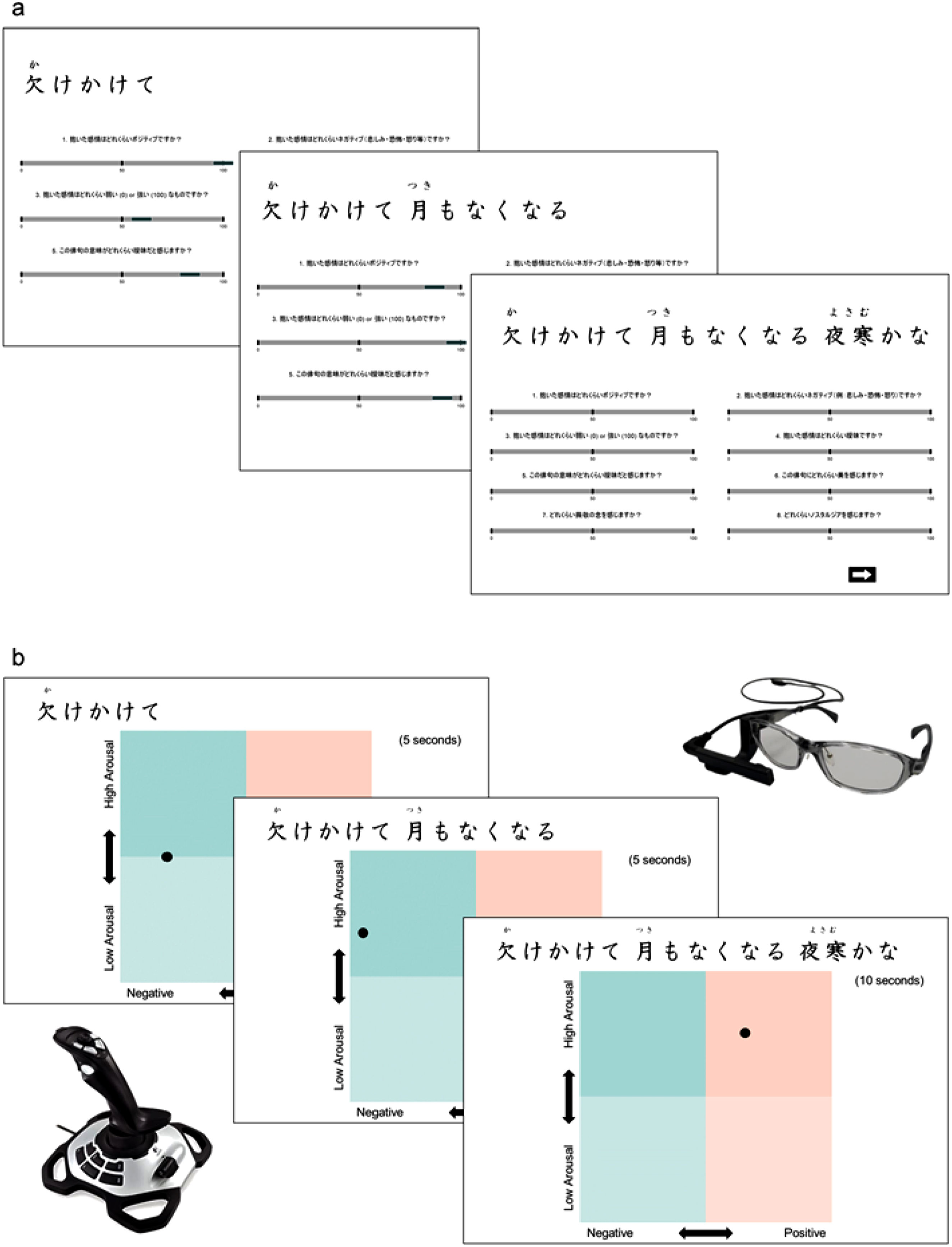
Additionally, eye movements were compatible with continuous response, such as joysticks, and included features of temporality and unconsciousness. This methodology was also accumulated in verbal arts, such as poetry (Blohm et al., 2022; Menninghaus & Wallot, 2021; Scheepers et al., 2013). In particular, studies used haiku and eye-movement measurements and revealed that people appreciated haiku differently based on the presence and position of the kire (cut) and type (Geyer et al., 2020; Hermann et al., 2017). A study compared haikus and slogans, with the same 5-7-5 syllable structure, and found that the pupil diameter was larger when haikus were viewed as aesthetic poetry compared with slogans (Niikuni et al., 2022). Although pupil diameter was positively related to aesthetic evaluation in other art genres, such as painting and music (Kuchinke et al., 2009; Laeng et al., 2016), this relationship is more complex in haiku. A study reported no correlation (Spee et al., 2024). Therefore, this study measured pupil diameter as a supplementary measure, in addition to gradual haiku rating and joysticks.
Aims
Extending on previous studies that only captured cognition and emotion at a single timepoint during poetry appreciation, this study aimed to examine the multidimensional effects of changes in cognition and emotion on haiku evaluation and combined haiku ratings in steps, continuous ratings using a joystick, and pupil diameter measurements. In particular, increased positive emotion and arousal and decreased negative emotion and emotional/cognitive ambiguity during haiku appreciation could lead to beauty. Furthermore, dynamic changes in emotions during haiku appreciation could be captured via joysticks for the first time. Simultaneously, we assumed that changes in pupil diameter, as an exploratory measure of aesthetic evaluation, would be positively related to beauty.
Methods
Participants
Based on previous research on sample sizes for hierarchical and repeated measures data, our sample size was 113 students (Arend & Schäfer, 2019). In the sample size estimation method, direct effects of levels 1 and 2 and intra-class correlation coefficients among linear mixed models were incorporated into the model and calculated via the simr package (Green & Macleod, 2016) in R (R scripts used for the estimation were stored on the OSF project page). We recruited 113 undergraduate and graduate students from Kyoto University, whose native language was Japanese, via an electronic notice board. Owing to the nature of the pupil measurement device and joystick operation, only students who did not wear glasses and were right-handed were included. One student was excluded owing to missing data, and ultimately, data from 112 participants (M age = 20.92 years, SD age = 2.55, 53 men and 59 women) were analyzed. In addition, pupil diameter data could not be analyzed for 17 and two participants owing to a programming error (lack of time in the measurement program) and too many missing values, respectively. Therefore, pupil diameter data were analyzed for 93 participants.
Materials
Stimuli comprised 172 haikus used in previous studies (Hitsuwari & Nomura, 2022, 2024c). In these studies, the valence of each haiku was measured on a visual analog scale (VAS) scale from 0 to 100. Of the 172 haikus, 30 each were selected as being more positive (M valence = 69.27, SD = 4.20, Range = 64.82–79.06) and negative (M valence = 35.95, SD = 5.01, Range = 26.59–44.92). Hence, 60 haiku were evaluated by 11 participants who did not participate in the main experiment. Haiku too cryptic or those that evoked heightened negativity or abhorrence were eliminated; therefore, 48 haikus (24 positive and 24 negative) were used in the main experiment. These were randomly divided into two lists that included half positive and half negative haikus. Participants rated only one list. This design was adopted to balance the need to maintain variance in the evaluation of positive and negative haikus and reduce burden on the participants.
Procedure
This study was approved by the Ethics Committee of Kyoto University (CPE-429). All data, materials, and scripts are available online at (https://osf.io/x64hu/).
The experiment was conducted in a laboratory at Kyoto University. Informed consent was obtained from all the students prior to their participation. After the experiment was explained, participants were fitted with an ET-mono (Gazo, Co., Ltd; Nakamura et al., 2019), a wearable device that measured pupil diameter, and instructed to not move their heads significantly during the experiment. A practice session was conducted, followed by the main experiment that was divided into two main components. First, participants rated each haiku at three time points (TPs) 5 : lines 1, 2, and 3. Participants completed a 0–100 VAS rating on six items: positive emotion, negative emotion, arousal, emotional ambiguity, cognitive ambiguity, and beauty (eight items, which included awe and nostalgia, were measured only at the third time point 6 ; Figure 1(a)). Cognitive ambiguity referred to uncertainty in the interpretation and understanding of the haiku’s meaning, while emotional ambiguity referred to the complexity and uncertainty in the evoked emotional response. Although related, these two types represent distinct aspects of the appreciation process. Second, the same haiku was rated continuously using a joystick (Logitech Extreme 3D Pro; Logitech International S.A.; Figure 1(b)). A two-dimensional plot of valence and arousal on the X-and Y axis, respectively, was displayed on the screen. Participants continuously reported their own emotions for 20 seconds. Only line 1 was displayed for the first 5 seconds, followed by lines 2 and 3 after five second intervals each (Figure 1(b)). Participants were instructed to focus their evaluation on their own emotions, not on the haiku’s valence. Participants rated one haiku via the VAS, and subsequently switched to a joystick and performed a 20-s continuous emotion report for the same haiku. After they rated one haiku, they had a 30-s break before the next haiku was presented to prevent emotional carryover. A maximum 3-min break was allowed after half (12) of the haikus were evaluated. Pupil diameters were recorded continuously from the beginning to the end and analyzed primarily during the continuous emotion report with the joystick. Finally, after the participants left the laboratory, they completed an online questionnaire that included demographic information, haiku familiarity, haiku/art experience, and individual traits 7 . Since these individual trait scales could be answered at any time on the same day after leaving the laboratory, the design was considered to reduce the burden on participants. Individual scale traits were obtained for future research (Supplemental Table 1 presents the mean, standard deviation, and correlations with beauty TP3). The experimental program was created and executed using Psychopy version 3 (2020.2.3; Peirce et al., 2019), and the questionnaire was created via Qualtrics.
Data Analysis
First, means and standard deviations were calculated separately for negative and positive haikus for each variable. Scores were analyzed via t-tests, and Cohen’s d was also calculated. To control for Type I errors owing to multiple comparisons, Bonferroni correction was applied, and the significance threshold was set to p = .0028 (0.05/18). This adjustment accounted for 18 analyses conducted across six variables (which excluded nostalgia and awe) measured at the three time points. Additionally, multi-level correlations were calculated via the HAD software (version 17.20; Shimizu, 2016). Second, a hierarchical Bayesian regression model, in which changes in TP12 and TP23 for all rating variables (within-participant centered) explained beauty TP3, was conducted via brms package (Bürkner, 2017), with participants and haiku for random intercepts:
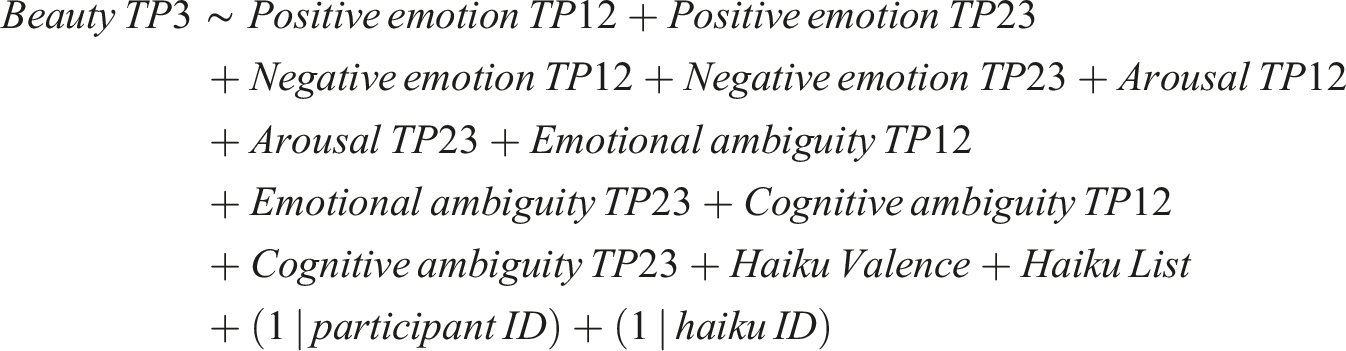
Beauty TP 3 was used as the dependent variable as it was the form of haiku completed at time point 3, and one that people usually appreciated. Convergence was confirmed (<1.10) (Brooks & Gelman, 1998), and the significance of the effect of each variable was determined by 95% posterior credible intervals (CIs) not containing zero. Third, for the joystick time-series data, 20 seconds of data at 60 frames per second (fps) was used. These were compressed (downsampled) to one-tenth their original size
8
. Following previous studies that used joysticks and pupil diameter (Takano & Nomura, 2023), we used smoothed trend models with second-order differencing for time-series analysis. This model was a state-space model of Bayesian updating applied to time-series analyses and suitable for capturing gradual changes and fluctuations between time points. It assumed the existence of invisible states and comprised (1) a state equation that represented the change in state and (2) an observation equation that represented the process by which the observed values were obtained (Durbin & Koopman, 2012). The smoothed trend model was represented by the following equations
9
:


Difference-in-differences was assumed to follow the normal white noise ζt (with an expected value of 0 and variance of σ2). This study mainly focused on visual observation of the time-series plots estimated by the model and parameters of fluctuation in the amount of change (magnitude of change in the drift component). Settings of the model estimation were: four chains, each with iteration = 10,000, warmup = 2000, thin = 10, post-warmup draws per chain = 800, and total post-warmup draws = 3200. Fourth, similar to the second analysis, the hierarchical Bayesian regression model that explained beauty, TP3, was run using the amount of change in pupil diameter. Participants and haiku were put into random effects. Regarding pupil diameter, data with missing values of 20% or more were removed. After missing value completion with the zoo package in R (Zeileis & Grothendieck, 2005), baseline correction was performed. Data were differenced from baseline (average of the first five data in every haiku trial). Furthermore, since the data were acquired at 120 fps, they were downsampled by a factor of 20. Fifth, similar to the third analysis, the smoothed trend model of the state-space model was also applied for pupil diameter. In addition, analyses that used the conventional linear mixed model and time-series plots of the observed data were performed to confirm no significant differences with the Bayesian results (see supplemental file). Analyses were conducted using R software (version 4.1.0; R Core Team, 2021) and Rstan (version 2.21.3; Stan Development Team, 2021).
Results
Mean, Standard Deviation, and Correlation Coefficient With Beauty TP3.
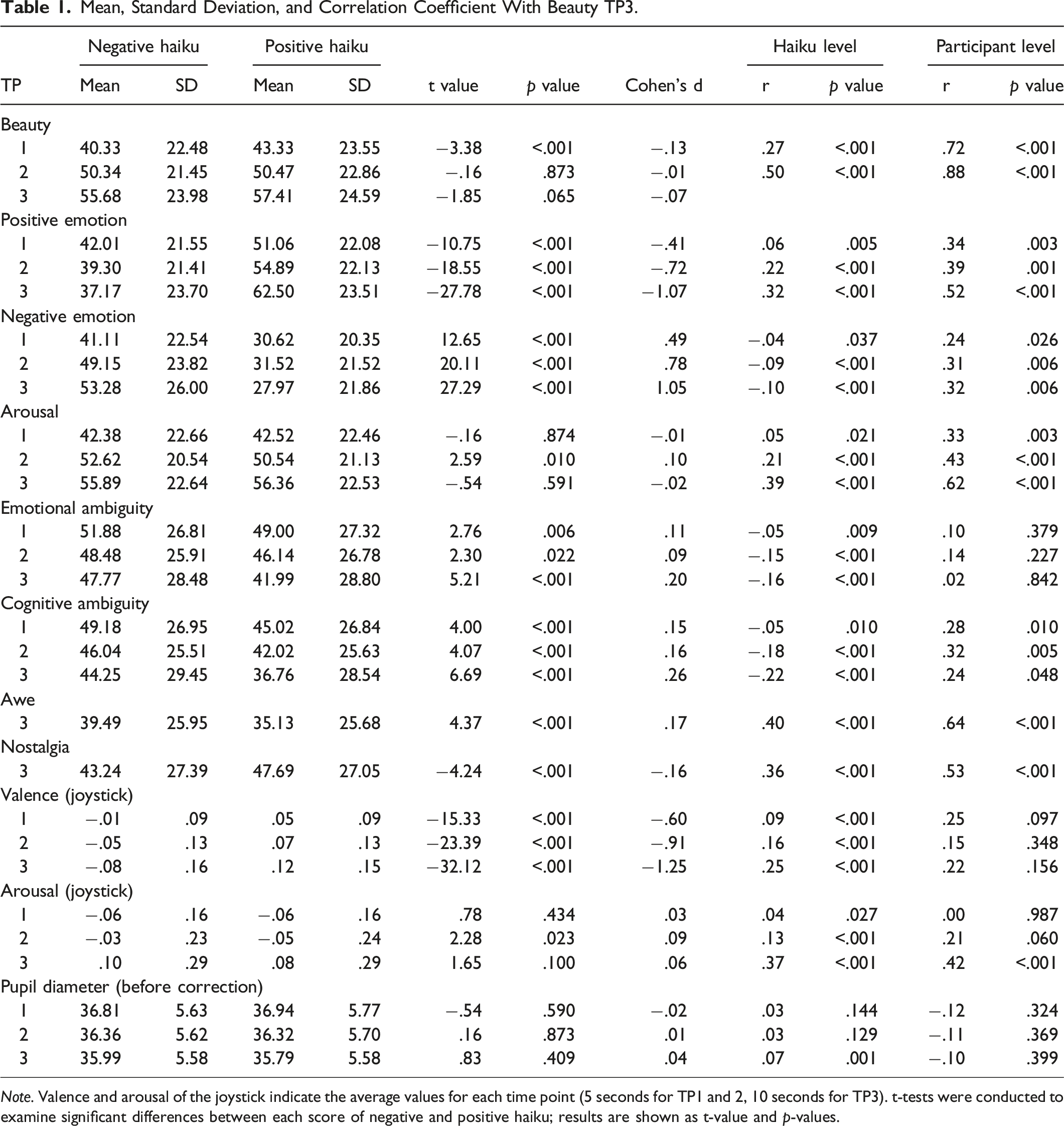
Note. Valence and arousal of the joystick indicate the average values for each time point (5 seconds for TP1 and 2, 10 seconds for TP3). t-tests were conducted to examine significant differences between each score of negative and positive haiku; results are shown as t-value and p-values.
Results of a Hierarchical Bayesian Regression Analysis Showing That Changes in Positive Emotion, Negative Emotion, Arousal, Emotional Ambiguity, and Cognitive Ambiguity Explain the Beauty of Haiku at Timepoint 3.
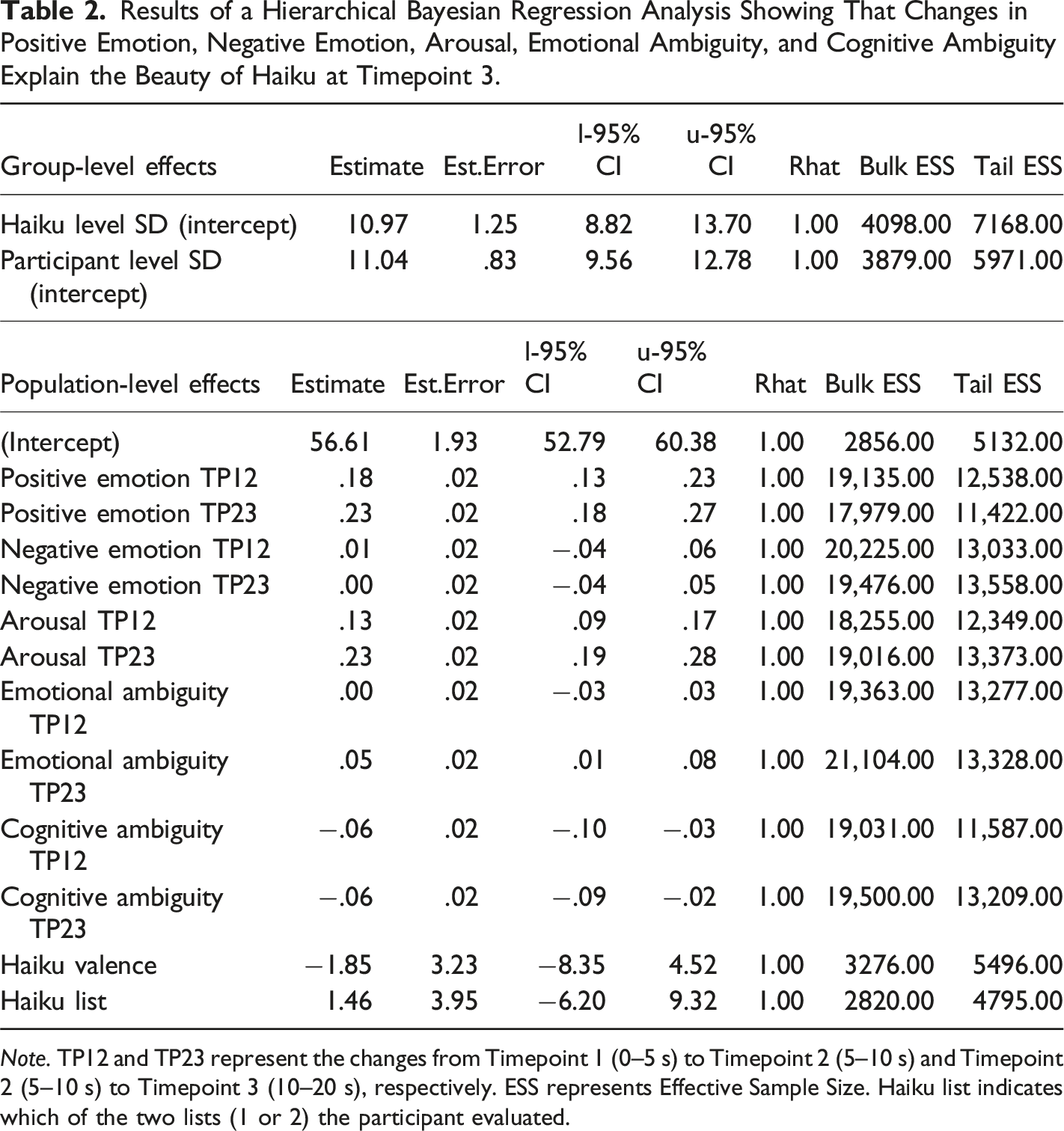
Note. TP12 and TP23 represent the changes from Timepoint 1 (0–5 s) to Timepoint 2 (5–10 s) and Timepoint 2 (5–10 s) to Timepoint 3 (10–20 s), respectively. ESS represents Effective Sample Size. Haiku list indicates which of the two lists (1 or 2) the participant evaluated.
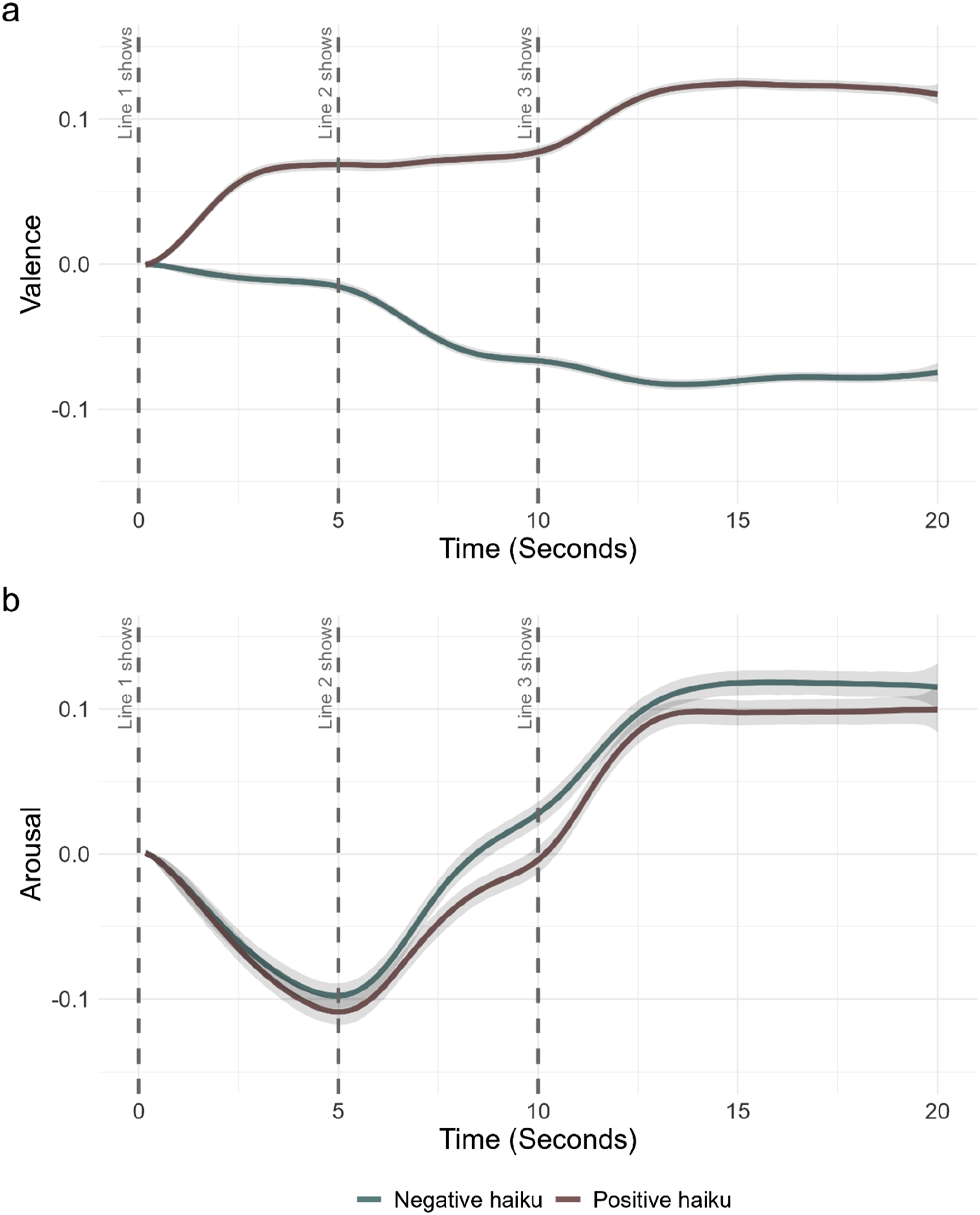
Results revealed that increased positive emotions, arousal, and emotional ambiguity and decreased cognitive ambiguity explained the haiku’s beauty (Figure 2). Figure 3 illustrates a time-series plot of the joystick-reported valence and arousal, estimated via the state-space model (see Supplemental Figure 1 for the time-series analysis of the observed data). Figure 3(a) illustrates that positive and negative emotions gradually increased in the positive and negative haiku, respectively. The parameter that represented the fluctuation in the amount of change in valence was σ = 0.00 (SD = 0.00) for both positive and negative haiku, which indicated that the amount of change was constant (no fluctuation; Supplemental Table 4). In contrast, Figure 3(b) illustrates that arousal tended to drop temporarily during the presentation time of line 1 and gradually increase for both haikus in a similar manner. We set both valence and arousal to start at 0; the initial drop in arousal could be caused by this setting. That is, participants expressed low arousal in the early stages of haiku appreciation, with arousal gradually increasing (consistent with the mean scores; see Table 1). The parameter that represented fluctuation in the amount of change in arousal was σ = 0.00 (SD = 0.00) for both positive and negative haiku, which indicated that the amount of change was constant (no fluctuation; Supplemental Table 4). Moreover, the variance of arousal was larger than that of valence (Table 1). Forest Plot of the Hierarchical Bayesian Model where the Amount of Change in Each Variable Explains Beauty TP3. Time-series Changes of Valence (a) and Arousal (b) by Joystick Operation (State-Space Model).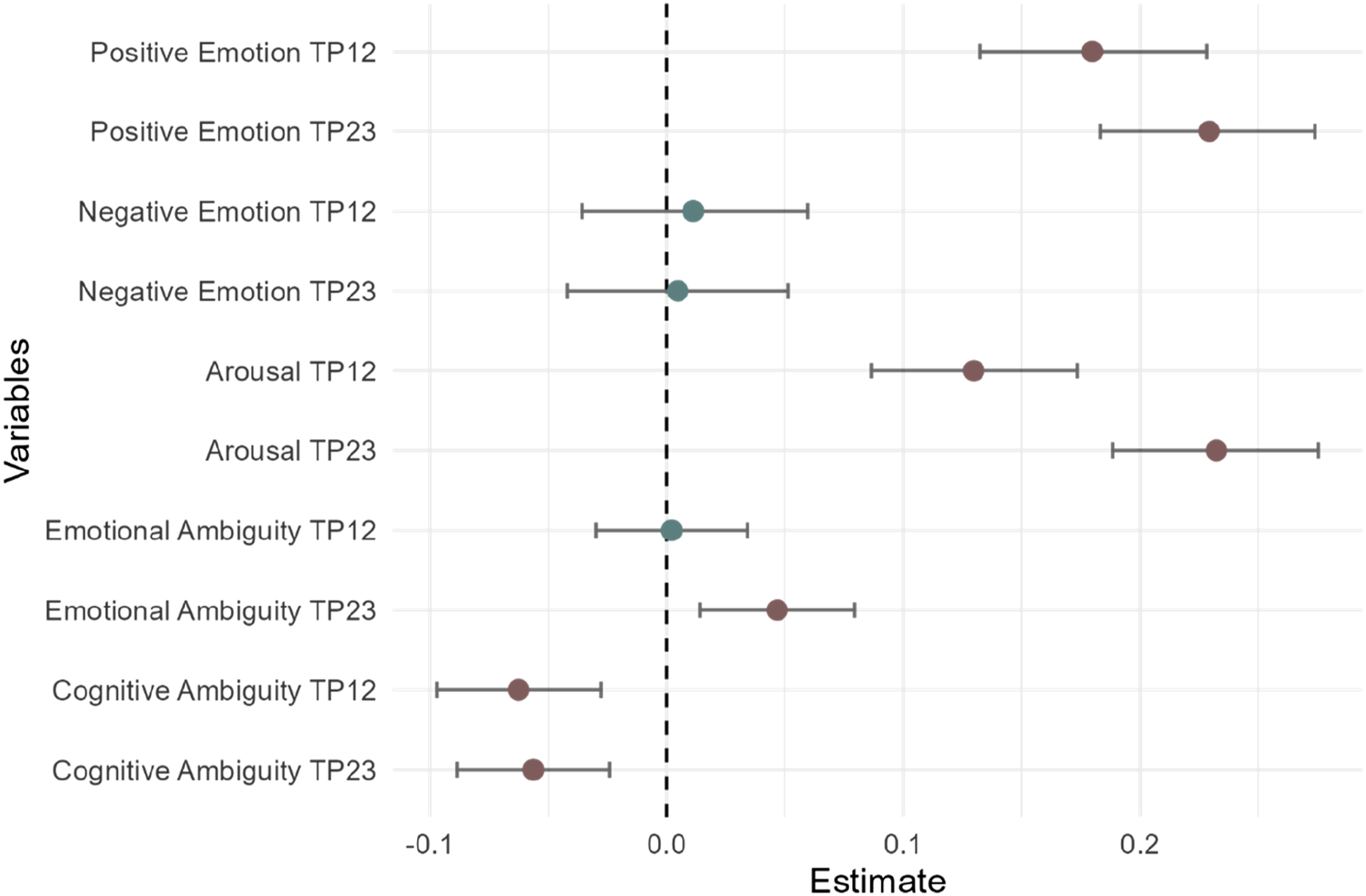
Results of a Hierarchical Bayesian Regression Analysis Showing That Changes in Pupil Diameter Explain the Beauty TP3.
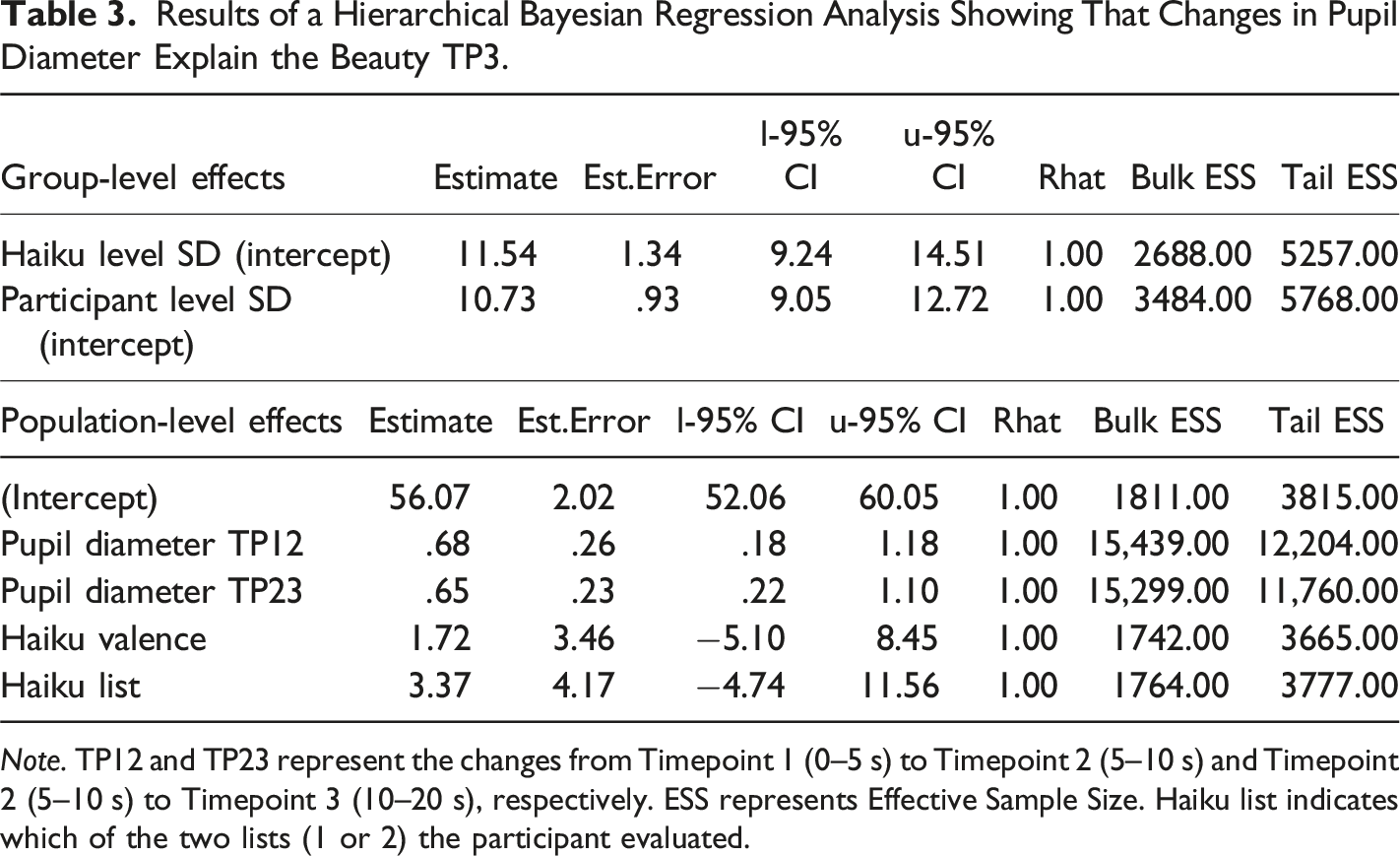
Note. TP12 and TP23 represent the changes from Timepoint 1 (0–5 s) to Timepoint 2 (5–10 s) and Timepoint 2 (5–10 s) to Timepoint 3 (10–20 s), respectively. ESS represents Effective Sample Size. Haiku list indicates which of the two lists (1 or 2) the participant evaluated.
Finally, the time-series analysis plot indicated that the pupil diameter increased with the appearance of each new line (Figure 4; see Supplemental Figure 2 for the time-series analysis of the observed data). Furthermore, an overall slow decreasing trend was observed. The trend was almost similar for both positive and negative haikus; however, pupil diameter was slightly larger during the negative haiku after line 2 appeared. The parameter that represented the fluctuations in pupil diameter change were σ = .02 (SD = .00) and 03 (SD = .01) for negative and positive haiku, respectively, which indicated that the amount of change differed slightly (Supplemental Table 4). Time Series Plot of Pupil Diameter in Negative and Positive Haiku (Smoothed Trend Model).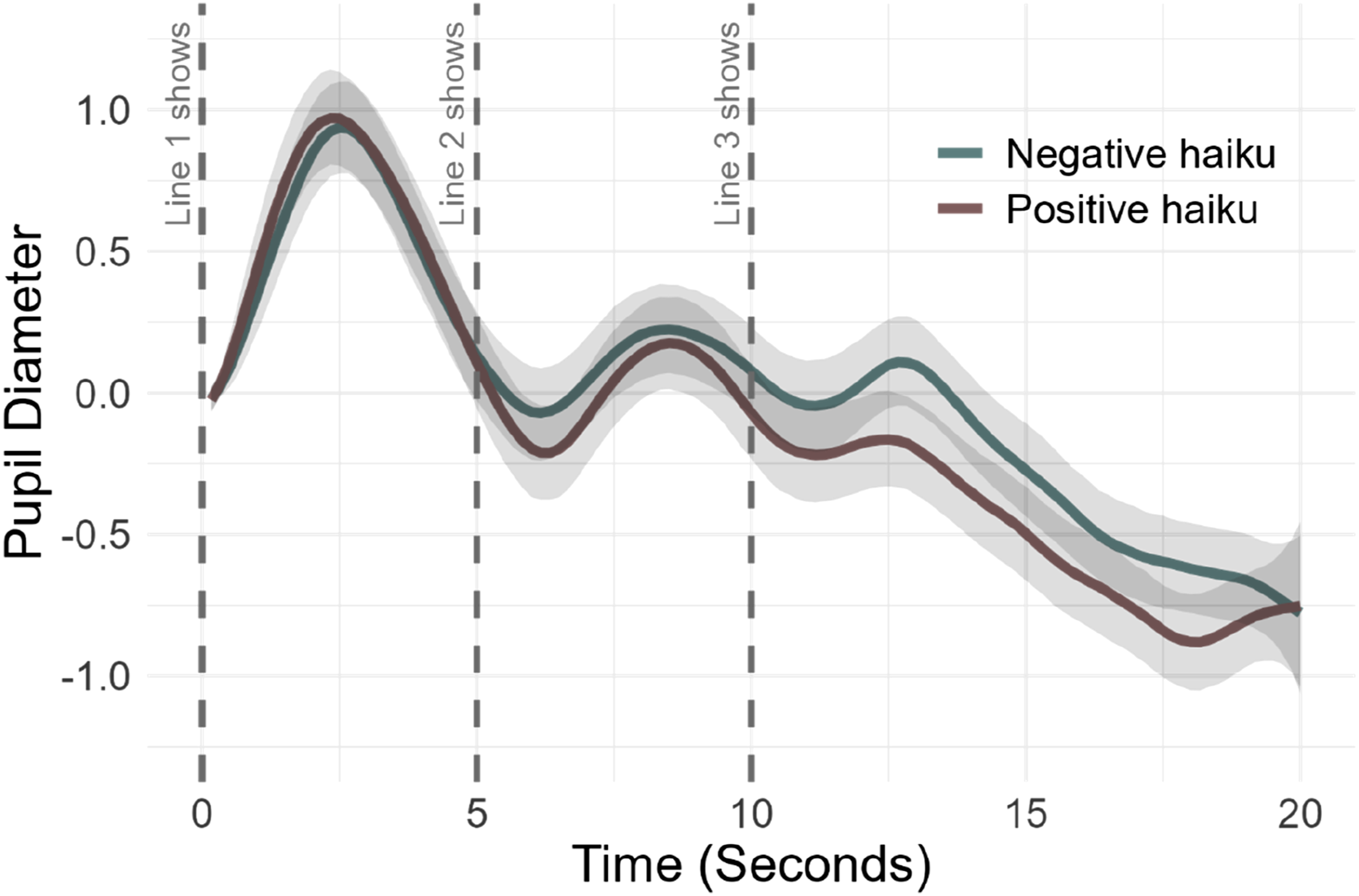
Discussion
This study examined the influence of emotional and cognitive changes on aesthetic evaluations during haiku appreciation. Results revealed that both emotional changes, such as increased positive emotions, arousal, and emotional ambiguity, and cognitive changes, such as decreased cognitive ambiguity, explained a haiku’s beauty. Continuous evaluation of emotions using a joystick revealed that valence and arousal drastically changed during haiku appreciation. Pupil diameter repeatedly increased and decreased, with greater pupil diameter observed during negative haiku (especially TP3). Increase in pupil diameter also explained the beauty.
First, regarding the emotional aspect, increased positive emotion, arousal, and emotional ambiguity explained the beauty. This was consistent with the results of previous studies that reported positive relationships between positive felt valence (Hitsuwari & Nomura, 2022) or arousal (Frame et al., 2024) and aesthetic evaluations with one-shot ratings (not gradual ratings). Furthermore, our study demonstrated that increased emotional ambiguity contributed to beauty, which was a novel finding. However, the expected effect of decrease in negative emotions was not observed, presumably as the effect of increase in positive emotions was greater and the expected effect was cancelled out. Future studies should examine division by valence and also by dividing negative emotions into sadness, anxiety, suspense, among others (Menninghaus et al., 2017). Haiku appreciation with the joystick revealed a gradual increase in arousal during the appreciation process (Figure 3(b)), which could be an important factor to consider in assessments of emotions during haiku appreciation. This was consistent with psychophysiological findings that demonstrated increased electrodermal activity, a measure of emotional arousal, during poetry appreciation (Wassiliwizky et al., 2017). Simultaneously, Menninghaus et al. (2019) argued that aesthetic emotions could not be defined regarding high or low arousal. Instead, art that successfully combined high- and low-arousal emotions, not just one or the other, was more valuable (c.f., Mehl et al., 2023).
Second, regarding the cognitive aspects, decreased cognitive ambiguity explained the haiku’s beauty. A previous study (Hitsuwari & Nomura, 2024c) found a negative relationship between cognitive ambiguity and aesthetic evaluation of a haiku (the higher the cognitive ambiguity, the lower the haiku’s beauty); this study extended that relationship. Cognitive ambiguity should be eliminated eventually rather than be avoided from the beginning. This was consistent with the fact that cognitive ambiguity was expected and enjoyed in haiku and poetry (Nitta, 2016; Wallot & Menninghaus, 2018). Furthermore, it was highly consistent with the phenomenon of a dramatic increase in liking image stimuli at the moment of resolution of ambiguity, also called the aesthetic aha (Muth & Carbon, 2013). Studies on the relationship between ambiguity and art evaluation reported an inverted U-shaped relationship (Jakesch & Leder, 2009), which indicated that neither too little nor too much ambiguity was important for an aesthetic experience. Moreover, studies suggested that ambiguity at the level where resolution was expected was ideal (Muth et al., 2019). Hitsuwari & Nomura (2024c) proposed to assess ambiguity as a factor that comprised both emotional and cognitive ambiguity, rather than as a single factor. In our study, correlation between both the ambiguities revealed only a moderate correlation (haiku level correlation in TP3 r = .57; Supplemental Table 2), which indicated that they were different concepts. Therefore, categorizing ambiguity and examining each relationship with aesthetic evaluations would be beneficial.
Third, increase and decrease in pupil diameter during haiku appreciation could reflect changes in emotion and cognition. In particular, pupil diameter expansion explained the haiku’s beauty. This result was consistent with previous findings that revealed a positive correlation between pupil diameter dilation and aesthetics of arts, including haiku (Niikuni et al., 2022), painting (Kuchinke et al., 2009) and music (Laeng et al., 2016). However, the gradual decrease in pupil diameter, which typically demonstrated a positive correlation with arousal (Bradley et al., 2008), did not reflect an increase in arousal measured by the joystick. This could be due to pupil diameter being influenced by other factors, such as cognitive load and fatigue, or it might reflect a methodological limitation regarding how we used terms, such as “intensity,” to measure continuous arousal ratings.
Our findings have important theoretical and practical implications for aesthetics theory and poetry education. From a theoretical perspective, we demonstrate that both emotional and cognitive changes contribute to aesthetic evaluation. Furthermore, we provide empirical support for integrated models of aesthetic appreciation that emphasize the dynamic interplay between affective and cognitive processes (Leder & Nadal, 2014; Pelowski et al., 2017). Moreover, our continuous measurement approach reveals the temporal dynamics of aesthetic appreciation and how emotional and cognitive responses evolve during poetry appreciation. This temporal perspective extends beyond traditional static models, which suggests that beauty emerges from the dynamic process of engagement rather than from immediate responses alone.
From a practical perspective, these findings highlight the importance of considering both temporal dynamics and the interplay between emotional and cognitive processes in poetry appreciation. Our study demonstrates the gradual development of aesthetic responses, which suggests that poetry education could benefit from approaches that acknowledge and facilitate these dynamic processes, rather than focusing solely on immediate interpretations or responses.
Limitations and Future Directions
This study focused on the processes of emotional and cognitive changes during haiku appreciation, which have not been adequately examined. Although we present new findings, several issues require clarification. First, although this study examined haiku as a special form of poetry, our findings regarding the role of ambiguity in aesthetic appreciation could potentially extend to other poetic forms as ambiguity is a fundamental characteristic of poetic expression. Haiku’s distinct three-line structure made it particularly suitable for our methodological approach of examining temporal changes in appreciation. This method could also be adapted to other structured poetry forms. Hence, conducting a paradigm that focuses on similar change processes in other poetry and literature styles is necessary. Second, this experiment was conducted with Japanese participants using Japanese haiku. Hence, its application in other languages and cultural contexts warrants careful consideration. Although the basic processes of ambiguity resolution and emotional engagement might be universal, cultural differences in attitudes toward ambiguity and linguistic differences in how ambiguity is expressed could significantly influence aesthetic appreciation. Future research should systematically examine how these processes manifest across different poetic forms and cultural contexts.
Conclusion
This study revealed new insights into the role of emotion and cognition, which were previously evident in haiku evaluation at only one time point. Specifically, emotional changes, such as increased positive emotions, arousal, and emotional ambiguity, and cognitive changes, such as decreased cognitive ambiguity, affected a haiku’s aesthetic evaluation. Continuous evaluation of emotions using a joystick revealed their gradual movement. Positive and negative haikus revealed a gradual increase in positive and negative emotions, respectively. Furthermore, both haikus exhibited a similar gradual increase in arousal. Additionally, pupil diameter was assessed to exploratorily examine unconscious responses to the haiku and explain its beauty.
Haiku, with its controlled shortness, was a suitable stimulus to capture these changes and could potentially advance studies on verbal art, a frontier compared with other art forms, such as visual art. Specifically, three lines (5-7-5 morae) can be displayed at fixed timings, and numerous poems can be appreciated in a single experiment owing to their short length. These results also demonstrated the importance of participants’ evaluation of the process of change in a step-by-step manner and continuous measurement of their reactions during appreciation. Measurement of an evaluation at one time point was insufficient in any art appreciation research. Emotions and cognition toward an artwork constantly change during art appreciation. The core of beauty lies in this process.
Finally, this study sheds light on the psychometric and reproducibility issues (Nosek et al., 2022). Specifically, a sample size derivation based on multi-level analyses and various analytical methods, including Bayesian analysis, was devised (Arend & Schäfer, 2019; Etz & Vandekerckhove, 2018). Future research should conduct more psychometrically valid research on art appreciation and aesthetic evaluation.
Supplemental Material
Supplemental Material - Effects of Emotional and Cognitive Changes on Aesthetic Evaluation of Poetry Based on Subjective and Physiological Continuous Responses With Pupil Diameter Measurements
Supplemental Material for Effects of Emotional and Cognitive Changes on Aesthetic Evaluation of Poetry Based on Subjective and Physiological Continuous Responses with Pupil Diameter Measurements by Jimpei Hitsuwari, and Michio Nomura in Perceptual and Motor Skills
Footnotes
Acknowledgements
We would like to thank the supporters of the monthly academic crowdfunding platform academist (https://academist-cf.com/fanclubs/264) for their contributions. We also extend our gratitude to Editage ( ) for their assistance in English editing.
Declaration of Conflicting Interests
The authors declared no potential conflicts of interest with respect to the research, authorship, and/or publication of this article.
Funding
This work was supported by the Japan Society for the Promotion of Science (JSPS) KAKENHI Grant Numbers (19H01773), (23K22374), (22KJ1813), and by the Overseas Research Fellowship.
Ethical Statement
Supplemental Material
Supplemental material for this article is available online.
Notes
Author Biographies
References
Supplementary Material
Please find the following supplemental material available below.
For Open Access articles published under a Creative Commons License, all supplemental material carries the same license as the article it is associated with.
For non-Open Access articles published, all supplemental material carries a non-exclusive license, and permission requests for re-use of supplemental material or any part of supplemental material shall be sent directly to the copyright owner as specified in the copyright notice associated with the article.
