







Abstract
Reinvestment Theory proposes that excessive conscious control over movement execution or decision making can disrupt automaticity and contribute to performance breakdown under pressure. Despite its clinical relevance in sport psychology, culturally validated measures of reinvestment remain limited. This study examined the psychometric properties of adapted versions of the Decision-Specific Reinvestment Scale (DSRS) and Movement-Specific Reinvestment Scale (MSRS) in a sample of athletes and physically active individuals. Participants were 259 undergraduate sport science students (Mage = 20.34 years). Data were analyzed using item discrimination indices, confirmatory factor analyses, convergent validity tests, and internal consistency estimates. Item-level analyses supported the removal of one item from each scale. The resulting DSRS comprised 12 items across two factors (decision reinvestment and decision rumination), and the MSRS comprised nine items across two factors (conscious motor processing and movement self-consciousness). Both scales demonstrated acceptable to good reliability and evidence of factorial and convergent validity. These findings support the use of the adapted DSRS and MSRS as clinically informative tools for assessing vulnerability to performance disruptions under pressure in sport and performance settings.
Keywords
Introduction
High levels of motivation and commitment are fundamental to athletic success; however, optimal performance is not guaranteed in demanding competitive environments. Under conditions of heightened pressure, athletes frequently experience performance decrements despite strong intentions to succeed. Such breakdowns have been linked to evaluative audiences (Wang et al., 2004), reward contingencies (Jackson & Beilock, 2007; Lee & Grafton, 2015), and the cognitive load imposed by competitive expectations (Kinrade et al., 2015). These conditions often prompt athletes to increase conscious monitoring of their actions in an attempt to maintain control, a response that may paradoxically undermine performance effectiveness.
Empirical evidence indicates that directing attention toward the mechanics of movement execution can disrupt performance, particularly in skilled performers whose actions are typically governed by automatic control processes (Christensen et al., 2016; Englert & Oudejans, 2014; Gorgulu & Gokcek, 2021). This phenomenon has been examined through several theoretical frameworks. Early models, such as Fitts and Posner (1967) stage theory, suggested that skill acquisition involves a progression from effortful, conscious control to automatic execution, with pressure potentially triggering regression to earlier, less efficient control modes. Building on Deikman’s (1969) notion of attentional reinvestment, Masters (1992) formally conceptualized this process as reinvestment, describing how individuals under pressure may revert to consciously controlling actions that would otherwise run automatically.
Reinvestment Theory posits that conscious control of movement or decision can interfere with the fluid execution of well-learned skills (Masters, 1992; Masters & Maxwell, 2008). According to the theory, performance pressure increases the likelihood that athletes will attend to step-by-step processes, retrieving explicit knowledge about how to perform the task. This inward attentional shift distrupts automaticity, increasing susceptibility to errors and performance instability (Bartura et al., 2024; Beilock & Carr, 2001; Gorgulu et al., 2019; Gray et al., 2017; Masters & Maxwell, 2008). From a clinical sport psychology perspective, reinvestment is particularly relevant because it represents a dispositional vulnerability that may predispose athletes to choking under pressure, heightened performance anxiety, and maladaptive coping responses accordingly.
Importantly, Reinvestment Theory emphasizes individual differences in the tendency to consciously control performance. Masters et al. (1993) initially proposed reinvestment as a personality characteristic, leading to the development of the original Reinvestment Scale. Although widely, used, this measure was later criticized for limited construct specificity and indirect assessment of the reinvestment process (Jackson et al., 2006). In response, more refined instruments were developed to capture domain-specific manifestations of reinvesment: the Movement-Specific Reinvestment Scale (MSRS; Masters et al., 2005) and the Decision-Specific Reinvestment Scale (DSRS; Kinrade, Jackson, Ashford, & Bishop, 2010).
The MSRS assesses individuals’ propensity to consciously monitor and control their movements and comprises two dimensions: conscious motor processing, reflecting deliberate attention to movement mechanics, and movement self-consciousness, reflecting concern about how movement appear to others (Masters & Maxwell, 2008). The DSRS, in turn, focuses on cognitive processes underlying decision-making under pressure and includes decision reinvestment, referring to conscious monitoring of decisions, and decision rumination, capturing repetitive negative evaluation of prior decisions (Kinrade, Jackson, & Ashford, 2010). Both scales have demonstrated robust psychometric properties and have been widely applied in performance, clinical, and developmental contexts.
Cross-cultural validation studies support the structural validty of the MSRS and DSRS across diverse populations, including adaptations of the DSRS in French, German, and Iranian samples (Laborde et al., 2014, 2015; Soleimanirad et al., 2017), and the MSRS in Dutch, German, French, Chinese, Japanese, Singaporean, and Iranian contexts (Kawabata & Imanaka, 2021; Kleynen et al., 2013; Laborde et al., 2014, 2015; Wong et al., 2008). Extensions of this work to child and adolescent samples further highlight the developmental relevance of reinvestment tendencies (Ling et al., 2016, 2019). Despite this extensive international literature, research grounded in Reinvestment Theory remains absent within the Turkish sport psychology context, largely due to the lack of validated assessment tools. The absence of culturally validated measures represents a significant barrier to both research and applied practice. Reinvestment tendencies have been linked to clinically relevant outcomes in athletes, including stress responses, coping effectiveness, performance anxiety, and well-being (Kinrade, Jackson, & Ashford, 2010, 2015). Without valid and reliable instruments, clinicians and researchers are limited in their ability to identify athletes who may be vulnerable to maladaptive attentional control strategies under pressure.
Accordingly, the aim of the present study was to adapt the DSRS and the MSRS for use in a new cultural context and to evaluate their psychometric properties in a sample of university athletes. By establishing the validity and reliability of these instruments, this study aims to extend Reinvestment Theory cross-culturally and provide clinicians and researchers with psychometrically sound tools for assessing reinvestment tendencies in performance settings. Such tools are essential for advancing evidence-based assessment, informing targeted interventions, and facilitating cross-cultural comparisons in clinical sport psychology research.
Methods
Participants and Sample Size Determination
The present study examined the psychometric properties of two self-report instruments assessing reinvestment tendencies: the Decision-Specific Reinvestment Scale (DSRS; 13 items) and the Movement-Specific Reinvestment Scale (MSRS; 10 items), yielding a total of 23 items. Sample size adequacy was determined using complementary psychometric and statistical criteria. Consistent with recommendations for scale validation research, a minimum ratio of 10 participants per item was adopted, indicating a target sample size of at least 230 participants to support reliable factor analytic procedures (Boateng et al., 2018). In addition, an a priori power analysis was conducted using G*Power (Faul et al., 2007) to ensure sufficient power for examining associations between decision- and movement-specific reinvestment. Assuming a medium effect size (.30), an alpha level of .05, and statistical power of .95 (1-β), the required sample size was 134.
Sample Characteristics
Participants were 265 student-athletes enrolled in Faculty of Sport Sciences at a large public university in Türkiye. Six participants were excluded for being under 18 years of age, resulting in a final sample of 259 participants (167 men, 92 women). The mean age was 20.34 years (SD = 3.51). Participants represented 15 sport disciplines, including team and individual sports, and reported an average of 7.69 years of sport participation (SD = 4.74). This heterogeneous athletic sample enhances the clinical and applied relevance of the findings across diverse performance contexts.
Measures
Decision-Specific Reinvestment Scale (DSRS)
This scale measures the reinvestment that occurs during individuals’ decision-making processes. Developed by Kinrade, Jackson, Ashford, & Bishop (2010), it consists of 13 items and two subdimensions: ‘decision reinvestment’ (DRE) and ‘decision rumination’ (DRU). It uses a five-point Likert-type scale, scored from 0 (strongly disagree) to 4 (strongly agree). In addition to calculating separate scores for each subdimension, a total score for the overall scale can also be computed, with higher scores indicating greater decision-specific reinvestment. Cronbach’s alpha internal consistency coefficients were reported as 0.89 and 0.91 for the decision reinvestment and decision rumination subdimensions, respectively (Kinrade, Jackson, Ashford, & Bishop, 2010).
Movement Specific Reinvestment Scale (MSRS)
MSRS assesses the extent to which individuals consciously monitor and control their own movements and actions. Developed by Masters et al. (2005), it consists of ten items and two subdimensions: ‘movement self-consciousness’ (MSC) and ‘conscious motor processing’ (CMP). It is a 6-point Likert-type instrument, scored from 1 (strongly disagree) to 6 (strongly agree). Subdimension scores can be calculated separately, and an overall score representing overall movement-specific reinvestment can also be computed, with higher scores indicating greater reinvestment. Internal consistency coefficients were reported to range from 0.70 to 0.78 for the movement self-consciousness sub-dimension, and from 0.65 to 0.71 for the conscious motor processing subdimension. Test–retest reliability coefficients were 0.67 and 0.76, respectively (Masters et al., 2005).
Procedure
Approval to adapt the DSRS and MSRS was obtained from the original scale developers prior to data collection. Scale adaptation followed established back-translation procedures (Behling & Law, 2000). Three bilingual experts with backgrounds in sports sciences, sport psychology and psychology, independently translated the original English items into Turkish. The research team synthesized these translations into a preliminary version, which was subsequently back-translated into English by two independent bilingual experts. The original and back-translated versions were compared to evaluate semantic and conceptual equivalence, and feedback from the original scale developers was incorporated before finalizing the Turkish versions.
Data were collected using an online survey platform. Eligible participants were athletes aged 18 years or older residing in Istanbul. Recruitment occurred via direct contact with athletes, dissemination through sports clubs and coaches, and snowball sampling within athletic networks. Prior to participation, all individuals reviewed an informed consent statement and provided voluntary consent electronically. Participation was anonymous, and no incentives were offered.
Data Analysis
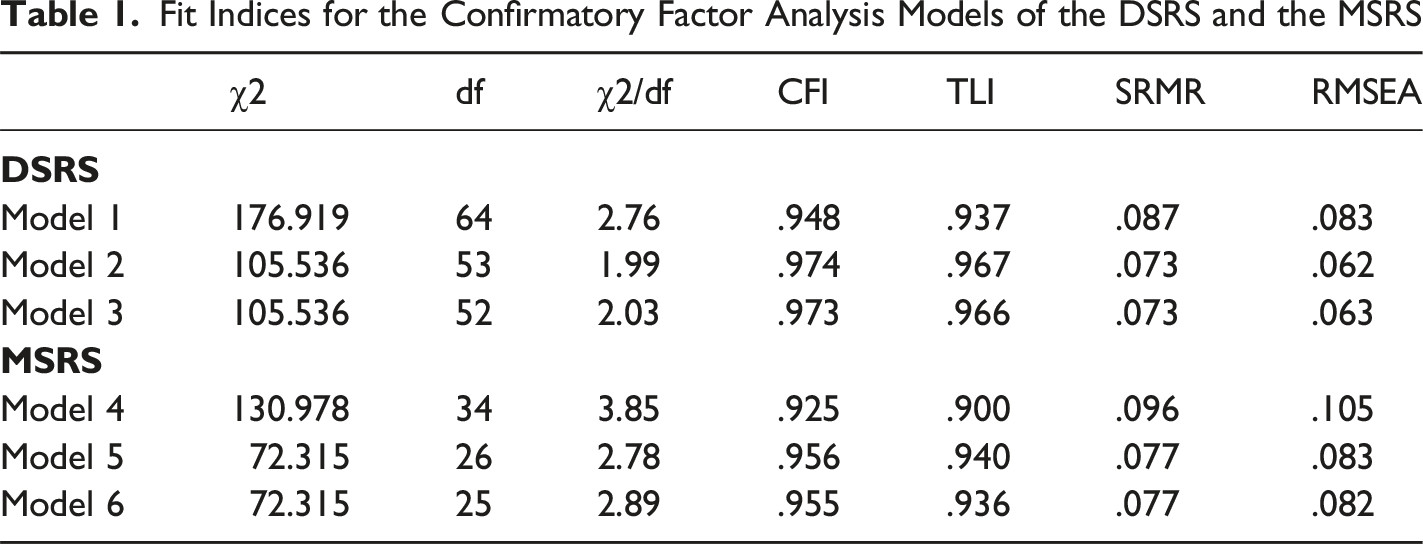
Psychometric evaluation proceeded in several stages. Factorial validity was assessed using confirmatory factor analysis (CFA). Model fit was evaluated using the Comparative Fit Index (CFI), Tucker–Lewis Index (TLI), Root Mean Square Error of Approximation (RMSEA), Standardized Root Mean Square Residual (SRMR), and ratio of the chi-square value to the degrees of freedom (χ2/df). For acceptable model fit, CFI and TLI values are expected to be close to .95, RMSEA and SRMR values should be below .08 (Hu & Bentler, 1999; Kline, 2016). A χ2/df ratio of less than 2 is generally considered to be indicative of a good model fit. However, some researchers suggest that values between 2 and 5 may also be regarded as acceptable, depending on the context (Tabachnick & Fidell, 2013; Wheaton et al., 1977). Because multivariate normality assumptions were violated, CFA models were estimated using diagonally weighted least squares (DWLS) with robust fit indices (Gana & Broc, 2019).
Item-level analyses examined inter-item correlations, corrected item–total correlations, and changes in internal consistency following item deletion. Items were expected to demonstrate positive within-factor correlations and corrected item–total correlations of at least .30 to be considered adequately discriminative (Coaley, 2010).
Convergent validity was examined by testing associations between DSRS and MSRS scores, consistent with theoretical and empirical links between decision- and movement-specific reinvestment (Laborde et al., 2014). Reliability was evaluated using Cronbach’s alpha and composite reliability (CR), with values ≥.70 indicating acceptable internal consistency (Hair et al., 2014). The CR coefficient was used because it provides evidence of construct reliability based on factor loadings obtained after CFA. Cronbach’s alpha was also examined, as it has been widely used in the adaptation of the DSRS and MSRS to different languages and cultures, providing evidence of the scales’ internal consistency reliability. Analyses were conducted using IBM SPSS Statistics 27 (IBM Corp, 2020) and the lavaan package (Rosseel, 2012) in R (R Core Team, 2024).
Results
Validity and Reliability Results of the DSRS
Factorial Validity
Fit Indices for the Confirmatory Factor Analysis Models of the DSRS and the MSRS
Factor Loadings of the DSRS Confirmatory Factor Analysis Model
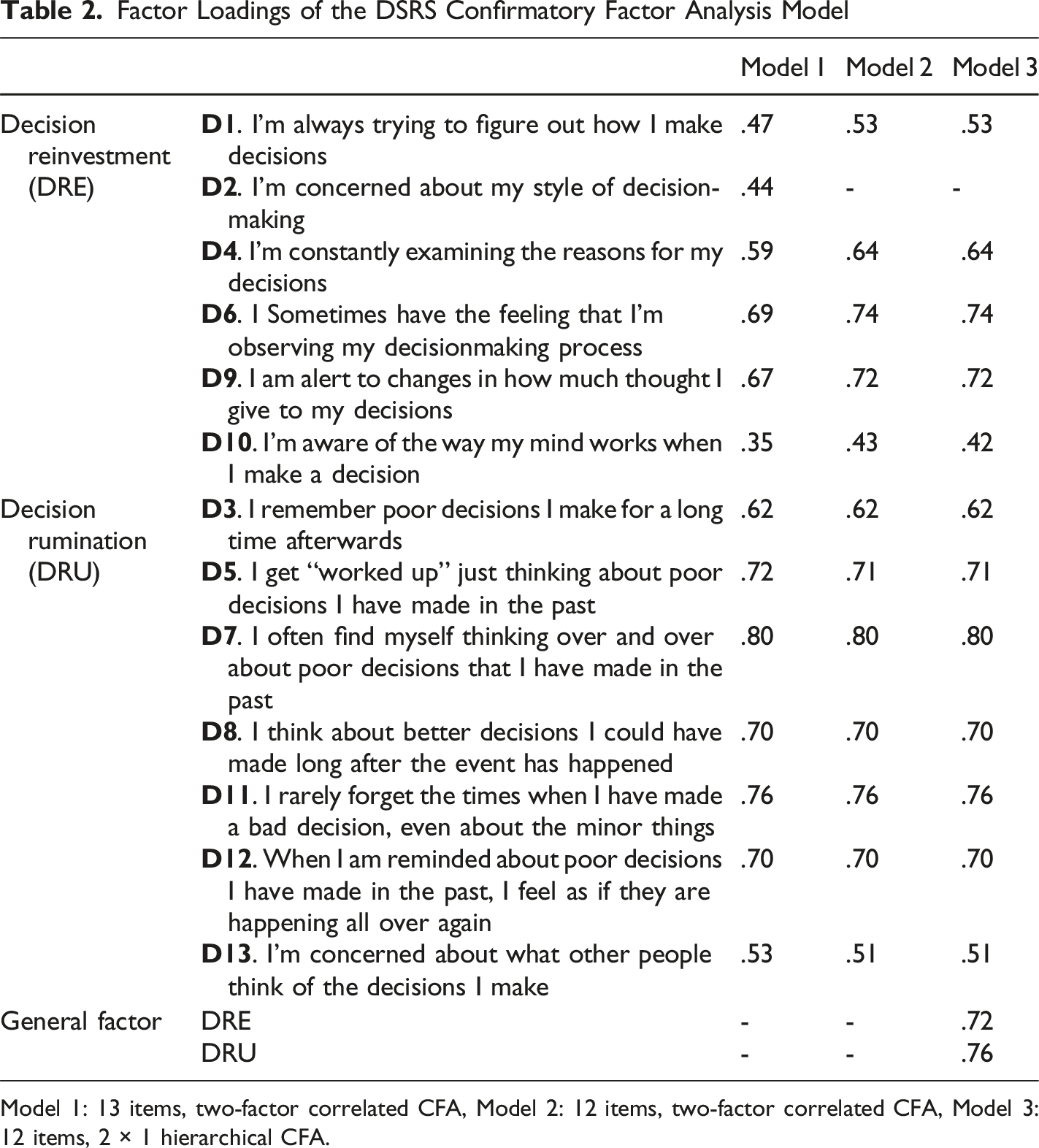
Model 1: 13 items, two-factor correlated CFA, Model 2: 12 items, two-factor correlated CFA, Model 3: 12 items, 2 × 1 hierarchical CFA.
Table 2 shows the factor loadings for the three models examined in the CFA. In Model 1, the factor loadings ranged from .35 to .80; in Model 2, they ranged from .43 to .80. In Model 3, the factor loadings ranged from .42 to .80.
Item Analysis
Inter-Item Correlations of the Decision-Specific Reinvestment Scale
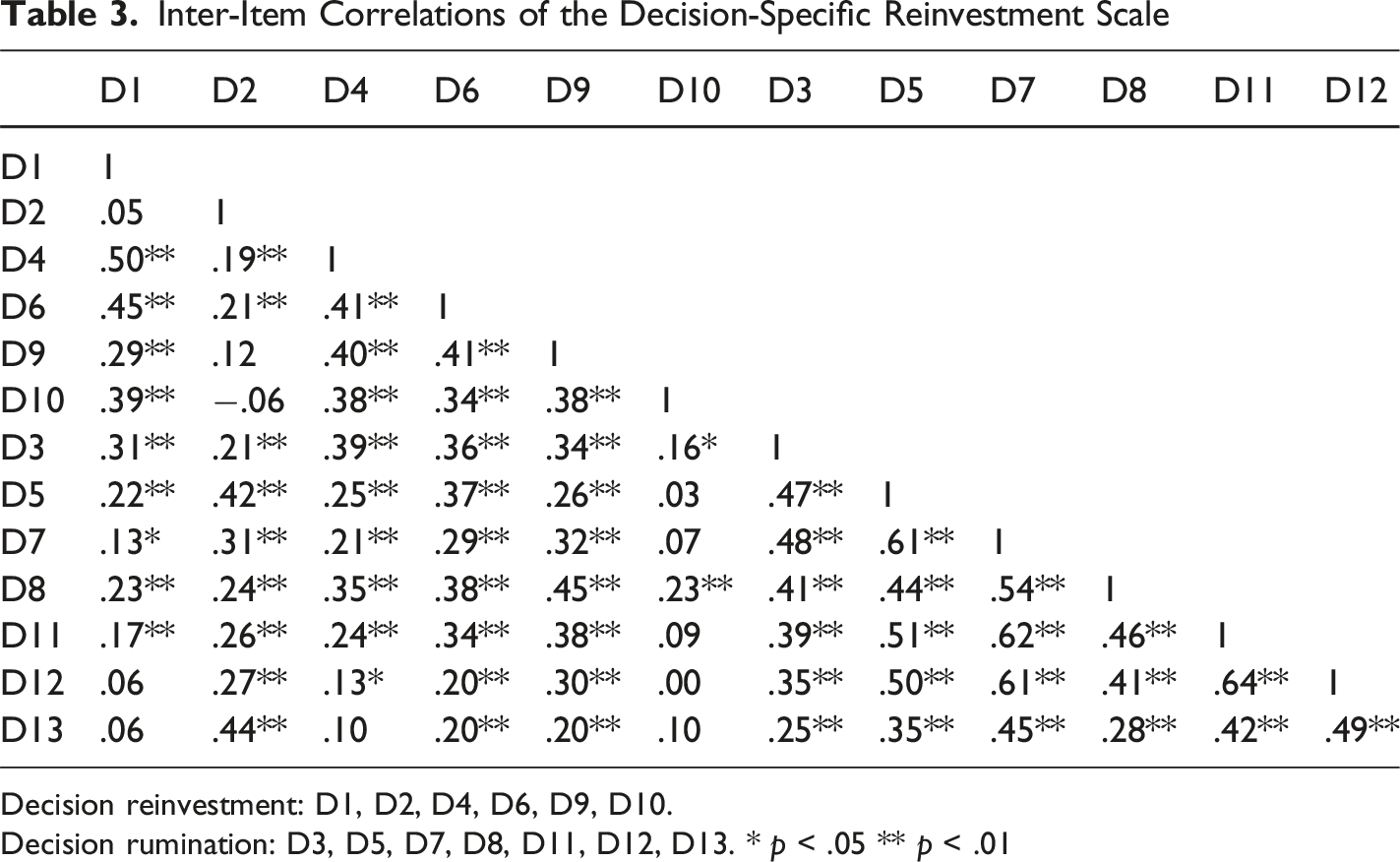
Decision reinvestment: D1, D2, D4, D6, D9, D10.
Decision rumination: D3, D5, D7, D8, D11, D12, D13. * p < .05 ** p < .01
Item Analysis of the Decision-Specific Reinvestment Scale
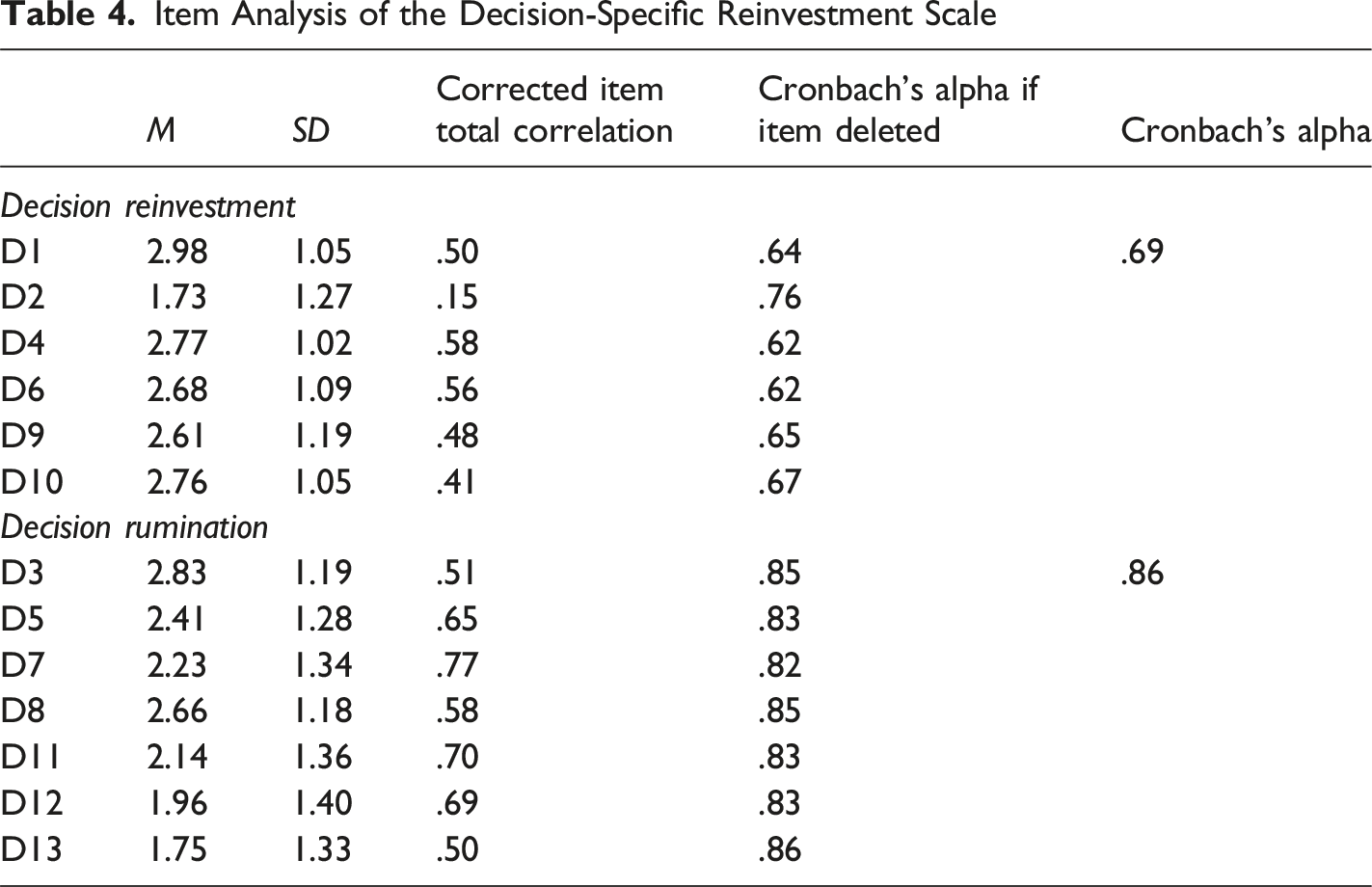
Consistent with these findings, removal of Item D2 resulted in a meaningful increase in internal consistency for the DRE subscale, with Cronbach’s alpha from .69 to .76. Deleting any other item did not yield further improvements in reliability. Accordingly, Item D2 was excluded from subsequent analyses, resulting in a more psychometrically robust scale structure.
Reliability
In the 13-item version of the scale, the Cronbach’s alpha internal consistency coefficient was .69 for the DRE subdimension and .86 for the DRU subdimension. When one item (D2) was removed from the decision reinvestment subdimension, its Cronbach’s alpha increased to .76. In the 12-item version of the scale, the composite reliability (CR) coefficients were .75 for the DRE subdimension and .86 for the DRU subdimension.
Validity and Reliability Results of the MSRS
Factorial Validity
Factor Loadings of the MSRS Confirmatory Factor Analysis Model
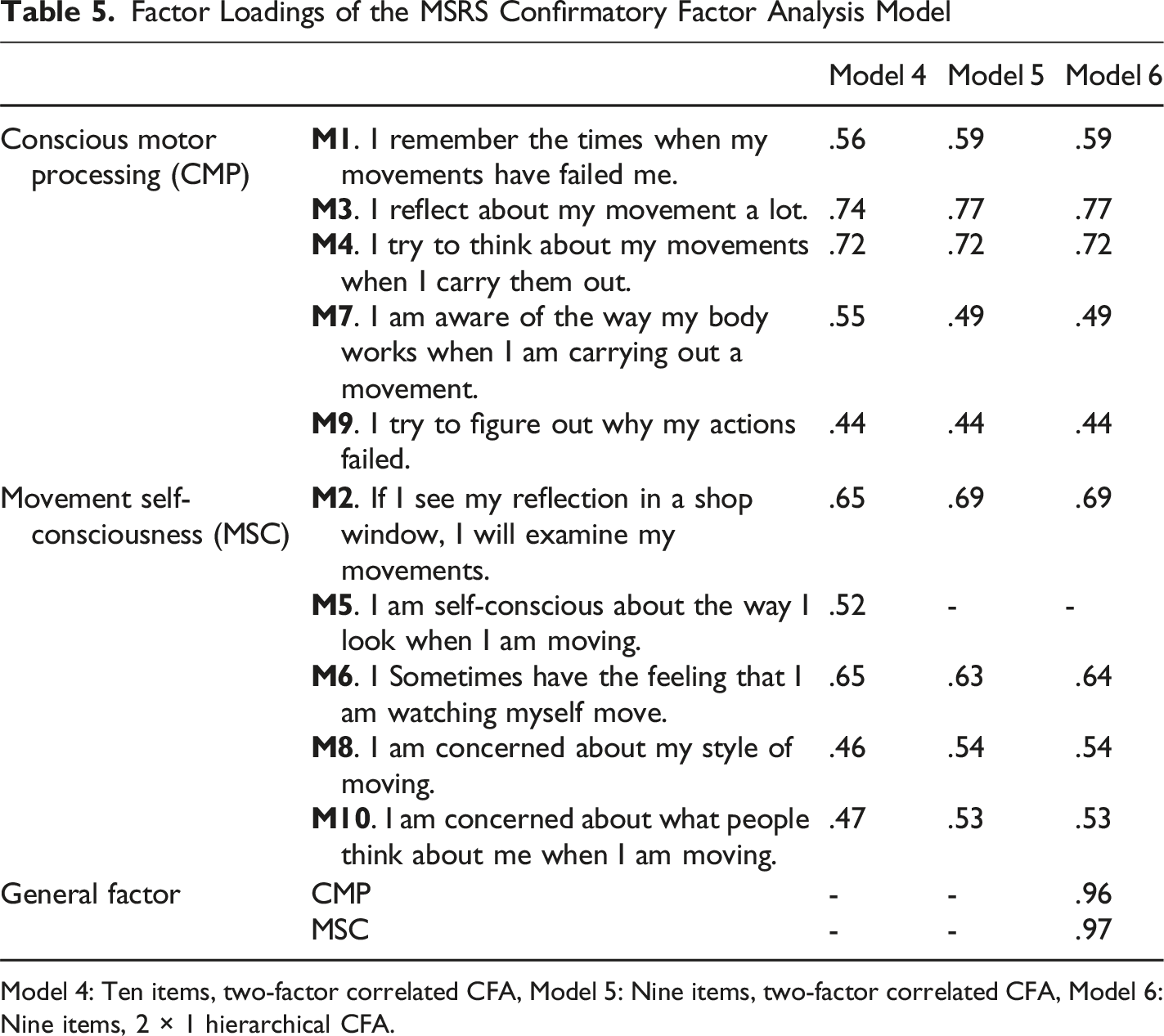
Model 4: Ten items, two-factor correlated CFA, Model 5: Nine items, two-factor correlated CFA, Model 6: Nine items, 2 × 1 hierarchical CFA.
Item Analysis
Inter-Item Correlations of the Movement-Specific Reinvestment Scale
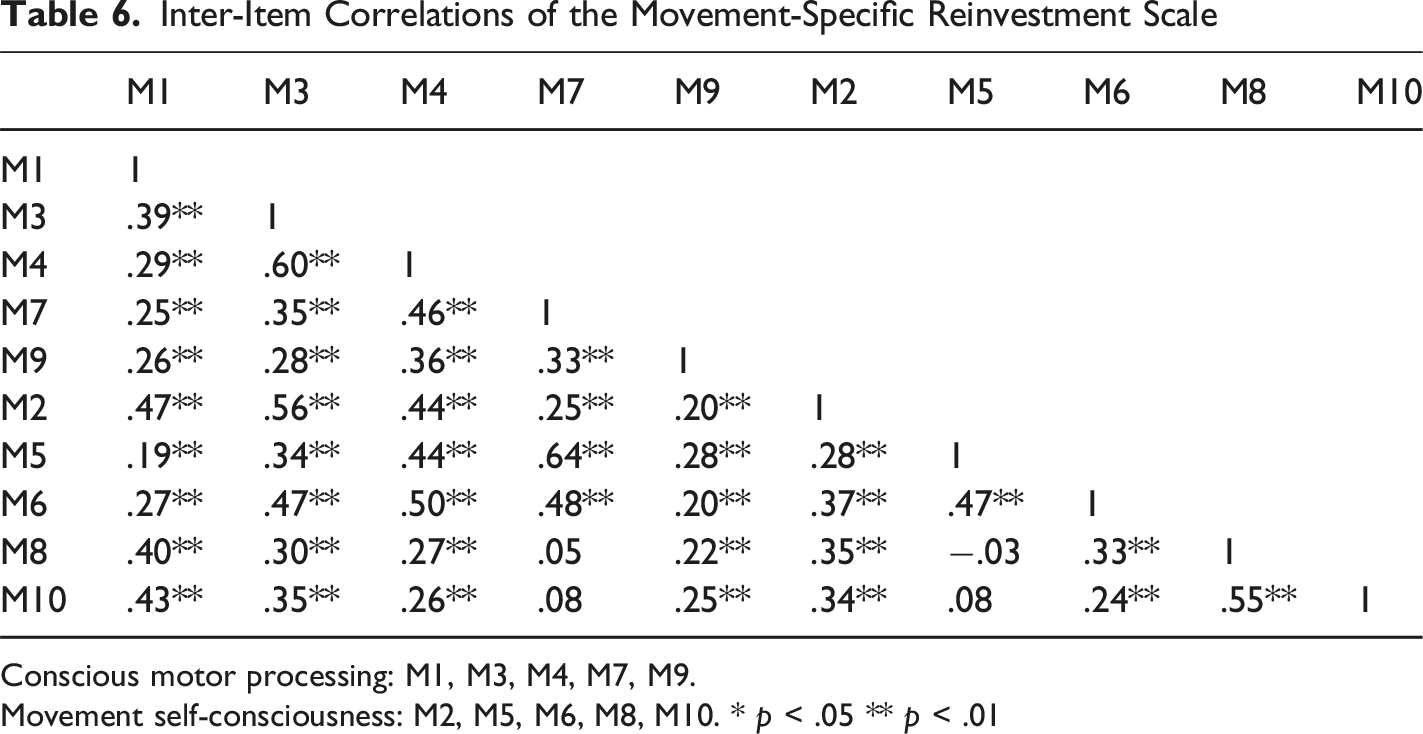
Conscious motor processing: M1, M3, M4, M7, M9.
Movement self-consciousness: M2, M5, M6, M8, M10. * p < .05 ** p < .01
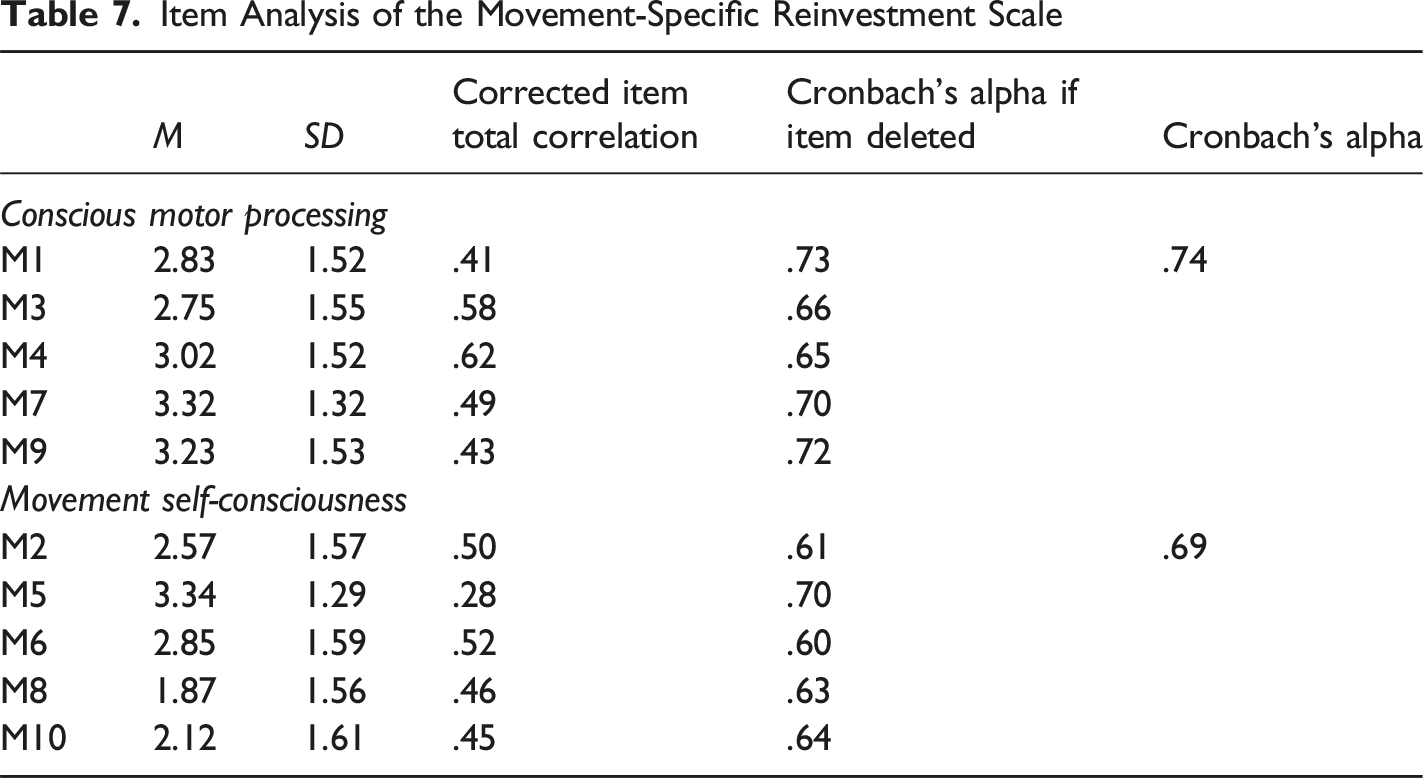
Item Analysis of the Movement-Specific Reinvestment Scale
Reliability
In the 10-item version of the scale, the Cronbach’s alpha internal consistency coefficient was .74 for the CMP subdimension and .69 for the MSC subdimension. Removing one item (M5) from the MSC subdimension increased its Cronbach’s alpha to .70. In the nine-item version of the scale, the CR coefficients were .74 and .69, respectively.
Convergent Validity of the DSRS and MSRS
Relationships Between Decision-Specific and Movement-Specific Reinvestment
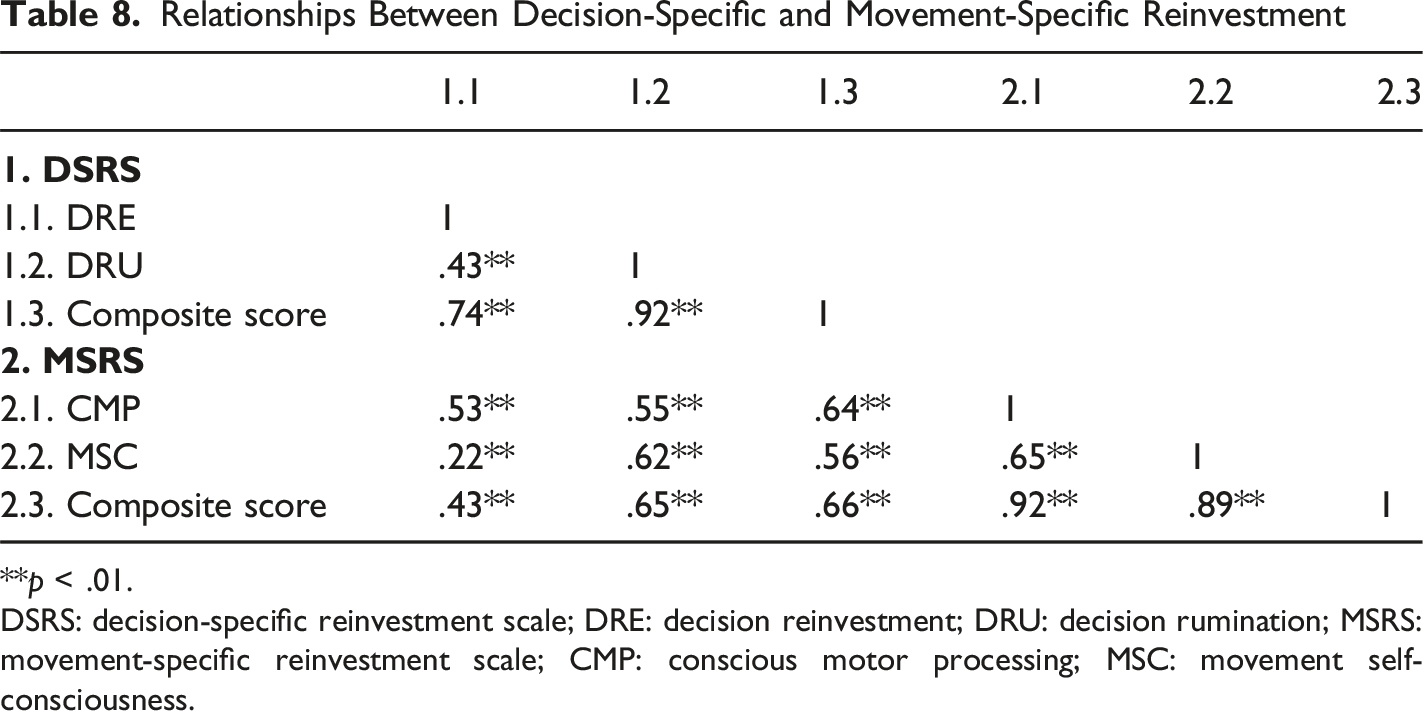
**p < .01.
DSRS: decision-specific reinvestment scale; DRE: decision reinvestment; DRU: decision rumination; MSRS: movement-specific reinvestment scale; CMP: conscious motor processing; MSC: movement self-consciousness.
Discussion
The purpose of the present study was to adapt the DSRS and the MSRS for use in a Turkish sport context and to evaluate their psychometric properties within a sample of university-level athletes. Grounded in Reinvestment Theory (Masters, 1992; Masters & Maxwell, 2008), these instruments are widely used to assess dispositional tendencies toward conscious control and rumination under performance pressure. Overall, the findings provide support for the factorial validity, internal consistency, and convergent validity of revised Turkish versions of both scales, with minor item reductions necessary to achieve acceptable psychometric performance.
Decision-Specific Reinvestment Scale
Psychometric evaluation of the DSRS indicated that one item (D2) did not function adequately within the Turkish context. This item demonstrated weak item–total correlations, reduced internal consistency, and contributed to poor model fit in CFA. The primary reason for this issue was that item D2 showed stronger associations with items from the other subdimension (DRU) rather than with those in its intended subdimension (DRE). Accordingly, in the CFA, D2 demonstrated high modification indices with items from the DRU subdimension. Similarly, in the item-level and reliability analyses, D2 was more strongly related to items from the DRU subdimension than to those within its own. In other words, item D2 appeared to load on a different factor, which both undermined the theoretical structure of the DSRS and contributed to poorer model fit. When the item contents are examined, this pattern is not entirely unexpected. In the inter-item correlations, item D2 (I’m concerned about my style of decision-making) was found to be most strongly associated with items D5 (I get ‘‘worked up’’ just thinking about poor decisions I have made in the past) and D13 (I’m concerned about what other people think of the decisions I make). A review of these three items indicates that they all focus on emotional aspects of reinvestment, such as feelings of concern and anger. Therefore, it is not unexpected that D2 would show strong associations with D5 and D13, even though they belong to a different subdimension. However, in order to preserve the discrimination, factorial validity, and reliability of the subdimensions, it was deemed more appropriate to remove item D2, given its high association with a different subdimension. Removal of this item resulted in a 12-item, two-factor structure—decision reinvestment and decision rumination—with acceptable model fit and reliability indices. Importantly, this revised structure aligns with the theoretical distinction proposed by Kinrade, Jackson, Ashford, & Bishop, (2010), separating conscious monitoring of decision processes from maladaptive rumination about past decisions.
The need to modify the original scale structure is consistent with prior cross-cultural adaptation studies. For example, French and German validations of the DSRS required correlated error terms to achieve acceptable model fit (Laborde et al., 2014, 2015), whereas the Iranian adaptation reported acceptable fit without item removal (Soleimanirad et al., 2017). The present findings extend this literature by demonstrating that, within the Turkish cultural and linguistic context, item removal—rather than post hoc error correlations—was the most parsimonious solution. From a clinical assessment perspective, this approach enhances interpretability and reduces measurement noise, thereby strengthening the scale’s applicability in applied sport psychology settings.
The revised DSRS demonstrated good internal consistency across both subscales, comparable to those reported in international samples. These findings suggest that decision-related reinvestment and rumination can be reliably assessed in Turkish athletes, supporting the use of the DSRS for identifying athletes who may be vulnerable to performance decrements under pressure due to maladaptive decision-related cognitive processes.
Movement-Specific Reinvestment Scale
Similar to the DSRS, psychometric analyses of the MSRS indicated that one item (M5) performed poorly in the Turkish sample. This item showed weak associations with other items in the MSC subdimension and detracted from both internal consistency and model fit. A primary concern regarding reliability and validity was that item M5 showed weak and non-significant associations with items in its intended subdimension (MSC), while demonstrating relatively strong associations with several items from the other subdimension (CMP). In particular, M5 (I am self-conscious about the way I look when I am moving) was found to be highly correlated with M4 (I try to think about my movements when I carry them out) and M7 (I am aware of the way my body works when I am carrying out a movement), both of which belong to the other subdimension (CMP). An examination of the item content suggests a shared conceptual emphasis on movement awareness and conscious attention to one’s own movements. Therefore, it may be considered unsurprising that item M5 was more strongly related to these items than to those in its original subdimension. However, to ensure a clear distinction between subdimensions, the removal of item M5 from the scale was deemed necessary. This decision was expected to ensure that items were more strongly associated with their respective subdimensions, thereby improving factorial validity and reliability. Removal of this item yielded a nine-item, two-factor structure—conscious motor processing and movement self-consciousness—with satisfactory fit indices and reliability estimates. Thus, removing item M5 from the MSRS resulted in a more consistent scale for the Turkish sample, both theoretically and statistically.
Cross-cultural validation studies of the MSRS have frequently reported the need for model modifications, particularly through correlated error terms among conceptually overlapping items (Laborde et al., 2014, 2015; Ling et al., 2016, 2019). Notably, the present study achieved acceptable model fit without introducing correlated residuals, instead opting for item removal based on clear psychometric criteria. This decision enhances clinical usability by preserving a cleaner factor structure and reducing potential ambiguity in score interpretation.
The internal consistency coefficients observed in the present study were comparable to those reported in adult samples across Japanese, Singaporean, Dutch, French, and German contexts (Kawabata & Imanaka, 2021; Kleynen et al., 2013; Laborde et al., 2014, 2015). Consistent with previous findings, reliability estimates for child samples tend to be lower (Ling et al., 2016, 2019), underscoring the importance of age-specific validation. Accordingly, further psychometric evaluation of the Turkish MSRS is recommended before its use with youth or adolescent athletes.
Convergent Validity and Theoretical Implications
Consistent with Reinvestment Theory, significant positive associations were observed between decision-specific and movement-specific reinvestment at both subscale and total-score levels. This pattern mirrors findings reported in previous validation studies (Laborde et al., 2014, 2015) and provides further support for the theoretical proposition that individuals who are prone to consciously monitoring and controlling their movements under pressure are also more likely to engage in decision-related reflection, self-evaluation, and rumination. These findings reinforce the conceptualization of reinvestment as a multidimensional construct that encompasses both motor execution and higher-order cognitive processes. In high-pressure environments, such tendencies may disrupt the automaticity of well-learned skills, thereby increasing the likelihood of performance breakdown. Empirical evidence from experimental sport settings supports this mechanism. For instance, research examining ironic and overcompensation effects in a pressured tennis serving task demonstrated that heightened self-focus and conscious control can alter motor behaviour in maladaptive ways, leading to performance errors under stress (Gorgulu, 2019). Similarly, experimental work in baseball has shown that directing performers’ attention toward movement processes under pressure can impair skilled performance by interfering with automatic control mechanisms (Gray et al., 2017). Taken together these findings align with the present correlational pattern, suggesting that reinvestment-related tendencies may constitute a shared cognitive vulnerability factor underlying performance disruptions, particularly in contexts characterized by evaluative pressure and heightened self-awareness.
From a clinical and applied sport psychology perspective, these interrelations underscore the importance of addressing both movement-specific and decision-related reinvestment tendencies in interventions. Targeting only technical overcontrol without considering athletes’ decision-related rumination or self-regulatory cognitions may be insufficient. Instead, integrative approaches that promote automaticity, attentional flexibility, and adaptive coping under pressure may be more effective in reducing performance vulnerability in high-stakes environments.
Clinical and Applied Implications
The availability of psychometrically sound Turkish versions of the DSRS and MSRS represents an important advancement for clinical sport psychology research and practice. These instruments can be used by practitioners to identify athletes who may be at heightened risk of performance breakdowns under pressure, particularly in evaluative or high-stakes competitive contexts. In applied settings, reinvestment profiles may inform individualized interventions targeting attentional control, decision-making under stress, and the reduction of maladaptive self-focus—such as implicit motor learning strategies, pre-performance routines, and acceptance-based approaches.
Moreover, validated reinvestment measures enable clinicians and researchers to monitor cognitive tendencies that may interact with anxiety, perfectionism, burnout, and well-being—constructs of central interest in clinical sport psychology. The present adaptations therefore facilitate both assessment-driven intervention planning and cross-cultural comparative research.
Limitations and Future Directions
Several limitations warrant consideration. First, reliability evidence was limited to internal consistency; future studies should examine test–retest reliability to establish temporal stability. Second, the cross-sectional design precludes causal inference regarding the role of reinvestment in performance outcomes. Longitudinal and experimental designs are needed to clarify how reinvestment tendencies interact with competitive stress over time. Third, although prior research has linked reinvestment to objective performance decrements under pressure (e.g., Kinrade, Jackson, & Ashford, 2010), the present study did not include behavioral or coach-rated performance measures. Incorporating such criteria would strengthen the clinical validity of the scales.
Conclusion
In summary, the present study provides evidence that revised Turkish versions of the DSRS (12 items) and MSRS (9 items) are valid and reliable tools for assessing decision- and movement-specific reinvestment in adult athletes. These adaptations extend the cross-cultural generalizability of Reinvestment Theory and offer clinically useful instruments for research and applied practice within sport psychology. Their use may enhance the assessment of pressure-related performance vulnerabilities and support more targeted psychological interventions in competitive sport settings.
Footnotes

Ethical Considerations
Ethical approval was granted by the Institutional Ethics Committee of Bursa Uludag University (25.04.2025, Decision no. 10).
Consent to Participate
Prior to participation, all individuals reviewed an informed consent statement and provided voluntary consent electronically.
Funding
The authors received no financial support for the research, authorship, and/or publication of this article.
Declaration of Conflicting Interests
The authors declared no potential conflicts of interest with respect to the research, authorship, and/or publication of this article.
Data Availability Statement
Data will be available upon request.