






Abstract
Background
Manual dexterity (MD) is a fundamental aspect of child motor development, directly influencing daily and school-related tasks. Its evaluation has traditionally relied on standardized tests, such as the Purdue Pegboard Test (PPT), which assesses the speed and precision of fine motor movements. However, these tests may present limitations in child engagement and motivation, as they are often less appealing and less representative of everyday contexts. In contrast, game-based approaches, such as the TATI board game, can enhance motivation and enable the observation of motor performance in a more spontaneous and natural way.
Objective
Analyze the motor performance of participants aged 4 to 6 using the TATI board game and to explore its potential as a tool for evaluating MD.
Methodology
47 participants were evaluated using the PPT and the TATI board game. Performance variables were analyzed, including TATI - task execution time, number of attempts and the occurrence of errors; PPT – number of pegs per second.
Results
The results showed significant differences between age groups in TATI execution time: right hand (p = .026), left hand (p = .009), and bilateral (p < .001). Six-year-old children demonstrated significantly shorter times compared to 4 and 5-year-olds in all conditions. Negative correlations were also found between performance on the TATI and the PPT: right hand (ρ = −.31; p = .032), left hand (r = −.38; p = .008), and bilateral (ρ = −.45; p = .001), suggesting that better performance on the test was associated with faster performance in the game. TATI showed greater variability in results among participants, possibly due to its closer similarity to ecological contexts.
Conclusion
TATI board game shows potential as a tool for evaluating and identifying different levels of MD in preschool-aged subjects in agreement with the results obtained from the PPT. Future research should include a larger sample and explore the TATI potential to identify MD disorders.
Introduction
The development of manual dexterity (MD) is a progressive and complex process, intrinsically linked to the maturation of the nervous system, specifically the lateral corticospinal tract (Fuelscher et al., 2021). MD can be defined as the ability to manipulate objects with precision and temporal efficiency, using the hand and fingers to perform specific tasks (Giustino et al., 2023; Rabah et al., 2022). The most significant changes occur between the ages of 3 and 6 and are the result of motor acquisitions and the demands of both the environment and the task (Faber et al., 2024; Gaul & Issartel, 2016).
The literature widely agrees that the development and refinement of MD are essential for a child’s independence and autonomy. It is crucial for performing a wide repertoire of daily living and school-related activities, such as writing or drawing (Beani et al., 2024; Duncan et al., 2020; Rabah et al., 2022; Strooband et al., 2020). Additionally, there is evidence that children with better performance in academic tasks like reading and mathematics tend to report higher levels of MD development (Amato et al., 2023; Strooband et al., 2020), which reinforces its importance during childhood development (Beani et al., 2024; Duncan et al., 2020; Strooband et al., 2020). Thus, MD is considered a sensitive indicator of neuromotor function integrity in the pediatric population (Amato et al., 2023; Fuelscher et al., 2021). Several studies have shown that MD in childhood is a predictor of academic success (Patti et al., 2024; Strooband et al., 2020). However, developmental disturbances can arise and persist throughout the child’s schooling in the absence of timely intervention (Duncan et al., 2020). In this context, evaluating MD in preschool-aged children is fundamental for the early detection of these changes and subsequent referral for physical therapy and/or early intervention (Strooband et al., 2020).
The evaluation of MD is typically carried out using standardized tools, which include timed and precision tests (Duff et al., 2015; Rabah et al., 2022). In a clinical setting, conventional assessments prioritize functional measures to evaluate the time and success rate of grasping and manipulating small objects. The Purdue Pegboard Test (PPT), for instance, has been used over the years to assess central nervous system disorders and to monitor progress and evolution in rehabilitation protocols (Irmak & Ketenciler, 2025; Rabah et al., 2022). Despite its utility and widespread use, the PPT, like other standardized MD assessment tests, presents certain limitations, such as high costs, longer administration times, and low accessibility in school environments (Amato et al., 2023; Wang et al., 2011). Furthermore, the continuous evolution of MD during a child’s development presents an additional challenge for its evaluation (Duff et al., 2015).
Previous studies have highlighted that different motor assessment tools may capture distinct aspects of children’s motor performance. Logan et al. (2011), for example, demonstrated that preschool children’s performance may vary according to the characteristics and demands of the assessment instrument used. These findings reinforce the importance of exploring alternative and complementary approaches to manual dexterity assessment, particularly those capable of capturing performance in more engaging and ecologically valid contexts.
Given the challenges associated with using conventional MD measurement tools, and due to the importance of complementary instruments, it is relevant to explore the potential of new tools that are better adapted to the school environment, such as board games, as they can offer practical, interactive, and playful approaches (Noda et al., 2019). Board games are defined as activities that involve a board with pieces (and/or cards) and predefined rules that determine the number of pieces/cards, the number of element positions, and possible movements (Estrada-Plana et al., 2024). Due to their playful and engaging nature, they possess characteristics that promote engagement in childhood, as they are easy to implement, simple, and have intrinsic recreational qualities (Estrada-Plana et al., 2024; Noda et al., 2019).
Among these, the TATI board game stands out as an analog assessment tool that integrates timed manual manipulation tasks and error recording, allowing for the collection of objective performance indicators. The TATI game was previously validated for assessing upper limb performance in the elderly population, showing interesting results in improving handgrip function and upper limb speed (Rosa, Gordo, et al., 2021). In clinical contexts, the TATI board game provides objective indicators, such as execution time and the number of errors committed, with a direct correlation between speed and precision variables. This allows for performance assessment in dual-task situations involving coordinated upper limb movement and high levels of attention and cognition (Rosa, Gordo, et al., 2021). Moreover, its standardized procedure described in the literature has proven to be easy to apply, record, and interpret (Rosa et al., 2021). Thus, the choice of the TATI game is based on its similarity to standardized tools, incorporating features such as timed performance and precision (Duff et al., 2015), while offering a more attractive format for application in preschool-aged children.
While recent literature shows that regular participation in board games can lead to significant improvements in fine motor skills, which are essential for daily tasks and academic performance (Susfiandari et al., 2024), additional studies indicate that board games can be a useful tool for evaluating fine motor functions (Kul Karaali & Özcan, 2023). Most board games specifically designed for this context require a combination of manipulation tasks and executive functions (Vita-Barrull et al., 2023). In addition to their potential to promote motor development, they are accessible and easily adaptable to different age groups (Vita-Barrull et al., 2023).
From a theoretical perspective, the use of board games as assessment tools can be grounded in ecological validity, play-based learning, and motor learning frameworks. Ecological approaches emphasize the importance of evaluating motor behavior in contexts that resemble real-life situations, enabling the observation of functional performance beyond highly standardized testing environments. Play-based perspectives recognize play as a natural context for learning and development in early childhood, promoting engagement, intrinsic motivation, and spontaneous problem-solving behaviors (Lumsden et al., 2016). Moreover, motor learning theories emphasize the role of feedback, task variability, and task complexity in fostering the development and refinement of MD (Muratori et al., 2014). Together, these perspectives support the idea that board game–based tasks may offer a more naturalistic and engaging context for assessing children’s motor performance.
Despite growing interest in playful approaches to motor assessment, there is still a lack of empirically validated tools directly comparing performance indicators derived from board games with standardized measures of MD in preschool children. Specifically, the potential of analog game-based tools to generate objective performance indicators remains underexplored, leaving an important gap in understanding how performance variables captured in naturalistic contexts relate to gold-standard clinical measures.
Objectives
This study aims to characterize performance in board games, specifically the TATI board game, as a potential indicator for the assessment of MD in preschool children, with the goal of exploring its impact on therapeutic use.
Thus, the main objectives of this study are to characterize and correlate performance in the TATI board game (number of errors and game time) and the score on the Purdue Pegboard Test in preschool-aged children, and to explore the relationship between the demographic variable of age and the results obtained from these measures.
Method
Study Design
A quantitative, cross-sectional, observational study was conducted using a non-probability convenience sample, which allowed for greater accessibility to participants during the data collection period and thus helped overcome time and resource constraints. The use of a convenience sample is consistent with the exploratory nature of this preliminary study, which aimed to generate initial evidence regarding the relationship between game-based indicators and standardized measures of manual dexterity. This approach allowed the feasibility and sensitivity of the protocol to be examined before conducting larger-scale validation studies with more diverse populations. Additionally, strict eligibility criteria were applied to ensure sample homogeneity.
Data collection took place between late January and early March 2025 in private preschools. Written authorization was requested from these institutions. After receiving the respective authorization, participants were recruited with informed consent signed by their guardians and assent from the participating children, respecting all ethical principles. The study design was approved by the Ethics Committee of the Polytechnic of Leiria, with reference number CE/IPLEIRIA/115/2024 on 20/12/2024.
Participants
For this study, children enrolled in private preschools were recruited, with ages ranging from 4 to 6 years. All children who attended the institutions on a part-time basis, presented neurological disorders, associated diseases (recorded in school records or reported by legal guardians), visual problems, or were receiving any type of therapeutic support were excluded.
Procedure
Information regarding age and sex was collected through a demographic questionnaire. Manual preference was assessed using the Van Strien questionnaire (2002). This questionnaire consists of 10 questions related to different unilateral tasks, where the hand used to perform them is recorded (right hand, left hand, or either hand). All participants were evaluated in a room at their respective institutions during school hours. The protocol consisted of applying two instruments: the Purdue Pegboard Test and the TATI board game. Before starting the evaluation with the test and the game, the participant sat comfortably in a chair of appropriate height with the board placed on a table in front of them, centered with their torso. Whenever one hand was performing a task, the other remained still on the table. During data collection, adequate environmental conditions were ensured, providing a calm space, free from noise or distractions, to avoid interference with performance. The participants started the test and the game using their preferred hand, as determined by the manual preference shown in the Van Strien questionnaire (2002). The session lasted approximately 30 minutes. Before the start of the evaluation, participants had the opportunity to familiarize themselves with both the test and the game.
Purdue Pegboard Test
The Purdue Pegboard Test (2002) (Lafayette Instruments No. 32020) allows for the analysis of MD and the ability to integrate speed and precision in fine, controlled finger movements (Desrosiers et al., 1995). The test consists of a board with two vertical columns, each with 25 holes, and a set of pegs stored at the top. The test involves transferring pegs into the respective holes on the board as quickly as possible, within 30 seconds, starting the test with the preferred hand. The pegs are placed starting from the top hole and progressively filling the holes, one by one. All participants had three attempts, with a 60-s rest period between them. At the end of each attempt, the number of pegs placed was counted. The final score is the average number of pegs placed in the holes (pegs/second) across the three attempts. In this test, higher score values indicate better performance. The same procedure was followed for the non-preferred hand, and then for both hands simultaneously.
For comparison, normative values for the Purdue Pegboard Test were considered, based on reference data (male and female) provided in the test manual. These values allowed us to contextualize the performance of our sample across different age groups (4, 5, and 6 years) and verify their correspondence with the expected motor development for each age (Model 32020A User’s Manual – Table 14-29: Mean Performance on Purdue Pegboard in Children, by Ag Model 32020A User’s Manual – Table 14-29: Mean Performance on Purdue Pegboard in Children, by Age).
The TATI Board Game
The TATI board game consists of a tabletop board, a set of Simple Game cards, a set of Double Game cards, a bell, and a cup (Figure 1). For this study, only the Simple Game cards were used (Figure 2). TATI Hands Board Game – board, cups, and bell. Source: Adapted from TATI, Agilidades (n.d.), https://agilidades.pt/tati/ Images of Simple Game cards from the TATI board game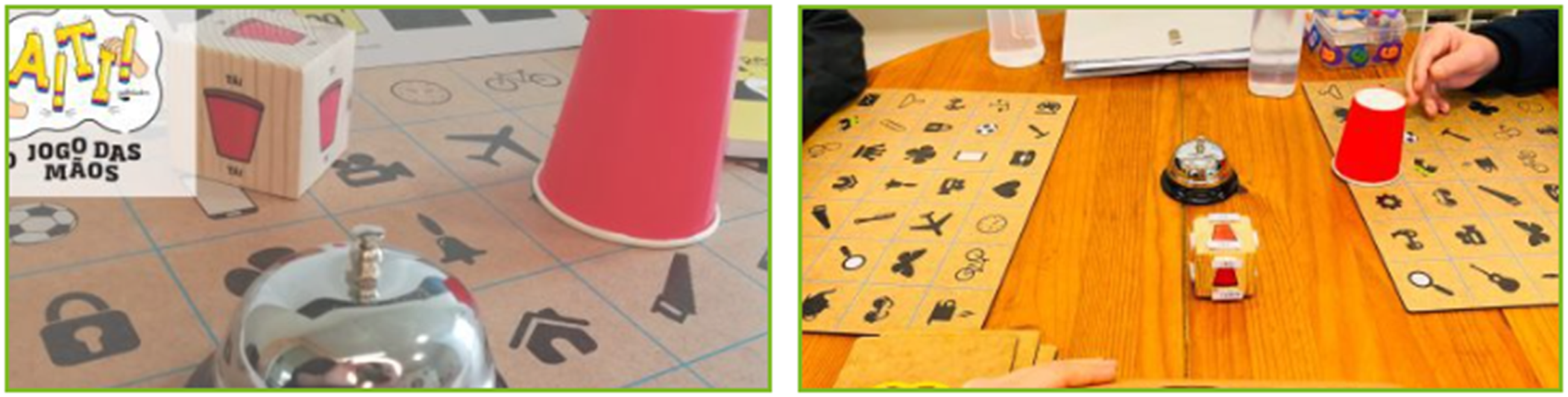

To begin the game, the board is placed on the table, centered with the participant’s torso. The Simple Game cards (Figure 2) provide two pieces of information: the images to be found on the board (e.g., a butterfly in Figure 2) and the required position of the cup (facing up in Figure 2A or facing down in Figure 2B).
The participant receives a card with instructions on the images to be found on the board, with the objective of positioning the cup correctly in the designated area. After finding the corresponding image, they place the cup in the position indicated on the card and press the bell to signal that the move is complete. Time is measured in tenths of a second. For each card, each participant was evaluated based on the time and attempts required to complete a total of three successful moves. The procedure included the possibility of providing two supplementary Simple Game cards, allowing for up to two errors during the execution of the moves. The protocol was as follows: first, a unilateral move with the preferred hand; second, with the non-preferred hand; and finally, a bilateral move using two simple cards viewed simultaneously, where the participant manipulated two cups (one in each hand) into the positions indicated by the cards, placing them over the images on the board (Figure 1). The final score was obtained by calculating the average of the two best moves. In this game, a lower execution time corresponds to better performance.
The number and type of errors committed were also recorded. Errors were categorized as: ERC – error in cup positioning; ERI – error in image identification; and ERM – error in hand usage.
Statistical Analysis
The study sample was characterized according to its sociodemographic characteristics (age, sex, manual preference) and performance measures on the Purdue Pegboard Test and the TATI game (total and by age). Categorical variables were described using absolute and simple relative frequencies, while quantitative variables were described using mean and standard deviation values.
The normality of the data distribution was confirmed using the Kolmogorov-Smirnov or Shapiro-Wilk test, depending on the sample size. The homogeneity of variance was checked with Levene’s test. Performance measures on the Purdue Pegboard Test and the TATI board game were compared across the various age groups using either one-way ANOVA or the Kruskal-Wallis test, depending on whether the assumptions were met. If appropriate, a post-hoc test with Bonferroni correction (for ANOVA) or pairwise comparisons (for Kruskal-Wallis) were performed.
The correlation between performance measures on the Purdue Pegboard Test and the TATI board game was evaluated using Pearson’s or Spearman’s correlation coefficient, depending on the normality of the data distribution. Correlation values were interpreted as: 0–0.09 for no correlation; 0.1–0.39 for a weak correlation; 0.4–0.69 for a moderate correlation; 0.7–0.89 for a strong correlation; and 0.9–1 for a very strong correlation (Schober et al., 2018).
Statistical analysis was performed using the IBM SPSS Statistics software (version 29.0.1.0). The statistical significance level was set at p < .05.
Results
The results obtained are presented below, organized according to the study’s objectives, beginning with the characterization of the sample, followed by descriptive analyses and the correlations performed between the variables under study.
Participants Characterization
Sociodemographic Characteristics of the Sample (n = 47)
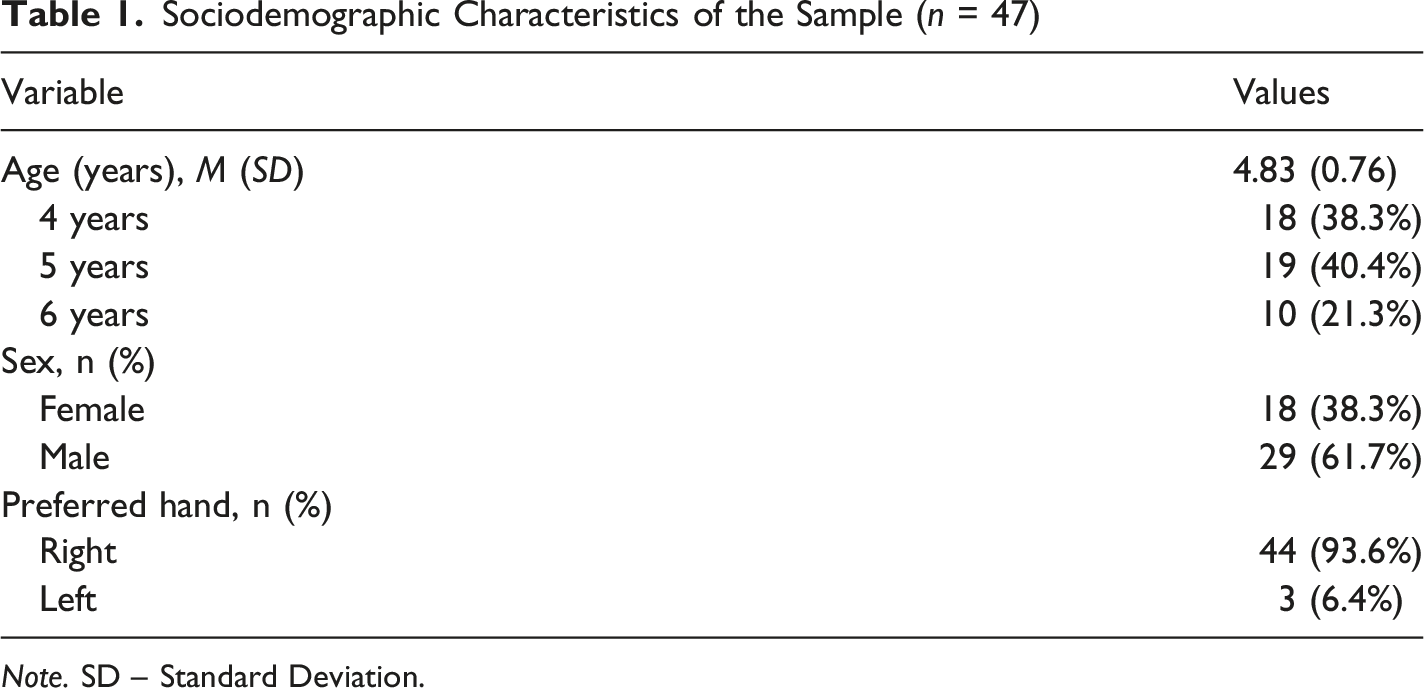
Note. SD – Standard Deviation.
Characterization of Purdue Pegboard Test Performance
Purdue Pegboard Test Performance Measures (n = 47)
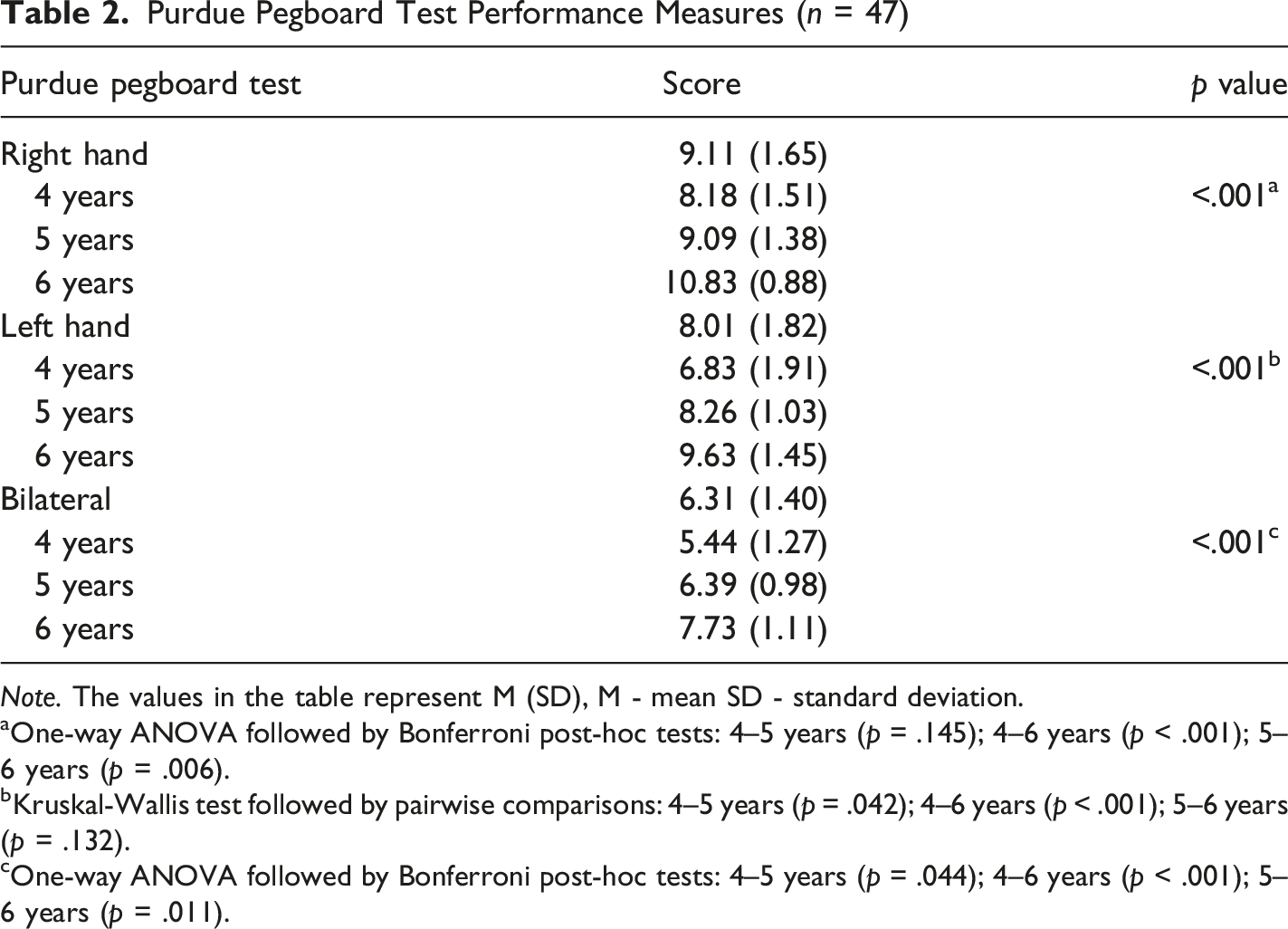
Note. The values in the table represent M (SD), M - mean SD - standard deviation.
aOne-way ANOVA followed by Bonferroni post-hoc tests: 4–5 years (p = .145); 4–6 years (p < .001); 5–6 years (p = .006).
bKruskal-Wallis test followed by pairwise comparisons: 4–5 years (p = .042); 4–6 years (p < .001); 5–6 years (p = .132).
cOne-way ANOVA followed by Bonferroni post-hoc tests: 4–5 years (p = .044); 4–6 years (p < .001); 5–6 years (p = .011).
Significant differences were found among the various age groups for the right hand, left hand, and bilateral test (p < .001). Post hoc tests with Bonferroni correction showed significant differences for the right hand between 4 and 6-year-old children (p < .001) and between 5 and 6-year-old children (p = .006). For the left hand, significant differences were observed between 4 and 5-year-old children (p = .042) and between 4 and 6-year-old children (p < .001). For the bilateral test, significant differences were observed between 4 and 5-year-old children (p = .044), between 4 and 6-year-old children (p < .001), and between 5 and 6-year-old children (p = .011).
Characterization of TATI Board Game Performance
TATI Board Game Performance Measures (n = 47)
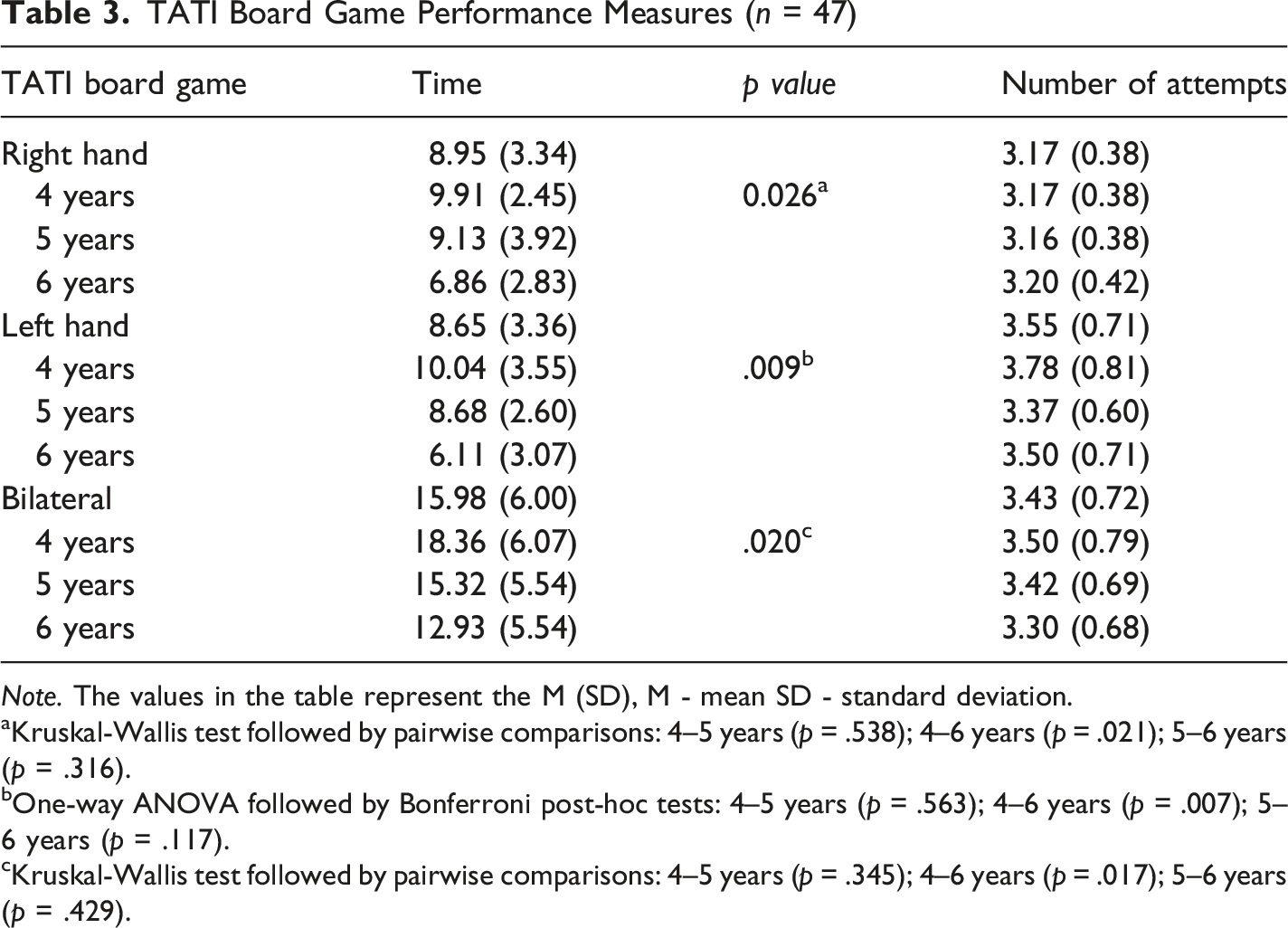
Note. The values in the table represent the M (SD), M - mean SD - standard deviation.
aKruskal-Wallis test followed by pairwise comparisons: 4–5 years (p = .538); 4–6 years (p = .021); 5–6 years (p = .316).
bOne-way ANOVA followed by Bonferroni post-hoc tests: 4–5 years (p = .563); 4–6 years (p = .007); 5–6 years (p = .117).
cKruskal-Wallis test followed by pairwise comparisons: 4–5 years (p = .345); 4–6 years (p = .017); 5–6 years (p = .429).
When comparing the task execution time in the TATI game, significant differences were found among the various age groups for the right hand (p = .026), left hand (p = .009), and bilateral (p = .020) tests (Table 3). Post-hoc tests with Bonferroni correction show that for the right hand, significant differences were observed between 4 and 6-year-old children (p = .021). For the left hand, significant differences were observed between 4 and 6-year-old children (p = .007). For the bilateral test, significant differences were observed between 4 and 6-year-old children (p = .017).
Distribution and Characterization of the Number and Type of Errors Committed
Characterization of the Number and Type of Errors Committed (Total and per Attempt) in the TATI Board Game
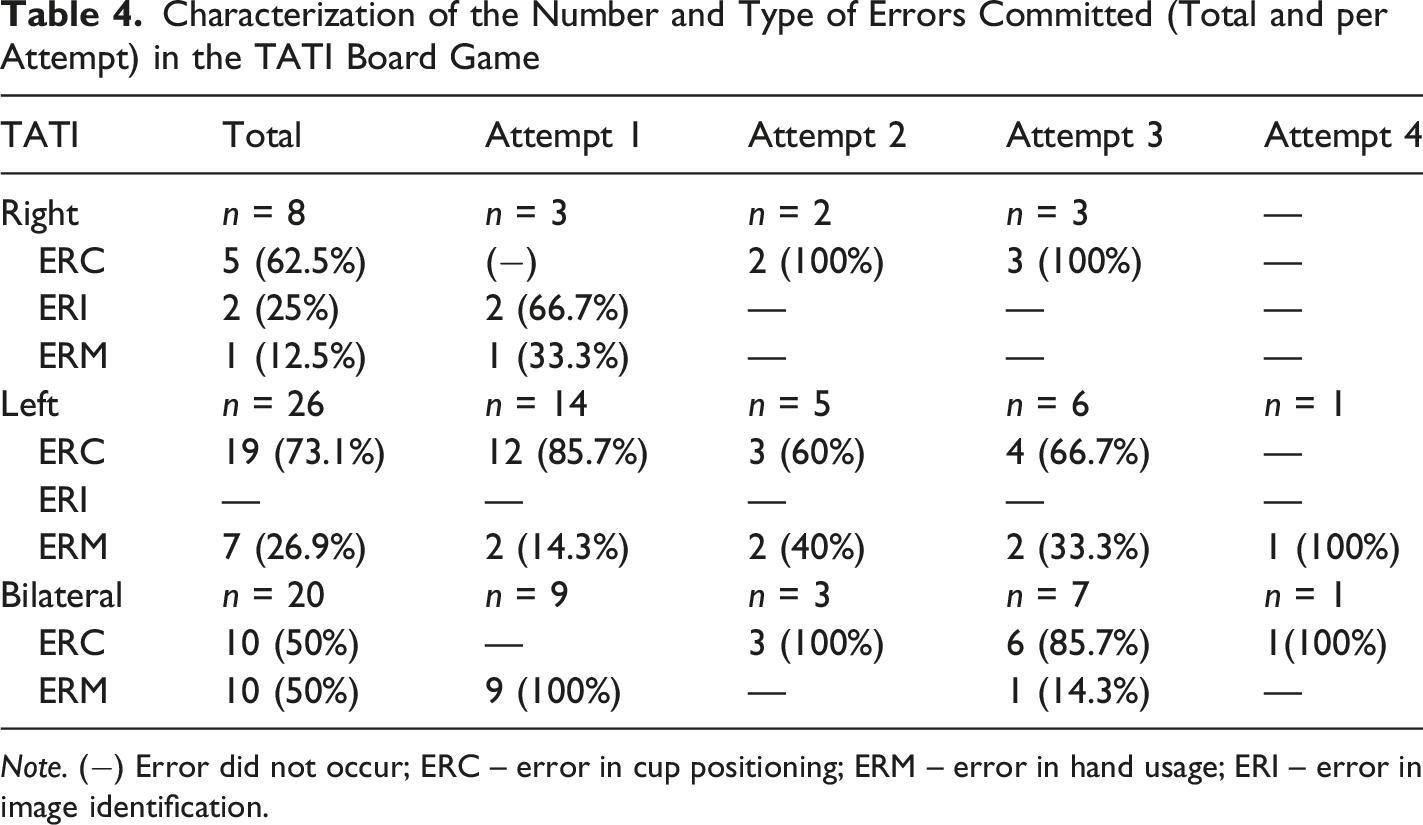
Note. (−) Error did not occur; ERC – error in cup positioning; ERM – error in hand usage; ERI – error in image identification.
In the left-hand assessment, 26 errors occurred over 4 attempts. According to Table 4, the types of errors committed with the left hand were 73.1% placing the cup in the opposite position from the one designated by the card (ERC), and 26.9% were errors in hand usage (ERM; the card designated the left hand, but participants used the right hand). Attempt number 1 had the most errors (14), followed by attempt number 3 with 6 errors, attempt number 2 with 5 errors, and the final attempt with only one error (Table 4).
In the bilateral assessment, which required the simultaneous use of both hands, 20 errors were recorded, distributed over 4 attempts. As shown in Table 4, bilateral moves had a 50% error rate for cup placement and a 50% error rate for using the opposite hand from the one assigned by the card.
The attempts with the most errors were, in descending order: the first attempt with 9 errors, the third with 7 errors, the second with 3 errors, and finally, the last attempt with only one error (Table 4).
Analysis of Performance Value Variability in the Purdue Pegboard Test and the TATI Board Game
Tables 2 and 3 present performance results based on mean values and their respective standard deviations, while Figure 3 shows the dispersion analysis of the performance values, allowing for a comparison of variability between the test and the game. In the Purdue Pegboard Test, the standard deviation values (number of pegs) were 1.65 for the right hand, 1.82 for the left hand, and 1.40 for the bilateral assessment. In the TATI board game, the standard deviations (measured in seconds) were 3.34 for the right hand, 3.36 for the left hand, and 6.00 for the bilateral assessment. Analysis of the dispersion and variability of scores on the Purdue Pegboard Test and execution time on the TATI board game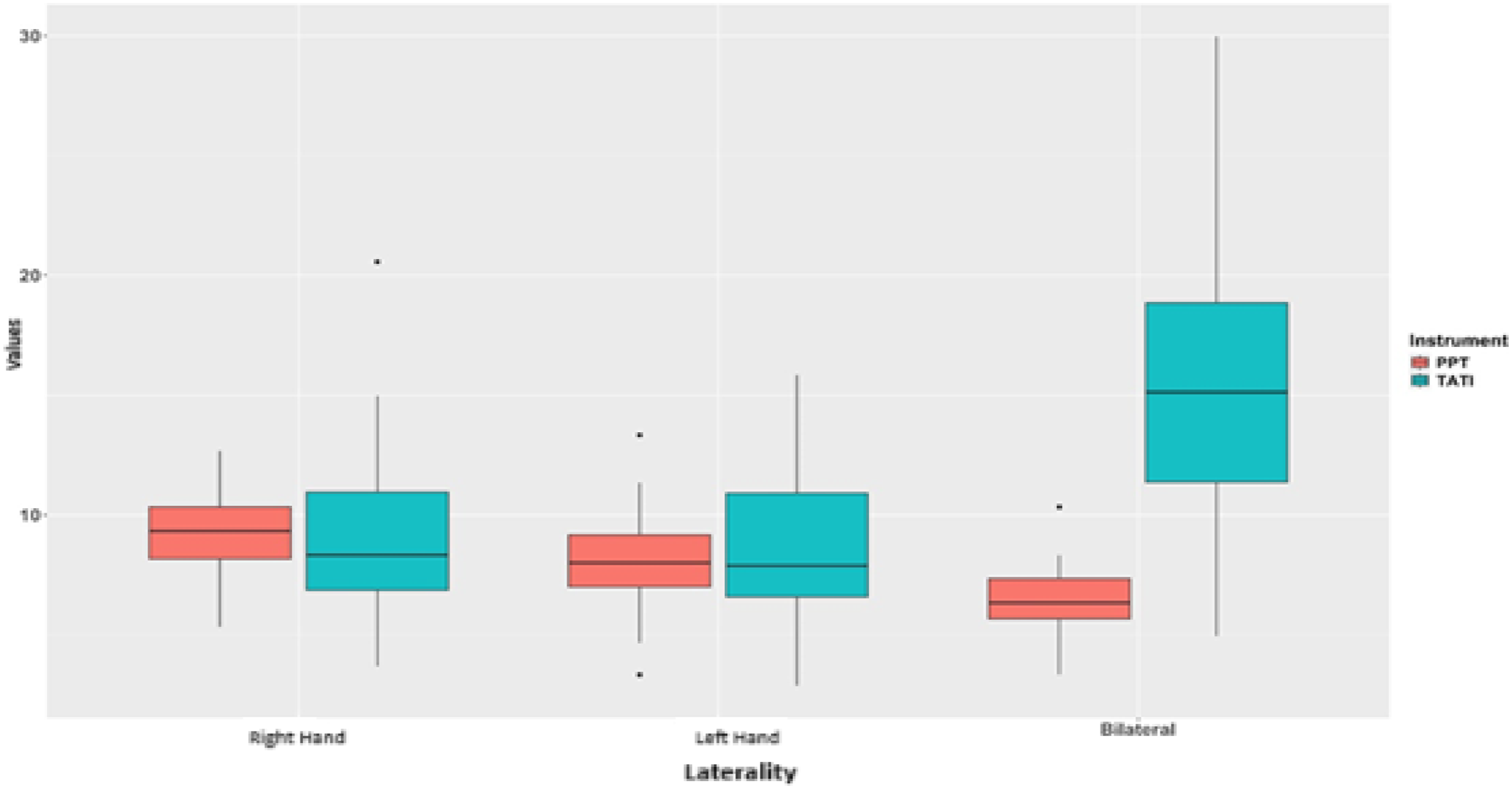
Based on the analysis of the dispersion values of the performance measures (Tables 2 and 3; Figure 3), it is possible to verify that the results from the TATI board game show greater variability in children’s performance across all three types of moves (right hand, left hand, and bilateral) compared to the Purdue Pegboard Test.
Correlation Between Performance Measures on the Purdue Pegboard Test and the TATI Board Game
Correlations Between the Score on the Purdue Pegboard Test and the Execution Time on the TATI Board Game
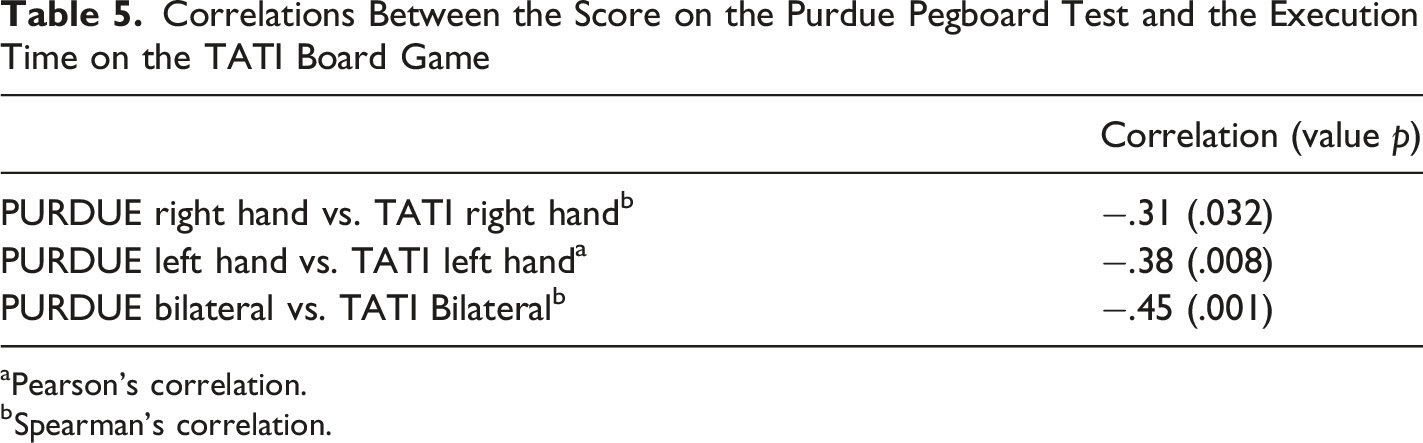
aPearson’s correlation.
bSpearman’s correlation.
Analyzing the correlation values between the performance measures on the Purdue Pegboard Test and the board game (task execution time), the following was observed: (i) a weak significant negative correlation for the right hand (ρ = −.31; p = .032); (ii) a weak significant negative correlation for the left hand (r = −.38; p = .008); and (iii) a moderate significant negative correlation for the bilateral move (ρ = −.45; p = .001). These values indicate that the performance measures on the Purdue Pegboard Test and the TATI game vary in opposite directions: the higher the number of pegs placed on the Purdue Pegboard Test, the shorter the task execution time in the TATI game.
Correlation Between Age and Performance Measures on the Purdue Pegboard Test and the TATI Board Game
Correlations Between Age and the Purdue Pegboard Test and the TATI Board Game
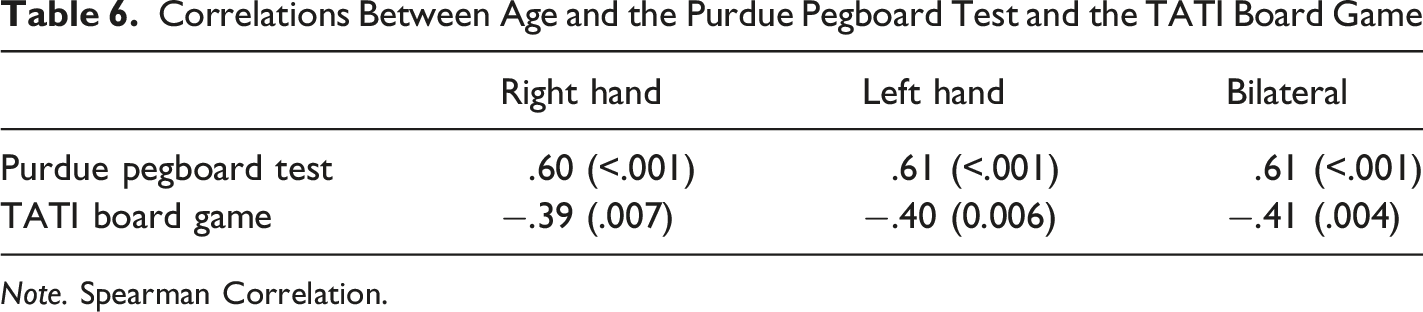
Note. Spearman Correlation.
A moderate significant positive correlation was observed between age and the Purdue Pegboard Test (ρ = .60; p < .001) for the right hand (Table 6). Regarding the TATI board game, a moderate significant negative correlation was found (ρ = −.39; p = .007) between performance on the TATI game and participant age.
Discussion
The present study, of a preliminary and exploratory nature, aimed to characterize MD in preschool-aged children, with a specific focus on the use of the TATI board game, exploring its potential as an assessment tool.
The sample showed some asymmetry in age distribution and hand preference. As noted by Faber et al. (2024), motor development in this age range is marked by rapid changes, making balanced age distribution essential, since different ages correspond to distinct levels of neuromotor maturation. Similarly, lateralization may still be in the process of consolidation, which can affect performance consistency, particularly in unilateral tasks, in which the preferred hand tends to demonstrate superiority (Carlier et al., 2006; Scharoun & Bryden, 2014).
Regarding age-related performance differentiation, the results obtained in the Purdue Pegboard Test (PPT) were consistent with normative data for children aged 4, 5, and 6 years (Wilson et al., 1982). This correspondence reinforces the validity of the sample and the adequacy of the participants’ motor development levels, suggesting that the PPT is sensitive in detecting significant variations in fine motor performance at early ages (Irmak & Ketenciler, 2025). Similarly, the TATI board game also revealed statistically significant differences in execution time across age groups, with progressively shorter execution times in older children, both in unilateral and bilateral tasks. These findings support the notion that motor development evolves gradually throughout childhood, accompanying neuromotor maturation (Gidley Larson et al., 2007). This maturation is associated with more refined and precise motor control, which is essential both for highly structured fine motor tasks, such as peg insertion in the PPT, and for playful activities requiring controlled manipulation and motor planning, such as the TATI game (Gidley Larson et al., 2007).
In the present study, performance indicators included execution time and error occurrence for the TATI game, and number of pegs placed per second for the Purdue Pegboard Test, allowing comparison between speed–accuracy components across assessment tools. In terms of performance variability, the TATI game showed greater dispersion in execution times compared to the PPT. This difference may be explained by the nature of the instruments: the PPT is a highly standardized tool, with rigid instructions and repetitive movements, which contributes to high reliability (Wilson et al., 1982) but may fail to capture the complexity associated with individual variability in MD development throughout childhood. In contrast, the TATI board game, by integrating elements of randomness and allowing greater freedom in strategy selection, promotes a more ecological context, closer to everyday situations (Chatzaki et al., 2024). Thus, while the PPT prioritizes consistency and standardization, TATI demonstrates greater sensitivity to individual differences, reflecting spontaneous adaptations and more diverse motor strategies. The relevance of exploring more sensitive assessment parameters has been highlighted in recent literature. Rose-Dulcina et al. (2025), in a systematic review of measures derived from playful and interactive contexts, emphasize the potential of these approaches to complement traditional assessment tools of upper limb performance in children with disabilities, while also underscoring the need for further investigation into their psychometric properties. Interestingly, the authors found that 24% of the studies included used game scores as outcomes for upper limb assessment. In particular, Rose-Dulcina et al. (2025) described a moderate-high test-retest variability in variables such as time, error and success rate, which is partially in accordance with the assessment protocol to the TATI game, as it quantifies not only speed (timed derived variables) but also the quality of motor execution in children (errors rating). In this sense, the TATI game, by allowing the recording of both type and number of errors, aligns with these recent assessment trends by quantifying not only speed but also the quality of motor execution in children. In this context, the observed correlations between the performance indicators of the TATI board game and the Purdue Pegboard Test could be interpreted as preliminary evidence of convergent validity, suggesting that both assessment tools capture related constructs of MD. However, the greater variability observed in TATI performance might simultaneously reflect broader ecological validity, as the game context introduces elements such as rule interpretation, decision-making, and adaptive motor performance that are more representative of everyday motor challenges (Chatzaki et al., 2024). Therefore, rather than replacing standardized tools, the TATI board game may complement traditional assessments by capturing additional dimensions of motor performance that emerge in more naturalistic and engaging contexts.
Despite this greater variability in execution times, the TATI game revealed considerable consistency in the number of moves required to complete the task, with low dispersion among participants. This suggests that although speeds varied, most children required a similar number of attempts. However, the number of errors per attempt emerged as a relevant indicator of motor performance quality, as errors play a crucial role in motor learning by generating feedback that supports the construction of internal models (Giustino et al., 2023). The literature indicates that, with development, there is a tendency toward reduced variability and error frequency, reflecting greater stability and refinement of motor control (Smits-Engelsman et al., 2008). In this respect, the PPT proves insufficient, as it does not include error recording or analysis, relying exclusively on the number of pegs placed within a fixed time.
In this context, to the best of the authors’ knowledge, there are no previous studies directly comparing the effectiveness of a board-game-based playful instrument with the gold- standard (PPT) for assessing MD in healthy pre-school children. Unlike the PPT, which evaluates bilateral performance in a symmetrical and standardized manner, the TATI game does not always require symmetrical actions in bilateral tasks. This inherent asymmetry may hinder direct comparisons but also reinforces its ecological character, as it more closely resembles the real demands of the school environment and daily activities (Ieong Lok et al., 2022; Rosa, Gordo, et al., 2021). According to Ureche and Billard (2018), the inclusion of asymmetric bimanual tasks in the assessment protocols of the upper limb might increase the potential of capturing trends for the interaction between arms hands segments (role of the arms as master or slave; force–motion or motion–motion coupling). Probably, the TATI game assessment protocol might be improved in the future, to capture these different interaction modes between the arm-hands segments (e.g., force or motion), designing new mechanisms accordingly (e.g., playing activities where one hand is supporting the weight body; the other is manipulating the game set-up).
Consistent with this perspective, previous studies suggest that the inclusion of more ecological instruments improves the effectiveness of MD assessment in children by reflecting the diversity and complexity of functional tasks (Bieber et al., 2016).
Furthermore, although both the game and the test involve discrete tasks, the nature of the activity and the cognitive demands differ substantially. The board game, by integrating rules, decision-making, and elements of intrinsic motivation, may represent an opportunity to more broadly engage the cognitive system during motor execution (Chatzaki et al., 2024). Previous studies (Rosa, Gordo, et al., 2021) indicate that conventional assessments may be complemented by playful approaches that incorporate these cognitive dimensions. The results obtained with TATI reinforce this idea, suggesting that the inclusion of aspects such as rule comprehension, cognitive flexibility, and adaptation to different demands may provide a more comprehensive representation of children’s performance (Moya-Higueras et al., 2023; Noda et al., 2019). These findings suggest that game-based assessment may provide complementary information to standardized tools, especially regarding how children adapt their motor strategies in flexible and meaningful contexts, capturing nuances of motor planning that standardized tests often miss. This may be particularly relevant in educational and clinical settings where motivation, engagement, and ecological relevance are important components of assessment quality.
Limitations
Despite the relevance of the results obtained, this study has some limitations that should be considered when interpreting the data. Firstly, the study used a convenience sample, which limits the generalizability of the findings to broader and more heterogeneous populations. Factors such as socioeconomic, cultural, and regional context, which were not controlled, can significantly influence children’s motor development (Guo et al., 2024; Ramos-Álvarez et al., 2022).
Additionally, the participants’ prior familiarity with board games or other playful activities was not assessed or controlled, which may have affected performance in the TATI game, favoring children who were more accustomed to this type of task (Pellegrini, 2009).
Finally, the cross-sectional design of the study prevents the observation of performance evolution over time, making it impossible to analyze changes resulting from natural development or any potential interventions.
Future Recommendations
This study paves the way for several future research directions. It would be relevant to apply the protocol to children with neuromotor disorders or difficulties in manual dexterity to assess whether the TATI game is sensitive to detecting significant performance deviations, thereby validating its usefulness in clinical contexts. It is also recommended to compare the TATI with other recognized motor assessment tools to reinforce its validity and reliability (Eddy et al., 2020). In this regard, longitudinal studies would be particularly useful for tracking motor progression at different stages of childhood (Fuelscher et al., 2021).
Additionally, it is important to delve deeper into the role of motivation and emotional engagement during task execution, aspects often neglected in standardized assessments, but which can influence both performance and the level of involvement (Lumsden et al., 2016; Noda et al., 2019). The implementation of the TATI game in school settings could be explored as a strategy for continuous monitoring of motor development, particularly MD, in a more natural approach integrated into children’s daily lives (Guo et al., 2024; Rosa, Gordo, et al., 2021).
Finally, future studies could consider refining the TATI assessment protocol by introducing new tasks to capture additional dimensions of bilateral MD, particularly asymmetric bimanual coordination, thereby increasing the tool’s sensitivity to interlimb interactions.
Conclusion
The present study demonstrated that the TATI board game has potential as a tool for assessing and monitoring MD in preschool-aged children. The results indicate a progressive evolution of motor performance with increasing age, reflected in both the Purdue Pegboard Test scores and the TATI game execution times, with significant correlations between both instruments. The adopted methodology allowed for the capture of technical and functional aspects of manual dexterity, showing that the TATI game, by incorporating playful characteristics and more ecological contexts, can offer a more comprehensive and representative assessment of child MD, including components related to decision-making and motor strategies. The validation of the TATI in comparison with other established tools will contribute to consolidating its clinical and educational applicability.
In summary, this research reinforces the importance of exploring playful and engaging tools, such as board games, for MD assessment, and promoting more dynamic and motivating approaches.
Footnotes
Acknowledgments
The authors thank the institutions that allowed this study to be carried out, the parents, the children, and all participants for their collaboration.

Ethical Considerations
The authors confirm that the research protocol was approved by the ethics committee of the Polytechnic of Leiria, Reference Number: CE/IPLEIRIA/115/2024 on 20/12/2024. All methods were performed in accordance with the relevant guidelines and regulations.
Consent to Participate
Written informed consent to participate was obtained from the parents or legal guardians of all child participants prior to their inclusion in the study. All participants were free to withdraw at any time, without penalty.
Consent for Publication
The manuscript does not contain any individual data, images, or videos from individual participants that could lead to their identification, therefore consent for Publication is not applicable to this submission.
Funding
Declaration of Conflicting Interests
The authors declared no potential conflicts of interest with respect to the research, authorship, and/or publication of this article.
Data Availability Statement
The data supporting the findings of this study are not publicly available due to ethical and institutional restrictions but may be made available from the corresponding author upon reasonable request