





Abstract
A group of school librarians enlisted in an effort to raise literacy among black males by reaching out to them with books and programs aligned with their interests and culture.
It's a beautiful thing when I have to tell my black male students to stop reading in class so that they can pay attention … and that has happened several times since we started [the book club].
— Middle school teacher (Butts, 2011)
School librarians are natural partners in the effort to improve the education, social, and employment outcomes of black males. Although school librarians have become increasingly associated with technology, they still play an important role in literacy development. The American Association of School Librarians' (AASL) most recent guidelines for school library programs includes “promoting reading as a foundational skill for learning, personal growth, and enjoyment” as one of the major responsibilities of school librarians (2009, pp. 21-23).
School librarians in Durham, N.C., have demonstrated the crucial role that librarians can play in supporting the literacy development of black males and working as partners with administrators and classroom teachers. The work of these librarians demonstrates that black males will read with enthusiasm, participate in discussions, and write reflectively about what they read when they are presented with books that connect to their lives.
In one high school, librarians invited struggling or simply indifferent readers to choose one book to add to the library collection.
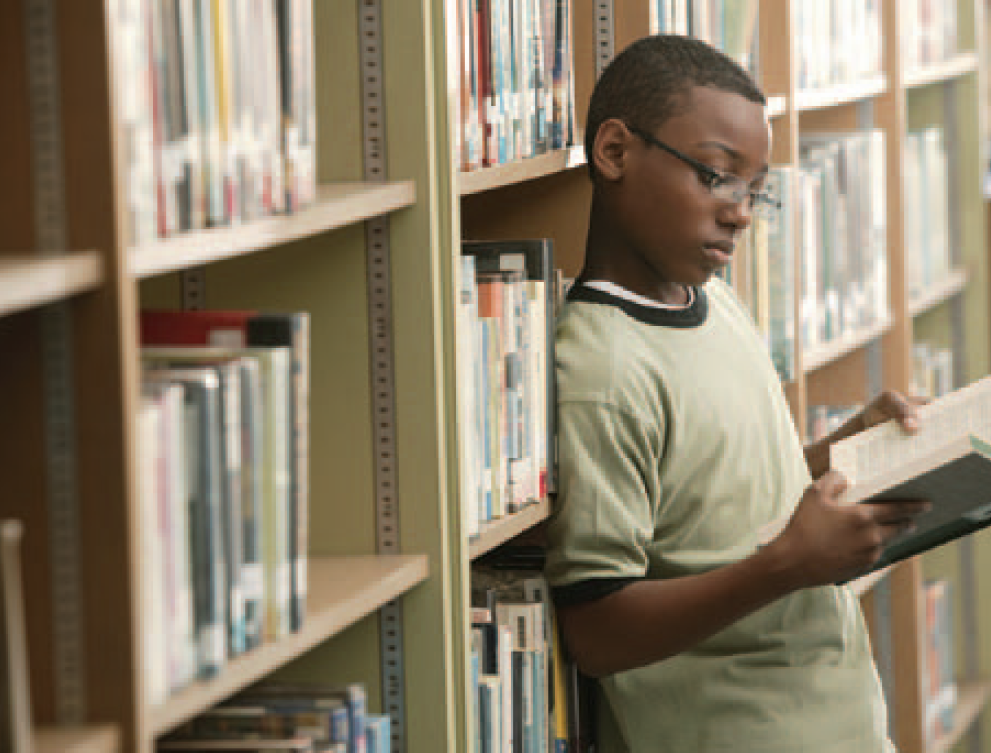
In 2010-11, Durham Public Schools in North Carolina implemented a multi-pronged approach aimed at closing the achievement gap for black males in the district's 55 schools. One of the literacy initiatives centered on the work of Alfred W. Tatum at the University of Illinois at Chicago. In his 2009 book, Reading for their Life, Tatum argues that traditional reading strategies have failed to work with black males because educators are not engaging them with meaningful texts. Tatum calls such works enabling texts and says they have discreet characteristics. They:
Promote a healthy psyche;
Reflect an awareness of the real world;
Focus on the collective struggle of African-Americans; and
Serve as a road map for being, doing, thinking, and acting (Tatum, 2009, p. 76).
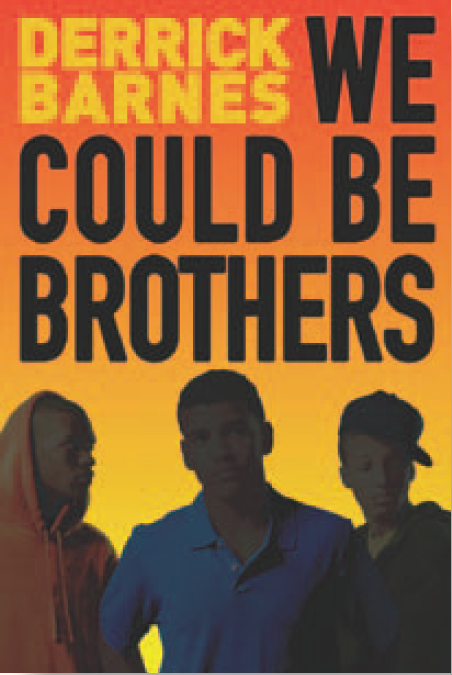
Enabling texts include such classics as Narrative of the Life of Frederick Douglass (1845, 2005), as well as contemporary texts such as the picture book Sit-In: How Four Friends Stood Up by Sitting Down, by Andrea Davis Pinkney (2010), and the young adult novel We Could Be Brothers, by Derrick Barnes (2010). Enabling texts contain strong content that will not only interest black males, but will “cause [them] to take action in their own lives” (Tatum, 2009, p. 65).
Adults should give enabling texts to black males at every opportunity and also ensure that teachers, parents, librarians, or other adults act as mediators between the readers and the texts, Tatum says. Without the chance to discuss their reading with others and to respond to the texts through writing, Tatum argues, enabling texts can't fulfill their true potential in the lives of these young men.
Over a year, we met with Durham's school librarians 11 times to determine how they could integrate Tatum's ideas into their daily work. Action plans, discussed below, emerged from these meetings. Together, these strategies describe a model for how school librarians can proactively work to close the literacy gap among black male students. Additional examples and professional development resources can be found at the project wiki (http://rftldurhamcounty.pbworks.com).
Strategy #1: Collect, display, recommend
The librarians began by analyzing the library collections for enabling texts. They soon discovered that while the collections contained a number of culturally relevant books, not all of them were enabling. Many were “disabling texts” (Tatum, 2009, p. 65) — books that feature black children and teens yet reinforce the stereotypes of black males as hoopsters, fatherless sons, and gang recruits. While disabling texts may appeal to some black males, Tatum argues they aren't appropriate for literacy instruction. Only enabling texts are powerful enough to help black males define themselves, develop problem-solving skills, and engage in social action. Identifying enabling texts is difficult, however, and requires critical examination of texts for the characteristics that make them powerful. To aid in this endeavor, we used Tatum's research to create a rubric that can be found at https://sites.google.com/site/bridgetoliteracy/identifying-enabling-texts-a-rubric.
Simply collecting enabling texts is not enough; educators must actively promote them. Librarians used several techniques to get the books into students' hands. Two of the librarians, one at a high school and one at a middle school, created within-the-school bookmobiles — book carts loaded with enabling texts that they took to classrooms to reach students they rarely or never saw. For some of the students, this was the first time they checked out a book from any library. A middle school librarian sponsored Munch-a-Bunch-of-Reading, an event in which students were invited to the library from 8:30 a.m. until lunchtime to get comfortable and read. Students who would not ordinarily sign up for an event like this were recruited to attend. Another librarian used grant funding to buy Kindles and downloaded enabling texts to them. While technology was the initial draw, the power of the stories soon became the motivating factor as students began to request titles that weren't available as e-books.
Only enabling texts are powerful enough to help black males define themselves, develop problem-solving skills, and engage in social action.
Strategy #2: Let kids select
Several librarians actively involved black male students in selecting books for the library. In one high school, librarians invited struggling or simply indifferent readers to choose one book to add to the library collection. Librarians immediately ordered the books, and, when they arrived, checked them out and delivered them to the students who had chosen them. To be sure, not all the titles were enabling texts. But, by allowing the young men to influence the library collection, they ensured that each had access to a book of interest, and they also took a critical first step toward building relationships with these students.
Strategy #3: Mediate enabling texts
Several librarians moved beyond collecting enabling texts to actively engaging students, providing an opportunity for the young men to:
Reconnect to reading and writing as part of their development;
View concepts, themes, and issues from multiple perspectives and in relation to multiple identities; and
Engage in dialogue about issues or concepts that matter in school and society.
In addition to the mediation effort, we received funding from an American Library Association Diversity Research Grant to conduct a book discussion of our own with six young black male teenagers in the district. The young men were average students. None of them were enrolled in remedial classes; only one was in an Advanced Placement course. Each young man read two books over the course of three weeks and recorded their reactions to the books on an MP3 player. We then held a one-hour focus group with the teens in which they shared their reactions to the books. The young men came to the focus group prepared and enthusiastic about discussing the books. During the discussion, the young men listened attentively to each other. They affirmed Tatum's (2009) assertion that enabling texts provide a forum for young black males to define self, become resilient, engage others, and build capacity.
The “guys-only focus” was important to the success of these discussions. As one young man noted, “When I'm around these girls in my school, the 8th graders, they try to act like they're smarter than you, like they know more than you, so [the make-up of the book club] makes me feel comfortable hanging around people who are like my own style” (Butts, 2011).
As the book discussion wrapped up, the boys expressed interest in participating in similar groups in the future. After hearing each other's reactions to the texts, several of them swapped titles and made plans to borrow other titles from each other in the future. We also shared a booklist of additional enabling texts. Several boys asked where they could find the books; notably, libraries had not occurred to them as a place to find texts about black males.
Enabling Texts
Elementary picture books
Blue, R. (2009). Ron's big mission. New York, NY: Dutton. [Biography]
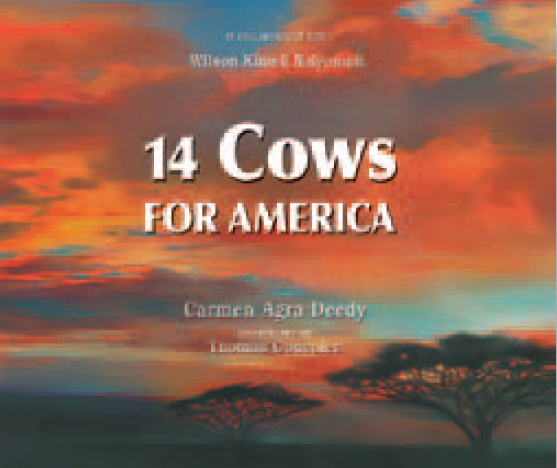
Deedy, C.A. (2009). 14 cows for America. Atlanta, Ga.: Peachtree. [Biography]
Myers, C. (2000). Wings. New York, NY: Scholastic. [Fantasy]
Myers, W.D. (2009). Looking like me. New York, NY: Egmont USA. [Poetry]
Pinkney, A.D. (2008). Boycott blues: How Rosa Parks inspired a nation. New York, NY: Greenwillow. [Historical fiction]
Pinkney, A.D. (2010). Sit-in: How four friends stood up by sitting down. New York, NY: Little, Brown. [Historical fiction]
Pinkney, B. (1997). The adventures of Sparrowboy. New York, NY: Simon & Schuster. [Fantasy]
Robinson, S. (2009). Testing the ice: A true story about Jackie Robinson. New York, NY: Scholastic. [Fictionalized biography]
Shange, N. (2004). Ellington was not a street. New York, NY: Simon & Schuster. [Poetry]
Steptoe, J. (1997). In daddy's arms I AM TALL: African-Americans celebrating fathers. New York, NY: Lee & Low Books. [Poetry]
Weatherford, C.B. (2005). Freedom on the menu: The Greensboro sit-ins. New York, NY: Dial. [Historical fiction]
Upper elementary
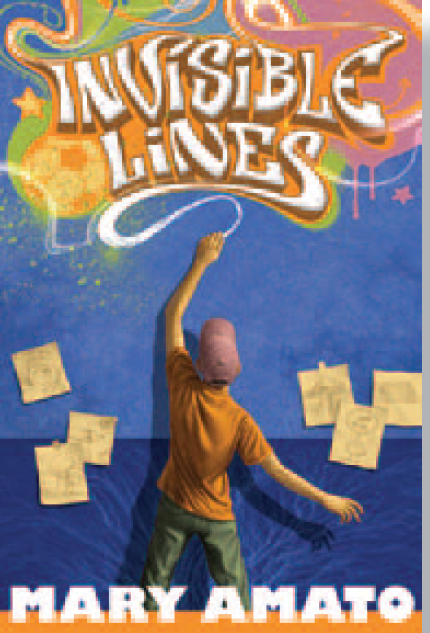
Amato, M. (2009). Invisible lines. New York, NY: Egmont USA. [Realistic fiction]
Bryan, A. (2009). Words to my life's song. New York, NY: Atheneum. [Biography]
Curtis, C.P. (1999). Bud, not buddy. New York, NY: Delacorte. [Historical fiction]
Grimes, N. (1999). My man blue. New York, NY: Dial. [Poetry]
Freedman, R. (2006). Freedom walkers: The story of the Montgomery bus boycott. New York, NY: Holiday House. [Nonfiction]
Levine, E.S. (1993). Freedom's children: Young civil rights activists tell their own stories. New York, NY: Putnam. [Biography]
McWhorter, D. (2004). A dream of freedom: The civil rights movement from 1954 to 1968. New York, NY: Scholastic. [Nonfiction]
Smith, H.A. (2003). The way a door closes. New York, NY: Henry Holt. [Novel in poems]
Woodson, J. (2003). Locomotion. New York, NY: G.P. Putnam's Sons. [Novel in poems]
Middle school
Adoff, A. (1997). I am the darker brother: An anthology of modern poems by African-Americans. New York, NY: Simon Pulse. [Poetry]
Adoff, J. (2005). Jimi & me. New York, NY: Hyperion/Jump at the Sun. [Historical fiction]
Barnes, D. (2010). We could be brothers. New York, NY: Scholastic. [Realistic fiction]
Davis, S., Jenkins, G., Hunt, R., & Draper, S. (2005). We beat the street: How a friendship pact led to success. New York, NY: Dutton. [Nonfiction]
Grimes, N. (2005, 2010). Dark sons. Grand Rapids, MI: Zondervan. [Realistic fiction, poetry]
Hansen, J. (1986). Yellow bird & me. New York, NY: Clarion. [Realistic fiction]
Johnson, A. (2005). The first part last. New York, NY: Simon Pulse. [Realistic fiction]
Magoon, K. (2010). The rock and the river. New York, NY: Aladdin. [Historical fiction]
Myers, W.D. (2000). 145th Street: Short stories. New York, NY: Delacorte. [Short stories]
Myers, W.D. (2004). Here in Harlem: Poems in many voices. New York, NY: Holiday House. [Poetry]
Neri, G. (2010). Yummy: The last days of a southside shorty. New York, NY: Lee & Low. [Graphic novel]
Pearsall, S. (2008). All of the above. Boston, MA: Little, Brown. [Realistic fiction]
Woodson, J. (1995). From the notebooks of Melanin Sun. New York, NY: Scholastic. [Realistic fiction]
Woodson, J. (2000). Miracle's boys. New York, NY: Putnam. [Realistic fiction]
High school
Binns, B.A. (2010). Pull. Lodi, NJ: WestSide Books. [Realistic fiction]
Flake, S.B. (2010). You don't even know me: Stories and poems about boys. New York, NY: Hyperion. [Poetry, short stories]
Franco, B. (Ed.) (2001). You hear me: Poems and writings by teenage boys. New York, NY: Candlewick. [Anthology]
Freedom Writers. (1999). Freedom writers diary: How a teacher and 150 teens used writing to change themselves and the world around them. New York, NY: Broadway Books. [Nonfiction]
Grimes, N. (2002). Bronx masquerade. New York, NY: Dial. [Realistic fiction]
Harper, H. (2006). Letters to a young brother: MANifest your destiny. New York, NY: Gotham Books. [Nonfiction]
Hefler, A. (2006). A graphic biography of Malcolm X. New York, NY: Hill & Wang. [Graphic novel]
Houston, J. (2005). New boy. Boston, MA: Houghton Mifflin. [Historical fiction]
Lester, J. (1995). Othello: A novel. New York, NY: Scholastic. [Retold Shakespeare]
Myers, W.D. (2006). Autobiography of my dead brother. New York, NY: HarperCollins. [Realistic fiction]
Myers, W.D. (2010). Lockdown. New York, NY: HarperCollins. [Realistic fiction]
Shakur, T. (1999). The rose that grew from concrete. New York, NY: MTV Books. [Poetry]
Volponi, P. (2005). Black and white. New York, NY: Viking. [Realistic fiction]
Strategy #4: Students carry the discussion
One middle school librarian moved beyond mediating texts with students to teaching students to lead discussions. She invited students interested in facilitating a discussion to a workshop to learn how to lead a book club. In addition to sharing the guidelines shown in Figure 1, she taught students how to select a book for discussion, design a book trailer to motivate other students to read the book, and develop a list of questions to guide the discussion. The student facilitators met with the librarian once a week to discuss their book group's progress. In a school that's had many reluctant readers, the librarian now has more students wanting to join a book club than she can accommodate. When she asked one 8th grader what he would say to someone who thinks that black boys don't read, he said, “Well, I read. Reading is going to make you smarter. I'll read all kinds of books, but mainly I like books that give me something to think about.”

8th-grade book club guidelines
Strategy #5: Connect with community
One of the key recommendations of the Council of Great City Schools report, A Call for Change (Lewis et al., 2010), is to “marshal the energies and commitment of national and local organizations with an interest and stake in seeing improvement to coordinate their efforts on behalf of black male youth.” Pursuing this goal, several Durham school librarians partnered with the local public library to host literacy-related events. The librarian for the young adult section at one branch visited classrooms at two middle schools to promote enabling texts and sign up students for library cards. She made two surprising observations: A large number of students did not have library cards and were unaware of the services offered by the public library. And, many displayed a lack of historical knowledge.
Several of the books she promoted discussed the 1960's civil rights movement. Although predominantly black, the teens were unfamiliar with events described in the books, including the Greensboro, N.C., Woolworth's lunch counter sit-in. A waiting list developed for these books, reinforcing Tatum's assertion that black teens will read if the topics presented to them are meaningful.
This same librarian invited The Sacrificial Poets, an internationally recognized youth performance poetry team, to lead a poetry workshop at the library. Tatum describes poetry as “fast-moving text that can engage [black] adolescent males and shift their mental representations of who they are and what they can become” (2009, p. 97). Twenty teens and children attended the workshop and were so excited about continuing their writing that the library's Teen Floetry Group was born. This group meets once a month to write, reflect, share ideas, and give constructive feedback. As the poems below demonstrate, the workshops allow black male teens to find their voices and explore topics important to them.
I Am
I am sweet.
I am caring for others.
I am the one you come to in a time of need.
I am a problem solver.
I am the one who gets away from trouble.
I am better but not perfect.
I am quiet.
I am different because I don't want to be the same.
I am driven.
I am flowing like a wave.
I am changing things.
I am the one you wish you knew.
I am staring into the eyes of evil and I walk away.
—Terrance, 16
Rage
Rage is a dominant emotion that naturally occurs. It is a sea of fire that will always burn strong in everyone. It is not happy times that will forever be cherished with others. It is the emotion that can take over if not controlled. It is pain that is felt when a loved one passes away. But, if constantly enraged, then you become one with Rage, and Rage becomes one with you. Rage and I are one.
— Herbert, 16
Public libraries are not the only potential community partners for school librarians. Parents, local businesses, and nearby colleges and universities are all promising possibilities for outreach. One school librarian received a grant from a university-neighborhood partnership to start a book club for black males emphasizing the social experience of reading. Twenty 8th graders met weekly for the spring semester with three black male students from the local historically black university and a black male teacher. The first book discussed was The Rock and the River, by Kekla Magoon. To wrap up the discussion, the author visited students via Skype and led a spirited exchange about character motivation and the plot choices she made as a writer. The librarian observed that many students who would never have read a book on their own were among the most engaged during the author visit. Book discussions such as these that cross generations are examples of the collaborative literacy events that Tatum (2009) describes as key components for promoting literacy in the black community.
Strategy #6: Provide professional development
Our initial goal was to empower school librarians to support the district's initiative to engage black males in literacy development. Having applied this model to their programs, the librarians and the head of media services are now going further by leading professional development workshops for teachers based on Tatum's ideas to develop culturally responsive classrooms. Individually, the school librarians had been reaching many black males. Providing professional development for their colleagues and community partners magnifies the effect and sparks future collaborations.
Concluding thoughts
The achievement gap can't be traced to a single root cause, although several contributing factors are readily identified. Similarly, no single group will be able to close the gap on its own. As stated in A Call for Change, many groups are working resolutely on this issue, but “their efforts are often too disconnected and too uncoordinated to match the comprehensive nature of the problem” (Lewis et al., 2010). School librarians are natural partners in this effort.