





Abstract
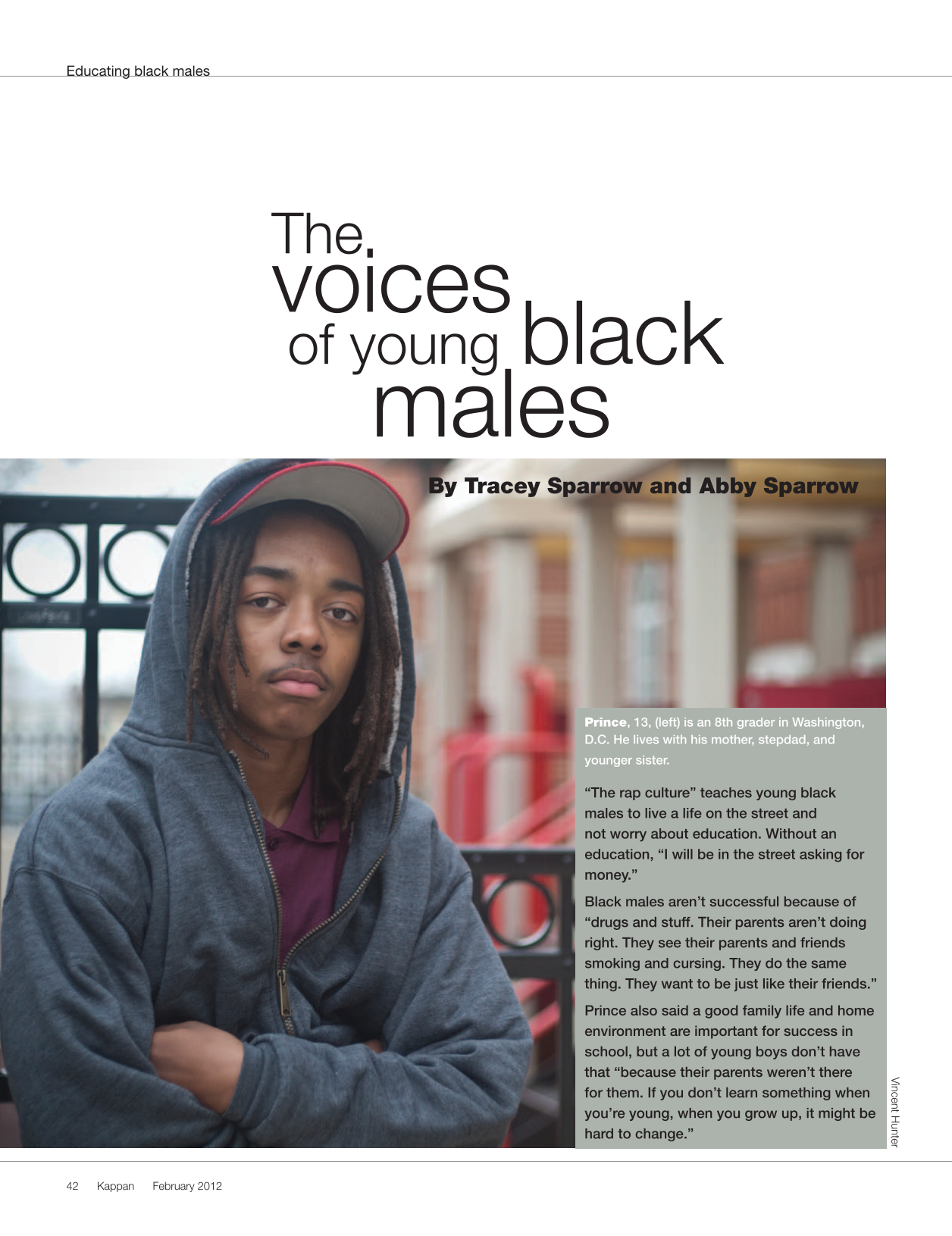

“The rap culture” teaches young black males to live a life on the street and not worry about education. Without an education, “I will be in the street asking for money.”
Black males aren't successful because of “drugs and stuff. Their parents aren't doing right. They see their parents and friends smoking and cursing. They do the same thing. They want to be just like their friends.”
Prince also said a good family life and home environment are important for success in school, but a lot of young boys don't have that “because their parents weren't there for them. If you don't learn something when you're young, when you grow up, it might be hard to change.”

Boys drop out of school because they're “following what they see,” and they do not see black males who are traditionally successful.
Black males also drop out of school “because they want to be like what they see, what their surroundings are. All they think about is money — like selling drugs and getting money. They try and make money the wrong way.”
The biggest factor in determining what will make black males successful academically is “who they hang out with. If the people they hang out with are bad and do wrong things, I think they'll try to be like their friends, and they'll start being off task in school. They can still be good in school, but do bad stuff outside of school, and that makes them stop doing good in school.”
What do young black males say about what stands in the way of their academic success? Rather than rely on scholarly researchers to answer this question, we talked with a number of black males between ages 13 and 22 in Washington D.C., and Milwaukee, Wis., to learn what they had to say. We did not approach this as a rigorous academic study but as a series of conversations to learn more about the perspective of this important group of learners.
As you'll hear, these young men rarely talked about schools or teachers as the cause of the gap. Rather, they attributed it to cultural, family, and community factors.
All of these young men want and understand the importance of a good education. They also talk about the importance of cohesive families, attentive parents, and positive male role models, as well as the dangers of the rap culture, poverty, and low expectations.
These interviews didn't reveal anything that most people who work with black males in urban areas don't already know. But they do reveal that the young men interviewed are clear that the challenge of educating black males is much bigger than the schoolhouse.
— Tracey Sparrow and Abby Sparrow
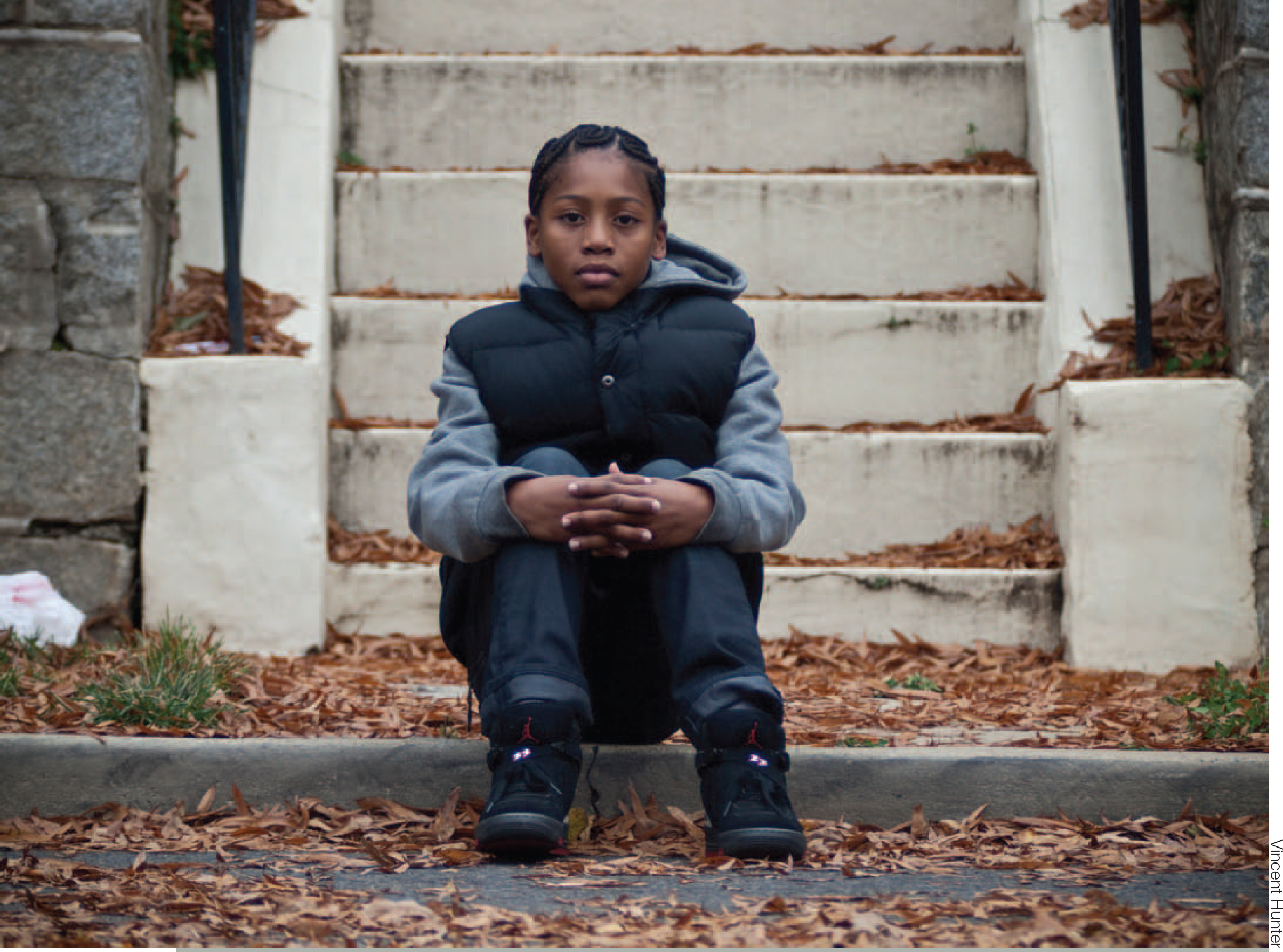
“When your parents are not doing good at home, sometimes that person will drop out of school to help their parents and go to the streets to make more money to have a roof on top of your head.
“If I don't get a good education, my future would be like working at McDonald's or working on the streets.”
When he entered high school, he lost his focus. Jovante knew that in the long run, his future would be better if he stayed in school, but “the wait is hard.” “What you see is what you want,” and shoes and clothes became more important to him than high school. He did not want to depend on his mom to get what he wanted because he had watched her struggle and did not want to be the cause of her struggle.
“If I could have been graded on my conversations and understanding, I would have been an excellent student.”
“We don't take stuff seriously because we want to smoke, do alcohol, and steal (instead of spending time studying). If I don't get my education, my future looks messed up, ugly, and poor.”

Without an education, Dominique said he “may become a drug dealer.”
Black males aren't successful “because we don't try our hardest, we fall into our environment. If we had more leaders and less followers, we would be on top.”
Parents are the biggest factor in black males' success because it means “they will be in a good environment and off the streets. If a parent had a bad childhood, then it's passed down generations. Their parent might not be there for them, and they'll have no one to express their feelings to, and they'll get in fights.”

“We (black males) have been brainwashed and socialized to believe that the darker your skin is, the less capable you are.” Black boys have experienced a progressive loss of hope.
Young black men are influenced negatively by rap music and its messages about the desirability of material things. “White kids listen to rap for entertainment; black kids are living it.” That leads to many bad choices that interfere with educational success.
During our conversation, Mikael referred to “A Salute to Gang Bangers,” an open letter circulating on the Internet and allegedly penned by white supremacists that expressed gratitude to blacks for “slaughtering” each other and “doing a wonderful job of eliminating the black race.” Said Mikael, “I don't have to like it, but I have to agree.”
School success “starts at home. We don't even need better parenting, we just need adequate parenting.” Many black kids don't have a sense of belonging, and “the streets accept anyone.”

Children are “products of their environment. These kids get their morals from the culture and the neighborhood. Life outside of schools is your main life, and you adapt to that. All you see is all you know.”
Remembering to do homework or reading for schools is hard “when you are trying to figure out where you are going to lay your head on a pillow that night.”
Teachers who went “above and beyond” made school meaningful for him. He recalled one middle school teacher who let him stay at her house when he was kicked out of his own home. “She didn't have to do that,” but her actions strengthened his connection to school.

THE EDUCATION OF BLACK MALES | BY THE NUMBERS
Which district graduates the most black males?
Among districts with more than 10,000 black male students, Newark, N.J., has shown the most progress.
For the class of 2007-08, Newark graduated 75% of its black male students, 13% more than the percentage of white male students who graduated (62%).