Abstract
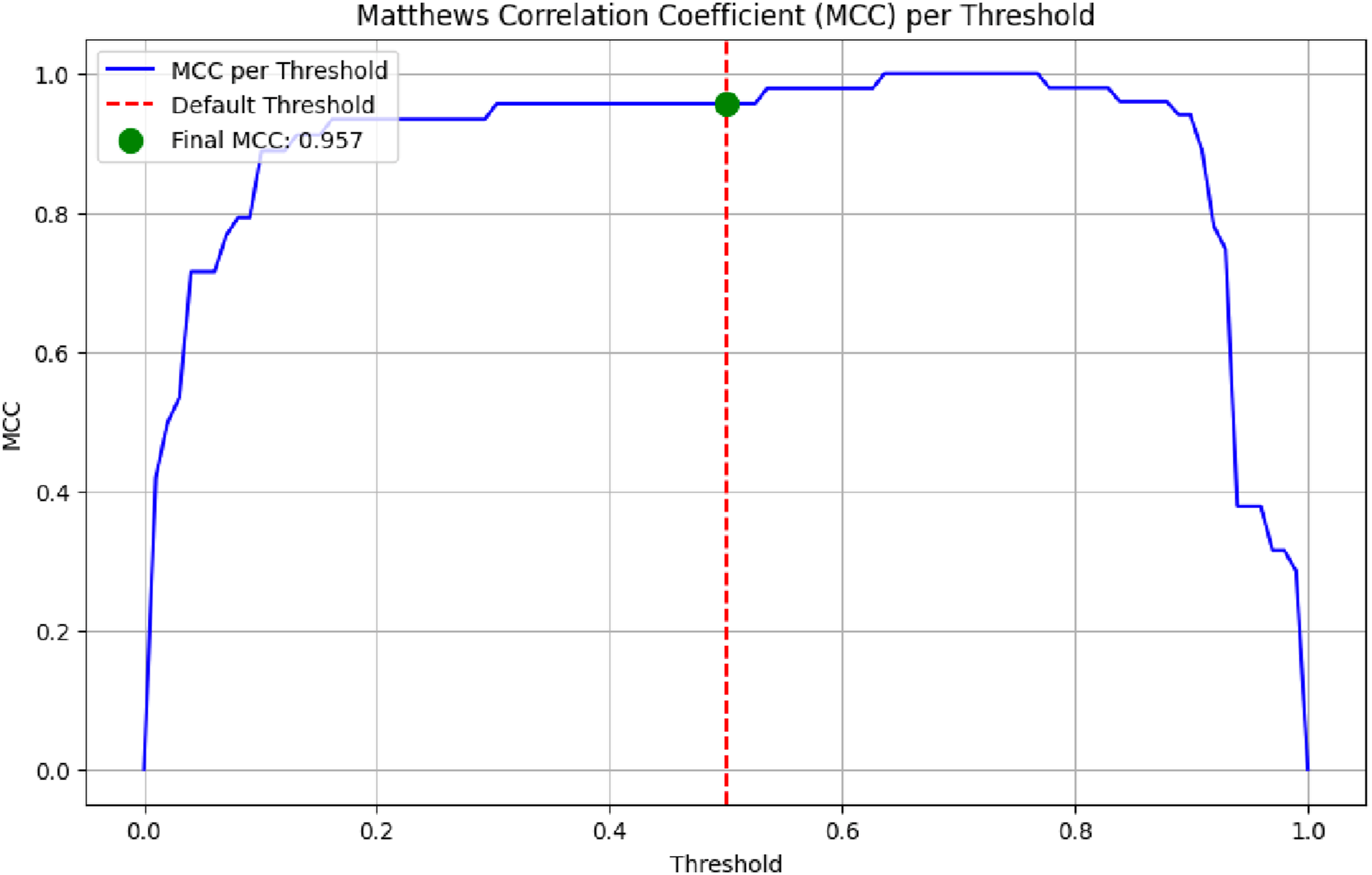
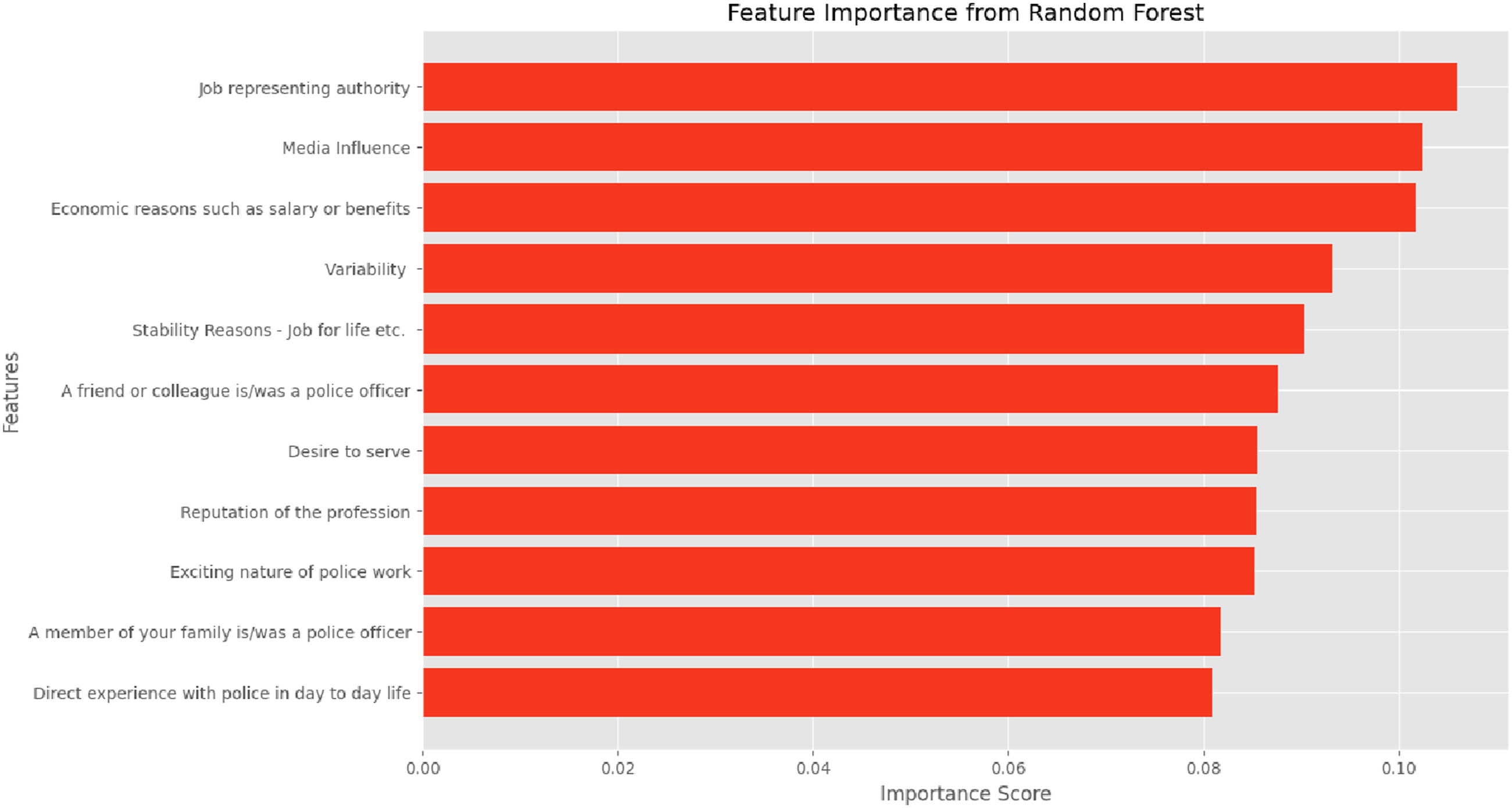
This exploratory study examines the connection between initial motivations for joining the police, social connections and subsequent misconduct investigation using a random forest machine learning model. Drawing upon a survey of retired officers from the US and the UK (n = 228), this research assesses how pre-entry motivations and social exposure may influence later exposure to misconduct investigation. For analyses requiring complete cases across all variables, the analytical sample comprised 214 officers. Feature importance findings show a notable relationship between entry motivations, social ties and exposure to misconduct investigations, which highlights the potential of predictive analytics to identify risk factors for future disciplinary issues in new police recruits. The analysis indicates that motivations related to authority, economic benefits, job excitement and social ties to current or former police officers appeared among the strongest predictors of exposure to misconduct investigation in this sample. Conversely, desire to serve (a public service motivation indicator) showed lower predictive value in this sample. This study employed a clearly specified machine learning protocol, including feature engineering and ensemble learning, with a stratified five-fold cross-validation on the training set, Synthetic Minority Oversampling Technique (SMOTE) applied within folds only to avoid leakage, and hyperparameter tuning via grid search evaluated by Receiver Operating Characteristic–Area Under the Curve (ROC–AUC) as the primary metric, along with Matthews Correlation Coefficient (MCC) as secondary. Despite strong apparent performance, the exploratory dataset and class imbalance require confirmation on independent cohorts and careful calibration assessment before operational use. The implications of these findings are significant for policymakers, police organisations and governance agencies, suggesting a data-driven approach for enhancing recruitment processes. This research contributes to a more nuanced understanding of the factors influencing police officer behaviour and underscores the potential of predictive modelling in addressing disciplinary challenges within law enforcement. Future research should expand sample size, harmonise outcome definitions across jurisdictions, and evaluate model calibration and group fairness.
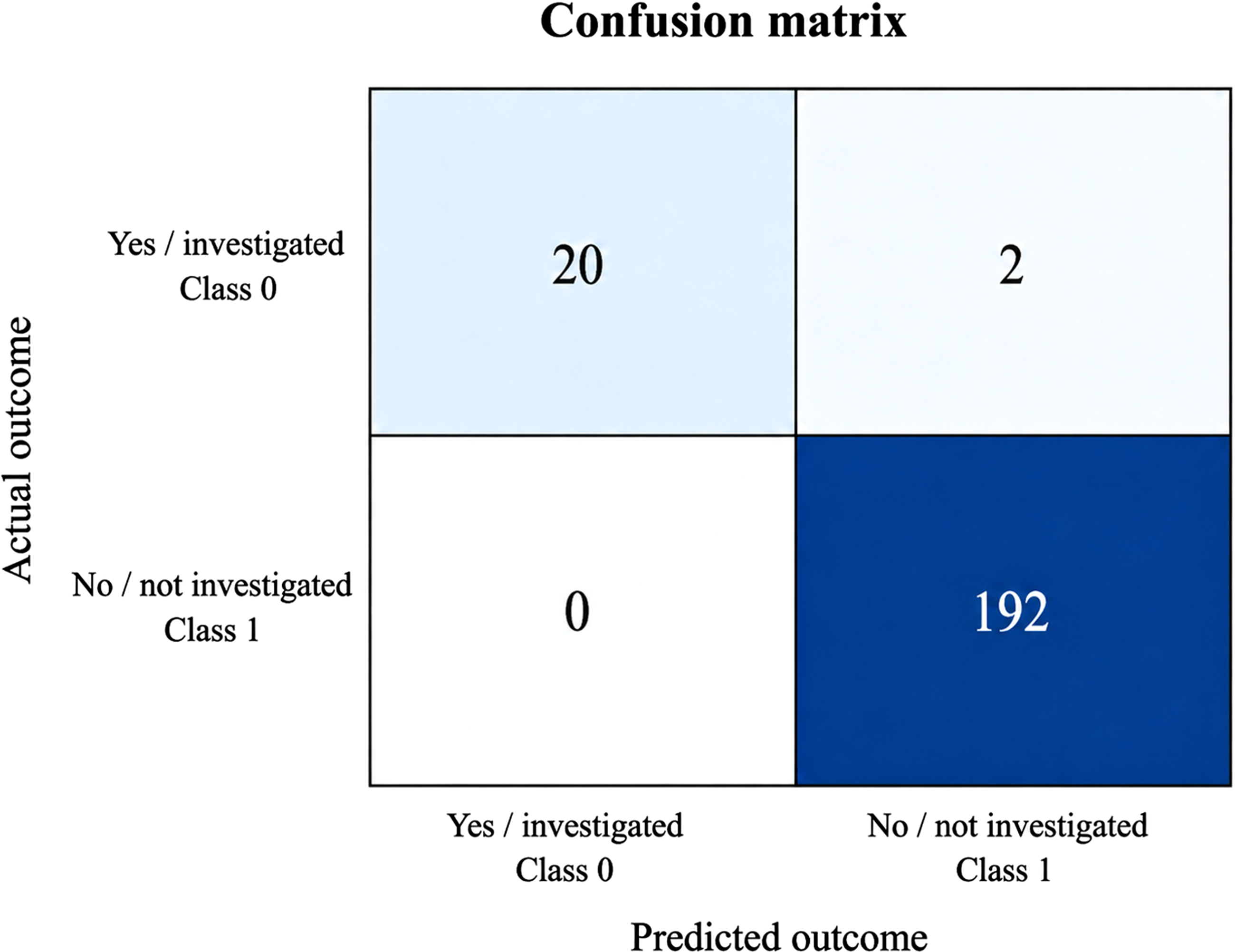
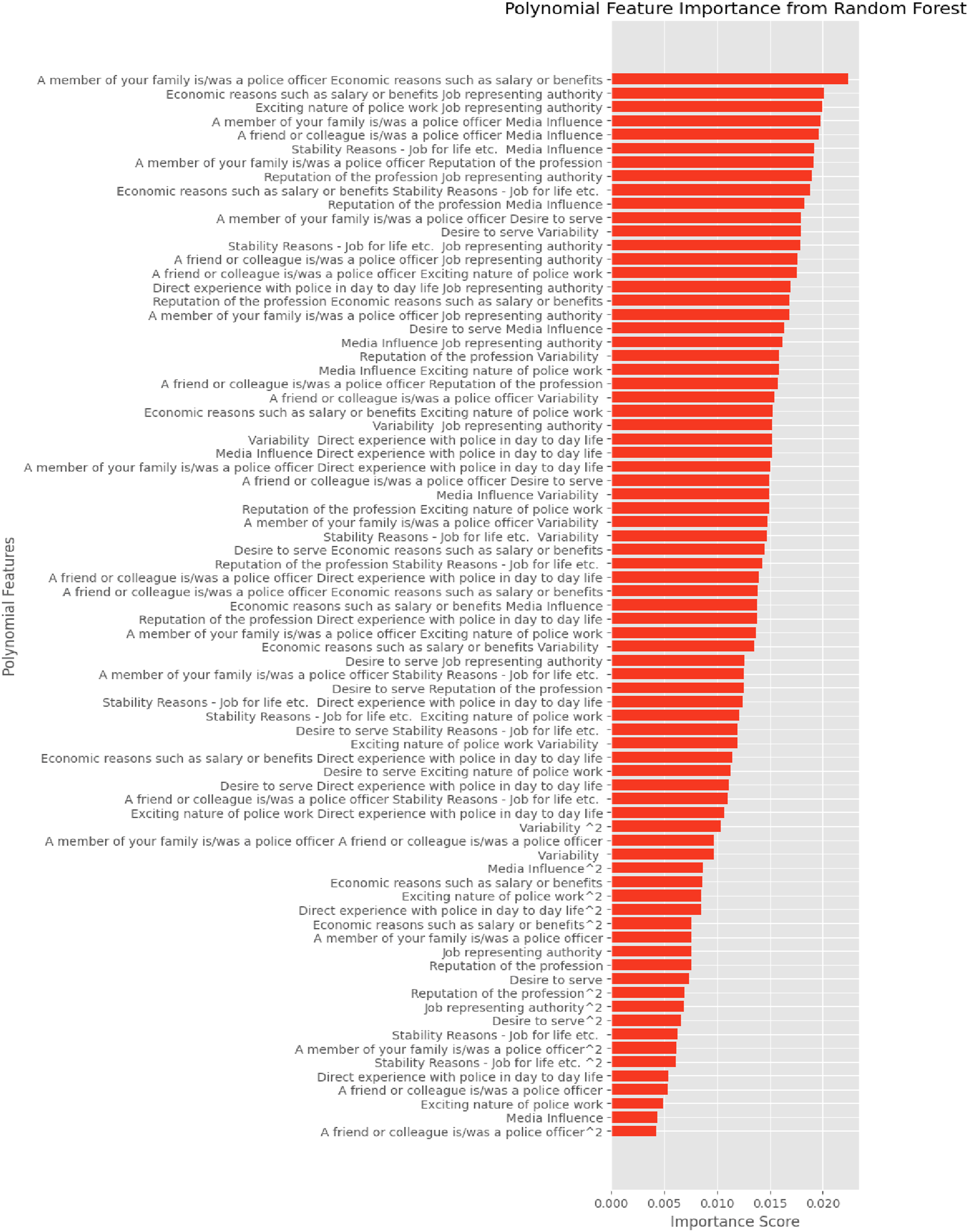
This research offers a practical benefit by allowing law enforcement to improve recruitment processes through data-informed insights. It identifies patterns between initial motivations for joining police organisations and later exposure to misconduct investigations. By understanding these links, agencies can better assess candidates’ suitability and reduce the risk of recruiting individuals more likely to breach professional standards. This supports long-term improvements in accountability, integrity and public trust. The study also introduces a new conceptual lens that blends classic sociological and psychological theory with machine learning. It draws on Mead’s concept of the ‘I’ and the ‘me’, allowing a broader understanding of human behaviour beyond internal traits. Rather than focus only on personality, the study examines social influences such as family ties, media portrayals and economic drivers. These factors shape motivation and may predict future conduct, especially when viewed through the lens of pre-socialisation. The use of machine learning, particularly random forest ensemble models, marks a step forward for predictive analysis in public sector research. The model achieves over 99% accuracy when predicting whether a police officer may face misconduct investigation during their career. It uses feature importance and polynomial combinations to reveal which motivations, or combinations of motivations, judged by importance classification. For example, joining for reasons of authority or family connections shows a higher correlation with disciplinary exposure than altruistic motives. The inclusion of retired officers adds a rare longitudinal view. By capturing reflections across entire careers, the study avoids the limitations of cross-sectional surveys and instead offers a retrospective view of conduct over time. Finally, this research provides a pathway for further study. It encourages law enforcement to collect more structured data on social factors during recruitment and supports the development of fair, evidence-based systems. It also calls on researchers to address the social dimensions of officer behaviour throughout a career. These advances, grounded in cutting-edge methods and a fresh conceptual approach, provide a strong foundation for reform within law enforcement organisations.Research highlights
Introduction
The overlap between initial motivations for joining law enforcement and subsequent conduct within the profession has long been a subject of academic and practical interest (Cox, 2011; Raganella and White, 2004; White et al., 2010). Understanding what drives individuals to pursue careers in law enforcement and how these motivations correlate with their professional behaviour has implications for designing and implementing recruitment strategies (Linos, 2018), training programmes and supporting informed policy development. Recent studies have highlighted the complexity of motivational factors, ranging from altruistic desires to serve the community [related to duty (Cox, 2011)] to more pragmatic considerations such as job security and benefits (Wilson et al., 2010).
In parallel, the rise of machine learning and predictive analytics has opened new avenues for exploring such behavioural patterns and outcomes in various fields, including law enforcement (Gibson and Stubbs, 2023; Halford and Gibson, 2025). The application of these technologies has the potential to enhance our understanding of the relationship between motivational factors and potential exposure to disciplinary action among police officers (Cubitt et al., 2022). By leveraging the collation of disparate datasets, along with advanced analytical techniques, researchers can now identify potential predictors of conduct. These insights may offer valuable opportunities for pre-emptive interventions and the introduction of relevant organisational support mechanisms.
Although George Herbert Mead’s concepts of the ‘I’ and the ‘me’ are not widely used in policing studies of misconduct, we justify their application here as a theory that explicitly links individual dispositions (the ‘I’) and pre-entry socialisation (the ‘me’) to later behavioural outcomes. In this study the ‘I’ maps to personal motives (authority/status, excitement/variability, service, stability/economic) and the ‘me’ maps to social exposure (family member officer, friend/colleague officer, perceived media influence), which guided variable selection, feature engineering and interpretation.
This study examines the gap between the initial motivation to join the police, existing social connections and exposure to misconduct investigations. It employs a machine learning model to assess data-driven linkages between officers’ initial motivations and subsequent disciplinary records. In doing so, it builds upon foundational literature that examines the spectrum of motivations for embarking on a career in law enforcement. It aims to contribute to a nuanced understanding of the factors that influence police officer behaviour and evaluates the potential of predictive modelling to address disciplinary challenges within the force.
The findings of this research have implications for policymakers, policy-training academies and law enforcement governance agencies. It provides a data-informed rationale for enhancing recruitment processes, developing targeted training programmes and assisting in fostering an organisational culture that aligns with the ethical and professional standards of police officers. It also offers some promise for developing such models for use within law enforcement as a matter of course, foreshadowing viable future research threads. This study not only advances the academic discourse on police motivation and conduct, yet offers suggestions for practical tools that may improve the legitimacy and effectiveness of law enforcement institutions.
Literature review
The motivation to join the police is a complex area that has been the subject of sustained research. Studies have identified various factors that drive individuals to pursue careers in law enforcement. Some motives, potentially based on altruism such as the desire to help others or uphold the system of law, have been consistently discussed as significant reasons for entering law enforcement (Wallace, 2021; White et al., 2010). The specific nature of police work is also cited as a drawing influence, including the opportunity to serve the community (Wu et al., 2009) and maintain public safety (Wallace, 2021). In addition, authority, power, position (Elntib and Milincic, 2021), protection/guardianship (Koslicki, 2021) and more exciting variability and risk-taking (Gudjonsson and Adlam, 1983; Lorr and Strack, 1994) have all been identified as contributing factors on the decision to become an officer.
Although these variables suggest a complex tapestry of motivational factors, more tangible factors, such as individual characteristics of gender, sex, race and ethnicity, can also be influential. Previous studies have shown that women, black officers and Hispanic officers are motivated by career opportunities available in police organisations (Vermeer et al., 2020). A study of police cadets in China revealed that job security is an important motivating factor in joining law enforcement (Wu et al., 2009). This indicates that motivations can be context-specific, such as the general need for employment, which has been cited as a significant reason for individuals to pursue careers in law enforcement in regions where jobs are scarce (Wozniak, 2017).
Organisational factors and societal perceptions of the police can also affect individuals’ motivations to join a force. The Policing Vision 2025 and 2030 in the UK outlined long-term strategies to ensure consistency and accreditation in those joining policing careers, attempting to standardise the qualifications obtained by all new recruits (Watkinson-Miley et al., 2022). This introduced new potential variables for consideration, such as gaining transferable qualifications, further complicated by studies of perceptions of trust in certain communities (Vermeer et al., 2020), influencing individuals’ decisions to pursue a career in law enforcement. Isolating causal variables within such a milieu is challenging, and any study addressing motivation should consider a wide range of potential measurement avenues.
Considering this complexity, a review of the philosophy behind the related research may contribute to understanding how this subject has been investigated in the past. A wide range of psychology-based studies have been conducted in this area, focusing upon understanding how personality may have contributed to the choice to become an officer (Burbeck and Furnham, 1984; Carpenter and Raza, 1987; Evans et al., 1992; Harper et al., 1999; James et al., 1984; Lorr and Strack, 1994; Weiss et al., 1999), attempts to properly define a personality ‘type’ amongst police officers (Balch, 1972; Fenster and Locke, 1973; Garbarino et al., 2012; Gudjonsson and Adlam, 1983; Skolnick, 2010; Twersky-Glasner, 2005; Vastola, 1978) and how that personality may contribute to police officers’ performance over time (Adlam, 1982; Beutler et al., 1988; Cottle and Ford, 2000; Fabricatore et al., 1978; Gould, 2000; Griffin and Ruiz, 1999; Hogan, 1971; Richardson et al., 2007). These three areas are important, yet fundamentally rely on the exploration of latent constructs in the mind at the point of measurement. This, as Mead would suggest (1913), represents a distinct part of the psychologically centred ‘I’ and not the socially centred ‘me’.
Mead believes that the ‘I’ is an expression of one’s own identity, the identity that lies within the personal psyche and is expressed through character traits and tendencies. He also believes that together with the ‘I’ lies a socially contingent ‘me’, which encompasses how the ‘I’ is moderated and constructed through social interaction. In modern academic parlance, there is the largely statistical science of psychology, complemented by cognitive and neuroscience (in-depth exploration of the ‘I’) and the pursuance of social constructivism in sociology (Berger and Luckmann, 2016) and social psychology (explorations of the ‘me’) (Tajfel, 1982; Tyler et al., 2014). Unpicking these disparate and connected areas of literature is difficult and to establish convergence is even more challenging. It is fair to say however, that motivation as a product is born out of this convoluted mixture as a mix of personal traits and their expression and the influence of a police recruit’s existing and prior social network. In a police recruit, there will be both the ‘I’ and the ‘me’, making it reasonable to suggest that both of these areas are important for a more complete approach to the research of police recruitment.
Strangely, this work is supported by cutting-edge biological research. Sapolsky (2017, 2023) argues that choices made in everyday life are already determined by a combination of social opportunity or the lack thereof, development of the ‘me’ and biologically created resource, development of the ‘I’. His research on animal behaviour over lengthy periods has repeatedly reinforced this argument, and his latest book (2023) produces a great deal of evidence to support the presence of determinism in these choices. Within the canon of police recruitment literature however, there is a distinct lean towards the ‘I’ over the ‘me’. There is some well-established mixed-method research that examines the development of working identity as recruits join the police academy (Bennett, 1984; Chan, 2001; Charman, 2017; Fielding, 1988; Van Maanen, 1973, 1975), yet very little that looks at the social ‘me’ prior to becoming a police officer (Gibson and Stubbs, 2023; Stubbs et al., 2023). This social ‘me’ will form a part of the whole that contributes to an individual’s police service over time and may therefore offer some explanatory reason for police performance, just as the psychology literature above contributed to predicting patterns in this area.
With this discussion in mind, it is worth asking which areas of police performance can be investigated. The Casey Review (2023) highlighted many issues with police performance in the Metropolitan Police in England and Wales. One of the areas of focus is the poor behaviour of existing police officers over time and the inability of the organisation to effectively address misconduct. Similarly, a report from the U.S. Department of Justice, Office of Community Oriented Policing Services (2015) offered several recommendations that encompassed the operation of transparent accountability procedures together with a review of current hiring practices. These reports were produced in the wake of public scandals that affected confidence and trust in the police in both countries.
Recent research has begun to connect these two areas. Cubitt et al. (2022) explored how gender influenced the prediction of serious police misconduct. This large-scale study in New York used big data and machine-learning methods. These findings illustrate that gender is a predictive variable for serious misconduct, leading to several suggestions on how policing could take advantage of this finding. This study covers a range of data incorporating aspects of the ‘I’ and the ‘me’, but it focuses on officers who had already been recruited and not on potential recruits. The research output may be viewed as highly useful, however the real opportunity for prevention may lie at the point of recruitment. It is more useful to prevent those with a propensity for misconduct from becoming police officers, rather than recruiting, training and deploying these officers, only to find out that they are unfit to wear the badge.
This study explores this question using types of motivation as independent variables and exposure to misconduct investigations as the dependent variable over the period of an officer’s police service.
Method
Designing the survey and locating the sample
In selecting a research focus, targeting specific areas of pre-socialisation, the ‘me’, is necessary. The first area examined whether significant prior socialisation to the police profession occurred through existing social contacts prior to application. The second area explored whether the motivations formed through broader social influences were important. Given the varying degrees of the development of a social ‘me’ in any profession, these aspects were chosen to explore whether they had any influence on exposure to misconduct investigations (Table A1). • Motivation can be generated through social proximity to serving police officers within family and friend networks prior to the choice to become a police officer (Hesketh and Stubbs, 2024b; Stubbs et al., 2023; Stubbs and Tong, 2024). • Social and personal motivational factors create a drive to become police officers (Cox, 2011; Raganella and White, 2004; White et al., 2010; Wu et al., 2009).
Respondent briefing on ‘misconduct’. Before the items, participants read: “For this study, ‘misconduct investigation’ means any formal or informal inquiry by Professional Standards, Internal Affairs or equivalent into alleged breaches of policy, procedure or law, regardless of outcome (unfounded, no case to answer, learning, sanction).” This standardised interpretation across jurisdictions.
Item sourcing and construct mapping. Motivation items were adapted from prior recruitment-motivation and public-service motivation literature to proxy the ‘I’ (authority/status, excitement/variability, service, stability/economic). Social-exposure items proxied the ‘me’ (family member officer, friend/colleague officer, perceived media influence). This mapping aligns with Mead and underpinned pre-specified interaction terms in feature engineering.
Other options can be considered for future research, such as wider-than-immediate-proximity social ties (Lin and Dumin, 1986), influence from the media over time (Huey and Broll, 2015; Scharrer, 2010; Skolnick and McCoy, 1984), becoming a victim of crime, or moral commitment to making the world a better place (Foreman, 2014). Due to the possibility of differences in educational level across the region studied, this variable was excluded. The selected factors of this version of the social ‘me’ are not exhaustive, but they make up a different aspect of socialisation that may help in predicting misconduct exposure. It is possible to expand this research area and include other factors that may add to the predictive validity of the proposed model.
Scale choice and instrument administration. A seven-point Likert scale was used to measure the variables not only for usability (Preston and Colman, 2000) but to maximise discrimination, reduce central-tendency bias on sensitive topics and enable comparability with prior instruments. Expert face-validity checks supported item wording and order. Questions on the perceived influence of social relationships, prior exposure to police officers and motivational factors for joining the police were administered using Gorilla Survey software and adapted for mobile technology. Respondents were asked to rate the importance of these variables in their decisions to become police officers. The option of adding missing factors through free-text entries was included. There were n = 60 free-text entries, with n = 54 directly relating to the already included to correspond with the numerical ratings. This provides further context and evidence of its validity. Of the remaining n = 6, n = 2 were related to joining for sporting opportunities, and n = 4 were due to a perceived connection between policing and prior military experience. These will be included as part of the future social ‘me’ when the survey is re-administered.
Convenience sampling, a non-probability method that selects participants based on accessibility (Chang et al., 2023), is often essential for sensitive topics. Examining police misconduct, especially under intense public scrutiny, justifies this approach (Stratton, 2023). Participants were recruited via social media platforms including X (formerly Twitter) and LinkedIn. An online survey link was distributed to the authors’ networks of serving police officers in the UK and the US, including retirement groups and communities. Inclusion criteria required participants to be retired police officers, allowing examination of pre-socialisation and misconduct investigation exposure throughout their careers regardless of service length. Retired officers as sampling base also offered an opportunity to avoid fear of consequences in their answers, which can be present in serving officers’ responses (Detrick and Chibnall, 2008). Data from Ireland were collected but excluded because of a low response rate.
After completing the motivation profile, the respondents were asked about any exposure to misconduct investigation. If they answered yes to this question, they were asked about the type of disciplinary action, sanctions received and their length of service at the time of investigation. The survey concluded with a demographic questionnaire that included gender, age at joining or leaving the service and ethnicity. The survey yielded n = 228 respondents, including n = 29 females and n = 199 males, with n = 195 identifying as white officers. Within the responding sample, n = 78 participants reported exposure to a misconduct investigation. For analyses requiring complete cases across all variables used in modelling, the analytical sample comprised 214 officers. Being investigated for misconduct does not imply guilt and many investigations did not result in formal sanctions, but investigation exposure provides an operationally relevant threshold for analysing disciplinary risk.
One of the recurring features of misconduct enquiry in serious officer offence cases is repeated exposure to investigation over time (Angiolini, 2024; Casey, 2023), as opposed to concluded formal sanctions. For analyses that required complete cases across all variables, the analytical sample comprised 214 officers, which explains the count cited in the Abstract. The use of convenience sampling limits the statistical generalisability of the findings. While focusing on retirees may reduce response inhibition, it also introduces potential biases related to recall and retrospective interpretation. Consequently, the results should be considered hypothesis-generating and warrant validation in prospective studies involving applicants and probationers.
The machine learning approach: Random forest ensemble learning
Ensemble learning methods, including Random Forest (RF), aggregate the predictions of a group to provide better results than individual predictors (Géron, 2022). Random Forests are machine-learning methods (Breiman, 2001) driven by data to make accurate predictions of future events or outcomes. However, RF methods are limited in their use across police research and offer a new way of critically analysing and identifying key issues throughout the public sector. Therefore, because RF algorithms are powerful and accurate for classification models, this method was selected to explore our research problem without prior knowledge, constraints or incomplete data (Genuer et al., 2010).
X = Input data were captured and coded from the questionnaires using a seven-point Likert scale, and Y = Output data from the model were encoded into two class types of outcomes.
Feature engineering for machine learning
Feature engineering builds on RF to transform raw data into features that are suitable for model learning (Dong and Liu, 2018). We pre-specified interaction terms aligned to theory, for example authority × friend/colleague officer, excitement × authority and stability × economic incentives, to test combined ‘I’/‘me’ effects. The use and identification of unique features, combinations of survey inputs, developed the power of a reduced dataset and improved the model’s ability to perform accurate class-type prediction (Dai et al., 2020). This represents a combination of pre-socialisation features and single-variable analysis.
Building and hyper-tuning the machine learning model
From the outset we used a Random Forest classifier to capture non-linearities and interactions. The analytical dataset (n = 214) was split into training (80%) and held-out test (20%) partitions using a stratified split to preserve class proportions. Hyperparameter tuning was conducted on the training set only using five-fold stratified cross-validation. Within each cross-validation iteration, SMOTE was applied only to the training fold, followed by model fitting and evaluation on the untouched validation fold to minimise leakage. Hyperparameters were tuned using grid search over n_estimators [200–1000], max_depth [None, 4, 6, 8, 12], min_samples_leaf [1, 2, 5], max_features [‘sqrt’, ‘log2’] and class_weight [‘balanced_subsample’]. ROC–AUC was the primary selection metric, with MCC, balanced accuracy and log loss used as secondary checks. The final model was refit on the full training set and evaluated once on the untouched held-out test set.
To guard against overfitting and support replicability we monitored Out-of-Bag (OOB) error, inspected the stability of feature importance across cross-validation folds, and reported MCC and log loss on the held-out test set. We also ran a bagging classifier with decision-tree base estimators as a sensitivity check. Although these safeguards improve confidence, the modest size of the positive class means estimates can be sensitive to base-rate shifts, so results should be treated as exploratory until validated externally.
Performance, validity and limitations
Feature attribution and robustness
We report permutation importance to estimate the contribution of each predictor to out-of-sample performance, reducing known biases in impurity-based Random Forest importance. To assess robustness, importance rankings are examined for stability across cross-validation folds and summarised with variability. Feature attribution results are presented in Figure A4 and interpreted as associative signals rather than causal effects.
Feature engineering findings
Theory-aligned interactions were predictive. Friend/colleague officer × authority (0.0234) and excitement × authority (0.0228) suggest that combining social proximity with authority-seeking or excitement-seeking may increase exposure risk. Desire to serve × variability (0.0190) showed a nuanced relation. Stability × economic incentives (0.0151) reflected the combined draw of a secure career and compensation.
Comparative analysis of class-type predictions
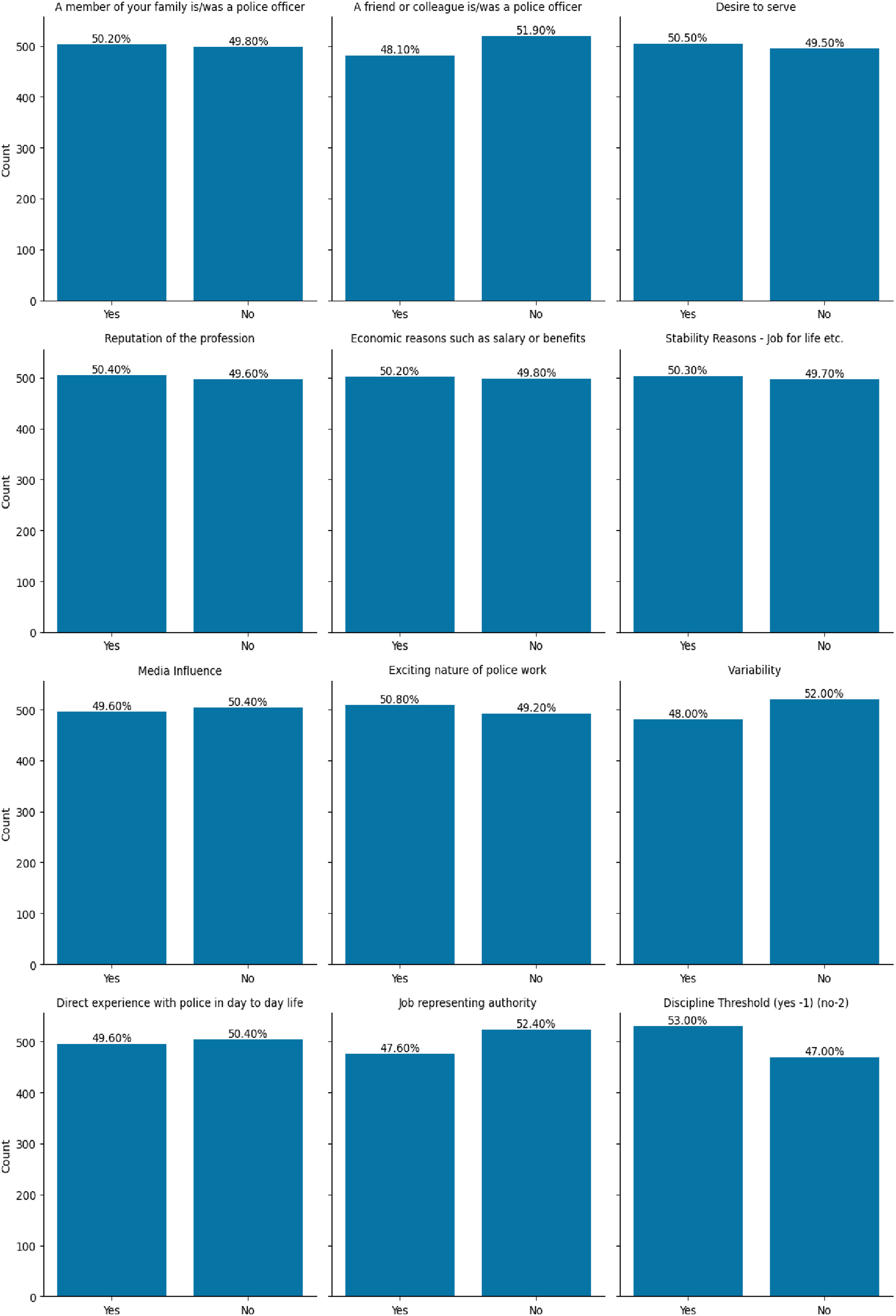
The model showed near-balanced splits for family officer (yes 50.2%) and friend/colleague officer (yes 48.1%). Percentages refer to the proportion of model classifications labelled ‘investigated’ within each subgroup. Friend/colleague officer tilted the no class to 51.9%, consistent with a possible beneficial modelling influence. Job excitement had a yes rate of 50.8% versus 49.2% no. Job variability aligned more with no (52%) than yes (48%) (Figure A6).
First decision tree analysis from the random forest
An illustrative tree path shows splits on family officer and desire to serve for those with familial ties, and on job excitement for those without such ties. Lower values on these nodes tracked with higher risk labels in the example path (Figure 1). First decision tree in the model.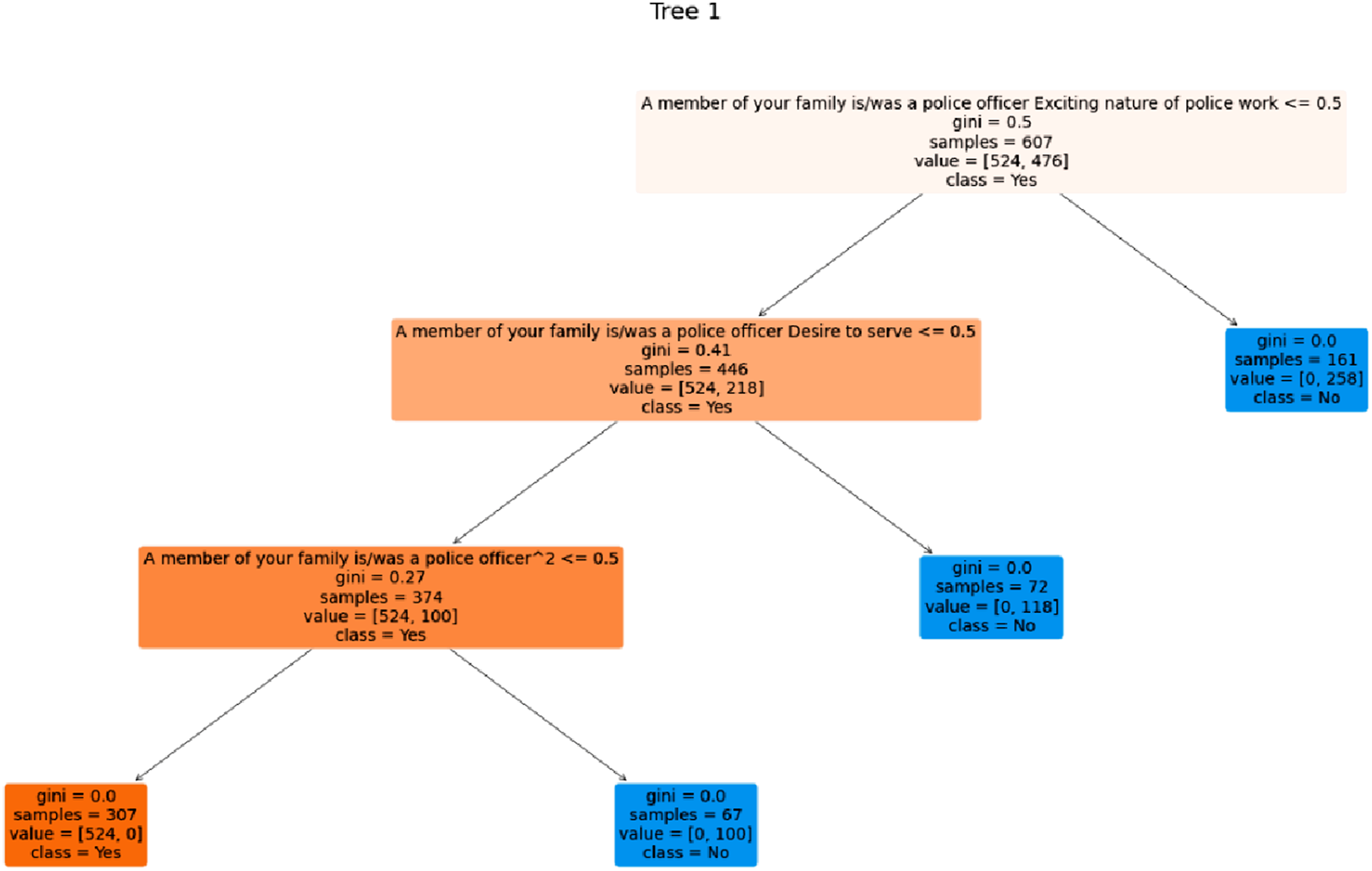
Discussion
Any machine learning model is constrained by the data used to create it. In this study the dataset is exploratory and requires refinement and further development. We measured a defined portion of the social ‘me’ to assess whether it helps predict exposure to misconduct investigation. The model showed high apparent accuracy, with feature engineering contributing substantially. Because the topic is important and in the public interest, improved data access is essential, although difficult to secure given the long-noted ‘dialogue of the deaf’ between academia and police (Easton and De Vlieger, 2018; Engel and Whalen, 2010), even if there are contested signs of progress.
Some feature combinations show promise and warrant closer examination. For example, joining the police for economic reasons in combination with having a family member in the police emerged as a strong engineered predictor, as did the pairing of authority with excitement. The latter could plausibly relate to a propensity for involvement in incident responses that are both high-arousal and authority-expressive. Since these combinations were influential in the model, it is reasonable to ask whether any are explored explicitly at the point of recruitment.
The results rest on socially situated reasons and motivations which differ from much of the psychological literature used at recruitment. They point to particular forms of the social ‘me’ that may be associated with later exposure to misconduct investigation. If developed further, this line of work could inform recruitment design by providing a rationale for examining specific aspects of pre-entry socialisation in a structured and transparent way. Where particular social conditions and motivations are present for a potential recruit, they may justify additional supportive assessment and oversight during training and probation. Current evidence does not justify automated screening or exclusion of applicants on this basis, but it does justify expanding the method and setting a future research agenda. This study is hypothesis-generating and requires prospective replication, calibration assessment and external validation before any operational consideration.
Predictive modelling in recruitment is a high-stakes use case. If developed further, the model should be used only as an adjunct to structured assessment and professional judgement, not as a standalone decision tool. Prior to any operational deployment, external validation, calibration assessment and group fairness evaluation should be undertaken, with clear documentation of intended use, error costs and mitigation pathways for false positives and false negatives. Data handling should follow applicable ethical approvals and data protection requirements, with explicit safeguards against disparate impact and misuse.
Given the exploratory nature of the dataset, the reported accuracy cannot support broad generalisation at this stage, although the findings show promise. The New York big-data study (Cubitt et al., 2022) used administrative records and identified gender as a meaningful predictor. By contrast, the social ‘me’ variables in our study are not directly measured during recruitment, nor routinely recorded or retained by forces. They may surface indirectly in assessment centres or interviews (Hesketh and Stubbs, 2024a), yet are rarely collected in a way that supports research and may be constrained by data retention rules. This underscores the need to expand data collection with appropriate governance and transparency.
A further limitation is the heterogeneity in how respondents understand ‘misconduct’ investigation across jurisdictions. The Casey Review (2023) emphasises patterns of repeated exposure rather than a minor versus major distinction, which supports inclusive measurement that introduces variation. Some degree of self-selection may also exist among officer offenders, as in conventional crime (Roach and Pease, 2016). Future iterations should tighten terminology and harmonise outcome definitions across contexts.
Finally, psychological studies at recruitment are rarely retrospective. If more aspects of the ‘I’ can be assessed at career end, they may add predictive value over time. More and better data will improve prediction and help police services make evidence-informed recruitment decisions. The article therefore ends with recommendations for future research that prioritise prospective data collection, cross-jurisdictional harmonisation and rigorous validation.
Recommendations for practice
(1) Law enforcement agencies should improve the data gathered on social support and network connections in potential recruits. Although this may be of little use in the short term, in the long term, it may represent predictive factors for problems such as misconduct, criminal actions and recruitment. (2) Researchers should consider the social and motivational aspects of officers not only at recruitment but also through service. Changing social network structure as support may be important predictors of behaviour. (3) Researchers should consider retired police officers as a rich source of retrospective data; their ability to discuss their careers as a whole offers opportunities to explore and design ML predictive models without gathering front-facing data over many years.
Footnotes
Acknowledgments
We extend our gratitude to the retired police officers from the US and the UK who participated in the survey, making this study possible.

Funding
The authors received no financial support for the research, authorship, and/or publication of this article.
Declaration of conflicting interests
The authors declared no potential conflicts of interest with respect to the research, authorship, and/or publication of this article.
Appendix
Survey constructs, items and mapping to Mead’s ‘I’ and ‘me’. X = input data captured from the questionnaires using a 7-point Likert scale were encoded and categorised. Predictor response encoding. Y = model output was encoded into two outcome classes as follows.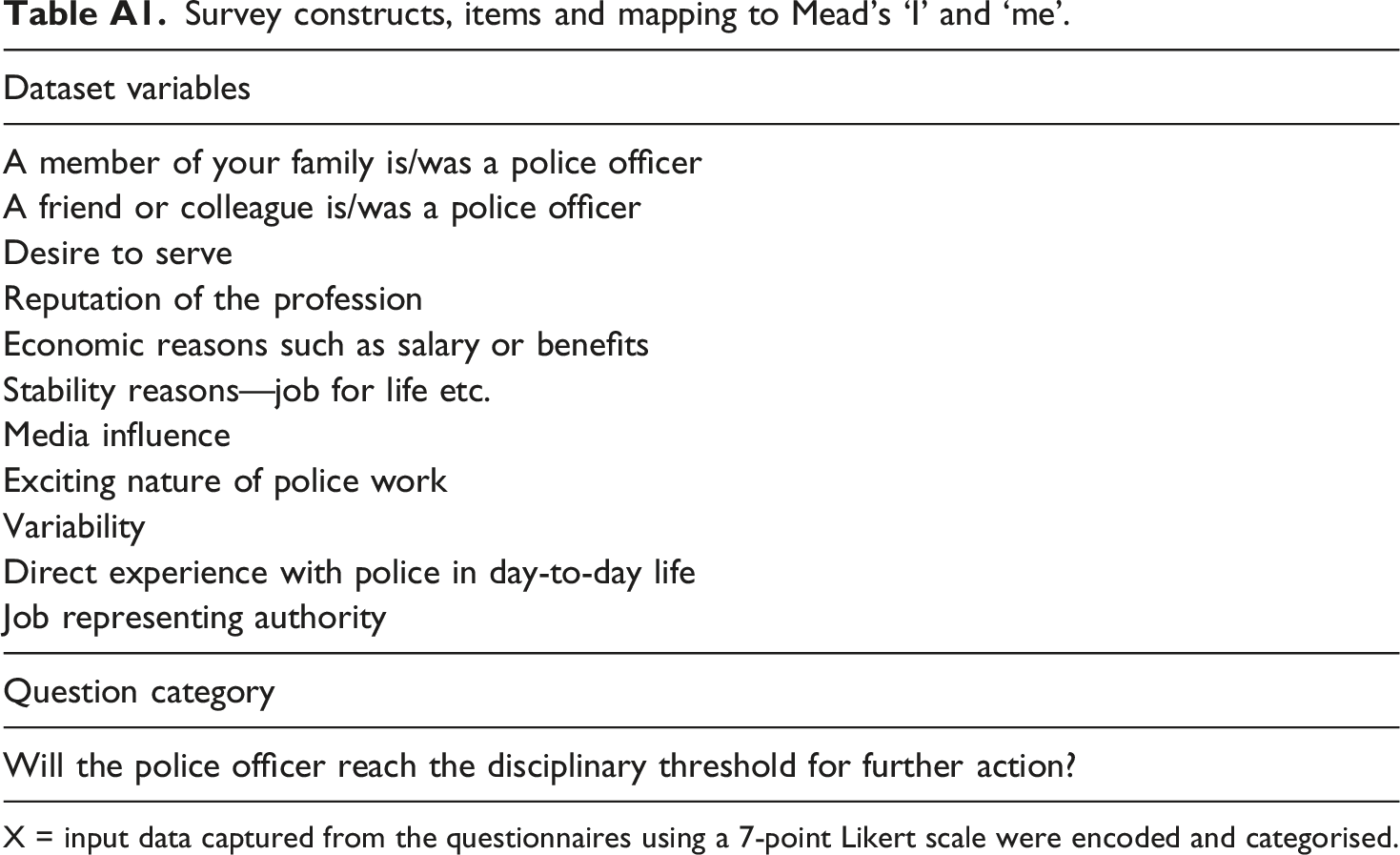
Dataset variables
A member of your family is/was a police officer
A friend or colleague is/was a police officer
Desire to serve
Reputation of the profession
Economic reasons such as salary or benefits
Stability reasons—job for life etc.
Media influence
Exciting nature of police work
Variability
Direct experience with police in day-to-day life
Job representing authority
Question category
Will the police officer reach the disciplinary threshold for further action?
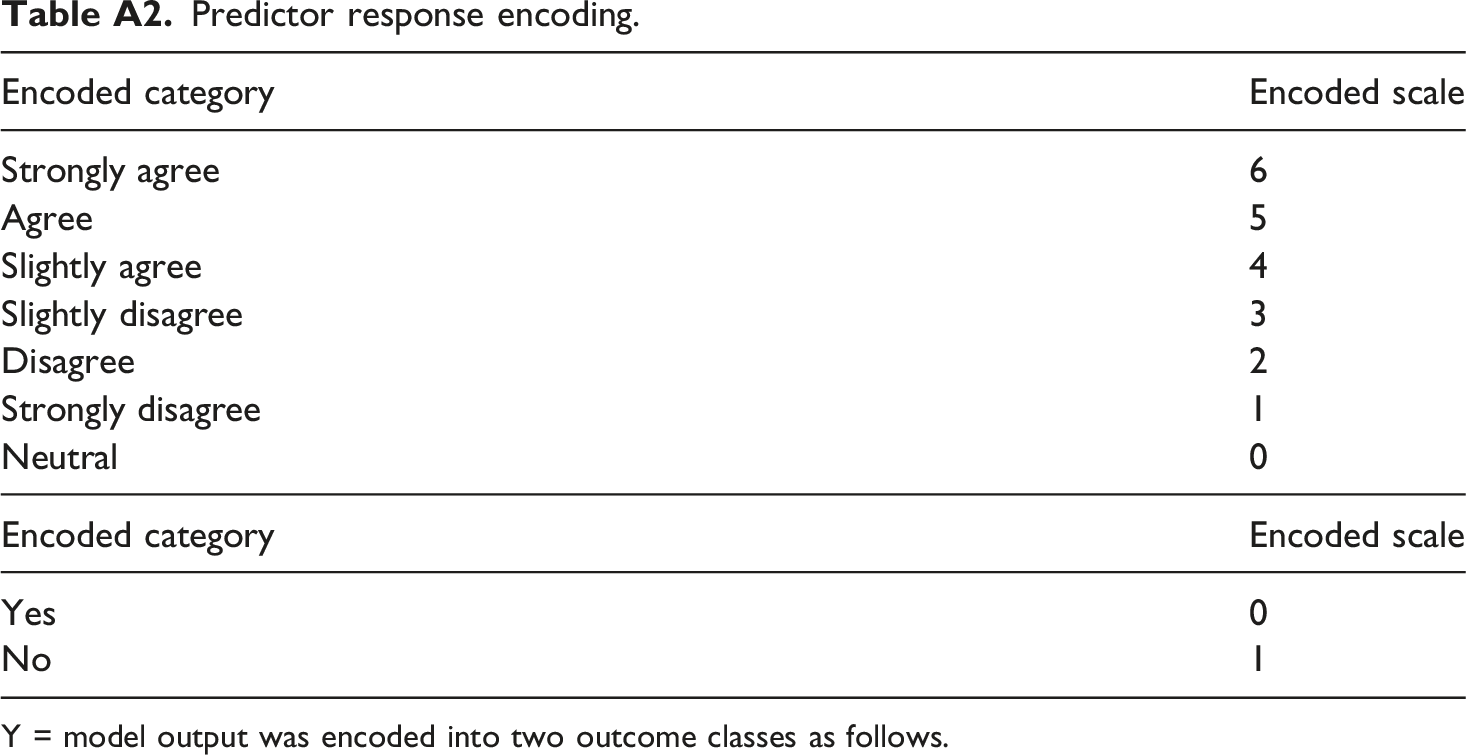
Encoded category
Encoded scale
Strongly agree
6
Agree
5
Slightly agree
4
Slightly disagree
3
Disagree
2
Strongly disagree
1
Neutral
0
Encoded category
Encoded scale
Yes
0
No
1
Confusion matrix. Matthews correlation coefficient (MCC). Feature importance scores. Polynomial feature importance scores. Feature importance per classification type.